The more radiation, the weirder Fukushima’s fir trees became.
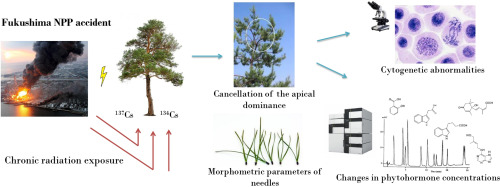
NUCLEAR DISASTER IN JAPAN DID SOMETHING STRANGE TO TREES https://futurism.com/the-byte/nuclear-japan-trees
SOMETHING IS UP WITH THOSE TREES. by ABBY LEE HOOD ( Journalist) They didn’t grow any larger or suddenly become sentient, but the trees outside the Fukushima Daiichi Nuclear Power Plant are definitely acting weird, according to a new study published earlier this month in the journal Plants.
Researchers from multiple universities in Italy and Brazil studied fir trees growing near the plant, which was destroyed in 2011 following a severe earthquake. The scientists studied whorls — nodes where leaves, branches or other plant parts grow from a central point — and found that fir trees around Fukushima exhibited weird growth patterns around them.
“These conifers showed irregular branching at the main axis whorls,” reads the study, spotted by Newsweek. “The frequency of these anomalies corresponded to the environmental radiation dose rate at the observed sites.”
The more radiation, in other words, the weirder the trees got.
Circle of Life
It’s pretty interesting that trees affected by nuclear radiation grow in funky patterns and are still affected by material in the soil near Fukushima. But even more important is the team’s goal of learning how to better take care of people caught up in similar, future disasters, and to create better emergency management plans.
“Ten years have passed since the FNPP accident, and still the large-scale effects are visible,” the researchers concluded. “Learning from past incidents and implementing this knowledge can make a significant difference in terms of lives and costs in healthcare management.”
We may not always be good stewards of the environment around us, but nature seems happy to provide cautionary tales for humanity to learn from all the same.
More on Fukushima weirdness: Scientists Monitoring Radioactive Snakes Near Fukushima Meltdown Site
U.S. and Russian Threats Over Ukraine—What They’re About

“It’s a noble principle, just not one the United States abides by. The United States has exercised a sphere of influence in its own hemisphere for almost 200 years, since President James Monroe declared that the United States ‘should consider any attempt’ by foreign powers ‘to extend their system to any portion of this hemisphere as dangerous to our peace and safety’.”.
Blinken wants a one-way street where spheres of influence are concerned. The U.S., for him, has the right to wield influence everywhere, while others don’t.
STRIPPING AWAY THE BULLS**T: U.S. and Russian Threats Over Ukraine—What They’re About and Who’s the Aggressor, Covert Action Magazine By Dee Knight – January 25, 2022 Threats and counter-threats flying between Washington and Moscow over Ukraine have caused a flurry of fear and confusion that escalates and expands daily. Is the world on the brink of war? What is it about, who is the aggressor and who is to blame?
The dangerous standoff has lasted for most of a year. Each side accuses the other of threatening war—in a way reminiscent of the Cuban missile crisis of 1962.
During a week of intense diplomatic meetings in three European capitals, which appeared to reach a dead end, President Joe Biden seemed to “blink” midweek, on January 19, telling reporters in Washington he had indicated to Russian President Putin that “we can work out something.”
New York Times senior reporter David Sanger jumped on it: “Mr. President, it sounds like you’re offering some way out here, some off-ramp—an informal assurance that NATO is not going to take in Ukraine… and we would never put nuclear weapons there.” Sanger went on to say Russia “wants us to move all of our nuclear weapons out of Europe and not have troops rotating through the old Soviet bloc.” Biden quickly said “No, there’s not space for that.”
Biden’s blink was a break in the warlike atmosphere that has prevailed endlessly. Katrina van den Heuvel wrote the day before in The Washington Post that “Hotheads [were] having a field day. A White House task force that includes the CIA [was] reportedly contemplating U.S. support for a guerrilla war if Russia seizes Ukraine; Russian hawks talk of a military deployment to Cuba and Venezuela.” Biden had “installed a team of national security managers from the ‘Blob,’ marinated in successive debacles in Iraq, Libya, Syria, Yemen and more.”
Guns and sanctions are the U.S. empire’s preferred options, van den Heuvel said: “with about 800 military bases outside the United States,” the U.S. has “more bases than diplomatic missions. (Russia’s only military bases outside the former Soviet Union are in Syria.)” She added that Secretary of State Blinken and the Blob “talk about a rules-based international order but respect it only if we make the rules, often exempting ourselves from their application.”
Spheres of influence?
“When will the U.S. stop lying to itself about global politics?” asked CUNY Professor Peter Beinart, writing in the New York Times on January 13. He took issue with Secretary of State Antony Blinken, who pontificated last month that “One country does not have the right to dictate the policies of another or to tell that country with whom it may associate; one country does not have the right to exert a sphere of influence. That notion should be relegated to the dustbin of history.”
Beinart commented: “It’s a noble principle, just not one the United States abides by. The United States has exercised a sphere of influence in its own hemisphere for almost 200 years, since President James Monroe declared that the United States ‘should consider any attempt’ by foreign powers ‘to extend their system to any portion of this hemisphere as dangerous to our peace and safety’.”………….
Blinken wants a one-way street where spheres of influence are concerned. The U.S., for him, has the right to wield influence everywhere, while others don’t.
The same day Biden blinked, French President Macron weighed in saying war would be the “most tragic thing of all.” Speaking in the European Union’s capital of Strasbourg, as new interim EU chair, Macron said he hoped to revitalize the four-way “Normandy format” talks between Russia, Germany, France and Ukraine to find a solution to the Ukraine crisis. “It is vital that Europe has its own dialogue with Russia,” Macron said. The EU had no part in the talks last week between Russia, the U.S., NATO and the Organization for Security and Cooperation in Europe (OSCD).
The Normandy format has been a vehicle for implementing the 2015 Minsk agreements designed to end the separatist war in Ukraine’s Donbas region. This solution has already been proposed and accepted in principle, according to Anatol Lieven, who wrote in The Nation that the Minsk II agreement was already adopted by France, Germany, Russia and Ukraine in 2015, and endorsed unanimously by the UN Security Council.
Key elements of the Minsk II deal are full autonomy for Ukraine’s eastern regions in the context of decentralization of power in Ukraine, demilitarization, and restoration of Ukrainian sovereignty. Despite agreement by all parties, political analyst Anatol Lieven says “because of the refusal of Ukrainian governments to implement the solution and refusal of the United States to put pressure on them to do so,” the settlement is a kind of “zombie policy.”
The issue of NATO expansion is another “zombie policy” as the U.S. refuses to acknowledge Russia’s legitimate opposition to it.
After the first of three negotiating sessions between the U.S. and Russia during the week of January 10, Russian Deputy Foreign Minister Sergei Ryabkov had declared it “absolutely mandatory” that Ukraine “never, never, ever” become a NATO member. In response, U.S. Deputy Secretary of State Wendy Sherman said: “we will not allow anyone to slam closed NATO’s open-door policy.”……………………..
US Undersecretary of State Victoria Nuland helped orchestrate the 2014 coup in Kyiv, the Ukrainian capital, that toppled a government friendly to Russia. The new far-rightist government ended language rights for Russian speakers who are the majority in the Ukraine’s eastern provinces. Donetsk and Lugansk voted to separate, as did Crimea. Russia then annexed Crimea, to protect Russian speakers there and secure its Black Sea naval base. Russia provided humanitarian aid and trade to Donetsk and Lugansk, and stationed troops on their eastern border for protection.
“Pro-Democracy Protests” or a Fascist Coup?
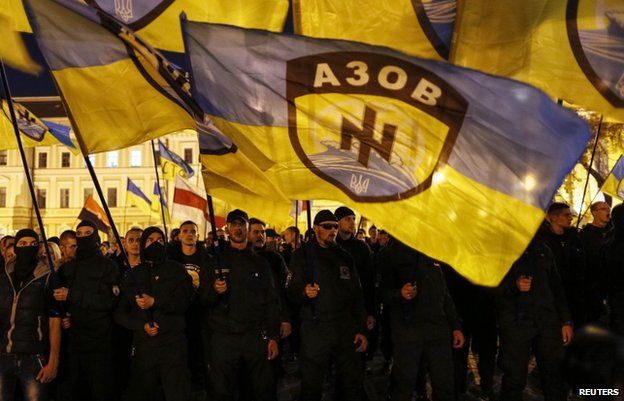
A New York Times report on January 6 said “Russia intervened militarily in Ukraine in 2014 after pro-democracy protests erupted there.” [Emphasis added.] The coup was actually carried out by fascist gangs, according to a May 2, 2018, report in The Nation by Stephen Cohen.
The gangs, including self-declared neo-Nazis, were encouraged by Nuland, Biden and other prominent U.S. politicians. The neo-Nazis were integrated into Ukraine’s official military which, since 2014, has been trained, armed and reorganized by the U.S., Britain, Canada and other NATO countries.
Stephen Cohen wrote that “the pogrom-like burning to death of ethnic Russians and others in Odessa later in 2014 reawakened memories of Nazi extermination squads in Ukraine during World War II.” These horrors have been all but deleted from the American mainstream narrative, despite being well-documented.
Cohen added that “stormtroop-like assaults on gays, Jews, elderly ethnic Russians, and other ‘impure’ citizens are widespread throughout Kyiv-ruled Ukraine, along with torchlight marches reminiscent of those that eventually inflamed Germany in the late 1920s and 1930s… The police and official legal authorities do virtually nothing to prevent these neo-fascist acts or to prosecute them. On the contrary, Kyiv has officially encouraged them by systematically rehabilitating and even memorializing Ukrainian collaborators with Nazi German extermination pogroms and their leaders during World War II, renaming streets in their honor, building monuments to them, rewriting history to glorify them, and more.”
The people of the self-declared people’s republics of Donetsk and Lugansk in eastern Ukraine suffer under a complete economic blockade by Ukraine and its Western allies. Historically known as the Donbass region, eastern Ukraine is a mining and industrial center. Donbass miners played a crucial and heroic role in the defeat of the German invasion of the Soviet Union in World War II. Many Russians revere the Donbass as “the heart of Russia.”
All of Ukraine east of the Dnieper river is predominantly Russian-speaking. U.S. claims of a “Russian invasion” are reminiscent of claims of North Vietnamese invasion of South Vietnam after the artificial separation of Vietnam in 1954. The entire U.S. narrative about Ukraine is a cynical fabrication designed to justify aggression.
Russian Security Proposals
In mid-December Russia took a diplomatic initiative and presented a list of security proposals to the United States. According to the Wall Street Journal, they include ending NATO’s expansion further eastward to include Ukraine, a promise for each side to refrain from hostile activities, and an end to NATO military activities in all of Eastern Europe, Transcaucasia and Central Asia……….
Among the “severe consequences” threatened by the U.S. against Russia, the Financial Times has said sanctioning Russia’s Nord Stream 2 gas pipeline to Germany was “top of the list.” Western Europe is already facing an energy crunch, with skyrocketing prices for natural gas.
Europeans need energy security and are wary of war. They want the Nord Stream 2 pipeline as soon as possible, while the Biden administration calls it a “bad deal” and claims that it makes Europe vulnerable to Russian “treachery.” Texas Senator Ted Cruz has pressed hard against the pipeline, which offsets opportunities for U.S. energy companies to supply gas to the European market. U.S. foreign adventures have often constricted Europe’s energy sources.
A 2021 survey by the European Council on Foreign Affairs found that most Europeans want to remain neutral in any U.S. war against Russia or China. But new NATO member-states align with the U.S. against Russia. They have installed terminals to receive U.S. liquid natural gas deliveries, to reduce dependence on Russian gas.
Despite all the diplomatic efforts, powerful institutional and economic forces in the U.S.—the military industrial complex and big energy companies among others—are eager for a new Cold War with Russia, which would provide them with boundless opportunities for profitable deals. “The U.S. military-industrial complex needs enemies like human lungs need oxygen,” the saying goes. “When there are no enemies, they must be invented.”
The demonization of Vladimir Putin and Russia by the U.S. media is part of this policy of inventing enemies. There is a long list of foreign leaders and nations whose attempts to defy the dictates of Washington and pursue an independent foreign policy have brought down upon them the wrath of the U.S. Capitalist Empire.https://covertactionmagazine.com/2022/01/25/stripping-away-the-bullst-u-s-and-russian-threats-over-ukraine-what-theyre-about-and-whos-the-aggressor/
Forensic experts are working to recover texts deleted by ex-FirstEnergy CEO Chuck Jones after he was fired

Forensic experts are working to recover texts deleted by ex-FirstEnergy CEO Chuck Jones after he was fired Cleveland.com : Jan. 28, 2022, By Jeremy Pelzer,
COLUMBUS, Ohio — Forensic experts have been working to recover text messages deleted by former FirstEnergy Corp. CEO Chuck Jones in October 2020, shortly after the utility fired him for violating company ethics policies amid the House Bill 6 scandal, according to a recent civil lawsuit filing.
The filing was part of a submission made Thursday by attorneys representing FirstEnergy shareholders suing company officials for not stopping a massive bribery scheme to pass HB6. In addition, the filing says the content of the deleted messages remains unknown, and it did not disclose any recipients…………..
A federal complaint against ex-Ohio House Speaker Larry Householder and several allies accuses them of using $60 million in FirstEnergy bribe money to secure the passage of HB6. The complaint says that Jones and Householder emailed and texted each other several times a week about the issues with the legislation, which offered a $1 billion-plus bailout to two Northern Ohio nuclear power plants owned by a then-subsidiary of FirstEnergy………………….
Jones has so far not been accused of any crime, and he denies any wrongdoing. However, a civil lawsuit filed by Attorney General Dave Yost accuses him and two other former FirstEnergy executives of engaging in extortion, money laundering, coercion, intimidation and an attempted coverup.
Cleveland.com has reached out to a spokesman for Jones for comment.
Thursday’s court filing states that plaintiffs in the civil suit have reviewed more than 400,000 pages of documents so far and are preparing to start depositions on Feb. 10. The filing states that plaintiffs will be ready to go to trial by this August.
Read the full filing here: https://www.cleveland.com/news/2022/01/forensic-experts-are-working-to-recover-texts-deleted-by-ex-firstenergy-ceo-chuck-jones-after-he-was-fired.html
Nuclear power – a burden that will only slow the energy transition – UK Greens

‘Nuclear power is a burden’ – Green Party slams Government’s £100 million Sizewell C cash injection. The Green Party’s comments come after the Government pledged £100 million of taxpayer cash towards the Sizewell C project.
The Green Party has slammed the Government’s decision to commit £100 million of public money towards Sizewell C. Ministers hope that the £100 million pledge will attract further private investment in the Sizewell C project. But Adrian Ramsay, the Green party’s co-leader and Suffolk MP candidate, said: “Nuclear power is a burden and a risk, not a solution”.
Mr Ramsay added: “The next decade is crucial for cutting carbon emissions but nuclear will only slow the energy transition, not speed it up. “Even with constant injections of yet more taxpayers’ cash, the
energy from Sizewell C won’t come onstream for years, whereas more cost-effective solar and wind can be deployed right now.
“At a time when people are already struggling with energy prices, it is absurd to throw yet more millions of pounds into a nuclear plant that could just drive energy prices up further when we could be expanding cheaper, cleaner alternatives like solar or wind.”
Suffolk Live 28th Jan 2022
https://www.suffolklive.com/news/nuclear-power-burden-green-party-6565875
Japan needs a realistic debate instead of new push for fast nuclear reactors
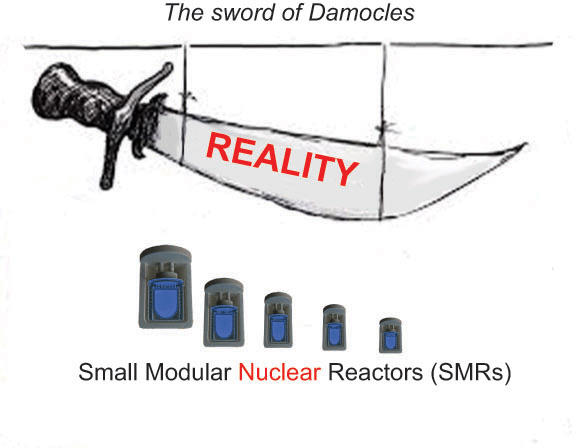
Realistic debate needed instead of new push for fast nuclear reactors https://www.asahi.com/ajw/articles/14534098
January 28, 2022 Japan has agreed to work with a U.S. company in technological cooperation to develop a sodium-cooled fast reactor.
People involved in the project stress that the new technology will contribute to the goal of a carbon-free society. But the government should not eschew reality-based debate on the future of existing nuclear power reactors.
The Japan Atomic Energy Agency, Mitsubishi Heavy Industries Ltd. and other Japanese entities will cooperate with TerraPower LLC’s project to build a fast reactor in the U.S. state of Wyoming.
Fast reactors are more resource efficient as they can burn types of nuclear fuel that cannot be used at conventional reactors.
TerraPower’s reactor will use liquid sodium as a cooling agent such as the Monju prototype fast-breeder reactor, which Japan decided to decommission after a series of accidents.
Japan can provide meaningful support to develop a new type of reactor and maintain related technology by offering what it has learned from its experiences including failures.
Japan has been promoting the concept of recycling separated plutonium back into fuel for nuclear power generation. Fast reactor technology to burn plutonium is at the core of this strategy.
But this program has suffered setbacks, including the decision to scrap Monju and a lack of progress in the government’s plan to burn so-called MOX (mixed oxide) fuel, which is usually plutonium blended with natural uranium, in conventional nuclear reactors.
The government also considered participating in France’s Advanced Sodium Technical Reactor for Industrial Demonstration (ASTRID) project to build a prototype sodium-cooled nuclear reactor.
But the idea was dropped after the French government decided to scale down the project.
The nuclear fuel recycling program, which has gone awry, should be abandoned. The participation in the TerraPower project should not allow the government to delay the decision on the program.
The technological cooperation with the United States has been touted as a way to “contribute to the achievement of carbon neutrality.”
However, it is unclear whether this will help Japan achieve its goal of net zero emissions of greenhouse gases by 2050.
TerraPower plans to start operating the new reactor in 2028. But this technology cannot be used immediately in Japan, which has been developing fast reactor technology for a different type of fuel.
The government’s road map for the development of fast reactor technology, determined in 2018, offers no clear time frame for practice use. It only said full-scale operation is expected “sometime in the late 21st century.”
The government has cited the development of next-generation reactor technology, such as small modular reactors and fast reactors, as an important factor for its clean energy and “zero carbon” policy efforts.
But it has failed to offer a clear vision for the future of existing nuclear reactors despite its massive reservoir of experience and expertise.
The government’s new Basic Energy Plan, unveiled last year, says nuclear power should account for 20 to 22 percent of the nation’s total electricity output in fiscal 2030. But the document did not refer to any specific measure to hit the target.
Neither Prime Minister Fumio Kishida nor members of his Cabinet have been eager to discuss this issue, apparently because of a reluctance to engage in debate on sticky issues concerning nuclear power.
Fast-breeder reactors, which can theoretically produce more fuel than they use, were once advertised as a source of “dream energy” for a resource-poor Japan.
Following the Monju debacle, the government started stressing that nuclear fuel recycling and fast reactor technology can help reduce high-level radioactive waste. Now, policymakers are singing the “carbon neutrality” theme.
The government should stop trying to obscure problems with its nuclear power policy by promoting a new technology without clear prospects for practical use under a new slogan.
Instead, it should launch a reality-based debate on existing nuclear reactors in line with its pledge to reduce the nation’s dependence on nuclear energy as much as possible.
Nuclear-armed North Korea tests long range missile.
Nuclear-armed North Korea tests long range missile, Canberra Weekly, January 30, 2022 Nuclear-armed North Korea has conducted what would be its largest missile test since 2017, sending a suspected intermediate-range ballistic missile soaring into space and sparking condemnation from the United States and its allies.
South Korea’s Joint Chiefs of Staff reported that a projectile believed to be a single ballistic missile was launched about 7.52am on Sunday from North Korea’s Jagang Province towards the ocean off its east coast.
South Korea’s National Security Council, which convened a rare emergency meeting presided over by President Moon Jae-in, said the test involved an intermediate-range ballistic missile (IRBM), which North Korea has not tested since 2017.
Decommissioning of the AGR nuclear power stations: National Audit Office UK
 |
The decommissioning of the AGR nuclear power stations, National Audit Office
| Published | January 28, 2022 |
|---|---|
| Full report | The decommissioning of the AGR nuclear power stations |
The government has entered into new arrangements to decommission seven AGR nuclear power stations. While the arrangements could deliver savings, their success will ultimately depend on the relevant parties working collaboratively to overcome risks, according to the National Audit Office (NAO).
The UK has eight second generation nuclear power stations, accounting for around 16% of UK electricity generation in 2020. Seven of the eight stations are Advanced Gas-cooled Reactors (AGRs), which are all due to stop generating electricity by 2028.
The Nuclear Liabilities Fund (the Fund) was established to meet the costs of decommissioning these eight stations, but significant additional taxpayer support has been required with more likely to be necessary. The UK government has provided a guarantee to underwrite the Fund in the event that its assets are insufficient to meet the total costs of decommissioning. In 2020, government contributed £5.1 billion to strengthen the Fund’s position and the Fund has recently requested a further £5.6 billion. The Fund’s assets were valued at £14.8 billion at the end of March 2021. The aim is that growth in the Fund’s investments will be sufficient to meet the long-term costs of decommissioning (£23.5 billion). However, cost estimates have doubled in real terms since 2004-05. If this upward trend is maintained and investment growth is not sufficient, there is a risk that the taxpayer will have to make further contributions.
In June 2021, the AGR stations’ owner EDF Energy (EDFE) agreed to defuel each of the stations in an arrangement that the Department for Business Energy & Industrial Strategy (the Department) estimates could save the taxpayer around £1 billion.2 Once defueling is completed, ownership of the stations will transfer to the government’s Nuclear Decommissioning Authority (NDA) for its subsidiary Magnox Ltd to complete the rest of the decommissioning process, which is likely to take several decades.
The rate at which stations can be defueled will impact on overall costs. The estimated cost of defueling could be between £3.1 billion and £8.0 billion. A bottleneck at any point between EDFE removing fuel, and the NDA transporting the fuel to safely store at Sellafield, could have repercussions across the programme. The costs to be borne by the Fund are therefore dependent on how quickly defueling begins once a station stops generating electricity, as well as the rate of defueling. Early unexpected closures of stations may increase costs……………………
“Government needs to maintain a clear view of how the nuclear decommissioning programme is performing as a whole, and given the large amounts of public money at stake it must act decisively should performance begin to lag.”
Gareth Davies, head of the NAO………………
Contact
NAO Press Office
+44 (0)20 7798 7400 or email pressoffice@nao.org.uk https://www.nao.org.uk/press-release/the-decommissioning-of-the-agr-nuclear-power-stations/
MOST of Iran’s nuclear facilities are vulnerable to devastating drone attacks
Iran Fukushima warning: Iran’s nuclear plants could be WIPED OUT https://www.express.co.uk/news/world/1558057/Iran-news-nuclear-threat-war-latest
MOST of Iran’s nuclear facilities are vulnerable to devastating drone attacks, a report has found.
By MARCO GIANNANGELI – DIPLOMATIC EDITOR11:00, Sun, Jan 30, 2022 But using unmanned vehicles (UMVs) laden with explosives could lead to a critical Fukushima-style reactor meltdown.
The revelation comes as diplomatic efforts to rein in Iran’s nuclear ambitions continue to flounder, with former Italian foreign minister Giulio Terzi last night warning: “The Iran nuclear deal is already on life-support and it is very possible that it might falter altogether due to Iran’s shameless violations.”
Detailed analysis of its 22 nuclear facilities by Dr Bahram Ghiassee, of the Henry Jackson Society think-tank, found that all except the Fordow fuel enrichment plant, near Qom – built into a mountain – are vulnerable to drone strikes which could incapacitate them.
And burying the Fordow facility under 60 metres of rock does not protect it from attacks on air shafts and other external supply systems.
While many facilities would result in little overall impact if attacked, there are glaring exceptions, the report found. These include the conversion plant at the Esfahan nuclear technology centre – a critical part of the nuclear fuel cycle – and the Bushehr nuclear power plant on the Persian Gulf.
The same applies to the Natanz enrichment facility now being rebuilt into a mountain after an explosion – believed to have been caused by Israel – destroyed the previous overland structure.
Though nuclear power plants are built to withstand light aerial attacks, Bushehr’s ancillary facilities “are highly vulnerable to aerial attacks, including drone strikes”, said the report, including by “commercially available as ‘Surface UMVs’ and ‘Submersible UMVs’, with an operating range of some 120 kilometres. “
However, Dr Ghiassee, a nuclear consultant, added: “A synchronised attack on the cooling water facilities, external electricity supply and electricity distribution systems could lead to the overheating of the reactor core and the spent fuel ponds.
“Under such circumstances, as in the Fukushima nuclear accident, the reactor core could melt down.”
Attacks against Iranian nuclear facilities are not a new phenomenon.
The Bushehr power plant was attacked by Saddam Hussein during the Iran-Iraq war in 1980, though this caused minor damage.
More recently, Iran has been the recipient of incapacitating explosions, cyber strikes and UMV attacks.
Though not confirmed by Tel Aviv, these are believed to have been carried out by Israel after it openly pledged never to allow Iran – which has threatened to blow Israel off the face of the world – to possess nuclear weapons.
We have a duty to be brave and responsible for the fate of our children and grandchildren. We have used force against our enemies in the past, and we are convinced that in extreme situations, there is a need to act using military means,” said Israeli Deputy Defence Minister Alon Schuster recently.
Actions have included the assassination of Iranian nuclear scientists, the explosion at Natanz in 2020 – said to have been caused by the provision of faulty materials following Mossad’s infiltration of the supply chain- and the cyber strike in 2010 using the Stuxnet virus, which reportedly infected more than 200,000 commuters and destroyed a fifth of Iran’s nuclear centrifuges.
What’s the situation of Bikini atoll and its people now?
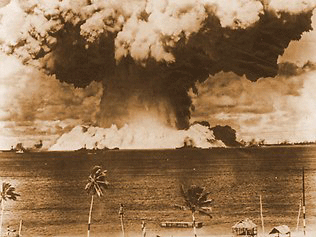
What Bikini Atoll Looks Like 60 Years Post-Nuclear Testing https://www.thetravel.com/bikini-atoll-nuclear-testing-can-you-visit-now/
Bikini Atoll sounds like a tropical paradise, but its history includes that of nuclear testing… So, what does it look like six decades following?
BY AARON SPRAYPUBLISHED 1 DAY AGO Bikini Atoll is an example of a tropical paradise-come-fire-and-brimstone apocalypse. It is a coral reef in the Marshall Islands made up of 23 islands that surround a large central lagoon. After WW2 all of the atoll’s population were forcibly relocated in 1946 to make way for a nuclear testing site for the United States.
Between 1946 and 1958 Bikini Atoll was subjected to 23 nuclear tests by the United States. And here is to be found the sunken American nuclear fleet. Another stunning lagoon to see a ship graveyard is in Truk (Chuuk) Lagoon in Micronesia.
The American authorities had promised the Bikini Atoll’s residents they would be able to return home after they were done nuking their home. Most of the islanders agreed to leave and moved to Rogerik Atoll and then Kili Island. But both of these new islands were unable to sustain them forcing the government to keep giving them aid.
After the end of the nuclear tests, three families were resettled on Bikini Island in 1970 (about 100 residents). But dangerously high levels of contamination were found in the well water and they were evacuated again in 1980.
In the end, the United States paid the islands and their descendants $125 million in compensation.
What’s plan B if the government can’t attract investors willing to fund Sizewell C?
What’s plan B if the government can’t attract investors willing to fund Sizewell C? Guardian Nils Pratley 27 Jan 22. Development money for nuclear power station is an attempt to draw in investors that could replace China’s CGN sum of £100m is peanuts in the expensive world of nuclear power stations, so regard the business secretary Kwasi Kwarteng’s funding for a round of development work on Sizewell C as a form of advertising. The cash is intended to send a message that the government is serious about getting the plant built in Suffolk. And it is an appeal for outside investors to volunteer to sit alongside developer EDF, the French state-backed group.
There was also a definition of a desirable investor: “British pension funds, insurers and other institutional investors from like-minded countries”. Note the nationality test. It is the closest we have come to official confirmation that China General Nuclear (CGN), originally slated for a 20% stake in Sizewell, will be kicked off the project. It remains to be seen how, legally, the government will rip up the 2015 deal with CGN signed by David Cameron’s government, but the intention is clear.
So, too, is the intended funding mechanism. It will be a regulated asset base (RAB) model, a version of the formula used at Heathrow Terminal 5 and the Thames Tideway giant sewer. The key point for investors is that they will see some income before Sizewell is built, unlike at Hinkley Point C where EDF and CGN earn their princely cashflows only when the electricity starts to flow.
What, though, if those British and like-minded institutions still refuse to play? Nuclear represents unknown territory for most of them. What if competition to invest, which is meant to be the other way in which RAB lowers financing costs, doesn’t materialise? What’s the government’s plan B?

The only possible solution is for the state to invest directly. If that is so, wouldn’t it be better to run an upfront benchmarking exercise at the outset to compare the numbers? Sizewell, unfortunately, is probably inevitable given the current panic over high gas prices and long-term energy security. But taxpayers, on the hook anyway via household bills, deserve to know that the odd billion or three isn’t being diverted unnecessarily to intermediaries.
By the time Sizewell’s sums become enormous, transparency will be essential…….https://www.theguardian.com/business/nils-pratley-on-finance/2022/jan/27/whats-plan-b-if-the-government-cant-attract-investors-willing-to-fund-sizewell-c
Leaders say nuclear will save Kemmerer. Residents aren’t convinced.

when TerraPower announced in November that it would build a first-of-its-kind sodium-cooled nuclear reactor at the town’s Naughton Power Plant, community leaders exhaled at last. The project promised a lifeline, not just to the town, but to similarly coal-dependent Wyoming.
The people who claimed they didn’t have much to say about the project, the ones who actually had a lot to say — a lot of them didn’t feel like trailblazers. They felt more like guinea pigs.
Many were suspicious. Why, they asked, would TerraPower stick its flagship project in such a tiny, remote town? Was it because they were too desperate to protest? Too isolated for anyone to care if things went awry?…….
Leaders say nuclear will save Kemmerer. Residents aren’t convinced. Casper Star Tribune
Nicole Pollack, Jan 29, 2022 The Star-Tribune visited Kemmerer this month to talk with the community about TerraPower’s nuclear plant. Energy reporter Nicole Pollack and photographer Lauren Miller will continue reporting from Kemmerer as the project develops.Roaming Kemmerer, asking people about the planned nuclear reactor, I expected excitement. Or trepidation. Or anger.
Apathy wasn’t on the list.
“We don’t really talk about it,” a retired miner told me as his fellow retirees — former coal miners and quarry workers and power plant operators — heckled one another around a senior center pool table.
Most of the Kemmerer residents I met said the same thing. They were familiar with the plan to replace their half-century-old coal plant with a nuclear reactor; did I know Bill Gates was behind it? Everyone, they assured me, was aware. They just didn’t have much more to say.
The energy sector is always changing, the miner said, and people in Kemmerer are used to riding out those booms and busts. Another boom isn’t anything special. So the project doesn’t come up in conversation very often.
He discusses it with his wife sometimes, though. The two of them speculate, nervously, about how a nuclear plant might change the tiny town they’ve called home for decades.
Coal’s demise hangs heavy over Kemmerer, and when TerraPower announced in November that it would build a first-of-its-kind sodium-cooled nuclear reactor at the town’s Naughton Power Plant, community leaders exhaled at last. The project promised a lifeline, not just to the town, but to similarly coal-dependent Wyoming. Gov. Mark Gordon proudly unveiled the project last summer during a celebratory press conference featuring a video message from Gates himself.
We’re absolutely ecstatic,” Mayor Bill Thek told me after Kemmerer was chosen.
The miner and his wife aren’t so sure. While they agree Kemmerer needs an economic boost of some kind, a replacement for its fading coal sector, they’re not sure whether a next-generation reactor will be the right answer. They’d rather keep burning coal.
I asked a lot of people in Kemmerer about the nuclear plant. At first, most sounded unconcerned, almost indifferent: “I don’t have much to say about it.”
But, it turned out, they usually did………………..
Maybe, another offered, the company was already starting to build the plant itself.
He hoped construction hadn’t started. There were still too many unknowns, he told me. The town wasn’t ready for nuclear; not by a long shot. He didn’t know if it would ever be.
Life after coal
Gillette, Rock Springs, Glenrock and Kemmerer — the four communities considered for TerraPower’s first nuclear reactor — are all coal towns. But in Kemmerer, the victor, founded in 1867 near the coal mine that gave the town its name, coal has always been king.
Much of the younger workforce has opted to work at the gas plant, or even at the fossil quarries, over the coal plant, in the hopes that those jobs will last even after coal is gone. And Kemmerer and Diamondville are trying to put themselves on the map — on tourists’ lucrative radar — for their fossils………………………………………
TerraPower and Rocky Mountain Power had convened roughly 40 high-profile community leaders, including elected officials, town managers, school and hospital administrators and police officers, in the Best Western conference room for a question-and-answer luncheon.
………………… they [the community] also know about the plant’s “aggressive” seven-year time limit — a condition of the company’s nearly $2 billion Department of Energy grant. And, as the meeting wrapped up, they wanted to know: How sure was TerraPower that the project would succeed?…..
Why us?
In the Best Western conference room, the descriptor of choice was “demonstration.” Outside of that room, at the senior center and the bowling alley and the booths at Place on Pine, the nuclear plant was “experimental.”
The people who claimed they didn’t have much to say about the project, the ones who actually had a lot to say — a lot of them didn’t feel like trailblazers. They felt more like guinea pigs.
Many were suspicious. Why, they asked, would TerraPower stick its flagship project in such a tiny, remote town? Was it because they were too desperate to protest? Too isolated for anyone to care if things went awry?…….
There will be protests,” I was told several times. No one who said it wanted to participate themselves — I didn’t meet anyone who did — but they were suresomeone would………………… https://trib.com/business/energy/leaders-say-nuclear-will-save-kemmerer-residents-arent-convinced/article_64d05a74-9245-5183-8366-651079ad9b12.html……………….
Map shows the horrible impact a nuclear bomb would have on Coventry
|

Map shows the horrible impact a nuclear bomb would have on Coventry
We used NUKEMAP to find out the effects nuclear bombs would have on Coventry, Coventry Live, ByJaspreet Kaur, 30 Jan 22, t’s a chilling thought – but have you ever wondered what would happen if a nuclear bomb was suddenly detonated in Coventry as part of an attack on the UK?
CoventryLive has used specialist research to find out what would happen if a nuclear bomb hit the city.
The website NUKEMAP calculates the effects of the detonation of a nuclear bomb. And although of course none has ever hit the UK before, they were used to terrible effect in Japan at the end of the Second World War.
And of course our city faced dreadful destruction in Nazi bombing raids.
The website that now looks into the horrifying impact a nuclear disaster could have was created by Alex Wellerstein, a historian of science who specialises in the history of nuclear weapons and nuclear secrecy.
He created Nukemap in February 2012, and it has been used by over 25 million people globally since its launch.
In one experiment, we looked at what happened if ‘Davy Crockett’ detonated in our city – one of the smallest nuclear bombs ever built in the United States……………
all-in-all the impact of the smallest US bomb is very bad in real terms, but relatively small for a nuclear attack. Wr then looked at a much larger bomb.
And chillingly, the ‘Gadget’ bomb was found to have a much more awful impact.
If detonated in Coventry city centre this particular bomb would cause thermal radiation to several Coventry areas, including Earlsdon , Cheylsmore , Ball Hill and Daimler Green .
It would also cause moderate blast damage to areas further afield, such as Radford , Coundon , Whitley and Styvechale .
In total, the number of estimated injuries would rise significantly to 48,060 with 23,900 estimated fatalities. Which is terrifying.
The test may seem arid – but the threat of nuclear war hung over the world for decades during the Cold War.
There are still around 3,750 active nuclear warheads and nearly 14,000 total nuclear warheads in the world today…………………………… https://www.coventrytelegraph.net/news/map-shows-horrible-impact-nuclear-22918995
West Virginia public weighs in on nuclear power plant prohibition repeal .
Public weighs in on nuclear power plant prohibition repeal The Weirton Daily Times, 30 Jan 22,
STEVEN ALLEN ADAMS STAFF WRITER, CHARLESTON —With lawmakers on the cusp of removing a more than 25-year-old ban on nuclear energy in West Virginia, members of the House of Delegates received input from the public Friday.
The House Government Organization Committee held a public hearing in the House of Delegates chamber Friday morning on Senate Bill 4, repealing sections of the state code banning the construction of nuclear power plants in West Virginia………
The bill would remove two sections of code banning the construction of new nuclear power plants except under certain circumstances. The ban has been in place since 1996.
Supporters of the bill include the West Virginia Manufacturers Association and the West Virginia Chamber of Commerce. …………………
Opposition to the bill united two sides normally fighting each other: the coal industry and environmental activists. ……….
Hannah King, a lobbyist with the West Virginia Environmental Council, read a prepared statement on behalf of Gary Zuckett, executive director of the West Virginia Citizen Action Group, due to Zuckett being quarantined for a COVID-19 infection. Zuckett, who advocated for the 1996 ban on nuclear power, said even with improvements in technology the state should take its time before repealing the ban.
“We need climate solutions now, not in 10 years,” King said on behalf of Zuckett. “The prudent thing to do would be to put these bills on hold, assemble an interim study, gather experts on both sides of this critical issue, and make a measured and informed decision. If we’re going to open up West Virginia to nuclear power, let’s do it with proper regulations and safeguards for its people, economy and environment.”……………… https://www.weirtondailytimes.com/news/local-news/2022/01/public-weighs-in-on-nuclear-power-plant-prohibition-repeal/
Montana communities have better options than nuclear power.
We have better options than nuclear, https://helenair.com/opinion/letters/we-have-better-options-than-nuclear/article_620c7b44-dfaa-5448-b4fd-f8964dded79e.html Jeff Havens, 30 Jan 22,
Voter voices were silenced last spring by legislators and the governor on the topic of whether nuclear fission reactors and their highly radioactive waste can be located within our communities. Simultaneously, a separate but related law was enacted for the state to study “small advanced nuclear reactors.”
Contrary to their myopic moves, the Union of Concerned Scientists reported “newly built reactors must be demonstrably safer and more secure …. Unfortunately, most ‘advanced’ nuclear reactors are anything but. … for any reactor concept it is critical to understand that ‘burning’ spent fuel first entails reprocessing to separate out and re-use plutonium and other weapon-usable materials. Reprocessing makes these materials more accessible for use in nuclear weapons by states or terrorists….”
I hate to think that some “recycled” material from such reactors could be diverted into manufacturing nuclear weapons to be leveraged by domestic states or terrorists during the next coup attempt on our nation. This alarming possibility is amplified when one considers federal seditious conspiracy indictment of Oath Keepers founder and leader Elmer Rhodes, who is a former Montana attorney and resident.
We have better options for jobs than hazards associated with fission reactors. Let’s try more wind and solar, first.
Russia proposes US returns American nuclear weapons from NATO countries close to Russia

Russia proposes US returns American nuclear weapons from NATO countries stateside https://tass.com/politics/1394065
According to Vladimir Yermakov, “currently there are about 200 American nuclear air bombs of the B61 family” in five non-nuclear NATO countries
MOSCOW, January 27. /TASS/. Moscow proposed to Washington to return all American nuclear weapons from NATO countries to US territory in the context of reviewing security guarantees, Director of the Russian Foreign Ministry’s Department for Nonproliferation and Arms Control Vladimir Yermakov said in an interview with TASS.
“We insist that NATO’s ‘joint nuclear missions’ should be stopped immediately, all the American nuclear weapons be returned to US national territory and the infrastructure that allows their rapid deployment should be eliminated. This aspect is one of the elements of the package of measures proposed by us to Washington in the context of considering the issues of security guarantees,” he said.
According to the diplomat, “currently there are about 200 American nuclear air bombs of the B61 family” in five non-nuclear NATO countries. Thus, the alliance is capable of rapidly deploying nuclear weapons able to reach strategic targets on Russian territory. “[NATO countries] also retain the infrastructure ensuring rapid deployment of these [nuclear] weapons capable of reaching Russian territory and striking a wide range of targets, including strategic ones,” he pointed out.
At the same time, NATO engages non-nuclear countries in training for using American nuclear weapons against Russia. “Interaction between NATO member countries in joint nuclear planning is underway. NATO ‘joint nuclear missions’ take place with non-nuclear alliance members involved in training on the use of American nuclear weapons against us,” the diplomat stressed.
He noted that the US is modernizing its nuclear arsenal with a view of the increased applicability of such weapons in real conditions, above all, in Europe. “As for modernization, the US is consistently implementing a campaign on the renovation of practically all the components of the nuclear arsenal. The B61 air bombs in their newest B61-12 modification will have a decreased or variable yield but increased precision. This raises the question, which containment scenarios justify such ‘calibration?’ This clearly means betting on a ‘higher applicability’ of such weapons under real conditions, first of all, in Europe,” the diplomat stated.
On December 17, 2021, the Russian Foreign Ministry published draft agreements between Moscow and Washington on security guarantees and the measures of ensuring the security of Russia and NATO member states. The proposed measures include guarantees that NATO will not advance eastward, including the accession of Ukraine and other countries into the alliance, as well as the non-deployment of serious offensive weapons, including nuclear ones. On January 26, the US and NATO submitted to Russia their written response to Moscow’s proposal on security guarantees.
1 This Month



19 November – Webinar – The Reality of Reprocessing
Time: 11:00 AM Pacific Time (US & Canada) / 2:00 PM Eastern / 7:00 PM UK / 8:00 PM CET
Register for the Zoom Event Here



Shut down the radiation-damaged Heysham nuclear reactors now
To see nuclear-related stories in greater depth and intensity – go to https://nuclearinformation.wordpress.com

Say No to NASA’s Reckless Nuclear Reactor on the Moon
Say No to NASA’s Reckless Nuclear Reactor on the Moon
-
Archives
- November 2026 (74)
- October 2026 (302)
- September 2026 (339)
- August 2026 (330)
- July 2026 (355)
- June 2026 (287)
- May 2026 (306)
- April 2026 (356)
- March 2026 (251)
- February 2026 (267)
- January 2026 (308)
- December 2025 (358)
-
Categories
- 1
- 1 NUCLEAR ISSUES
- business and costs
- climate change
- culture and arts
- ENERGY
- environment
- health
- history
- indigenous issues
- Legal
- marketing of nuclear
- media
- opposition to nuclear
- PERSONAL STORIES
- politics
- politics international
- Religion and ethics
- safety
- secrets,lies and civil liberties
- spinbuster
- technology
- Uranium
- wastes
- weapons and war
- Women
- 2 WORLD
- ACTION
- AFRICA
- Atrocities
- AUSTRALIA
- Christina's notes
- Christina's themes
- culture and arts
- Events
- Fuk 2022
- Fuk 2023
- Fukushima 2017
- Fukushima 2018
- fukushima 2019
- Fukushima 2020
- Fukushima 2021
- general
- global warming
- Humour (God we need it)
- Nuclear
- RARE EARTHS
- Reference
- resources – print
- Resources -audiovicual
- Weekly Newsletter
- World
- World Nuclear
- YouTube
-
RSS
Entries RSS
Comments RSS

