An increased 2 degree Celsius world will not be liveable for vast swathes of humanity – but that’s the latest semi-optimistic research result

| Christiana Figueres: Should we feel joy or despair that we’re on track to keep global heating to 2C? The atmosphere does not react to pledges for the future or reports about past achievements. It only reacts to real emission reductions. The research published in Nature last week showing that the pledges by countries to reduce emissions made since the Paris agreement could keep warming within 2C, if met on time, has therefore understandably sparked a series of conflicting reactions. Outrage that even if the promises are met, they don’t come close to 1.5C; and optimism that 2C is such a huge improvement on where we’d be headed without the Paris agreement. On the one hand, we have to acknowledge this looks very much like failure. A 2C world will not be liveable for vast swathes of humanity, and half of the world’s children are already at extremely high risk from the impacts now, including hunger-inducing floods and droughts. Guardian 19th April 2022 https://www.theguardian.com/commentisfree/2022/apr/19/global-heating-2c-climate-paris-agreement |
Bechtel and Westinghouse will be big on talk but short on delivery for UK’s nuclear projects – Nuclear Free Local Authorities
The Conservative Welsh Secretary Simon Hart MP has recently visited the
Vogtle nuclear project in Georgia, USA, but the Nuclear Free Local
Authorities believe that Bechtel and Westinghouse will be big on talk but
short on delivery if they are selected as Britain’s commercial partners
to build a new power plant at Wylfa.
If there are two certainties with anynuclear power project, they are that it will be delivered way beyond budgetand that it will be delivered very late. At present, the sole new nuclear
project under construction at Hinkley Point C in Somerset is costing £23
billion and is ten years behind schedule; and operator, French-state owned
EDF Energy, has announced that it will again be revising the final budget
upwards and the end-date backwards, over the summer.
The Vogtle project,
being built by engineering firm Bechtel with two AP-1000 Westinghouse
light-water reactors, has so far cost US $30 billion, ironically around the
same price tag as Hinkley Point C, with this monstrous boondoggle being
bankrolled from the deep pockets of its eventual operator Georgia Power and
backed by US $12 billion in loans from the US Department of Energy. The
other AP-1000 project at VC Summer in South Carolina was abruptly
terminated in July 2017 after limping along for nine years and at a cost of
US $9 billion. This decision contributed to Westinghouse declaring Chapter
11 bankruptcy and subsequently several former Westinghouse officials,
including a Senior Vice-President, have been charged with a range of
serious offences relating to the company’s fraudulent actions.
NFLA 19th April 2022
Who Profits From Narrative Management & Eliminating Dissent?
Who Profits From Narrative Management & Eliminating Dissent? went2thebridge – Organizing and actions to resist the moral and financial bankrupting of the U.S. through wars against the poor, at home and abroad 18 Apr 22,
When the Pentagon summons the heads of eight weapons manufacturing corporations to a classified meeting about “aid” to Ukraine, you can be sure that a whole lot more Ukranians will be dying in their civil war on steroids.
This type of aid is in reality U.S. taxpayer-funded corporate welfare for the likes of Lockheed and Raytheon, whose former board member is our current Secretary of “Defense.” The aid has been flowing so thick and fast since Russia intervened in the CIA-sponsored war on its doorstep that it’s hard to add it all up quickly enough. One tally this week put the total at $1.7 billion!
Also, why limit these already wealthy corporate entities to feeding from just the U.S. trough? Zero Hedge reports: “Besides replenishing stockpiles sent to Ukraine, the companies stand to gain from European countries increasing military spending in the wake of Russia’s invasion.”
I believe this cash bonanza explains the barrage of propaganda that liberals have fallen for hook, line, and sinker.
You would think that those who value free speech would be alarmed by the burgeoning online censorship that many independent journalists have noted.
Consider the case of Michael J. Brenner, “Professor Emeritus of International Affairs at the University of Pittsburgh and a Fellow of the Center for Transatlantic Relations at SAIS/Johns Hopkins, as well as former Director of the International Relations & Global Studies Program at the University of Texas” according to an interview in scheerpost:
…………… In an email with the subject line “Quittin’ Time,” Brenner recently declared that, aside from having already said his piece on Ukraine, one of the main reasons he sees for giving up on expressing his opinions on the subject is that “it is manifestly obvious that
our society is not capable of conducting an honest, logical, reasonably informed discourse on matters of consequence. Instead, we experience fantasy, fabrication, fatuousness and fulmination.” He goes on to decry President Joe Biden’s alarming comments in Poland when he all but revealed that the U.S. is—and perhaps has always been—interested in a Russian regime change [emphasis mine].
Or how about Scott Ritter, a former UN weapons inspector who sifts through the foggy “facts” of war to discern some truth, who had his Twitter account suspended twice in one week. Based on what he knows about the grisly details of bodies left to rot in the street, he doubted that Russian soldiers could have committed the crimes before their exit from Bucha and speculated that Ukranian militias were the only ones in the area at the time of the massacre.
Cue liberals insisting that Twitter is not the government and therefore can censor anything it likes without violating the 1st amendment. Do they not know that Twitter, Facebook/Meta, Google/YouTube, and other platforms work hand in glove with the federal government to manage the narrative or, when that fails, to eliminate dissenting views?
Are they fooled by mainstream media like the Washington Post, now owned by billionaire Jeff Bezos, ironically sporting the tagline “Democracy Dies in Darkness”?
Or do they know and not care because they’re more interested in the former president and other right-wingers being denied platforms for their views than they are interested in actual free speech?
From media watcher Caitlin Johnstone:
what exactly is the argument for censoring wrongthink about the Ukraine war? Even if we pretend that everything they’re saying is 100% false and completely immoral, so what? What harm is being done? …………
Political action and the players behind it — at every level — becomes more murky by the day. Forgive this boomer for saying, back in the day we thought a free press was foundational to reign in the excesses of the wealthy and powerful, by shining a light into their dark doings.
But late stage capitalism demands fealty to profits above all else. Even, or maybe especially, when the leader of the “free world” is busy shooting himself and his cronies in the foot.
U.S. Is Set to Launch a $6 Billion Effort to Save Nuclear Plants

Ari Natter, Bloomberg News 18 Apr 22, — The Energy Department is expected to provide details as soon as Monday on a $6 billion program aimed at keeping uneconomical nuclear plants in service, providing a lifeline to an industry that’s seen a raft of early reactor retirements driven by competition from cheaper power sources.
The program, funded through the $550 billion infrastructure bill signed into law last year, will let owners and operators of commercial nuclear reactors apply for credits for plants that are likely to shut down for economic reasons if the closures would lead to higher emissions. The agency is set to issue a guidance document this week detailing the application process.
……………….The program, known officially as the Civil Nuclear Credit Program, could provide a boost to operators including Public Service Enterprise Group Inc., Constellation Energy Corp. and Energy Harbor Corp. U.S. reactors have struggled to survive in the face of competition from cheap natural gas and renewable power. A dozen have already retired early for economic reasons,………
The Energy Department, which will administer the program, plans this week to issue guidance about how to apply for the program and will open a process for certification. The agency expects to issue preliminary credit award decisions following an application period of about 30 days, and “the first award cycle will prioritize and be limited to reactors that are approaching near term closure.” https://www.bnnbloomberg.ca/u-s-is-set-to-launch-a-6-billion-effort-to-save-nuclear-plants-1.1753474
Magnitude 5.3 earthquake shakes Fukushima and Ibaraki
Magnitude 5.3 earthquake shakes Fukushima and Ibaraki https://www.japantimes.co.jp/news/2022/04/19/national/quake-fukushima/ 19 Apr 22,
An earthquake with a preliminary magnitude of 5.3 struck Ibaraki and Fukushima prefectures as well as other parts of Japan on Tuesday morning, the Meteorological Agency said.
The 8:16 a.m. quake registered a lower 5 on japan’s seismic intensity scale of 7 in northern Ibaraki, while parts of Ibaraki, Fukushima, Tochigi and Saitama prefectures registered a 4. No tsunami warning was issued.
The temblor originated in an inland part of Fukushima at a depth of about 90 kilometers.
More information:
- Detailed information about this earthquake from the Yahoo! Japan Weather & Disaster website
- Detailed information about this earthquake from the Japan Meteorological Agency website
- The Japan Meterological Agency website
- An explanation of shindo, Japan’s earthquake intensity scale.
- A guide to what to do before, during and after an earthquake.
- Our portal for disaster-related information
Ukraine can fight Russia ‘for 10 years’ claims Zelensky.

Ukraine can fight Russia ‘for 10 years’ claims Zelensky, as neo-Nazi led military suffers heavy losses & demands West supply ever more arms https://www.sott.net/article/466849-Ukraine-can-fight-Russia-for-10-years-claims-Zelensky-as-neo-Nazi-led-military-suffers-heavy-losses-demands-West-supply-ever-more-armsRT, Sun, 17 Apr 2022
Ukraine is not prepared to give up territory and is ready, if necessary, to fight Russia “for 10 years,” President Volodymyr Zelensky has claimed. He also appeared to acknowledge that the current conflict effectively began in 2014, when Kiev first launched an operation to re-take the breakaway Donbass.
In an interview with CNN, Zelensky said that for Ukraine “the battle for Donbass is very important” for a number of reasons, adding that it could affect “the course of the whole war.” He stressed, however, that a diplomatic solution to the conflict is preferable.
“We cannot give up our territory, but we must find some kind of dialogue with Russia,” Zelensky said, adding that talks will not be conducted “on the basis of the Russian ultimatum.”
Zelensky said dialogue is needed to prevent more deaths, though he claimed his country “can fight the Russian Federation for ten years.”
He said the Ukrainian forces in Donbass are some of “the best military” the country has. “It is a large grouping. And Russia wants to encircle them and destroy them,” Zelensky claimed, adding that he was talking about “44,000 professional military men who survived a great war from the beginning of 2014.”
“This is why it is very important for us to preserve that part of our army.”
Asked by the CNN presenter if Ukraine will be victorious in the conflict, Zelensky said, “Yes, of course.”
Russia attacked the neighboring state in late February, following Ukraine’s failure to implement the terms of the Minsk agreements, first signed in 2014, and Moscow’s eventual recognition of the Donbass republics of Donetsk and Lugansk. The German and French brokered protocols were designed to give the breakaway regions special status within the Ukrainian state.
The Kremlin has since demanded that Ukraine officially declare itself a neutral country that will never join the US-led NATO military bloc. Kiev insists the Russian offensive was completely unprovoked and has denied claims it was planning to retake the two republics by force.
RT comments:
It seems that Russia agrees Donbass is important, that’s why it focused on liberating Donbass, and it did so by luring the US-proxy army in Ukraine away to Kiev.
Maybe it’s possibly, technically, true; [ country “can fight the Russian Federation for ten years.”] although the economies of the West would probably have bankrupted themselves by then, even if they were able to recruit ever more cannon fodder from their terrorist armies elsewhere, and these terrorists wouldn’t be fighting on the territory that Russia has already taken control over; it’s also not clear that the multipolar alliance would tolerate a decade of attacks without serious retaliation.
It remains to be seen what’s left of the Ukraine as we know it in 10 weeks, never mind 10 years. Zelensky’s acting experience has certainly fooled a great many people into thinking otherwise, but the facts on the ground, such as the heavy losses of Ukraine’s military bases, troops, territory, and its endless begging for more money and arms, reflect a proxy army in dire straits: Ukraine is smashed, this is how it will be repaired
Russia warns of nuclear weapons in Baltic if Sweden and Finland join NATO
 | |||
Russia warns of nuclear weapons in Baltic if Sweden and Finland join Nato,
Lithuania plays down threat, claiming Russians already have such weapons in Baltic exclave of Kaliningrad Guardian, Jon Henley and Julian Borger 15 Apr 2022
Moscow has said it will be forced to strengthen its defences in the Baltic if Finland and Sweden join Nato, including by deploying nuclear weapons, as the war in Ukraine entered its seventh week and the country braced for a major attack in the east.
However, the Lithuanian defence minister, Arvydas Anušauskas, claimed on Thursday that Russia already had nuclear weapons stored in its Baltic exclave of Kaliningrad, which borders Lithuania and Poland. That claim has not been independently verified, but the Federation of American Scientists (FAS) reported in 2018 that nuclear weapon storage bunkers in Kaliningrad had been upgraded.
The Russian former president Dmitry Medvedev, a senior member of Russia’s security council, said on Thursday that all its forces in the region would be bolstered if the two Nordic countries joined the US-led alliance.
Medvedev’s threat is the latest of many instances of nuclear sabre-rattling from the Kremlin aimed at deterring western military intervention on behalf of Ukraine.
“We’re obviously very concerned,” said the CIA director, William Burns. “Given the potential desperation of President Putin and the Russian leadership, given the setbacks that they’ve faced so far militarily, none of us can take lightly the threat posed by a potential resort to tactical nuclear weapons or low-yield nuclear weapons.”
But Burns added: “While we’ve seen some rhetorical posturing on the part of the Kremlin, moving to higher nuclear alert levels, so far we haven’t seen a lot of practical evidence of the kind of deployments or military dispositions that we would reinforce that concern.”
Finland and Sweden are deliberating over whether to abandon decades of military non-alignment and join Nato, with the two Nordic countries’ leaders saying Russia’s onslaught on Ukraine has changed Europe’s “whole security landscape”.
Their accession to the alliance would more than double Russia’s land border with Nato members, Medvedev said. “Naturally, we will have to reinforce these borders” by bolstering ground, air and naval defences in the region, he said.
Medvedev, a close ally of Vladimir Putin, explicitly raised the nuclear threat, saying Finnish and Swedish Nato membership would mean there could be “no more talk of any nuclear-free status for the Baltic – the balance must be restored”.
Russia had “not taken such measures and was not going to”, he said. “But if our hand is forced, well … take note it wasn’t us who proposed this.”
Russia borders the Baltic states of Estonia and Latvia, and the Russian exclave of Kaliningrad is sandwiched between Poland and Lithuania.
Russia’s deputy foreign minister, Alexander Grushko, said Moscow would take the security and defence measures that it would deem necessary if Sweden and Finland join Nato, adding that the move would seriously worsen the military situation and lead to “the most undesirable consequences”.,,………………….. https://www.theguardian.com/world/2022/apr/14/russia-says-it-will-reinforce-borders-if-sweden-and-finland-join-nato
US envoy vows ‘decisive response’ to North Korea missile, nuclear tensions
SEOUL 18 Apr 22, : The US envoy for North Korea said that Washington would act “responsibly and decisively” in response to “escalatory actions” after a series of test missile launches raised concerns that the North was preparing to resume nuclear testing.
US Special Representative Sung Kim and his deputy, Jung Pak, met with South Korean officials, including nuclear envoy Noh Kyu-duk, after arriving in Seoul early on Monday (Apr 18) for a five-day visit……………. https://www.channelnewsasia.com/asia/us-envoy-vows-decisive-response-north-korea-missile-nuclear-tensions-2631726
Our news analyses of the Ukraine war come from politicians, not from genuine military intelligence
Military Situation in Ukraine: An Update by Jacques Baud The Postil
Mon, 11 Apr 2022

This allows us to deduce that the American and European political leaders deliberately pushed the Ukraine into a conflict that they knew was lost in advance — for the sole purpose of dealing a political blow to Russia.
“…………………The Conduct of Battle.
As for the course of operations, the analyses presented in our media come most often from politicians or so-called military experts, who relay Ukrainian propaganda.
Let’s be clear. A war, whatever else it is, is drama. The problem here is that our strategists in neckties are clearly trying to overdramatize the situation in order to exclude any negotiated solution. This development, however, is prompting some Western military personnel to speak out and offer a more nuanced judgment. Thus, in Newsweek, an analyst from the Defense Intelligence Agency (DIA), the American equivalent of the Direction du Renseignement Militaire (DRM) in France, noted that “in 24 days of conflict, Russia has carried out some 1,400 strikes and launched nearly 1,000 missiles (by way of comparison, the United States carried out more strikes and launched more missiles on the first day of the Iraq war in 2003).”
While the West likes to “soften up” the battlefield with intensive and prolonged strikes, before sending in ground-troops, the Russians prefer a less destructive, but more troop-intensive approach. On France 5, the journalist Mélanie Tarvant presented the death of Russian generals on the battlefield as proof of the destabilization of the Russian army. But this is a profound misunderstanding of the traditions and modes of operation of the Russian army. Whereas in the West, commanders tend to lead from the rear, their Russian counterparts tend to lead from the front — in the West they say, “Forward!” In Russia, they say, “Follow me!” This explains the high losses in the upper echelons of command, already observed in Afghanistan — but it also tells of the much more rigorous selection of staff-personnel than in the West.
Furthermore, the DIA analyst noted that “the vast majority of the airstrikes are over the battlefield, with Russian aircraft providing ‘close air support’ to ground forces. The remainder — less than 20 percent, according to U.S. experts — has been aimed at military airfields, barracks and supporting depots.” Thus, the phrase “indiscriminate bombing [that] is devastating cities and killing everyone” echoed by the Western media seems to contradict the U.S. intelligence expert, who said, “If we merely convince ourselves that Russia is bombing indiscriminately, or [that] it is failing to inflict more harm because its personnel are not up to the task or because it is technically inept, then we are not seeing the real conflict.”
In fact, Russian operations differ fundamentally from the Western concept of the same. The West’s obsession with having no fatalities in their own forces leads them to operations that are primarily in the form of very lethal air strikes. Ground troops only intervene when everything has been destroyed. This is why, in Afghanistan or in the Sahel, Westerners killed more civilians than terrorists did. This is why Western countries engaged in Afghanistan, the Middle East and North Africa no longer publish the number of civilian casualties caused by their strikes. In fact, Europeans engaged in regions that only marginally affect their national security, such as the Estonians in the Sahel, go there just to “get their feet wet.”
In the Ukraine, the situation is very different. One only has to look at a map of linguistic zones to see that the Russian coalition operates almost exclusively in the Russian-speaking zone; thus, among populations that are generally favorable to it. This also explains the statements of a US Air Force officer: “I know that the news keeps repeating that Putin is targeting civilians, but there is no evidence that Russia is intentionally doing so.”
Conversely, it is for the same reason — but in a different way — that the Ukraine has deployed its ultra-nationalist paramilitary fighters in major cities, such as Mariupol or Kharkov — without emotional or cultural ties to the local population, these militias can fight even at the cost of heavy civilian casualties. The atrocities that are currently being uncovered remain hidden by the French-speaking media, for fear of losing support for the Ukraine, as noted by media close to the Republicans in the United States.
After “decapitation” strikes in the first minutes of the offensive, the Russian operational strategy was to bypass the urban centers, and to envelop the Ukrainian army, “pinned down” by the forces of the Donbass republics. It is important to remember that the “decapitation” is not intended to annihilate the general staff or the government (as our “experts” tend to understand it), but to sunder the leadership structures so as to prevent the coordinated maneuver of forces. On the contrary, the aim is to preserve the leadership structures themselves in order to be able to negotiate a way out of the crisis.
On March 25, 2022, after having sealed the cauldron of Kramatorsk which denied any possibility of retreat to the Ukrainians and having taken most of the cities of Kharkov and Marioupol, Russia has practically fulfilled its objectives — all that remains is to concentrate its efforts on reducing the pockets of resistance. Thus, contrary to what the Western press has claimed, this is not a reorientation or a resizing of its offensive, but the methodical implementation of the objectives announced on February 24.
The Role of the Volunteers
A particularly disturbing aspect of this conflict is the attitude of European governments that allow or encourage their citizens to go and fight in the Ukraine. Volodymyr Zelensky’s call to join the International Legion for the Territorial Defense of Ukraine, which he recently created, has been greeted with enthusiasm by European countries.
Encouraged by the media that present a routed Russian army, many of these young people head off, imagining they are going — literally — on a hunting trip. However, once there, disillusionment is high. Testimonies show that these “amateurs” often end up as “cannon fodder,” without having any real impact on the outcome of the conflict. The experience of recent conflicts shows that the arrival of foreign fighters brings nothing to a conflict, except to increase its duration and lethality.
Moreover, the arrival of several hundred Islamist fighters from the Idlib region, an area under the control and protection of the Western coalition in Syria (and also the area in which two Islamic State leaders were killed by the Americans) should arouse our concern. Indeed, the weapons we are very liberally supplying to the Ukraine are already partly in the hands of criminal individuals and organizations and are already beginning to pose a security problem for the authorities in Kiev. Not to mention the fact that the weapons that are being touted as effective against Russian aircraft could eventually threaten our military and civilian aircraft.
The volunteer proudly presented by the RTBF on the 7:30 p.m. news of March 8, 2022 was an admirer of the “Corps Franc Wallonie,” Belgian volunteers who served the Third Reich; and he illustrates the type of people attracted to the Ukraine. In the end, we will have to ask ourselves, who gained the most — [in this case] Belgium or the Ukraine?
Distributing weapons indiscriminately could well make the EU — volens nolens — a supporter of extremism and even international terrorism. The result — we are adding misery to misery, in order to satisfy the European elites more than the Ukraine itself.
Three Points Deserve to be Highlighted by Way of Conclusion
1. Western Intelligence, Ignored by Policymakers
Military documents found in Ukrainian headquarters in the south of the country confirm that the Ukraine was preparing to attack the Donbass; and that the firing observed by OSCE observers as early as February 16 heralded an imminent outbreak in days or weeks.
Here, some introspection is necessary for the West — either its intelligence services did not see what was happening and they are thus very bad, or the political decision-makers chose not to listen to them. We know that Russian intelligence services have far superior analytical capabilities than their Western counterparts. We also know that the American and German intelligence services had very well understood the situation, since the end of 2021, and knew that the Ukraine was preparing to attack the Donbass.
This allows us to deduce that the American and European political leaders deliberately pushed the Ukraine into a conflict that they knew was lost in advance — for the sole purpose of dealing a political blow to Russia.
The reason Zelensky did not deploy his forces to the Russian border, and repeatedly stated that his large neighbor would not attack him, was presumably because he thought he was relying on Western deterrence. This is what he told CNN on March 20th — he was clearly told that the Ukraine would not be part of NATO, but that publicly they would say the opposite. The Ukraine was thus instrumentalized to affect Russia. The objective was the closure of the North Stream 2 gas pipeline, announced on February 8th, by Joe Biden, during the visit of Olaf Scholz; and which was followed by a barrage of sanctions.
2. Broken Diplomacy
Clearly, since the end of 2021, no effort has been made by the West to reactivate the Minsk agreements, as evidenced by the reports of visits and telephone conversations, notably between Emmanuel Macron and Vladimir Putin. However, France, as guarantor of the Minsk Agreements, and as a permanent member of the United Nations Security Council, has not respected its commitments, which has led to the situation that the Ukraine is experiencing today. There is even a feeling that the West has sought to add fuel to the fire since 2014.
Thus, Vladimir Putin’s placing of nuclear forces on alert on February 27 was presented by our media and politicians as an irrational act or blackmail. What is forgotten is that it followed the thinly veiled threat made by Jean-Yves Le Drian, three days earlier, that NATO could use nuclear weapons. It is very likely that Putin did not take this “threat” seriously, but wanted to push Western countries — and France in particular — to abandon the use of excessive language.
3. The Vulnerability of Europeans to Manipulation is Increasing
Today, the perception propagated by our media is that the Russian offensive has broken down; that Vladimir Putin is crazy, irrational and therefore ready to do anything to break the deadlock in which he supposedly finds himself. In this totally emotional context, the question asked by Republican Senator Marco Rubio during Victoria Nuland’s hearing before Congress was strange, to say the least: “If there is a biological or chemical weapon incident or attack inside the Ukraine, is there any doubt in your mind that 100% it would be the Russians behind it?” Naturally, she answered that there is no doubt. Yet there is absolutely no indication that the Russians are using such weapons. Besides, the Russians finished destroying their stockpiles in 2017, while the Americans have not yet destroyed theirs.
Perhaps this means nothing. But in the current atmosphere, all the conditions are now met for an incident to happen that would push the West to become more involved, in some form, in the Ukrainian conflict (a “false-flag” incident).
NuScale: Not new, not needed — Beyond Nuclear International.

Costs, delays and competition will likely kill SMR
NuScale: Not new, not needed — Beyond Nuclear International Risks of rising costs, likely delays, and increasing competition cast doubt on long- running development effort
By David Schlissel and Dennis Wamsted
In a new analysis, the Institute for Energy Economics and Financial Analysis looked at NuScale’s proposed Small Modular Reactor, concluding that its costs will be far higher than NuScale predicts and that the reactor is fundamentally not needed. What follows are the Executive Summary and Conclusions sections of the report. The full report can be read and downloaded here.
Executive Summary

The second set of problems with the NuScale proposal are contractual. As the power sale agreement is currently structured, anyone who signs on to buy power from NuScale’s SMR will have to pay the actual costs and expenses of the project, not just the $58 per MWh estimated target price now being promoted by NuScale and UAMPS. And participants would have to continue to do so for decades, even if the price of the electricity from the SMR is much more expensive than NuScale and UAMPS now claim or even if participants don’t receive any power from the project for a significant part of its forecast operating life. These are risks that far outweigh any potential project benefits.
Too late, too expensive, too risky and too uncertain. That, in a nutshell, describes NuScale’s planned small modular reactor (SMR) project, which has been in development since 2000 and will not begin commercial operations before 2029, if ever.
As originally sketched out, the SMR was designed to include 12 independent power modules, using common control, cooling and other equipment in a bid to lower costs. But that sketch clearly was only done in pencil, as it has changed repeatedly during the development process, with uncertain implications for the units’ cost, performance and reliability.
For example, the NuScale power modules were initially based on a design capable of generating 35 megawatts (MW), which grew first to 40MW and then to 45MW. When the company submitted its design application to the Nuclear Regulatory Commission in 2016, the modules’ size was listed at 50MW.
Subsequent revisions have pushed the output to 60MW, before settling at the current 77MW. Similarly, the 12-unit grouping has recently been amended, with the company now saying it will develop a 6-module plant with 462MW of power. NuScale projects that the first module, once forecast for 2016, will come online in 2029 with all six modules online by 2030.
While these basic parameters have changed, the company has insisted its costs are firm, and that the project will be economic.
Based on the track record so far and past trends in nuclear power development, this is highly unlikely. The power from the project will almost certainly cost more than NuScale estimates, making its already tenuous economic claims even less credible.
Worse, at least for NuScale, the electricity system is changing rapidly. Significant amounts of new wind, solar and energy storage have been added to the grid in the past decade, and massive amounts of additional renewable capacity and storage will come online by 2030. This new capacity is going to put significant downward pressure on prices, undercutting the need for expensive round-the-clock power. In addition, new techniques for operating these renewable and storage resources, coupled with energy efficiency, load management and broad efforts to better integrate the western grid, seriously undermine NuScale’s claims that its untested reactor technology will be needed for reliability reasons.
This first-of-a-kind reactor poses serious financial risks for members of the Utah Associated Municipal Power System (UAMPS), currently the lead buyer, and other municipalities and utilities that sign up for a share of the project’s power.
NuScale is marketing the project with unlikely predictions regarding its final power costs, the amount of time it will take to construct and its performance after entering commercial services:
- There is significant likelihood that the project will take far longer to build than currently estimated;
- There is significant likelihood that its final cost of power will be much higher than the current $58 per megawatt-hour claim;
- There is significant likelihood that the reactor will not operate with a 95% capacity factor when it enters commercial service.
As currently structured, those project risks will be borne by the buying entities (participants), not NuScale or Fluor, its lead investor. In other words, potential participants need to understand that they would be responsible for footing the bill for construction delays and cost overruns, as well as being bound by the terms of an expensive, decades-long power purchase contract.
These compelling risks, coupled with the availability of cheaper and readily available renewable and storage resources, further weaken the rationale for the NuScale SMR.
Conclusions
There are serious problems with the proposed NuScale SMR project.
The first set of problems revolve around the company’s optimistic assumptions regarding its untested, first-of-a-kind reactor. NuScale claims it will be able to accomplish a performance trifecta that has never been accomplished:
- Completing construction at the new facility in 36 months or less;
- Keeping construction costs in check and thereby meeting a target power
price of less than $60/MWh; and - Operating the plant with a 95% capacity factor from day one.
As this report has demonstrated, these are unduly optimistic assumptions. Costs and construction times for all recent nuclear projects have vastly exceeded original estimates and there is no reason to assume the NuScale project will be any different. For example, costs at Vogtle, the project most like NuScale in terms of modular development, now are 140% higher than the original forecast and construction is years late with significant uncertainty about a final completion date.
The second set of problems with the NuScale proposal are contractual. As the power sale agreement is currently structured, anyone who signs on to buy power from NuScale’s SMR will have to pay the actual costs and expenses of the project, not just the $58 per MWh estimated target price now being promoted by NuScale and UAMPS. And participants would have to continue to do so for decades, even if the price of the electricity from the SMR is much more expensive than NuScale and UAMPS now claim or even if participants don’t receive any power from the project for a significant part of its forecast operating life. These are risks that far outweigh any potential project benefits.
The second set of problems with the NuScale proposal are contractual. As the power sale agreement is currently structured, anyone who signs on to buy power from NuScale’s SMR will have to pay the actual costs and expenses of the project, not just the $58 per MWh estimated target price now being promoted by NuScale and UAMPS. And participants would have to continue to do so for decades, even if the price of the electricity from the SMR is much more expensive than NuScale and UAMPS now claim or even if participants don’t receive any power from the project for a significant part of its forecast operating life. These are risks that far outweigh any potential project benefits.
The Institute for Energy Economics and Financial Analysis (IEEFA) examines issues related to energy markets, trends and policies. The Institute’s mission is to accelerate the transition to a diverse, sustainable and profitable energy economy. www.ieefa.org. Director of Resource Planning Analysis David Schlissel is a long-time consultant, expert witness, and attorney on engineering and economic issues related to energy. He has testified in more than 100 court proceedings or cases before regulatory bodies. Analyst/Editor Dennis Wamsted has covered energy and environmental policy and technology issues for 30 years. He is the former editor of The Energy Daily, a Washington, D.C.-based newsletter.
Europe’s reliance on Russian nuclear supplies isn’t ending with the war

In the relevant Council Regulation of 15 March 2022, civil nuclear-related activities were excluded from the definition of the energy sector and are therefore, quite explicitly, not covered by the prohibition on investments in the Russian energy sector.
The only difference is that while this dependence on gas has been widely discussed, the same cannot be said of the nuclear industry. And yet the EU member states have no intention of ending this nuclear dependence.
Putin’s uranium self-enrichment — Beyond Nuclear International How dependent is Europe on the Russian nuclear sector?
The below is the second half of the Öko-Institut blog entry — “Energy policy in times of the Ukraine war: Nuclear power instead of natural gas?” — looking at Europe’s reliance on the Russian nuclear sector. Read the full blog article.
By Anke Herold, Dr Roman Mendelevitch and Dr Christoph Pistner, 17Apr 22,
Europe is heavily dependent on Russia for nuclear energy as well, perhaps to an even greater extent than for gas. The main sources of uranium imports into the EU in 2020 were Russia (20%), Niger (also 20%), Kazakhstan (19%), Canada (18%), Australia (13%) and Namibia (8%). Just 0.5% of the uranium used in the EU comes from the EU itself.
However, this apparent diversity of sources is deceptive. Russia has a close relationship with Kazakhstan, while the mines in Niger belong to Chinese state-owned companies, as do two of the three largest uranium mines in Namibia. The third Namibian mine is largely Chinese-owned.
In other words, in 2020, only 21% of uranium imports into Europe were supplied by firms that are not owned by totalitarian regimes. It follows that here too, Europe has placed itself in a position of high import dependence.
Around 25% of uranium enrichment and some processes in fuel rod fabrication for the EU take place in Russia. Many Russian-designed reactors source their fuel rods largely from the Russian company TVEL – now part of Rosatom – on the basis of long-term supply contracts that run for 10 years or more.
There are Russian-designed nuclear reactors in Bulgaria, the Czech Republic, Finland, Hungary and Slovakia. The 16 older pressurised water reactors, type WWER-440, are totally dependent on TVEL for fuel rod fabrication. These older reactors can be found in Bulgaria, Slovakia, the Czech Republic and Hungary.
Even the Euratom Supply Agency itself identifies this dependence as a significant vulnerability factor. The operators are dependent on imports of Russian technology.
The Western European nuclear power plants are also far from being independent. The French company Areva collaborates with TVEL in order to supply fuel rods for seven reactors in Western Europe, including the Loviisa nuclear power plant in Finland.
As recently as December 2021, the French nuclear company Framatome signed a new strategic cooperation agreement on the development of fuel fabrication and instrumentation and control (I&C) technologies.
The Russian fuel rod manufacturer TVEL was also keen to enter into fuel rod production at the factory in Lingen, Germany, which currently belongs to the French company ANF. Lingen supplies fuel rods to British, French and Belgian nuclear power plants. The German Federal Cartel Office approved the venture in March 2021, whereupon the Federal Economics Ministry conducted an open-ended review until the end of January 2022.
On the day of the Russian invasion of Ukraine, the Ministry announced that the Rosatom subsidiary TVEL had withdrawn its application. In Germany, the Rosatom Group also owns a subsidiary, NUKEM Technologies, which specialises in the decommissioning of nuclear facilities, decontamination, waste management and radiation protection. In Germany, it plans and constructs storage facilities for radioactive waste and is involved in decommissioning the Neckarwestheim and Philippsburg nuclear power plants.
So Putin manoeuvred the European nuclear industry into a position of dependence on Russia long ago, and he himself earns income from the decommissioning of the German nuclear power plants.
The only difference is that while this dependence on gas has been widely discussed, the same cannot be said of the nuclear industry. And yet the EU member states have no intention of ending this nuclear dependence.
In the relevant Council Regulation of 15 March 2022, civil nuclear-related activities were excluded from the definition of the energy sector and are therefore, quite explicitly, not covered by the prohibition on investments in the Russian energy sector.
Although practically 100% of the EU’s uranium is imported, as is most of the fuel rod supply, the EU classes nuclear energy as “domestic” production because fuel rods can easily be stockpiled.
Here, we see a similar Orwellian use of language as in the EU Taxonomy, which describes nuclear energy as a technology which does not cause significant harm to the environment.
As the Süddeutsche Zeitung reported on 18 March 2022, even the EU’s flight ban on Russian aircraft was lifted for a delivery of nuclear fuel into Slovakia.
So our conclusion on this topic is that as regards nuclear energy too, the dependence on Russia must be drastically reduced. Supply security with no dependence on totalitarian regimes requires a substantial reduction in nuclear energy use in Europe. Read the full blog.
Military Situation in Ukraine: An Update by Jacques Baud
The vagueness maintained in the West about the situation of the Ukrainian forces, has other effects. First, it maintains the illusion of a possible Ukrainian victory. Thus, instead of encouraging a negotiation process, the West seeks to prolong the war. This is why the European Union and some of its member countries have sent weapons and are encouraging the civilian population and volunteers of all kinds to go and fight, often without training and without any real command structure — with deadly consequences.
You don’t win a war with bias — you lose it. And that’s what is happening. Thus, the Russian coalition was never “on the run” or “stopped” by heroic resistance — it simply did not attack where it was expected. We did not want to listen to what Vladimir Putin had explained to us very clearly. This is why the West has thus become — volens nolens — the main architect of the Ukrainian defeat that is taking shape. Paradoxically, it is probably because of our self-proclaimed “experts” and recreational strategists on our television sets that the Ukraine is in this situation today.
Jacques Baud, The Postil, Mon, 11 Apr 2022 The Operational Situation
As of March 25, 2022, our analysis of the situation confirms the observations and conclusions made in mid-March.
The offensive launched on February 24 is articulated in two lines of effort, in accordance with Russian operational doctrine:
1) A main effort directed toward the south of the country, in the Donbass region, and along the Azov Sea coast. As the doctrine states, the main objectives are — the neutralization of the Ukrainian armed forces (the objective of “demilitarization”), and the neutralization of ultra-nationalist, paramilitary militias in the cities of Kharkov and Mariupol (the objective of “denazification“). This primary push is being led by a coalition of forces: through Kharkov and Crimea are Russian forces from the Southern Military District; in the center are militia forces from the Donetsk and Lugansk republics; the Chechen National Guard is contributing with engagement in the urban area of Mariupol;
2) A secondary effort on Kiev, aimed at “pinning down” Ukrainian (and Western) forces, so as to prevent them from carrying out operations against the main thrust or even taking Russian coalition forces from the rear.
This offensive follows, to the letter, the objectives defined by Vladimir Putin on February 24. But, listening only to their own bias, Western “experts” and politicians have gotten it into their heads that Russia’s objective is to take over the Ukraine and overthrow its government. Applying a very Western logic, they see Kiev as the “center of gravity” (Schwerpunkt) of Ukrainian forces. According to Clausewitz, the “center of gravity” is the element from which a belligerent derives his strength and ability to act, and is therefore the primary objective of an adversary’s strategy. This is why Westerners have systematically tried to take control of capitals in the wars they have fought. Trained and advised by NATO experts, the Ukrainian General Staff has, predictably enough, applied the same logic, focusing on strengthening the defense of Kiev and its surroundings, while leaving its troops helpless in the Donbass, along the axis of the main Russian effort.
If one had listened carefully to Vladimir Putin, one would have realized that the strategic objective of the Russian coalition is not to take over the Ukraine, but to remove any threat to the Russian-speaking population of the Donbass. According to this general objective, the “real” center of gravity that the Russian coalition is trying to target is the bulk of the Ukrainian armed forces massed in the south-southeast of the country (since the end of 2021), and not Kiev.
Russian Success or Failure?
Convinced that the Russian offensive is aimed at Kiev, Western experts have quite logically concluded that (a) the Russians are stalling, and that (b) their offensive is doomed to failure because they will not be able to hold the country in the long term. The generals who have followed each other on French TV seem to have forgotten what even a second lieutenant comprehends well: “Know your enemy!” — not as one would like him to be, but as he is. With generals like that, we don’t need an enemy anymore.
…………………………………………. Ukrainian forces are never indicated on our maps, as this would show that they were not deployed on the Russian border in February 2022, but were regrouped in the south of the country, in preparation for their offensive, the initial phase of which began on February 16th. This confirms that Russia was only reacting to a situation initiated by the West, by way of the Ukraine, as we shall see. At present, it is these forces that are encircled in the Kramatorsk cauldron and are being methodically fragmented and neutralized, little by little, in an incremental way, by the Russian coalition.
The vagueness maintained in the West about the situation of the Ukrainian forces, has other effects. First, it maintains the illusion of a possible Ukrainian victory. Thus, instead of encouraging a negotiation process, the West seeks to prolong the war. This is why the European Union and some of its member countries have sent weapons and are encouraging the civilian population and volunteers of all kinds to go and fight, often without training and without any real command structure — with deadly consequences.
We know that in a conflict, each party tends to inform in order to give a favorable image of its actions. However, the image we have of the situation and of the Ukrainian forces is based exclusively on data provided by Kiev. It masks the profound deficiencies of the Ukrainian leadership, even though it was trained and advised by NATO military.
Thus, military logic would have the forces caught in the Kramatorsk cauldron withdraw to a line at the Dnieper, for example, in order to regroup and conduct a counteroffensive. But they were forbidden to withdraw by President Zelensky. Even back in 2014 and 2015, a close examination of the operations showed that the Ukrainians were applying “Western-style” schemes, totally unsuited to the circumstances, and in the face of a more imaginative, more flexible opponent who possessed lighter leadership structures. It is the same phenomenon today.
In the end, the partial view of the battlefield given to us by our media has made it impossible for the West to help the Ukrainian general staff make the right decisions. And it has led the West to believe that the obvious strategic objective is Kiev; that “demilitarization” is aimed at the Ukraine’s membership in NATO; and that “denazification” is aimed at toppling Zelensky. This legend was fueled by Vladimir Putin’s appeal to the Ukrainian military to disobey, which was interpreted (with great imagination and bias) as a call to overthrow the government. However, this appeal was aimed at the Ukrainian forces deployed in the Donbass to surrender without fighting. The Western interpretation caused the Ukrainian government to misjudge Russian objectives and misuse its potential of winning.
You don’t win a war with bias — you lose it. And that’s what is happening. Thus, the Russian coalition was never “on the run” or “stopped” by heroic resistance — it simply did not attack where it was expected. We did not want to listen to what Vladimir Putin had explained to us very clearly. This is why the West has thus become — volens nolens — the main architect of the Ukrainian defeat that is taking shape. Paradoxically, it is probably because of our self-proclaimed “experts” and recreational strategists on our television sets that the Ukraine is in this situation today. …………………….https://www.sott.net/article/466805-Military-Situation-in-Ukraine-An-Update-by-Jacques-Baud
…
The average American tax-payer gave $900 to military contractors last year.
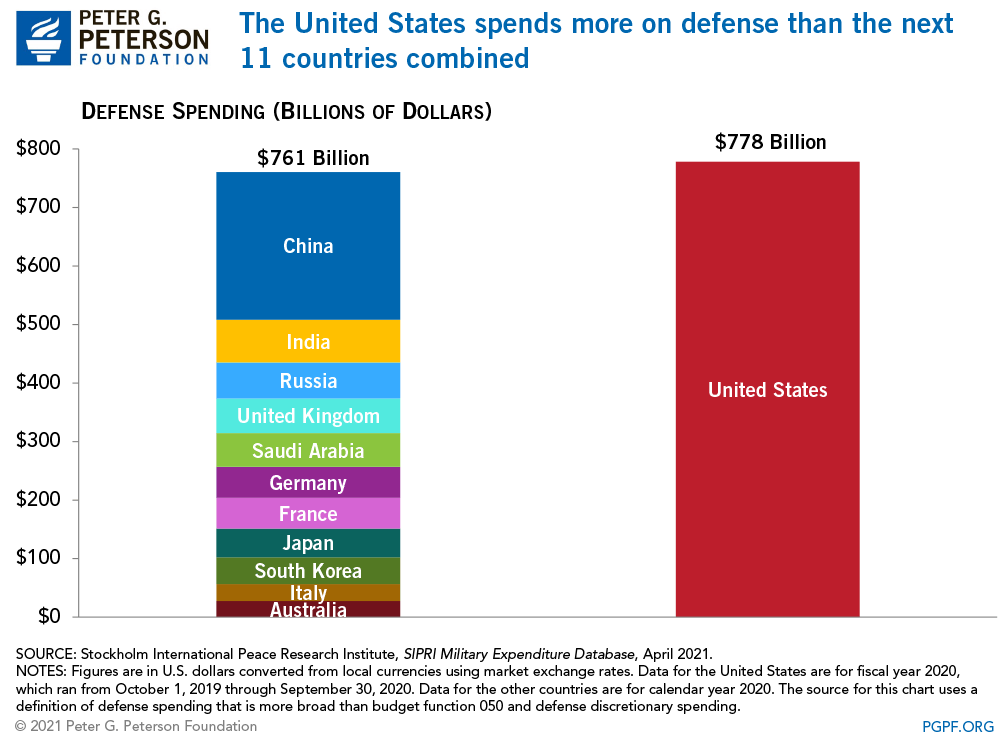
Most serious of all, there’s the problem of U.S. weapons feeding conflicts in ways the Pentagon didn’t foresee, but probably should have.
Compared to the $900 for Pentagon contractors, the average taxpayer contributed only about $27 to the Centers for Disease Control and Prevention, $171 to K-12 education, and barely $5 to renewable energy.
Average US Taxpayer Gave $900 to Military Contractors Last Year, https://truthout.org/articles/average-us-taxpayer-gave-900-to-military-contractors-last-year/?eType=EmailBlastContent&eId=1f951de0-ce82-4df9-b85e-0a76f6faf974
Lindsay Koshgarian, OtherWordsPUBLISHEDApril 17, 2022
ost of us want our tax dollars to be wisely used — especially around tax time.
You’ve probably heard a lot about corporations not paying taxes. Last year, individuals like you contributed six times more in income tax than corporations did.
But have you heard about how many of your tax dollars then end up in corporate pockets? It’s a lot — especially for corporations that contract with the Pentagon. They collect nearly half of all military spending.
The average taxpayer contributed about $2,000 to the military last year, according to a breakdown my colleagues and I prepared for the Institute for Policy Studies. More than $900 of that went to corporate military contractors.
In 2020, the largest Pentagon contractor, Lockheed Martin, took in $75 billion from taxpayers — and paid its CEO more than $23 million.
Unfortunately, this spending isn’t buying us a more secure world.
Last year, Congress added $25 billion the Pentagon didn’t ask for to its already gargantuan budget. Lawmakers even refused to let military leaders retire weapons systems they couldn’t use anymore. The extra money favored top military contractors that gave campaign money to a group of lawmakers, who refused to comment on it.
Then there’s simple price-gouging.
There’s the infamous case of TransDigm, a Pentagon contractor that charged the government $4,361 for a metal pin that should’ve cost $46 — and then refused to share cost data. Congress recently asked TransDigm to repay some of its misbegotten profits, but the Pentagon hasn’t cut off its business.
Somewhere between price-gouging and incompetence lies the F-35 jet fighter, an embarrassment the late Senator John McCain, a Pentagon booster, called “a scandal and a tragedy.”
Among the most expensive weapons systems ever, the F-35 has numerous failings. It’s spontaneously caught fire at least three times — hardly the outcome you’d expect for the top Pentagon contractor’s flagship program. The Pentagon has reduced its request for new F-35s this year by about a third, but Congress may reject that too.
Most serious of all, there’s the problem of U.S. weapons feeding conflicts in ways the Pentagon didn’t foresee, but probably should have.
When U.S. ground troops left Afghanistan, they left behind a huge array of military equipment, from armored vehicles to aircraft, that could now be in Taliban hands. The U.S. also left weapons in Iraq that fell into the hands of ISIS, including guns and an anti-tank missile.
Even weapons we sold to so-called allies like Saudi Arabia have ended up going to people affiliated with groups like al Qaeda.
Military weapons also end up on city streets at home. Over the years, civilian law agencies have received guns, armored vehicles, and even grenade launchers from the military, turning local police into near-military organizations.
Records also show that the Pentagon has lost hundreds of weapons which may have been stolen, including grenade launchers and rocket launchers. Some of these weapons have been used in crimes.
Taxpayers shouldn’t be spending $900 apiece for these outcomes. My team at the Institute for Policy Studies and others have demonstrated ways to cut up to $350 billion per year from the Pentagon budget, including what we spend on weapons contractors, without compromising our safety.
Even better, we could then put some of that money elsewhere.
Compared to the $900 for Pentagon contractors, the average taxpayer contributed only about $27 to the Centers for Disease Control and Prevention, $171 to K-12 education, and barely $5 to renewable energy.
How much more could we get if we invested even a fraction of what we spend on military contractors for these dire needs?
Most Americans support shifting Pentagon funds to pay for domestic needs. Instead of making Americans fork over another $900 to corporate military contractors this year, Congress should put our dollars to better use.
Russia’s ‘broken arrow’: Fears that NUCLEAR MISSILES sank with Putin’s flagship Moskva
Russia’s ‘broken arrow’: Fears that NUCLEAR MISSILES sank with Putin’s flagship Moskva amid claims that 452 of the 510 crew have drowned and top admiral has been arrested after cruiser was ‘hit by Ukrainian missile’ , Daily Mail By WILL STEWART and CHRIS PLEASANCE and CHRIS JEWERS FOR MAILONLINE 16 April 2022
Moskva, the flagship of Russia’s Black Sea fleet, has been confirmed to have sunk near port of Sevastopol
Experts and analysts are now warning that the warship may have been carrying two nuclear warheads They are calling for an urgent probe into ‘broken arrow’ incident – military slang for an accident with nukes
Meanwhile questions remain over the fate of Moskva’s 510-strong crew, most of whom are unaccounted forIlya Ponomarev, a politician exiled from Russia, said as many as 452 members of the crew could have died
The Moskva, a Soviet-era guided missile cruiser, sank near the port of Sevastopol on Thursday after Ukraine said it hit the ship with two cruise missiles. Today, Mykhailo Samus, director of a Lviv-based military think-tank; Andriy Klymenko, editor of Black Sea News; and Ukrainian newspaper Defence Express all warned that the Moskva could have been carrying two nuclear warheads designed to be fitted to its P-1000 ‘carrier killer’ missiles.
If true, the loss of the warheads into the Black Sea could spark a ‘Broken Arrow’ incident – American military slang for potentially lethal accidents involving nuclear weapons.
‘On board the Moskva could be nuclear warheads – two units,’ Samus said, while Klymenko called on other Black Sea nations – Turkey, Romania, Georgia, and Bulgaria – to insist on an explanation. ‘Where are these warheads? Where were they when the ammunition exploded,’ he asked.
Meanwhile Ilya Ponomarev, a politician exiled from Russia for opposing Putin’s 2014 annexation of Crimea, said just 58 of the 510-strong crew have since been accounted for – raising the prospect that 452 men went down with the ship in what would be a bitter loss for Vladimir Putin’s already beleaguered army.
The figure, while unconfirmed, is consistent with losses suffered on exploding warships. During the Russian Navy’s infamous defeat at the Battle of Tsushima against Japan, an explosion on board the Borodino – slightly smaller than the Moskva – saw all-but one of her 855 crew killed.
Russia claims all the Moskva’s sailors were ‘successfully evacuated’ but video taken in Sevastopol overnight shows dozens of cars purportedly belonging to the sailors still parked in the port – suggesting their owners had not returned to collect them……………….. https://www.dailymail.co.uk/news/article-10721351/Ukraine-war-Fears-Moskva-warship-carrying-nuclear-weapons-sank.html
How Much Are We Prepared To Sacrifice To Help The US Win A Propaganda War Against Putin?
Once “journalists” accepted that their most important job is not to tell the truth but to keep people from thinking bad thoughts about the status quo political system, it was inevitable that they’d start enthuHow Much Are We Prepared To Sacrifice To Help The US Win A Propaganda War Against Putin?siastically cheerleading for more internet censorship. They see it as their duty, which is why now the leading proponents of online censorship are corporate media reporters.
This is a conversation which should already have been going on in mainstream circles for some time now, but it never even started. Let’s start it
https://caitlinjohnstone.substack.com/p/how-much-are-we-prepared-to-sacrifice?s=w Caitlin Johnston 17 Apr 22. One severely under-discussed aspect of the latest round of escalations in Silicon Valley censorship which began at the start of the Ukraine war is the fact that it’s an entirely unprecedented order of censorship protocol. While it might look similar to all the other waves of social media purges and new categories of banned content that we’ve been experiencing since it became mainstream doctrine after the 2016 US election that tech platforms need to strictly regulate online speech, the justifications for it have taken a drastic deviation from established patterns.
What sets this new censorship escalation apart from its predecessors is that this time nobody’s pretending that it’s being done in the interests of the people. With the censorship of racists the argument was that they were inciting hate crimes and racial harassment. With the censorship of Alex Jones and QAnon the argument was that they were inciting violence. With the censorship of Covid skeptics the argument was that they were promoting misinformation that could be deadly. Even with the censorship of the Hunter Biden laptop story it was argued that there was a need to protect election integrity from disinformation of potentially foreign origin.
With censorship relating to the Ukraine war there is no argument that it’s being done to help the people. There is no case to be made that letting people say wrong things about this war kills Ukrainians, Americans, or anyone else. There is no case to be made that disputing claims about Russian war crimes will damage America’s democratic processes. It’s just, “Well we can’t have people saying wrong things about a war, can we?”
Ask a properly brainwashed liberal why they support the censorship of someone who disputes US narratives about Russian war crimes in Bucha or Mariupol and they’ll probably tell you something like “Well, it’s disinformation!” or “Because it’s propaganda!” or “How much is Putin paying you??” But what they won’t be able to do is articulate exactly what specific harm is being done by such speech in the same way that they could when defending the censorship of Covid skeptics or the factions responsible for last year’s riot in the Capitol building.
But what does that mean exactly? It means if we accept this argument we’re knowingly consenting to a situation where all the major news outlets, websites and apps that people look to for information about the world are geared not toward telling us true things about reality, but toward beating Vladimir Putin in some weird psywar. It means abandoning any ambitions of being a truth-based civilization that is guided by facts, and instead accepting an existence as a propaganda-based civilization geared toward making sure we all think thoughts that hurt Moscow’s long-term strategic interests.
And it’s just absolutely freakish that this is a decision that has already been made for us, without any public discussion as to whether or not that’s the kind of society we want to live in. They jumped right from “We’re censoring speech to protect you from violence and viruses” to “We’re censoring speech to help our government conduct information warfare against a foreign adversary.” Without skipping a beat.
Continue reading1 This Month



19 November – Webinar – The Reality of Reprocessing
Time: 11:00 AM Pacific Time (US & Canada) / 2:00 PM Eastern / 7:00 PM UK / 8:00 PM CET
Register for the Zoom Event Here



Shut down the radiation-damaged Heysham nuclear reactors now
To see nuclear-related stories in greater depth and intensity – go to https://nuclearinformation.wordpress.com

Say No to NASA’s Reckless Nuclear Reactor on the Moon
Say No to NASA’s Reckless Nuclear Reactor on the Moon
-
Archives
- November 2026 (74)
- October 2026 (302)
- September 2026 (339)
- August 2026 (330)
- July 2026 (355)
- June 2026 (287)
- May 2026 (306)
- April 2026 (356)
- March 2026 (251)
- February 2026 (267)
- January 2026 (308)
- December 2025 (358)
-
Categories
- 1
- 1 NUCLEAR ISSUES
- business and costs
- climate change
- culture and arts
- ENERGY
- environment
- health
- history
- indigenous issues
- Legal
- marketing of nuclear
- media
- opposition to nuclear
- PERSONAL STORIES
- politics
- politics international
- Religion and ethics
- safety
- secrets,lies and civil liberties
- spinbuster
- technology
- Uranium
- wastes
- weapons and war
- Women
- 2 WORLD
- ACTION
- AFRICA
- Atrocities
- AUSTRALIA
- Christina's notes
- Christina's themes
- culture and arts
- Events
- Fuk 2022
- Fuk 2023
- Fukushima 2017
- Fukushima 2018
- fukushima 2019
- Fukushima 2020
- Fukushima 2021
- general
- global warming
- Humour (God we need it)
- Nuclear
- RARE EARTHS
- Reference
- resources – print
- Resources -audiovicual
- Weekly Newsletter
- World
- World Nuclear
- YouTube
-
RSS
Entries RSS
Comments RSS

