$61 Million in refunds for customers in South Carolina’s V.C. Summer Nuclear Station debacle

$61 Million in Refunds for Customers in SC Nuclear Debacle https://www.usnews.com/news/us/articles/2022-05-04/61-million-in-refunds-for-customers-in-sc-nuclear-debacle
A South Carolina judge has approved a second round of refunds for customers of a utility that poured billions of dollars into two nuclear power plants that never produced a watt of power.
By Associated Press, May 4, 2022, COLUMBIA, S.C. (AP) — A South Carolina judge has approved a second round of refunds for customers of a utility that poured billions of dollars into two nuclear power plants that never produced a watt of power.
About $61 million is being set aside for Dominion Energy South Carolina after the utility sold a number of properties as part of the settlement of a class-action lawsuit by 1.1 million of its customers over the never completed plants at the V.C. Summer Nuclear Station near Columbia
Wednesday’s agreement will split the $61 million based on power use by residential, business and industrial customers during a decade of planning and construction for the nuclear station, media outlets reported.
The checks will be similar in amount to a first round of refunds made in the lawsuit in 2019, which was based on $60 million from Dominion Energy.
The nuclear project was run by South Carolina Electric & Gas. It was bought by Virginia-based Dominion in 2019 after the local utility ran out of money to finish the reactors two years earlier.
Four executives of the utility or the company that was building the reactors have been indicted or have pleaded guilty to criminal charges in the failure.
One remaining question is how will the refunds be issued. The 2019 refunds were all checks, and more than 10% of the money went unclaimed as checks as small as 4 cents weren’t cashed or people who were supposed to get refunds couldn’t be found.
Lawyers suggested power bill credits for amounts under $50 and former South Carolina Chief Justice Jean Toal, who was put in charge of the settlement negotiations, said she would think about it.
Why shoreline nuclear power plants pose problem for Great Lakes
Carol Thompson, The Detroit News, 4 May 22, The dozens of nuclear power reactors situated along the Great Lakes shoreline have produced a sizeable amount of electricity for Canada’s Ontario province and the midwestern United States since they first came online in 1963.
But the reactors also will produce a sizeable problem for the region in the coming decades, as the majority of them are scheduled to shut down and be decommissioned without places to send their nuclear waste for permanent storage. ………. (Subscribers only) https://www.detroitnews.com/story/news/environment/2022/05/04/why-shoreline-nuclear-power-plants-pose-problem-great-lakes/7445044001/?gnt-cfr=1
North Korea fires ballistic missile amid growing nuclear threat
By Thomas Maresca, May 4 (UPI) — North Korea launched a ballistic missile into the sea off of its east coast Wednesday, the militaries of South Korea and Japan said, as concerns rise that a nuclear provocation is on the way.
The South Korean military said it detected the launch of a ballistic missile from the area of Pyongyang’s international airport on Wednesday at around noon. The missile traveled a distance of 292 miles and reached an altitude of 485 miles before splashing down in the sea between Korea and Japan, the Joint Chiefs of Staff said in a text message sent to reporters……………….. https://www.upi.com/Top_News/World-News/2022/05/04/ballistic-missile-launch-nuclear-threat-South-Korea-Japan/1831651646781
USA’s nuclear lobby continues to infiltrate education

U.S. Department of Energy funds nuclear engineering scholarships at Missouri S&T by Nancy Bowles
On May 3, 2022
………. “The DOE’s support shows the importance of the work our students are doing to promote nuclear energy as a sustainable resource for decades to come,” says Dr. Ayodeji Alajo, interim chair of nuclear engineering and radiation science at Missouri S&T. “We are thankful for this recognition and hope to continue to build the relationship we enjoy with the DOE.”…………..
.………….. The awards are provided through the Office of Nuclear Energy’s (NE) University Nuclear Leadership Program (UNLP) and include 61 undergraduate scholarships and 28 graduate fellowships for students at 32 colleges and universities in 23 states. Prior to 2021, UNLP was known as Integrated University Program. Missouri S&T students have received program scholarships several times in the past few years………… https://news.mst.edu/2022/05/u-s-department-of-energy-funds-nuclear-engineering-scholarships-at-missouri-st/
Asahi Shimbun – Japan’s nuclear industry needs to be more aware, more careful about terrorism risks.
Utilities urged to look far and wide to tackle nuclear terrorism threat, Asahi Shimbun, May 4, 2022 Despite a contrary assessment by nuclear regulators, a spate of recent security breaches at Tokyo Electric Power Co.’s Kashiwazaki-Kariwa nuclear power plant should not be considered endemic to the facility.
The Nuclear Regulation Authority compiled an interim report on its follow-up inspections on the unauthorized use of an employee ID card and disabled intrusion detection equipment at the plant in Niigata Prefecture.
…………………….. the report did not discuss why this was the case with Kashiwazaki-Kariwa alone or how this potentially disastrous situation could have remained overlooked.
It raises fears of a potential breach that could allow terrorists to seize control of the plant.
In our view, the NRA’s examination of the problems was far from comprehensive.
For instance, the interim report reiterated that practically no on-site inspections of the plant’s department that oversees the physical protection of nuclear materials were undertaken by top executives of the plant or TEPCO’s headquarters.
The nature of TEPCO’s overall organization and its management culture still raises many questions.
The report made eight demands of TEPCO. They include: A fundamental review of procedures for the physical protection of nuclear materials; reinforcement of intrusion prevention facilities and their maintenance system; more active use of input from on-site staff; and greater management participation and investment of management resources.
NRA Chairman Toyoshi Fuketa said at a meeting the onus was on TEPCO to prove its equipment and facilities for the physical protection of nuclear materials are fool-proof, even if the company’s corporate culture and attitude are below the line and its employees try to cut corners.
An urgent need exists for a framework to ensure that nuclear materials are protected should human error enter the equation, which obliges TEPCO to rectify its operations.
The company needs to not only meet the NRA’s demands but also go the extra mile to address issues needing attention as a matter of routine.
We also strongly urge the NRA to conduct more rigorous inspections.
Nuclear terrorism would have a catastrophic impact on society. An attack against a nuclear power plant could prove too much for its operator or regulatory authorities to handle alone……….. https://www.asahi.com/ajw/articles/14613482
US now preparing for a world with and without Iran nuclear deal
Arab News, 4 May, WASHINGTON: The United States is now preparing equally for both a scenario where there is a mutual return to compliance with Iran on a nuclear deal, as well as one in which there is not an agreement, the State Department said on Wednesday.
“Because a mutual return to compliance with the JCPOA is very much an uncertain proposition, we are now preparing equally for either scenario,” Department spokesperson Ned Price said in a briefing………… https://www.arabnews.com/node/2075746/middle-east
UN nuclear watchdog says situation at Russian-occupied Ukrainian nuclear plant is ‘unsustainable’
May 3, 2022 by Charles Digges, The United Nations nuclear watchdog has warned that Russian troops are
putting “unbelievable pressure” on workers at the Zaporizhzhya nuclear
power plant – which is both the largest in Ukraine and Europe as a whole
– saying the situation is “unsustainable.” Russian forces seized the
plant during a dramatic assault on March 4, and they have since then forced
Ukrainian plant operators to manage the site under extreme conditions. The
UN’s International Atomic Energy Agency has also reported that eight
specialists from Rosatom, Russia’s state nuclear corporation, are also
onsite.
https://bellona.org/news/nuclear-issues/2022-05-un-nuclear-watchdog-says-situation-at-russian-occupied-ukrainian-nuclear-plant-is-unsustainable
In 2021 USA’s renewable power generation exceeded it nuclear generation.
The US Energy Information Administration reports that power sector
generation from renewable sources totalled 795 million MWh in the USA
during 2021, overtaking nuclear generation, which totalled 778 million MWh.
The US electric power sector does not include some electricity generators
in the industrial, commercial, or residential sectors, such as small-scale
solar or wind or some combined-heat-and-power systems. Renewable generation
includes electricity generated from wind, hydropower, solar, biomass, and
geothermal sources.
Natural gas remained the most prevalent source of
energy for electricity generation, accounting for 1474 million MWh in 2021.
Although several US coal-fired power plants retired in 2021, coal-fired
generation increased for the first time since 2014 and was the source of
more electricity than either renewables or nuclear power. Total electricity
generation increased slightly in 2021, but it remained less than its
record-high year of 2018.
Modern Power Systems 3rd May 2022
https://www.modernpowersystems.com/news/newsus-renewables-generation-has-overtaken-nuclear-9670031
Ukraine’s nuclear power plants caught in the Crossfire of War With Russia

Russia’s invasion of Ukraine has triggered fears of another nuclear power disaster in the region, 36 years after the world’s largest nuclear accident. The Revelator, May 2, 2022 – by Jordan Gass-Poore’
It took less than a minute after an unexpected power surge for one of the nuclear reactors at Chornobyl (Chernobyl in the Russian spelling) to explode on April 26, 1986, ripping the roof off and spewing dangerous chemicals into the air.
The event, and emergency cleanup that followed, left 30 workers dead, thousands exposed to cancer-causing nuclear material, and a legacy of radiation. Now, 36 years later and with war raging, Ukraine is desperate to prevent another nuclear disaster.
Nuclear reactors generate more than half of the country’s power. Ukraine is the first country with such a large and established nuclear energy program to experience war, according to the International Atomic Energy Agency.
The country’s 15 nuclear reactors, housed in four power plants, have layers of safeguards to prevent core meltdowns like the one that happened in 1986, when Chornobyl was part of the Soviet Union. But wartime is far from normal conditions, and experts warn that Russian military action poses numerous threats to these facilities.

Andrey Ozharovsky, a Russian engineer turned anti-nuclear activist, said Ukraine’s nuclear infrastructure is “quite vulnerable” to the chaos surrounding military attacks.
Chornobyl, Again
Those attacks have already begun.
The Chornobyl Nuclear Power Plant and the 20-mile exclusion zone around it, set up to limit further spread of radioactive material following the 1986 disaster, were captured by Russian forces on Feb. 24. It was in their control until they withdrew from the site on March 31.

Although Chornobyl is not an active nuclear power plant, the massive cap covering the reactor that exploded decades ago still needs to be maintained to prevent further radiation leakage.
Sensors put in place by the Ukrainian Ecocentre in case of an accident reported a spike in radiation levels shortly after the capture, likely due to Russian military vehicles stirring up radiation in the environment.
The IAEA said the rise wasn’t enough to pose a public health hazard.
Ozharovsky, who was one of the first to raise an alarm about the recent spike at Chornobyl, said he’s concerned that radioactive dust from the site could spread across the continent.
“The most dangerous thing is that they can bring radioactive particles in their hair, in their clothes and their boots,” he says………………………
Nuclear Plant Captured
Chornobyl isn’t the only concern. Ukraine’s active nuclear-power facilities are also at risk.
On March 4, Russian forces captured Europe’s largest active nuclear-power plant, Zaporizhzhia, located in southeastern Ukraine. During intense fighting one of the site’s buildings caught fire, but didn’t harm the plant’s six reactors, and no radiation was released.
Ukrainian technicians continue to monitor Zaporizhzhia, but the country’s regulators have claimed that Rosatom, Russia’s state nuclear power company, has engineers at the plant who are giving orders to staff. Further, Ukraine reports that plant management actions require approval from the Russian commander, according to the IAEA.
“Who is now in charge of the Zaporizhzhia Nuclear Power Plant?” asks Ozharovsky. “The Russian army is around, but armies aren’t nuclear engineers.”
Rosatom released a statement on March 12 and denied that they’re managing the operation of Zaporizhzhia. They characterized their staff’s presence at the plant as “consultative assistance” that takes place “on a regular basis.”
Grossi expressed “deep concern” about the situation in a statement last month.
Further Threats
Since then, there’s been more reason for alarm.
On April 16, three missiles flew over the South Ukrainian nuclear power plant, Yuzhnoukrainsk, according to Energoatom, Ukraine’s state-run nuclear power company.
Then on April 26 Energoatom reported that two cruise missiles flew over the Zaporizhzhia Nuclear Power Plant.
The flight of missiles at low altitudes directly above the Zaporizhzhia Nuclear Power Plant site, where 7 nuclear facilities with a huge amount of nuclear material are located, poses huge risks,” says Petro Kotin, Energoatom’s acting president, in a statement released on the company’s Telegram channel. “After all, missiles can hit one or more nuclear facilities, and this threatens a nuclear and radiation catastrophe around the world.”
The day before, Energoatom reported that Russia fired missiles over the cooling pond of the Khmelnytskyi Nuclear Power Plant in northwest Ukraine
Kosharna wrote in an email that if a missile would’ve hit one of the plants the consequences wwould have been “catastrophic” for the world.
Typically nuclear plants use back-up generators to maintain power with a grid disruption and keep the cooling systems functioning normally. In wartime fuel shortages are common, and this risks the stability of the generators. Ukraine’s current shortage is only getting worse, according to the Gas Transmission Operator of Ukraine, a gas pipeline operator
If the grid goes down and the generators are out of fuel and the cooling systems fail, there’s a last resort to prevent radiation from spreading. Containment structures around the reactors are designed to block any release of radiation, but they’re also vulnerable to missile attacks.
Reactor failure isn’t the only significant risk to the operation.
Staff operating facilities under extreme stress also poses a problem, Ozharovsky says, because any mistake they make on the job could be calamitous..

There are also other onsite dangers. Spent nuclear fuel storage pools that are a part of the waste-disposal system contain radioactive material. If they’re damaged the liquid could be released from containment, causing a massive spread of radiation. Japanese scientists considered this to be the “worst-case scenario” of the Fukushima Daiichi Nuclear Power Plant, which had a series of meltdowns after a tsunami struck the plant in 2011.
Ozharovsky said he doesn’t believe the Russian military would deliberately sabotage one of Ukraine’s nuclear power plants because it would threaten their interests. But he added that even the possibility that the nuclear power plants could be harmed accidentally should trigger worldwide alarm.
“For me it’s scary,” he says. “All the other nuclear power plants, like Khmelnytskyi, like Rivne, like South Ukraine (Yuzhnoukrainsk); they can be damaged during this war. And the international community needs to take care of that.”
Any attack on a nuclear plant is a breach of international humanitarian law. The Geneva Convention’s Article 56 considers attacking a nuclear power plant a war crime.
“I hope that many other countries who still have nuclear energy on their territory will rethink physical safety, military safety,” Ozharovsky says. “That’s a challenge no one country can solve.” https://therevelator.org/ukraine-war-nuclear-power/?utm_source=rss&utm_medium=rss&utm_campaign=ukraine-war-nuclear-power

Nuclear power is a HUGE water guzzler – so why are we guzzling the lie that nuclear is good for climate?

The video above is 2 years old – but so what? Nothing seems to have changed – this particular facility is especially water-dependent. But they all are. The current article below – is, unfortunately, behind a paywall. But it’s a rare mention in the media of this hugely significan factor in nuclear power problems.
Take France, for example. Right now, nearly half of their nuclear reactors are shut down anyway. But – come the summer – they’ll be shutting down again – due to water stress.
Huge nuclear plant in Arizona desert seeking new sources of water – it uses 23 b gallons of water per year The Arizona Republic 2 May 22, https://www.azcentral.com/restricted/?return=https%3A%2F%2Fwww.azcentral.com%2Fstory%2Fmoney%2Fbusiness%2Fenergy%2F2022%2F05%2F01%2Farizonas-nuclear-palo-verde-generating-station-wants-new-water-source%2F7306649001%2F
Ask me about … the 1986 Chernobyl nuclear disaster and its lingering effects
PATRICIA SABATINI, Pittsburgh Post-Gazette, psabatini@post-gazette.com 2 May 22,
Olga Klimova-Magnotta is a lecturer and director of the Russian program at the University of Pittsburgh who teaches a humanities course on the 1986 Chernobyl nuclear disaster.
A native of Belarus, she was 7 years old when a massive explosion at the No. 4 reactor at the Chernobyl nuclear power plant in northern Ukraine (then part of the Soviet Union) resulted in a fire and the uncontrolled release of radioactive contamination. Ms. Klimova — who moved to the U.S. in her early 20s ,was living in the Belarus capital of Minsk at the time of the accident, about 200 miles north of the explosion — or about the distance from Pittsburgh to Harrisburg.
She believes her heart problems stem from radiation exposure. “Many children born or growing up during this time had heart diseases,” she said.
“We all had different health issues. … The doctors connected it to the radiation.”
Talk about the course you teach on Chernobyl. What is the goal?
2021 marked the 35th anniversary of Chernobyl. That’s when I decided to develop the course and draw attention to the Chernobyl tragedy. I wanted students to be aware of the disaster and specifically about its continued effects on the ecosystem and the social, economic, political and cultural lives of people in the area.
Many in the United States didn’t know much about the explosion of the Chernobyl plant before the popular 2019 HBO miniseries [“Chernobyl”]. At least half of my students registered because they watched the miniseries and wanted to learn more.
What stands out in your mind about the catastrophe?
I think it’s the fact that none of us who were living in this area knew the real impact of the disaster. Because radiation is invisible … many of us didn’t know. We were not informed by the government about the negative effects of radiation. There was a lack of information.
When I was growing up after 1986 and in the early 1990s, the disaster affected a lot of people in terms of health. A lot of people started to suffer from [cancer and other health issues]. The numbers of these diseases grew dramatically. Doctors would explain it was because you were a child of Chernobyl.
What are some things about the Chernobyl disaster that you think people would be surprised to know?
I think people would be surprised that the government refused to acknowledge that radiation had a big impact on people’s health.
A lot of volunteers went to Ukraine to do cleanup. It was the Soviet Union. A lot of people in Belarus [also formerly part of the Soviet Union] and Russia and also Ukrainians were sent there. People didn’t get disability or special help with their health issues.
People living in the area were severely affected. Many had long battles with the government trying to get support and get treatment at the hospital. The government denied that the health issues people were having were directly connected to the nuclear disaster.
………….. The radiation hasn’t disappeared. It has a constant effect on people’s health……………………………….. https://www.post-gazette.com/business/powersource/2022/05/02/1986-chernobyl-nuclear-disaster-ukraine-olga-kilmova-magnotta-university-of-pittsburgh/stories/202205010040.
NASA Is Sending Artificial Female Bodies to the Moon to Study Radiation Risks.

Gizmodo, Passant Rabie, May 3, 22, Helga and Zohar are headed for a trip around the Moon on an important mission, measuring radiation risks for female astronauts for the first time.
The inanimate pair are manikins modelled after the body of an adult woman. For the Artemis 1 mission, in which an uncrewed Orion capsule will travel to the Moon and back, one of the manikins will be outfitted with a newly developed radiation protection vest. Helga and Zohar, as they’re called, won’t be alone, as they’ll be joined by a third manikin that will collect data about flight accelerations and vibrations. Artemis 1 is scheduled to blast off later this year.
The Artemis program aims to return humans to the Moon for the first time in over 50 years, but this time the space agency has vowed to land the first woman on the dusty lunar surface.
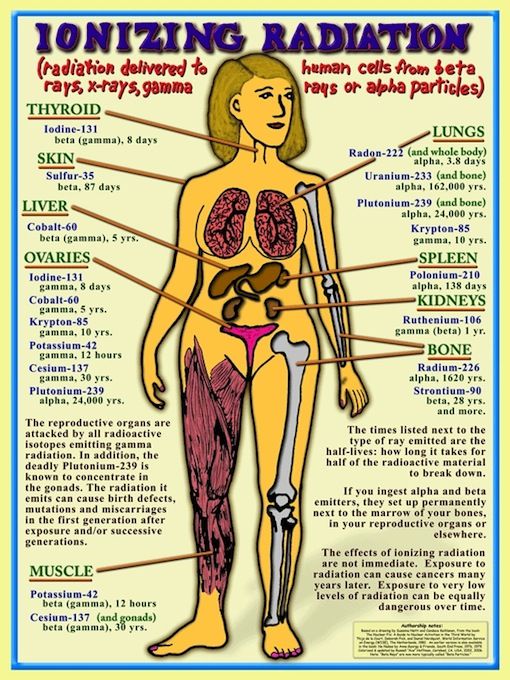
Women appear to be at a greater risk of suffering from the harmful effects of space radiation, so they have different radiation boundary levels than their male colleagues. Studies of radiation exposure for men and women indicate a higher chance of women developing cancer, while other research has found that space radiation is likely to affect female reproductive health…………………………………. https://www.gizmodo.com.au/2022/05/nasa-is-sending-artificial-female-bodies-to-the-moon-to-study-radiation-risks/
UK Greens the party on the rise – a ‘tectonic shift’ among voters.

Local elections 2022: Greens winning hearts in northeast as party eyes ‘tectonic shift’ among voters. Campaigners welcomed on doorstep in Labour stronghold South Shields as internal polls predict party will make large gains across the country.
The Greens are, by any measure, a party on the rise – both in the northeast and across the country. In a series of remarkable election results last year, they won 155 English and Welsh council seats, helping take their total to a record high of 467. They now lead two authorities, in Brighton and Hove, and Lancaster, are in a ruling coalition in another 13, including Oxfordshire, York and Sheffield, and make up the official opposition in eight more including Bristol, Norwich and Solihull.
Now, it is all but certain this growth will continue on 5 May: a realistic good night would see them smash the 500-seat barrier, party bosses suggest. In particular, they are hoping to move beyond their traditional metropolitan powerbases and establish a greater presence in the north’s old industrial heartlands. The increasing acceptance that the planet is, er, dying on its arse – that’s the climate crisis – has attracted plenty of voters in an area that will pretty quickly find itself under water if global temperatures continue rising.
But, perhaps of greater significance, is a tangible anger here at a sense of being taken for
granted by the dominant Labour Party for too long. “They’re sitting tenants,” one resident fumed. “They reckon they’ve a job for life and that’s how they treat it.”
Independent UK, 1st May 2022
Czech state looking for place to store nuclear waste as EU deadline shortens
English Radio CZ 05/02/2022 The Ministry of Industry is looking for ways to speed up the planned construction of a nuclear waste facility in the Czech Republic, which would enable the country to fulfil the EU’s taxonomy plan for using nuclear energy as a clean source. However, the plan is running into opposition from local districts who don’t want nuclear waste stored near their homes. The Czech Republic has two nuclear power plants, but nowhere to store its nuclear waste. At least in the long term. For now, nuclear waste is being stored in barrels located inside the power plants themselves, says Jiří Bezděk, the spokesman for the Dukovany nuclear power plant, who took Czech Radio on a tour of the facility.
You can see we are now in the storage facility for used nuclear fuel. This fuel can be stored in containers for a period of up to 60 years. Thereafter, you can take it out, check the container and put the fuel back in for another six decades.”
……….. the RWRA has nowhere to store the waste.
Originally, the Czech government counted on building a deep nuclear waste storage facility by 2065, but the EUs taxonomy plan which was agreed earlier this year, has cut that deadline to the year 2050.
Both Deputy Industry Minister Tomáš Ehler and the head of the country’s Nuclear Safety Office Dana Drábová have said that fulfilling the shorter deadline is possible on paper. However, it necessitates speeding up relevant research activities as well as finally deciding on where the state wants to build the storage facility.
Founded in 2001, the state’s Radioactive Waste Repository Authority has had over 20 years’ time to find a suitable storage location. And it has. Four locations were approved by the government as suitable prospective sites for a deep storage facility.
However, local residents of each of these proposed sites are strongly against the construction. Some of them have banded into the “Platform against deep storage”, a civic organisation that lobbies for an alternative to deep nuclear waste storage and for the construction of any such facility to be subject to a local district vote. The organisation’s secretary, Edvard Sequens, says that locals have more say in the process in other countries…………….. https://english.radio.cz/czech-state-looking-place-store-nuclear-waste-eu-deadline-shortens-8749305
Finnish consortium abandons Fennovoima nuclear power project
Finnish group abandons plans for Russia-backed nuclear power plant
Contract with Rosatom terminated as war in Ukraine deals final blow to controversial energy project, Ft.com, Richard Milne, Nordic and Baltic Correspondent, 2 May 22,
A Finnish consortium has abandoned controversial plans to build a Russian nuclear power plant in the Nordic country as Moscow’s invasion of Ukraine dealt a terminal blow to the project. The Fennovoima project has been mired in controversy from the outset with Finland’s then environment minister telling the Financial Times in 2014 that it was an example of “Finlandisation”, a loaded term that refers to a smaller country adapting its policies to suit a larger, more powerful neighbour.
The Hanhikivi 1 project was particularly controversial because Rosatom, the Russian state nuclear company, was not just the supplier of the reactor but also the main shareholder and financial backer of the Fennovoima consortium. Rosatom owns 34 per cent while Finnish companies such as energy group Fortum, steelmakers SSAB and Outokumpu as well as local municipalities own the rest. Fennovoima said on Monday that it had terminated the contract with Rosatom due to “significant and growing delays during the last years”, which have been exacerbated by the war in Ukraine. ………………………………….. https://www.ft.com/content/5e7730b5-be55-48a5-8f55-f67d6fb80d77
1 This Month



19 November – Webinar – The Reality of Reprocessing
Time: 11:00 AM Pacific Time (US & Canada) / 2:00 PM Eastern / 7:00 PM UK / 8:00 PM CET
Register for the Zoom Event Here



Shut down the radiation-damaged Heysham nuclear reactors now
To see nuclear-related stories in greater depth and intensity – go to https://nuclearinformation.wordpress.com

Say No to NASA’s Reckless Nuclear Reactor on the Moon
Say No to NASA’s Reckless Nuclear Reactor on the Moon
-
Archives
- November 2026 (74)
- October 2026 (302)
- September 2026 (339)
- August 2026 (330)
- July 2026 (355)
- June 2026 (287)
- May 2026 (306)
- April 2026 (356)
- March 2026 (251)
- February 2026 (267)
- January 2026 (308)
- December 2025 (358)
-
Categories
- 1
- 1 NUCLEAR ISSUES
- business and costs
- climate change
- culture and arts
- ENERGY
- environment
- health
- history
- indigenous issues
- Legal
- marketing of nuclear
- media
- opposition to nuclear
- PERSONAL STORIES
- politics
- politics international
- Religion and ethics
- safety
- secrets,lies and civil liberties
- spinbuster
- technology
- Uranium
- wastes
- weapons and war
- Women
- 2 WORLD
- ACTION
- AFRICA
- Atrocities
- AUSTRALIA
- Christina's notes
- Christina's themes
- culture and arts
- Events
- Fuk 2022
- Fuk 2023
- Fukushima 2017
- Fukushima 2018
- fukushima 2019
- Fukushima 2020
- Fukushima 2021
- general
- global warming
- Humour (God we need it)
- Nuclear
- RARE EARTHS
- Reference
- resources – print
- Resources -audiovicual
- Weekly Newsletter
- World
- World Nuclear
- YouTube
-
RSS
Entries RSS
Comments RSS

