Palisades atomic reactor’s shutdown for good, leaving high risk radioactive wastes

No More Risk of Reactor Core Meltdown, No More Radioactive Waste Generation, but Significant Waste and Contamination Risks Continue
Beyond Nuclear, Kevin Kamps, COVERT TOWNSHIP, MI and TAKOMA PARK, MD, MAY 21, 2022–“We are thankful that Palisades shut down before it melted down. The 51-year old atomic reactor has the worst embrittled reactor pressure vessel in the U.S., which was at increasing risk of catastrophic failure due to pressurized thermal shock. To accommodate Palisades’ operation, the Nuclear Regulatory Commission (NRC) simply weakened and rolled back the safety standards, multiple times over decades. Palisades also has a severely degraded reactor lid, and worn out steam generators that needed replacement for the second time in the reactor’s history. All three were major pathways to core meltdown, which an NRC commissioned report, CRAC-2 (short for Calculation of Reactor Accident Consequences, also known as the 1982 Sandia Siting Study or as NUREG/CR-2239) estimated would have caused a thousand peak early fatalities (acute radiation poisoning deaths), 7,000 peak early radiation injuries, 10,000 peak cancer deaths (latent cancer fatalities), and $52.6 billion in property damage. When adjusted for inflation alone, property damages would have surmounted $150 billion in Year 2021 dollar figures.
And as Associated Press investigative reporter Jeff Donn wrote in his four-part series “Aging Nukes,” shortly after the Fukushima Daiichi nuclear catastrophe began in Japan in 2011, populations have soared around U.S. atomic reactors, so casualties would now be even higher. Donn cited reactor pressure vessel embrittlement and pressurized thermal shock risk as the top example of NRC regulatory retreat. Thank goodness no such nuclear nightmare unfolded at Palisades during its operations, but Consumers Energy (from 1971 to 2007) and Entergy (from 2007 to 2022) were willing to take those risks on the shoreline of the Great Lakes, drinking water supply for more than 40 million people in eight U.S. states, two Canadian provinces, and a very large number of Native American First Nations downstream and downwind, as well as up the food chain. Now, by definition, once the irradiated nuclear fuel is removed from the core, a reactor meltdown cannot happen at Palisades.
But the likely more than 700 metric tons of forever deadly irradiated (euphemistically called spent or used) nuclear fuel, containing more than 1,800 pressurized water reactor assemblies, and comprising more than 150 million curies of hazardous radioactivity, still represent a very significant risk. The vast majority is still stored in the indoor wet storage pool, at risk of a loss of cooling water leading to a catastrophic radioactivity release to the environment. While transfer of irradiated nuclear fuel into dry cask storage represents an increase in safety, it involves the movement of very heavy loads over the pool, and must be done very carefully. In October 2005, a 107-ton transfer cask containing irradiated nuclear fuel dangerously dangled over the pool for two days, and was nearly dropped from its crane by operator error. Had that happened, the ensuing pool fire could have dwarfed even CRAC-II’s casualties and property damage figures cited above, as Palisades’ pool is not even located in a radiological containment structure. Recently, in its careless rush job to empty a storage pool, Holtec, which plans to takeover at Palisades by the end of June, with NRC’s complicit rubber-stamp, caused a radioactive water spill that doused and dosed a worker at its Oyster Creek, New Jersey decommissioning project. In 2018, Holtec’s flawed dry cask storage design at San Onofre, California nearly caused a 50-ton loaded canister to fall nearly 20-feet. For these and many other reasons, Beyond Nuclear, Don’t Waste Michigan, and Michigan Safe Energy Future have legally challenged Holtec’s takeover of Palisades. But the NRC has refused for 15 months to grant us our day in court. We do call for expedited transfer of irradiated nuclear fuel out of the vulnerable pool, but not into Holtec’s dubious and defective dry casks, but rather into safe and secure Hardened On-Site Storage, in order to protect health and environment for the decades the irradiated nuclear fuel will likely be stuck at Palisades with nowhere to go. But Palisades’ shutdown for good means no more high-level radioactive waste will be generated there, which is a very good thing.
Due to all the risks above, Governor Whitmer and Energy Secretary Granholm’s unwise last-second scheme to bail out Palisades with many hundreds of millions of dollars of taxpayer money, and keep it operating for nine more years, must be stopped. So too is Holtec CEO Krishna Singh’s bait and switch to construct and operate a so-called Small Modular (Nuclear) Reactor at the Palisades site an outrageous, high-risk non-starter.
It is now time to safeguard and secure the high-level radioactive waste stored on-site, to clean up the widespread radioactive contamination of the property before it further threatens Lake Michigan and adjacent groundwater aquifers, and to carry out a just transition for the workforce and host region, into the long overdue clean, safe, and affordable renewable and efficient energy system of the future.”e a so-called Small Modular (Nuclear) Reactor at the Palisades site an outrageous, high-risk non-starter.
Elon Musk’s satellites for the war in Ukraine
From CNGNN Italy, 29 May 22, Elon Musk, the richest man in the world whose wealth nearly doubled in the two pandemic years, offered $ 44 billion to buy Twitter, which he says would become “the platform for free speech across the country world“. Elon Musk owns SpaceX, an aerospace company based in California.
SpaceX makes rockets and satellites to build Starlink, a broadband Internet system that once is completed will cover the entire world. SpaceX has so far put 2,500 satellites into orbit with rockets carrying 50 satellites at a time and plans to place 42,000 Starlink satellites in low orbit occupying 80% of this space.
Starlink was presented as a commercial satellite system but has fundamental military applications. In fact, satellites in low orbit transmit signals at a much higher speed than those in geosynchronous orbit around the equator. The US Army and Air Force fund and test Starlink to use its military capabilities. For example, last March, the US Air Force reported that conventional and nuclear dual-capacity F-35A fighters had carried out data transmission using Start link satellites at speed 30 times faster than traditional connections.SpaceX’s Starlink satellites are already being used by the Ukrainian military to guide drones, artillery shells, and missiles into Russian positions. This is confirmed by General Dickinson, head of the US Space Command, who declared to the Senate that “Elon Musk’s Starlink demonstrates in Ukraine what the mega-constellations of satellites can do“. Elon Musk’s SpaceX is part of the group of ten largest commercial satellite operators collaborating with US Space Command at the Vandenberg military space base in California.
Ukrainian negotiator rules out deal with Russia
RT Sat, 28 May 2022 Presidential adviser Mikhail Podoliak said that any agreement with Moscow “isn’t worth anything
Despite Russian advances in the Donbass, Ukrainian presidential adviser and peace talks negotiator Mikhail Podoliak declared on Saturday that Kiev would not look for a peace agreement with Moscow. His statement contradicts earlier overtures toward diplomacy by President Volodymyr Zelensky.
“Any agreement with Russia isn’t worth a broken penny,” Podoliak declared in a Telegram post. “Russia has proved that it is a barbarian country that threatens world security.”
“Ukraine will fight with Russia until the victorious finale,” he continued, concluding that “A barbarian can only be stopped by force.”
Podoliak led the Ukrainian delegation during several rounds of unsuccessful peace talks during the initial weeks of Russia’s military operation in Ukraine. Now, his denunciation of talks with Moscow stands in stark contrast to President Volodymyr Zelensky’s acknowledgement earlier this week that he “may try and go the diplomatic way,” should Russian President Vladimir Putin be willing to talk directly………
A similar pattern has played out since the conflict began in February, with Zelensky periodically expressing interest in negotiating a settlement with Russia, only for his officials, the US State Department, or Zelensky himself to express the opposite sentiment shortly afterwards. After he announced his willingness to enter negotiations earlier this week, Zelensky came out on Friday and told his citizens that “there will be no alternative to our Ukrainian flags” flying over the Donbass republics of Donetsk and Lugansk – primarily Russian-speaking areas that declared independence from Ukraine in February…………..
Only a handful of dissenting voices – former Secretary of State Henry Kissinger among them – have urged the Ukrainians to sue for peace. Meanwhile, UK PM Johnson has instead called on the UK’s allies to send heavier weapons to Kiev, while the Biden administration reportedly gave the green light to deliver long-range rocket artillery systems to Ukraine https://www.rt.com/russia/556242-ukraine-negotiator-rejects-talks/
”Commercial” nuclear power in space? – it’s all about weapons and war.
US military wants to demonstrate new nuclear power systems in space by 2027,By Elizabeth Howell , Space.com , 29 May 22,
That’s just one year after DARPA plans to test out its own nuclear power prototypes.Add the Defense Innovation Unit to a growing list of U.S. government organizations furthering their work in nuclear power in pace.
The organization, which seeks to get the military ready to use emergent commercial products, announced two prototype contracts on May 17 “to demonstrate the next generation of nuclear propulsion and power capability for spacecraft.” The ultimate aim is an orbital flight demonstration in 2027, DIU officials said in a statement(opens in new tab).
The contracts went to two companies, Ultra Safe Nuclear and Avalanche Energy, to demonstrate nuclear propulsion and power capabilities for small spacecraft that would operate in cislunar (Earth-moon) space. (The values of the contracts were not disclosed in the release.)
It’s part of the U.S. military’s pressing focus on cislunar activities to keep an eye on commercial and government activities that will ramp up there in the coming decades, including the international NASA-led Artemis program that seeks to put people on the moon in the 2020s………………………… https://www.space.com/nuclear-power-propulsion-space-defense-innovation-unit-contracts
Nuclear safety warning threatens to derail Boris Johnson’s energy revolution
Austria objects to Sizewell C plant in its latest attack on British energy policy, Telegraph, By Helen Cahill 29 May 2022 . Boris Johnson’s plans for a nuclear energy revolution are facing a fresh hurdle after the Austrian government officially raised concerns about the safety of a new reactor design.
In a letter to the Business Department, Austria’s energy ministry raised the spectre of “severe accidents with high releases” at the Sizewell C plant to be built in Suffolk.The warning, made under the Espoo convention in which nearby countries are allowed to comment on nuclear projects, raises the prospect of legal action to derail Sizewell and will be considered by the Government as part of a planning decision in coming months.
…………………… The Austrians said that it is “questionable” whether the Sizewell design could guarantee that radioactivity will be retained within the reactor’s core.
They warned that the high power of the EPR reactor reduces the time available for an operator to react to any fault and prevent a major accident, and added: “At this time, it cannot be proven beyond doubt that severe accidents with high releases cannot occur.”
The intervention comes after Britain put nuclear power at the heart of its long-term energy strategy. https://www.telegraph.co.uk/business/2022/05/29/nuclear-safety-warning-threatens-derail-johnsons-energy-revolution/
Vulnerable island ecology threatened as developed countries dump waste, conduct nuclear test in Pacific
https://www.globaltimes.cn/page/202205/1266827.shtml, By Global Times. May 29, 2022 Pacific island countries are not only direct victims of climate change, but have become the dumping ground of various forms of waste or a testing ground for nuclear weapons by developed countries in past decades, leaving tragic and dangerous consequence for local ecology, and even to the survival of people.
Starting from the 1940s, the South Pacific region has been the worst- affected area by nuclear pollution. The US carried out 67 nuclear tests in the Marshall Islands between 1946 and 1958, which caused irreparable damage to inhabitants’ health and the ecological environment, according to Hua Chunying, China’s foreign ministry spokesperson.The US has dumped nuclear waste into the Pacific Ocean, causing a large increase in cancer rates, leukemia and birth defects in newborns, and other illnesses among those living in the Marshall Islands.
The plutonium-239 and -240 concentrations in soil samples taken at the Bikini Atolls islands are 1,000 times higher than samples from Chernobyl or Fukushima, said Hua.
Six decades have passed, and American warships and test personnel have left lasting trauma and pain on the vast stretch of the Pacific Ocean.
However, the harm is never-ending. The Japanese government officially decided to dump nuclear-contaminated water from the Fukushima nuclear plant into the sea in April 2021.
“The amount, duration, and scope of affected areas and the risk level are unprecedented. Here I would like to raise three questions for the Japanese side to answer,” said Zhao Lijian, China’s spokesperson for the foreign ministry on a press conference in April 2021. “The oceans are not Japan’s trash can; and the Pacific Ocean is not Japan’s sewer. Japan should not expect the world to pay the bill for its treatment of wastewater,” he said.
Russia’s Outsized Role in India’s Nuclear Power Program.
Russia’s Outsized Role in India’s Nuclear Power Program. The United
States normalized India’s civil nuclear program, but Russia still exerts
more influence in the sector. India’s nuclear isolation came to an end
with the help of civilian nuclear deals with the United States and its
allies. Yet Russia has more influence on the Indian nuclear power market.
The war in Ukraine and the wave of Western sanctions on Russian exports
raises concerns about India’s position. If India makes the unlikely
decision of following the West to aggressively condemn Russia, India’s
civilian nuclear energy, a crucial piece of the country’s strategy for
energy security may also suffer.
The Diplomat 28th May 2022
https://thediplomat.com/2022/05/russias-outsized-role-in-indias-nuclear-power-program/
Canada can achieve 100% zero-emission electricity by 2035 – with renewable energy, storage, energy efficiency , and interprovincial transmission
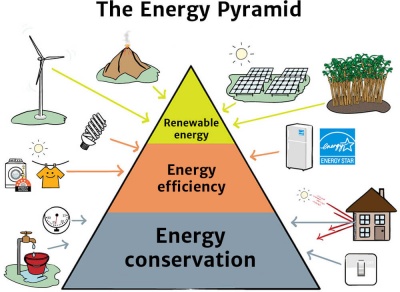
| Canada can achieve 100% zero-emission electricity by 2035 with an electricity system that prioritizes renewable energy, storage, energy efficiency, and interprovincial transmission and avoids the pitfalls of nuclear generation, fossil gas, carbon capture and storage, and carbon offsets, the David Suzuki Foundation (DSF) concludes in a modelling study released this week. And the authors note two equally important dimensions of the transition: decolonizing power to benefit Indigenous peoples, and engaging with communities at the outset to save precious time and money. “At a time when energy security and affordability are top of mind for many Canadians, this report shows that a clean electricity pathway based on renewables offers an affordable option for ambitiously reducing emissions while meeting increasing electricity demand,” the Foundation writes. The Energy Mix 27th May 2022https://www.theenergymix.com/2022/05/27/canada-can-hit-100-zero-emission-electricity-by-2035-without-nuclear-ccs-report-finds/ |
U.S – UK row over purchases of nuclear submarine equipment
US officials have threatened to limit defence cooperation with Britain in
a row about the takeover of a supplier of secret tech to nuclear
submarines. Intelligence sources said that Kwasi Kwarteng, the Business
Secretary, will jeopardise future partnerships between the two countries if
he blocks the £2.6bn sale of Ultra Electronics to Boston-based private
equity business Advent International.
They accused Mr Kwarteng of unfairly
discriminating against US companies after he ordered a national security
investigation into the takeover of Ultra, which makes military
communications equipment including highly classified kit for Trident
nuclear submarines.
Telegraph 27th May 2022
Niigata prefectural government distributes iodine tablets to residents living within 30 km of nuclear power plant in advance and calls for pickup

May 14, 2022
Niigata Prefecture has decided to distribute in advance stable iodine tablets, which suppress internal exposure to the thyroid gland in the event of an accident at a nuclear power plant, to residents within 30 km of the plant in addition to those within 5 km of the plant. Niigata Prefecture has decided to distribute the drug in advance to residents within 30 km of the plant, in addition to those within 5 km of the plant, and is calling for their receipt.
According to the national guidelines in preparation for a serious accident at the nuclear power plant, “stable iodine tablets,” which suppress exposure to the thyroid gland, are to be distributed in advance to residents within a 5-kilometer radius of the plant, while those within a 30-kilometer radius are, in principle, to be distributed upon evacuation. The government, however, allows local governments to distribute iodine tablets in advance if they anticipate difficulties.
The prefectural government has decided to distribute the kits in advance, taking into consideration the recent string of heavy snowfalls and other factors that may prevent smooth distribution at the time of evacuation.
The distribution is targeted at people under 40 years of age and pregnant women, and will be offered to those over 40 years of age who wish to receive one.
The prefectural government plans to distribute the kits to residents of Kashiwazaki City first, and then to residents of other municipalities in turn.
The Prefectural Government’s Infectious Disease Control and Pharmaceutical Affairs Division is asking those who are eligible to receive the iodine stabilizers to carefully read the information they receive from the prefecture and receive them in advance in case of an emergency.
https://www3.nhk.or.jp/lnews/niigata/20220514/1030021071.html?fbclid=IwAR0ShjaWXJ-MqOX10Jm_62cu1wuUylVHGWWIICVrl4cLe9xbd2Sw3sMOn3s
When Henry Kissinger gives advice on ending the Ukraine conflict, the West should listen

The sooner those who are feeding the current chaos can clue into Kissinger’s advice, the better off we’ll all be in mitigating the inevitable subsequent diplomatic, economic, and political hangover
The realpolitik veteran schools today’s ideologues, but they won’t like the lesson
https://www.rt.com/op-ed/authors/rachel-marsden/ Rachel Marsden is a columnist, political strategist, and host of independently produced talk-shows in French and English. rachelmarsden.com 27 May 11, The ideologues who dominate today’s Western foreign policy establishment are largely responsible for escalating tensions with Russia to the point of military conflict in Ukraine. And now the grandmaster of realpolitik — that is, foreign relations shaped by pragmatism and on-the-ground truth rather than wishful thinking — has just delivered a rhetorical blow to NATO’s ambitions over Ukraine.
Henry Kissinger, the Nixon-era US secretary of state and a living legend of international politics, celebrates his 99th birthday this week. On Monday, he took to the stage via videoconference at the annual World Economic Forum in Davos, Switzerland, to offer his advice for resolving the Ukraine conflict.
“Parties should be brought to peace talks within the next two months. Ukraine should’ve been a bridge between Europe and Russia, but now, as the relationships are reshaped, we may enter a space where the dividing line is redrawn and Russia is entirely isolated,” Kissinger said in a conversation with WEF founder and executive chairman Klaus Schwab.
Isolating Russia from Europe seems to be the goal of engaging Moscow in a war of attrition by arming and backing Ukrainian fighters to effectively serve as NATO proxies. This would also explain why Washington is so highly invested in the conflict, both financially and ideologically.
An EU-Ukraine-Russia axis would be competitive with Beijing and Washington on the global playing field. But the Atlantist leaders in Brussels and their assorted Russophobic allies have privileged dated Cold War ideology over the long-term political and economic interests of their own citizens, who would be best served by a normalization of relations and increased cooperation right across the European continent.
“We are facing a situation now where Russia could alienate itself completely from Europe and seek a permanent alliance elsewhere,” Kissinger said. “This may lead to Cold War-like diplomatic distances, which will set us back decades. We should strive for long-term peace.” By far, the most likely scenario is even greater Russian rapprochement with China.
The end result could be a stronger military-industrial bloc in competition with the US for economic and political influence worldwide and a loss of clout for the EU, which would simply be reduced to a less influential partner of Washington’s, with less autonomy than it would have enjoyed had it not subordinated all of its interests to Washington and had instead maintained a more independent and balanced position.
Kissinger’s decades of experience in global affairs at the highest level as an advisor to heads of state, governments, and multinational corporations, and as an advocate of pragmatic solutions to sticky global problems, all give weight to his advice for any global crisis.
Recipient of the Nobel Peace Prize for his role in negotiating an end to the bloody Vietnam War with the North Vietnamese during the administration of Republican President Richard Nixon, Kissinger served as both secretary of state and national security advisor to the former US leader. Prior to that, he served as an advisor to Democratic President John F. Kennedy. If he’s urging a rapid resolution to the conflict in Ukraine, it’s informed by his professional experience. Perhaps he sees shades of Vietnam in Ukraine?
Kissinger’s solution for ending the territorial disputes between Russia and Ukraine is unlikely to please the current American foreign policy establishment. “Ideally, the dividing line should be a return to the status quo ante. Pursuing the war beyond that point will not be about the freedom of Ukraine, but a new war against Russia itself,” Kissinger said, with the “status quo ante” referring to leaving Crimea, Lugansk, and Donetsk under Russia’s control.
Once the “most admired man in America”, according to Gallup polls from 1973, 1974, and 1975, in the wake of peace in Vietnam, Kissinger has often wandered off Washington’s beaten foreign policy path. He laid out the first blueprint for cooperation between the US and China. He also opposed NATO’s bombing of Yugoslavia under former President Bill Clinton. “The rejection of long-range strategy explains how it was possible to slide into the Kosovo conflict without adequate consideration of all its implications—especially the visceral reaction of almost all nations of the world against the new NATO doctrine of humanitarian intervention,” Kissinger wrote in a Newsweek article in 1999.
Kissinger’s remarks accurately foreshadowed the military interventions of NATO member nations elsewhere under humanitarian pretexts — such as Syria, Libya, and now against Russia via Ukraine — for the ultimate purpose of regime change. He equally predicted why, despite rampant promotion and spinning of these Western wars, so much opposition to them nonetheless exists. Although attention spans and news cycles may have shortened since Kissinger’s diplomatic heyday, some people can still grasp that ideologically driven conflicts can engender long-term negative systemic repercussions that more than outweigh whatever short-term satisfaction may be derived from sparking an ideologically driven conflict.
The sooner those who are feeding the current chaos can clue into Kissinger’s advice, the better off we’ll all be in mitigating the inevitable subsequent diplomatic, economic, and political hangover.
Col. Richard Black — U.S. Leading World to Nuclear War
Video: Col. Richard Black — U.S. Leading World to Nuclear War, The International Schiller Institute, 27 May 22, Mike Billington with Executive Intelligence Review interviews Col. Richard Black (ret.).
(Ed. First a lengthy discussion on ColBlack’s military background, and his analysis of the history of the First –war in Syria)
”……………………… BLACK: …… the United States has a strategic policy of using proxies to engage in war. ………
a highly secretive CIA special activities center—these are kind of the James Bond guys of the Central Intelligence Agency, total Machiavellian; they will do anything, there’s no it’s no holds barred with these guys.
…………throughout you see this Machiavellian approach, where we use unlimited force and violence. And at the same time, we control the global media, to where we erase all discussions of what’s truly happening. So, to the man or the woman in the street, they think things are fine. Everything is being done for altruistic reasons, but it’s not……………………
BILLINGTON: Part of your military service was as a JAG officer, and for a period of time, you were the Army’s head of the criminal law division at the Pentagon. And in that light, what do you see as of how these Caesar sanctions—how would you look at those from the perspective of international law and military law?
BLACK: Well, now, I was not the international law expert. I was the criminal law expert. But I would say that making war on a civilian population is a crime of grave significance in the law of war.
………………… When we fight these wars, we have no limits on the cruelty and the inhumanity that we’re prepared to impose on the people, making them suffer, so that somehow that will translate into overthrowing the government, and perhaps taking their oil, taking their resources.
BILLINGTON: Clearly, the policy against Russia today, by the current administration.
BLACK: Yes. Yes. You know, Russia is, perhaps more blessed with natural resources than any other nation on Earth. They are a major producer of grain, of oil, of aluminum, of fertilizers, of an immense number of things that tie into the whole global economy. And no doubt there are people who look at this and say, “if we could somehow break up Russia itself, there will be fortunes made, to where trillionaires will be made by the dozens.” And there’s some attraction to that. Certainly you’ve seen some of this taking place already, with foreign interests taking over Ukraine, and taking their vast resources.
But, we began a drive towards Russia, almost immediately after the Soviet Union dissolved in 1991. The Soviet Union dissolved, the Warsaw Pact dissolved. And unfortunately, one of the great tragedies of history is that we failed to dissolve NATO. The sole purpose of NATO was to defend against the Soviet Union. The Soviet Union no longer existed. NATO went toe toe with the Warsaw Pact. The Warsaw Pact was gone; it no longer existed. There was no purpose in NATO’s continuing to exist. However, we retained it, and it could not exist unless it had an enemy. Russia was desperate to become part of the West.
BILLINGTON: So, the U.S. and U.K. position on the war in Ukraine, just over these last few weeks has now become not only supporting the war, but victory at all costs. This has been declared by Defense Secretary Austin and others. And they are pumping in huge quantities of not only defensive but offensive military weaponry to the Kyiv regime. What do you see as the consequence of this policy?
BLACK: I think one thing that it will do is it will ensure that a tremendous number of innocent Ukrainian soldiers will die needlessly. A lot of Russian soldiers will die needlessly. These are kids. You know, kids go off to war. I went off to war as a kid. You think your country, right or wrong, everything they’re doing is fine. It just it breaks my heart, when I look at the faces of young Russian boys, who have been who have been gunned down—in some cases very criminally by Ukrainian forces. And likewise, I see Ukrainian young men, who are being slaughtered on the battlefield.
We don’t care! The United States and NATO, we do not care how many Ukrainians die. Not civilians, not women, not children, not soldiers. We do not care. It’s become a great football game. You know, we’ve got our team. They’ve got their team, rah rah. We want to get the biggest score and run it up. And, you know, we don’t care how many how many of our players get crippled on the playing field, as long as we win.
Now, we are shipping fantastic quantities of weapons, and it’s caused the stock of Raytheon, which creates missiles, and Northrop Grumman, which creates aircraft and missiles, all of these defense industries have become tremendously bloated with tax dollars. I don’t think it’s ultimately going to change the outcome. I think that Russia will prevail. The Ukrainians are in a very awkward strategic position in the East.
But if you look at the way that this unfolded, President Putin made a desperate effort to stop the march towards war back in December of 2021. He went so far as to put specific written proposals on the table with NATO, peace proposals to defuse what was coming about. Because at this point, Ukraine was massing troops to attack the Donbas. And so, he was trying to head this off. He didn’t want war. And NATO just blew it off, just dismissed it; never took it seriously, never went into serious negotiations.
At that point, Putin seeing that armed Ukrainians, with weapons to kill Russian troops were literally on their borders, decided he had to strike first. Now, you could see, that this was not this was not some preplanned attack. This was not like Hitler’s attack into Poland, where the standard rule of thumb, is that you always have a 3-to-1 advantage when you are the attacker. You have to mass three times as many tanks and artillery and planes and men, as the other side has. In fact, when Russia went in, they went in with what they had, what they could cobble together on short notice. And they were outnumbered by the Ukrainian forces. The Ukrainian forces had about 250,000. The Russians had perhaps 160,000. So instead of having three times as many, they actually had fewer troops than the Ukrainians. But they were forced to attack, to try to preempt the battle that was looming, where the Ukrainians had massed these forces against the Donbas.
Now, the Donbas is adjacent to Russia. It is a portion of Ukraine that did not join with the revolutionary government that conducted the coup in 2014 and overthrew the government of Ukraine. They refused to become a part of the new revolutionary government of Ukraine. And so they declared their independence. And Ukraine had massed this enormous army to attack against the Donbas. And so Russia was forced to go in to preempt that planned attack by Ukraine. And you could see that Russia very much hoped that they could conduct this special operation without unduly causing casualties for the Ukrainians, because they think of the Ukrainians, or at least they did think of the Ukrainians as brother Slavs; that they wanted to have good relations. But there is a famous picture with a Russian tank, that had been stopped by a gathering of maybe 40 civilians who just walked out in the road and blocked the road and the tank stopped. I can tell you, in Vietnam, if we had had a bunch of people who stood in the way of an American tank, going through, that tank would not have slowed down, in the slightest! It wouldn’t honk the horn, it wouldn’t have done anything; wouldn’t have fired a warning shot. It would have just gone on. And I think that’s more typical—I’m not I’m not criticizing the Americans. I was there and I was fighting, and I probably would have would have driven the tank straight through myself.
But what I’m saying is that the rules of engagement for the Russians were very, very cautious. They didn’t want to create a great deal of hatred and animosity. The Russians did not go in—they did not bomb the electrical system, the media systems, the water systems, the bridges and so forth. They tried to retain the infrastructure of Ukraine in good shape because they wanted it to get back. They just wanted this to be over with and get back to normal. It didn’t work. The Ukrainians, the resistance was unexpectedly hard. The Ukrainian soldiers fought with great, great valor, great heroism. And. And so now the game has been upped and it’s become much more serious.
But it is amazing to look and to see that Russia dominates the air. They haven’t knocked out the train systems. They haven’t knocked out power plants. They haven’t knocked out so many things. They’ve never bombed the buildings in the center of Kyiv, the capital of Ukraine; they haven’t bombed the buildings where the parliament meets. They’ve been incredibly reserved about these things, hoping against hope that peace could be achieved.
But I don’t think I don’t think Ukraine has anything to do with the decision about peace or war. I think the decision about peace or war is made in Washington, D.C. As long as we want the war to continue, we will fight that war, using Ukrainians as proxies, and we will fight it to the last Ukrainian death.
BILLINGTON: How do you project the potential of a war breaking out directly between the United States and Russia? And what would that be like?
……………………. We need to recognize the risk of playing these games of chicken. Where, for example, the Turkish media just published an article saying that at Mariupol, where there was a great siege, that the Russians ultimately won. The one area they haven’t taken over is this tremendous steel plant. There are a lot of Ukrainian soldiers who are holed up there. And now it has come to light that apparently there are 50 French senior officers, who are trapped in that steel plant along with the Ukrainians. The French soldiers have been on the ground fighting, directing the battle. And this was kept under wraps, ultra-secret, because of the French elections that just occurred. Had the French people known that there were a large number of French officers trapped and probably going to die in that steel plant, the elections would have gone the other way: Marine Le Pen would have won. And so it was very important that for the entire deep state, that it not come to light that these French officers were there.
……………… And you can see we’re taking these very reckless actions, and each time we sort of up the ante—I happen to be a Republican—but we have two Republican U.S. senators who have said that, “well, we might just need to use nuclear weapons against Russia.” That is insane. I think it’s important that people begin to discuss what a thermonuclear war would mean.
Now, we need to understand, we think, “oh, we’re big, and we’re bad, and we have all this stuff.” Russia is roughly comparable to the United States in nuclear power. They have hypersonic missiles, that we do not have. They can absolutely evade any timely detection, and they can fire missiles from Russia and reach San Francisco, Los Angeles, Chicago, Detroit, Baltimore, Washington, D.C., New York City.
And if you think about just Virginia, where I happen to live, if there were a nuclear war—and keep in mind, they also have a very large and effective fleet of nuclear submarines that lie off the coast of the United States. They have a great number of nuclear-tipped missiles, and they can evade any defenses we have. So just in Virginia, if you look at it, all of Northern Virginia would be essentially annihilated. There would hardly be any human life remaining in Loudoun County, Prince William County, Fairfax County, Arlington, Alexandria. The Pentagon lies in in Arlington County: The Pentagon would simply be a glowing mass of molten sand. There would be no human life there. And there would be no human life for many miles around it. Just across the Potomac, the nation’s capital, there would be no life remaining in the nation’s capital. The Capitol building would disappear forever. All of the monuments, all of these glorious things—nothing would remain.
If you go to the coast of Virginia, you have the Norfolk Naval Shipyard, you have the Port of Norfolk. You have you have the greatest accumulation of naval power on the face of the Earth. This is where we park all of our aircraft carriers, our nuclear submarines, all of those things. There would be nothing remaining. There would be nothing remaining of any of those shipping industries there.
And you can carry this on. You talk about New York City, probably New York City itself, not only would everybody be killed, but it would probably be impossible for people to inhabit New York City for hundreds of years afterwards. But not only would it cease to be a place of vibrant human life, but probably going out for maybe half a millennium, it would not recover any sort of civilization.
We need to understand the gravity of what we’re doing. Perhaps if it were a matter of life and death for the United States, what happens in Ukraine, that would be one thing. Certainly when the Soviet Union put missiles in Cuba, that targeted the United States, that was worth taking the risk, because it was right on our border and it threatened us. And it was it was a battle worth fighting for and a risk worth taking. The Russians are in this in exactly the mirror image of that situation, because for them, the life of Russia depends on stopping NATO from advancing further right into Ukraine, right to their borders. They cannot afford not to fight this war. They cannot afford not to win this war.
So I think, toying with this constant escalation in a war that, really, in a place that has no significance to Americans—Ukraine is meaningless to Americans; it has no impact on our day-to-day lives. And yet we’re playing this reckless game that risks the lives of all people in the United States and Western Europe for nothing! Just absolutely for nothing! …………………………………………………….. https://schillerinstitute.com/blog/2022/04/26/video-col-richard-black-u-s-leading-world-to-nuclear-war/
France’s Nuclear Industry Slides Into Crisis

https://globeecho.com/news/europe/germany/frances-nuclear-industry-slides-into-crisis/ By David Sadler May 26, 2022,
France is less dependent on Russian gas than Germany – thanks to the country’s 56 nuclear reactors. But because more than half of them are standing still and Russia is disappearing as a customer, France’s nuclear industry is under pressure.
French President Emmanuel Macron had promised a “renaissance of nuclear energy” in February. He wants to have six new pressurized water reactors built. More electricity, more independence, more innovation – Macron is going all-out on the nuclear power card to push France’s industry forward.
Corrosion stalls the plans

But these ambitious plans are currently experiencing a serious setback: 29 of the 56 reactors are shut down. There is a double problem: the state-owned company EDF’s kiln park is showing its age. Many reactors are shut down for routine maintenance. But now, of all things, twelve of the younger series also have to be taken off the grid.
The reason is a corrosion problem that nobody expected. “At the moment, the controls do not allow any statement to be made as to how large the cracks in the cooling tubes are. The reactors have to be shut down for this,” says Bernard Doroszczuk, rapporteur for the Nuclear Safety Authority.
Proportion of nuclear power unplanned at low point
Instead of around 70 percent, France’s nuclear power plants only supplied 37 percent of the electricity requirement in April – less than ever before! Europe’s largest nuclear power provider, Electricité de France, currently estimates the group’s shortfall in revenue for 2022 at 18.5 billion euros. It is already foreseeable that there will be power shortages in winter.
But a quick solution to the technical problems is not in sight. Because there is a lack of skilled workers. “Basically, EDF estimates that by 2026 there will be a six-fold increase in the need for specialist staff. Above all when it comes to the machinery: i.e. pumps, the pipe network, and there is a lack of welders – that’s what drives everyone,” says Jean-Luc Lachaume from the security agency. “And this calculation does not even include the announced construction of new reactors. Nor does it include the need that has now arisen as a result of these unforeseen corrosion problems.”
Instead of renaissance, first of all, renovation. Security auditor Doroszczuk therefore calls for a Marshall Plan. “Industry and the state have to get involved now,” he demands. “Otherwise the announced goals are not tenable. And that would be the worst thing for the credibility of the entire industrial program.”
Russia has been the most important customer so far
On top of all these problems there is now the war in Ukraine. To date, Russia has been the most important customer of the French nuclear industry. Mycle Schneider, editor of the World Nuclear Industry Status Report, sees the items in the order books dwindling. Internationally, Russia was “the decisive, most aggressive promoter” of the construction of new nuclear power plants. And now suddenly this bottleneck has arisen. “In Finland, a project for a Russian nuclear power plant has already been officially canceled – and turbines for this nuclear power plant were to be delivered from France,” says Schneider.
In fact, the French Ministry of Economic Affairs even planned to take a 20 percent stake in the domestic turbine manufacturer in Belfort for the Russian company Rosatom. But that plan could now be shelved. France believed that its nuclear strategy was on the upswing. But the plans have gone haywire.
Energy sanctions on Russia – Russia’s nuclear supply chain should be sanctioned, too
As numerous countries in the west consider taking aim at Russia with energy sanctions over Moscow’s attack on Ukraine, Russia’s dominance in the nuclear energy sector is being overlooked, a paper from ColumbiaUniversity’s Center on Global Energy Policy warns.
While the Russian invasion of Ukraine drags into its fourth month, the European Union has
struggled to wean itself off Russian fossil fuel imports – the profits of which help fuel Moscow’s aggression in Ukraine.
But the Columbia paper, authored by Paul Dabbar, a former undersecretary of Energy for
Science at the Department of Energy, and Columbia researcher Matthew Bowen, suggests that Russia’s nuclear technology sector should also be the focus of economic boycotts.
From reactor construction to fuel fabrication, Russia occupies a predominant position on world nuclear markets. Of the 439 nuclear reactors operated around the world as of 2021, 38 were in Russia
itself and another 42 were built with Russian or Soviet technology.
Bellona 26th May 2022
US university report argues for sanctioning Russia’s nuclear supply chain
Cancer Patients Seek Damages from Fukushima Nuclear Plant
Claims Journal , By Mari Yamaguchi | May 27, 2022 TOKYO (AP) — A Tokyo court began hearings Thursday in a lawsuit seeking nearly $5 million in damages for six people who were children in Fukushima at the time of its 2011 nuclear power plant disaster and later developed thyroid cancer.
The plaintiffs are suing the operator of the nuclear plant, saying radiation released in the accident caused their illnesses.
It is the first group lawsuit filed by Fukushima residents over health problems allegedly linked to the disaster, their lawyers say.
One plaintiff, identified only as a woman in her 20s, testified from behind a screen that she had to give up plans to attend university because of repeated operations and treatments.
“Because of the treatments, I could not attend university, or continue my studies for my future job, or go to a concert. I had to give up everything,” she said. “I want to regain my healthy body, but that’s impossible no matter how hard I wish.”
She and the five other plaintiffs are seeking a total of 616 million yen ($4.9 million) in damages from Tokyo Electric Power Company Holdings for allegedly causing their cancers.
On March 11, 2011, a magnitude 9.0 earthquake and massive tsunami destroyed the Fukushima plant’s cooling systems, causing three reactor cores to melt and release large amounts of radiation. Critics say the plant operator should have known that a large tsunami was possible at the site.
The plaintiffs, who were 6 to 16 years old at the time of the accident and lived in different parts of Fukushima, were diagnosed with thyroid cancer between 2012 and 2018, their lawyers said……………..
The Fukushima prefectural government tested 380,000 residents aged 18 or younger at the time of the accident for thyroid cancer. About 300 were diagnosed with cancer or suspected cancer.
That occurrence rate, about 77 per 100,000, is significantly higher than the usual 1-2 per million and can only be linked to radiation from the accident, the plaintiffs’ lawyers said.
………… Three other plaintiffs who attended the hearing were also behind a partition to protect their privacy because of criticism on social media accusing them of fabricating their illnesses and hurting the image of Fukushima, the lawyers said.
Ido said many people with health problems feel intimidated to speak out in Fukushima and that he hopes the lawsuit will prove a correlation between radiation and the plaintiffs’ cancers “so that we can have a society in which people can talk freely about their difficulties.”…………… https://www.claimsjournal.com/news/international/2022/05/27/310693.htm
1 This Month



19 November – Webinar – The Reality of Reprocessing
Time: 11:00 AM Pacific Time (US & Canada) / 2:00 PM Eastern / 7:00 PM UK / 8:00 PM CET
Register for the Zoom Event Here



Shut down the radiation-damaged Heysham nuclear reactors now
To see nuclear-related stories in greater depth and intensity – go to https://nuclearinformation.wordpress.com

Say No to NASA’s Reckless Nuclear Reactor on the Moon
Say No to NASA’s Reckless Nuclear Reactor on the Moon
-
Archives
- November 2026 (74)
- October 2026 (302)
- September 2026 (339)
- August 2026 (330)
- July 2026 (355)
- June 2026 (287)
- May 2026 (306)
- April 2026 (356)
- March 2026 (251)
- February 2026 (267)
- January 2026 (308)
- December 2025 (358)
-
Categories
- 1
- 1 NUCLEAR ISSUES
- business and costs
- climate change
- culture and arts
- ENERGY
- environment
- health
- history
- indigenous issues
- Legal
- marketing of nuclear
- media
- opposition to nuclear
- PERSONAL STORIES
- politics
- politics international
- Religion and ethics
- safety
- secrets,lies and civil liberties
- spinbuster
- technology
- Uranium
- wastes
- weapons and war
- Women
- 2 WORLD
- ACTION
- AFRICA
- Atrocities
- AUSTRALIA
- Christina's notes
- Christina's themes
- culture and arts
- Events
- Fuk 2022
- Fuk 2023
- Fukushima 2017
- Fukushima 2018
- fukushima 2019
- Fukushima 2020
- Fukushima 2021
- general
- global warming
- Humour (God we need it)
- Nuclear
- RARE EARTHS
- Reference
- resources – print
- Resources -audiovicual
- Weekly Newsletter
- World
- World Nuclear
- YouTube
-
RSS
Entries RSS
Comments RSS

