Macron facing ‘Fukushima-style’ accident, as EDF reactor cracks force shutdown

FRENCH President Emmanuel Macron is facing a nightmare situation as cracks in EDF’s reactors threaten to create accidents as devastating as Fukushima, Express.co.uk was told.

EDF is in a parlous financial state, with huge debts, and all the builds of its flagship EPR reactor have had huge cost and time over-runs – not a good look.
Antony Ashkenaz, Express, Jul 3, 2022
https://www.express.co.uk/news/science/1633756/macron-facing-nuclear-nightmare-edf-reactor-crack-risks-fukushima-style-horror-energy France is facing a relatively unique energy crisis when compared to other countries in Europe. The country is not heavily dependent on natural gas, Russian or otherwise, getting most of its energy supplies from nuclear power, which generates 70 percent of the country’s electricity. However, Paris has been forced to shut down many French reactors, as a recent report warned Mr Macron of significant corrosion safety problems in EDF [Electricité de France] nuclear power plants in France as cracks were detected in some nuclear reactors.
Speaking to Express.co.uk, Dr Bernard Laponche, the co-author of this study warned that in many of these reactors, cracks to cooling systems could cause devastating accidents.
He said: “If the defects are detected in or near the welds, or near the junction between these and the primary cooling circuit cause a breach in the cooling system with an important loss of water, this can lead to the partial or total melting of the fuel assemblies in the reactor core.
“That means the possibility of a Three Mile Island or a Fukushima-type accident.”
As a result of these corrosion problems, four 1500 MW, seven 1300 MW and one 900 MW reactors are shut down.
Meanwhile, engineers are working on fixing segments of the cooling circuits where the cracks were identified.
Dr Laponche warned that all other reactors will likely be checked for these issues within the next year.
If further evidence of cracks are found, the corresponding part of the reactor will be removed and replaced, in a procedure that Dr Laponche estimates could take a year.
He added: “This means that a large part of the EDF nuclear fleet will be gradually shut down.
“Next winter, France will reopen coal and gas plants. But the country has very few of them and it will have to import a maximum of electricity from abroad.
“Important efforts will be necessary to reduce electricity consumption, particularly at the winter peak (due in particular to a high proportion of electrical heating).”
Last week, the heads of France’s major energy companies penned a letter, issuing a dire warning about the energy crisis, urging individuals and businesses to limit power consumption immediately.
They wrote: “We need to work collectively to reduce our consumption in order to regain room to manoeuvre.
“Taking action as soon as this summer will allow us to be better prepared at the start of next winter, notably for preserving our gas reserves.”
The news of cracks in EDF reactors in France could also spell danger for the energy company’s nuclear projects in the UK, Dr Laponche warned.
He continued: “Although all the EPRs reactors are shut (Olkiluoto and Taishan) or not yet functioning (Flamanville 3 in France), there is a high probability that the same problem does exist on these reactors, including those at Hinkley Point.
“EDF should be questioned on this point.”
EDF is currently building the Hinkley Point C nuclear power station in Somerset and was previously set to come online in 2026, but has since been delayed due to Covid-19.
Speaking to Express.co.uk, Dr Paul Dorfman, an associate Fellow at SPRU University of Sussex, who was not involved in the study criticised EDF and the French nuclear fleet as whole saying: “The French nuclear corporation, EDF, runs the UK nuclear reactor fleet, is building at Hinkley Point C and wants to build at Sizewell C.
“But EDF is in a parlous financial state, with huge debts, and all the builds of its flagship EPR reactor have had huge cost and time over-runs – not a good look.
!As Lord Deben, Chair of UK Parliamentary Committee on Climate Change has just said: ‘The nuclear industry doesn’t deliver on time and doesn’t deliver to budget…. So there’s a real concern about how qualified (EDF) are to do these things.’
Express.co.uk has reached out to EDF for comments on the findings of the report.
If you want to be accepted as ”Western” – best to be white.

The Washington Post reported on the 15th of June that President Biden is to visit Saudi Arabia in July for talks with Crown Prince Mohammed bin Salman. He explained that the Kingdom had been ‘a strategic partner of the United States for nearly eight decades’. No talk there of sanctions and condemnation. It illustrates how empty is the present Western rhetoric about a global struggle between democracy and autocracy.
The West is white, https://johnmenadue.com/the-west-is-white/ By Henry Reynolds, Jul 1, 2022

When the Soviet Union disintegrated in 1991 Gorbachev’s vision of a ‘common European homeland from the Atlantic to the Urals’ did not prevail. Rather than retract ,NATO expanded. Russia was too weak to halt the process but was useful as a potential adversary. Suggestions that it could actually join the alliance were peremptorily dismissed. NATO was far too useful for the Americans as the means to perpetuate their dominance of Western Europe. And without the Soviet Union the members of the alliance could be called on to join the global campaign against terror and go to war in Libya, Iraq and Afghanistan, places in many cases they knew little about.
The catastrophic war in Ukraine should not have come as a surprise. Tension between NATO and Russia had been intensifying for some time. From as far back as the era of Clinton and Yeltsin experienced observers had warned about the likely consequences of perpetuating the divisions of the cold war. But American policy makers are no doubt pleased with the solidarity of their client states with the added bonus of Sweden and Finland surprisingly seeking membership of the alliance. And having recruited a host of willing adjutants for Imperial ventures in the Middle East the next task is to turn NATO into a global player with the mission to both contain and confront China. There doesn’t appear to be any reluctance to join this new crusade. In early June the President of little Lithuania Ingrida Simonyte announced that she was willing to join the rest of the alliance ‘as it stares down China and Russia.’
But anti-Russian solidarity in Europe has not been matched in the rest of the world nor is there any enthusiasm to sign up to the coming confrontation with China. There are many reasons for this. As with the classic cold war there are bound to be many states which will determine to remain non-aligned. And the power and prestige of the West is greatly diminished. America can no longer present itself as an exemplar of a well ordered democracy. There is just too much that is going wrong. Domestic opinion is deeply fractured. Democracy itself is in trouble in the land of the free.
Wider forces are also at work. At the very moment when the west is fanning cold war embers there is a recrudescence of anti-colonialism in Europe’s erstwhile colonies with a focus on the legacy of slavery, the expropriation and destruction of indigenous societies and the accompanying intellectual heritage of racial superiority. In the rest of the world the West’s sense of entitlement is seen as just the latest iteration of habits of thought and behaviour which derive from the era when white men bestrode the world as self-selected lords of human kind.1
The West’s hypocrisy is also under fire. The shock and outrage about Russia’s onslaught on Ukraine renews the memory of the disastrous wars unleashed on Afghanistan, Iraq and Syria and the accompanying war crimes which have never been called to account. But the contemporaneous war in Yemen receives little attention and less condemnation even though those pillars of NATO the United States, Britain and France have all assisted Saudi Arabia. And the results speak for themselves. A U.N survey at the end of 2021 concluded that the war had resulted in 377,000 deaths including 10,200 children who had been killed or wounded. Famine conditions face 160,000 and 19 million people will go hungry. As recently as January this year a Saudi airstrike killed91 civilians and wounded another 226. Not that anyone in the west bothered to notice it.
The Washington Post reported on the 15th of June that President Biden is to visit Saudi Arabia in July for talks with Crown Prince Mohammed bin Salman. He explained that the Kingdom had been ‘a strategic partner of the United States for nearly eight decades’. No talk there of sanctions and condemnation. It illustrates how empty is the present Western rhetoric about a global struggle between democracy and autocracy.
The world would be forgiven for assuming that the West is only outraged by war when the victims are white. This was certainly the conclusion of the Malaysian Health Minister Khairy Jamaluddin when he addressed the recent Davos Conference. He lamented that “ the colour of your skin argument” still seemed relevant .’Now that violence and state terror effects someone like you—that is a white westerner suddenly, there is this moral outrage from Washington to Davos.’
The West’s hypocrisy about refugees and immigration has also been highlighted by the Ukraine war. The exemplary reception of the waves of over two million refugees fleeing from the war is so different from Poland’s hostility to Middle Eastern refugees still stuck in no man’s land between Poland and Belarus. They have been forgotten by the western media.
Many are still there. The Polish army patrols the border and work proceeds on a 186 kilometre border fence. Latvia and Lithuania have adopted similar defensive policies. Poland can scarcely claim to have no responsibility in the matter. Their forces spent years in both Iraq and Afghanistan helping to produce the chaos from which people are trying to escape. But the electorate is adamant. In a recent survey 70% of respondents didn’t want non-white people living in their country.
Poland is not alone when it comes to migration from outside fortress Europe. After the migration crisis of 2015 European opinion has swung decisively against non-European migration. Right wing parties have ridden the wave into the centre of political life. Multiculturalism has been decisively rejected even in the erstwhile liberal Nordic countries. And in the background is the growing popularity of what has become known as the racial replacement theory. It is most influential in the United States. Surveys now show that a third of Americans and many more Republicans believe that there is a conspiracy to replace white or ‘heritage’ Americans with coloured foreigners.
The link between domestic developments such as these and the growing hostility to China scarcely needs emphasising. It is a result of replacement theory projected on a global scale. And that is of great concern to the rest of the world. A chorus of many voices insists that they want to work on both sides of the growing divide and don’t want to choose. Can this surprise us? In the C20th the whole world was drawn into two disastrous world wars. This was the legacy of Europe , North America and Japan. Why would anyone wish to see a C21st replay?
Amid Iran nuclear impasse, China calls out US for AUKUS ‘double standards’

AUKUS pact’s negative impact on political, diplomatic settlement of Iran nuclear issue cannot be undone, says Chinese envoy
AA Riyaz ul Khaliq |01.07.2022 ISTANBUL
Calling for an “early and positive outcome” in ongoing talks on the Iran nuclear deal, China has urged the US to “abandon double standards” on non-proliferation of nuclear weapons.
Referring to the AUKUS pact between the US, UK and Australia, China’s UN envoy Zhang Jun told a Security Council session: “(It) is the first time since the NPT (Treaty on the Non-Proliferation of Nuclear Weapons) was concluded that a nuclear weapon state has openly transferred nuclear weapon materials to a non-nuclear weapon state.”
Under the AUKUS deal signed last year, Australia will build nuclear-powered submarines with the US and UK.
“Regardless of how the three countries may choose to name their nuclear submarine cooperation, the very essence of their nuclear proliferation behavior cannot be concealed,” Zhang said during a UNSC session on the Iran nuclear deal on Thursday.
“Its negative impact on the political and diplomatic settlement of the Iranian nuclear issue cannot be undone, the risk it poses to regional peace and stability is a reality that cannot be changed.”…………….
Welcoming the indirect talks between Washington and Tehran held in Qatar’s capital Doha this week, Zhang said: “The future of the Iranian nuclear issue is critical to the international nuclear non-proliferation regime, regional stability, and international peace and security.”
The meeting in Doha, however, concluded without any concrete progress.
Zhang said adhering to “the overarching goal of a political solution” will keep the “resumed Iranian nuclear talks on the right track with a view to an early and positive outcome.”
The Chinese ambassador also called for “eliminating interference in the negotiation process.”……………….. https://www.aa.com.tr/en/asia-pacific/amid-iran-nuclear-impasse-china-calls-out-us-for-aukus-double-standards/2628064
World’s most nuclear contaminated island left uninhabitable for 77 years
Jasper King, Saturday 2 Jul 2022 In the middle of the Pacific Ocean lies the world’s most nuclear contaminated island, devastated since the days of the Hiroshima and Nagisaki nuclear attacks.
The small coral islands of Bikini Atoll have remained uninhabited since 1945 when atomic bombs were dropped in Japan and the United States started using them for nuclear tests.
The tiny population of 167 people were advised to move elsewhere by the military and told the tests were necessary to prevent any future wars.
No one has lived there since.
The islands met the military’s criteria because it was under US control – as detailed in a report by the Natural Resources Defence Council and within 1,000 miles of a base from which bombers could take off.
The lagoon the atoll encircled offered a protected harbour for Navy ships, including vessels used as targets.
But residents who were moved from the island at the time were angry, however their leader King Juda at the time said: ‘We will go, believing that everything is in the hands of God.’
Although it was promised residents could eventually return one day, they were instead permanently relocated to other islands in the Marshalls
Between 1946 and 1958, the US detonated 23 nuclear devices on the islands, including 20 hydrogen bombs.
The Castle Bravo H-bomb test was conducted on the islands on March 1, 1954, and reached a yield of 15 megatons – 1,000 times more powerful than the atomic bomb which destroyed Nagisaki in 1945.
The bomb’s blast in to the air is estimated to be the equivalent of 216 Empire State Buildings, according to Stanford
 |
|
Ukraine says link restored to Zaporizhzhia nuclear station
July 1 (Reuters) – Ukraine’s nuclear power operator said on Friday it had re-established its connection to surveillance systems at the Zaporizhzhia nuclear plant, Europe’s largest, which is occupied by Russian forces.
The International Atomic Energy Agency (IAEA), the U.N.’s atomic watchdog, has said it wants to inspect the plant in southern Ukraine urgently, but Ukrainian authorities oppose any such visit while Russian forces remain in control………………………. https://www.reuters.com/world/europe/ukraine-says-link-restored-zaporizhzhia-nuclear-station-2022-07-01/
The Accidental Trumpification of NATO

https://www.theatlantic.com/international/archive/2022/07/nato-europe-america-trump-strategy/661459/
In a narrow but important sense, the world has become more amenable to the former president. And yet.
By Tom McTague, 3 July 22, If Donald Trump returns to power in 2025, he will find a world starkly different from the one he tried to construct while president. All hopes of normalizing relations with Russia have been obliterated in the slaughter of Ukraine. China is more powerful than ever. Iran is closer to acquiring nuclear weapons. And Kim Jong Un is still behaving like Kim Jong Un.
But, in a narrow yet important sense, the world has become more Trumpian since he left office. The NATO that met in Madrid this past week to agree on a new strategy to defend the West has started to resemble the kind of organization Trump and his wing of the Republican Party said they always wanted.
NATO’s European members are paying more for their own defense, the alliance is more Eastern European in its outlook and positioning, and, for the first time, it is explicitly focused on America’s great-power rivalry with China. Trump is not primarily responsible for these changes—for that he can thank Vladimir Putin—but they nevertheless signal an important moment for the West, as Europe moves to more closely align itself with American domestic political concerns. Europe’s shift is part of a bid to protect the status quo that has existed since NATO’s founding, but which is now threatened both by Russia’s aggression and by the U.S.’s growing focus on its great-power rival in the 21st century: China.
As well as NATO becoming more American in outlook, the grand strategies of countries that Trump so obviously distrusted—Germany and France in particular—have never been more irrelevant. Germany has been forced to abandon its long-held reticence to increase defense spending as well as its planned Nord Stream 2 gas pipeline with Russia. France, which has long sought a greater role for the European Union rather than NATO, today faces a continent that wants more NATO, not less, which, as France well understands, means support for U.S. primacy.
A similar reprioritization is taking place in the G7, another international organization Trump seemed to loathe, and that also met this past week, transformed by Russia’s invasion of Ukraine into a body that more obviously serves the American interest.
Notably, President Joe Biden has consciously rejected President Barack Obama’s prioritization of the wider G20 group of advanced economies, which included developing democracies such as India and Indonesia, but also Russia and China. In one of Obama’s first forays onto the world stage, he said that the G20 would from then on be the more important international format, better representing the 21st century than the kind of world where “there’s just Roosevelt and Churchill sitting in a room with a brandy.” His vice president has decided to reverse course and return the G7 to its former role, an organization that looks much more like a group of wealthy Western powers deciding how to get their way.
If Trump regains power, then, he should have far less to complain about than he did during his time in office, when Europe was clearly failing to share the burden of its own defense with the U.S., while striking independent trade and energy deals with both China and Russia. Then, it was legitimate for Trump to ask whether Europe was taking the U.S. for a ride. That grievance looks a lot less real today, even as Europe doubles down in its dependence on the U.S.
Together with bipartisan support in Congress for America’s military backing of Ukraine and its economic sanctions on Russia, many have taken solace in the notion that NATO—and support for it—is growing stronger than ever. And yet with Trump, there is always an “and yet.”
The first is that there remains an obvious, growing, and valid American grievance with Europe that Trump will almost certainly pick up should he return to the White House. Led by France, Europe is erecting barriers to protect its defense industry: New rules mean that the moment a European defense firm accepts a single euro from the EU, partnering with non-EU companies becomes almost impossible because of strict restrictions on intellectual property, a kind of poison pill.
This kind of protectionism was already being noticed by Trump toward the end of his first term, according to one senior NATO official I spoke with, but it has moved on several steps since. The idea behind these regulations is to build up Europe’s own military industrial capacity so that it can defend itself better—a form of burden sharing. And in some senses this would be good for the West collectively. However, such a move only emphasizes the bigger problem: Why should the U.S. pay for Europe’s defense if Europe is building obstacles to American defense firms? If the West is worth defending collectively, then how can it continue raising walls between its members? As one European government official told me: “Putting barriers around the West is fine. Putting them within the West is not.”
Nuclear warheads expected to increase in next 10 years
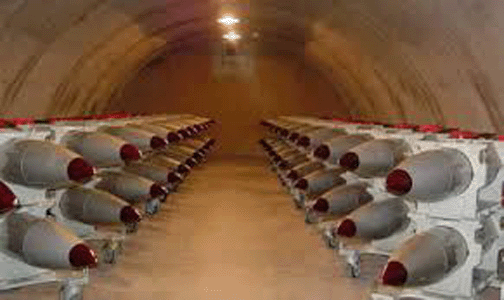
Nuclear-armed nations might seek out more weapons in coming decade despite cut in nuclear warheads during past 50 years, data show
AA, Fuat Kabakci |01.07.2022, ANKARA
Nuclear-armed nations are projected to seek out more weapons in the coming decade, despite the fact that there has been a drastic decline in the number of nuclear warheads worldwide during the past 50 years.
According to the data gathered by Anadolu Agency from Stockholm Institute for Peace Research (SIPRI) and other related sources, the number of nuclear warheads could rise globally.
The Nuclear Non-Proliferation Treaty (NPT) was signed on July 1, 1968, and entered into force in 1970 to prevent an escalating nuclear arms race as the US used the first nuclear bomb in the world against Japan in World War 2.
The agreement is based on three basic principles: the prevention of nuclear proliferation, the use of nuclear energy for civilian purposes and nuclear disarmament.
Nine countries have nuclear warheads with the US and Russia owning about 90% of these warheads, which total 12,705. As of January 2022, the US has 5,428 warheads while Russia has 5,997.
China has 350 warheads, France 290, and the UK possesses 225 warheads. The list continues with Pakistan having 165, India 156, Israel 90, and North Korea 20 nuclear warheads.
Increase in number of warheads
SIPRI’s “2022 Yearbook” report warned that the number of nuclear warheads could rise globally again after the Cold War if countries with nuclear weapons do not take concrete action on disarmament as soon as possible.
According to the report, the present decrease in the nuclear warheads of the US and Russia compared to 2021 and the previous years is due to the dismantling of obsolete warheads within the framework of modernization efforts.
China, which does not have a transparent policy about nuclear weapons, is at an important threshold of increasing its nuclear weapons capacity. Satellite images taken from the country show 300 new missile silos under construction.
In 2021, the UK announced its decision to increase its nuclear warhead capacity to 260. The UK also reported that the country would not publicly release figures on its operational nuclear warhead capacity, deployed warheads and missiles.
North Korea has also made its current military nuclear program a central element of its national security strategy. It is estimated that the country has enough material to produce 40-45 warheads, although the number of warheads at its disposal currently is about 20.
France has also announced the launch of a program to develop a nuclear-fueled ballistic missile submarine.
India and Pakistan also announced last year that they would develop missiles capable of carrying nuclear warheads.
Race for nuclear weapons
There are about 13,000 nuclear warheads in the world today………………… https://www.aa.com.tr/en/world/nuclear-warheads-expected-to-increase-in-next-10-years/2628075
Could nuclear plant ruin Suffolk haven for avocets, bitterns and harriers?

Guardian, Robin McKie Science editor 3 July 22, The Bittern Hide at the RSPB’s Minsmere reserve was doing steady business last Wednesday. More than a dozen birdwatchers were crammed into the elevated shelter which overlooks a broad band of heath, freshwater pools and reed beds stretching to the Suffolk coast. Marsh harriers swirled overhead and an occasional bittern swept across the landscape. In front of another nearby hide, avocets waded leisurely across a lagoon. Minsmere is an ornithologist’s paradise.
But a threat hangs over its wildlife glories. In a few days, the government is set to announce its decision on whether to allow the Sizewell C nuclear power plant to be built by EDF on land that overlooks the 1,000-hectare (2,500-acre) reserve.
Threat to the wetlands
Approval will trigger the go-ahead for one of Europe’s biggest construction projects, and the impact on the reserve will be intense. New roads and a temporary port may be built, and dozens of huge cranes erected across land that borders Minsmere. For at least a decade, construction of the giant plant’s twin nuclear reactors will proceed – day and night.,,,,,,,,,,
Minsmere, which is celebrating its 75th anniversary this year, is rated as one of the UK’s finest wildlife reserves, though its origins are unusual. At the beginning of the second world war, it was decided the area’s low-lying farmland should be flooded as a protection against German invasion. After the war ended, it was discovered that avocets, which had been extinct in the UK for more than 100 years, had started nesting there.
“At the time, there was all sorts of pressure being put on landowners to drain land and boost food production in the UK in the years after the war,” added Rowlands.
“However, in the end it was decided to keep the area as a natural mix of shingle beaches, coastal lagoons, grazing marshes and woodland. The RSPB took this over in 1947. Essentially, the land was rewilded, long before the term became an ecological buzzword.”
Many rare species, such as the marsh harrier and the bittern, found precious refuge at Minsmere. However, it was the return of the avocet that had the greatest impact. After a century’s absence from Britain, the black-and-white wader, with its distinctive up-curved beak, established a small colony at Minsmere. From there it spread slowly across the nation. Today, there are about 1,500 breeding pairs in the UK and the bird is now depicted in the RSPB’s emblem, a symbol of hope in the cause of saving threatened bird species.
Nor are avocets, bitterns and marsh harriers the only Minsmere residents. Otters, water voles, kingfishers, nightjars, woodlarks, Dartford warblers, adders, natterjack toads and silver-studded blue butterflies have also made homes on the reserve. “It is the range of habitats that makes Minsmere special,” said Rowlands. “There are reed beds, wet grassland, ditches, coastal shingle, woodland, heather heathland and acid grassland. This is a precious space.”
The prospect of a vast construction project proceeding on adjacent land, therefore, causes concerns. In Somerset, where EDF is building the Hinkley Point C nuclear plant, about 1,600 workers are on site every day; 3m tonnes of concrete and 230,000 tonnes of steel will eventually be used to make the new power plant while the site is dominated by giant 40-metre (130ft) cranes. The construction of its twin at Sizewell C will be identical in scale.
Sizewell C will also require vast amounts of water for its workers, and to make the concrete needed for its construction. It is not clear where this water will come from in an area where supplies are already stretched.
After its completion, even greater amounts will be needed to cool its reactors. “There is also the issue of the warm water leaving the reactor,” said Rowlands. “That could have a significant impact on the marine environment on the coast at Minsmere, affecting the populations of fish and shellfish there and the birds that feed on them.”……………….. https://www.theguardian.com/uk-news/2022/jul/02/could-sizewell-c-nuclear-plant-ruin-minsmere-rspb-suffolk
NASA to spend $15 billion of tax-payers’ money on designs for nuclear reactors on the moon.

In a newly announced initiative, NASA has commissioned three individual
companies to produce plans for the possible use of nuclear power bases on
the Moon. With the potential of such bases becoming more than just a
concept by the late 2020s, the three companies involved – Lockheed Martin,
Westinghouse, and a joint effort between Intuitive Machines and X-Energy
named XI – will command the contract value of an estimated $5 billion each
for their individual designs of lunar-based nuclear fission system.
The National (Wales) 27th June 2022
North Korea warns of nuclear war risk as Japan, US and South Korea increase military ties
The Nation 3 Jul 22, Tensions on the Korean peninsula have been heightened by a series of North Korean missile tests. North Korea condemned US, Japanese and South Korean military co-operation on Sunday, claiming that Washington was increasing the risk of nuclear war in East Asia.
The three countries are discussing joint military exercises in the region after North Korean ballistic missile tests, several of which were test-fired towards Japan.
On March 24, North Korea said it had fired a long range intercontinental ballistic missile towards an ocean target more than 1,000 kilometres away, a test that Japanese authorities said landed within the country’s territorial waters, north of the Hokkaido……………..
“The prevailing situation more urgently calls for building up the country’s defence to actively cope with the rapid aggravation of the security environment of the Korean Peninsula and the rest of the world,” the North Korean Foreign Ministry said.
The statement took issue with a trilateral meeting by US, South Korean and Japanese leaders at a Nato summit last week, during which they underscored the need to strengthen their co-operation to deal with the North Korean nuclear threat.
“The chief executives of the US, Japan and South Korea put their heads together for confrontation with [North Korea] and discussed the dangerous joint military countermeasures against it including the launch of tripartite joint military exercises,” the North said.
North Korea views US-led military exercises in the region, particularly ones with rival South Korea, as an invasion rehearsal, though Washington and Seoul have repeatedly said they have no intentions of attacking the North…………….
Earlier last month, the defence chiefs of the US, South Korea and Japan agreed to resume their combined missile warning and tracking exercises as part of their efforts to deal with North Korea’s escalating weapons tests.
North Korean accused the US of exaggerating rumours about North Korean threats “to provide an excuse for attaining military supremacy over the Asia-Pacific region including the Korean Peninsula”…………..
North Korea claimed the recent Nato summit proves an alleged US plan to contain Russia and China by achieving the “militarisation of Europe” and forming a Nato-like alliance in Asia. It said “the reckless military moves of the US and its vassal forces” could lead to dangerous consequences like a nuclear war simultaneously taking place in both Europe and Asia-Pacific……….. https://www.thenationalnews.com/world/2022/07/03/north-korea-warns-of-nuclear-war-risk-as-japan-us-and-south-korea-increase-military-ties/
‘Russian-speakers will be second-class citizens unless they give up their language’: A view on Ukraine’s future from Donbass.
, RT interviews a journalist living in the Donetsk People’s Republic since 2014, During his 2019 election campaign, Ukraine’s current President Volodymyr Zelensky constantly repeated that his mission was to unite the country and breach the ideological gap between the EU-leaning West and the Russian-speaking East.
This was the division that resulted in the declaration of independence by the Donbass republics, in 2014.
However, but the differences are so deep that even the present, and obvious, threat to the state’s territorial integrity has failed to fully unite Ukrainians. One of the principal issues is language, those in the West prefer to use Ukrainian and the east is mostly Russian speaking.
There is a historical reason, of course. Modern Ukraine was created – by the Soviet Union – as a result of sticking various territories together. Thus, parts of the south-west came from Hungary and Romania, a large chunk of the West is historically Polish land and places like Odessa and Kharkov have long been Russian.
Indeed, many soldiers from the western regions don’t want to risk their lives fighting in the East, but would happily defend their home regions.
RT spoke with Vladislav Ugolny, a journalist and expert on the history of Novorossiya, about the attitude of one group in Ukrainian society towards the other. We also asked Vladislav if there is any hope for reconciliation.
[Ed. Author gives the complicated history of the various groups that make up Ukraine] ………………….
The nationalism in eastern Ukraine is more militaristic and employs Third Reich aesthetics, similar to many ultra-right groups in Western Europe and Russia for that matter………………..
The southeast is very diverse. You have Odessa and Kharkov on the one hand, where there is still significant potential for separatism. Then there is Zaporozhe, where the separatist mindset is present but not as prevalent. This is why the pro-Russian civil-military administrations have been successful in places like Melitopol for example. Dnepropetrovsk, on the other hand, has always been the domain of Ukrainian nationalism. ……………………..
The collective Lviv will always maintain that as long as you speak Russian, you’re an “agent of the enemy,” that is, an agent of Russia – even despite the fact that Russian-speaking ‘skhidnyaks’ are bearing the brunt of the combat. All that common people from the southeast can hope for in the Ukrainian statehood project is to die for it. The only party that benefits from this situation in the southeast is the ‘big money,’ that is, those who own the means of production. And, as I’ve said, they will never have any other choice but to support Ukrainian nationalism. https://www.rt.com/russia/558059-second-class-citizens-language/
As West blames Moscow for ‘food crisis’, ships sail from Mariupol with Moscow’s help while Ukraine holds vessels in its ports
https://web.archive.org/web/20220701161549/https://www.rt.com/russia/558011-foreign-ships-leave-mariupol/ Eva Bartlett, 3 July 22,
Western media and state officials keep blaming Russia for the ‘food crisis,’ but Moscow is trying to reopen Ukrainian and Donbass ports
Without much notice in the West, on June 21, the first foreign ship departed from the Port of Mariupol since Ukrainian and foreign mercenary forces were fully forced out of the Donbass city a month prior. Escorted by Russian naval boats, the vessel’s departure set the precedent for a resumption of normal port activity to and from Mariupol.
Russia’s Defense Ministry on May 20 announced the liberation of the Azovstal plant from Ukraine’s Nazi Azov Battalion, and some days later stated that sappers had demined an area of one and a half million square meters around the city’s port.
In early June, the ministry declared the facility ready for use anew. “The de-mining of Mariupol’s port has been completed. It is functioning normally, and has received its first cargo ships,” Defense Minister Sergey Shoigu said at the time.
Russia promised to give ships safe passage, and on June 21, the Turkish ship Azov Concord left with a Russian escort. At Mariupol port that day, prior to setting off, the captain of the ship, Ivan Babenkov, spoke to the media, telling us that the vessel, without cargo, was heading to Novorossiysk for loading, and then on to its destination.
Rear Admiral Viktor Kochemazov, commander of the Russian naval base in Novorossiysk on the Black Sea’s northeastern coast, down the Kerch Strait from Mariupol, explained that while the corridor has been operational since May 25, the nearly one-month delay in departing was because “ships were significantly damaged during the conduct of hostilities.” Notably, he also said that some ships were deliberately damaged by Ukrainian forces in order to prevent them from leaving.
From aboard a Russian anti-sabotage forces boat, media watched the Azov Concord leave port. Further on, the ship would be met by warships of the Novorossiysk base and escorted to the Kerch Strait where FSB border control ships would continue to escort the ship.
A Bulgarian ship, the Tsarevna, was readying to depart the port next, “also following the same humanitarian corridor to its destination in accordance with plans for the use of the court by the owner,” Rear Admiral Kochemazov said.
Western press ignoring developments
Predictably, just as the Western media continues to ignore Ukraine’s war crimes against the Donbass republics, including not only the bombing of houses, hospitals, and busy markets – plus the killing and maiming of civilians – so too do they omit coverage of anything positive emanating from areas where Ukrainian forces have been ousted and stability restored.
Instead, Western media continues to spin the story that it’s Russia that’s blocking ports and preventing grain exports, and blame Moscow for “aggravating the global food crisis” – when in reality, it is Ukraine that has mined ports and burned grain storages.
In fact, according to Russia’s Ministry of Defense, “70 foreign vessels from 16 countries remain blocked in six Ukrainian ports (Kherson, Nikolaev, Chernomorsk, Ochakov, Odessa and Yuzhniy). The threat of shelling and high mine danger posed by official Kiev prevent vessels from entering the high seas unhindered.”
While Russia maintains it has opened two maritime humanitarian corridors in the Black and Azov Seas, Kiev is apparently not engaging with representatives of states and ship-owning companies about the departure of docked foreign ships.
Meanwhile, in the same vein, media outlets like the New York Times (writing as always from afar) claim that Mariupol is “suffering deeply” under Russian rule (citing the runaway former mayor, nowhere near the city for months, who is the source of previous war propaganda) even describing the Azov Neo-Nazis as “the city’s last military resistance.”
Yet, what I’ve seen in multiple trips to Mariupol in the past couple of weeks is rubble being removed so that the rebuilding process can begin, newly established street markets, public transportation running, and calm in the streets.
Japan’s Nuclear Power Plants in 2022
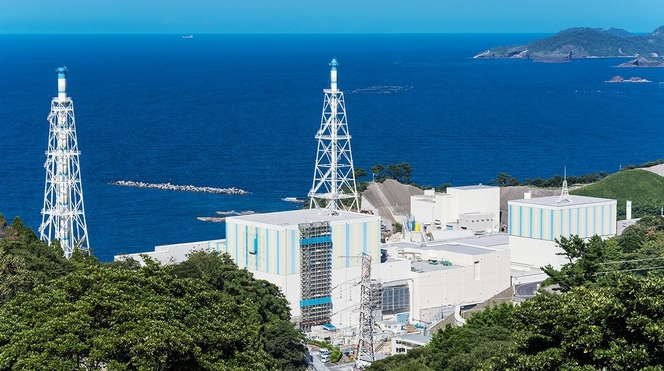
June 29, 2022
As of June 2022, 10 nuclear reactors at six power stations have been given the go-ahead to restart in Japan but only 4 reactors are currently in operation. Despite local governments agreeing to restart the reactors, some have not yet become operational due to the time required to implement safety measures and complete other construction work.
Prior to the Great East Japan Earthquake of 2011, 54 nuclear reactors were in operation in Japan, supplying approximately 30% of the country’s electric power. However, the disaster at the Fukushima Daiichi Nuclear Power Plant was a drastic blow to nuclear power’s reputation, leading to increased distrust and unease toward the energy source.
As of June 2022, only 10 reactors have been restarted with local approval at the following six power stations: Ōi, Takahama, and Mihama (Kansai Electric Power Company), Genkai and Sendai (Kyūshū Electric Power Company), and Ikata (Shikoku Electric Power Company). These plants based in western Japan all use pressurized water reactors, which are different from the boiling water reactors at the Fukushima Daiichi Nuclear Power Plant.
Boiling water reactors at the Onagawa (Tōhoku Electric Power Company), Kashiwazaki-Kariwa (Tokyo Electric Power Company), Tōkai Daini (Japan Atomic Power Company), and Shimane (Chūgoku Electric Power Company) nuclear power stations have all been approved under the new regulatory standards, but none have received the green light to restart.
In total, 21 nuclear reactors have been decommissioned since the 2011 Great East Japan Earthquake.

Nuclear Power Plants: Major Developments Since the Great East Japan Earthquake


(Translated from Japanese. Banner photo: Shimane Nuclear Power Plant, operated by Chūgoku Electric Power Company. © Pixta.)
NATO has completed its post-Cold War transformation from Europe’s guard dog into America’s attack dog

The guard dog had, it seems, been re-trained as an attack dog.
https://www.rt.com/russia/558168-nato-defensive-alliance-global-cop/ Scott Ritter 1 July 22, From an ostensible defensive alliance, NATO has grown into an aggressor designed to promote ‘rules’ dictated by the US,
The North Atlantic Treaty Organization, or NATO, has just wrapped up its annual summit in Madrid, Spain. The one-time trans-Atlantic defensive alliance has, over the past three decades, transformed itself from the guardian of Western Europe into global cop, seeking to project militarily a so-called values- and rules-based posture.
NATO’s first Secretary General, Lord Ismay, famously noted that the mission of the bloc was “to keep the Russians out, the Germans down, and the Americans in.” In short, NATO served as a wall against the physical expansion of the Soviet Union from the perch it had established in eastern Europe at the end of the Second World War. Likewise, the creation of NATO prevented a treaty from being concluded between Germany and the Soviet Union that would enable the reunification of Germany. And lastly, the existence of NATO mandated that the US retain a significant full-time military presence in Europe, helping break America’s traditional tendency toward isolationism.
At the Madrid Summit, NATO radically redefined its mission to reflect a new mantra which could be encapsulated as “keep the Russians down, the Americans in, and the Chinese out.” It is an aggressive–even hostile–posture, premised on sustaining Western (i.e., American) supremacy.
This mission is to be accomplished through the defense and promulgation of a so-called “rules-based international order” which exists only in the minds of its creators, which in this case is the United States and its allies in Europe. It also represents a radical break from past practice which sought to keep NATO defined by the four corners of its trans-Atlantic birthright by seeking to expand its security umbrella into the Pacific.
The guard dog had, it seems, been re-trained as an attack dog.
When an organization undergoes such a radical transformation in terms of its core mission and purpose, logic dictates that there exists a reason (or reasons) sufficient to justify the consequences attached to the action. There appear to be three such reasons. First and foremost is the fact that Russia refuses to accept NATO demands that it exist as a junior “partner” whose sovereignty must be subordinated to the collective will of post-Cold War Europe. Russia’s President, Vladimir Putin, has made it clear that Russia considers itself to be a great power, and fully expects to be treated as such–especially when it comes to issues pertaining to the so-called “near abroad”–those former Soviet republics, such as Ukraine and Georgia, whose continued ties with Moscow are existential in nature.
NATO, on the other hand, while calling Russia a “partner,” was never serious about extending a viable hand of friendship, instead undertaking a thirty-year program of expansion which violated verbal promises made to Soviet leaders, leaving Russia weakened and not to be taken seriously by the self-proclaimed “victors” of the Cold War. When Russia pushed back, a process marked by Putin’s iconic speech to the 2007 Munich Security Conference, NATO undertook a more aggressive stance, promising Georgia and Ukraine eventual membership in the Alliance and, in 2014, supporting a violent coup against a government in Ukraine that kicked-off a series of events which culminated in the ongoing military operation being conducted by Russia in Ukraine.
Speaking at this week’s NATO Summit, the Secretary General of the organization, Jen Stoltenberg, ended all pretense that the bloc was an innocent bystander in the events leading up to Russia’s military intervention in Ukraine, noting with pride that NATO had been preparing to fight Russia since 2014–that is, since the US-led coup. Indeed, NATO has, since 2015, been training the Ukrainian military to NATO standards.
Not to bolster the self-defense of Ukraine, but rather for the purpose of fighting ethnic Russians in the Donbass. NATO, it seems, was never interested in a peaceful resolution to the crisis, which flared up when Ukrainian nationalists began brutalizing the region’s Moscow-leaning majority.
Two NATO members, France and Germany, helped perpetuate a fraudulent peace process, the Minsk Accords, which former Ukrainian President Petro Poroshenko recently admitted was nothing more than a sham perpetrated for the purpose of buying time so that NATO could train and equip the Ukrainian military for the purpose of forcibly seizing control of both Donbass and Crimea.
All the 2007 Munich Summit really did was strip away any pretense that NATO was serious about peacefully coexisting with a powerful, sovereign Russian nation. A truly defensive alliance would have readily embraced such an outcome. NATO, it is now clear, is anything but.
NATO has been exposed as little more than a component of American global power projection, providing supplementary military and political backing for an American empire defined by the “rules-based international order” premised on sustained US military and economic supremacy. Keeping America on top, however, is proving to be a bridge too far, largely because the American empire itself is crumbling at its foundations, struggling economically to sustain the so-called “American Dream” and politically to keep alive the flawed promise of American democracy which underpins the very image the US seeks to promote abroad. The extent that the US can function with a modicum of credibility in the international arena today is determined purely by the level of “buy in” by the rest of the world to the golden idol that is the “rules-based international order.”
While the US has been able to strong-arm both NATO and its economic doppelganger, the G7, into actively promoting the “Rules based international order,” Russia and China have come together to create an alternative world view.
That is international law, premised on the concepts enshrined in the United Nations Charter.
The G7 declared that the BRICS economic forum, comprised of nations who are more aligned with a “law-based” world order, and not a US-dominated “rules-based” one, represents the greatest threat to its relevance on the world stage. NATO, likewise, has declared that the Russian and Chinese challenge to the “rules-based international order” represents a major threat to NATO’s core values, prompting an expansion of NATO’s reach into the Pacific as a counter.
In short, NATO (together with the G7 group) is declaring war against the principles of international law that are encapsulated in the United Nations Charter. At its Madrid Summit, NATO has made it clear that it’s ready to shed blood to defend a legacy whose legitimacy exists only among the collective imaginations of its members. And not all of them, either.
The goal of the rest of the world now needs to be to seek to minimize the damage done by this beast and find a way to dispose of it before it can do any more harm to the global community.
Scott Ritter is a former US Marine Corps intelligence officer and author of ‘Disarmament in the Time of Perestroika: Arms Control and the End of the Soviet Union.’ He served in the Soviet Union as an inspector implementing the INF Treaty, in General Schwarzkopf’s staff during the Gulf War, and from 1991-1998 as a UN weapons inspector.
1 This Month



19 November – Webinar – The Reality of Reprocessing
Time: 11:00 AM Pacific Time (US & Canada) / 2:00 PM Eastern / 7:00 PM UK / 8:00 PM CET
Register for the Zoom Event Here



Shut down the radiation-damaged Heysham nuclear reactors now
To see nuclear-related stories in greater depth and intensity – go to https://nuclearinformation.wordpress.com

Say No to NASA’s Reckless Nuclear Reactor on the Moon
Say No to NASA’s Reckless Nuclear Reactor on the Moon
-
Archives
- November 2026 (43)
- October 2026 (302)
- September 2026 (339)
- August 2026 (330)
- July 2026 (355)
- June 2026 (287)
- May 2026 (306)
- April 2026 (356)
- March 2026 (251)
- February 2026 (267)
- January 2026 (308)
- December 2025 (358)
-
Categories
- 1
- 1 NUCLEAR ISSUES
- business and costs
- climate change
- culture and arts
- ENERGY
- environment
- health
- history
- indigenous issues
- Legal
- marketing of nuclear
- media
- opposition to nuclear
- PERSONAL STORIES
- politics
- politics international
- Religion and ethics
- safety
- secrets,lies and civil liberties
- spinbuster
- technology
- Uranium
- wastes
- weapons and war
- Women
- 2 WORLD
- ACTION
- AFRICA
- Atrocities
- AUSTRALIA
- Christina's notes
- Christina's themes
- culture and arts
- Events
- Fuk 2022
- Fuk 2023
- Fukushima 2017
- Fukushima 2018
- fukushima 2019
- Fukushima 2020
- Fukushima 2021
- general
- global warming
- Humour (God we need it)
- Nuclear
- RARE EARTHS
- Reference
- resources – print
- Resources -audiovicual
- Weekly Newsletter
- World
- World Nuclear
- YouTube
-
RSS
Entries RSS
Comments RSS

