Drought and hot weather this summer are adding to France’s nuclear power generation problems at the worst possible moment.
Drought and hot weather this summer are adding to France’s nuclear power
generation problems at the worst possible moment. As Europe grapples with
low Russian gas supply and the threat of no Russian supply at all,
non-Russian energy sources are more important than ever.
French power giant
Electricite de France (EDF) warned on Tuesday that it may have to reduce
nuclear power generation as the water levels of rivers are low and water
temperatures high. France has been experiencing outages at its nuclear
reactors in recent months, slashing power generation from nuclear power
plants. France’s nuclear power generation accounts for around 70 percent
of its electricity mix and when its reactors are fully operational it is a
net exporter of electricity to other European countries.
Prolonged
maintenance at several nuclear reactors this year, however, means that
France—and the rest of Europe—have less nuclear-generated power supply
now.
Oil Price 5th July 2022
”Allerdale Community Partnership” now looking very much like a nuclear front group, – Nuclear Free Local Authorities reveal

| The Allerdale Community Partnership may boast that its latest appointees are ‘independent’, but, as the Nuclear Free Local Authorities have discovered, a little research reveals their business links to the nuclear industry. The Community Partnership is the lead local body working in partnership with Nuclear Waste Services, an arm of the Nuclear Decommissioning Agency, to determine if Allerdale could become the location for a Geological Disposal Facility, an underground or undersea dump for Britain’s toxic legacy of nuclear waste. Now the Community Partnership has announced the appointment of four new board members, three are individuals, Adrian Davis-Johnson, Phil Davies, and John Coughlan, whilst the fourth is an organisation, the Cumbria Youth Alliance. In its March recruitment drive, the Allerdale Community Partnership pledged to appoint new members that were ‘both representative (of the local community) and diverse’, but the three appointed individuals all have a long history of working for or providing services to the nuclear industry. NFLA 5th July 2022 https://www.nuclearpolicy.info/news/nuclear-free-local-authorities-question-independence-of-allerdale-appointees-linked-to-nuclear-industry/ |
Seventy years after first UK atom bomb, time to right this ‘criminal wrong’, says NFLA
As the international community and civil society marks the fifth
anniversary of the adoption of the UN Treaty on the Prohibition of Nuclear
Weapons tomorrow (7 July), the Nuclear Free Local Authorities have written
to the Prime Minister and Minister for Veterans Affairs calling for urgent
recognition and compensation for Britain’s atom and nuclear bomb test
veterans.
NFLA 6th July 2022
Nuclear power in Japan may be a mistake we are doomed to repeat
https://www.asahi.com/ajw/articles/14663000VOX POPULI: Nuclear power in Japan may be a mistake we are doomed to repeat. Vox Populi, Vox Dei is a daily column that runs on Page 1 of The Asahi Shimbun., July 7, 2022
The Supreme Court was extremely lenient with the government in its June 17 verdict concerning the Fukushima nuclear catastrophe of 2011.
Multiple high courts had already ruled that the government was liable for damages for failing to order Tokyo Electric Power Co. to take sufficient preventive measures against a potentially disastrous tsunami.
The top court, however, overturned all these rulings.
Explaining the reason, the presiding justice noted to the effect that the tsunami turned out to be “simply too massive.”
The gist of his argument was that since the accident would have occurred anyway even if the government had ordered TEPCO to install a seawall, his court could not hold the government responsible as a nuclear safety regulator.
What an utterly magnanimous ruling for a government that failed to do its part. This is akin to giving someone a pass because they are too inexperienced or immature to be treated seriously.
I could not possibly support this ruling. However, trying to go along with the court’s reasoning just for the sake of argument, the conclusion to be drawn is the government was never capable of regulating a nuclear power plant at all.
Ultimately, any discussion of nuclear power boils down to whether humans are ever capable of being a party to handling it.
Radioactive nuclear waste must be kept isolated for an utterly mind-boggling period of 100,000 years. We have also learned that once a nuclear accident occurs, we cannot even go near the accident site, let alone control it.
For some years after the Fukushima disaster, the idea of ending nuclear power generation was a major issue in national elections.
A decade has elapsed, however, and the issue is hardly “hot” in the July 10 Upper House election. In fact, the recent rise in energy prices has given a boost to advocates for a greater reliance on nuclear energy.
If radioactive nuclear waste could talk, it must be scoffing at our forgetfulness and taunting us: “You will never be able to measure us by your yardstick.”
Congress poised to shoot down Biden’s nuclear rollback

The White House wants to cancel a nuclear cruise missile, but Democrats have joined Republicans to try to save it.
Politico, By LAWRENCE UKENYE and CONNOR O’BRIEN, 07/06/2022 ,
Progressives were already disappointed with President Joe Biden’s plans for the nation’s nuclear arsenal. Now they’re poised to lose one of the few things about the White House’s blueprint that they liked.
In recent weeks, Democrats have joined Republicans in adding money back into the Pentagon budget to continue developing a sea-launched nuclear cruise missile that former President Donald Trump initiated in 2018. Biden proposed canceling the missile, which arms control advocates say is redundant, costly and potentially destabilizing……………………..
The Pentagon’s still-classified Nuclear Posture Review, which lays out a long-term roadmap for the nuclear arsenal, spurred the decision to zero out funding for the missile in Biden’s most recent budget. The public split between top civilians and military commanders amounted to a “green light” for Democrats to hedge on the program, according to Tom Collina, policy director at Ploughshares Fund.
…………………… The situation marks a retreat from the campaign pledges of then-candidate Biden, who long advocated for reducing reliance on nuclear weapons, only to turn around and dedicate tens of billions of dollars to the modernization of all three legs of the triad for two years in a row. Arms control advocates also called on him to establish a “no first use” policy and cancel two weapons added on by the Trump administration: the cruise missile and a low-yield submarine-launched missile, which has already entered the fleet.
Biden’s nuclear plans, outlined in a brief summary released in March, omit a “no first use” policy. The low-yield warhead introduced during the Trump years remains a part of the arsenal.
As for the cruise missile, now that both the House and Senate Armed Services committees have authorized funding, albeit with differing conditions, Congress will likely send Biden a compromise defense policy bill this year that foils his plan to cancel the program.
A spokesperson for the White House National Security Council said in a statement that the administration “stands by the President’s budget submission, which canceled the SLCM-N,” which refers to the sea-launched cruise missile-nuclear. The spokesperson noted the decision to kill the missile “was based on the findings and recommendations” of the Nuclear Posture Review.
Biden’s fiscal 2023 defense budget proposes spending $50.9 billion on nuclear weapons programs across the Defense and Energy Departments, while also attempting to cancel the SLCM and retire the aging inventory of B83 gravity bombs. The latter system is also in play in defense talks.
Senate Armed Services voted to place limits on the retirement of the B83 by requiring a study on striking hardened and deeply buried targets before any of the bombs could be scrapped.
Both versions of the National Defense Authorization Act greenlight $25 million for the Navy’s research and development efforts on the cruise missile and another $20 million for the National Nuclear Security Administration to continue research on the W80-4 warhead to be used on the missile. But the House version restricts a portion of the $45 million from being spent until the Navy and NNSA deliver several reports, including analyses outlining the cost of the warhead and delivery system as well as the possible limitations of the vessels that carry the missile………………………………….
The debate won’t end with the Armed Services Committees, as Congress must still appropriate money to continue the program.
Democrats on the House Appropriations Committee sided with Biden and allocated no money for the missile or its warhead in their versions of annual defense and energy spending bills. But Armed Services’ action is likely to put pressure on appropriators in their talks over a spending compromise…………………. https://www.politico.com/news/2022/07/06/congress-biden-nuclear-rollback-00044344
—
Would you trust nuclear environmental research funded by the USA Department of Energy? (I wouldn’t)

UW researchers to study potential environmental injustices surrounding nuclear development at Kemmerer, Wyoming Public Radio | By Caitlin Tan, July 6, 2022
As Wyoming sets its sights on nuclear development, a team of University of Wyoming researchers will study how one project impacts environmental justice.
The U.S. Department of Energy (DOE) awarded the team an $800,000 grant to span the course of three years. This is the first time the DOE is funding a study that looks at how nuclear energy affects environmental justice. The grant will focus on these effects on the TerraPower nuclear project in Kemmerer. The goal is to take a proactive approach and identify potential environmental injustices before they happen.
Lead researcher Rachael Budowle said environmental justice means that specific populations should not experience inequalities because of development – this can include things like, water and air quality, and even access to economic opportunities.
“So, nuclear energy in particular, has historically presented a range of social, environmental and ethical challenges that also warrant exploration, around public perception, safety, trust, and industry and government responsibility for waste and accidents,” Budowle said.
Lead researcher Rachael Budowle said environmental justice means that specific populations should not experience inequalities because of development – this can include things like, water and air quality, and even access to economic opportunities.
“So, nuclear energy in particular, has historically presented a range of social, environmental and ethical challenges that also warrant exploration, around public perception, safety, trust, and industry and government responsibility for waste and accidents,” Budowle said………..
In the second year, researchers will interview a wide range of stakeholders and then provide recommendations to the state and TerraPower. https://www.wyomingpublicmedia.org/natural-resources-energy/2022-07-06/uw-researchers-to-study-potential-environmental-injustices-surrounding-nuclear-development-at-kemmerer
France’s EDF says hot summer could hit nuclear output, shares fall
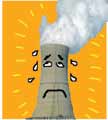
PARIS, July 5 (Reuters) – France’s EDF (EDF.PA) might be forced to cut nuclear output further because of expected prolonged hot temperatures over the summer months, an executive told a briefing on Tuesday, prompting a sharp fall in the company’s shares.
EDF’s shares ended down 7.5% on the Paris stock market, underperforming the Stoxx Europe 600 Utilities (.SX6P) index, which lost 2.03%.
“We have a peculiar year due to the drought that has started early, especially in southeastern France. But there is generally a little bit less water available this year,” Catherine Laugier, Environment Director at EDF, told a news conference.
France is already grappling with reduced electricity generation because of unexpected maintenance at its aging nuclear reactors.
EDF faces the prospect of having to reduce output because of insufficient river water, which is often used for cooling nuclear reactors before being returned to the river at a higher temperature.
Regulations are in place to limit reactor production during times of exceptional heat and low water levels to prevent the process from damaging local wildlife.
“We’ve had some production cuts between end May and early June. That was indeed pretty early (…) And there are some global evaluations suggesting (…) this might be a very long summer and the levels could be impacted in September,” Laugier said.
Since the start of the year, EDF has lost 20.6% of its value, well below a 12.9% sector-wide decline……………. https://www.reuters.com/business/energy/frances-edf-says-hot-summer-could-hit-nuclear-output-shares-fall-2022-07-05/
Enthusiastic space travel publicity avoids mentioning radiation danger
We need to talk about radiation in space, Cosmos By Jamie Seidel/1 July 2022,
Escape from it all: go above and beyond in your quest for relaxation. Space hotels promise to capitalise on the ultimate dream. But there’s an elephant in orbit, and nobody’s talking about it.
“We’ve seen a lot of great concept designs for orbital hotels lately,” says Dr Iwan Cornelius. “But none of them seem worried about radiation.”
Cornelius is the managing director of Amentum Scientific, an Australian predictive scientific modelling company that quantifies the risks of radiation exposure for the aviation, transport, mining and space industries.
“I’m guessing being sick in space is not good,” the former radiation worker quips. “It’s a long way to your local GP – and the emergency department.”
Radiation exposure has bothered NASA since the earliest days of its space programs. It’s why the International Space Station (ISS) has a tiny bunker surrounded by water and equipment where astronauts can hunker down.
Space tourism is closer to reality than you think – but a few important things remain to be ironed out.
Escape from it all: go above and beyond in your quest for relaxation. Space hotels promise to capitalise on the ultimate dream. But there’s an elephant in orbit, and nobody’s talking about it.
“We’ve seen a lot of great concept designs for orbital hotels lately,” says Dr Iwan Cornelius. “But none of them seem worried about radiation.”
Cornelius is the managing director of Amentum Scientific, an Australian predictive scientific modelling company that quantifies the risks of radiation exposure for the aviation, transport, mining and space industries.
“I’m guessing being sick in space is not good,” the former radiation worker quips. “It’s a long way to your local GP – and the emergency department.”
Radiation exposure has bothered NASA since the earliest days of its space programs. It’s why the International Space Station (ISS) has a tiny bunker surrounded by water and equipment where astronauts can hunker down.
“One thing you’ll notice with all these concept diagrams for space hotels is there’s not a lot of information about a radiation refuge.”
…………… “If we’re talking about a packed hotel in space, where will they go?” Cornelius asks. “How long will it take to get there? Does everyone get access to a shelter – including staff? I don’t know if this is being thought through”.
And solar events aren’t the only space radiation source…………………………….
Italian Airport Workers Stop Arms Shipment to Ukraine Under Guise of “Humanitarian Aid”
In Italy, workers discovered that weapons were being shipped to Ukraine under the pretense of sending “humanitarian aid” and have refused to hand them over. Their example should serve as a model for all workers on how to take action against the war.
Defend Democracy Press By Simon Zinnstein, March 17, 2022 The war in Ukraine is causing more and more saber-rattling in the U.S. and Europe. As many countries massively ramp up their own military budgets, many more still are sending weapons to Ukraine. According to the Unione Sindacale di Base (USB), workers at Galileo Galilei Airport in Pisa, Italy discovered boxes full of “weapons of all kinds, ammunition and explosives.” They had previously been informed that the delivery contained humanitarian goods such as food and medicine. The airport workers then refused to send the weapons to Ukraine via Poland.
……………………………….. The incident is also an example of how “humanitarianism” can be abused. The USB statement says: “We strongly condemn this blatant deception, which cynically uses the guise of ‘humanitarian aid’ to further fuel the war in Ukraine.” Humanitarian measures, such as sending aid supplies and accepting refugees are not enough to end the war — and in this case they even served as a cover for militarism. http://www.defenddemocracy.press/italian-airport-workers-stop-arms-shipment-to-ukraine-under-guise-of-humanitarian-aid/
US imposes new Iran sanctions amid efforts to revive nuclear deal
US measures targeting Iranian petroleum and petrochemical sales come ahead of Joe Biden’s visit to the region next week.
By Al Jazeera Staff. 6 Jul 2022
The sanctions come days after American and Iranian diplomats held a round of indirect talks in Qatar to try to restore the Joint Comprehensive Plan of Action (JCPOA), the multilateral agreement that saw Iran scale back its nuclear programme in exchange for the lifting of sanctions against its economy.
“While the United States is committed to achieving an agreement with Iran that seeks a mutual return to compliance with the Joint Comprehensive Plan of Action, we will continue to use all our authorities to enforce sanctions on the sale of Iranian petroleum and petrochemicals,” Under-secretary of the
Treasury for Terrorism and Financial Intelligence Brian Nelson, said in a statement.
…………………………….. President Joe Biden and his top aides say they are committed to reviving the deal through mutual compliance, but they have continued to enforce Trump’s sanctions and added dozens of their own.
……………………
Tehran has blamed Washington’s refusal to revoke sanctions for the inability to reach a deal so far.
“Agreement is possible only based on mutual understanding & interests,” Iranian Foreign Minister Hossein Amirabdollahian wrote on Twitter on Tuesday after a phone call with European Union’s foreign policy chief Josep Borrell.
“We remain ready to negotiate a strong & durable agreement. US must decide if it wants a deal or insists on sticking to its unilateral demands.” https://www.aljazeera.com/news/2022/7/6/us-imposes-new-iran-sanctions-amid-efforts-to-revive-nuclear-deal
Greenpeace and other NGOs call for a green reconstruction plan for Ukraine
Activists from Greenpeace raised a replica wind turbine, close to the
venue of the Ukraine Recovery Conference today in Lugano, in a call for
recovery efforts to be based on sustainable energy systems, not nuclear or
fossil fuels. As donors meet to discuss reconstruction after the Russian
invasion, Greenpeace together with Ecoaction and more than 45 Ukrainian
civil society organisations is calling for a green reconstruction plan.
Ukrainian non-governmental organisations have developed guiding principles
to ensure that Ukraine’s green post-war reconstruction delivers
sustainable economic development and is beneficial to people and nature.
Greenpeace 4th July 2022
Macron says he doesn’t want to ‘annihilate’ Russia
While the French president has backed anti-Russia sanctions, he has refrained from the extreme rhetoric of his US and UK counterparts/
French President Emmanuel Macron condemned “Anglo Saxon” leaders for openly wishing annihilation upon Russia in clips from a recent documentary. Macron has already been criticized by some of Ukraine’s most fervent supporters for staying in contact with Russian President Vladimir Putin.
While he has condemned Russia’s military operation in Ukraine and supported EU sanctions on Moscow, the French president has spoken to Putin by phone on several occasions since February. These calls have apparently not brought Ukraine any closer to peace, but have earned Macron scorn from Kiev’s supporters, including Polish Prime Minister Mateusz Morawiecki, who castigated his French counterpart for talking to a man he compared to “Hitler.”
However, in a documentary recently broadcast on French television, Macron gave some insight into his approach to diplomacy.
Filmed on a train back from Kiev last month, Macron explained that talking to Putin is necessary to prevent the conflict in Ukraine from becoming a wider war. Describing “Anglo Saxon” leaders as pushing the message that “we must annihilate Russia, weaken it permanently,” Macron said that his goal is instead to “help Ukraine to win,” and “not to fight against Russia, let alone annihilate it.”
Whatever the practical similarities between Macron’s approach and that of his US and UK counterparts, all of whom have provided Kiev with weapons and ammunition, there exists a clear difference in rhetoric between France and the “Anglo Saxon” world.
While US President Joe Biden has accused Russia of committing “genocide” in Ukraine, Macron has cautioned the West against bandying around such loaded terms. Likewise, he has dismissed requests from Kiev that he declare Russia a “sponsor of terrorism.”
And while US Secretary of State Lloyd Austin has described the conflict in Ukraine as an opportunity to leave Russia “weakened” and Biden has let slip that he wishes for regime change in Moscow, Macron has stated that the West “must not humiliate Russia,” in order to make a peace deal possible some day.
In Britain, Prime Minister Boris Johnson has compared Putin to a “crocodile” and repeatedly dismissed the idea of peace talks with Moscow. Meanwhile, the newly-appointed chief of Britain’s armed forces has declared that the UK’s military must prepare for the possibility of “defeating Russia in battle.”……………. https://www.rt.com/news/558308-macron-russia-anglo-saxon/
Renewables supply nearly half of German power demand in first half 2022
Renewable energy has supplied roughly half of Germany’s electricity
demand for the first half of 2022, new data has shown, boosting the amount
of renewables in the mix by six percentage points compared to the same
period in 2021. Germany’s Center for Solar Energy and Hydrogen Research
Baden-Württemberg (ZSW) and the Federal Association of Energy and Water
Management (BDEW) said on Monday that renewables had covered around 49% of
gross domestic electricity consumption over the period. In a joint press
release, the organisations said that the main contributor to the increased
renewables output was a “significant increase” in onshore wind and
solar capacity – each generating around one-fifth more electricity than
in the same period in 2021.
Renew Economy 6th July 2022
Julian Assange files new appeal fighting extradition to US.
Washington Examiner. by Ryan King, Breaking News Reporter, July 01, 2022
WikiLeaks founder Julian Assange is appealing the United Kingdom’s order to extradite him to the United States.
Two appeals were filed in the High Court of Justice in London to challenge the extradition, and the court will decide whether to evaluate the case, Assange’s attorney Gareth Peirce announced, according to the Wall Street Journal……………………………………
Friday was the deadline for Assange to appeal the extradition order, according to the BBC. He is being held at Belmarsh prison in London.
His lawyers claimed that he could face up to 175 years behind bars if he stands trial in the U.S., but the U.S. argued he will likely face between four and six years.
A myriad of groups championing freedom of the press urged the U.K. not to extradite Assange, arguing that doing so could set a bad precedent and hamper press freedoms in the future. For example, the International Federation of Journalists has expressed concerns the move could pose a “chilling effect” on journalists worldwide.
“The US pursuit of Assange against the public’s right to know poses a grave threat to the Fundamental tenets of democracy, which are becoming increasingly fragile worldwide,” the group said. “Irrespective of personal views on Assange, his extradition will have a chilling effect, with all journalists and media workers at risk.”
“The case sets a dangerous precedent that members of the media, in any country, can now be targeted by governments, anywhere in the world, to answer for publishing information in the public interest,” the group added.https://www.washingtonexaminer.com/policy/courts/julian-assange-files-appeal-fighting-extradition
Nuclear War Could Mean Annihilation, But Biden and Congress Are Messing Around

https://truthout.org/articles/nuclear-war-could-mean-annihilation-but-biden-and-congress-are-messing-around/?eType=EmailBlastContent&eId=eccf0454-e0d8-49d3-8e0c-8125c5a4fd5f The Biden administration hasn’t just remained mum about current nuclear war dangers — it’s actively exacerbating them. ANTON PETRUS
Only diplomacy can halt the carnage in Ukraine and save the lives of millions now at risk of starvation. And the dangers of nuclear war can be reduced by rejecting the fantasy of a military solution to the Ukraine conflict.
BY Norman Solomon, Truthout 3 July 22, President Joe Biden and top subordinates have refused to publicly acknowledge the danger of nuclear war — even though it is now higher than at any other time in at least 60 years. Their silence is insidious and powerful, and their policy of denial makes grassroots activism all the more vital for human survival.
In the aftermath of the 1962 Cuban missile crisis, President John F. Kennedy was more candid. Speaking at American University, he said: “A single nuclear weapon contains almost 10 times the explosive force delivered by all the allied air forces in the Second World War.” Kennedy also noted, “The deadly poisons produced by a nuclear exchange would be carried by wind and water and soil and seed to the far corners of the globe and to generations yet unborn.” Finally, he added, “All we have built, all we have worked for, would be destroyed in the first 24 hours.”
Kennedy was no dove. He affirmed willingness to use nuclear weapons. But his speech offered some essential honesty about nuclear war — and the need to seriously negotiate with the Kremlin in the interests of averting planetary incineration — an approach sorely lacking from the United States government today.
At the time of Kennedy’s presidency, nuclear war would have been indescribably catastrophic. Now — with large arsenals of hydrogen bombs and what scientists know about “nuclear winter” — experts have concluded that a nuclear war would virtually end agriculture and amount to omnicide (the destruction of human life on earth).
In an interview after publication of his book The Doomsday Machine, Pentagon Papers whistleblower Daniel Ellsberg summed up what he learned as an insider during the Kennedy administration:
What I discovered — to my horror, I have to say — is that the Joint Chiefs of Staff contemplated causing with our own first strike 600 million deaths, including 100 million in our own allies. Now, that was an underestimate even then because they weren’t including fire, which they found was too incalculable in its effects. And of course, fire is the greatest casualty-producing effect of thermonuclear weapons. So the real effect would’ve been over a billion — not 600 million — about a third of the Earth’s population then at that time.
Ellsberg added:
What turned out to be the case 20 years later in 1983 and confirmed in the last 10 years very thoroughly by climate scientists and environmental scientists is that that high ceiling of a billion or so was wrong. Firing weapons over the cities, even if you call them military targets, would cause firestorms in those cities like the one in Tokyo in March of 1945, which would loft into the stratosphere many millions of tons of soot and black smoke from the burning cities. It wouldn’t be rained out in the stratosphere. It would go around the globe very quickly and reduce sunlight by as much as 70 percent, causing temperatures like that of the Little Ice Age, killing harvests worldwide and starving to death nearly everyone on Earth. It probably wouldn’t cause extinction. We’re so adaptable. Maybe 1 percent of our current population of 7.4 billion could survive, but 98 or 99 percent would not.
Even before the Russian invasion of Ukraine four months ago, the risks of global nuclear annihilation were at a peak. In January, the Bulletin of the Atomic Scientists set its Doomsday Clock at a mere 100 seconds from apocalyptic Midnight, compared to six minutes a decade ago. As Russia’s horrific war on Ukraine has persisted and the U.S. government has bypassed diplomacy in favor of massive arms shipments, the hazards of a nuclear war between the world’s two nuclear superpowers have increased.
But the Biden administration has not only remained mum about current nuclear war dangers; it’s actively exacerbating them. Those at the helm of U.S. foreign policy now are ignoring the profound lessons that President Kennedy drew from the October 1962 confrontation with Russia over its nuclear missiles in Cuba.
“Above all, while defending our own vital interests, nuclear powers must avert those confrontations which bring an adversary to a choice of either a humiliating retreat or a nuclear war,” Kennedy said. “To adopt that kind of course in the nuclear age would be evidence only of the bankruptcy of our policy — or of a collective death-wish for the world.”
In sync with the overwhelmingly hawkish U.S. media, members of Congress and “national security” establishment, Biden has moved into new Cold War overdrive. The priority aim is to make shrewd moves on the geopolitical chessboard — not to engage in diplomacy that could end the slaughter in Ukraine and prevent the war from causing widespread starvation in many countries.
As scholar Alfred McCoy just wrote, “With the specter of mass starvation looming for some 270 million people and, as the [United Nations] recently warned, political instability growing in those volatile regions, the West will, sooner or later, have to reach some understanding with Russia.” Only diplomacy can halt the carnage in Ukraine and save the lives of millions now at risk of starvation. And the dangers of nuclear war can be reduced by rejecting the fantasy of a military solution to the Ukraine conflict.
In recent months, the Russian government has made thinly veiled threats to use nuclear weapons. Meanwhile, the U.S. has been shipping huge quantities of weapons to Ukraine, while Washington has participated in escalating the dangerous rhetoric. President Biden doubled down on conveying that he seeks regime change in Moscow, and Defense Secretary Lloyd Austin has declared that the U.S. wants the Russian military “weakened” — an approach that is opposite from Kennedy’s warning against “confrontations which bring an adversary to a choice of either a humiliating retreat or a nuclear war.”
We’d be gravely mistaken to wait for Washington’s officialdom to level with us about nuclear war dangers, much less take steps to mitigate them. The power corridors along Pennsylvania Avenue won’t initiate the needed changes. The initiatives and the necessary political pressure must come from grassroots organizing.
A new “Defuse Nuclear War” coalition of about 90 national and regional organizations (which I’m helping to coordinate) launched in mid-June with a livestream video featuring an array of activists and other eloquent speakers, drawn together by the imperative of preventing nuclear war. (They included antiwar activists, organizers, scholars and writers Daniel Ellsberg, Mandy Carter, David Swanson, Medea Benjamin, Leslie Cagan, Pastor Michael McBride, Katrina vanden Heuvel, Hanieh Jodat Barnes, Judith Ehrlich, Khury Petersen-Smith, India Walton, Emma Claire Foley, retired Army Col. Ann Wright and former California Gov. Jerry Brown.)
The U.S. government’s willingness to boost the odds of nuclear war is essentially a political problem. It pits the interests of the people of the world — in desperate need of devoting adequate resources to human needs and protection of the environment — against the rapacious greed of military contractors intertwined with the unhinged priorities of top elected officials.
The Biden administration and the bipartisan leadership in Congress have made clear that their basic approach to the surging danger of nuclear war is to pretend that it doesn’t exist — and to encourage us to do the same. Such avoidance might seem like a good coping strategy for individuals. But for a government facing off against the world’s other nuclear superpower, the denial heightens the risk of exterminating almost all human life. There’s got to be a better way.
1 This Month



19 November – Webinar – The Reality of Reprocessing
Time: 11:00 AM Pacific Time (US & Canada) / 2:00 PM Eastern / 7:00 PM UK / 8:00 PM CET
Register for the Zoom Event Here



Shut down the radiation-damaged Heysham nuclear reactors now
To see nuclear-related stories in greater depth and intensity – go to https://nuclearinformation.wordpress.com

Say No to NASA’s Reckless Nuclear Reactor on the Moon
Say No to NASA’s Reckless Nuclear Reactor on the Moon
-
Archives
- November 2026 (43)
- October 2026 (302)
- September 2026 (339)
- August 2026 (330)
- July 2026 (355)
- June 2026 (287)
- May 2026 (306)
- April 2026 (356)
- March 2026 (251)
- February 2026 (267)
- January 2026 (308)
- December 2025 (358)
-
Categories
- 1
- 1 NUCLEAR ISSUES
- business and costs
- climate change
- culture and arts
- ENERGY
- environment
- health
- history
- indigenous issues
- Legal
- marketing of nuclear
- media
- opposition to nuclear
- PERSONAL STORIES
- politics
- politics international
- Religion and ethics
- safety
- secrets,lies and civil liberties
- spinbuster
- technology
- Uranium
- wastes
- weapons and war
- Women
- 2 WORLD
- ACTION
- AFRICA
- Atrocities
- AUSTRALIA
- Christina's notes
- Christina's themes
- culture and arts
- Events
- Fuk 2022
- Fuk 2023
- Fukushima 2017
- Fukushima 2018
- fukushima 2019
- Fukushima 2020
- Fukushima 2021
- general
- global warming
- Humour (God we need it)
- Nuclear
- RARE EARTHS
- Reference
- resources – print
- Resources -audiovicual
- Weekly Newsletter
- World
- World Nuclear
- YouTube
-
RSS
Entries RSS
Comments RSS

