Over 50,000 petition against seismic testing to find ocean nuclear dump site

Campaigners say seismic surveys are damaging marine life. The research
which involves sending sound waves down to the seabed is to find a suitable
site for burying nuclear waste. For the next 2 to 3 weeks the ship will be
off the Copeland coast. Marianne Birkby says there has been a petition of
over 50k signatures. Volker Deeke at Cumbria University says there is good
evidence it has an impact on marine mammals.
BBC Look North (From 3.18 to 5.58) 2nd July 2022
Hinkley Point B leaves radioactive waste to be expensively managed for many generations to come.
FRENCH-owned EDF Energy has formally switched off Hinkley Point B’s
second reactor, a nuclear power station in the UK that has generated more
electricity than any other during its 46 years of service. The closure of
the plant at Bridgwater, Somerset, on 1 August, has prompted concerns that
the cost of energy in the UK will have to rise.
Hinkley Point B had been
expected to close in March next year, after EDF announced in 2012 that it
would extend the generating life of the plant by seven years from 2016.
However in November 2020, the energy firm said it had made the “proactive
decision” to move the nuclear power plant into the defuelling phase – the
first stage of the nuclear decommissioning process – no later than 15
July 2022.
Local campaigner Roy Pumfrey, said that Monday’s closure
should “not be a day to celebrate the life of [Hinkley Point B]…Rather,
it’s a day to mourn the production of radioactive waste that is going to
have to be carefully and expensively managed and monitored for many
generations to come.”
Chemical Engineer 2nd Aug 2022
https://www.thechemicalengineer.com/news/hinkley-point-b-nuclear-power-station-closes/
Is nuclear disarmament possible?
Aljazeera, 2 August 22, “We are pushing closer and closer to that point where [nuclear weapons are] eventually going to be used, and we have to drastically change,” says Beatrice Fihn, the executive director of the International Campaign to Abolish Nuclear Weapons, ICAN.
“It is the nuclear-armed states, and it’s the nuclear-allied states in NATO, for example, that really have to lead this charge,” she says of the push for disarmament.
ICAN was awarded a Nobel Peace Prize for spearheading the 2017 Treaty on the Prohibition of Nuclear Weapons. Fihn says it is imperative for all countries to eliminate nuclear weapons, adding that the treaty is a “way of creating a revolution in this nuclear structure that we created”.
“The powerful have always lost their power when the majority has risen up and stood against it.” On UpFront, Marc Lamont Hill sits down with ICAN Executive Director Beatrice Fihn to discuss nuclear threats and the fight for global nuclear disarmament.
World one misstep from ‘nuclear annihilation’: UN chief
https://www.aljazeera.com/news/2022/8/1/un-chief-warns-world-is-one-step-from-nuclear-annihilation 2 Aug 22, Antonio Guterres sounds a global alarm at the opening of the meeting to review a landmark nuclear weapons treaty.
Nuclear threats emanating from the war in Ukraine as well as in Asia and the Middle East have put the world “one miscalculation away from nuclear annihilation”, the United Nations secretary-general said.
At the UN on Monday, Antonio Guterres issued the dire warning at the opening of a long-delayed meeting to review the landmark 50-year-old Non-Proliferation Treaty (NPT) aimed at preventing the spread of nuclear weapons and eventually achieving a nuclear-free world.
Guterres told many ministers, officials and diplomats gathered in the General Assembly Hall that the month-long review conference is taking place “at a time of nuclear danger not seen since the height of the Cold War”.
The meeting is “an opportunity to hammer out the measures that will help avoid certain disaster, and to put humanity on a new path towards a world free of nuclear weapons”, he said.
However, Guterres warned that “geopolitical weapons are reaching new highs” as almost 13,000 nuclear arms are in arsenals around the world and countries are seeking “false security” by spending hundreds of billions of dollars on “doomsday weapons”.
“We have been extraordinarily lucky so far. But luck is not a strategy. Nor is it a shield from geopolitical tensions boiling over into nuclear conflict,” the UN chief said………………………………………………
International Atomic Energy Agency (IAEA) Director-General Rafael Grossi said the Ukraine conflict is “so grave that the spectre of a potential nuclear confrontation, or accident, has raised its terrifying head again”.
Grossi warned that at the Zaporizhzhia nuclear plant, “the situation is becoming more perilous by the day”, and he urged all countries to help make possible his visit to the facility with a team of IAEA safety and security experts, saying his efforts for the past two months have been unsuccessful.
In force since 1970, the Non-Proliferation Treaty has the widest adherence of any arms control agreement with some 191 countries that are members.
Under its provisions, the five original nuclear powers – the United States, China, Russia (then the Soviet Union), Britain and France – agreed to negotiate towards eliminating their arsenals someday and nations without nuclear weapons promised not to acquire them in exchange for a guarantee to be able to develop nuclear energy for peaceful purposes.
India and Pakistan, which did not join the NPT, went on to develop nuclear weapons. So did North Korea, which ratified the pact but later announced it was withdrawing. Non-signatory Israel is believed to have a nuclear arsenal, but neither confirms nor denies it.
Beatrice Fihn, from the International Campaign to Abolish Nuclear Weapons, said the failure to fulfil legal commitments by nuclear powers and to work seriously on disarmament is concerning.
“If they don’t, countries like Iran might be very tempted in the future to develop nuclear weapons,” Fihn told Al Jazeera.
The UN meeting, which ends August 26, aims to generate a consensus on next steps, but expectations are low for substantial – if any – agreement. There were 133 speakers as of Monday plus dozens of side events.
The NPT’s five-year review was supposed to take place in 2020 when the world already faced plenty of crises, but was delayed because of the COVID-19 pandemic.
Prairie Island Indian Community planning to set up large renewable energy project, keen to be rid of nuclear power plant and nuclear wastes
Prairie Island Indian Community nuclear concern powers net zero carbon emissions plan,
Catharine Richert, Prairie Island Indian Community, Welch, Minn., August 1, 2022 , Growing up on the Prairie Island Indian Community reservation, Calais Lone Elk had a plan — a set of steps burned in her mind and logged with her school to help her find her family in the event of an explosion at the nearby nuclear power plant.
“If you went to school and something happened out here, where do you meet your parents? Where do you reconnect with your family? Because you can’t come back here,” she said. “Those are things that I don’t think are normal.”
Lone Elk is 37 now, and still constantly reviewing her escape plan for an emergency at the nearby power plant.
It sits just 700 yards away from her community of 100 homes, its powerlines lining backyards and main thoroughfares.
For Lone Elk and others living in Prairie Island, concerns about the nuclear power plant’s safety are a source of low-grade daily stress. Despite official assurances, many people believe it’s bad for their health to be living so close.
“We all have a plan, whether we voice it or not. We all have an idea of what we have to do or what we need to do. And we all know that we have to go up-wind of that nuclear plant,” Lone Elk said
But it’s also a physical reminder of the environmental injustices endured by Native people for generations, said tribal council vice president Shelley Buck.
“Since this plant was created, our energy history here has been focused on the power plant and the nuclear waste that is stored right next door to us,” she said.
Today, the Prairie Island Community is seeking to disentangle itself from a power plant it never wanted. It’s created a $46 million plan to produce net zero carbon emissions within the next decade.
Buck said it’s an ambitious step toward being a sovereign nation that’s energy sovereign, too.
“To do a big project like net zero really helps us change that narrative into something positive showing how energy can be used as a positive force,” she said. “By offsetting or eliminating the carbon that we produce, it’s a positive for everybody.”
Why not go big?’
Prairie Island members are descendants of the Mdewakanton Band of Eastern Dakota. They made their home in southern Minnesota, but lost that land in 1851 in the Treaty of Traverse des Sioux.
It wasn’t until 1934 that the land on the banks of the Mississippi just north of Red Wing became a federally recognized reservation.
The Prairie Island power plant was issued its first operating license in 1974, and it was renewed in 2011. Initially, tribal members say the plant was described to them as a steam power plant. It’s one of two nuclear power plants, the second in Monticello, that Xcel says are critical to its plans of producing carbon-free electricity by 2050, and is considered safe by the U.S. Nuclear Regulatory Commission.
In the early 1990s, Xcel Energy asked the Minnesota Pollution Control Agency permission to store nuclear waste there — at least temporarily until a permanent repository at Yucca Mountain opened, a plan that has since stalled due to local opposition.
As a child, Mikhail Childs remembers his father protesting the prospect of storing nuclear waste so close to the reservation.
“Some of the earliest memories I have are of protestors standing in the road, blocking semi-trucks hauling nuclear waste,” he said. “The way [my dad] explained it to me was that all this land we reside on is sacred … We believe that in our creation story, the creation took place just miles down the river.”
But here’s the twist, and it’s an important one: Through all these years of living with a nuclear power plant next door, Prairie Island hasn’t been powered by the energy generated there, said Buck. The community just recently started getting natural gas from Xcel.
It’s a logistical detail that she said prevented the tribal community from being eligible for the Renewable Development Fund, a pot of state money financed by Xcel customers for renewable energy projects for Xcel service areas, she said.
Then in 2020, a legislative change allowed Prairie Island to tap $46 million from the fund for the project.
While the tribe had toyed with doing wind power and other renewable projects in the past, a large amount of funding created the opportunity to do more.
“Why not go big?” said Buck.
One goal, different solutions
And by big, Buck is referring to a plan that aims to eliminate 20 million pounds of carbon annually through a raft of renewable energy and efficiency upgrades. Prairie Island’s Treasure Island Resort and Casino is the largest energy user on the reservation.
The plan involves multiple ways of achieving that goal, said Andrea Thompson, who has been hired by the tribe as the project’s energy program manager. …………………………………..
Their plan involves constructing a 10-to-15 acre solar array that aims to reduce carbon emissions by more than 550,000 pounds annually, phasing out natural gas in favor of geothermal energy and electrification, and promoting zero-emission and energy efficiency residential upgrades………………………….. more https://www.dailymail.co.uk/sciencetech/article-11069613/Global-warming-trigger-nuclear-war-financial-crisis-extinction-level-pandemic-2070.htm
Beatty Nevada Nuclear waste explosions, in the desert.
Terry Southard 2 Aug 22,
Explosions of nuclear waste from pieces of decommissioned San onofre reactor, by San diego.The pieces of the reactor and the other waste from the San Diego, San Onofre reactor decommissioning, started blowing up in the desert outside beatty Nevada. Later the San onofre nuclear waste was dug up and transfered, to a nuclear waste facility outside salt lake city Utah. The explosions, were caused by the decay heat and pyrophoricty of the radionuclides, in the waste and that had accumulated on the reactor pieces.
We simply, don’t get to learn from the mainstream media, about these radioactive hazards.
New Mexico was on fire this summer. 800 thousand acres burned. So much nuclear waste and fallout, in New Mexico, from bomb building and testing. I would not be surprised, if there is a major uptick in lung cancers, and other cancers, in New Mexico in the next 5 years . Nuke bombs exploded under rivers in New Mexico, project gas buggy. Uranium waste catastrophes. Nuclear waste dumps in many places. Largest plutonium core operation in the world at Los Alamos, by Santa fe. Wipp plutonium dump, by Clovis.
These explosions were caused by parts of the decommisioned, highly radioactive pieces of the San onofre reactor, buried in Nevada for a few years. They had to dqqig them up, after the explosions and, moved them to utah. You would have thought, peopke in Utah, would have known better.
Steppenwolf just stick yur head into the sand, pretend that all is grand and everything will be ok
This will happen at other shoddy nuclear waste operations in the usa. Typically under-regulated, and under supervised by cheap and mismanaged, foreign owned nuclear waste management companies. Give them an inch and, they take a mile. They bribe state legislators and start taking in nuclear waste, from other countries. Countries like Japan and Estonia. That happened at the white mesa nuke waste operation, by blanding, utah. I think there is greater risk of wildfires, in the white mesa area, from the pryophoric effects of radionuclide dust from white mesa, blowing into surrounding areas.. There was a truck full of nuke waste owned by energy fuels, by Salt Lake City, that caught fire in 2018. The white mesa, energy fuel operation is trucking in nuke waste, from all over the world.
Radionuclides generate their own heat and can start fires on their own even in small amounts, like the plutonium did at rocky flats. That is why the US Armed forces, uses depleted uranium in bombs, bullets and, other munitions.
https://en.wikipedia.org/wiki/Rocky_Flats_Plant
https://www.osti.gov/biblio/515622
Wildfires and cancer
https://www.thelancet.com/journals/lanplh/article/PIIS2542-5196(22)00067-5/fulltext
More wildfires and cancer
https://www.upi.com/Health_News/2022/05/17/wildfires-cancer-risk-study/5531652723109/
Wildfires are increasing cancer rates in the World.
https://thescotfree.com/opinion/incident-at-santa-susana-a-meltdown-a-fire-and-a-cover-up/
Biden, Putin strike conciliatory tones as nuclear arms talks start at U.N.
By Michelle Nichols , UNITED NATIONS, Aug 1 (Reuters) – U.S. President Joe Biden said on Monday he is ready to pursue a new nuclear arms deal with Russia and called on Moscow to act in good faith as his Russian counterpart Vladimir Putin said there could be no winners in any nuclear war.
Both leaders issued written statements as diplomats gathered for a month-long U.N. conference to review the Treaty on the Non-Proliferation of Nuclear Weapons (NPT). It was supposed to take place in 2020 but was delayed by the COVID-19 pandemic…………………… more https://www.reuters.com/world/biden-urges-russia-china-engage-nuclear-talks-2022-08-01/
Nuclear waste isn’t an isolated problem with nuclear power…
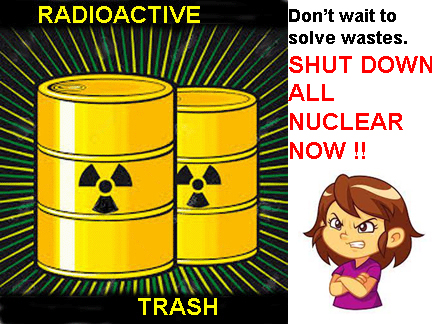
Until ALL the reactors in America (and globally) are closed, “solving” the nuclear waste problem only helps to keep the reactors operating!
https://acehoffman.blogspot.com/2022/07/nuclear-waste-isnt-isolated-problem.html Ace Hoffman Carlsbad, CA July 31, 2022 Prior to SanO’s shutdown, few SoCal residents, including most activists, worried not so much about the waste, only about shut-down.
We know the waste is a problem, but even for us, here in Southern California, Diablo Canyon Nuclear Power Plant being open is STILL a far more likely cause of our own problems, let alone California’s and America’s. DCNPP should be closed *immediately*, not in two or three years, and should certainly not have its license extended under any circumstance. I would estimate that right now, DCNPP is at least a hundred to a thousand times more likely to be the cause of our having to move, or suffering health effects, than San Onofre’s waste is. An operating reactor is incredibly more dangerous than ten year old spent fuel.
Read up on how far Chernobyl radiation spread in Kate Brown’s Manual for Survival. We can use the problem with San Onofre’s waste to push for closure of DCNPP. Once DCNPP is permanently closed, the entire state will finally (hopefully) be interested in solving the waste problem. Until ALL the reactors in America (and globally) are closed, “solving” the nuclear waste problem only helps to keep the reactors operating!
Nuclear waste scattered throughout the country is a major problem for many reasons, including terrorism, accidental airplane strikes, earthquakes, tsunamis etc. etc.
Transporting nuclear waste multiple times is also a major problem for many reasons, including accidents, terrorism, human error, etc.. It should be moved at most only once, if possible.
Neutralization of the Pu and U isotopes is possible on-site. It’s even a patented process! Read up on it in case you missed my report (see link, below). The industry doesn’t like the idea because they want to reprocess the waste. That’s ALSO why the industry is pushing so hard for one central location.
Moving nuclear waste through highly populated areas is a major problem which the U.S. government is well aware of. That is the reason they wanted to build a direct route from San Onofre to Yucca Mountain.
As a 20% owner of Palo Verde Nuclear Power Plant in Arizona, Southern California Edison (SCE) could either move the waste there (except for the problems mentioned above, plus the fact that AZ doesn’t want our waste, only their own). SCE could at least pull out of PVNPP entirely if AZ won’t take the waste.
There are many bridges, close to or even more than 100 feet high, between San Clemente and the Chocolate Mountains location that Roger J. is recommending. Moving 123 canisters over those bridges is extremely risky since the containers are NOT designed to withstand a drop of that height. It’s unlikely, IMO, that they can even survive the claimed drop heights of a few dozen feet. I drove over the Mianus River Bridge in Connecticut twice daily, when it “suddenly” collapsed, killing three people. Bridge collapses DO happen. And maintenance is shoddy at best. I HEARD the Mianus River Bridge screech in the days before the pin fully sheered off. Residents had been calling the (ir-)responsible state agencies about the noise for weeks prior to the collapse.
Israel, secretly having nuclear weapons, will not join the Nuclear Non Proliferation Treaty
Israel signals no change on nuclear policy as U.S. reaffirms anti-proliferation drive
By Dan Williams , JERUSALEM, Aug 1 (Reuters) – Israel signalled it would not change policy around its assumed nuclear arsenal on Monday as Washington affirmed a global treaty designed to roll back the spread of such weaponry.
The rare, if veiled, remarks by Prime Minister Yair Lapid came as countries party to the 1970 nuclear Non-Proliferation Treaty (NPT) met in New York for a periodic review conference.
Israel has not signed the voluntary NPT, which offers access to atomic energy in exchange for the forswearing of nuclear weaponry.
It has been leading regional calls for world powers to crack down on NPT-signatory Iran’s suspected use of civilian nuclear technologies as cover for military designs. Tehran denies wrongdoing.
Addressing the Israel Atomic Energy Commission, Lapid spoke of the country’s “defensive and offensive capabilities, and what is referred to in the foreign media as ‘other capabilities'”.
“These other capabilities keep us alive and will keep us alive as long as we and our children are here,” he said, according to a transcript from his office.
Under a decades-old ambiguity policy designed to deter surrounding enemies while avoiding provocations that can spur arms races, Israel neither confirms nor denies having nuclear weaponry.
Scholars believe it does, having acquired the first bomb in late 1966. Israeli journalists, circumscribed by military censorship, often refer cryptically to such capabilities or cite foreign media reporting on them………………
more https://www.reuters.com/world/middle-east/israel-signals-no-change-nuclear-policy-us-reaffirms-anti-proliferation-drive-2022-08-01/
Iran says ‘optimistic’ after EU proposal for nuclear deal
The New Arab Staff & Agencies, 01 August, 2022,
Iran said Monday it remains “optimistic” about a possible revival of the 2015 nuclear deal after the European Union tabled a proposal aiming for a compromise in the talks stalled since March.
“We remain optimistic that the negotiation process will lead us to a logical and reasonable outcome,” foreign ministry spokesman Nasser Kanani said at his weekly news conference.
The comment comes after EU foreign policy chief and coordinator of the nuclear talks between Iran and world powers, Josep Borrell, last Tuesday submitted a new draft text and urged the different sides of the negotiations to accept it or “risk a dangerous nuclear crisis”.
Negotiations in Vienna began in April 2021 to restore the deal, but have stalled since March amid differences between Tehran and Washington on several issues.
The two sides negotiated indirectly through the European Union coordinator in a bid to bring the US back into the deal and to lift sanctions on Iran, on the basis that Tehran would return to its nuclear commitments…………………………………….
more https://english.alaraby.co.uk/news/iran-says-optimistic-after-eu-proposal-nuclear-deal
‘Climate endgame’ warning: Scientists warn global warming could trigger nuclear war, financial crisis or an extinction-level pandemic
By SHIVALI BEST FOR MAILONLINE 2 August 2022
‘Climate endgame’ warning: Scientists warn global warming could trigger nuclear war, financial crisis or an extinction-level pandemic as soon as 2070
- Researchers used modelling to estimate the consequences of 3°C warming
- They suggest areas of extreme heat will cover two billion people by 2070
- These areas are some of the most politically fragile and most densely populated
With global temperatures continuing to rise, a new study has warned that we are inching dangerously close to a ‘climate endgame’.
Researchers from the University of Cambridge claim that global heating could trigger nuclear war, financial crisis or an extinction-level pandemic as soon as 2070.
Based on their findings, the researchers are calling for authorities to start preparing for such events.
‘There are plenty of reasons to believe climate change could become catastrophic, even at modest levels of warming,’ said Dr Luke Kemp, lead author of the study.
Climate change has played a role in every mass extinction event. It has helped fell empires and shaped history. Even the modern world seems adapted to a particular climate niche.
‘Paths to disaster are not limited to the direct impacts of high temperatures, such as extreme weather events.
Knock-on effects such as financial crises, conflict, and new disease outbreaks could trigger other calamities, and impede recovery from potential disasters such as nuclear war.’
In the study, the team used modelling to estimate the consequences of 3°C (5.4°F) warming and beyond.
Their estimations indicate that areas of extreme heat where annual average temperatures are over 29°C (84°F) will cover two billion people by 2070…………………….
The ‘four horsemen’ of the climate endgame
The researchers propose that research is needed in four key areas, which they call the ‘four horsemen’ of the climate endgame.
These are famine and malnutrition, extreme weather, conflict, and vector-borne diseases……………………. more https://www.dailymail.co.uk/sciencetech/article-11069613/Global-warming-trigger-nuclear-war-financial-crisis-extinction-level-pandemic-2070.html
Joe Biden offers to negotiate a new arms control framework with Russia to replace New START
 |
By: Srishti Singh Sisodia, Washington, US Aug 01, 2022,
United States President Joe Biden said that Washington has expressed its readiness to open talks with Moscow, the Russian state-controlled news television network RT reported on Monday (August 1). The report mentioned that the negotiation is apparently “a new arms control framework” with Russia to potentially replace the New START (Strategic Arms Reduction Treaty).
As quoted by the RT website, Biden said: “Today, my Administration is ready to expeditiously negotiate a new arms control framework to replace New START when it expires in 2026. But negotiation requires a willing partner operating in good faith.”
UN to Host Over 190 World Leaders & Delegates — Despite Threats from a Deadly New Covid-19 Variant

By Thalif Deen /UNITED NATIONS, Jul 22 2022 (IPS) – The United Nations is planning to host a high-level “in-person” General Assembly session, September 20-26, with over 190 world leaders and delegates listed to speak, including heads of state, heads of government, high-ranking ministers and senior officials.
The world body is apparently on a risky path, with hundreds of delegates due in New York for the opening of the 77th session—and, most worryingly, at a time when a new Covid-19 variant BA.5 is sweeping across the United States, including New York.
In a letter addressed to the President of the General Assembly, E. Courtenay Rattray Chef de Cabinet, says “while there is strong support for the return to a pre-pandemic General Debate, as reflected by the level of inscriptions by Member States in the provisional list of speakers– and an improvement in the environment as compared to the last two years– we also recognize that we are not free from the Coronavirus and its impact.”
“As such, there is a need to be prudent in our facilitation of the General Debate and High-level Week.”
Under a business-as-usual scenario, occupancy at UN Headquarters will increase significantly this September, particularly in meeting rooms and in the General Assembly and Conference buildings.
“With a view to mitigating this impact, our planning assumptions reflect an emphasis on basic protective measures and a decrease in the number of attendees, as much as reasonably possible”, the letter said.’
On July 21, White House Press Secretary Karine Jean-Pierre formally announced that US President Joe Biden, who is scheduled to address the General Assembly on September 20, tested positive for COVID-19.
“He is fully vaccinated and twice boosted and experiencing very mild symptoms. He has begun taking Paxlovid. Consistent with CDC guidelines, he will isolate at the White House and will continue to carry out all of his duties fully during that time,” she added.
In a July 20 report, Cable News Network (CNN) said “in the United States, BA.5 has become the dominant strain and is driving a significant spike in cases — more than 120,000 a day, according to the Centers for Disease Control and Prevention (CDC), though experts say that number may be more like 1 million, given the underreporting of home test results.
Europe, meanwhile, has seen a tripling of new Covid-19 infections over the past six weeks, with nearly 3 million reported last week, accounting for almost half of all new cases worldwide. Hospital admissions in Europe over the same period have doubled.
“The end of the last remaining restrictions on international travel and return of large gatherings, like music festivals, are among the factors helping the virus to spread, experts say. And the number of cases may actually be higher than data shows because countries have significantly pared back testing and surveillance, making it difficult to judge the true extent of the current surge’, said CNN.
Last week, the World Health Organization (WHO) warned that the spike in infections was a harbinger of an even worse situation to come, calling on countries to urgently reintroduce mitigation strategies before it was too late.
“It’s now abundantly clear we’re in a similar situation to last summer — only this time the ongoing Covid-19 wave is being propelled by sub-lineages of the Omicron variant, notably BA.2 and BA.5, with each dominant sub-lineage of Omicron showing clear transmission advantages over the previously circulating viruses,” WHO’s regional director for Europe, Hans Kluge, said in a statement.
Though intensive care admissions remain relatively low, as infection rates rise among older populations, deaths are mounting — almost 3,000 people a week are dying from Covid in Europe.
But in order to protect delegates and staff alike, UN Secretary-General Antonio Guterres, having considered the recommendations of the UN’s Occupational Safety and Health (OSH) Committee, has decided on the following guidelines:
- * As a condition of entry to the compound, all persons will be required to attest that they have not had symptoms of, or been diagnosed with, COVID-19 in the last 5 days.
- ** Masks are to be worn by all attendees at all times when indoors, except when directly addressing a meeting or consuming food/beverages
- ** Apart from a limited number of high-level side events, for which preparations are well under way, side events are to be conducted virtually or off-site.
- ** United Nations departments and offices will not be hosting or co-hosting in-person side events or luncheons during the high-level week.
- ** Bilateral booths will be available with seating for 2 principals and 6 advisers (3 per side).
- ** Permanent Missions are encouraged to manage COVID-19 cases and determine any subsequent action regarding case exposures among their own attendees and guests, including notification to other delegations or to the President of the General Assembly.
- ** United Nations staff who are not required to be on-site to support the proceedings will be mandated to work remotely for the full week………………………….more https://www.ipsnews.net/2022/07/un-host-190-world-leaders-delegates-despite-threats-deadly-new-covid-19-variant/?utm_source=rss&utm_medium=rss&utm_campaign=un-host-190-world-leaders-delegates-despite-threats-deadly-new-covid-19-variant
No one can win a nuclear war: Putin
https://www.canberratimes.com.au/story/7843236/no-one-can-win-a-nuclear-war-putin/ 2 Aug 22, Russian President Vladimir Putin says there can be no winners in a nuclear war and no such war should ever be started.
The Kremlin leader made the comment in a letter to participants of a conference on the nuclear non-proliferation treaty (NPT), more than five months into his war on Ukraine.
“We proceed from the fact that there can be no winners in a nuclear war and it should never be unleashed, and we stand for equal and indivisible security for all members of the world community,” he said.
His words to the NPT forum appeared aimed at striking a reassuring note and portraying Russia as a responsible nuclear power.
They contrasted with earlier statements by Putin and other Russian politicians that have been interpreted in North America and Europe as implicit nuclear threats.
In a speech on February 24, as he launched the Russian invasion of Ukraine, Putin pointedly referred to Russia’s nuclear arsenal and warned outside powers that any attempt to interfere would “lead you to such consequences that you have never encountered in your history”.
Days later, he ordered Russia’s nuclear forces to be put on high alert.
The world is facing a level of danger from nuclear weapons not seen since the height of the Cold War, UN Secretary General Antonio Guterres said at the start of the NPT conference on Monday.
The NPT is subject to review every five years, and the 10th review was to have taken place in 2020 but was postponed on account of the pandemic.
CIA director William Burns said in April that given the setbacks Russia had suffered in Ukraine, “none of us can take lightly the threat posed by a potential resort to tactical nuclear weapons or low-yield nuclear weapons”.
Russia, whose military doctrine allows for the use of nuclear weapons in the event of an existential threat to the Russian state, has accused the US of leading a “proxy war” against it by arming Ukraine and imposing sanctions.
Earlier on Monday, a Russian foreign ministry source questioned the seriousness of comments by US President Joe Biden calling for talks on a nuclear arms control framework to replace a treaty expiring in 2026.
“Is this a serious statement or has the White House website been hacked?” a Russian foreign ministry source told Reuters.
The World Does Not Want a Global NATO.

Although NATO’s member states may believe that they possess global authority, the overwhelming majority of the world does not.
It is clear that NATO’s claim to be “a bulwark of the rules-based international order” is not a view which is shared by most of the world
Most of the world rejects NATO’s policies and global aspirations and does not wish to divide the international community into outdated Cold War blocs, writes Vijay Prashad.
Consortium News, By Vijay Prashad. Tricontinental: Institute for Social Research ” 29 July 22..………………….. At No Cold War, an international platform seeking to bring sanity to international relations, we have been closely observing the shifting tenor of the war in Ukraine and the U.S.-driven pressure campaign against China.
We have published three previous briefings from this platform in our newsletters; below, you will find briefing No. 4, The World Does Not Want a Global NATO, which details the emerging clarity in the Global South regarding the U.S.-European attempt to drive a belligerent agenda around the world.
This new clarity relates not only to the militarisation of the planet, but also to the deepening conflicts in trade and development, as evidenced by the G7’s new initiative, the Partnership for Global Infrastructure and Development, which clearly targets China’s Belt and Road Initiative.
In June, member states of the North Atlantic Treaty Organisation (NATO) gathered in Madrid for their annual summit. At the meeting, NATO adopted a new Strategic Concept, which had last been updated in 2010. In it, NATO names Russia as its “most significant and direct threat” and singles out China as a “challenge [to] our interests.” In the words of NATO Secretary General Jens Stoltenberg, this guiding document represents a “fundamental shift” for the military alliance, its “biggest overhaul… since the Cold War.”
Monroe Doctrine for the 21st Century?
Although NATO purports to be a “defensive” alliance, this claim is contradicted by its destructive legacy – such as in Serbia (1999), Afghanistan (2001) and Libya (2011) – and its ever-expanding global footprint.
At the summit, NATO made it clear that it intends to continue its global expansion to confront Russia and China. Seemingly oblivious to the immense human suffering produced by the war in Ukraine, NATO declared that its “enlargement has been a historic success… and contributed to peace and stability in the Euro-Atlantic area,” and extended official membership invitations to Finland and Sweden.
However, NATO’s sights extend far beyond the “Euro-Atlantic” to the Global South. Seeking to gain a foothold in Asia, NATO welcomed Japan, South Korea, Australia and New Zealand as summit participants for the first time and stated that “the Indo-Pacific is important for NATO.”
On top of this, echoing the Monroe Doctrine (1823) of two hundred years ago, the Strategic Concept named “Africa and the Middle East” as “NATO’s southern neighbourhood,” and Stoltenberg made an ominous reference to “Russia and China’s increasing influence in [the Alliance’s] southern neighbourhood” as presenting a “challenge.”
Most of World Seeks Peace
Although NATO’s member states may believe that they possess global authority, the overwhelming majority of the world does not. The international response to the war in Ukraine indicates that a stark divide exists between the United States and its closest allies on the one hand and the Global South on the other.
Governments representing 6.7 billion people – 85 percent of the world’s population – have refused to follow sanctions imposed by the U.S. and its allies against Russia, while countries representing only 15 percent of the world’s population have followed these measures. According to Reuters, the only non-Western governments to have enacted sanctions on Russia are Japan, South Korea, the Bahamas and Taiwan – all of which host U.S. military bases or personnel.
There is even less support for the push to close airspace to Russian planes spearheaded by the U.S. and European Union. Governments representing only 12 percent of the world’s population have adopted this policy, while 88 percent have not.
U.S.-led efforts to politically isolate Russia on the international stage have been unsuccessful. In March, the U.N. General Assembly voted on a nonbinding resolution to condemn Russia’s invasion of Ukraine: 141 countries voted in favour, five countries voted against, 35 countries abstained and 12 countries were absent. However, this tally does not tell the full story. The countries which either voted against the resolution, abstained, or were absent represent 59 percent of the world’s population. Following this, the Biden administration’s call for Russia to be excluded from the G20 summit in Indonesia was ignored.
Meanwhile, despite intense backing from NATO, efforts to win support for Ukraine in the Global South have been a complete failure. On June 20, after several requests, Ukrainian President Volodymyr Zelensky addressed the African Union; only two heads of state of the continental organisation’s 55 members attended the meeting. Shortly thereafter, Zelensky’s request to address the Latin American trade bloc, Mercosur, was rejected.
It is clear that NATO’s claim to be “a bulwark of the rules-based international order” is not a view which is shared by most of the world. Support for the military alliance’s policies is almost entirely confined to its member countries and a handful of allies which together constitute a small minority of the world’s population. Most of the world’s population rejects NATO’s policies and global aspirations and does not wish to divide the international community into outdated Cold War blocs. https://consortiumnews.com/2022/07/29/the-world-does-not-want-a-global-nato/
1 This Month



19 November – Webinar – The Reality of Reprocessing
Time: 11:00 AM Pacific Time (US & Canada) / 2:00 PM Eastern / 7:00 PM UK / 8:00 PM CET
Register for the Zoom Event Here



Shut down the radiation-damaged Heysham nuclear reactors now
To see nuclear-related stories in greater depth and intensity – go to https://nuclearinformation.wordpress.com

Say No to NASA’s Reckless Nuclear Reactor on the Moon
Say No to NASA’s Reckless Nuclear Reactor on the Moon
-
Archives
- November 2026 (32)
- October 2026 (302)
- September 2026 (339)
- August 2026 (330)
- July 2026 (355)
- June 2026 (287)
- May 2026 (306)
- April 2026 (356)
- March 2026 (251)
- February 2026 (267)
- January 2026 (308)
- December 2025 (358)
-
Categories
- 1
- 1 NUCLEAR ISSUES
- business and costs
- climate change
- culture and arts
- ENERGY
- environment
- health
- history
- indigenous issues
- Legal
- marketing of nuclear
- media
- opposition to nuclear
- PERSONAL STORIES
- politics
- politics international
- Religion and ethics
- safety
- secrets,lies and civil liberties
- spinbuster
- technology
- Uranium
- wastes
- weapons and war
- Women
- 2 WORLD
- ACTION
- AFRICA
- Atrocities
- AUSTRALIA
- Christina's notes
- Christina's themes
- culture and arts
- Events
- Fuk 2022
- Fuk 2023
- Fukushima 2017
- Fukushima 2018
- fukushima 2019
- Fukushima 2020
- Fukushima 2021
- general
- global warming
- Humour (God we need it)
- Nuclear
- RARE EARTHS
- Reference
- resources – print
- Resources -audiovicual
- Weekly Newsletter
- World
- World Nuclear
- YouTube
-
RSS
Entries RSS
Comments RSS

