The Watchdog: Nuclear Regulatory Commission flunks this public records test
By Dave Lieber The Dallas Morning News, 16 Aug 22,
I am a Three Mile Island baby.
What I mean is I was in college in 1979 when America’s first major nuclear plant accident occurred. I was 100 miles away. Had things gotten bad, and the wind changed …
Since then I’ve studied nuclear evacuation zones and how they are supposed to work.
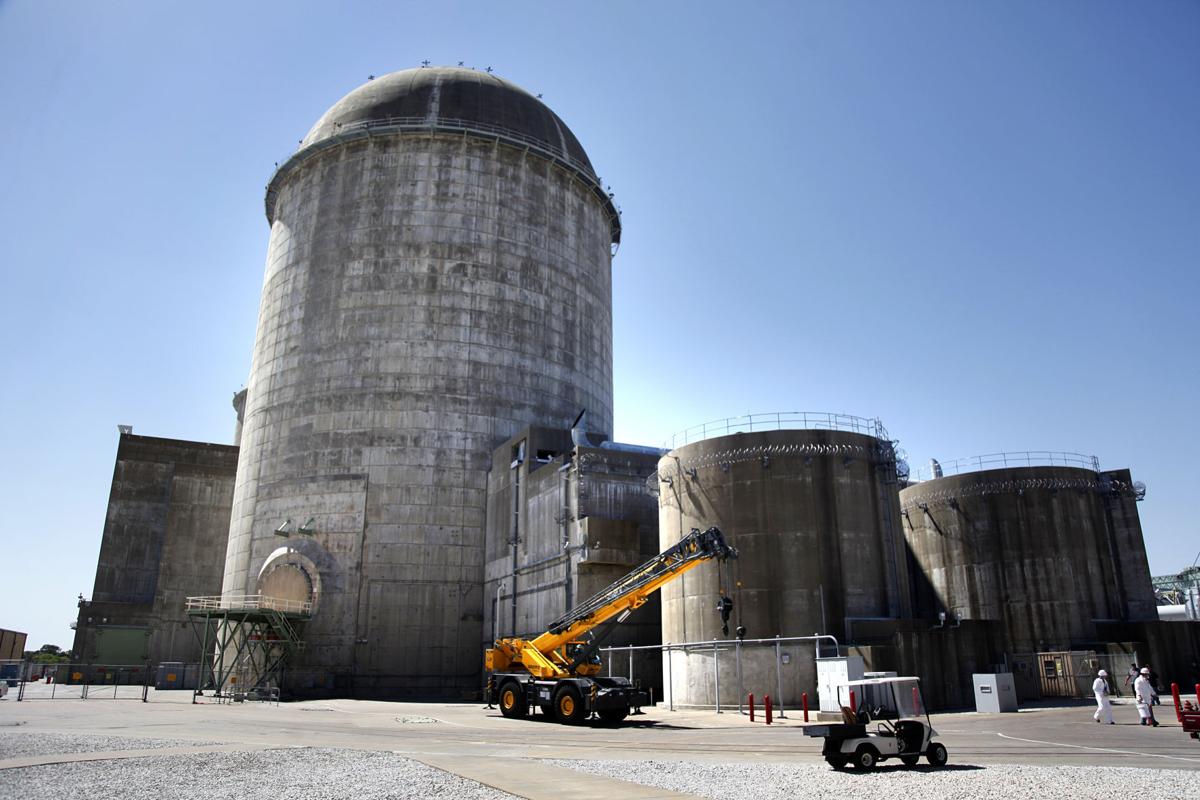
That’s why I filed a federal Freedom of Information request one year ago seeking records of a June 7, 2021, fire inside the Comanche Peak nuclear power plant. The reactor is outside the city limits of Glen Rose, 60 miles southwest of downtown Dallas.
I wanted to test the U.S. Nuclear Regulatory Commission’s response to an open records request. How forthcoming would this important but often overlooked federal agency be?
The answer is in. The NRC failed The Watchdog’s test. They ignored my request for a full year. It wasn’t until I contacted them last week and reminded that I had a year-old request that was unfilled that they reacted. Otherwise, I’m fairly certain that my request would have gone unanswered forever.
Grade? I give the NRC an “F” for this.
Original request
When I made the request on Aug. 23, 2021, some of the facts about the fire were already publicly known. There was a fire in the plant’s main transformer that was put out by the plant’s fire department. External fire departments were not called in.
After that, the plant’s Unit 2 was shut down for two weeks for repairs, and then it went back online.
Dallas Morning News reporter Marin Wolf did an excellent job covering the event in two stories.
What I didn’t know a year ago was that there would be a war between Russia and Ukraine, and that nuclear power plants would be used as strategic points of combat………………………………
Evacuation plans
The last study I made of the Comanche Peak evacuation plans was in 2011. I studied hundreds of pages of evacuation plans I received from the NRC through the Freedom of Information Act. Little details were somewhat alarming.
In the event of an evacuation, records stated that pets were not allowed in the “reception centers” outside the evacuation zones.
“Where possible, shelter livestock,” the plan stated. “Leave them with food and water.”
More advice: “Keep your car’s vents and windows closed while driving within 10 miles of the power plant. If you use your car air conditioning, set it on ‘inside’ or ‘maximum’ so it does not pull in outside air.”
“Residents are also advised to communicate with neighbors personally, rather than clogging phone lines.”
How would that happen if you’re in your car, with the vents closed, driving away?
It’s clear to me that chaos would ensue.
A bad battery
Four months after my initial FOIA request, I sent the NRC a note with the subject line “Missing in Action.”
“Hello, I’m wondering what happened to my August 2021 FOIA request — NRC-2021-000233.”
I received an acknowledgement of my letter — but no records.
Obviously, this could have gone on forever. Did the NRC forget me?
Finally, last week, I revealed my experiment to the NRC in a note: “It wasn’t so much that I was interested in the information as I was testing your obedience to the FOIA law. Well, the test is over.”
Only then did I receive 45 pages of records from the NRC’s regional office in Arlington.
Flipping through, I see the August 2021 fire is barely mentioned. The package does not contain any incident reports, which I had requested. The records sent to The Watchdog are about post-fire inspections.
One “non-cited violation” found that operators of the plant, which is owned by Vistra Energy, “failed to maintain batteries associated with the steam generator fill pumps.” Those pumps are part of the process used to create steam, which is converted into energy that ultimately yields electric power.
One battery was found to be dead, and the battery charger was missing, the inspection report stated.
That single violation was described in the report as being “of very low safety significance.”
Note that I requested any incident reports on the 2021 fire, but in the 45 pages, the word “fire” only appears 20 times……………….
This is yet another example of a federal agency failing to follow the tenets of the Freedom of Information Act. But how many federal agencies have their own evacuation plans designed to save lives in the event of a nuclear accident?
I’m a Three Mile Island baby, and this is serious stuff. In a world where nuclear plants become weapons of war, this is no time for secrets. https://dentonrc.com/news/the_watchdog/the-watchdog-nuclear-regulatory-commission-flunks-this-public-records-test/article_2bd07602-4a09-588a-9670-d323d752f350.html
Storage of nuclear wastes and of dead nuclear reactors is becoming a political nightmare
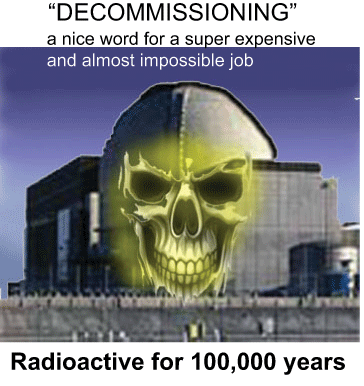
Beyond electricity production, the use of nuclear energy also creates
problems related to the storage of spent nuclear fuel and waste, which
brings an additional layer of complexity to the question. Storage of
nuclear fuel requires facilities in geological locations which must fulfil
demanding criteria.
There are only so many places which fulfil these
criteria. Furthermore, long-term fuel storage will create commitments (and
costs) for hundreds of years.
It is easy to imagine how nuclear waste
storage can easily turn into a political nightmare – one can look at the
options in Belgium where the neighboring Luxembourg quickly protested
against storage too close to the border between the two countries; or to
the United States where nuclear storage facilities are planned on
indigenous lands.
A new politics of waste is emerging – the power plants
themselves. As the IEA demands an urgent new round of investment in ageing
nuclear sites, what are we to do with the old ones? The UK newspaper the
Independent very recently ran a story about one such site, Douneray, in the
North of Scotland. It first opened in 1955 and ceased operations in 1994.
And yet, local campaign groups have never been as active. Why? As a 2020
report by the Nuclear Decommissioning Authority puts it, the Douneray site
will be ready for other purposes in the year…2333. As old sites come to
an end, new politics of decommissioning begin.
PACCS research (accessed) 13th Aug 2022
Seventy-five years after the U.S. atomic bombings of Japan, we remain perched on the precipice of unparalleled catastrophe.
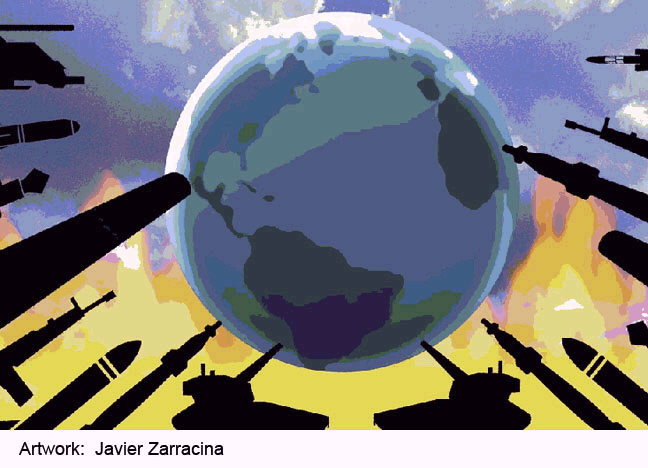
Seventy-five years after the dawn of the nuclear age, we are as ready as ever to extinguish ourselves. The human race is clearly an evolutionary aberrant on a suicidal mission.
The Lessons We Haven’t Learned, The Progressive Magazine, BY HELEN CALDICOTT, AUGUST 3, 2020

In truth, the U.S. Department of Defense is a misnomer; it is actually the Department of War, Death, and Suicide. Hundreds of billions of dollars of U.S. taxpayer money are spent annually by corporations such as Lockheed Martin, Boeing, BAE Systems, and Raytheon Technologies Corporation to create and build the most hideous weapons of destruction.
Brilliant people employed by these massive corporations, mostly men, are deploying their brainpower to devise better and more hideous ways of killing.
”……………………………… What rained down on those two Japanese cities seventy-five years ago was destruction on a scale never seen before or since. People exposed within half a mile of the atomic fireball were seared to piles of smoking char in a fraction of a second as their internal organs boiled away. The small black bundles stuck to the streets and bridges and sidewalks of Hiroshima numbered in the thousands.
A little boy was reaching up to catch a red dragonfly with his hand against the blue sky when there was a blinding flash and he disappeared. He turned into gas and left his shadow behind on the pavement, a haunting relic later moved to the Hiroshima Museum. A woman was running while holding her baby; she and the baby were turned into a charcoal statue.
In all, about 120,000 people were killed immediately by the two bombs, and tens of thousands more died later due to radiation exposure.
In 1957, when I was eighteen, I read a book by Nevil Shute, an English novelist who ended up in Australia. On the Beach described how the city of Melbourne awaited a deadly cloud of radiation from a nuclear war that was triggered by an accident in the northern hemisphere, killing everything. Men drank their last gin and tonics in the Melbourne Club while the government dispensed cyanide capsules so parents could kill their children quickly to avoid the agonizing symptoms of radiation poisoning.
At the time, I was in medical school, where I learned about radiation biology—the classic experiments of Hermann J. Muller, who in the 1920s irradiated Drosophila fruit flies inducing genetic mutations and morphological abnormalities. Concurrently, the United States and the Soviet Union were testing nuclear weapons in the atmosphere, bombarding huge populations with radioactive fallout.
In my naiveté, I couldn’t understand what these men thought they were doing because the mutagenic and carcinogenic effects of ionizing radiation were well known in scientific circles. Madame Curie had died of aplastic anemia secondary to radium, an alpha emitter polluting her bones; her daughter died of leukemia, and many of the early radiologists who exposed themselves randomly to X-rays died from malignancies.
Einstein wrote: “The unleashed power of the atom has changed everything save our modes of thinking and we thus drift toward unparalleled catastrophe.” Robert Oppenheimer, watching the world’s first nuclear explosion in Alamogordo, New Mexico, in 1945, muttered to himself, “I am become death, the destroyer of worlds” from the Hindu scripture, the Bhagavad Gita.
The scientists knew that they had discovered the seeds of human destruction.
A nuclear “exchange” between these two superpowers would take little over one hour to complete. A twenty-megaton bomb (the equivalent of twenty million tons of TNT) would excavate a hole three-quarters of a mile wide and 800 feet deep, converting all buildings and people into radioactive fallout that would be shot up in the mushroom cloud. Within six miles in all directions every living thing would be vaporized. Twenty miles from the epicenter, huge fires would erupt, as winds of up to 500 miles per hour would suck people out of buildings and turn them into missiles traveling at 100 miles per hour. The fires would coalesce, incinerating much of the United States and causing most nuclear power plants to melt down, greatly exacerbating radioactive fallout.
Potentially billions of people would die hideously from acute radiation sickness, vomiting, and bleeding to death. As thick black radioactive smoke engulfed the stratosphere, the Earth would, over time, be plunged into another ice age—a “nuclear winter,” annihilating almost all living organisms.
Seventy-five years after the dawn of the nuclear age, we are as ready as ever to extinguish ourselves. The human race is clearly an evolutionary aberrant on a suicidal mission. Our planet is in the intensive care unit, approaching several terminal events.
Will we gradually burn and shrivel life on our wondrous Earth by emitting the ancient carbon stored over billions of years to drive our cars and power our industries, or will we end it suddenly by creating a global gas oven?
The International Energy Agency said recently that we only have six months left to avert the effects of global warming before it is too late. Earlier this year, the Bulletin of the Atomic Scientists moved its Doomsday Clock to 100 seconds to midnight, the closest it’s ever been.
In truth, the U.S. Department of Defense is a misnomer; it is actually the Department of War, Death, and Suicide. Hundreds of billions of dollars of U.S. taxpayer money are spent annually by corporations such as Lockheed Martin, Boeing, BAE Systems, and Raytheon Technologies Corporation to create and build the most hideous weapons of destruction.
President Donald Trump is right when he says we need to make friends with the Russians, for it is Russian bombs that might well annihilate the United States. Indeed, we need to foster friendship with all nations and reinvest the trillions of dollars spent on war, killing, and death, saving the ecosphere by powering the world with renewable energy including solar, wind, and geothermal, and planting trillions of trees.
Such a move would also free up billions of dollars that could be reallocated to such purposes as providing free medical care for all U.S. citizens, along with free education, housing for the homeless, and care for those with mental illness.
The United States needs to rise to its full moral and spiritual height and lead the world to sanity and survival. I know this is possible because, in the 1980s, millions of wonderful people rose up, nationally and internationally, in opposition to the arms race and the Cold War.
But what is the present reality in the United States?
There are 450 Minuteman III missiles operational on the Great Plains—in Montana, North Dakota, and Wyoming. In each missile silo are two missileers, who control and launch the missiles which contain one or two hydrogen bombs. Planes armed with hydrogen bombs stand ready to take off at any moment, and nuclear submarines silently plow the oceans ready to launch.
Both the United States and Russia have nuclear weapons targeted at military facilities and population centers. Nuclear war could happen at any time, by accident or design. The late Stephen Hawking warned in 2014 that artificial intelligence, now being deployed by the military, could become so autonomous that it could start a nuclear war by itself.
This threat is largely ignored by politicians and the mainstream media, who continue to practice psychic numbing as we stumble blindly toward our demise.
How come the physicists, engineers, and military personnel who have laced the world with nuclear weapons ready to launch never factored into their equations the probability that an immature, petulant man-baby could hold the trigger for our destruction in his hands? https://progressive.org/magazine/the-lessons-we-havent-learned-caldicott/
More shelling near Ukraine nuclear plant
The Advocate, By Natalia Zinets, August 16 2022,
Ukrainian and Russian-installed officials have reported shelling near Europe’s largest nuclear power plant, with both sides blaming each other days after the world nuclear watchdog warned of disaster if the fighting does not stop.
Russia and Ukraine have traded accusations this month regarding the Zaporizhzhia nuclear plant in southern Ukraine, which dominates the south bank of a vast reservoir on the Dnipro River……………………………
Nuclear experts fear fighting might damage the plant’s spent fuel pools or reactors…………………………………………
Reuters could not immediately verify battlefield reports. https://www.theadvocate.com.au/story/7862092/more-shelling-near-ukraine-nuclear-plant/?cs=5—
Moldova ships in radiation pills as fighting rages near Zaporizhzhia nuclear power plant in Ukraine
euronews, By Ben Turner 15/08/2022
Moldova has imported one million iodine pills as fighting rages around a nuclear power station in neighbouring Ukraine.
The eastern European country – with a population of 2.5 million people – insisted residents should not panic as it upped its stockpile of the tablets which can prevent radioactive elements building up in the body.
Shelling has intensified near Ukraine’s Zaporizhzhia nuclear power plant – the largest of its kind in Europe – with the UN warning fighting could “lead to disaster”……………………………………..
in the event of a nuclear disaster, iodine pills will be first issued to people unable to evacuate or take shelter such as emergency workers, Moldova’s National Agency for Public Health said.
Moldovan authorities advise citizens to take cover in cellars or basements, or evacuate the area, in the event of a nuclear emergency. …………………….. more https://www.euronews.com/2022/08/15/moldova-ships-in-radiation-pills-as-fighting-rages-near-zaporizhzhia-nuclear-power-plant-i
Ontario nuclear waste site selectors delay announcement until 2024
Nishnawbe Aski Nation chiefs opposed to storage site based on environmental grounds
Northern Ontario Business Staff, 15 Aug 22,
The site selectors for a proposed underground nuclear waste repository in Ontaro say they won’t make a decision on a preferred location until the fall of 2024.
The Nuclear Waste Management Organization (NWMO) is pushing back the naming of a site by one year, attributing it to a series of pandemic-related lockdowns that hampered their work in the selection process.
Wabigoon Lake Ojibway Nation-Ignace area, an hour’s drive east of Dryden, in northwestern Ontario and the Saugeen Ojibway Nation-South Bruce area in southern Ontario are the two communities on the short list to host the deep geological repository.
Last week, 49 chiefs of the Nishnawbe Aski Nation (NAN) passed a resolution at their annual conference in Timmins opposing plans to haul and store nuclear waste in the region. Though the potential site of the repository is not in NAN’s treaty area, leadership hold concerns about the downstream impact of such a facility in the waterways of their traditional territories……………………………………….
Since 2010, NWMO has been engaged in this process to find a permanent storage place for the long-term management of Canada’s used nuclear fuel……………..
The organization said the plan will only proceed in a host area with “informed and willing hosts, where the municipality, First Nation and Métis communities, and others in the area are working together to implement it.”………………
Governor of California proposes to extend life of last nuclear plant at cost of $1.4 billion

The bill would carve out an exemption from state regulations to allow operators to maintain operations at the plant without conducting extensive technical analysis of the environmental effects.
A joint statement from Environment California, Friends of the Earth and the Natural Resources Defense Council said legislators should reject Newsom’s new bill “out of hand.”
Politico, By LARA KORTE, 08/12/2022
Gov. Gavin Newsom has proposed keeping open California’s last nuclear plant for up to another 10 years as the state wrestles with how to meet power demand while it reduces its reliance on fossil fuels for energy.
Plans to start closing the Diablo Canyon Power Plant over the next three years would be halted at a cost of up to $1.4 billion under draft legislation Newsom sent to legislators late Thursday, angering some of the governor’s environmentalist allies.
Diablo Canyon provides nearly a tenth of the state’s electrical power. Critics have long sought its closure for reasons that include the potential danger of a radiation leak because of earthquakes along the seismically active central coast of California. It was scheduled to close by 2025.
The proposed legislation would direct the California Public Utilities Commission to set a new closure date of Oct. 31, 2029 for one unit, and Oct. 31, 2030, for the other, according to the governor’s office. By 2026, regulators could consider an extension, but not beyond Oct. 31, 2035.
The bill would carve out an exemption from state regulations to allow operators to maintain operations at the plant without conducting extensive technical analysis of the environmental effects.
Extending the life of the nuclear plant would come at a cost. Pacific Gas & Electric, which operates the plant, applied to the U.S. Department of Energy’s $6 billion program to preserve the operations of nuclear power plants — though it’s unclear how much will be granted, or when. The language proposed by Newsom’s office this week would allow the state to grant PG&E a $1.4 billion forgivable loan to cover the costs of relicensing. Any extension would additionally require approvals by federal, state and local regulatory entities, the governor’s office said.
A joint statement from Environment California, Friends of the Earth and the Natural Resources Defense Council said legislators should reject Newsom’s new bill “out of hand.”
“The findings used to justify these extraordinary provisions include no citations to published studies by any California regulator or agency recommending a further life extension for Diablo Canyon because there are none,” the statement said. “With Governor Newsom and the legislature working to appropriate climate budget funds and advance ambitious climate legislation in the waning days of the legislative session, this proposal is a dangerous and costly distraction.” ……………………….. more https://www.politico.com/news/2022/08/12/california-proposes-extend-nuclear-plant-cost-1-4-billion-00051535
With its failing nuclear industry, France now an importer of power, no longer an exporter.
Sweden was the biggest net exporter of power in Europe during the first
half of 2022, overtaking France, according to a new report from EnAppSys.
France has long been a major exporter of power in the European market, with
a fleet of nuclear power stations generating a stable surplus of
electricity. However, that’s beginning to change, with France shifting from
a net exporter earlier in the year to a net importer.
This fall from grace
for France has, ironically, been blamed on its nuclear power station fleet,
which is beginning to show signs of age and unreliability. In fact, the
country has found several structural problems at its nuclear power
stations, which means it’s had to plug a significant gap in its electricity
supply with power generated elsewhere.
With France unlikely to be able to
fix its nuclear fleet anytime soon, it’s also unlikely to make it to the
top of the net power exporter list anytime soon either. Instead, the top
honour goes to Sweden, which exported a total of 16 TWh during the first
half of 2022. Most of that power, 7 TWh and 4 TWh, went to neighbours
Finland and Denmark, respectively.
However, the real story for the European
power export market is that Germany – a country commonly criticised for its
energy policies due to an overreliance on Russian gas – was Europe’s second
largest exporter in the first half of 2022. It exported 15.4 TWh, with
France taking the lion’s share. The UK also noticeably saw a change in its
fortunes in the first half of 2022, with the country going from a reliable
importer of electricity to a net exporter position, with power largely
flowing back to France. However, the UK still ended the six month period as
having imported 1.5% more power than exported.
Electrical Review 12th Aug 2022
US ‘on brink’ of war with Russia and China – Kissinger
A lack of visionary leadership is to blame, the veteran statesman says, Rt.com 13 Aug 22
Former US Secretary of State Henry Kissinger has told the Wall Street Journal that Washington has rejected traditional diplomacy, and in the absence of a great leader, has driven the world to the precipice of war over Ukraine and Taiwan.
Kissinger previously courted controversy for suggesting that Kiev abandon some of its territorial claims to end the conflict with Russia.
“We are at the edge of war with Russia and China on issues which we partly created, without any concept of how this is going to end or what it’s supposed to lead to,” Kissinger said in the interview, published on Saturday.
Kissinger, now 99 years old, elaborated on the West’s role in the Ukraine conflict in a recent book profiling prominent post-WWII leaders. He described Russia’s decision to send troops into the country in February as motivated by its own security, as having Ukraine join NATO would move the alliance’s weapons to within 300 miles (480km) of Moscow. Conversely, having Ukraine in its entirety fall under Russian influence would do little to “calm historic European fears of Russian domination.”
In the runup to its military operation in Ukraine, Russia presented the US and NATO with written outlines of its security concerns, which were rejected by both receiving parties.
Kissinger, who in the late 1960s and early 1970s held extensive negotiations with Vietnamese communists even as the US military waged war against them, said that modern American leaders tend to view diplomacy as having “personal relationships with the adversary,” and in words paraphrased by the Wall Street Journal, “tend to view negotiations in missionary, rather than psychological terms, seeking to convert or condemn their interlocutors rather than to penetrate their thinking.”
Instead, Kissinger argued that the US should seek “equilibrium” between itself, Russia, and China.
This term refers to “a kind of balance of power, with an acceptance of the legitimacy of sometimes opposing values,” Kissinger explained. “Because if you believe that the final outcome of your effort has to be the imposition of your values, then I think equilibrium is not possible.” ………………………… more https://www.rt.com/news/560780-henry-kissinger-ukraine-taiwan/
FOCUS: Respite for Japan as radioactive Fukushima water accumulation slows
https://english.kyodonews.net/news/2022/08/d10f63c6bde0-focus-respite-for-japan-as-radioactive-water-accumulation-slows-in-fukushima.html By Takaki Tominaga, KYODO NEWS – Aug 12, 2022 Tanks containing treated water at the crippled Fukushima nuclear power plant are likely to reach capacity around the fall of 2023, later than the initially predicted spring of next year, as the pace of the accumulation of radioactive water slowed in fiscal 2021
The slowdown, based on an estimate by operator Tokyo Electric Power Company Holdings Inc., gives some breathing space to Prime Minister Fumio Kishida’s government if any roadblocks are thrown up in the plan to discharge the treated water into the sea starting around spring next year.
China and South Korea as well as local fishing communities that fear reputational damage to their products remain concerned and have expressed opposition to the plan.
About 1.30 million tons of treated water has accumulated at the Fukushima Daiichi plant following the 2011 nuclear disaster, and it is inching closer to the capacity of 1.37 million tons.
The water became contaminated after being pumped in to cool melted reactor fuel at the plant and has been accumulating at the complex, also mixing with rainwater and groundwater.
According to the plan, the water — treated through an advanced liquid processing system, or ALPS, that removes radionuclides except for tritium — will be released 1-kilometer off the Pacific coast of the plant through an underwater pipe.
The International Atomic Energy Agency has been conducting safety reviews of the discharge plan and Director General Rafael Grossi says the U.N. nuclear watchdog will support Japan before, during and after the release of the water, based on science.
An IAEA task force, established last year, is made up of independent and highly regarded experts with diverse technical backgrounds from various countries including China and South Korea.
Japan’s new industry minister Yasutoshi Nishimura says the government and TEPCO will go ahead with the discharge plan around the spring of 2023 and stresses the two parties will strengthen communication with local residents and fishermen, as well as neighboring countries, to win their understanding.
Beijing and Seoul are among the 12 countries and regions that still have restrictions on food imports from Japan imposed in the wake of the massive earthquake and tsunami triggered nuclear meltdowns at the Fukushima plant in March 2011.
“We will improve our communication methods so we can convey information backed by scientific evidence to people both at home and abroad more effectively,” Nishimura said after taking up the current post in a Cabinet reshuffle Wednesday.
Kishida instructed Nishimura to focus on the planned discharge of ALPS-treated water that will be diluted with seawater to one-40th of the maximum concentration of tritium permitted under Japanese regulations, according to the chief of the Ministry of Economy, Trade and Industry.
The level is lower than the World Health Organization’s recommended maximum tritium limit for drinking water.
TEPCO will cap the total amount of tritium to be released into the sea as well.
Meanwhile, the Kishida government has decided to set up a 30 billion yen ($227 million) fund to support the fisheries industry and said it will buy seafood if demand dries up due to harmful rumors.
Fishing along the coast of Fukushima Prefecture, known for high-quality seafood, has been recovering from the reputational damage caused by the nuclear accident but the catch volume in 2021 was only about 5,000 tons, or about 20 percent of 2010 levels.
Construction of discharge facilities at the Fukushima plant started in August, while work to slow the infiltration of rain and groundwater was also conducted.
TEPCO said it was able to reduce the pace of accumulation of contaminated water by fixing the roof of a reactor building and cementing soil slopes around the facilities, among other measures, to prevent rainwater penetration.
The volume of radioactive water decreased some 20 tons a day from a year earlier to about 130 tons per day in fiscal 2021, according to the ministry.
The projected timeline to reach the tank capacity has been calculated based on the assumption that about 140 tons of contaminated water will be generated per day, according to METI.
However, storage tanks could still reach their capacity around the summer of next year if heavy precipitation or some unexpected events occur, the ministry said.
As part of preparations for the planned discharge, the Environment Ministry has started measuring tritium concentration at 30 locations on the surface of the sea and seabed around the Fukushima plant, four times a year.
Similarly, the Nuclear Regulation Authority has increased the number of locations it monitors tritium levels by eight to 20. The Fisheries Agency has started measuring tritium concentration in marine products caught along the Pacific coast stretching from Hokkaido to Chiba Prefecture.
Given that it is expected to take several decades to complete the release of treated water, NRA and METI officials urged TEPCO to further curb the generation of contaminated water at the plant.
“We want TEPCO to step up efforts so as to lower the volume of the daily generation of contaminated water to about 100 tons or lower by the end of 2025,” a METI official said.
How safe are nuclear power plants?
A new history reveals that federal
regulators consistently assured Americans that the risks of a massive
accident were “vanishingly small”—even when they knew they had
insufficient evidence to prove it.
Thomas Wellock, formerly a professor at
Central Washington University, became the historian of the U.S. Nuclear
Regulatory Commission (N.R.C.) more than a decade ago. He brought chops to
the job—training in engineering, experience testing nuclear reactors, and
a Ph.D. in history from Berkeley—and, in March of 2021, published the
sixth in a series of authorized volumes about how the agency, and its
predecessor, the U.S. Atomic Energy Commission (A.E.C.), has regulated
civilian nuclear power.
“Safe Enough? A History of Nuclear Power and
Accident Risk” is a refreshingly candid account of how the government,
from the nineteen-forties onward, approached the bottom-line question posed
in the book’s title. Technically astute insiders at the A.E.C. took it
for granted that “catastrophic accidents” were possible; the key
question was: What were the chances? The long and the short of it,
Wellock’s book suggests, is that, while many officials believed the
chances were very low, nobody really knew for sure how low they were or
could prove it scientifically.
Even as plants were being built, the numbers
used by officials to describe the likelihood of an accident were based on
“expert guesswork or calculations that often produced absurd results,”
he writes. The “guesswork” nature of such analysis was never candidly
acknowledged to either the public or the agency’s licensing boards, which
had the legal responsibility of determining that individual plants all
around the country were safe enough to be approved for operation.
New Yorker 13th Aug 2022
https://www.newyorker.com/science/elements/how-safe-are-nuclear-power-plants
Germany continues to close down its last remaining nuclear reactors
Germany’s nuclear power operators will continue to decommission the
country’s last three remaining plants, even as the government weighs
whether to keep the facilities running over the winter. E.ON, RWE and EnBW
confirmed they had not procured additional fuel to extend the life of the
Isar 2, Emsland and Neckarwestheim plants beyond the end of the year, when
they are legally-mandated to close.
FT 12th Aug 2022
https://www.ft.com/content/0257588e-0ebe-4696-8c4e-77f0a192b616
Rishi Sunak, UK Tory leader a keen supporter of the nuclear industry
Tory leader and Prime Minister contender Rishi Sunak says he is looking
forward to seeing plans for Wylfa Newydd if he’s elected and said he is a
strong supporter of nuclear. Former Chancellor Mr Sunak is going head to
head with Foreign Secretary Liz Truss to replace Boris Johnson. The UK
Government has earmarked Wylfa Newydd as a key site for new nuclear
although as yet no developer has been confirmed for the location after the
collapse of the previous plans following the withdrawal of Hitachi.
“Heunderstands that the Wylfa project is eligible for support as part of the
£120m Future Nuclear Enabling Fund, which was approved during his time as
Chancellor. He looks forward to seeing the proposals for the Wylfa Newydd
project if he is elected Prime Minister.” Wylfa and Trawsfynydd in
Gwynedd have also been tipped as potential sites for Small Modular
Reactors. Ms Truss’s campaign team have been asked to comment.
Daily Post 15th Aug 2022
https://www.dailypost.co.uk/news/north-wales-news/rishi-sunak-wylfa-newydd-nuclear-24756725
100% renewables is feasible worldwide at low cost.
Christian Breyer et al, On the History and Future of 100% Renewable Energy
Systems Research. Research on 100% renewable energy systems is a relatively
recent phenomenon. It was initiated in the mid-1970s, catalyzed by
skyrocketing oil prices. Since the mid-2000s, it has quickly evolved into a
prominent research field encompassing an expansive and growing number of
research groups and organizations across the world. The main conclusion of
most of these studies is that 100% renewables is feasible worldwide at low
cost.
IEEE Access 29th July 2022
Connecting Toxic Memories: Hiroshima and Nuremberg
the NATO Three had the temerity to issue a joint statement expressing their total opposition to the approach taken by the so-called Ban Treaty (TPNW), declared it was their intention to continue to rely on nuclear weapons to meet their far-flung security needs broadly specified to include geopolitical deterrence, that is, not only is this weaponry not being limited to the defense of homelands but vital strategic concerns that could potentially arise anywhere on the planet. At present, this commitment to nuclearism is illustrated by the U.S. posture in response to the Ukraine War and the future of Taiwan, as well as by revealing refusal even to accept a No First Use framework of restraint.
What was most controversial about the [Nuremberg] trials was the failure to inquire into the violations of international criminal law by the winning side, which is why these tribunals, however conscientious their work, have been derided over the years as glaring instances of ‘victors’ justice.’
CounterPunch, BY RICHARD FALK, 12 Aug 22,
77 Years After Hiroshima and Nagasaki
Peace activists around the world often choose August 6th and 9th each year to grieve anew the human suffering and devastation caused by dropping atomic bombs on the undefended Japanese cities of Hiroshima and Nagasaki, which lacked military significance. Among other things these atomic attacks were ‘geopolitical crimes’ of ultimate terror, with scant combat justification, and intended mainly as a warning to Soviet leaders not to defy the West in the peace diplomacy at the end of World War II.
These August dates marking the utter destruction of these two cities are treated as events giving rise to what has been widely known as the nuclear age. This awful beginning can never be forgotten or redeemed, although ever since the explosions in 1945 the solemnity of these occasions has been overshadowed outside of Japan by widespread fears that a nuclear war might occur at some point and a quiet rage continues to build around the world that the nuclear weapons states, above all the U.S., have stubbornly defiantly refused to take steps to fulfill pledges to seek a reliable path to nuclear disarmament in good faith.
This moral and political pledge became legally obligatory in Article VI of the Nuclear Nonproliferation Treaty (1970), a commitment affirmed unanimously in an Advisory Opinion of the International Court of Justice in 1996. It has become clear that for the security establishments of the ‘NATO Three’ (U.S. France, UK) this disarmament commitment was never more than ‘a useful fiction’ that conveyed the sense that the non-nuclear states were being given something valuable and commensurate to the willingness to give up their conditional option to underpin national security by acquiring nuclear weapons (as Russia and China, as well as Israel, India, Pakistan, and North Korea have done over the decades).
The non-nuclear Parties to the NPT are not formally obliged to give up their option of acquiring nuclear weapons unconditionally. Article 10 confers on all Parties to the NPT a right of withdrawal if “extraordinary events..have jeopardized the supreme interests of its country.” In practice, as Iran is finding out, this right of withdrawal gives way to the geopolitical priorities of an enforcement regime presided over by the United States. The so-called Jerusalem Declaration signed in July by U.S. and Israel leaders commits to using whatever military force is necessary to prevent Iran from acquiring nuclear weaponry.
NPT Review Conference at the UN
Currently the NPT Review Conference, postponed since 2020 because of COVID, at UN Headquarters in New York City, two significant contradictory developments dominated the scene. It was the first such meeting of NPT Parties since the Treaty of Prohibition of Nuclear Weapons (TPNW) came into force in early 2021. This treaty, a project of governments from the Global South in active coalition with Global Civil Society has drawn a bright line between the majority views of the peoples of the world and the security elites of these nine nuclear weapons states.
This impasse between the nuclear haves and have-nots amounts to an existential confirmation of ‘nuclear apartheid’ as the precarious and self-serving underpinning of global security unless and until the advocates TPNW muster enough strength and will to mount a real challenge to such a hegemonic and menacing concentration of unaccountable power and discretionary authority.
New Patterns of Geopolitical Rivalry Increase Risks of Nuclear War
The second notable development at the NPT Review Conference lent a sense of immediacy and urgency to what had become 77 years after Hiroshima a somewhat abstract concern is the Ukraine War, and its geopolitical spillover effect of heightening the perceived risks of the use of nuclear weaponry and even the danger of nuclear war. The U.S. has decided it is worth challenging Russia’s attack on Ukraine sufficiently to uphold its strategic logic that since the end of the Cold War the world has political space for one extraterritorial state, which became the sole supplier of global governance when it comes to the international security agenda. Among other things, unipolarity meant that Cold War Era mutual respect for territorial spheres of influence on the borders of Great Powers no longer are pillars of stable geopolitical coexistence. After the Soviet collapse in 1992 the U.S. has acted as if entitled to implement a Monroe Doctrine for the world. To make such a grandiose hegemonic political destiny credible it has shouldered the immense economic and strategic burdens that accompany the role, maintaining hundreds of foreign military bases and naval fleets in every ocean.
NATO’s insistence early in the Ukraine War on making Russia pay for its invasion by being again reduced to the normalcies of territorial sovereignty was undoubtedly intended to be a master class for the benefit of Russia, and especially China, in the geopolitics of the post-Cold War world. It also provided an occasion to send China, currently the more formidable adversary of the West, a message written with the blood of Ukrainian lives, that any show of force to regain control over Taiwan will be met an even more punitive response, including thinly veiled threats that pointedly refuse to rule out uses of nuclear weapons. Pentagon war games some months ago ominously showed that China would prevail in any military encounter in the South China Seas unless the U.S. was prepared to cross the nuclear threshold. This assessment should be affirming the renewed strategic relevance of nuclear weaponry. It has proven helpful in making the case for even larger military appropriations from Congress.
American diplomacy toward China has aggravated an already inflammatory context by some inexplicably provocative behavior in recent months. First came a gratuitous public pronouncement by Biden last May while in Asia to provide whatever military assistance was deemed necessary to protect Taiwan if under attack by China. And secondly, a totally destabilizing August visit to Taiwan by Nancy Pelosi at a time of already high tensions. These provocations violated the spirit of the Shanghai Communique that was issued by China and the U.S. in 1972………………………………………………………………………………….
What was most controversial about the [Nuremberg] trials was the failure to inquire into the violations of international criminal law by the winning side, which is why these tribunals, however conscientious their work, have been derided over the years as glaring instances of ‘victors’ justice.’
My interest in the connections between Hiroshima and Nuremberg is somewhat different. The insensitivity of such a high profile signing of this agreement on August 8th establishing the Nuremberg Tribunal is appalling. It occurred during the very days of the atomic bombings, arguably the worst crime of World War II at least on a par with the Holocaust. It is more than insensitivity, it is moral numbness, which prepares political actors, whether states, empire, or leaders, to embrace past crimes and commit future crimes. It leads directly to such features of world order as a geopolitical right of exception at the UN by way of the veto and impunity with respect to accountability procedures. In effect, the UN is designed quite literally to give assurances that the most dangerous states, as of 1945, are jurisprudentially protected forever from any adverse Security Council decision as to criminal acts, at least within the UN System.
What is this slightly disguised feature of legality and legitimacy conveying to a curious observer? That law and accountability are relevant for propaganda and punishment against Great Power adversaries, and that the wrongs of victors in major wars are beyond scrutiny but those of the vanquished and weak are to be judged in what amounts to ‘show trials’ because of this core failure to treat equals equally.
There is yet something else to reflect upon. If August 8th had been a different day that of infamy because an English or American city had been targeted by a German atomic bomb and yet Germany still lost the war, the act and the weapon would have been criminalized at Nuremberg and by subsequent international action. We might not be still living with this weaponry if the perpetrators of those dreadful events of August 6th and 9th had been the losers in World War II, which makes the rightly celebrated defeat of fascism on balance a somewhat questionable long-term victory for humanity.
77 years later it seems worth pondering allow this long repressed relationship between Hiroshima and Nuremberg in the context of the recent irresponsible heightening of geopolitical tensions with Russia and China.
Richard Falk is Albert G. Milbank Professor Emeritus of International Law at Princeton University, Chair of Global law, Queen Mary University London, and Research Associate, Orfalea Center of Global Studies, UCSB. https://www.counterpunch.org/2022/08/12/connecting-toxic-memories-hiroshima-and-nuremberg/
1 This Month



19 November – Webinar – The Reality of Reprocessing
Time: 11:00 AM Pacific Time (US & Canada) / 2:00 PM Eastern / 7:00 PM UK / 8:00 PM CET
Register for the Zoom Event Here



Shut down the radiation-damaged Heysham nuclear reactors now
To see nuclear-related stories in greater depth and intensity – go to https://nuclearinformation.wordpress.com

Say No to NASA’s Reckless Nuclear Reactor on the Moon
Say No to NASA’s Reckless Nuclear Reactor on the Moon
-
Archives
- November 2026 (32)
- October 2026 (302)
- September 2026 (339)
- August 2026 (330)
- July 2026 (355)
- June 2026 (287)
- May 2026 (306)
- April 2026 (356)
- March 2026 (251)
- February 2026 (267)
- January 2026 (308)
- December 2025 (358)
-
Categories
- 1
- 1 NUCLEAR ISSUES
- business and costs
- climate change
- culture and arts
- ENERGY
- environment
- health
- history
- indigenous issues
- Legal
- marketing of nuclear
- media
- opposition to nuclear
- PERSONAL STORIES
- politics
- politics international
- Religion and ethics
- safety
- secrets,lies and civil liberties
- spinbuster
- technology
- Uranium
- wastes
- weapons and war
- Women
- 2 WORLD
- ACTION
- AFRICA
- Atrocities
- AUSTRALIA
- Christina's notes
- Christina's themes
- culture and arts
- Events
- Fuk 2022
- Fuk 2023
- Fukushima 2017
- Fukushima 2018
- fukushima 2019
- Fukushima 2020
- Fukushima 2021
- general
- global warming
- Humour (God we need it)
- Nuclear
- RARE EARTHS
- Reference
- resources – print
- Resources -audiovicual
- Weekly Newsletter
- World
- World Nuclear
- YouTube
-
RSS
Entries RSS
Comments RSS

