We must never forget the risks nuclear stations pose to us all in conflict situations
The Herald, Isobel Lindsay, 19 Aug 22, CURRENTLY there are two different discourses going on in relation to nuclear power with no cross-over (“If Russia turns up the heat, could a nuclear winter follow?”, The Herald, August 17).
There is a cosy consensus among UK politicians and commentators that we should have more nuclear power stations and that this is supposed to be environmentally friendly. This message is, of course, actively promoted by commercial interests. Never mind the huge cost of both the build and the decommissioning, the legacy of radioactive waste we are leaving for future generations, the impact of rising water levels and drought on these plants and the long build time.
But the other discourse playing out is the huge vulnerability of nuclear power plants in conflict situations. Both Russia and Ukraine are playing “dare you” in relation to the Zaporizhzhia power plant. The Russians are using it as a base that is too dangerous to attack and Ukraine has been having a few shots at it to frighten the Russians and the rest of Europe in order to get more help. If the worst happens, it is the wind that will determine who suffers most, not state boundaries.
The threat is not just from war situations. While we have careful security measures, risk is always there. In 2017 a member of a far-right apocalyptic group in the US was arrested with weapons on his way to a nuclear power plant. One of those killed in the January 2021 storming of the US Capitol was an employee of a nuclear plant. In 2014 an insider at a Belgium reactor sabotaged one of the plant’s turbines, leading to months of shut-down. There are plants on earthquake and tsunami vulnerable areas.
We are not short of low-risk methods for the radical reduction in carbon emissions. We need to challenge those who are promoting high-risk choices, https://www.heraldscotland.com/news/20672345.letters-must-never-forget-risks-nuclear-stations-pose-us-conflict-situations/
Malaysia’s Mahathir says US seeking to provoke war in Taiwan
By EILEEN NG, 20 Aug 22,
KUALA LUMPUR, Malaysia (AP) — Former Malaysian Prime Minister Mahathir Mohamad on Friday accused the U.S. of trying to provoke a war in Taiwan, and in a wide-ranging interview also said he expects Malaysia’s graft-tainted ruling party to hold general elections in the coming months.
Mahathir, a two-time prime minister long known as a critic of the West and its geopolitics, warned that the U.S. was antagonizing China through recent visits to Taiwan by House Speaker Nancy Pelosi and others. China considers the self-ruled island democracy part of its territory and regards such visits as meddling in its affairs.
“China has allowed Taiwan to remain by itself. No problem. They didn’t invade. If they wanted to invade, they could have invaded. They didn’t. But America is provoking (them) so that there can be a war, so that the Chinese will make the mistake of trying to occupy Taiwan,” the 97-year-old Mahathir said.
“Then there is an excuse … for the U.S. to help Taiwan, even fight against China and sell a lot of arms to Taiwan,” he added…………………….. more https://apnews.com/article/russia-ukraine-2022-midterm-elections-biden-taiwan-nato-96f52741ce6e9e6a2cdcfce5fd459ad8—
The Nuclear Non Proliferation Treaty (NPT) is a fraud as the nuclear Mafia continue to spend $billions on their nuclear arsenals.
By Robin Lloyd of Women’s International League for Peace and Freedom (WILPF) 19 Aug 22
“This a critical moment for nuclear disarmament, and for our collective survival.” wrote Ray Acheson of Reaching Critical Will commenting on the Non-proliferation Treaty Review Conference taking place NOW at the United Nations.
I attended the Conference for several days last week as a NGO delegate from the Women’s International League for Peace and Freedom (WILPF), and have been watching closely the negotiations going on for the entire month of August 2022 over an outcome statement for the Conference.
This could be an extraordinary breakthrough towards global nuclear disarmament. 191 nations are represented in this treaty and are seated in the General Assembly hall now, until August 26, listening to each other. In the first week, we heard urgent warning statements from the nations without nuclear weapons, such as “The clouds that parted following the end of the Cold War are gathering once more,” and, from Costa Rica, scolding, “The lack of firm deadlines has provided the nuclear-armed States with a pathway to disregard their disarmament commitments as flagrantly as they have since the last Review Conference.”After two weeks a draft preamble was submitted that reaffirms , amongst other things, “
…that a nuclear war cannot be won and must never be fought, and commits to ensuring that nuclear weapons will never be used again under any circumstances.”
In a hopeful step, in the last year, 89 non-nuclear states have either signed or ratified a binding disarmament treaty, the TPNW (Treaty PROHIBITING Nuclear Weapons) that requires disarmament commitments. These states are no longer tolerating the double talk from the nine nation nuclear mafia.
How can the US consider signing the draft preamble while the House and Senate are finalizing the National Defense Authorization Act which calls for the modernization of our nuclear arsenal? How can our government even take part in this Conference while it is seeking funding for a renewed nuclear edifice of destruction including Modernized Strategic Delivery Systems and Refurbished Nuclear Warheads? Over the next decade, the United States plans to spend $494 billion on its nuclear forces, or about $50 billion a year, according to a 2019 Congressional Budget Office report. Trillions of dollars for submarines and bombers and buried nuclear missiles. Things they are committing to not use. Please, does this make sense?
At one of the NGO meetings I attended in the basement of the UN sponsored by peace groups, I blurted out “This Conference IS A FRAUD.” The nuclear mafia have no serious plans to disarm, as required by Section 6 of the NPT Treaty. Their duplicity could be rebuked to the world by a walkout in the final days of the conference by the countries that have signed/ratified the TPNW, and their supporters.
For the NPT Treaty to collapse would be tragic, but for it to continue when everyone knows it is a lie is a moral and mortal affront to the people of the world.
Bill Gates’ nuclear startup wins $750M, loses sole fuel source

TerraPower notches a record-setting investment round led by South Korea’s SK. But it has no supplier of the enriched fuel it needs, now that sourcing from Russia is off the table.
Canary Media Eric Wesoff, 18 August 2022, Nuclear fission startup TerraPower, founded and chaired by Microsoft co-founder Bill Gates, has raised $750 million to develop advanced nuclear reactors to serve as alternatives to the light-water reactors that make up the vast majority of the world’s civilian nuclear fleet. But cash alone won’t be enough to get the startup over the many hurdles that stand in its way.
TerraPower’s Natrium fast reactor design is radically different from the design of traditional nuclear reactors. For starters, it’s smaller. A typical reactor in the U.S. produces 1,000 megawatts of power. TerraPower’s first demonstration reactor, now being planned for a site in Wyoming, will have a capacity of 345 megawatts. The smaller size could enable the reactor to be built cheaply in a factory and not expensively on-site.
The Natrium reactor will also use a different fuel and a different coolant than standard nuclear reactors. It will be fueled by high-assay low-enriched uranium (HALEU), which is enriched with more uranium than the fuel used in traditional nuclear plants. And the coolant will be high-temperature liquid sodium instead of water.
TerraPower’s new funding includes $250 million from South Korean chaebol SK Group. Previous funding for the firm has come from Gates and Warren Buffett of Berkshire Hathaway. The company was also awarded $80 million from the U.S. Department of Energy to work on its Natrium reactor design.
Canary covered TerraPower’s technology in detail last year when the firm announced that Bechtel will build its first reactor in Kemmerer, Wyoming, near the site of a coal-fired power plant that is scheduled to be shut down. The U.S. Department of Energy and private investors will split the cost of the demonstration project.

The startup claims that this first reactor will be in operation by 2028 and will cost $4 billion, including engineering, procurement and construction. If TerraPower comes anywhere close to meeting those wildly ambitious goals, it will strongly differentiate itself from the traditional nuclear industry, which is notorious for missed deadlines and shocking cost overruns. The only two conventional nuclear reactors currently under construction in the U.S., at the Vogtle plant in Georgia, are already six years overdue and will cost utility customers over $30 billion, more than double the original price tag.
Fuel folly?
One big new problem for TerraPower emerged earlier this year: its fuel source. The only facility currently able to supply commercial quantities of HALEU is in Russia. That wasn’t a great situation even before Russia invaded Ukraine. Now that the war in Ukraine has been grinding on for six months and shows no signs of resolution, relying on fuel sourced from Russia is untenable.
In March, TerraPower said it had cut ties with Tenex, the Russian state-owned company from which it had planned to source HALEU, Wyoming-based nonprofit news outlet WyoFile reported. “When Russia invaded Ukraine it became very clear, for a whole set of reasons — moral reasons as well as commercial reasons — that using Russian fuel is no longer an option for us,” said Jeff Navin, TerraPower’s director of external affairs.
TerraPower did just get good news this week when President Biden signed the Inflation Reduction Act into law. The legislation includes $700 million to help build up a domestic supply chain for HALEU. The funding could give a boost to the U.S. Department of Energy’s plans to launch a congressionally authorized HALEU Availability Program. But developing HALEU production capacity in the U.S. will take years.
TerraPower does not have wiggle room to delay. If it doesn’t complete its demonstration project by 2028, it stands to lose out on up to $2 billion in federal funding from the U.S. Department of Energy’s Advanced Reactor Demonstration Program and the opportunity for expedited federal regulatory reviews.
Some experts are skeptical that TerraPower will make the deadline, especially now that it has no source of fuel. “I didn’t think it was doable before this monkey wrench was thrown in,” Edwin Lyman, director of nuclear power safety for the Union of Concerned Scientists, told WyoFile in March.
A nuclear renaissance?
Despite these headwinds, TerraPower did just raise $750 million, so it’s not alone in anticipating a revival of the nuclear power industry.
The Inflation Reduction Act will help not just HALEU-fueled TerraPower but the rest of the nuclear energy sector too: It includes a production tax credit for nuclear power, an incentive that will benefit struggling nuclear plants that already exist across the country as well as developers of new types of nuclear reactors. In addition to TerraPower, that latter category includes U.S. startups NuScale and Oklo.
….. The bipartisan infrastructure law Biden signed late last year contains $6 billion to support existing nuclear plants and $3.2 billion for development of advanced nuclear power technology. The Department of Energy’s Loan Programs Office has $11 billion in funding for nuclear plants and nuclear supply chains, according to Jigar Shah, director of the office. …………….. https://www.canarymedia.com/articles/nuclear/bill-gates-nuclear-startup-wins-750m-loses-sole-fuel-source
South Korean unionists protest US-South Korea war games
Saturday, 13 August 2022, Frank Smith, Press TV, Seoul
Thousands of South Korean unionists and their progressive supporters rallied in downtown Seoul to protest against joint US-South Korea war games planned for later this month.
The drills will be the largest in years, and follow the May election of President Yoon Suk-yeol, who has promised to take a hardline with North Korea. Union leaders worry about risks.
While many South Koreans, especially supporters of President Yoon on the right, favor close ties with the U.S., large numbers also argue the US military and the country’s alliance with Washington, prevent the improvement of ties with North Korea – and generate tension…………….. more https://www.presstv.ir/Detail/2022/08/13/687322/South-Korean-unionists-protest-US-South-Korea-war-games
War Propaganda About Ukraine Starting to Wear Thin

Covert Action Magazine, By Chay Bowes – August 13, 2022,
More and More Are Seeing Through the Lies
As Amnesty International confirms the inconvenient truths, which many independent journalists and political observers already knew, about the Ukrainian army’s behavior in Donbass, it’s worth examining how manipulating the truth has become—not only an everyday occurrence but a central element of the West’s proxy war in Ukraine.
An increasing number of mainstream journalists, commentators and ordinary individuals who had rushed to “Stand with Ukraine ” are finding the inconvenient truths about the Zelensky regime and its Army harder and harder to ignore.
It was the icon of American democracy, President Abraham Lincoln that said “You can fool part of the people some of the time, you can fool some of the people all of the time, but you cannot fool all the people all of the time.” Of course, even though Lincoln’s astute observation has been widely misquoted, it certainly has a particular resonance when we consider the recent misadventures and persistent foreign policy failures of his beloved United States.
Most particularly are American efforts to maintain an increasingly skeptical public’s support for its faltering and hugely costly geopolitical ambitions in Ukraine.
So far it hasn’t been too difficult to package a message for general consumption, a drive-through narrative if you will, that is easily accessible and digestible by a trusting public, particularly when that same public has been globally denied key factual insights into the background of a long running complex conflict into which they have been seduced as blindfolded supporters.
The current crisis in Ukraine is however different; it has seen the pro-Western media machine cultivate and disseminate disinformation, propaganda and fake news on a previously unseen scale. While the U.S. and its NATO allies prosecute their proxy conflict on the ground, in the air, and at sea, another illicit battle is being fought on social media, TV and radio.
Of course, propaganda and the winning of “hearts and minds” is nothing new when it comes to conflict. As far back as the 19th century Governments were aware of how important the narrative was at home, they actively sought to suppress details which they thought may be offensive or unhelpful to the home audience.
…………………………………………..Today’s conflict in Ukraine is no exception, a similar narrative is peddled with the historical truths about where conflict grew from remaining unreported. Some of the most critical facts relating to Ukraine are routinely and conveniently rendered invisible by the mainstream media, such as when this civil war began and most crucially, who paid for and built the scaffolding on which it is now burning…………………………..
The “Absolute Truth”
When it comes to Ukraine a new, dangerous and lavishly funded weapon in the counter truth war has been deployed by western governments and media, I call it “Absolute Truth”. The Absolute truth doesn’t tolerate any challenges, when its allegations are proven false those realities are suppressed and ignored.
It immediately and efficiently targets any dissent from the prescribed narrative and brands challengers as “enemies,” “foreign agents,” or “useful idiots.” Critically there is no room for debate of any kind, there is no analysis of facts, there is only their Absolute Truth.
Should a journalist, State or individual question this Absolute Truth or merely suggest an objective analysis of the facts they are immediately and brutally marginalised and then targeted for retribution. This determined and choreographed punishment can range from the loss of a job to the isolation of an entire nation with threats of violence commonplace.

…………… Absolute truth also has a selective attitude when it comes to the behavior of its idols, when Mr Zelensky’s election with the assistance, cash and muscle of a corrupt oligarch is highlighted this is ignored, when his antidemocratic banning of all opposition and the imprisonment of its leaders comes up, its fine. if the Absolute Truth requires the acceptance and deployment of brutal Nazi militias against civilians, (previously designated by the west as terrorists) that is again entirely acceptable.
………………………………. Another sinister element of the cult of Absolute Truth is the reluctance to correct the record or admit when you get it wrong, from the “massacre” at Snake Island that never happened to the fake headlines about the Mariupol maternity hospital to name but a few, there is never any attempt to correct the record which begs the question how sincere were the allegations in the first place?
……………………………… Contrary to the best efforts of those that have funded, molded and justified this proxy war the truth has a habit of resurfacing. It will be impossible to “manage” the oncoming tide of reality that will gush out of Ukraine as the western powers refocus on their self-inflicted domestic troubles this winter, Zelensky himself may become the fall guy for the failed NATO escapade in Ukraine. ,,………
https://covertactionmagazine.com/2022/08/13/war-propaganda-about-ukraine-starting-to-wear-thin/
California nuclear power plant extension challenged in legislative proposal
“This is too little too late, a sham process designed to circumvent citizen enforcement of the National Environmental Policy Act,”
Watchdog groups contend that regardless of the review, the NNSA will march ahead with its production plans for plutonium cores at Los Alamos
S nuclear policy | US nuclear stockpile | Environment protection
AP | Albuquerquue (US) August 20, 2022
The US government is planning to review the environmental effects of operations at one of the nation’s prominent nuclear weapons laboratories, but its notice issued Friday leaves out federal goals to ramp up production of plutonium cores used in the nation’s nuclear arsenal.
The National Nuclear Security Administration said the review being done to comply with the National Environmental Policy Act will look at the potential environmental effects of alternatives for operations at Los Alamos National Laboratory for the next 15 years.
That work includes preventing the spread and use of nuclear weapons worldwide and other projects related to national security and global stability, the notice said.
Watchdog groups contend that regardless of the review, the NNSA will march ahead with its production plans for plutonium cores at Los Alamos.
The northern New Mexico lab part of the top secret Manhattan Project during World War II and the birthplace of the atomic bomb is one of two sites tapped for the lucrative mission of manufacturing the plutonium cores. The other is the Savannah River Site in South Carolina.
The US Energy Department had set deadlines for 2026 and 2030 for ramping up production of the plutonium cores, but it’s unclear whether those will be met given the billions of dollars in infrastructure improvements still needed.
Watchdog groups that have been critical of Los Alamos accused the NNSA of going through the motions rather than taking a hard look at the escalating costs of preparing for production, the future consequences to the federal budget and the potential environmental fallout for neighbouring communities and Native American tribes.
This is too little too late, a sham process designed to circumvent citizen enforcement of the National Environmental Policy Act,” said Jay Coghlan, executive director of Nuclear Watch New Mexico.
The Los Alamos Study Group, another New Mexico-based organisation that monitors lab activities, said there is no indication that NNSA will pause any preparations for the sake of complying with National Environmental Policy Act, which mandates some scrutiny before moving ahead with major federal projects.
The group pointed to more than $19 billion in new construction and operational costs for Los Alamos’ new plutonium core production mission through fiscal year 2033. They say the price tag is expected to grow.
According to planning documents related to the sprawling Los Alamos campus, lab officials have indicated that they need more than 4 million square feet (371,612 square metres) of new construction to bolster one of its main technical areas and the area where the lab’s plutonium operations are located. Several thousand new staff members also would be needed.
This is a completely bogus process in which NNSA seeks to create a veneer of legitimacy and public acceptance for its reckless plans,” said Greg Mello, director of the Los Alamos Study Group……….. more https://www.business-standard.com/article/international/plutonium-cores-review-at-us-nuclear-lab-sham-process-watchdog-groups-122082000062_1.html
They’ve Bankrupted Themselves’: Europe Gutted Own Security to Funnel Kiev Weapons, Expert Says
Sputnik News 19 Aug 22
Ukraine’s European benefactors made a big show of rushing military aid to Kiev in the early months of Russia’s special military operation, but the torrent has waned to a trickle since then, with no new pledges being made in July. One military expert said Europe is running out of both equipment and willpower to support the “horribly corrupt regime.”
Scott Ritter, a military analyst and former US Marine Corps intelligence officer, told Sputnik on Thursday that NATO’s policy of giving Ukraine billions of dollars in weapons that so quickly get destroyed is “inefficient and counterproductive” from both a political and a national security point of view.
“The more Europe invests its military capacity into Ukraine, the weaker Europe gets,” Ritter said.
Proxy Wars Are Expensive
“I think there’s a couple of things at play here. One, and I think first and foremost, is that Europe has bankrupted its own military capacity by transferring military equipment to Ukraine in an unconstrained manner. It’s becoming clear to all that Ukraine is facing a very difficult time on the battlefield. Weaponry is being provided by Europe, by the United States, by NATO, and this weaponry is not being absorbed in a coherent manner by the Ukrainian Armed Forces.
Instead, it’s being received and rushed to the front where it is not being used effectively and increasingly it’s being destroyed by the Russians. This is very expensive, very inefficient. It’s detrimental not only to Ukraine’s military capability but also the nations providing the equipment. They’re literally stripping bare their own inventories to support Ukraine in a losing cause,” Ritter explained.
The second part of this equation is, not only is this inefficient and counterproductive from a national security standpoint, but it’s expensive and counterproductive from a political standpoint,” he said. “I think the political cost of supporting Ukraine is about to become very, very high.”
“Many political leaders in Europe now are going to be facing an increasingly hostile constituency, demanding answers as to why their leaders committed: a) economic suicide by joining in on a failed sanctions effort; b) are further bankrupting the nation by stripping bare their own arsenals, requiring them to expend money to restock. This is an expensive proposition. And c), supporting what is increasingly being documented as a very corrupt and, frankly speaking, vile regime in Kiev.”
“Many political leaders in Europe now are going to be facing an increasingly hostile constituency, demanding answers as to why their leaders committed: a) economic suicide by joining in on a failed sanctions effort; b) are further bankrupting the nation by stripping bare their own arsenals, requiring them to expend money to restock. This is an expensive proposition. And c), supporting what is increasingly being documented as a very corrupt and, frankly speaking, vile regime in Kiev.”
…………………………………….Ritter recalled Berlin and Paris were also key guarantors of the Minsk Accords, which were supposed to settle the Donbass conflict in the context of autonomy for the Russian-speaking regions………………………… more https://sputniknews.com/20220818/theyve-bankrupted-themselves-europe-gutted-own-security-to-funnel-kiev-weapons-expert-says-1099744371.html
Twelve months, one meeting – the complete lack of accountability on nuclear in Copeland

In fact, the Rolls-Royce fronted consortium developing a 470-MW so-called ‘Small’ Modular Nuclear Reactor still faces considerable challenges in bringing a design to market. The design still needs to be approved by the Office of Nuclear Regulation after a comprehensive Generic Design Assessment. If approved, the consortium would need to build and test an actual working prototype; establish facilities to fabricate the parts; master the fabrication and on-site assembly process; secure funding; navigate the siting, planning and Development Consent process; and actually build the first plant. So hardly a rose in fragrant bloom!
https://www.nuclearpolicy.info/news/twelve-months-one-meeting-the-complete-lack-of-accountability-on-nuclear-in-copeland/ 19 Aug 22, Despite Copeland Council being at the heart of plans to develop a new nuclear plant and a nuclear waste dump in the borough, the Nuclear Free Local Authorities were surprised to see that the Council’s Strategic Nuclear and Energy Board has only met once in the last twelve months.[1]
Only last month, Copeland Borough Council’s Portfolio Holder for Nuclear and Commercial Services Councillor David Moore described how “the future looks rosy” for new nuclear in Copeland as talks progress on Small Modular Nuclear Reactors.[2]
Unfortunately, for the members of the Board, there was no opportunity to explore how ‘rosy’ the future was as the scheduled 9 August meeting was subsequently cancelled. Since the last meeting of the Board on 6 October 2021, meetings have been cancelled on 9 December; 10 February; 28 April; 7 June; and latterly on 9 August 2022.
In fact, the Rolls-Royce fronted consortium developing a 470-MW so-called ‘Small’ Modular Nuclear Reactor still faces considerable challenges in bringing a design to market. The design still needs to be approved by the Office of Nuclear Regulation after a comprehensive Generic Design Assessment. If approved, the consortium would need to build and test an actual working prototype; establish facilities to fabricate the parts; master the fabrication and on-site assembly process; secure funding; navigate the siting, planning and Development Consent process; and actually build the first plant. So hardly a rose in fragrant bloom!
Perhaps the infrequency of the meetings of the Board can be related to the disquiet expressed by some members over the lack of accountability over plans for Copeland Borough Council to partner with Nuclear Waste Services to bring a nuclear waste dump (a so-called Geological Disposal Facility or GDF) to Copeland. The Board minutes for 9 October 2021 record that three Councillors wanted the final decision taken by a meeting of the Full Council rather than reserved to the Executive; with a tied vote, this proposal was defeated only on the Chair’s casting vote. To placate the objectors, Councillor Moore promised that ‘this committee and full Council would be updated on a regular basis’.[3] The Board has since never met.
Commenting, Councillor David Blackburn said: “At a cost of up to £53 billion, the GDF would be the biggest engineering undertaking to take place in Copeland, since the creation of the Sellafield complex. It would be a repository for Britain’s high-level nuclear waste from seven decades of civil nuclear operations, and also take waste from future generation. Taking up to 150 years to build, fill and seal, it would have massive implications for, and be completely disruptive to, any host community in Copeland for generations.
“The GDF process is fast moving on apace. Since October 2021, first a Working Group and then a Community Partnership have been formed with Copeland’s involvement. In the last month, seismic testing has been taking place off the coast of West Cumbria, an activity which has rightly been hugely controversial for its adverse impact on marine life. Yet during this whole time, this Board, the very body charged by Copeland Council to provide oversight on the GDF and nuclear projects, has not met; no reports on these and other important issues have been brought before this Board for debate; and there has been no opportunity for members of the public to sit in on deliberations. Hardly democracy at its finest.”
For more information, please contact NFLA Secretary Richard Outram by email on richard.outram@manchester.gov.uk or telephone 07583 097793
Why Am I Banned in Ukraine?

plebiscite,” which is defined under the 1919 Versailles Treaty with very precise rules, starting with complete control by neutral powers and the vetting of eligible voters.
neither Moscow nor Kyiv will unilaterally accept defeat, and plebiscites are the only available exits from the burning house of war.
Geostrategist Edward Luttwak explains his support for plebiscites in Donetsk and Luhansk
https://www.tabletmag.com/sections/news/articles/banned-ukraine-edward-luttwak-donetsk-luhansk BY EDWARD N. LUTTWAK, 2 Aug 22, Last year a “Center for Countering Disinformation,” headed by former lawyer Polina Lysenko, was established within Ukraine’s National Security and Defense Council under the authority of President Volodymyr Zelensky. Its stated aims were to detect and counter “propaganda” and “destructive disinformation” and prevent the “manipulation of public opinion.”
On July 14, 2022, it published on its website a list of politicians, academics, and activists accused of “promoting Russian propaganda,” including me.
Two specific reasons were given for my inclusion on this list. The first one was that I said or wrote that “Putin has been provoked to start a war against Ukraine.”
This is an easy one to dispense with: I never said or wrote or thought that. Either Polina Lysenko or one of her staff confused me with somebody else, or else they cut short a longer phrase of mine, such as “Putin’s agents claim that he was provoked …”
The other reason given is that I’ve supposedly proposed holding referendums in the Donetsk and Luhansk regions of eastern Ukraine as a way out of the war.
This is inaccurate: I’ve proposed holding plebiscites, not referendums, and not just because Russia’s fake overnight vote held in Crimea in 2014 made “referendum” an infamous term, but because the term has no precise meaning—unlike “plebiscite,” which is defined under the 1919 Versailles Treaty with very precise rules, starting with complete control by neutral powers and the vetting of eligible voters.
This is crucial, both to exclude recent border-crossers and to include all traceable refugees. Under these rules, plebiscites were held in 1920 in Eupen-Malmédy to allow the locals to decide between annexation to Belgium or to Germany, in Schleswig to decide between Denmark and Germany, in Carinthia to decide between the new state of Austria and the new Kingdom of Serbs, Croats, and Slovenes, and in the Allenstein and Marienwerder districts of East Prussia to decide between Germany and Poland, with further plebiscites in 1921 in Upper Silesia, followed by a December plebiscite to allow the inhabitants of Sopron to choose between Austria and Hungary.
The First World War, with all its ravages, had just ended, the Spanish influenza was killing off many of the younger people who had survived years of warfare, and some of the contenders were brand-new states just getting organized, including truncated Austria, and brand-new independent Hungary and Poland.
Nevertheless, the plebiscites went off without major incident and avoided more fighting.
But Ukraine’s Center for Countering Disinformation did not merely confuse a free and fair vote with a fake referendum, but also disregarded my precondition that plebiscites should be held with Kyiv’s prior agreement, after a complete cease-fire and standstill, preceded by Russia’s renunciation of any other territorial claims.
All of the above were simply ignored, as was the fact that in countless interviews and tweets since the first day of the war, I’ve called for the supply of weapons to Ukraine and personally met with European defense officials to press them to send the specific weapons that have been most urgently needed at various stages: antitank missiles at first, self-propelled artillery later on, and small arms and armored combat vehicles all along.
Of course I do not know if and when Kyiv and Moscow might agree to hold plebiscites in Donetsk and Luhansk. But I do know that every war must end, that neither Moscow nor Kyiv will unilaterally accept defeat, and that plebiscites are the only available exits from the burning house of war.
Edward N. Luttwak is a contractual strategic consultant for the U.S. government and an author.
“The New Space Race is Going Nuclear”
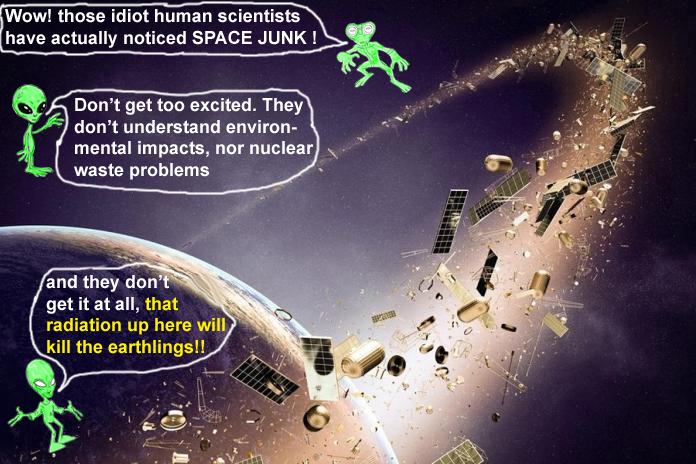
“The space nuclear industry is flying blind—blinded by its devotion to profit and power,” Gagnon declared. “Their hard hearts have no concern about the negative impacts they might create on Earth, to the people and environment, nor any long-term impacts their high-tech nuclear power ‘visions’ might have in space. Their vision is so myopic, so limited, so tunnel like, because their minds are closed to the idea that space is alive and is an environment that we humans who are on this tiny spinning orb called Earth live in. They are colonizers, much like the long-history of earth-bound colonizers, who have raped and pillaged our lovely planet home.“
https://www.thesentinel.com/communities/the-new-space-race-is-going-nuclear/article_3fc861da-1da5-11ed-b190-4ffd12c4bafa.html By Karl Grossman, Aug 16, 2022
“The New Space Race is Going Nuclear” was the title of a recent hour webinar presented by the American Nuclear Society. The U.S. government is pouring money into the development of space nuclear power—for commercial, exploratory and military purposes—as described in the panel discussion featuring five very enthusiastic advocates of using atomic energy in space.
“So, it’s really an exciting time,” said the moderator for the American Nuclear Society, Jeffrey King, a professor of nuclear engineering and director of the Nuclear Science and Engineering Center at the Colorado School of Mines, and also past chair of the society’s Aerospace Nuclear Science and Technology Division.
“It’s actually a time I didn’t expect that we’d end up seeing in my lifetime,” King said. “But we have now multiple companies—everything from government to the large contractors, small companies to start-up companies all interested in space nuclear power and different aspects of space nuclear power. It’s truly an exciting renaissance time for the field.”
As to the impacts of using nuclear power in space, comments made 44 minutes into the webinar were telling. King said “several people asked about,” in questions they sent in, “if anyone could comment on decommissioning plan or briefly what the plan is when we are done with these.”
Brad Rearden, director of the Government R&D Division of x-Energy, a company based in Rockville, Maryland and, previously, for 20 years, with the Reactor and Nuclear Systems
Division at Oak Ridge National Laboratory, said: “So, at this point, I mean, you’re going to have a reactor that’s potentially stationed on the moon and operating for a decade. You know there’s no [nuclear waste] repository in America. There’s also no repository on the moon. And, so, it’s certainly a policy that needs to be examined. There’s always the possibility of removing it from the Moon at some point for disposal and disposing of it or doing some sort of disposal in place. So, I think it’s a really relevant question and something that certainly needs to be decided on the policy level. We can provide technical answers for that.”
Moderator King followed declaring: “Certainly in lunar you don’t have water, you don’t have wind. You don’t have anything that drives the motion of material and you don’t have an ecosystem that we have to worry about protecting but it is going to be a long-term concern.”
Asked by me in a question about that statement, King wrote back: “Specifically, the moon does not have an ecosystem. While there are what we might consider concerns is terms of leaving things pristine and or long-term human habitat, the moon is sterile and the worry about damaging in ecosystem is largely non-existent.”
And, Sebastian Corbisiero, senior technical advisor in the Nuclear Science and Technology Directorate at Idaho National Laboratory and the leader of the laboratory’s “Fission Surface Power” program, added in the webinar: “I don’t think anything has been officially decided on that. However, I will say that having a reactor on the Moon is less risky than having spent fuel in the vicinity of large population.”
About the webinar, Bruce Gagnon, coordinator of the Global Network Against Weapons & Nuclear Power in Space, said: “I am reminded by the agents of nuclear power in space how the aerospace industry has viewed outer space during the 40 years I have been organizing on these issues. They’ve maintained that space is vast and limitless and has no real ecosystem or environment that we should be concerned about. So, their philosophy has essentially been ‘full speed ahead’.”
Now today,” Gagnon said, “NASA, the military, and some in the aerospace industry, are worriedly tracking the growing amount of space debris orbiting the Earth. They are beginning to talk about the ‘Kessler syndrome’ that predicts cascading collisions due to increasingly crowded orbits which could at some point make getting a rocket through the debris field encircling our planet nearly impossible.”
“So as the nuclear industry cavalierly undertakes their plan for nuclear-powered mining colonies on the Moon, Mars and other planetary bodies they easily brush off any concerns about impacts,” said Gagnon. “As they make plans to test nuclear reactor rocket engines just over our heads in Lower Earth Orbits (LEO) they discount any concerns of environmental impacts if the tests go wrong. They never talk about the Department of Energy laboratories where these nuclear devices are fabricated with a long history of radioactive contamination of workers, local water tables and air contamination.”
“The space nuclear industry is flying blind—blinded by its devotion to profit and power,” Gagnon declared. “Their hard hearts have no concern about the negative impacts they might create on Earth, to the people and environment, nor any long-term impacts their high-tech nuclear power ‘visions’ might have in space. Their vision is so myopic, so limited, so tunnel like, because their minds are closed to the idea that space is alive and is an environment that we humans who are on this tiny spinning orb called Earth live in. They are colonizers, much like the long-history of earth-bound colonizers, who have raped and pillaged our lovely planet home.”
The Global Network Against Weapons & Nuclear Power in Space (www.space4peace.org) founded 30 years ago, in 1992, at a conference in Washington, D.C. is the leading organization internationally challenging the weaponization and use of nuclear power in space. In its description of the August 4th webinar, the American Nuclear Society asserts: “For decades, nuclear energy has played a role, sometimes minor and sometimes major, in humanity’s exploration and research of outer space. Many space experts, scientists, astronauts, and researchers believe that nuclear energy can fundamentally change how we live and work in extraterrestrial environments and that some missions, projects, and endeavors are nearly impossible without the involvement of nuclear technologies. As federal funding is being applied to nuclear projects for various space-based applications and opportunities, an expert panel will discuss how nuclear companies and researchers are poised to capitalize.”
A video recording of the webinar can also be viewed at https://www.ans.org/webinars/view-space2022/
Among the panelists was Michael Anness who, as biographies on the webinar website described, “leads the development new nuclear fuel products and services at Westinghouse Electric Company.” He has been a licensed nuclear reactor operator, it says. Anness spoke of space nuclear projects of Westinghouse Electric, based in Pittsburgh, Pennsylvania, including “microreactors” that would provide “fission surface power.” Anness said: “I’m kind of a fuel guy so I believe fuel is an enabling platform for space nuclear.”
Also on the panel was Kate Kelly, director for Space and Emerging programs at Lynchburg, Virginia-based BWXT Advanced Technologies and, previously, at BWX was “the Advanced Nuclear Systems Program Manager focused on the development of nuclear project to promote the company’s R&D interests in advanced manufacturing and nuclear thermal propulsion technologies.” She spoke about an “inflection point” on the use of nuclear power in
space having arrived. Said Kelly: “Over the last several years there’s been this re-emerging interest and investment by the government in fission systems for in-space power and propulsion.”
The sixth participant in the webinar was Alex Gilbert who has “expertise in space mining, nuclear innovation, energy markets and climate policy,” says his biography on the webinar website. “As Director of Space & Planetary Regulation at Zeno Power [based in Washington, D.C.], Alex oversees regulatory approvals for space launch, maritime, and terrestrial applications of radioisotope power systems…He was lead author of the U.S. Advanced Nuclear Energy Strategy, which outlined how government and industry can establish U.S. leadership in next generation nuclear reactor markets.”
Gilbert said “we are at a unique moment. I call it a space opportunity.” “He said “we could actually see exponential growth. Right now the space economy is around $400 billion globally. By the middle of the century it could be $4 trillion.” This expansion is a result of factors including a “resurgence in science and exploration and defense activities…and commerce. That is what is driving the interest in space nuclear technologies.” The American Nuclear Society describes itself as comprised of 10,000 members dedicated to “exploring possibilities within the realm of nuclear science and technology.”
King recounted that “I’ve been in and around the space nuclear community for quite a while, ever since 1997, for about 25 years. I remember it was space nuclear that got me into nuclear,” and being told by a nuclear engineer advisor that “space nuclear is going to be the future.”
CIA spying on Assange “illegally” swept up US lawyers, journalists: Lawsuit.
Newsweek SHAUN WATERMAN ON 8/15/22 CIA surveillance of Wikileaks founder Julian Assange while he was sheltering in the Ecuadorian Embassy in London included recording his conversations with American lawyers, journalists and doctors, and copying private data from visitors’ phones and other devices, violating constitutional protections, according to a lawsuit filed Monday.
The suit – filed on behalf of four Americans who visited Assange – seeks damages personally from then-CIA Director Mike Pompeo for violating the plaintiffs’ Fourth Amendment rights against unreasonable search and seizure. The suit also seeks damages against a Spanish security firm contracted to protect the embassy, and its CEO, alleging that they abused their position to illegally spy on visitors and passed on the surveillance data they collected to the CIA, which is also named a defendant in the suit.
Legal experts, including a former senior intelligence official, told Newsweek that the allegations in the lawsuit, if proven, show the CIA crossed lines drawn to protect American citizens from surveillance by overzealous intelligence agencies………………………………………………..
The suit cites evidence gathered in a preliminary criminal inquiry by the Spanish High Court, launched after whistleblowers came forward from the Spanish firm hired to provide physical security for the embassy. The firm and its CEO are under investigation for alleged violations of Assange’s privacy and the confidentiality of communications with his lawyers – both of which are guaranteed by EU law.
The plaintiffs in the U.S. suit – filed in federal District Court in New York – are two New York attorneys on the Assange international legal team and two American journalists who interviewed him. A U.S. doctor who conducted medical interviews with Assange about his mental state chose not to join the lawsuit but told Newsweek he was subjected to the same surveillance. The surveillance also swept up visits from a U.S congressman and celebrities such as model and activist Pamela Anderson.
“As a criminal attorney, I don’t think that there’s anything worse than your opposition listening in on what your plans are, what you intend to do, on your conversations. It’s a terrible thing,” said the lead plaintiff, attorney Margaret Kunstler, a member of Assange’s U.S. legal team. “It’s gross misconduct,” she added, “I don’t understand how the CIA … could think that they could do this. It’s so outrageous that it’s beyond my comprehension.”
New York-based attorney Richard Roth, who filed the suit, said, “This was outrageous and inappropriate conduct by the government. It violated the most profound privacy rights” of the plaintiffs and others who visited Assange in the embassy.
And the violation is worse, Roth added, because it included “conversations of an absolutely privileged and confidential nature,” such as those with his lawyers, and the “theft of data” from devices owned by people such as journalists and doctors who rely on confidential relationships with their sources and patients.
“All my conversations with Julian Assange were covered by doctor-patient confidentiality,” said Sean Love, a physician and faculty member at Johns Hopkins, who visited Assange twice in 2017 to conduct a study of the effects of his confinement on his physical and mental health………………………………
The privacy of other American visitors not party to the lawsuit was also violated, according to copies of surveillance material turned over to the Spanish court and reviewed by Newsweek. Every visitor had their passport photocopied and most seem to have their phones photographed. Among the visitors subject to surveillance was then-California GOP Rep. Dana Rohrabacher, who was trying to negotiate a deal for a presidential pardon for Assange. .Washington Post reporter Ellen Nakashima’s phone was photographed and a detailed written account of her visit (revealing that she removed the battery from her phone before handing it over) was prepared by embassy security guards. Anderson’s passwords for her email and other accounts were included in surveillance photographs allegedly sent to the CIA, according to disclosures by Spanish whistleblowers.
Email messages sent to Anderson’s foundation requesting comment were not returned.
Apart from the constitutional violations against Americans swept up in the surveillance, the sheer magnitude and sensitivity of the material obtained by U.S. authorities may make it impossible for Assange to get a fair trial, Roth said. In addition to the surveillance, after the Ecuadorian government allowed British police to enter the embassy and arrest Assange, it publicly turned over all his legal papers and computer equipment to the U.S. Department of Justice.
“When a federal prosecutor comes after a lawyer with a search warrant and seizes their devices, there are multiple layers of review and protection for privileged lawyer-client communications,” Roth said. The court might appoint a special master – typically a retired judge or a senior attorney independent of the government – to oversee the process and ensure that privileged communications were segregated from those collected for the prosecution.
“None of that happened here. They just grabbed everything.”
…………………………………………………………………………………. Anyone who visited was required to leave their phones and other electronic devices with security guards at the embassy, according to the lawsuit.
“Julian’s visitors weren’t allowed to bring their devices into the embassy, nothing that could photograph or record or connect to the Internet,” WikiLeaks media attorney Deborah Hrbek, the other attorney suing, told Newsweek. “We turned them over to the security guards. We thought they were embassy personnel. We believed it was a measure to protect Julian.”
In fact, the guards were contractors, working for the Spanish private security firm UnderCover Global. Engaged by the Ecuadorian government to provide security for the embassy and its long term houseguest, UC Global in 2017 began secretly also working for U.S. intelligence, according to the lawsuit, citing evidence compiled by the Audiencia National, the Spanish High Court.
UC Global CEO David Morales returned from a Las Vegas security convention in early 2017, telling colleagues they were now working “in the big leagues,” “for the dark side,” and with “our American friends,” according to whistleblower testimony from former UC Global employees. The testimony says it became clear over the subsequent weeks and months that he was being paid substantial sums of money to share surveillance data with the CIA…………………………………………………………………………………….
The suit is directed against Pompeo personally because U.S. law and the Constitution make it difficult to sue executive branch agencies for damages, said Robert Boyle, a constitutional law attorney who consulted with Roth on the suit.
A 1971 Supreme Court judgment “made it possible to personally sue government officials for violations of certain constitutional rights,” he said……………………………………………
The surveillance revealed by the Spanish courts was likely “the tip of the iceberg,” said lead plaintiff Kunstler. “We happen to have discovered that. Who knows what else they were up to?”
https://www.newsweek.com/cia-spying-assange-illegally-swept-us-lawyers-journalists-lawsuit-1731570—
Ukraine using very advanced long range rockets to strike Russian air base in Crimea?
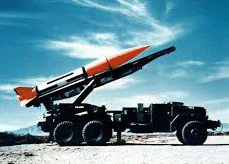
The devastation at the Russian air base in Crimea suggests Kyiv may have obtained new long-range strike capability with potential to change the course of the war. The base is well beyond the range of advanced rockets that western countries acknowledge sending to Ukraine so far, with some western military experts saying the scale of the damage and the apparent precision of the strike suggested a powerful new capability with potentially important implications. https://www.theguardian.com/world/live/2022/aug/12/russia-ukraine-war-zelenskiy-tells-officials-to-stop-leaking-military-tactics-un-sounds-nuclear-plant-warning-live
US Deploys Its B-52 Nuclear Bombers At Russia’s Doorsteps As Tensions Soar Between Moscow & Washington
https://eurasiantimes.com/us-deploys-its-b-52-nuclear-bombers-at-russias-doorsteps/ By Sakshi Tiwari, August 17, 2022
The United States Air Force is reportedly sending its strategic bombers to Europe, close to Russia, when there is an uptick in military operations against Russian-occupied Ukrainian territory.
The United States intends to deploy its B-52 strategic bombers close to the Russian borders. According to local Russian media reports and speculations on social media, four American strategic bombers are expected to arrive in Europe in the coming days.
There are reports the B-52s have already arrived.
The B-52 bombers will first need to be stationed at a military air base in the United Kingdom. According to Gloucestershire Live, the American long-range bombers deployed in the UK earlier this year will return to Fairford Air Force Base next week.
Russia admits that explosions in Crimea were the work of Ukrainian saboteurs
New Arms Depot Blast In Crimea An Act Of Sabotage, Kremlin Admits, BY TYLER DURDEN, AUG 16, 2022
Russia’s Defense Ministry on Tuesday confirmed a rare act of what appears to be a Ukrainian sabotage operation in Crimea. This after video emerged online showing a series of explosions after a fire engulfed a munitions depot there.
“On the morning of Aug. 16, as a result of an act of sabotage, a military storage facility near the village of Dzhankoi was damaged,” the ministry said. “Damage was caused to a number of civilian facilities, including power lines, a power plant, a railway track as well as a number of residential buildings. There were no serious injuries,” it added……………………
Importantly, this comes after a bigger Aug. 9 explosion some 200km inside Crimea at Russia’s Saky air base, in Novofedorovka. That attack, which destroyed multiple Russian jets, vehicles, and an ammo depot, has been subject of intense speculation as Ukraine’s government sent mixed signals in terms of taking responsibility………….
On an official level, the Ukrainian government denied it was behind the earlier Crimea base attack, but officials leaked to both The Washington Post and New York Times that it was a sabotage operation by Ukraine’s special forces.
Moscow had in the immediate aftermath downplayed it as an accident, perhaps seeking to avoid escalation, also possibly not wanting to acknowledge it was vulnerable to such a strike from Ukraine.
So this fresh Aug.16 “sabotage attack” strongly suggests the prior Aug.9 explosion was also a Ukrainian operation. The incident had also set off discussion over whether US-supplied HIMARS rockets could reach that far. If indeed there were foreign weapons systems behind it, it could set the US and Russia on a dangerous path of escalation and collision as the proxy war could fast develop into direct confrontation between superpowers in Ukraine.
1 This Month



19 November – Webinar – The Reality of Reprocessing
Time: 11:00 AM Pacific Time (US & Canada) / 2:00 PM Eastern / 7:00 PM UK / 8:00 PM CET
Register for the Zoom Event Here



Shut down the radiation-damaged Heysham nuclear reactors now
To see nuclear-related stories in greater depth and intensity – go to https://nuclearinformation.wordpress.com

Say No to NASA’s Reckless Nuclear Reactor on the Moon
Say No to NASA’s Reckless Nuclear Reactor on the Moon
-
Archives
- November 2026 (32)
- October 2026 (302)
- September 2026 (339)
- August 2026 (330)
- July 2026 (355)
- June 2026 (287)
- May 2026 (306)
- April 2026 (356)
- March 2026 (251)
- February 2026 (267)
- January 2026 (308)
- December 2025 (358)
-
Categories
- 1
- 1 NUCLEAR ISSUES
- business and costs
- climate change
- culture and arts
- ENERGY
- environment
- health
- history
- indigenous issues
- Legal
- marketing of nuclear
- media
- opposition to nuclear
- PERSONAL STORIES
- politics
- politics international
- Religion and ethics
- safety
- secrets,lies and civil liberties
- spinbuster
- technology
- Uranium
- wastes
- weapons and war
- Women
- 2 WORLD
- ACTION
- AFRICA
- Atrocities
- AUSTRALIA
- Christina's notes
- Christina's themes
- culture and arts
- Events
- Fuk 2022
- Fuk 2023
- Fukushima 2017
- Fukushima 2018
- fukushima 2019
- Fukushima 2020
- Fukushima 2021
- general
- global warming
- Humour (God we need it)
- Nuclear
- RARE EARTHS
- Reference
- resources – print
- Resources -audiovicual
- Weekly Newsletter
- World
- World Nuclear
- YouTube
-
RSS
Entries RSS
Comments RSS

