Why Crimea matters. Russia shoots down Ukrainian drone over Crimea
Russia shoots down Ukrainian drone over Crimea | DW News 21 Aug 22, Russian officials in occupied Crimea say they’ve shot down a drone, headed for a key military base. It was targeting the headquarters of Russia’s Black Sea Fleet in Sevastopol. It was the second assault of its kind against the naval command in Crimea in less than a month – and it comes as Russia claims to have shot down drones elsewhere on the peninsula. Russia annexed Crimea in 2014. However, the international community still recognizes it as part of Ukraine.
Boris Johnson has secretly committed Britain to costly tax-payer funding for Sizewell nuclear plant
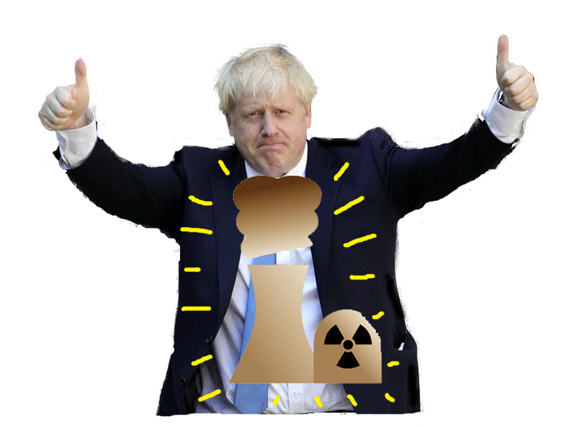
Boris Johnson commits to Sizewell on the quiet. The prime minister’s decision to part-fund a new nuclear plant will ‘tie Liz Truss’shands’ in tackling the cost of living. Boris Johnson has secretly given the green light for a £30 billion nuclear power station — sparking concerns within Liz Truss’s team that the cost will limit her ability to cut taxes and help the public with the cost of living.
The government is proposing to buy a 20 per cent stake in the plant, at a cost to the taxpayer of around £6 billion. But experts believe the plans are at risk of cost overruns and delays. One of Truss’s senior aides complained that Johnson’s decision to take a taxpayer-funded stake in the project would eat into the headroom available to her.
Johnson and Zahawi, lame ducks both, are understood to see the new power station as vital to Britain’s
future energy security and to want to make the announcement themselves to burnish their legacies in office. An ally of Zahawi stressed that the decision was made with Kwasi Kwarteng, the business and energy secretary, who is set to become Truss’s chancellor and that “no one is more enthusiastic than Kwasi”.
In an interview with The Mail on Sunday, Kwarteng told voters that “help is on the way” but also stressed the need to raise domestic energy production. “We need to crack on with more nuclear power stations,” Kwarteng said, “back British-made small modular reactors, invest in cheap renewable energy like offshore wind, and lift the ban on shale gas extraction in England where there is local consent.”
Times 21st Aug 2022
https://www.thetimes.co.uk/article/boris-johnson-commits-to-sizewell-on-the-quiet-xdv79rrpf
Nuclear power not a realistic option for the Philippines, given the seismic and other disaster risks

“Just last month, we saw the impacts of a 7.1 magnitude earthquake (which) should serve as a warning. Exposure to unpredictable seismic events should make us think twice about having a nuclear power plant,” he said.
Nuclear power, Mr. Arances said, is not a solution to the climate and energy crises, adding that it does not guarantee lower electricity prices.
Safety regulations seen as ‘first step’ in nuclear power shift, https://www.bworldonline.com/economy/2022/08/21/469667/safety-regulations-seen-as-first-step-in-nuclear-power-shift/ By Alyssa Nicole O. Tan, Reporter
THE Philippines is running late with its regulatory preparations for a safe nuclear power transition, the head of the Senate energy committee said.
Senator Rafael T. Tulfo said a law is needed to lay down standards for the incorporation of nuclear power companies, the construction of power plants, and the their operation.
“We have not even made a first step and we’re overdue,” he told BusinessWorld in a Viber message. Safety standards are needed because the Philippines sits astride an area of high tectonic activity, he said, adding that disaster response capacity must be developed should anything go wrong with such plants.
According to the World Bank, the Philippines is vulnerable to earthquakes, volcanic eruptions, tropical cyclones, and floods, making it one of the most disaster-prone countries in the world.
“In regulating the nuclear energy sector, there must be stringent standards as to the minimum standards for facilities, minimum qualifications for the persons or entities operating it, considerations as to where and how to acquire nuclear material, contingencies in case of emergency scenarios, proper standards on nuclear fuel disposal, limitations on foreign influence in the nuclear industry, and how the LGU where the plant is situated should gain a just and equitable share of the plant’s profits,” he said.
Center for Energy, Ecology, and Development Executive Director Gerry Arances told BusinessWorld in an e-mail that it would take years to create a policy framework thorough enough to take into account all safety, environmental, and electricity price risks, and years more to build nuclear facilities.
“Even small modular reactors would take about three to five years to construct. That means nuclear energy cannot provide immediate solutions to today’s energy crisis. In that span of time, renewable energy facilities could already have been deployed,” he said.
Nuclear power, Mr. Arances said, is not a solution to the climate and energy crises, adding that it does not guarantee lower electricity prices.
“The price of fuel for nuclear energy like plutonium and uranium, neither of which can be sourced domestically, will put Filipino consumers at the mercy of global market prices and vulnerable to shocks,” he said. “We are already seeing this today with fossil fuel volatilities triggered by the Ukraine-Russia war.”
“In developing nuclear power, the Philippines will devote time and energy to figuring out where we can source nuclear fuel, how we will manage nuclear waste, and how we can prevent the possibility of our country turning into the next Fukushima or Chernobyl,” he added.
Even then, he said there is no assurance of eliminating the risk of nuclear accidents, given the country’s geographic location and the intensifying climate crisis.
“Just last month, we saw the impacts of a 7.1 magnitude earthquake (which) should serve as a warning. Exposure to unpredictable seismic events should make us think twice about having a nuclear power plant,” he said.
There were 10 deaths from the magnitude 7 earthquake that struck the northern Philippines, with more 300,000 people from about 82,000 families affected, according to the National Disaster Risk Reduction and Management Council.
The earthquake also damaged more than 21,000 houses, 302 of which were destroyed, the agency said. Damage to infrastructure was about P414 million in the Ilocos region, Cagayan Valley and Cordillera Administrative Region.
Mr. Arances said time and effort should instead be channeled to effecting a 100% transition to genuinely sustainable and safe renewable energy.
“We have an abundant supply of renewable energy just waiting to be developed at an increasingly affordable cost — case in point are the winning bidders of the GEA Reserve prices, of whom the lowest bid is P3.4 per kilowatt hour from solar,” he said.
Sizewell C nuclear plant funding approved despite Tory split.

“Our next prime minister should call Sizewell C in. There are so many better ways to spend billions of pounds of taxpayers’ money than on a project that won’t light a single lightbulb for at least a decade.”
Boris Johnson gives financing go-ahead after warnings decision could limit incoming government,
https://www.theguardian.com/environment/2022/aug/21/sizewell-c-nuclear-plant-funding-approved-despite-tory-split. Rowena Mason Deputy political editor Mon 22 Aug 2022
Boris Johnson has approved funding for a new nuclear power station at Sizewell in Suffolk in the final weeks of his premiership, but some of Liz Truss’s senior allies are split over the decision.
The prime minister and the chancellor, Nadhim Zahawi, approved financing for the construction of two new reactors known as Sizewell C, enabling private funding of about £20-30bn to be raised.
However, Simon Clarke, another key Truss ally and a Treasury minister, warned in a letter leaked to the Sunday Times that the decision could limit Truss’s economic vision.
In the letter, he said the costs of Sizewell C were “sufficient to materially affect spending and fiscal choices for an incoming government, especially in the context of wider pressures on the public finances”.
In an article for the Mail on Sunday, Kwasi Kwarteng stressed the need to “crack on with more nuclear power stations” in order to increase Britain’s energy security.
He gave development consent for Sizewell C in July, but negotiations over the government’s investment decision had been ongoing.
A Whitehall source said Boris Johnson had taken the decision to press ahead with Sizewell several weeks ago. However, he dismissed the idea that the move would tie the hands of the next prime minister, following reports that the Truss campaign was worried that it was irreversible.
“In the next few weeks, we will announce a government investment decision on Sizewell C where the government formally commits to the project’s financing. It allows the project to raise private capital in the markets. But it’s only at the point of the final investment decision in early 2023 that the government would formalise any equity share.”
Johnson’s decision over Sizewell was challenged by a campaign to stop the nuclear reactor being built.
A spokesperson for the campaign, Stop Sizewell C, said: “Whatever way you look at it, this is a very dodgy decision. Has it been made by a lame duck PM who is not supposed to tie the hands of his successor, or was it in fact made before Sizewell C was granted planning consent, lending serious weight to our conviction that this was a prejudiced, political decision?
“Our next prime minister should call Sizewell C in. There are so many better ways to spend billions of pounds of taxpayers’ money than on a project that won’t light a single lightbulb for at least a decade.”
Truss has not stated a clear position on Sizewell C, but hinted last year at concerns about the involvement of China’s state-owned energy company, CGN, as part of a consortium providing funding for the preparatory work at the nuclear plant. She told the Telegraph at the time: “I think it’s very important that we don’t become strategically dependent and I think it’s important that we make sure that we’re working, particularly in areas of critical national infrastructure, with reliable partners.”
EDF, the French state energy firm, worked with CGN on the first phase of the project for a new nuclear power station to sit alongside Sizewell B, which is operational, and Sizewell A, which is being decommissioned. The UK government is keen to ease CGN out, however, over concerns about Chinese involvement in sensitive assets.
Johnson’s government has already put up £100m of funding this year to support the development of Sizewell C.
Pacific Alliance of Municipal Councils starts Petition against dumping nuclear wastewater in Pacific

https://www.mvariety.com/news/petition-against-dumping-nuclear-wastewater-in-pacific/article_5ad4f2f2-2103-11ed-ac27-6ffcaa93ec58.html Aug 22, 2022 , The Pacific Alliance of Municipal Councils or PAMC has started a petition on change.org (https://chng.it/JLT2btJQB6) to try and stop Japan from dumping its Fukushima nuclear wastewater into the Pacific Ocean.
PAMC President and Secretary of the Rota Municipal Council, Councilman Jim Atalig, expressed his strong opposition saying, “If it’s not good for their land, it is definitely not good for our ocean where most of us get our food on a daily basis!”
Chairman Joseph E. Santos, PAMC member and chairman of the Tinian Municipal Council, says, “It is an outrage for anyone to think that it’s okay to dump their toxic wastes in our ocean when we rely on it for food, health activities, and economic sustainability.”
The other members of PAMC are Saipan and Northern Islands Municipal Council member Ana Demapan-Castro, Chairwoman, Antonia Tudela, member Daniel Aquino; Rota Municipal Council Chairman Jonovan Lizama, Vice Chairman William Taitano; Tinian Municipal Council Vice Chairwoman Thomasa P. Mendiola, and Secretary Juanita M. Mendiola, who is also the vice president of PAMC.
PAMC is urging everyone to please circulate the petition through their Facebook page so we can prevail in preventing Japan and any other countries from using our ocean as their toxic waste dumping ground!
“Nothing good will come out of this, just as the toll of human suffering as a result of all nuclear energy fallouts were never worth their well-intended, but disastrously misguided, objectives!”
The £billions cost of the Sizewell nuclear plan becomes an issue in the fight for the role of Prime Minister
In a move that has caused great irritation in Team Truss, Nadhim Zahawi, Chancellor of the Exchequer, and Johnson are set to approve the financing of the Sizewell C nuclear plant in Suffolk. It received planning consent last month and the government signalled that it would buy a 20 per cent stake in the project, which is being run by the French company EDF and is expected to cost between £20 billion and £30 billion after inflation. The final investment decision has not been announced.
Simon Clarke, the chief secretary to the Treasury who backs Truss and who sources say will have a “top half of the cabinet job” under her leadership, wrote to Johnson and Zahawi warning that a signoff for Sizewell would compromise the new prime minister’s ability to cut taxes or spend more on the cost of living. In his letter, Clarke wrote:
“The quantum is sufficient to materially affect spending and fiscal choices for an incoming government, especially in the context of wider pressures on the public finances.” While the cost to government is likely
to be about £6 billion, rather than £30 billion, that will give Truss far less room for manoeuvre.
Times 20th Aug 2022
Expert forum Claverton Energy Group concludes that renewable energy +battery storage can meet UK’s needs – nuclear is not needed.
Open University Professor Bill Nuttall’s updated version of his 2005 ‘Nuclear Renaissance’ book makes a case for nuclear power as low carbon and reliable, although, as the promotional blurb says, it accepts that
‘in recent years it has struggled to play a strong role in global plans for electricity generation in the 21st century’.
The new book also accepts that the much-hyped renaissance didn’t in the event happen- with Fukushima blowing it off course. Do we really want to build new nuclear plants to be ready on standby to provide spinning reserve backup and/or to provide rotational grid stability? Hydro can do that, and wind too to some extent, and virtual inertia can be provided by battery systems fed by PV solar.
Claverton Energy Group (CEG), a UK energy expert forum, has recently summarised some of the key conclusions of current research on energy system mixes and say they show that renewables can supply all our needs, with grid balancing provided in part by battery and heat storage.
Nuclear is not needed. The newly revised and updated 100% renewables global energy scenario produced by Prof Mark Jacobson and his team at Stanford University has come to similar conclusions, with 4 hour battery storage playing major balancing roles. All at competitive costs.
Renew Extra 20th Aug 2022
https://renewextraweekly.blogspot.com/2022/08/nuclear-renaissance-revisited.html
Putin Claim U.S. Is Dragging Out War Isn’t Crazy, Military Expert Says

Newsweek, BY NICK MORDOWANEC ON 8/18/22
aims made by Russian President Vladimir Putin that the United States is intentionally prolonging the Russia-Ukraine conflict may not be as implausible as described, says one U.S. military veteran and journalist.
In a speech this week, Putin called out “Western globalist elites” who he said are “provoking chaos, inciting old and new conflicts,” and attempting “to preserve the hegemony and power that is slipping out of their hands.” He added that the situation in Ukraine shows the U.S. is “trying to prolong the conflict.”
Sean Spoonts, a U.S. Navy veteran and editor-in-chief of Special Operations Forces Report (SOFREP), told Newsweek that President Joe Biden and Ukrainian President Volodymyr Zelensky seem to have separate policy goals in mind.
“It seems like while Ukraine would like to end the war quickly and decisively defeat Russian forces and drive them out of their country, U.S. policy almost seems designed to prolong the conflict hoping to bring about the collapse of Russia itself, both militarily and economically,” Spoonts said.
……………. As a recent report by The Washington Post indicated, the U.S. was privy to some of Russia’s plans for the invasion of Ukraine before it officially began on February 24. Spoonts alluded to Biden’s remarks on that day, when he said, “Some of the most powerful impacts of our actions will come over time as we squeeze Russia’s access to finance and technology for strategic sectors of its economy and degrade its industrial capacity for years to come.”
“Biden has said publicly that his goal is to degrade Russia as a world power, never again in the position to threaten its neighbors,” said Spoonts. “That goes a lot further than Zelensky’s goal, which is to simply get Russian armies out of his country and regain lost territories in Donbas, Luhansk and Crimea.”………………………………. https://www.newsweek.com/sean-spoonts-us-russia-ukraine-war-policy-goals-1735019
Russian President Vladimir Putin warned Macron that Ukrainian shelling of Zaporizhzhia nuclear plant risks disaster
Russian President Vladimir Putin warned his French counterpart Emmanuel
Macron that shelling of the Russian-controlled Zaporizhzhia nuclear power
plant in southern Ukraine, which he blamed on Kyiv, could result in a
large-scale disaster.
Reuters 19th Aug 2022
Islanders in Latin America face relocation, because of climate change.
Some 2,000 islanders in Guna Yala will become one of the first indigenous
communities in Latin America to relocate because of climate change.
Islander Magdalena Martínez, who has campaigned for new housing on the
mainland, tells the BBC how she feels about leaving the island she grew up
on.
The Panama government estimates all islands of the Guna people could be
under water by 2050, based on forecasts by an independent group of
scientists, although others think the islands may not all be submerged
until the end of the century.
BBC 20th Aug 2022
Russian Military From Nuclear Plant Showing Signs Of Radiation Sickness – Paramedic
https://ukranews.com/en/news/877286-russian-military-from-nuclear-plant-showing-signs-of-radiation-sickness-paramedic 21 Aug 22, The Russian military men, who were on the territory of the Zaporizhzhia Nuclear Power Plant, were hospitalized with symptoms of radiation sickness. To find out what is really happening on the territory of the Zaporizhzhia NPP, it is necessary to immediately demilitarize it and put it under the control of international organizations.
Paramedic Bohdan Bondarenko, who is now on the front line, stated this on Facebook.
“The Russian military, who performed tasks at the Zaporizhzhia NPP, were taken to intensive care with signs identical to radiation sickness. The Russians, of course, talk about chemical poisoning, but brought the wounded from the nuclear plant. Not to mention the level of trust in Russian information. Now, before it is too late, you need to do everything possible to get a true picture of the situation at the station,” Bondarenko said.
He noted that the military from the Zaporizhzhia NPP on July 31 were taken to a military hospital and are in intensive care. The Ministry of Defense of the Russian Federation distributed information that examination of the victims “revealed the presence of an organic poison of artificial origin.” But this happened when the Russians fired on the Zaporizhzhia NPP.
“Around this time, Russia and Ukraine exchanged mutual accusations of shelling the station. Ukrainian Energoatom announced a possible radiation leak at the Zaporizhzhia NPP. At the same time, Rosatom brought its employees out of the station as an emergency, and the occupiers refused access to the station to IAEA inspectors,” writes Bondarenko.
The paramedic believes that the situation with the concealment of information by Russia resembles the behavior of the leadership of the USSR immediately after the Chornobyl tragedy.
“Something similar was last observed in the first month after the Chornobyl disaster. The leadership of the USSR desperately hid and distorted the truth, which led to catastrophic consequences both for the health and life of millions of people, and for the Soviet government itself, which was not forgiven for this lie. It is necessary to immediately demilitarize the station and put it under the control of the UN, IAEA or other independent structure. It’s a matter of survival. Aware of the level of opportunities of international organizations, or rather their level of helplessness, but there is no other,” Bohdan Bondarenko stressed.
India: Centres to be set up for people exposed to chemical, nuclear attacks
The Union Health Ministry has drawn up a proposal to set up two tertiary level centres for the treatment of people exposed to chemical, biological, radiological and nuclear incidents or attacks,
Press Trust of India | New Delhi , August 21, 2022,
In a first, the Union Health Ministry has drawn up a proposal to set up two tertiary level centres for the treatment of people exposed to chemical, biological, radiological and nuclear incidents or attacks.
It is aimed at managing medical emergencies arising out of incidents such as the Bhopal gas tragedy, Visakhapatnam HPCL refinery blast, Tughlaqabad gas leak, Kanpur ammonia gas leak and other industrial accidents, official sources told PTI.
The detailed project report for setting up of these two chemical, biological, radiological and nuclear (CBRN) facilities at Stanley Medical College in Chennai, Tamil Nadu and Jhajjar Campus, AIIMS has been readied.
The project report has been prepared by HLL Infra Tech Services Ltd (HITES) in consultation with experts drawn from the Ministry of Health, Ministry of Defence and other sectors like the Department of Atomic Energy as well as its affiliate organisations like Bhabha Atomic Research Centre, they said.
The two facilities are to be set up over one-and-half years at an estimated cost of Rs 230 crore……………… more https://www.business-standard.com/article/current-affairs/centres-to-be-set-up-for-people-exposed-to-chemical-nuclear-attacks-122082100174_1.html
Disarmament is the only cure for nuclear weapons
https://www.washingtonpost.com/opinions/2022/08/21/disarmament-is-only-cure-nuclear-weapons/
Gwen DuBois, Baltimore
The writer is a board member of Physicians for Social Responsibility and a member of the steering committee for Back from the Brink.
The Post is to be commended for informing readers about the disturbing study showing nuclear war could lead to mass starvation [“5 billion may starve in nuclear conflict,” news, Aug. 17]. Telling frightening truths should be coupled with hopeful solutions where solutions exist.
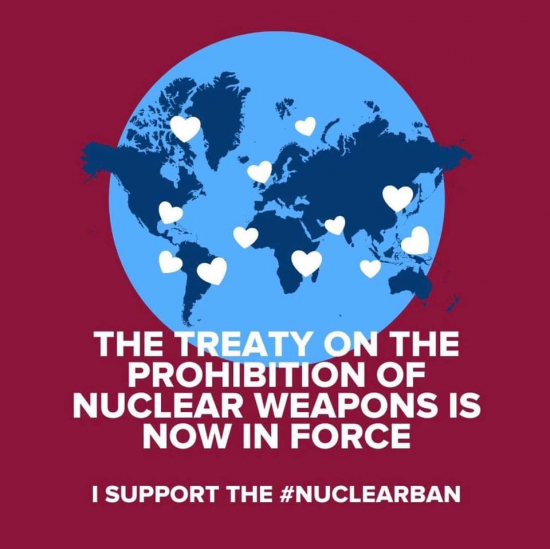
In this case, preventing nuclear war is the way to avoid this horrible possibility of massive global starvation. Internationally, 66 nations have endorsed and 86 nations have signed the United Nations Treaty on the Prohibition of Nuclear Weapons. In this country, about 60 municipalities including Baltimore, D.C., Montgomery County and Chicago and seven state legislatures have approved Back from the Brink Resolutions, a road map to nuclear disarmament. In addition to most resolutions endorsing the U.N. treaty, all urge the United States to lead a global effort to prevent nuclear war by actively pursuing a verifiable agreement with the other nuclear nations to eliminate their nuclear weapons. This is the basic message of Physicians for Social Responsibility: “We must prevent what we cannot cure.”
Ukraine nuclear accident fears heightened
Canberra Times 21 Aug 22, New blasts have resounded in the Russian-annexed Crimea peninsula and a Russian missile hit a residential area of a southern Ukrainian town not far from a nuclear power station, wounding 12 civilians, Russian and Ukrainian officials say.
The strike at the Pivdennoukrainsk (south Ukraine) nuclear station and fresh shelling near the Zaporizhzhia station, Europe’s largest such facility, heightened fears of a nuclear accident during the war, Ukrainian officials said. In Crimea, ….the Russian-appointed governor not recognised by the West said a drone had struck a building near the headquarters of Russia’s Black Sea Fleet on Saturday morning.
“A drone flew onto the roof. It was flying low,” governor Mikhail Razvozhayev said on Telegram. “It was downed right over the Fleet headquarters. It fell on the roof and burned up. The attack failed.”
Ukrainian media reported explosions in nearby towns – including the resorts of Yevpatoriya, Olenivka and Zaozyornoye.
Explosions and fires have struck Crimea in the past week — including a blast at a Russian air base that appeared to destroy large numbers of aircraft according to satellite photos.
Ukrainian officials have made no comment. Analysts have said the attacks were made possible by new equipment used by the Ukrainian army and predicted more would occur………………………………………..
Russia and Ukraine traded fresh accusations of shelling around the Zaporizhzhia station – held by Russia since March.
Vladimir Rogov, a Russia-appointed official in the nearby town of Enerhodar, said Ukrainian forces had launched at least four strikes on the plant. Yevhen Yetushenko, mayor of the Ukrainian-controlled Nikopol on the opposite bank of the Dnipro River, said Russian forces had repeatedly shelled the town.
Talks have been underway for more than a week to arrange for a visit to the plant by the UN nuclear power agency, the International Atomic Energy Agency………………………………….. https://www.canberratimes.com.au/story/7869033/ukraine-nuclear-accident-fears-heightened/
Report on “The Symposium Concerning Geological Disposal of High-level Radioactive Waste from Nuclear Power Plants” held in Kamoenai Village, Hokkaido
by Citizens’ Nuclear Information Center · Published August 4, 2022 · Updated August 4, 2022
By Takano Satoshi (CNIC)

In November 2020, literature surveys were launched in Suttsu Town and Kamoenai Village, both in Hokkaido, as part of the official procedures for determining whether the two municipalities were suitable for hosting an underground storage site for high-level radioactive waste from nuclear power plants. More than 18 months has passed since that time, during which the Nuclear Waste Management Organization of Japan (NUMO), which oversees the selection of the location of the dump site, strived to promote communications with the local residents by arranging “dialogue” events. Although NUMO publicly maintained that the dialogues were not intended to create a local consensus for accepting the storage facility, the reality was that NUMO took the leadership in the move to deepen popular understanding of the geological repository. Some of the local residents and the municipalities concerned were critical of the dialogue events, claiming that such occasions were organized simply for seeking compromises and winning the support of residents for the geological disposal project. [1]
To date, dialogue events have been held eight times in Kamoenai Village. In the events, some participants, such as the members of the events’ steering committee and local villagers, expressed a wish to hear different opinions, not only those of NUMO. In response, NUMO held a symposium concerning the geological disposal of high-level nuclear waste on May 29 in the Kamoenai Village Fishing Center, by inviting experts for and against the geological disposal project. [2] Professor Yoshida Hidekazu of Nagoya University Museum was invited as the expert supporting the geological disposal project, and CNIC Co-director Ban Hideyuki, as the expert against it. This writer accompanied Mr. Ban to Kamoenai to attend the event.
The symposium was comprised of two sessions, the first concerning policy aspects, and the second technical aspects. As for policy aspects, Mr. Ban pointed out the need to obtain the consent of the prefectural governor before the prefecture’s municipalities apply for the literature survey, in order to avoid confusion and turmoil within the local communities. He also said the government’s offer of subsidies in exchange for accepting the literature survey is not appropriate, since impoverished local governments may not be able to resist the temptation of the subsidies and apply for the literature survey simply to obtain the money. Mr. Ban went on to say that the offer of massive subsidies to small municipalities may create the negative effect of depressing their local industries. In addition, he pointed out the need to determine the types and the amount of high-level radioactive nuclear waste that would be stored in the repository.
Referring to the plan to set a limit on the total amount of nuclear waste to be stored at the disposal site and the determination of the types of waste, Prof. Yoshida said it would be rather difficult to formulate such a precise plan, but added that it would be ideal if it could be done. He went on to say that accumulation of a greater amount of highly radioactive waste would endanger the safety of geological disposal. Although nuclear power generation has the advantage of not emitting CO2, it is exposed to many risks, such as tsunami tidal waves, he added. For this reason, he recommended that Japan should develop other energy resources. There was no disagreement about this point between Mr. Ban and Prof. Yoshida. On the contrary, they agreed that they would make efforts to reduce the amount of nuclear waste and to prevent the restart of nuclear power plants.
With regard to the technological aspect of geological disposal, Prof. Yoshida introduced the geological phenomenon called “concretion.” This means a hard, compact mass of matter formed by the precipitation of mineral cement within the spaces between particles, which is found in sedimentary rock or soil. He then stated, if “concretion” is applied to the construction of the repository, it may be useful for making geological disposal safer.
According to Prof. Yoshida, the geological disposal site will be constructed several hundred meters below ground because the great depth of the ground prevents weathering originating from the ground surface, and serves as a buffer against seismic motion, volcanic activity, fault movements and other types of environmental phenomena on and below the ground surface. The buffer-function level is called the ‘cocoon degree,’ and a high ‘cocoon degree’ signifies an area suitable for creating a repository of nuclear waste.
He pointed out that NUMO must find a high cocoon-degree area based on the technological data collected in the literature survey, and then determine if it is appropriate to proceed to the next stage of overview survey of the area.
Prof. Yoshida also pointed out that the geological characteristic of the Kamoenai area is that it consists of hyaloclastite. Hyaloclastite is lava and volcanic ashes from undersea volcanic eruptions which have been crushed and cooled by seawater and accumulated in the location. The Kamoenai area and the Shakotan Peninsula were formed from hyaloclastite elevated from the seabed. Prof. Yoshida said the main point of the literature survey should be to discover how deep the underground accumulation of hyaloclastite is in the area.
Meanwhile, Mr. Ban said it is problematic that the standards by which construction of the nuclear waste repository would be deemed inappropriate are not clearly stated in the literature survey results. He went on to say that the geoscientific characteristics map gives only an extremely rough standard, and insisted that more exact and stricter standards should be formulated. For example, no volcanic eruptions are predicted on the east side of the “volcanic front” shown in the map, and for this reason he proposed that the repository site should be chosen within that area.
The comprehensive technological report contains a simulation which was conducted on the assumption that a rare frequency event had occurred. The simulation, using transuranic waste (TRU), revealed the possibility that an annual radiation exposure of 4 to 14 millisieverts per annum (mSv/y) might occur at ground level. The report said an annual exposure of less than 20 mSv/y is safe, but Mr. Ban asserted that such a high level of exposure is not safe. According to Mr. Ban, the maximum permissible level of exposure for ordinary people is 1 mSv/y and this level is set by considering the balance between the use of nuclear power and its effect on human health. The probability of the use of nuclear power by future generations is very slim, and setting the maximum permissible exposure level of 20 mSv/y for these future people is ethically impermissible, he added.
One thing that was impressive for this writer during this symposium was that when Kamoenai Village Mayor Takahashi Masayuki delivered the opening and closing speeches, nobody clapped. Generally speaking, when the head of a municipality greets the participants at the outset of a local event, they usually clap, albeit in a formal manner, but no one did so at this symposium. Mayor Takahashi has served as the mayor of the small village with a population of less than 800 people for a long time, and all the villagers know him.
I was unable to find out why the villagers did not clap, because I did not have a chance to ask them, but there is a possibility that his acceptance of the governments’ literature survey made the villagers angry and they are currently very dissatisfied with his behavior. The absence of applause made me feel that way.
As things stand now, I would like to watch the development of this literature survey issue in Kamoenai from a rather critical viewpoint from now on and try to understand the opinions and feelings of the villagers on this problem.
[1] Takano has outlined the problems with the dialogue that NUMO is conducting in a previous article at cnic.jp/english/?p=6053
[2] The symposium can be seen on YouTube at www.youtube.com/watch?v=LUFTrLwkMKw
1 This Month



19 November – Webinar – The Reality of Reprocessing
Time: 11:00 AM Pacific Time (US & Canada) / 2:00 PM Eastern / 7:00 PM UK / 8:00 PM CET
Register for the Zoom Event Here



Shut down the radiation-damaged Heysham nuclear reactors now
To see nuclear-related stories in greater depth and intensity – go to https://nuclearinformation.wordpress.com

Say No to NASA’s Reckless Nuclear Reactor on the Moon
Say No to NASA’s Reckless Nuclear Reactor on the Moon
-
Archives
- November 2026 (32)
- October 2026 (302)
- September 2026 (339)
- August 2026 (330)
- July 2026 (355)
- June 2026 (287)
- May 2026 (306)
- April 2026 (356)
- March 2026 (251)
- February 2026 (267)
- January 2026 (308)
- December 2025 (358)
-
Categories
- 1
- 1 NUCLEAR ISSUES
- business and costs
- climate change
- culture and arts
- ENERGY
- environment
- health
- history
- indigenous issues
- Legal
- marketing of nuclear
- media
- opposition to nuclear
- PERSONAL STORIES
- politics
- politics international
- Religion and ethics
- safety
- secrets,lies and civil liberties
- spinbuster
- technology
- Uranium
- wastes
- weapons and war
- Women
- 2 WORLD
- ACTION
- AFRICA
- Atrocities
- AUSTRALIA
- Christina's notes
- Christina's themes
- culture and arts
- Events
- Fuk 2022
- Fuk 2023
- Fukushima 2017
- Fukushima 2018
- fukushima 2019
- Fukushima 2020
- Fukushima 2021
- general
- global warming
- Humour (God we need it)
- Nuclear
- RARE EARTHS
- Reference
- resources – print
- Resources -audiovicual
- Weekly Newsletter
- World
- World Nuclear
- YouTube
-
RSS
Entries RSS
Comments RSS

