Is NATO a Defensive Alliance?
The Hidden Truth about the War in Ukraine, The Postil Magazine, Jacques Baud “………………………………………………………………………………………… NATO’s rationale is to bring European Allies under the US nuclear umbrella. It was designed as a defensive alliance, although recently declassified US documents show that the Soviets had apparently no intention to attack the West.
For the Russians, the question about whether NATO is offensive or defensive is beside the point. To understand Putin’s point of view, we have to consider two things that are usually overlooked by Western commentators: the enlargement of NATO towards the East, and the incremental abandonment of the international security’s normative framework by the US.
In fact, as long as the US didn’t deploy missiles in the vicinity of its borders, Russia didn’t bother so much about NATO extension. Russia itself considered to apply for membership. But problems stated to appear in 2001, as George W. Bush decided to unilaterally withdraw from the ABM Treaty and to deploy anti-ballistic missiles (ABM) in Eastern Europe. The ABM Treaty was intended to limit the use of defensive missiles, with the rationale of maintaining the deterrent effect of a mutual destruction by allowing the protection of decision-making bodies by a ballistic shield (in order to preserve a negotiating capacity). Thus, it limited the deployment of anti-ballistic missiles to certain specific zones (notably around Washington DC and Moscow) and prohibited it outside national territories.
Since then, the United States has progressively withdrawn from all the arms control agreements established during the Cold War: the ABM Treaty (2002), the Open Skies Treaty (2018) and the Intermediate-range Nuclear Forces (INF) Treaty (2019).
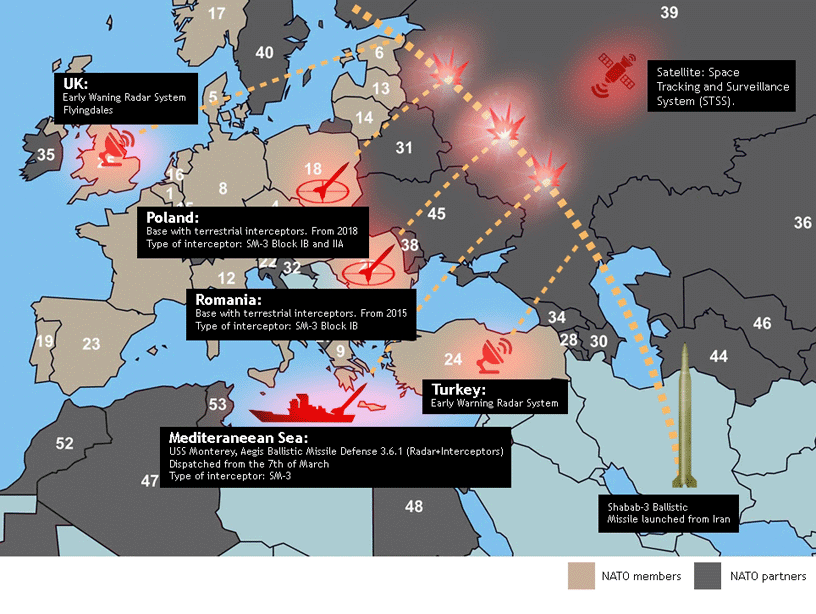
In 2019, Donald Trump justified his withdrawal from the INF Treaty by alleged violations by the Russian side. But, as the Stockholm International Peace Research Institute (SIPRI) notes, the Americans never provided proof of these violations. In fact, the US was simply trying to get out of the agreement in order to install their AEGIS missile systems in Poland and Romania. According to the US administration, these systems are officially intended to intercept Iranian ballistic missiles. But there are two problems that clearly cast doubt on the good faith of the Americans:
The first one is that there is no indication that the Iranians are developing such missiles, as Michael Ellemann of Lockheed-Martin stated before a committee of the American Senate.The second one is that these systems use Mk41 launchers, which can be used to launch either anti-ballistic missiles or nuclear missiles. The Radzikowo site, in Poland, is 800 km from the Russian border and 1,300 km from Moscow.
The Bush and Trump administrations said that the systems deployed in Europe were purely defensive. However, even if theoretically true, it is technically and strategically false. For the doubt, which allowed them to be installed, is the same doubt that the Russians could legitimately have in the event of a conflict. This presence in the immediate vicinity of Russia’s national territory can indeed lead to a nuclear conflict. For in the event of a conflict, it would not be possible to know precisely the nature of the missiles loaded in the systems—should the Russians therefore wait for explosions before reacting? In fact, we know the answer: having no early-warning time, the Russians would have practically no time to determine the nature of a fired missile and would thus be forced to respond pre-emptively with a nuclear strike.
Not only does Vladimir Putin see this as a risk to Russia’s security, but he also notes that the United States is increasingly disregarding international law in order to pursue a unilateral policy. This is why Vladimir Putin says that European countries could be dragged into a nuclear conflict without wanting to. This was the substance of his speech in Munich in 2007, and he came with the same argument early 2022, as Emmanuel Macron went to Moscow in February.
Finland and Sweden in NATO—A Good Idea?
The future will tell if Sweden’s and Finland’s decision to apply for NATO membership was a wise idea. They probably overstated the value of the nuclear protection offered by NATO. As a matter of fact, it is very unlikely that the US will sacrifice its national soil by striking Russian soil for the sake of Sweden or Finland. It is more likely that if the US engages nuclear weapons, it will be primarily on European soil and only as a last resort on Russian territory, in order to preserve its own territory from nuclear counter-strike.
Further, these two countries, which met the criteria of neutrality that Russia would want for its direct neighbors, deliberately put themselves in Russia’s nuclear crosshairs. For Russia, the main threat comes from the Central European theater of war. In other words, in the event of a hypothetical conflict in Europe, Russian forces would be engaged primarily in Central Europe, and could use their theater nuclear armies to “flank” their operations by striking the Nordic countries, with virtually no risk of a U.S. nuclear response.
Was it Impossible to Leave the Warsaw Pact?
The Warsaw Pact was created just after Germany joined NATO, for exactly the same reasons we have described above. Its largest military engagement was the invasion of Czechoslovakia in August 1968 (with the participation of all Pact nations, except Albania and Romania). This event resulted in Albania withdrawing from the Pact less than a month later, and Romania ceasing to participate actively in the military command of the Warsaw Pact after 1969. Therefore, asserting that no one was free to leave the treaty is not correct. https://www.thepostil.com/the-hidden-truth-about-the-war-in-ukraine/
The Hidden Truth about the War in Ukraine, and about Crimea and Donbass – Jacques Baud

The whole Western narrative about the “annexation” of Crimea is based on a rewriting of history and the obscuring of the 1991 referendum, which did exist and was perfectly valid.
The 1994 Budapest Memorandum remains extensively quoted since February 2022, but the Western narrative simply ignores the 1997 Friendship Treaty which is the reason for the discontent of the Russian-speaking Ukrainian citizens.
The Postil Magazine, Jacques Baud The cultural and historical elements that determine the relations between Russia and Ukraine are important. The two countries have a long, rich, diverse, and eventful history together.
This would be essential if the crisis we are experiencing today were rooted in history. However, it is a product of the present. The war we see today does not come from our great-grandparents, our grandparents or even our parents. It comes from us. We created this crisis. We created every piece and every mechanism. We have only exploited existing dynamics and exploited Ukraine to satisfy an old dream: to try to bring down Russia. Chrystia Freeland’s, Antony Blinken’s, Victoria Nuland’s and Olaf Scholz’s grandfathers had that dream; we realized it.
The way we understand crises determines the way we solve them. Cheating with the facts leads to disaster. This is what is happening in Ukraine. In this case the number of issues is so enormous that we will not be able to discuss them here. Let me just focus on some of them.
Did James Baker make Promises to Limit Eastward Expansion of NATO to Mikhail Gorbachev in 1990?
…………………………………………………………. In February 2022, in the German magazine Der Spiegel, Joshua Shifrinson, an American political analyst, revealed a declassified SECRET document of March 6, 1991, written after a meeting of the political directors of the foreign ministries of the United States, Great Britain, France and Germany. It reports the words of the German representative, Jürgen Chrobog:
We made it clear in the 2+4 negotiations that we would not extend NATO beyond the Elbe. Therefore, we cannot offer NATO membership to Poland and the others.
The representatives of the other countries also accepted the idea of not offering NATO membership to the other Eastern European countries.
So, written record or not, there was a “deal,” simply because a “deal” was inevitable. Now, in international law, a “promise” is a valid unilateral act that must be respected (“promissio est servanda“). Those who deny this today are simply individuals who do not know the value of a given word.
Did Vladimir Putin disregard the Budapest Memorandum (1994)?
In February 2022, at the Munich Security Forum, Volodymyr Zelensky referred to the 1994 Budapest Memorandum and threatened to become a nuclear power again. However, it is unlikely that Ukraine will become a nuclear power again, nor will the nuclear powers allow it to do so. Zelensky and Putin know this. In Fact, Zelensky is not using this memorandum to get nuclear weapons, but to get Crimea back, since the Ukrainians see Russia’s annexation of Crimea as a violation of this treaty. Basically, Zelensky is trying to hold Western countries hostage. To understand that we must go back to events and facts that are opportunistically “forgotten” by our historians.
On 20 January 1991, before the independence of Ukraine, the Crimeans were invited to choose by referendum between two options: to remain with Kiev or to return to the pre-1954 situation and be administered by Moscow. The question asked on the ballot was:
Are you in favor of the restoration of the Autonomous Soviet Socialist Republic of Crimea as a subject of the Soviet Union and a member of the Union Treaty?
This was the first referendum on autonomy in the USSR, and 93.6% of Crimeans agreed to be attached to Moscow. The Autonomous Soviet Socialist Republic of Crimea (ASSR Crimea), abolished in 1945, was thus re-established on 12 February 1991 by the Supreme Soviet of the Ukrainian SSR.
On 17 March, Moscow organized a referendum for the maintenance of the Soviet Union, which would be accepted by Ukraine, thus indirectly validating the decision of the Crimeans. At this stage, Crimea was under the control of Moscow and not Kiev, while Ukraine was not yet independent. As Ukraine organized its own referendum for independence, the participation of the Crimeans remained weak, because they did not feel concerned anymore.
Ukraine became independent six months after Crimea, and after the latter had proclaimed its sovereignty on September 4. On February 26, 1992, the Crimean parliament proclaimed the “Republic of Crimea” with the agreement of the Ukrainian government, which granted it the status of a self-governing republic. On 5 May 1992, Crimea declared its independence and adopted a Constitution. The city of Sevastopol, managed directly by Moscow in the communist system, had a similar situation, having been integrated by Ukraine in 1991, outside of all legality. The following years were marked by a tug of war between Simferopol and Kiev, which wanted to keep Crimea under its control.
In 1994, by signing the Budapest Memorandum, Ukraine surrendered the nuclear weapons of the former USSR that remained on its territory, in exchange for “its security, independence and territorial integrity.” At this stage, Crimea considered that it was—de jure—no longer part of Ukraine and therefore not concerned by this treaty. On its side, the government in Kiev felt strengthened by the memorandum. This is why, on 17 March 1995, it forcibly abolished the Crimean Constitution. It sent its special forces to overthrow Yuri Mechkov, President of Crimea, and de facto annexed the Republic of Crimea, thus triggering popular demonstrations for the attachment of Crimea to Russia. An event hardly reported by the Western media.
Crimea was then governed in an authoritarian manner by presidential decrees from Kiev. This situation led the Crimean Parliament to formulate a new constitution in October 1995, which re-established the Autonomous Republic of Crimea. This new constitution was ratified by the Crimean Parliament on 21 October 1998 and confirmed by the Ukrainian Parliament on 23 December 1998. These events and the concerns of the Russian-speaking minority led to a Treaty of Friendship between Ukraine and Russia on 31 May 1997. In the treaty, Ukraine included the principle of the inviolability of borders, in exchange—and this is very important—for a guarantee of “the protection of the ethnic, cultural, linguistic and religious originality of the national minorities on their territory.”
On 23 February 2014, not only did the new authorities in Kiev emerge from a coup d’état that had definitely no constitutional basis and were not elected; but, by abrogating the 2012 Kivalov-Kolesnichenko law on official languages, they no longer respected this guarantee of the 1997 treaty. The Crimeans therefore took to the streets to demand the “return” to Russia that they had obtained 30 years earlier.
On March 4, during his press conference on the situation in Ukraine a journalist asked Vladimir Putin, “How do you see the future of Crimea? Do you consider the possibility that it joins Russia?” he replied:
No, we do not consider it. In general, I believe that only the residents of a given country who are free to decide and safe can and should determine their future. If this right has been granted to the Albanians in Kosovo, if this has been made possible in many parts of the world, then no one is excluding the right of nations to self-determination, which, as far as I know, is laid down in several UN documents. However, we will in no way provoke such a decision and will not feed such feelings.
On March 6, the Crimean Parliament decided to hold a popular referendum to choose between remaining in Ukraine or requesting the attachment to Moscow. It was after this vote that the Crimean authorities asked Moscow for an attachment to Russia.
With this referendum, Crimea had only recovered the status it had legally acquired just before the independence of Ukraine. This explains why it renewed its request to be attached to Moscow, as in January 1991.
Moreover, the status of force agreement (SOFA) between Ukraine and Russia for the stationing of troops in Crimea and Sevastopol had been renewed in 2010 and to run until 2042. Russia therefore had no specific reason to claim this territory. The population of Crimea, which legitimately felt betrayed by the government of Kiev, seized the opportunity to assert its rights.
On 19 February 2022, Anka Feldhusen, the German ambassador in Kiev, threw a spanner in the works by declaring on the television channel Ukraine 24 that the Budapest Memorandum was not legally binding. Incidentally, this is also the American position, as shown by the statement on the website of the American embassy in Minsk.
The whole Western narrative about the “annexation” of Crimea is based on a rewriting of history and the obscuring of the 1991 referendum, which did exist and was perfectly valid. The 1994 Budapest Memorandum remains extensively quoted since February 2022, but the Western narrative simply ignores the 1997 Friendship Treaty which is the reason for the discontent of the Russian-speaking Ukrainian citizens.
Is the Ukrainian Government Legitimate?
The Russians still see the regime change that occurred in 2014 as illegitimate, as it was not done through constitutional process and without any support from a large part of the Ukrainian population.
The Maidan revolution can be broken down into several sequences, with different actors. Today, those who are driven by hatred of Russia are trying to merge these different sequences into one single “democratic impulse”: A way to validate the crimes committed by Ukraine and its neo-Nazis zealots.
At first, the population of Kiev, disappointed by the government’s decision to postpone the signing of the treaty with the EU, gathered in the streets. Regime change was not in the air. This was a simple expression of discontent.
Contrary to what the West claims, Ukraine was then deeply divided on the issue of rapprochement with Europe. A survey conducted in November 2013 by the Kyiv International Institute of Sociology (KIIS) shows that it was split almost exactly “50/50” between those who favored an agreement with the European Union and those favoring a customs union with Russia. In the south and east of Ukraine, industry was strongly linked to Russia, and workers feared that an agreement excluding Russia would kill their jobs. That is what would eventually happen. In fact, at this stage, the aim was already to try to isolate Russia.
In the Washington Post, Henry Kissinger, Richard Nixon’s National Security Advisor, noted that the European Union “helped turn a negotiation into a crisis.”
What happened later involved ultranationalist and neo-Nazis groups coming from the Western part of the country. Violence erupted and the government withdrew, after signing an agreement with the rioters for new elections. But this was quickly forgotten.
It was nothing less than a coup d’état, led by the United States with the support of the European Union, and carried out without any legal basis, against a government whose election had been qualified by the OSCE as “transparent and honest” and having “offered an impressive demonstration of democracy.” In December 2014, George Friedman, president of the American geopolitical intelligence platform STRATFOR, said in an interview:
Russia defines the event that took place at the beginning of this year [in February 2014] as a coup organized by the US. And as a matter of fact, it was the most blatant [coup] in history.
Unlike European observers, the Atlantic Council, despite being strongly in favor of NATO, was quick to note that the Maidan revolution had been hijacked by certain oligarchs and ultra-nationalists. It noted that the reforms promised by Ukraine had not been carried out and that the Western media stuck to an acritical “black and white” narrative.
A telephone conversation between Victoria Nuland, then Assistant Secretary of State for Europe and Eurasia, and Geoffrey Pyatt, the U.S. ambassador to Kiev, revealed by the BBC, shows that the Americans themselves selected the members of the future Ukrainian government, in defiance of the Ukrainians and the Europeans. This conversation, which became famous thanks to Nuland’s famous “F*** the EU!”
The coup d’état was not unanimously supported by the Ukrainian people, either in substance or in form. It was the work of a minority of ultra-nationalists from western Ukraine (Galicia), who did not represent the whole Ukrainian people. Their first legislative act, on 23 February 2014, was to abrogate the 2012 Kivalov-Kolesnichenko law, which established the Russian language as an official language along with Ukrainian. This is what prompted the Russian-speaking population to start massive protests in the southern part of the country, against authorities they had not elected.
In July 2019, the International Crisis Group (funded by several European countries and the Open Society Foundation), noted:
The conflict in eastern Ukraine began as a popular movement. […]
The protests were organized by local citizens claiming to represent the Russian-speaking majority in the region. They were concerned both about the political and economic consequences of the new government in Kiev and about that government’s later abandoned measures to prevent the official use of the Russian language throughout the country [“Rebels without a Cause: Russia’s Proxies in Eastern Ukraine,” International Crisis Group, Europe Report N° 254, 16 juillet 2019, p. 2].
Western efforts to legitimate this far-right coup in Kiev led to hide the opposition in the southern part of the country. In order to present this revolution as democratic, the real “hand of the West” was cleverly masked by the imaginary “hand of Russia.” This is how the myth of a Russian military intervention was created. Allegations about a Russian military presence were definitely false, an event the chief of the Ukrainian Security service (SBU) confessed in 2015 that there were no Russian units in Donbass.
To make things worse, Ukraine didn’t gain legitimacy through the way it handled the rebellion. In 2014-2015, poorly advised by NATO military, Ukraine waged a war that could only lead to its defeat: it considered the populations of Donbass and Crimea as enemy foreign forces and made no attempt to win the “hearts and minds” of the autonomists. Instead, its strategy has been to punish the people even further. Bank services were stopped, economic relations with the autonomous regions were simply cut, and Crimea didn’t receive drinking water anymore.
This is why there are so many civilian victims in the Donbass, and why the Russian population still stands in majority behind its government today. The 14,000 victims of the conflict tend to be attributed to the “Russian invaders” and the so-called “separatists.” However, according to the United Nations—more than 80% of civilian casualties are the result of Ukrainian shelling. As we can see, the Ukrainian government is massacring its own people with the help, funding and advice of the military of NATO, the countries of the European Union, which defends its values.
In May 2014, the violent repression of protests prompted the population of some areas of the Donetsk and Lugansk regions of Ukraine to hold referendums for Self-Determination in the Donetsk People’s Republic (approved by 89%) and in the Lugansk People’s Republic (approved by 96%). Although Western media keeps calling them referendums of “independence,” they are referendums of “self-determination” or “autonomy” (самостоятельность). Until February 2022, our media consistently talked about “separatists” and “separatist republics.” In reality, as stated in the Minsk Agreement, these self-proclaimed republics didn’t seek “independence,” but an “autonomy” within Ukraine, with the ability to use their own language and their own customs………………………………………. more https://www.thepostil.com/the-hidden-truth-about-the-war-in-ukraine/
NATO Abandons Diplomacy, Says No Longer ‘At Peace’

Libertarian Instituteby Bas Spliet | Aug 23, 2022 At the end of its annual summit in Madrid in late June, NATO adopted a new strategic concept. The guidance document is the eighth of its kind since the founding of the alliance in 1949. It radically breaks with the three previous post-Cold War security briefs, however, which observed that “the Euro-Atlantic area is at peace” because “the threat of a conventional attack against NATO territory is low.”
In the eyes of NATO, Russia’s invasion of Ukraine has changed that calculus, claiming that the military organization can no longer discount the possibility of an assault on sovereign NATO states. Continuing the same cryptic language, the new strategic concept concludes that the Euro-Atlantic area now is “not at peace,” in spite of no NATO member being in a state of war with Russia.
Behind this word play, a more dangerous policy change has been codified in the document. Since the adoption of the Harmel Report in 1967, NATO has always officially included diplomacy in one form or another (with political dialogue and strategic partnership being interchangeable labels) as one of its “core” or “fundamental” tasks. The “NATO 2030” report from November 2020, for instance, unequivocally stated that “NATO should continue the dual-track approach of deterrence and dialogue with Russia.”
In the new strategic concept, the core tasks have been purged of the need for diplomacy, except for one or two throw-away lines about “meaningful and reciprocal political dialogue” about arms control issues buried in the middle of the text. Rather, in addition to its original function of deterrence and defense, NATO now fully embraces “crisis prevention and management,” which it has spearheaded since the 1990s with its legally dubious and morally questionable interventions in the Balkans, Afghanistan, and Libya; and “cooperative security,” referring to NATO’s enlargement in Eastern Europe and its Partnership for Peace cooperation with countries in ever further-away regions, including the Black Sea, the Middle East, North Africa, and even the Indo-Pacific, which the British have been pushing to include in a “global NATO.”
Russia was the first country to sign up for the Partnership for Peace program back in 1994. The new NATO doctrine, however, states that Russia can no longer be considered a partner “in light of its hostile policies and actions.” The strategic concept ignores the fact that NATO’s enlargement and new core tasks, which the alliance adopted after the Cold War in an effort to justify its continued existence, have likewise long been seen as hostile in Moscow, nor does it offer any reflection on how the new policies might have contributed to the current unpeaceful “strategic environment.” Instead, it hails the “historic success” of NATO’s expansion in terms of space and substance and insists that the alliance “does not seek confrontation and poses no threat to the Russian federation.”
……………………………….. Now, NATO apologists, like Ukrainian President Volodymyr Zelensky, argue that if the alliance had not expanded eastward, Vladimir Putin would have been even bolder in his imperial ambitions. But as John Mearsheimer pointed out back in 2014, there is virtually no evidence that Putin aimed to incorporate Crimea before the Maidan coup. Rather, his offensive foreign policy in Ukraine since 2014, culminating in the 2022 invasion, is one of reaction to NATO creeping up to Russia’s borders. Bringing Ukraine into the NATO fold has long been a big fat redline for Russia, and we crossed it.
First of all, West-European officials promised the Soviets after the fall of the Berlin Wall that NATO’s borders would not move “one inch” eastward. But then all former Warsaw Pact countries and even some former Soviet Republics were incorporated in the 1990s and early 2000s. In addition to the evidence the National Security Archive assembled on this issue a few years ago, recent archival research has once again confirmed these broken promises.
Next, in 2008, Russian Foreign Minister Sergei Lavrov warned American diplomats that further NATO enlargement, particularly to Ukraine, would constitute a “potential military threat.” …………………………….
After 2014, Ukraine started to become a de facto member of NATO, which bolstered the Ukrainian regime to take a tough stance against Russia. In 2017, Trump decided to sell “defensive weapons” to Kyiv. Other NATO countries got in on the act, shipping weapons to Ukraine, training its military and teaming up with it in joint air and naval exercises. In June 2021, a British destroyer sailed through the Black Sea in an effort to shore up support for Ukraine, precipitating a diplomatic stand-off with Russia. NATO was undeterred, however, because a total of 32 countries participated in a major naval exercise in the Black Sea one month later.
In response, Russia decided to engage in coercive diplomacy, much like the Obama administration had done to get Iran to sign on to the 2015 nuclear deal. Putin amassed troops on the Ukrainian border, demanding guarantees that no offensive missiles would be installed in Eastern Europe and Ukraine not to join NATO. When the crisis was not solved diplomatically, Russia invaded Ukraine. Up until recently, there was hardly any diplomatic intercourse between Washington and Moscow in order to resolve the conflict. The UK’s Boris Johnson, too, “urged against negotiations” during a trip to Kyiv in April. Other NATO members, such as France, Germany, Italy and Hungary, have warmed to negotiations. But as long as there is no bigger push to re-establish diplomacy as a core task of the military alliance, Wilsonian rhetoric is likely to continue to make the world unsafe. https://libertarianinstitute.org/articles/nato-abandons-diplomacy-says-no-longer-at-peace/—
Rethink Research throws cold water on the Nuclear Energy Institute’s enthusiasm for Small Modular Reactors (SMRs).

For SMRs to remain competitive there will need to be heavy state-side subsidizes for consumers, as the initial cost of energy produced from them is considerably above wholesale auction prices.
https://rethinkresearch.biz/articles/smr-boon-forecast-by-nei-rethink-doubts-it/—SMR boon forecast by NEI, Rethink doubts it, By Connor Watts, 24 Aug 22, Some 19 utilities surveyed by the US Nuclear Energy Institute (NEI) says they see potential for up to 90GW of small modular reactors (SMR) within the United States by 2050. This would work out to around 300 reactors producing 731.3 TWh of energy, most of which would come online before 2050. Those numbers look pretty good until you look at current generation figures
During 2021 the US consumed around 790 TWh of electricity from nuclear power plants and 899 TWh from coal plants. The EIA projects that 16GW of nuclear plants will be decommissioned, alongside 69GW of coal plants up to 2050. This means that as much as 95% of potential SMR energy production could be going directly to the replacement of existing facilities.
This leaves only 5GW of remaining demand potential for SMR energy production up to 2050 outside of decommissioning existing facilities, we think even this may be optimistic.
Traditional nuclear plants take upwards of a decade to build and often run massively overbudget, making the energy it does produce once built more expensive as costs are attempted to be recouped.
SMR producers promise to do away with these drawbacks through standardizing their designs to enable factory production. Minimizing cost while shortening production times, theoretically addressing the main weaknesses of traditional reactors.
In practice it’s a little more complicated.
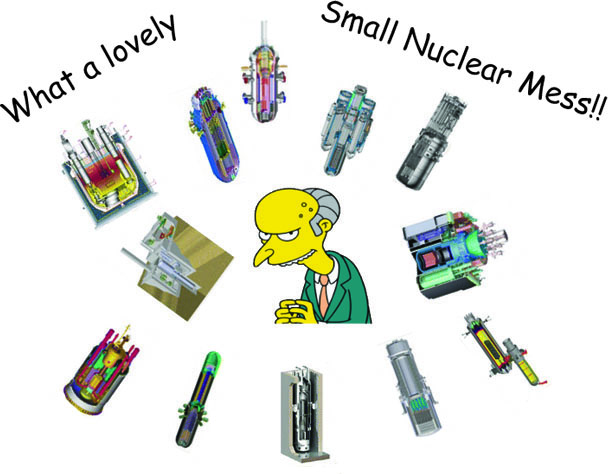
Considering the complexity and risks involved with nuclear power generation, commercial production and design of SMRs remains a slow and meticulous process. This has left many SMR sites still in the planning or design phase years after their announcements, almost competing in deployment time with traditional nuclear plants.
Once a new SMR gets deployed after its design and development period, it will need to be monitored for a few years to inspect for defects and inefficiencies within the design to prevent any mishaps. This is likely to add yet more time to an already long production horizon, adding costs as new units cannot go into production.
The cost savings achieved through modularity and standardization are borne through mass-production and deployment. In a way this is the “gigafactory” approach for nuclear. Considering long initial production times, this will contribute significantly to a short-term increase in the price of nuclear electricity, minimizing its applications where it remains competitive.
SMRs are supposed to come to market at $60 per MWh LCOE – but already wind and solar are considerably below that, and what level will they be at after SMRs arrived on the scene in volume, by say 2030?
For SMRs to remain competitive there will need to be heavy state-side subsidizes for consumers, as the initial cost of energy produced from them is considerably above wholesale auction prices.

Another issue with nuclear power generation is water usage. Earlier this month nuclear plants in France had a rule concerning water discharging waived as heatwaves boiled most of Europe.
Typically, the reactors would reduce their output to minimize damage from discharging hot water into the nearby ecosystems, but this rule has been waived until the 11th of September to ensure energy supplies in the short term. SMRs will also need to use local water supplies as a coolant, which makes them ineffective in a drought.
This can be mitigated through the use of alternative coolants such as liquid metal, gas and molten salt, but many SMR designs currently work similarly to traditional nuclear.
To use the time horizon for SMRs makes them look economically unfavorable, and while these 19 utilities may genuinely feel they like the idea of more nuclear, their controlling state utilities commission may well have something to say about whether they ever actually get installed.
Astronauts Going to Mars Will Receive Many Lifetimes Worth of Radiation

Universe Today, In a recent study published in Space Physics, an international team of researchers discuss an in-depth study examining the long-term physiological effects of solar radiation on astronauts with emphasis on future astronauts traveling to Mars, to include steps we can take to help mitigate the risk of such solar radiation exposure. The researchers hailed from the United Arab Emirates, New Zealand, India, United States, Italy, Greece, and Germany, and their study helps us better understand the in-depth, long-term health impacts of astronauts during long-term space missions, specifically to Mars and beyond.
Exposure to ionizing radiation is one of the main health risks to astronauts in crewed missions to Mars,” said Dr. Dimitra Atri, a Research Scientist at New York University Abu Dhabi, and lead author of the study. “Going to Mars is going to be humanity’s ultimate adventure in the 21st century — it would be unfortunate if the mission is successful, but astronauts suffer major health issues or even die because of radiation exposure. So, we need to estimate radiation exposure in a very careful way and study its overall impact on human health. It will also help us develop mitigation strategies to keep our astronauts safe.”
To conduct their study, the researchers utilized a computer simulation known as Geant4 with a model human phantom to calculate how each organ of the human body is affected by radiation doses from exposure to energetic charged particles for prolonged periods. These include impacts on an astronaut’s health such as Acute Radiation Syndrome, nervous system damage, and a higher risk of cancer. The CDC defines Acute Radiation Syndrome, also known as radiation sickness or radiation toxicity, as “an acute illness caused by irradiation of the entire human body (or most of the body) by a high dose of penetrating radiation in a very short period of time (usually a matter of minutes).”
Combining their data from the model human phantom with dozens of past medical studies, the researchers discuss the underlying impacts of ionizing radiation on physiological systems, to include the nervous, immune, and skeletal systems, and behavioral effects, along with impacts on genetic material and risk of cancer. They considered a crewed mission to Mars comprising of 600 days in cruise phase to and from the Red Planet and spending 400 days on the Martian surface. While they noted a knowledge gap regarding past medical studies and their own study, they stated radiation limits set by the European Space Agency, Roscosmos, Japanese Aerospace Exploration Agency, and NASA would be surpassed during a crewed mission to Mars.
“It is a comprehensive study modeling the impact of charged particles — protons, alpha particles, heavier species on a human phantom by using CERN’s charged particle interaction code, said Dr. Atri. “We were able to calculate radiation dose deposited in various organs of the human body. …………. https://www.universetoday.com/157285/astronauts-going-to-mars-will-receive-many-lifetimes-worth-of-radiation/
How the USA climate bill will promote the nuclear industry.

What the climate bill does for the nuclear industry, CNBC, Catherine Clifford, AUG 23 20222
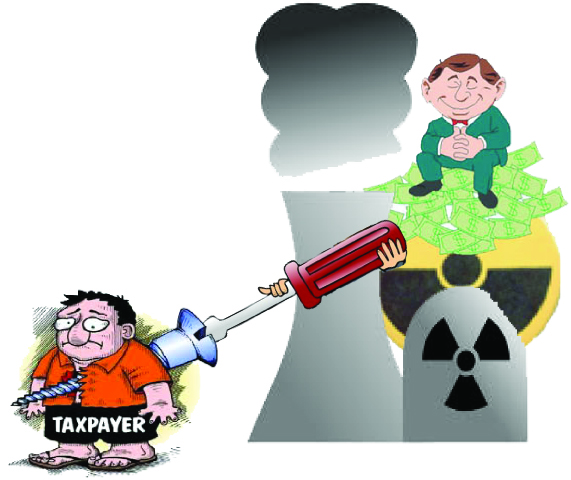
Production tax credit for existing nuclear power plants
Production tax credit for advanced nuclear power plants
Investment tax credit for new nuclear power plants
“………………………………………Production tax credit for existing nuclear power plants, Starting in 2024 and running through 2032, utilities will be able to get a credit of $15 per megawatt-hour for electricity produced by existing nuclear plants. If the price of power rises above $25 per megawatt-hour, then the credit will gradually decrease, but it doesn’t phase out completely until energy prices reach around $44 per megawatt-hour, explained Matthew Crozat, the executive director of strategy and policy at the Nuclear Energy Institute, a Washington, D.C.-based trade group.
“Every plant is different and some plants have a different revenue model but we can say that this credit will offer a reprieve from the low revenues that had forced more than a dozen reactors to close,” Crozat told CNBC.
To be eligible for the full $15 per megawatt-hour base tax credit, a nuclear power plant operator has to pay workers operating and doing maintenance on the power plant “prevailing wage requirements,” according to the Nuclear Energy Institute.
Production tax credit for advanced nuclear power plants
Several companies in the United States are working to commercialize new nuclear power plant designs that are meant to be safer and with a smaller capacity, making them ideally cheaper to build and maintain as well.
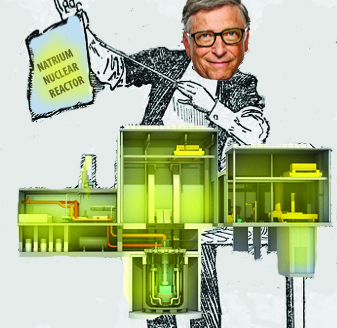
For example, Bill Gates’ nuclear innovation company, TerraPower, is developing a couple of advanced reactor designs, one of which is going to be built at a retiring coal facility in Wyoming as part of a demonstration program in partnership with the U.S. government.
Advanced nuclear reactors could benefit from the IRA by way of the Clean Electricity Production Tax Credit, a technology-agnostic production credit, which can be applied toward emissions-free power generation that goes online after 2025. The clean energy production credit is for at least $25 per megawatt-hour for the first ten years the plant is in operation, adjusted for inflation. The credit phases out in 2032 or when carbon emissions coming from electricity have fallen by 75% below the level of 2022, according to the Nuclear Energy Institute. The tax credit is increased by 10% for locating the zero-emissions power source where a coal plant previously lived.
Worth noting, there’s another Advanced Nuclear Production Tax Credit already on the books. That tax credit was established in the Energy Policy Act of 2005 and is for $18 per megawatt-hour for the first eight years that a nuclear power plant is operating, provided the nuclear power plant had not begun construction when the 2005 bill was signed into law, Crozat told CNBC. The third reactor unit of the Vogtle Power plant being constructed in Georgia will be the first power plant to take advantage of the 2005 Advanced Nuclear Production Tax Credit, according to Crozat.
A company can not take advantage of both tax credits — it has to pick. Going forward, the tax credits in the IRA just signed into law will be more attractive. “Since the new production tax credit has been indexed to inflation and last for two additional years, it will be considerably more valuable than the older version,” Crozat told CNBC.
Investment tax credit for new nuclear power plants

New nuclear power plants are eligible for claiming an Investment Tax Credit made available through the new law for facilities that generate energy with zero emissions and that go into service in 2025 or after.
The investment tax credit allows a nuclear power plant to get a tax credit for 30% of what was invested in building the zero-emissions energy production facility, which includes nuclear power plants, according to the Nuclear Energy Institute.
The investment tax credit is increased by 10% for locating the zero-emissions power source where a coal plant previously lived. It starts to phase when carbon emissions from the sector are 75% lower than 2022 levels.
Money to spur innovation

The law includes $700 million that will go towards the research and development of high-assay low enrichment uranium (HALEU) fuel sources in the United States through 2026, according to the Bipartisan Policy Center, a Washington DC-based think tank. That’s important because the advanced, next-generation reactors which are currently being developed by 20 companies in the United States, according to the U.S. Department of Energy, depend on HALEU fuel to operate.
The existing fleet of nuclear power reactors in the United States operate on uranium that has been enriched up to 5%. HALEU fuel has been enriched between 5% and 20%. Many advanced reactor designs are smaller builds than conventional nuclear reactors and so to make a nuclear reactor smaller, they need to get more power from smaller quantities of fuel, the Department of Energy says.
“Right now, the only commercially available source of HALEU is from the Russian Federation and the support for HALEU in the IRA signals an understanding that the federal government is needed to jumpstart domestic enrichment capabilities to support the coming wave of new nuclear technologies,” Rampal told CNBC.
It’s also just the first step, Rampal said. The nuclear industry needs multiple billions of dollars to invest in HALEU production over the next ten years, he told CNBC.
The IRA also includes $150 million for the Office of Nuclear Energy through 2027, according to the Bipartisan Policy Center. That money is for the Department of Energy to invest in its nuclear innovation research at its network of National Laboratories. ……………………………………..
Tax credits for making component parts
The IRA includes a manufacturing production provision that allows for a tax credit for component parts produced and sold after 2022, according to a summary of the benefits of the IRA for the nuclear industry from the law firm Morgan Lewis. https://www.cnbc.com/2022/08/22/what-the-climate-bill-does-for-the-nuclear-industry.html
Emotionless Liz Truss says she would unleash nuclear annihilation if necessary
Emotionless Liz Truss says she would unleash nuclear annihilation if
necessary. The Tory frontrunner told a hustings event in Birmingham that
ordering the use of nuclear weapons is an “important part of being Prime
Minister”.
Mirror 23rd Aug 2022
https://www.mirror.co.uk/news/politics/emotionless-liz-truss-says-would-27816744
Ukrainian Hit List – targets Pink Floyd’s Roger Waters, Daria Dugina,Kissinger and 1000s of journalists
Roger Waters added to Ukrainian Hit List “Pink Floyd” star declared “Enemy of Ukraine” , Medium.com Deborah L. Armstrong 23 Aug 22
I have written about the Ukrainian hitlist known as Mirotvorets, or “Peacekeeper,” twice before. The first time was in this article about internet censorship, and the second time was when a 13-year-old Ukrainian girl, Faina Savenkova, was added to the list for publicly speaking out against Kiev’s bloody war on Russian-speaking civilians in the eastern part of Ukraine, a region known as the Donbass.
Mirotvorets is a database which lists thousands of journalists, activists, and anyone else who is declared an “Enemy of Ukraine.” Their personal information is published, such as the addresses of their homes, their phone numbers and bank account numbers; anything that can help them be easily located. When the people on this list are murdered, like Italian journalist Andrea Rocchelli was, the word ЛИКВИДИРОВАН, “LIQUIDATED,” written in Ukrainian, is stamped across their picture in big red letters.
And, as of today, Daria Dugina, who was killed in a car bomb explosion in Moscow on Saturday, appears as “liquidated” on the website, adding more credibility to Russia’s assertion that she was assassinated by a Ukrainian nationalist who rented an apartment in the building where Daria lived in order to surveil her prior to her killing. It is believed that she was killed because her father, Alexander Dugin was referred to as “Putin’s brain” and “Putin’s spiritual guide” in western media, though these claims are really just more speculation.
It seems that almost anyone can be added to this kill list. Even Henry Kissinger’s name is on the list despite his long history of Russophobia. But since he dared to air his concerns about how the US is teetering toward war with Russia and China, Kissinger, who once suggested dropping nuclear bombs on Moscow, is now declared an “Enemy of Ukraine.”
………. Why this site is allowed to operate is a good question. But you can access it easily, and even donate money to help the “cause,” if you are sympathetic to Nazis and think that assassinating people for their opinions is a wholesome way to support Ukraine.
The co-founder of “Pink Floyd” is known for his support of imprisoned Wikileaks’ creator Julian Assange, and for his opposition to imperialism and war, as well as for his awesome music, loved by millions around the world.
Waters recently referred to Joe Biden as a “war criminal” on CNN, and said that Biden is “fueling the fire in Ukraine.”
“This war,” the musician stated, “is basically about the action and reaction of NATO pushing right up to the Russian border, which they promised they wouldn’t do when [Mikhail] Gorbachev negotiated the withdrawal of the USSR from the whole of Eastern Europe.”
Waters also said that Crimea belongs to Russia, because the majority of people living on the peninsula are Russian.
The rock star’s views have outraged the pro-NATO crowd and their Nazi friends, as well as the social justice warriors who froth at the mouth in support of whatever the mainstream media declares to be “the current thing.” Waters, who has always been something of a dissident and anti-war, the way all rock stars used to be when rock and roll was still real, is attacked mercilessly by the “woke” crowd, who are intolerant of all who are not in lockstep with their views.
An investigation by the Russian Foundation to Battle Injustice reveals the names of the individuals, corporations and government entities which are believed to be the “organizers, sponsors and curators of the Ukrainian nationalist website.” While Mirotvorets is easily accessible to anyone who likes that sort of thing, this Russian human rights organization is blocked on major social media platforms like Facebook.
In its early days, Mirotvorets published the names of so-called “Russian separatists” (residents of eastern Ukraine) who oppose the Maidan coup and believe it was economically unwise to break off relations with Russia. But later on, the site began publishing the personal data of public figures, journalists, activists and even children.
Mirotvorets became infamous following the murders of two Ukrainian public figures in 2015, whose private information was published on the website. Oles Buzina, a 45-year-old writer and journalist, and Oleg Kalashnikov, a 52-year-old deputy of Ukrainian parliament, were killed just a few days after the publication of their home addresses.
In May of 2016, Mirotvorets publicized the personal data of more than 4,500 journalists and media representatives from around the world who had received permission to work in the territory of Donbass. Investigators say that Mirotvorets’ administrators hacked the database of the Ministry of State Security of the Donetsk People’s Republic and gathered the phone numbers, email addresses and home addresses of foreign journalists whom Mirotvorets accuses of “collaborating with terrorists” because they are covering the war from territories not under Ukrainian control.
The journalists began receiving threatening phone calls and emails and experienced an increase in cyber-bullying and harassment on social networks. The government of Ukraine issued a statement that it had found no violations of the law in Mirotvorets’ actions, even though the human rights organization, “Committee to Protect Journalists,” condemned the site’s doxing of thousands of journalists working in eastern Ukraine.
The US State Department confirmed that the Ukrainian Ministry of Internal Affairs was connected to the website, and acknowledged the publication of the journalists’ personal data, but the US government has taken no action to block the website, although many Russian websites and alternative news media have been blocked by social media giants for publishing information about the war in Ukraine which does not line up with official narratives.
And what’s more, there are companies in the US which cooperate with Mirotvorets and provide the website with information.
An analysis of the site’s network protocol by the Foundation to Battle Injustice found that the database uses the technological services of a company in California. And, if you look at the main page of Mirotvorets, you will see the address “Langley County, Virginia.” There are posts on the site from accounts which have names of western intelligence agencies: CIA, FBI, NATO, MI5, NSA……………………………………………………
Under the guise of crowdfunding, investigators say, Mirotvorets receives considerable financial assistance from anonymous donors in the west. Virtually anyone can donate to the site, but the site’s most likely sponsors are Ukrainian nationalists living abroad and people associated with western intelligence agencies who have enormous amounts of taxpayer money at their disposal.
The Foundation to Battle Injustice vows to continue its investigation of Mirotvorets until the website is finally removed.
Meanwhile, I’ll be rocking out to Pink Floyd. https://medium.com/@deborahlarmstrong/roger-waters-added-to-ukrainian-hit-list-5acede7b0414
Sacre Bleu: EDF Energy talk of lower bills, whilst planning to generate Britain’s most expensive electricity
Last week, EDF Energy called for the incoming British Prime Minister to work with the French-owned energy generator to reduce customer bills, whilst at the same time conspiring in the longer-term to put them up.
EDF Energy, operator of the UK’s nuclear power stations, is building a new power plant at Hinkley Point C that is already many years behind schedule and way over budget. At a whopping estimated cost of £26 billion (based on 2015 prices; actually, with inflation £29 billion today), EDF Energy plans to make a return on its investment for its backers, the French Government, by making its electricity the most expensive ever generated in Britain.
An agreement signed off with the UK Government in 2016 made EDF Energy responsible for meeting the upfront costs of building the 3.2 GW plant but granted them the concession to recoup costs by charging up to an astronomical £92.50 per MW/hour for the electricity Hinkley Point C eventually produces. If electricity does not retail at that price upon commission, British electricity customers will make up the difference with a surcharge on their bills, whether they are customers of EDF or not.
Provision was also made to make this figure index-linked to inflation, meaning the price if generation were taking place today would be an incredible £106 and this can only rise.
Not surprisingly, energy experts derided the deal at the time as outrageously favourable to the generator.
Contrast this with the recent Contracts for Difference round conducted by civil servants with renewable energy generators, where some providers contracted to generate electricity through offshore wind projects for less than £40 per MW/hour.
Nuclear fission is now the most expensive means to generate electricity, is never viable without huge government subsidies, and is fraught with operational and financial risk – and so is not an attractive proposition for private investors.

That is why the UK Government is introducing the RAB (the Regulated Asset Base) model by which to pass on the costs of developing future nuclear projects onto the shoulders of the already-overburdened British electricity customer through the imposition of a new nuclear tax on bills.
The most immediate beneficiary of this arrangement will be, unsurprisingly, EDF Energy which is the government’s approved partner to build the next large-scale nuclear power plant, at Sizewell C in Suffolk.
RAB means no more financial worries for EDF Energy as the Sizewell project invariably ratchets up massive cost overruns, like its forerunner at Hinkley, as the poor suffering consumer will be made to pay them. For the customer, it represents an ever-greater burden at a time when energy bills will continue to go ever higher, and, with colder days and darker nights on the horizon, many will struggle to heat their homes.
Even customers in receipt of the lowest means-tested benefits, or older customers who will not live long enough to see the Sizewell plant built, will currently be expected to pay their share of the nuclear tax – that is why the Nuclear Free Local Authorities call it ROB, a means to fleece the poor to renumerate industry fat-cats and want to see both it and plans for new nuclear scrapped.
Councillor David Blackburn, Chair of the NFLA Steering Committee said:
The Government’s nuclear ROB tax is an outrageous additional burden on the British people who have already seen their bills go through the roof. Rather than wasting a single penny more on the over-expensive and ridiculously-slow nuclear sector, we want to see government ministers invest billions in an emergency programme to retrofit Britain’s cold and damp homes to make them affordable and efficient to light and heat and we want to see investment in a range of renewable technologies to produce the cheaper, greener energy we so desperately need at a fraction of the price and much more-quicker than any nuclear delusion.”
Councillor Blackburn also had a sideswipe at EDF Energy’s senior management, adding:
“Whilst it is commendable that Monsieur Philippe Commaret, Managing Director of Customers at EDF, has called on government for urgent action over energy pricing, can I suggest that this appears to amount to ‘bill-washing’ as it offers nothing practical to reduce customers’ pain? Rather I suggest his company follow the example show by its French parent by introducing an absolute energy price cap on the bills of British EDF customers as they have in France. There bills only went up by 4%, on the direction of the principal shareholder of the company, French President Emanuel Macron. It is time for EDF Energy to do the same by its UK customers.”
The Chinese non-threat
China relies on something called soft power discovered by the Chinese long before the rest of us.
https://johnmenadue.com/the-chinese-non-threat/ Pearls and Irritations, By Gregory Clark, Aug 23, 2022
Our resident non-Chinese speaking, non-Chinese informed but bitterly ‘China is expansionist-aggressive’ commentators in the mainstream media in Australia don’t have,or even want to have, any idea about China.
China is accused of aggressive expansionism, over Taiwan and towards its neighbours in general.
It is a curious charge. Almost all of the 178 nations recognising China have formally recognised that legally Taiwan belongs to China. In the recently proclaimed ‘rules based international order’ such formal recognition by so many nations would seem to have some weight.
Yet Beijing has still done little to claim this promised recognition. On the contrary, it still accepts Taiwan’s control over a number of islands in the South China Sea, including some occupied by the Taiwan military a stone’s throw from China’s coast.
Nor is it only Taiwan that enjoys Beijing’s territorial tolerance.
It has done nothing to follow up on China’s strong historical clam to much of Russia’s Far East. Even at the height of China’s strong tensions with Moscow in the 1960’s and ’70’s it barely moved despite constant invitations to do so by Western hawks.
(Taiwan too had criticised Beijing’s inaction).
Amazingly Beijing has done nothing to try to dominate, let alone attack, the vast areas of a Mongolia with rich resources needed by China and with only 3 million people to defend its 4,600 kilometre with China (Taiwan insists Mongolia is China’s territory and strongly criticises Beijing’s inaction.)
The same is true for Kazakstan, Kyrgyzstan, Tajikistan and Afghanistan, central Asian nations which border China and have at times harboured militants that have attacked into China.(Taiwan again criticises Beijing’s inaction.)
Moving down to Pakistan and India, we find Beijing has tolerated borders (the MacMahon Line and in much of Ladakh) imposed by aggressive19th century UK colonial advances far into China’s then nominally controlled, Tibetan-populated Himalayan territories.
True, there have since been disputes with India which took over from the British the large Tibetan populated areas in northern Assam and Ladakh, and wants more. Only when the Indians under Nehru’s forward policy went too far and moved into Tibet across even the UK arbitrarily imposed MacMahon Line did Beijing finally take action.
Even then, and having taught the Indians a lesson, it retreated to the MacMahon Line (a retreat which Taiwan protested, of course).
(As China desk officer in Canberra at the time I know for a fact that the first dispute in 1962 was due to India trying illegally to seize territory north of the MacMahon Line.The Chinese gave us the maps to prove it. The Indians gave nothing.)
Moving further east we find that Beijing, unlike Taiwan, accepts a border with Myanmar that allows Kokang, a large Mandarin Chinese speaking community, to remain in eastern Myanmar. (Taiwan objects to Beijing’s generosity, of course.)
Beijing did nothing to support the many pro-Beijing, Chinese speakers in Sarawak, fighting a losing battle with British and Australian troops while seeking to prevent their 1960’s forcible incorporation into the artificial construct of Malaysia.
Beijing did nothing to maintain the now disappeared 2,000 year colony of Chinese in western Borneo – the Laifang Republic. And as we know tragically it did nothing to protect the one million Chinese and leftwing Indonesian massacred in 1958. Nor did it try to protect resident Chinese from subsequent brutal Indonesian pogroms there .
And finally we come to the alleged Chinese claims against sone minuscule Japanese claimed islands -the Senkaku Islands – in the east China sea. The claims were in fact made by Taiwan, not China; they are supported by China. The islands have no Japanese name; they were discovered and named by Chinese and British explorers. Geographically they are part of Taiwan and lie on the Chinese continental shelf.
Even the US does not recognise Japanese sovereignty.
One wonders whether our resident non-Chinese speaking, non-Chinese informed but bitterly ‘China is expansionist-aggressive’ commentators in the mainstream media have, or even want to have, any idea of any of these details.
By comparison, while China has been doing little in recent decades, the US was quickly trying to take over by force large territories of France, Mexico, Spain (including the Philippines) and even Canada plus a host of islands belonging to other people in both the Atlantic and the Pacific.
In shameful collusion with the UK the US expelled the population of the Diego Garcia island and used it for the bombing of much of the Middle East.
China’s long acceptance of British and Portuguese colonies on its border (India was far less tolerant), its delay in taking over Taiwan (a right granted by every nation recognising Beijing, including the US and Australia), its toleration of Taiwan still occupying militarily the Offshore Islands etc suggests almost a dislike of military action.
Instead it relies on something called soft power discovered by the Chinese long before the rest of us. Convinced of the attractiveness of its culture it long believed with it can automatically draw people to its side without force of arms.
That was before it came up against us militaristic Westerners, happy to invade China and vandalistically destroy the symbols of that culture.
GREGORY CLARK
Gregory Clark began his career in Australia’s Department of External Affairs, with postings to Hong Kong and Moscow. Resigning in 1964 to protest at Australia’s participation in the Vietnam War he moved to Japan, becoming emeritus president of Tama University in Tokyo and vice-president of the pioneering Akita International University. He continues to live in Japan and has established himself as a commentator/academic. Between 1969-74 he was correspondent for The Australian in Tokyo.
More on http://www.gregoryclark.net
Resistance by local population thwarts the development of Terminal High Altitude Area Defense system (THAAD) in South Korea

“The plan to normalize the operation of the THAAD base, even though the environmental impact assessment has not yet started, means that the government does not even consider a due legal process,”
Tensions mount as gov’t moves to normalize THAAD base operation. https://en.yna.co.kr/view/AEN20220824006000315 August 24, 2022
SEONGJU, South Korea, Aug. 24 (Yonhap) — Tensions are mounting around a U.S. THAAD missile defense unit here, one week ahead of the government’s deadline for normalizing access to the base despite local residents’ opposition.
The Seoul government has pledged to secure unfettered road access to the base in Seongju, around 220 kilometers south of Seoul, by the end of August, as its operation has been hindered by anti-THAAD protesters attempting to block deliveries of goods and equipment to the unit.
The Terminal High Altitude Area Defense system was installed in the southeastern county in 2017 to cope with North Korea’s missile threats.
But the battery has not been running at full capacity, with access restricted to the unit due to protesters and a pending environmental impact assessment.
This May 18, 2021, file photo shows a water truck moving on a road leading to the U.S. Terminal High Altitude Area Defense (THAAD) base in Seongju, 217 kilometers south of Seoul, after police dispersed demonstrators opposing the delivery of daily necessities for troops at the missile defense system’s base. (Yonhap)hide caption
Local residents and activists object to the deployment of the THAAD system due to concerns about possible hazards to human health and the environment.
Since May 2021, the remodeling of barracks at the base has been under way and construction materials, workers and daily necessities have been brought to the base by trucks two to three times a week.
Clashes have often occurred in the area between police and demonstrators occupying the road to block deliveries.
Residents and activists are set to step up protests in response to the government’s plan to provide normal overland access to the base by the end of August.
They also plan to hold a joint rally with other organizations in front of the base on Sept. 3, demanding the military halt the construction.
“The plan to normalize the operation of the THAAD base, even though the environmental impact assessment has not yet started, means that the government does not even consider a due legal process,” the task force of anti-THAAD residents and activists said.
The local government has yet to form a group to conduct the environmental impact survey, which is necessary for the THAAD unit to operate at full capacity, due to the resistance from the residents.
“There are no residents willing to participate in the assessment body,” ,” a county official said. “It is difficult for us to persuade the residents, who have been opposed to the base for many years, to join the team.”
UK’s Tory leaders oppose policies that would encourage people to conserve energy
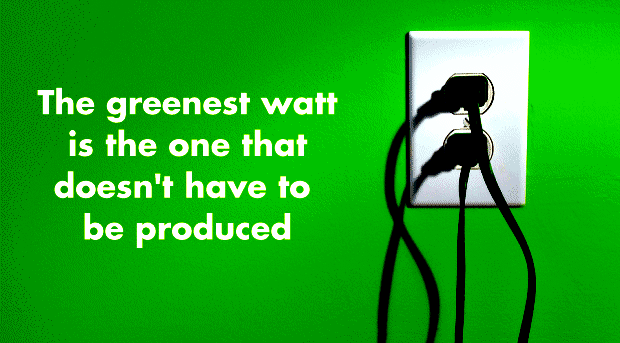
The government has again rejected calls for it to launch a campaign to
encourage households and businesses to save energy, insisting that energy
use remains a “decision for individuals”. Speaking this morning, a
spokesperson for Number 10 declined to be drawn on whether the government
should advise people to save energy, given soaring energy bills and
concerns over energy supplies this winter.
“These decisions, in terms of
energy consumption, remain decisions for individuals,” they said.
“Households, businesses and industry can be confident that they will have
the electricity and gas that they need.” The Guardian also reported this
morning that Business Secretary Kwasi Kwarteng, who is hotly tipped to
become Chancellor if polls prove accurate and Liz Truss is elected Prime
Minister next month, is opposed to proposals that would see the government
call directly on households and businesses to change behaviour to curb
energy demand.
Business Green 23rd Aug 2022
https://www.businessgreen.com/news/4055138/government-rejects-calls-energy-saving-drive
China’s record-breaking heatwave, threatening water resources

The southwestern Chinese regions of Chonqging and Sichuan were battling
fires on Tuesday as they awaited a long-anticipated drop in temperatures
over the next week, but the country’s important autumn harvest remained
under serious threat. Officials warned this month that temperatures were
rising faster in China than in the rest of the world and a record-breaking
heatwave has raised concern about its ability to adapt to rapid climate
change and conserve already scarce water resources.
Reuters 23rd Aug 2022
The world stands on a nuclear precipice – we must avoid catastrophe- Jacinda Ardern

https://www.theguardian.com/commentisfree/2022/aug/25/the-world-stands-on-a-nuclear-precipice-we-must-avoid-catastrophe 25 Aug 22, The world can still step back from the abyss. The nuclear weapon states – the US, Russia, China, France and the UK – must lead the way
In 1945 nuclear weapons were used in armed conflict for the first and only time. 355,000 people were killed in Hiroshima and Nagasaki by two nuclear bombs.
Two. That number alone puts in stark perspective the world’s current arsenal of about 13,000 nuclear weapons.
And yet in many ways the 13,000 weapons held globally represents progress; it’s less than a quarter of the more than 63,000 weapons in circulation in 1985 during the cold war.
But what John F Kennedy said in 1961 at the United Nations is as urgent now as it ever was: “We must abolish these weapons before they abolish us.”
Over the more than 50 years since the inception of the nuclear non-proliferation treaty it’s played an important role in lowering the risk of these weapons abolishing us. In addition to the near 80% reduction in nuclear weapons, the treaty has also contributed to keeping a lid on the number of countries acquiring them. More countries have ratified the treaty than any other arms limitation and disarmament agreement.
Right now in New York, there is an opportunity to go even further. And we must.
Our world is at greater risk of nuclear catastrophe than at any time since the height of the cold war. Growing superpower tensions and two decades of stalled progress on arms control have pushed the risk of these weapons closer to reality.
Currently 191 countries are meeting at the UN to renew the nuclear non-proliferation treaty and negotiations are going down to the wire. These talks offer a chance to breathe new life into nuclear disarmament at a time when the world needs that more than ever.
Nuclear catastrophe is not an abstract threat but a real world risk. Nuclear weapons could be deployed in a conflict, as Russia’s president, Vladimir Putin, has intimated, or they could be deployed by miscalculation or mistake – real possibilities in times of heightened tension.
New Zealand is calling on the nuclear weapons states – the US, Russia, China, France and the UK – to step back from the nuclear abyss, and provide that leadership by committing to negotiate a new multilateral nuclear disarmament framework.
But from one of the best geographical positions in the world to be should nuclear fallout occur, why does New Zealand feel so strongly about this issue?
We are a Pacific nation. Our region bears the scars of decades of nuclear testing, on both the people and the lands and waters of our region. That’s why for 35 years New Zealand has been proudly nuclear-free and an international advocate for a world free of nuclear weapons.
This does not mean we are naive to real world dynamics, nor does our geographic location mean we have the luxury of a moral stance that others do not. In fact, New Zealand’s message – that nuclear weapons do not make anyone safer and no longer have a place in our world – reflects the view of the overwhelming majority of countries. We just need to believe a different approach is possible.
We only have to look back in our history to map a path to a safer future. The lessons of Hiroshima and Nagasaki, and of testing in the Pacific, are reminder enough that there is never justification for the deployment of nuclear weapons.
The challenges of agreeing multilateral nuclear disarmament can seem overwhelming. But it’s not a task that can be put off indefinitely.
Right now, the treaty is under stress. It is affected by geopolitical developments including tension between the nuclear weapon states. But, more fundamentally, there is growing scepticism and frustration about the intention of the nuclear weapon states to ever fully implement their nuclear disarmament commitments under the treaty, with those states arguing the global security environment makes doing so too difficult.
If this continues, there is a real prospect of countries losing faith in the treaty – putting at risk both the treaty’s role in progressing nuclear disarmament, and in preventing the spread of nuclear weapons material.
There is a lot at stake in New York this week. Some might say that in the current global environment a new nuclear arms race is inevitable, and with it a further undermining of our nuclear disarmament and non-proliferation efforts. But I cannot accept a logic that suggests insecurity and instability render us incapable of doing the very thing that would help make the world less insecure and less unstable – an idea that the history of the treaty itself shows is false.
There can and should be a different trajectory – one of urgent leadership, of recognition of the nuclear precipice on which we are all standing, and of continued progress in our efforts to rid the world of nuclear weapons. It’s not only possible – it’s necessary.
- Jacinda Ardern is the prime minister of New Zealand
French nuclear woes stoke Europe’s power prices

Forrest Crellin Reuters, Vera Eckert Reuters, 24 Aug 22, PARIS/FRANKFURT, Aug 24 (Reuters) – European power prices are surging to fresh records as France grapples with lower nuclear output, adding further pressure to wholesale energy markets already struggling with vastly lower Russian gas supply.
Technical problems have hampered French nuclear reactors along with summer maintenance and drought has curbed hydroelectric production, another of its key sources of electricity generation.
Power from neighbouring countries is needed to help France handle its nuclear shortage. With gas making up the majority of the deficit, the extra demand is driving prices higher again.
“In France, only half the reactors are running,” said German state secretary in the economy ministry, Patrick Graichen…………………. more https://www.nasdaq.com/articles/french-nuclear-woes-stoke-europes-power-prices—
1 This Month



19 November – Webinar – The Reality of Reprocessing
Time: 11:00 AM Pacific Time (US & Canada) / 2:00 PM Eastern / 7:00 PM UK / 8:00 PM CET
Register for the Zoom Event Here



Shut down the radiation-damaged Heysham nuclear reactors now
To see nuclear-related stories in greater depth and intensity – go to https://nuclearinformation.wordpress.com

Say No to NASA’s Reckless Nuclear Reactor on the Moon
Say No to NASA’s Reckless Nuclear Reactor on the Moon
-
Archives
- November 2026 (32)
- October 2026 (302)
- September 2026 (339)
- August 2026 (330)
- July 2026 (355)
- June 2026 (287)
- May 2026 (306)
- April 2026 (356)
- March 2026 (251)
- February 2026 (267)
- January 2026 (308)
- December 2025 (358)
-
Categories
- 1
- 1 NUCLEAR ISSUES
- business and costs
- climate change
- culture and arts
- ENERGY
- environment
- health
- history
- indigenous issues
- Legal
- marketing of nuclear
- media
- opposition to nuclear
- PERSONAL STORIES
- politics
- politics international
- Religion and ethics
- safety
- secrets,lies and civil liberties
- spinbuster
- technology
- Uranium
- wastes
- weapons and war
- Women
- 2 WORLD
- ACTION
- AFRICA
- Atrocities
- AUSTRALIA
- Christina's notes
- Christina's themes
- culture and arts
- Events
- Fuk 2022
- Fuk 2023
- Fukushima 2017
- Fukushima 2018
- fukushima 2019
- Fukushima 2020
- Fukushima 2021
- general
- global warming
- Humour (God we need it)
- Nuclear
- RARE EARTHS
- Reference
- resources – print
- Resources -audiovicual
- Weekly Newsletter
- World
- World Nuclear
- YouTube
-
RSS
Entries RSS
Comments RSS

