Boris Johnson plans to sign off on new £30bn nuclear plant in his final week in power.
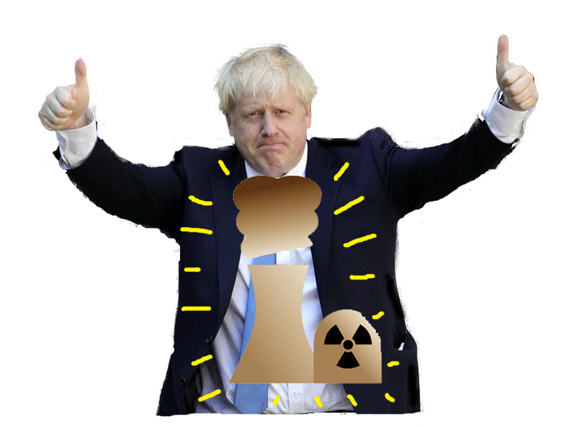
- He is hoping to push through the planned Sizewell C nuclear power station
- The new nuclear power station is expected to cost up to £30billion to build
By JASON GROVES POLITICAL EDITOR FOR THE DAILY MAIL, 29 August 2022
Boris Johnson will call for a massive increase in Britain’s domestic energy production this week, as he signs off on funding for a new nuclear power station.
The Prime Minister is expected to use his final speech in office to insist that a lasting solution to the current energy crisis must include a massive scaling up of the UK’s domestic energy resources.
He is also hoping to push through a decision on funding for the planned new Sizewell C nuclear power station in Suffolk, which would help guarantee Britain’s energy security.
Ministers have agreed in principle to sign off on the Sizewell C plant, which is expected to cost up to £30billion to build.
Whitehall sources suggested that both Liz Truss and Rishi Sunak have been consulted on the deal, which is expected to involve the Government taking a 20 per cent stake costing up to £6billion.
Final negotiations are continuing with French power firm EDF, which will operate the plant.
But Mr Johnson hopes to give the green light this week as a statement of intent on his plan to build one nuclear power station a year…………………………………………….
The result of the Tory leadership contest will be announced on 5 September and Mr Johnson is expected to leave office the following day. https://www.dailymail.co.uk/news/article-11155317/Boris-Johnson-plans-sign-new-30bn-nuclear-plant-final-week-power-sources-say.html
The Saudi path to nuclear weapons — Beyond Nuclear International

Is Riyadh preparing to build the bomb?
The Saudi path to nuclear weapons — Beyond Nuclear International Kingdom’s pursuit of nuclear power development should set off alarm bells
By Henry Sokolski, 328 Aug 22,
Iran’s nuclear program, oil, and human rights dominated Biden’s much-anticipated first presidential trip to the Middle East earlier this month. But there is one topic President Biden chose not to showcase during his visit with Saudi Crown Prince Mohammed Bin Salman Al Saud—the Kingdom’s most recent interest in nuclear energy—and the nuclear weapons proliferation concerns that come with it.
Only weeks before Biden’s visit, Riyadh invited South Korea, Russia, and China to bid on the construction of two large power reactors. On that bid, Korea Electric Power Company (KEPCO) is the most likely winner. KEPCO has already built four reactors for Riyadh’s neighbor, the United Arab Emirates, and is the only vendor to bring a power reactor of its own design online in the Middle East. South Korea also is the only government to provide reliable, generous financing, free of political strings—something neither Moscow nor Beijing can credibly claim.
And then, there’s this: Any Korean sale would be covered by a generous 2011 South Korean nuclear cooperative agreement with Riyadh that explicitly authorizes the Saudis to enrich any uranium it might receive from Seoul. Under the agreement, Riyadh could enrich this material by up to 20 percent, without having to secure Seoul’s prior consent.
That should set off alarm bells.
Do the Saudis want a bomb?
In 2018, Crown Prince Mohammed Bin Salman announced that “if Iran developed a nuclear bomb, we will follow suit as soon as possible.” As if to prove the point, late in 2020, word leaked that the Saudis have been working secretly with the Chinese to mine and process Saudi uranium ore. These are steps toward enriching uranium—and a possible nuclear weapon program.
Unlike the Emirates, which legally renounced enriching uranium or reprocessing spent fuel to separate plutonium, the Kingdom insists on retaining its “right” to enrich. Also, unlike most members of the International Atomic Energy Agency (IAEA), Saudi Arabia refuses to allow intrusive inspections that might help the IAEA find covert nuclear weapons-related activities, if they exist, under a nuclear inspections addendum known as the Additional Protocol.
Saudi Arabia’s enrichment program and refusal to adopt the Additional Protocol, doubled with a possible permissive South Korean reactor sale, could spell trouble. South Korea currently makes its nuclear fuel assemblies using imported uranium, which mainly comes from Australia. This ore is controlled by Australia’s uranium export policy, which requires that the uranium be monitored by the IAEA and that materials derived from it not be retransferred to a third country without first securing Australia’s consent. Yet, if Seoul decides to pass Australian uranium on to Riyadh, the Saudis are free to enrich it up to 20 percent at any time without having to secure anyone’s approval. In addition, Riyadh could proceed to enrich this material without having to agree to intrusive IAEA inspections under the Additional Protocol, making it easier for Riyadh to enrich beyond 20 percent uranium 235 without anyone knowing.
Can Washington block the reactor export?
In Washington, the US nuclear industry understandably is miffed that Riyadh excluded Westinghouse from bidding on the Saudi reactors. Meanwhile, State Department officials say that KEPCO can’t sell Riyadh its APR-1400 reactor because it incorporates US nuclear technology that is property of Westinghouse………………………………..
Does the Republic of Korea need Washington’s blessing to begin enriching uranium itself or to transfer enrichment technology to other countries, such as Saudi Arabia?
The short answer is no…………………………..
how committed is the Biden Administration to prevent Saudi Arabia from enriching uranium and reprocessing spent reactor fuel? …………………….more https://beyondnuclearinternational.org/2022/08/28/the-saudi-path-to-nuclear-weapons/—
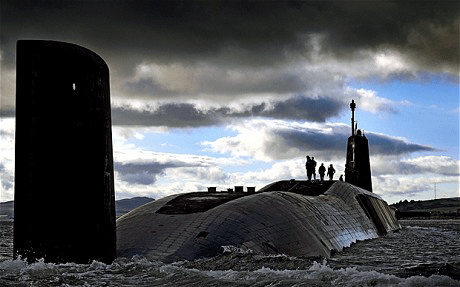
Liz Truss commits to keeping Trident nuclear weapons on the Clyde, despite Scottish opposition to them
The National, By Judith Duffy 28 Aug 22,
TORY leadership frontrunner Liz Truss has vowed to push ahead with renewing Trident if she wins the keys to Downing Street, as part of plans to “protect the UK”.
The Foreign Secretary has already pledged to boost defence spending to 3% of GDP by 2030 – a promise her rival Rishi Sunak has refused to match because he says he does not believe in “arbitrary targets” when it comes to security.
The Truss campaign has now set out her plan to “protect the UK”, including a “full renewal” of the nuclear deterrent, an update to the Government’s Integrated Review, and strengthened support for intelligence services………………………………..
The SNP have long committed to the removal of Trident nuclear missiles after independence.
The White Paper on independence published ahead of the 2014 independence referendum, promised the “speediest safe withdrawal of nuclear weapons from Scotland”.
In May, Nicola Sturgeon said it was her “expectation and hope” that Trident would be removed from the Faslane naval base on the Clyde in the first Holyrood term after a Yes vote. https://www.thenational.scot/news/20800761.liz-truss-commits-keeping-trident-nuclear-weapons-clyde/
China deploys ships and jets near Taiwan — Taipei
The move comes hours after US warships sailed past the self-governed island
https://www.rt.com/news/561681-taiwan-china-strait-tensions/ 28 Aug22,
A sizable group of Chinese military vessels and aircraft has been detected around Taiwan amid heightened tensions in the region, the self-governed island’s Defense Ministry claimed on Sunday.
According to the ministry, eight Chinese Navy vessels and 23 aircraft were detected in Taiwan’s vicinity. Ten planes, it stated, “had flown on the east part of the median line of the Taiwan Strait,” which in practice serves as an unofficial barrier between mainland China and the island.
The Taiwanese military added that local combat air patrol has been given relevant instructions, and that Beijing’s activities are being closely monitored.
The apparent Chinese deployment comes a day after the US sent two warships to the Taiwan Strait, in what the Navy called a “routine” transit mission, meant to “demonstrate the United States’ commitment to a free and open Indo-Pacific.”
Beijing responded by putting its military on high alert and signaling its readiness “to stop any provocations in a timely manner.” Earlier, China also castigated the US, branding it “the destroyer of peace and stability in the Taiwan Strait.”
Tensions in the region have been running high since the controversial visit by US House Speaker Nancy Pelosi to Taipei in early August, which sent relations between Washington and Beijing into a tailspin and triggered a flurry of Chinese military activity in the area. At the time, Chinese Defense Ministry said it had conducted drills simulating a “blockade” of the island, as well as amphibious assaults and the striking of ground targets.
Beijing considers the self-governing island its own territory, and views visits by high-ranking US officials as attacks on its sovereignty and a violation of the ‘One China’ principle. The Taiwan Strait, which separates the self-governed island from mainland China, has been a source of military tension since 1949, when Chinese nationalists fled to the island after losing the Civil War to the Communists.
The murder of Daria Dugina- by a Ukrainian neo-Nazi operative?
Nicolas Cinquini
senior intelligence analyst in the field of security risk management, I am a former lieutenant detective and intelligence officer within French State agencies, 24 Aug 22
Around 9:35 pm, on August 20, 2022, an explosion blows up in Moscow suburb the usual car of Alexandr Dugin, that his daughter, Daria Platonova, is driving alone. The 29-year-old woman is killed
Likely the intended target, her father was traveling in another car. On social networks, the Ukrainian nationalists are celebrating the attack. At 12:12 am, time in Paris, 1:12 am in Moscow, Eliot Higgins bullies on Twitter the father of the victim
43-year-old British national Higgins is a blogger and the founder of Bellingcat, the worst example of what the nerds are calling pompously open source intelligence (OSINT). Their analysis do not need to be reliable, they are supporting a political agenda in post-truth Western societies. That work is public and propaganda. Bellingcat is collaborating with atlanticist think tanks and Western intelligence agencies. Higgins and his fellows are morbid russophobic maniacs.
While Ukraine is losing the war on the battlefield, NATO is assessing an asymmetric strategy : threat of a nuclear catastrophe in Energodar, sabotages in Crimea and likely, political assassinations in Russia, which are terrorism.
60-year-old Aleksandr Dugin is a philosopher, was a dissident during the 80s in Soviet Union. In 1993, he co-founded the National Bolshevik Party (NBP), a scholarly mix of far-right and far-left, which opposed later Vladimir Putin -when Dugin had already left in 1998-, was suspected of preparing an armed uprising, was banned in 2007 as an extremist organization. He was the deputy head of the department of sociology of international relations at Moscow State University from 2009 to 2014, was finally not appointed head, while he was denouncing Maidan as a US coup and was calling for a Russian military involvement in Donbass. He has predicted that in Ukraine, the US would fight until the last Ukrainian. Some Ukrainians are fan of Dugin and Kiev democracy is cracking down on them. He is expressing his will to challenge the atlanticist empire, is pleading for eurasianism as a balance. Dugin is on a US sanctions list since 2014.
His daughter Daria was a journalist and an activist, on a US sanctions list since March 2022. She has written that the massacre in Bucha was staged. I am partly supporting this clear reality, think that the special purpose formations of the Ukrainian national police have also slaughtered collaborationists there.
On August 21, in a murder case so far, the investigators are still working on the site of the attack. In a criminal investigation, the first 48 hours are decisive, deserve a special attention. Little sleep for the detectives
In the afternoon, the authorities state
it has already been established that an explosive device was planted under the bottom of the car on the driver’s side
The understanding of the bomb will be a major step. Was it automatic, remotely controlled ? In the second hypothesis, the perpetrators would have finally decided themselves or received the order to trigger the explosion, despite Alexander Dugin was not onboard.
Spokeswoman of the Russian defense ministry, Maria Zakharova states
Russian law enforcement agencies are investigating the death of Daria Dugina. If the Ukrainian trace is confirmed – and this version was voiced by the head of the DPR Denis Pushilin, and it must be verified by the competent authorities – then we should talk about the policy of state terrorism implemented by the Kyiv regime. There have been plenty of facts accumulated over the years : from political calls for violence to the leadership and participation of Ukrainian state structures in crimes. We are waiting for the results of the investigation
Funny effect in Ukraine, where August 24 is also the day of independence since 1991. Media report that from August 22 to 26, all employees of the government neighborhood in Kiev have been recommended to work from home. I guess COVID is not the issue. Strikes on decision centers are feared and in the evening, large traffic jams appear at the exits of Kiev.
47-year-old Ilya Ponomarev is a wealthy businessman, whose political identity is winding, between communism, pan-slavism and social democracy, likely ambitious and opportunist. Then member of the State Duma, he opposed in 2014 the annexation of Crimea. He is living in exile between California and Kiev. Ukrainian nationalist, fan of historical Nazi leader Stepan Bandera, former president Petro Poroshenko has granted him the Ukrainian nationality in 2019. About 24 hours after the assassination of Daria Platonova, Ponomarev publishes a statement on his YouTube channel, February Morning, takes credit for the attack, on behalf of a so-called [Russian] national republican army (NRA). He states that Daria was indeed the target
As a clue of his intellectual integrity, I notice in his statement that Ponomarev is regarding the Ukrainian war crime in Yelenovka as a Russian attack. With so few scruples, he may be the optimal puppet for NATO and Ukrainian special operations in Russia.
………………………………………… 43-year-old Ukrainian national Natalia Shaban has entered Russia in July, rented an apartment in the victim’s building. She has attended the event where the bomb has been fixed under the victim’s car. After the assassination, she has left for Estonia, a NATO country. Last but not the least, while she is traveling with her 12-year-old daughter, Shaban is a Ukrainian operative, State security agency (SBU) or military intelligence (GUR)
Here is her card of the Ukrainian national guard, Nazi Azov regiment. Her call sign is Vovk [on original]
As a senior intelligence analyst in security risk management, I am watching for six months the Ukrainian PSYOPs and false flag crimes. No surprise, the Ukrainian authorities are denying that new terrorist action, their involvement in the assassination of Daria Platonova. They are denying summarily and do not risk to discuss the facts. No surprise, the US State Department and British media are supporting the Ukrainian deny. The Western communication is story-telling and disinformation.
The office of the United Nations High Commissioner for Human Rights believes that those responsible for murder of journalist Daria Dugina should be brought to justice. I agree, extrajudicial denazification should be an ultimate solution, if countries prevent the suspect from appearing before a Russian court.
………….. Russian news agency RIA Novosti reports that Natalia Shaban / Vovk entered Russia in July with a Kazakh passport under the false identity of Yulia Zayko, born on December 26, 1980……………… https://nicolascinquini.blog/2022/08/21/ukrainian-terrorism-in-moscow/
Busting the absurd pro-nuclear spin of “Ecomodernism”

Dave Elliott: The human species should, as far as possible, retreat from the natural world and live in high density urban settings’, enabled by high technology such as nuclear power, nuclear being well suited since it is a high density energy source. So says Prof Bill Nuttall in thenconclusions to the second edition of his book on the supposed ‘Nuclear Renaissance’- see my last post.
Backing the ‘ecomodernist’ agenda, he says ‘Humanity should learn to resist the temptation to live in harmony with nature, but should give all the other species with which we share this planet, space to do their own thing free from the risks of environmental collapse that the last ten generations of human beings have brought to the planet’.
But maybe the gods are with us on green energy. The prognosis
certainly looks good, with, in a new IEEE paper, researchers from LUT
University in Finland and 14 other leading international universities
looking at the wide range of global and local ‘100% renewable’ studies
that has emerged in recent years and claiming that there is growing
consensus that an energy system based on 100% renewables could be achieved
cost effectively by 2050.
Studies now claim that the cost of the transition need not be prohibitive. Indeed, all of the up-front costs for switching to100% renewable energy could it seems be paid back in just six years!
Provocative stuff – especially given the huge economic problems facing
much of the nuclear energy sector just now.
Renew Extra Weekly 27th Aug 2022
https://renewextraweekly.blogspot.com/2022/08/as-above-so-below-will-energy-gods.html
Fears of ‘radiation cloud through Europe’ if Ukraine plant blows.
Nuclear horror warning: Fears of ‘radiation cloud through Europe’ if
Ukraine plant blows. NUCLEAR power expert Dr Paul Dorfman has issued a
stark warning over the dangers of military aggression close to the
Zaporizhzhia plant in Ukraine. Dr Dorfman added: “Radiation doesn’t
respect national boundaries, it’s a question of where the wind blows.
“What we’ve seen here is the weaponisation of civil nuclear, something
a number of people have been worrying about for a significant time now.
“The key takeaway from this is, if and when we get through this, what
does that imply for current and any prospective nuclear in the context of
an unstable world?”
Express 26th Aug 2022
Meeting on Nuclear Non Proliferation Treaty ends in failure, as Russia blocks final draft
A month-long meeting on nuclear disarmament ended in failure at the United
Nations Friday night when Russia refused to accept the final draft of the
Treaty on the Non-Proliferation of Nuclear Weapons. The treaty is reviewed
every five years as part of an effort to reduce nuclear risks and stop the
expansion of nuclear arsenals around the world. The failure of the
negotiations came amid disagreements over Russia’s invasion of Ukraine,
which has entered its sixth month.
CNN 27th Aug 2022
‘Peacemaker’ of death: This Ukrainian website threatens hundreds of thousands with extrajudicial killings — some are Americans
And every time someone unlucky enough to have had his or her home address or other personal data revealed turns up dead, the site is updated: the name of the deceased now appears in bright flickering letters reminiscent of a Las Vegas casino, and the person’s photo is crossed out with the callous inscription: ‘liquidated’.
Rt.com, By Olga Sukharevskaya, ex-Ukrainian diplomat, 28 Aug 22,
Mirotvorets, which compiles lists of ‘enemies of Ukraine’, has been operating with impunity for eight years
For the last eight years, a group of publicly unknown activists in Ukraine have been compiling lists of ‘enemies of the people’ with impunity. Hundreds of thousands have been declared criminals without trial.
Among them are not only Russian citizens, but also Ukrainian opposition figures and bloggers, European politicians, and US citizens. At the very least, being added to this list is a stigma that makes life difficult in Ukraine, but it can also serve as justification for imprisonment or, in some cases, even being killed. This is exactly what happened last weekend to Daria Dugina, daughter of world-famous Russian philosopher Alexander Dugin, who’s name also can be found on that list.
RT explains what is behind the Mirotvorets, or ‘Peacemaker’, website, whose creators seek to bring ‘peace’ to their country with the help of extrajudicial killings, and why the Ukrainian authorities have done nothing about this despite condemnation from the international community.
What is Mirotvorets?
The main page of the Ukrainian Mirotvorets website proclaims that the outlet represents a ‘Center for Research of Signs of Crimes against the National Security of Ukraine, Peace, Humanity, and the International Law’. It claims to have been created by a group of academics, journalists, and other specialists. However, their names are known to no one, and the outfit itself has never even been officially registered in Ukraine.
Nevertheless, this organization has been in operation for nine years, since August 2014. And although it positions itself as “independent, non-state media,” government officials still had a hand in its creation. In fact, the website emerged at the initiative of Anton Gerashchenko, a former adviser to the Ukrainian minister of internal affairs.
Mirotvorets’ activities boil down to publishing personal information on people who the site’s administrators consider a threat, in one way or another, to Ukrainian statehood.
The site’s owners urge the country’s law enforcement agencies to take note of the personal data and activities of the people it lists. However, street radicals sometimes also take heed of Mirotvorets’ lists.
And every time someone unlucky enough to have had his or her home address or other personal data revealed turns up dead, the site is updated: the name of the deceased now appears in bright flickering letters reminiscent of a Las Vegas casino, and the person’s photo is crossed out with the callous inscription: ‘liquidated’.
For example, the current Mirotvorets’ web page design displays this way the data of the Russian journalist Darya Dugina, daughter of the philosopher Aleksandr, who was brutally killed last weekend in her own car.
Despite the accusations from the Russian FSB, Ukraine denies any involvement in that murder. On Mirotvorets, however, Dugina’s death is described with a brief, dehumanizing commentary, along with a conspiracy theory: “Liquidated by the special services of fascist russia (sic) due to interspecies disagreements.”
Who gets on the Mirotvorets lists and how?…………………………..
Mirotvorets not only accuses people of committing ‘crimes’ but also includes more abstract offenses in its lists, such as producing “anti-Ukrainian propaganda” and “participating in anti-Ukrainian propaganda events.” The list even has a section for “agents of influence of the Russian Orthodox Church in Ukraine.” However, such areas are regulated by articles 9-11 of the ‘European Convention on Human Rights’, which concern freedom of expression, conscience, religion, thought, assembly, and association. The Mirotvorets center’s administrators are essentially seeking to deprive people whose opinions and beliefs do not suit them of their right to expression.
In addition, in the site’s ‘On Interaction and Cooperation with the Center’ section, there is a sample form for reporting personal information on ‘criminals’ and their relatives, which includes fields for addresses, phone numbers, photos, links to social network profiles, and their ‘crime’ (i.e., categorization as ‘militant’ or ‘terrorist’), all without trial or investigation.
The ‘criminals’ on public display, along with their wives, children, and parents, don’t even know they’re in ‘Purgatory’, let alone given a chance to defend themselves or cross-examine witnesses and confront their accusers.
A scandal in the noble family
As long as Mirotvorets was limiting itself to publishing information on Ukrainian citizens living in Crimea and Donbass, Ukrainian opposition politicians and journalists, and Russian residents and officials, the odious organization went unnoticed in the ‘civilized world’. But a scandal erupted in 2016, when Mirotvorets published information on employees of a host of media outlets, including the BBC, Reuters, Al Jazeera, AFP, Le Monde, the Guardian, Le Figaro, France 24, El Mundo, CBS News, CNN, Sky News, The Daily Telegraph, The Times, Cheska Televize, Radio France, Channel 9 Australia, the Associated Press, Japan TV, the Daily Mail, Die Welt, the Washington Post and New York Times, as well as representatives of Human Rights Watch and many other organizations, for “cooperating with a terrorist organization” (i.e., the Donetsk and Lugansk People’s Republics).
US State Department spokeswoman Elizabeth Trudeau noted at the time that the US was “very concerned about the hacking of a database and publication of personal information about journalists in combat areas.”
………….. In addition to journalists and human rights defenders, politicians have also made it into Mirotvorets’ database. The website published information on German Bundestag deputies who visited Crimea, a list that includes Evgeny Schmidt, Rainer Balzer, Gunar Lindeman, Harold Latch, Nick Vogel, Helmut Seifen, and Blakes Christian.
Ten US citizens, as well as French actor Samy Naceri, were relegated to ‘Purgatory’ for the same ‘offense’. According to the website, the Greek ‘enemies of Ukraine’ include former Energy Minister Panagiotis Lafazanis, cartoonist Stathis Stavropoulos, retired Air Force Lieutenant General Pavlos Hristou, and ‘Russian Athens’ editor Pavel Onoiko. While former Greek Prime Minister Alexis Tsipras also visited Crimea, he was removed from the database after expressing support for Petro Poroshenko. Top-tier politicians are also represented in Mirotvorets’ lists. Former German Chancellor Gerhard Schroeder can be found there, while Croatian President Zoran Milanovic and Hungarian Prime Minister Viktor Orban have also been recently added, as has authoritative American diplomat Henry Kissinger.
………….. Benjamin Moreau, deputy head of the UN’s human rights monitoring mission in Ukraine, stressed that the problem is moving from a purely legal to a practical one: some banks refuse to issue loans to persons included in the Mirotvorets database.
…………………… Closing Mirotvorets
There have been repeated demands to shut down the website. In 2018, Germany joined the chorus of journalists and human rights activists protesting Gerhard Schroeder’s inclusion in the database. According to the Cabinet of Ministers, “the Government of the Federal Republic of Germany most definitely condemns Mirotvorets and demands that the Ukrainian government and authorities assist in its removal.”
…………………… The Mirotvorets site is still up and continually updated with new data to this day. https://www.rt.com/russia/560965-ukrainian-mirotvorets-website/
Are Russia and NATO trying to destroy the nuclear Non-Proliferation Treaty?

Not only will they not begin negotiations to eliminate their nuclear arsenals, as they promised decades ago; they will not even pledge not to start World War III.
Russia and NATO aren’t afraid to start World War III
Wrecking ball — Beyond Nuclear International By Ira Helfand 28 Aug 22, Since it was adopted more than 50 years ago, the Treaty on the Non-Proliferation of Nuclear Weapons (NPT) has been described as the cornerstone of international efforts to limit the danger of nuclear war, its preservation a key, shared policy objective of the P5, the five permanent members of the United Nations Security Council. In the lead-up to this year’s NPT Review Conference, which opened on August 1 in New York, Russia and NATO are putting the treaty at risk.
The NPT was conceived as a grand bargain between nations who did not have nuclear weapons and promised not to develop them and the P5, who did have them in 1968 and promised, in Article VI of the treaty, to undertake good faith negotiations to eliminate their nuclear arsenals.
In the five decades since, these five nuclear-armed states have continued to insist that other signatories to the treaty honor their commitment not to build nuclear weapons, but they have never seriously considered meeting their obligations to disarm.
Tension over this blatant failure to uphold their end of the bargain has been growing for years and helped fuel the 2017 adoption by 121 non-nuclear-armed states of the Treaty on the Prohibition of Nuclear Weapons, a new treaty consistent with Article VI and intended to pressure the countries that have nuclear weapons to meet their obligations to get rid of them.
The gap between the promises of the P5 and their behavior has grown into a chasm since the Russian invasion of Ukraine. Russia has made repeated threats to use nuclear weapons and NATO — representing France, the United Kingdom and the United States — has replied with nuclear threats of its own.
Responding to this escalating danger of nuclear war, 18 Nobel Peace Laureates issued a statement in April urging Russia and NATO to pledge publicly that they will not use nuclear weapons under any circumstances in the current war. The statement was endorsed by more than 1 million people after it was posted to the Avaaz website. The response from Russia and NATO was a thunderous silence.
It is now clear: Not only will they not begin negotiations to eliminate their nuclear arsenals, as they promised decades ago; they will not even pledge not to start World War III…………………………….
The current threats by Russia and NATO reveal the truth: Nuclear-armed states possess these weapons to threaten and bully the rest of the world — and they are prepared to use them. As former Defense Secretary Robert McNamara famously observed, we have not avoided nuclear war because of sound doctrine or wise leaders or infallible technology. “We lucked out,” he said. “It was luck that prevented nuclear war.”……….. more https://beyondnuclearinternational.org/2022/08/28/wrecking-ball/
A nuclear showdown? One of the greatest ‘realist’ fears about the Russia-Ukraine conflict is actually groundless, and here’s why
The US will not intervene directly, because it’s not an existential crisis for Washington – it stands to lose little from Kiev’s inevitable defeat.
the Ukraine conflict is not an existential one for either the US or NATO; a loss in Ukraine will be another setback – Afghanistan on steroids. But a Ukrainian defeat does not, in and of itself, threaten NATO with collapse or spell the end of the American Republic.
Scott Ritter, 23 Aug 22, Fears that the Ukraine conflict is now bogged down into some sort of stalemate which risks dangerous escalation from the parties involved in order to achieve victory are misplaced. There is only one victor in the Ukraine conflict, and that is Russia. Nothing can change this reality.
Renowned American intellectual John Mearsheimer has written an important article about the conflict, entitled: ‘Playing with Fire in Ukraine: The Underappreciated Risks of Catastrophic Escalation’. The article paints a dark picture about both the nature of the war in Ukraine (prolonged stalemate) and probable outcome (decisive escalation by the parties involved to stave off defeat
Mearsheimer’s underpinning premises, however, are fundamentally flawed. Russia possesses the strategic initiative – militarily, politically, and economically – when it comes to the war in Ukraine and the larger proxy engagement with NATO. Moreover, neither the US nor NATO is in a position to escalate, decisively or otherwise, to thwart a Russian victory, and Russia has no need for any similar escalation on its part.
In short, the Ukraine conflict is over, and Russia has won. All that remains is a long and bloody mopping up.
The key to understanding how Mearsheimer got it so wrong is to dissect his understanding of the ambitions of both the US and Russia when it comes to the issue. According to Mearsheimer, “Since the war began, both Moscow and Washington have raised their ambitions significantly, and both are now deeply committed to winning the war and achieving formidable political aims.”
This passage is especially difficult to parse out. First and foremost, it is extremely difficult to articulate a sound baseline when it comes to assessing US “ambitions” vis-à-vis Ukraine and Russia. President Joe Biden’s administration inherited a policy which had been conceived in the George W. Bush-era and partially implemented under the team of Barack Obama (where Biden played a critical role). This was a very aggressive policy geared toward undermining Russia with the goal of weakening the Russian president, Vladimir Putin, to such an extent that eventually he would be replaced by a figure more amenable to adhering to a US-dictated policy line.
But one cannot pretend that there were not four years of Trump administration policy which threw the anti-Putin – and, by extension, anti-Russia – narrative promulgated by the Obama administration on its head. While Trump was never able to gain traction for his ‘why can’t we be friends’ approach to US-Russian diplomacy, he was able to seriously undermine two major policy pillars which propped the Obama-era policy up, namely NATO unity and Ukrainian solidarity.
The Biden administration was never able to resuscitate the Obama-era policy direction regarding Russia, inclusive of its anti-Putin goals and objectives. Trump’s undermining of NATO’s unity and purpose, when combined with the humiliating pull-out from Afghanistan, put the bloc on the back foot when it came to standing up to the challenge of a Russian state determined to be more assertive about what it viewed as its legitimate national security interests, inclusive of a new European security framework respectful of the notion of a Russian ‘sphere of influence’.
……………………………. neither the US military nor its NATO allies are able to generate the kind of meaningful military capability needed to effectively challenge Russia on the ground in Ukraine.
This reality severely limits the scope and scale of any possible US ambitions regarding Ukraine. At the end of the day, Washington has only one path forward – to continue to waste billions of dollars of taxpayers’ money sending military equipment to Ukraine, which has no chance of changing the outcome on the battlefield, to convince a domestic American audience that their government is ‘doing the right thing’ in a losing effort.
There is no ‘military option’ in Ukraine for either the US or NATO because, simply put, there is no military capable of meaningfully executing such an option.
This conclusion is critical to understanding Russia’s ‘ambitions’. Unlike the US, Russia has articulated clear and concise objectives regarding its decision to dispatch military forces into Ukraine. These can be described as follows: Permanent Ukrainian neutrality (i.e., no NATO membership), the de-Nazification of Ukraine (the permanent eradication of the odious nationalistic ideology of Stepan Bandera), and the de-militarization of the state – the destruction and elimination of all traces of NATO involvement in the security affairs of Ukraine.
These three objectives only reflect the immediate goals of the Special Military Operation in Ukraine. The ultimate objective – a restructured European security framework that has all NATO infrastructure withdrawn to the 1997 boundaries of that alliance – remains as a non-negotiable requirement that will have to be addressed after Russia secures its final military and political victory in Ukraine.
In short, Russia is winning on the ground in Ukraine, and there is nothing either the US or NATO can do to alter this outcome. And once Russia secures this victory, it will be in a far stronger position to insist that its concerns about a viable European security framework be respected and implemented.
Mearsheimer believes that the situation on the ground in Ukraine provides both the US and Russia with “powerful incentives to find ways to prevail and, more important, to avoid losing.”
At the end of the day, the Ukraine conflict is not an existential one for either the US or NATO; a loss in Ukraine will be another setback – Afghanistan on steroids. But a Ukrainian defeat does not, in and of itself, threaten NATO with collapse or spell the end of the American Republic.
Simply put, Mearsheimer’s fear that a loss in Ukraine “means that the United States might join the fighting either if it is desperate to win or to prevent Ukraine from losing” is unfounded.
So, too, is his contention that “Russia might use nuclear weapons if it is desperate to win or faces imminent defeat, which would be likely if US forces were drawn into the fighting.” Russia neither “faces defeat” nor has anything to worry about, existentially, from a US military intervention which, from all practical points of view, could not materialize even if the US wanted to be so bold…… https://www.rt.com/russia/561376-ukraine-russia-conflict-us/
Pakistan’s desperate plight after monster flooding
Pakistan is appealing for further international assistance after floods
wreaked havoc across the country. The US, UK, United Arab Emirates and
others have contributed to a monsoon disaster appeal but more funds are
needed, an interior ministry official told the BBC. More than 1,000 people
have died and millions have been displaced since June, Salman Sufi said. He
said Pakistan’s government was doing everything in its power to help
people.
BBC 28th Aug 2022
The government is planning to “promote” nuclear power plants…but there are so many difficulties to overcome before this can be realized, and there are doubts about the assurance of safety and security

August 25, 2022
The government aims to make a major change in its nuclear energy policy, which has denied the construction of new nuclear power plants since the accident at TEPCO’s Fukushima Daiichi Nuclear Power Station on August 24. The government also plans to consider extending the operating periods of existing nuclear power plants again and to further promote their restart. The government is moving forward with the use of nuclear power plants because of the tight power supply and demand caused by the crisis in Ukraine. However, there are serious doubts about the safety and security of nuclear power plants, and it is not clear whether the public will understand this. (The government is now considering the use of nuclear power plants.)
The government is clearly stating that it is “considering” the construction of new and additional nuclear power plants…The government is promoting the extension of the operation period and the restart of a total of 17 reactors.
◆Next generation nuclear reactors” – Technology not yet established
We will discuss all options for a stable energy supply. We will discuss all options for a stable energy supply and will not rule out the construction of new reactors. Yuji Iida, director general of the Economic and Industrial Policy Bureau of the Ministry of Economy, Trade and Industry (METI), emphasized this before the Green Transformation (GX) Executive Conference, which was held on March 24 to discuss decarbonization policies.
The “Basic Energy Plan” approved by the Cabinet last October did not mention the construction of new nuclear power plants, and successive prime ministers have repeatedly stated that it was not envisioned at this time. Conscious of public sentiment in the aftermath of the nuclear accident, the government has avoided going into the issue.
The new plants to be considered this time are not existing nuclear power plants, but next-generation models, such as nuclear power plants with improved accident countermeasures and small reactors. Although the government emphasizes safety, many of these next-generation reactors are still in the process of being tested overseas, and it is difficult to say that they have been established as commercial power generation facilities.
One official at an electric power company commented, “We don’t have the capacity to build new reactors when we can’t even restart existing nuclear power plants. The first step is to operate the current nuclear power plants and restore their technological capabilities.
◆ Extension of operating period: Regulatory Commission not optimistic
In 2013, after the Fukushima accident, the law was amended to set the operating period of nuclear power plants at 40 years in principle, and to allow for a one-time extension of 20 years. The law was amended in 2013 after the Fukushima accident to allow for a one-time 20-year extension of the 40-year operating period. Four reactors were approved by the Nuclear Regulation Authority (NRA), of which Kansai Electric Power’s Mihama Unit 3 (Fukui Prefecture) has restarted.
If the units are operated for more than 60 years, which would mean a re-extension, the law may need to be revised again. At a press conference on March 24, Chairman Toyoshi Sarada of the Regulatory Commission said, “Detailed technical discussions are needed. In the U.S., operation for 80 years is permitted, but Mr. Sarada pointed out that “Japan has many earthquakes, and we should not be dragged down by foreign countries.
◆ Seven new reactors restarted → Inadequate anti-terrorism and evacuation plans hindering operations
The government has also set a target of restarting seven reactors at five nuclear power plants that have yet to be restarted, although they meet the new regulatory standards, sometime after next summer or winter.
In April of last year, the regulatory commission ordered a de facto ban on the operation of TEPCO’s Kashiwazaki Kariwa Nuclear Power Station in Niigata Prefecture because of a problem with a faulty intrusion detector that had been left unattended. The order was not lifted until the plant was found to be in an improved condition, and its inspections have continued.
Furthermore, Niigata Prefecture has made its own verification work a condition for whether or not it will agree to restart the plant, and the completion of the work is “not foreseeable” (Prefectural Nuclear Safety Division). In light of the inadequacies of the anti-terrorism measures, even a member of the Liberal Democratic Party’s prefectural assembly, which is pro-nuclear power generation, has voiced his desire not to have TEPCO operate the plant, and the sense of distrust is deep-rooted.
The Japan Atomic Power Company’s Tokai No. 2 Nuclear Power Plant in Ibaraki Prefecture has more than 900,000 people living within a 30-kilometer evacuation zone, the largest in the nation, and the plan has been extremely difficult to formulate. In addition to the prefectural government, only five of the 14 municipalities in the prefecture have been able to formulate a plan. In addition, the Mito District Court ordered an injunction against the operation of the plant last March, citing problems with the effectiveness of the evacuation plan.
There is almost no chance that both reactors will be able to operate within the government’s target of a little over a year.
https://www.tokyo-np.co.jp/article/197879
The legacy of Shinzo Abe: a Japan divided about nuclear weapons

August 24, 2022
On August 1, Prime Minister Fumio Kishida became the first Japanese leader to ever attend the Review Conference for the Treaty on the Non-Proliferation of Nuclear Weapons (NPT), which is taking place this month at UN headquarters in New York. Kishida, whose family hails from Hiroshima, is one of the very few voices within Japan’s ruling party, the Liberal Democratic Party (LDP), to consistently emphasize the humanitarian impacts of the use of nuclear weapons and Japan’s unwavering commitment to nuclear disarmament. This contrasts with his most-recognized predecessor, former Prime Minister Shinzo Abe, whose assassination on July 8, 2022, shocked the entire world.
Abe’s views about nuclear weapons. Shinzo Abe was known to hold views that underscored the effectiveness of nuclear deterrence and the usefulness of nuclear weapons. He even hinted at the possibility that Japan could one day acquire such weapons. During his eight years as prime minister, Abe made Japan’s ambivalent nuclear policy emphasize the importance of the US nuclear umbrella. In doing so, he shifted further away from the brief momentum in favor of nuclear disarmament created by former US President Barack Obama and Abe’s predecessors. From 2012 to 2020, Abe’s second term[1] was marked by heightened tensions and a rapidly deteriorating regional security environment—from China’s aggressive military buildup advancing claims in the East China Sea to North Korea’s increasing nuclear and missile capabilities. In February 2017, during a visit to US President Donald Trump in Washington, Abe successfully obtained reassurance about the unwavering “U.S. commitment to defend Japan through the full range of U.S. military capabilities, both nuclear and conventional.” One year later, in another remarkable sign of Abe’s focus on the role of nuclear weapons, his Foreign Minister Taro Kono issued swift and unequivocal praise of President Trump’s Nuclear Posture Review.
The increasingly tense regional security environment over the past 10 years may certainly have influenced the Abe government’s nuclear views. But Abe’s focus on nuclear weapons started before 2012. Shinzo Abe’s political rhetoric certainly caused several uproars among the Japanese public throughout his political career. But its analysis provides a useful glimpse into his and his party’s nuclear thinking. In one famous example, in May 2002, Shinzo Abe reportedly told students at Waseda University: “The possession of nuclear bombs is constitutional, so long as they are small.”[2] Then Japan’s deputy chief cabinet secretary, Abe was undeterred by the public outcry that followed his remarks and will maintain his views for the rest of his career.
Two decades later, as Russia was invading Ukraine, Shinzo Abe said on television that Japan needs to discuss the option of a NATO-style nuclear-sharing agreement with the United States. This was an apparent revision by Abe of the third principle of Japan’s Three Non-Nuclear Principles, which states Japan shall never permit the introduction of nuclear weapons into its territory. Japan’s Three Non-Nuclear Principles of not possessing, not producing, and not introducing nuclear weapons were established in 1967 by Prime Minister Eisaku Sato, Abe’s great-uncle. Although these principles were never made into law, they are still viewed as the cornerstone of Japan’s official nuclear policy to this day.
In his February 2022 television interview, Abe did try to stand by these principles, saying: “Japan is a party to the Nuclear Non-Proliferation Treaty (NPT) and has the Three Non-Nuclear Principles. As a country that has suffered atomic bombings, it is important to move toward the goal of nuclear abolition.” Still, his remarks about nuclear sharing were harshly criticized by the Hibakusha community—the survivors of the atomic bombings of Hiroshima and Nagasaki in August 1945.
A long political tradition of rhetorical ambivalence. Shinzo Abe’s positive view about the potential value of nuclear weapons for Japan was certainly not unique among Japanese politicians and has been shared by many within the LDP. Several of Abe’s government ministers spoke publicly in favor of the nuclear option or answered that “Japan should consider acquiring nuclear weapons if the international situation calls for it” in surveys by the Mainichi Shimbun, one of Japan’s major newspapers. These included Abe himself, former Deputy Prime Minister Taro Aso, and five former defense ministers. Shinzo Abe’s younger brother and current Defense Minister Nobuo Kishi gave the same response to the Mainichi survey in 2012, although in 2020 he ruled out the nuclear option and publicly supported the Three Non-Nuclear Principles.
Abe’s 2002 assertion about the legality of possessing nuclear weapons under the Japanese Constitution has been made several times by Japanese politicians since the 1950s. For instance, Prime Minister Nobusuke Kishi—Abe’s grandfather—stated in May 1957 during a session of the Diet (Japan’s parliament) that the postwar Constitution did not explicitly forbid Japan from possessing nuclear weapons if they were small. This caused several members of the Diet to interrogate Kishi at the time. Later, during a Diet session in April 1968, a socialist member asked State Minister Kaneshichi Masuda to clarify his position on Japan’s security arrangement with the United States, to which Masuda responded, I translate, “the Constitution, indeed, does not forbid Japan to possess tactical nuclear weapons if they’re solely for self-defense. … Just like the Constitution does not forbid the entry of another country’s nuclear weapons.” But Masuda immediately added that the Three Non-Nuclear Principles are here to cover that loophole.
In March 1973, Prime Minister Kakuei Tanaka also reaffirmed the Three Non-Nuclear Principles. But this time, he added that “while [Japan is] not able to have offensive nuclear weapons, we are not saying that we will have no nuclear weapons at all.” “[S]trategic nuclear weapons are offensive in character and tactical nuclear weapons are defensive,” Tanaka explained, and “defensive nuclear weapons are constitutional.” A similar argument was made by Prime Minister Takeo Fukuda in 1978 during a Diet debate: “[A]rticle 9 of the Constitution does not prohibit the possession of nuclear weapons by Japan. Japan can have them if their purpose is for a minimum level of defense. However, Japan also has the Three Non-Nuclear Principles.”
Shinzo Abe’s position of questioning the limits of Japan’s non-nuclear policy is therefore part of a long political tradition advancing the idea that nuclear weapons might be a possibility for Japan.
Getting rid of Japan’s non-nuclear policy? The long-standing reluctance by Japanese elites to publicly discuss nuclear weapons for Japan, called “the nuclear taboo,” derives from the strong public aversion to such weapons. This aversion was amplified after the Lucky Dragon no. 5 incident on March 1, 1954, when a Japanese fishing boat was contaminated by the nuclear fallout from the US nuclear test at Bikini Atoll. From that day, whenever a Japanese politician even mentioned nuclear weapons, the public reacted very strongly and stayed skeptical of any rhetoric that might suggest the non-nuclear principles and Japan’s status as a Hibakukoku—a country that suffered atomic bombings—not be upheld. Japanese officials and LDP members together have lamented that discussions over a nuclear Japan are still considered taboo. Former Defense Minister Shigeru Ishiba commented in 2017: “How can we take any responsibility if the Three Non-Nuclear Principles are actually four: not possessing, not producing, not introducing, and not even discussing nuclear weapons?” The gap between what the public expects Japanese politicians to say—and not say—and the LDP’s rhetoric about nuclear weapons truly reveals the ambivalence of the country’s official nuclear policy, which has been in place since the end of World War II.
In an ill-timed and bold rhetorical shift, however, Abe omitted the usual pledge to uphold the Three Non-Nuclear Principles in his Hiroshima speech on August 6, 2015. The omission, during the official ceremony commemorating the 70th anniversary of the atomic bombings, caused great anxiety among many and prompted angered responses from the Hibakusha community. Anti-nuclear activist and Hibakusha Tomoyuki Mimaki noted: “It seems like the government is disrespecting the Three Non-Nuclear Principles.” Another activist, Kazuo Okoshi, commented: “Some politicians advocate for nuclearization. This is proof that the Three Non-Nuclear Principles are weakening.” Probably in response to the public outcry following his omission, Abe did mention the Three Non-Nuclear Principles in his speech in Nagasaki three days later. In doing so, Abe was reassuring the Japanese that there would be no change to the official nuclear policy.
This long history of mixed messages and rhetorical mishaps by leaders of Japan’s ruling party can be read as the inevitable consequence of the country’s ambiguous nuclear policy, swinging between effective nuclear deterrence and global nuclear disarmament aspirations. But this posture can be also understood as creating a hedging strategy about nuclear weapons perceived as necessary by many within the LDP. Politicians of the ruling party may indeed have seen it as advantageous for Japan to flash the “nuclear card” from time to time while still referring to the Three Non-Nuclear Principles.
Talking to different audiences. The ambivalent nature of Japan’s nuclear policy may appear useful in catering to different audiences at home and abroad. The first and most obvious audience intended to receive signaling about the nuclear card consists of Japan’s regional adversaries, especially China. Statements about the constitutional right to possess nuclear weapons exemplify such rhetoric and are partly aimed at keeping Japan’s adversaries uncertain about their neighbor’s ultimate security intentions. As former Executive Director of the International Energy Agency Nobuo Tanaka wrote in 2018: “[G]iven recent geopolitical developments in Northeast Asia, eliminating Japan’s nuclear capability could be very unwise. If so, whether and how we should maintain Japan’s nuclear capability needs to include the national security perspective as part of a serious public discussion. Japan will never ever build nuclear weapons, and yet being suspected of doing so by some of its neighbors, is probably the strongest national security reason for Japan to continue to use nuclear power.”
The second audience is domestic. Japan is widely viewed as a nuclear threshold state, as it has significant latent capabilities due to its highly advanced nuclear fuel cycle technologies. That Japan refuses to develop nuclear weapons despite its latent nuclear status has been used by Japanese officials to reassure the public about the security of the archipelago, while keeping its moral stance vis-à-vis global peace. Possessing latent nuclear capabilities yet not going nuclear is indeed considered proof that Japan is an international role model and fits in the official narrative that Japan is a bridge-builder between nuclear and non-nuclear states. At the same time, because this rhetoric is ambiguous, it also provides Japanese leaders with another way to remind the public of the country’s potential to go nuclear, if it decides to.
The first recorded instance of such reassurance discourse dates from 1958. In his memoirs published in 1983, Prime Minister Nobusuke Kishi wrote after a visit to the new Tokai-mura nuclear facility “Japan does not have nuclear weapons, but by showing that we possess the technology to build them, we can increase our political leverage at the international level when it comes to disarmament issues and nuclear testing.”
A more explicit version of this argument features in a Diet debate in October 2006, when Akira Amari, minister of economy, trade, and industry under Shinzo Abe’s first premiership, stated, I translate: “Japan has the capabilities [to go nuclear], but doesn’t. The fact that Japan declares that it has no intention of doing so while maintaining those capabilities is what truly makes Japan’s policy convincing. If a country that doesn’t have the capabilities to go nuclear declares that it will not go nuclear, it is just lip service. However, Japan does have the technical capabilities, yet it asserts that it will not go nuclear: this is exactly what makes Japan a credible and persuasive advocate for the abolition of nuclear weapons around the world.” In other words, retaining nuclear latency adds credibility to disarmament matters.
The third audience is the United States, with which Abe has been particularly keen to engage. On some occasions, nuclear statements made by Japanese officials have alluded to a “nuclear option.” These were directed to the United States and meant to test its commitment to defend Japan. Commenting on North Korea’s nuclear test and ballistic missile launch of early 2016, Abe stated, in presence of US Pacific Commander Admiral Harry Harris, that “[t]he missile launch by North Korea was not only a direct threat to Japan but also a challenge to the United States.” Japanese political scientist Shogo Imoto commented at the time: “It is clearly an exaggeration to state that Mr. Abe is thinking of nuclear weapons for Japan. However, I interpret [his quote] as the following: ‘If the United States abandons Japan now and runs away from the North Korean threat, Japan will seriously consider a shift in its policy and nuclearize. Japan wants the United States to be fully aware of this as you tackle the North Korean issue.’”
These messages have appeared each time Japan felt its regional environment was becoming more challenging, as happened in December 1964 when Japan’s Prime Minister Eisaku Sato reportedly told US ambassador Edwin Reischauer that Japan could develop nuclear weapons. Sato’s remarks were made after China had conducted its first successful nuclear bomb test in October 1964.
The fourth and last audience is the most conservative part of the Japanese public. Using the slogan “Take Japan back” (Nippon wo torimodosu), Abe’s campaign for a second term appeared to go beyond the mainstream conservatism of LDP politicians and revealed the prime minister’s overtly nationalistic values and agenda. When Abe rose to power for the second time in 2012, many Japanese and international analysts warned about his revisionist and nationalist views and the regional instability they could cause. Some analysts even labeled Abe as “the most conservative leader in Japan’s postwar history.” Abe, however, quickly managed to eclipse his nationalist label by skillfully handling newly elected US President Donald Trump and even enjoyed a new reputation as a proactive diplomat seeking engagement and mediation. But in the nuclear rhetoric of Shinzo Abe, as of his closest allies, one could still find hints and allusions to nuclear weapons’ prestige and relevance to international politics.
Abe’s nuclear legacy. The deeply ambivalent messages that paved Abe’s political career point to the perception by LDP leaders that a nuclear stance needs to simultaneously address all four audiences—adversaries, allies, the Japanese public, as well as its most conservative fraction. But Shinzo Abe’s views on nuclear weapons do not only reflect the longstanding strategy of his party. His continued, strong emphasis on the need for nuclear deterrence also resulted in a sharper divide and a greater hostility between the government and largely anti-nuclear public opinion in Japan. Moreover, even though Abe’s views were not at odds with the LDP, his government’s reliance on nuclear deterrence uniquely contributed to consolidating Japan’s nuclear hedging posture even further. The delays and hesitation by Abe’s government in presenting a clear roadmap for the management of the country’s plutonium stockpile as well as its nuclear energy policy also exacerbated the distrust of the public, still embittered by how the government managed the aftermath of the 2011 Fukushima nuclear disaster.
Japan’s current prime minister, Fumio Kishida, is now highlighting Japan’s goal of nuclear disarmament and publicly rejected Abe’s idea of nuclear sharing. But the country’s nuclear hedging posture is so entrenched in the political thinking of the LDP’s leadership that it is highly unlikely Japan’s ambivalent nuclear policy will change in the foreseeable future.
Kishida’s speech on August 1 at the United Nations on the first day of the NPT Review Conference already drew harsh criticism from the Hibakusha community for failing to mention the Treaty on the Prohibition of Nuclear Weapons (TPNW, also called the “ban treaty”) and for not clarifying Japan’s future role in nuclear disarmament. Kishida’s efforts to re-center the country’s nuclear policy towards disarmament may be sincere, but it will have to overcome the wide gap between the public and the government that Abe’s focus on nuclear deterrence further exacerbated.
Through his security-oriented nuclear views, Shinzo Abe attempted to diminish the Japanese public’s long-standing allergy to and the country’s emotional wounds over nuclear weapons. However, his nuclear legacy has created an even wider divide in Japan—between those who think of nuclear policy exclusively in terms of disarmament and those who prefer emphasizing Japan’s deterrence needs. How Abe’s nuclear legacy will impact the future of nuclear policy in Japan—in one direction or another—is an open question.
Notes
[1] Shinzo Abe served four terms as prime minister of Japan, in 2006–2007, 2012–2014, 2014–2017, and 2017–2020. His last three contiguous terms from 2012 to 2020 are often referred to as his “second term.” Abe has been the longest-serving prime minister in Japan to date.
[2] What Shinzo Abe is reported to have said is not entirely clear. Some news outlets report that he said: “There is no problem with atomic bombs, constitutionally speaking. As long as they’re small.” (Wall Street Journal Japanese version) Others state he said: “The possession or use of nuclear weapons is not a problem constitutionally, as long as they’re small” (Sunday Mainichi magazine). As this was an oral remark at an event at Waseda University, it is difficult to know what Abe said exactly. In any case, his remarks were later criticized very harshly by the Japanese public.
Source; https://thebulletin.org/2022/08/the-legacy-of-shinzo-abe-a-japan-divided-about-nuclear-weapons/
Government policy change, considering new and additional nuclear power plants, restarting 7 additional reactors, and extending operating periods

August 24, 2022
On August 24, the government announced its policy to consider the construction of next-generation nuclear power plants to ensure a stable supply of electricity in the future. This is a shift in the basic policy of the previous energy policy, which did not envision the construction of new nuclear power plants or the rebuilding of existing ones. It will also consider extending the operating period of nuclear power plants, which had been set at a maximum of 60 years. It will also aim to restart an additional seven nuclear power plants that have already passed the new regulatory standards screening process from next year onward. The government is prepared to promote nuclear power plants in order to ensure a stable power supply while promoting decarbonization.
This was put forth at the “GX Action Council” held at the prime minister’s office to realize a decarbonized society. A conclusion will be reached by the end of the year. Prime Minister Fumio Kishida emphasized that “the government will take all possible measures in the forefront to restart nuclear power plants.
https://www.tokyo-np.co.jp/article_photo/list?article_id=197799&pid=755114&rct=national
1 This Month



19 November – Webinar – The Reality of Reprocessing
Time: 11:00 AM Pacific Time (US & Canada) / 2:00 PM Eastern / 7:00 PM UK / 8:00 PM CET
Register for the Zoom Event Here



Shut down the radiation-damaged Heysham nuclear reactors now
To see nuclear-related stories in greater depth and intensity – go to https://nuclearinformation.wordpress.com

Say No to NASA’s Reckless Nuclear Reactor on the Moon
Say No to NASA’s Reckless Nuclear Reactor on the Moon
-
Archives
- November 2026 (32)
- October 2026 (302)
- September 2026 (339)
- August 2026 (330)
- July 2026 (355)
- June 2026 (287)
- May 2026 (306)
- April 2026 (356)
- March 2026 (251)
- February 2026 (267)
- January 2026 (308)
- December 2025 (358)
-
Categories
- 1
- 1 NUCLEAR ISSUES
- business and costs
- climate change
- culture and arts
- ENERGY
- environment
- health
- history
- indigenous issues
- Legal
- marketing of nuclear
- media
- opposition to nuclear
- PERSONAL STORIES
- politics
- politics international
- Religion and ethics
- safety
- secrets,lies and civil liberties
- spinbuster
- technology
- Uranium
- wastes
- weapons and war
- Women
- 2 WORLD
- ACTION
- AFRICA
- Atrocities
- AUSTRALIA
- Christina's notes
- Christina's themes
- culture and arts
- Events
- Fuk 2022
- Fuk 2023
- Fukushima 2017
- Fukushima 2018
- fukushima 2019
- Fukushima 2020
- Fukushima 2021
- general
- global warming
- Humour (God we need it)
- Nuclear
- RARE EARTHS
- Reference
- resources – print
- Resources -audiovicual
- Weekly Newsletter
- World
- World Nuclear
- YouTube
-
RSS
Entries RSS
Comments RSS

