Putin and Macron trade blame over risk at Ukraine’s Zaporizhzhia nuclear plant
Last operating reactor has now been shut down, says Energoatom, to transfer facility to ‘safest state’
Guardian, Isobel Koshiw in Kyiv and agencies, Mon 12 Sep 2022
Vladimir Putin and Emmanuel Macron have traded blame over safety concerns at the Zaporizhzhia nuclear power station, which has been a focal point of fighting in recent weeks.
Separate readouts of a phone call between the French and Russian presidents highlighted the difficulties in trying to find an accord to ensure safety at the site.
“The Russian side drew attention to regular Ukrainian attacks on the plant’s facilities, including
radioactive waste storage, which is fraught with catastrophic
consequences,” said a statement published on the Kremlin’s website. It
called for a “non-politicised interaction” on the matter with the
participation of the International Atomic Energy Agency (IAEA).
In its statement, the French presidency said the occupation by Russian troops of
the plant was what was putting it at risk. “He [Macron] asked that
Russian forces withdraw their heavy and light weapons and that the IAEA’s
recommendations be followed to ensure safety at the site,” the Elysee
said.
Earlier, Ukraine’s nuclear power operator said the last operating
reactor at the plant had been shut down and the plant “completely
stopped”. The six-reactor Zaporizhzhia plant was disconnected from the
grid last week after all its power lines were disconnected as a result of
fighting in the area, and was operating in “island mode” for several
days, generating electricity for crucial cooling systems from its only
remaining reactor in operation.
Energoatom, the state-run operator of all
four of Ukraine’s nuclear power stations, said one of the power lines was
restored on Saturday night, allowing plant operators to shut down the last
reactor. “A decision was made to shut down power unit No 6 and transfer
it to the safest state: cold shutdown,” the operator said. Electricity
supply to the plant has been cut with increasing frequency over the past
few weeks, including at least three times last week. Energoatom said the
risk of continued damage to the supply line “remains high” and that it
did not want to risk the plant being powered by diesel generators, “the
duration of which is limited by the technological resource and the amount
of available diesel fuel”.
Guardian 11th Sept 2022
The colossal failure of the 10th Non Proliferation Treaty Treaty (NPT) Review Conference

The fundamental point of division at the conference was never the Ukraine conflict. Rather, the essential divide was that Non Nuclear Weapons NNWS States wanted to chart a credible path to nuclear disarmament with concrete commitments and good-faith implementation, while Nuclear Weapons States wanted to maintain the status quo. And the NWS won. For now.
Death by a thousand red lines, By Cesar Jaramillo, 10 Sept 22, The official record will show that Russia tanked the long-delayed and much-anticipated 10th Review Conference of the Treaty on the Non-Proliferation of Nuclear Weapons (NPT), that it was the sole NPT state party to block consensus on the outcome document, and that the disagreement was ultimately over references in the text relevant to the ongoing conflict in Ukraine. This is all accurate—but only part of the story.
The profound rifts that divided NPT states parties from the beginning and prevented even modest progress ran much deeper than the predictably contentious Ukrainian conflict. Well before the Russian delegation took the floor during the last session to indicate that it would not endorse the text of the final document, it was abundantly clear that the conference would not meet even modest expectations. Its main accomplishment: the further weakening of the NPT’s credibility as a framework for nuclear abolition.
Unmet expectations
Faced with a convoluted and fragile international security environment, the world needed this Review Conference, already delayed for two years, to make progress………………………………….
As they had at previous NPT Review Conferences and Preparatory Committees, NWS attempted to justify the indefinite retention of their arsenals while still professing support for the goal of a world without nuclear weapons…………………….
Red lines for all nuclear weapon states
Russia blocked consensus because the text crossed one of its “red lines.” All other nuclear-armed states party to the NPT were ready to do the same if one of their red lines were crossed. This they made clear, repeatedly, at the Plenary, Main Committees, and Subsidiary Bodies. Somehow, they were more successful than Russia in keeping anything they couldn’t live with out of the draft outcome document………………….
Iran and other Middle Eastern states wanted Israel included in the outcome document’s section on the pursuit of a nuclear-weapons-free zone in the Middle East, but this was certain to be rejected by the United States, and so no mention of Israel appeared in that section. ………………………………………..
Familiar attacks on the TPNW
As predicted, nuclear-armed States Parties to the NPT dismissed and rejected the Treaty on the Prohibition of Nuclear Weapons (TPNW). ………………………..
The TPNW has replaced tired arguments over the purported value of nuclear weapons possession with a renewed emphasis on the humanitarian imperative for nuclear disarmament. From this perspective, the catastrophic humanitarian consequences of nuclear weapons use outweigh any alleged benefits……………….
Positive advances
The absence of an outcome document does not mean that the NPT Review Conference had no value of any kind. The mere fact that it was finally held and well attended is a positive measure of the ongoing commitment of states parties to the treaty and the objectives it embodies.
……………………………………………. The fundamental point of division at the conference was never the Ukraine conflict. Rather, the essential divide was that Non Nuclear Weapons NNWS States wanted to chart a credible path to nuclear disarmament with concrete commitments and good-faith implementation, while Nuclear Weapons States wanted to maintain the status quo. And the NWS won. For now.
Cesar Jaramillo is Executive Director of Project Ploughshares. https://beyondnuclearinternational.org/2022/09/11/death-by-a-thousand-red-lines/
Western media continues to ignore Ukraine’s public ‘kill list’ aimed at those who question the Kiev regime

Ukraine has a list ( Myrotvorets) of people, giving addresses and contact numbers, – people considered as enemies of the state, – able to be killed by extreme nationalists. The Ukraine government does nothing to stop this.
“There are so many people in Ukraine who want to push for peaceful negotiations with Russia. But if anybody in Ukrainian society wants to stand up and push this line, they’re most likely going to be put on that list. Myrotvorets is very much a symbol of the extremist elements in Ukraine at the moment.”
https://ingaza.wordpress.com/2022/09/11/western-media-continues-to-ignore-ukraines-public-kill-list-aimed-at-those-who-question-the-kiev-regime/ September 10, 2022, -by Eva K Bartlett
The Myrotvorets list is an issue trending in independent and Russian media, but not in the mainstream international press
This week, a number of international and Russian journalists convened in Moscow – with more joining by video link – to discuss the now-infamous Ukrainian Myrotvorets “kill list.” Many of them are included themselves.
While some don’t take it seriously, the horrific car-bombing murder of Darya Dugina on August 20 and the subsequent marking on her Myrotvorets entry as “liquidated” makes it fairly clear the people behind the list do, in fact, want people dead.
The same thing happened to the entry of Russian photojournalist Andrei Stenin and many others listed and subsequently killed, including the Italian Andrea Rocchelli.
What it feels like to be on the list
The head of the Foundation to Battle Injustice, Mira Terada, who convened the panel, noted that of the thousands of names entered on the site, 341 are journalists and, shockingly, 327 are minors.
“Publishing personal data on minors is a crime. It’s like a menu for pedophiles or people doing human trafficking.”
While her concern is for the children, journalists, activists, political figures and even ordinary Ukrainians who have somehow angered the Kiev regime and those behind the list, Terada now needs to exercise some caution after she herself was added to the database.
An hour and a half after a July 21 press conference about children being placed on Myrotvorets, Mira found herself listed. “This changed my life. I have to be vigilant 24/7,” she said.
Christelle Néant, a French war correspondent reporting from Donbass for the past six and a half years, mentioned to me before the panel began that some of the information on the site is not disclosed to the general public, and is password-locked.
Néant, who said she’s been receiving death threats for years, spoke of how it impacts her: “Every time I use my car, I check underneath it for any unpleasant surprise,” referring to a potential car bomb. “I don’t publish any photos with people I live with or love. I have to be vigilant at all times.”
“I’m not a terrorist, not a criminal, I’m just a correspondent. This list must be closed and all of those involved must be held accountable.”
German journalist Thomas Röper rightly noted that Western media outlets prefer to look the other way. “They could have reported on this, but they’re saying nothing.”
He also pointed out the silence of the German government, even when asked at press conferences.
“A state has a duty to protect its citizens, but I haven’t seen anything from my government to condemn the fact that Germans are on this list and one German national has been killed.”
And, in fact, rather than protect German journalists, the government is persecuting them, as is the case with Alina Lipp, whose bank account, and that of her mother, was closed after the German government launched a criminal case against her for her reporting from Donbass.
Russian journalist Veronika Naydenova, originally from Crimea but living in Germany, was added to the list in January, also after raising the inclusion of children, including 13-year-old Faina Savenkova, from the Lugansk People’s Republic.
The same day my article was published, I was added to the list. But this hasn’t stopped me, I’ve written many articles since.”
She highlighted an additional, very real, threat: that of the refugees who’ve come to Germany from Ukraine, it isn’t possible to know who is merely a refugee and who holds Ukrainian nationalist extremist views. This is a very real fear for Naydenova, whose address is listed on Myrotvorets.
The same happened with Syrians who entered Germany and other countries as refugees. Some of them had affiliations to, or were members of, terrorist groups in Syria, and posed very real threats to supporters of Syria in Germany. As I wrote in a previous article, Kevork Almassian, a Syrian living in Germany, was chased, smeared, harassed and even physically attacked multiple times by the sympathizers of the Free Syrian Army (FSA) and other terrorist groups.”
Dutch journalist Sonya van den Ende likewise fears returning home. “I’m labeled an ‘enemy of the state’ now in the Netherlands. I cannot go back, it’s very dangerous for me to do so.”
Janus Putkonen, a Finnish journalist who has been living in Donbass since 2015, pointed out how the risk extends globally.
“Because the Myrotvorets kill list has not been stopped, people around the world are now in danger of falling victim to the state terrorism of Ukrainian Nazism, comparable to ISIS terrorism.”
But, most of all, it threatens Ukrainians within Ukraine, something British journalist Johnny Miller emphasized.
“If you’re a journalist, blogger, political figure, or a citizen in Ukraine who wants to criticize extremism in Ukraine, which there is a lot of, or if you want to criticize Ukrainian government policies, most likely you’re going to be put on that list. And be under serious threat of death.”
Miller, who has reported from areas of western Ukraine, raised another important point:
“There are so many people in Ukraine who want to push for peaceful negotiations with Russia. But if anybody in Ukrainian society wants to stand up and push this line, they’re most likely going to be put on that list. Myrotvorets is very much a symbol of the extremist elements in Ukraine at the moment.”
For myself, I’ve been on the list since 2019, after going to Crimea and reporting from areas of the DPR where civilians were being terrorized by Ukrainian shelling, houses destroyed “street by street” as a local told me.
Kim Jong Un says North Korea’s new law allowing pre-emptive nuclear strikes is ‘irreversible’

North Korea has officially enshrined the right to use pre-emptive nuclear strikes to protect itself in a new law.
Key points:
- The new law makes North Korea’s nuclear status “irreversible”, and bars denuclearisation talks
- It also allows for pre-emptive nuclear strikes if, among other things, there is an imminent attack against its leadership
- Analysts say the goal is to win international acceptance of the country’s status as a “responsible nuclear state”
The country’s leader Kim Jong Un said the legislation also made its nuclear status “irreversible” and bars denuclearisation talks, state media reported on Friday.
The move comes as observers say North Korea appears to be preparing to resume nuclear testing for the first time since 2017, after historic summits with former US president Donald Trump and other world leaders in 2018 failed to persuade Kim to end weapons development.
The North’s parliament — the Supreme People’s Assembly — passed the legislation on Thursday, according to state news agency KCNA.
The new legislation is a replacement to a 2013 law which first outlined the country’s nuclear status…………………………
Pre-emptive strikes
The original 2013 law stipulated that North Korea could use nuclear weapons to repel invasion or attack by a hostile nuclear state, and make retaliatory strikes.
The new law goes beyond that to allow for pre-emptive nuclear strikes if an imminent attack by weapons of mass destruction or against the country’s “strategic targets”, including its leadership, is detected.
“In a nutshell, there are some really vague and ambiguous circumstances in which North Korea is now saying it might use its nuclear weapons,” Chad O’Carroll, founder of the North Korea-tracking website NK News, said on Twitter.
Like the earlier law, the new version vows not to threaten non-nuclear states with nuclear weapons unless they join with a nuclear-armed country to attack the North.
The new law adds, however, that it can launch a pre-emptive nuclear strike if it detects an imminent attack of any kind aimed at North Korea’s leadership and the command organisation of its nuclear forces.
That is an apparent reference to South Korea’s “Kill Chain” strategy, which calls for pre-emptive strikes on North Korea’s nuclear infrastructure and command system if an imminent attack is suspected…………….
Under the law, Mr Kim has “all decisive powers” over nuclear weapons, but if the command and control system is threatened, then nuclear weapons may be launched “automatically”.
If Mr Kim delegates launch authority to lower commanders during a crisis, that could increase the chances of a catastrophic miscalculation, analysts said.
‘Responsible nuclear state’
The law bans any sharing of nuclear arms or technology with other countries, and is aimed at reducing the danger of a nuclear war by preventing miscalculations among nuclear weapons states and misuse of nuclear weapons, KCNA reported.
Analysts say Mr Kim’s goal is to win international acceptance of North Korea’s status as a “responsible nuclear state.”…………………….. more https://www.abc.net.au/news/2022-09-09/new-north-korea-law-outlines-nuclear-weapons-use-including-preem/101425072
Walkers Count on Local Politicians to Oppose Nuclear Waste in North West Ontario
https://www.netnewsledger.com/2022/09/18/75-walkers-count-on-local-politicians-to-oppose-nuclear-waste-in-nwo/ By NetNewsLedger, September 18, 2022,
THUNDER BAY – ENVIRONMENT – Approximately 75 walkers took to the streets of Thunder Bay on Saturday to oppose the proposed burial of all of Canada’s nuclear fuel waste in the bedrock of Northwestern Ontario.
The group walked from MP Patty Hajdu’s constituency office (Thunder Bay-Superior North and Minister of Indigenous Services) to MPP Lise Vaugeois’ constituency office (Thunder Bay-Superior North).
The federal government oversees Canada’s nuclear operations including nuclear waste management in Canada, while Ontario’s government makes decisions about the province’s energy sources, and can issue directives to Ontario Power Generation. Ontario Power Generation is the largest shareholder in the Nuclear Waste Management Organization, owns more than 90% of the high-level nuclear waste in Canada, and contributes more than 90% of the NWMO’s operating budget.
The Walk was organized by the local group Nuclear Free Thunder Bay, in solidarity with a similar event earlier in September: Ojibway Nation of Saugeen member Darlene Necan’s “Peaceful Walk Against Nuclear Waste on Treaty 3 Lands”, in which walkers left Ignace on September 1 and walked from Ignace to Dryden and then from Dryden to Sioux Lookout.
“Darlene Necan has done her Walk three years in a row,” said Charles Faust, a member of Nuclear Free Thunder Bay. “The idea of this nuclear waste burial project going forward deeply disturbs our group. Northwestern Ontario is not an empty land – it is home to many people, and is the traditional territory of our Anishinaabe friends and neighbours. It is also one of the least spoiled natural areas in the world. Radioactive contamination of the extensive watersheds there would be disastrous.”
Lise Vaugeois MPP was present at her constituency office and had supportive words for those gathered.
Nuclear Free Thunder Bay, part of the We the Nuclear Free North alliance, opposes the Nuclear Waste Management Organization’s (NWMO’s) proposed plan to bury all of Canada’s nuclear fuel waste – more than 3 million fuel bundles – in a deep geological repository (DGR) between Ignace and Dryden. There is no operating DGR for nuclear fuel waste anywhere in the world.
The group prefers the alternative of maintaining the waste in hardened and more secure facilities close to the nuclear reactors where it was produced. Such an approach would eliminate the dangers of transporting the waste up to 2,400 km by road or rail into Northwestern Ontario and would allow ongoing monitoring of the waste in the event of future problems.
The group believes that burying the waste would mean forgetting the deadliest, most long-lived toxic substance a society has ever produced.
40% of Japan’s nuclear plant staff lack experiences of reactivation
By Takashi Maemura and Ayaka Matsuo / Yomiuri Shimbun Staff Writers, September 18, 2022
Nearly 40% of the operations staff at the seven electric power companies that have not yet restarted their nuclear power plants since 2011 have no experience with reactors, a Yomiuri Shimbun survey found.
That group includes Tokyo Electric Power Company Holdings, Inc., the operator of the Fukushima No. 1 nuclear power plant that had an accident during the March 11, 2011, earthquake and tsunami.
Because progress to restart their reactors has been slow, these power companies have sought to maintain their personnel’s skills by dispatching staff to nuclear power plants and thermal power plants operated by other companies.
Currently, only Kansai Electric Power Co., Kyushu Electric Power Co. and Shikoku Electric Power Co. have been able to restart some reactors…………………………………..
Chugoku Electric Power Co.’s Shimane nuclear power plant Reactor No. 2, which is currently shut down, has passed the Nuclear Regulation Authority’s safety examinations, which took about seven years and eight months to complete.
However, the Shimane nuclear power plant has been shut down for more than 10 years, and 41 out of its 107 operators, or 38%, have no experience operating a nuclear power plant. In light of this, Chugoku Electric Power has begun training them this fiscal year, asking Makino, a former operator with more than 30 years of experience, to serve as an instructor.
Space race – the old macho aim – USA and China to beat each other

A new space race? China adds urgency to US return to moon
By ELLEN KNICKMEYER September 15, 2022 WASHINGTON (AP) — It’s not just rocket fuel propelling America’s first moonshot after a half-century lull. Strategic rivalry with China’s ambitious space program is helping drive NASA’s effort to get back into space in a bigger way, as both nations push to put people back on the moon and establish the first lunar bases.
American intelligence, military and political leaders make clear they see a host of strategic challenges to the U.S. in China’s space program, in an echo of the U.S.-Soviet rivalry that prompted the 1960s’ race to the moon. That’s as China is quickly matching U.S. civil and military space accomplishments and notching new ones of its own.
On the military side, the U.S. and China trade accusations of weaponizing space. Senior U.S. defense officials warn that China and Russia are building capabilities to take out the satellite systems that underpin U.S. intelligence, military communications and early warning networks………………………..
NASA, the U.S. civilian space agency, is awaiting a new launch date this month or in October for its Artemis 1 uncrewed test moonshot. Technical problems scrubbed the first two launch attempts in recent weeks.
China likewise aims to send astronauts to the moon this decade, as well as establish a robotic research station there. Both the U.S. and China intend to establish bases for intermittent crews on the moon’s south pole after that…………………………………….
And for space more broadly, Americans alone have tens of thousands of satellites overhead ………………………
The moon programs signal that “space is going to be an arena of competition on the prestige front, demonstrating advanced technical expertise and know-how, and then also on the military front as well,” said Aaron Bateman, a professor of history and international affairs at George Washington University and a member of the Space Policy Institute……………………………….
A 1967 U.N. space treaty meant to start shaping the guardrails for space exploration bans anyone from claiming sovereignty over a celestial body, putting a military base on it, or putting weapons of mass destruction into space.
“I don’t think it’s at all by coincidence or happenstance that it is now in this period of what people are claiming is renewed great-power competition that the United States is actually investing the resources to go back,” said Bateman, the scholar on space and national security. “Time will tell if this turns into a sustained program.”………………………………… https://apnews.com/article/astronomy-russia-ukraine-space-exploration-science-technology-f98448825e588e8902bb74519b55ba9f
Main power line reconnected to Zaporizhzhia nuclear power plant
One of the Russian-held Zaporizhzhia nuclear power plant’s four main
power lines has been repaired and is supplying the plant with electricity
from the Ukrainian grid two weeks after it went down, the UN nuclear
watchdog has said.
Even though the six reactors at Zaporizhzhia, Europe’s
biggest nuclear power plant, have been shut down, the fuel in them still
needs cooling to avoid a potentially catastrophic meltdown. The plant
therefore needs electricity to pump water through the reactors’ core. The
power supply at Zaporizhzhia has been a source of concern after the last
main line went down and three backup lines that can connect it to a nearby
coal-fired power plant were also disconnected.
Guardian 17th Sept 2022
Weapons-grade plutonium secretly sent from South Carolina to Nevada removed early
The Nevada site was used to conduct nuclear weapons testing from 1945 to 1992.
https://www.wltx.com/article/news/regional/weapons-grade-plutonium-from-south-carolina-nevada-removed/101-dba724ee-6fbb-46b0-8d06-3cb9c00— Associated Press, September 17, 2022, CARSON CITY, Nev — Weapons-grade plutonium that secretly was sent to Nevada over objections from the state has been removed ahead of schedule, federal officials said.
U.S. Sen. Catherine Cortez Masto said in a statement that she was notified by the National Nuclear Security Administration late Friday that the plutonium had been removed. The work that started last year had been expected to wrap up by the end of 2026.
The U.S. Energy Department under former President Donald Trump had planned to ship a full metric ton (2,204 pounds) of plutonium to Nevada from South Carolina, where a federal judge ordered the material be removed from a Savannah River site.
Nevada had argued in a lawsuit that the clandestine shipment of half a metric ton (1,100 pounds) of plutonium to the vast Nevada National Security Site — an area larger than the state of Rhode Island — in 2018 amounted to a “secret plutonium smuggling operation.” The U.S. government argued it kept the shipment secret because of national security concerns.
The Nevada site was used to conduct nuclear weapons testing from 1945 to 1992.
The legal battle ended in mid-2020 after the federal government agreed to remove the highly radioactive material already trucked to Nevada and abandon any future plans to send more.
The material now is held at a site in New Mexico, a congressional aide told the Las Vegas Review-Journal.
Watchdog sues nuclear agency over Los Alamos National Laboratory evaluations
https://www.santafenewmexican.com/news/local_news/watchdog-sues-nuclear-agency-over-los-alamos-national-laboratory-evaluations/article_718dfd52-3550-11ed-b9d9-9329cbe2ad1f.html By Scott Wyland swyland@sfnewmexican.com Sep 17, 2022
A New Mexico watchdog group is suing the federal agency that oversees the nation’s nuclear weapons programs for issuing only summaries of its yearly report cards on national laboratories and withholding what the group contends is vital information on deficiencies.
The lawsuit seeks to compel the National Nuclear Security Administration to post in its public reading room the complete report cards for the eight national laboratories involved in nuclear weapons — ones it has withheld in the past and all future assessments.
Allowing the public to see, in particular, the full report on Los Alamos National Laboratory’s shortcomings is increasingly important as the lab gears up to make 30 plutonium bomb cores a year with an escalating federal budget, Jay Coghlan, executive director of Nuclear Watch New Mexico, said in a statement.
The National Nuclear Security Administration’s yearly report cards assess the performances of contracted lab operators and award bonuses to the organizations based on their grades in a process that is not classified, Coghlan argued.
“Nevertheless, NNSA seeks to hide how taxpayers’ money is spent from the public, issuing only terse three-page summaries instead of the full and complete reports,” he said in the statement.
The agency has a policy of not commenting on active litigation.
Coghlan said an example of why the full assessment is necessary is a note on last year’s report for the Los Alamos lab saying it had struggled with some production activities and experienced several challenges carrying out the plutonium mission, and “mission execution was impacted by lapses in safety performance.”
No further explanation was provided in the summary report, he said.
Despite this criticism, the lab’s primary contractor, Triad National Security LLC, received 87.3 percent of the highest possible score, earning it a $22.78 million bonus.
This isn’t the first lawsuit the group has filed over the issue.
Nuclear Watch sued in 2012 to obtain the full reports, prompting the agency to release them every year, Coghlan said.
But in 2019, the agency went back to issuing only summaries and didn’t respond to a request through the Freedom of Information Act for complete reports, he said.
Coghlan contends the agency has become more opaque as it pursues pit production.
“It’s crucial that citizens have full and complete information on how their taxpayer dollars are being spent as the world enters a new and more dangerous nuclear arms race,” he said.
Russia’s Stranglehold On The World’s Nuclear Power Cycle
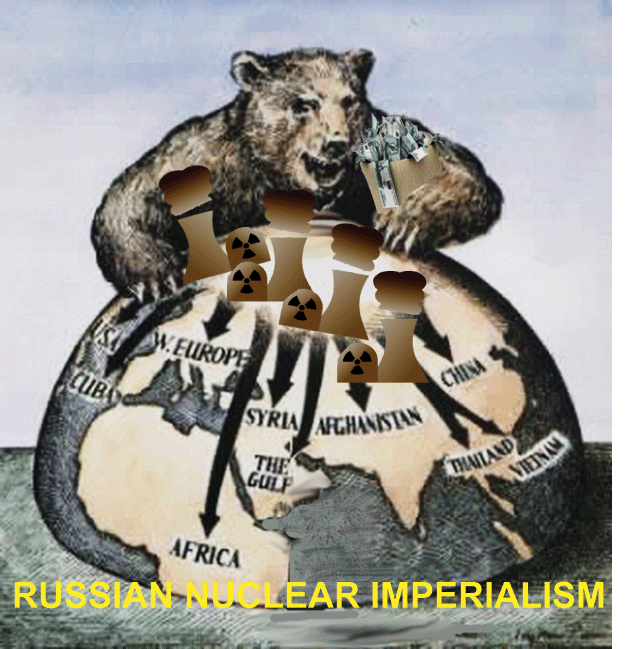
Radio Free Europe, September 01, 2022 By Kristyna Foltynova [Excellent graphics] “…………………… Here’s how Russia plays a crucial role in the world’s nuclear cycle
It’s Not Just About Mining
Russia is among the five countries with the world’s largest uranium resources. It is estimated to have about 486,000 tons of uranium, the equivalent of 8 percent of global supply…………….
However, uranium mining is just one piece of the nuclear process. Raw uranium is not suitable as fuel for nuclear plants. It needs to be refined into uranium concentrate, converted into gas, and then enriched. And this is where Russia excels.
In 2020, there were just four conversion plants operating commercially — in Canada, China, France, and Russia. Russia was the largest player, with almost 40 percent of the total uranium conversion infrastructure in the world, and therefore produced the largest share of uranium in gaseous form (called uranium hexafluoride).
World Uranium Conversion Capacity
In 2020, almost 40 percent of converted uranium came from Russia.
The same goes for uranium enrichment, the next step in the nuclear cycle. According to 2018 data (the latest available), that capacity was spread among a handful of key players, with Russia once again responsible for the largest share — about 46 percent.Therefore, Russia is a significant supplier of both uranium and uranium enrichment services. According to the latest available data, the European Union purchased about 20 percent of its natural uranium and 26 percent of its enrichment services from Russia in 2020. The United States imported about 14 percent of its uranium and 28 percent of all enrichment services from Russia in 2021.
Purchases Of Natural Uranium
In 2020, Russia supplied about one-fifth of the EU’s natural uranium and was among the top suppliers of uranium to the United States in 2021.
Did Someone Say Nuclear Reactors?
Nuclear reactors made in Russia are known as VVER — an abbreviation for the Russian vodo-vodyanoi enyergeticheskiy reactor (water-water energetic reactor). These reactors use water both as a coolant and as a moderator and were originally developed in the Soviet Union. There are several versions of VVERs (such as the VVER-440 and VVER-1000), with the volume of power being one of the significant differences.
Currently, there are 11 countries where various types of VVERs are operating, including Bulgaria, the Czech Republic, Hungary, and Finland. On top of that, other countries such as Egypt, Turkey, and Argentina currently have these reactors under construction or plan to build them.
Russia is considered the world leader when it comes to the export of nuclear plant development. Between 2012 and 2021, Rosatom initiated construction of 19 nuclear reactors; 15 of these were initiated abroad. That is far more than the next most prolific providers: China, France, and South Korea. Although China started building 29 reactors during the same period, only two of them were initiated abroad. France started building two reactors abroad, and South Korea four.
Exporters Of Nuclear Plants
Between 2012 and 2021, Russia initiated the construction of 15 nuclear reactors abroad.
Don’t Forget The Fuel
To keep the reactors operating, plants need a regular supply of nuclear fuel — usually a certain type of fuel. And this is where another level of dependency on Russia can be observed. Although there are several suppliers on the market, the Russian TVEL Fuel Company is currently the only authorized supplier of fuel needed for VVER-440s……..
Russia is also able to supply high-assay low-enriched uranium (also known as HALEU). It is a type of fuel that will be needed for more advanced reactors that are now under development by many companies across the United States. The main difference from the fuel that is currently being used is the level of uranium enrichment. Instead of up to 5 percent uranium-235 enrichment, the new generation of reactors needs fuel with up to 20 percent enrichment……………. At the moment, the only supplier able to provide the fuel on a commercial scale is Russia’s Tenex (owned by the Russian state-owned company Rosatom).
Looking For New Markets
Selling nuclear technology is also part of Russia’s effort to gain influence and reap profits in countries that are new to nuclear energy. One of the reasons countries want to cooperate with Russia is that it offers a “whole package” solution. Russia can not only build a nuclear plant and supply fuel, but it also trains local specialists, helps with safety questions, runs scholarship programs, and disposes of radioactive waste.
However, offering attractive loans is probably Russia’s most powerful tool. These loans are usually backed by government subsidies and cover at least 80 percent of construction costs. For example, Russia has already lent $10 billion to Hungary, $11 billion to Bangladesh, and $25 billion to Egypt — all to build nuclear power plants.
Russia has operating nuclear reactors in 11 countries, and more are under construction or being planned. Besides that, Russia has also signed either memorandums of understanding or intergovernmental agreements with at least 30 countries around the world, mostly in Africa. These serve as a declaration of interest in nuclear technology or set an intention to cooperate on the building of nuclear plants, respectively.
Russia has operating nuclear reactors in 11 countries, and more are under construction or being planned. Besides that, Russia has also signed either memorandums of understanding or intergovernmental agreements with at least 30 countries around the world, mostly in Africa. These serve as a declaration of interest in nuclear technology or set an intention to cooperate on the building of nuclear plants, respectively.
Some experts warn that African countries might not be ready for nuclear power, but Russia argues that the technology represents an answer to the continent’s increasing demand for electricity. It is also worth noting that African countries represent the largest voting bloc in the United Nations, which might be another reason for Russia to strengthen its ties in the region.
Nuclear Cooperation
There are at least 50 countries with some level of nuclear cooperation with Russia………. https://www.rferl.org/a/russia-nuclear-power-industry-graphics/32014247.html—
Walk held to protest storing nuclear waste in Northwest
The group of over 50 people gathered outside MP Patty Hajdu’s office before their walk and shared their concerns over the possible storage of nuclear waste in the region
https://www.tbnewswatch.com/local-news/walk-held-to-protest-storing-nuclear-waste-in-northwest-5835959 TBnewsWatch.com Staff, 18 Sept 22
THUNDER BAY – Nuclear Free Thunder Bay held a walk on Saturday in solidarity of other walks happening in Northwestern Ontario throughout September to protest the transport and burial of nuclear waste in the north.
The group of over 50 people gathered outside Thunder Bay-Superior North MP Hajdu’s office before their walk and shared their concerns over the possible storage of nuclear waste in the region.
The Nuclear Waste Management Organization currently has two potential siting areas the Municipality of South Bruce in southern Ontario and The Township of Ignace in northwestern Ontario.
The site selected will then be home of Canada’s deep geological repository where nearly 5.5 million spent nuclear fuel bundles from across Canada will be shipped to and then stored.
“We are opposed to it largely because there are all kinds of weaknesses with the DGR and no one can predict over the next hundred-thousands of years how safe it’s going to be for your next generation and generations to come,” said Dodie Legassick, co-organizer of the walk.
“And we’re also opposed because it is a real transportation issue. There’s going to be two to three truckloads carrying UFTPs (Used Fuel Transportation Packages) per day for 45 to 50 years and there are going to be super loads in addition to that and they want to bring in.”
Charles Faust, co-organizer, says that they’re also concerned with the lack of transparency from the NWMO.
“We have major concerns with the citing process that they’ve undertaken. Which is, as I said, not a legislative or regulatory requirement,” he said. “It’s a public relations exercise, where they are looking for an impoverished community like Ignace to accept them as a willing host for this project.”
The walk ended at the office of Thunder Bay-Superior North MPP Lise Vaugeois’ to petition the Ontario Government to adopt the proximity principle which advocates that waste should be disposed of (or otherwise managed) close to the point at which it is generated.
“We’ve got a petition out that we’ve that we’re getting signed to present to the Legislature of Ontario,” said Faust. “So, we’re asking people to get involved, to tell their friends, to tell her family to walk with us, to take a sign and to write letters to the editor and basically to spread the word.”
France Urges Brussels To Label Nuclear-Produced Hydrogen “Green”

EurActiv , By Paul Messad, French Energy Minister Agnès Pannier-Runacher is trying to get EU Energy Commissioner Kadri Simson to include nuclear among energy sources for the production of so-called “green” hydrogen, according to a letter seen by EURACTIV France………………..
according to the French minister, the current rules leave little room for the production of green hydrogen from “low-carbon” electricity, mostly nuclear power.
Given “the absolute priority of the next decade for hydrogen, […] the only important issue is the carbon content of the hydrogen produced and not the production vector,” Pannier-Runacher wrote to the European Commissioner…………………………….
France riding solo
The pro-nuclear position of the French when it comes to green hydrogen is not entirely shared by the industry.
Jorgo Chatzimarkakis, CEO of Hydrogen Europe, which represents the interests of the industry in 25 EU countries, said the letter is proof that France is “going solo” on nuclear and putting itself in a “dangerous insular position”……… https://www.eurasiareview.com/18092022-france-urges-brussels-to-label-nuclear-produced-hydrogen-green/
France sends reprocessed nuclear fuel to Japan, despite environmental and safety dangers

https://japantoday.com/category/national/france-sends-latest-nuclear-shipment-to-japan CHERBOURG, France 18 Sept 22
Two ships carrying reprocessed nuclear fuel destined for Japan set sail Saturday morning from northern France, an AFP photographer said, despite criticism from environmental campaigners.
The fuel was due to leave the northern French port city of Cherbourg earlier this month but was delayed by the breakdown of loading equipment.
Environmental activists have denounced the practice of transporting such highly radioactive materials, calling it irresponsible.
The previous transport of MOX fuel to Japan in September 2021 drew protests from environmental group Greenpeace.
MOX fuel is a mixture of reprocessed plutonium and uranium.
“The Pacific Heron and Pacific Egret, the specialised ships belonging to British company PNTL, left Cherbourg harbor on September 17. They will ensure the shipment of MOX nuclear fuel to Japan,” French nuclear technology group Orano said in a statement Saturday.
They are bound for Japan for use in a power plant and Orano said it expected the shipment to arrive in November.
Japan lacks facilities to process waste from its own nuclear reactors and sends most of it overseas, particularly to France.
The operation was carried out “successfully”, Orano said, and it is the second shipment that arrived in Cherbourg from a plant in La Hague, located 20 kilometers away, after the first came on September 7.
Yannick Rousselet of Greenpeace France previously denounced the shipment.
“Transporting such dangerous materials from a nuclear proliferation point of view is completely irresponsible,” he said last month.
MOX is composed of 92 percent uranium oxide and eight percent plutonium oxide, according to Orano.
The plutonium “is not the same as that used by the military,” it said.
Sendai and Genkai nuclear power stations in the path of powerful Typhoon Nanmadol

Strong Typhoon Nanmadol feared to hit southwest Japan’s Kyushu on Sept. 18
Close to Sendai and Genkai nuclear power stations
Record-breaking rainfall+violent winds – peak gusts at 270kph
FUKUOKA https://mainichi.jp/english/articles/20220917/p2a/00m/0na/010000c
Large and powerful Typhoon Nanmadol is predicted to approach southwestern Japan’s Kyushu region and make landfall there between Sept. 18 and 19.
According to the Japan Meteorological Agency (JMA), the 14th typhoon of the year was moving northwestward at a speed of about 20 kilometers per hour over the sea some 190 kilometers east of Minamidaito Island at 9 a.m. on Sept. 17. The tropical storm had a central atmospheric pressure of 910 hectopascals. The maximum sustained wind speed near its center was 198 kph, with peak gusts at 270 kph. Violent winds at a speed of 90 kph or more were recorded within a 185-km radius on the east and a 150-km radius on the west of the storm’s center.
Many parts of Japan may be affected by the typhoon for extended periods of time as it is moving slowly while maintaining its strength. It is feared that the storm could cause record-breaking rainfall and violent winds through Sept. 19, the last day of the three-day weekend, primarily in west Japan and along the Pacific coast of east Japan. The JMA is calling on people to refrain from unnecessary outings.
(Japanese original by Azusa Yamazaki, Kyushu News Department)
1 This Month



19 November – Webinar – The Reality of Reprocessing
Time: 11:00 AM Pacific Time (US & Canada) / 2:00 PM Eastern / 7:00 PM UK / 8:00 PM CET
Register for the Zoom Event Here



Shut down the radiation-damaged Heysham nuclear reactors now
To see nuclear-related stories in greater depth and intensity – go to https://nuclearinformation.wordpress.com

Say No to NASA’s Reckless Nuclear Reactor on the Moon
Say No to NASA’s Reckless Nuclear Reactor on the Moon
-
Archives
- November 2026 (22)
- October 2026 (302)
- September 2026 (339)
- August 2026 (330)
- July 2026 (355)
- June 2026 (287)
- May 2026 (306)
- April 2026 (356)
- March 2026 (251)
- February 2026 (267)
- January 2026 (308)
- December 2025 (358)
-
Categories
- 1
- 1 NUCLEAR ISSUES
- business and costs
- climate change
- culture and arts
- ENERGY
- environment
- health
- history
- indigenous issues
- Legal
- marketing of nuclear
- media
- opposition to nuclear
- PERSONAL STORIES
- politics
- politics international
- Religion and ethics
- safety
- secrets,lies and civil liberties
- spinbuster
- technology
- Uranium
- wastes
- weapons and war
- Women
- 2 WORLD
- ACTION
- AFRICA
- Atrocities
- AUSTRALIA
- Christina's notes
- Christina's themes
- culture and arts
- Events
- Fuk 2022
- Fuk 2023
- Fukushima 2017
- Fukushima 2018
- fukushima 2019
- Fukushima 2020
- Fukushima 2021
- general
- global warming
- Humour (God we need it)
- Nuclear
- RARE EARTHS
- Reference
- resources – print
- Resources -audiovicual
- Weekly Newsletter
- World
- World Nuclear
- YouTube
-
RSS
Entries RSS
Comments RSS

