Deterring Our Way to Doomsday

Mordor is the fictional realm of the Dark Lord Sauron in J.R.R. Tolkien’s The Lord of the Rings, located in the southeastern part of Middle-earth. [1, 2]
Loving the Bomb Yet Again
by William Astore | Sep 29, 2026 , https://www.antiwar.com/blog/2026/09/29/deterring-our-way-to-doomsday/
Reprinted from Bracing Views with the author’s permission.
It’s amazing the enormous sums of money the U.S. government spends on destructive weaponry in the stated cause of deterring massive destruction. It’s MAD, of course, this notion that peace is only attainable via the promise of annihilating another people. And now we know that annihilation won’t be limited to Russia or China or Iran: that a “general” nuclear strike would likely produce a nuclear winter that would end most life on our planet. Yet the Pentagon persists in nuclear “modernization” and further “investments” in the Triad.
In the early 1960s, the Air Force wanted 10,000 ICBMs but “settled” for 1000 Minuteman missiles. To preserve “the American way,” they built a nuclear command center (Cheyenne Mountain) under 2000 feet of granite, which was rendered obsolete soon after it was built by more accurate Soviet ICBMs with warheads in the megatons.
As a young Air Force officer, I hunkered down in the 1980s in Cheyenne Mountain. I visited Los Alamos. I’ve walked the Trinity Test Site in Alamogordo, New Mexico, site of the first atomic test in 1945. Friends of mine have sat in ICBM silos, ready and able to unleash Armageddon. Imagine young lieutenants and captains in their twenties, sitting underground, waiting for the president’s command to launch missiles that will unleash a nuclear holocaust to kill millions, if not the planet itself.
All this fresh talk of “investment” in “modernized” nuclear weapons is sheer madness – a collective death wish – a “strange love” for world-destroying nukes. Yet again, we’ve come to love the bomb.
Recently, the Chief of Staff of the Air Force (CSAF) spoke of nuclear weapon “recapitalization”: truly an abomination of the English language. You don’t “recapitalize” genocidal weaponry. Both the Sentinel ICBM missile program and the B-21 bomber are unneeded weapons systems that will likely cost $500 billion or more over the next 20 years. Sadly, he isn’t the only general who’s positively gleeful about all the money being thrown at nuclear weapons, the Golden Dome, and weapons in space.
This mad (MAD) glee for money in the cause of mass destruction and madcap militarism is destroying not just our democracy. It’s like our “leaders” are out of Mordor, searching for the One Ring of Power, with AI data centers and surveillance the equivalent to Sauron’s eye that sees all.
I wonder if Sauron spoke of “modernization” and “recapitalization” in Orcs and Nazgûl and Balrogs?
The current CSAF promises to “advocate relentlessly” for new weaponry like the Sentinel ICBM and B-21 Raider. He says “readiness” to fight is an airman’s “first responsibility.” Actually, that first responsibility is to support and defend the U.S. Constitution. We must be guided by the law of the land, not by the beauty of our weapons (Brian Williams) or a warrior’s urge to use them (Pete Hegseth)
America, stop the MADness. A policy of Mutually Assured Destruction means we’re all dead. As the Outlaw Josey Wales said: “Dyin’ ain’t much of a living.” Nor is deterring our way to Doomsday.
Escalation and Endgame in Ukraine
Sep 08, 2026, Gordon Hahn Considering Russia and Eurasia
Some in the West are becoming aware that not only is Russia going to win the NATO-Russia Ukrainian War in its present configuration of limited NATO involvement and that Russia will not shy away from war with Europe or NATO should elements in the West continue to escalate. At the same time, Europe continues to seek ways to gain escalation dominance to little effect and utter futility. Each round of escalation brings a more intense and effective escalation on Russia’s part against Ukraine, hastening to the day when the front, army, economy, regime, and state collapse.
Russian forces are moving ever more rapidly west to the Dnieper River, threatening to cut Ukraine in half. In doing so, they have taken territory in regions other than those the Kremlin has claimed as Russian and incorporated into the federation and its constitution. In the bargain, Kharkiv and Sumy cities, two provincial capitols, are slowly being surrounded.
Moreover, three encirlcelments of Ukrainian troops are in the making. The last two Ukrainian strongholds in Donbass’s Donetsk are soon to fall. Orekhov, the gateway to the major southern Ukrainan industrial city and provincial capitol, Zaporozhe, is being taken.
Meanwhile, the military is manned by middle-aged and elderly men and a strong cohort of younger, ideologically extremist neofascists, whose status in state and society is growing as a result of effective Azov propaganda and Zelenskiy’s persistent sponsorship in a futile attempt to assuage their lust for power and blood.
At the same time Ukrainian reports indicate the Kiev’s army is suffering from high casualty rates, desertions, and draft evasion, prompting talk of drafting woman. In addition, there are severe fuel shortages (50% cuts for some brigades), planned salary delays starting in October, and a missile shortages for F-16s, forcing pilots to use gun cannons against Russia’s increasingly sophisticated and manueverable drones……………………………………………. (Subscribers only) https://gordonhahn.substack.com/p/copy-template-7ea?r=stexy
The Gaza genocide permanently diminished the power of pro-Israel propaganda

Since October 7 and the Gaza genocide, U.S. opinions on Israel and Palestine have drastically shifted. The power of Zionist propaganda has been permanently weakened, and the U.S.-Israel relationship is in a more precarious position than ever before.
Mondoweiss, by Michael Arria, October 6, 2026
For nearly 40 years, Gallup has been asking Americans a series of questions about the Middle East and U.S. policy in the region.
One of those frequent questions is, “In the Middle East situation, are your sympathies more with the Israelis or more with the Palestinians?“
In 2003, just 16% of Democrats said that they sympathized more with Palestinians than Israelis. When the annual survey was carried out this past February, that number had ballooned to 65%.
There are many reasons for this dramatic shift.
2003 was the year that the United States launched its war on Iraq, spurred by government lies and a post-9/11 bloodlust that permeated a sizable chunk of U.S. society. 2026 also saw the United States launch a war in the Middle East, but this one is broadly unpopular with the population, which has naturally grown skeptical of foreign conflict after 20-plus years of disastrous Forever Wars.
The tireless work of Palestine activists has also increased support for the cause, as Americans have developed a deeper understanding of Israeli apartheid and occupation. These efforts found particular resonance during the Black Lives Matter protests of 2020, as many activists stressed the connections between liberation at home and abroad.
However, the biggest reason for the jump is obviously the Gaza genocide and U.S. support for it. Since Israel’s war on Gaza began three years ago, conservative estimates say 74,000 Palestinians have been killed, and more than 175,000 have been injured. More than 1,400 have been killed and nearly 5,000 injured since the Trump administration declared a “ceasefire” on October 10, 2025.
Those Gallup results are just a small part of a vast trove of polling showing that Americans have completely flipped on the issue, and although Democratic voters have soured on Israel at a higher rate, the shift is certainly not limited to one political party.
Here’s some more:
- A Pew report from this past spring found that 60% of U.S. adults have an unfavorable view of Israel, up from 53% in 2025. The country is viewed unfavorably by 41% of Republicans, but that number is 57% among Republicans aged 18-49.
- In addition to Democrats, the aforementioned Gallup poll shows that Independents sympathize with Palestinians more than Israelis, 41% to 30%, for the first time since the analytics company began conducting the surveys.
- A recent Marquette Law School poll found that favorability toward Israel has been steadily declining for the last 20 months.
……………………………………………………………………………. https://mondoweiss.net/2026/10/the-gaza-genocide-permanently-diminished-the-power-of-pro-israel-propaganda/
Walt Zlotow – Fanatical US Iran war supporters must stop fantasy Iran attacked US 47 years ago
Walt Zlotow West Suburban Peace Coalition Glen Ellyn IL 8 Oct 26, https://theaimn.net/fanatical-us-iran-war-supporters-need-to-stop-fantasising/
During my 75 years following US justifications for waging senseless war, I’ve never heard anything as bizarre as that supporting the current senseless war on Iran.
Trump’s war defenders claim Iran has been waging war on America for 47 years beginning with the US embassy hostage takeover in November 1979. During the intervening 47 years, Iran has killed thousands of US miliary personnel in the Middle East. They condemn all preceding presidents beginning with Jimmy Carter for not defending against Iran’s dastardly war on America. They praise Trump for finally confronting Iran head on in a war of existential threat to our homeland.
This narrative is repeated endlessly on conservative media, even the floor of Congress. In arguing against a War Powers Resolution to end Trump’s deranged Iran war that may crash the world economy, Montana Sen. Tim Sheehy said, “We didn’t start this war, we did not. But we will finish it. Democrats were right to call the conflict a war of choice, but the choice was made by Iran’s regime decades ago — not by Trump. It’s a war of choice that was begun by a radical, lunatic band of terrorists that took over a beautiful nation 47 years ago. This regime that we are fighting does not care about our partisan politics, don’t care who you voted for, who you pray to, or where you live. They want to kill all of us. And they don’t just say it, they actually do it. And they’ve been doing it for 47 years.”
Somehow, Sen. Sheehy missed that it was President Trump repeatedly threatening to wipe out the entire Iranian civilization; indeed, even before the United Nations General Assenbly. It was Trump who sucker punched Iran with bombs while negotiating peace in June 2025, and again in all out war on February 28 this year. After twice being deceived with bombs, Iran fought back ferociously, essentially defeating the most murderous, duplicitous regime on earth.
In truth, it’s America that has been at war with Iran for decades and a lot longer that 47 years. One must go back 73 years to Operation Ajax, America’s first Iran regime change operation, which toppled the legitimate Iranian Prime Minister Mohammad Mosaddegh in 1953 to retain British, US control of Iranian oil. Once deposed, the US installed Mohammad Reza Pahlavi, the Shah of Iran, to serve US interests in perpetuity. For the Iranian people it meant the Shah’s brutal rule enabled by the US military and CIA which killed upwards of 10,000 anti Shah dissidents.
After twenty-six years the Iranian people forced the Shah to flee in February 1979, allowing the transition from monarchy to an Islamic Republic.
Had President Carter not allowed America’s three decade puppet ruler to seek refuge in the US, there would likely never been the November 4, 1979 takeover of the US embassy by 500 students resulting in taking 66 US hostages for 444 days.
Shortly thereafter the new Iranian government made 3 reasonable demands of the US, that if granted, would likely have promptly returned the hostages.
Most important was return of the Shah, a mass murderer, to face justice in Iran. Second, a US apology for the ’53 US coup that overturned Mosaddegh and installed the Shah’s brutal rule. Third, return of the $20 billion the Shah stole and the US seized after the revolution.
Besides quick return of the 66 hostages, there would have been no failed April 1980 rescue mission that killed 8 service members.
But the hard liners in the Carter administration led by National Security Adviser, Zbigniew Brzezinski would have none of that, setting off 47 years of endless US machinations in behest of every US administration and Israel to complete the second Iranian regime change in 73 years.
No, Iran has never attacked the US or been at war with the US…until President Trump bombed an Iranian school, killing over a hundred little girls on the first day of his deranged, criminal war to depose the Iranian regime at the behest of Israel.
Instead of diplomacy, common sense, peace, Trump gives us war, death, economic decline, possible global economic collapse. And he justifies this madness with the fantasy that the victim has been the aggressor for 47 years.
Israel Could Collapse Soon—Leaked CIA Report Says!
Lee Camp, Oct 07, 2026, https://realleecamp.substack.com/p/leaked-cia-report-says-israel-headed
Dropsite News is reporting that a classified CIA report warns that Israel is at a high risk of civil war and state collapse. Many factors have come together to create a perfect storm crashing down on the apartheid state. (Apparently, committing long-term genocide really takes a toll.)
Some of the problems they’re facing include:
- A completely corrupt political establishment. Prime Minister Benjamin Netanyahu is trying desperately to hang on to power because he knows losing the October 27th election could mean prison time.
- Soaring military spending. Not a surprise considering they’ve dropped the equivalent of sixteen Hiroshima atomic bombs on Gaza. (Yes, that’s accurate.)
- A heavily armed populace that is almost completely riddled with psychological trauma. Every Israeli (except the ultra-orthodox) is forced into the military, which means that every Israeli within a certain age range is somehow part of the genocide in Gaza.
- A struggling economy with average households bearing the brunt of the costs of Israel’s multiple wars. Food prices have reached record highs.
- Ever-growing fury among non-Jewish Israelis, who make up 20% of the population.
- Growing global isolation as a dwindling number of people around the world support Israel’s genocide in Gaza and their other belligerent attacks on neighboring countries like Lebanon and Iran.
- Collapse of support even within the US. A record 60% of Americans now view Israel unfavorably. And for the first time since polling began, more Americans sympathize with Palestinians than with Israelis.
- An ultra-orthodox community that is exempt from the military and therefore hated by other Israelis.
- Israel may be facing its “South Africa moment” when global popular culture fully turns against it. The Macklemore catastrophe showed that the world sides with those who speak up for Palestinians, and even hugely popular artists like Ed Sheeran, who claim they love and support everyone, can’t actually hide from accountability.
- Furthermore, as Dropsite makes clear, this leaked CIA report is no collection of fanciful imaginings.
“The writers of this are Israel experts,” a source in the intelligence community noted, “this isn’t a fantastical what-if—with the upcoming election and the fissures in Israel, we should take seriously their conclusion that Israel is one spark away from real internal conflict.”
The genocidal apartheid ethnostate is a powder keg, just one fiery ember away from a truly bloody civil war or even collapse. The propaganda that upheld Israel for decades has shattered into 1,000 pieces. The military dominance that defended the apartheid state while it killed hundreds of thousands of innocent people has been proven weak and fragmented. And the United States, which has served as Israel’s guarantor and enforcer since its inception, is wobbly and unhinged like every late-stage empire.
For all these reasons, Israel may be on the cusp of collapse and even the CIA knows it.
Dalton Nuclear Institute recognised as “world-leading” nuclear education in Prime Minister’s Innovation Nation speech
The recognition reinforces
Manchester’s position as a global centre of nuclear expertise, spanning
research and innovation, skills development and policy engagement.
Manchester has been recognised at the highest level for its strength in
nuclear research and innovation. Dalton combines research excellence with
the skills and talent development needed to support the UK’s future
nuclear ambitions. Its expertise helps connect academic research with
industry, government and policy, supporting real-world impact. The
recognition strengthens Manchester’s global reputation as a centre for
nuclear expertise.
Manchester University 9th Oct 2026, https://www.manchester.ac.uk/about/news/dalton-nuclear-institute-world-leading-recognition/
Sleight of hand – Integrated Molten Salt Reactor plant could be classed as conventional industrial, rather than nuclear

Latest Terrestrial Energy topical report submission could lead to faster deployment
Approval of the Thermal and Electric Facility Topical Report submitted by the company to US regulators would mean that part of the Integrated Molten Salt Reactor plant would be classed as a conventional industrial, rather than nuclear, project, allowing it to be built and operated ahead of nuclear licensing.
The Integrated Molten Salt Reactor (IMSR) is a Generation IV reactor that uses molten salt as both fuel and coolant, with integrated components, which can supply heat directly to industrial facilities or use it to generate electrical power. The plant itself is designed in two discrete parts: the Nuclear Facility, which contains standardised and modular nuclear systems, and the Thermal and Electric Facility, or TEF, containing non-nuclear heat transfer, steam supply and electric systems for commercial power generation and thermal energy supply
In its submission, Terrestrial Energy asks the US Nuclear Regulatory Commission (NRC) to confirm that building the TEF is not “nuclear construction” under US regulations. The submission incorporates elements of the company’s Postulated Initiating Events methodology, already approved by the NRC. Terrestrial Energy says it shows that the plant’s nuclear systems do not rely on the TEF for safe operation and that any failure originating in the TEF is isolated from the nuclear systems.
Topical Reports establish foundational elements of the licensing basis that may be referenced in future applications without re-evaluation. NRC approval of the TEF Topical Report would mean the TEF, which could be customised for each site, could be built and operated using an auxiliary heat source such as natural gas as a bridge to nuclear power ahead of a nuclear construction permit and operating licence being granted for the nuclear part of the plant.
“This submission can change how an IMSR Plant is regulated, built and financed,” Terrestrial Energy CEO Simon Irish said. “With its NRC approval, only the nuclear portion of the plant would follow the nuclear licensing timeline. The rest of the plant would become a conventional industrial project, giving customers earlier power and heat and giving financing partners a bankable construction phase. As this pathway applies to every IMSR Plant, it is a fleet-wide advantage, not a one-off exemption.”
Terrestrial Energy says it is developing a pipeline of IMSR Plant projects, including plans for a plant at the Texas A&M-RELLIS site in Bryan, Texas. In September, the company announced its selection as supplier of advanced nuclear plant technology for Ameresco Inc’s power plant project at the US Army’s Aberdeen Proving Ground in Maryland, following a competitive request for proposals and selection process.
The NRC has been engaged with Terrestrial Energy in pre-application activities for the IMSR since 2019. This is the third of at least five Topical Reports the company is aiming to submit to the regulator during 2026.
Fears of delay grow over removal of Fife nuclear submarine reactor

A FIFE councillor and anti-nuclear campaigners are demanding answers over plans to remove the most radioactive part of a decommissioned nuclear
submarine from Rosyth Dockyard. Councillor Brian Goodall says Babcock and
the Ministry of Defence urgently need to clarify when a reactor pressure
vessel, a highly radioactive component from a decommissioned submarine,
will be removed from Rosyth. It’s something that UK defence minister Luke
Pollard said should be done by the end of 2026, adding that his
department “remains committed” to the deadline. The issue in question
refers to the dismantling of the retired Royal Navy nuclear-powered
submarine HMS Swiftsure. It’s part of the UK’s Submarine Dismantling
Project, which should be completed by October 2028.
The National 10th Oct 2026 A FIFE councillor and anti-nuclear campaigners are demanding answers over
plans to remove the most radioactive part of a decommissioned nuclear
submarine from Rosyth Dockyard. Councillor Brian Goodall says Babcock and
the Ministry of Defence urgently need to clarify when a reactor pressure
vessel, a highly radioactive component from a decommissioned submarine,
will be removed from Rosyth. It’s something that UK defence minister Luke
Pollard said should be done by the end of 2026, adding that his
department “remains committed” to the deadline. The issue in question
refers to the dismantling of the retired Royal Navy nuclear-powered
submarine HMS Swiftsure. It’s part of the UK’s Submarine Dismantling
Project, which should be completed by October 2028.
The National 10th Oct 2026 A FIFE councillor and anti-nuclear campaigners are demanding answers over plans to remove the most radioactive part of a decommissioned nuclear from Rosyth Dockyard.
Councillor Brian Goodall says Babcock and
the Ministry of Defence urgently need to clarify when a reactor pressure
vessel, a highly radioactive component from a decommissioned submarine,
will be removed from Rosyth. It’s something that UK defence minister Luke
Pollard said should be done by the end of 2026, adding that his
department “remains committed” to the deadline. The issue in question
refers to the dismantling of the retired Royal Navy nuclear-powered
submarine HMS Swiftsure. It’s part of the UK’s Submarine Dismantling
Project, which should be completed by October 2028.
The National 10th Oct 2026, https://www.thenational.scot/news/26623369.fears-delay-grow-removal-fife-nuclear-submarine-reactor/
Marshall Islands still waiting for justice 80 years after US nuclear tests, UN told
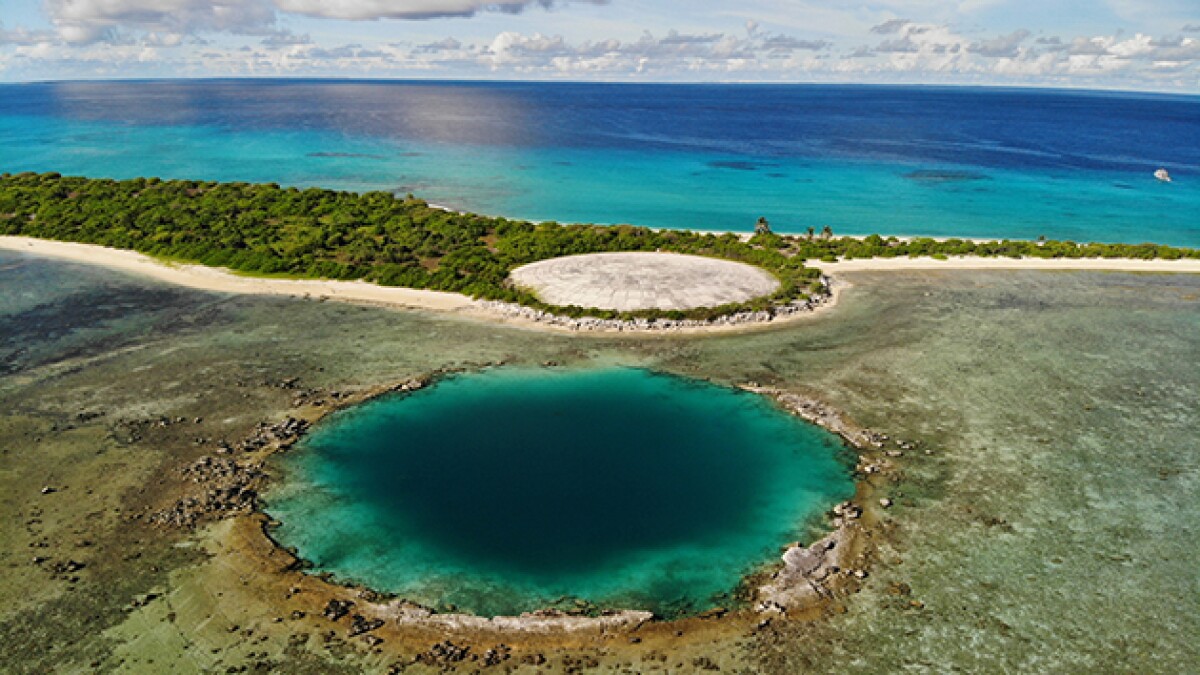
Tamil Guardian 6th Oct 2026, https://www.tamilguardian.com/content/marshall-islands-still-waiting-justice-80-years-after-us-nuclear-tests-un-told
The UN human rights office has told the Human Rights Council that Marshallese communities are still waiting for justice for the 67 nuclear tests carried out by the United States, calling for the release of classified records, reparations and acknowledgement from the UN body that allowed the tests to continue.
Presenting its report to the Council’s 63rd session on 1 October, the UN Office of the High Commissioner for Human Rights (OHCHR) said the US conducted the tests in the Marshall Islands between 1946 and 1958, while the islands were under UN trusteeship, with a combined explosive power equivalent to more than 7,000 times that of the atomic bomb dropped on Hiroshima, according to the UN Web TV transcript of the dialogue.
“For the Marshallese, this history is not past,” the deputy high commissioner for human rights told the Council. “It lives on in bodies and families, in poisoned lands and communities that have been displaced.”
OHCHR said virtually every Marshallese family had been affected by the health consequences of the testing, including elevated rates of cancer, and that many displaced communities have been unable to return to their ancestral atolls.
Claims unpaid
The office said the Nuclear Claims Tribunal in the Marshall Islands had assessed more than US$2.3 billion in personal injury and property damage claims, but no claimant has received full compensation because of insufficient funds. The Compact of Free Association and the Section 177 claims settlement with the US did not cover harm to future generations, moral damage or environmental degradation, it said.
It recommended that the US declassify information on the nuclear legacy, including radiation exposure data and testing records, and said the international community, through the UN Trusteeship Council, should consider steps to acknowledge and apologise for the human rights impact of the tests.
The Marshall Islands has identified transitional justice as a way of advancing victims’ rights to truth, justice, reparation and guarantees of non-repetition.
“The continued denial of an effective remedy is itself an ongoing human rights violation,” the UN Human Rights regional representative for the Pacific, Heike Alefsen, said at a side event during the session, the Pacific Islands News Association reported.
‘Told the matter is settled’
“How can we have justice when we are told by those responsible that the matter is settled and that is final?” the Marshall Islands delegation asked the Council.
It said the people of Bikini and Rongelap remain displaced, while on Enewetak people are living beside a nuclear waste dump sealed under a concrete dome. Marshallese people were “experimented on under Project 4.1 without their consent”, it said, and when they petitioned the UN for the tests to stop, the Trusteeship Council issued resolutions that allowed them to continue.
“Without truth, there can be no justice,” the delegation said, calling for “accountability for the human rights, environmental, health consequences of the nuclear legacy”.
The United States, which withdrew from the Human Rights Council last year, did not take part in the dialogue.
New nuclear ‘would make Scotland a target for Putin’, says Scots Labour MP.

Brian Leishman said hosting small reactors north of the border “would
make communities a target”. Building new nuclear would “make Scotland a
target for Putin”, a Scottish Labour MP has said. Mr Leishman will say in
a Westminster Hall debate once the House of Commons returns from recess:
“Politicians from nearly every party say that the UK will likely be at
war with Russia by 2030.
“If the war hawks are correct, then why would it
make sense for various areas to become targets for Putin? “Nuclear power
plants or the other policy pushed by the nuclear energy lobby – hundreds
of small reactor sites in locations up and down the UK – would make
communities a target.” The UK government has said that Torness in East
Lothian, Hunterston in Ayrshire, and Dounreay in Caithness could host small
nuclear reactors. But the SNP has effectively banned it, saying it would
rather focus on renewables which is much cheaper to build.
Scotsman 10th Oct 2026, https://www.scotsman.com/news/politics/new-nuclear-would-make-scotland-a-target-for-putin-says-scots-labour-mp-9274732
Little Support for New Nuclear at Port Hope.
Angela Bischoff, Director, Ontario Clean Air Alliance, Oct 8, 2026,
Ontario Power Generation (OPG) is proposing to build what would be the world’s largest nuclear station at its Wesleyville site in Port Hope.
The massive project would cost approximately $230 billion and drive up electricity bills across Ontario.
That is why Protect Northumberland, a coalition of BlueDot Northumberland, Seniors for Climate Action NOW, and the Ontario Clean Air Alliance, asked municipal election candidates across Northumberland County:
Do you think that building a massive nuclear station that will drive up electricity rates is a good use of the Wesleyville site?
Most Candidates Are Opposed or Undecided
We have received responses from 39 candidates:
- Only 5 candidates support OPG’s proposal
- 9 candidates oppose the proposal
- 25 candidates remain undecided
If you live in Northumberland County, see how your municipal election candidates responded here.
Local voters deserve to know where every candidate stands on a project that will affect electricity bills, public safety and the future of their community for generations.
And be sure to bring up the issue with candidates at the door, at all-candidates forums, and in letters to the editor.
Plans advance for floating nuclear plant in New Brunswick, a first among G7 countries

Prodigy has not disclosed a price for the Belledune facility. Mycle Schneider Consulting has concluded that a market for reactors in remote mines and communities is “unlikely to materialize” because the electricity they would generate would be far too expensive.
Prodigy says they seek a mix of private and federal funding
Matthew McClearn, Toronto october 9, 2026, https://www.theglobeandmail.com/business/article-new-brunswick-floating-nuclear-plant-prodigy-clean-energy/#vf-comments
Plans for a floating nuclear power plant advanced this week with its backers’ selection of a small reactor to power it.
The demonstration facility, dubbed a Transportable Nuclear Power Plant, would mark many firsts. Set for near a small port in Belledune, N.B., it would be the first floating nuclear plant in a G7 country, as well as the developer’s first commercial deployment.
It would also be the first nuclear project majority-owned by First Nations. Belledune is situated in the traditional territories of Pabineau First Nation and Eel River Bar First Nation, which support the project.
And it would be a prototype for the barge’s developer, Prodigy Clean Energy Ltd., which hopes Belledune will serve as a “commercial blueprint” for remote communities and coastal industrial operations in Canada and globally.
The facility would feature two 22-megawatt microreactors known as the BWXT Advanced Nuclear Reactor (BANR). It’s currently being designed by BWX Technologies Inc.
BWXT-N +0.26%increase, a U.S.-based manufacturer of nuclear components with operations in Ontario.
Unlike many upstart reactor developers, BWXT has actual experience: Its core focus is building naval components and reactors, often in more challenging settings than a moored barge.
“They’re the quickest and most ready,” said Terry Richardson, Chief of Pabineau First Nation, who helped select the BANR. “They have the proven technology with what they’ve been doing in the States, with aircraft carriers and submarines.”
Floating nuclear plants are rare. One, the Akademik Lomonosov, operates in the Russian Arctic. This year, nuclear giant Rosatom said it had manufactured two reactors (variants of the RITM-200 reactors used in Russian icebreakers) to be incorporated in floating plants that will power a remote copper mine.
“Information regarding this project has been erratic, and construction has apparently started on one barge only,” reported Mycle Schneider Consulting in an assessment of the global nuclear industry’s progress, published last month.
Prodigy has not disclosed a price for the Belledune facility. Mycle Schneider Consulting has concluded that a market for reactors in remote mines and communities is “unlikely to materialize” because the electricity they would generate would be far too expensive.
The partners’ challenge is to find investors who disagree – a task that has defeated most reactor developers. Prodigy says they seek a mix of private and federal funding; Prodigy’s chief executive officer, Mathias Trojer, said Ottawa spends more than $2-billion annually subsidizing electricity costs in the North, so it is motivated to fund alternatives to the region’s aging diesel plants.
The Belledune proposal ticks some of the boxes in a federal nuclear strategy unveiled earlier this year, which sought to “demonstrate a Canadian-controlled Generation IV microreactor by 2035 to support defence facilities and operations and, in the longer term, remote and northern communities.”
The BANR is not Canadian-controlled, however. It’s been under development for several years already as part of the U.S. Department of Energy’s Advanced Reactor Demonstration Program. John MacQuarrie, BWXT’s president of commercial operations, said Belledune’s BANR would be a variant of that reactor, containing a mixture of American and Canadian intellectual property.
BWXT has not pursued commercial certification for the BANR in either country, but Mr. MacQuarrie said it plans to engage with the Canadian Nuclear Safety Commission shortly.
Mr. Trojer, said the design should be completed in the next two years or so, and a final investment decision would be made around that time; the facility could be built in roughly 18 months and be operational in the early 2030s.
Politicians regard the Prodigy/BWXT barge as a potential boon for industry. René Legacy, New Brunswick’s Deputy Premier and Energy Minister, said his province wants to build the barge, an undertaking “directly in line with our strengths, which is lots of machinists, lots of welding, lots of industrial might.” But New Brunswick can’t build reactors: his Ontario counterpart, Energy Minister Stephen Lecce, said his province’s supply chain stands ready to assist.
New Brunswick has signed an agreement signaling its intent to buy power produced by the barge, and announced plans to bring it before the federal Major Projects Office for designation as a project of national importance.
The BANR would be powered by what’s known as tri-structural isotropic (TRISO) fuel. BWXT, which makes nuclear fuel for clients including the U.S. government, says it can already produce TRISO in non-commercial quantities. But its crucial ingredient is high-assay low-enriched uranium, which is enriched to contain nearly 20 per cent of the fissile isotope of uranium – much higher than fuel for existing commercial reactors.
Only Russia and China produce HALEU in appreciable quantities, according to the World Nuclear Association. The U.S. is investing heavily to grow its own minuscule domestic capacity, but other reactor vendors have reworked HALEU-fueled designs due to their inability to obtain the fuel.
Mr. MacQuarrie said the BANR’s TRISO would likely be produced in the U.S. Mr. Trojer added that the Belledune project would require only modest amounts.
“It’s a long lead item, but if anyone can deliver it, then it’s BWXT or some combination of their business relationships.”
How safe are Britain’s military bases from hostile states?
The UK’s most sensitive sites are increasingly vulnerable to rapidly evolving weapons and surveillance systems and in some cases only have police protection
Armed only with explosives and machineguns, it was the SAS who pioneered
hit-and-run raids on Axis airbases across the North African desert during
the Second World War. Striking planes while they were parked on poorly
guarded airstrips was a stroke of genius that forced the Nazis to overhaul
their defences as daring squads of British operatives destroyed hundreds of
German and Italian aircraft before they could take to the skies. Drones,
advanced missiles, “grey zone” operations and militant activism are now
prompting a similarly urgent transformation of how British bases are
protected. From the Cotswolds to the Middle East, our most sensitive sites
are increasingly vulnerable to the rapidly evolving weapons and
surveillance systems used by hostile states.
Times 9th Oct 2026, https://www.thetimes.com/uk/defence/article/how-safe-britain-military-bases-hostile-states-ccj980mjk
Will there ever be a new nuclear power station at Bradwell?

4. Speculation
With large ‘mega-reactors’ seemingly out of the picture, a prevailing misconception is that so-called Small Modular Reactors (SMRs) might be built at Bradwell. SMRs are anything but small! Typical proposals would take up more space than the closed Bradwell does and introduce yet more toxic waste. And no design that the UK Government has considered has ever been built and tested. No company or developer has indicated it is considering the Bradwell site, although other closed sites in England have been mooted.
6 October 2026 https://www.banng.info/news/regional-life/new-nuclear-at-bradwell-ever/
Peter Banks, BANNG Co-ordinator, answers this question for the October 2026 edition of Regional Life magazine
Several factors come into play when attempting to answer that big question.
1. Current State of Play
The withdrawal of the Chinese General Nuclear Company (CGN) indicated that the Bradwell site is highly unlikely to be further considered for large ‘mega-reactors’ like the Hualong One Reactor design.
2. Political Implications
In existing (albeit awaiting updates) UK Government documentation, the Bradwell site is still listed as “potentially suitable” for nuclear development. With frequent changes in ministers and proposed regulatory changes, it is unclear whether this will change, especially as the onus has shifted to potential developers to choose a “suitable site” themselves. BANNG continues to maintain that the site is wholly unsuitable for any type of nuclear power station and its long-term legacy of dangerous radioactive wastes.
3.Legacy
There are areas of the former power station that give cause for concern. The two highly visible buildings covered in shiny cladding house the reactor containment vessels with the graphite moderator blocks still inside. These will remain too dangerous to decommission for another 100 years from now. Also Bradwell Intermediate Level Waste (ILW), along with inbound ILW from Dungeness and Sizewell A, is housed in a relatively new (built 2013-14) Intermediate Storage Facility (ISF). Further, when demolition of the storage pond building started, it was found it was too radioactive and another shell was built around it. Any new nuclear power station next door would vastly add to the dangerous legacy.
4. Speculation
With large ‘mega-reactors’ seemingly out of the picture, a prevailing misconception is that so-called Small Modular Reactors (SMRs) might be built at Bradwell. SMRs are anything but small! Typical proposals would take up more space than the closed Bradwell does and introduce yet more toxic waste. And no design that the UK Government has considered has ever been built and tested. No company or developer has indicated it is considering the Bradwell site, although other closed sites in England have been mooted.
5. Probability
At the time of writing, no developers have proposed building any sort of nuclear power plant at Bradwell. In addition to BANNG’s resolute stance that the site is not suitable, regulators may also be reluctant to recognise it as meeting the criteria to be “potentially suitable”.
To conclude, the chances of building a new nuclear power station at Bradwell are minimal. The answer to the question must be NO.
Ministry of Defence under pressure on Trident balloon accident

Local people filmed a large balloon meant to provide last-ditch communications in a nuclear war deflating and crashing. But the Ministry of Defence won’t say anything about it
Rob Edwards, October 06 2026,
https://www.theferret.scot/trident-balloon-accident/
The Ministry of Defence is being urged to “come clean” about an accident that reportedly destroyed the UK’s emergency nuclear war communications balloon, after The Ferret discovered that key information has been taken offline.
Byline Times reported that the helium balloon, codenamed Sunflower and kept in Scotland, crashed to the ground after deflating during a test over Yorkshire on 4 September.
The balloon is designed to lift a 1,500-metre radio antenna enabling the UK government to order Trident submarines to launch a nuclear strike after Britain has been attacked.
Both the Ministry of Defence (MoD) and the army have refused to make any comment at all, encouraging speculation that the balloon could have been downed by a Russian drone.
At the same time, one of the main pieces of evidence about the balloon’s history and purpose appears to have been removed from a military website after it was highlighted in Byline Times.
Byline Times reported that the helium balloon, codenamed Sunflower and kept in Scotland, crashed to the ground after deflating during a test over Yorkshire on 4 September.
The balloon is designed to lift a 1,500-metre radio antenna enabling the UK government to order Trident submarines to launch a nuclear strike after Britain has been attacked.
Both the Ministry of Defence (MoD) and the army have refused to make any comment at all, encouraging speculation that the balloon could have been downed by a Russian drone.
At the same time, one of the main pieces of evidence about the balloon’s history and purpose appears to have been removed from a military website after it was highlighted in Byline Times.
Known as the low frequency fall back (LFFB), the balloon has been kept in an army warehouse on a Dundee industrial estate, next to the city’s Eastern Cemetery. Vehicles to transport it are believed to be housed in a hardened aircraft shelter at the army and airforce base at Leuchars in Fife.
Every autumn, it has travelled with a police convoy to and from a former airfield at Topcliffe, near Thirsk in Yorkshire, to be tested. It was videoed by a Facebook group called Fife Jammer Locations going through Cupar in Fife on 29 August and 12 September.
Unfortunately, as Byline Times reported, during its latest test on 4 September the balloon was filmed by another Facebook group, North Yorkshire Weather Updates, partially deflated and spinning on its tether. Footage shows it rapidly ascended, was blown 12 miles east and finally fell into a farmer’s field near Ampleforth…………………………………………………………………………….
The Bylines Times story on 8 September was written by the veteran investigative journalist, Duncan Campbell. Along with researcher, Mike Kenner, he is writing a book on UK nuclear war planning with the provisional title ‘The Decoy Game’, updating his revelatory 1983 book, War Plan UK.
Dave Cullen, a UK nuclear weapons expert from the BASIC nuclear think tank in London, stressed the “vital importance” of communication with Trident submarines in a crisis.
He said: “If this backup communications system relies on a single balloon, the public deserves to know what happened in this incident. Given the details that have already been published, the ongoing silence from the MoD seems to serve little purpose, other than saving them further embarrassment.”
Rob Forsyth, a Royal Navy nuclear submarine commander in the 1970s who now campaigns against Trident, described the balloon as an absurd “Heath Robinson” contraption. It was “so Dad’s Army as to be unbelievable”, he said, referring to the comedy which made fun of the home guard in the Second World War.
“The MoD is understandably reluctant to reveal why this happened but, by saying absolutely nothing, it leaves conspiracy theorists a clear field,” he told The Ferret. “Some explanation as to what happened and reassurance that the vulnerability of a strategically vital communication link is being addressed is needed.”
“It is completely unacceptable that they are refusing to answer questions” – Gillian Mackay MSP, Scottish Greens co-leader
The Scottish Greens called on the MoD to “come clean” and explain what happened. “These are very concerning allegations that have been uncovered, and the MoD should be more transparent,” said the party’s co-leader, Gillian Mackay MSP.
“It is completely unacceptable that they are refusing to answer questions and refusing to give any details on what was behind this when there is video footage that will rightly be concerning people across the country.”
The SNP defence spokesperson, Dave Doogan MP, described the UK nuclear weapons programme as a “costly charade” which was fooling nobody. “Even advocates for nuclear weapon systems should be dismayed to see such vanity and extravagance undone by a balloon on the end of a string,” he said.
A Ministry of Defence spokesperson told The Ferret: “We’re not commenting on this.” A spokesperson for the army added: “We will not be commenting.”
1 This Month
23-25 October – on Zoom – World BEYOND War’s annual global conferenc


Shut down the radiation-damaged Heysham nuclear reactors now
To see nuclear-related stories in greater depth and intensity – go to https://nuclearinformation.wordpress.com

Say No to NASA’s Reckless Nuclear Reactor on the Moon
Say No to NASA’s Reckless Nuclear Reactor on the Moon

-
Archives
- October 2026 (247)
- September 2026 (339)
- August 2026 (330)
- July 2026 (355)
- June 2026 (287)
- May 2026 (306)
- April 2026 (356)
- March 2026 (251)
- February 2026 (267)
- January 2026 (308)
- December 2025 (358)
- November 2025 (359)
-
Categories
- 1
- 1 NUCLEAR ISSUES
- business and costs
- climate change
- culture and arts
- ENERGY
- environment
- health
- history
- indigenous issues
- Legal
- marketing of nuclear
- media
- opposition to nuclear
- PERSONAL STORIES
- politics
- politics international
- Religion and ethics
- safety
- secrets,lies and civil liberties
- spinbuster
- technology
- Uranium
- wastes
- weapons and war
- Women
- 2 WORLD
- ACTION
- AFRICA
- Atrocities
- AUSTRALIA
- Christina's notes
- Christina's themes
- culture and arts
- Events
- Fuk 2022
- Fuk 2023
- Fukushima 2017
- Fukushima 2018
- fukushima 2019
- Fukushima 2020
- Fukushima 2021
- general
- global warming
- Humour (God we need it)
- Nuclear
- RARE EARTHS
- Reference
- resources – print
- Resources -audiovicual
- Weekly Newsletter
- World
- World Nuclear
- YouTube
-
RSS
Entries RSS
Comments RSS

