Nuclear waste permit ‘more stringent’ New Mexico says as feds look to renew for 10 years
Adrian Hedden, Carlsbad Current-Argus, 12 Dec 22
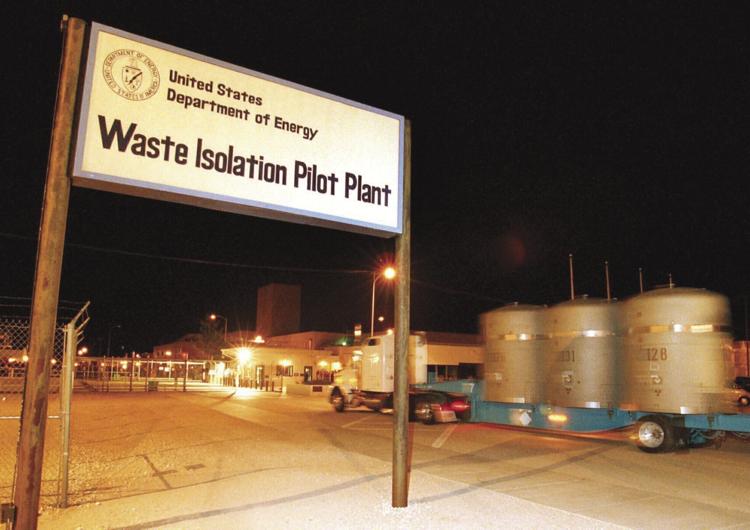
Tougher rules for a nuclear waste repository near Carlsbad could be on the way as New Mexico officials sought “more stringent” regulations as the federal government sought to renew its permit with the state for the facility.
The State sought new requirements to prioritize nuclear waste from within New Mexico for disposal, called for an accounting of all of the waste planned for disposal in the next decade and regular updates on federal efforts to find the location for a new repository as conditions of the permit.
The Waste Isolation Pilot Plant is owned by the U.S. Department of Energy which holds a permit with the New Mexico Environment Department (NMED) that must be updated every 10 years.
The facility sees transuranic (TRU) nuclear waste from DOE facilities around the country disposed of via burial in an underground salt formation about 2,000 feet beneath the surface.
The upcoming renewal, expected by the end of next year, involved negotiations between NMED and the DOE, months of public comments and hearings and multiple expected revisions.
A draft permit was scheduled for public release Dec. 20, and the NMED released on Dec. 8 several conditions it proposed to add to the permit.
The release of the draft will be followed by a 60-day period when NMED will accept comments from the public, and the agency intended to hold a public hearing next summer.
NMED Cabinet Secretary James Kenney said the State wanted a permit with stronger regulations moving forward, to better protect people and the environment from the impacts of nuclear waste disposal.
“It will be more stringent, full stop,” Kenney said. “The conditions were adding to it are designed to add more accountability to the whole complex that are sending waste to WIPP.”………………………………..
State of New Mexico says priority should go to New Mexico nuclear waste
Key among the revisions was prioritizing nuclear waste held at Los Alamos National Laboratory in northern New Mexico, where the DOE develops nuclear weapons.
More:Nuclear waste from Tennessee filling new disposal area at repository near Carlsbad
The facility was recently planned by the DOE to increase production of plutonium pits, used as the triggers for nuclear bombs, as part of efforts to modernize the U.S.’ weapons arsenal.
Kenney said space should be saved at WIPP for New Mexico waste, as the state hosts the repository and he said should receive the most benefit. He said agreements between the DOE and the State of Idaho to prioritize waste from Idaho National Laboratory and another prioritizing waste from Savannah River Site in South Carolina – a facility also set to ramp up pit production – unfairly “leap-frogged” New Mexico for waste disposal.
More:Gov. Lujan Grisham demands President Biden block nuclear waste site in southeast New Mexico
The waste Kenney hoped to target in this provision, he said, was “legacy waste” held at Los Alamos for decades, posing environmental risks in the area and in need of permanent disposal at WIPP.
“We want to make sure we preserve enough space at WIPP for the entirety of New Mexico’s legacy waste,” Kenney said. “I’m significantly concerned that the notion of cap and cover and leaving things around Los Alamos while continuing to emplace waste at WIPP around the country will squeeze out and leave behind waste that should have been there from legacy issues.”
New Mexico aims to hold feds ‘accountable’ for nuclear waste disposal
Another significant change proposed by NMED in the permit would require a full accounting of waste planned to be disposed of at WIPP for the decade following the permit to justify keeping the facility open after the permit expires.
This would better hold the federal government accountable, Kenney said, for future planning at WIPP.
In past proposal for the upcoming permit renewal, the DOE removed a 2024 closure date, opting to leave WIPP’s lifetime open-ended as worked to its statutorily maximum capacity of 6.2 million cubic feet of nuclear waste specified by the federal Land Withdrawal Act (LWA).
The DOE estimated the site could be open until 2085 based on the potential future availability of nuclear waste.
That ambiguity was unacceptable, Kenney said in proposing the added condition.
“We’re not satisfied. That is a completely unacceptable answer. There’s a presumption that if they’re going to continue to operate the underground in New Mexico, they’re going to have to inventory all of the waste that could come to WIPP,” he said.
“They are going to be accountable to every state where they do business including ours. Full accounting, no switching numbers.”
He said he believed WIPP will stay open past the next 10-year permit term, but that the DOE must do a better job at planning future waste streams.
“We know there’s going to be a need for this kind of facility. I don’t think WIPP will reach the LWA limits in 10 years,” Kenney said. “We can’t blindly go down the path of not knowing what they’re doing in every state regarding clean up.”
Nuclear waste facility will ‘run out of volume one day’ state says
As for finding a location for a new nuclear repository to continue disposal of the nation’s nuclear waste, Kenney said he has not seen “anything substantive” from the DOE, but that he did not believe WIPP could be the only repository in the nation for an unlimited amount of time.
But to do that, or to increase WIPP’s capacity, would take an act of Congress, and Kenney said the State of New Mexico should be kept updated on such activities as it held the only deep geological repository for nuclear waste in the U.S.
“There’s an irony with it being called a pilot plant and extending it out to 2080,” Kenney said. “We believe there is a need for this kind of facility. We have legacy waste and we have pit production that has waste that needs a place to go.
“(WIPP) will run out of volume one day. Someone, somewhere in (Washington), D.C. needs to be thinking about where that repository will be.”
Should Congress choose to increase the capacity at WIPP beyond the LWA limit, NMED’s proposal would automatically revoke WIPP’s permit.
This would protect New Mexico, Kenney said, from the being the sole resting place for U.S. nuclear waste.
“That’s a deal breaker for us,” he said. “We’re reclaiming our authority to not let the federal government pull the rug out from under New Mexicans.”
Ricardo Maestas, WIPP program manager at NMED’s Hazardous Waste Bureau also pointed out that the WIPP facility’s proximity to nearby oil and gas operations in the growing Permian Basin region, was so far unaddressed in the permit, and the state should be kept update on fossil fuel operations as they grow around the site. https://www.currentargus.com/story/news/2022/12/10/new-mexico-proposes-tougher-rules-for-nuclear-waste-site-near-carlsbad/69711594007/
Objections to nuclear power in Taiwan
https://www.taipeitimes.com/News/editorials/archives/2022/12/12/2003790557 By Chen Yi-nan 陳逸南 12 Dec 22
An article published by the Liberty Times on Thursday reported that Wang Hung-wei (王鴻薇), the Chinese Nationalist Party’s (KMT) candidate in the legislative by-election in Taipei’s third electoral district, has proposed that the Guosheng Nuclear Power Plant in New Taipei City’s Wanli District (萬里) and the Ma-anshan Nuclear Power Plant in Pingtung County not be decommissioned.
Environmental organizations criticized Wang’s proposal as being “legally baseless and practically infeasible,” to which she has yet to respond.
Instead, she asked her rival in the by-election, the Democratic Progressive Party’s (DPP) Enoch Wu (吳怡農), to answer the question, and invited him to a public policy debate.
Wu said that Taiwan Power Co (Taipower) had already deemed Wang’s proposal unrealistic and it is “highly irresponsible” to discuss national energy plans by striking a bargain.
Wu added that the Taiwan Environmental Protection Union had also released a statement opposing Wang’s proposal.
While Wang advocates keeping the nation’s nuclear power plants operational, the union believes that the goal should be to achieve a nuclear-free homeland.
Without responding to the union, Wang wished to hear Wu’s opinions on public policy.
Spent nuclear fuel rods at the Guosheng and the Ma-anshan plants are high-level radioactive waste that cannot be processed or safely disposed of in Taiwan.
The spent fuel rods are kept in the power plants’ spent fuel pools.
The dry-cask storage method was once employed in an attempt to dispose of the radioactive waste, but a long-term solution to the issue has never been developed.
If the Guosheng and the Ma-anshan plants continue to operate, how can the nation take care of high-level radioactive waste?
Where would the used fuel rods be stored?
This is an extremely serious problem, and all parties involved should think about it seriously.
Politicians should not appropriate the issue to win votes. If radioactive waste is not handled carefully, future generations would pay the price.
Former US president Abraham Lincoln once said: “You can fool all of the people some of the time, and some of the people all of the time, but you cannot fool all of the people all the time.”
People in Taiwan should take heed of and reflect upon Lincoln’s words, especially Taiwanese politicians.
Whether the Guosheng and the Ma-anshan plants should be decommissioned is a highly technical issue requiring scientific expertise.
It is not necessarily a problem concerning laws and politics, nor is it public policy open to debate. The candidates for a legislative by-election need not concern themselves with it.
A candidate’s irresponsible proposal is likely a trick to win votes, which is nothing more than fraud.
Candidates should not toy with the issue of nuclear power plants and radioactive waste, while voters should be sensible, smart and alert.
Chen Yi-nan is an arbitrator.
Translated by Yi-hung Liu
Japanese prime minister may seek in-depth nuclear abolition talks at Hiroshima G7 summit
Japan Times, 11 Dec 22, HIROSHIMA – Prime Minister Fumio Kishida on Sunday expressed hope to hold thorough debates for a world without nuclear weapons at next year’s Group of Seven summit in Hiroshima in May.
“I want to deepen discussions (at the G7 summit) so that we can release a strong message toward realizing a world free of nuclear weapons,” he said at a closing ceremony for the first meeting of the International Group of Eminent Persons for a World without Nuclear Weapons, or IGEP, held in Hiroshima for two days from Saturday.
“We are facing tough barriers over nuclear disarmament, such as growing threats to use nuclear weapons,” Kishida said, asking IGEP member experts to “produce meaningful outcomes regarding specific ways to bring the tough reality closer to the ideal.”………………… more https://www.japantimes.co.jp/news/2022/12/11/national/fumio-kishida-nuclear-weapons/
UK policy changes: windfalls and renewables

The government is getting side-tracked by its nuclear obsession, with its newly created development outfit ‘Great British Nuclear’ expected to triple UK nuclear capacity by 2050 – getting to 24GW, with 20-30 SMRs and 4-6 new large reactors. Hard to believe. But so is backing a new coal mine. Let’s hope 2023 makes more sense
It’s been a wild year politically in the UK. After a period when
windfall taxes were resisted, we ended up with a government which bowed to
them- as did most of the EU. And they even got extended to cover power.
Chancellor Jeremy Hunt hit electricity generation companies with a 45%
Energy Electricity Generator Levy, on their ‘excess returns’ as he
attempted to fund measures to ease the cost of living crisis.
That was in addition to the existing windfall tax on North Sea oil & gas operators
which is to be raised from 25% to 35% and extended by 2 years until 2028.
Renewable energy suppliers that operate under the Contracts for Difference
system are exempted from the new electricity tax, but not those who are
operating under the Renewables Obligation (RO). So they will be hit quite
hard- they had after all enjoyed a significant wind fall since the RO
subsidy level was high, based on the assumption that gas was cheap. It no
longer is.
There will now be an incentive to shift from RO support to CfDs,
but this may not be easy for some companies. Chris Hewett, Chief Executive
of Solar Energy UK, said: ‘The Chancellor should be taking every
opportunity to encourage investment in clean energy.
Yet, there will be no tax relief for companies investing in meeting the government’s target of
70GW of solar capacity by 2035 – unlike investments in oil and gas
production, which will be taxed less than fossil-free generators.’ A
swifter move to decarbonised energy would have avoided the dire
consequences we are seeing now.’ Fair enough.
But that doesn’t mean opting for costly and slow to deploy nuclear decarbonisation. It means
getting on with lower cost renewables fast and adjusting the wind fall
taxes and CfD system to that end. And of course cutting back on energy
wastage where ever possible.
The government is getting side-tracked by its
nuclear obsession, with its newly created development outfit ‘Great
British Nuclear’ expected to triple UK nuclear capacity by 2050 – getting
to 24GW, with 20-30 SMRs and 4-6 new large reactors. Hard to believe. But
so is backing a new coal mine. Let’s hope 2023 makes more sense
Renew Extra 10th Dec 2022
https://renewextraweekly.blogspot.com/2022/12/uk-policy-changes-windfalls-and.html
News WatchNews Watch by Citizens’ Nuclear Information CenterNews Watch

December 4, 2022
NRA Complicit in Abolishing NPP Operation Period Limits
After hearing Director General Matsuyama Yasuhiro of the Energy Conservation and Renewable Energy Department (Agency for Natural Resources and Energy of the Ministry of Economy, Trade and Industry (METI)) explain METI’s point of view at a regular meeting of the Nuclear Regulation Authority (NRA) on October 5, NRA Chairman Yamanaka Shinsuke indicated a positive stance toward METI’s proposal to rescind the rule under Japan’s Nuclear Reactor Regulation Act that says for nuclear power plants (NPPs), in general “the period set forth” may be extended “only once upon the expiration thereof, not exceeding 20 years,” and limits it to special cases. Yamanaka remarked, “The operation period is a policy decision on the ideal way to employ nuclear power, and is not a matter for NRA to comment on.” Moreover, on November 2, barely a month later, he went as far as to say new regulatory system proposals were being drafted that would allow operation of NPPs in excess of 60 years for 10-year periods providing the facilities underwent inspections for deterioration and met the new regulatory standards.
Regarding METI’s proposals, which are described below, at a press conference following an NRA meeting on November 9, the same Chairman Yamanaka expressed negativity toward the exclusion of periods when operation of a reactor was suspended from the operation periods as an immediate means of extending operation past 60 years, saying “Our regulations are so-called calendar-based, and we evaluate by calendar year.”
METI Proposals for NPP Operation Period Extension Rules
METI submitted three proposals for future operation rules to the “Nuclear Power Subcommittee” panel of experts on November 8, regarding extension of NPP operation periods, which is being considered by Japan’s government. The three proposals METI submitted are 1) maintaining the current rule based on a 40-year limit with extension of up to 20 years if the NPP obtains NRA approval., 2) no upper limit on additional extensions, and 3) setting a uniform upper limit on operation periods (e.g., 20 years), while not counting periods of suspended operation resulting from “heteronomous factors” that are difficult for electric power companies to anticipate as part of the operating period.
At the meeting that day, only two people supported proposal 1), CNIC Secretary General Matsukubo Hajime and Nippon Association of Consumer Specialists Director Murakami Chisato, both of whom opposed any extensions to begin with. The other 16 committee members were nuclear power supporters from the outset, so a number of them supported proposal 3), but proposal 2) drew the most support. Nevertheless, the mass media all said that proposal 3) had the most backing. This clearly reflects METI’s intentions.
Examples of “heteronomous factors” put forward were suspension periods for meeting stronger safety regulations following the Fukushima nuclear accident and suspension periods based on provisional dispositions by courts ordering injunctions against operation.
Japan’s government is expected to set forth its new rules before year end, but many, in particular the Liberal Democratic Party (LDP) faction supporting nuclear power, are seeking the abolition of upper limits on operation periods as in proposal 2).
Applications Filed for 60-year Operation of Sendai Units 1 and 2
Kyushu Electric Power Co. filed for approval from the NRA on October 12 to extend the operation periods of Sendai NPP Units 1 and 2 by 20 years. They said no problems with deterioration of the equipment had been found in the special inspections performed for the Unit 1 reactor in October 2021 and for the Unit 2 reactor in February 2022 and that the soundness of the reactors up to the 60-year point had been confirmed. The results of the special inspections, however, were examined by the Kagoshima Prefectural Nuclear Safety and Evacuation Planning Committee, who pointed out a number of issues with them. At a meeting on October 17, one committee member expressed his view that the principle of good faith had been violated due to the applications being filed before those results were made available.
Doubling of Subsidies to Municipalities that Approve NPP Restarts
METI announced on October 10 that it would expand the subsidies provided to municipalities hosting NPPs upon their restart. The maximum subsidy provided to prefectures where NPPs are located and which have been restarted in April 2022 or later will be doubled from 500 million yen to 1 billion yen, and subsidies of up to 500 million yen will also be newly provided to prefectures adjacent to municipalities hosting those NPPs. The rules for Infrastructure Development Support Project Grants for areas hosting NPPs were to have been revised by the end of October.
The same day, Commissioner Hosaka Shin of METI’s Agency for Natural Resources and Energy held talks on-line with Governor Maruyama Tatsuya of Shimane Prefecture and Governor Hirai Shinji of Tottori Prefecture to tell them that they would be the recipients of the first round of the newly expanded subsidies, with up to 1 billion yen to be provided to Shimane Prefecture, which had agreed to restart Chugoku Electric Power Co.’s Shimane NPP Unit 2 reactor, and up to 500 million yen to the adjacent Tottori Prefecture.
Mission of the UN Special Rapporteur on Human Rights of Internally Displaced Persons to Japan
UN Special Rapporteur on Human rights of Internally Displaced Persons Cecilia Jimenez-Damary visited Japan in September, where for about two weeks she investigated the circumstances of the Fukushima nuclear accident evacuees. She presented the results of her investigation as a provisional statement at a press conference at the Japan National Press Club on October 7. The official report will be released in Geneva next June.
The provisional statement made it clear that the evacuees, “Regardless of whether or not they come from areas designated [as] areas where forced evacuation orders were enforced, are all internally displaced persons with the same rights and entitlements as citizens of Japan” and that their categorization as forced or voluntary evacuees in terms of receiving support and assistance “should therefore be dropped in practice.”
Compensation for Fukushima Nuclear Accident: Capital Repayment from TEPCO to Take as Long as until FY2064
The Board of Audit of Japan released its report on its audits of account settlements for FY2021 on November 7, 2022. In the report, the Board of Audit’s estimations revealed that the recovery of funds that had been lent in effect to Tokyo Electric Power Co. (TEPCO) by Japan’s government for providing compensation for the accident involving that company’s Fukushima Daiichi Nuclear Power Station could take as long as until FY2064. A similar estimation four years ago said it would take up to until FY2051, so the current estimation has the repayment period prolonged by 13 years. The amount of compensation TEPCO is paying to the disaster victims still has the potential to increase, and the Board of Audit notes, “The current estimation of the recovery completion date suggests the possibility of further delays in the future.”
To pay the compensation, the government borrowed money from financial institutions and loaned it in effect via the Nuclear Damage Compensation and Decommissioning Facilitation Corporation (NDF) to TEPCO interest-free, for use in covering compensation, decontamination and other expenses. Each year, the NDF receives a “General Assessment” from each of Japan’s major electric power companies that have NPPs, plus an additional “Special Assessment” from TEPCO, and pays these funds back to the government. The interest paid by the government to the loaning financial institutions is entirely covered by taxes.
The original General Assessment and Special Assessment for the NDF’s repayments to the government have been insufficient, so the government has adopted a new idea of a “past portion” of the compensation funds that should have been secured before the nuclear accident. From FY2020, it has had the customers of Power Producer & Suppliers (new electric power businesses under Japan’s liberalized system) bear part of the burden in the form of an additional charge on power grid usage (consignment charge) by the major electric power companies. For FY2021, that additional charge came to 60.9 billion yen.
When the Board of Audit investigated the contribution charges, the General Contribution paid by each of the major electric power companies in FY2013-2020 was 163 billion yen, but in FY2021 it decreased to 133.7 billion yen. Details on this change were not released. The Special Contribution paid by TEPCO had been ranging from 50 billion to 110 billion yen per year, but in FY2021, it fell to a record low of 40 billion yen. Regarding the method for determining the Special Contribution, the Board of Audit says, “It is not clear if it meets legal criteria.”
According to the Board of Audit, 13.5 trillion yen worth of government bonds have been issued to support TEPCO, and about 8 trillion yen of that has yet to be repaid by the NDF to the government. In addition to the General Contribution, the NDF collects the Special Contribution from TEPCO, profits from sales of TEPCO shares by the NDF and other sources of funding, and uses them to pay back the loans. The Board of Audit’s estimations of how long it will take to pay back the full amount are based on the state of these funds.
The Board of Audit bases its estimations on the assumptions that TEPCO’s business conditions and stock price will not improve as expected, that, in the case where the most time is needed, the Special Contribution will be 40 billion yen annually in and after FY2023, and that the profits from sales of TEPCO shares will only be 110 billion yen. In such a scenario, they estimate it will take 42 more years—until FY 2064—to repay the full amount.
However, the oceanic release of processed contaminated water accompanying decommissioning work is expected to commence in the spring of FY2023, and if this results in reputational damage to TEPCO, the amount of compensation it will have to pay out could increase. Moreover, since the amount of compensation ordered in the suit brought by the disaster victims and evacuees nationwide exceeds the standard based on the government’s guidelines, those guidelines may be reviewed, which could result in further increases in compensation.
Because of these factors, the Board of Audit says, “If the amount granted (loaned) by the government increases further as a result of increased compensation, the burden borne by Japan’s citizens will increase.” It is therefore asking the government to explain this to its citizens in an appropriate manner and requesting TEPCO to improve its profitability.
Source: https://cnic.jp/english/?p=6363
Revealing He Too Had Manning Leaks, Ellsberg Dares Justice Dept to Prosecute Him Like Assange
“Let’s take this to the Supreme Court,” says the Pentagon Papers whistleblower, taking aim at what he argues is an unconstitutional use of the Espionage Act.
https://www.commondreams.org/news/2022/12/07/revealing-he-too-had-manning-leaks-ellsberg-dares-doj-prosecute-him-assange JESSICA CORBETT, December 7, 2022
Pentagon Papers whistleblower Daniel Ellsberg on Tuesday dared U.S. prosecutors to come after him like they have Julian Assange by revealing in a BBC News interview that the WikiLeaks publisher sent him a backup of leaked materials from former military analyst Chelsea Manning.
“Let me tell you a secret. I had possession of all the Chelsea Manning information before it came out in the press,” Ellsberg said to BBC‘s Stephen Sackur in the on-camera interview. “I’ve never said that publicly.”
Assange had sent him the materials—which include evidence of U.S. war crimes—in case “they caught him and they got everything,” the 91-year-old explained. “He could rely on me to find some way to get it out.”
Australian-born Assange is currently detained in London and fighting in British and European courts against his extradition to the United States, where he could spend the rest of his life in prison if convicted under Espionage Act charges.
Inviting action by the U.S. Department of Justice (DOJ), Ellsberg said that “I am now as indictable as Julian Assange and as everyone who put that information out—the papers, everybody who handled it.”
“Yes, I had copies of it and I did not give them to an authorized person. So, if they want to indict me for that, I will be interested to argue that one in the courts—whether that law is constitutional,” he continued, referring to the Espionage Act.
Highlighting that the highest U.S. court has never held that it is constitutional to use the Espionage Act as if it were a British Official Secrets Act, Ellsberg said that “I’d be happy to take that one to the Supreme Court.”
The Espionage Act, “used against whistleblowers, is unconstitutional,” he asserted. “It’s a clear violation of the First Amendment.”
Ellsberg’s public confession comes after editors and publishers at five major media outlets that collaborated with WikiLeaks in 2010 for articles based on diplomatic cables from Manning released a letter late last month arguing that “it is time for the U.S. government to end its prosecution of Julian Assange for publishing secrets.”
“This indictment sets a dangerous precedent, and threatens to undermine America’s First Amendment and the freedom of the press,” the letter states. “Obtaining and disclosing sensitive information when necessary in the public interest is a core part of the daily work of journalists. If that work is criminalized, our public discourse and our democracies are made significantly weaker.”
The new Ellsberg interview also follows the European Court of Human Rights (ECHR) confirming earlier this month that 51-year-old Assange has asked the tribunal to block his extradition to the United States.
Assange’s brother Gabriel Shipton told Reuters last week that “I would imagine the U.S. wants to avoid” a case going before the ECHR for “trying to extradite a publisher from Europe for publishing U.S. war revelations when the U.S. is asking Europe to make all sort of sacrifices for the war in Ukraine.”
Plutonium’s Fatal Attraction

In February 2022, on the first day of Russia’s invasion of Ukraine, Russian forces took over the Chornobyl Zone of Alienation, an exclusion zone surrounding the plant created in the weeks after the Chornobyl accident. A month later, the Russian Army occupied the Zaporizhzhia Nuclear Power Plant in southern Ukraine, and since then, the plant has been repeatedly under fire. At the start of the invasion, the world seemingly received an education in nuclear power. News reporting illuminated that containment vessels protecting nuclear reactors had been stress-tested for tornadoes, tsunamis, and planes landing on them, but not for something so banal and human as a conventional war.
The public also came to understand that nuclear reactor complexes require a steady supply of electricity to keep running and to prevent overheating, and also that nuclear power plants hold years of highly-radioactive spent nuclear fuel—chock full of plutonium, among other harmful isotopes—which are not protected by containment buildings.
e-flux Architecture, Kate Brown, Half-Life, December 2022
Think of the earth. At its core is fire, an inferno around which biological life emerged. With fire in our planetary loins, no wonder humans have trouble staying away from it; that they delight in reproducing it in fiction, movies, fireworks, war games, and in technologies.
Perhaps that is why, decades after radioactive toxins saturated the Earth’s surface and at a time when threatened reactors in war-torn Ukraine are at risk of blowing again, many people are still enchanted by nuclear reactors. They are burning cores, sources of other-worldly heat and energy. If you can harness plutonium, the element at the heart of the nuclear inferno, then you can magnify human power to a super-hero level. In tandem, plutonium has the power to re-map territories, produce new borders—not just between people, but between humans and the environment. By extension, plutonium spatializes power.
In 1940, Glenn Seaborg first synthesized plutonium in a cyclotron in Berkeley, California. With these initial micrograms, plutonium became the first human-produced element on the periodic table. Plutonium has a half-life of 24,000 years, which means that Seaborg’s plutonium will linger on earth for over 240,000 years. Like all good offspring, plutonium promises to outlast humans on Earth.

Plutonium is also beautiful, sensual, and kaleidoscopic. It is a heavy metal that self-heats, warming a person’s hands like a small animal. In metallic form, plutonium is yellow or olive green. Shine a UV light on it, and it glows red. When it comes in contact with other radioactive isotopes plutonium sends out a dazzling blue light, a light show designed and powered by what appears to be an inert, inanimate metal. But it is not.
In 1943, the DuPont Corporation built a massive factory for the Manhattan Project to produce the world’s first industrial supplies of plutonium in the eastern reaches of Washington State. As engineers drew up plans for nuclear reactors and radio-chemical processing plants necessary for production, Dupont officials learned something alarming: “the most extreme health hazard is the product itself.”1 “It is now estimated,” DuPont executive Roger Williams wrote to the US Army Corps of Engineers overseeing the project, “that five micrograms (0.000005 grams) of the product [plutonium] entering the body through the mouth or nose will constitute a lethal dose.” A Manhattan Project medical officer wrote on the margins of this sentence: “Wrong!” With the first birthing pains of plutonium, a debate was born over the lethality and consequent liabilities inherent in nuclear industries.
Plutonium is a monumental invention, akin to harnessing fire. Upscaling the Pu chemical extraction process meant separating plutonium from about a hundred thousand curies of fission fragment radiation every single day. This was an incredibly dangerous undertaking. Plant operators worked with robotic arms and protective gear behind massive concrete walls and thick lead-glass windows in ship-sized “canyons.” They worked toward a final product that had extraordinary properties. Seaborg described element 94:

Plutonium is so unusual as to approach the unbelievable. Under some conditions it can be nearly as hard and brittle as glass; under others, as soft and plastic as lead. It will burn and crumble quickly to powder when heated in air, or slowly disintegrate when kept at room temperature. It undergoes no less than five phase transitions between room temperature and its melting point… It is unique among all of the chemical elements. And it is fiendishly toxic, even in small amounts.
Plutonium made not only a novel weapon of war, but its special existence inspired people to use it to create new technologies, and it gave birth to an elaborate security apparatus to safeguard the “super-poisonous” product, and later, new border zones to protect regions spoiled by the spillage of plutonium and other radioactive byproducts after accidents. As workers over subsequent decades produced more and more plutonium, the new mineral transformed landscapes, science, energy production, and human society around the world. Plutonium militarized, segregated, and compartmentalized large parts of the Earth, leaving a profound shadow that reaches into the twenty-first century.
Plutonium Landscapes
At the Hanford Plutonium Plant in Richland, Washington, DuPont engineers initially dedicated minimal resources to the management of growing volumes of radioactive waste. They had chosen a sparsely populated site and removed several towns and a settlement of the Wanapum nation from the newly designated “federal reservation” in case of accidents and the leakage of radioactive waste. They often repeated the platitude: “diffusion is the solution.” With a good bit of distance and privacy won with an elaborate security apparatus, DuPont and Army Corps engineers set up waste facilities for non-radioactive debris according to existing, standard practices. They drilled holes, called “reverse wells,” for dumping liquid radioactive waste. They bulldozed trenches and ponds, pouring in radioactive liquid and debris. Cooling ponds attached to reactors held hot, radioactive water for short periods before flushing it into the Columbia River. Smokestacks above processing plants issued radioactive particles in gaseous form. High-level waste—terrifically radioactive—went into large, single-walled steel coffins buried underground. Engineers designed these chambers for temporary, ten-year storage with the knowledge that the waste would corrode even thick steel walls.

DuPont leaders were nervous about these waste management procedures. The corporation had experience polluting rivers and landscapes with chemical toxins near their factories, and insisted that the Army Corp pay for environmental assays to learn what happened to the dumped radioactive waste. At Hanford in the 1940s, Dupont set up a soil study, a meteorological station, and a fish lab to monitor the health of valuable salmon migrations in the Columbia River. The studies showed that while it took large hits of external gamma rays to kill fish, much smaller ingested doses weakened and killed fish and other experimental animals. Weather studies showed that radioactive gases either traveled considerable distances in strong winds or hovered for long periods over the Columbia Basin when caught in an inversion. Researchers found, in short, that radioactive waste did not spread in a diffuse pattern, but collected in random hot spots of radioactivity. Soil scientists discovered that plants drank up radioactive isotopes readily from the soil and that aquifers became contaminated with radioactive liquids. Ichthyologists learned that fish concentrated radioactivity in their bodies at levels at least sixty times greater than the water in which they swam. Generally, researchers found that radioactive isotopes attached to living organisms readily made their way up the food chain.
Despite this troubling news, even after September 1946 when General Electric took over the running of the plant, no major changes were made to waste management methods for thirty years. In the course of forty-four years, Hanford rolled out the plutonium content for 60,000 nuclear weapons.4 The environmental footprint of that military production, however, is immeasurable. Indeed, it is intrinsically shape-shifting.
Rushing to develop their own bomb and encouraged by the example of the United States, Soviet leaders followed American practices in the years following World War II. Soviet generals commanded Mayak, a site in the southern Russian Urals that became known as “Post Box 40.” Engineers at Mayak dumped radioactive waste into the atmosphere, ground, and local water sources. High-level waste was contained temporarily in underground tanks similar to those built at Hanford. Unlike the high-volume, rocky Columbia River, the nearby Techa River flowed slowly, flooding frequently and bogging down in swamps and marshes. After just two years of operation of the Mayak Plutonium Plant, its director deemed the Techa River “exceedingly polluted.”5 By 1949, when the first Soviet nuclear bomb was tested, the plant’s underground containers for high-level waste were overflowing. Rather than shutting down production while new containers were built, plant directors decided to dump the high-level waste in the turgid Techa River.6 Each day, four thousand three hundred curies of waste? flowed down the river. From 1949 to 1951, when dumping ended, plant effluent comprised a full twenty percent of the river. A total of 3.2 million curies of waste clouded the river along which 124,000 people lived.7 Radioactivity became a new contour that outlined human activity and new communities of people who shared in dangerous exposures.
Rushing to develop their own bomb and encouraged by the example of the United States, Soviet leaders followed American practices in the years following World War II. Soviet generals commanded Mayak, a site in the southern Russian Urals that became known as “Post Box 40.” Engineers at Mayak dumped radioactive waste into the atmosphere, ground, and local water sources. High-level waste was contained temporarily in underground tanks similar to those built at Hanford. Unlike the high-volume, rocky Columbia River, the nearby Techa River flowed slowly, flooding frequently and bogging down in swamps and marshes. After just two years of operation of the Mayak Plutonium Plant, its director deemed the Techa River “exceedingly polluted.”5 By 1949, when the first Soviet nuclear bomb was tested, the plant’s underground containers for high-level waste were overflowing. Rather than shutting down production while new containers were built, plant directors decided to dump the high-level waste in the turgid Techa River.6 Each day, four thousand three hundred curies of waste? flowed down the river. From 1949 to 1951, when dumping ended, plant effluent comprised a full twenty percent of the river. A total of 3.2 million curies of waste clouded the river along which 124,000 people lived.7 Radioactivity became a new contour that outlined human activity and new communities of people who shared in dangerous exposures.

Villagers used the river for drinking, bathing, cooking, and watering crops and livestock. Soviet medical personnel investigated the riverside settlements in 1951 and found most every object and body contaminated with Mayak waste. Blood samples showed internal doses of uranium fission products, including cesium-137, ruthenium-106, strontium-90, and iodine-131. Villagers complained of pains in joints and bones, digestive tract illnesses, strange allergies, weight loss, heart murmurs, and increased hypertension.8 Further tests showed that blood counts were low and immune systems weak. Soviet army soldiers carried out an incomplete evacuation of riverside villages over the next ten years. Twenty-eight thousand people, however, remained in the largest village, Muslumovo. They became subjects of a large, four-generation medical study. In subsequent years, prison laborers created a network of canals and dams to corral radioactive waste streams into Lake Karachai, now capped with crumbling cement and considered the most radioactive body of water on earth.
Radioactive waste redraws the spatial relationships between humans and environment on the ground and by air. On September 29, 1957, an underground waste storage tank exploded at the Mayak plutonium plant in the southern Urals. The explosion sent a column of radioactive dust and gas rocketing skyward a half mile. Twenty million curies of radioactive fallout spread over a territory four miles wide and thirty miles long. An estimated 7,500 to 25,000 soldiers, students, and workers cleaned up radioactive waste ejected from the tank. Witnesses described hospital beds fully occupied and the death of young recruits, but the fate of 92% of the accident clean-up crew is unknown. Following the radioactive trace, soldiers evacuated seven of the eighty-seven contaminated villages downwind from the explosion. Residents of the villages that remained were told not to eat their agricultural products or drink well water, an impossible request as there were few alternatives. In 1960, soldiers resettled twenty-three more villages. In 1958, the depopulated trace became a research station for radio-ecology.
Plutopia
In the postwar era, the social consequences of the production and dispersal of large volumes of invisible, insensible radioactive toxins were profound, manifesting in sophisticated spatial planning and infrastructure that appropriated and exploited existing inequities. Plant managers in the US and USSR created special residential communities—“nuclear villages” in the US and “closed cities” in the USSR—to both manage and control the movement of workers and radioactive isotopes. In exchange for the risks, workers in plutonium plants were paid well and lived like their professional class bosses. As part of the bargain, they signed security oaths and agreed to surveillance of their personal and medical lives. They remained silent about accidents, spills, and intentional daily dumping of radioactive waste into the environment. Free health care and a show of monitoring employees and the nuclear towns led workers to believe they were safe.

To protect full-time employees, much of the dirty work of dealing with radioactive waste and accidents fell to temporary, precarious labor in the form of prisoners, soldiers, and migrant workers, often of ethnic minorities (Muslims in the USSR, Latinos and Blacks in the USA). Segregating space by race to disaggregate “safe” places—or what I call plutopias—and sacrifice zones became a larger pattern in Soviet and American Cold War landscapes.
Soviet and American plutonium communities surfed on a wave of federal subsidies in company towns in isolated regions where there were no other industries and few alternative sources of employment for plant workers. Leaders found it politically difficult to shut off the good life they had created for their plutopias. In Richland, Washington, when the supply of plutonium had been satiated, city leaders campaigned to keep their plants going nonetheless, resulting in an overwhelming excess.11 By the 1980s, the US had produced fifty percent more plutonium than that which was deployed in nuclear warheads.
American officials explored other uses for plutonium. In 1953, President Dwight Eisenhower announced a new international program, Atoms for Peace. At the time, this was largely a propaganda slogan to counter Soviet officials who frequently pointed out that the US was the only nation to use nuclear weapons to kill.
In the next decade, engineers and physicists devised new, non-military uses for plutonium and its radioactive by-products. Turbines attached to reactors began to produce plutonium for (very expensive) generation of electricity. Scientific experiments tested plutonium in cancer research, as a power source for pacemakers, and even for instruments for espionage.12 It seemed there was no end to the uses of plutonium and its radioactive by-products. In the 1950s and 1960s, American radioactive isotopes were shipped abroad under the Atoms for Peace logo in great quantities, dispersing and propagating nuclear technologies across the globe. This trade was both open and clandestine.13 In the name of “peace,” US not only gave other nations the possibility to build nuclear weapons, but also to expose civilian populations as well.
One of the most critical technologies that US agencies exported were “civilian” nuclear power plants. Advocates for nuclear power have long carefully drawn boundaries between nuclear weapons and nuclear power generation. But the existence of nuclear power reactors opened the door for the production of plutonium at the core of nuclear missiles and nuclear accidents. In the late 1960s, both the US and USSR created so-called “dual-purpose reactors” that erased the already-questionable boundaries between peaceful and martial nuclear technologies. These reactors were designed to produce either electricity to power a grid or plutonium for the core of a nuclear missile.
American engineers created the N-reactor at the Hanford Nuclear Reservation in Richland, Washington, while Soviet engineers designed the RBMK-1000 reactor, a standardized model that was built over a dozen times in the USSR. In contrast to the US, Soviet leaders were worried that the RBMK-1000’s plutonium-generating capabilities could be abused if their technology was shipped abroad.
………………………………………………………… Geopolitics could not reconcile the way that nuclear contaminants did not respect borders. For most officials in the USSR and abroad, the solution was silence and suppression. To admit in the 1990s to the ongoing public health disaster in Ukraine and Belarus would mean acknowledging the damage done to populations around the globe exposed to Cold War nuclear experimentation, weapons production, nuclear testing, and future nuclear accidents. But underestimating and obscuring the effects of Chornobyl has left humans unprepared for the next disaster.
In the years after 1986, commentators repeated that a tragedy like Chornobyl could never occur in a developed, industrial country. This claim was dispelled, however, in 2011, when a tsunami crashed into the Fukushima Daiichi Nuclear Power Plant. Japanese business and political leaders responded in ways eerily similar to Soviet leaders twenty-five years earlier. They grossly understated the magnitude of the disaster (a meltdown of three reactors), sent in firefighters unprotected from the high fields of radioactivity, raised the acceptable level of radiation exposure for the public twenty-fold, and dismissed a recorded increase in pediatric thyroid cancers.
In February 2022, on the first day of Russia’s invasion of Ukraine, Russian forces took over the Chornobyl Zone of Alienation, an exclusion zone surrounding the plant created in the weeks after the Chornobyl accident. A month later, the Russian Army occupied the Zaporizhzhia Nuclear Power Plant in southern Ukraine, and since then, the plant has been repeatedly under fire.
At the start of the invasion, the world seemingly received an education in nuclear power. News reporting illuminated that containment vessels protecting nuclear reactors had been stress-tested for tornadoes, tsunamis, and planes landing on them, but not for something so banal and human as a conventional war. The public also came to understand that nuclear reactor complexes require a steady supply of electricity to keep running and to prevent overheating, and also that nuclear power plants hold years of highly-radioactive spent nuclear fuel—chock full of plutonium, among other harmful isotopes—which are not protected by containment buildings.
The ongoing war in Ukraine has shown how vulnerable electric power grids are in times of war and, one can presume, in scenarios of extreme weather, triggered by climate change. The grounded sites of nuclear events, whether on the high plains of Eastern Washington, the birch-pine forests of the Russian Urals, the swampy stretches of Northern Ukraine, or in coastal Japan, have a global reach. The impact of the invention of plutonium, a new element on the periodic chart, reshaped landscapes, reconfigured spatial and security regimes, and remade what we understand to be human bodies, which have all incorporated radioactive isotopes. Watching the crisis in Ukraine unfold in real-time, a global audience has learned that humanity’s attraction to fire continues to be a fatal one.
Notes………………. https://www.e-flux.com/architecture/half-life/507133/plutonium-s-fatal-attraction/
Maligned in Western Media, Donbass Forces are Defending their Future from Ukrainian Shelling and Fascism
Covert Action Magazine, By Eva Bartlett, – November 19, 2022
America is widely understood to be a key instigator behind conflict in Ukraine that has pitted brother against brother
meared, stigmatized, and lied about in Western media propaganda, the mostly Russian-speaking people of the Donbass region were being slaughtered by the thousands in a brutal war of “ethnic cleansing” launched against them by the neo-Nazi regime in Kyiv, which the U.S. installed after the CIA overthrew Ukraine’s legally elected president in a 2014 coup.
Although the Donbass people had been pleading for Russian military aid to defend them against the increasingly murderous military assaults by the Ukraine government forces, which killed more than 14,000 of their people, Russian President Vladimir Putin declined to intervene. Instead, he tried to broker a peace agreement between the warring parties.
But the U.S. and Britain secretly colluded to sabotage peace negotiations, persuading president Zelenksy to ignore the Minsk 2 peace agreement that the Ukraine government had previously signed, and which had been countersigned by Russia, France and Germany.
Realizing that the U.S. and its NATO allies would never permit peace negotiations to succeed, Putin finally sent troops into Ukraine on February 24. Russian troops went in to support and reinforce the outnumbered and outgunned Donbass Special Forces who had been defending their land against attacks by the Kyiv government for nearly eight years.
Voices From the Frontlines of Former Eastern Ukraine Republics
In the Donetsk People’s Republic (DPR) in October, I went to a frontline outpost 70 meters from Ukrainian forces in Avdeevka (north and west of Donetsk), according to the Donbas commanders I spoke with there.
To reach that position, I went with two other journalists to a meeting point with two commanders of Pyatnashka—volunteer fighters, including Abkhazi, Slovak, Russian, Ossetian and other nationalities, including locals from Donbas.
From there, they drove us to a point as far as they could drive before walking the rest of the way, several minutes through brush and trenches, eventually coming to their sandbagged wood and cement fortified outpost.
It has changed hands over the years, Ukrainian forces sometimes occupying it, Donbas forces now controlling it.
One soldier, a unit commander who goes by the call sign “Vydra” (Otter), was formerly a miner from the DPR who had been living in Russia with his family. In 2014, he returned to the Donbas to defend his mother and relatives still there. He spoke of the outpost.
“We dug and built this with our hands. Several times over the years, the Ukrainians have taken these positions. We pushed them back, they stormed us…Well, we have been fighting each other for eight years.”
There, artillery fire is the biggest danger they face. “You can hide from a sniper, but not from artillery, and they’re using large caliber.”
His living quarters is a dank, cramped, room with a tiny improvised bed, with another small room and bed for others at the outpost.
A sign reads: “If shelling occurs, go to the shelter.” The kind of sign you see all over Donetsk and cities of the Donbas, due to Ukraine’s incessant shelling of civilian, residential areas. In a frontline outpost where incoming artillery is the norm, the sign is slightly absurd, clearly a joke.
An Orthodox icon sits atop the sign. Ukrainian nationalists hang and spray Nazi graffiti and slogans of death; these fighters revere their faith.
A poster, with the DPR flag, reads: “We have never known defeat, and it’s clear that this has been decided from above. Donbas has never been forced to its knees, and no one will ever be allowed to.”
The only things decorating the space are tins of tuna and canned meat, instant noodles, and washing powder. Their existence is bare minimum, nothing glamorous about it; they volunteer because, as they told me, this is their land and they will protect it.
Perhaps surprising to some, when Vydra was asked whether he hates Ukrainians, he replied emphatically no, he has friends and relatives in Ukraine.
“We have no hatred for Ukraine. We hate those nationalists who came to power. But ordinary Ukrainians? Why? Many of us speak Ukrainian. We understand them, they understand us. Many of them speak Russian………………………..
And I’m on the Myrotvorets [kill list] website.” [As is the author, see this article.]
He spoke of Ukraine’s shelling from 2014, when the people of the Donbass were unarmed and not expecting to be bombed by their own country…………………………………..
I asked how he felt to be treated and described as sub-human, to be called dehumanizing names, a part of the Ukrainian nationalists’ brainwashing propaganda. As I wrote previously:
“Ukrainian nationalists openly declare they view Russians as sub-human. School books teach this warped ideology. Videos show the extent of this mentality: Teaching children not only to also hate Russians and see them as not humans, but also brainwashing them to believe killing Donbas residents is acceptable. The Ukrainian government itself funds neo-Nazi-run indoctrination camps for youths.”
“It’s offensive,” Vydra said, “We are saddened: There are sick people. We need to heal them, slowly.”……………………………….
Commanders Speak of Geopolitical Reasons for Ukraine’s War
Outside, sitting in front of an Orthodox banner and a collection of collected munitions—including Western ones—two platoon commanders, “Kabar” and “Kamaz,” spoke of the bigger geopolitical picture. [See video]
“America is running the show here,” Kabar said. “It builds foreign policy on the basis of how its domestic policy is built, which is through conflicts with external countries. They are accustomed to proving their power to their people through terrorism around the world, inciting fires in Syria, in the east. They played the card of radical Islam there……………………
And now they are playing the card of fascism. They do not see themselves on the other side of good. They need wars, blood, cruelty, and they signed Europe up for this.
However, they’ve missed one point: Russia, since the days of the Soviet Union, has never retreated in large scale wars. ………………………………………
Western Media Inverted Reality, Lauding Nazis and Demonizing Defenders
While many in the West think that this conflict started in February 2022, those following events since 2014 are aware that, following the Maidan coup and Odessa massacre, and the rise of fascism in Ukraine against the Ukrainian people, the Donbas republics wanted to distance themselves from Ukraine’s Nazis and fascism.
The sacrifices which the people of the Donbas republics have endured, particularly those fighting to protect their families and loved ones, have been and continue to be immense………..
These defenders, many living in dank trench conditions didn’t choose war, they responded to it, to protect their loved ones and their future. In spite of more than eight years of being warred upon by Ukraine, they retain their humanity. https://covertactionmagazine.com/2022/11/19/maligned-in-western-media-donbass-forces-are-defending-their-future-from-ukrainian-shelling-and-fascism/
Why nuclear-powered France faces power outage risks

https://www.reuters.com/business/energy/why-nuclear-powered-france-faces-power-outage-risks-2022-12-09 PARIS, Dec 9 (Reuters) – France is bracing for possible power outages in the coming days as falling temperatures push up demand while state-controlled nuclear group EDF struggles to bring more production on line.
WHY CAN’T FRANCE MEET DEMAND?
France is one of the most nuclear-powered countries in the world, typically producing over 70% of its electricity with its fleet of 56 reactors and providing about 15% of Europe’s total power through exports.
However, EDF (EDF.PA) has had to take a record number of its ageing reactors offline for maintenance this year just as Europe is struggling to cope with cuts in Russian natural gas supplies used for generating electricity.
That has left France’s nuclear output at a 30-year low, forcing France to import electricity and prepare plans for possible blackouts as a cold snap fuels demand for heating.
WHAT ARE EDF’S MAINTENANCE PROBLEMS?
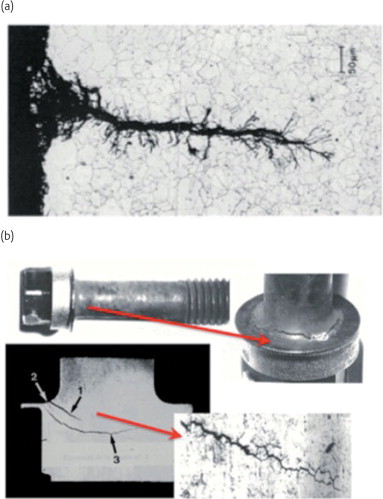
While EDF normally has a number of its reactors offline for maintenance, it has had far more than usual this year due to what is known as stress corrosion on pipes in some reactors.
At the request of France’s nuclear safety watchdog, EDF is in the process of inspecting and making repairs across its fleet since detecting cracks in the welding connecting pipes in one reactor at the end of last year.
Years of under-investment in the nuclear sector mean that there is precious little spare capacity to meet demand while reactors are offline for maintenance.
France also lacks specialised welders and other workers in sufficient numbers to be able to make repairs fast enough to get reactors back online.
WHAT IS BEING DONE?
In the very short term, there is little that can be done to get more reactors online faster, leaving the government to plan for voluntary cuts at peak demand periods and limited forced blackouts.
Meanwhile, EDF and others in the French nuclear industry are on a recruitment drive for the next generation of welders, pipe-fitters and boiler makers, going so far as to set up a new school to train them.
President Emmanuel Macron wants a new push in nuclear energy and has committed to building six new reactors at a cost his government estimates at nearly 52 billion euros ($55 billion).
As a first step, the government is in the process of buying out EDF’s minority shareholders and fully nationalising the debt-laden group, which it says is necessary to make the long-term investments in new reactors.
($1 = 0.9471 euros)
Large Multinational Study Shows Link Between CT Radiation Exposure and Brain Cancer in Children and Young Adults

https://www.diagnosticimaging.com/view/clinical-histories-in-radiology-could-they-get-worse-
December 9, 2022, Jeff Hall
In a new study based on five- to six-year follow-up data from over 650,000 children and young adults who had at least one computed tomography (CT) exam prior to the age of 22, researchers found a “strong dose-response relationship” between increased CT radiation exposure and brain cancer.
Increased cumulative exposure to radiation from computed tomography (CT) exams led to elevated risks for developing gliomas and other forms of brain cancer in children and young adults, according to the findings of a large multinational study of data from over 650,000 patients.
In the study, recently published in the Lancet Oncology, researchers reviewed pooled data from nine European countries and a total of 658,752 patients. All study participants had at least one CT exam prior to the age of 22 with no prior cancer or benign brain tumor, according to the study. Examining follow-up data at a median of 5.6 years, the study authors noted 165 brain cancers (including 121 gliomas). They also found that the overall mean cumulative brain radiation dose, lagged by five years, was 47.4 mGy for the study cohort in comparison to a mean cumulative brain radiation dose of 76.0 mGy for those with brain cancer.
“First results of (the study) after a median follow-up of 5.6 years show a strong dose-response relationship between the brain radiation dose and the relative risk of all brain cancers combined and glioma separately; a finding that remains consistent for doses substantially lower than 100 mGy,” wrote lead study author Michael Hauptmann, Ph.D., a professor of Biometry and Registry Research at the Brandenburg Medical School Theodor-Fontane in Neuruppin, Germany, and colleagues.
For head and neck CT exams, the researchers noted a “significant positive association” between the cumulative number of these procedures and elevated brain cancer risk. Employing linear dose-response modelling, the researchers found a 1.27 excess relative risk (ERR) per 100 mGy of brain radiation dosing for all brain cancers, a 1.1 ERR for gliomas and a 2.13 ERR for brain cancers excluding gliomas, according to the study.
Hauptmann and colleagues acknowledged that the risk estimates in the study translate to one out of 10,000 children experiencing a radiation-induced brain cancer five to 15 years after a head CT exam. However, the researchers also emphasized appropriate caution, pointing out annual estimates of pediatric head CT exams surpassing one million in the European Union and five million in the United States.
“These figures emphasize the need to adhere to the basic radiological protection principles in medicine, namely justification (procedures are appropriate and comply with guidelines) and optimization (doses are as low as reasonably achievable),” added Hauptmann and colleagues.
Study limitations included the potential for confounding indications with the study authors noting the inclusion of studies with some patients having congenital syndromes that may be predisposing factors for brain tumor development. However, Hauptmann and colleagues noted that exclusion of those patients and adjustments for those conditions saw no significant effect on the assessment of ERR.
The study authors also noted a lack of information on other imaging, such as nuclear medicine studies and X-rays, that may have been performed in the study population. However, they suggested the contribution of radiation dosing from these exams “is probably minor” in comparison to higher frequencies and dosing seen with pediatric head CT exams.
Finland warns of power outage risk over nuclear plant startup delay – Olkiluoto 3 reactor unreliable?
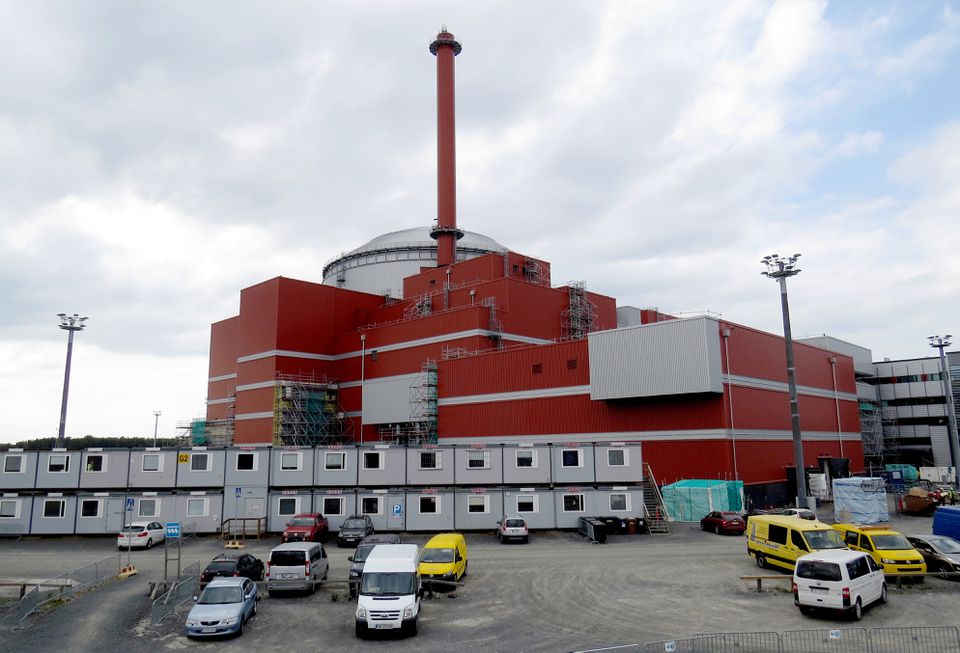
HELSINKI, Dec 9 (Reuters) – Finland faces a greater risk of power outages in coming months because of another delay in starting up the new Olkiluoto 3 (OL3) nuclear reactor, national grid operator Fingrid said on Friday.
Fingrid and the state energy authority have told citizens and companies to prepare for possible blackouts, particularly if OL3 does not prove reliable, as countries across Europe seek to curb energy usage, grappling with reduced Russian gas and other energy supplies because of the Ukraine war………………………………
In October, the operator said cracks were found in the OL3 reactor’s four feedwater pumps after test production, further delaying startup originally planned to be in 2009.
Test production has been postponed until Dec. 25 at the earliest, from Dec. 11, TVO said, while full production will begin on Feb. 6 at the earliest compared with Jan. 22.
“The investigation into the damage in Olkiluoto 3’s feedwater pumps has proceeded into its final stages. Once the investigation is complete, a decision will be made on the startup of the plant unit,” TVO said in a statement.
The world’s deepest nuclear clean-up – the Dounreay shaft
A £20m contract has been awarded as part of work to clean-up one of the
most challenging features of the Dounreay nuclear power site.
Called the shaft, it plunges 65.4m (214.5ft) below ground and was used for disposing
of radioactive waste. The practice, which started in 1959, ended in 1977
following an explosion inside the structure.
Cavendish Nuclear has been
awarded the contract to build a container handling facility. Waste from the
shaft, and another part of Dounreay called the silo, will be placed in 500
litre drums for storage. Tackling the shaft has been dubbed the world’s
deepest nuclear clean-up by Dounreay’s operators.
BBC 7th Dec 2022
Five ways the Biden DOE is spending tax-payers money big on nuclear energy

THe Hill, BY SAUL ELBEIN – 12/08/22
The Department of Energy is spending big to keep America’s old nuclear reactors online while laying the foundations of the nuclear energy industry of the future.
The investment into America’s long-declining nuclear industry — which includes tens of millions of funding announced this week — builds on a far-broader package of federal subsidies invested in the nuclear sector, which remains America’s leading single source of zero-carbon electricity [ not zero in full nuclear fuel cycle].
One program — a $6 billion fund established under the 2021 bipartisan infrastructure plan — will help to keep otherwise uneconomic nuclear plants from shutting down.
But other programs announced by the Energy Department look beyond the current generation of nuclear plants to build out foundations for the next generation of nuclear energy.
Here are five nuclear goals that the Energy Department is pouring money into.

Advanced and theoretical research
One grant announced on Wednesday will pay $12 million to fund scientists across America’s national laboratories as they work on advanced research into problems at the edges of our understanding of nuclear physics.
The five projects funded “span topics like the 3-dimensional internal structure of nucleons, the exotic states of quarks and gluons, the microscopic properties of quark-gluon plasma and neutrino and nuclear interactions,” according to a statement from the Energy Department…………………………….
Training nuclear-electric engineers

The Energy Department is also funding universities to educate “the next generation nuclear security work force.”
The department announced on Wednesday that $5 million will go to three state universities to help them create curriculum to train electrical engineers to work on nuclear reactors. ……………
Keep old plants online

The infrastructure legislation passed into law earlier this year contained $6 billion in Civil Nuclear Credits to help keep online nuclear plants that would otherwise be replaced with fossil-fuel infrastructure.
The Energy Department paid out its first disbursement last month, sending $1.1 billion to keep southern California’s Diablo Canyon Power Plant running. …………….
Build nuclear fuel supply chains

The Energy Department is putting $150 million into producing nuclear fuel essential to advanced reactors, officials announced in November.
So-called high-assay, low-enriched uranium (HALEU) is uranium that is far more enriched than the nuclear fuel used in current reactors. It’s only low-enriched in contrast to the kinds of enriched uranium used in nuclear weapons.
Since it’s essential to smaller, more efficient nuclear reactors, the Energy Department estimates that the U.S. will need about 40 metric tons of HALEU per year by the end of the decade……………………………
Catching up on fusion

The Energy Department in October announced $47 million for research into fusion — the process by which stars like our sun create energy.
Unlike fission, fusion energy is created by forcing atoms together, rather than splitting them — a process that releases no radioactive pollution.
But the extreme temperatures and pressures needed to convince atoms to fuse have so far kept fusion as a theoretical energy source, rather than a practical one.
At the superheated temperatures and pressures required for fusion, gas turns into plasma — which is extremely difficult to control.
“We can’t just put it in a vessel because it will melt anything it touches,” said Eugenio Schuster of Lehigh University, who had received $1.75 million to work with researchers on this problem.
The money helps pay for collaborative experiments between U.S. and international scientists at research “tokamaks” at sites in China, the European Union and South Korea
European Commission supports French government in funding for small nuclear reactors

On 7 December 2022, the European Commission announced that it has decided,
under the state aid rules, to approve the grant by France of aid to EDF to
support a research and development project for small nuclear reactors.
Practical Law 7th Dec 2022
Every home and community could be a power station’: the Nuclear Free Local Authorities’s future renewable energy vision for Wales

Every Welsh home and community a renewable power station” was the vision outlined by the UK/Ireland Nuclear Free Local Authorities Secretary for a sustainable nuclear-free Wales at a meeting held in the Senedd Pierhead Building in Cardiff Bay yesterday (6 December).
The event was sponsored and opened by Senedd Member Mike Hedges and hosted by CND Cymru to celebrate the 40th anniversary of the Clwyd Declaration when in 1982 all eight of the original Welsh County Councils declared themselves nuclear-free. Throughout 2022, an exhibition to mark the anniversary has been touring the nation, and yesterday, the exhibition was on display at the Pierhead Building…………………………………….
NFLA Secretary Richard Outram described a vision where Wales could instead be powered by renewables alone.
Richard said: “The Nuclear Free Local Authorities remain implacably opposed to any new nuclear power stations in Wales. Wales is blessed with many natural resources from which to draw power – her rivers, tides, sun and wind, even the untapped geothermal power that can be derived from the earth and the many abandoned coal mines that lie beneath the feet of her citizens!
“If we fitted new and existing homes and public buildings with insulation and energy efficiency measures, each would use less heat and power, reducing customers’ bills and their carbon footprint. And if we fitted them with solar panels, heat pumps, and battery storage they could generate and store their own heat and power, making them energy sufficient and independent of the National Grid. In effect every Welsh home and public building could become an energy efficient, energy generating power station.
“And if this is combined with larger community, Council or business led renewable projects, such as hydro, onshore or offshore wind, tidal, wind, solar, or geothermal schemes, we can create a visionary and sustainable energy future for Wales more cost-effectively, more quickly, more safely and with many more jobs than nuclear. Wales already derives much of its energy from renewables, but we could do much more.”
The event ended with participants being asked to sign the Cardiff Declaration. Signatories included Councillors from Newport City Council and Rhondda Cynon Taf County Borough Council, as well as members of the following organisations: CND Cymru; ICAN, We can, Cymru can; Cor Cochion Caerdydd; Wales One World Film Festival; Labrats International; XR Peace; Trident Ploughshares and United Nations Association. https://www.nuclearpolicy.info/news/every-home-and-community-could-be-a-power-station-the-nflas-future-renewable-energy-vision-for-wales/
1 This Month
Tell Congress: Prevent Nuclear Catastrophe in Iran

Tell Congress: Prevent Nuclear Catastrophe in Iran

Read the Public Inquiry Report, the Commissioners’ report, Surrendering Australia: The AUKUS Deception is available to download for free at aukuspublicinquiry.com. Or just watch the replay of the National Press Club Luncheon.


Shut down the radiation-damaged Heysham nuclear reactors now
To see nuclear-related stories in greater depth and intensity – go to https://nuclearinformation.wordpress.com

Say No to NASA’s Reckless Nuclear Reactor on the Moon
Say No to NASA’s Reckless Nuclear Reactor on the Moon
-
Archives
- November 2026 (246)
- October 2026 (302)
- September 2026 (339)
- August 2026 (330)
- July 2026 (355)
- June 2026 (287)
- May 2026 (306)
- April 2026 (356)
- March 2026 (251)
- February 2026 (267)
- January 2026 (308)
- December 2025 (358)
-
Categories
- 1
- 1 NUCLEAR ISSUES
- business and costs
- climate change
- culture and arts
- ENERGY
- environment
- health
- history
- indigenous issues
- Legal
- marketing of nuclear
- media
- opposition to nuclear
- PERSONAL STORIES
- politics
- politics international
- Religion and ethics
- safety
- secrets,lies and civil liberties
- spinbuster
- technology
- Uranium
- wastes
- weapons and war
- Women
- 2 WORLD
- ACTION
- AFRICA
- Atrocities
- AUSTRALIA
- Christina's notes
- Christina's themes
- culture and arts
- Events
- Fuk 2022
- Fuk 2023
- Fukushima 2017
- Fukushima 2018
- fukushima 2019
- Fukushima 2020
- Fukushima 2021
- general
- global warming
- Humour (God we need it)
- Nuclear
- RARE EARTHS
- Reference
- resources – print
- Resources -audiovicual
- Weekly Newsletter
- World
- World Nuclear
- YouTube
-
RSS
Entries RSS
Comments RSS


