Situation at Ukrainian nuclear plants worrying as shelling and power cuts threaten containment
Ukraine’s four operational nuclear power plants all have access to the national grid again following a complete loss of off-site power last week. It was the first time that all the plants suffered a loss of external power at the same time since the conflict began nine months ago. They relied on diesel generators for back-up electricity
‘The complete and simultaneous loss of off-site power for Ukraine’s nuclear power plants shows that the situation for nuclear safety and security in the country [has] become increasingly precarious, challenging and potentially dangerous,’ said Rafael Mariano Grossi, director general of the International Atomic Energy Agency (IAEA). ‘It is extremely concerning. The situation further underlines the need for stepped-up action to protect the plants and prevent the danger of a serious nuclear accident.’
The recent shelling at the site of Ukraine’s Zaporizhzhia Nuclear Power Plant (ZNPP) has been one of the most intense episodes in recent months, according to the IAEA, which has a team on site. The ZNPP, Europe’s largest nuclear power plant, has lost power from the grid several times in recent months. Russia captured the plant early in the war.
The facility remains in shutdown mode but still needs electricity to maintain essential safety and security functions. Reactors need power for cooling even when they are in shutdown. Four of its six reactor units are in ‘cold shutdown’, while the two other units have been returned to ‘hot shutdown’ again – enabling them to provide steam to the plant and heat to the nearby city of Enerhodar.
The ZNPP has 20 diesel generators which start operating automatically when connection to the grid is lost. Typically, plants hold 10 days’ worth of fuel. In this latest episode, eight generators were needed over a day or so. The IAEA team reported that the plant’s six reactors were safe, and confirmed the integrity of the spent fuel, the fresh fuel and radioactive waste storage facilities. However, there was widespread minor damage across the site.
Matthew Bunn, professor of the practice of energy, national security, and foreign policy at the Harvard Kennedy School, agrees that nuclear reactors in a war zone pose potentially deadly dangers. ‘Operating a reactor on the backup diesel generators is something that should be done rarely and briefly,’ he says. ‘In Ukraine, they are being forced to do it again and again. Every time off-site power gets cut off, you’re operating with no backup to the diesel generators. If they fail, within hours the water will boil off, the reactor core will be exposed, and the fuel in the core will begin to melt and a catastrophic radiation release is likely. This is true even if a reactor is not operating: when the reactor shuts down, it stops releasing energy from splitting atoms, but the intensely radioactive material in the core continues to generate a lot of heat from radioactive decay. However, some of the reactors at Zaporizhzhia have been shut for months and have cooled somewhat. Now, if there were a total loss of power at those reactors, there would be significantly more time to try to restore power before melting would begin.’……………………………………..more https://www.chemistryworld.com/news/situation-at-ukrainian-nuclear-plants-worrying-as-shelling-and-power-cuts-threaten-containment/4016637.article
UK government desperate for investors in its Sizewell C nuclear project, as it pays out the Chinese company previously involved
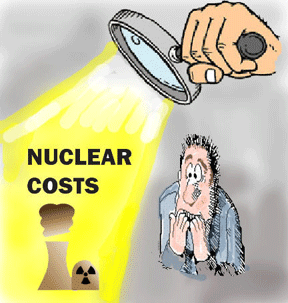
Construction will not begin in earnest until the consortium has raised close to £20bn of equity and debt from private investors. That fundraising could take at least a year and has no guarantee of success.
The UK government is to pay Chinese state-owned power group CGN over £100mn to exit Britain’s £20bn Sizewell C nuclear energy project in a bid to reduce Beijing’s involvement in the country’s infrastructure. The payment to CGN for its 20 per cent stake in the proposed nuclear plant in Suffolk is part of a £679mn UK state investment in Sizewell first announced by former prime minister Boris Johnson in September and finalised on Tuesday.
Construction will not begin in earnest until the consortium has raised close to £20bn of equity and debt from private investors. That fundraising could take at least a year and has no guarantee of success. UK government officials said that the departure of CGN would clear the way for US investors to put money into Sizewell C, since the Chinese company has been put under US sanctions.
CGN remains a minority 33 per cent investor in Britain’s giant Hinkley Point C nuclear power station in Somerset, another
EDF led project. Although this has already been delayed by several years, it is intended to be the first of a new generation of nuclear power stations. The Chinese group also controls a site at Bradwell-on-Sea in Essex, where it hopes to be the lead investor in a new generator.
CGN’s planned use of its own reactor technology at Bradwell received former approval from Britain’s nuclear regulator in February. But ministers think that ultimately it will not be allowed to build at the site, which they expect to change hands in due course.
FT 29th Nov 2022
https://www.ft.com/content/a9a34ea3-649f-4a47-a4c8-ee269e07eccc
Ukraine’s nuclear plants face uncertain future after Russian attacks
Attacks on Ukraine’s power grid took all 15 of the nation’s nuclear reactors offline for the first time ever. Russia also retains control of Zaporizhzhia Nuclear Power Plant, the largest nuclear power station in Europe
New Scientist, TECHNOLOGY | ANALYSIS 25 November 2022 By Matthew Sparkes
Ukraine’s nuclear power stations have been caught, both politically and literally, in the crossfire ever since the start of Russia’s invasion. But this week, for the first time in history, all 15 of its nuclear reactors were taken offline by fighting.
Zaporizhzhia Nuclear Power Plant (ZNPP), near the Ukrainian city of Enerhodar, is Europe’s largest nuclear power station and has been in Russian hands since in March. The final working reactor at ZNPP was shut down in September as a precautionary measure. Nuclear plants supply power to the grid when operating, but when shut down they actually draw power from it in order to run vital cooling and safety systems, which means disruption to electricity supply is a major concern.
On 23 November, shelling of power infrastructure in Ukraine by Russian troops led to blackouts that caused emergency diesel generators to start up at ZNPP, as well as at reactors across Ukraine’s three other nuclear plants that had previously made it through the war with relatively little disruption.
In a statement on its website, Ukrainian nuclear operator Energoatom said that for the first time in the 40-year history of the Ukrainian nuclear power industry, all of its nuclear power plants were not producing power, instead relying on diesel back-up generators. Access to the national grid resumed on 25 November………………………………………..
Olena Pareniuk, a scientist working at the Chernobyl site, says the process of restarting a nuclear power plant is long and difficult, but that the energy supply is sorely needed by Ukraine’s citizens, who are experiencing widespread blackouts across the country.
“It won’t [come in time to] help us through winter,” she says. Equipment will need to be checked, which is a job that cannot be rushed, she says. ………. https://www.newscientist.com/article/2348196-ukraines-nuclear-plants-face-uncertain-future-after-russian-attacks/
War and Nuclear Power: Stakes Are High for People, Environment, and Industry
Power, by Aaron Larson, 1 Dec 22, John Stevens Cabot Abbott, the 19th century American historian perhaps best known for writing History of Napoleon Bonaparte and History of the Civil War in America, is attributed with the quote, “War is the science of destruction.” In truth, however, I don’t think most combatants really think about science when going into battle; they have enough on their minds just trying to stay out of harm’s way. Nonetheless, there are many consequences, some that could require serious science to solve, that can result from the actions soldiers take during wartime.
The war in Ukraine has brought to light a few of the more significant risks associated with war in a modern world powered by nuclear energy. Ukraine is heavily dependent on nuclear power for its supply of electricity. The country is home to 15 reactors, which have provided more than half of Ukraine’s electricity in recent years. Among the nuclear power stations is the six-unit Zaporizhzhya facility, Europe’s largest nuclear power plant (NPP) with a total capacity of 6 GW (Figure 1). It is located in the “steppe zone” of Ukraine, a natural grassland plain in the southern part of the country.
Russian Troops Occupy Ukrainian Nuclear Site
Russian troops took control of the Zaporizhzhya NPP during the first week of March. International Atomic Energy Agency (IAEA) Director General Rafael Mario Grossi reported on March 4 that in the conflict leading up to the takeover, a projectile had hit a training/construction building within the plant site, causing a fire, which was extinguished by the local fire brigade at the power station. While none of the safety systems for the six reactors were affected and there was no release of radioactive material, the incident was significant in that it demonstrated the vulnerability both of the staff and the plant.
At the time, Grossi outlined “seven indispensable pillars for ensuring nuclear safety and security.” ……………….
It’s obviously easy for everyone to agree to maintain these pillars during peacetime, but during a war, the lines can be blurred. It’s understandable why the Russians, for example, might want to take the plant down, putting a crimp on the Ukrainian power grid. With some thought, and perhaps a little science, they could do so without jeopardizing the plant or the environment. But as I said in the beginning, soldiers don’t always think about things like that. Furthermore, many of the troops on the ground may not have a complete understanding of how a nuclear reactor works or what it needs to remain safe, which presents significant risk to everyone involved……………………………….
perhaps the most serious infringement on the IAEA pillars during the Russian occupation has been the multiple times off-site power has been lost at the plant. The site is equipped with 20 emergency diesel generators that can provide the required power for safe operation of the reactors and the ability to bring them to cold shutdown should off-site power be lost, but the loss of off-site power violates defense-in-depth principles and adds significant risk to plant operations.
Russia, of all countries, should have a firm understanding of the importance of safety in the nuclear power industry. It has 37 reactors in operation with a total net capacity of about 27.7 GW and three more units under construction. Russia also has significant interest in exporting its nuclear goods and services around the world.
Today, Rosatom claims to be in “first place in terms of the number of simultaneously implemented nuclear reactor construction projects” with its three units in Russia and 34 abroad at various stages of implementation. In 2021, Rosatom’s package of foreign orders exceeded $139.9 billion, according to the company. It doesn’t take a scientist to conclude that NPP projects would be seriously stalled by a nuclear incident in Ukraine. While I don’t really care if Russia ever sells another reactor abroad, it’s still in everyone’s best interest to maintain plant safety at Zaporizhzhya and prevent a nuclear catastrophe.
—Aaron Larson is POWER’s executive editor
Taxpayers to hand China millions of pounds to quit Sizewell nuclear plant
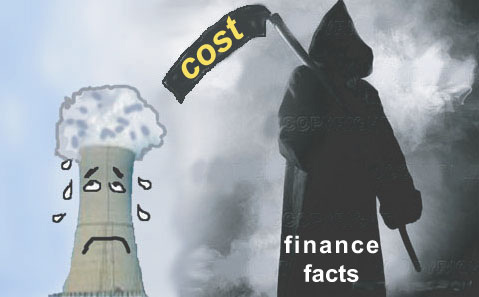
Taxpayers will hand China millions of pounds to quit its nuclear power
venture in Suffolk as part of a £700m deal as the “golden era” of
UK-China relations comes to an end. The Government is spending an initial
£679m to help get the £20bn Sizewell C nuclear power plant project off the
ground and has confirmed part of this will go to state-owned China General
Nuclear (CGN) under an exit deal.
It has not disclosed what proportion will
go to CGN but a Government spokesman said the payment “covers the value
of their shareholding, their contribution to the project’s development and
a commercial return reflecting their work to date”. He added: “The
value of their 20pc stake in the project is commercially confidential.
“CGN has decided to exit the project at this stage in its development,
following constructive commercial negotiations.”
Telegraph 29th Nov 2022
UN votes to press countries to stop terrorists from getting nuclear weapons.
Business Standard. 1 Dec 22
The UNSC voted unanimously to keep pressing all countries to implement a resolution aimed at keeping nuclear, chemical, and biological weapons out of reach of terrorists and black marketeers
The U.N. Security Council voted unanimously Wednesday to keep pressing all countries to implement a resolution aimed at keeping nuclear, chemical and biological weapons out of the hands of terrorists, black marketeers and others.
The council resolution approved by a 15-0 vote extends the mandate of the committee monitoring implementation of the 2004 resolution on the threat of non-state actors obtaining or trafficking weapons of mass destruction for 10 years until Nov. 30, 2032. It also continues support for the committee’s group of experts.
The resolution calls on the committee and the 193 U.N. member nations to take into account the use by non-government groups and individuals of rapid advances in science and technology to spread the use of these banned weapons.
The council says in the resolution that it is gravely concerned at the threat of terrorism and the risk that non-state actors may acquire, develop, traffic in or use nuclear, chemical or biological weapons, including by relying on advances in science and technology…………………
The resolution requires all U.N. member states to adopt laws to prevent non-state actors from manufacturing, acquiring or trafficking in nuclear, biological or chemical weapons, the materials to make them, and the missiles and other systems to deliver them.
It also requires all countries to take measures to account for and secure all banned weapons, missiles and weapons material, and to develop border controls and step up efforts to detect, deter, prevent and combat … the illicit trafficking and brokering in such items………………………………………………… more https://www.business-standard.com/article/international/un-votes-to-press-countries-to-stop-terrorists-from-getting-nuclear-weapons-122120100102_1.html
UK GOVERNMENT DEPLOYED 15 STAFF ON SECRET OPERATION TO SEIZE JULIAN ASSANGE
New information raises further concerns about the politicisation of the WikiLeaks founder’s legal case.
https://declassifieduk.org/uk-government-deployed-15-staff-on-secret-operation-to-seize-julian-assange/ MATT KENNARD, 28 NOVEMBER 2022
- Assange had been granted asylum by a friendly country to avoid persecution by the US government for his journalistic activities
- But Home Office had eight staff, and the Cabinet Office had seven, working on secret police operation to arrest Assange
- Ministry of Justice, which controls England’s courts and prisons, refuses to say if its staff were involved in operation
- Foreign Office refuses to say if its premises were used
The British government assigned at least 15 people to the secret operation to seize Julian Assange from the Ecuadorian embassy in London, new information shows.
The WikiLeaks founder was given political asylum by Ecuador in 2012, but was never allowed safe passage out of Britain to avoid persecution by the US government.
The Australian journalist has been in Belmarsh maximum security prison for the past three and a half years and faces a potential 175-year sentence after the UK High Court greenlighted his extradition to the US in December 2021.
‘Pelican’ was the secret Metropolitan Police operation to seize Assange from his asylum, which eventually occurred in April 2019. Asylum is a right enshrined in the Universal Declaration of Human Rights.
The operation’s existence was only revealed in the memoirs of former foreign minister Sir Alan Duncan which were published last year. The UK government routinely blocks, or obfuscates its answers to, information requests about the Assange case.
But the Cabinet Office recently told parliament it had seven officials working on Operation Pelican. The department’s role is to “support the Prime Minister and ensure the effective running of government”, but it also has national security and intelligence functions.
It is not immediately clear why the Cabinet Office would have so many personnel working on a police operation of this kind. Asked about their role, the Cabinet Office said these seven officials “liaised” with the Metropolitan Police on the operation.
The Home Office, meanwhile, told parliament it had eight officials working on Pelican. The Home Office oversees MI5 and the head of the department has to sign off extraditions to most foreign countries. Then home secretary Priti Patel ordered Assange’s extradition to the US in June.
‘Disproportionate cost’
Other government ministries refused to say if they had staff working on Pelican, including the Ministry of Justice (MoJ).
The MoJ is in charge of courts in England and Wales, where Assange’s extradition case is currently deciding whether to hear an appeal. It is also in control of its prisons, including Belmarsh maximum security jail where Assange is incarcerated.
When asked if any of its staff were assigned to Pelican, the MoJ claimed: “The information requested could only be obtained at disproportionate cost.”
It is unclear why the Home Office, a bigger department with more staff, could answer such a question, but the MoJ could not. There is no obvious reason why the MoJ would have staff assigned to Pelican, so revelations that it did would cause embarrassment for the government.
Meanwhile, the Foreign Office told parliament it had no staff “directly assigned” to Pelican, but refused to say if people working on the operation were located on its premises.
‘Julian Assange’s Special Brexit Team’
Sir Alan Duncan, foreign minister for the Americas from 2016-19, was the key UK official in the diplomatic negotiations between the UK and Ecuador to get Assange out of the embassy. In his memoirs he wrote that he watched a live-feed of Assange’s arrest from the Operations Room at the top of the Foreign Office alongside Pelican personnel.
After Assange had been imprisoned in Belmarsh, Duncan had a drinks party at his office for the Pelican team. “I gave them each a signed photo which we took in the Ops Room on the day, with a caption saying ‘Julian Assange’s Special Brexit Team 11th April 2019’”, he wrote.
Ecuador’s president from 2007-17, Rafael Correa, recently told Declassified he granted Assange asylum because the Australian journalist “didn’t have any possibility of a fair legal process in the United States.”
He added that the UK government “tried to deal with us like a subordinate country.”
In September 2021, 30 former US officials went on the record to reveal a CIA plot to “kill or kidnap” Assange in London. In case of Assange leaving the embassy, the article noted, “US officials asked their British counterparts to do the shooting if gunfire was required, and the British agreed, according to a former senior administration official.”
These assurances most likely came from the Home Office.
‘Deliberate ambiguity’: Israel’s nuclear weapons are greatest threat to Middle East
Middle East Monitor Dr Ramzy Baroud, November 28, 2022 ,
As western countries are floating the theory that Russia could escalate its conflict with Ukraine to a nuclear war, many western governments continue to turn a blind eye to Israel’s own nuclear weapons capabilities. Luckily, many countries around the world do not subscribe to this endemic western hypocrisy.
‘The Conference on the Establishment of a Middle East Zone Free of Nuclear Weapons and Other Weapons of Mass Destruction’ was held between November 14-18, with the sole purpose of creating new standards of accountability that, as should have always been the case, be applied equally to all Middle Eastern countries.
The debate regarding nuclear weapons in the Middle East could not possibly be any more pertinent or urgent. International observers rightly note that the period following the Russia-Ukraine war is likely to accelerate the quest for nuclear weapons throughout the world. Considering the seemingly perpetual state of conflict in the Middle East, the region is likely to witness nuclear rivalry as well.
For years, Arab and other countries attempted to raise the issue that accountability regarding the development and acquisition of nuclear weapons cannot be confined to states that are perceived to be enemies of Israel and the West.
The latest of these efforts was a United Nations resolution that called on Israel to dispose of its nuclear weapons, and to place its nuclear facilities under the monitoring of the International Atomic Energy Agency (IAEA). Resolution number A/C.1/77/L.2, which was drafted by Egypt with the support of other Arab countries, passed with an initial vote of 152-5. Unsurprisingly, among the five countries that voted against the draft were the United States, Canada and, of course, Israel itself.
US and Canadian blind support of Tel Aviv notwithstanding, what compels Washington and Ottawa to vote against a draft entitled: “The risk of nuclear proliferation in the Middle East”? Keeping in mind the successive right-wing extremist governments that have ruled over Israel for many years, Washington must understand that the risk of using nuclear weapons under the guise of fending off an ‘existential threat’ is a real possibility.
Since its inception, Israel has resorted to, and utilised the phrase ‘existential threat’ countless times. Various Arab governments, later Iran and even individual Palestinian resistance movements were accused of endangering Israel’s very existence. Even the non-violent Palestinian civil society-led Boycott, Divestment and Sanctions (BDS) Movement was accused by then-Prime Minister Benjamin Netanyahu in 2015 of being an existential threat to Israel. Netanyahu claimed that the boycott movement was “not connected to our actions; it is connected to our very existence.”
This should worry everyone, not just in the Middle East, but the whole world. A country with such hyped sensitivity about imagined ‘existential threats’ should not be allowed to acquire the kind of weapons that could destroy the entire Middle East, several times over.
Some may argue that Israel’s nuclear arsenal was intrinsically linked to real fears resulting from its historical conflict with the Arabs. However, this is not the case. As soon as Israel finalised its ethnic cleansing of Palestinians from their historic homeland, and long before any serious Arab or Palestinian resistance was carried out in response, Israel was already on the lookout for nuclear weapons…………………..
With no international monitoring whatsoever, thus with zero legal accountability, Israel’s nuclear quest continues until this day. In 1963, Israel purchased 100 tons of uranium ore from Argentina, and it is strongly believed that, during the October 1973 Israel-Arab war, Israel “came close to making a nuclear preemptive strike”, according to Richard Sale, writing in United Press International (UPI).
Currently, Israel is believed to have “enough fissionable material to fabricate 60-300 nuclear weapons,” according to former US Army Officer, Edwin S. Cochran.
Estimates vary, but the facts about Israel’s weapons of mass destruction (WMDs) are hardly contested. Israel itself practices what is known as ‘deliberate ambiguity’, as to send a message to its enemies of its lethal power, without revealing anything that may hold it accountable to international inspection.
What we know about Israel’s nuclear weapons has been made possible partly because of the bravery of a former Israeli nuclear technician, Mordechai Vanunu, a whistleblower who was held in solitary confinement for a decade due to his courage in exposing Israel’s darkest secrets.
Still, Israel refuses to sign the Treaty on the Non-Proliferation of Nuclear Weapons (NPT), endorsed by 191 countries…………..
The US support for Israel is not confined to ensuring the latter has ‘military edge’ over its neighbours in terms of traditional weapons, but to also ensure Israel remains the region’s only superpower, even if that entails escaping international accountability for the development of WMDs.
The collective efforts by Arab and other countries at the UNGA to create a Middle East Zone Free of Nuclear Weapons are welcomed initiatives. It behoves everyone, Washington included, to join the rest of the world in finally forcing Israel to join the Non-Proliferation Treaty, a first but critical step towards long-delayed accountability. https://www.middleeastmonitor.com/20221128-deliberate-ambiguity-israels-nuclear-weapons-are-greatest-threat-to-middle-east/
Ineos corporation to join Rolls Royce’s messy consortium, to push for Small Nuclear Reactors in the Great British Nuclear Swindle

Rolls-Royce is in talks with Ineos to build a mini nuclear reactor to power the chemicals group’s Grangemouth refinery.

Rolls is heading a government-backed consortium to develop between 20 and 30 small modular nuclear reactors but is in need of customers to help to reduce the risk of the venture.
Ministers are finalising plans to support SMRs through a body called Great British Nuclear, which will be responsible for getting
planning permission and undertaking the preparation work on the new sites. Rolls’ talks with Ineos, first reported by The Sunday Telegraph, are understood to be at an early stage. Ineos’s Grangemouth refinery in Scotland is a joint venture with PetroChina and refines crude oil and produces chemicals.
Times 28th Nov 2022
UK government PR exercise “Great British Nuclear” headed for financial failure.
Letter Steve Thomas: Six months after it was announced, it is clear that
Great British Nuclear was no more than a government PR exercise. You report
that it “could prevent a repeat of the Wylfa and Cumbria farragoes”.
That would be remarkable.
The Cumbria project failed because the reactor
supplier, Westinghouse, went bankrupt; Wylfa failed because, although the
government offered to take a 30 per cent stake, no other investors came
forward.
he problem with nuclear is not that we don’t have the
organisation quite right. It’s that nuclear is far too expensive and
economically risky and takes much too long to build to be any use.
Times 25th Sept 2022
https://www.thetimes.co.uk/article/admit-it-nuclears-going-nowhere-tclmnr89f
The Zaporizhzhia nuclear power plant in southern Ukraine remains under Russian control, despite media reports
The Zaporizhzhia nuclear power plant in southern Ukraine remains under
Russian control, authorities installed by Moscow in the nearby city of
Enerhodar said on Monday, after a Ukrainian official suggested Russian
forces were preparing to leave.
“The media are actively spreading fake news
that Russia is allegedly planning to withdraw from Enerhodar and leave the
(plant). This information is not true,” the Russia-installed administration
wrote on the Telegram messaging app.
Reuters 28th Nov 2022
Most NATO members have run out of weapons for Ukraine – NYT
https://www.rt.com/news/567248-nato-weapons-ukraine-tapped-out/ 27 Nov 22Only larger states have untapped potential to continue arming Kiev, newspaper claims
Arms transfers to Ukraine have left Western weapon stockpiles strained, making it increasingly difficult for NATO militaries to honor politicians’ pledges to supply Kiev, the New York Times reported on Saturday.
“Smaller countries have exhausted their potential,” and according to one NATO official, at least 20 of the bloc’s 30 members are “pretty tapped out,” the newspaper wrote. Only “larger allies,” including France, Germany, Italy, and the Netherlands, have enough stockpiles to continue or potentially increase their weapon shipments to Ukraine.
Since the start of Russia’s military operation in Ukraine in late February, the US and its Western allies have been providing Kiev with billions of dollars in security assistance, to the tune of nearly $40 billion, now comparable to the entire annual defense budget of France. Moscow has repeatedly warned that the weapon shipments will only prolong the conflict and increase the risk of a direct conflict between Russia and NATO.
As Ukraine continues to call for more weapons, EU stockpiles are running low, with Germany already “reaching its limit” as of early September. Meanwhile, Lithuania, which does not have any more weapons to donate, has urged the allies to give Ukraine “everything we have.”
US President Joe Biden has vowed to keep the arms pipeline open for “as long as it takes,” but even American military stockpiles have taken a toll after repeated shipments to Kiev. As early as March, just weeks after the conflict in Ukraine kicked off, the US Defense Department was already scrambling to replenish thousands of shoulder-fired missiles supplied to Kiev. By August, US stockpiles of 155mm artillery ammunition were “uncomfortably low,” according to the Wall Street Journal.
The Pentagon’s latest fact sheet detailed more than $19 billion in direct military aid approved since February, including over 46,000 anti-armor systems, nearly 200 Howitzers, 38 long-range High Mobility Artillery Rocket Systems (HIMARS), and a litany of other heavy weapons, vehicles and ammunition – as well as over 920,000 of 155mm artillery rounds.
The US think tank Center for Strategic and International Studies (CSIS) previously pointed out that the American military is “not structured to fight or support an extended conflict,” while the defense industry is “sized for peacetime production rates,” and expanding capabilities would take years.
NATO is heavily invested in Ukraine, with the alliance’s members also providing training and intelligence capability. Despite this “unprecedented support,” the military bloc’s secretary general, Jens Stoltenberg, has repeatedly claimed that “NATO is not a party to the conflict.”
Moscow sees things differently. Multiple top officials, including Foreign Minister Sergey Lavrov, have accused NATO of waging war against Russia “by proxy,” while Putin has described Russia as fighting “the entire Western military machine.”
Kim Jong Un Emphasizes Nuclear Development as North Korea’s ‘Ultimate Goal’
Kim continues to double down on the importance of the nuclear program for his country.
The Diplomat, Mitch Shin, November 28, 2022, Following the successful test of its Hwasong-17 intercontinental ballistic missile (ICBM) on November 18, North Korean leader Kim Jong Un praised the work of those who contributed to the development of the missile, Korea Central News Agency (KCNA), one of the North’s main state-controlled media, reported on Sunday.
During a photo session with the contributors, Kim reiterated the importance of developing nuclear weapons as a means to protect North Korea…………….
As the Korean War stalled with a truce in 1953, the two Koreas are technically still at war………………………….
Considering Kim’s latest order to his scientists and technicians and his speech in September, he seems to have concluded that nuclear development is the only way to survive. With nuclear development described by Kim as the “ultimate goal,” it indicates that he will never preemptively denuclearize his country………………. more https://thediplomat.com/2022/11/kim-jong-un-emphasizes-nuclear-development-as-north-koreas-ultimate-goal/
Iran ‘not optimistic’ about nuclear deal revival talks
Argus, By Nader Itayim, 28 November 2022,
Iran’s foreign ministry said today the country is committed to finding a diplomatic solution to its nuclear dispute with the US and European countries, but said it is “not optimistic” the negotiations with Washington to restore the 2015 nuclear agreement will bear fruit.
Tehran and Washington began talks in Vienna in April 2021 aimed at reviving the deal, known formally as the Joint Comprehensive Plan of Action (JCPOA), which former US President Donald Trump reneged on in 2018 before he reimposed sanctions on Iran’s banking and energy sectors. After good signs of progress earlier this year, the negotiations stalled some months ago over several points of contention primarily concerning the extent of US sanctions relief for Iran should the deal be revived…………………….
Last week Iran said it had begun enriching uranium to 60pc purity at its Fordow nuclear site, in response to a resolution passed by the International Atomic Energy Agency’s (IAEA) board of governors urging Tehran to co-operate with a long-standing investigation into uranium traces it found at three undeclared Iranian nuclear sites. This is the first time enrichment would reach such a level at Fordow, although enrichment to 60pc purity has been happening at Iran’s other site, Natanz, since the first half of 2021.
The US, EU, and UK, meanwhile, have been imposing new sanctions on a host of Iranian individuals and entities for their involvement in the production and supply of drones to Russia for use against Ukraine……… https://www.argusmedia.com/en/news/2395141-iran-not-optimistic-about-nuclear-deal-revival-talks
No country has the solution to nuclear waste. Nuclear is no preventer of global heating – in fact, it’s quite the reverse.

- uranium mining and
- milling,
- conversion of ore to uranium hexafluoride
- construction and
- decommissioning
- fuel reprocessing
- waste management
- rehabilitation of mining sites
- transport throughout all stages.
In the words of Shaun Burnie of Greenpeace Germany, “not a single country can claim that it has the solution to manage the most dangerous radioactive wastes.”
Several storage facilities, the NGO argues, are on the verge of saturation, and spent fuel sitting in the power plants is at risk of overheating, sometimes without emergency generators for cooling. Deep geological disposal is not a credible option for Greenpeace.
The World Nuclear Waste Report agrees that, apart from the current construction of a permanent repository in Finland (see box), there is still no real solution for the waste. It points out that it is even difficult to quantify global nuclear waste, as various countries apply different definitions.
But waste is not the only objection of some experts to this new “nuclear gold rush.” Although electricity production itself does not emit GHGs, the rest of the associated processes do. According to the list compiled by sustainability expert Manfred Lenzen of the University of Sydney, GHGs are emitted in all the stages of the nuclear power cycle: uranium mining and
milling, conversion of ore to uranium hexafluoride, enrichment, fuel fabrication, reactor construction and decommissioning, fuel reprocessing, waste management, rehabilitation of mining sites, and transport throughout all stages.
Other experts point to an additional risk caused by climate change itself. According to energy expert Paul Dorfman of University College London, two out of five power plants operate on the coast because of the need for cooling water, and at least a hundred are only a few metres above sea level. As the oceans rise due to global warming, their safety could be compromised; although the Fukushima disaster was caused by an
earthquake, it was a good illustration of what happens when a nuclear power plant is flooded.
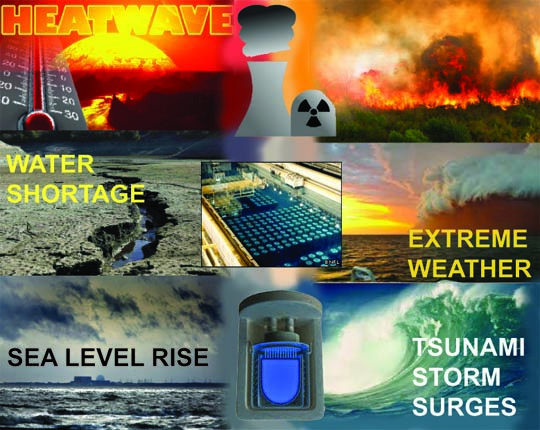
Inland power plants are also at risk, in this case because of the opposite, the risk of drought in the watercourses that provide cooling water. Perhaps science and technology will eventually solve the major hurdles of nuclear power (see box), but they will hardly put an end to a controversy that continues to rage.
Open Mind 15th Nov 2022
1 This Month




Shut down the radiation-damaged Heysham nuclear reactors now
To see nuclear-related stories in greater depth and intensity – go to https://nuclearinformation.wordpress.com

Say No to NASA’s Reckless Nuclear Reactor on the Moon
Say No to NASA’s Reckless Nuclear Reactor on the Moon
-
Archives
- November 2026 (2)
- October 2026 (302)
- September 2026 (339)
- August 2026 (330)
- July 2026 (355)
- June 2026 (287)
- May 2026 (306)
- April 2026 (356)
- March 2026 (251)
- February 2026 (267)
- January 2026 (308)
- December 2025 (358)
-
Categories
- 1
- 1 NUCLEAR ISSUES
- business and costs
- climate change
- culture and arts
- ENERGY
- environment
- health
- history
- indigenous issues
- Legal
- marketing of nuclear
- media
- opposition to nuclear
- PERSONAL STORIES
- politics
- politics international
- Religion and ethics
- safety
- secrets,lies and civil liberties
- spinbuster
- technology
- Uranium
- wastes
- weapons and war
- Women
- 2 WORLD
- ACTION
- AFRICA
- Atrocities
- AUSTRALIA
- Christina's notes
- Christina's themes
- culture and arts
- Events
- Fuk 2022
- Fuk 2023
- Fukushima 2017
- Fukushima 2018
- fukushima 2019
- Fukushima 2020
- Fukushima 2021
- general
- global warming
- Humour (God we need it)
- Nuclear
- RARE EARTHS
- Reference
- resources – print
- Resources -audiovicual
- Weekly Newsletter
- World
- World Nuclear
- YouTube
-
RSS
Entries RSS
Comments RSS

