No new nuclear weapons in Europe!
There are new US nuclear weapons which POLITICO announced could be delivered to US host countries – Belgium, Germany, Italy, the Netherlands, and Turkey, as soon as December, replacing the current weapons stationed in those countries.
The B61-12 warhead is a more advanced warhead from the ones currently stationed in countries hosting US nuclear weapons. It has different yields, from 0.3kt to 50kt, but could be even more destructive if detonated underground, increasing its yield to up to 1,250kt, 83 times the size of Hiroshima-sized nuclear weapons.
As France’s nuclear energy sector falters, Britain’s wind and solar power booms

the continued sharp growth of green power in Britain’s electricity mix. Wind farms generated a record 28 per cent of the country’s needs this year, up from 23 per cent last year. Solar generation increased to 5 per cent this year, from essentially zero a decade earlier.
Britain exported more electricity to Europe than ever before this year while wind and solar generation hit all-time highs, according to the first analysis of the year’s power mix. The energy crisis in Europe prompted by
Russia’s invasion of Ukraine and safety problems at French nuclear plants resulted in Britain becoming a net exporter of electricity to the Continent for the first time in more than a decade.
Renewable power sources generated in excess of 40 per cent of Britain’s electricity needs for the first
time as both wind and solar output increased, according to the analysis by Imperial College London for Drax Electric Insights and seen by The Times.
Gas-fired power generation also increased, compensating for a sharp drop in imports and helping to supply the rising exports. Soaring gas prices meant power prices were almost twice as high as a year earlier. Iain Staffell, of Imperial College London, lead author of the report, said: “This has been a year like no other for the energy industry.
The public are feeling the pain of high gas prices on their energy bills, even though renewables are
providing the grid with more cheap, green electricity than ever before. The lesson from 2022 is that we need to break our addiction to fossil fuels once and for all if we want lower-cost and more secure energy supplies.”
This reversal was driven by net exports to France, with more than half of the French nuclear fleet forced offline over the summer for maintenance and to repair corrosion and cracking.
Power flows on interconnectors are normally decided by the market, travelling in the direction of the highest
bidder. The analysis also shows the continued sharp growth of green power in Britain’s electricity mix. Wind farms generated a record 28 per cent of the country’s needs this year, up from 23 per cent last year. Solar
generation increased to 5 per cent this year, from essentially zero a decade earlier.
Times 29th Dec 2022
Under pressure from Washington, Japan rearms
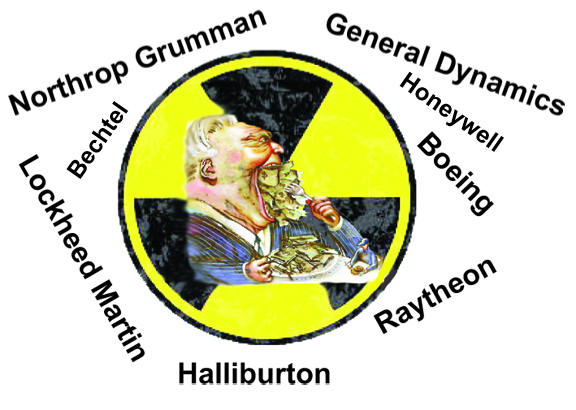
U.S. corporate power is the immediate beneficiary of this sharp turn in policy, built on military threats and economic sanctions.
JAPAN REARMS UNDER WASHINGTON’S PRESSURE, Popular Resistance, By Sara Flounders, Workers World. December 29, 2022
A Wake-Up Call To The Antiwar Movement.
The Dec. 16 announcement by Japan’s Prime Minister Fumio Kishida of a new defense strategy, while doubling military spending by 2027 to implement it, is the largest defense shake-up in decades and a wake-up call to the antiwar movement.
The decision includes openly acquiring offensive weapons and reshaping its military command structure for its expanded armed forces. On Dec. 23, the draft budget was approved by Kishida’s cabinet.
Japan’s dangerous military expansion should set off international alarm bells. This major escalation is taking place based on intense U.S. imperialist pressure. It is the next step in the “Pivot to Asia,” aimed at threatening and surrounding China and attempting to reassert U.S. dominance in the Asia Pacific.
The movements opposing endless U.S. wars must begin to prepare material and draw mass attention to this ominous threat.
The plan to double military spending will add $315 billion to Japan’s defense budget over the next five years and make Japan’s military the world’s third largest, after the U.S. and China. Defense spending will escalate to 2% of gross domestic product, equal to the goal the U.S. sets for its NATO allies. Japan’s economy is the world’s third largest.
The Japanese government plans to buy up to 500 Lockheed Martin Tomahawk missiles and Joint Air-to-Surface Standoff Missiles (JASSM), procure more naval vessels and fighter aircraft, increase cyber warfare capabilities, manufacture its own hypersonic guided missiles and produce its own advanced fighter jets, along with other weapons. The plan shifts from relying solely on missile defense to also embracing “counterstrike” capabilities.
Three key security documents — the National Security Strategy (NSS), as well as the National Defense Strategy (NDS) and the Defense Buildup Program (DBP) — shed some of the postwar constraints on the Japanese military.
Article 9 – a class struggle against military rearmament
Although the U.S. occupation force, after defeating Japan’s military in World War II, imposed a “pacifist” constitution on Japan, for decades now U.S. strategists have pressured Japan’s government to aggressively rearm, and especially to buy U.S.-made weapons, to act as a junior partner to U.S. efforts to dominate the Asia-Pacific region.
Article 9 of the imposed Japanese constitution prohibits Japan from maintaining an army, navy and air force. To get around this, the “Japanese Self-Defense Forces” (JSDF) have since 1952 been treated as a legal extension of the police and prison system. The U.S. occupiers considered the JSDF an essential repressive tool defending capitalist property relations against the workers’ movement.
The decision for aggressive military expansion is in open violation of Japan’s supposedly pacifist constitution……………………………………
Targeting China
Japan’s military expansion fits in with Washington’s aggression aimed at China, the DPRK and Russia. U.S. strategists’ goal is to use the U.S. alliance with Japan, South Korea and Australia, just as it uses the U.S.-led NATO alliance in Europe………………………..
China is Japan’s largest trading partner in both imports and exports. Previous National Strategy Documents said Japan was seeking a “mutually beneficial strategic partnership” with China. Suddenly Japanese strategists started labeling China “the greatest strategic challenge in ensuring the peace and security of Japan.” (U.S. Institute of Peace, Dec. 19)………..
U.S. praise of Japan’s rising militarism
The U.S. media praised Japan’s new security strategy document as a “bold and historic step.” U.S. National Security Advisor Jake Sullivan praised the defense spending hike, which “will strengthen and modernize the U.S.-Japan alliance.” U.S. Secretary of State Antony Blinken called Japan an “indispensable partner” and cheered that the changed security documents reshape the ability to “protect the rules-based order in the Indo-Pacific region and around the world.” (quotes, whitehouse.gov, Dec. 16)
U.S. corporate power is the immediate beneficiary of this sharp turn in policy, built on military threats and economic sanctions………………………………………………………………….
Having goaded Russia into an invasion of Ukraine in a bid to weaken and fragment Russia, the U.S. is next seeking to turn Taiwan into a military quagmire for China. The Biden administration is facilitating Taiwan’s purchase of advanced weaponry from the U.S. and greater diplomatic ties with the island. https://popularresistance.org/japan-rearms-under-washingtons-pressure-%E2%88%92-a-wake-up-call-to-the-antiwar-movement/
Historic Golden Rule Peace Boat On Its Way to Cuba

Veterans For Peace Calls for an End to US Blockade, 30 Dec 22,
The historic Golden Rule anti-nuclear sailboat is on its way to Cuba. The storied wooden boat, which was sailed toward the Marshall Islands in 1958 to interfere with US nuclear testing, set sail from Key West, Florida on Friday morning, and will arrive at the Hemingway Marina in Havana on Saturday morning, New Years Eve day. The 34-foot ketch belongs to Veterans For Peace, and implements its mission “to end the arms race and to reduce and eventually eliminate nuclear weapons.”
The five crew members will be joined by Veterans For Peace members who are flying to Havana to participate in an educational Arts & Culture program coordinated by the Proximity Cuba tour agency. The veterans will also be visiting communities that suffered great damage from the recent Hurricane Ian, which destroyed thousands of homes in Pinar del Rio province in western Cuba. They are carrying humanitarian aid for people who lost their homes.
“We are on an educational and humanitarian mission,” says Golden Rule Project Manager Helen Jaccard. “We are three-and-a-half months into a 15-month, 11,000 mile voyage around the ‘Great Loop’ of the midwestern, southern, and northeastern United States. When we saw we would be in Key West, Florida at the end of December, we said, ‘Look, Cuba is only 90 miles away! And the world almost had a nuclear war over Cuba.’”
60 years ago, in October 1962, the world came perilously close to a civilization-ending nuclear war during a superpower showdown between the US and the Soviet Union, which had placed nuclear missiles near each others borders, in Turkey and Cuba, respectively. The CIA had also organized an armed invasion of Cuba in a disastrous attempt to overthrow the government of Fidel Castro.
“Sixty years later, the US still maintains a brutal economic blockade of Cuba, strangling Cuba’s economic development and causing suffering for Cuban families,” said Gerry Condon, former president of Veterans For Peace, and part of the crew that is sailing to Cuba. “The whole world opposes the US blockade of Cuba and it is time for it to end.” This year only the US and Israel voted No on a UN resolution calling on the US government to end its blockade of Cuba.
“Now the US/Russia standoff over Ukraine has once again raised the specter of nuclear war,” said Gerry Condon. “It was urgent diplomacy between US President John Kennedy and Russian leader Nikita Khruschev that resolved the Cuban Missile Crisis and spared the world a nuclear war,” continued Condon. “That is the kind of diplomacy that we need today.”
Veterans For Peace is calling for an end to the US blockade of Cuba, for a Ceasefire and Negotiations to End the War in Ukraine, and for the Total Abolition of Nuclear Weapons.
For more information about the Golden Rule anti-nuclear sailboat, go to www.vfpgoldenrule.org.
For interviews, call or text Gerry Condon at 206-499-1220, or Helen Jaccard at 206-992-6364.
Military satellites add to Earth’s orbit, which is already crowded with satellites

Earth’s Orbit Is About to Get More Crowded. Undark, BY SARAH SCOLES, 12.26.2022
The military is launching a fleet of small, interconnected satellites to collect data, track missiles, and aim weapons.
SOMETIME THIS COMING March, a network of 10 small satellites winged with solar panels is scheduled to launch into Earth’s low orbit. Though likely invisible to the naked eye, the satellites will be part of a future herd of hundreds that, according to the Space Development Agency, or SDA, will bolster the United States’ defense capabilities.
The SDA, formed in 2019, is an organization under the United States Space Force, the newly formed military branch that operates and protects American assets in space. And like all good startups, the agency is positioned as a disruptor. It aims to change the way the military acquires and runs its space infrastructure. For instance, the forthcoming satellite network, called the National Defense Space Architecture, will collectively gather and beam information, track missiles, and help aim weapons, among other tasks.
The SDA’s vision both mimics and relies on shifts that started years ago in the commercial sector: groupings of cheap little satellites — often weighing hundreds of pounds, instead of thousands — that together accomplish what fewer big, expensive satellites used to.
Such sets of small satellites are called constellations, and those in low Earth orbit, which circle 1,200 miles or lower above Earth, can send data back and forth quickly. They rely on relatively inexpensive spacecraft that can be replaced and updated regularly. And they are hard to knock out, just like it’s more difficult to shoot down a flock of doves than a large turkey (or sitting duck).
The National Defense Space Architecture’s first spacecraft will launch from Vandenberg Space Force Base, part of the so-called Tranche 0, which will eventually total 28 interlinked satellites. “This tranche is incredibly important as sort of the trailblazer,” said Mike Eppolito, its program director. The launch was originally scheduled for September 2022, then delayed to December because of supply-chain issues, and delayed again until March to fix glitchy power supplies on eight of the satellites.
Now that the military has begun blazing this trail, it will also face the same challenges the commercial sector has recently had to reckon with: crowded orbits, potential collisions, and a sky filled with synthetic electromagnetic signals. Military and intelligence satellites haven’t proliferated at nearly the level of, say, those owned by SpaceX, and astronomers haven’t been paying as much attention to them. But an increased reliance on constellations will result in orbital emissions that can interfere with scientific research, and create an increased potential for collisions.
……………………………………………… Though the Department of Defense had long been interested in the idea of small satellite constellations, it was only when these companies started to link lots of them together — to do the same kinds of jobs that the military had been doing — like taking snapshots of Earth, or providing data connectivity — that the military began to seriously pursue them.
………….. The SDA’s founding vision remains essentially the same. As such, its architecture will consist of multiple layers of satellites, with spacecraft someday in the hundreds. These layers will transport data to share information from different sensors; track missiles; provide an alternative to GPS; and tell weapons where to aim. They will also incorporate data from commercial satellites, said Tournear. The spacecraft being less expensive and more replaceable, the SDA can upgrade them regularly, whereas the older satellites have to wait a decade or more for replacement.
The military can now simply buy that up-to-date technology from companies like Lockheed Martin and York Space Systems……………….
EANWHILE, space-traffic managers and astronomers, already coping with the proliferation of commercial constellations, are figuring out how best to navigate the more-crowded future.
For one thing, the sunlight that reflects off satellites’ surfaces, and the radio waves that satellites often use to transmit data, can show up in telescopes’ sensors back on Earth, marring the signals coming from stars, galaxies, and gases.
According to Jonathan McDowell of the Harvard-Smithsonian Center for Astrophysics, radio and optical astronomers began voicing concerns as far back as the 1980s, but it was only when SpaceX began launching its Starlink satellites that the issue went from annoying to problematic. Since then, astronomers like Meredith Rawls — a research scientist at the University of Washington and a member of a new international group called the Center for the Protection of the Dark and Quiet Sky from Satellite Constellation Interference — have been working to mitigate constellations’ negative effects on science and the sky’s purity. Yet the group doesn’t comment on military satellites and focuses on commercial constellations. Defense spacecraft, Rawls said, are “a total blindspot” for her.
“It’s taken 40 years to come to the point where it is a real problem,” said McDowell, who publishes an approximately monthly report of all space launches. Constellations, he noted, can become “a serious problem when you’re talking about not hundreds or even thousands of satellites, but tens of thousands.”
……………… he and others do worry about potential collisions of satellites and space debris with the addition of military constellations. “Even a relatively small number of satellites whose orbits are secret, it’s problematic,” said McDowell, because managing space traffic requires knowing where it actually is.
Leolabs will keep track of the SDA’s objects, but the more satellites are in orbit, the more likely they are to crash — into each other or into the many pieces of litter already up there. “We can help you almost guarantee that you won’t get hit by a piece of trackable debris,” said McKnight of Leolabs. “Unfortunately, there are hundreds of thousands of objects that are too small for us or anybody to see. They can still kill you.”
That means it’s important for the SDA to build spacecraft that can recover from small smashups (and to have a plan for bringing down spacecraft that don’t survive, so they don’t create more debris). “I know that SDA understands how to do that,” said McKnight.
But they also have to contend as well with large pieces of existing space trash — spent rocket bodies the size of school buses, left over from American and Russian launches during the Cold War. “These clusters of massive derelict objects have a much greater debris-generating potential than any of these constellations do,” said McKnight. The constellations’ members, after all, can generally thrust away from danger. “These are small, very agile, very aware, and highly controlled and responsible satellites,” he continued.
But any crash creates tons of fragments (metal shards, bolts, paint chips, solar-panel shivs) that whiz around space, making other crashes even more likely, and creating tons more fragments. If two old rocket bodies hit each other, for example, a huge cloud of debris could come barreling at SDA satellites just as easily as they could Starlink’s. “They could affect these constellations drastically,” said McKnight.
……………………. Even if the military’s satellites don’t present problems on the level of commercial ones, the Department of Defense at the same time supports private proliferation. “It may not be a question of ‘Oh, the military are going to have massive constellations,’ but ‘the military are going to be customers of all of these massive constellations,’” said McDowell. The Air Force, for instance, just gave SpaceX a $1.9 million contract to test out one year of Starlink connectivity in Europe and Africa. And in early December, SpaceX announced a new business arm called Starshield, which will focus on providing satellite-constellation capabilities — like communications and Earth observation — to the government, for national security missions………………….
What the Pentagon Doesn’t Want You to Know About China
WEI YU, Dec 20, 2022, Common Dreams
We must be vigilant about the warmongering lies about China.
Escalating tension with China was a mistake, and building a colossal military budget is doubling down on this mistake.
To encourage Congress to authorize the largest defense budget ever, the Pentagon just released its annual report on China, which dangerously misrepresents the country’s defense strategy. Such deliberate lies about China to drum up justification for more US war spending need to be urgently addressed.
Let’s debunk these lies:
On Nuclear Weapons: The Pentagon reports that China possesses around 400 nuclear warheads with no clear plan on how to use them. If this estimation of China’s arsenal is correct, it’s still trivial compared to the US’s almost 6,000 warheads. China is the only nuclear power with an unconditional “no first use” policy, and has been clear that it only intends to use its nuclear power for assurance and defense. Meanwhile, the United States is the only country to have used nuclear weapons in war and has also flirted with escalating tensions into a nuclear war with Russia this year. Who is preparing for war?
On Global Military Presence: The Pentagon reports that since China established its first overseas military base in Djibouti, it has ambitions to expand its military presence globally. At the same time, the United State has more than 750 military bases in around 80 countries. This includes more than 250 bases in the Asia-Pacific encircling China with 375,000 personnel in the Indo-Pacific Command, while China has no military presence in the Western Hemisphere. Who is preparing for war?
On International Order: The Pentagon reports that China may challenge the US in the international arena. It is true that China is taking the lead internationally in economic development, in technological innovation, and in fighting climate change. Other countries around the world are happy for its support in growing their capacities to be independent of United States hegemony in their regions. China builds relationships through economic cooperation and good diplomacy. In contrast, the United States asserts its global dominance through direct or proxy war, occupation, crippling sanctions, and regime-changing coups. The international order that the United States seeks to maintain is rooted in violence and destruction. Let’s invest in peace, not war!
While the United States is desperately pursuing its outdated policy of enforcing global hegemony, the rest of the world is already moving towards a multilateral sphere, which ensures the greatest chance for peace. Escalating tension with China was a mistake, and building a colossal military budget is doubling down on this mistake. We must be vigilant about the warmongering lies about China. “China is not our enemy” is not a hollow slogan but firm ground that peacemakers stand on.
Ways to Take Action:……………………………. more https://www.commondreams.org/views/2022/12/20/what-pentagon-doesnt-want-you-know-about-china
Civil society groups urge feds to ban reprocessing used nuclear fuel.

Natasha Bulowski / Local Journalism Initiative / Canada’s National Observer, 30 Dec 22,
Canada’s forthcoming radioactive waste policy should include a ban on plutonium reprocessing, a national alliance of civil society organizations says.
Plutonium — a radioactive, silvery metal used in nuclear weapons and power plants — can be separated from spent nuclear reactor fuel through a process known as “reprocessing” and reused to produce weapons or generate energy.
The federal government is expected to release its policy for managing radioactive waste early next year. On Dec. 15, a handful of organizations urged Ottawa to include a ban on plutonium reprocessing because of its links to nuclear weapons proliferation and environmental contamination.
The World Nuclear Association says reprocessing used fuel to recover uranium and plutonium “avoids the wastage of a valuable resource.”
Ottawa has yet to take a definitive stance on the process. A draft policy released last February said: “Deployment of reprocessing technology … is subject to policy approval by the Government of Canada.”
But in 2021, a New Brunswick company, Moltex Energy, received $50.5 million from the federal coffers to help design and commercialize a molten salt reactor and spent fuel reprocessing facility. Commercial plutonium reprocessing has never been carried out in Canada, and we should not start now, according to Nuclear Waste Watch, a national network of Canadian organizations concerned about high-level radioactive waste and nuclear power. The group is among those pushing for a plutonium reprocessing ban.
More than 7,000 Canadians submitted letters including a demand to ban plutonium reprocessing throughout the consultation process, according to a Nuclear Waste Watch news release.
The group points to a 2016 report by Canadian Nuclear Laboratories stating reprocessing would “increase proliferation risk.”
“There is no legitimate reason to support technologies that create the potential for new countries to separate plutonium and develop nuclear weapons,” Susan O’Donnell, spokesperson for the Coalition for Responsible Energy Development in New Brunswick, said in Nuclear Waste Watch’s news release. “The government should stop supporting this dangerous technology.”
China, India, Japan, Russia, the United Kingdom and some European countries, like France, reprocess their spent nuclear fuel.
Canada’s forthcoming radioactive waste policy should include a ban on plutonium reprocessing, a national alliance of civil society organizations says. Plutonium separated from used nuclear fuel can be reused in power generation or nuclear weapons
Growing climate, nuclear risks spark doomsday fears

Past year has prompted warnings of armageddon amid war in Ukraine and concerns over higher rate of warming, but has also seen COVID pandemic recede and other positive signs
https://www.timesofisrael.com/growing-climate-nuclear-risks-spark-doomsday-fears/ By SHAUN TANDON 29 Dec 22, WASHINGTON (AFP) — For thousands of years, predictions of apocalypse have come and gone. But with dangers rising from nuclear war and climate change, does the planet need to at least begin contemplating the worst?
When the world rang in 2022, few would have expected the year to feature the US president speaking of the risk of doomsday, following Russia’s threats to go nuclear in its invasion of Ukraine.
“We have not faced the prospect of Armageddon since Kennedy and the Cuban missile crisis” in 1962, Joe Biden said in October.
And on the year that humanity welcomed its eighth billion member, UN Secretary-General Antonio Guterres warned that the planet was on a “highway to climate hell.”
In extremes widely attributed to climate change, floods submerged one-third of Pakistan, China sweat under an unprecedented 70-day heatwave, and crops failed in the Horn of Africa — all while the world lagged behind on the UN-blessed goal of checking warming at 1.5 degrees Celsius (2.7 degrees Fahrenheit) above pre-industrial levels.
Biggest risk yet of nuclear war?
The Global Challenges Foundation, a Swedish group that assesses catastrophic risks, warned in an annual report that the threat of nuclear weapons use was the greatest since 1945 when the United States destroyed Hiroshima and Nagasaki in history’s only atomic attacks.
The report warned that an all-out exchange of nuclear weapons, besides causing an enormous loss of life, would trigger clouds of dust that would obscure the sun, reducing the capacity to grow food and ushering in “a period of chaos and violence, during which most of the surviving world population would die from hunger.”
Kennette Benedict, a lecturer at the University of Chicago who led the report’s nuclear section, said risks were even greater than during the Cuban Missile Crisis as Russian President Vladimir Putin appeared less restrained by advisors.
While any Russian nuclear strike would likely involve small “tactical” weapons, experts fear a quick escalation if the United States responds.
“Then we’re in a completely different ballgame,” said Benedict, a senior advisor to the Bulletin of the Atomic Scientists, which in January will unveil its latest assessment of the “doomsday clock” set since 2021 at 100 seconds to midnight.
Amid the focus on Ukraine, US intelligence believes North Korea is ready for a seventh nuclear test, Biden has effectively declared dead a deal on Iran’s contested nuclear work and tensions between India and Pakistan have remained at a low boil.
Benedict also faulted the Biden administration’s nuclear posture review which reserved the right for the United States to use nuclear weapons in “extreme circumstances.”
“I think there’s been a kind of steady erosion of the ability to manage nuclear weapons,” she said.
Charting worst-case climate risks
UN experts estimated ahead of November talks in Egypt that the world was on track to warming of 2.1 to 2.9 C — but some outside analysts put the figure well higher, with greenhouse gas emissions in 2021 again hitting a record despite pushes to renewable energy.
Luke Kemp, a Cambridge University expert on existential risks, said the possibility of higher warming was drawing insufficient attention, which he blamed on the consensus culture of the UN’s Intergovernmental Panel on Climate Change and scientists’ fears of being branded alarmist.
“There has been a strong incentive to err on the side of least drama,” he said.
“What we really need are more complex assessments of how risks would cascade around the world.”
Climate change could cause ripple effects on food, with multiple breadbasket regions failing, fueling hunger and eventually political unrest and conflict.
Kemp warned against extrapolating from a single year or event. But a research paper he co-authored noted that even a two-degree temperature rise would put the Earth in territory uncharted since the Ice Age.
Using a medium-high scenario on emissions and population growth, it found that two billion people by 2070 could live in areas with a mean temperature of 29 C (84.2 F), straining water resources — including between India and Pakistan.
Cases for optimism
The year, however, was not all grim. While China ended the year with a surge of COVID-19 deaths, vaccinations helped much of the world turn the page on virus, which the World Health Organization estimated in May contributed to the deaths of 14.9 million people in 2020 and 2021.
How did the US nuclear industry fare in 2022?
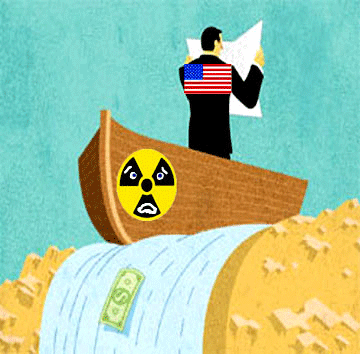
Nuclear plants big and small are getting support from the feds. Still, problems persist — TerraPower can’t source fuel, Oklo and NuScale are tangled in red tape, and more.
Canary Media 28 December 2022 Eric Wesoff
The U.S. nuclear power market continued to sputter in 2022 as it faced regulatory, technical and financial setbacks — despite solid support from the federal government.
This mirrors the global nuclear scene; plant closings and construction delays have resulted in nuclear falling to just 9.8 percent of global power generation in 2021, its lowest level since the 1980s, according to the World Nuclear Industry 2022 annual report.
The United States generates more nuclear power than any other country in the world, with about 95 gigawatts of capacity, followed by China, but construction of new plants has been plagued by cost and schedule overruns, as well as an inability to keep up with the plunging costs of natural gas and renewable energy sources. Still, nuclear power provides a crucial 20 percent of U.S. electricity from the 92 light-water reactors that were built in a seemingly unreplicable construction binge in the 1970s and ‘80s.
Some of these plants are struggling financially, many are approaching their decommission dates, and the only new large reactors constructed in recent memory, at the Plant Vogtle in Georgia, have been calamitous money pits brimming with incompetence and even fraud.
Here are the U.S. nuclear industry’s highs and lows from 2022.
Diablo Canyon lives
Diablo Canyon, California’s last remaining nuclear plant, was granted up to $1.1 billion in support from the U.S. Department of Energy in November, which might allow the two-reactor plant to remain in business. ……………..
Still, Diablo faces a reckoning with the federal Nuclear Regulatory Commission regarding its license, as the plant must now confront years of deferred maintenance in the run-up to its anticipated retirement.
Fuel loading at Vogtle
On October 17, Georgia Power reported that “fuel load” into the Plant Vogtle Unit 3 reactor core had been completed, marking an overdue milestone in the bumpy journey of getting two new reactors at this power plant up and running. During the fuel-loading process, technicians and operators transferred scores of fuel assemblies one by one to the Unit 3 reactor…………………….
On December 7, Vogtle’s Unit 4 completed cold hydro testing, the penultimate step before hot functional testing, which is scheduled to begin early next year.
The two units are the first new nuclear units to be built in the U.S. in more than three decades — and they haven’t made nuclear power look good. The project is six years overdue and will cost utility customers over $30 billion, more than double the original price tag. DOE’s Loan Programs Office provided more than $12 billion in loan guarantees to help complete Vogtle’s expansion.
DOE and IRA love nuclear power
The Biden administration is committed to maintaining the existing nuclear fleet and bringing innovative, new nuclear-reactor designs to market.
The Inflation Reduction Act provides generous production credits for existing nuclear plants and added premiums for meeting prevailing-wage requirements. These credits offer a potential $30 billion lifeline to struggling plants at risk of early retirement.
The IRA also provides a tax credit for advanced nuclear reactors and a credit of up to 30 percent for microreactors, while devoting $700 million to support the development of high-assay low-enriched uranium (HALEU), the highly enriched fuel used in many advanced nuclear reactors.
This funding is in addition to the 2021 Bipartisan Infrastructure Law’s $6 billion Civil Nuclear Credit program, which lets existing U.S. reactors bid on credits to help support their continued operations. The DOE’s Loan Programs Office also has $11 billion in funding for nuclear plants and nuclear supply chains, according to Jigar Shah, director of the office.
………………………….. TerraPower and dozens of other advanced nuclear startups require a concentrated form of fuel — HALEU. But the only current commercial supplier of HALEU is Tenex, a Russian state-owned company. That wasn’t a great situation even before Russia invaded Ukraine.
In mid-December, TerraPower announced that it has pushed back the planned start date for its reactor because depending on HALEU sourced from Russia had become an unworkable business plan. “Given the lack of fuel availability now, and that there has been no construction started on new fuel enrichment facilities, TerraPower is anticipating a minimum of a two-year delay to being able to bring the Natrium reactor into operation,” said CEO Chris Levesque.
The world’s fleet of light-water reactors runs almost entirely on fuel enriched to 3 to 5 percent U-235, which is classified as low-enriched uranium (LEU). In contrast, the vast majority of non-light-water reactor designs in development, like TerraPower’s, run on enrichments of 5 to 20 percent (HALEU).
X-energy goes public via SPAC
X-energy, a developer of small modular nuclear reactors and fuel, is going public through the magic of a merger with Ares Acquisition Corporation, a publicly traded special-purpose acquisition company…………… Once the disreputable domain of pink-sheet over-the-counter stocks, SPACs have become an acceptable way for companies to go public without the burden of revenue or the actual due diligence most public companies go through. ………………………………………………..
NuScale’s NRC blues………….
https://www.canarymedia.com/articles/nuclear/how-did-the-us-nuclear-industry-fare-in-2022—
US spies pushed Twitter to censor ‘anti-Ukraine narratives’ – media
more
https://www.rt.com/news/568879-twitter-files-cia-collusion/ 28 Dec 22
New batch of of files exposes collusion with ‘other government agencies’.
The Pentagon, CIA and other US intelligence and law-enforcement agencies became increasingly “more aggressive” with takedown requests, the latest trove of Twitter files has revealed. The documents suggest the agencies were effectively pushing the platform to censor foreign-policy stories that ran against the Washington-approved narrative.
The files show the FBI acting as doorman to a vast program of social media surveillance and censorship, encompassing agencies across the federal government – from the State Department to the Pentagon to the CIA,” journalist Matt Taibbi wrote in the Christmas Eve edition of the Twitter Files, released with the blessing of the social media platform’s owner, Elon Musk.
Thousands of censorship requests flowed to Twitter from what were termed OGA” in the documents, or “Other Government Organizations,” through the FBI’s Foreign Influence Task Force.
Twitter executives often struggled to validate government claims, but were under constant pressure to find evidence to blame any foreign actor, Russia in particular.
“Found no links to Russia,” an unnamed analyst said in one of the emails, later suggesting he could “brainstorm” to “find a stronger connection.” Former Trust and Safety chief Yoel Roth admitted in another instance that he’d found “no real matches using the info.”
Internal communications show that Twitter had been getting so many requests that its executives had to improvise a system for prioritizing them. The feds had dedicated personnel tasked with tailoring takedown requests to Twitter’s policies for faster processing, which the execs acknowledged as “odd,” but even then the company often struggled to justify censorship.
“Many people wonder if Internet platforms receive direction from intelligence agencies about moderation of foreign policy news stories. It appears Twitter did, in some cases by way of the FITF/FBI,” Taibbi wrote. At least some of these directives originated at the CIA, according to former agent and whistleblower John Kiriakou, who said he “recognized the formatting.”
The feds sometimes sent massive batches of over 1,000 accounts lined up for “digital execution,” with only a brief explanation of the alleged problems. On multiple occasions they accused “Russian agents” of directing accounts that highlighted “predominantly anti-Ukraine narratives” or documented “purported rights abuses committed by Ukrainians.”
Another intelligence assessment sent to Twitter claimed that accounts spreading information about “neo-Nazis” in Ukraine were part of a Kremlin-controlled propaganda campaign and must be banned.
In what Taibbi called a “damning admission,” an unnamed former CIA-turned-Twitter executive once noted that the “government partners” were getting increasingly “aggressive” with their takedown requests.
In what Taibbi called a “damning admission,” an unnamed former CIA-turned-Twitter executive once noted that the “government partners” were getting increasingly “aggressive” with their takedown requests.
“Due to a lack of technical evidence on our end, I’ve generally left it be, waiting for more evidence,” he said about the InfoBRICS account. He further argued that since “BRICS is an inherently Russia-dominated economic organization” it was “always likely…directed by the Kremlin.”
“Our window on that is closing, given that government partners are becoming more aggressive on attribution and reporting on it…I’m going to go ahead with suspension and marking the domain UNSAFE.”
Spearheaded by Taibbi in cooperation with fellow reporters Bari Weiss, Lee Fang, and others, the Twitter Files have shed light on several controversial decisions made by the company, including material surrounding the suspension of ex-President Donald Trump, the practice of shadow banning, as well as a site-wide ban on a New York Post report about the foreign business dealings of Hunter Biden, the son of President Joe Biden.
The files also explained how the US intelligence community worked hand-in-glove with the platform to flag speech for suspension that the US government deemed “misinformation,” and showed how the FBI and Twitter locked horns over the agency’s claims of increased activity by ‘propaganda’ bots, of which Twitter said it found no evidence.
Every social media firm censors for US government – Musk
Platforms remove content at the “explicit direction” of US federal agencies, the Twitter CEO has claimed.
Rt.com 28 Dec 22,
All social media platforms work with the US government to censor content, Twitter CEO Elon Musk claimed on Tuesday. Documents released by Musk following his purchase of Twitter showed that the platform colluded with the FBI, CIA, Pentagon and other government agencies to suppress information on elections, Ukraine, and Covid-19.
“*Every* social media company is engaged in heavy censorship, with significant involvement of and, at times, explicit direction of the government,” Musk tweeted, adding that “Google frequently makes links disappear, for example.”
Musk was referring to internal Twitter communications published by journalist Matt Taibbi with his approval, which suggested that the platform’s senior executives held regular meetings with members of the FBI and CIA, during which the agencies gave them lists of “hundreds of problem accounts” to suspend in the run-up to the 2020 election.
In addition to Twitter, the government was in contact “with virtually every major tech firm,” Taibbi claimed. “These included Facebook, Microsoft, Verizon, Reddit, even Pinterest.” CIA agents “nearly always” sat in on meetings of these firms with the FBI’s Foreign Influence Task Force, Taibbi claimed, explaining that although this task force was convened to fight alleged election interference by foreign states, it made “mountains of domestic moderation requests.”
A lawsuit filed earlier this year by the attorneys general of Missouri and Louisiana alleges that officials from no fewer than 12 government agencies met weekly with representatives of Twitter, Facebook, and other Big Tech firms in 2020 to decide which narratives and users to censor, with topics ranging from alleged election interference to Covid-19…………………………….
https://www.rt.com/news/569016-musk-social-media-censorship/
“Nuclear Sharing” – USA’s obscene system to turn non-nuclear weapons countries into nuclear attackers/targets.

The Steadfast Noon exercise will practice a controversial arrangement known as nuclear sharing, under which the United States installs nuclear equipment on fighter jets of select non-nuclear NATO countries and train their pilots to carry out nuclear strike with U.S. nuclear bombs.
NATO Steadfast Noon Exercise And Nuclear Modernization in Europe,
By Hans Kristensen • October 17, 2022,
Today, Monday October 17, 2022, the North Atlantic Treaty Organization (NATO) will begin a two-week long exercise in Europe to train aircrews in using U.S. non-strategic nuclear bombs. The exercise, known as Steadfast Noon, is centered at Kleine Brogel Air Base in Belgium, one of six airbases in Europe that store U.S. nuclear bombs. The exercise takes place midst significant modernizations at nuclear bases across Europe.
The arrangement is controversial because the United States as a party to the nuclear Non-Proliferation Treaty (NPT) has promised not to hand over nuclear weapons to other countries, and the non-nuclear countries in the sharing arrangement have promised not to receive nuclear weapons from the nuclear weapon states. In peacetime the nuclear weapons are under U.S. control, but the arrangement means that they would be handed over to the non-nuclear country in war time. The arrangement was in place before the NPT was signed so it is not a violation of the letter of the treaty. But it can be said to violate the spirit and has been an irritant for years.
Steadfast Noon exercises are held once every year, but this year is unique because the exercise will take place during the largest conventional war in Europe since World War II with considerable tension and uncertainty resulting from Russia’s war in Ukraine. Moreover, Steadfast Noon is expected to more or less coincide with a large Russian strategic nuclear exercise. For NATO officials, other than Putin’s war in Ukraine, this is all routine. But for the public, it is but the latest development in rising tensions and unprecedented fears about nuclear war.
According to NATO, Steadfast Noon will involve 14 countries (less than half of the 30 NATO allies) and up to 60 aircraft. That involves fourth-generation F-16s and F-15Es as well as fifth-generation F-35A and F-22 fighter jets. A number of tankers and surveillance aircraft will also take part. Although the exercise is practicing NATO’s non-strategic nuclear forces, a couple of U.S. strategic B-52 bombers will also participate. Training flights will take place over Belgium and the United Kingdom as well as over the North Sea. There might also be flights over Germany and the Netherlands.
Practicing Nuclear Bomb Sharing
The Steadfast Noon exercise will practice a controversial arrangement known as nuclear sharing, under which the United States installs nuclear equipment on fighter jets of select non-nuclear NATO countries and train their pilots to carry out nuclear strike with U.S. nuclear bombs.
“If NATO was to conduct a nuclear mission in a conflict,” NATO says, “the B-61 [sic] weapons would be carried by certified Allied aircraft…However, a nuclear mission can only be undertaken after explicit political approval is given by NATO’s Nuclear Planning Group (NPG) and authorisation is received from the US President and UK Prime Minister.” It is unclear why the U.K. Prime Minister would have to authorize employment of U.S. nuclear weapons, and unless NATO territory had been attacked with nuclear weapons first, it seems unlikely that the 29 countries in the NPG would be able to agree to approve of employment of non-strategic nuclear weapons from bases in Europe.
NATO disclosed earlier this year that seven NATO countries contribute dual-capable aircraft to the nuclear sharing mission. The countries were not identified but five are widely known: Belgium, Germany, Italy, Netherlands, and the United States. The sixth country is probably Turkey (despite rumors that it was no longer part of the mission), in which case some Turkish F-16s are still equipped to deliver B61 bombs. The seventh country is a mystery, but might possibly be the United Kingdom, in which case some British Eurofighters would have a nuclear mission with U.S. bombs [Note: a UK role has not been confirmed].
Nuclear Base Modernizations
During the past several years, the nuclear bases and the infrastructure that support the nuclear sharing mission in Europe have been undergoing significant upgrades, including cables, command and control systems, weapons maintenance and custodial facilities, security perimeters, and runway and tarmac areas.
There are currently six active sites in Europe that store U.S. nuclear bombs: Kleine Brogel air base in Belgium, Büchel air base in Germany, Aviano and Ghedi air bases in Italy, Volkel air base in the Netherlands, and possibly Incirlik in Turkey. The estimated number of weapons at each site is based on the number of active vaults, aircraft, and other information:
Each of these bases have one or two dozen active vaults (Weapons Storage Security System, WS3) inside as many protective aircraft shelters. Ramstein air base in Germany used to be the largest storage site in Europe but only 7 vaults remain active possibly for training and transfer. All weapons were withdrawn from Lakenheath before 2007 but the United Kingdom was recently added to the nuclear infrastructure storage modernization program, which means there are now eight active WS3 sites in Europe:
The modernizations at the various bases vary depending on capacity, location, and host country. At Kleine Brogel Air Base in Belgium,…………………………
At Büchel Air Base in Germany…………………….
At Volkel Air Base in the Netherlands,…………
Ghedi Air Base in Italy………….
Upgrades of Aviano Air Base in Italy and Incirlik Air Base in Turkey……….
Weapons Modernization……………………..
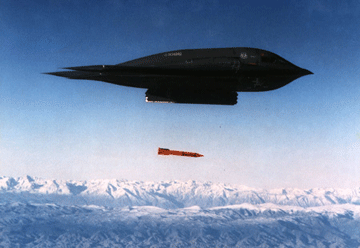
Finally, the existing B61 nuclear bombs will soon be replaced by the enhanced B61-12 guided nuclear bomb. Development is essentially complete and full-scale production of about 480 B61-12s is expected to begin soon. The new weapon is thought to have the same yield range as the current B61-4: 0.3, 1.5, 10 and 50 kilotons. Training of the units in Europe to receive the new weapon is scheduled to begin in early-2023 and the first weapons potentially arriving at the first base in late-2023 or 2024.
In addition to the non-strategic fighter jets F-15E, F-16, F-35A, and Tornado, the B61-12 will also be integrated on the B-2 and B-21 strategic bombers. ecause of the increased provided by the tail kit, all the digital aircraft that can make use of it (all except F-16 and Tornado) will be able to hold at risk a wide range of targets. The combination of increased accuracy and lower-yield options on non-strategic and strategic stealth aircraft will significantly increase the capability of the gravity bomb mission.
Canada’s first new nuclear power reactor in 30 years has embarked on a crucial review. Can it pass quickly?

GE says it’s the simplest reactor it has ever designed. Such claims are common among SMR developers, and are almost entirely untested.
“The vendors would really like to have basically no guards with guns at a reactor site, if they can avoid it,”
While a solar or wind farm can typically be built in a few years, nuclear reactors have been known to take a decade or longer. With governments and utilities pondering how to achieve net-zero greenhouse emissions by mid-century, this has proved to be a significant competitive disadvantage for nuclear power.
Globe and Mail, Dec. 28, 2022, Matthew McClearn
On the shores of Lake Ontario, about 70 kilometres east of Toronto, something is happening that hasn’t happened in Canada in well over a generation: Workers are breaking ground for a new nuclear reactor.
Ontario Power Generation plans to construct a GE-Hitachi BWRX-300 at its Darlington Nuclear Generating Station in Clarington. To do that it needs permission from the Canadian Nuclear Safety Commission (CNSC)
The utility’s application to the CNSC, which it submitted in the fall, will be the first real test of GE-Hitachi’s claims about the reactor, a new model that is not yet used anywhere else in the world. The uncertain process could have dramatic implications for what this new reactor will ultimately cost, how long it will take to build – and whether anyone else will want to build one.
The reactor’s design is novel in several respects. At 300 megawatts, the BWRX-300 is marketed as a small modular reactor, or SMR. (Darlington’s existing four reactors each produce 935 megawatts.) In considering the application, the CNSC will be the first regulator in the world to review an SMR for large-scale power generation.
This will be the first large nuclear power reactor the CNSC has reviewed since 1993. And, if built, it would be the first nuclear power reactor in Canadian history that wasn’t of the homegrown CANDU design.
GE-Hitachi has said the BWRX-300 will be 60 per cent less expensive per megawatt than a typical reactor, making it the cheapest SMR on the market, and that it can be built in as few as 24 months. And the company has touted “passive safety systems.” Even if operators walked away, it has said, the reactor would cool itself without power for a whole week, at minimum. The company also claims the BWRX-300′s environmental footprint is less than that of larger reactors. GE says it’s the simplest reactor it has ever designed.
Such claims are common among SMR developers, and are almost entirely untested. The BWRX-300 “has not gone through any licensing review anywhere, in any country,” said M.V. Ramana, a professor at the University of British Columbia’s School of Public Policy and Global Affairs who researches nuclear energy. “When a design is submitted to a regulator for safety review, the regulators ask questions, and the design starts being changed. And so there is going to be this process of evolution.”…………………………………
Allison Macfarlane, director of UBC’s School of Public Policy and Global Affairs, said SMR vendors have also sought smaller emergency-planning zones in the U.S. And she noted that some vendors argue that SMRs will require less physical security than larger reactors. “The vendors would really like to have basically no guards with guns at a reactor site, if they can avoid it,” she added.
Acquiring regulatory approval to build a newly designed reactor within two or three years is not the norm.
Prof. Macfarlane said there is no hard rule on how long the process takes. The fastest application she has seen before the NRC was a request by the U.S. Navy for an informal review of a reactor for a nuclear aircraft carrier. (The Navy didn’t actually require NRC approval.) The NRC’s review took 18 months, she said.
For a power reactor, the best case scenario before the NRC is three to four years. At worst, the process can stretch out for a decade.
“Usually, there’s just this endless back and forth,” she said.
Prof. Ramana is also skeptical of OPG’s timeline. Most nuclear projects suffer delays, he said. “When it comes to a new reactor design, those delays tend to be much larger. … It should not be a surprise to anyone if this design is going to be quite delayed.”
That accords with GE-Hitachi’s own experiences in the U.S. The company applied to the NRC for final design approval for its Economic Simplified Boiling Water Reactor in 2005. The reactor wasn’t certified until nine years later, in 2014. In 2011, the company applied to the NRC to renew the design certification for its Advanced Boiling Water Reactor, which had first been certified in the 1990s. That process took about a decade.
Even if the CNSC does grant OPG its construction license in record time, delays are not uncommon after construction has commenced. One notorious example is Westinghouse’s AP1000 reactor, which made an outsized contribution to that company’s filing for bankruptcy protection in 2017.
“In the case of the AP1000, the delays happened well after the design was licensed to be constructed,” Prof. Ramana said.
That historical experience notwithstanding, OPG, various levels of government and voices from across the nuclear industry have said that this new reactor will be in service as early as 2028. Meeting that deadline is a matter of no small urgency for the nuclear industry. While a solar or wind farm can typically be built in a few years, nuclear reactors have been known to take a decade or longer. With governments and utilities pondering how to achieve net-zero greenhouse emissions by mid-century, this has proved to be a significant competitive disadvantage for nuclear power…………………..
The CNSC is an administrative tribunal that reports to Parliament through the Minister of Natural Resources. While it doesn’t answer to him, that minister, Jonathan Wilkinson, has promoted SMRs in recent statements. By adopting them early, he said in October, “Canada could realize a significant share of the global exports of technology, goods and services.” In its most recent budget, the federal government earmarked nearly $51-million to improve the CNSC’s capacity to regulate SMRs.
CNSC president Rumina Velshi is also a vocal supporter. She declared in October that SMRs “are likely to be an important part of the next generation of nuclear” and that they “will need to be deployed quicker, less expensively and much more widespread than reactors of the past.” The CNSC has established a new group focused exclusively on SMRs, which will “guide the entire organization on SMR readiness.”
Earlier this year, Ms. Velshi told attendees of a summit on advanced reactors that the CNSC would rise “to the challenge of conducting SMR licensing reviews efficiently and effectively.”
Ms. Velshi is enthusiastic about the CNSC harmonizing its codes and standards with those of regulators of other countries. She has said this is “essential” for SMR deployment worldwide, and has signalled her intent to work closely with the NRC.
In September, the two regulators signed an agreement to collaborate on reviewing the BWRX-300.
Allison Macfarlane, director of UBC’s School of Public Policy and Global Affairs, said SMR vendors have also sought smaller emergency-planning zones in the U.S. And she noted that some vendors argue that SMRs will require less physical security than larger reactors. “The vendors would really like to have basically no guards with guns at a reactor site, if they can avoid it,” she added.
Acquiring regulatory approval to build a newly designed reactor within two or three years is not the norm.
Prof. Macfarlane said there is no hard rule on how long the process takes. The fastest application she has seen before the NRC was a request by the U.S. Navy for an informal review of a reactor for a nuclear aircraft carrier. (The Navy didn’t actually require NRC approval.) The NRC’s review took 18 months, she said.
For a power reactor, the best case scenario before the NRC is three to four years. At worst, the process can stretch out for a decade.
“Usually, there’s just this endless back and forth,” she said.
Prof. Ramana is also skeptical of OPG’s timeline. Most nuclear projects suffer delays, he said. “When it comes to a new reactor design, those delays tend to be much larger. … It should not be a surprise to anyone if this design is going to be quite delayed.”
That accords with GE-Hitachi’s own experiences in the U.S. The company applied to the NRC for final design approval for its Economic Simplified Boiling Water Reactor in 2005. The reactor wasn’t certified until nine years later, in 2014. In 2011, the company applied to the NRC to renew the design certification for its Advanced Boiling Water Reactor, which had first been certified in the 1990s. That process took about a decade.
Even if the CNSC does grant OPG its construction license in record time, delays are not uncommon after construction has commenced. One notorious example is Westinghouse’s AP1000 reactor, which made an outsized contribution to that company’s filing for bankruptcy protection in 2017.
“In the case of the AP1000, the delays happened well after the design was licensed to be constructed,” Prof. Ramana said.
That historical experience notwithstanding, OPG, various levels of government and voices from across the nuclear industry have said that this new reactor will be in service as early as 2028. Meeting that deadline is a matter of no small urgency for the nuclear industry. While a solar or wind farm can typically be built in a few years, nuclear reactors have been known to take a decade or longer. With governments and utilities pondering how to achieve net-zero greenhouse emissions by mid-century, this has proved to be a significant competitive disadvantage for nuclear power.
A successful, quick application would bode well for further BWRX-300 construction, in Canada and beyond. OPG’s environmental impact statement suggests the utility could deploy up to four at Darlington, with the last one completed in 2035.
Earlier this year, SaskPower, Saskatchewan’s main electric utility, selected the BWRX-300 for “potential” deployment in the province in the mid-2030s. (It won’t make a firm decision until 2029.) A U.S. utility, the Tennessee Valley Authority, also plans to build a BWRX-300.
The CNSC is an administrative tribunal that reports to Parliament through the Minister of Natural Resources. While it doesn’t answer to him, that minister, Jonathan Wilkinson, has promoted SMRs in recent statements. By adopting them early, he said in October, “Canada could realize a significant share of the global exports of technology, goods and services.” In its most recent budget, the federal government earmarked nearly $51-million to improve the CNSC’s capacity to regulate SMRs.
CNSC president Rumina Velshi is also a vocal supporter. She declared in October that SMRs “are likely to be an important part of the next generation of nuclear” and that they “will need to be deployed quicker, less expensively and much more widespread than reactors of the past.” The CNSC has established a new group focused exclusively on SMRs, which will “guide the entire organization on SMR readiness.”
Earlier this year, Ms. Velshi told attendees of a summit on advanced reactors that the CNSC would rise “to the challenge of conducting SMR licensing reviews efficiently and effectively.”
Ms. Velshi is enthusiastic about the CNSC harmonizing its codes and standards with those of regulators of other countries. She has said this is “essential” for SMR deployment worldwide, and has signalled her intent to work closely with the NRC.
In September, the two regulators signed an agreement to collaborate on reviewing the BWRX-300.
| Reply |
Sunak’s wrongheaded renewables tax risks trashing Britain’s wind and solar ambitions.
DR NINA SKORUPSKA: Sunak’s wrongheaded renewables tax risks trashing
Britain’s wind and solar ambitions. The Government must change course,
otherwise we will see winters even more painful than this one.
Call it what you will – a windfall tax, a clawback, a levy – the fact remains that the
Electricity Generator Levy (EGL), in its current form, is set to cause
irreparable damage to Britain’s green energy industry by stalling
investment. In principle, our sector is certainly not against the
Government’s policy to require generators to help pay for energy bill
support.
However, we would question the wisdom of subjecting the cheaper,
greener renewable power sector to a more punishing tax regime than its oil
and gas counterparts. It is an inexplicable disparity – our sector is key
to tackling the volatile costs of fossil fuels at the heart of rising
energy bills. Treatment should be fair and equitable in relation to the oil
and gas sector.
Telegraph 23rd Dec 2022
Dounreay pushes forward plans to build new 37-metre-high stack at prototype fast breeder reactor.
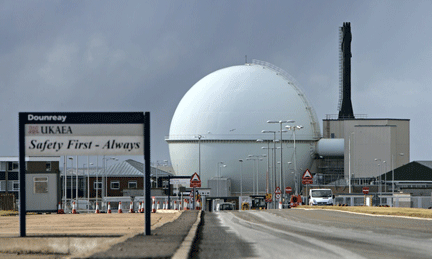
Dounreay pushes forward plans to build new 37-metre-high stack at reactor.
Dounreay’s operators are looking to clear the way to progress long-delayed
plans to replace the discharge stack at the site’s prototype fast reactor.
Dounreay Site Restoration Limited (DSRL) is seeking Highland Council’s
agreement to approve a design for the system to vent authorised emissions
of gases, including radionuclides. Last year, it awarded a £7 million
contract to US conglomerate Jacobs to carry out the work.
Concrete foundations and a steel framework would support the proposed new 37-metre
high stack which would house a plant room containing an extract fan, filter
units, stack sampling and control panels. The contract involves removal of
the existing vent and the design, manufacturing, testing, installation and
commissioning of its replacement. The new stack is earmarked to go up on
the seaward side of the reactor and be in place by October 2024.
John O Groat Journal 21st Dec 2022
1 This Month
Tell Congress: Prevent Nuclear Catastrophe in Iran

Tell Congress: Prevent Nuclear Catastrophe in Iran

Read the Public Inquiry Report, the Commissioners’ report, Surrendering Australia: The AUKUS Deception is available to download for free at aukuspublicinquiry.com. Or just watch the replay of the National Press Club Luncheon.


Shut down the radiation-damaged Heysham nuclear reactors now
To see nuclear-related stories in greater depth and intensity – go to https://nuclearinformation.wordpress.com

Say No to NASA’s Reckless Nuclear Reactor on the Moon
Say No to NASA’s Reckless Nuclear Reactor on the Moon
-
Archives
- November 2026 (246)
- October 2026 (302)
- September 2026 (339)
- August 2026 (330)
- July 2026 (355)
- June 2026 (287)
- May 2026 (306)
- April 2026 (356)
- March 2026 (251)
- February 2026 (267)
- January 2026 (308)
- December 2025 (358)
-
Categories
- 1
- 1 NUCLEAR ISSUES
- business and costs
- climate change
- culture and arts
- ENERGY
- environment
- health
- history
- indigenous issues
- Legal
- marketing of nuclear
- media
- opposition to nuclear
- PERSONAL STORIES
- politics
- politics international
- Religion and ethics
- safety
- secrets,lies and civil liberties
- spinbuster
- technology
- Uranium
- wastes
- weapons and war
- Women
- 2 WORLD
- ACTION
- AFRICA
- Atrocities
- AUSTRALIA
- Christina's notes
- Christina's themes
- culture and arts
- Events
- Fuk 2022
- Fuk 2023
- Fukushima 2017
- Fukushima 2018
- fukushima 2019
- Fukushima 2020
- Fukushima 2021
- general
- global warming
- Humour (God we need it)
- Nuclear
- RARE EARTHS
- Reference
- resources – print
- Resources -audiovicual
- Weekly Newsletter
- World
- World Nuclear
- YouTube
-
RSS
Entries RSS
Comments RSS

