Maligned in Western Media, Donbass Forces are Defending their Future from Ukrainian Shelling and Fascism
Covert Action Magazine, By Eva Bartlett, – November 19, 2022
America is widely understood to be a key instigator behind conflict in Ukraine that has pitted brother against brother
meared, stigmatized, and lied about in Western media propaganda, the mostly Russian-speaking people of the Donbass region were being slaughtered by the thousands in a brutal war of “ethnic cleansing” launched against them by the neo-Nazi regime in Kyiv, which the U.S. installed after the CIA overthrew Ukraine’s legally elected president in a 2014 coup.
Although the Donbass people had been pleading for Russian military aid to defend them against the increasingly murderous military assaults by the Ukraine government forces, which killed more than 14,000 of their people, Russian President Vladimir Putin declined to intervene. Instead, he tried to broker a peace agreement between the warring parties.
But the U.S. and Britain secretly colluded to sabotage peace negotiations, persuading president Zelenksy to ignore the Minsk 2 peace agreement that the Ukraine government had previously signed, and which had been countersigned by Russia, France and Germany.
Realizing that the U.S. and its NATO allies would never permit peace negotiations to succeed, Putin finally sent troops into Ukraine on February 24. Russian troops went in to support and reinforce the outnumbered and outgunned Donbass Special Forces who had been defending their land against attacks by the Kyiv government for nearly eight years.
Voices From the Frontlines of Former Eastern Ukraine Republics
In the Donetsk People’s Republic (DPR) in October, I went to a frontline outpost 70 meters from Ukrainian forces in Avdeevka (north and west of Donetsk), according to the Donbas commanders I spoke with there.
To reach that position, I went with two other journalists to a meeting point with two commanders of Pyatnashka—volunteer fighters, including Abkhazi, Slovak, Russian, Ossetian and other nationalities, including locals from Donbas.
From there, they drove us to a point as far as they could drive before walking the rest of the way, several minutes through brush and trenches, eventually coming to their sandbagged wood and cement fortified outpost.
It has changed hands over the years, Ukrainian forces sometimes occupying it, Donbas forces now controlling it.
One soldier, a unit commander who goes by the call sign “Vydra” (Otter), was formerly a miner from the DPR who had been living in Russia with his family. In 2014, he returned to the Donbas to defend his mother and relatives still there. He spoke of the outpost.
“We dug and built this with our hands. Several times over the years, the Ukrainians have taken these positions. We pushed them back, they stormed us…Well, we have been fighting each other for eight years.”
There, artillery fire is the biggest danger they face. “You can hide from a sniper, but not from artillery, and they’re using large caliber.”
His living quarters is a dank, cramped, room with a tiny improvised bed, with another small room and bed for others at the outpost.
A sign reads: “If shelling occurs, go to the shelter.” The kind of sign you see all over Donetsk and cities of the Donbas, due to Ukraine’s incessant shelling of civilian, residential areas. In a frontline outpost where incoming artillery is the norm, the sign is slightly absurd, clearly a joke.
An Orthodox icon sits atop the sign. Ukrainian nationalists hang and spray Nazi graffiti and slogans of death; these fighters revere their faith.
A poster, with the DPR flag, reads: “We have never known defeat, and it’s clear that this has been decided from above. Donbas has never been forced to its knees, and no one will ever be allowed to.”
The only things decorating the space are tins of tuna and canned meat, instant noodles, and washing powder. Their existence is bare minimum, nothing glamorous about it; they volunteer because, as they told me, this is their land and they will protect it.
Perhaps surprising to some, when Vydra was asked whether he hates Ukrainians, he replied emphatically no, he has friends and relatives in Ukraine.
“We have no hatred for Ukraine. We hate those nationalists who came to power. But ordinary Ukrainians? Why? Many of us speak Ukrainian. We understand them, they understand us. Many of them speak Russian………………………..
And I’m on the Myrotvorets [kill list] website.” [As is the author, see this article.]
He spoke of Ukraine’s shelling from 2014, when the people of the Donbass were unarmed and not expecting to be bombed by their own country…………………………………..
I asked how he felt to be treated and described as sub-human, to be called dehumanizing names, a part of the Ukrainian nationalists’ brainwashing propaganda. As I wrote previously:
“Ukrainian nationalists openly declare they view Russians as sub-human. School books teach this warped ideology. Videos show the extent of this mentality: Teaching children not only to also hate Russians and see them as not humans, but also brainwashing them to believe killing Donbas residents is acceptable. The Ukrainian government itself funds neo-Nazi-run indoctrination camps for youths.”
“It’s offensive,” Vydra said, “We are saddened: There are sick people. We need to heal them, slowly.”……………………………….
Commanders Speak of Geopolitical Reasons for Ukraine’s War
Outside, sitting in front of an Orthodox banner and a collection of collected munitions—including Western ones—two platoon commanders, “Kabar” and “Kamaz,” spoke of the bigger geopolitical picture. [See video]
“America is running the show here,” Kabar said. “It builds foreign policy on the basis of how its domestic policy is built, which is through conflicts with external countries. They are accustomed to proving their power to their people through terrorism around the world, inciting fires in Syria, in the east. They played the card of radical Islam there……………………
And now they are playing the card of fascism. They do not see themselves on the other side of good. They need wars, blood, cruelty, and they signed Europe up for this.
However, they’ve missed one point: Russia, since the days of the Soviet Union, has never retreated in large scale wars. ………………………………………
Western Media Inverted Reality, Lauding Nazis and Demonizing Defenders
While many in the West think that this conflict started in February 2022, those following events since 2014 are aware that, following the Maidan coup and Odessa massacre, and the rise of fascism in Ukraine against the Ukrainian people, the Donbas republics wanted to distance themselves from Ukraine’s Nazis and fascism.
The sacrifices which the people of the Donbas republics have endured, particularly those fighting to protect their families and loved ones, have been and continue to be immense………..
These defenders, many living in dank trench conditions didn’t choose war, they responded to it, to protect their loved ones and their future. In spite of more than eight years of being warred upon by Ukraine, they retain their humanity. https://covertactionmagazine.com/2022/11/19/maligned-in-western-media-donbass-forces-are-defending-their-future-from-ukrainian-shelling-and-fascism/
Why nuclear-powered France faces power outage risks

https://www.reuters.com/business/energy/why-nuclear-powered-france-faces-power-outage-risks-2022-12-09 PARIS, Dec 9 (Reuters) – France is bracing for possible power outages in the coming days as falling temperatures push up demand while state-controlled nuclear group EDF struggles to bring more production on line.
WHY CAN’T FRANCE MEET DEMAND?
France is one of the most nuclear-powered countries in the world, typically producing over 70% of its electricity with its fleet of 56 reactors and providing about 15% of Europe’s total power through exports.
However, EDF (EDF.PA) has had to take a record number of its ageing reactors offline for maintenance this year just as Europe is struggling to cope with cuts in Russian natural gas supplies used for generating electricity.
That has left France’s nuclear output at a 30-year low, forcing France to import electricity and prepare plans for possible blackouts as a cold snap fuels demand for heating.
WHAT ARE EDF’S MAINTENANCE PROBLEMS?
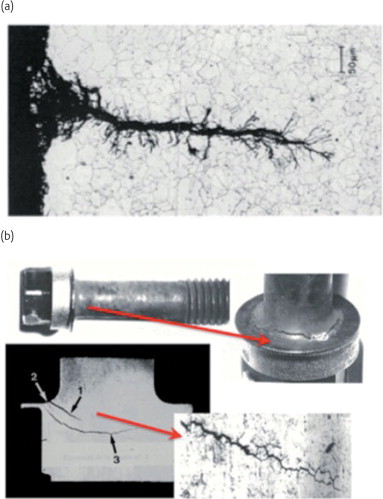
While EDF normally has a number of its reactors offline for maintenance, it has had far more than usual this year due to what is known as stress corrosion on pipes in some reactors.
At the request of France’s nuclear safety watchdog, EDF is in the process of inspecting and making repairs across its fleet since detecting cracks in the welding connecting pipes in one reactor at the end of last year.
Years of under-investment in the nuclear sector mean that there is precious little spare capacity to meet demand while reactors are offline for maintenance.
France also lacks specialised welders and other workers in sufficient numbers to be able to make repairs fast enough to get reactors back online.
WHAT IS BEING DONE?
In the very short term, there is little that can be done to get more reactors online faster, leaving the government to plan for voluntary cuts at peak demand periods and limited forced blackouts.
Meanwhile, EDF and others in the French nuclear industry are on a recruitment drive for the next generation of welders, pipe-fitters and boiler makers, going so far as to set up a new school to train them.
President Emmanuel Macron wants a new push in nuclear energy and has committed to building six new reactors at a cost his government estimates at nearly 52 billion euros ($55 billion).
As a first step, the government is in the process of buying out EDF’s minority shareholders and fully nationalising the debt-laden group, which it says is necessary to make the long-term investments in new reactors.
($1 = 0.9471 euros)
Large Multinational Study Shows Link Between CT Radiation Exposure and Brain Cancer in Children and Young Adults

https://www.diagnosticimaging.com/view/clinical-histories-in-radiology-could-they-get-worse-
December 9, 2022, Jeff Hall
In a new study based on five- to six-year follow-up data from over 650,000 children and young adults who had at least one computed tomography (CT) exam prior to the age of 22, researchers found a “strong dose-response relationship” between increased CT radiation exposure and brain cancer.
Increased cumulative exposure to radiation from computed tomography (CT) exams led to elevated risks for developing gliomas and other forms of brain cancer in children and young adults, according to the findings of a large multinational study of data from over 650,000 patients.
In the study, recently published in the Lancet Oncology, researchers reviewed pooled data from nine European countries and a total of 658,752 patients. All study participants had at least one CT exam prior to the age of 22 with no prior cancer or benign brain tumor, according to the study. Examining follow-up data at a median of 5.6 years, the study authors noted 165 brain cancers (including 121 gliomas). They also found that the overall mean cumulative brain radiation dose, lagged by five years, was 47.4 mGy for the study cohort in comparison to a mean cumulative brain radiation dose of 76.0 mGy for those with brain cancer.
“First results of (the study) after a median follow-up of 5.6 years show a strong dose-response relationship between the brain radiation dose and the relative risk of all brain cancers combined and glioma separately; a finding that remains consistent for doses substantially lower than 100 mGy,” wrote lead study author Michael Hauptmann, Ph.D., a professor of Biometry and Registry Research at the Brandenburg Medical School Theodor-Fontane in Neuruppin, Germany, and colleagues.
For head and neck CT exams, the researchers noted a “significant positive association” between the cumulative number of these procedures and elevated brain cancer risk. Employing linear dose-response modelling, the researchers found a 1.27 excess relative risk (ERR) per 100 mGy of brain radiation dosing for all brain cancers, a 1.1 ERR for gliomas and a 2.13 ERR for brain cancers excluding gliomas, according to the study.
Hauptmann and colleagues acknowledged that the risk estimates in the study translate to one out of 10,000 children experiencing a radiation-induced brain cancer five to 15 years after a head CT exam. However, the researchers also emphasized appropriate caution, pointing out annual estimates of pediatric head CT exams surpassing one million in the European Union and five million in the United States.
“These figures emphasize the need to adhere to the basic radiological protection principles in medicine, namely justification (procedures are appropriate and comply with guidelines) and optimization (doses are as low as reasonably achievable),” added Hauptmann and colleagues.
Study limitations included the potential for confounding indications with the study authors noting the inclusion of studies with some patients having congenital syndromes that may be predisposing factors for brain tumor development. However, Hauptmann and colleagues noted that exclusion of those patients and adjustments for those conditions saw no significant effect on the assessment of ERR.
The study authors also noted a lack of information on other imaging, such as nuclear medicine studies and X-rays, that may have been performed in the study population. However, they suggested the contribution of radiation dosing from these exams “is probably minor” in comparison to higher frequencies and dosing seen with pediatric head CT exams.
Finland warns of power outage risk over nuclear plant startup delay – Olkiluoto 3 reactor unreliable?
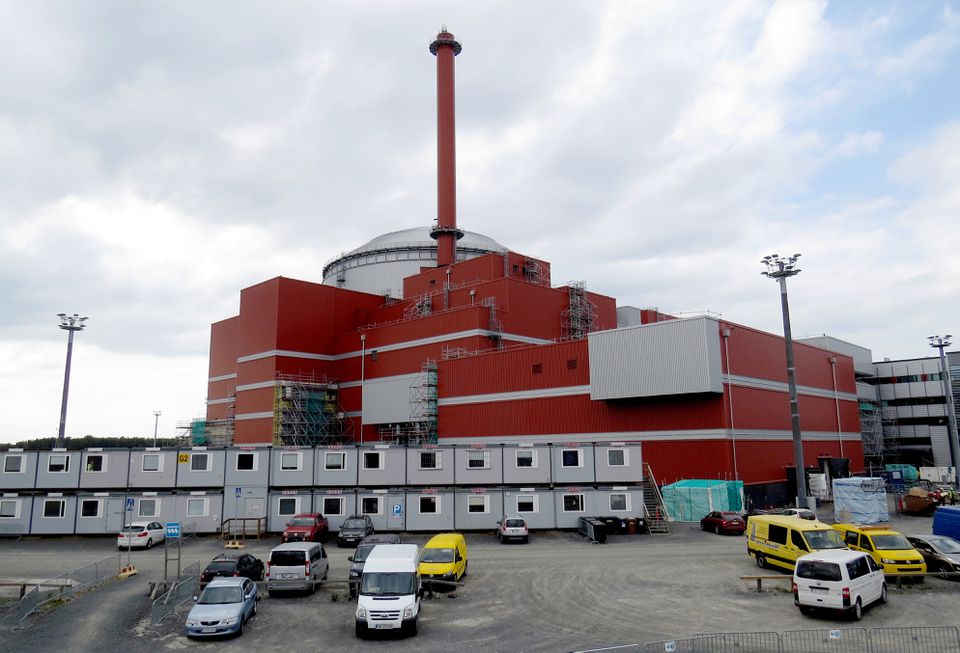
HELSINKI, Dec 9 (Reuters) – Finland faces a greater risk of power outages in coming months because of another delay in starting up the new Olkiluoto 3 (OL3) nuclear reactor, national grid operator Fingrid said on Friday.
Fingrid and the state energy authority have told citizens and companies to prepare for possible blackouts, particularly if OL3 does not prove reliable, as countries across Europe seek to curb energy usage, grappling with reduced Russian gas and other energy supplies because of the Ukraine war………………………………
In October, the operator said cracks were found in the OL3 reactor’s four feedwater pumps after test production, further delaying startup originally planned to be in 2009.
Test production has been postponed until Dec. 25 at the earliest, from Dec. 11, TVO said, while full production will begin on Feb. 6 at the earliest compared with Jan. 22.
“The investigation into the damage in Olkiluoto 3’s feedwater pumps has proceeded into its final stages. Once the investigation is complete, a decision will be made on the startup of the plant unit,” TVO said in a statement.
The world’s deepest nuclear clean-up – the Dounreay shaft
A £20m contract has been awarded as part of work to clean-up one of the
most challenging features of the Dounreay nuclear power site.
Called the shaft, it plunges 65.4m (214.5ft) below ground and was used for disposing
of radioactive waste. The practice, which started in 1959, ended in 1977
following an explosion inside the structure.
Cavendish Nuclear has been
awarded the contract to build a container handling facility. Waste from the
shaft, and another part of Dounreay called the silo, will be placed in 500
litre drums for storage. Tackling the shaft has been dubbed the world’s
deepest nuclear clean-up by Dounreay’s operators.
BBC 7th Dec 2022
Five ways the Biden DOE is spending tax-payers money big on nuclear energy

THe Hill, BY SAUL ELBEIN – 12/08/22
The Department of Energy is spending big to keep America’s old nuclear reactors online while laying the foundations of the nuclear energy industry of the future.
The investment into America’s long-declining nuclear industry — which includes tens of millions of funding announced this week — builds on a far-broader package of federal subsidies invested in the nuclear sector, which remains America’s leading single source of zero-carbon electricity [ not zero in full nuclear fuel cycle].
One program — a $6 billion fund established under the 2021 bipartisan infrastructure plan — will help to keep otherwise uneconomic nuclear plants from shutting down.
But other programs announced by the Energy Department look beyond the current generation of nuclear plants to build out foundations for the next generation of nuclear energy.
Here are five nuclear goals that the Energy Department is pouring money into.

Advanced and theoretical research
One grant announced on Wednesday will pay $12 million to fund scientists across America’s national laboratories as they work on advanced research into problems at the edges of our understanding of nuclear physics.
The five projects funded “span topics like the 3-dimensional internal structure of nucleons, the exotic states of quarks and gluons, the microscopic properties of quark-gluon plasma and neutrino and nuclear interactions,” according to a statement from the Energy Department…………………………….
Training nuclear-electric engineers

The Energy Department is also funding universities to educate “the next generation nuclear security work force.”
The department announced on Wednesday that $5 million will go to three state universities to help them create curriculum to train electrical engineers to work on nuclear reactors. ……………
Keep old plants online

The infrastructure legislation passed into law earlier this year contained $6 billion in Civil Nuclear Credits to help keep online nuclear plants that would otherwise be replaced with fossil-fuel infrastructure.
The Energy Department paid out its first disbursement last month, sending $1.1 billion to keep southern California’s Diablo Canyon Power Plant running. …………….
Build nuclear fuel supply chains

The Energy Department is putting $150 million into producing nuclear fuel essential to advanced reactors, officials announced in November.
So-called high-assay, low-enriched uranium (HALEU) is uranium that is far more enriched than the nuclear fuel used in current reactors. It’s only low-enriched in contrast to the kinds of enriched uranium used in nuclear weapons.
Since it’s essential to smaller, more efficient nuclear reactors, the Energy Department estimates that the U.S. will need about 40 metric tons of HALEU per year by the end of the decade……………………………
Catching up on fusion

The Energy Department in October announced $47 million for research into fusion — the process by which stars like our sun create energy.
Unlike fission, fusion energy is created by forcing atoms together, rather than splitting them — a process that releases no radioactive pollution.
But the extreme temperatures and pressures needed to convince atoms to fuse have so far kept fusion as a theoretical energy source, rather than a practical one.
At the superheated temperatures and pressures required for fusion, gas turns into plasma — which is extremely difficult to control.
“We can’t just put it in a vessel because it will melt anything it touches,” said Eugenio Schuster of Lehigh University, who had received $1.75 million to work with researchers on this problem.
The money helps pay for collaborative experiments between U.S. and international scientists at research “tokamaks” at sites in China, the European Union and South Korea
European Commission supports French government in funding for small nuclear reactors

On 7 December 2022, the European Commission announced that it has decided,
under the state aid rules, to approve the grant by France of aid to EDF to
support a research and development project for small nuclear reactors.
Practical Law 7th Dec 2022
Every home and community could be a power station’: the Nuclear Free Local Authorities’s future renewable energy vision for Wales

Every Welsh home and community a renewable power station” was the vision outlined by the UK/Ireland Nuclear Free Local Authorities Secretary for a sustainable nuclear-free Wales at a meeting held in the Senedd Pierhead Building in Cardiff Bay yesterday (6 December).
The event was sponsored and opened by Senedd Member Mike Hedges and hosted by CND Cymru to celebrate the 40th anniversary of the Clwyd Declaration when in 1982 all eight of the original Welsh County Councils declared themselves nuclear-free. Throughout 2022, an exhibition to mark the anniversary has been touring the nation, and yesterday, the exhibition was on display at the Pierhead Building…………………………………….
NFLA Secretary Richard Outram described a vision where Wales could instead be powered by renewables alone.
Richard said: “The Nuclear Free Local Authorities remain implacably opposed to any new nuclear power stations in Wales. Wales is blessed with many natural resources from which to draw power – her rivers, tides, sun and wind, even the untapped geothermal power that can be derived from the earth and the many abandoned coal mines that lie beneath the feet of her citizens!
“If we fitted new and existing homes and public buildings with insulation and energy efficiency measures, each would use less heat and power, reducing customers’ bills and their carbon footprint. And if we fitted them with solar panels, heat pumps, and battery storage they could generate and store their own heat and power, making them energy sufficient and independent of the National Grid. In effect every Welsh home and public building could become an energy efficient, energy generating power station.
“And if this is combined with larger community, Council or business led renewable projects, such as hydro, onshore or offshore wind, tidal, wind, solar, or geothermal schemes, we can create a visionary and sustainable energy future for Wales more cost-effectively, more quickly, more safely and with many more jobs than nuclear. Wales already derives much of its energy from renewables, but we could do much more.”
The event ended with participants being asked to sign the Cardiff Declaration. Signatories included Councillors from Newport City Council and Rhondda Cynon Taf County Borough Council, as well as members of the following organisations: CND Cymru; ICAN, We can, Cymru can; Cor Cochion Caerdydd; Wales One World Film Festival; Labrats International; XR Peace; Trident Ploughshares and United Nations Association. https://www.nuclearpolicy.info/news/every-home-and-community-could-be-a-power-station-the-nflas-future-renewable-energy-vision-for-wales/
THE ROBOTS OF FUKUSHIMA: GOING WHERE NO HUMAN HAS GONE BEFORE (AND LIVED)
https://hackaday.com/2022/12/08/the-robots-of-fukushima-going-where-no-human-has-gone-before-and-lived/ by Ryan Flowers, 9 Dec 22
The idea of sending robots into conditions that humans would not survive is a very old concept. Robots don’t heed oxygen, food, or any other myriad of human requirements. They can also be treated as disposable, and they can also be radiation hardened, and they can physically fit into small spaces. And if you just happen to be the owner of a nuclear power plant that’s had multiple meltdowns, you need robots. A lot of them. And [Asianometry] has provided an excellent synopsis of the Robots of Fukushima in the video below the break.
Starting with robots developed for the Three Mile Island incident and then Chernobyl, [Asianometry] goes into the technology and even the politics behind getting robots on the scene, and the crossover between robots destined for space and war, and those destined for cleaning up after a meltdown.
The video goes further into the challenges of putting a robot into a high radiation environment. Also interesting is the state of readiness, or rather the lack thereof, that prompted further domestic innovation.
Obviously, cleaning up a melted down reactor requires highly specialized robots. What’s more, robots that worked on one reactor didn’t work on others, creating the need for yet more custom built machines. The video discusses each, and even touches on future robots that will be needed to fully decommission the Fukushima facility.
For another look at some of the early robots put to work, check out the post “The Fukushima Robot Diaries” which we published over a decade ago.
France: EDF extends nuclear outages by up to 42 days
EDF extends nuclear outages by up to 42 days (4.6 GW). EDF has extended
outages at its Chooz 2 (1.5 GW) and three other nuclear reactors in France
with a cumulative 4.64 GW capacity by up to 42 days.
Montel 5th Dec 2022
https://www.montelnews.com/news/1373972/edf-extends-nuclear-outages-by-up-to-42-days-46-gw
How to scale rooftop community solar in cities

New York has over 1 gigawatt of community solar, more than any other
state, with another 700 projects in the pipeline that will add another 2
gigawatts of solar capacity.
Yet few of these projects are in the state’s
most iconic city, home to more than 8 million people. “It’s not because
they don’t pencil out” economically, Russell Wilcox, co-founder and CEO
of Urban Energy, said of siting urban community-solar projects in New York
City and its surroundings. “It’s the complexity of the market.”
But despite this market complexity, rooftop community solar is garnering more
attention, and not just in New York state, which has a goal of 10 gigawatts
of distributed solar. A number of affordable housing agencies, including
the New York City Housing Authority, are investing in rooftop community
solar projects. In Washington, D.C., the Solar for All program installed
more than 160 community solar rooftop projects from 2019 to 2021 that
provided utility bill credits to 6,000 income-qualified families.
Canary Media 8th Dec 2022
https://www.canarymedia.com/articles/sponsored/how-to-scale-rooftop-community-solar-in-cities
Slovakia’s new nuclear power plant delayed due to a technical fault
The newly built Mochovce nuclear power plant, the country’s third, will
have to delay electricity production due to a technical fault that could
cause financial hardship for the plant’s owner.
Technicians identified a
minor leak during stress tests a few days after the minimum controlled
output was reached. The reactor was already undergoing a fission chain
reaction, although the reactor power was very close to zero. “During the
re-pressurisation test, a minor leak was identified on the upper reactor
block.
After analysing the situation, we decided to reseal this part of the
technology,” Oľga Baková, spokeswoman for plant operator Slovenske
elektrárne a.s. told TV Markíza. “Next week we are continuing the unit
start-up and physical start-up tests. The first phasing and connection to
the grid are scheduled for about mid-January,” she added.
Euractiv 7th Dec 2022 https://www.euractiv.com/section/politics/news/new-slovak-nuclear-reactor-forced-to-delay-electricity-production/
How the Global Spyware Industry Spiraled Out of Control
The market for commercial spyware — which allows governments to invade mobile phones and vacuum up data — is booming. Even the U.S. government is using it.
New York Times, By Mark Mazzetti, Ronen Bergman and Matina Stevis-Gridneff
Mark Mazzetti reported from Washington, Ronen Bergman from Tel Aviv and Nicosia, Cyprus, and Matina Stevis-Gridneff from Brussels, Athens and Nicosia. Dec. 9, 2022
The Biden administration took a public stand last year against the abuse of spyware to target human rights activists, dissidents and journalists: It blacklisted the most notorious maker of the hacking tools, the Israeli firm NSO Group.
But the global industry for commercial spyware — which allows governments to invade mobile phones and vacuum up data — continues to boom. Even the U.S. government is using it.
The Drug Enforcement Administration is secretly deploying spyware from a different Israeli firm, according to five people familiar with the agency’s operations, in the first confirmed use of commercial spyware by the federal government.
At the same time, the use of spyware continues to proliferate around the world, with new firms — which employ former Israeli cyberintelligence veterans, some of whom worked for NSO — stepping in to fill the void left by the blacklisting. With this next generation of firms, technology that once was in the hands of a small number of nations is now ubiquitous — transforming the landscape of government spying.
One firm, selling a hacking tool called Predator and run by a former Israeli general from offices in Greece, is at the center of a political scandal in Athens over the spyware’s use against politicians and journalists…………….
Predator was found to have been used in another dozen countries since 2021, illustrating the continued demand among governments and the lack of robust international efforts to limit the use of such tools…………………….
The most sophisticated spyware tools — like NSO’s Pegasus — have “zero-click” technology, meaning they can stealthily and remotely extract everything from a target’s mobile phone, without the user having to click on a malicious link to give Pegasus remote access. They can also turn the mobile phone into a tracking and secret recording device, allowing the phone to spy on its owner. But hacking tools without zero-click capability, which are considerably cheaper, also have a significant market.
Commercial spyware has been used by intelligence services and police forces to hack phones used by drug networks and terrorist groups. But it has also been abused by numerous authoritarian regimes and democracies to spy on political opponents and journalists. …………………………………………………….
Similar to Pegasus, the NSO tool, Graphite spyware can invade the mobile phone of its target and extract its contents. But unlike Pegasus, which collects data stored inside the phone itself, Graphite primarily collects data from the cloud, after data is backed up from the phone. This can make it more difficult to discover the hack and theft of information, according to cybersecurity experts………………………………………………………………….
Predator
………………………………………………… Predator requires the targeted user to click on a link to infect the user’s phone, whereas Pegasus infects the phone without any action from the target. That means Predator requires more creativity to entice already wary targets to click.
Predator infections come in the form of carefully crafted, personalized instant messages and infected links mimicking established websites. Once the phone is infected, the spyware has many of the same snooping capabilities of Pegasus, according to experts. An investigation into Predator by Meta listed about 300 such sites that experts had found were used for Predator infections.
………………………………………………… Meta, as well as the University of Toronto’s Citizen Lab, a cybersecurity watchdog organization, detected Predator in Armenia, Egypt, Greece, Indonesia, Madagascar, Oman, Saudi Arabia, Serbia, Colombia, Ivory Coast, Vietnam, the Philippines and Germany. These locations were determined through internet scans for servers known to be associated with the spyware.
Over the past few months, Predator has also roiled public life in Greece, where it was found to have been used against journalists and opposition figures. The Greek government has repeatedly described the spyware as illegal and said it had nothing to do with it.
Despite the denunciations, Greece admitted to backing Intellexa and its spyware in a vital way: by licensing the company to export Predator to Madagascar, whose government has a history of cracking down on dissent………………………………. more https://www.nytimes.com/2022/12/08/us/politics/spyware-nso-pegasus-paragon.html
Missouri Community and Its Children Grappling With Exposure to Nuclear Waste
In the 2022 report, BCDC took 32 soil, dust, and plant samples throughout the school buildings and campus. Using x-ray to analyze the samples BCDC found more than 22 times more lead-210 than the estimated exposure levels for the average US elementary school in the Jana Elementary playground alone. There were also more than 12 times the lead-210 expected exposure in the topsoil of the basketball courts alone.
Radioactive isotopes of polonium-210, radium-266, thorium-230, and other toxicants were also found in the library, kitchen, ventilation system, classroom surfaces, surface soil and even soil as far as six feet below the surface.
https://blog.ucsusa.org/chanese-forte/missouri-community-and-its-children-grappling-with-exposure-to-nuclear-waste/ Chanese Forte, December 8, 2022
The families, students, and school officials in Florissant, Missouri have been living a modern nightmare for the past several weeks, learning that Jana Elementary school and the surrounding region has high levels of radiation, a problem caused decades ago by the production of nuclear weapons
Radiation exposure can damage the DNA in cells leading to a host of health problems including cancer and auto-immune disorders. What’s more troubling is that the Centers for Disease Control reports that children and young adults, especially girls and women, are more sensitive to the effects of radiation.
Jana Elementary school has 400 students and a predominantly (82.9%) Black student body. Unfortunately, the United States has a long history of environmental racism which results in harming Black, Indigenous and Brown communities much more in the process of creating and maintaining nuclear weapons.
When science cannot agree, the community suffers
The suburban school north of St. Louis, Missouri, was thought to be safe for students based on research completed in 2000 by the Army Corps of Engineers (USACE).
Specifically, USACE has been in the Coldwater Creek region for the last 20 years attempting to remediate radioactive waste associated with the creek (which does not include Jana Elementary).
Toward the start of the 2022 semester, as part of an ongoing lawsuit in the region the Boston Chemical Data Corp (BCDC), an environmental consulting group, reported the elementary school as having radioactive waste levels far above the estimated national levels.
These radioactive waste exposures—like lead-210—are associated with decreased cognition, brain defects, thyroid disease, and cancer, and can accumulate in the body over time.
Following the BCDC report, all Jana Elementary students were sent home for the rest of the semester in hopes their homes were less toxic.
By the Thanksgiving holiday break, the USACE returned to test inside and on the playground of the school and found no radiation on the campus, news which many community members and organizers unsurprisingly expressed as suspicious.
The School Board then hired SCI Engineering, a private engineering firm, to sample Jana Elementary who came to a similar conclusion as USACE.
Now returning to classes from Thanksgiving break, many wary students joined classes at new schools in the area per the school board’s decision related to BCDC’s radiation exposure assessment. Many parents also expressed to National Public Radio they felt left out of discussions for decisions being made.
How did radioactive waste end up in Florissant, MO?
The region near Jana Elementary was first contaminated by the US Department of Energy’s decision to make St. Louis one of the processing sites for uranium during the Manhattan Engineering District project. These nuclear weapons were built through World War II and originally stored at the St. Louis Lambert International Airport.
Unfortunately, the waste was later illegally dumped in 1973 at the West Lake Landfill in Bridgeton, MO, which lies about 10 miles Southwest of Jana Elementary. The West Lake Landfill is located near the Mallinckrodt Chemical Works Company which regularly floods, causing these harmful chemicals to be carried away by nearby water ways like Coldwater Creek.
Coldwater Creek runs for 19 miles throughout the area and flows directly into the Missouri River. Jana Elementary, just North of St. Louis, is bordered by the creek on two sides but has to date not been included in any clean-up efforts by the US Army Corps of Engineers (USACE).
US Army Corps of Engineers initially didn’t sample inside or outside of Jana Elementary
Prior to the Boston Chem Data Corp 2022 report, the USACE did not take any samples within 300 feet of the school building in their 2017 assessment. According to BCDC’s report, this doesn’t follow US Agency for Toxic Substances Disease Registry (ATSDR) standards for radioactive sampling.
In fact, it ignores the conclusion ATSDR made that most exposures in the region will be indoors and just outdoors of buildings.
Indoor samples from creek-facing homes in the same neighborhood as Jana Elementary had similar radioactive waste both indoors and outdoors. ATSDR also noted in a 2019 report that radioactive wastes are routinely moved from Coldwater Creek into homes due to flooding. The region floods frequently which is only increasing due to climate change in the region.
New radioactive sampling methods used to understand student exposure
In the 2022 report, BCDC took 32 soil, dust, and plant samples throughout the school buildings and campus. Using x-ray to analyze the samples BCDC found more than 22 times more lead-210 than the estimated exposure levels for the average US elementary school in the Jana Elementary playground alone. There were also more than 12 times the lead-210 expected exposure in the topsoil of the basketball courts alone.
Radioactive isotopes of polonium-210, radium-266, thorium-230, and other toxicants were also found in the library, kitchen, ventilation system, classroom surfaces, surface soil and even soil as far as six feet below the surface.
Marco Kaltofen, an environmental engineer who is leading the BCDC team, collected roughly 1,000 samples from across the region as a part of law suit efforts. There are several businesses and homes also indicated as exposed in the lawsuit as well.
Overall, Kaltofen suggests that BCDC’s unprecedented x-ray method better picks up the microscopic radioactive materials. However, he also asserts both studies are essentially saying the same thing, which is of course confusing for many community members.
Community organizers fight for testing and clean-up
Just Moms STL activist Dawn Chapman has worked tirelessly since 2014 to get the federal government to test for radioactive material in more regions where the creek floods.
The co-founder of Just Moms STL, Karen Nickel, also attended Jana Elementary School and has reported currently living with several autoimmune disorders. She uses her experience and love of the area to battle these exposure injustices.
In a 2017 Nation Public Radio report, Ms. Chapman says,
“They [The US Government] fought us for years. Finally, they [tested] parks that had flooded, and found [radioactive waste]. They started testing some backyards and found it. We pushed for Jana Elementary, because it is the closest school to the creek.” Just Moms STL activist, Dawn Chapman
We reached out to Just Moms STL to understand what the next steps are. Just Moms STL Recommends:
- The sites in St. Louis should be expeditiously cleaned up.
Unfortunately, Jana Elementary School is not the only place to be concerned about near St. Louis.- Since remediation of nuclear weapons waste in the area has already taken decades, many of these students will likely age out of Jana Elementary School before there is full remediation of radioactive waste in the St. Louis area.
While there is guidance on defining “safe” or acceptable radioactive exposure levels as it relates to human health, scientists also calculate “expected” levels from the Earth naturally (like radon in sediment).
Unacceptable levels are frequently defined as radiation exposure above natural levels by communities.
- However, legally the Army Corps is allowed to leave some radioactive residue above naturally occurring levels, and Just Moms STL would like this to no longer be the case.
- Residents near nuclear weapon processing sites like the St. Louis area should be included in federal radiation compensation programs, such as the Radiation Exposure Compensation Act (RECA). UCS also suggests consideration of St. Louis in the Energy Employees Occupational Illness Program Act (EEOICPA), and other forms of compensation as well.
Expanding radiation compensation programs is complicated because the list of communities that want to be included who currently qualify is long. Moreover, Just Moms STL says the RECA program needs to be expanded to include processing sites like St. Louis, which has previously only applied to nuclear testing exposure sites and uranium workers, or EEOICPA, which has only covered nuclear site workers, but not surrounding communities.
There are currently two bills being proposed to the House and Senate to extend and strengthen RECA. Just Moms STL is working to get Missouri elected officials to help sponsor and carry RECA as well. And your representatives may also be interested in supporting adjustments to RECA or the EEOICPA.
TODAY. Right Wing politics – are they getting cold feet about nuclear power?

It’s getting harder to understand politics
The Right wing – traditionally stupid – now having (rather intelligent?) second thoughts about waging eternal war, and even concerned about the cost of the weapons-to Ukraine binge. The Left, the intelligentsia (?) , are gung ho for war.
Now shock horror! – twinges of criticism of nuclear power amongst the Right, while the political Left, by and large promote nuclear power.
Even in Australia the right-wing News Corpse is whingeing about nuclear costs.
What is a traditional Leftie like me, supposed to do?
It is a truth universally acknowledged that the political Right are pretty stupid. (At least, here in Australia, I can vouch for that.)
But, on the subject of nuclear power, there seems to be a glimmer of light emerging. And that is confusing to the onlooker.
Up until now, one could depend on Right-wing media and politicians to be firmly united in praising nuclear power (it’s safe, clean, cheap, solves climate change, solves energy problems, has no connection with weapons etc etc). Meanwhile the political Left are a bit less stupid, (have a few reservations about nuclear power – mainly cost) and on their extreme Left, actually oppose it.
We knew where we all stood. But now – there’s a weakening among the previously sturdy Right.
Dwayne Yancey in his thoughtful article ‘The Complicated Politics of Nuclear Power” points out that in the USA 37% of Republicans oppose nuclear power, and in Virginia, a strongly religious Republican Delegate, Marie March, opposes plans for “a sacrifice zone” of small nuclear reactors there.
In the UK, Sanjoy Sen, writing in Conservative Home, raises serious doubts about nuclear power plans, and raises the possibility that someone might “get cold feet and cancel all that”. He rather ominously warns “what can we learn from our French neighbours, the world’s biggest nuclear enthusiasts?” [nuclear power is failing in France] He does go on to parrot out the widely believed dogma that small nuclear reactors are the answer to everything. But still his article shows a definite chink in Right wing belief in the rightness of nuclear power.
1 This Month




Shut down the radiation-damaged Heysham nuclear reactors now
To see nuclear-related stories in greater depth and intensity – go to https://nuclearinformation.wordpress.com

Say No to NASA’s Reckless Nuclear Reactor on the Moon
Say No to NASA’s Reckless Nuclear Reactor on the Moon
-
Archives
- October 2026 (302)
- September 2026 (339)
- August 2026 (330)
- July 2026 (355)
- June 2026 (287)
- May 2026 (306)
- April 2026 (356)
- March 2026 (251)
- February 2026 (267)
- January 2026 (308)
- December 2025 (358)
- November 2025 (359)
-
Categories
- 1
- 1 NUCLEAR ISSUES
- business and costs
- climate change
- culture and arts
- ENERGY
- environment
- health
- history
- indigenous issues
- Legal
- marketing of nuclear
- media
- opposition to nuclear
- PERSONAL STORIES
- politics
- politics international
- Religion and ethics
- safety
- secrets,lies and civil liberties
- spinbuster
- technology
- Uranium
- wastes
- weapons and war
- Women
- 2 WORLD
- ACTION
- AFRICA
- Atrocities
- AUSTRALIA
- Christina's notes
- Christina's themes
- culture and arts
- Events
- Fuk 2022
- Fuk 2023
- Fukushima 2017
- Fukushima 2018
- fukushima 2019
- Fukushima 2020
- Fukushima 2021
- general
- global warming
- Humour (God we need it)
- Nuclear
- RARE EARTHS
- Reference
- resources – print
- Resources -audiovicual
- Weekly Newsletter
- World
- World Nuclear
- YouTube
-
RSS
Entries RSS
Comments RSS

