What’s an SMR? Canada’s bet on the contentious next-gen nuclear tech, explained.
National Observer Cloe Logan | News | January 4th 2023
What is an SMR?
An SMR, or small modular reactor, is a nuclear power unit used to produce energy. As of now, SMRs don’t technically exist; no unit has been fully built. But like nuclear energy in general, the tech is especially polarizing: while many — including the federal government — tout SMRs as a way to reach net-zero greenhouse gas emissions and achieve our climate goals, others say the risk they pose heavily outweighs any potential reward.
SMRs create energy through nuclear fission, similar to traditional nuclear reactors. That process creates heat, which generates electricity but doesn’t create greenhouse gas emissions, unlike fossil fuel energy sources such as coal and natural gas.
What does SMR stand for, and how are they different from existing reactors?
SMR stands for small modular reactor. Here’s a word-by-word definition……………………
Small: SMRs have a smaller energy output compared to traditional nuclear reactors…………..
Modular: According to the federal government, this means the reactors “are factory constructed, portable and scalable.” Compared to traditional nuclear plants, which are built from the ground up, SMRs can be constructed in a central factory and shipped elsewhere as a whole. However, that process will rely on how much demand there is for SMRs and how feasible it is to ship the units once they’re built. Because SMR technology is still in its early stages, this is still to be determined.
Reactor: The type of reactor an SMR uses can vary.
Why do we need SMRs?…………………………………. According to the federal government, SMRs could be used to help achieve our climate goal in three ways: by replacing coal plants, powering heavy industry operations in places like the oilsands and remote mines, and providing electricity for remote communities reliant on diesel.
……………………………… An analysis published in Policy Options found that as of 2018, 24 remote mines reliant on diesel were potential candidates for SMRs by 2030. However, the authors concluded the cost of producing an SMR was too high to justify an electricity demand of this magnitude. Rather, wind and solar are more affordable
The role of SMRs in powering remote, mostly Indigenous communities that now rely on diesel has also been contested. Research has shown SMRs to be one of the least desirable energy options to those communities, who are concerned with being left with nuclear waste and the high costs of SMRs compared to cheaper renewables.
Why are people against SMRs?
Those against SMRs often oppose them for three main reasons:
1. They will be in operation too late to address the climate crisis.
In Canada, the first SMR is supposed to be ready by 2028 for the Darlington Nuclear Generating Station in Ontario. However, some say that goal is unrealistic. An early SMR built by Oregon’s NuScale was originally supposed to generate electricity by 2016, but the completion date has since been pushed to 2029 or 2030. A new report by the Institute for Energy Economics and Financial Analysis described the project as “too late, too expensive, too risky and too uncertain.”
Meanwhile, renewable sources of energy like wind and solar already have technology that is developed and proven.
2. They’re too expensive.
Since SMRs haven’t yet been built, it’s hard to say how much they will ultimately cost, but it’s in the billions. Don Morgan, minister responsible for SaskPower in Saskatchewan, said a small reactor would cost around $5 billion. And the costs of projects underway have often ballooned: the NuScale project went from costing $3.1 billion in 2014 to $6.1 billion in 2020. As a result, the power generated by SMRs is expensive. A 2015 report from the International Energy Agency and the OECD Nuclear Energy Agency found electricity costs from SMRs are predicted to be 50 to 100 per cent higher than typical nuclear reactors.
3. They create harmful nuclear waste.
According to research from Stanford University and the University of British Columbia, SMRs are actually set to produce more nuclear waste than conventional plants. As of now, Canada’s nuclear waste is stored on site at facilities, but all of the locations are designed to be temporary. There is no waste disposal plan for nuclear waste from SMRs, and Canada has been struggling with where to dispose of the nuclear waste already created from existing and past reactors for around a decade. The Canadian Environmental Law Association notes: “SMR wastes will also have higher concentrations of radiation and the SMR designs that claim to ‘burn up’ existing radioactive waste will create new, even more toxic waste streams.”
Who is building SMRs in Canada and how far along are they?
In Canada, the federal government is currently backing SMR technology through its action plan, as are the provinces of Alberta, Ontario, Saskatchewan and New Brunswick, all of which signed a memorandum of understanding expressing support for SMRs.
According to provincial SMR plans, the first one in operation will be at the Darlington nuclear site in Ontario in 2028. Plans are also underway in Alberta and New Brunswick, where ARC Clean Energy is aiming to have an SMR in operation by 2029, and Moltex Energy says its spent fuel recovery system and reactor will come online in the early 2030s. Four more SMRs will follow between 2034 and 2042 in Saskatchewan.
In the plans, they also note another type of SMRs which would be smaller and have less power generation. Rather than supplying grids, they’re designed “primarily to replace the use of diesel in remote communities and mines.” The plan also notes the nuclear research facility at Chalk River, Ont., which is aiming to be in operation by 2026.
Are SMRs viable?
That is the biggest question surrounding SMRs. Although the plans for these next-generation nuclear units might hypothetically work, their viability hasn’t been proven anywhere. Proponents of the tech don’t let that get them down: they say the proposals are strong and are the key to reducing emissions.
But there is no sign that opponents will back down, either. In Canada, numerous Indigenous, scientific, environmental and citizen groups have called the technology a “dirty, dangerous distraction” from real climate action. https://www.nationalobserver.com/2023/01/04/news/what-is-an-smr-canada
Can nuclear safety protocols be maintained in a poor country like Kyrgyzstan, where corruption is rampant?
The looming fight over nuclear power in Kyrgyzstan, eurasianet Aiday Erkebaeva Jan 4, 2023
On the electricity front, Kyrgyzstan may be reaching the end of the line. Demand is growing relentlessly, and yet the hydropower resources it has relied on historically are yielding diminishing returns.
Burning coal is pushing the country deeper into an ecological crisis, as attested to by the black blanket of smog that suffocates the capital, Bishkek, every winter.
With those considerations in mind, thoughts have focused ever more on pursuing a nuclear exit.
An important stride in that direction was taken at the ATOMEXPO-2022 international forum in the southern Russian city of Sochi, where representatives from the Kyrgyz Energy Ministry agreed for Russia’s Rosatom to conduct a feasibility study on installing a small nuclear reactor in Kyrgyzstan.
What backers of this idea have in mind is a plant powered by a compact nuclear reactor known as RITM-200N. This type of reactor is used at present on three Project 22220-class icebreakers developed by the St. Petersburg-based Baltic Shipyard.
Installation of such a reactor in Kyrgyzstan could happen no earlier than 2028, according to Russian media reports, but Kyrgyz Energy Minister Taalaibek Ibrayev is already speaking optimistically of the prospect. ……….
One reason that a RITM-200N reactor is highly unlikely to appear in Kyrgyzstan before 2028 is that Rosatom, whose subsidiary builds the reactors, operates on the policy that it will not install technology abroad that it has not already implemented in Russia itself. The first onshore installation of a RITM-200N-powered plant is happening at the Kyuchus gold deposit in Yakutia, and completion of that project is not expected for another five years.
It is just as well there is no rush, because finding a suitable site could prove challenging. As energy expert Boris Martsinkevich told Eurasianet, the location must hit the sweet spot: far away from potential areas of heightened seismic activity, but close enough to centers of major electricity consumption, so that the cost of installing new power lines does not make the whole project financially unsustainable. …………………
Stiff opposition is looming
A Bishkek-based environmental group called the Green Alliance laid out its objections in a statement in December. The organization is unmoved by the fact that RITM-200N would be a relatively small reactor.
“It is well known that even small sources of atomic energy and small amounts of radioactive substances can have a negative impact on both the environment and human health,” the alliance said in its statement.
In making its case, the Green Alliance borrowed from an argument made by opponents of a RITM-200N plant project in Yakutia, in Russia. Activists there cited the experience of the Bilibino nuclear power station, a small Soviet-vintage plant in a remote northeastern corner of Russia that is said to have been plagued by emergency shutdowns, questions over the nebulous disposal of spent nuclear fuel, and lack of profitability.
That last point about profitability is one that causes particular concern, since the worry is that cost-cutting could lead to skimping on safety protocols. Where nuclear power is concerned, the stakes are particularly high.
Green activists suggest instead that more emphasis be placed on exploiting Kyrgyzstan’s hydropower potential to its fullest, and that the authorities also tap into the potential of solar, wind and biomass energy. Even government officials have conceded that much more could be squeezed out of hydropower. …………………………………………
One more elephant in the room is corruption – a problem that no Kyrgyz government has to date been successful in tackling.
In an interview with RFE/RL’s Kazakh service, Radio Azattyq, environmentalist Dmitry Kalmykov said that graft constituted one of the main arguments against Central Asian countries embracing nuclear power.
“If there is a high level of corruption in the country, if we constantly have high-ranking officials arrested, as a member of the public, I am going to think to myself: ‘They will build an atomic power plant, and when there is some technical inspection, again there will be corruption,’” Kalmykov told Azattyq last year. https://eurasianet.org/the-looming-fight-over-nuclear-power-in-kyrgyzstan
Cold War estimates of deaths in nuclear conflict
Bulletin, By William Burr | January 4, 2023
Apprehension about Russia’s war against Ukraine has produced speculation about the possibility of limited Russian nuclear strikes against targets in that country. Especially worrisome is the danger of a local conflict escalating quickly into a major nuclear exchange between Russia and the United States and other NATO countries. However unlikely that prospect, a large-scale nuclear war involving countries with strategic nuclear forces could cause huge numbers of fatalities and injuries in addition to the losses produced by climactic impacts. A recent study in the journal Nature projects a catastrophic 5 billion deaths.
Once nuclear weapons became a significant element in US military force structures and planning, beginning in the late 1940s, government agencies began estimating nuclear war fatalities. Over the years, fatality estimates—usually classified top secret—were embedded in nuclear war plans, strategic force requirements, strategic balance assessments, and arms control decisions. The estimates, which often left out important effects of nuclear detonations, sometimes conveyed the shifting “balance of strength” between the two superpowers. The magnitude of these numbers sometimes shocked US officials, who eventually sought options intended to make nuclear war less catastrophic.
While a considerable number of important estimates from the 1950s, 1960s, and 1970s have been declassified, government agencies have refused to declassify other fatality numbers, and estimates from the 1980s and beyond remain unavailable. With the war in Ukraine once again raising the prospect of a nuclear war, accurate estimates of such a war’s human impacts are more important than ever. But it is not even clear whether the US government continues to make such estimates.
Cold War calculations. Casualty estimates were part of the war planning effort from the beginning, a recognizable element of ascertaining the impact of nuclear strikes on a given country or set of targets. Estimates made during the late 1940s projected millions of deaths from atomic bombings. By the mid-1950s, with thermonuclear weapons becoming available, deaths in scores of millions became certain. These hydrogen bombs were “area weapons” that could destroy large cities and their surroundings, or large areas around military targets.
With thermonuclear weapons becoming integral to the US arsenal, government officials drew a frightening picture of their effects. In 1959, David Z. Beckler, executive director of President Dwight D. Eisenhower’s Science Advisory Committee, declared that the radioactive fallout from an all-out US-Soviet nuclear war would cause “enormous” numbers of casualties, but they “would represent only a small portion of the total casualties from all causes (blast, thermal radiation, fire, and local fallout).”
……………………………………………………………………………………………………………………. A “political-psychological” burden. While all the estimates were conjectural, some admittedly were underestimates. The authors of a 1969 study prepared for strategic arms control talks estimated scores of millions of fatalities on both sides but acknowledged that they “underestimat[ed] the resulting fatalities.” They based their appraisals on fatalities caused by explosive blast damage and did not include impacts such as radiation and mass fires, which were certain to cause many more deaths…….
The prospect that decisions to use nuclear weapons would cause tremendous death and ruin troubled US officials. As Deputy Secretary of State Elliot Richardson put it years later, there was a “political-psychological” issue: “the imbalance between [the] ability to inflict fatalities and [the] reluctance to accept or cause large numbers of deaths.” Well before then, US presidents and their advisers had become strongly averse to nuclear weapons use, with the “nuclear taboo” stigmatizing these weapons because of the terrible and disproportionate dangers that their combat use would cause.
Huge casualty estimates and the enormous scale of nuclear strikes influenced President Richard Nixon to seek alternatives to apocalyptic attacks, eventually leading to a 1974 directive calling for options to control escalation and limit the scope and intensity of destructiveness. During the following years, the Defense Department tried to break down the operational plan into smaller attack options (Major, Regional, and Selective) to give the president and command authorities less destructive and possibly more credible options. But into the 1980s the options developed by the planning staff continued to require large numbers of nuclear weapons, despite attempts by presidents to scale back the plans.
Presidents Carter and Reagan successively levied explicit requirements for reduced “collateral damage”—civilian casualties—in their targeting policy directives (Presidential Directive 59 and National Security Decision Directive 13, respectively). While target planners prepared still-classified studies on collateral damage, their impact is unknown. It was not until the late 1980s, when the Cold War was winding down, that the White House and Pentagon officials induced target planners to produce attack options that could reduce deaths and destruction. What planners actually did—for example, whether they adjusted target planning to reduce “collateral” damage to civilians—is highly secret. In any event, it’s unclear whether any estimates of casualties were produced………….
Secrets and risks. The horrifying scale of fatalities estimated during the 1950s through the 1970s were classified for years, only becoming available through archival releases during the 1990s and later. With rare exceptions, nuclear casualty estimates from the 1980s or later years are unavailable. Indeed, in some instances, the Defense Department has refused to declassify estimates in reports from the 1960s and 1970s.
………………………………… The dangers of superpower war and nuclear confrontation declined when the Cold War ended, and both the United States and the former Soviet Union/Russia made significant cuts in their strategic forces. In recent years, with tensions increasing and the future of Ukraine and Taiwan in dispute, risks have risen again…………………
The war against Ukraine presents a newer danger. It can only be hoped that the leaders of nuclear weapon states avoid steps that would make Cold War nuclear casualty estimates more than historical curiosities. https://thebulletin.org/2023/01/cold-war-estimates-of-deaths-in-nuclear-conflict/—
British-run spy tech powers Ukraine proxy war, putting civilians at risk
The GrayZone, KIT KLARENBERG·JANUARY 3, 2023
Leaked files reveal the Anomaly 6 spy firm is providing intelligence to the British military through a cut-out involved in the Kerch Bridge bombing and other acts of dangerous sabotage in the Ukraine conflict.
On December 6th, The Grayzone revealed how British military and intelligence agencies were deploying technology created by shadowy private intelligence firm Anomaly 6 to illegally spy on citizens across the globe.
The company’s technology effectively transforms every individual on Earth into a potential target for surveillance and/or asset recruitment by monitoring the movements of their smartphone. Anomaly 6 embeds tracking software in popular applications, then slices through layers of theoretically anonymous data to uncover a wealth of sensitive information about a device’s owner.
Anomaly 6’s services are provided to Britain’s soldiers and spies through Prevail Partners, a private military company which The Grayzone has exposed as Whitehall’s arm’s-length cutout for prosecuting its proxy war in Ukraine. The firm has constructed a secret partisan terror army on Kiev’s behalf, and helped plan the Kerch Bridge bombing by Ukraine’s services.
Now, the Grayzone can reveal that Prevail is exploiting Anomaly 6 to provide “decision-enabling intelligence to the UK’s defence and security architecture.”
Files anonymously leaked to this outlet reveal that Britain’s Defence Intelligence Agency (DIA) has used Anomaly 6’s technology to monitor and track the movements of Russian military and intelligence personnel in real-time, on both a group and individual basis. Through aggressive harvesting of data, the technology has enabled the planning of military offensives and artillery attacks, assassinations, asset recruitment, and other measures.
The leaked files raise serious questions about whether Anomaly 6’s technology has been used throughout the Ukraine conflict in an array of targeted operations against specific individuals and infrastructure. If it has, Britain bears ultimate responsibility for the outcome of these disturbing actions, which in some cases amount to crimes against humanity.
As The Grayzone has already demonstrated, Anomaly 6 markets its technology as impeccably precise, while it hoovers up massive amounts of private data and targeting innocent individuals, falsely painting them as national security risks. The firm’s ham-handed approach raises the obvious risk of Russian and Ukrainian citizens being misidentified by Britain’s military intelligence apparatus, with dangerous if not deadly consequences.
British military intelligence tracks Russians ‘in realtime’
By the time Russia invaded Ukraine in February 2022, Anomaly 6 was already providing its surveillance services to the British Home Office through Prevail. Over the course of several months, the firm racked up a multi-million dollar tab.
Anomaly 6 sold its technology to Britain as an innovative means for tracking movements of newly-arrived refugees to the country. Without the migrants’ knowledge or consent, they were steered through “passive data collection gates” as soon as they registered at immigration centres. Their phones were then tagged for monitoring in the hope they could lead authorities to criminal gangs and human traffickers. ………………………..
This connivance is likely to have been completely illegal under data protection laws, and the European Convention on Human Rights.
As soon as Moscow launched its military operation, the British government deepened its involvement with Anomaly 6. London’s Defence Intelligence Agency instigated what it called “Project MATTERHORN”, a six week trial in which Prevail provided Anomaly 6-sourced “location-based commercial telemetry data” in Belarus, Russia and Ukraine. ……………………….
It’s not hard to see why Anomaly 6’s services were considered so valuable by the DIA. Files reviewed by The Grayzone include case studies showing how the company’s technology was used both before and after the Russian invasion “to gain a realtime/near realtime understanding of the disposition” of Russian “troops, equipment, and lethal materials.”
For example, Anomaly 6 tracked Moscow’s pre-invasion military buildup, starting in April 2021. By harvesting smartphone data signals generated at a Russian Military training area south of Voronezh, the company identified over 100 devices that had been used at the facility, and was able to determine a clear “pattern of life,” including home addresses (or “bed down locations”), areas and sites frequently visited and workplaces for each user. ……………………………………………………………
Anomaly 6 fumbles targets’ identities, putting innocents at grave risk……………………………………
Though this level of detail seems impressive, Anomaly 6 could well have misidentified at least some of its targets, and even the locations they apparently visited. A leaked Anomaly 6 case study exposed by The Grayzone purports to document the company’s identification of the smartphone of a US-based nuclear physics expert who conducted “multiple trips to North Korea” between March and August of 2019.
Anomaly 6 outlined how it unearthed the academic’s name, address, marital status, employer, and photos of their children, along with the schools and universities they attended, by linking their smartphone to sites they visited across the US. The company believed the academic’s supposed trips to Pyongyang made them either a major counterintelligence hazard, or an intelligence asset ripe for recruitment.
When The Grayzone contacted the academic, however, they fervently denied they or their smartphone had ever been to North Korea. They may well have been sincere – smartphone geolocation data can be highly imprecise. If so, the academic and their family were placed in the crosshairs of Anomaly 6’s clients on the basis of a badly bungled analysis. In an active war zone, an error like this is likely to cost innocent lives.
Britain stiffens US resolve at all levels”
On August 20th, Ukraine’s CIA-trained Security Service (SBU) assassinated Daria Dugina, the daughter of nationalist Russian philosopher Aleksandr Dugin, deploying a car bomb to kill her as she travelled through a Moscow suburb. The targeted killing was intended as a message to Russian President Vladimir Putin, who has been falsely portrayed in Western media as an avid student of Dugin, despite having never met him.
Given what is known about the operation to assassinate Aleksandr and Daria Dugin, the nature of Anomaly 6’s spyware, and Prevail’s relationship with the SBU, the question of whether the firm’s technology was used to track the pair is ineluctable.
Whether it also informed the SBU’s Odessa branch when to trigger the truck bombing of Kerch Bridge must be considered as well. The attempt to assassinate Russian State Space Corporation leaders Dmitry Rogozin and Artyom Melnikov while they dined at a Donetsk restaurant appears to have relied on tracking technology much like the kind spun out by Anomaly 6.
Then there are the neo-Nazi Azov Battalion’s death squads which hunt frantically for “collaborators” in formerly Russian-occupied territory. Have they too been granted use of Anomaly 6’s spyware?
These are only a few of the countless scenarios in which Anomaly 6’s technology could have executed. And it is not only London’s DIA that can exploit the company’s wares, courtesy of Prevail. So too can Britain’s Permanent Joint Headquarters, assorted elite military spying units, special forces such as the SAS and SBS, the GCHQ, MI5, and MI6.
Prevail’s involvement in the Kerch Bridge bombing plot amply demonstrates the company’s utter lack of compunction about civilian casualties and clear interest in terrorist acts. It originally proposed going further than what actually transpired, blowing up a ship packed with ammonium nitrate beneath the structure. The company approvingly cited the carnage caused by the 2020 Beirut Blast, which killed hundreds, injured thousands, and inflicted billions in damage, as an example to emulate.
As such, it seems inconceivable the British special forces veterans running Prevail would be anything other than enthusiastic about guiding Kiev’s most violent undertakings, or shy from carrying out such acts themselves.
Washington’s sharing of intelligence with Ukraine is well known, and has proven pivotal to the execution of an array of successful operations and counter-offensive actions. However, the White House claims to observe rigid limits on what it discloses and when, in order to prevent a wider war with Moscow. This has included a ban against providing precision targeting intelligence for senior Russian officials by name.
No such reservations or restrictions appear to exist in London’s case. In fact, the position of much of the British government, intelligence services, and Army appears to be that the proxy war must be escalated as much and as often as possible. Within London’s military-intelligence circles, any exercise of prudence by the Biden administration is seen as a reflection of cowardice.
On December 16th, Prime Minister Rishi Sunak demanded an audit of the progress of the war in Ukraine to date. The disclosure piqued intense fears within Whitehall that the new premier could emulate and thus exacerbate the “caution” of the Biden administration. A nameless source revealed to the BBC at the time London had “stiffened the US resolve at all levels,” via “pressure.”
“We don’t want Rishi to reinforce Biden’s caution. We want him to [keep] pushing in the way Boris did,” they explained.
Senior British military-intelligence veteran Chris Donnelly echoed this perspective in a chilling email sent to Brigadier Julian Buczacki of the British Army’s elite 1st Intelligence, Surveillance and Reconnaissance Brigade just hours after the Kerch Bridge assault. Donnelly was a driving force behind that attack, directing his underlings to draw up blueprints for it. He is also the mastermind of Prevail’s secret Ukrainian terror army.
Invited to serve as an “expert” high-level advisor in “escalation” to London’s Chief of Defence Staff, Donnelly condemned Biden’s supposedly careful approach to the conflict as “so unwise as to beggar belief,” and “the opposite word to ‘deterrence’.”
With the political leadership in London under unrelenting pressure to accept Donnelly’s radical view of the conflict, it appears almost certain the UK will seek new and more brazen means of provoking Russia into escalating. The forces gathered around Prevail are determined to throw caution to the wind, even if it means tempting a nuclear winter. https://thegrayzone.com/2023/01/03/british-spy-tech-ukraine-war/
European Energy Crisis: France Close to Electricity Rationing Over Problems with Local Nuclear Plants
PETER CADDLE1 Jan 2023456
France is uncomfortably close to energy rationing as a result of issues it is having with some of its nuclear power plants, a report by The Times has claimed.
The UK newspaper has alleged that Emmanuel Macron’s France is currently coming close to having to ration energy due to a number of its nuclear power plants being taken offline over the last number of months.
If true, the news does not bode well for many countries in Europe that rely upon France for some of their electricity, with both the UK and Germany depending on the country for some of their power.
According to the report published on Sunday, the reduction in the number of nuclear power plants in operation in the country has put extreme strain on the country’s national power grid.
Warmer weather has since meant that, despite supply issues, energy rationing will likely not be needed, though the country’s power watchdog has warned that a sudden cold snap could change this.
“Until January 15, we know that we will have no difficulty,” The Times reports Emmanuelle Wargon, who serves as President of France’s Energy Regulation Commission, as saying.
While the widespread availability of nuclear power has overall been a boon for France at a time when gas and oil have gotten rapidly more scarce in Europe, issues with various plants throughout the country have seen production fall to worryingly low levels in recent weeks.
With dangerous cracks being discovered in a number of major power stations, up to half of the country’s arsenal of nuclear facilities has been taken offline, dramatically reducing the amount of electricity the country can produce.
Although the state quickly deployed a veritable army of engineers to address the problems, temporary damage to production levels nevertheless forced it to pull back on supplying its European neighbours, with the country requesting last month to cut off the UK from French energy exports in the hopes of saving electricity…. https://www.breitbart.com/europe/2023/01/01/european-energy-crisis-france-close-to-electricity-rationing-over-problems-with-local-nuclear-plants/
Take Japan to court for nuclear water dumping
By Zhang Zhouxiang | China Daily 2023-01-05
The Japanese government had announced in April 2020 that it plans to dump nuclear waste water from its wrecked Fukushima nuclear plant into the ocean from the spring of 2023.
As the date approaches, and given Japan’s record, it will not be surprising if Japan starts dumping the water any time soon without giving other countries advance notice.
While the action will save the Japanese government and the Tokyo Electric Power Company money and trouble, it will also shift the trouble and cost onto other nations, the Pacific ones in particular. There is a precedent here. Years after the United States carried out nuclear tests on the Bikini Atoll, also in the Pacific, from 1946 to 1958, radiation levels there were considered too high to allow resettlement in 1998.
Fishermen from China, the Republic of Korea and other Southeast Asian countries, including from Japan, depend on the waters in the region to make a living. No wonder, Japanese fishermen were protesting the move to dump nuclear waste into the waters.
The US, which Japan always looks up to, has supported Japan’s plan despite studies showing that the region most polluted by the discharge will be the US’ west coast in two years…………
Senior Japanese officials, despite bowing politely at news conferences, have shown no sincerity in negotiating with their Pacific neighbors. When they announced the decision to dump the water into the ocean, they did not ask for understanding from any side except the US.
There is the UN Convention on the Law of the Sea and multiple nuclear safety conventions to which Japan is a signatory, but it has helped little. It is time for all sides involved to sue the Japanese government in international courts. Japan cannot do this evil deed and just walk away unpunished. https://global.chinadaily.com.cn/a/202301/05/WS63b613aba31057c47eba7bd1.html
She’s Spent a Decade Fighting to Ban Nuclear Weapons. The Stakes Are Only Getting Higher

Time BY NAINA BAJEKAL , JANUARY 4, 2023
March 2017 was an exhilarating time for Beatrice Fihn. The executive director of the International Campaign to Abolish Nuclear Weapons (ICAN) was at the U.N. in New York City for talks with more than 120 countries to negotiate a treaty on banning nuclear weapons. One moment still stands out: Nikki Haley, then U.S. ambassador to the U.N., and a group of diplomats from several NATO countries held a press conference outside the General Assembly to protest the talks.
“It was such a hilarious role reversal,” Fihn tells me when we meet for lunch in New York this fall, referring to all the times nuclear-disarmament activists have been outside the corridors of power. “Now, we were in the driver’s seat.”
Fihn, 40, has been trying to shift these dynamics ever since she took the helm of the Geneva-based ICAN nearly a decade ago. In 2017, the charismatic Swedish lawyer was thrust into the spotlight when she accepted the Nobel Peace Prize for ICAN’s work to draw attention to the humanitarian consequences of nuclear weapons and its efforts to establish the Treaty on the Prohibition of Nuclear Weapons (TPNW). Now ratified by 68 countries, mostly in the Global South, the ban treaty entered into force in January 2021—the first international legally binding agreement to ban nuclear weapons and associated activities, from testing to development.
However, since then, Fihn feels like things have backslid. Vladimir Putin’s threats have reminded the world that nuclear war is not just a Cold War–era concern. In a March poll, 7 in 10 Americans said Russia’s invasion of Ukraine increased the possibility of nuclear weapons being used anywhere. Polls in Poland and France reflected similar concerns. “There’s so much happening and it’s hard to keep up—a lot of anxiety and awfulness,” Fihn says. Growing great-power competition—from Kim Jong Un’s nuclear tests to China’s rapidly expanding arsenal—raises the stakes for Western democracies, she argues. “Nuclear weapons make us vulnerable to dictators that do not answer to their people.”
Though Fihn announced in November that she would step down as ICAN’s executive director at the end of January, she plans to remain involved and is optimistic about this moment, pointing to progress made after crises in the 1960s and 1980s when the world came to the brink of nuclear war. “People are talking about nuclear weapons more than they have since the ’80s. We have to use this to build a bigger movement—to double or triple in size—so we can set the stage for when the war in Ukraine is over,” she says. “Tomorrow just needs to be bigger than today.”………………………………………………………………………………
The ban treaty offers, in Fihn’s view, a way for countries to express their condemnation of a system that gives a handful of nations a monopoly on nuclear weapons while the rest will only bear their consequences. “Instead of just waiting for them to come to the table, our goal is to change the landscape,” Fihn says. “What can Jamaica do? What can Fiji do? How can they play a role rather than just waiting for the nuclear-armed states to be ready?”
ICAN also brings in ordinary citizens from countries that hold nuclear weapons, where public support for them is low. A 2019 poll of U.S. and Japanese residents found that a majority—64.7% and 75% respectively—wanted their governments to join the ban treaty; a 2020 poll of six NATO states not including the U.S. found overwhelming support for the same…………………………..
Fihn is undeterred. She was 6 months pregnant with her second child when she assumed her role. “I was worried that it would be too much,” she says, “and it’s been really hard, but I’m proud that I dared to take the job.” From Geneva, she has spent years trying to build a broad coalition of students, artists, lawyers, doctors, environmental activists, and racial-justice activists. ICAN now counts 652 partner organizations in 110 countries.
The Nobel Prize offered them a massive boost. “We weren’t heads of state, or big celebrities. We were just random people doing some petitions, seminars, panels, emailing parliamentarians, nagging politicians, holding meetings.
There are no TV shows about negotiators for a reason,” she laughs.
Though Fihn’s husband has often been the main caregiver, her 8- and 11-year-old kids have joined her for some of these meetings. That means they’ve heard more about nuclear weapons than she perhaps wishes. “I never want to lie to them, but I want to make sure it’s manageable for a child,” she says. “I always try to emphasize that nobody has used them since 1945 and that we just want to get rid of them to make sure there are no accidents.”
Nuclear weapons, Fihn says, are “pretty simple: big bomb goes boom.” What she wants to talk about is what happens afterward: the radiation, the firestorms; the cancers, the miscarriages, the stillborn babies; the collapse of health and food systems. What to do with hundreds of thousands of dead bodies. “I hate that our work is often called naive,” Fihn says. “We’re the ones actually talking about what happens if a bomb goes off. Thinking that we can just wait forever and someday the nuclear-weapon states will just agree? That’s naive.”
Fihn believes that amplifying survivors’ stories is critical to building a movement against nuclear weapons. During the Nobel Peace Prize ceremony, she shared the stage with Setsuko Thurlow, an ICAN campaigner who was 13 when the U.S. attacked Hiroshima. “The first image that comes to mind is of my 4-year-old nephew, Eiji,” Thurlow said, “his little body transformed into an unrecognizable melted chunk of flesh…To me, he came to represent all the innocent children of the world, threatened as they are at this very moment by nuclear weapons.”
Fihn has also been successful in highlighting their effects on marginalized communities, from U.S. nuclear tests on the Marshall Islands to British ones on Indigenous lands in Australia. “Her work really opened the door to a much wider understanding of what nuclear-weapons testing has meant in different countries,” says Kate Hudson, the General Secretary of the Campaign for Nuclear Disarmament and a leading anti-nuclear campaigner in Britain………………………………………………………….
more https://time.com/6243350/beatrice-fihn-interview-ican-nuclear-war/—
Japan’s shortage of engineers and manufacturing capacity sets back its nuclear ambitions
Japan’s ambitions to reboot its nuclear industry risk being set back by a
shortage of engineers and manufacturing capacity that has atrophied in the
decade following the Fukushima nuclear disaster.
Prime Minister Fumio Kishida’s new policy calls for the construction of new nuclear power
plants, raising hopes for Japanese manufacturers that are working on
smaller reactors and other upgraded nuclear technologies. But the
industry’s nuclear supply chain is under strain, warned industry executives
and experts. The 2011 accident triggered a massive exit of more than 20
manufacturers, including Kawasaki Heavy Industries and Sumitomo Electric
Industries.
FT 4th Jan 2023
https://www.ft.com/content/e179ece0-6e0b-4ce7-98b5-30ae01d41501
Is EDF using Britain’s “windfall tax” as an excuse to get out of uneconomic Hartlepool and Heysham nuclear reactors?
EDF has complained that the British Government’s windfall tax, introduced on 1 January, may mean an early end for operations at Hartlepool & Heysham 1, but the Nuclear Free Local Authorities believe that these could be ‘crocodile tears’ with the tax providing the perfect excuse for the French-state owned company to bow out of running these increasingly unreliable reactors, which are already way past their close-by date.
In his November statement, Chancellor Jeremy Hunt extended the windfall tax to a charge upon the ‘excess profits’ of all energy generators, including nuclear and renewable generators. Many commercial energy businesses generating electricity from fossil fuels, nuclear and renewable technologies have made significantly increased profits as the wholesale energy price has been pegged to the price of gas, which skyrocketed following the outbreak of war in Ukraine.
Hartlepool and Heysham 1 are two of EDF’s five remaining British plants generating electricity from aging
Advanced Gas Cooled Reactors. Whilst they may be called ‘advanced’, the reactors were installed between 1976 and 1988, and all are well past their operational date. The reactors at both plants were off-line for significant periods, both planned and unplanned, for repairs, maintenance and safety checks. Indeed, EDF Energy reported to the International Atomic Energy Agency that Hartlepool 1 was offline 4,767 hours (equivalent to 198 days), Hartlepool 2 3,534 (147 days), Heysham 1, 3,165 (132 days), and Heysham 2 a
whopping 7,122 (297 days).
NFLA Steering Committee Chair, Councillor Lawrence O’Neill believes that EDF’s threat to shut the reactors in 2024 citing the new windfall tax is in fact hollow:
“Before there was even a hint of a UK government windfall tax, EDF Energy had already announced that
after an earlier lifetime extension they intended to close the Hartlepool and Heysham 1 plants on 2024 so this is clearly just scaremongering. “
The NFLA has raised repeatedly with the Office of Nuclear Regulation that the continued safe operation of these reactors is being compromised over time by the degradation and cracking of the graphite core moderators.
Closure will soon in any case be inevitable as these plants become increasingly uneconomic to run. “You can see from the latest operational figures supplied to the international regulator that the reactors at Hartlepool and Heysham are off-line for significant periods, in two cases for well over half the year. So much for nuclear being a source of reliable baseload
power”.
NFLA 3rd Jan 2023
KEPCO: 197 employees obtained national licenses illegally, also engaged in nuclear power plant construction work

December 20, 2022
On December 20, KEPCO announced that 197 employees of KEPCO and its group companies (17 of whom had retired) had taken the technical certification examination for construction management engineers, a national certification that is required for process management in construction work, without the required period of work experience, and had fraudulently obtained the certification. An investigation report by outside lawyers found no evidence of systematic involvement in the fraud.
The Osaka District Court found no problems with the quality of construction work performed by the company’s employees, including 15 cases involving the three nuclear power plants in its jurisdiction, in which the improperly qualified employees were engaged as chief engineers.
https://www.jiji.com/jc/article?k=2022122001091&g=eco&fbclid=IwAR3d-PETosvWBi5K5o3XeQFFa8mRI9Er2cPAKkyQZkykurV1LLgRK4A0dAc
$Billions of tax-payer money to go to kickstarting the “new nuclear reactor” industry’s “inflection point”

“It’s a really great investor environment — both publicly and privately,”
said Ryan Norman, analyst
at energy think-tank Third Way
US nuclear enjoys revival as public and private funding pours in. The US
nuclear industry has hailed 2022 as an “inflection point”, with surging
private investment and unprecedented government support breathing new life
into a sector that fell from favour in recent decades.
New federal legislation enacted in the past 18 months will pump about $40bn into the
sector over the coming decade, according to industry estimates, while
roughly $5bn in private funds has flowed into companies designing new types
of reactor in the past year alone.
“It’s a really great investor environment — both publicly and privately,” said Ryan Norman, analyst
at energy think-tank Third Way. “There’s federal recognition that nuclear
energy technologies have a key role to play in the US energy future,” he
said. “No matter how you cut it, we’re talking about billions of dollars
being poured into these advanced reactor companies.”
FT 1st Jan 2023
https://www.ft.com/content/f3c6f333-bc2e-4694-963a-7084e438905a
The Future Remains Uncertain For Nuclear Energy
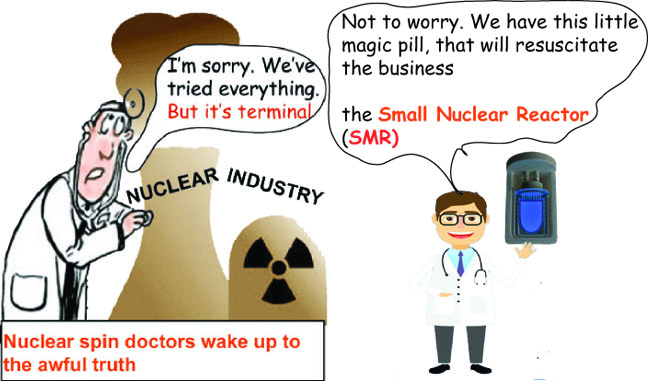
Ed note. This is a fine article, one that acknowledges the political moves in some countries towards reviving the nuclear industry , while at the same time recognises the strong opposition to this in other countries.
Still, it doesn’t address the folly of “new nukes” having the same old problems of costs, wastes, security needs. And above all – the MILITARY CONNECTION
And it doesn’t address the strange logic – that if big nuclear reactors are bad, that proves that little ones are good.
By Felicity Bradstock Editor OilPrice.com, Tue, 3 January 2023, https://au.finance.yahoo.com/news/future-remains-uncertain-nuclear-energy-170000104.html Several countries around the world appear to have suddenly welcomed nuclear power into the clean energy mix, particularly in response to global gas shortages and rising oil prices. But this apparent renaissance of nuclear energy is not being seen everywhere, with many countries remaining skeptical about the technology, unwilling to accept nuclear as the answer to the world’s energy problems. This divide, particularly seen in Europe, could have a major impact on the development of the nuclear power plant pipeline across the region, as some states reject plans for raising the EU’s nuclear energy capacity.
After decades of moving away from nuclear power, largely due to safety concerns following three world-renowned nuclear disasters, some major powers have put nuclear energy back on the agenda as they race to secure their energy security and transition away from fossil fuels. The U.S. and U.K. are two countries in which the governments are offering high levels of funding and political backing for new nuclear projects to support a green transition. In the U.S., the nuclear energy output has plateaued since the 1980s, providing around 19 percent of the country’s electricity at present. But a reconsideration of the safety risk involved with nuclear operations vis a vis the current climate situation has made the U.S. more open to new nuclear projects, with President Biden including funding for nuclear projects in his Inflation Reduction Act (IRA).
Meanwhile, in the U.K. the government purchased a 20 percent stake in the Sizewell C nuclear plant in Suffolk for $100 million in June. And EDF’s Hinkley Point C is expected to be up and running by 2027, at a cost of between $30 and $31.5 billion. Former Prime Minister Boris Johnson also outlined plans for the development of eight nuclear reactors by the end of the decade earlier this year.
Hungary is remaining strongly committed to a planned nuclear project with Russia. The Paks 2 project is set to be financed by Russia, with a $10.6 billion loan. It follows the Paks 1 nuclear power station, around an hour south of Budapest, that was constructed by the Soviet Union in the 1980s. With its lifecycle coming to an end in the 2030s, Prime Minister Viktor Orban signed a deal with Vladimir Putin in 2014 to construct two new 1,200 MW reactors next to the old ones. Ground-clearing work started in August after several years of delays. The plant was originally expected to come online in 2026, but this is becoming increasingly unlikely, especially due to the war in Ukraine. Finland has already abandoned a Russian-built nuclear plant on the Hanhikivi peninsula midway through its construction because of the war. And, unsurprisingly, several other European powers oppose Hungary’s close relations with Russia, encouraging Orban to cut ties with Putin.
While many are concerned about Hungary’s nuclear project because of Russia’s involvement, some other European countries are opposed to bringing new nuclear projects online altogether. Slovakia has announced plans to shift its reliance on nuclear energy in its plans for the Mochovce power plant. Built by the Soviet Union in the 1980s, a new nuclear reactor is currently being prepared to launch in 2023, offering 471 MW of power. If all goes as planned, it will cover 13 percent of Slovakia’s electricity needs, making the country self-sufficient. But neighboring Austria is staunchly opposed to the development due to the high costs involved – both in terms of money and radioactive waste. Austria also worries that Slovakia will rely on Russia for its uranium to run operations, with around one-fifth of the EU’s uranium coming from Russia. Public opinion on nuclear power is greatly divided, with 60 percent of Slovakians believing nuclear power is safe, while 70 percent of Austrians think the opposite.
At present, 13 of the EU’s 27 member states generate nuclear power, while several others are not ready to welcome nuclear to the energy mix despite the current energy crisis. While Germany has delayed the planned phasing out of its nuclear projects, and other European countries are bringing new nuclear reactors online, some believe there is no renaissance for nuclear power. Despite the Russia-Ukraine war creating a regional energy crisis, governments have generally taken little action to shift their existing policies on nuclear plans, suggesting that a move to nuclear may be exaggerated.
Nicolas Berghmans, an energy and climate expert at the France-based Institute for Sustainable Development and International Relations (IDDRI), explained “We’re not talking about a nuclear renaissance, as such… but maybe more of a change of tide.” He added, “A real nuclear renaissance would be if Europe decides to invest in more nuclear power plants.” Meanwhile, Said Mark Hibbs, from the Carnegie Endowment for International Peace, suggested “I don’t see a major watershed from what’s happening in Ukraine… Instead, the situation has reinforced some trends among countries already bought into nuclear energy, while slowing some opponents’ phase-outs of the technology.”
While some believe there is a renaissance of nuclear energy taking place, others are less certain. The recent energy crisis has drawn greater attention to nuclear power, with some major powers accelerating existing plans for nuclear plants or showing openness to diversifying their energy mix further through nuclear projects. However, the divide between those for and against nuclear power remains strong and will likely shape the development of many of these projects, as regional pressures could prevent many new reactors from coming online.
Tue, 3 January 2023
Countering nuclear industry propaganda by telling the facts – Joshua Frank’s book “Atomic Days”

That the world hasn’t been the same since the ignition of the Atomic Age in
the 1940s is certainly an understatement, yet the public’s awareness of how
the nuclear industry operates has always been dismally low. Secrecy has
played a part — especially in relation to bomb-making activities — but
so too has the establishment news media, which focuses on individual events
and sidelines institutional factors.
So an accident is news (if it’s not covered up), but not the regular practices or misguided motivations that
led to it, even though they were ultimately responsible. Also, stories
about nuclear power can be complicated to tell as they involve, first,
technical processes that are arcane to people outside the field, and
second, powerful corporate interests who don’t want them told, and who
confuse and confound the discourse with slick PR.
But raising public awareness of the facts around the nuclear industry is especially important
in this third decade of the 21st century when well-meaning people who are
seeking to reduce carbon emissions out of a legitimate concern for the
climate crisis are proposing to expand the use of nuclear power to replace
fossil fuels.
That this recommendation is no solution at all cannot be
overstated, yet it’s being peddled by respected people with public
platforms. Fortunately for advocates of common sense, Joshua Frank has
brought his investigative skills to bear on the nuclear industry with his
new book, Atomic Days: The Untold Story of the Most Toxic Place in America,
in which he takes a deep dive into the subject of Hanford, that is, of the
Hanford Nuclear Site, in eastern Washington state.
Counterpunch 30th Dec 2022
https://www.counterpunch.org/2022/12/30/the-cold-wars-radioactive-legacy/
South Korea asks US for greater role in managing nuclear weapons
AFR, Sangmi Cha, Jan 2, 2023,
Seoul | South Korean President Yoon Suk Yeol said his government was in talks with the US on taking a more active role in managing nuclear weapons on the Korean Peninsula, which would mark a significant shift in a decades-old policy among American allies to deter North Korea.
“While the nuclear weapons belong to the US, intel sharing, planning, and training should be done jointly,” Mr Yoon told South Korea’s Chosun Ilbo newspaper. “The US’ stance is quite positive,” he added, saying the policy should be conducted under the concept of “joint planning and joint exercise”.
He said the strategy of “nuclear umbrella”, or “extended deterrence”, was no longer reassuring for the public now that North Korea had developed nuclear weapons and a range of missiles to deliver them.
Since taking power last May, Mr Yoon has sought to put South Korea on a path of overwhelming military strength against North Korea, which has launched scores of missiles in defiance of United Nations resolutions and is preparing for another nuclear test………………………… more https://www.afr.com/world/asia/south-korea-asks-us-for-greater-role-in-managing-nuclear-weapons-20230102-p5c9wu
North Korea to have “exponential increase” in its nuclear arsenal
Kim Jong-un has vowed to ramp up the production of nuclear warheads and
build a more powerful intercontinental ballistic missile (ICBM), while
singling out South Korea as his country’s “undoubted enemy”, North
Korean state media reported on Sunday. In a sign of deepening animosity
towards the US, South Korea and Japan, Kim called for an “exponential
increase” in the regime’s nuclear arsenal during an address at a plenary
meeting of the ruling Workers’ party that ended on Saturday.
Guardian 1st Jan 2023
1 This Month




Shut down the radiation-damaged Heysham nuclear reactors now
To see nuclear-related stories in greater depth and intensity – go to https://nuclearinformation.wordpress.com

Say No to NASA’s Reckless Nuclear Reactor on the Moon
Say No to NASA’s Reckless Nuclear Reactor on the Moon
-
Archives
- October 2026 (302)
- September 2026 (339)
- August 2026 (330)
- July 2026 (355)
- June 2026 (287)
- May 2026 (306)
- April 2026 (356)
- March 2026 (251)
- February 2026 (267)
- January 2026 (308)
- December 2025 (358)
- November 2025 (359)
-
Categories
- 1
- 1 NUCLEAR ISSUES
- business and costs
- climate change
- culture and arts
- ENERGY
- environment
- health
- history
- indigenous issues
- Legal
- marketing of nuclear
- media
- opposition to nuclear
- PERSONAL STORIES
- politics
- politics international
- Religion and ethics
- safety
- secrets,lies and civil liberties
- spinbuster
- technology
- Uranium
- wastes
- weapons and war
- Women
- 2 WORLD
- ACTION
- AFRICA
- Atrocities
- AUSTRALIA
- Christina's notes
- Christina's themes
- culture and arts
- Events
- Fuk 2022
- Fuk 2023
- Fukushima 2017
- Fukushima 2018
- fukushima 2019
- Fukushima 2020
- Fukushima 2021
- general
- global warming
- Humour (God we need it)
- Nuclear
- RARE EARTHS
- Reference
- resources – print
- Resources -audiovicual
- Weekly Newsletter
- World
- World Nuclear
- YouTube
-
RSS
Entries RSS
Comments RSS

