As SMR developer X-energy moves to go public, merger partner Ares cautions investors about risks

Utility Dive Stephen Singer, Editor, Jan. 27, 2023
Dive Brief:
- The partner in a merger with a small modular nuclear reactor developer going public has cautioned investors that changing markets and a “limited operating history” may ultimately be unfavorable to the business.
Ares Acquisition Corp., a special purpose acquisition company, warned in an S-4 filing with the U.S. Securities and Exchange Commission Wednesday of “limited operating experience for reactors of this type, configuration and scale” that could lead to higher than expected construction costs, maintenance requirements, operating expenses or changes in the timing of delivery. X Energy Reactor Co. announced the merger in December.- The market for SMRs generating electric power and high-temperature heat is not yet established and “may not achieve the growth potential we expect or may grow more slowly than expected,” Ares said. It’s backed by private equity firm Ares Management Corp.
Dive Insight:
The S-4 filing, which provides a preliminary proxy statement and spells out details of the renamed X-Energy business and market risks, provides boilerplate cautions to investors who require transparency and discussion of as many potential risks as possible. It highlights challenges in a still-emerging industry. The U.S. Nuclear Regulatory Commission on Jan. 19 certified NuScale Power’s SMR design, the first of its type to win federal approval………………………………
Ares said the market for SMRs, and particularly for SMRs using advanced nuclear technologies such as those employed in the Xe-100 — an 80 MWe reactor that can be scaled into a ‘four-pack’ 320 MWe power plant — has not yet been established. SMRs using advanced nuclear technologies have not been proven at scale, it said……………………..
Ares also warned that it may not attract customers for its SMR technology — a “relatively new and unproven technology” — as quickly as it expects, “or at all,” and acquiring customers may be more expensive than it currently anticipates.
In addition, Ares said the time and funding needed to bring X-energy’s nuclear fuel, TRISO-X, to market at scale may “greatly exceed” expectations………………….
Critics of SMRs have raised issues nearly identical to what Ares cited, calling out the reactors over the projected cost and time needed for siting and other approvals.
“Small modular reactors may be viable one day, but they are not today, will not be tomorrow and may never make as much economic sense as renewable sources of electricity,” the Institute for Energy Economics and Financial Analysis says. “We should stick to carbon-free energy sources that make financial and environmental sense.”………. more https://www.utilitydive.com/news/ares-acquisition-x-energy-smr-sec-investor-warning/641337/
Can Talks with China about Nuclear Weapons Be Constructive?
January 26, 2023 Gregory Kulacki https://blog.ucsusa.org/gregory-kulacki/can-talks-with-china-about-nuclear-weapons-be-constructive/
Politico reported US Secretary of State Antony Blinken is “under pressure” to “raise administration concerns” about the size of China’s nuclear arsenal when he travels to Beijing in early February.
Constructive conversations on nuclear weapons policy are urgently needed. Both governments are upgrading their nuclear capabilities. Chinese military planners worry about US preparations to use nuclear weapons first to forestall defeat in a conventional war, as well as US efforts to undermine China’s ability to retaliate. US military planners are concerned about the construction of new Chinese missile silos, which will significantly increase the probability and magnitude of Chinese nuclear retaliation if the United States uses nuclear weapons first.
The nuclear aspect of what some US observers describe as a new Cold War with China is different than the US nuclear contest with the Soviet Union. It’s not about numbers. Chinese leaders don’t express interest in numerical parity. President Biden’s remarks on China’s nuclear weapons policy suggest he thinks they do. That’s unfortunate. If a desired outcome of Blinken’s visit is to start a dialogue on nuclear weapons, he will need to focus less on the numbers and more on why Chinese leaders built the silos.
What Chinese leaders want – what they have wanted since they decided to develop nuclear weapons in 1955 – is to be able to use conventional military force without undue concern the United States will use nuclear weapons to stop them. Being able to credibly threaten to use nuclear weapons to prevent or defeat Chinese conventional military initiatives has been a cornerstone of US defense policy in East Asia since the Korean War.
Chinese efforts to negate US first use threats are an important part of Chinese nuclear strategy. Chinese leaders believe if they can convince US decision-makers they will retaliate, then they can safely ignore US threats to use nuclear weapons first.
Chinese military planners have always been concerned their comparatively small nuclear force could tempt US decision makers to try to wipe it out at the beginning of a war. Continued US investment in ballistic missile defense creates additional doubt about US respect for China’s ability to retaliate.
The bulk of China’s current nuclear force consists of missiles launched from trucks. Recent technological advances increase the possibility the United States could destroy or disable those missiles with conventional munitions. Switching to silos makes that far less likely.
Current US projections of a large increase in the size of China’s nuclear force assume the new silos are an addition, not a replacement. They also assume everyone of those silos will contain a new missile and every one of those missiles will carry multiple warheads. But China does not need that many warheads to achieve its strategic objective. Even if the silos sit empty, US military planners must assume they’re not, and US decision-makers must assume China can retaliate if the United States uses nuclear weapons first.
If Secretary Blinken’s only objective is to talk about numbers, his Chinese interlocutor can tell China’s leaders their decision to build the silos was a strategic success. It is hard to see how that makes the United States or its Asian allies safer.
It would be wiser if Blinken said the United States no longer needs to threaten to use nuclear weapons first to keep the peace. Instead of handing Chinese leaders a strategic victory, he would convey a surprising US confidence in its conventional forces. That’s more likely to restrain Chinese leaders than what they continue to see as empty US threats to start a nuclear war; threats revolutionary leader Mao Zedong famously described as a “paper tiger.”
As paradoxical as it may seem to a US strategic culture obsessed with size, forgoing the option to use nuclear weapons first may be the best way to get Chinese leaders to respect the ability of the United States to defend its allies, and to begin a constructive conversation about nuclear weapons.
Kramatorsk radiological accident

The Kramatorsk radiological accident was a radiation accident that happened in Kramatorsk, in the Ukrainian SSR from 1980 to 1989. A small capsule containing highly radioactive caesium-137 was found inside the concrete wall of an apartment building, with a surface gamma radiation exposure dose rate of 1800 R/year.[1] The capsule was detected only after residents requested that the level of radiation in the apartment be measured by a health physicist.[1]
The capsule was originally part of a radiation level gauge and was lost in the Karansky quarry in the late 1970s. The search for the capsule was unsuccessful and ended after a week. The gravel from the quarry was used in construction.[2] The caesium capsule ended up in the concrete panel of apartment 85 of building 7 on Mariyi Pryimachenk Street (at the time under the Soviet name Gvardeytsiv Kantemirovtsiv), between apartments 85 and 52.[1]
Over nine years, two families lived in apartment 85.[1] A child’s bed was located directly next to the wall containing the capsule.[1] The apartment was fully settled in 1980. A year later, an 18-year-old woman who lived there suddenly died. In 1982, her 16-year-old brother followed, and then their mother. Even after that the flat did not attract much public attention, despite the fact that the residents all died from leukemia. Doctors were unable to determine root-cause of illness and explained the diagnosis by poor heredity. A new family moved into the apartment, and their son died from leukemia as well. His father managed to start a detailed investigation, during which the vial was found in the wall in 1989.
By the time the capsule was discovered, four residents of the building had died from it and 17 more had received varying doses of radiation.[2] Part of the wall was removed and sent to the Institute for Nuclear Research, where the caesium capsule was removed, identified by serial number and disposed of.[1]
Appeals Court Tosses Suit from Environmentalists, Midland Oil Company Contesting Nuclear Waste Storage Permit
Various suits against the NRC and the storage site linger in courts across the country.
The Texan BRAD JOHNSON 27 Jan 23
The D.C. Circuit Court of Appeals tossed a challenge from anti-nuclear organization Beyond Nuclear, environmental groups the Sierra Club and Don’t Waste Michigan, and a Midland-based oil company against the approval of a spent nuclear fuel interim storage permit for a facility in West Texas.
In September 2021, the Nuclear Regulatory Commission (NRC) approved a permit application for the storage of spent nuclear fuel at an Andrews County facility. Interim Storage Partners is jointly owned by Orano USA and Waste Control Specialists — the latter of which has operated a storage facility for low-level radioactive waste at the site for more than a decade.
During the second special session of 2021, Gov. Greg Abbott and the Texas Legislature abruptly passed legislation banning the storage of high-level radioactive waste, including spent nuclear fuel, in response to the NRC. That led to the state suing the NRC over the permit, a case still pending in court.
But the permit approval also sparked other lawsuits from a collection of activists, interest groups, and Fasken Oil & Ranch, the Midland company, consolidated into one proceeding.
On Wednesday, the court dismissed the group’s various claims and tossed the suit; Beyond Nuclear contended that the NRC acted “arbitrarily and capriciously,” the environmental groups alleged the agency “ignor[ed] deficiencies in the project’s environmental impact statement,” and Fasken asserted that it was wrongfully denied the ability to insert into the record its arguments against issuance of the permit by the NRC.
Kevin Kamps, a spokesman for Beyond Nuclear, told The Texan, “We are certainly disappointed and unfortunately the ruling focuses on a procedural technicality.” Kamps said that there is a similar permit and suit in development in New Mexico for a planned interim storage site there. He’s also optimistic that a ruling in the State of Texas’ suit will help their case here, potentially creating contradicting court decisions.
He added that “we’re not going anywhere” and hopes that courts will consider whether the NRC even has the authority from Congress to grant these permits — which he argues the agency doesn’t…………………. more https://thetexan.news/appeals-court-tosses-suit-from-environmentalists-midland-oil-company-contesting-nuclear-waste-storage-permit/
Japan’s Plan To Discharge Water From Fukushima Nuclear Plant Faces Pacific Opposition
By BenarNews, By Stephen Wright
Officials from Pacific island nations will meet Japan’s prime minister in March in an effort to halt the planned release of water from the tsunami-damaged Fukushima Daiichi nuclear plant into the Pacific Ocean, a regional leader said.
Plans to dispose of Fukushima water over four decades are a source of tension between Japan and Pacific island nations and a possible complication for the efforts of the United States and its allies to show a renewed commitment to the Pacific region as China’s influence grows.
The planned discharges “are a very serious issue that our leaders have accepted must be stopped at all costs,” Henry Puna, secretary-general of the 18-nation Pacific Islands Forum, said Thursday at a press conference in the Solomon Islands capital Honiara.
The Japanese government’s timetable for disposal of Fukushima water indicates that releases could begin as soon as April this year – part of an effort to decommission the stricken power station over several decades. Water contaminated by the nuclear reactors damaged in a 2011 tsunami is stored in dozens of large tanks at the coastal Fukushima plant.
Japan’s method involves putting the contaminated water through a purification process known as the Advanced Liquid Processing System, which it says will reduce all radioactive elements except tritium to below regulatory levels. The treated water would then be diluted by more than 100 times to reduce the level of tritium – radioactive hydrogen used to create glow-in-the-dark lighting and signs……………………………
Data doubts
Five scientists working with the Pacific Islands Forum last week criticized the quality of data they had received from Tokyo Electric on the treated water in the tanks and expressed doubts about how well the purification process works.
Over more than four years, only a quarter of tanks had been tested for radiation, and testing rarely covered more than nine types of radiation out of 64 types that should be tested for, said the five scientists, who include Woods Hole Oceanographic Institution’s senior scientist Ken Buesseler.
“The accident is not over; this is not normal operations for a reactor. Therefore, extraordinary efforts should be made to prove operations are safe and will not cause harm to the environment,” the scientists’ presentation said.
The Pacific Islands Forum has described the scientists as independent nuclear experts. The forum’s secretariat didn’t respond to a question about whether the scientists are compensated for their work with the forum.
Nigel Marks, a materials scientist at Australia’s Curtin University and former nuclear reactor engineer, who is not advising the forum, said he is sympathetic to concerns that Tokyo Electric’s data could be more complete.
“But at the same time some recognition for Japan’s unique situation must be acknowledged,” he said. “The authorities have done their very best that technology allows. Eventually they reach a point where there is too much water to store.”
Puna said the Pacific islands delegation would meet with Japanese Prime Minister Fumio Kishida around March 7. They want a delay in water releases, at the very least, while more research is carried out, he said.
“There are serious gaps in the scientific evidence on the safety or otherwise of the proposed release,” Puna said. “I am pleased that the Japanese prime minister has finally agreed to meet with a high-level delegation from our region.”
Decades of Fukushima water discharges, Puna said, could “damage our livelihoods, our fisheries livelihoods, our livelihood as people who are dependent very much and connected to the ocean in our culture and identity.”
Mihai Sora, a Pacific analyst at Australia’s Lowy Institute, said it’s hard to imagine a more alarming proposition for Pacific island nations given the “toxic legacy” of nuclear weapons testing and waste dumping in the Pacific.
The timing, amidst regional geopolitical competition that has traditional powers falling over themselves to demonstrate who’s a better partner to the Pacific, could scarcely be worse,” Sora said.
The United States, United Kingdom and France carried out more than 300 nuclear detonations in the Pacific from 1946 to 1966, according to the International Disarmament Institute at Pace University in New York, which exposed thousands of military personnel and civilians to radiation and made some atolls uninhabitable.
“Decades of hard-won regional goodwill towards Japanese Pacific engagement are at risk with this single policy initiative,” Sora said……………….
Japan’s embassy in Suva, Fiji didn’t respond to a request for comment. https://www.eurasiareview.com/28012023-japans-plan-to-discharge-water-from-fukushima-nuclear-plant-faces-pacific-opposition/
The WHO is urging countries to start stockpiling medicines for ‘nuclear emergencies’ after the EU’s latest warning on Ukraine war.
Fortune, BYORIANNA ROSA ROYLE, January 28, 2023
The World Health Organization (WHO) has issued guidance on how to survive a nuclear catastrophe, just hours after the EU warned that Russia “is at war with the West”.
Included in the guidance is a list of medicines that nations should stockpile for “radiological or nuclear emergencies”.
The global health body also shared how the stockpiles which could “prevent or reduce exposure to radiation” should be handled.
Dr Maria Neira, WHO’s acting assistant director-general warned that governments need to make treatments for radiation and nuclear exposure available quickly.
“It is essential that governments are prepared to protect the health of populations and respond immediately to emergencies,” she added.
Potential scenarios considered in the publication include radiological or nuclear emergencies at nuclear power plants, as well as intentional uses of radioactive materials with malicious intent.
These emergencies could result in exposure to deadly radiation doses, yet many countries are underprepared, according to the document.
It stressed: “It is therefore extremely important that governments respond rapidly to such threats.”……………….. https://fortune.com/2023/01/27/how-to-survive-nuclear-catastrophe-who-medicine-stockpile-warning/
Donald Trump warns of NUCLEAR WAR as Joe Biden sends 31 tanks to Ukraine

omigawd! It’s a weird world when we find Donald Trump saying something sensible!
Former president Donald Trump has hit out at Joe Biden’s decision to send 31 M1 Abrams tanks to Ukraine ahead of a fresh Russian attack as he admitted they could lead to a nuclear war
Mirror, By Liam BucklerNews Reporter, 27 Jan 2023
Donald Trump has warned of a nuclear war as President Biden prepares to send 31 battle tanks to Ukraine in the war against Russia.
Biden’s administration confirmed on Wednesday it would be sending 31 M1 Abrams tanks to Ukraine after President Volodymyr Zelensky’s demand for more heavy armour.
The US are also providing 500 armoured vehicles as part of the help to Ukraine in addition to the $26 billion already committed to Kyiv since Russia’s invasion nearly a year ago.
But in a post to Truth Social, the former president believes sending the thanks could lead to a possible nuclear war.
Donald Trump wrote on Thursday: “‘FIRST COME THE TANKS, THEN COME THE NUKES. Get this crazy war ended, NOW. So easy to do!”
President Zelensky made a visit to the US in December to personally plead for more tanks and weapons as he believed Ukraine were struggling to make inroads with their Soviet-era T-72 tanks.
It comes after Germany confirmed they would send 14 Leopard 2 tanks to Kyiv. Berlin’s decision to send 14 of the world’s most deadly tanks to Ukraine means other western countries can follow suit with their own Leopard 2s.
Germany had been trying to persuade the US to send tanks to Ukraine but top officials in Biden’s administration were wary of the move as they require extensive training.
However, Biden has since u-turned after he originally said last March: “‘The idea that we’re going to send in offensive equipment and have planes and tanks and trains going in with American pilots and American crews, just understand … that’s called World War III, okay?
“Let’s get it straight here, guys. We will not fight the third world war in Ukraine.”
His remarks were similar to Donald Trump who believes giving tanks to Ukraine will be followed by “nukes.”
However, Mr Biden told reporters the tanks will “enhance Ukraine’s capacity to defend its territory and achieve its strategic objectives.”
The tanks heading to Ukraine are set to “take time” as they are “extremely, extremely complex to operate and maintain.”…………….. https://www.mirror.co.uk/news/us-news/donald-trump-warns-nuclear-war-29063832
Nuclear strike chief seeks cancer review of launch officers
Midland Daily News. TARA COPP, Associated Press, Jan. 27, 2023
WASHINGTON (AP) — The top Air Force general in charge of the nation’s air- and ground-launched nuclear missiles has requested an official investigation into the number of officers who are reporting blood cancer diagnoses after serving at Malmstrom Air Force Base in Montana.
The illnesses became publicly known this week after The Associated Press obtained a military brief that at least nine missileers — those officers serving in underground bunkers near silo-based Minuteman III intercontinental ballistic missiles and responsible for turning launch keys if ordered — were reporting diagnoses of non-Hodgkin lymphoma. One of the officers has died.
Gen. Thomas A. Bussiere, commander of Air Force Global Strike Command, which is responsible for all of the silo-based and aircraft-launched nuclear warheads, said in a statement to the AP Friday that he has requested that the U.S. Air Force School of Aerospace Medicine conduct a formal assessment into the reported cancers.
It was not immediately clear if that assessment would be limited to Malmstrom, or if it would include similar nuclear missile facilities at Minot Air Force Base in North Dakota and F.E. Warren Air Force Base in Wyoming.
“Air Force Global Strike Command and our Air Force takes the responsibility to protect airmen and Guardians incredibly seriously, and their safety and health is always my top priority,” Bussiere said. “While we continue to work through this process, service members and their dependents as well as former service members who may have concerns or have questions are encouraged to speak with their healthcare providers.”…………..
Over the last week, more missileers who served at Malmstrom or their families have reached out to the AP to share their experiences with diagnoses of blood cancer and other types of cancer……………………..
nly about 3,300 troops are based at Malmstrom at a time, and only about 400 of those are assigned either as missileers or as support for those operators. The three bases control a total of 400 siloed Minuteman III ICBMs. https://www.ourmidland.com/news/article/nuclear-strike-chief-seeks-cancer-review-of-17747375.php
Zelenskyy demands more sanctions, as Ukraine reels from Russian bombardment; explosions heard near nuclear power plant
https://www.cnbc.com/2023/01/27/russia-ukraine-live-updates.html Ukraine is reeling from the most recent wave of Russian drone and missile strikes Thursday that killed at least 11 people and triggered emergency power outages in 10 regions of the country.
President Volodymyr Zelenskyy called for more sanctions on Russia in his nightly video address, and for a tribunal to address Russian war crimes.
The attacks came a day after Ukraine’s Western allies pledged to send the country battle tanks, opening up a new front in the types of weapons they are willing to provide in the fight against Russian forces.
US sweetens pot to study siting for spent nuclear fuel
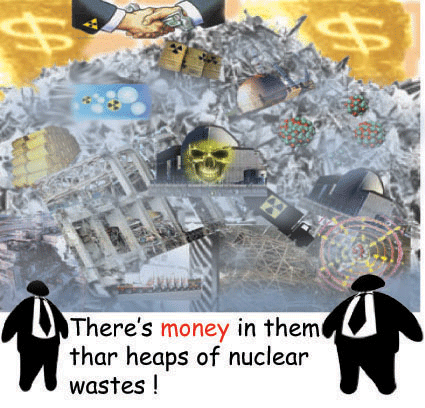
https://journalrecord.com/2023/01/27/us-sweetens-pot-to-study-siting-for-spent-nuclear-fuel/ By: Associated Press January 27, 2023
ALBUQUERQUE, N.M. (AP) — The U.S. government has long struggled to find a permanent solution for storing or disposing of spent nuclear fuel from commercial nuclear power plants, and opposition to such a site is flaring up again as New Mexico lawmakers debate banning a facility without state consent.
The state’s prospective ban cleared its first legislative hurdle Tuesday with approval from a key committee. Supporters acknowledge that the bill has a long road ahead, but it does have the backing of Democratic Gov. Michelle Lujan Grisham.
State Sen. Jeff Steinborn, the bill’s sponsor, said momentum against New Mexico becoming a permanent dumping ground for the nation’s nuclear waste – including spent fuel from commercial power plants – is growing and he’s cautiously optimistic this is the year that the state takes a legislative stand.
Stenborn said consent should be mandatory and that the federal government should provide states with a significant financial incentive reflecting the risks associated with managing radioactive materials.
New Mexico and neighboring Texas have sued in federal court over two proposed multibillion-dollar interim storage facilities – one in southeastern New Mexico and the other in Andrews County, Texas.
“New Mexico has not been offered anything with this deal,” Steinborn said. “And even if we had, I don’t think any amount of money would convince me that it’s the right thing.”
The U.S. Nuclear Regulatory Commission approved a license for a facility in West Texas in 2021, and the agency plans to make a final decision as early as March on whether to grant a license for the planned storage complex in New Mexico. The two sites would be about 40 miles apart.
Environmental and nuclear watchdog groups have filed their own lawsuits, but a three-judge panel of the U.S. Court of Appeals for the District of Columbia dismissed all objections opposing the Texas project.
Federal appellate courts elsewhere have yet to rule on the state of Texas’ claims, which focus on whether federal nuclear regulators have authority to license such a facility, or on New Mexico’s claims that regulators did not do enough to vet plans by Holtec International.
The New Jersey-based company is seeking a 40-year license to build what it has described as a state-of-the-art complex near Carlsbad, which already is home to the federal government’s only underground repository for Cold War-era waste generated by decades of nuclear research and bomb-making.
From the decommissioned nuclear plant near the San Onofre Beach in Southern California to plants that have powered communities on the East Coast, spent fuel has been piling up for decades and elected officials in those communities want it shipped elsewhere.
The Biden administration sweetened the pot this month, putting up $26 million for communities interested in studying potential interim storage sites. Biden and his top energy officials have pointed to nuclear power as essential to achieving their goals of producing carbon-free electricity over the next decade.
According to the DOE, nuclear reactors across the country produce more than 2,000 metric tons of radioactive waste a year, with most of it remaining on-site because there’s nowhere else to put it. The federal government is paying to house the fuel, and the cost is expected to stretch into the tens of billions over the next decade, according to a review by independent government auditors.
Nuclear-powered rockets to Mars – there are serious safety risks.

No one wants to see nuclear debris raining down on the Florida coast or Disneyland, and that’s not the only possible scenario.
An accident in orbit could potentially drop radioactive material into the atmosphere.
Nuclear powered rockets could take us to Mars, but will the public accept them?
Bob McDonald’s blog: NASA and DARPA are beginning development of a new fission rocket, Bob McDonald · CBC Radio · Jan 27, 2023
NASA has signed an agreement with the U.S. Defense Advanced Research Projects Agency (DARPA) to develop a nuclear rocket that could shorten travel time to Mars by about one quarter compared to traditional chemical rockets. But before nuclear technology is launched into space, there are risks that need to be addressed to ensure public safety…………………….
While the technology of nuclear propulsion is certainly feasible, it may not be readily embraced by the public. The accidents at Chernobyl, Three Mile Island and Fukushima have left many people skeptical about nuclear safety. And there will be risk.
A nuclear rocket wouldn’t be used to launch a spacecraft from the Earth’s surface — it would be designed to run in space only. It would have to launch into orbit on a large chemical rocket — so the public would have to accept the risk of launching a nuclear reactor on a standard rocket filled with explosive fuel.
And rockets have and will malfunction catastrophically, in what with black humour rocket scientists sometimes call RUD — “rapid unscheduled disassembly.”
No one wants to see nuclear debris raining down on the Florida coast or Disneyland, and that’s not the only possible scenario. An accident in orbit could potentially drop radioactive material into the atmosphere.
Nuclear technology in another form has been used since the very beginning of the space program, just not for propulsion. Radioisotope Thermoelectric Generators (RTGs) have provided power to deep space probes for instruments, radios and cameras on a range of missions…………………….
The U.S. has seen several accidents, including one in 1968 when a launch failure of a Nimbus-1 weather satellite threw its RTG into the ocean. It was recovered intact and the fuel was reused on a later mission.
But there have been more serious accidents. Canadians may remember an incident from 1978, when a Soviet reconnaissance satellite scattered 50 kg of uranium from its nuclear thermal generator over 124,000 square kilometres of Canada’s North.
But a fission reactor is a much more complicated device involving higher temperatures, coolants and more nuclear fuel.
……………………. the engineers face a challenge to ensure that all checks and balances have been made to reassure the astronauts who will fly these machines — and people on the ground — that they can be operated safely before the technology is adopted. https://www.cbc.ca/radio/quirks/nuclear-powered-rockets-could-take-us-to-mars-but-will-the-public-accept-them-1.6727217
Rolls Royce wants to make sure that the tax-payer cops the cost of their small nuclear reactor folly

Rolls-Royce calls on government for more clarity on nuclear. https://www.energylivenews.com/2023/01/26/rolls-royce-calls-on-government-for-more-clarity-on-nuclear/
Executives of the engineering giant have cited Britishvolt as an example of a company which committed to a factory without having orders.
Dimitris Mavrokefalidis
Rolls-Royce has urged the government to provide more clear vision of its target to roll out 24GW of nuclear power generation by 2050.
During a session at the House of Commons Welsh Affairs Committee, asked when Rolls-Royce will start the process of building its first Small Modular Reactor factory, Alastair Evans, Director of Corporate and Government Affairs at Rolls-Royce SMR, said: “If you look at the Britishvolt example, that is an example of a company that committed to a factory without orders. We don’t have clarity on orders in the UK.
“So, as soon as we have that clarity that the UK Government wants to deploy Rolls-Royce SMRs, we will be able to get the first factory moving, but our shareholders need that clarity. Britishvolt is a very good example of where you try and run a business and build a factory and get things moving without that certainty, orders and customers.”
A few days ago, company representatives visited the first four sites which have the potential to host 15GW of new nuclear power capacity.
Mr Evans confirmed that once Rolls-Royce receives the green light from the government, then the whole process around the development of its first SMR facility will accelerate.
He said: “That was the purpose of doing our planning processes, getting the selection of our heavy pressure vessel sites – we’ve got 600 people in the Rolls-Royce SMR business today. So we are set up to deliver at pace. We are 600 UK-based workers looking at manufacturing, assembly, lead skills, and module concept. We are ready to go.”
Campaigners fear changes at Hinkley Point C ‘could kill millions of fish every day’
By Burnham-On-Sea.com, January 27, 2023
Campaigners fear millions of fish could be killed every day by the Hinkley Point C nuclear power station near Burnham-On-Sea if owner EDF is allowed to back out of a planning condition.
The Stop Hinkley anti-nuclear group has said this week that EDF Energy had refused to fit acoustic fish deterrents on its two off-shore massive cooling water intake heads.
Stop Hinkley spokeswoman Katy Attwater said EDF now looked to be pressuring the Environment Agency to drop the planning condition which required the acoustic fish deterrent measures.
It comes as the Environment Agency launches a four-week consultation on whether the Hinkley C site’s operational water discharge activity permit should be varied.
Stop Hinkley Spokesperson Katy Attwater adds: “It looks to us very much like the Environment Agency is being forced to make a decision which conservation groups fear will result in the death of millions of fish every day.”
“The Severn Estuary supports some of the most important and protected habitats in the UK, EDF appears to be absolutely determined not to spend the money to install AFD’s and is pressurising the Agency into backing down.”
“This change would be disastrous for the Severn estuary and all the fish species it supports, to breed and travel into its tributaries, nine of the greatest rivers of England and Wales.”
However, Chris Fayers, Head of Environment for Hinkley Point C, told Burnham-On-Sea.com: “EDF has decades of experience and data gained from taking cooling water from the Bristol Channel, which shows the activity has an insignificant impact on protected species………… https://www.burnham-on-sea.com/news/campaigners-fear-changes-at-hinkley-point-c-could-kill-millions-of-fish-every-day/
A clear signal to the US leadership that there will be no survivors in any nuclear exchange between the US and Russia
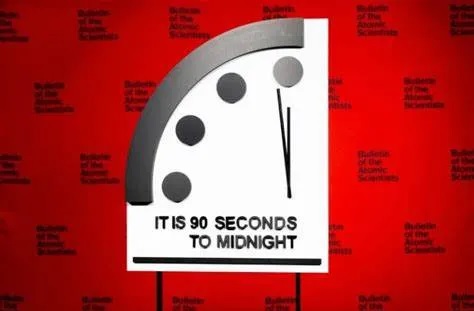
90 Seconds to Midnight? https://www.scottritterextra.com/p/90-seconds-to-midnig Scott Ritter, Jan 25
A clear signal to the US leadership that there will be no survivors in any nuclear exchange between the US and Russia
A quick history lesson for the Bulletin of Atomic Scientists:
- It was the US, not Russia, that withdrew from the Anti-Ballistic Missile and Intermediate Nuclear Forces treaties.
- It is the US, not Russia, that has frozen talks on the extension of the New Strategic Arms Treaty.
- It is the US, not Russia, that has recently promulgated a nuclear posture policy which allows for the preemptive use of nuclear weapons in a non-nuclear scenario.
- It is the US, not Russia, that has deployed a low-yield (i.e., “usable) nuclear warhead (the W-76-2) on Trident submarine launched ballistic missiles, and conducted war games where the Secretary of Defense has practiced the communications procedures necessary to launch this weapon where Russia was the named target of the missile.
- It is the US, not Russia, that is building a Ukrainian proxy army designed by intent to be able to capture territory Russia claims as its own (the four former Ukrainian provinces annexed by Russia in September 2022, and Crimea), knowing full well that one of the triggers for release of Russian nuclear weapons is any conventional military force that threatens the existential survival of Russia.
https://www.scottritterextra.com/p/90-seconds-to-midnig Scott Ritter, Jan 25
The Russian guided missile frigate, the Admiral Gorshkov, is in the middle of the Atlantic Ocean, ostensibly heading toward the east coast of the United States, part of a planned journey which began on 4 January 2023 and is expected to transit the Atlantic and Indian Oceans, as well as the Mediterranean Sea. The Admiral Gorshkov is outfitted with 16 vertical launch tubes, each of which, in theory, could be armed with nuclear-capable Zircon hypersonic missiles capable of covering 1,000 kilometers in less than 10 minutes.
To put it bluntly, soon Russia will be in a position where a single ship could, in a matter of minutes, fire 16 nuclear armed hypersonic missiles at the United States which not only cannot be intercepted by anything in the US arsenal, but also would impact their respective targets before any meaningful evacuation could be conducted. It is, literally, a decapitation weapon.
Current Russian nuclear doctrine does not allow for a nuclear first strike; indeed, Russian President Vladimir Putin has made it clear that Russia would not be the first nation to use nuclear weapons in any future nuclear conflict. But he also emphasized that Russia would not be the second, either, meaning that Russia would release its nuclear arsenal without waiting for any US first strike to impact Russian soil.
The Admiral Gorshkov is sending a clear signal to the US leadership that there will be no survivors in any nuclear exchange between the US and Russia.
Amid this muscle flexing, the Science and Security Board of the Bulletin of the Atomic Scientists, a disarmament advocacy group founded in 1945 by Albert Einstein and University of Chicago scientists who helped develop the first atomic weapons in the Manhattan Project, and which currently maintains what is known as the “Doomsday Clock” that reflects the risk of nuclear conflict, decided to move the hands of the clock ten seconds forward from the current 100 seconds to midnight. In a statement announcing this decision, “A time of unprecedented danger: It is 90 seconds to midnight,” the board declared the following:
“The war in Ukraine may enter a second horrifying year, with both sides convinced they can win. Ukraine’s sovereignty and broader European security arrangements that have largely held since the end of World War II are at stake. Also, Russia’s war on Ukraine has raised profound questions about how states interact, eroding norms of international conduct that underpin successful responses to a variety of global risks.
“And worst of all, Russia’s thinly veiled threats to use nuclear weapons remind the world that escalation of the conflict—by accident, intention, or miscalculation—is a terrible risk. The possibility that the conflict could spin out of anyone’s control remains high.”
The ignorance of this statement is manifest. What the Board calls “Russia’s war on Ukraine” ignores the fact-based historical truth that the Ukraine conflict was, and is, solely the byproduct of a concerted plan by the United States and NATO to use Ukraine as a foil to generate conflict designed to bring down the government of Russian President Vladimir Putin.
This plan has been in place since at least 2008, when the former US Ambassador to Russia (and current Director of the CIA), William Burns, warned that any effort by NATO to bring Ukraine into its ranks would precipitate an eventual Russian military intervention. Despite this stark warning, NATO extended an invitation to Ukraine in November 2008, clearly initiating a known cause-effect relationship that defined NATO’s policy toward Russia as being one which sought a proxy conflict using Ukraine as a stand-in for NATO.
This policy as furthered by the US, EU and NATO all acting in concert to precipitate a coup in Ukraine in February 2014 designed to oust the constitutionally elected president, Victor Yanukovych, and replace him with a new, ultra-nationalist government dominated by adherents of the odious ideology of Stepan Bandera. The coup succeeded, and in April the new Ukrainian government declared war on the ethnic Russian population of the Donbas. This action triggered the Russian annexation of Crimea and the provision of military support by Russia to the Donbas, triggering the very military intervention William Burns had warned about six years prior.
Ukraine and its NATO allies then sued for peace, initiating negotiations that led to the adoption of the Minsk Agreement, which put in place a ceasefire in exchange for guarantees regarding Ukrainian sovereignty over the Donbas as well as relative autonomy for the ethnic Russians of the Donbas, protecting their language, religion, culture, and traditions.
The Minsk Accords floundered for eight years, with Ukraine failing to implement the required constitutional changes necessary to secure the rights of the ethnic Russians of the Donbas. The reasons for this delay are today well known, thanks to the public confessions of former Ukrainian President Petro Poroshenko, former German Chancellor Angela Merkel, and former French President Francois Hollande, all three signatories to the accords. These three national leaders have acknowledged that the Minsk Accords were simply a sham designed by Ukraine to buy time to build a NATO proxy military capable of reclaiming both the Donbas and Crimea.
Russia’s decision to invade Ukraine on February 24, 2022 was not an unprovoked act of aggression, but rather a legitimate exercise of its right, together with the newly independent republics of Lugansk and Donetsk, of preemptive collective self-defense in the face of the imminent threat of aggression by Ukraine’s newly trained army which was, by design, little more than a NATO proxy.
The fact that the esteemed members of the Bulletin of Atomic Scientists – which includes among its ranks ten Nobel laureates – seem ignorant of this history, colors their ability to comprehend the true nature of the threat facing the world today, and from whence that threat comes.
The United States, having deliberately provoked a pre-meditated conflict with Russia, is now trying to implement a two-tracked policy designed to trigger a Maidan-like moment in Moscow (named after Maidan Square, in Kiev, where US-backed neo-Nazi’s staged a violent coup against former Ukrainian President Victor Yanukovych) where the Russian population would rise up against the government of President Vadimir Putin, overthrowing him and installing a pro-western leader who would return Russia to the colonial-like existence of the 1990’s, when Boris Yeltsin allowed the collective west to rape Russia economically and dominate Russia politically.
The two-tracks of this policy involve the imposition of economic sanctions linked to Russia’s decision to militarily intervene in Ukraine, and the prosecution of a proxy conflict in Ukraine designed to bleed Russia white. The goal of this policy is to engender massive unrest among a demoralized Russian population which would in turn rise and remove President Putin from power.
The insanity of such a plan is incomprehensible. Imagine for a moment that Russia embarked on a plan of action designed to strip away Mexico from the US sphere of influence and, in doing so, promulgated a conflict the goal of which was to have Mexico re-take by force the territory encompassing the states of California, Arizona, New Mexico, and Texas. The idea that the United States would sit idly in the face of such a threat is ludicrous. So, too, is any concept that Russia should do the same.
A quick history lesson for the Bulletin of Atomic Scientists:
- It was the US, not Russia, that withdrew from the Anti-Ballistic Missile and Intermediate Nuclear Forces treaties.
- It is the US, not Russia, that has frozen talks on the extension of the New Strategic Arms Treaty.
- It is the US, not Russia, that has recently promulgated a nuclear posture policy which allows for the preemptive use of nuclear weapons in a non-nuclear scenario.
- It is the US, not Russia, that has deployed a low-yield (i.e., “usable) nuclear warhead (the W-76-2) on Trident submarine launched ballistic missiles, and conducted war games where the Secretary of Defense has practiced the communications procedures necessary to launch this weapon where Russia was the named target of the missile.
- It is the US, not Russia, that is building a Ukrainian proxy army designed by intent to be able to capture territory Russia claims as its own (the four former Ukrainian provinces annexed by Russia in September 2022, and Crimea), knowing full well that one of the triggers for release of Russian nuclear weapons is any conventional military force that threatens the existential survival of Russia.
Forgetting World War II, Germany joins in the frenzy of hostility to Russia
SCOTT RITTER: The Nightmare of NATO Equipment Being Sent to Ukraine

In a turn of events which must have Vasily Chuikov and the Soviet heroes to whom the Tiergarten war memorial was dedicated turning in their graves, the forces of fascism have once again reared their odious heads, this time manifested in a Ukrainian government motivated by the neo-Nazi ultra-nationalistic ideology of Stepan Bandera and his ilk.
The West’s recent approval of more military assistance for Kiev risks nuclear nightmare, fails Ukrainian expectations and rebukes the World War II history enshrined in a prominent Soviet war memorial in Berlin.
On Tuesday the White House decided that it would send about 30 M1 Abrams tanks to Ukraine, which was seen as political cover for Germany, which decided to ship 14 Leopard 2 tanks to Kiev.
By Scott Ritter, Consortium News 24 Jan 23
Early on the morning of May 2, 1945, General Vasily Chuikov, the commander of the Soviet 8thGuards Army, accepted the surrender of the German garrison of Berlin.
Two days prior, soldiers from the 150th Rifle Division, part of the Soviet 5th Shock Army, had raised the victory banner of the Red Army over the Reichstag. An hour after the banner went up, Adolf Hitler and his mistress, Eva Braun, committed suicide in his study inside the Furhrerbunker.
Chuikov, the hero of Stalingrad whose battered 62nd Army was renamed the 8th Guards Army in honor of their victory in holding that city in the face of a massive German onslaught, had led his troops into the heart of the Nazi capital, battling stubborn Nazi resistance in the Tiergarten district of Berlin, where the den of the Nazi beast was located. The Soviet general was rewarded for the courage and sacrifice of his soldiers by being in position to accept the German surrender.
In honor of this accomplishment, and the sacrifice it entailed, the Soviet Army inaugurated, in November 1945, a commemorative monument along the Tiergarten. Constructed from red marble and granite stripped away from the ruins of Adolf Hitler’s Neue Reichskanzlei (New Imperial Chancellery), the monument, consisting of a concave colonnade of six joined axes flanked by Red Army artillery and a pair of T-34 tanks, with a giant bronze statue of a victorious Red Army soldier standing watch from the center pylon.
From 1945 until 1993, when the Russian Army withdrew from Berlin, Soviet guards stood guard over the monument. Since that time, the monument has been maintained according to the terms of the German Reunification Treaty of 1990, which brought West and East Germany together in the aftermath of the fall of the Berlin Wall.
Carved into the granite of the monument, in Cyrillic letters, is an inscription that reads “Eternal glory to the heroes who fell in battle with the German fascist occupiers for the freedom and independence of the Soviet Union.”
In a turn of events which must have Vasily Chuikov and the Soviet heroes to whom the Tiergarten war memorial was dedicated turning in their graves, the forces of fascism have once again reared their odious heads, this time manifested in a Ukrainian government motivated by the neo-Nazi ultra-nationalistic ideology of Stepan Bandera and his ilk.
Bandera and his murderous movement had been physically defeated by Soviet forces in the decade following the end of the Second World War. However, its ideology survived in a western Ukrainian diaspora formed from the survivors of that movement who found safe haven in West Germany (where Bandera himself settled until assassinated by the Soviet KGB in 1959); Canada (where Chrystia Freeland, the granddaughter of a former publisher of pro-Bandera propaganda, currently serves as deputy prime minister), and the United States (where the followers of Stepan Bandera have constructed a “heroes park” outside Ellenville, New York, including a bust of Bandera and other neo-Nazi Ukrainian ultra-nationalists.)
The ideology also survived in the shadows of the western Ukrainian districts that had been absorbed by the Soviet Union following the dismemberment of Poland in 1939, and later, after the reoccupation of these territories by Soviet forces in 1945.
CIA-Funded Political Underground
Here, beginning in 1956, (following the de-Stalinization policies instituted by Soviet Premier Nikita Khrushchev in the aftermath of his “secret speech” to members of the Communist Party), thousands of members of the Ukrainian Insurgent Army (UPA)/Organization of Ukrainian Nationalists-Bandera (OUN-B), who had been arrested and convicted by Soviet authorities, were released from the Gulag and returned to their homes, ostensibly to be reintegrated into Soviet society. This reintegration never materialized, however.
Instead, Ukrainian fascists, funded by the C.I.A., operated as a political underground, running sabotage operations and fomenting anti-Soviet/anti-Russian ideology amongst a population where the precepts of Ukrainian nationalist ideology ran strong.
[Related: JOE LAURIA: On the Influence of Neo-Nazism in Ukraine]
Following the collapse of the Soviet Union, at the end of 1991, these Ukrainian nationalists emerged from the shadows and began organizing into political parties backed by gangs of violence-prone extremists who promulgated, through physical intimidation, a cult of personality built around the person of Stepan Bandera………………………………………………………………………… more https://consortiumnews.com/2023/01/24/scott-ritter-the-nightmare-of-nato-equipment-being-sent-to-ukraine/
1 This Month




Shut down the radiation-damaged Heysham nuclear reactors now
To see nuclear-related stories in greater depth and intensity – go to https://nuclearinformation.wordpress.com

Say No to NASA’s Reckless Nuclear Reactor on the Moon
Say No to NASA’s Reckless Nuclear Reactor on the Moon
-
Archives
- October 2026 (279)
- September 2026 (339)
- August 2026 (330)
- July 2026 (355)
- June 2026 (287)
- May 2026 (306)
- April 2026 (356)
- March 2026 (251)
- February 2026 (267)
- January 2026 (308)
- December 2025 (358)
- November 2025 (359)
-
Categories
- 1
- 1 NUCLEAR ISSUES
- business and costs
- climate change
- culture and arts
- ENERGY
- environment
- health
- history
- indigenous issues
- Legal
- marketing of nuclear
- media
- opposition to nuclear
- PERSONAL STORIES
- politics
- politics international
- Religion and ethics
- safety
- secrets,lies and civil liberties
- spinbuster
- technology
- Uranium
- wastes
- weapons and war
- Women
- 2 WORLD
- ACTION
- AFRICA
- Atrocities
- AUSTRALIA
- Christina's notes
- Christina's themes
- culture and arts
- Events
- Fuk 2022
- Fuk 2023
- Fukushima 2017
- Fukushima 2018
- fukushima 2019
- Fukushima 2020
- Fukushima 2021
- general
- global warming
- Humour (God we need it)
- Nuclear
- RARE EARTHS
- Reference
- resources – print
- Resources -audiovicual
- Weekly Newsletter
- World
- World Nuclear
- YouTube
-
RSS
Entries RSS
Comments RSS

