Britain’s Office for Nuclear Regulation warns on the need for a safety case, as EDF wants to extend the life of 2 nuclear power Stations

A spokesperson for the Office for Nuclear Regulation (ONR) said: “We are
aware of EDF’s announcement today (9 March 2023) of its intention to extend
the operating life of Heysham 1 and Hartlepool Power Stations.
“Although a plant life extension decision does not require formal regulatory
assessment or approval by ONR, it is a requirement of the site licence that
operations be carried out at all times under a valid safety case. “A
number of the current safety cases for the stations will need to be updated
to achieve EDF’s stated ambitions, together with investment in plant to
sustain equipment reliability, all while ensuring that the necessary people
and skills are on site.
“The ongoing safety of operations will need to be
fully demonstrated to us as part of the ongoing regulation of the sites in
Lancashire and Teesside, which will be informed though our extensive
inspection and assessment regime. “Once we receive them, the safety cases
from EDF will be thoroughly assessed by our team of expert inspectors.
ONR 9th March 2023
Graphite – deadly dirt or dusty diamonds?
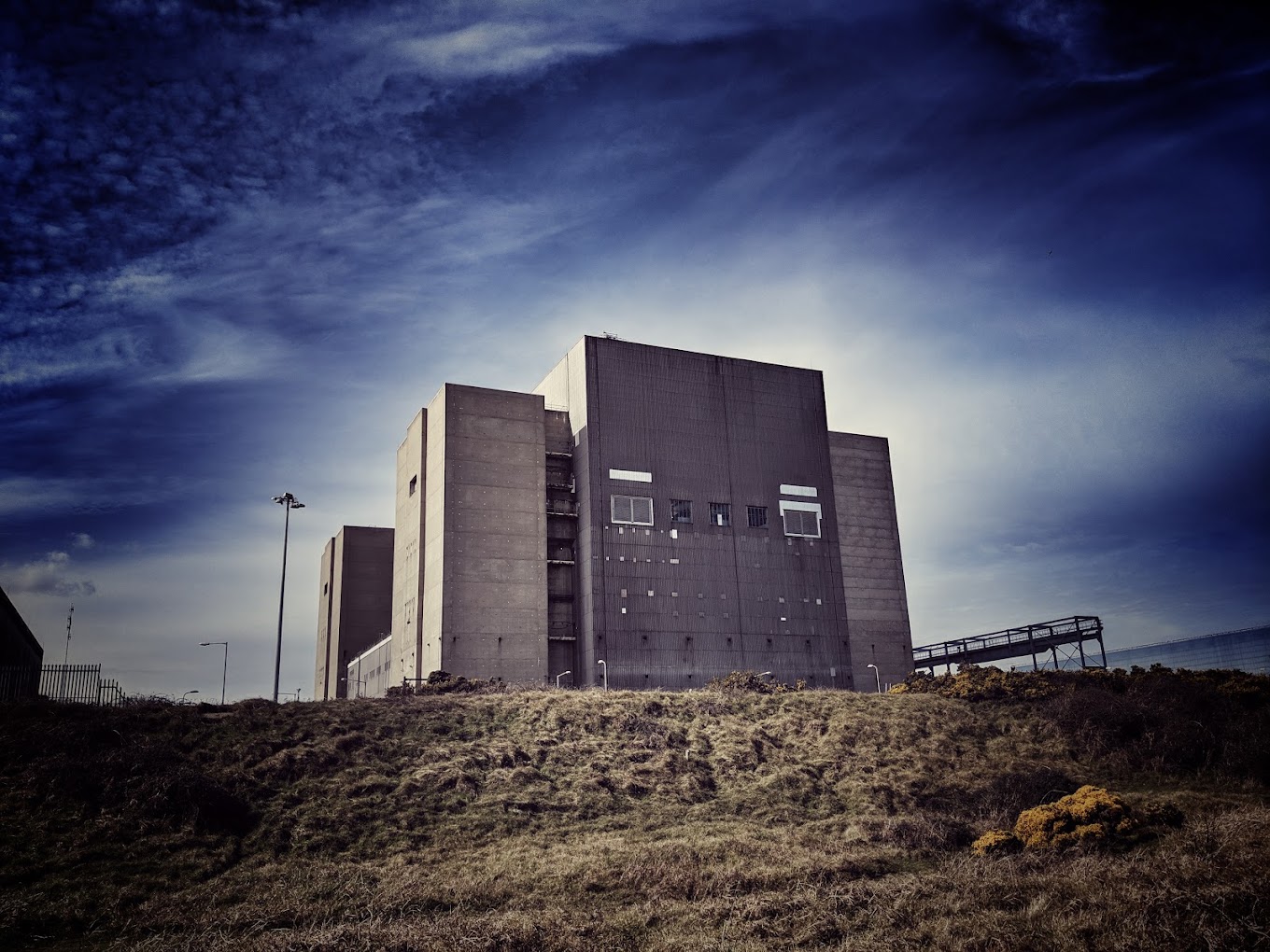
Blackwater Against New Nuclear Group , 8 Mar 23, BANNG’s Coordinator Peter Banks exposes the hidden danger lurking on the Blackwater in the March 2023 column for Regional Life. https://www.banng.info/news/regional-life/radioactive-graphite/
On the Southern shore of the Blackwater Estuary the shiny, grey/blue reactor buildings of the former Bradwell nuclear power station are now a landmark visible for many miles. The power station ceased operating in 2002 and now, in a state of ‘care and maintenance’, remains a visible monument to the early nuclear age.
Contained within the Bradwell buildings (and within all but one of the UK’s civil nuclear power stations) are blocks of graphite forming the very heart of the reactors, called the ‘core’. Once the reactor goes critical the graphite becomes impregnated (technically ‘irradiated’) with a range of radioactive isotopes such that it will remain dangerously contaminated for decades.
Back in the 1960s when Bradwell was commissioned, little forethought was given to the future when these behemoth plants would be taken out of service and decommissioned. The irradiated graphite was far too dangerous for humans to remove as stations were being demolished. Furthermore, the blocks were highly inaccessible as they were at the core of the sealed reactor vessel.
And the reactor chamber metalwork itself had also been irradiated. Recently the process of dismantling was given the new, self-explanatory name of ‘deferred decommissioning’ by the Nuclear Decommissioning Agency (NDA). Whilst this is totally understandable from a health and safety perspective, it does mean that the promises made when Bradwell closed in 2002 that the site would soon be cleared and returned to unrestricted land use were ridiculous.
And diamonds? If the graphite had also been subjected to great pressure as well as heat it would have converted to, amazingly, diamonds! But never think of the contents as precious diamonds, they are actually nasty radioactive wastes – a deadly dirt indeed.
Regardless, irradiated graphite and diamonds both need to be robustly protected. Therefore, expect to see the shiny reactor buildings of Bradwell for at least another 60 years. And, with nowhere else to go, they could remain on our shores into the unknown future.
EDF ordered to inspect 200 nuclear pipe weldings after more cracks discovered

By America Hernandez and Forrest Crellin, 10 Mar. https://www.reuters.com/business/energy/edf-ordered-inspect-200-nuclear-pipe-weldings-after-more-cracks-discovered-2023-03-10/
PARIS, March 10 (Reuters) – France’s nuclear safety watchdog ASN has ordered energy utility EDF (EDF.PA) to inspect about 200 pipe weldings across its 56-nuclear reactor fleet after discovering three additional cracks this week, the regulator said on Friday.
In addition to a major corrosion-related crack on the Penly 1 reactor in Normandy revealed on Tuesday, which the watchdog attributed to faulty welding, two fissures on EDF’s Penly 2 reactor and the Cattenom 3 reactor in Moselle were disclosed on Thursday.
An EDF spokesperson declined to comment on ASN’s criticism, but said the two newer cracks were due to “thermal fatigue”, which happens when very hot and cold water meet inside pipes, causing the steel to dilate, contract and become more fragile over time.
EDF regularly inspects pipes via ultrasound for this phenomenon during maintenance, the spokesperson added.
The latest defects and watchdog scrutiny come as France and the Britain announced a new energy partnership on Friday to strengthen cooperation on nuclear power, including construction of power stations, innovation and safety.
Neither French President Emmanuel Macron nor British Prime Minister Rishi Sunak mentioned the nuclear operator’s latest setbacks after a bilateral summit.
“You are helping us secure our supply of nuclear power thanks to EDF’s incredible work,” Sunak told Macron.
EDF is building a new nuclear plant in Britain, Sizewell C, which has suffered from cost overruns and construction delays. A second plant, Hinkley Point C, is also in the works.
The utility’s Penly 2 and Cattenom 3 in France are part of a group of 16 reactors flagged by EDF as being susceptible to corrosion-related cracks due to a design flaw, and prioritised for checks in its inspection and maintenance plan.
That plan is now being updated to accommodate the additional check of 200 weldings, and will be published “in coming days”, EDF has said.
European forward-curve power prices rose sharply on Friday following the announcement of new cracks, after French nuclear output in 2022 fell to a 34-year low while EDF scrambled to fix stress corrosion issues at several sites.
“Some market participants may be worried that the issues with corrosion are trickier than first anticipated, and that EDF will struggle both long- and short-term to fix it and bring generation back to pre-2022 levels,” Rystad analyst Fabian Ronningen said.
China increasing the number of nuclear warheads, aiming to match USA’s nuclear arsenal
Moscow is cementing its alliance with Beijing through deliveries of highly
enriched uranium that are fuelling China’s race to match the nuclear
arsenal of the United States, the Pentagon has warned. President Xi’s
military chiefs are seeking nuclear parity with Washington by increasing
the number of nuclear warheads from the present estimated 350 to 400 to
1,500 by 2035.
That total would approximately equal the strategic nuclear
arsenal of the US, limited to 1,550 warheads by New Start, the only
remaining arms control treaty between the US and Russia, which President
Putin has announced could be abandoned.
Times 10th March 2023
https://www.thetimes.co.uk/article/putin-china-plutonium-nuclear-xwlzvjfwh
Twelve years after 3/11, dispute grows over Fukushima’s radioactive soil

BY TOMOKO OTAKE, STAFF WRITER, https://www.japantimes.co.jp/news/2023/03/10/national/dispute-fukushima-radioactive-soil/
OKUMA, FUKUSHIMA PREF. – On the surface, everything seems to be under control at the expansive site storing radioactive soil collected from across Fukushima Prefecture in the aftermath of the 2011 core meltdowns at the Fukushima No. 1 nuclear power plant.
Since 2015, the Interim Storage Facility, which straddles the towns of Okuma and Futaba and overlooks the crippled plant, has safely processed massive amounts of radioactive soil — enough to fill 11 Tokyo Domes — in an area nearly five times the size of New York’s Central Park. The soil was collected during decontamination procedures in Fukushima’s cities, towns and villages that were polluted by the disaster.
Here, black plastic bags full of contaminated soil are put on conveyor belts and unpacked. The contents are sifted through to remove plastic, leaves, twigs and other nonsoil waste. Then the soil is taken to dump zones, where it’s buried in 15-meter-deep pits with protective sheeting and a drainage pipe at the bottom so that radioactive cesium won’t leak into the ground. Finally, the soil is covered with noncontaminated soil and topped with a lawn. Areas where the work has been completed look like soccer fields.
The level of radiation here is about 0.2 microsieverts per hour (uSv/h), explained Hiroshi Hattori, an official at the Environment Ministry’s local office, during a recent tour of the areas where the polluted soil is buried. The radiation level there is harmless to humans, though higher than an average of 0.04 uSv/h elsewhere in Japan.
“It’s higher not because of the soil, but because of surrounding forests (which have not been decontaminated).”
The problem is that, as smooth and orderly as its operations are, the site is only a temporary home for the radioactive soil. Nobody knows where this massive pile of dirt will eventually end up. All that is certain is that the central government has pledged to — and is legally obliged to — move all of the soil out of Fukushima Prefecture by 2045.
This unresolved soil issue — along with the lingering dispute over the planned ocean release of tritium-laced wastewater from Fukushima No. 1 — is a sour reminder of the enormous toll the nuclear disaster in Fukushima has inflicted on the country and beyond.
Opposition from residents
The soil is a product of years of state-funded measures to bring radiation levels down in communities affected by the disaster. The government drew up a “decontamination road map” soon after the accident, in the hopes of a speedy return of residents to their hometowns.
The desire to avoid moving the massive amount of soil again — and to make it easier to find a final destination for it — has also led the Environment Ministry to try to reduce its volume first by reusing some of the less contaminated mud for public works projects across the nation. That way, only a quarter of the total amount that contains over 8,000 becquerel per kilogram of cesium will be subject to final disposal, the ministry says.
But it’s a tough sell. In December, the ministry held its first round of meetings with residents in areas of greater Tokyo where pilot projects to utilize the soil under the 8,000 Bq/kg threshold are planned: the Shinjuku Gyoen National Garden in Tokyo, the National Environmental Research and Training Institute in Tokorozawa, Saitama Prefecture, and the National Institute for Environmental studies in Tsukuba, Ibaraki Prefecture.
Nearby residents vehemently opposed the plan. Last month, they formally demanded that the ministry cancel the pilot projects, under which the ministry plans to bury radioactive soil underneath a 50 cm layer of cover soil, for flower beds and parking lots.
Roads, tidal walls and dams
Though little known until recently, the ministry released a policy document in 2016 that outlined the “safe use” of radioactive soil with radiation levels of 8,000 Bq/kg or less. According to the document, the government will divert such soil to embankments in public works projects “whose management entities and responsibilities are clearly defined.”
Roads, tidal walls, seaside protection forest and earthfill dams are some of the projects where use of the soil is envisioned, the document says.
The plan has raised the eyebrows of not just residents but also experts.
“Japan is very seismic and we have (harsh) weather and typhoons,” said Azby Brown, architect and lead researcher for Safecast, a citizen science group that has independently measured and publicized radiation levels in Fukushima and elsewhere.
“The half-life of cesium-137 is 30 years. It’s going to stay radioactive for a long time. What happens when these embankments get old?… It is not a very rational or sound decision, from the sense of certainly the perception of safety.”
Kenichi Oshima, professor of energy policy at Ryukoku University in Kyoto, questions the rationale of treating the soil of 8,000 Bq/kg or less as safe, pointing to a “double standard” between the ministry’s policy and the rigorous control of waste required for other nuclear power plants under the Nuclear Reactor Regulation Law. That law states only waste with radiation levels under 100 Bq/kg is considered safe enough to be reused.
All of the radioactive waste produced by the Fukushima disaster is covered by a separate “special law” that went into force in 2012. This says that Tokyo Electric Power Co. Holdings (Tepco), the operator of Fukushima No. 1, is responsible for the handling of the radioactive waste and soil within its property, while the Environment Ministry is responsible for the disposal of the 3/11-borne radioactive waste outside the plant, though the law itself does not mention the reuse of soil that has been decontaminated.
The ministry has explained that the 8,000 Bq/kg threshold keeps it consistent with the level of “designated waste materials” stipulated in that special legislation. When people are exposed to waste below 8,000 Bq/kg, the additional radiation exposure is limited to less than 1 millisievert per year, not a level that causes health concerns, according to the ministry.
“Granted, soil with 8,000 Bq/kg of radioactive materials is not one that immediately kills people who touch it,” Oshima said. “But it is low-level radioactive waste nonetheless, and so should be managed properly as such, just like low-level radioactive waste from other nuclear power plants is. It’s just inconceivable that it would be utilized as materials for infrastructure that people will be using often.”
Public support elusive
On Feb. 24, Environment Minister Akihiro Nishimura reiterated the ministry’s stance, telling a news conference that utilization of soil outside the prefecture is “important to realize its final disposal outside the prefecture (of Fukushima).”
“We would like to continue explaining our stance in detail so as to nurture public understanding,” he said.
But to nurture this understanding about an issue as serious as radioactive waste, everyone who has a stake should be involved in the decision-making process, Brown says.
“The strong consensus internationally regarding where to put things like radioactive waste requires full agreement and participation by all of the stakeholders, all of the citizens, everyone who’s involved,” Brown said. “What we usually see often in Japan in general, and certainly regarding the Fukushima issues, is that a decision is made at the top. It’s decided, it’s announced and then they try to persuade people to go along with it. This is the case with the water release issue (as well as) the soil issue.”
Around this spring or summer, the government and Tepco hope to begin discharging water that has all the radioactive nuclides except tritium removed. Construction work is already under way at the seaside plant to install an undersea tunnel, through which the water will be released 1 kilometer offshore.
The so-called JESCO law, which went into effect in 2014, gives legal grounds for the creation of the government-funded entity that runs the interim storage site, as well as the obligation for the central government to move the soil out of Fukushima by 2045. The obligation was written into law following a political compromise with the Fukushima Prefectural Government, with officials from the national government saying they “considered the excessive burden” being shouldered by the people of Fukushima.
Both Oshima and Brown, however, say they find the government’s plan to recycle the dirt out of line.
In fact, Oshima says the best solution would be to set aside an area and make it a controlled zone for all the polluted soil for 50 years until the radioactive cesium decays, which is how waste from other nuclear plants is handled, and is what the final disposal site is going to look like.
He cites a 2017 report by the Japan Atomic Energy Agency that estimated the size of the area needed for final disposal, which should be ready by 2045. If the volume of the soil is estimated at 20 million cubic meters, a subsurface ground facility for its final disposal will need to measure about 1.3 km by 1.3 km, the report concluded.
“It may sound like a huge space, but both the national government and Tepco have vacant land plots of that size,” Oshima said. Once the soil’s use as construction materials is greenlighted, however, it would be transported nationwide, and it would be impossible to track and measure its radiation doses, he argued.
“If the soil is properly stored in a controlled area, it would make the public feel so much more at ease.”
“Thermal fatigue” is causing flaws in the cooling pipes of France’s nuclear reactors

Electricite de France SA discovered new defects at two of its nuclear
reactors that were halted for maintenance and repairs, raising fresh
concerns that its electricity output will remain largely constrained this
year after plunging in 2022.
Flaws tied to so-called thermal fatigue have
been found on the pipes of the Penly-2 and Cattenom-3 reactors, the utility
said in a statement. The pipes have been replaced as part of broader
repairs related to “stress corrosion” cracks — a different type of
faults — that are affecting emergency cooling pipes of some of the EDF’s
atomic plants, according to the nuclear safety authority.
The nuclear giant has been forced to halt more than a dozen of its 56 reactors for months of repairs since it first found signs of such stress corrosion phenomenon in
late 2021. The announcement comes just days after the country’s nuclear
safety authority asked EDF to revise its program of reactor checks
following the utility’s discovery of a “significant” stress corrosion
crack earlier this year on its Penly-1 reactor. EDF said it will propose an
update of its reactor check strategy to the watchdog in the coming days.
The fresh setbacks could force EDF to carry out more extensive checks on
its atomic plants, reviving concern that France will have to import large
amounts of power this year. Last year, worries about electricity shortages
combined with dwindling deliveries of Russian gas pushed European energy
prices to records.
Bloomberg 10th March 2023
https://www.bnnbloomberg.ca/edf-finds-new-flaws-at-2-reactors-stoking-power-supply-woes-1.1893577
British government poised to label nuclear as “green”, but investors are not impressed
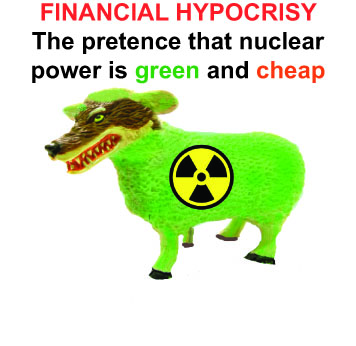
The British government is poised to redefine nuclear power as “green”
as it seeks to drum up more private investment in the sector to improve
domestic energy resilience. Ministers are set to consult on proposals to
change the so-called “taxonomy” — or financial classification system
— of energy in order to redefine nuclear projects as sustainable
investments. It is expected to lead to a reversal of the decision by the
Treasury as recently as 2021 to exclude nuclear power from the so-called
green investment framework.
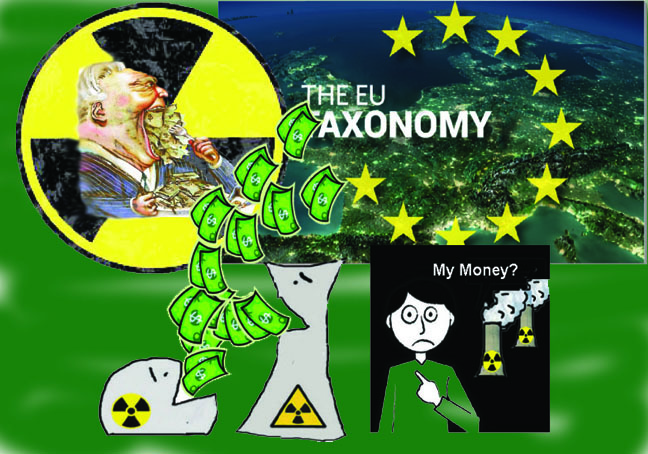
The move echoes a decision last year by the
European Commission to label both nuclear and some forms of gas as
“green” investments, which prompted legal challenges from Greenpeace
and a coalition of WWF and Client Earth.

The consultation comes as thegovernment is set to provide about £80mn
in seed funding for the launch ofGreat British Nuclear, a new body which will
oversee plans to build a new
generation of nuclear power stations in the UK, according to two people
familiar with the negotiations. Ministers are anxious to accelerate the
programme which has been dogged by delays and cost overruns on the only new
nuclear plant under construction at Hinkley Point in Somerset. The
government, together with French state-backed utility EDF, are trying to
raise £20bn in private finance for the next power station at Sizewell in
Suffolk.
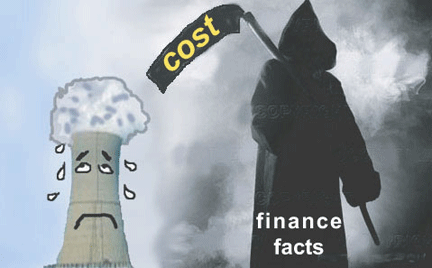
But investors have shown little interest in backing greenfield
nuclear projects, because of the construction risks in the highly
regulated, safety- critical sector. All new nuclear projects across Europe
have been hit by delays and big cost overruns.
Nick Stansbury, head of
climate solutions at Legal and General Investment Management, warned that
the changes to the taxonomy were unlikely to drive investment. Ministers
will also update their strategy for reaching net zero by 2050 after a judge
ruled last July that the original document provided insufficient detail and
gave the government a deadline to rewrite it by the end of this month. The
energy department refused to comment.
FT 9th March 2023
https://www.ft.com/content/2bef8242-d04b-47b9-84f8-b301692ea2f4
Britain’s “Regulated Asset Base” funding method for nuclear power is deemed not likely to work

National Infrastructure Commission model spells trouble for nuclear RAB
funding. Dr Jim Cuthbert questions whether the government’s funding method
for its nuclear power programme provides value for money, given it now
expects the plants to take nearly twice as long to build.
A major part of
the government’s energy strategy is a programme of eight new nuclear power
stations, to be funded by the Regulatory Asset Base (RAB) funding method.
One of the main features of RAB is that it involves consumers paying from
the start of construction for benefits they will only begin to receive when
construction is completed, and the plant is producing electricity.
One of
the key questions that should be answered in assessing whether a RAB-funded
project should go ahead is whether the eventual benefit consumers could
receive, in this case through cheaper electricity charges in the long run,
is enough to compensate them for the opportunity cost of the payments made
while receiving no benefit.
Given the long construction periods now
anticipated for new nuclear plants, it is unlikely that RAB financing will
be able to attain a sufficient cost advantage to do so. In 2019, the
National Infrastructure Commission (NIC) produced a paper on the
application of the RAB approach to nuclear energy, illustrating a
methodology including an approach to answering the above key question.
The NIC paper set out the results of illustrative calculations of the impact of
a range of factors on the likely value for money of RAB projects.
Unfortunately, it is something of a mixed bag. On the negative side, the
results in the paper are not presented in a way that allows the impact of
different factors to be separately identified: and, critically, the NIC
makes a central assumption about the likely length of the construction
period for new nuclear projects only about half of what the government now
assumes. On the plus side, having clarified with the NIC what methodology
it was using in the opportunity cost component of their model, their basic
approach seems sensible.
Although not clear from the original NIC paper,
the length of the construction period has a critical effect on the likely
value for money of a RAB-funded nuclear project. If the NIC’s basic model
is applied to a project with the government’s current assumption of a
13-to-17-year-long construction period, instead of the NIC’s central
assumption of eight years, then RAB nuclear is unlikely to achieve a
sufficient cost advantage over alternative approaches to compensate
consumers for the opportunity cost of their initial payments.
Public Finance 9th March 2023
Low-dose radiation linked to increased lifetime risk of heart disease

by British Medical Journal, https://medicalxpress.com/news/2023-03-low-dose-linked-lifetime-heart-disease.html 8 March 23,
Exposure to low doses of ionizing radiation is associated with a modestly increased excess risk of heart disease, finds an analysis of the latest evidence published by The BMJ today.
The researchers say these findings “have implications for patients who undergo radiation exposure as part of their medical care, as well as policy makers involved in managing radiation risks to radiation workers and the public.”
A linked editorial suggests that these risks “should now be carefully considered in protection against radiation in medicine and elsewhere.”
It’s well recognized that exposure to high dose radiation can damage the heart, but firm evidence linking low dose radiation to heart disease (e.g., scatter radiation dose from radiotherapy or working in the nuclear industry) is less clear.
To address this knowledge gap, an international team of researchers examined scientific databases for studies evaluating links between a range of cardiovascular diseases and exposure to radiation (mostly radiotherapy and occupational exposures).
They excluded uninformative datasets or those largely duplicating others, leaving 93 studies, published mainly during the past decade, suitable for analysis. These studies covered a broad range of doses, brief and prolonged exposures, and evaluated frequency (incidence) and mortality of various types of vascular diseases.
After taking account of other important factors, such as age at exposure, the researchers found consistent evidence for a dose dependent increase in cardiovascular risks across a broad range of radiation doses.
For example, the relative risk per gray (Gy) increased for all cardiovascular disease and for specific types of cardiovascular disease, and there was a higher relative risk per dose unit at lower dose ranges (less than 0.1 Gy), and also for lower dose rates (multiple exposures over hours to years).
At a population level, excess absolute risks ranged from 2.33% per Gy for a current England and Wales population to 3.66% per Gy for Germany, largely reflecting the underlying rates of cardiovascular disease mortality in these populations.
This equates to a modest but significantly increased excess lifetime risk of 2.3-3.9 cardiovascular deaths per 100 persons exposed to one Gy of radiation, explain the authors.
Substantial variation was found between studies, although this was markedly reduced when the authors restricted their analysis to higher quality studies or to those at moderate doses (less than 0.5 Gy) or low dose rates (less than 5 mGy/h).
The authors suggest that mechanisms for these cardiovascular effects are poorly understood, even at high dose.
They also acknowledge that few studies assessed the possible modifying effects of lifestyle and medical risk factors on radiation risk, particularly major modifiable risk factors for cardiovascular disease like smoking, obesity, diabetes, high blood pressure and high cholesterol, and say further research is needed in this area.
In conclusion, they say their findings support an association between acute high dose and (to a lesser extent) chronic low dose radiation exposure and most types of cardiovascular disease and suggest that “radiation detriment might have been significantly underestimated, implying that radiation protection and optimization at low doses should be rethought.”
This view is supported by Professor Anssi Auvinen at Tampere University in Finland in a linked editorial, who points out that while inconsistencies and gaps remain in the evidence linking vascular disease to low dose radiation exposure, “evidence for cardiovascular disease will soon need to be added to the existing list of radiation-induced health risks.”
This will involve revisiting concepts and standards in radiological protection, while more stringent standards for justification and optimization, especially for high dose procedures, will have to be considered, he explains.
Their implementation will also require training to improve awareness, knowledge, and understanding of the risks associated with specific procedures and cumulative exposure, as well as risk communication for patients and the public, he concludes.
Fake ‘nuclear bomb’ alert on TV and radio scares Russians
Moscow viewers and radio listeners spooked by fake warning
Hackers took over Russian state media on Thursday to tell listeners to rush to nuclear bomb shelters and take anti-radiation pills.
Radio and television broadcasts in Moscow and the western Sverdlovsk area were interrupted with a phony warning of a missile strike on the country.
The Kremlin blamed the false alarm, which told listeners to take potassium iodine, put on gas masks and seek shelter, on a cyber attack.
“Urgent message. There was a strike,” a Russian voice boomed, while television viewers were presented with a map of Russia being covered in red.
“Urgently go to a shelter,” the voice declared. “Seal the premises. Use gas masks of all types.”
The Telegraph reported that after the message was broadcast, screens displayed a black and yellow radiation warning symbol.
“A false air raid alert was broadcast in Moscow after servers of radio stations and TV channels were hacked,” said the Kremlin’s emergency ministry.
There has been no claim of responsibility for the latest cyber attack with it possibly originating from Ukraine dissidents or potentially Russian
It was the third time in the past month that Russian broadcasters have been targeted. Last month a false warning was released in the Crimea urging caution against an incoming missile attack. For this event, Ukraine was blamed. A similar broadcast was run a week later during Vladimir Putin’s state of the union address.
Ukraine has not taken responsibility for any of the alleged cyber attacks………………………. https://www.independent.co.uk/news/world/europe/fake-nuclear-bomb-alert-russia-television-b2298070.html
Nuclear reactor: a deep crack discovered at Penly 1 risks destabilizing EDF
Nuclear reactor: a deep crack discovered at Penly 1 risks destabilizing
EDF. A new “stress corrosion” problem found by the the company on a
shutdown reactor in Seine-Maritime could have significant repercussions,
due to its size and location.
The discovery could have serious consequences
for EDF. The company detected a major crack on a weld of an emergency
circuit of a shutdown reactor, Penly 1, in Seine-Maritime, a new problem
for the energy giant whose nuclear fleet is heavily disturbed since 2021 by
these phenomena.
In a note, which went unnoticed until its media coverage
on Tuesday by the Context site , EDF mentioned having detected a
“significant stress corrosion defect” on an emergency pipe used to cool
the reactor in an emergency. For Yves Marignac, ” the fact that larger
cracks are possible raises the question of keeping the 6 reactors of the
same type P’4″ in operation while awaiting their preventive repair” ,
announced in December by EDF for the current year 2023.
Liberation 8th March 2023
What´s happening at Fukushima plant 12 years after meltdown? Massive amounts of fatally radioactive melted nuclear fuel remain inside the reactors.

Japan is preparing to release a massive amount of treated radioactive wastewater
into the sea. Japanese officials say the release is unavoidable and should
start soon.
Dealing with the wastewater is less of a challenge than the
daunting task of decommissioning the plant. That process has barely
progressed, and the removal of melted nuclear fuel hasn´t even started.
TEPCO needs a safety approval from the Nuclear Regulation Authority.
The International Atomic Energy Agency, collaborating with Japan to ensure the
project meets international standards, will send a mission to Japan and
issue a report before the discharge begins………………………..
Massive amounts of fatally radioactive melted nuclear
fuel remain inside the reactors. Robotic probes have provided some
information but the status of the melted debris is largely unknown. Akira
Ono, who heads the cleanup as president of TEPCO´s decommissioning unit,
says the work is “unconceivably difficult.” Earlier this year, a
remote-controlled underwater vehicle successfully collected a tiny sample
from inside Unit 1’s reactor – only a spoonful of about 880 tons of melted
fuel debris in the three reactors.
That’s 10 times the amount of damaged
fuel removed at the Three Mile Island cleanup following its 1979 partial
core melt. Trial removal of melted debris will begin in Unit 2 later this
year after a nearly two-year delay. Spent fuel removal from Unit 1
reactor´s cooling pool is to start in 2027 after a 10-year delay. Once all
the spent fuel is removed the focus will turn in 2031 to taking melted
debris out of the reactors.
Daily Mail 9th March 2023
The narrow field of options for safely managing Ukraine’s Zaporizhzhia Nuclear Power Plant
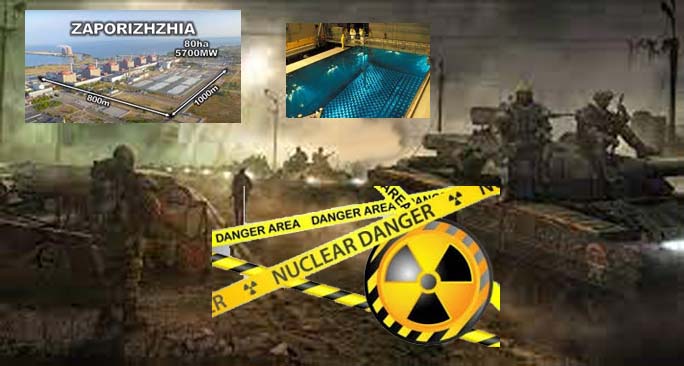
By Mark Hibbs | March 10, 2023 Bulletin of the Atomic Scientists,
One year after Russia’s assault and takeover of the Zaporizhzhia plant, Russians and Ukrainians face decisions about the operation status of the six reactors that will significantly impact nuclear safety and security. Decision makers might mothball the reactors, or instead elect one or more of a range of modes for operating them, on a scale from cold shutdown to resumed criticality and low-power operation…………………………………………………………………………………………..
the safest option for the Zaporizhzhia nuclear power plant would be to shut all reactors down, depressurize the circuits, and remove their fuel until the end of the war. As an IAEA peer reviewer in one European country with similar reactors said: “There would be no heat, no pressure, no radioactivity, and no severe accident.”
But the plant’s fuel inventory is another key consideration in decisions about how or if the Zaporizhzhia reactors are to be run. If removed from reactor cores, hot, highly radioactive fuel must be safely stored and contained.
Ukraine regulations require that the spent fuel storage pool at each reactor accommodate a full core of fuel in an emergency. As part of EU post-Fukushima upgrades, Zaporizhzhia reactors were outfitted with portable equipment to supply water in an emergency to spent fuel pools and to reactor cores. But moving a core of fuel into a pool would significantly increase the heat load, and safe storage margins might be limited following previous re-racking to pack more fuel in the pools.
Safety authorities may ultimately decide that the fuel would be better protected if left in the reactors, since they were designed to protect and cool the fuel including in an emergency. Separately, the owner/operator may not want to undertake prolonged outages of de-fueled reactors in the interest of limiting restart authorization requirements………………………………… https://thebulletin.org/2023/03/the-narrow-field-of-options-for-safely-managing-ukraines-zaporizhzhia-nuclear-power-plant/
Saudi Arabia Seeks U.S. Security Pledges, Nuclear Help

Agreement could upend Middle East geopolitics but faces daunting obstacles
Saudi Arabia is asking the U.S. to provide security guarantees and help to develop its civilian nuclear program as Washington tries to broker diplomatic relations between the kingdom and Israel, people involved in discussions between the two countries said.
Striking a normalization deal between Israel and Saudi Arabia has become a priority for President Biden and Prime Minister Benjamin Netanyahu amid a looming confrontation with Iran over its nuclear program and military aid to Russia during the Ukraine war. The Biden administration is deeply involved in the complex negotiations, the people said, and any deal would reshape the Middle East’s political landscape……………(Subscribers only) https://www.wsj.com/articles/saudi-arabia-seeks-u-s-security-pledges-nuclear-help-for-peace-with-israel-cd47baaf
How the nuclear lobby scuttled the EU’s anti-greenwashing tool
Succumbing to member states’ pressure and giving nuclear energy a “sustainable” label in a key regulation could derail the EU’s climate progress.
Aljazeera, Christiana Mauro, Senior advisor at the Biosphere Institute , Kacper Szulecki, Research professor in climate governance, 8 Mar 23,
One year ago, hopes were high for what was considered to be the most important environmental legislation in Europe. The European Union’s taxonomy regulation was meant to become the global “gold standard” for science-based policy that directs investment towards climate-friendly goals.
Their argument is that the “sustainable” label given to nuclear energy and natural gas breaches the EU’s climate commitments, violates EU environmental law and is incompatible with the “do no significant harm” criteria of the taxonomy regulation itself. The EC refused to revoke the act leading the complainants to launch a lawsuit at the European Court of Justice.
As we await the court’s decision, it is important to recall how this legislation was undermined by the nuclear lobby and what the consequences will be if it is not struck down
………………………………………………………………the EU taxonomy regulation ….. was supposed to be a list of scientifically-based technical criteria to set apart economic activities that are genuinely sustainable from those that are harming the environment.
It defined environmentally sustainable activities as contributing substantially to specific environmental objectives that will speed up the decarbonisation of the economy, comply with safeguards and “do no significant harm” to the environment.
Nuclear energy and natural gas initially failed to meet the taxonomy criteria. Of course, that went against big interests in the energy sector and predictably a lobbying blitz was launched to reverse this decision.

A report by Reclaim Finance, an NGO which scrutinises the impacts of financial actors on climate, revealed a lobbying campaign worth millions of euros was initiated to amend the regulation in favour of the natural gas and nuclear industries.
Lobbyists met frequently with EU representatives during critical phases of the deliberations over the taxonomy. Russia, which would have been a major financial and geopolitical beneficiary of the financial incentives that would ensue from the inclusion of gas and nuclear, was an extremely active “stakeholder” during the entire legislative process.
But there were also EU countries which sought to put pressure on the European Commission to change the regulation’s provisions. At the forefront of that effort were Poland, France, the Czech Republic, Hungary, Romania, Slovakia and Slovenia, whose leaders wrote a joint letter arguing for the inclusion of nuclear power in the regulation.
The document used various common claims and arguments in support of nuclear sustainability. We were part of a team of fact-checkers from four EU countries who determined that 20 statements in the letter were false or misleading.
Among them were assertions that nuclear power is “environmentally friendly”, “essential to the transition towards clean energy sources”, a “promising source of hydrogen” and “affordable”.
A full analysis of the letter can be found here.
Why nuclear energy is not green
Why nuclear energy is not green is perhaps less obvious to the general public than natural gas. This likely is due to efforts by governments – such as the seven mentioned above – and organisations to mislead it.
False narratives of “clean” nuclear are also peddled by intergovernmental organisations such as the International Atomic Energy Agency (IAEA), the OECD, and the UN Economic Commission for Europe (UNECE).

A common claim – which is also made in the letter to the EC – is that nuclear energy has a low carbon emission status. But if nuclear power can be said to produce lower carbon emissions, it is only true at the point of generation. When the entire life cycle of nuclear power plants is taken into consideration this contention crumbles.
Nuclear energy’s “upstream” activities that are necessary for operation, such as mining uranium, as well as transporting fuel, building and then decommissioning a power plant, and managing the radioactive waste that is a by-product of the process – are all linked to CO₂ emissions. Thus, the carbon footprint of nuclear energy generation is considerable, and according to some estimates, considerably higher than that of renewables.

Nuclear technology also needs significant amounts of cooling water and creates waste that is so toxic to the environment that no permanent storage solution has been developed for 70-odd years. It also represents a risk of seriously and permanently harming large swaths of territories in the case of an accident – which is now growing amid the current militarisation of civil nuclear facilities in Ukraine.
Posing an unmanageable danger to the environment, nuclear power falls short, even as a so-called “transitional activity”, defined in the regulation as an economic activity for which low-carbon alternatives are not available. This is because its financing today would derail the implementation of renewables by diverting investment away from them.
As Amory Lovins, a Stanford University professor and energy expert, says: “a low- or no-carbon energy source that costs more or takes longer to deploy will make climate change worse than one that is cheaper or faster, because the latter could have saved more carbon per euro and per year.”
Energy demand in Europe can easily be met by non-nuclear power sources, and considering the unreliability of nuclear power, with its ageing and deteriorating reactors, and vulnerability to extreme weather events, it is unlikely to have any energy contribution to make at all in the transition to renewables.
Even the most favourable calculations of the cost of nuclear energy show no advantage over renewable, which is seeing costs of deployment plummeting.
Government schemes keep consumer nuclear electricity prices artificially low. In fact, nuclear energy can only be made “competitive” with “hugely significant” government financing, as the EU Energy Commissioner inadvertently admitted in a recent speech. Hence, the seven governments’ letter also pleaded for “active support” for nuclear energy.
The profusion of nuclear delusions
There is a long history of attempts to link nuclear technology to overoptimistic technocratic environmental achievements that never materialise.
Media-hyped nuclear fiction abounds. For example, a recent fusion experiment in the US was touted as a major milestone in the search for an abundant source of clean energy. Predictably, it had a rather anticlimactic ending for anyone paying attention.
The energy generated in the experiment was significantly less than the amount needed to power the lasers involved in it. And the laboratory where the celebrated breakthrough took place was established to develop thermonuclear weapons, not civil nuclear energy projects, which explains its multibillion-dollar budget.
Such nuclear myths are usually debunked by independent experts whose critical voices are often buried beneath irresponsibly promoted fantasies. The morass of disinformation is meant in part to mask the industry’s own failures, but also the military interests of nuclear governments, by pushing unsupported theories to legitimise public funding. It is meant to confuse, demoralise and disable any organised effort to change things.
And the media, instead of challenging this intentional misleading of the public, has played a part in it. European media, for example, reported on the letter of the seven EU countries lobbying for nuclear to be included in the EU taxonomy regulation without checking the veracity of its claims.
Thus, a misinformed public and passive media have allowed political actors to influence regulations that are supposed to be politically neutral. Well-intentioned, vital, and comprehensive legislation, years in the making, has been subverted.
In its current form, this delegated act is likely to derail key 2030 and 2050 climate goals, and damage the Green Deal by influencing negatively green taxonomies being developed around the world. It will encourage greenwashing practices, redirect capital flows towards polluting sectors, and upset progress made on implementing the objectives of the Paris Agreement. https://www.aljazeera.com/opinions/2023/3/8/how-the-eus-most-promising-anti-greenwashing-tool-was-scuttled
1 This Month




Shut down the radiation-damaged Heysham nuclear reactors now
To see nuclear-related stories in greater depth and intensity – go to https://nuclearinformation.wordpress.com

Say No to NASA’s Reckless Nuclear Reactor on the Moon
Say No to NASA’s Reckless Nuclear Reactor on the Moon
-
Archives
- October 2026 (268)
- September 2026 (339)
- August 2026 (330)
- July 2026 (355)
- June 2026 (287)
- May 2026 (306)
- April 2026 (356)
- March 2026 (251)
- February 2026 (267)
- January 2026 (308)
- December 2025 (358)
- November 2025 (359)
-
Categories
- 1
- 1 NUCLEAR ISSUES
- business and costs
- climate change
- culture and arts
- ENERGY
- environment
- health
- history
- indigenous issues
- Legal
- marketing of nuclear
- media
- opposition to nuclear
- PERSONAL STORIES
- politics
- politics international
- Religion and ethics
- safety
- secrets,lies and civil liberties
- spinbuster
- technology
- Uranium
- wastes
- weapons and war
- Women
- 2 WORLD
- ACTION
- AFRICA
- Atrocities
- AUSTRALIA
- Christina's notes
- Christina's themes
- culture and arts
- Events
- Fuk 2022
- Fuk 2023
- Fukushima 2017
- Fukushima 2018
- fukushima 2019
- Fukushima 2020
- Fukushima 2021
- general
- global warming
- Humour (God we need it)
- Nuclear
- RARE EARTHS
- Reference
- resources – print
- Resources -audiovicual
- Weekly Newsletter
- World
- World Nuclear
- YouTube
-
RSS
Entries RSS
Comments RSS

