Canadian First Nations do not want small nuclear reactors on their lands

Decolonizing energy and the nuclear narrative of small modular reactors https://policyoptions.irpp.org/magazines/february-2022/decolonizing-energy-and-the-nuclear-narrative-of-small-modular-reactors/
Kebaowek First Nation is calling for an alternative to a planned SMR project, one that won’t undermine proper consultation and leave a toxic legacy.
by Lance Haymond, Tasha Carruthers, Kerrie Blaise, February 7, 2022 In early 2021, the Canadian Nuclear Safety Commission began reviewing the application from a company called Global First Power to build a nuclear reactor at the Chalk River Laboratories site about 200 kilometres northwest of Ottawa.
This project, known as a micro modular reactor project, is an example of the nuclear industry’s latest offering – a small modular reactor (SMR).SMRs are based on the same fundamental physical processes as regular (large) nuclear reactors; they just produce less electricity per plant. They also produce the same dangerous byproducts: plutonium and radioactive fission products (materials that are created by the splitting of uranium nuclei). These are all dangerous to human health and have to be kept away from contact with people and communities for hundreds of thousands of years. No country has so far demonstrated a safe way to deal with these.
Despite these unsolved challenges, the nuclear industry promotes SMRs and nuclear energy as a carbon-free alternative to diesel for powering remote northern communities. The Canadian government has exempted small modular reactors from full federal environmental assessment under the Impact Assessment Act. Many civil society groups have condemned this decision because it allows SMRs to escape the public scrutiny of environmental, health and social impacts.
The proposed new SMR in Chalk River, like the existing facilities, would be located on Algonquin Anishinabeg Nation territory and the lands of Kebaowek First Nation – a First Nation that has never been consulted about the use of its unceded territory and that has been severely affected by past nuclear accidents at the site.
At this critical juncture of climate action and Indigenous reconciliation, Kebaowek First Nation is calling for the SMR project at Chalk River to be cancelled and the focus shifted to solutions that do not undermine the ability of First Nations communities to be properly consulted and that do not leave behind a toxic legacy.
While these reactors are dubbed “small,” it would be a mistake to assume their environmental impact is also “small.” The very first serious nuclear accident in the world involved a small reactor: In 1952, uranium fuel rods in the NRX reactor at Chalk River melted down and the accident led to the release of radioactive materials into the atmosphere and the soil. In 1958, the same reactor suffered another accident when a uranium rod caught fire; some workers exposed to radiation continue to battle for compensation.
What makes these accidents worse – and calls into question the justification for new nuclear development at Chalk River – is that this colonized land is the territory of the Algonquin Anishinabeg Nation territory (which consists of 11 First Nations whose territory stretches along the entire Ottawa River watershed straddling Quebec and Ontario). Kebaowek First Nation, part of the Algonquin Nation, was among those First Nations never consulted about the original nuclear facilities on their unceded territory, and is still struggling to be heard by the federal government and nuclear regulator. Its land has never been relinquished through treaty; its leaders and people were never consulted when Chalk River was chosen as the site for Canada’s first nuclear reactors; and no thought was given to how the nuclear complex might affect the Kitchi Sibi (the Ottawa River).
History is being repeated at Chalk River today as the government pushes ahead with the micro modular reactor project without consent from Kebaowek. Assessments of the project have been scoped so narrowly that they neglect the historical development and continued existence of nuclear facilities on Kebaowek’s traditional territory. The justification for an SMR at this location without full and thorough consideration of historically hosted nuclear plants – for which there was no consultation nor accommodation – is a tenuous starting point and one that threatens the protection of Indigenous rights.
The narrative of nuclear energy in Canada is one of selective storytelling and one that hides the reality of the Indigenous communities that remain deeply affected, first by land being taken away for nuclear reactor construction, and later by the radioactive pollution at the site. All too fitting is the term radioactive colonialism coined by scholars Ward Churchill and Winona LaDuke, to describe the disproportionate impact on Indigenous people and their land as a result of uranium mining and other nuclear developments. In country after country, the uranium that fuels nuclear plants has predominantly been mined from the traditional lands of Indigenous Peoples at the expense of the health of Indigenous Peoples and their self-determination.
Kebaowek First Nation has been vocal in its objection to the continuation of the nuclear industry on its lands without its free prior and informed consent, as is its right under the United Nations Declaration on the Rights of Indigenous Peoples (UNDRIP). Despite requests for the suspension of the SMR project, pending adequate provisions for Indigenous co-operation and the Crown’s legal duty to initiate meaningful consultation, Kebaowek has yet to see its efforts reflected in government decisions and Crown-led processes.
Nuclear is a colonial energy form, but it is also bio-ignorant capitalism – a term coined by scholars Renata Avila and Andrés Arauz to describe the ways in which the current economic order ignores the planetary climate emergency, human and ecological tragedies, and the large-scale impact on nature. The narrative of nuclear as a “clean energy source” is a prime example of this bio-ignorance. Decision-makers have become fixated on carbon emissions as a metric for “clean and green,” ignoring the radioactive impacts and the risks of accidents with the technology.
It is more than 70 years since Chalk River became the site for the splitting of the nucleus. The continuation of nuclear energy production on unceded Indigenous territory without meaningful dialogue is a telling example of continued colonial practices, wherein companies extract value from Indigenous land while polluting it; offer little to no compensation to impacted communities; and abide by timelines driven by the project’s proponents, not the community affected. We need to move away from this colonial model of decision-making and decolonize our energy systems.
The challenge of climate change is urgent, but responses to the crisis must not perpetuate extractivist solutions, typical of colonial thinking, wherein the long-term impacts – from the production of toxic waste to radioactive releases – lead to highly unequal impacts.
The authors thank Justin Roy, councilor and economic development officer at Kebaowek First Nation, and M.V. Ramana, professor at the School of Public Policy and Global Affairs at the University of British Columbia, for contributing to this article.
TEPCO visually confirms melted nuclear fuel at Fukushima plant
THE ASAHI SHIMBUN, March 31, 2023 , This article was written by Keitaro Fukuchi, Ryo Sasaki and Takuro Yamano.
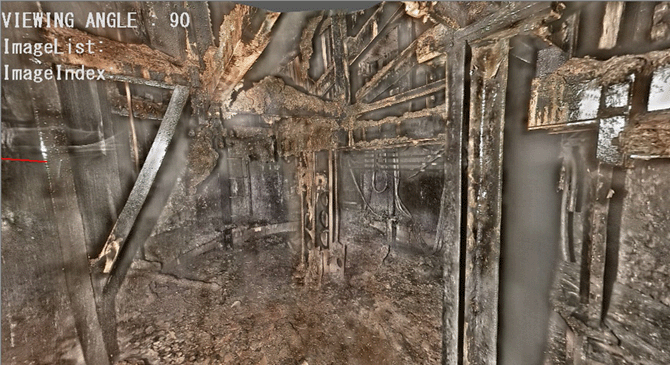
A robotic study provided the first visual confirmation that melted nuclear fuel broke through a pressure vessel at the Fukushima No. 1 nuclear power plant, the government and Tokyo Electric Power Co. said March 30.
Images taken by the robot under the No. 1 reactor at the plant also confirmed heavy damage to a concrete “pedestal” under the pressure vessel.
The inspection by the robot started on March 29. It was the first such study at the No. 1 reactor, one of the three reactors that melted down at the plant following the Great East Japan Earthquake and tsunami in 2011.
More than 90 percent of the nuclear fuel at the No. 1 reactor is believed to have fallen from the pressure vessel.
The robot found a large amount of melted fuel debris under the pressure vessel.
……………. TEPCO still faces the difficult challenge of how to remove the fuel debris and how to protect the damaged pedestal from future earthquakes.
The meltdown at the No. 1 reactor is believed to be worse than those at the No. 2 and No. 3 reactors at the plant.
The International Research Institute for Nuclear Decommissioning estimates the No. 1 reactor building contains 279 tons of melted fuel debris.
Naoyuki Takaki, a professor of nuclear safety engineering at Tokyo City University, said the fuel debris “cannot be taken out unless it is broken down into small pieces.”
Takaki said the method for cutting up such chunks will depend on the ratio and hardness of metal mixed in with the melted fuel.
But the information on objects within the fuel debris is limited so far.
“To put it briefly, it is unknown,” Takaki said.
The No. 1, No. 2 and No. 3 reactors at the Fukushima plant contain an estimated total of 880 tons of melted fuel debris.
TEPCO officials aim to start removal work of the fuel debris at the No. 2 reactor in the latter half of fiscal 2023. The initial plan is to take out a few grams, analyze their elements and hardness, and then increase the amount to be removed.
No timetable is set for such work at the No. 1 and No. 3 reactors.
The damaged pedestal has raised concerns that an earthquake could knock down the structure…………………………….more https://www.asahi.com/ajw/articles/14874722
Germany will complete nuclear phase-out as planned but technology’s risks remain – env min
31 Mar 2023, Benjamin Wehrmann
The era of nuclear power in Germany will end on 15 April as planned, the country’s environment minister has said.
Minister Steffi Lemke stressed that the phase-out would not endanger the power supply security in Germany or other countries, arguing that ending nuclear power will ultimately make the country a safer place.
However, despite nuclear power production in Germany coming to an end, the risk of nuclear accidents remains due to the ageing reactor fleet in neighbouring countries and previously “unthinkable” threats such as sabotage or war-related damage to reactors in Ukraine, Lemke said.
The renewable power industry welcomed the nuclear exit’s completion, stating that wind and solar power are ready to replace the reactors, whereas a survey suggests most people in the country appear to be sceptical whether the energy system is ready to run without them.
The three remaining nuclear plants in Germany will be shut down for good on 15 April, following a three-month extension granted in the context of the European energy crisis, environment minister Steffi Lemke confirmed to journalists in Berlin.
“The technology’s era is over” in the country, Lemke said, arguing that this will make Germany a safer place and put a stop to generating nuclear waste. Germany’s energy security will not be jeopardised by the decommissioning of the three plants, Isar 2 and Neckarwestheim 2 in southern Germany and Emsland in the north, Lemke said……………………………………
31 Mar 2023, 11:38
Germany will complete nuclear phase-out as planned but technology’s risks remain – env min
The era of nuclear power in Germany will end on 15 April as planned, the country’s environment minister has said. Minister Steffi Lemke stressed that the phase-out would not endanger the power supply security in Germany or other countries, arguing that ending nuclear power will ultimately make the country a safer place. However, despite nuclear power production in Germany coming to an end, the risk of nuclear accidents remains due to the ageing reactor fleet in neighbouring countries and previously “unthinkable” threats such as sabotage or war-related damage to reactors in Ukraine, Lemke said. The renewable power industry welcomed the nuclear exit’s completion, stating that wind and solar power are ready to replace the reactors, whereas a survey suggests most people in the country appear to be sceptical whether the energy system is ready to run without them.
The three remaining nuclear plants in Germany will be shut down for good on 15 April, following a three-month extension granted in the context of the European energy crisis, environment minister Steffi Lemke confirmed to journalists in Berlin.
“The technology’s era is over” in the country, Lemke said, arguing that this will make Germany a safer place and put a stop to generating nuclear waste. Germany’s energy security will not be jeopardised by the decommissioning of the three plants, Isar 2 and Neckarwestheim 2 in southern Germany and Emsland in the north, Lemke said.
The country has managed to restructure its gas supply following the loss of Russia as a trade partner, which has been the main cause of the energy crisis, and would replace the capacity of the outgoing reactors with new renewable power installations and gas-fired power stations, said Lemke. Power exports to nuclear power state France reached record levels during the energy crisis, which underlined the fact that nuclear plants do not automatically provide a safeguard in crisis situations, she said.
Completing the nuclear exit in Germany had originally been planned for the end of 2022, but the war in Ukraine and its repercussions had led parliament to decide a limited runtime extension to support the power system and allow Germany and neighbouring countries to ensure supply security. Opposition politicians from the conservative Christian Democrats (CDU) and from the government coalition party Free Democrats (FDP) had repeatedly advocated for further extending the plants’ runtime. However, chancellor Olaf Scholz’s government ultimately restricted the extension to mid-April.
Nuclear power has become expendable and that’s good news. Renewable power will take it from here.
Simone Peter, head of renewables association BEE
“Ageing nuclear plants are one of the greatest risks in Europe” – Lemke
Fully dismantling the roughly 30 plants in the country and deciding on a long-term nuclear waste storage solution are tasks that will take several decades, the Green Party minister said. “These tasks will be a challenge in the next few years,” Lemke said. Nuclear power has been used in Germany for 60 years and it’s now clear that it is “a high-risk technology that ultimately cannot be fully controlled.” Three generations have benefitted from nuclear power use in Germany, but about 30,000 generations will be affected by the ongoing presence of nuclear waste, she argued. Finding a final repository, especially for highly radioactive waste, will now be “a very difficult but unavoidable” task.
At the same time the risk of nuclear accidents would not be completely unavoidable, Lemke added. Ageing reactors in the immediate neighbourhood, sabotage of energy infrastructure and the “previously unthinkable” scenario of reactors operating in an active warzone, such as the Zaporizhzhia plant in Ukraine, continue to pose real danger for people in Germany and elsewhere in Europe, she stressed. “Ageing nuclear plants are one of the greatest risks in Europe,” Lemke said, but stressed that every country had the right to decide on the technology’s use on its own territory.
Inge Paulini, head of the Federal Office for Radiation Protection (BfS), pointed out that seven reactors abroad currently operate within less than 100 kilometres from the German border, which means they still pose a direct threat to the population. “Germany’s nuclear phase-out doesn’t mean all risk is gone,” Paulini said, arguing that the need for an effective and state-of-the-art radiation protection programme had not been forgotten in the country.
The German Renewable Energy Federation (BEE) commented that the nuclear exit’s completion is a step that is both “feasible and necessary” from the energy industry’s perspective. Beyond the immediate risk of nuclear accidents, new plants simply could not compete economically with renewable power and are too inflexible in their use to serve as a capacity backup to iron out fluctuations in renewable power generation, BEE head Simone Peter said.“We cannot afford inflexibility on the power market as the share of renewable energy is growing,” she argued, adding that more nuclear power ultimately meant blocking renewable expansion.
“Nuclear power has become expendable and that’s good news. Renewable power will take it from here,” said Peter………………………………………………… https://www.cleanenergywire.org/news/germany-will-complete-nuclear-phase-out-planned-technologys-risks-remain-env-min
Illinois Senate votes to lift nuclear construction ban
WSIU Public Broadcasting | By Andrew Adams | Capitol News Illinois, March 31, 2023
Environmental, anti-nuclear groups oppose the legislation
The Illinois Senate approved a measure on Thursday that would lift a 1980s-era moratorium on nuclear power plant construction.
Senate Bill 76, sponsored by Sen. Sue Rezin, R-Morris, was approved on a 39-13 vote. The bill now goes to the House of Representatives for consideration………………
Rezin said on the Senate floor that the bill would specifically allow for the construction of small modular nuclear reactors, or SMRs. ………………………………….
Senate proponents of the bill, including Sens. Bill Cunningham, D-Chicago, and Patrick Joyce, D-Essex, said that lifting the ban would help the state attract investment in new technology………………………….
“By lifting this ban, it allows Illinois, should they choose, to go after federal dollars that are provided by this administration, the Biden administration, who is embracing, supporting and investing in advanced nuclear reactors,” Rezin said.
Sen. Ram Villivalam, D-Chicago, said the bill was “still not fully baked,” adding that the question of what is done with nuclear waste still doesn’t have a solution.
“Whether it’s one pound or a thousand pounds, it’s still nuclear waste,” he said. …………
The state’s ban went into effect in 1987 and was intended to remain in effect until the federal government identifies a national nuclear waste disposal strategy. In 1987, Congress identified a site in Nevada as the nation’s repository for nuclear waste, although later opposition from the state and the White House quashed that plan. No national disposal site has been designated.
Some of the state’s largest environmental groups, including the Illinois Environmental Council, oppose the measure. Jack Darin, the head of the Illinois chapter of the Sierra Club, told Capitol News Illinois earlier this month that his organization doesn’t believe nuclear energy is “clean energy,” citing concerns over the environmental impact of nuclear waste.
David Kraft, the head of the Nuclear Energy Information Service, an anti-nuclear advocacy group based in Chicago, has said the bill will weaken the state’s landmark energy policy, the 2021 Climate and Equitable Jobs Act.
“Small modulars are not climate solutions, they’re not job generators until the 2030s and they’ll generate more nuclear waste,” Kraft said in a Thursday interview.
Kraft added he’s worried that lawmakers are not fully considering the safety implications of SMR technology…………………………….. https://www.northernpublicradio.org/illinois/2023-03-31/senate-votes-to-lift-nuclear-construction-ban
Small Modular Nuclear Reactors may not be the holy grail for energy security, net zero
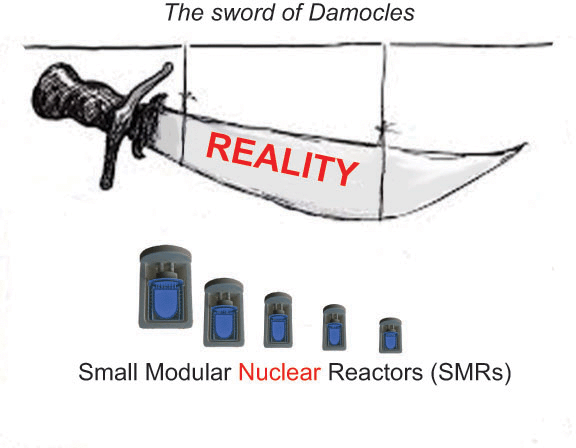
So, if SMRs are the current political flavour of the month, how have we reached this position when there is still no formal approval of the technology from regulators, let alone practical evidence of how it can operate in the real world?
It’s possible to achieve both energy security and the UK’s climate goals without blowing the budget on next-gen nuclear technologies, according to Andrew Warren.
Andrew Warren, Chairman of the British Energy Efficiency Federation. https://electricalreview.co.uk/2023/03/29/smrs-may-not-be-the-holy-grail-for-energy-security-net-zero/
Electrical Review covered in-depth the array of announcements that were made during the Spring Budget, but there was arguably one announcement above all that was most pertinent to the net zero drive. That was when Chancellor Jeremy Hunt reconfirmed – for the fifth time – that the Government intends to create a new Great British Nuclear agency.

It is a name that of itself may bring comfort to all those living on the nuclear-free island of Ireland.
So what will this agency do? Well, the Chancellor explained that, when launched, it will run a competition this year for the UK’s first Small Modular Reactor (SMR). The plan is for it to eventually award £1 billion in co-funding to a winner to build out an SMR plan.
This competition has some distinct echoes. Back in March 2016, the Government launched a competition to identify the best value SMR design for the UK. To the best of my knowledge, nobody has ever claimed that prize, of £250 million.
This re-announcement prompted me to consider the background to this Budget announcement.
It comes at a time in which private sector funding for larger nuclear power stations is proving to be extremely difficult. There is a lengthy list of large pension funds that have publicly refused to get involved with providing capital for the hapless Sizewell C pressurised water reactor project in Suffolk. Meanwhile, European Commission President Ursula von der Leyen is rumoured to be promoting the inclusion of SMRs within the European green investment taxonomy, whilst simultaneously excluding pressurised water reactors which make up most of the existing nuclear fleet.
So, if SMRs are the current political flavour of the month, how have we reached this position when there is still no formal approval of the technology from regulators, let alone practical evidence of how it can operate in the real world?

In January, the UK Government announced that six SMR vendors had applied for their designs to be formally assessed with a view to commercialisation in Britain. The companies have joined a much publicised Rolls-Royce-led consortium and will be subjected to an assessment process carried out by the UK’s Office of Nuclear Regulation (ONR), which will look in exhaustive detail at reactor designs proposed for construction.
Designs that successfully complete the Generic Design Assessment (GDA) – which is expected to take between four and five years – will then be ready to be built anywhere in the country, subject to meeting site-specific requirements.
Why do we need new reactor designs?
Recent results of orders placed for larger nukes are uniformly poor, with reactors invariably late and over budget. Some of the worst cases, notorious projects in Olkiluoto, Finland and Flamanville, France, have seen construction periods of 18 years and costs of three to four times above the expected level.

So, SMRs are being increasingly seen as the new saviours for the nuclear industry. This category embodies a range of technologies, uses and sizes, but relies heavily on features that were the selling points for larger designs. They are smaller than current stations which produce 1,200MW to 1,700MW of electricity. Instead, sizes range from 3MW to about 500MW. The Rolls-Royce design is a 470MW pressurised water reactor, which is bigger than one of the reactors at Fukushima in Japan that suffered serious damage in the 2011 tsunami.
These advanced designs are not new – sodium-cooled fast reactors and high temperature reactors were built as prototypes in the 1950s and 1960s – but successive attempts to build demonstration plants have been short-lived failures. It is hard to see why these technologies should now succeed given their poor record.
A particular usage envisaged for some of the technologies is production of hydrogen. However, as Professor Stephen Thomas of Greenwich University recently pointed out to me, to produce hydrogen efficiently, reactors would need to provide heat at 900°C. This, he said, is “a temperature not yet achieved in any power reactor, not feasible for a pressurised water reactor or boiling water reactor and one that will require new exotic and expensive materials.”
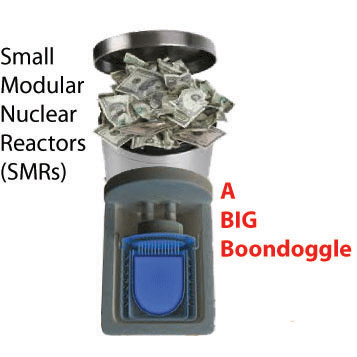
Developers of SMRs like to give the impression that their designs are ready to build, the technology proven, the economic case established and all that is holding them back is Government inactivity. However, taking a reactor design from conception to commercial availability is a lengthy and expensive process taking more than a decade and certainly costing more than £1 billion.
How can the economics of SMRs be tested?
The main claim for SMRs over their predecessors is that being smaller, they can be made in factories as modules using cheaper production line techniques, rather than one-off component fabrication methods being used at Hinkley Point C. The idea is that the module would be delivered to the site on a truck essentially as a ‘flatpack’. This would avoid much of the on-site work which is notoriously difficult to manage and a major cause of the delays and cost overruns that every European large reactor project suffers from.
However, any savings made from factory-built modules will have to compensate for the scale economies lost. A 1,600MW reactor is likely to be much cheaper than 10 reactors of 160MW.
And it will be expensive to test the claim that production line techniques will compensate for lost scale economies. The first reactor constructed will need to be built using production lines if the economics are to be tested. But once the production lines are switched on, they must be fed. Rolls-Royce assumes its production lines will produce two reactors per year and that costs will not reach the target level until about the fifth order. So, if we assume the first reactor takes five years to build, there will be another nine reactors in various stages of construction before a single unit of electricity has been generated from the first, and the viability of the design tested.
This could mean that perhaps about 15 SMRs will need to be under construction before the so-called ‘nth of a kind’ settled-down cost is demonstrated. But once the initial go ahead is given, there will be pressure on the Government to continue to place orders before the design is technically and economically proven, so the production lines do not sit idle.
Will SMRs be a major contributor to meeting the UK’s climate change targets?

The selling point for nuclear power is that it is a relatively low-carbon source of power that can replace fossil fuel electricity generation in the UK and elsewhere. However, by the time SMRs might be deployable in significant numbers, realistically after 2035, it will be too late for them to contribute to reducing greenhouse gas emissions. Electricity is acknowledged to be the easiest sector to decarbonise. If the whole economy is to reach net zero emissions by 2050, then this sector will have to reach that point long before then, probably by 2035. So SMRs appear to be too little, too late.

There is also a fear that SMRs will create more waste than conventional reactors, according to a study recently published in Proceedings of the American National Academy of Sciences. The research notes that SMRs would create far more radioactive waste, per unit of electricity they generate, than conventional reactors by a factor of up to 30. Some of these smaller reactors, with molten salt and sodium-cooled designs, are expected to create waste that needs to go through additional conditioning to make it safe to store in a repository.
And yet, despite the past failures of nuclear power and increasing public scepticism, there remains an appetite within the British Government to give the nuclear industry one more chance.
It remains to be seen whether the Government follows its instinct to continue supporting the sector or whether the amount of public money at risk makes such a decision politically impossible, given the massive underwriting these projects require by consumers and taxpayers.
Nuclear’s specious claims
The claims being made for SMRs will be familiar to long-time observers of the nuclear industry: costs will be dramatically reduced; construction times will be shortened; safety will be improved; there are no significant technical issues to solve; nuclear is an essential element to our energy mix.
In the past such claims have proved hopelessly over-optimistic and there is no reason to believe results would turn out differently this time. Indeed, the nuclear industry may well see itself in this ‘last-chance saloon’.
The risk is not so much that large numbers of SMRs will be built; it is my belief that they won’t be. The risk is that, as in all the previous failed nuclear revivals, the fruitless pursuit of SMRs will divert resources away from options that are cheaper, at least as effective, much less risky, and better able to contribute to energy security and environmental goals. Given the climate emergency we face, surely it is time to finally turn our backs on this failing technology.
Andrew Warren is a former special advisor to the House of Commons environment committee. Special thanks to Greenwich University’s Professor Stephen Thomas for his advice for this piece.
Covering (Up) Antiwar Protest in US Media

March 18 DC peace march almost completely blacked out in US corporate media
FAIR, DAVE LINDORFF, 30 Mar 23
In the early morning of March 20, 2003, US Navy bombers on aircraft carriers and Tomahawk missile-launching vessels in the Persian Gulf and the Mediterranean, along with Air Force B-52s in Britain and B-2s in Diego Garcia, struck Baghdad and other parts of Iraq in a “Shock and Awe” blitzkrieg to oust Iraqi dictator Saddam Hussein and occupy that oil-rich country.
Twenty years on, the US news media, as is their habit with America’s wars, published stories looking back at that war and its history (FAIR.org, 3/22/23), most of them treading lightly around the rank illegality of the US attack, a war crime that was not approved by the UN Security Council, and was not a response to any imminent Iraqi threat to the US, as required by the UN Charter.
Oddly, none of those national media organizations’ editors saw as relevant or remotely newsworthy a groundbreaking protest rally and march outside the White House of at least 2,500–3,000 people on Saturday, March 18, 2023, called by a coalition of over 200 peace and anti-militarism organizations to commemorate the 20th anniversary of the Iraq invasion.
The Washington Post, like the rest of the national news media, failed to mention or even run a photo of the rally in Lafayette Park. It didn’t even cover the peaceful and spirited march from the front of the White House along Pennsylvania and New York avenues to the K Street Washington Post building to deliver several black coffins as a local story—despite the paper’s having a reporter whose beat is actually described by Post as being to “to cover protests and general assignments for the metro desk.” An email request to this reporter, Ellie Silverman, asking why this local protest in DC went unreported did not get a response.
National press a no-show
The rally, organized by the ANSWER Coalition and sponsors such as Code Pink, Veterans for Peace, Black Alliance for Peace and Radical Elders, drew “several thousand” antiwar, anti-military protesters, according to ANSWER Coalition national director Brian Becker. He said the demonstration’s endorsers were calling for peace negotiations and an end to US arms for Ukraine, major cuts in the US military budget, an end to the US policy of endless wars, and freedom for Julian Assange and Indigenous prisoner Leonard Peltier.
………………………………………………… Filling the hole
Fortunately, alternative media, which have proliferated online, are filling in the hole in protest coverage, though of course readers and viewers have to seek out those sources of information. There was a news report on the march in Fightback News (3/23/23), for example, and commentary on the World Socialist Web Site (3/21/23) and Black Agenda Report (2/22/23).
Foreign coverage of the March 18 antiwar event in the US was substantial, which should embarrass editors at US news organizations
…………………………… Efforts to get either the Washington Post or New York Times to explain their airbrushing out the March 18 antiwar protest in Washington were unsuccessful. (Both publications have eliminated their news ombud offices, citing “budget issues.”)
………………………. more https://fair.org/home/covering-up-antiwar-protest-in-us-media/
Nuclear Power Classified as Environmentally Sustainable in UK’s Green Taxonomy
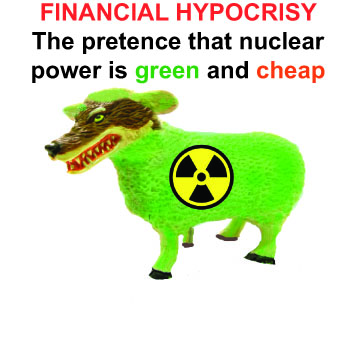
On March 15, 2023, the UK’s Chancellor of the Exchequer, Jeremy Hunt, announced that nuclear power will be classified as “environmentally sustainable” in UK’s green taxonomy, “giving it access to the same investment incentives as renewable energy.” …………………………………..
The inclusion of nuclear in the UK Taxonomy, while controversial, is not surprising given the UK’s stated commitment to building its nuclear fuel capacity. In a 2022 policy paper titled “British energy security strategy,” the Johnson government committed to increase the portion of energy generated from nuclear power to 25%, and to launch a variety of related initiatives, including “backing Great British Nuclear with funding to support projects to get investment ready and through the construction phase.”
…………………….. The Sunak government has not yet released its energy security strategy, but Sunak hinted that its strategy will continue the ongoing commitment to increase the UK’s nuclear energy capacity, by focusing on carbon capture and storage, small modular reactors and the like.
…………………………. It is worth noting, however, that although that the EU Taxonomy Delegated Act is in force, a regulation for UK’s green taxonomy is not and there is no clear timeline for implementation. Rather, the UK government announced in December 2022 a delay in implementation following stakeholder engagement and in light of the complexity inherent in a climate taxonomy, which involves “multiple sectors of the economy and various legislative and regulatory frameworks.”
EU agrees to a compromise on nuclear energy amid French pressure
Get local insights from Lisbon to Moscow with an unrivalled network of journalists across Europe, expert analysis, our dedicated ‘Brussels Briefing’ newsletter. Customise your myFT page to track the countries of your choice.
The EU has reached a compromise on new targets for renewable energy after
agreeing to make an exception for nuclear power in certain sectors amid
pressure from France. Negotiators from member states and the European
parliament agreed to increase the overall binding target of renewable
energy consumed in the EU to 42.5 per cent by 2030, up from 32 per cent,
according to a statement. They also set an “indicative” target of
reaching 45 per cent by the end of the decade.
France had pushed for nuclear energy to be included in countries’ efforts to reach those targets. But at the end of a long night of negotiations, the countries
agreed on a more limited concession counting nuclear power towards the
target for industry. Nuclear-sceptic countries including Germany and
Austria had argued against the inclusion of atomic power, saying that such
a move would undermine efforts to expand solar, wind and other renewable
sources of energy.
FT 30th March 2023
https://www.ft.com/content/02adde01-3b27-4743-8c17-2e39ab682660
Top UN official urgently calls for de-escalating nuclear tensions over Belarus
, UN News,
Urgent efforts must be made to de-escalate the situation following Russia’s announcement last weekend that it plans to station tactical nuclear weapons in Belarus, the UN disarmament chief warned the Security Council on Friday.
“The risk of a nuclear weapon being used is currently higher than at any time since the depths of the cold war,” said Izumi Nakamitsu, UN High Representative for Disarmament Affairs. “The war in Ukraine represents the most acute example of that risk.”
The Security Council met on the heels of President Vladimir Putin’s announcement last Sunday that it had reached an agreement with its neighbour, which has been any ally in Moscow’s invasion of Ukraine, to station non-strategic nuclear weapons inside Belarusian territory, which would be in place for aerial use, by July.
Dangerous rhetoric
Ms. Nakamitsu said the absence of dialogue and the erosion of the disarmament and arms control architecture, combined with dangerous rhetoric and veiled threats, are key drivers of this potentially existential risk posed by nuclear escalation.
“When it comes to issues related to nuclear weapons, all States must avoid taking any actions that could lead to escalation, mistake or miscalculation,” she said, recalling that all States parties to the Treaty on the Non-Proliferation of Nuclear Weapons, or the NPT – nuclear-armed States and non-nuclear weapon States alike – must strictly adhere to its commitments and obligations.
“They should return to dialogue to de-escalate tensions urgently and find ways to develop and implement transparency and confidence-building measures,” she said, appealing to States parties to the treaty to fully adhere to their obligations and to immediately engage in serious efforts to reduce nuclear risk……………………………………
https://news.un.org/en/story/2023/03/1135222
Concern about Turkey’s Akkuyu Nuclear Power Plant
https://www.ekathimerini.com/opinion/1207709/nuclear-concern/ 1 Apr 23, The announcement by Turkish President Recep Tayyip Erdogan that nuclear fuel will be loaded into the first power unit of the Akkuyu Nuclear Power Plant on April 27 this year should set the alarm bells ringing in the international community and Western allies in particular.
It must be ensured that the nuclear power plant in Mersin Province, on Turkey’s southern coast, will be used only for peaceful purposes and that the unstable leadership of Greece’s neighbor across the Aegean will not be tempted by its aspirations for the role of regional superpower, developing into an even more threatening risk factor.
The issue should not only concern Greece. https://www.ekathimerini.com/opinion/1207709/nuclear-concern/
Fire on Trident nuclear submarine at Scots navy base prompts safety concern for nearby locals.
Fire on Trident nuclear submarine at Scots navy base prompts safety
concern for nearby locals. The fire on-board HMS Victorious last year
raised concerns from local councillors about what was being done to keep
residents safe in the event of a nuclear incident.
Daily Record 30th March 2023
https://www.dailyrecord.co.uk/news/scottish-news/fire-trident-nuclear-submarine-scots-29592800
Glasgow Live 30th March 2023
https://www.glasgowlive.co.uk/news/fire-trident-nuclear-submarine-prompts-26592968
The Scottish Greens condemn UK Government plans for a major investment in nuclear power
The Scottish Greens have condemned UK Government plans for a major
investment in nuclear power, which they say is no solution to the climate
crisis. The Party says that nuclear power is costly and will leave a toxic
legacy. It has called for assurances that taxpayers in Scotland will not
pay for nuclear reactors across the UK when the Scottish Government is
opposed to nuclear power.
Scottish Greens 30th March 2023
https://greens.scot/news/nuclear-energy-is-no-solution-to-the-climate-crisis
Nuclear dispute hangs over EU renewable energy talks
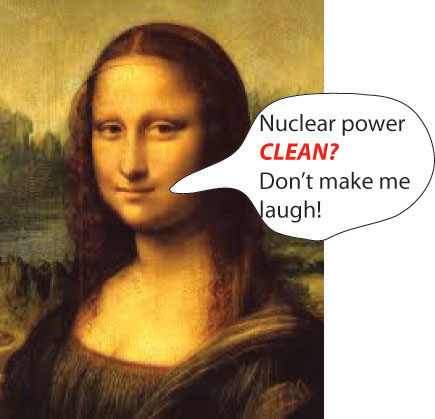
The renewable energy law reflects a broader dispute among countries over whether EU policies should actively encourage nuclear energy with subsidies and incentives – or restrict those privileges to other green technologies like wind and solar.
By Kate Abnett, https://www.reuters.com/business/energy/nuclear-row-looms-over-eu-renewable-energy-talks-2023-03-29/
BRUSSELS, March 29 (Reuters) – The European Union enters the final stage of tense talks over how to treat hydrogen produced using nuclear power on Wednesday, in an effort to end a dispute that threatens to thwart a deal on more ambitious renewable energy goals.
Reporting by Kate Abnett; Editing by Jan Strupczewski, Sharon Singleton and Alexander Smith
Negotiators from EU countries and the European Parliament are meeting to reach a deal on how fast to expand renewable energy sources this decade – a central pillar of the 27-member bloc’s efforts to fight climate change.
One of the key goals in the renewable energy policy is for every EU country to use a certain amount of renewable fuels, such as hydrogen, as a energy source in industry by 2030.
Because low-carbon hydrogen requires electricity to be made in the first place, the EU battle now is over what energy sources should be allowed for its production, if it is to be counted towards the renewable energy targets.
Hours before the final negotiations between EU governments and the European Parliament begin, EU countries are still at odds over whether to recognise hydrogen produced from nuclear power under the targets.
EU officials said they expect a long night, with some doubtful a deal will be reached.
France, backed by at least eight other EU countries, including Poland and Hungary, is leading a push for “low-carbon hydrogen”, made using nuclear power, to count towards the renewable goals.
Nuclear energy does not produce planet-heating CO2 emissions and those countries say the EU should better support its contribution to meeting climate goals.
But at least nine other EU countries, including Germany, Spain and Austria, disagree. They say the EU targets should solely focus on renewable sources like wind and solar to drive the massive expansion of these energy sources needed for Europe to end its reliance on Russian gas and cut CO2.
The renewable energy law reflects a broader dispute among countries over whether EU policies should actively encourage nuclear energy with subsidies and incentives – or restrict those privileges to other green technologies like wind and solar.
EU countries’ ambassadors failed to agree on Wednesday to a compromise drafted by Sweden, which holds the EU’s rotating presidency – leaving Sweden to represent EU countries in the final talks without a clear negotiating position on the issue.
The proposal, seen by Reuters, offered countries a reduced target to use renewable hydrogen in 2030, if 30% or less of their total hydrogen use is fossil fuel-based hydrogen.
That could benefit countries where large shares of nuclear-based hydrogen have helped push fossil-based hydrogen out of the mix. EU officials said some countries opposed any reopening of the targets to nuclear-based fuels while others wanted a deeper reduction than the proposed 30%.
The EU renewable energy policy contains a raft of other rules to help countries shift away from fossil fuels.
Negotiators will try to agree binding targets for how much of the EU’s total energy must come from renewable sources by 2030 – with 40% and 45% among the options being considered.
Other parts of the deal may tighten the EU’s rules on whether wood-burning “biomass” energy can be classed as renewable and count towards green goals.
Cancer as Weapon: Sowing Battlefields With Depleted Uranium

If the US has kept silent, the Brits haven’t. A 1991 study by the UK Atomic Energy Authority predicted that if less than 10 percent of the particles released by depleted uranium weapons used in Iraq and Kuwait were inhaled it could result in as many as “300,000 probable deaths.”
excuses in the absence of any action to address the situation are growing very thin indeed. Doug Rokke, the health physicist for the US Army who oversaw the partial clean up of depleted uranium bomb fragments in Kuwait, is now sick. His body registers 5,000 times the level of radiation considered “safe”.
CounterPunch, BY JEFFREY ST. CLAIR 29 Mar 23
With the UK’s unconscionable decision to send Depleted Uranium ammunition to Ukraine, it’s perhaps useful to revisit the environmental and health consequences of the US’s widespread use of such weapons in Iraq and Kuwait during the first Gulf War. This short essay is adapted from my book, Been Brown So Long It Looked Like Green to Me: the Politics of Nature.
At the close of the first Gulf War, Saddam Hussein was denounced as a ferocious villain for ordering his retreating troops to destroy Kuwaiti oil fields, clotting the air with poisonous clouds of black smoke and saturating the ground with swamps of crude. It was justly called an environmental war crime.
But months of bombing of Iraq by US and British planes and cruise missiles has left behind an even more deadly and insidious legacy: tons of shell casings, bullets and bomb fragments laced with depleted uranium. In all, the US hit Iraqi targets with more than 970 radioactive bombs and missiles.
It took less than a decade for the health consequences from this radioactive bombing campaign to begin to coming into focus. And they are dire, indeed. Iraqi physicians call it “the white death”-leukemia. Since 1990, the incident rate of leukemia in Iraq has grown by more than 600 percent. The situation is compounded by Iraq’s forced isolations and the sadistic sanctions regime, recently described by UN secretary general Kofi Annan as “a humanitarian crisis”, that makes detection and treatment of the cancers all the more difficult.
“We have proof of traces of DU in samples taken for analysis and that is really bad for those who assert that cancer cases have grown for other reasons,” said Dr. Umid Mubarak, Iraq’s health minister……………
“The desert dust carries death,” said Dr. Jawad Al-Ali, an oncologist and member England’s Royal Society of Physicians. “Our studies indicate that more than forty percent of the population around Basra will get cancer. We are living through another Hiroshima.”
Most of the leukemia and cancer victims aren’t soldiers. They are civilians. And many of them are children. The US-dominated Iraqi Sanctions Committee in New York has denied Iraq’s repeated requests for cancer treatment equipment and drugs, even painkillers such as morphine. As a result, the overflowing hospitals in towns such as Basra are left to treat the cancer-stricken with aspirin………………………………………………..
Depleted uranium is a rather benign sounding name for uranium-238, the trace elements left behind when the fissionable material is extracted from uranium-235 for use in nuclear reactors and weapons. For decades, this waste was a radioactive nuisance, piling up at plutonium processing plants across the country. By the late 1980s there was nearly a billion tons of the material.
Then weapons designers at the Pentagon came up with a use for the tailings: they could be molded into bullets and bombs. The material was free and there was plenty at hand. Also uranium is a heavy metal, denser than lead. This makes it perfect for use in armor-penetrating weapons, designed to destroy tanks, armored-personnel carriers and bunkers.
When the tank-busting bombs explode, the depleted uranium oxidizes into microscopic fragments that float through the air like carcinogenic dust, carried on the desert winds for decades. The lethal dust is inhaled, sticks to the fibers of the lungs, and eventually begins to wreck havoc on the body: tumors, hemorrhages, ravaged immune systems, leukemias.
In 1943, the doomsday men associated with the Manhattan Project speculated that uranium and other radioactive materials could be spread across wide swaths of land to contain opposing armies. Gen. Leslie Grove, head of the project, asserted that uranium weapons could be expected to cause “permanent lung damage.” In the late, 1950s Al Gore’s father, the senator from Tennessee, proposed dousing the demilitarized zone in Korea with uranium as a cheap failsafe against an attack from the North Koreans.
After the Gulf War, Pentagon war planners were so delighted with the performance of their radioactive weapons that ordered a new arsenal and under Bill Clinton’s orders fired them at Serb positions in Bosnia, Kosovo and Serbia. More than a 100 of the DU bombs have been used in the Balkans over the last six years.
Already medical teams in the region have detected cancer clusters near the bomb sites. The leukemia rate in Sarajevo, pummeled by American bombs in 1996, has tripled in the last five years. But it’s not just the Serbs who are ill and dying. NATO and UN peacekeepers in the region are also coming down with cancer. As of January 23, eight Italian soldiers who served in the region have died of leukemia.
The Pentagon has shuffled through a variety of rationales and excuses. ……………………………
If the US has kept silent, the Brits haven’t. A 1991 study by the UK Atomic Energy Authority predicted that if less than 10 percent of the particles released by depleted uranium weapons used in Iraq and Kuwait were inhaled it could result in as many as “300,000 probable deaths.”
The British estimate assumed that the only radioactive ingredient in the bombs dropped on Iraq was depleted uranium. It wasn’t. A new study of the materials inside these weapons describes them as a “nuclear cocktail,” containing a mix of radioactive elements, including plutonium and the highly radioactive isotope uranium-236. These elements are 100,000 times more dangerous than depleted uranium.
Typically, the Pentagon has tried to dump the blame on the Department of Energy’s sloppy handling of its weapons production plants.
He knows where to place the blame. “There can be no reasonable doubt about this,” Rokke told Australian journalist John Pilger. “As a result of heavy metal and radiological poison of DU, people in southern Iraq are experiencing respiratory problems, kidney problems, cancers. Members of my own team have died or are dying from cancer.”
Depleted uranium has a half-life of more than 4 billion years, approximately the age of the Earth. Thousand of acres of land in the Balkans, Kuwait and southern Iraq have been contaminated forever. If George Bush Sr., Dick Cheney, Colin Powell and Bill Clinton are still casting about for a legacy, there’s a grim one that will stay around for an eternity. https://www.counterpunch.org/2023/03/29/cancer-as-weapon-sowing-battlefields-with-depleted-uranium/
1 This Month



Shut down the radiation-damaged Heysham nuclear reactors now
To see nuclear-related stories in greater depth and intensity – go to https://nuclearinformation.wordpress.com

Say No to NASA’s Reckless Nuclear Reactor on the Moon
Say No to NASA’s Reckless Nuclear Reactor on the Moon
-
Archives
- October 2026 (268)
- September 2026 (339)
- August 2026 (330)
- July 2026 (355)
- June 2026 (287)
- May 2026 (306)
- April 2026 (356)
- March 2026 (251)
- February 2026 (267)
- January 2026 (308)
- December 2025 (358)
- November 2025 (359)
-
Categories
- 1
- 1 NUCLEAR ISSUES
- business and costs
- climate change
- culture and arts
- ENERGY
- environment
- health
- history
- indigenous issues
- Legal
- marketing of nuclear
- media
- opposition to nuclear
- PERSONAL STORIES
- politics
- politics international
- Religion and ethics
- safety
- secrets,lies and civil liberties
- spinbuster
- technology
- Uranium
- wastes
- weapons and war
- Women
- 2 WORLD
- ACTION
- AFRICA
- Atrocities
- AUSTRALIA
- Christina's notes
- Christina's themes
- culture and arts
- Events
- Fuk 2022
- Fuk 2023
- Fukushima 2017
- Fukushima 2018
- fukushima 2019
- Fukushima 2020
- Fukushima 2021
- general
- global warming
- Humour (God we need it)
- Nuclear
- RARE EARTHS
- Reference
- resources – print
- Resources -audiovicual
- Weekly Newsletter
- World
- World Nuclear
- YouTube
-
RSS
Entries RSS
Comments RSS

