Remembering Chernobyl as nuclear danger grows with attacks in the Zaporizhzhia region
The explosion of a nuclear reactor put Chernobyl on the map in 1986 for the
worst reasons. It is still considered the most serious nuclear accident in
history.
The memories are vivid 37 years later and fears of a new nuclear
accident are more pressing since Russia attacked Ukraine. Ukraine has 15
nuclear power plants, but it is Zaporizhzhia that is focusing attention.
Despite appeals from the International Atomic Energy Agency (IAEA), there
are daily reports of attacks in the region. Interviewed by Euronews, a
former head of the IAEA believes that we are more exposed to danger today
than in 1986.
Euro News 26th April 2023
BBC launches 7 part series on Fukushima nuclear disaster
BBC World Service has launched a new seven-part drama series exploring the
2011 nuclear disaster at the Fukushima Daiichi Nuclear Power Plant in
Japan.
Radio Today 25th April 2023
UK replacing its Nuclear Warhead Programme – at what cost?

Replacing the UK’s nuclear deterrent: The Warhead Programme. In February
2020, the Government confirmed the existence of a programme to replace the
UK’s nuclear warhead. What stage is the programme at and how much is it
expected to cost?
UK House of Commons 25th Feb 2023
https://commonslibrary.parliament.uk/research-briefings/cbp-9777/
Fukushima nuclear disaster – new Netflix series
Over the course of eight episodes, this multi-layered drama faithfully captures a disastrous incident from three different perspectives based on careful research. “What happened there on that day?” This story seeks to answer this question based on the true events of seven intense days from the perspectives of government, corporate organizations, and the people on site risking their lives.
This series is developed and produced by Jun Masumoto, who crafted massive hits such as the “Code Blue” series while also delivering powerful social drama series such as “Shiroi Kyoto” series and “Hadashi no Gen.” The two directors of this series are Masaki Nishiura, who has worked alongside Masumoto for many years as the director of the “Code Blue” series, and Hideo Nakata of the “Ring” series.
At 2:46 p.m. on 11 March, 2011, a magnitude 9.0 earthquake with a maximum seismic intensity of 7 (recorded at Kurihara-cho, Miyagi prefecture) struck approximately 130 kilometers off the Sanriku coast. One hour after this earthquake shook the islands of Japan, a 15-meter-tall tsunami swallowed up the Fukushima nuclear power plant in an instant. But that was only the start of the nightmare. With its cooling function lost, the power plant fell into a dangerous and uncontrollable state. The Netflix Series “The Days” starts streaming in 2023, only on Netflix https://www.netflix.com/title/81233755
Ukraine’s nuclear power plants are still a source of nightmares years after the Chornobyl disaster
CNBC, APR 26 2023
- It’s been 37 years since the disastrous and deadly explosion at the Chornobyl nuclear power plant in Ukraine, then a part of the Soviet Union.
- The disaster in 1986 is still considered the world’s worst ever nuclear disaster.
- Ukraine’s nuclear power plants are still a source of concern as the war continues.
…………………………………………………………………………..The disaster is still seen as the most serious accident in the history of nuclear power operation although Ukraine has remained heavily dependent on nuclear energy.
Today, its nuclear power plants have once again become a source of nightmares as fears abound for their safety and security amid the relentless fighting between Ukrainian and Russian forces.
Ukraine has 15 operable nuclear reactors at four plants that generate about half of its electricity, according to the World Nuclear Association, although since the war started last February, the number of units in operation has changed over time, “with reactors put online and taken offline depending on the situation around the plants and the stability of external power supplies,” the association notes.
Most concerns around the safe functioning of the country’s power plants amid war have centered on the the nuclear power plant located in Zaporizhzhia in southern Ukraine, which also happens to be Europe’s largest nuclear power plant.
The Zaporizhzhia plant was occupied early on in the war by Russian forces (when it was attacked in the early hours of March 2 last year, it became the first operating civil nuclear power plant to come under armed attack) and it has repeatedly found itself at the epicenter of fighting since then, with both sides accusing each other of shelling near the facility and risking another potentially catastrophic nuclear accident.
There have been a number of occasions now when shelling near the plant has damaged external power lines to the facility, meaning that Ukrainian workers still running the plant have had to rely on emergency generators for the power needed for reactor cooling and other essential nuclear safety and security functions.
The IAEA’s Director-General Rafael Grossi described the unstable conditions that the plant is forced to operate in as “extremely concerning,” noting that “this is clearly not a sustainable way to operate a major nuclear facility.”
He has often repeated calls for the establishment of a demilitarized zone around the plant but, for now, that remains a distant prospect, although the IAEA was able to convince Russia to allow its inspectors to remain permanently on site to monitor safety at the plant. The IAEA has also sent inspectors to other nuclear facilities in Ukraine………………………………………….. https://www.cnbc.com/2023/04/26/37-years-after-chornobyl-ukraines-nuclear-plants-are-again-in-danger.html?fbclid=IwAR1LBPuusObwSd5ZQibJVClqi5jlDayFFhvoJjFjyWny6WWP6VXCG-Nlh2k—
US nuclear weapons modernization plan spurs cost questions

Susan Montoya Bryan, Independent. 27 April 23
The U.S. agency that oversees development and maintenance of the nation’s nuclear arsenal is moving ahead with plans to modernize production of key components for the weapons, but some watchdog groups and members of Congress are concerned about persistent delays and cost overruns.
The National Nuclear Security Administration released its annual plan on Monday, outlining the multibillion-dollar effort to manufacture plutonium pits, the spherical cores that trigger the explosion in thermonuclear weapons, at national laboratories in New Mexico and South Carolina.
The Savannah River Site in South Carolina faces a 2030 deadline to make 50 pits per year. Officials already have acknowledged they won’t meet that timeline, and this year’s report no longer includes a target date for Los Alamos National Laboratory, in New Mexico, to meet its goal of 30 pits per year.
Last year’s report had pegged 2026 as the year when manufacturing would be up and running at Los Alamos, which played a key role in the Manhattan Project during World War II and was the birthplace of the atomic bomb……………..
The Biden administration is requesting $18.8 billion for weapons activities, a 10% increase over spending for the last fiscal year. Modernization of production accounts for $5.6 billion of the request.
Members of congressional subcommittees blasted Hruby and top defense officials during hearings in recent weeks about the delays and the increasing price tag. Hruby acknowledged that it would be another year before her agency would have a full cost estimate.
The NNSA fell short when it came to having a comprehensive schedule for the project and ran the risk of delays and increasing budgets because its plans for reestablishing plutonium pit production didn’t follow best practices, according to a January Government Accountability Office report.
Democratic U.S. Sen. Elizabeth Warren of Massachusetts suggested during a hearing this month that the NNSA was making up its plan as it goes along and that the timeline would be extended even further.
“It is not unreasonable for Congress to ask you to tell us how long a project is going to take and how much it’s going to cost in exchange for our forking over billions of dollars. And I suggest that’s what NNSA be required to do before we give them another penny,” Warren told Hruby……… https://www.independent.co.uk/news/world/americas/national-nuclear-security-administration-ap-congress-albuquerque-south-carolina-b2327627.html
Marine deaths prompt calls for investigation and halt into any new nuclear dump tests.

Marine Deaths of harbour porpoise, dolphin, pilot whale, seals
and other protected species following last August’s seismic blasting
looking at the geology of the Irish Sea for a deep sub-sea nuclear dump
have prompted calls for a halt and an investigation.
A legal challenge has been threatened by campaigners against further seismic blasting in the search areas which include the Irish Sea and Allerdale’s Solway Firth area.
The Copeland seismic blasting went ahead for 20 days from the 1st August
2022 despite a petiton of over 50,000 signatures. The testing of the
Copeland Irish Sea area centred off Sellafield was contracted by Nuclear
Waste Services in their quest to find a place to dispose of high level
nuclear wastes in a Geological Disposal Facility.
Environmental Lawyers
Leigh Day acting for Lakes Against Nuclear Dump, a Radiation Free Lakeland
campaign have now written to the Environment Secretary Thérèse Coffey and
to the Marine Management Organisation. The letter includes an Appendix of
“Events” beginning with strandings of protected species including dead
seals and harbour porpoise at Drigg on the 8th August and includes deaths
of dolphin, pilot whale and jellyfish (food for protected turtle species).
Radiation Free Lakeland 25th April 2023
Anti nuclear campaign groups in Wales(Dwyfor and Meirionnydd) urge government to invest in energy conservation, NOT dirty nuclear power.
Here is the response on behalf of PAWB, Pobl Atal Wylfa B/People AgainstWylfa B (Ynys Môn and Arfon) and CADNO, Cymdeithas Atal Dinistr NiwclearOesol (Dwyfor and Meirionnydd) to the Welsh Government’s review of renewable energy targets..
Generally, there is much to welcome in the government’s discussion paper.
However, in response to Proposal 1, we would like to see the government
putting more emphasis on reducing the demand for electricity by investing
in a comprehensive insulation and energy conservation programme.
That is vitally important all over Cymru alongside the renewable energy programme.
However, we believe that Welsh Government’s investment in Cwmni Egino to
attempt to get a nuclear energy development at the Nuclear Decommissioning
Authority’a site at Trawsfynydd undermines this aim. Nuclear power is a
dirty, dangerous and extremely expensive technology that is in no way
renewable. Any nuclear development at Trawsfynydd would depend heavily on
carbon fuels in the building process thereby further undermining the aim of
proposal.
PAWB 24th April 2023
Canada’s push for small nuclear reactors will be costly, ineffective, some MPs warn
By David Fraser, The Canadian Press, Tue., April 25, 2023
Prime Minister Justin Trudeau has asserted that Canada is “very
serious” about developing nuclear technology across the country to meet
growing power needs, but some members of Parliament are warning the
technology could be costly and ineffective.
A Liberal MP is among the critics who say Ottawa is looking at an expensive investment into an unproven and potentially dangerous technology. The federal government
started actively exploring small modular reactor technology in 2018, and
released an action plan in 2020 that dubbed them a strategic Canadian asset
that could leverage significant economic, geopolitical, social and
environmental benefits.
But Green Party Leader Elizabeth May says other
renewable energy sources are getting cheaper, so there’s not much of a case
for Canada to expand its capacity on that technology, which she said is
being pushed by powerful lobbyists.
Liberal MP Jenica Atwin, who was first
elected under the Green banner, said she is used to being an outlier in her
caucus, but the party has allowed her to express her concerns about the
unknowns of emerging nuclear technologies. Four nuclear energy stations are
generating about 15 per cent of Canada’s electrical grid today, mostly in
Ontario and New Brunswick, and as the facilities age more attention is
being paid to the potential of smaller, more-portable reactors.
Toronto Star 25th April 2023
Amid maintenance delays and strikes in nuclear industry, France restarts one reactor
France’s EDF has restarted the 1.5-GW Civaux-2 reactor while delaying both
planned maintenance and returns elsewhere amid ongoing worker strikes,
transparency data showed April 24.
EDF further delayed planned return dates
for Gravelines 1 and Blayais 1, where strikes have been ongoing for over
five weeks. The start of maintenance at Cruas 4 was also delayed further,
with annual refueling pushed back another fortnight to May 6. Initial
planning set an April 20 return date for the reactor, now scheduled to
remain offline until June 16.
Civaux-2 has been awaiting a restart, having
been delayed by strikes after a failed attempt in early March. The reactor
has been offline since late 2021 for stress corrosion repairs that were
completed in February.
SP Global 24th April 2023
Once Shocking, U.S. Spying on Its Allies Draws a Global Shrug
April 13, 2023, New York Times https://www.nytimes.com/2023/04/13/us/politics/us-spying-allies.html
The last time a trove of leaked documents exposed U.S. spying operations around the world, the reaction from allied governments was swift and severe.
In Berlin, thousands of people protested in the streets, the C.I.A. station chief was expelled, and the German chancellor told the American president that “spying on friends is not acceptable.” In Paris, the American ambassador was summoned for a dressing-down.
That was a decade ago, after an enormous leak of classified documents detailing American surveillance programs by … Edward Snowden. The latest leak of classified documents that appeared online this year, the motive behind which remains unknown, has again illustrated the broad reach of U.S. spy agencies, including into the capitals of friendly countries such as Egypt, South Korea, Ukraine and the United Arab Emirates.
Though the documents mainly focus on the war in Ukraine, they include C.I.A. intelligence briefs describing conversations and plans at senior levels of government in those countries, in several cases attributed to “signals intelligence,” or electronic eavesdropping.
Unlike in 2013, however, U.S. allies appear to be mostly shrugging off the latest examples of apparent spying. So far, the only evident political fallout from the latest leaks has occurred in South Korea, where one classified U.S. document described a debate among senior national security officials about whether to send artillery shells abroad that might wind up in Ukraine, potentially angering Russia.
Despite the dangers of climate change, UK nuclear power stations still sited on the coastline!
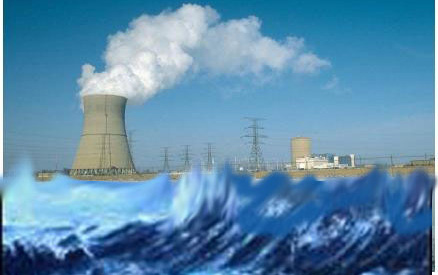
**Nuclear Siting**
Frozen in aspic — planning and pragmatism in the siting of nuclear power
stations in Britain. Despite efforts at strategic siting and the problems
posed by changing circumstances — especially the challenges arising out
of climate change — the geography of nuclear power infrastructure is
stubbornly inflexible, and has barely changed since it was first
established over half a century ago, as Andrew Blowers explains.
The geography of nuclear power in Britain was more or less settled by the 1970s
and has endured remarkably since then. Speed was of the essence in the
early years, a so-called age of ‘innocent expectation’ or, perhaps more
realistically, one of ‘trust in technology’. This was ‘nuclear’s
moment’, lasting less than three decades, during which time the
infrastructure of nuclear development was established around Britain,
predominantly at coastal sites.
But there is now a serious disjunction between a geography of nuclear power established more than half a century ago and the realities of site suitability in an age of climate change.
During the present century, a strategic siting process was adopted, with
individual sites identified through a National Policy Statement for Nuclear
Power Generation. In practice, siting remains a specific process, a matter
primarily of economic and historical determinism, with a few projects
seeking to attract investment to a handful of existing sites.
The last of the AGRs, at Torness on the east coast of Scotland, became the focus of the
first full-blown anti-nuclear protest in 1978 and 1979, attracting 5,000
people to the familiar features of fairs, symbols, stalls, camps, speeches,
leaflets, workshops, non-violent action, political and media attention,
stand-off s with police, and site occupations. The protest halted progress
but was eventually cleared. Its target was not just Torness power station
but the nuclear industry itself, and the connections between civil and
military nuclear power were clearly in evidence. With Torness, the
geography of nuclear power in Britain was complete.
Town & Country Planning Association Journal March April, 25th April 2023. ..https://www.tcpa.org.uk/journals/
US Senators and Congress Members introduce Bill to stop A1 from power to launch a nuclear weapon.

MARKEY, LIEU, BEYER, AND BUCK INTRODUCE BIPARTISAN LEGISLATION TO PREVENT AI FROM LAUNCHING A NUCLEAR WEAPON
Washington (April 26, 2023) – Senator Edward J. Markey (D-Mass.) and Representatives Ted W. Lieu (CA-36), Don Beyer (VA-08) and Ken Buck (CO-04) today introduced the bipartisan and bicameral Block Nuclear Launch by Autonomous Artificial Intelligence Act, legislation to safeguard the nuclear command and control process from any future change in policy that allows artificial intelligence (AI) to make nuclear launch decisions.
The Department of Defense’s 2022 Nuclear Posture Review states that current policy is to “maintain a human ‘in the loop’ for all actions critical to informing and executing decisions by the President to initiate and terminate nuclear weapon employment” in all cases. The Block Nuclear Launch by Autonomous AI Act would codify the Department’s existing policy by ensuring that no federal funds can be used for any launch of any nuclear weapon by an automated system without meaningful human control. Furthermore, the National Security Commission on Artificial Intelligence, established by Congress through the FY19 National Defense Authorization Act, recommended in their final report that the U.S. clearly and publicly affirm its policy that only human beings can authorize employment of nuclear weapons. This bill follows through on their recommendation.
“As we live in an increasingly digital age, we need to ensure that humans hold the power alone to command, control, and launch nuclear weapons – not robots,” said Senator Markey. “That is why I am proud to introduce the Block Nuclear Launch by Autonomous Artificial Intelligence Act. We need to keep humans in the loop on making life or death decisions to use deadly force, especially for our most dangerous weapons.”……………………………………………………………………………………………….
In April, Senator Markey and Representative Lieu reintroduced the Restricting First Use of Nuclear Weapons Act to prohibit any U.S. President from launching a nuclear strike without prior authorization from Congress. Last October, Senator Markey, then-member of Senate Foreign Relations Committee, filed eight amendments to the National Defense Authorization Act (NDAA) to reduce the risk of ‘nuclear Armageddon’ and stop the proliferation of nuclear weapons. Last January, co-chairs of the Nuclear Weapons and Arms Control Working Group, Senators Markey and Jeff Merkley (D-Ore.) and Representatives John Garamendi (CA-03) and Beyer led 51 of their colleagues in a letter to President Joe Biden urging the United States to take bold steps to reduce the nation’s reliance on nuclear weapons and to elevate arms control. https://www.markey.senate.gov/news/press-releases/markey-lieu-beyer-and-buck-introduce-bipartisan-legislation-to-prevent-ai-from-launching-a-nuclear-weapon
The most at-risk regions in the world for high-impact heatwaves

Heatwaves are becoming more frequent under climate change and can lead to
thousands of excess deaths. Adaptation to extreme weather events often
occurs in response to an event, with communities learning fast following
unexpectedly impactful events.
Using extreme value statistics, here we show
where regional temperature records are statistically likely to be exceeded,
and therefore communities might be more at-risk. In 31% of regions
examined, the observed daily maximum temperature record is exceptional.
Climate models suggest that similar behaviour can occur in any region.
In some regions, such as Afghanistan and parts of Central America, this is a
particular problem – not only have they the potential for far more extreme
heatwaves than experienced, but their population is growing and
increasingly exposed because of limited healthcare and energy resources. We
urge policy makers in vulnerable regions to consider if heat action plans
are sufficient for what might come.
Nature Communications 25th April 2023
No change to nuclear transport rules following accident down under, says regulator
in Western Australia.
The Office of Nuclear Regulation is responsible for oversight of operators transporting nuclear materials in the UK, and the Chief Nuclear Inspector’s report from October 2022 recorded 69 incidents related to nuclear transport in the reporting period. Two of these involved lost radioactive packages.
In response to the Western Australian accident, Richard Bramhall, of the Low-Level Radiation Campaign, told the NFLA: ‘The company is to be criticised for appalling practice since the gauge itself came apart and the packaging came apart and the vehicle was inadequate to contain the outcome of those failures.’
The NFLA and Dr Jill Sutcliffe, joint Chair of the NGA Forum of the Office of Nuclear Regulation, sent an FOI request to the ONR with their concerns. The ONR’s response is shown below as, whilst it contains no commitment to procedural changes, it has useful detailed guidance on the regulatory regime that applies to the transport of nuclear materials and links to reports.
The NFLA also wrote to senior executives at Rio Tinto PLC, the mining conglomerate that lost the caesium capsule, asking the company to issue a statement outlining how procedures would be tightened up to avoid another accident and whether Rio Tinto would fully reimburse the local authorities for the cost of recovering the capsule. Despite a reminder being sent urging the executives to respond, no reply has so far been received. 25 Apr 23
1 This Month



Shut down the radiation-damaged Heysham nuclear reactors now
To see nuclear-related stories in greater depth and intensity – go to https://nuclearinformation.wordpress.com

Say No to NASA’s Reckless Nuclear Reactor on the Moon
Say No to NASA’s Reckless Nuclear Reactor on the Moon
-
Archives
- October 2026 (256)
- September 2026 (339)
- August 2026 (330)
- July 2026 (355)
- June 2026 (287)
- May 2026 (306)
- April 2026 (356)
- March 2026 (251)
- February 2026 (267)
- January 2026 (308)
- December 2025 (358)
- November 2025 (359)
-
Categories
- 1
- 1 NUCLEAR ISSUES
- business and costs
- climate change
- culture and arts
- ENERGY
- environment
- health
- history
- indigenous issues
- Legal
- marketing of nuclear
- media
- opposition to nuclear
- PERSONAL STORIES
- politics
- politics international
- Religion and ethics
- safety
- secrets,lies and civil liberties
- spinbuster
- technology
- Uranium
- wastes
- weapons and war
- Women
- 2 WORLD
- ACTION
- AFRICA
- Atrocities
- AUSTRALIA
- Christina's notes
- Christina's themes
- culture and arts
- Events
- Fuk 2022
- Fuk 2023
- Fukushima 2017
- Fukushima 2018
- fukushima 2019
- Fukushima 2020
- Fukushima 2021
- general
- global warming
- Humour (God we need it)
- Nuclear
- RARE EARTHS
- Reference
- resources – print
- Resources -audiovicual
- Weekly Newsletter
- World
- World Nuclear
- YouTube
-
RSS
Entries RSS
Comments RSS

