Russia and Ukraine step up rhetoric around Zaporizhzhia nuclear power plant
By Euronews Digital 05/07/2023 https://www.euronews.com/2023/07/05/russia-and-ukraine-step-up-rhetoric-around-zaporizhzhia-nuclear-power-plant
President Zelenskyy and other senior Ukrainian officials have intensified warnings that Russian forces plan to sabotage the Zaporizhzhia power plant, the largest nuclear facility in Europe.
Russian and Ukrainian officials have escalated the rhetoric surrounding the situation at the Zaporizhzhia Nuclear Power Plant.
The plant has been under Russian control since the early days of the full-scale invasion in 2022. All six reactors have since been shut down.
The Ukrainian Armed Forces are now warning of a “possible provocation in the near future” saying “items similar to explosive devices were placed on the external roof of the third and fourth power units of ZNPP.”
A few days earlier, Ukraine’s military intelligence directorate claimed that Moscow had approved a plan to blow up the station and has mined four out of six power units, as well as the cooling pond.
One of the world’s worst nuclear disasters is likely something you’ve never heard of.
This is, of course, the Goiânia Accident of 1987. This
happened in the city of Goiânia in the Goiâs region of Brazil, which
surrounds the Federal District containing the purpose-built capital
Brasilia. In 1985, a hospital in the city moved locations, leaving behind a
radiotherapy unit which used the substance caesium-137 to treat cancer. Two
years later in 1987, two men broke into the abandoned building looking for
items with scrap value, and stole the machine – including its radioactive
component which they were not aware of.
Unilad 4th July 2023
https://www.unilad.com/news/nuclear-disaster-goiania-brazil-accident-918843-20230704
Germany’s power mix boasts more renewables, lower spot market prices – despite nuclear exit
Germany’s shutdown of nuclear power plants in April did not result in a
ramp-up of lignite-fired power plants, despite concerns. Instead, there has
been a significant increase in the share of renewables in the electricity
mix, and the proportion of coal-generated electricity has fallen by more
than 20%.
Electricity in Germany has become cheaper and cleaner since its
last three nuclear power plants were shut down, according to new data from
the Fraunhofer Institute for Solar Energy Systems ISE. Net electricity
production from lignite and hard coal has decreased by more than 20%, while
natural gas has experienced a minor decline.
In contrast, renewables have
reached a record share of 57.7% of net electricity generation. According to
Fraunhofer ISE, the German energy system successfully managed the nuclear
phase-out. The decommissioned reactors’ reduced output was offset by lower
consumption, decreased exports, and increased imports.
PV Magazine 4th July 2023 https://www.pv-magazine.com/2023/07/04/germanys-nuclear-exit-leads-to-more-renewables-lower-spot-market-prices/
Fukushima: China calls for suspension of Japanese plan to release radioactive water into sea.

Guardian, 4 July 23
Comments come as IAEA boss visits Japan to deliver results of safety report on planned discharge of nuclear-contaminated water
China has called for the suspension of a Japanese plan to begin releasing radioactive water from the tsunami-wrecked Fukushima nuclear plant into the sea, ahead of a UN report that is expected to give its approval to the scheme.
Beijing denounced the plan as “extremely irresponsible” when it was announced in 2021 and reiterated its opposition on Tuesday, as International Atomic Energy Agency (IAEA) chief, Rafael Grossi, begins a four-day visit in which he is set to deliver the results of the body’s safety review.
Through its embassy in Japan, China said the IAEA’s report cannot be a “pass” for the water release and called for it to be suspended.
Last week a spokesperson for the country’s foreign ministry said Beijing urged Japan to “take seriously both international and domestic concerns, stop forcibly proceeding with its ocean discharge plan” and “subject itself to rigorous international oversight”.
……… Local Japanese fishing communities have also objected to the plan, saying it will destroy more than a decade of work rebuilding their industry, with consumers likely to shun their catch and send prices plummeting.
Japan has not specified a date for the water release, which would take place over 30 to 40 years pending the IAEA’s final review and official approval from the national nuclear regulatory body for Tokyo Electric Power (Tepco). The regulatory body’s final word could come as early as this week………………… https://www.theguardian.com/world/2023/jul/04/fukushima-china-calls-for-suspension-of-japanese-plan-to-release-radioactive-water-into-sea
—
Report Shows How Military Industrial Complex Sets Media Narrative on Ukraine

by EDITOR, July 3, 2023, By Bryce Greene / Fairness and Accuracy In Reporting (FAIR) https://scheerpost.com/2023/07/03/report-shows-how-military-industrial-complex-sets-media-narrative-on-ukraine/
Wealthy donors have long funded think tanks with official-sounding names that produce research that reflects the interests of those funders (Extra!, 7/13). The weapons industry is a major contributor to these idea factories; a recent report from the Quincy Institute (6/1/23) demonstrates just how much influence war profiteers have on the national discourse.
The Quincy Institute—whose own start-up funding came mainly from George Soros and Charles Koch—looked at 11 months of Ukraine War coverage in the New York Times, Washington Post and Wall Street Journal, from March 1, 2022, through January 31, 2023, and counted each time one of 33 leading think tanks was mentioned. Of the 15 think tanks most often mentioned in the coverage, only one—Human Rights Watch—does not take funding from Pentagon contractors. Quincy’s analysis found that the media were seven times more likely to cite think tanks with war industry ties than they were to cite think tanks without war industry ties.
With 157 mentions each, the top two think tanks were the Atlantic Council and the Center for Strategic and International Studies (CSIS). Both of these think tanks receive millions from the war industry. The Atlantic Council has long been the brain trust of NATO, the military organization whose expansion towards Russia’s borders was a critical factor in Russia’s decision to invade Ukraine. (See FAIR.org, 3/4/22.) Both think tanks receive hundreds of thousands of dollars from Raytheon and Lockheed Martin, companies which have already been awarded billions of dollars in Pentagon contracts as a result of the war in Ukraine.
CSIS was revealed in a New York Times expose (8/7/16) to produce content that reflected the weapons industry priorities of its funders. It also “initiated meetings with Defense Department officials and congressional staff to push for the recommendations” of military funders.
Think tank media mentions related to US military support for Ukraine (Quincy Institute, 6/1/23).
In addition to showing think tanks’ enormous influence, the Quincy report highlights how difficult it is to trace just how much war industry funding these think tanks receive, and exactly whose interests they represent. “Think tanks are not required to disclose their funders,” study author Ben Freeman wrote, and “many think tanks list donors without indicating the amount of donations and others just list donors in ranges (e.g., $250,000 to $499,999).”
While the study was not aimed at establishing a causal connection between weapons industry funding and the think tanks’ positions, it acknowledges that funding typically plays a major role in shaping the institutions. “Funders,” Freeman wrote, “are able to influence think tank work through the mechanisms of censorship, self-censorship, and perspective filtering.” In other words, people with points of view antithetical to the funders likely would not last long in these think tanks.
Causal or not, there is a marked correlation between war industry funding and hawkish positions. “Think tanks with financial ties to the arms industry often support policies that would benefit the arms industry,” the report noted. For example, one Atlantic Council article (2/6/23) advocated against “any compromise with the Kremlin,” while another, titled “Equity for Ukraine” (1/16/23), argued that Ukraine has a “right to destroy critical infrastructure in Russia and plunge Moscow and other cities into darkness.”
Earlier this year, the president of the American Enterprise Institute—fifth on the list, with 101 mentions—was cited numerous times in the Wall Street Journal (e.g., 1/20/23, 1/25/23) arguing that “tanks and armored personnel carriers are essential,” and agreeing to provide them will “let Ukraine know that it can afford to risk and expend more of its current arsenal of tanks in counteroffensive operations because it can count on getting replacements for them.” AEI (6/9/23) has gone so far as to suggest that the US give tactical nuclear weapons to Ukraine, something that could easily escalate to all-out nuclear war.
The Quincy Institute did not find a single instance in which a media organization disclosed the fact that its source received funding from the war industry, obscuring how interested parties may be shaping coverage or promoting policy recommendations that directly benefit their funders.
The study found that for the few think tanks that receive little or no Pentagon contractor funding, positions on the war are dramatically different. With less influence from the war industry, the study found, these organizations emphasize “expository rather than prescriptive analysis, support for diplomatic solutions, and a focus on the impact of the war on different parts of society and the region.”
Human Rights Watch, which takes no war industry money, “was agnostic on the issue of providing US military assistance to Ukraine,” and instead “focused on human rights abuses in the conflict.” The Carnegie Endowment, which receives less than 1% of its funding from that industry, was never quoted advocating an increase in military spending or weapons sales during the Ukraine War.
One critical way that corporate news media manufactures consent for US foreign policy is by carefully selecting the sources and voices that they present, and narrowing the spectrum of debate. While this can take the form of uncritically repeating pronouncements from government officials, this research demonstrates that there are more subtle ways in which media outlets can push a corporate/state agenda under the guise of independent journalism.
High nuclear crimes don’t pay
by beyondnuclearinternational, By Linda Pentz Gunter
Politicians and executives snared for their roles in bribery and racketeering schemes
Breaking: On June 29, former Ohio Speaker of the House, Republican, Larry Householder, was handed down the maximum sentence of 20 years in prison for his role in the high crimes described below. His co-conspirator, Matt Borges, the former Ohio GOP Chairman, was sentenced on June 30 to fiveyears in federal prison.
This is part one of a two-part story on bribery and corruption in the nuclear power realm and the questionable ethics of legal lobbying. The original article was published in its entirety in Capitol Hill Citizen, a print-only newspaper published by Ralph Nader. These articles are reproduced with kind permission of the editor. Part two will be published in the next few weeks. Capitol Hill Citizen comes out in print only. To subscribe or purchase single copies, click here.
It all began when Ohio nuclear power plant owner, FirstEnergy, began “bleeding cash” in a desperate effort to keep its aging and uneconomical Davis-Besse and Perry nuclear power plants solvent.
The effort bankrupted FirstEnergy subsidiary, FirstEnergy Solutions, then owner of the two nuclear plants. The shareholders wanted out. FirstEnergy threatened to close the plants. But Ohio House Republican, Larry Householder, had other plans.
Householder concocted a nefarious scheme to extract $61 million from the failing company to ensure his re-election and that of enough political allies to guarantee his return to the House Speakership.
This, in turn, would secure enough votes to ensure passage of a $1.3 billion bailout bill, known as HB6, that would rescue the two nuclear plants along with struggling coal plants.
And it worked. For a while.
Householder, who had previously held the Ohio House Speakership from 2001-2004, was duly re-elected to that position in January 2019. Millions of dollars also poured into the campaign war chests of 21 political candidates in order to stack the House with votes in favor of the bailout bill. It duly passed the House on May 29, 2019 and the Senate on July 17, 2019. But the July 23, 2019 Ohio House concurrence vote passed the bill by only one vote. And then it all unraveled.
On July 21, 2020, Householder and four others were arrested for what investigating US Attorney for the Southern District of Ohio, David DeVillers, described as “the biggest criminal racketeering conspiracy in Ohio history.”
Householder, who was re-elected to the Ohio House shortly afterwards and refused to resign, was unanimously voted out as Speaker on July 30, 2020. Eleven months later the House voted 75-21 to expel Householder.
After a seven week trial, Householder and fellow conspirator, former GOP Chairman Matt Borges, were found guilty of racketeering conspiracy on March 9, 2023. The jury took just nine hours to reach their verdict. Householder was sentenced on June 29 to 20 years in prison — the maximum penalty. Borges was sentenced on June 30 to five years in federal prison. Both men said they would appeal.
The U.S. District judge in the case, Timothy Black, scolded Householder at sentencing, saying: “Beyond financial greed, I think you just liked power. You weren’t serving the people. You were serving yourself.”
Assistant U.S. Attorney Emily Glatfelter described Householder as “the quintessential mob boss, directing the criminal enterprise from the shadows and using his casket carriers to execute the scheme”, in a sentencing memorandum to the judge.
FirstEnergy Corp. was also charged with conspiring to commit honest services wire fraud, but the company signed a deferred prosecution agreement that could see the charges dismissed. FirstEnergy also agreed to pay a $230 million monetary penalty.
But an ongoing civil lawsuit against FirstEnergy alleging insider trading and other offenses has brought documents to light released by Ohio Consumers’ Council that reveal the true depth and scope of involvement of its executives in the scheme to ensure passage of HB6.
Nevertheless, Householder defense attorney, Steve Bradley, argued during the trial that Householder was just “being a good politician” and is simply “good at fundraising”. Never mind that Householder hid the source of the $61 million by funneling it through a murky 501(c)(4) called Generation Now, then redirected around $500,000 of it to pay off his personal credit card debt, settle a lawsuit, and repair a Florida home.
The flow of dark money to Generation Now, which FirstEnergy has now admitted supplying, also paid for a disinformation campaign to suppress a public petition drive to repeal HB6, launched by a coalition called Ohioans Against Corporate Bailouts. ……………………………………………………..
It remains to be seen whether the fate of those politicians and corporate executives who fell prey to greed and deception and to whom punishment will now be meted out, will serve as an adequate deterrent against further such conduct.
Linda Pentz Gunter is the international specialist at Beyond Nuclear and writes for and curates Beyond Nuclear International. https://beyondnuclearinternational.org/2023/07/02/high-nuclear-crimes-dont-pay/
US Nuclear-Capable B-52 Bombers Fly to Korean Peninsula in Latest Provocation
by EDITOR, July 3, 2023, By Dave DeCamp / Antiwar.com
The bombers participated in a training exercise with US and South Korean fighter jets.
US nuclear-capable B-52 bombers flew to the Korean Peninsula on Friday in the latest US provocation against North Korea.
The South Korean Defense Ministry and the US military said the bombers participated in exercises and were joined by US and South Korean fighter jets………………………….
According to Air & Space Forces Magazine, Friday’s B-52 deployment marked the seventh time in the last six months that B-52s or B-1s have flown above or near the Korean Peninsula.
The US is planning to dock a nuclear-armed submarine in South Korea for the first time since 1981. President Biden and South Korean President Yoon Suk-yeol announced the plan in April, but it’s not clear when the nuclear-armed submarine will arrive.
Because US nuclear-armed submarines can be patrolling waters anywhere in the world at any time and carry long-range missiles, from a strategic perspective, docking one in South Korea serves no purpose other than as a provocation toward North Korea. https://scheerpost.com/2023/07/03/us-nuclear-capable-b-52-bombers-fly-to-korean-peninsula-in-latest-provocation/
World’s Largest Fusion Project Is in Big Trouble, New Documents Reveal

The International Thermonuclear Experimental Reactor (ITER) is already billions of dollars over budget and decades behind schedule. Not even its leaders can say how much more money and time it will take to complete
Scientific American Charles Seife on June 15, 2023
“……………………………….. ITER is on the verge of a record-setting disaster as accumulated schedule slips and budget overruns threaten to make it the most delayed—and most cost-inflated—science project in history.
………………. Since the 1950s fusion machines have grown bigger and more powerful, but none has ever gotten anywhere near what would be needed to put this panacea energy source on the electric grid. ITER is the biggest, most powerful fusion device ever devised, and its designers have intended it to be the machine that will finally show that fusion power plants can really be built.
The ITER project formally began in 2006, when its international partners agreed to fund an estimated €5 billion (then $6.3 billion), 10-year plan that would have seen ITER come online in 2016. The most recent official cost estimate stands at more than €20 billion ($22 billion), with ITER nominally turning on scarcely two years from now.
Documents recently obtained via a lawsuit, however, imply that these figures are woefully outdated: ITER is not just facing several years’ worth of additional delays but also a growing internal recognition that the project’s remaining technical challenges are poised to send budgets spiraling even further out of control and successful operation ever further into the future.
The documents, drafted a year ago for a private meeting of the ITER Council, ITER’s governing body, show that at the time, the project was bracing for a three-year delay—a doubling of internal estimates prepared just six months earlier. And in the year since those documents were written, the already grim news out of ITER has unfortunately only gotten worse.
Yet no one within the ITER Organization has been able to provide estimates of the additional delays, much less the extra expenses expected to result from them. Nor has anyone at the U.S. Department of Energy, which is in charge of the nation’s contributions to ITER, been able to do so. When contacted for this story, DOE officials did not respond to any questions by the time of publication.
The problems leading to these latest projected delays were several years in the making. The ITER Organization was extremely slow to let on that anything was wrong, however. As late as early July 2022, ITER’s website announced that the machine was expected to turn on as scheduled in December 2025. Afterward that date bore an asterisk clarifying that it would be revised. Now the date has disappeared from the website altogether.
ITER leaders seldom let slip that anything was awry either…………………………………………………………….
In response to this stonewalling, earlier this year I initiated a lawsuit under the U.S. Freedom of Information Act seeking to reveal the extent of ITER’s expected schedule and cost troubles. So far, the lawsuit has been partially successful. It has extracted partially redacted documents revealing that in November 2021 ITER’s internal estimates showed the project already facing about 17 months of delays. By the time of the June 2022 ITER Council meeting, the number had doubled to roughly 35 months of delays—enough to easily add billions of dollars to ITER’s already bloated budget. But this timeline didn’t reflect other events bound to introduce even more delays……………………………………………….
With each passing decade, this record-breaking monument to big international science looks less and less like a cathedral—and more like a mausoleum. https://www.scientificamerican.com/article/worlds-largest-fusion-project-is-in-big-trouble-new-documents-reveal/
Fukushima, the Hidden Side of the Story
“The Fukushima Disaster, The Hidden Side of the Story,” is a just-released film documentary, a powerful, moving, information-full film that is superbly made. Directed and edited by Philippe Carillo, it is among the strongest ever made on the deadly dangers of nuclear technology.
It begins with the words in 1961 of U.S. President John F. Kennedy: “Every man, woman and child lives under a nuclear sword of Damocles, hanging by the slenderest of threads, capable of being cut at any moment by an accident, or miscalculation or by madness.”
It then goes to the March 2011 disaster at the Fukushima Daichi nuclear power plants in Japan after they were struck by a tsunami. Their back-up diesel generators were kicked in but “did not run for long,” notes the documentary. That led to three of the six plants exploding—and there’s video of this—“releasing an unpreceded amount of nuclear radiation into the air.”
“Fukushima is the world’s largest ever industrial catastrophe,” says Professor John Keane of the University of Sydney in Australia. He says there was no emergency plan and, as to the owner of Fukushima, Tokyo Electric Power Company, with the accident its CEO “for five nights and days…locked himself inside his office.”
Meanwhile, from TEPCO, there was “only good news” with two Japanese government agencies also “involved in the cover-up”—the Nuclear Industry Safety Agency and Ministry of Economy, Trade and Industry.
“Japanese media was ordered to censor information. The Japanese government failed to protect its people,” the documentary relates.
Yumi Kikuchi of Fukushima, since a leader of the Fukushima Kids Project, recalls: “On TV, they said that ‘it’s under control’ and they kept saying that for two months. The nuclear power plant had already melted and even exploded but they never admitted the meltdown until May. So, people in Fukushima during that time were severely exposed to radiation.”
Arnie Gundersen, a nuclear engineer and now a principal of Fairewinds Energy Education in Burlington, Vermont, speaks of being told by Naoto Kan, the prime minister of Japan at the time of the accident, that “our existence as a sovereign nation was at stake because of the disaster at Fukushima Daichi.”
Kan then appears in documentary and speaks of “manmade” links to the disaster.
The documentary tells how Kan, following the accident, became “an advocate against nuclear power….ordered all nuclear power plants in Japan to shut down for safety” and for the nation “to move into renewable energy.”
But, subsequently, “a nuclear advocate,” Shinzo Abe, became Japan’s prime minister.
Yoichi Shimatsu, a former Japan Times journalist, appears in the film and speaks of “the cruelty, the cynicism of this government.” He speaks of how in the accident’s aftermath, “nearly every member of Parliament and leaders of the major political parties” along with corporate executives, “moved their relatives out of Japan”
He says “Shanghai is the largest Japanese community outside Japan now…while these same people” had been “telling the people of Fukushima go home, 10 kilometers from Fukushima, go home it’s safe, while their families are overseas in Los Angeles, in Paris, in London and in Shanghai.”
“If it’s safe, why they left?” asks Kikuchi. “They tell us it’s safe to live in Fukushima, and to eat Fukushima food to support Fukushima people. There’s a campaign by Japanese government…and people believe it.”
Gundersen says: “At Fukushima Daichi, the world is already seeing deaths from cancer related to the disaster…There’ll be many more over time.” He adds that there’s been a “huge increase in thyroid cancer in the surrounding population.”
“Unfortunately,” he goes on, “the Japanese government is not telling us al the evidence. There’s a lot of pressure on the scientists and the medical community to distort the evidence so there’s no blowback against nuclear power.”
There is a section in the documentary on the impacts of radioactivity which includes Dr. Helen Caldicott, former president of Physician for Social Responsibility, discussing the impacts of radiation on the body and how it causes cancer. She states: “There is no safe level of radiation. I repeat, there is no safe level of radiation. Each dose of radiation is cumulative and adds to your risk of getting cancer and that’s absolutely documented in the medical literature.”
“The nuclear industry says, well,” Dr. Caldiott, continues, “there are ‘safe doses’ of radiation and even says a little bit of radiation is good for you and that is called the theory of hormesis. They lie and they lie and they lie.”
Maggie Gundersen, who was a reporter and then a public relations representative for the nuclear industry and, like her husband Arnie became an opponent of nuclear power, speaks of how nuclear power derives from the World War II Manhattan Project program to develop atomic weapons and post-war so-called “Atoms for Peace” push.
Gundersen says in becoming a nuclear industry spokesperson, “the things I was taught weren’t true.” The notion, for example, that what is called a containment at a nuclear plant is untrue because radioactivity “escapes every day as a nuclear power plant operates” and in a “calamity” is released massively.
As to economics, she cited the claim decades ago that nuclear power would be “too cheap to meter.” The president of Fairewinds Energy Education, she says: “Atomic power is now the most expensive power there is on the planet. It is not feasible. It never has been.” Regarding the radioactive waste produced by nuclear power, she says “there is literally no technology to do that…It does not exist.”
As to international oversight, the documentary presents the final version of a “Report of the United Nations Scientific Committee on the Effects of Atomic Radiation” issued in 2014 which finds that the radiation doses from Fukushima “to the general public during the first year and estimated for their lifetimes are generally low or very low….The most important effect is on mental and social well-being.”
Shimatsu says it is not only in Japan but on an international level that the consequences of radioactive exposure have been completely minimized or denied. “We are all seeing a global political agreement centered in the UN organizations, tie IAEA [International Atomic Energy Agency], the World Health Organization…All the international agencies are whitewashing what is happening in Fukushima. We take dosimeters and Geiger counters in there, we see a much different story,” he says.
In Germany, says Maggie Gunderson, “the politicians chose” to do a study to “substantiate” that no health impacts “happened around nuclear power plants….But what they found was the radiation releases cause significant numbers of childhood leukemia.” A summary of that 2008 study comes on the screen. The U.S. followed up on that research, she says, but recently “the [U.S.] Nuclear Regulatory Commission said it was not going to do that study,” that “it doesn’t have enough funding; it had to shut it down.” She said the real reason was that it was producing “data they don’t want to make public.”
Beyond the airborne releases of radiation after the Fukushima accident, now, says the documentary, there is the growing threat of radioactivity through water that has and still is leaking from the plants as well as more than a million tons of radioactive water stored in a thousand tanks built at the plant site. After the accident, TEPCO released 300,000 tons of radioactive water into the Pacific Ocean. Now there is no land for more tanks, so the Japanese government, the documentary relates, has decided that starting this year to dump massive amounts of radioactive water over a 30-year period into the Pacific.
Arnie Gundersen speaks of the cliché that “the solution to pollution is dilution,” but with the radiation from Fukushima being sent into the Pacific, there will be “bio-accumulation”—with vegetation absorbing radiation, little fish eating that vegetation and intensifying it and bigger fish eating the smaller fish and further bio-accumulating the radioactivity. Already, tuna off California have been found with radiation traced to Fukushima. With this planned further, and yet greater dispersal, thousands of people “in the Pacific basin will die from radiation,” he says.
Andrew Napuat, a member of the Parliament of the nation of Vanuatu, an 83 island archipelago in the Pacific, says in the documentary: “We have the right to say no to the Japan solution. We can’t let them jeopardize our sustenance and livelihood.” Vanuatu along with 13 other countries has signed and ratified the South Pacific Nuclear Free Zone Treaty.
As the documentary nears its end, Arnie Gundersen says that considering the meltdown at the Three Mile Island nuclear plant in Pennsylvania in 1979, the meltdown at the Chernobyl nuclear plant in Ukraine in 1986, and now the three Fukushima meltdowns in 2011, there has been “a meltdown every seven years roughly.” He says: “Essentially, once every decade the world needs to know that there might be an atomic meltdown somewhere.” And, he adds, the “nuclear industry is saying they want would like to build as many as 5,000 new nuclear power plants.” (There are 440 in the world today.)
Meanwhile, he says, “renewable power is no longer alternative power. It’s on our doorstep. It’s here now and it works and it’s cheaper than nuclear.” The cost of producing energy from wind, he says, is three cents a kilowatt hour, for solar five cents, and for new nuclear power plants 15 cents. Nuclear “makes no nuclear economic sense.”
Maggie Gundersen says, with tears in her eyes: “I’m a woman and I feel it’s inherent for us as women to protect our children our grandchildren, and it’s our job now to raise our voices and have this madness stop.”
Philippe Carillo, from France, who worked for 14 years in Hollywood and who since 2017 has lived in Vanuatu, has worked on several major TV documentary projects for the BBC, 20th Century Fox and French National TV as well as doing independent productions. He says he made “The Fukushima Disaster, The Hidden Side of the Story” to “expose the nuclear industry and its lies.” His previous award-winning documentary, “Inside the Garbage of the World,” has made changes regarding the use of plastic.
“The Fukushima Disaster, The Hidden Side of the Story” can be viewed at Amazon, Apple TV, iTunes, Google Play and Vimeo on demand. Links are: iTunes: https://itunes.apple.com/us/movie/the-fukushima-disaster/id1672643918?ls=1 Apple TV: https://tv.apple.com/us/movie/the-fukushima-disaster/umc.cmc.3rfome5kj2hfpo2q9fwx5u0y0 Amazon UK: www.amazon.co.uk/placeholder_title/dp/B0B8TLPZ9K/ref=sr_1_1Amazon USA: https://www.amazon.com/Fukushima-Disaster-Yoichi-Shimatsu/dp/B0B8TLSRN4/ref=sr_1_1 Google Play: https://play.google.com/store/movies/details?id=vehqb5ex-L8.P&sticky_source_country=US&gl=US&hl=en&pli=1 Video on demand: https://vimeo.com/ondemand/thefukushimadisaster
Also, extra footage and interviews not in the film are at www.exposurefilmstrust.com
Cover up? Did atom bosses collude to ‘manage message’ of Japanese plan to poison Pacific?
Disturbing documentary evidence has been seen by the UK/Ireland Nuclear Free Local Authorities which appears to suggest collusion between the Japanese nuclear industry, government ministries and the UN International Atomic Energy Authority to ‘manage the message’ over the ocean dumping of 1.3 million tonnes of radioactive water held over from the Fukushima nuclear disaster.
The purported IAEA-letterheaded document titled ‘IAEA REVISION PROPOSAL FOR THE FINAL REPORT OF HANDLING ALPS TREATED WATER AT TEPCO’S FUKUSHIMA DAIICHI NUCLEAR POWER STATION’ may not sound very exciting, but, if genuine, amounts to a clear admission that the international agency has been keen to collaborate at the highest level with the Japanese nuclear industry and ministry officials to downplay the dangers associated with discharging millions of barrels of water which remain contaminated with highly toxic tritium.
The document, seemingly issued by the Department of Nuclear Safety at the IAEA, was posted to the website/blogsite dunrenard[i] by an anonymous whistle-blower on 28 June 2023 and then forwarded to renowned marine radiation expert and campaigner Tim Deere-Jones, who brought it to the NFLA’s attention. In response to the release of the document, Japanese Foreign Minister Yoshimasa Hayashi has condemned it as a ‘forgery’. This document can be found at the end of this media release.
Operated by the Tokyo Electric Power Company (TEPCO), the Fukushima Plant was hit by an earthquake and a tsunami on 11 March 2011. A disaster unfolded with three nuclear meltdowns, three hydrogen explosions and a release of radiation from three reactors, and Government authorities were forced to evacuate 154,000 people from the surrounding area over a 20-mile radius.
Since the disaster, seawater water used to cool the destroyed reactors, along with rain- and groundwater that has leached into the damaged plant, has accumulated on site with over 1.3 million tons now being stored in barrels. Last year, the Japanese government confirmed its intention to build an underwater pipe 1km out to sea to discharge the radioactive water there, and now this work has been completed the dumping is scheduled to begin imminently, despite massive domestic and international opposition.
Opponents are fearful that although the contaminated water is treated by a process known as ALPS (the Advanced Liquid Processing System) this cannot remove deadly tritium, a beta-emitting radioactive isotope of hydrogen, and other radioactive materials, which if ingested can trigger cancers and appeals to stop this process citing the health risks and environmental damage that will result have been expressed by the local fishing and farming community, civic leaders, the Pacific Islands Council, regional governments, and anti-nuclear activists everywhere.
The NFLA has itself objected in letters to Japanese Ministers, TEPCO officials and the United Nations on two occasions and recently signed a partnership agreement with its Japanese equivalent, Mayors for a Nuclear Power Free Japan, in part to collaborate in opposing the plan.
In the released document, the IAEA supports the discharge of the radioactive water ‘even though the activity concentrations of some radionuclides above the [permitted] discharge limits are reported’ and agrees not to conduct a full radioactive analysisof every batch of the waterheld‘due to the concerns of [operator] TEPCO and relevant authorities [the Japanese Government]’.
More worryingly, the report clearly advises that ‘data and results that could be viewed negatively by the public should be removed from the final report’ and thatIAEA Director General Raphael Grossi has instructed that ‘positive conclusions supporting ALPS treated water discharging shall be included in the executive summary of the Final Report’.
The NFLA’s source was Mr Tim Deere-Jones, a graduate in Marine Studies from Cardiff University. Tim, an independent marine pollution researcher and consultant since 1983, is highly regarded by the many international organisations who have engaged him in their campaigns against the damage caused to our oceans and inland waterways by radioactive and other contaminants. Amongst his recent notable achievements, Mr Deere-Jones provided an invaluable professional advice to the successful Greenlandic campaign to ban the mining of Uranium and Rare Earths at Kuannersuit, which led to his report being translated into Kalaallisut, the official Inuit based language of Greenland.
Here Tim gives his analysis of the alleged IAEA document:
‘Documentary evidence of deep collusion between the IAEA, Japanese Government Ministries and TEPCO intended to suppress, “fudge” and spin evidence related to the scientific data related to the treatment, monitoring and sea-discharge of ALPS treated water from the Fukushima Daiichi disaster site.
Preliminary analysis:
Language of origin of the document is uncertain, the extent English language copy appears to have been either translated from the original or compiled by someone with English as a second language.
The document reports that the original draft “Notional Plan for Source and Environmental Monitoring associated with IAEA LPS Safety Review” was presented to the Japanese government in March 2023, and that the original Notional Plan proposed that environmental monitoring of the ALPS treated water should be based on “rapid analysis” of all batches of treated water and “full analysis” of selected batches of treated water.
While it appears to be clear that the proposed “rapid analysis” would not have been as thorough or detailed as the proposed “full analysis”, in the event the Document has confirmed that the Final Report has recommended the “rapid analysis” but that the “full analysis” of selected batches will not be recommended in the Final Report “due to the concerns of TEPCO and relevant authorities” (presumably the ministries of the Government of Japan).
The document confirms that, in May 2023, the IAEAs Director and Co-ordinator of Nuclear Safety & Security Department and the head of the IAEAs task force on the Fukushima releases, shared the IAEAs Draft Report on the releases with the GoJ (Government of Japan) and TEPCO officials.
The IAEA document notes that it’s Draft Report on the handling of ALPS treated water concludes with the finding in favour of the proposed discharge of the treated water to sea “even though the activity concentrations of some radionuclides above the discharge limits are reported”
The document comments on “The public’s captiousness on radioactivity issues”. (“Captiousness” is defined in dictionaries as “the disposition to find and point out trivial issues or faults”)
In the context of the above the document recommends that “data and results that could be viewed negatively by the public should be removed from the final report ……. Issued in later June.”
The document reports that, following negotiations with the GoJ, IAEA Director General Grossi, instructed that “positive conclusions supporting ALPS treated water discharging shall be included in the executive summary of the Final Report”
And that “the Final Report will highlight that TEPCO’s discharge plan is in accord with international safety standards to address public concerns and doubts. The IAEA will conduct discussions with all task force experts, but their recommendations will not be reflected in the Report”
The document confirms that the IAEA has agreed to make revisions to the Report on the basis of feedback from the Japanese Ministries of Economy/Trade and Industry, Foreign Affairs, Environment and TEPCO because TEPCO and the Ministries had “expressed concerns regarding the potential public opposition to some data and results. The IAEA fully understands these concerns and would make revisions”
The document reports that the GoJ “requested to fudge” responses to the Pacific Island Forum’s demand for a full analysis of ALPS treated water, and questions raised by neighbouring countries about Organically Bound Tritium (OBT). In that context the document reports that, presumably in response to the request, “the concerns were not included in the ALPS safety review”
My submissions on behalf of the Pacific Islands Forum
Despite the evidence reported above, the document confirms that the GoJ “recommended to stress the fact that Japanese Authorities never interfered with IAEAs safety review” and that “the independence of the Report is guarantee as no political elements involved”’
Commenting on the shocking revelations, Mr Deere-Jones said:
“Since the original Fukushima disaster, I have made multiple submissions to, and on behalf of, the Pacific Islands Forum, Japanese Citizens Groups, Environmental NGOs, and Commercial Fishermen’s Associations. My submissions have repeatedly called for full analysis of the ALPS treated water and the sludges at the bottom of the ALPS treated water holding tanks, and referenced the peer reviewed scientific evidence demonstrating that marine Organically Bound Tritium posed a greater health risk through multiple dose delivery pathways than was recognised by the nuclear establishment (Japanese Govt ministries and agencies, TEPCO and the IAEA)”.
In response to the release of this alleged document, Japanese Foreign Minister Hayashi was quick to condemn it as a forgery and to refute any suggestion of Japanese government collusion, issuing the following statement to Associated Press:
“The IAEA is aware of the existence of the forged documents. The IAEA’s comprehensive final report is a document prepared under the responsibility of the IAEA, and the Japanese government is not in a position to manipulate its contents. “I would like to stress that we are firmly opposed to any attempt to undermine the independence and neutrality of the IAEA with false information.”[ii]
Tim Deere-Jones retorted: “Such a response is exactly what we would expect from the IAEA when such information is leaked to the public. To suggest that the document is fraudulent is clearly intended to imply that concerned scientists, campaigners, marine stakeholders, and communities are implicated.
“However, the matters disclosed in the leaked document are very much in accord with the experience of scientists and campaigners who have been raising these concerns since the Fukushima disaster and its subsequent botched response first occurred.
“Since that time, we have submitted numerous fully scientifically referenced documents highlighting the issue of Organically Bound Tritium, the multiple other radionuclides not removed from the ALPS treated water, the failure to discuss the radioactive solids that have settled on the bottom of the holding tanks, the behaviour and fate of these multiple radioactive materials once discharged to sea and their impact on marine ecologies and the health of coastal communities.
“The submission of such information has been consistently met by the IAEA and nuclear industry with hostility, contempt, dismissal, and a refusal to engage with the issues raised.
“The leaked document is on IAEA headed paper and typeface, bears the imprint of the relevant department, is couched in language characteristic of the IAEA, and refers to the ‘The public’s captiousness on radioactivity issues’; captiousness being defined in dictionaries as “the disposition to find and point out trivial issues or faults”. Such language is a precise reflection of our long-term experience and understanding of the IAEA and nuclear industry attitude and response to our concerns.
“I would remind readers that the IAEAs Founding Statutes state that its principal objective is as follows ‘The Agency shall seek to accelerate and enlarge the contribution of atomic energy’.”
In conclusion, NFLA Chairman, Councillor Lawrence O’Neill said:
“The contents of this report, if true, are deeply disturbing and suggest a plan in which, at the highest level, officials from the international agency responsible for nuclear safety, the Japanese nuclear industry and the Japanese government have colluded to underplay the dangers posed to Pacific marine life and the world community by the expedient, but irresponsible, discharge of tritium-contaminated water.
“Most bitterly disappointing is that this document suggests that such a plan has the tacit endorsement of IAEA Director-General Grossi; for Mr Grossi is the man in which the world community has placed its faith to put safety before political considerations to prevent a nuclear disaster at the imperilled Zaporizhzhia nuclear power plant in Ukraine.”
Ends://…
American, Russians, Ukrainians and Belarusians gather in Vienna to call for peace

By Medea Benjamin, https://beyondnuclearinternational.org/2023/07/02/coming-together-for-peace/
During the weekend of June 10-11 in Vienna, Austria, over 300 people representing peace organizations from 32 countries came together for the first time since the Russian invasion of Ukraine to demand an end to the fighting. In a formal conference declaration, participants declared, “We are a broad and politically diverse coalition that represents peace movements and civil society. We are firmly united in our belief that war is a crime against humanity and there is no military solution to the current crisis.”
To amplify their call for a ceasefire, Summit participants committed themselves to organizing Global Weeks of Action—protests, street vigils and political lobbying—during the days of September 30-October 8.
Summit organizers chose Austria as the location of the peace conference because Austria is one of only a few neutral non-NATO states left in Europe. Ireland, Switzerland and Malta are a mere handful of neutral European states, now that previously neutral states Finland has joined NATO and Sweden is next in line. Austria’s capital, Vienna, is known as “UN City,” and is also home to the Secretariat of the OSCE (the Organization for Security and Cooperation in Europe), which monitored the ceasefire in the Donbas from the signing of the Minsk II agreement in 2015 until the Russian invasion of Ukraine in 2022.
Surprisingly, neutral Austria turned out to be quite hostile to the Peace Summit. The union federation caved in to pressure from the Ukrainian Ambassador to Austria and other detractors, who smeared the events as a fifth column for the Russian invaders. The ambassador had objected to some of the speakers, including world-renowned economist Jeffrey Sachs and European Union Parliament member Clare Daly.
Even the press club, where the final press conference was scheduled, was canceled at the last minute. The Austrian liberal/left newspaper Der Standard piled on, panning the conference both beforehand, during and afterwards, alleging that the speakers were too pro-Russian. Undaunted, local organizers quickly found other locations. The conference took place in a lovely concert center, and the press conference in a local cafe.
The most moving panel of the conference was the one with representatives from Ukraine, Russia, and Belarus, who risked their lives to participate in the Summit. Yuri Sheliazhenko, secretary-treasurer of the Ukrainian Pacifist Movement, is unable to leave the country and therefore spoke to attendees from Kyiv via Zoom.
“Like many Ukrainians, I am a victim of aggression of Russian army, which bombs my city, and a victim of human rights violations by the Ukrainian army, which tries to drag me to the meat grinder, denying my right to refuse to kill, to leave the country for my studies in University of Münster … Think about it: all men from 18 to 60 are prohibited from leaving the country, they are hunted on the streets and forcibly abducted to the army’s serfdom.”
Sheliazhenko told the Summit that the Armed Forces of Ukraine had tried to deny conscientious objector status to Ukrainian war resisters, but relented when international pressure demanded that the Ukrainian military recognize rights secured under the European Convention on Human Rights.
Several groups at the Summit pledged to provide support for conscientious objectors from Ukraine, Russia and Belarus, and also took up a collection for Ukrainian families lacking access to clean water following the recent destruction of the Kakhovka dam.
Highlights of the Summit also included remarks by representatives from the Global South, who came from China, Cameroon, Ghana, Mexico and Bolivia. Bolivia’s Vice President David Choquehuanca inspired the crowd as he spoke of the need to heed the wisdom of Indigenous cultures and their mediation practices.
Many speakers said the real impetus to end this war will come from the Global South, where politicians can see the widespread hunger and inflation that this conflict is causing, and are taking leading roles in offering their services as mediators.
Almost all of Europe was represented, including dozens from Italy, the country mobilizing the continent’s largest peace demonstrations, with over 100,000 protesters. Unlike in the United States, where the demonstrations have been small, Italian organizers have successfully built coalitions that include trade unions and the religious community, as well as traditional peace groups. Their advice to others was to narrow and simplify their demands in order to broaden their appeal and build a mass anti-war movement.
The eight-person U.S. delegation included representatives from CODEPINK, Peace in Ukraine, the Fellowship of Reconciliation and Veterans for Peace. U.S. retired colonel and diplomat Ann Wright was a featured speaker, along with former Congressman Dennis Kucinich, who joined remotely.
Despite the uniform bottom line of the participants, which was a call for peace talks, there were plenty of disagreements, especially in the workshops. Some people believed that we should continue to send weapons while pushing for talks; others called for an immediate end to weapons transfers. Some insisted on calling for the immediate withdrawal of Russian troops, while others believed that should be the result of negotiations, not a pre-condition. Some put more blame on the role of NATO expansion and the interference of the U.S. in Ukraine’s internal affairs, while others said the blame belongs exclusively at the doorstep of the Russian invaders.
Some of these differences were reflected in discussions surrounding the final declaration, where there was plenty of back and forth about what should and should not be mentioned. There were strong calls to condemn NATO provocations and the role of the U.S./UK in sabotaging early attempts at mediation. These sentiments, along with others condemning the West, were left out of the final document, which some criticized as too bland. References to NATO provocations that led to the Russian invasion were deleted and replaced with the following language:
“The institutions established to ensure peace and security in Europe fell short, and the failure of diplomacy led to war. Now diplomacy is urgently needed to end the war before it destroys Ukraine and endangers humanity.”
But the most important segment of the final document and the gathering itself was the call for further actions.
“This weekend should be seen as just the start,” said organizer Reiner Braun. “We need more days of action, more gatherings, more outreach to students and environmentalists, more educational events. But this was a great beginning of global coordination.”
Chris Hedges: They Lied About Afghanistan. They Lied About Iraq. And They Are Lying About Ukraine.
The U.S. public has been conned, once again, into pouring billions into another endless war.
The playbook the pimps of war use to lure us into one military fiasco after another, including Vietnam, Afghanistan, Iraq, Libya, Syria and now Ukraine, does not change. Freedom and democracy are threatened. Evil must be vanquished. Human rights must be protected. The fate of Europe and NATO, along with a “rules based international order” is at stake. Victory is assured.
The results are also the same. The justifications and narratives are exposed as lies. The cheery prognosis is false. Those on whose behalf we are supposedly fighting are as venal as those we are fighting against.
The Russian invasion of Ukraine was a war crime, although one that was provoked by NATO expansion and by the United States backing of the 2014 “Maidan” coup which ousted the democratically elected Ukrainian President Viktor Yanukovych. Yanukovych wanted economic integration with the European Union, but not at the expense of economic and political ties with Russia. The war will only be solved through negotiations that allow ethnic Russians in Ukraine to have autonomy and Moscow’s protection, as well as Ukrainian neutrality, which means the country cannot join NATO. The longer these negotiations are delayed the more Ukrainians will suffer and die. Their cities and infrastructure will continue to be pounded into rubble.
But this proxy war in Ukraine is designed to serve U.S. interests. It enriches the weapons manufacturers, weakens the Russian military and isolates Russia from Europe. What happens to Ukraine is irrelevant.
“First, equipping our friends on the front lines to defend themselves is a far cheaper way — in both dollars and American lives — to degrade Russia’s ability to threaten the United States,” admitted Senate Republican Leader Mitch McConnell.
“Second, Ukraine’s effective defense of its territory is teaching us lessons about how to improve the defenses of partners who are threatened by China. It is no surprise that senior officials from Taiwan are so supportive of efforts to help Ukraine defeat Russia. Third, most of the money that’s been appropriated for Ukraine security assistance doesn’t actually go to Ukraine. It gets invested in American defense manufacturing. It funds new weapons and munitions for the U.S. armed forces to replace the older material we have provided to Ukraine. Let me be clear: this assistance means more jobs for American workers and newer weapons for American servicemembers.”
Once the truth about these endless wars seeps into public consciousness, the media, which slavishly promotes these conflicts, drastically reduces coverage. The military debacles, as in Iraq and Afghanistan, continue largely out of view. By the time the U.S. concedes defeat, most barely remember that these wars are being fought.
The pimps of war who orchestrate these military fiascos migrate from administration to administration. Between posts they are ensconced in think tanks — Project for the New American Century, American Enterprise Institute, Foreign Policy Initiative, Institute for the Study of War, The Atlantic Council and The Brookings Institution — funded by corporations and the war industry. Once the Ukraine war comes to its inevitable conclusion, these Dr. Strangeloves will seek to ignite a war with China. The U.S. Navy and military are already menacing and encircling China. God help us if we don’t stop them.
…………………………………………………………………………………… And what of the Ukrainian democracy we are fighting to protect? Why did the Ukrainian parliament revoke the official use of minority languages, including Russian, three days after the 2014 coup? How do we rationalize the eight years of warfare against ethnic Russians in the Donbass region before the Russian invasion in Feb. 2022? How do we explain the killing of over 14,200 people and the 1.5 million people who were displaced, before Russia’s invasion took place last year?
How do we defend the decision by President Volodymyr Zelenskyy to ban eleven opposition parties, including The Opposition Platform for Life, which had 10 percent of the seats in the Supreme Council, Ukraine’s unicameral parliament, along with the Shariy Party, Nashi, Opposition Bloc, Left Opposition, Union of Left Forces, State, Progressive Socialist Party of Ukraine, Socialist Party of Ukraine, Socialists Party and Volodymyr Saldo Bloc? How can we accept the banning of these opposition parties — many of which are on the left — while Zelenskyy allows fascists from the Svoboda and Right Sector parties, as well as the Banderite Azov Battalion and other extremist militias, to flourish?
How do we deal with the anti-Russian purges and arrests of supposed “fifth columnists” sweeping through Ukraine, given that 30 percent of Ukraine’s inhabitants are Russian speakers? How do we respond to the neo-Nazi groups supported by Zelenskyy’s government that harass and attack the LGBT community, the Roma population, anti-fascist protests and threaten city council members, media outlets, artists and foreign students? How can we countenance the decision by the U.S and its Western allies to block negotiations with Russia to end the war, despite Kyiv and Moscow apparently being on the verge of negotiating a peace treaty?
I reported from Eastern and Central Europe in 1989 during the breakup of the Soviet Union. NATO, we assumed, had become obsolete. President Mikhail Gorbachev proposed security and economic agreements with Washington and Europe. Secretary of State James Baker in Ronald Reagan’s administration, along with the West German Foreign Minister Hans-Dietrich Genscher, assured Gorbachev that NATO would not be extended beyond the borders of a unified Germany. We naively thought the end of the Cold War meant that Russia, Europe and the U.S., would no longer have to divert massive resources to their militaries.
The so-called “peace dividend,” however, was a chimera……………………
It was universally understood in Eastern and Central Europe following the collapse of the Soviet Union that NATO expansion was unnecessary and a dangerous provocation. It made no geopolitical sense. But it made commercial sense. War is a business.
In a classified diplomatic cable — obtained and released by WikiLeaks — dated Feb. 1, 2008, written from Moscow, and addressed to the Joint Chiefs of Staff, NATO-European Union Cooperative, National Security Council, Russia Moscow Political Collective, Secretary of Defense, and Secretary of State, there was an unequivocal understanding that expanding NATO risked conflict with Russia, especially over Ukraine………………………………………………………..
The Russian invasion of Ukraine would not have happened if the western alliance had honored its promises not to expand NATO beyond Germany’s borders and Ukraine had remained neutral. The pimps of war knew the potential consequences of NATO expansion. War, however, is their single minded vocation, even if it leads to a nuclear holocaust with Russia or China.
The war industry, not Putin, is our most dangerous enemy. https://scheerpost.com/2023/07/02/chris-hedges-they-lied-about-afghanistan-they-lied-about-iraq-and-they-are-lying-about-ukraine/
International community cannot tolerate Japan’s nuclear-contaminated water dumping.
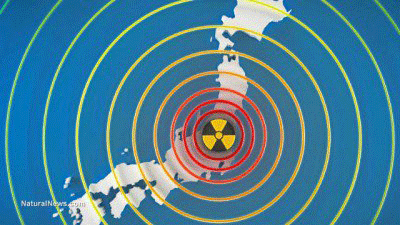
By Global Times, Jul 03, 2023 , https://www.globaltimes.cn/page/202307/1293596.shtml
Japan is making final preparations for dumping nuclear-contaminated wastewater into the sea. According to local media reports, Japan’s nuclear regulator finished inspecting a newly completed system to release radioactive water from the Fukushima Daiichi nuclear plant into the sea, presenting a posture that everything is ready. Rafael Mariano Grossi, director General of the International Atomic Energy Agency (IAEA), will visit Japan from Tuesday to Friday, and the IAEA’s final assessment report on Japan’s dumping plan will soon be released. Will Grossi’s attitude, or the IAEA’s final assessment, change Japan’s decision to dump wastewater into the sea? It seems unlikely.
In fact, the Japanese side officially approved the dumping plan as early as July 22 last year. Since then, it has been working intensively on implementing the plan. At the same time, it has been spending a lot of effort on public relations, never taking seriously of the strong concerns at home and abroad, and failing to conduct adequate and well-intentioned consultations with stakeholders. And the IAEA is being targeted by the Japanese side as a priority in networking. Although the organization cannot give Japan a “license” and a “talisman” for dumping nuclear-contaminated water into the sea, the Japanese side may make an issue of how the IAEA writes its assessment report and draws its conclusions.
We still urge the IAEA to uphold the principles of objectivity, professionalism and impartiality, develop an assessment report that can stand the test of science and history, and not endorse the Japanese side’s dumping plan. Tokyo’s calculation is to force the international community to accept that what’s done is done. Japan hopes that after resisting the pressure for some time, perhaps the international community’s attention will turn to other areas, and the opposition to dumping nuclear-contaminated wastewater into the sea will weaken. We cannot let such a scheme succeed.
Now we need to be particularly vigilant that some governments and the Japanese side have reached a political deal over the issue of the wastewater dumping plan, which is a colluded betrayal of the public interest of mankind and marine ecology. Washington was the first to give Tokyo the green light for geopolitical reasons and then persuaded its other allies. The South Korean government has also started to release ambiguous messages frequently despite strong opposition from the public. To dispel the public’s doubts, some lawmakers from the South Korean ruling party even went to the seafood market in groups to drink seawater from the breeding pond, and “even the fish in the pond found it ridiculous.” Some European governments have also relaxed their attitude over the issue.
There have been concerns, objections, and questions about the discharge of nuclear-contaminated wastewater into the sea from ASEAN countries, Pacific Island countries, and others including Japan. Although the US and Japanese governments have tried to marginalize such voices, they have never disappeared. China’s position as a major power is clear and has remained unchanged. The discharge of nuclear-contaminated wastewater into the sea is a matter of common interest for the international community, not a private matter for Japan. So China urges the Japanese side to stop pushing forward with the dumping plan, effectively dispose of the nuclear-contaminated water in a scientific, safe and transparent manner, and accept strict international supervision. This is a voice from a scientific and all-human perspective, which is justified and couldn’t be alone.
In order to promote the safety of seafood from Fukushima, the Japanese government once attempted to use Fukushima’s seafood in the meals of primary and secondary schools in the prefecture. However, all schools in Fukushima prefecture rejected this proposal. According to reports, content of Cs-137 in fish recently caught in the harbor of the Fukushima Daiichi Nuclear Power Plant is 180 times that of the standard maximum stipulated in Japan’s food safety law, which is extremely alarming.
In this situation, claiming that the contaminated wastewater is safe is nothing but a lie. As officials from Pacific island countries have said, if the so-called “treated water” meets the standards and can be discharged, why doesn’t Japan use this contaminated wastewater in its own country, especially in its agricultural sector?
Japan does have other more appropriate choices. The Japanese government has considered five different treatment options, but it ultimately chose the cheapest and easiest one, which is to discharge the contaminated wastewater into the ocean. From a technical standpoint, this is the solution with the lowest economic cost to Japan, but it releases the highest amount of radioactive substances into the global environment. Japan is unwilling to spend money on safely treating the contaminated wastewater but is willing to invest in public relations. According to recent reports from South Korean media, Japanese officials made political donations worth over EUR 1 million to the staff of the IAEA Secretariat and there has been no response to this matter so far.
According to a German marine scientific research institute, with the world’s strongest currents along the coast of Fukushima, radioactive materials could spread to most of the Pacific Ocean within 57 days from the date of discharge. However, Japan has failed to provide a comprehensive and systematic monitoring plan for the disposal of nuclear-contaminated wastewater into the sea. The current monitoring scope is small, with few sampling points and low frequency, making it difficult to timely detect abnormal situations such as discharging pollutants in levels that exceed the stipulated standards. In short, Japan’s forceful disposal of nuclear-contaminated water into the sea is illegal and violates a series of international legal obligations, constituting a crime against all of humanity. China and the international community’s forces of justice stand together against such behavior and will never compromise or tolerate it.
Japan Set to Pour Fukushima Water Into Pacific, Irking China

- IAEA to give decision on proposal to discharge Fukushima waste
- Ocean isn’t “Japan’s private sewer”: China’s foreign ministry
By Shoko Oda and Isabel Reynolds, July 3, 2023 https://www.bloomberg.com/news/articles/2023-07-02/japan-is-set-to-pour-fukushima-wastewater-into-pacific
Japan is set to win approval to discharge more than a million cubic meters of treated water from the Fukushima nuclear disaster site into the Pacific Ocean, a contentious plan that’s soured ties with neighbors including China.
The International Atomic Energy Agency’s Director General Rafael Grossi will visit Japan from Tuesday to deliver a final report on the safety of the process and meet with officials including Foreign Minister Yoshimasa Hayashi. A domestic nuclear regulator is also set to issue a crucial assessment.
Both studies are poised to give backing to Tokyo Electric Power Co. to begin releasing the water — equivalent in volume to about 500 Olympic-size swimming pools — into the sea, a step that’s needed to allow full decommissioning of the Fukushima site following the 2011 earthquake and tsunami that triggered the world’s worst atomic disaster since Chernobyl.
Japan has assured other nations that the release of the water is safe, is in line with standard industry practice and that it’s necessary, because about 1,000 storage tanks at Fukushima will hit capacity early in 2024. Other countries with nuclear plants already safely discharge similar diluted waste offshore, according to the IAEA.
It also comes as Japan joins a wider global reappraisal of nuclear power, with several nations seeking to boost energy self-sufficiency by reviving idled reactors, adding plants or investing in new technology. Prime Minister Fumio Kishida is aiming to build on improving domestic support for the energy source, and Japan’s efforts to complete the closure of the Fukushima site are seen as a crucial in inspiring confidence.
Despite Japan’s diplomatic push, the discharge plan is complicating some global relationships.
The ocean is “not Japan’s private sewer,” Chinese Foreign Ministry spokesman Wang Wenbin said last month, warning the proposed release carries risks for the country’s neighbors and Pacific Island nations. Wang called it a selfish move “that puts the common interests of all humanity in jeopardy.”
Japanese cosmetics brands have been targeted by a viral campaign tied to the issue that spread unproven safety allegations on Chinese social media platforms. In South Korea, demand for sea salt has rocketed as consumers stockpile the condiment amid worries the release of wastewater could taint future supplies.
While the central government in Seoul hasn’t pushed back against Japan’s plans publicly, a survey by the Yomiuri newspaper and South Korea’s Hankook Ilbo conducted in May found 84% of respondents opposed the discharge. A separate poll found almost three-quarters of South Koreans surveyed didn’t trust a delegation of experts sent from Seoul to review Japan’s preparations.
The Pacific Islands Forum, a group of 18 nations including Fiji, Papua New Guinea and Australia, has urged Japan to consider alternatives and called for additional discussions on the risks.
“People’s fears and uncertainties in the region are real, however safely the release will be handled, and however minimal the risk is,” said Nancy Snow, a reputation security consultant in Tokyo and author of a book on Japan’s public diplomacy. “Their concerns cannot be taken lightly or dismissed.”
Japan announced in 2021 it planned a gradual release of about 1.3 million cubic meters of treated wastewater from the Fukushima Dai-ichi nuclear power plant that has accumulated at the site since 2011. Tepco cycles in water to keep debris and fuel at the wrecked nuclear reactors cool, and the contaminated liquid — along with other groundwater and rain — is processed to remove most radioactive elements. The treated water, which still contains tritium, has been collected and stored.
Tepco expects the fleet of about 1,000 storage tanks to reach maximum capacity between February and June next year and the utility has argued it cannot continue to clear space for additional vessels because that’s needed for other parts of the decommissioning process. Storing the water also carries risks of leaks, which are amplified by the nation’s status as one of the most earthquake-prone countries.
In one of its preliminary reports in April, the IAEA said Tepco had taken into account issues raised in previous safety reviews and had “made significant progress to update its plans,” signaling the agency is likely to grant final approval. Grossi will visit Fukushima during his trip to Japan and open an IAEA office at the site, the agency said Friday.
Tepco plans to mix the treated fluid with seawater to dilute the concentration of tritium to “well below” both Japanese government and World Health Organization guidelines, before discharging it into the ocean over the course of as long as 40 years through an undersea tunnel. Tritium has a radioactive half-life of a little over 12 years, according to the IAEA.
Japan’s government has not yet set any specific date to begin releasing the water, and has said it will continue to hold talks with local communities, including the fishing sector, to try to alleviate their concerns.
Releasing water from nuclear power plants is a standard practice and most operations globally release small amounts of tritium and other radioactive material into rivers and oceans, the IAEA said previously.
— With assistance by Ben Westcott
IAEA debunks Ukrainian claim about Europe’s largest nuclear plant
https://www.rt.com/russia/578480-iaea-zaporozhye-nuclear-mines/ 26 June 23
There are no mines at the cooling pond of the Zaporozhye NPP, the UN watchdog has said
Rafael Mariano Grossi, the director-general of the International Atomic Energy Agency (IAEA), denied on Tuesday claims made by the Ukrainian government that the cooling pond of the Zaporozhye Nuclear Power Plant (ZNPP) had been rigged with explosives.
“The IAEA is aware of reports of mines having been placed near the cooling pond. No mines were observed at the site during the Director General’s visit, including the cooling pond,” Grossi said in a report on the situation at Europe’s largest atomic power facility.
There were mines outside the perimeter and “at particular places inside,” which the security personnel at ZNPP explained were for defensive purposes, the IAEA head said.
“Our assessment of those particular placements was that while the presence of any explosive device is not in line with safety standards, the main safety functions of the facility would not be significantly affected,” added Grossi.
His report comes after claims by Ukrainian President Vladimir Zelensky and his aide Mikhail Podoliak that Russia had prepared a “terrorist attack” on the facility it has controlled since March 2022.
Ukrainian intelligence has received information that Russia is planning “a terrorist attack with radiation leakage,” Zelensky said in a tweet on Thursday morning, adding that “the world has been warned, so the world can and must act.”
Podoliak claimed that Russia was “considering a large-scale terrorist attack at the ZNPP to stop the Ukrainian counteroffensive and create a depopulated sanitary gray zone,” and was mining the cooling pond, demanding that “the global world” should announce consequences “not tomorrow. Today.”
Zelensky’s claims are “yet another lie,” Kremlin spokesman Dmitry Peskov said on Thursday, noting that Russia has fully cooperated with the IAEA. Moscow has insisted that Kiev was behind the destruction of the Kakhovka dam earlier this month, which the IAEA described as a potential threat to the ZNPP’s supply of cooling water.
According to Russia, Ukraine has also repeatedly attacked the ZNPP, including an attempted commando raid in September 2022, as the IAEA mission was en route to the site. The most recent attack was on June 9, when Russian air defenses reported bringing down three drones headed for the plant.
The Zaporozhye Nuclear Power Plant has six reactors and is located in Energodar, on the right shore of the Dnieper River. It is currently operated by Rosatom in standby mode. The surrounding region officially became part of Russia last September.
1 This Month
Tell Congress: Prevent Nuclear Catastrophe in Iran

Tell Congress: Prevent Nuclear Catastrophe in Iran

Read the Public Inquiry Report, the Commissioners’ report, Surrendering Australia: The AUKUS Deception is available to download for free at aukuspublicinquiry.com. Or just watch the replay of the National Press Club Luncheon.


Shut down the radiation-damaged Heysham nuclear reactors now
To see nuclear-related stories in greater depth and intensity – go to https://nuclearinformation.wordpress.com

Say No to NASA’s Reckless Nuclear Reactor on the Moon
Say No to NASA’s Reckless Nuclear Reactor on the Moon
-
Archives
- November 2026 (224)
- October 2026 (302)
- September 2026 (339)
- August 2026 (330)
- July 2026 (355)
- June 2026 (287)
- May 2026 (306)
- April 2026 (356)
- March 2026 (251)
- February 2026 (267)
- January 2026 (308)
- December 2025 (358)
-
Categories
- 1
- 1 NUCLEAR ISSUES
- business and costs
- climate change
- culture and arts
- ENERGY
- environment
- health
- history
- indigenous issues
- Legal
- marketing of nuclear
- media
- opposition to nuclear
- PERSONAL STORIES
- politics
- politics international
- Religion and ethics
- safety
- secrets,lies and civil liberties
- spinbuster
- technology
- Uranium
- wastes
- weapons and war
- Women
- 2 WORLD
- ACTION
- AFRICA
- Atrocities
- AUSTRALIA
- Christina's notes
- Christina's themes
- culture and arts
- Events
- Fuk 2022
- Fuk 2023
- Fukushima 2017
- Fukushima 2018
- fukushima 2019
- Fukushima 2020
- Fukushima 2021
- general
- global warming
- Humour (God we need it)
- Nuclear
- RARE EARTHS
- Reference
- resources – print
- Resources -audiovicual
- Weekly Newsletter
- World
- World Nuclear
- YouTube
-
RSS
Entries RSS
Comments RSS

