Exposing the lying claims of pro nuclear shill Zion Lights
2 Response to a July 2023 article by Zion Lights: https://nuclear.foe.org.au/zion-lights/
In Australia, for the same investment we can get three times more firmed renewable power (generation, not capacity) in one-third of the time compared to nuclear. The cost difference between nuclear and renewables is so vast that renewables are still cheaper even when transmission and storage are costed in. Perhaps the comparison is more nuclear-friendly in the UK, but I strongly suspect renewables+storage+transmission is still cheaper given the obscene costs of Hinkley Point (approx. A$50 billion for two reactors).
Specifically in Light’s latest article:
* Lights’ claims about the IPCC supporting nuclear power are dishonest, the IPCC maps out countless scenarios (including scenarios with nuclear reducing to zero) and its ‘analysis’ of pros and cons is generally reduced to dot-points.
* Lights’ claims about a “scientific consensus” in support of nuclear power are dishonest, e.g. the Climate Council, comprising Australia’s leading climate scientists, states that nuclear power reactors “are not appropriate for Australia and probably never will be”.
* Ignores profound impacts of catastrophic accidents.
* Ignores the repeatedly-demonstrated connections between nuclear power and weapons (in the UK and elsewhere).
* Light’s ‘millions of lives saved’ meme is dishonest because it assumes nuclear displaces nothing other than coal.
* Nonsense about warm water around nuclear plants providing a haven for sea-life is dishonest, she surely knows that water intake pipes kill fish by the thousands. (And she should know something about Irish opposition to radioactive discharges from Sellafield.)
* Glib, ignorant and/or dishonest claims about high-level nuclear waste: “spent fuel can be easily transported to another location, and even recycled”. The UK has given up on reprocessing (a polluting, multi-billion-dollar disaster) and has made near-zero progress on a deep underground repository and has wasted billions of pounds of taxpayers’ money in the process. The only operating deep underground repository in the world – WIPP in the US ‒ was disastrously mismanaged and under-regulated resulting in a chemical explosion in 2014.
* The UAE project came in under budget? Either Lights is ignorant or lying. The UAE project was years behind schedule and many billions of dollars over-budget.
And in other articles/interviews, even more unhinged nonsense, e.g.

* Lights saying climate change ‘could be solved overnight’ with nuclear. Seriously?
* Lights lying about her role in Extinction Rebellion.
* Lights getting sucked in by, and collaborating with, lunatic MAGA liar Michael Shellenberger.
Update: Lights deleted the above comments from the comments thread below her article, failed to address any of the substantive energy issues and failed to respond to the accusations of deceit.
Sizewell C faces fresh legal action in fall out over water supply

Campaigners opposed to the Sizewell C nuclear plant in Suffolk have
launched fresh legal action following concerns about the water supply for
the plant.
In July 2022, then business secretary Kwasi Kwarteng granted
permission for the 3.2 gigawatt power station being developed by French
energy provider EDF to be built alongside the existing Sizewell B nuclear
plant, in the Suffolk Coast and Heaths Area of Natural Beauty (AONB).
This was despite the Planning Inspectorate noting that NNB Nuclear Generation, a
subsidiary company created by EDF, was unable to identify a permanent water
supply for the project, without which it said it “could not be licensed
and could not operate”.
In August 2022, campaign group Together Against
Sizewell C (TASC), represented by law firm Leigh Day, brought a judicial
review against the decision on the grounds that Kwarteng had failed to
assess the implications of the project as a whole by ignoring the issue of
whether a permanent water supply could be secured – the group argued it
is clear a new desalination plant will be required to guarantee supply.
Last month this challenge was dismissed by High Court judge Justice Holgate
who found the approach to the water supply was lawful, and that Kwarteng
did not need to take into account the impact of the water supply. However,
TASC has now announced that it is appealing this ruling. Specifically, the
group has said that the judge was “wrong” to say that NNB Generation
Company Limited was “unable to identify a permanent supply of potable
water”.
ENDS 11th July 2023
https://www.endsreport.com/article/1829565/sizewell-c-faces-fresh-legal-action-fall-water-supply
FBI colluded with Ukraine in social media crackdown – lawmakers
https://www.rt.com/news/579523-fbi-ukraine-meta-twitter/ 11 July 23
The bureau failed to properly vet information provided by Kiev, the US House Judiciary Committee says
The FBI cooperated with Ukraine’s Security Service (SBU) to clamp down on social media accounts disseminating alleged “Russian disinformation,” but ended up flagging pages run by the US State Department and American journalists, a report by the House Judiciary Committee has revealed.
Released on Monday, the report accused the FBI of not properly vetting lists of accounts provided to it by the SBU before sending them to the likes of Meta, Google, and Twitter.
As a result, the two agencies “flagged for social media companies the authentic accounts of Americans, including a verified US State Department account and those belonging to American journalists,” and requested that those pages be deleted, the document read.
On some occasions, the FBI followed up to ensure that “these accounts were taken down,” according to the report, which was based on documents subpoenaed from Meta and Alphabet in February.
In one of the SBU’s lists forwarded by the FBI to Meta, the official Russian-language Instagram account of the US State Department was described as “distribut[ing] content that promotes war, inaccurately reflects events in Ukraine, justifies Russian war crimes in Ukraine in violation of international law,” the report stated.
CNN pointed out that Meta, which owns Instagram and Facebook, apparently did not comply with the request to delete the State Department page.
Another moderation request filed to Facebook by the US domestic security agency included a roster of 5,165 accounts, the House Judiciary Committee said.
The report cited an email by a senior Twitter employee who indicated to the FBI that “a few accounts of American and Canadian journalists” were on one of the lists sent to the company by the agency.
Alphabet platforms Google and YouTube were also approached about censoring alleged pro-Russian accounts. A high-ranking member of Google’s cybersecurity team told the authors of the report that the company had been “deluged with various requests” for the removal of content, mainly from “the Ukrainian government, other Eastern European governments, the European Union, and the European Commission.”
The House Judiciary Committee suggested that the FBI had “violated the First Amendment rights of Americans and potentially undermined our national security” through its partnership with the SBU, claiming that the latter had been “infiltrated by Russian-aligned actors.”
The author of the paper noted the purge within the SBU by Ukrainian President Vladimir Zelensky last summer, which saw the agency’s head sacked and hundreds of criminal cases launched against employees on treason charges.
The report was released ahead of FBI Director Christopher Wray’s testimony before the House Judiciary Committee, which is scheduled for Wednesday.
A Judiciary Committee aide told CNN that the Republicans on the panel are planning to question Wray about the content of the paper and use it to claim that the FBI interferes in free speech.
Zelensky slams Biden’s ‘unprecedented and absurd’ stance on NATO membership
New York Post, By Steven Nelson, 11 July 23
VILNIUS, Lithuania — Ukrainian President Volodymyr Zelensky tore into NATO leaders including President Biden on Tuesday for not extending membership to his war-torn country — introducing fresh diplomatic drama into the annual gathering of the military alliance’s leaders.
Zelensky slammed the reticence as “weakness” and “absurd” just moments after Biden referred to the development of new language regarding his country’s potential NATO ascension.
“Now, on the way to Vilnius, we received signals that certain wording is being discussed without Ukraine. And I would like to emphasize that this wordxfing is about the invitation to become NATO member, not about Ukraine’s membership,” Zelensky tweeted.
“It’s unprecedented and absurd when a time frame is not set neither for the invitation nor for Ukraine’s membership. While at the same time vague wording about ‘conditions’ is added even for inviting Ukraine.”
Zelensky added: “It seems there is no readiness neither to invite Ukraine to NATO nor to make it a member of the Alliance. This means that a window of opportunity is being left to bargain Ukraine’s membership in NATO in negotiations with Russia. And for Russia, this means motivation to continue its terror. Uncertainty is weakness. And I will openly discuss this at the summit.”……………
Shortly before Zelensky’s fiery tweet, Biden said during a meeting with NATO Secretary-General Jens Stoltenberg that “we agree on the language that you propose, relative to the future of Ukraine being able to join NATO. And we’re looking for a continued united NATO.”
The wording that Biden alluded to was released later, saying vaguely, “We will be in a position to extend an invitation to Ukraine to join the Alliance when Allies agree and conditions are met.”…………..
Biden said in a CNN interview that aired Sunday that he believes Ukraine is not “ready” for membership.
“I don’t think it’s ready for membership in NATO,” Biden told CNN’s Fareed Zakaria. “I don’t think there is unanimity in NATO about whether or not to bring Ukraine into the NATO family now, at this moment, in the middle of a war.”
……………………… Sen. Dick Durbin (D-Ill.) said that he is particularly concerned about corruption in Ukraine’s government and said that it was an “understandable” cause for concern among fellow NATO countries.
………….. NATO countries including the US have heavily financed and armed Ukraine’s resistance to the more than 16-month-old Russian invasion and Biden has gradually met many of Zelensky’s prior demands, such as agreeing last week to send cluster bombs to aid Kyiv’s flagging offensive, despite a human rights campaign to ban the weapons, which can maim or kill civilians for decades after conflicts end. https://nypost.com/2023/07/11/zelensky-slams-weakness-of-absurd-biden-stance-on-nato/
—
Japan’s Radioactive Fukushima Water Release – Media Propaganda, Reports from Vanuatu in South Pacific
Nuclear Hotseat, 12 July 23
SPECIAL REPORTS:
With Japan’s pending release of 1.3 million tons of Tritium-contaminated radioactive water from Fukushima into the Pacific Ocean, and the International Atomic Energy Agency (IAEA) approval of that plan, it is time for an examination of the issues behind this wrongheaded assault upon people and the environment. To find out various hidden aspects of the issue, Nuclear Hotseat provides five separate segments.
Nuclear Hotseat Hot Story with Linda Pentz Gunter considers that the IAEA’s vested interest in promoting nuclear power should disqualify the agency as a nuclear safety watchdog.Marine Biologist Tim Deere-Jones takes on the whistleblower leak of an internal IAEA document from June 21, which shows collusion between the agency and the government of Japan over how the announcement of approval of the water release was to be handled to minimize public fear and response. Japan has dismissed the document as a “fraud;” neither TEPCO nor IAEA has said anything else. What’s the bigger story?Filmmaker Philippe Carillo (The Fukushima Disaster: The Hidden Side of the Story) lives in Vanuatu and talks about Japan’s campaign to propagandize south Pacific journalists into only believing the talking points they’ve been fed and not to look further.
The Honorable Andrew Solomon Napuat, a Member of Parliament for Vanuatu, an island nation in the south Pacific, explains how his country and others have been manipulated to not speak out against the water release or risk “friendly” relations with Japan…………… https://nuclearhotseat.com/podcast/japan-radioactive-fukushima-water-dump/?_thumbnail_id=11643
UK discusses sale of Wylfa nuclear site
1The government has confirmed ongoing discussions about the potential sale
of the Wylfa nuclear site in response to a report by the Welsh Affairs
Committee. The Wylfa nuclear site, located in Anglesey, North Wales, has
long been a subject of interest for nuclear energy development. Previous
plans for a new nuclear power station at Wylfa were scrapped in 2019 due to
financial and commercial challenges. Since then, the government has been
actively seeking alternative arrangements for the site.
Energy Live News 10th July 2023
Failed Fukushima Fixes Falling Like Dominoes

CounterPunch BY JOHN LAFORGE, 6 July, 23
“……………………………………………………………………Tepco’s cost-avoidance on its sea wall was only the first in a string of failures that have followed like dominos. The corruption led in July 2022 to convictions of four top Tepco executives for negligence and a fine of $95 billion.
In the 12 years since the meltdowns, Tepco’s disaster response efforts, always heralded as fixes, have been a series of hugely expensive failures: the “advanced” wastewater filter system “ALPS” has failed; the buried “ice wall” groundwater barrier has failed; containers made for the radioactive sludge produced by ALPS have failed; and plans to deal with millions of tons of collected debris — now kept in plastic bags — are being fiercely resisted by Japanese citizens.
Tons of cooling water is still being poured every day into Fukushima’s triple reactor wrecks to keep the hot melted fuel from again running amok. Additionally, groundwater gushes through the reactors’ foundations’ countless cracks and breaks caused by the staggering earthquake into what’s left of the structures’ sub-floors. All this water becomes highly radioactive as it passes over and through three giant masses — totaling at least 880 tonnes — of melted and mangled uranium and plutonium fuel.
You read that right. Fukushima’s destroyed reactor No. 3 was using fuel made partly of plutonium (see below), and so plutonium contaminates not just the ground and cooling water running over the melted fuel, but the ALPS apparatus, its filters, the containers used to store the radioactive sludge extracted by ALPS, and of course the sludge itself. You would think that the word plutonium would appear occasionally in news coverage of this ongoing disaster.
Failed ALPS means million-tonne do-over
Tepco’s jerry-rigged system dubbed Advanced Liquid Processing System or ALPS has never worked as planned. As early as 2013 the machinery was stalled. “The ALPS system failed to reduce radioactive elements, as claimed by the owner,” Power Technology, reported June 2, 2021.
Tepco has repeatedly said ALPS would remove 62 radioactive materials — all but tritium and carbon-14 from the continuously expanding volume of wastewater. Documents on a government committee’s website show that of 890,000 tonnes of water held at Fukushima, 750,000 tonnes, or 84 percent, contain higher concentrations of radioactive materials than legal limits allow, according to Reuters, Oct. 11, 2018. Among the long-lasting and deadly isotopes picked up by the water runs that through melted fuel wreckage are cesium, strontium, cobalt, ruthenium, carbon-14, tritium, iodine, plutonium, and at least 54 others.
In a June 14 op/ed for the China Daily, Shaun Burnie, the Senior Nuclear Specialist at Greenpeace East Asia, reported that the ALPS “has been a spectacular failure” and noted that:
“About 70 percent or 931,600 cubic meters of the wastewater needs to be processed again (and probably many more times) by the ALPS to bring the radioactive concentration levels below the regulatory limit for discharge. Tepco has succeeded in reducing the concentration levels of strontium, iodine, and plutonium in only 0.2 percent of the total volume of the wastewater, and it still requires further processing. But no secondary processing has taken place in the past nearly three years. Neither Tepco nor the Japanese government [have] said how many times the wastewater needs to be processed, how long it will take to do so, or whether the efforts will ever be successful. Greenpeace reported on these problems and why the ALPS failed nearly five years ago, and none of these issues has been resolved.”
Consequently, Tepco says it will re-filter over 70 percent of the 1.37 million tonnes of wastewater stored in giant tanks on site. Approximately 875,000 tons of contaminated water must be put through the system again, a process that will leave behind more of the highly radioactive and corrosive waste sludge.
Hoping to slow the rush to dumping, Ryota Koyama, a professor at Fukushima Univ. in Japan, said in an interview with China Media Group last May, “If the Japanese government or the Tokyo Elec Power Co really wants to discharge contaminated water into the sea, they need to explain in more detail whether the nuclides have really been removed.”
Ice wall also melts
Tepco intended to reduce the volume of groundwater gushing into the reactor building foundations by digging a $350 million “ice wall” into the earth between the destroyed reactors and the mountains behind. The company placed 1,568 heavy pipes filled with coolant 90 feet deep. It was to freeze the ground to form a deep impenetrable barrier, diverting groundwater to either side of the destroyed six-reactor Fukushima complex and prevent it seeping inside. It has failed to do so, The Guardian reported. In 2016, the Times of London reported that the scheme had only a “minor impact” on the volume of groundwater rushing in, which at the time still averaged 321 tonnes a day. Tepco announced then that it would retrofit the system and fix the leaks, but Science/The Wire reported in January 2022 that the company had admitted that its ice wall was “partially” melting. About 150 tonnes per day still gushes in.
Filtered sludge burning through containers
The ALPS filter has produced over 4,000 large containers filled with highly radioactive slurry and sludge left from the treatment.
Like the use of the word “advanced” in the name of the failed ALPS machinery, the cylinders used for the caustic, highly radioactive sludge are called “High Integrity Containers” or HICs, but in fact they are made of plastic and have degraded far faster than Tepco anticipated.
By March 2, Tepco had filled 4,143 containers, according to the daily Asahi Shimbun. At 30 cubic feet each, the cylinders now store a total of about 124,290 cubic feet of the highly radioactive sludge that will soon require expensive repackaging and, eventually, isolation from the biosphere for thousands of years.
Over two years ago, on June 8, 2021, Japan’s Nuclear Regulation Authority (NRA) announced that 31 of the containers had “exceeded their lifespans” and were corroded badly enough by the harsh toxic material that they must be replaced. The NRA also warned that another 56 cylinders would need replacing within two years.
Japan’s Mainichi newspaper reported that the government regulators blamed Tepco for “underestimating the radiation the 31 plastic cylinders were exposed to.” The company then claimed it would start moving the contents to new containers.
The Asahi Shimbun reported April 27, 2023, that the HICs must be stored in concrete boxes that can block radiation evidently being emitted by the HICs. https://www.asahi.com/ajw/articles/14883115
Rad waste to be dumped, deregulated
As early as next month, Japan intends to begin dispersing 1.37 million tonnes of contaminated wastewater into the Pacific Ocean. The government has steadfastly ignored fierce local and international opposition to the plan from the fishing community, marine scientists, Pacific Island nations, environmentalists, South Korea, and China. So far only South Korean politicians have suggested bringing international legal action against the dumping.
Since the 2011 meltdowns spewed radioactive materials broadly across Japan’s main island, some 14-million tonnes of cesium-contaminated soil, leaves, and debris have been scraped from the ground and stored in one-tonne bags. Citizens are struggling desperately prevent authorities from using the radioactive waste in road building or burning it in incinerators. The bags are currently stacked in tens of thousands of piles all over the region.
Even more protest was raised last February 10 when the NRA said it would allow Tepco to severely weaken its monitoring of the wastewater’s radioactivity. The NRA said would but the number of radioactive elements to be measured from 64 to 34.
The environment minister of Hong Kong — a coastal metropolis of 7.5 million people — charged in June that Japan is “violating its obligations under international law and endangering the marine environment and public health.” Minister Tse Chin-wan wrote in the daily Ta Kung Pao that Hong Kong would “immediately prohibit imports of seafood caught off the coast of Fukushima prefecture.”
Plutonium Spread Long Distances from Fukushima
Very few reports of the Fukushima catastrophic releases of radiation have mentioned plutonium contamination. Yet plutonium was used in fuel rods in Fukushima’s reactor number 3 which was destroyed by meltdown and several hydrogen explosions. Plutonium is one of the most toxic substances known to science, and fine particles are far more biologically hazardous than larger particles.
Following the March 14, 2011 explosion, experts worried about the release of extremely dangerous radioactive substances, and then a week later, on March 21 and 22, Tepco announced that it had detected plutonium in soil collected from its compound. (Fukushima Meltdown: The World’s First Earthquake-Tsunami-Nuclear Disaster, Takashi Hirose, Asahi Shimbun Publications, 2011, p. 51)
Now, studies published in the journals Science of the Total Environment, Nov. 15, 2020, and Chemosphere, July 2023, report that researchers found that cesium and plutonium “were transported over long distances,” and that deposits of them were recorded in “downtown Tokyo,” about 142 miles from the meltdowns.
According to the authors, very high concentrations of radioactive cesium were released during the accident as particles referred to as “cesium-rich micro-particles” (CsMPs). The researchers say CsMPs they found are mainly composed of silicon, iron, zinc, and cesium, and minor amounts of radioactive tellurium, technetium, molybdenum, uranium, and plutonium.
The studies, involving scientists from six countries and led by Associate Professor Satoshi Utsunomiya, a researcher at Kyushu University, found that “plutonium was included inside cesium-rich micro-particles that were emitted from the site.”
Radioactive CsMPs released from Fukushima are a potential health risk through inhalation. “Given the small size of the particles, they could penetrate into the deepest parts of the lung, where they could be retained,” Utsunomiya wrote. “The route of exposure of greatest concern is inhalation,” the authors reported, because plutonium, lodged in the lungs, can “remain for years.”
Utsunomiya summed up his team’s work saying, “It took a long time to publish results on particulate [plutonium] from Fukushima … but research on Fukushima’s environmental impact and its decommissioning are a long way from being over.”
John LaForge is a Co-director of Nukewatch, a peace and environmental justice group in Wisconsin, and edits its newsletter. https://www.counterpunch.org/2023/07/06/failed-fukushima-fixes-falling-like-dominoes/
Terrible truths about nuclear energy exposed
“We are all seeing a global political agreement centred in the UN organisations, tie IAEA [International Atomic Energy Agency], the World Health Organisation… All the international agencies are whitewashing what is happening in Fukushima.
By Karl Grossman | 11 July 2023 https://independentaustralia.net/environment/environment-display/terrible-truths-about-nuclear-energy-exposed,17704
A NEW documentary titled The Fukushima Disaster: The Hidden Side of the Story is a powerful, moving, informative film that is superbly made. Directed and edited by Philippe Carillo, it is among the strongest ever made on the deadly dangers of nuclear technology.
Australians featured in the film are Dr Helen Caldicott, former president of Physicians for Social Responsibility, and John Keane, professor of politics at the University of Sydney. Carillo is a resident of the nation of Vanuatu, 1,750 kilometres northeast of Australia.
The documentary begins with the words of U.S. President John F Kennedy from 1961:
“Every man, woman and child lives under a nuclear sword of Damocles, hanging by the slenderest of threads, capable of being cut at any moment by an accident, or miscalculation or by madness.”
It then goes to the March 2011 disaster at the Fukushima Daiichi nuclear power plant in Japan after it was struck by a tsunami. Its backup diesel generators kicked in but “did not run for long,” notes the documentary. That led to three of the six plant reactors exploding – and there’s video of this – “releasing an unpreceded amount of nuclear radiation into the air”.
“Fukushima is the world’s largest ever industrial catastrophe,” then says Professor John Keane. He says there was no emergency plan and, as to the owner of Fukushima, Tokyo Electric Power Company (TEPCO), with the accident its CEO “for five nights and days… locked himself inside his office”.
Meanwhile, from TEPCO, there was “only good news” with two Japanese government agencies also “involved in the cover-up” — the Nuclear Industry Safety Agency and the Ministry of Economy, Trade and Industry.
“Japanese media was ordered to censor information. The Japanese Government failed to protect its people,” the documentary relates.
Yumi Kikuchi of Fukushima, since a leader of the Fukushima Kids Project, recalls:
“On TV, they said that ‘it’s under control’ and they kept saying that for two months. The nuclear power plant had already melted and even exploded but they never admitted the meltdown until May. So, people in Fukushima during that time were severely exposed to radiation.”
Arnie Gundersen, a nuclear engineer and now a principal of Fairewinds Energy Education in Burlington, Vermont in the United States, speaks of being told by Naoto Kan, the Prime Minister of Japan at the time of the accident, that “our existence as a sovereign nation was at stake because of the disaster at Fukushima Daichi”.
Kan then appears in the documentary and speaks of “manmade” links to the disaster.
The documentary tells how Kan, following the accident, became “an advocate against nuclear power… ordered all nuclear power plants in Japan to shut down for safety” and for the nation “to move into renewable energy”.
Subsequently, “a nuclear advocate”, Shinzo Abe, became Japan’s Prime Minister.
Yoichi Shimatsu, a former Japan Times journalist, appears in the film and speaks of “the cruelty, the cynicism of this government”. He speaks of how in the accident’s aftermath, “nearly every member of Parliament and leaders of the major political parties”, along with corporate executives, “moved their relatives out of Japan”.
He says:
“Shanghai is the largest Japanese community outside Japan now… while these same people [had been] telling the people of Fukushima ‘go home’, ten kilometres from Fukushima, ‘go home, it’s safe’, while their families are overseas in Los Angeles, in Paris, in London and in Shanghai.”
“If it’s safe, why they left?” asks Kikuchi.
Gundersen says:
At Fukushima Daichi, the world is already seeing deaths from cancer related to the disaster…There’ll be many more over time. [There has been a] huge increase in thyroid cancer in the surrounding population.
Unfortunately, the Japanese Government is not telling us all the evidence. There’s a lot of pressure on the scientists and the medical community to distort the evidence so there’s no blowback against nuclear power.
There is a section in the documentary on the impacts of radioactivity which includes Dr Caldicott discussing the impacts of radiation on the body and how it causes cancer.
She states:
There is no safe level of radiation. I repeat, there is no safe level of radiation. Each dose of radiation is cumulative and adds to your risk of getting cancer and that’s absolutely documented in the medical literature.
The nuclear industry says, well, there are ‘safe doses’ of radiation and even says a little bit of radiation is good for you and that is called the theory of hormesis. They lie and they lie and they lie.
Maggie Gundersen, who was a reporter and then a public relations representative for the nuclear industry and, like her husband Arnie, became an opponent of nuclear power, speaks of how nuclear power derives from the World War II Manhattan Project program to develop atomic weapons and post-war so-called “Atoms for Peace” push.
Gundersen says in becoming a nuclear industry spokesperson, “the things I was taught weren’t true”. The notion, for example, that what is called a containment at a nuclear plant is untrue because radioactivity “escapes every day as a nuclear power plant operates” and in a “calamity” is released massively.
As to economics, she cited the claim decades ago that nuclear power would be “too cheap to meter”.
The president of Fairewinds Energy Education says:
Regarding the radioactive waste produced by nuclear power, she says “there is literally no technology” to safeguard it for the many years it remains lethal. “It does not exist.”
As to international oversight, the documentary presents the final version of the Report of the United Nations Scientific Committee on the Effects of Atomic Radiation issued in 2014 which finds that the radiation doses from Fukushima ‘to the general public during the first year and estimated for their lifetimes are generally low or very low… The most important effect is on mental and social well-being’.
Shimatsu says it is not only in Japan but on an international level that the consequences of radioactive exposure have been completely minimised or denied:
“We are all seeing a global political agreement centred in the UN organisations, tie IAEA [International Atomic Energy Agency], the World Health Organisation… All the international agencies are whitewashing what is happening in Fukushima. We take dosimeters and Geiger counters in there, we see a much different story.”
In Germany, says Maggie Gunderson, “the politicians chose” to do a study to substantiate that no health impacts “happened around nuclear power plants… But what they found was the radiation releases cause significant numbers of childhood leukemia”.
A summary of that 2008 study comes on the screen. The U.S. followed up on that research, she says, but recently “the [U.S.] Nuclear Regulatory Commission said it was not going to do that study,” that “it doesn’t have enough funding; it had to shut it down”. She said the real reason was that it was producing “data they don’t want to make public”.
Beyond the airborne releases of radiation after the Fukushima accident, now, says the documentary, there is the growing threat of radioactivity through water that has and still is leaking from the plant as well as more than a million tons of radioactive water stored in a thousand tanks built at the plant site.
After the accident, TEPCO released 300,000 tons of radioactive water into the Pacific Ocean. Now there is no land for more tanks, so the Japanese Government, the documentary relates, has decided, starting this year, to dump massive amounts of radioactive water over a 30-year period into the Pacific.
Arnie Gundersen speaks of the cliché that “the solution to pollution is dilution,” but with the radiation from Fukushima being sent into the Pacific, there will be “bio-accumulation” — with vegetation absorbing radiation, little fish eating that vegetation and intensifying it and bigger fish eating the smaller fish, further bio-accumulating the radioactivity. Already, tuna off California have been found with radiation traced to Fukushima. With this planned further and yet greater dispersal, thousands of people “in the Pacific basin will die from radiation,” he says.
Andrew Napuat, a member of the Parliament of Vanuatu, an 83-island archipelago in the Pacific, says in the documentary:
“We have the right to say no to the Japan solution. We can’t let them jeopardise our sustenance and livelihood.”
Vanuatu, along with 13 other countries, has signed and ratified the South Pacific Nuclear Free Zone Treaty.
As the documentary nears its end, Arnie Gundersen says that considering the meltdown at the Three Mile Island nuclear plant in Pennsylvania in 1979, the meltdown at the Chernobyl nuclear plant in Ukraine in 1986, and now the three Fukushima meltdowns in 2011, there has been “a meltdown every seven years roughly”.
He says:
“Essentially, once every decade the world needs to know that there might be an atomic meltdown somewhere.”
And, he adds:
“The nuclear industry is saying they want would like to build as many as 5,000 new nuclear power plants.”
(There are 440 in the world today.)
Meanwhile, he says:
“Renewable power is no longer alternative power. It’s on our doorstep. It’s here now and it works and it’s cheaper than nuclear.”
The cost of producing energy from wind, he says, is three cents a kilowatt hour, for solar, five cents and for new nuclear power plants, 15 cents. Nuclear “makes no nuclear economic sense”.
Maggie Gundersen says, with tears in her eyes:
“I’m a woman and I feel it’s inherent for us as women to protect our children, our grandchildren, and it’s our job now to raise our voices and have this madness stop.”
Philippe Carillo, who worked for 14 years in Hollywood and who since 2017 has lived in Vanuatu, has worked on several major TV documentary projects for the BBC, 20th Century Fox and French National TV as well as doing independent productions. He says he made The Fukushima Disaster: The Hidden Side of the Story to “expose the nuclear industry and its lies”.
His previous award-winning documentary, Inside the Garbage of the World, has made changes regarding the use of plastic.
The Fukushima Disaster, The Hidden Side of the Story can be viewed at Amazon (UK and U.S.), Apple TV, iTunes, Google Play and Vimeo on demand.
N Korea slams US move to deploy nuclear submarines to peninsula
Pyongyang also accused US spy planes of violating its airspace and warns such aircraft may be shot down.
North Korea has condemned a United States plan to deploy a nuclear missile submarine to waters near the Korean peninsula, warning the move could incite a devastating atomic conflict.
In a statement carried by the Korean Central News Agency (KCNA) on Monday, a spokesperson for the North Korean defence ministry said Washington’s plan – agreed to by the leaders of the US and South Korea during an April summit – would introduce US strategic nuclear weapons to the Korean peninsula for the first time since 1981………………………………………………… more https://www.aljazeera.com/news/2023/7/10/n-korea-slams-us-move-to-deploy-nuclear-submarines-to-peninsula
Global Impact: Japan, nuclear watchdog under intense scrutiny over discharge of Fukushima nuclear-contaminated water
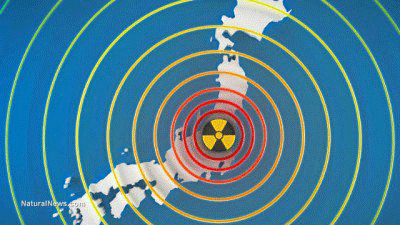
SCMP, 10 July 23, This week, the International Atomic Energy Agency (IAEA) said that Japan’s plan to release radioactive water from the Fukushima nuclear disaster in 2011 into the ocean meets international safety standards.
But instead of allaying concerns of neighbouring countries and activists, the stamp of approval from the global nuclear watchdog has drawn howls of disapproval, particularly from China, and even within Japan.
………………. The China Atomic Energy Authority said that more than 70 per cent of nuclear-contaminated water at the Fukushima nuclear power plant fails to meet discharge limits after going through a filtration system and requires further treatment.
Its secretary general, Deng Ge, said that even if international standards are met, the IAEA cannot prove that the discharge is the only or the best option for the disposal of nuclear-contaminated water………………………………………………………..
Not letting their own government off the hook, Japanese activists said they are very disappointed by the IAEA decision, arguing that Tokyo has gone back on its promise that the water would not be released until the plan received the public’s widespread acceptance.
Even though South Korea said that it respects the nuclear watchdog’s endorsement of Japan’s plan to release treated water into the ocean, Seoul also made it clear that it would issue its own assessment of the IAEA’s findings.
The IAEA report and an earlier offer by South Korean Prime Minister Han Duck-soo to drink treated Fukushima water had clearly done little to convince the country’s activists, fisheries and seafood industries, even its consumers, many of whom had stockpiled sea salt and other seafood items…………………..
Earlier this year, Pacific island nations also called on Japan to delay the release of water from the destroyed Fukushima nuclear power plant over fears that fisheries will be contaminated…………………………
more https://www.scmp.com/economy/global-economy/article/3227113/global-impact-japan-nuclear-watchdog-under-intense-scrutiny-over-discharge-fukushima-nuclear
Safe or septic – Japan’s nuclear wastewater dumping
RNZ, From The Detail, Tom Kitchin, co-host of The Detail @inkitchnz tom.kitchin@rnz.co.nz 11 July 23
There are diplomatic headaches and heated scientific debates after Japan revealed plans to dump the wastewater it’s been using to cool the Fukushima nuclear power plant – in the Pacific.
…………………………… Sea and ground water has been used to cool the damaged reactors, and now there’s about 1.3 million tonnes of that sitting in tanks while the Japanese government and plant operator Tokyo Electric Power Company (TEPCO) figure out what to do with it.
They want to release the wastewater into the ocean – diluting all the cancer-causing nuclear fission products out of it – such as caesium, which can build up in muscles, strontium-90 which can build up in bones and iodine-129 which can build up in the thyroid.
…………………………………………. journalist Nic Maclellan, a Melbourne-based correspondent with Islands Business Magazine, tells The Detail.
“The Pacific Islands Forum has been especially critical, and appointed an independent scientific panel to investigate safety issues around the proposed dumping,” he says.
“The panel has raised a series of issues around the quality of the sampling, the cost of the sampling, the cost of the programme over decades, the maintenance of safety sampling and the fact that they really don’t know whether Japan can maintain the quality that will stop other radioactive isotopes being released into the ocean.”
There are also questions over whether the wastewater dump is a breach of the Treaty of Rarotonga, signed in 1985, which created a South Pacific nuclear-free zone.
It was largely about nuclear weapons, but article seven talks about preventing nuclear waste dumping.
“Japan has been acting as if these safety concerns are not serious and it’s taken a lot of pressure for Japan to be dragged kicking and screaming into addressing questions, many of which are still unresolved,” Maclellan says.
AUKUS is also a factor now – a security pact between Australia, the United Kingdom and United States. The main news out of that is the US and UK will help Australia get nuclear-powered submarines.
“The nuclear submarines are a breach of the spirit of the Rarotonga treaty. There’s going to be interesting debates about a technical definition of whether this is… a breach of the letter as well as the spirit,” Maclellan says. https://www.rnz.co.nz/programmes/the-detail/story/2018897817/safe-or-septic-japan-s-nuclear-wastewater-dumping
Archbishop to denounce nuclear arms on Trinity test’s 78th anniversary
Jul. 10—The first atomic blast that lit up the early morning sky at the Trinity Site in south-central New Mexico on July 16, 1945 — an event that opened the door for two nuclear bombs to be dropped on Japan — had an immense impact on the state that is still felt to this day.
Santa Fe Archbishop John Wester will mark the 78th anniversary of the Trinity test by denouncing the nuclear weapons program that has escalated since the long-ago detonation in a remote desert, and for which New Mexico finds itself in a primary role.
Wester and anti-nuclear groups are organizing an event Sunday at the Santa Maria de la Paz Community Hall, featuring speakers, music, exhibitions and moments of reflection and prayer on the atomic blast that reshaped civilization. The public can attend or livestream it;
We can no longer deny or ignore the extremely dangerous predicament of our human family,” Wester said in a statement. “We are in a new nuclear arms race far more dangerous than the first, and I believe we need to rejuvenate a sustained, serious conversation about universal, verifiable nuclear disarmament.”
Because of Trinity, New Mexico will be forever linked to the two bombs dropped on the Japanese cities of Hiroshima and Nagasaki. The bombs, credited by many with hastening the war’s end and saving tens of thousands of American lives, killed more than 200,000 Japanese people and inflicted radiation poisoning on much of the populace.
The atomic test released radioactive fallout in downwind communities in New Mexico, causing fatal illnesses such as cancer in what many believe are a large number of residents, though the actual quantity remains unknown because the federal government didn’t track such aftereffects as part of the secrecy surrounding the project………………………………………………… more https://news.yahoo.com/archbishop-denounce-nuclear-arms-trinity-033300743.html?guccounter=1&guce_referrer=aHR0cHM6Ly9uZXdzLmdvb2dsZS5jb20v&guce_referrer_sig=AQAAADJqdcGm_qX6CdNLQ8_g7p81OistELVP4KvAUR1PfQl-0Q2SBtdSRa8GwdKyTIcwvX8aofXxou_a1DmL9axGTUu9S4o5f35bRYrwMTXGG5ZaoooE2PgjQaFWi5uLyJbf3gg8EShjtVi5A26UqvyJcSYMPWp9GQCX2T9NlsjflzJW
Cluster Bombs for Ukraine? A Warning From Kosovo
SCHEERPOST, by EDITORJuly 10, 2023
With Washington poised to ship cluster bombs to Kyiv, Declassified visits Kosovo to review the grim legacy of NATO firing this banned weapon in the Balkans.
By Phil Miller / Declassified UK
GRACANICA, KOSOVO – “In the village where we lived, there were nine bombs dropped by NATO in the space of two minutes,” Dzafer Buzoli recalls, as we discuss his traumatic childhood in Yugoslavia. A leading member of Kosovo’s Roma, his community went from pillar to post.
Many were dragooned into Slobodan Milosevic’s Serb-dominated Yugoslav army or targeted by Albanian rebels as suspected collaborators, before Bill Clinton and Tony Blair launched their ‘humanitarian intervention’ in 1999.
“When the first bomb fell, we were just confused and wondered what was happening,” he reflects. “But after the second bomb I felt the hot air and fell down from the pressure of the blast.
“Ever since then I’ve had a heightened sense of hearing. When there’s a loud noise or people yelling I have to really back up, because it’s too much for me.”
Buzoli was lucky to survive the airstrike. Two soldiers and a five year old boy were killed in the attack on his village of Laplje Selo, which was hit with controversial cluster munitions.
These scatter a blizzard of ball-shaped bomblets over target areas, like a minefield falling from the sky. Human Rights Watch said NATO killed between 90 and 150 civilians with this weapon across Serbia and Kosovo.
Thousands of bomblets failed to detonate on impact, posing a hazard to children who mistook their little yellow parachutes for toys. In the decade after the war, these remnants claimed another 178 casualties in Kosovo.
While this war might seem like a distant memory for those beyond the Balkans, it offers a cautionary tale to Western states now assisting Ukraine’s fight against Russia.
US officials are said to be seriously considering supplying Kyiv with cluster bombs, possibly as soon as next month.
That’s despite the weapon being banned by more than 120 countries including the UK, following a UN treaty in 2008. ……………………………………………………………………………………………………..
Clearing the remnants of these weapons from Kosovo is not expected to finish until 2024 – a quarter century after the war ended.
That marathon process, coupled with dubious performance on the battlefield, might give Joe Biden pause for thought about sending cluster bombs to Ukraine. https://scheerpost.com/2023/07/10/cluster-bombs-for-ukraine-a-warning-from-kosovo/
1 This Month
Tell Congress: Prevent Nuclear Catastrophe in Iran

Tell Congress: Prevent Nuclear Catastrophe in Iran

Read the Public Inquiry Report, the Commissioners’ report, Surrendering Australia: The AUKUS Deception is available to download for free at aukuspublicinquiry.com. Or just watch the replay of the National Press Club Luncheon.


Shut down the radiation-damaged Heysham nuclear reactors now
To see nuclear-related stories in greater depth and intensity – go to https://nuclearinformation.wordpress.com

Say No to NASA’s Reckless Nuclear Reactor on the Moon
Say No to NASA’s Reckless Nuclear Reactor on the Moon
-
Archives
- November 2026 (224)
- October 2026 (302)
- September 2026 (339)
- August 2026 (330)
- July 2026 (355)
- June 2026 (287)
- May 2026 (306)
- April 2026 (356)
- March 2026 (251)
- February 2026 (267)
- January 2026 (308)
- December 2025 (358)
-
Categories
- 1
- 1 NUCLEAR ISSUES
- business and costs
- climate change
- culture and arts
- ENERGY
- environment
- health
- history
- indigenous issues
- Legal
- marketing of nuclear
- media
- opposition to nuclear
- PERSONAL STORIES
- politics
- politics international
- Religion and ethics
- safety
- secrets,lies and civil liberties
- spinbuster
- technology
- Uranium
- wastes
- weapons and war
- Women
- 2 WORLD
- ACTION
- AFRICA
- Atrocities
- AUSTRALIA
- Christina's notes
- Christina's themes
- culture and arts
- Events
- Fuk 2022
- Fuk 2023
- Fukushima 2017
- Fukushima 2018
- fukushima 2019
- Fukushima 2020
- Fukushima 2021
- general
- global warming
- Humour (God we need it)
- Nuclear
- RARE EARTHS
- Reference
- resources – print
- Resources -audiovicual
- Weekly Newsletter
- World
- World Nuclear
- YouTube
-
RSS
Entries RSS
Comments RSS


