United Arab Emirates keen to become an exporter of nuclear reactors and nuclear technology

ABU DHABI, 23rd June, 2023 (WAM) — H.H. Sheikh Hamdan bin Zayed Al Nahyan, Ruler’s Representative in Al Dhafra Region, visited Barakah Nuclear Energy Plant to view the latest developments of Unit 4, the final unit at the plant approaching commercial operation, and praised Emirati competencies that contributed to developing nuclear energy sector technologies to export globally.
Sheikh Hamdan was received by Mohamed Ibrahim Al Hammadi, Managing Director, and Chief Executive Officer of the Emirates Nuclear Energy Corporation (ENEC); and Ali Al Hammadi, Chief Executive Officer of ENEC’s subsidiary Nawah Energy Company (Nawah); as well as a delegation from ENEC’s senior management.
At the beginning of his visit, Sheikh Hamdan inaugurated the state-of-the-art Nuclear Reactor Operators Training Centre, which will enhance nuclear reactor operators’ expertise, and was briefed on the “Orchid” digital reactor room, which provides advanced maintenance training for engineers without entering the reactor area.
Sheikh Hamdan bin Zayed then toured the simulation training centre, which is one of the largest and most modern simulation training centres in the world. He also heard from Emirati engineers on the Plant’s developments and achievements, the latest of which was the operational readiness preparations for Unit 4, the fourth and final unit at the Barakah Nuclear Energy Plant in Abu Dhabi…………………..
https://www.wam.ae/en/details/1395303172381
Legal challenge against Sizewell C nuclear power plant rejected
High court judge rules in favour of government decision to let EDF build plant on the Suffolk coast.
Rob Davies, 23 June 23, Guardian
A legal challenge against the government’s decision to build the Sizewell C nuclear power plant has been rejected.
The campaign group Together Against Sizewell C (Tasc) had launched a judicial review against the government’s decision to give the green light to the 3.2 gigawatt plant on the Suffolk coast, which is being built by French energy company EDF.
The group said the government had failed to consider alternatives to nuclear power to meet its emissions targets when approving the project. It cited the threat to water supplies in an area officially designated as seriously water-stressed, the threats to coastal areas from the climate crisis, and environmental damage.
Mr Justice Holgate rejected the group’s challenge against the secretary of state for energy security and net zero in a written ruling at the high court on Thursday. Holgate ruled the government’s decision was in keeping with energy policy intended to achieve “diversity of methods of generation and security of supply”…………
Tasc said it would continue its campaign and was examining options for how to do so…………………………… more https://www.theguardian.com/business/2023/jun/22/legal-challenge-against-sizewell-c-nuclear-power-plant-rejected
Russia asks IAEA to ensure Zaporizhzhia nuclear plant security
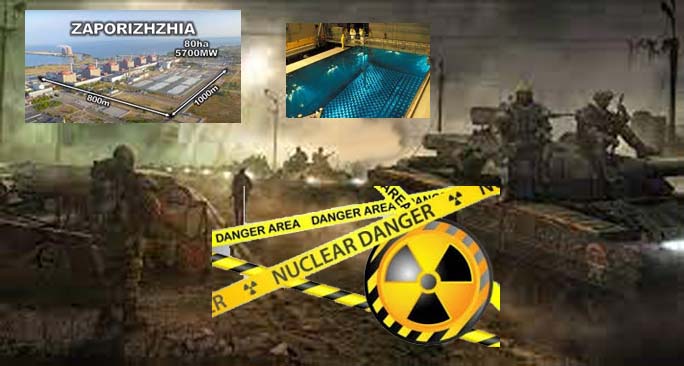
Reuters, June 23, 2023 https://www.reuters.com/world/europe/russia-asks-iaea-ensure-zaporizhzhia-nuclear-plant-security-2023-06-23/
June 23 (Reuters) – Russia urged the International Atomic Energy Agency on Friday to ensure Ukraine does not shell the Zaporizhzhia nuclear power plant, saying it was otherwise operating safely.
Alexei Likhachev, chief executive of the Russian state nuclear energy firm Rosatom, made the comments at a meeting with IAEA chief Rafael Grossi in the Russian city of Kaliningrad, Rosatom said in a statement, after Grossi visited the plant last week.
“We expect concrete steps from the IAEA aimed at preventing strikes by the Armed Forces of Ukraine, both on the Zaporizhzhia nuclear power plant and on adjacent territory and critical infrastructure facilities,” Rosatom quoted its chief as saying in a statement.
The IAEA said this week that the power plant was “grappling with … water-related challenges” after the destruction of the Kakhovka dam emptied the vast reservoir on whose southern bank the plant sits.
It also said the military situation in the area had become increasingly tense as Kyiv began a counteroffensive against the Russian forces that have seized control of swathes of eastern and southern Ukraine.
Moscow and Kyiv have regularly accused each other of shelling Europe’s largest nuclear power station, with its six offline reactors. International efforts to establish a demilitarised zone around it have so far failed.
Ukraine this week accused Russia of planning a “terrorist” attack at the plant involving the release of radiation, while Moscow on Friday detained five people who it said were planning to smuggle radioactive caesium-137 at the request of a Ukrainian buyer in order to stage a nuclear incident.
Reporting by Reuters; Editing by Kevin Liffey
Riverkeeper celebrates bipartisan Assembly passage of bill to stop radioactive wastewater discharges into the Hudson River; Governor Hochul must sign.

Riverkeeper, the leading environmental organization dedicated to protecting the Hudson River, celebrates the Assembly taking the final legislative step after the unanimous bipartisan Senate passage of crucial legislation aimed at safeguarding the economic vitality of the Hudson River from the imminent threat of radioactive wastewater discharge at Indian Point by Holtec International, the firm responsible for decommissioning the nuclear power plant. With the legislation now at Governor Hochul’s desk, she must sign the bill immediately to prevent Holtec from releasing radioactive wastewater into the Hudson River.
“The unanimous bipartisan support in the Senate and the bipartisan vote in the Assembly sends a clear signal that New Yorkers of all stripes are opposed to Holtec’s plans. Governor Hochul must sign the legislation to draw a firm line against the use of our river as a dumping ground for radioactive waste and pave the way for a prosperous future for the Hudson River and its surrounding communities,” said Tracy Brown, President of Riverkeeper, “We cannot underestimate the impact of the public perception of a severely polluted Hudson River. Together we have made great strides in cleaning up the Hudson, which has supported increased water-based recreation and tourism. We cannot let outmoded “business-as-usual” polluting practices undercut that work and our goal of a clean and healthy Hudson for all.”
Riverkeeper thanks Assemblymember Dana Levenberg and Senator Pete Harckham for their relentless efforts in championing this important legislation, S6893/A7208. We also thank Assembly Speaker Carl Heastie and Senate Majority Leader Andrea Stewart-Cousins for their leadership in ensuring the legislation received a vote.
Instead of allowing Holtec to discharge the wastewater, Riverkeeper together with a coalition of partners are calling for the secure on-site storage of the contaminated water on the Indian Point site for at least a period of 12.5 years. This would allow for one half life to elapse and reduce the radioactivity of the spent fuel pool water and protect the economic interests of the state, while alternative disposal methods are thoroughly evaluated. Riverkeeper is a member of the Indian Point Decommissioning Oversight Board and provides expertise on issues related to water quality, public health, and impacts to wildlife.
The overwhelming opposition from the public against Holtec’s profit-driven discharges has resonated across the state, as concerned citizens and communities rally together to protect the Hudson River as the vital resource it is.
Riverkeeper stands firm in its commitment to defending the Hudson River and urges Governor Hochul to immediately sign the legislation before Holtec proceeds with the release of radioactive wastewater.
Concerned citizens can take action by urging Governor Hochul to sign the legislation immediately.
Zelensky bans Russian books
The Ukrainian president has signed a controversial bill outlawing the import of Russian and Belarusian publications
Ukrainian President Vladimir Zelensky announced on Thursday that he had signed a law making it illegal to import and distribute Russian and Belarusian language products in Ukraine. However, some Ukrainian officials have pointed out that the step could hinder Kiev’s plans to join the EU.
The move comes after Ukrainian citizens registered an online petition on the official presidential website asking for the ban, back in May. The petition reached the 25,000-vote threshold required for it to be formally considered by the head of state.
The author of the petition noted that the Ukrainian parliament had already approved the law on June 19, 2022, but that Zelensky had never signed the bill. As a result, Russian books continued to be sold in Ukraine, which undermines “the information security of the state and the economic foundations of Ukrainian book publishing,” according to the petition.
“I consider the law to be correct,” Zelensky stated in a Telegram post announcing that he had finally signed the legislation.
He noted, however, that the text of the legislation had been sent to EU institutions for an “additional assessment” of whether it could breach Kiev’s obligations to protect minority rights, particularly linguistic ones, in the context of Ukraine’s application for EU membership.
In a written response to the petition last month, Zelensky explained that there had been a “number of reservations” that prevented the law from being adopted.
The president stated that Ukraine’s Ministry of Justice had proposed applying the right of veto to the bill, arguing that completely banning the import and distribution of Russian publications would contradict several articles of Ukraine’s constitution.
Additionally, Zelensky said that despite agreeing with the nature of the law, the Ukrainian Foreign Ministry had also advised vetoing the bill. The ministry had warned that its current version “does not meet the norms and standards of the EU in the field of human rights, including freedom of opinion, protection of the rights of national minorities, prohibition of discrimination on the basis of language, and therefore may complicate the process of negotiations on Ukraine’s accession to the European Union.”
Is Russia planning to use nuclear weapons?
https://www.sbs.com.au/news/podcast-episode/is-russia-planning-to-use-nuclear-weapons/7vcas0f5l 23 June 23
President Vladimir Putin has announced the imminent deployment of Russia’s advanced Sarmat intercontinental ballistic missiles, capable of carrying multiple nuclear warheads.
This comes as Russia’s defence head says intelligence indicates Ukraine is planning to strike the annexed territories including Crimea.
Ukraine has warned Russians to flee from the occupied territories as Russia warns any strike on Crimea will be met with strikes at the centre of Ukraine’s leadership
New Mexico leaders fear nuclear waste could endanger oil and gas in the Permian Basin

Adrian Hedden, Carlsbad Current-Argus, 23 June 23 https://www.currentargus.com/story/news/2023/06/23/new-mexico-leaders-fear-nuclear-waste-holtec-endanger-oil-gas-fossil-fuel-permian-basin/70338508007/
State land managers in New Mexico doubled down on their opposition to a proposed project to store spent nuclear fuel at a site near the border of Eddy and Lea counties amid the Permian Basin oilfield.
The New Mexico Land Office owns and oversees operations on State Trust land, largely consisting of fossil fuel extraction in southeast corner of the state, generating revenue used to fund public schools, hospitals and other public services.
Sunalei Stewart, deputy commissioner of operations at the office said it owns mineral rights beneath Holtec International’s proposed project location.
He added that means the agency has the right to oppose and block the project which Commissioner of Public Lands Stephanie Garcia Richard signaled disapproval of due to concerns nuclear waste storage could impact other nearby industries like oil and gas.
Stewart’s comments came before the June 15 meeting of the New Mexico Legislature’s interim Radioactive and Hazardous Material Committing in Santa Fe.
“One thing about Holtec that not everybody appreciates, is that the land, the mineral estate is actually owned by the State Land Office,” said Stewart. “The surface is where the project will occur, but we own all of the mineral rights.”
Holtec International recently received a license from the federal Nuclear Regulatory Commission to build and operate the site on about 1,000 acres owned by the Eddy-Lea Energy Alliance (ELEA), a consortium of the cities of Carlsbad and Hobbs and Eddy and Lea counties.
The project would see up to 100,000 metric tons of spent nuclear fuel rods shipped via rail into southeast New Mexico for storage at the surface on a 40-year license, potentially reprocessed for more fuel or sent to final disposal if such a facility becomes available.
The U.S. does not have a permanent repository for disposal of the waste, igniting fears from New Mexico leaders that the Holtec site could become the “de-facto” resting place for the waste.
Stewart said the Land Office has existing oil and gas leases targeting the minerals beneath Holtec’s proposed location, and that multiple analysis conducted by the NRC failed to account for extraction activities.
“We have expressed a lot of frustration and concern,” Stewart said before lawmakers. “The assumptions for the safety analysis, the environmental analysis, all assumed there would be no oil and gas activity at the site, there would be no potash mining at the site, so sand and gravel at the site. There would be no mineral activity at the site.
“We remained very concerned about the project and how it could impact State Trust land specifically.”
The Permian Basin region, which southeast New Mexico shares with West Texas, is the U.S.’ most productive oilfield, generating up to 5.7 million barrels per day, according to the Energy Information Administration (EIA).
That industry was estimated to generate almost half of New Mexico General Fund revenue in the last fiscal year, according to the most recent state budget analysis – about $7 billion.
That industry and its economic support of the state could be imperiled, Stewart said, by Holtec’s proposal.
“This is really in the heart of the Permian,” he said of the proposed site. “If there was an accident, if there was an incident, we could be in a lot of trouble in terms of other operations that are out there. There are active wells out there.”
Committee Chair Rep. Joanne Ferrary (D-37) said the project would draw waste from about 70 sites in 35 states, which could lead to dangers along the route on the U.S. rail system.
She pointed to Senate Bill 53, sponsored by the committee’s Vice Chair Jeff Steinborn (D-36), that barred New Mexico from issuing various permits the Holtec site would need to operate such as for wastewater discharge or air quality impacts.
“From back east, they’re coming to New Mexico. Most of the time, they would not have to come through New Mexico,” said Ferrary. “Hopefully we can head that off with our legislation.”
Sen. Brenda McKenna (D-9) also voiced concerns for the transportation of the waste, arguing any accidents along the route could imperil New Mexicans or any nearby community.
“They have had accidents,” she said of Holtec. “I hope we will succeed in block in entirely.”
1
Big enlistment bonuses offered to UK sailors entering the nuclear field
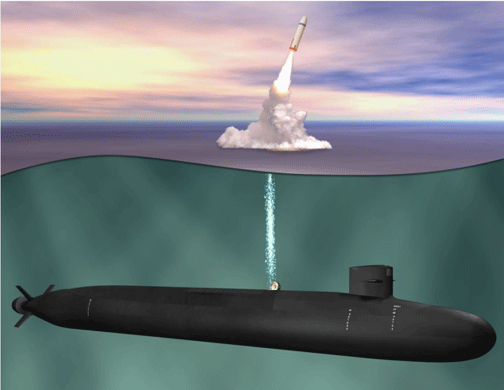
By Diana Stancy Correll. Navy Times
The Navy is offering up to $75,000 in enlistment bonuses for those entering the nuclear field — up from the $50,000 it previously offered and the maximum offered to all other ratings.
The bonus announcement coincides with recruiting challenges across the services, which military leaders attribute to more thorough medical screenings, fewer Americans eligible to serve, and low civilian unemployment.
Sailors may couple the bonus with the maximum student loan repayment under the Enlisted Loan Repayment Program, in which the Navy covers college tuition loans — such as Stafford Student Loans — that were taken out prior to the sailor enlisting for active duty……………………………………………………………………………… more https://www.navytimes.com/news/your-navy/2023/06/23/big-enlistment-bonuses-offered-to-sailors-entering-the-nuclear-field/1
China joins the rush to market nuclear power to Turkey
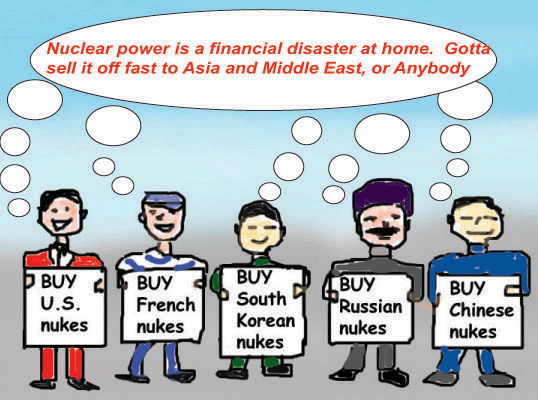
Türkiye in contact with China for planned 3rd nuclear plant’, BY DAILY SABAH WITH REUTERS, JUN 23, 2023
Türkiye is in contact with China regarding the construction of a planned third nuclear power plant (NPP) and is surveying sites for a fourth, a top ministry official said.
Russia’s Rosatom is building the country’s first nuclear power plant, Akkuyu NPP, in its southern Mersin province, with the first reactor expected to go online next year……………
£485m clean-up operation for UK’s 10 nuclear reactors
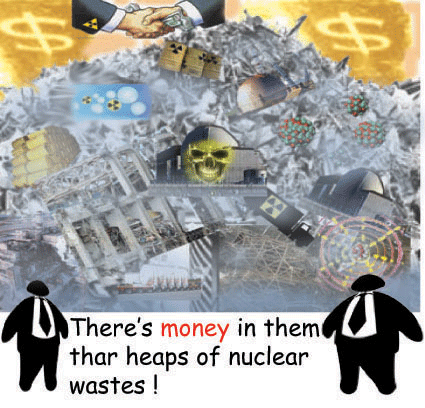
A team featuring Keltbray and Costain is one of several firms to win spots
on a £485m framework to carry out demolition and asbestos removal work
across all of the UK’s 10 nuclear reactors. The pair and a second team
called Celadon Alliance, comprising Altrad Support Services, KDC Veolia
Decommissioning Services and NSG Environmental, have been awarded framework
contracts for both Lots 1 and 2.
In addition, Kaefer UK & Ireland has been
awarded a framework contract for Lot 1 and a team featuring Nuvia, Rainham
Industrial Services and Hughes and Salvidge has been awarded a framework
contract for Lot 2. Called the Decommissioning and Asbestos Removal
framework, work includes jobs at all 10 reactor sites, two research sites
and one hydro-electric plant, which are all operated by Magnox on behalf of
the Nuclear Decommissioning Authority.
The framework is initially for four
years with an option to extend up to a further two years. Jobs will include
demolition and deplanting, turbine hall cleaning, removal and treatment of
radioactively contaminated plant, including cooling ponds and water
treatment facilities.
Building 22nd June 2023
Sweden reverses its long-standing nuclear-free policy
Sweden adopts new fossil-free target, making way for nuclear. Nuclear
generation has increased in Sweden despite a vote 40 years ago to phase-out
nuclear reactors.
Sweden’s parliament adopted a change to its energy
targets on Tuesday, which will see it become 100% fossil fuel-free by 2045.
The country previously sought to transition to 100% renewable energy by
2045. The change means that nuclear generation can count towards the
government’s energy targets.
Sweden’s Government voted to phase-out nuclear
power 40 years ago, but in June 2010 parliament voted to repeal the policy.
The government elected last year seeks to promote nuclear power. Sweden has
set a target to become carbon neutral by 2045. Electricity demand in the
country is expected to reach 300 terawatt-hours by 2040.
Power Technology 22nd June 2023
https://www.power-technology.com/news/sweden-adopts-new-fossil-free-target-making-way-for-nuclear/
European Parliamentary Assembly rapporteurs warn against extradition to the United States of Julian Assange

20/06/2023Legal Affairs and Human Rights, https://pace.coe.int/en/news/9145/pace-rapporteurs-warn-against-extradition-to-the-united-states-of-julian-assange?fbclid=IwAR17jfNw-hOFAyBnLaAdYy-4ZurMA8qGK9TdNyYSAILwoezU1K4EmqukTv4
The General Rapporteurs on Human Rights Defenders and Whistleblowers, and on Political Prisoners, of the Parliamentary Assembly of the Council of Europe (PACE), Emanuelis Zingeris (Lithuania, EPP/CD) and Sunna Ævarsdóttir (Iceland, SOC), have warned against the extradition to the United States of Julian Assange.
“The harsh treatment of Julian Assange to date, and the lengthy prison term which he faces in the US if extradited, have a chilling effect on freedom of information, freedom of speech and whistleblowing in general. Daniel Ellsberg, who leaked the ‘Pentagon Papers’, is rightly celebrated as a hero for his contribution to bringing the Vietnam war to an end. Julian Assange, who published accurate information on egregious human rights violations by state agents in Iraq and elsewhere, also deserves recognition, not punishment,” said Mr Zingeris.
“Julian Assange has made powerful enemies in the United States. If extradited, he would risk serious human rights violations, including ill-treatment in detention, and a disproportionate prison sentence. It is therefore with great concern that we learned of the decision issued on 6 June by the High Court in London, denying Julian Assange permission to appeal the decisions authorising his extradition,” said Ms Ævarsdóttir.
“We also call on the international community to take any action likely to put an end to Julian Assange’s extradition proceedings in order to prevent human rights violations, which appear more imminent now than ever before,” the rapporteurs said. Both rapporteurs note that the Assembly has already supported the release of Julian Assange and recall statements by the Council of Europe Commissioner for Human Rights calling on the UK to end the arbitrary detention of Julian Assange and to prevent his extradition.
Nuclear Fusion: A Clean Energy Revolution Or A Radioactive Nightmare?

By Kurt Cobb – Jun 20, 2023, Oil Price
Fusion reactors, while producing energy, also produce neutron streams that can cause radiation damage, produce radioactive waste, necessitate biological shielding, and even create the potential for weapons-grade plutonium production.
Apart from the aforementioned problems, fusion reactors face issues such as tritium release, intensive coolant demands, and high operating costs, which would require the power plant to have at least a one-gigawatt capacity to balance costs.
Given the time and resources required for fusion power plant construction, the technology might not be feasible for timely carbon emission reduction, and the prospect of fusion energy might be distracting society from immediate solutions to energy scarcity and climate change.
……………………
The reality of fusion power, however, is one of huge scale and vast obstacles according to Daniel Jassby, a former research physicist at the Princeton Plasma Physics Lab. (All of what follows assumes that the remaining obstacles to producing net energy from fusion will be overcome. Addressing that issue would require a seperate and lengthy essay.)
Perhaps the most unexpected revelation Jassby offers runs entirely contrary to the clean image that fusion energy has in the public mind. It turns out that the most feasible designs for fusion reactors will generate large amounts of radioactivity and radioactive waste.
[here much detail on the operation of nuclear fusion]………………………………………………………………………..
To power the enormously energy-intensive process of fusion, a fusion plant will use a lot of energy just to run itself. That means scale will matter. In order to accommodate this so-called parasitic power drain AND produce enough excess electricity to sell to pay for the costs of constructing the plant and for its ongoing operation, fusion plants will have to have a capacity of at least one gigawatt (one billion watts). One gigawatt can supply electricity to 300,000 to 750,000 homes depending on how the calculation is done. And, even much larger capacity per plant will be desirable because it will decrease the percentage of power production devoted to sustaining the fusion reaction and servicing the plant infrastructure. In short, making fusion plants big will be the only way to make them economical. So much for my friend’s fantasy of handheld fusion power units!
In a second article, Jassby addresses the International Thermonuclear Experimental Reactor (ITER) located in France. The project is a cooperative research venture designed to study and perfect fusion. It will not produce any electricity itself, but rather set the stage for so-called demonstration plants which could be built in the second half of this century.
……………………..
just to operate its experiments, ITER will require 600 megawatts of power, a window into the parasitic power requirements of fusion reactors.
The fantasy of cheap, unlimited fusion power arriving soon with no serious side-effects prevents us as a society from grappling with near-term energy depletion and our ongoing dependence on fossil fuels in the accelerated manner required to prevent a major energy crisis. Hope that fusion energy will somehow solve our energy and climate problems is not a real plan. It is just another illusory and far-in-the-future technical fix offered to convince us that we don’t need to alter our way of life in any substantial way to address the serious problems we face. https://oilprice.com/Alternative-Energy/Nuclear-Power/Nuclear-Fusion-A-Clean-Energy-Revolution-Or-A-Radioactive-Nightmare.html
Assessing investability of new nuclear projects like Sizewell C
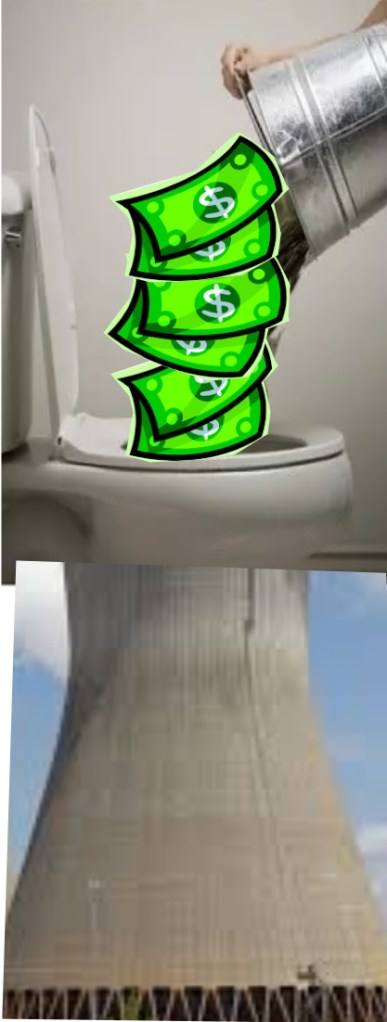
The crucial issue here is that the regulated company is permitted to start charging customers immediately after the project begins, and can continue to do so throughout the construction phase.
The downside for customers or ratepayers is that they end up bearing most of the risk, whether that is delays, cost increases, or even complete cancellations.
it is transferring a lot of the risk straight onto the customer and the customer can end up paying through the nose for nothing if you have serious problems in terms of timescales.”
NS Energy, By James Varley 19 Jun 2023
The UK is grappling with the problem of inviting the private sector to invest in new nuclear without interest driving up the price. Its solution cuts costs – but transfers the risk to consumers
UK Chancellor Jeremy Hunt confirmed recently that the UK would back the proposed Sizewell C nuclear power plant with an investment of £679m. The funding had initially been announced by then Prime Minister Boris Johnson. It is a mark of the large investment involved in a new nuclear unit that, despite UK plans to see one new nuclear plant reach Final Investment Decision (FID) in this parliament (ie before the end of 2024) and two achieve FID in the next (before 2029), two incoming Prime Ministers (Teresa May and Rishi Sunak) have announced reviews of Sizewell C. But Sunak’s chancellor Jeremy Hunt reaffirmed both the project and the funding, saying: “Our £700m investment is the first state backing for a nuclear project in over 30 years and represents the biggest step in our journey to energy independence.”
Of perhaps more interest to investors is the UK government’s decision to take a 50% stake in Sizewell C, with co-investor EDF. But neither of the two envisages holding those large stakes for very long. Once the project – which now has planning permission – reaches FID, both hope that it will attract new investors, so that the UK and EDF can reduce their stake to around the 20% level.
It is hoped that the project can bring in private capital because investors will gain confidence in the continued presence in the project of the UK and EDF but also because it will be built under a different financing model.
It is hoped Sizewell C will look less like a state-owned plant where funding comes from the government and it (in effect taxpayers) bears the risk of cost and schedule overruns. Instead, the government hopes it will resemble other types of power plant development cycles, in which different investors buy and dispose of stakes as the project moves from development, to permitted and ‘shovel-ready’, to construction and operation. With each step the project rises in value while the risk falls, so eventually it becomes investable for groups like pension funds which will accept low returns in exchange for long-term stability, while early investors will take their profit and reinvest in other projects where returns are higher.
At £20bn (in 2015 money) even 60% of the project will be too large for any single bank or other investors, which are more likely to join at the £1bn level. But the UK hopes that post-FID (aimed to be at the end of 2024) the project will attract enough investors that they will be in competition on the initial return on investment required. In the future, the level of allowed return will be set by the UK’s energy regulatory authority, Ofgem
Moving to a RAB model
Co-investing with the government is not currently enough to make Sizewell C an attractive investment though. The key to that, the UK government believes, is the Regulated Asset Base model (RAB).
The Department for Business, Energy and International Strategy (BEIS) set out its view on the RAB model and compared it with other funding models in an Impact Assessment in 2021 – required because the RAB model required primary legislation (which has now been passed).
Comparing RAB with relying on existing funding models, such as Contracts for Difference (CfD) BEIS said it “believes there are few, if any, strategic investors in the market with the risk appetite to finance a new nuclear power plant using a CfD mechanism.” In fact, BEIS also considered that the RAB on its own “would not achieve the goal of delivering new projects at a lower cost”. It added new Funded Decommissioning Programme (FDP) legislation and the new Special Administration Regime.
What is the Regulated Asset Base model? It aims to manage nuclear’s biggest problem: huge capital costs and the long gap (as much as 15 years) between investing and starting to earn a return when power is produced.
The UK’s RAB approach aims to address this. It has commonalities with US models that add nuclear to a utility’s ‘rate base’, but the UK version would ring-fence the project activities in a special purpose vehicle (SPV). The SPV is awarded a licence to own and operate the project for a defined period. It is permitted to recover the costs of construction and operation, and also to make an ‘allowed return’ on the asset for the lifetime of the licence.
The crucial issue here is that the regulated company is permitted to start charging customers immediately after the project begins, and can continue to do so throughout the construction phase.
……………………..The downside for customers or ratepayers is that they end up bearing most of the risk, whether that is delays, cost increases, or even complete cancellations.
……………………….There is no shortage of experience in the energy sector of different financing models. Some have salutary lessons………………………………
The burden lies less heavily on wind and solar projects because they can be built relatively quickly and the project can be built in phases. As a result, income from part of the project starts early, while construction lessons can be learned from in early phases so delivery risk in the later phases is lower. Nuclear does not have that opportunity.
Prices set in advance look very different in the rearview mirror. Once the plant is operating the risks accepted by the developer before and during construction are forgotten…………………..
With the RAB model, a nuclear plant will still face price and volume risk once operating, as its power will have to be sold into a volatile market where nuclear can be pushed out of the merit order by cheap renewables and prices can fall to zero at times (a contrast to TTT, whose customer Thames Water has no choice but to use the service and no alternative supplier).
Despite the fact that it may reduce costs, consumer advocates are very wary of the RAB model. Alan Whitehead, Labour’s shadow energy minister and a longstanding observer of the industry, has previously complained that the RAB model “effectively puts costs on the consumer well before you have any idea when a particular plant will come onstream. If there is any slippage in the process the consumer just continues to pay out. …it is transferring a lot of the risk straight onto the customer and the customer can end up paying through the nose for nothing if you have serious problems in terms of timescales.”
He referred to consumers in the USA who were left paying the cost for decades when nuclear projects were cancelled……………….. https://www.nsenergybusiness.com/features/assessing-investability-of-new-nuclear-projects-like-sizewell-c/
1 This Month
23-25 October – on Zoom – World BEYOND War’s annual global conferenc


Shut down the radiation-damaged Heysham nuclear reactors now
To see nuclear-related stories in greater depth and intensity – go to https://nuclearinformation.wordpress.com

Say No to NASA’s Reckless Nuclear Reactor on the Moon
Say No to NASA’s Reckless Nuclear Reactor on the Moon

-
Archives
- October 2026 (219)
- September 2026 (339)
- August 2026 (330)
- July 2026 (355)
- June 2026 (287)
- May 2026 (306)
- April 2026 (356)
- March 2026 (251)
- February 2026 (267)
- January 2026 (308)
- December 2025 (358)
- November 2025 (359)
-
Categories
- 1
- 1 NUCLEAR ISSUES
- business and costs
- climate change
- culture and arts
- ENERGY
- environment
- health
- history
- indigenous issues
- Legal
- marketing of nuclear
- media
- opposition to nuclear
- PERSONAL STORIES
- politics
- politics international
- Religion and ethics
- safety
- secrets,lies and civil liberties
- spinbuster
- technology
- Uranium
- wastes
- weapons and war
- Women
- 2 WORLD
- ACTION
- AFRICA
- Atrocities
- AUSTRALIA
- Christina's notes
- Christina's themes
- culture and arts
- Events
- Fuk 2022
- Fuk 2023
- Fukushima 2017
- Fukushima 2018
- fukushima 2019
- Fukushima 2020
- Fukushima 2021
- general
- global warming
- Humour (God we need it)
- Nuclear
- RARE EARTHS
- Reference
- resources – print
- Resources -audiovicual
- Weekly Newsletter
- World
- World Nuclear
- YouTube
-
RSS
Entries RSS
Comments RSS

