Chinese government acknowledges problems for nuclear power due to climate change
Govt orders new nuclear power plants to carefully consider water intake safety
By Global Times Aug 28, 2023
The National Nuclear Safety Administration (NNSA) has urged China’s newly-built and projected nuclear power plants to fully consider water intake issues, in a bid to ensure the safe operation of nuclear power facilities.
During a recent meeting, the administration emphasized that relevant departments should improve water intake procedures due to changes in climate and sea environment over the years, to further ensure the smooth operation of nuclear power plants. This was stated by NNSA’s official social media account on Monday…………………………………………. https://www.globaltimes.cn/page/202308/1297149.shtml
There should be no Saudi uranium enrichment

The ultimate argument against a US-Saudi nuclear deal is the crown prince himself, who is in line to be king and for practical purposes already is.
He is a liar and a gruesome killer. Saudi Arabia, for all its modern trappings, is a primitive state with no effective checks on his powers. The king makes the laws, rules by decree, and is the chief judge. He has powers the British king gave up in the 13th century. Saudi Arabia has a long way to go before it will be a safe place for nuclear energy.
By Victor Gilinsky | August 28, 2023
https://thebulletin.org/2023/08/there-should-be-no-saudi-uranium-enrichment/?utm_source=Newsletter&utm_medium=Email&utm_campaign=MondayNewsletter08282023&utm_content=NuclearRisk_SaudiUranium_08282023&utm_source=Newsletter&utm_medium=Email&utm_campaign=MondayNewsletter08282023&utm_content=NuclearRisk_SaudiUranium_08282023
There is increasing talk of a United States-brokered “grand bargain” on Middle East security, the core of which would be normalization of ties between Israel and Saudi Arabia. It isn’t clear what motivates Joe Biden to press for this deal now. The obvious goal would involve the eternal search for peace in the Middle East, but there are hints that such a bargain may have more to do with keeping the Saudis out of China’s orbit.
One thing we know, Biden’s lieutenants are lobbying hard in the Senate for acceptance of some version of far-reaching demands from the Saudi crown prince, Mohammed bin Salman, among them access to uranium enrichment technology that would ostensibly provide fuel for future Saudi nuclear power plants. Indeed, enrichment is a step in the production of nuclear reactor fuel. It is also a vital part of one of two paths to the atomic bomb.
One thing we know, Biden’s lieutenants are lobbying hard in the Senate for acceptance of some version of far-reaching demands from the Saudi crown prince, Mohammed bin Salman, among them access to uranium enrichment technology that would ostensibly provide fuel for future Saudi nuclear power plants. Indeed, enrichment is a step in the production of nuclear reactor fuel. It is also a vital part of one of two paths to the atomic bomb.
That isn’t of course the polite version of the crown prince’s plan. He says he wants to use domestic uranium, of which the Saudis claimed to have large deposits, to fuel civilian nuclear power reactors. He wants to produce fuel domestically, ergo he needs to acquire enrichment technology. But despite Saudi claims, there are no significant uranium deposits in the country. Recent reports reveal that the teams of geologists sent to search for it have turned up empty-handed. That hasn’t, however, caused the crown prince to lose interest in enrichment, which is itself a revealing fact about his intentions—and his reliance on American cupidity.
To cope with what the Saudis regard as excessive suspicion of others, they have suggested they are open to accepting some modest additional oversight arrangements, which they cynically expect Congress to accept after members engage in some ritual handwringing.
You would think the Saudi insistence on inclusion of enrichment, no matter how restricted, would be a non-starter for a US-Saudi “123” agreement for nuclear cooperation. (Compliance with Section 123 of the Atomic Energy Act is essential for any significant US-Saudi nuclear trade.) But such common sense is a thin reed to lean on when it comes to Washington nuclear politics. Powerful lobbies have been pushing for years for sale of power reactors in the Middle East and for generous subsidies to allow this to happen. The departments of Energy and State will be supporting this, too, claiming that international “safeguards” would be effective in preventing misuse of civilian nuclear facilities. The official line on nuclear energy is still Atoms for Peace, as it has been since President Eisenhower’s 1953 speech. Recall that George W. Bush said even Iranian power reactors, by themselves, were perfectly legitimate.
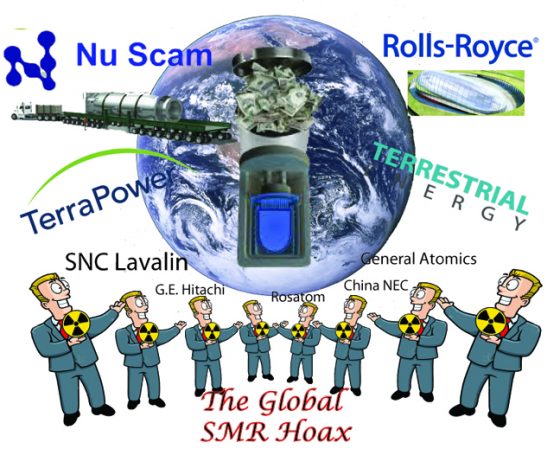
The problem is that hardly anyone in Congress has any real understanding of nuclear technology. The members are swept off their feet by promises of safe, non-carbon producing energy sources, especially when nuclear proponents use adjectives like “small” and “modular” and “advanced.” Congressional discussions on international aspects seldom get beyond “restoring America’s competitive advantage in nuclear energy.”
There is also little understanding of the limitations of international “safeguards,” the inspection system of the International Atomic Energy Agency (IAEA). (Is there any realistic recourse if the Saudis break the rules?) It is indicative of Saudi Arabia’s attitude toward the IAEA that it has used every stratagem to minimize its safeguards responsibilities. The minimization strategy does not violate IAEA requirements, yes, but a country anxious to demonstrate its nuclear bona fides should be more forthcoming in its nonproliferation cooperation.
The 2008 US-India civil nuclear agreement is an eternal warning about how American international nuclear policy can go off the rails when the president and Congress are swept away by visions of gaining an ally against China plus the prospect of dozens of power reactor sales. That agreement ran a truck through the Non-Proliferation Treaty, and none of the sales of nuclear power plants materialized.
The Saudis know Americans can be made to swallow principle—they recently succeeded in humbling the US president on human rights and oil prices—and so are unlikely to soften their stance on inclusion of enrichment in a 123 agreement. The White House will be looking for a formula that accepts it, but adds some restriction, or appearance of restriction, or another sweetener, perhaps related to Palestinian rights, that would allow members of the House and Senate to go along with inclusion of enrichment in a US-Saudi agreement.
Who would stand in the way? Not the Republicans: They love the Saudis. The one possibility is if Israel balks at any deal that includes Saudi enrichment. Opposition Leader Yair Lapid told Democratic Party lawmakers visiting Israel recently that he opposes a potential Israel-Saudi Arabia normalization deal that allows Riyadh to enrich uranium because it would harm Israel’s security. But the Israeli government’s response—that is, Prime Minister Netanyahu’s—has been ambiguous.
Somebody needs to stand up. Not only should the United States say no to Saudi enrichment, but Washington should also rethink the entire notion of nuclear power reactors in Saudi Arabia. Such reactors, coupled with a reprocessing facility to extract plutonium from used fuel, which the Saudis will surely want as well, provide the other path to a bomb, a plutonium bomb.
With its constant threat of wars, the Middle East is no place for nuclear reactors. Nuclear reactors in the region have been targeted in aerial attacks a dozen times. The safety issues that followed the capture by the Russians of the Zaporizhzhia power reactors in Ukraine should teach us something, too. Nuclear reactors do not belong in regions of potential conflict.
The ultimate argument against a US-Saudi nuclear deal is the crown prince himself, who is in line to be king and for practical purposes already is. He is a liar and a gruesome killer. Saudi Arabia, for all its modern trappings, is a primitive state with no effective checks on his powers. The king makes the laws, rules by decree, and is the chief judge. He has powers the British king gave up in the 13th century. Saudi Arabia has a long way to go before it will be a safe place for nuclear energy.
‘Peaceful Atom’ Sparks Fierce Debate In Kazakh Village Slated To Host Nuclear Power Plant
By Petr Trotsenko, August 28, 2023 Radio Free Europe
ULKEN, Kazakhstan — Plans are under way to build a nuclear power plant (NPP) scheduled to be online by 2035, to supply Kazakhstan’s soaring energy needs.
In Ulken, where the plant is likely to be built, opinions among the village’s 1,500 residents on what a nuclear future for their impoverished lakeside village would look like are split.
Ulken is located 330 kilometers northwest of Almaty on the shores of Lake Balkhash. The village was created in the 1980s to house workers for a planned hydroelectric power plant. That project was unfinished when the Soviet Union collapsed and high-rise apartments are the only completed constructions from the period.
Officially, Ulken is a village, but it feels like an urban settlement. There are no houses here, only apartments. There is no livestock, and no gardens grow in the rocky soil…………………………………………………………………………….
Khairulina wants to increase the population of Ulken, renovate the village, and give life to the abandoned apartments. For these reasons she supports the construction of an NPP. “If the project starts, civilization will come,” she said. The villager is concerned for the environment, but said, “We are not afraid of environmental problems, now everything is made with modern technology.”
Fishermen in Ulken are largely against the NPP project because they fear that Lake Balkhash will be affected and that fishing there could eventually be banned.
It’s not difficult to find fishermen. In front of one abandoned apartment, fish hang in the breeze.
The owner of the property is a young man named Rinat. The 34-year-old fisherman has devoted half of his life to the profession and works the lake every day. Rinat firmly opposes the construction of an NPP.
“The lake sustains us,” he said. “This year the water level in the Balkhash dropped severely, and the fish population decreased. If an NPP is built, there will be no water left in the lake,” Rinat claimed.
At the grocery store, I met another resident, Aleksei Losev. The 35-year-old moved to Ulken six years ago to live with his future wife. He’s not a fisherman, but does not expect anything good from the construction of the NPP.
“On one hand I support its construction, because new jobs will be created, people will come from abroad, and the village will develop. On the other hand, it’s about ecology,” he said, before referencing a troubled Soviet-era NPP in western Kazakhstan that is currently being decommissioned. “Three kilometers from Aqtau there is the Manghystau NPP. The environmental situation there is bad. Why? Wastewater! Both fish and seals are dying…. It will be the same here,” he said……………………………………………………………………………….
In the small assembly hall of the Ulken high school where the August 21 meeting to discuss the NPP took place, it was standing room only. Environmental activists who had travelled from Almaty for the meeting unfurled posters calling to put a stop to the project as residents chanted, “we support the peaceful atom!”
When the discussion on the planned NPP got under way it was clear that there would be little constructive conversation. The emotions of the crowd boiled over.
“We are against the nuclear power plant, it will destroy Balkhash Lake!” activists shouted.
“You’re not a nuclear specialist, how do you know it will be harmful? You don’t live in Ulken” responded some residents.
“It is not only an Ulken problem, this topic should be discussed by all of Kazakhstan!” the activists countered.
…………………………………………………………………… Another local man hoped to work in the future energy sector.
“We residents have been waiting for this construction for 40 years,” he said. “We started with the construction of the power station, we spent days without heat and electricity, we went through many different events together. Ulken needs this energy, this is the center of Kazakhstan. Our region is seismologically stable! There are 15 nuclear power plants in Japan, which has an earthquake every month. Energy is scarce and very expensive in our country. We all need electricity. We support the peaceful atom!” he said.
People in the hall clapped and someone asked, “What about solar energy?” nobody seemed to hear the question amid chants of “Peaceful atom! Peaceful atom!”
Then environmentalist Svetlana Mogilyuk spoke. Like many others, Svetlana came to Ulken to take part in the discussion.
“Dear residents, we have now listened very carefully to what was said,” Mogilyuk said. “No basic, truthful information was provided to you. In contrast to the claim that nuclear energy is not harmful to health, there are qualified studies showing that nuclear energy is still harmful! Numerous studies also confirm that children who live near nuclear power plants are more likely to develop leukemia, and deaths from cancer increase by 24 percent.”
As she made these claims, her microphone cut off. She continued without it.
“Nuclear power plants are harmful, they are accompanied by radioactive emissions. Citizens! You are now being told a lie! Hearings must be accompanied by basic information! You must understand that apart from the NPP, you have other opportunities, you have the opportunity to develop other types of electricity. They will be no less powerful, no less effective, but safer!”
……………………………………………………………………… many in Kazakhstan feel the construction of an NPP is a done deal for the government and that far more depends on its decision than the prospects for locals of a small village on the banks of the Balkhash. https://www.rferl.org/a/kazakhstan-nuclear-power-plant-debate-construction/32563042.html
French energy regulator: Nuclear alone not enough for carbon neutrality
“renewable energies to be brought on stream as quickly as possible, as there will be no new reactors in operation by 2035” to meet the need to decarbonise the energy mix.
By Clara Bauer-Babef and Paul Messad | EURACTIV.fr 27 Aug 23 https://www.euractiv.com/section/politics/news/french-energy-regulator-nuclear-alone-not-enough-for-carbon-neutrality/
If France is to achieve carbon neutrality by 2050, it must integrate renewables into its energy mix, according to the head of the country’s energy regulator, RTE, who believes nuclear power alone will not be enough.
As part of its EU targets, France has pledged to become carbon neutral by 2050 and contribute to the bloc’s efforts to cut greenhouse gases by 55% by 2030.
“To achieve carbon neutrality by 2050, nuclear power alone will not be enough,” said Xavier Piechaczyk, Chairman of RTE, on France Inter radio on Saturday.
Instead, France needs to diversify further its energy mix, which is currently 40% nuclear, 28% oil, 16% natural gas, 14% renewables and 2% coal, according to the French Ministry for Ecological Transition.
All the more so as “energy consumption will fall, but electricity consumption will rise to replace fossil fuels”, with a 25% increase in decarbonised electricity, writes RTE in its reference report on the French energy mix in 2050.
As such, Piechaczyk calls for “renewable energies to be brought on stream as quickly as possible, as there will be no new reactors in operation by 2035” to meet the need to decarbonise the energy mix.
France plans to build six new small nuclear reactors (EPR), although these will not be operational until 2035. Construction for the first reactor is only set to start in 2027.
“France is struck by a pathology, which is to spend its time arguing between nuclear versus renewable: it’s not the first question to be asked”, Piechaczyk said.
Piechaczyk referred in particular to the conflict between the radical left and ecologists, who are opposed to nuclear power, and the presidential majority and the right, supported by the Communists, who favour the development of nuclear power.
(Paul Messad & Clara Bauer-Babef | EURACTIV.fr)
Respect for hibakusha, and hope in younger generations

Hibakusha, atomic bombing survivors, have been tirelessly exerting themselves toward a world free of nuclear weapons, with their only wish that no one else should go through the sufferings they have experienced
The Bulletin, By Masako Toki | August 22, 2023
For too long, nuclear weapons narratives have been dominated by those who saw the mushroom cloud from afar or above. Or maybe just in photos, TV, or videos. Most absurdly, the voices of people who suffered the most under the mushroom cloud have often been marginalized.
There have been numerous efforts to raise awareness of the inhumane nature of nuclear weapons among hibakusha (atomic bomb survivors), people in Hiroshima and Nagasaki, and more broadly, in the international community. One of the most important milestones came when the 2010 Nuclear Nonproliferation Treaty (NPT) Review Conference adopted a final document that included, for the first time “the catastrophic humanitarian consequences of any use of nuclear weapons.” Since then, the humanitarian initiative for nuclear disarmament has been gaining momentum.
Three conferences on the humanitarian impact of nuclear weapons contributed to the start of the negotiation of the Treaty on the Prohibition of Nuclear Weapons (TPNW) and to adoption of the treaty. Through this process, a wide range of civil society members, along with like-minded governments, energized the humanitarian initiatives and tenaciously supported bringing humanitarian dimensions to nuclear weapons policy discussion.
The adoption of the TPNW has brought a glimmer of hope to nuclear disarmament advocates, although they are fully aware that this is a first step of the long process. Still, this is considered to be one of very few positive developments in recent nuclear disarmament efforts. The world is currently moving backward on nuclear disarmament. The Russian invasion of Ukraine has caused unspeakable human suffering and raised the risk of nuclear war. Today, nuclear threats are at the highest level since the end of the Cold War,
Hibakusha, atomic bombing survivors, have been tirelessly exerting themselves toward a world free of nuclear weapons, with their only wish that no one else should go through the sufferings they have experienced.
As the memories of Hiroshima and Nagasaki are further fading away every year given the advanced age of hibakusha, it is urgent for younger generations to learn more. Time is of the essence. Earlier this year, the average age of hibakusha reached 85.01 years, according to Japan’s Ministry of Health, Labor and Welfare. In addition, the number of hibakusha decreased by 5,286 to 113,649 this year. As the A-bomb survivors continue to age, the issue of how to pass on the message of the catastrophic impact of nuclear weapons to the next generation becomes increasingly pressing. Informing and educating the next generation is how we can ensure that nuclear weapons will never be used again, and eventually, achieve a world free of nuclear weapons.
The time to learn from hibakusha directly is limited and is getting shorter and shorter. The peace declaration this year read by Nagasaki Mayor Shiro Suzuki quoted Sumiteru Taniguchi, one of the late hibakushas who dedicated his life to nuclear disarmament. Taniguchi admonished that “[p]eople appear to be gradually forgetting the suffering of the past. This forgetfulness terrifies me. I fear that forgetfulness will lead to the acceptance of further atomic bombings.”
Keiko Ogura, a Hiroshima hibakusha and an English-Japanese interpreter for peace activities, shared her testimonials with world leaders in May this year at the G7 Hiroshima Summit. She asked the leaders to “relive the struggles in the hearts of hibakusha” that have been felt for so long, and to imagine the invisible wounds, traumas, sorrows, and unspeakable secrets through her eyes and heart. One of the most important abilities you need when you work for nuclear disarmament is to be able to empathize with other’s suffering. Ogura asked the G7 leaders to do precisely this. She also sent a message to Russian President Vladimir Putin through a reporter for one of her numerous interviews, saying, “You don’t know what a nuclear weapon is, the reality of a nuclear weapon. So come here and see.”
Earlier this summer, at a civil society event, Ogura calmly started her atomic bombing testimonial by encouraging the audience to imagine how it feels like to be under the mushroom cloud at the time of the bomb’s detonation. “I was at that time under the mushroom cloud you can see there,” while showing the picture of the mushroom cloud after the bomb was dropped.
Nothing is more powerful and effective than hibakusha testimonials in helping others to understand the horrific reality of the use of nuclear weapons. It is very important to imagine what really happened under the mushroom cloud. When you hear about the Hiroshima bombing or the Nagasaki bombing, the first image that comes to your mind may be the mushroom cloud. But we need to understand that people were under the mushroom cloud. Most of the victims were civilians, including small children.
Every year, the Hiroshima and Nagasaki remembrance days come. These are the days that we have to make efforts to remember and renew our resolve to work for nuclear disarmament. Soon, we will not be able to listen to hibakusha directly. As the hibakusha are aging in the middle of increasing nuclear risks, we cannot do business as usual every year, or think about nuclear disarmament only on these remembrance days……………………………………………………………….more https://thebulletin.org/2023/08/respect-for-hibakusha-and-hope-in-younger-generations/?utm_source=Facebook&utm_medium=SocialMedia&utm_campaign=FacebookPost082023&utm_content=NuclearRisk_HibakushaAndHope_08222023&fbclid=IwAR0hzzEqc_dLq2NN_fF9F4OQl0uI31cz7QW9BA5nL5TPKrLpASBAUt9dRDg
Saudi Arabia weighs nuclear power offers from China and France in bid to sway US
Saudi Arabia is considering bids to build a nuclear power station from
countries including China, France and Russia as the kingdom seeks to sway
the US over a sensitive security pact.
The kingdom, which is the world’s
largest oil exporter, has long sought its own civil nuclear capability and
has made US assistance with the programme a key demand in a potential deal
to normalise relations with Israel. One person said Saudi Arabia would make
its decision based on the best offer.
Another said that while Riyadh would
prefer the US, which is seen to have better technology and is already a
close Saudi partner, Washington’s restrictions on uranium enrichment would
scupper co-operation.
FT 26th Aug 2023
https://www.ft.com/content/ec613036-86ab-479e-bedc-99d152030c34
Swedish government removes nuclear power promise from website.
Climate minister accused of ‘exceeding her powers’ by announcing need for 10 new reactors.
The Swedish government has quietly walked back an announcement
that it would build at least 10 nuclear reactors by 2040 as part of its
plan to ditch fossil fuels.
Romina Pourmokhtari, Sweden’s climate and
environment minister, announced earlier this month that Sweden needed to
double electricity production in the next two decades in order to meet its
climate goals. An accompanying statement said that “Sweden will need
three times as much nuclear power in 20 years”.
But the statement was
quickly taken down from the government website and replaced with one that
makes no mention of the ten new reactors. Daniel Liljeberg, state secretary
to the minister for energy, business and industry, said there is no
official target matching Ms Pourmokhtari’s statement. Mr Liljeberg told the
Swedish daily Aftonbladet the government has not established targets or
assessments at that level of detail.
Insiders say Ms Pourmokhtari
“exceeded her powers” when she announced publicly that the government’s
aim was to put at least ten conventional reactors into operation during the
2030s and 2040s, Aftonbladet reported. Environmental experts had criticised
the government announcement, saying the new reactors would be too expensive
and not meet needs fast enough. The plans marked a dramatic change from the
country’s current capacity for nuclear power, where six reactors currently
account for around 30 per cent of its electricity production. In June,
Sweden’s coalition government adopted a new energy target, changing it to
“100 per cent fossil-free” electricity from “100 per cent
renewable”, giving the green light to push forward a new energy strategy
relying on expanding its nuclear power network.
Telegraph 26th Aug 2023
Elon Musk’s Shadow Rule

In the past twenty years, against a backdrop of crumbling infrastructure and declining trust in institutions, Musk has sought out business opportunities in crucial areas where, after decades of privatization, the state has receded. The government is now reliant on him, but struggles to respond to his risk-taking, brinkmanship, and caprice.
Musk was asked whether he has more influence than the American government. He replied immediately, “In some ways.”
“We are living off his good graces,” a Pentagon official said of Musk’s role in the war in Ukraine. “That sucks.”
How the U.S. government came to rely on the tech billionaire—and is now struggling to rein him in.
New Yorker, By Ronan Farrow, August 21, 2023
Last October, Colin Kahl, then the Under-Secretary of Defense for Policy at the Pentagon, sat in a hotel in Paris and prepared to make a call to avert disaster in Ukraine. A staffer handed him an iPhone—in part to avoid inviting an onslaught of late-night texts and colorful emojis on Kahl’s own phone. Kahl had returned to his room, with its heavy drapery and distant view of the Eiffel Tower, after a day of meetings with officials from the United Kingdom, France, and Germany. A senior defense official told me that Kahl was surprised by whom he was about to contact: “He was, like, ‘Why am I calling Elon Musk?’ ”
The reason soon became apparent. “Even though Musk is not technically a diplomat or statesman, I felt it was important to treat him as such, given the influence he had on this issue,” Kahl told me. SpaceX, Musk’s space-exploration company, had for months been providing Internet access across Ukraine, allowing the country’s forces to plan attacks and to defend themselves. But, in recent days, the forces had found their connectivity severed as they entered territory contested by Russia.
More alarmingly, SpaceX had recently given the Pentagon an ultimatum: if it didn’t assume the cost of providing service in Ukraine, which the company calculated at some four hundred million dollars annually, it would cut off access. “We started to get a little panicked,” the senior defense official, one of four who described the standoff to me, recalled. Musk “could turn it off at any given moment. And that would have real operational impact for the Ukrainians.”
Musk had become involved in the war in Ukraine soon after Russia invaded, in February, 2022. Along with conventional assaults, the Kremlin was conducting cyberattacks against Ukraine’s digital infrastructure. Ukrainian officials and a loose coalition of expatriates in the tech sector, brainstorming in group chats on WhatsApp and Signal, found a potential solution: SpaceX, which manufactures a line of mobile Internet terminals called Starlink. The tripod-mounted dishes, each about the size of a computer display and clad in white plastic reminiscent of the sleek design sensibility of Musk’s Tesla electric cars, connect with a network of satellites.
The units have limited range, but in this situation that was an advantage: although a nationwide network of dishes was required, it would be difficult for Russia to completely dismantle Ukrainian connectivity. Of course, Musk could do so. Three people involved in bringing Starlink to Ukraine, all of whom spoke on the condition of anonymity because they worried that Musk, if upset, could withdraw his services, told me that they originally overlooked the significance of his personal control. “Nobody thought about it back then,” one of them, a Ukrainian tech executive, told me. “It was all about ‘Let’s fucking go, people are dying.’ ”
In the ensuing months, fund-raising in Silicon Valley’s Ukrainian community, contracts with the U.S. Agency for International Development and with European governments, and pro-bono contributions from SpaceX facilitated the transfer of thousands of Starlink units to Ukraine. A soldier in Ukraine’s signal corps who was responsible for maintaining Starlink access on the front lines, and who asked to be identified only by his first name, Mykola, told me, “It’s the essential backbone of communication on the battlefield.”
Initially, Musk showed unreserved support for the Ukrainian cause, responding encouragingly as Mykhailo Fedorov, the Ukrainian minister for digital transformation, tweeted pictures of equipment in the field. But, as the war ground on, SpaceX began to balk at the cost. “We are not in a position to further donate terminals to Ukraine, or fund the existing terminals for an indefinite period of time,” SpaceX’s director of government sales told the Pentagon in a letter, last September. (CNBC recently valued SpaceX at nearly a hundred and fifty billion dollars. Forbes estimated Musk’s personal net worth at two hundred and twenty billion dollars, making him the world’s richest man.)
Musk was also growing increasingly uneasy with the fact that his technology was being used for warfare. That month, at a conference in Aspen attended by business and political figures, Musk even appeared to express support for Vladimir Putin. “He was onstage, and he said, ‘We should be negotiating. Putin wants peace—we should be negotiating peace with Putin,’ ” Reid Hoffman, who helped start PayPal with Musk, recalled. Musk seemed, he said, to have “bought what Putin was selling, hook, line, and sinker.” A week later, Musk tweeted a proposal for his own peace plan, which called for new referendums to redraw the borders of Ukraine, and granted Russia control of Crimea, the semi-autonomous peninsula recognized by most nations, including the United States, as Ukrainian territory. In later tweets, Musk portrayed as inevitable an outcome favoring Russia and attached maps highlighting eastern Ukrainian territories, some of which, he argued, “prefer Russia.” Musk also polled his Twitter followers about the plan. Millions responded, with about sixty per cent rejecting the proposal. (Volodymyr Zelensky, Ukraine’s President, tweeted his own poll, asking users whether they preferred the Elon Musk who supported Ukraine or the one who now seemed to back Russia. The former won, though Zelensky’s poll had a smaller turnout: Musk has more than twenty times as many followers.)
……… . One day, Ukrainian forces advancing into contested areas in the south found themselves suddenly unable to communicate…………………………………….. . The Financial Times reported that outages affected units in Kherson, Zaporizhzhia, Kharkiv, Donetsk, and Luhansk. American and Ukrainian officials told me they believed that SpaceX had cut the connectivity via geofencing, cordoning off areas of access.
The senior defense official said, “We had a whole series of meetings internal to the department to try to figure out what we could do about this.” Musk’s singular role presented unfamiliar challenges, as did the government’s role as intermediary……………… The Pentagon would need to reach a contractual arrangement with SpaceX so that, at the very least, Musk “couldn’t wake up one morning and just decide, like, he didn’t want to do this anymore.”
……………… To the dismay of Pentagon officials, Musk volunteered that he had spoken with Putin personally. Another individual told me that Musk had made the same assertion in the weeks before he tweeted his pro-Russia peace plan, and had said that his consultations with the Kremlin were regular……………. On the phone, Musk said that he was looking at his laptop and could see “the entire war unfolding” through a map of Starlink activity. ………….Musk told Kahl that the vivid illustration of how technology he had designed for peaceful ends was being used to wage war gave him pause.
After a fifteen-minute call, Musk agreed to give the Pentagon more time. He also, after public blowback and with evident annoyance, walked back his threats to cut off service. “The hell with it,” he tweeted. “Even though Starlink is still losing money & other companies are getting billions of taxpayer $, we’ll just keep funding Ukraine govt for free.” This June, the Department of Defense announced that it had reached a deal with SpaceX.
The meddling of oligarchs and other monied interests in the fate of nations is not new.……………………………….
But Musk’s influence is more brazen and expansive. There is little precedent for a civilian’s becoming the arbiter of a war between nations in such a granular way, or for the degree of dependency that the U.S. now has on Musk in a variety of fields, from the future of energy and transportation to the exploration of space. SpaceX is currently the sole means by which nasa transports crew from U.S. soil into space, a situation that will persist for at least another year. The government’s plan to move the auto industry toward electric cars requires increasing access to charging stations along America’s highways. But this rests on the actions of another Musk enterprise, Tesla. The automaker has seeded so much of the country with its proprietary charging stations that the Biden Administration relaxed an early push for a universal charging standard disliked by Musk. His stations are eligible for billions of dollars in subsidies, so long as Tesla makes them compatible with the other charging standard.
In the past twenty years, against a backdrop of crumbling infrastructure and declining trust in institutions, Musk has sought out business opportunities in crucial areas where, after decades of privatization, the state has receded. The government is now reliant on him, but struggles to respond to his risk-taking, brinkmanship, and caprice.
Current and former officials from nasa, the Department of Defense, the Department of Transportation, the Federal Aviation Administration, and the Occupational Safety and Health Administration told me that Musk’s influence had become inescapable in their work, and several of them said that they now treat him like a sort of unelected official. One Pentagon spokesman said that he was keeping Musk apprised of my inquiries about his role in Ukraine and would grant an interview with an official about the matter only with Musk’s permission. “We’ll talk to you if Elon wants us to,” he told me. In a podcast interview last year, Musk was asked whether he has more influence than the American government. He replied immediately, “In some ways.” Reid Hoffman told me that Musk’s attitude is “like Louis XIV: ‘L’état, c’est moi.’ ”
Musk’s power continues to grow. His takeover of Twitter, which he has rebranded “X,” gives him a critical forum for political discourse ahead of the next Presidential election. He recently launched an artificial-intelligence company, a move that follows years of involvement in the technology. Musk has become a hyper-exposed pop-culture figure, and his sharp turns from altruistic to vainglorious, strategic to impulsive, have been the subject of innumerable articles and at least seven major books, including a forthcoming biography by Walter Isaacson. But the nature and the scope of his power are less widely understood.
More than thirty of Musk’s current and former colleagues in various industries and a dozen individuals in his personal life spoke to me about their experiences with him. Sam Altman, the C.E.O. of OpenAI, with whom Musk has both worked and sparred, told me, “Elon desperately wants the world to be saved. But only if he can be the one to save it.”
…………………………………………………..officials expressed profound misgivings. “Living in the world we live in, in which Elon runs this company and it is a private business under his control, we are living off his good graces,” a Pentagon official told me. “That sucks.”
……………………………………………………………………………………………………………………………………………………………………………………………………Of all Musk’s enterprises, SpaceX may be the one that most fundamentally reflects his appetite for risk…………………………………………………………………………………………………………………………………………………………….. “He has a long history of launching and blowing up rockets. And then he puts out videos of all the rockets that he’s blown up. And like half of America thinks it’s really cool,” the former nasa administrator Jim Bridenstine told me. “He has a different set of rules.”
……………………………………………………………………………………………………………………………….. There are competitors in the field, including Jeff Bezos’s Blue Origin and Richard Branson’s Virgin Galactic, but none yet rival SpaceX. The new space race has the potential to shape the global balance of power. Satellites enable the navigation of drones and missiles and generate imagery used for intelligence, and they are mostly under the control of private companies…………………………………
Several officials told me that they were alarmed by nasa’s reliance on SpaceX for essential services. “There is only one thing worse than a government monopoly. And that is a private monopoly that the government is dependent on,” Bridenstine said. “I do worry that we have put all of our eggs into one basket, and it’s the SpaceX basket.”
………………………………………………………………………………………………………. Officials who have worked at osha and at an equivalent California agency told me that Musk’s influence, and his attitude about regulation, had made their jobs difficult…………………………………………………………………………………. You add on the fact that he considers himself to be a master of the universe and these rules just don’t apply to people like him,” Jordan Barab, a former Deputy Assistant Secretary of Labor at osha, told me. “There’s a lot of underreporting in industry in general. And Elon Musk kind of seems to raise that to an art form.” Garrett Brown, a former field-compliance inspector at California’s Division of Occupational Safety and Health, added, “We have a bad health-and-safety situation throughout the country. And it’s worse in companies run by people like Elon Musk, who was ideologically opposed to the idea of government enforcement of public-health regulations.”
………………………………………………………………………………………………………………………………………………………………………………………………………………………………. On July 12th, Musk announced xAI, his entry into a field that promises to alter much about life as we know it. He tweeted an image of the new company’s Web site, featuring a characteristically theatrical mission statement: the firm’s goal, he said, was “to understand the true nature of the universe.”
……………………………………………………… Musk has been involved in artificial intelligence for years. In 2015, he was one of a handful of tech leaders, including Hoffman and Thiel, who funded OpenAI, then a nonprofit initiative. (It now has a for-profit subsidiary.)………………………………………………… Musk left the company in 2018, reneging on a commitment to further fund OpenAI……………………………. a lot of my life and time to make sure we had enough funding.” OpenAI went on to become a leader in the field, introducing ChatGPT last year. Musk has made a habit of trashing the company,
……………………..It is difficult to say whether Musk’s interest in A.I. is driven by scientific wonder and altruism or by a desire to dominate a new and potentially powerful industry.
……………………….. In March, Musk, along with dozens of tech leaders, signed an open letter calling for a six-month pause in the development of advanced A.I. technology……………………. Yet in the period during which Musk endorsed a pause, he was working to build xAI, recruiting from major competitors, including OpenAI, and even, according to someone with knowledge of the conversation, contacting leadership at Nvidia, the dominant maker of chips used in A.I. The month the letter was distributed, Musk completed the registrations for xAI.
…………… “His whole approach to A.I. is: A.I. can only be saved if I deliver, if I build it.” …………………………………. more https://www.newyorker.com/magazine/2023/08/28/elon-musks-shadow-rule#:~:text=How%20the%20U.S.%20government%20came,struggling%20to%20rein%20him%20in.&text=Last%20October%2C%20Colin%20Kahl%2C%20then,to%20avert%20disaster%20in%20Ukraine.–
Space agency NASA and bro billionaires conspire to trash the moon

Two days before the Lockheed Martin news broke, NASA had announced a literally lunatic plan to trash the Moon with nuclear waste. It’s as if our species has learned nothing at all after ruining our own planet to the point of extinction as a livable organism.
We are arming the heavens
NASA joins the lunatic fringe, By Linda Pentz Gunter, https://beyondnuclearinternational.org/2023/08/27/nasa-joins-the-lunatic-fringe/
Russia just crash-landed on the moon. India’s lunar rover is trundling across its surface. Are their intentions purely benign? Just about science? Or something more?
There are no such doubts lingering over US lunar plans, however. The mistakes made on Planet Earth will now be repeated on the moon.

In his fascinating and frightening 2012 book — A Short History of Nuclear Folly — that I somehow maddeningly missed on publication, Rudolph Herzog writes:
“There are places where radioactive substances have no business being. One of them is space.”
Herzog, son of the famous film director Werner, and whose book, written in German, was translated into English in 2013, details a whole panoply of terrifying nuclear accidents and near-misses, including disasters that could have befallen us in and from space.
But no lessons have been learned and no such warnings heeded.
Consequently, we now learn that NASA and the US Defense Department have awarded nuclear weapons company, Lockheed Martin, a contract to build a nuclear powered rocket to speed humans on their way to Mars.
“Higher thrust propulsion” is what Lockheed Martin is seeking to develop, but is travel speed to Mars really the only motivation? Of course not. The Pentagon admits it is also keen to develop nuclear reactor technology that will power satellites with more “fuel-efficient fuel sources” so that they can maneuver in space in such a way as to “make them more difficult for adversaries to target” reported the Washington Post.
As Herzog recounts in his book, we have been here before, and the outcome could have been catastrophic. In his chapter, Flying Reactors, he recounts how in the 1960s, the then Soviet Union developed miniature nuclear reactors to power their RORSAT military surveillance satellites. At the end of their life they were simply blasted into deeper space where their radioactive load would decay far from human exposure risk. Or, at least, that is what was supposed to happen.
Needless to say, eventually one of the Soviet reactor-powered satellites failed to follow orders and instead began plummeting toward Earth. The Soviets warned the US it could crash in North America on January 24, 1978.
Panicked headlines ensued as the media began to speculate on worst case scenario crash landing locations. As Herzog relates, “Time magazine calculated that if the satellite had orbited the Earth one more time it could have crashed in New York City in rush hour.”
Instead, luck prevailed, although not for northwestern Canada where it eventually reached Earth in the middle of the Arctic winter, prompting a challenging and month-long search party to find it and clean up the “mess”.
Despite this, the Soviets continued right on and lost several more of these Cosmos satellites, although none, apparently, crashed on land.
Two days before the Lockheed Martin news broke, NASA had announced a literally lunatic plan to trash the Moon with nuclear waste. It’s as if our species has learned nothing at all after ruining our own planet to the point of extinction as a livable organism.
A total of $150 million in contracts are to be awarded by NASA to “build landing pads, roads and habitats on the lunar surface, use nuclear power for energy, and even lay a high-voltage power line,” reported the Washington Post.
Yes, the USA is going to pave the moon and put up a parking lot.
The endgame is to allow human beings to live on the moon for extended periods of time. And to contaminate it with nuclear waste while they’re about it. And to dig it up and pave it over and, most absurdly, to “Iive off the land” as one NASA administrator put it.
That means implementing an extractive industry to mine the moon for construction materials such as metals, as well as to find water. And, presumably, to dispose of all the waste on other parts of the moon not targeted for human living spaces.

A major recipient of NASA’s lunatic largesse was, needless to say, one of the bro billionaires who are already heavily invested in the futile and expensive space odyssey that will eventually allow human habitation on the moon and Mars (presumably for a handful of other bro billionaires and their cronies.) So Amazon and Washington Post owner, Jeff Bezos, is first in line for a $43.7 million handout to support these goals.
Solar arrays for the moon are also in the offing, but this does little to nullify the awful prospect of the moon turning into Thneed-Ville (see Dr. Seuss’s seminal book on industrial destruction, The Lorax).
As these latest NASA announcements reveal, without actually spelling it out, the agenda here goes well beyond the thrill of human space exploration. We are arming the heavens and that, as Herzog points out, can only go badly.

The madness of nuclear power and nuclear weapons in space has been well documented in War in Heaven: The Arms Race in Outer Space by Helen Caldicott and Craig Eisendrath and The Wrong Stuff: The Space Program’s Nuclear Threat to Our Planet, by Karl Grossman.We also examine the more sinister agenda behind all this in the Beyond Nuclear Handbook — The U.S. Space Force and the dangers of nuclear power and nuclear war in space.
But there is also another question: What gives the United States the right to decide, unilaterally, that it will colonize the moon and Mars? When did the US annex these celestial territories? Human beings have for centuries waxed lyrical and poetic about the moon as it shines down on us with its magical and ethereal glow. But do any of us own it? Surely it belongs in the commons and we, as a collective species, should decide whether or not it can be plundered and desecrated by one country alone, or, preferably, not at all?
Ironically, after all the sci-fi fantasies about evil Martians invading Planet Earth, it turns out that it is we humans who are about to invade Mars and the moon, bringing our heedless and destructive ways with us. And all this, while we leave a spectacularly beautiful planet behind us to decay and degenerate as a result of our selfish greed.
Ukraine’s Counteroffensive Has Failed—It’s Time to Reevaluate.

What makes all of this vastly worse is that the cost to Ukrainians in their lives is staggeringly high. Consider just this one harrowing data point: more Ukrainian soldiers have been killed in the first 18 months of this war than the number of American soldiers killed during the decade-plus war in Vietnam.
August 26, 2023 By Glenn Greenwald ,https://scheerpost.com/2023/08/26/ukraines-counteroffensive-has-failed-its-time-to-reevaluate/—
There is no question that the war in Ukraine has radically changed. Even Western media outlets that have been steadfastly cheerleading for this war – and, indeed, even Ukrainians themselves – are now admitting what battlefield realities dispositively prove. The much-vaunted Ukrainian counter-offensive – the imminent dramatic event we were assured for months would be transformative in finally giving Ukraine the upper hand and dislodging entrenched Russian positions inside Ukraine: a claim that doubled as a propaganda tool to assuage a growingly restless Western population about their endless support for this war – is now, no matter how you slice it, a failure.
After months of multi-pronged attacks, Ukraine’s gains are so minimal and trivial as to be barely worth noting. Russia continues to occupy a very significant chunk of both Eastern and southern Ukraine, along with Crimea which they have held since 2014. Even Western intelligence reports acknowledge that the Russians’ defensive positions are more fortified and entrenched than any seen in decades. The U.S. has already depleted its own stockpiles of artillery and other vital weapons and simply does not have to give Ukraine what they need to have any hope of changing this situation in anything resembling the near- or the short-term future.
What makes all of this vastly worse is that the cost to Ukrainians in their lives is staggeringly high. Consider just this one harrowing data point: more Ukrainian soldiers have been killed in the first 18 months of this war than the number of American soldiers killed during the decade-plus war in Vietnam. The Ukrainian men who were eager to fight and who volunteered to do so have long ago been used up – killed, maimed, or exhausted. Zelensky’s only option for continuing combat is to increase domestic repression, impose greater and greater punishment for desertion, and use harsher and harsher means to force those unwilling to fight to do so against their will. In so many ways, this conflict resembles some of the worst horrors of World War I, including the need to put unwilling men who do not want to fight the deeply grim choice of either offering themselves up as cannon fodder or facing unimaginably harsh punishments by a government completely unconstrained by basic considerations of human rights or legal process, operating under full-scale martial law.
At this point, debates over who is to blame for this war barely matter. All that does matter is the question of how this will end, and who will end it. It is simply becoming unsustainable – politically, economically, and morally – to justify having Western nations pour their resources into fueling and continuing this war that Ukraine has less and less chance of winning. At the start of the war, many who claim that the real goal of the US was not to save Ukraine and Ukrainians but rather to destroy them – at the altar of their geostrategic goal of weakening Russia – were accused of being callous and conspiratorial. Now, there is little reasonable space to contest that they were right all along.
Joe Biden just asked for another $25 billion to keep this war going – as he offered $700 checks per household to the victims of the Maui fire and as profits for the European arms industry reach such record heights that they do not even bother to conceal their glee. Even if you were someone who supported the US role in Ukraine back in February of 2022 with the best of intentions – namely, you wanted to help a country seeing to avoid Russian domination – the failed nature of this mission has to compel a re-evaluation of perspective and policy. The last thing this war is doing is protecting Ukraine and Ukrainians. It is destroying both of those while imposing suffering among everyone in the U.S. and Western countries other than a tiny sliver of arms dealers and intelligence agencies. In other words, the war in Ukraine is following exactly the same pattern as every other U.S. war fought over the last 50 years.
Texas nuclear waste storage permit invalidated by US appeals court

By Clark Mindock, August 26, 2023, https://www.reuters.com/legal/texas-nuclear-waste-storage-permit-invalidated-by-us-appeals-court-2023-08-26/
Aug 25 (Reuters) – A U.S. appeals court on Friday canceled a license granted by a federal agency to a company to build a temporary nuclear waste storage facility in western Texas, which the Republican-led state has argued would be dangerous to build in one of the nation’s largest oil basins.
A three-judge panel of the New Orleans-based 5th U.S. Circuit Court of Appeals found that the U.S. Nuclear Regulatory Commission lacked the authority under federal law to issue permits for private, temporary nuclear waste storage sites.
The license, which was issued in 2021 to project developer Interim Storage Partners LLC, was challenged by Texas as well as west Texas oil and gas interests that opposed the facility.
U.S. Circuit Judge James Ho, writing for the court, agreed with Texas that the Atomic Energy Act does not give the agency the broad authority “to license a private, away-from-reactor storage facility for spent nuclear fuel.”
Ho, an appointee of Republican President Donald Trump, said a license for that kind of a facility also conflicts with a U.S. law called the Nuclear Waste Policy Act, which prioritizes permanent storage solutions and otherwise allows temporary storage of nuclear waste only at reactors themselves or at federal sites.
Representatives for the NRC, Texas Governor Greg Abbott’s office and the developer did not immediately respond to requests for comment.
Abbott and other state officials had petitioned the court in 2021 to review the order by the agency authorizing Interim Storage Partners to receive and store up to 5,000 metric tons of spent fuel and about 230 metric tons of low-level radioactive waste for 40 years at a planned repository in Andrews County, Texas.
Abbott opposed the plan, saying he would not let Texas become “America’s nuclear waste dumping ground.”
The plan for a temporary facility was devised in order to address a growing nuclear waste problem in the United States. The Andrews County site was chosen after efforts to build a permanent storage facility in Nevada fell apart amid fierce local opposition.
Marshall Islands sea turtle found to have nuclear contamination
Radio New Zealand, Christina Persico, RNZ Pacific Bulletin Editor 28 Aug 23
Scientists studying tortoise and turtle shells near the Marshall Islands have found they contain nuclear contamination.
An article in the journal PNAS Nexus considered ‘Anthropogenic uranium signatures in turtles, tortoises, and sea turtles from nuclear sites’.
The scientists studied a sea turtle collected at Enewetak Atoll in the Marshall Islands [RMI] in 1978.
“In May 1977, one year prior to the collection of this sea turtle in 1978, cleanup activities began at Enewetak Atoll resulting in the creation of the Runit Dome containment structure,” the report on the study said.
Green sea turtles are migratory, but live, forage, and nest at Enewetak Atoll, the researchers said.
“The presence of uranium contamination in this green turtle [approximately] 20 years after nuclear testing ended in the RMI – thus suggests the potential that cleanup activities disturbed contaminated sediments which (re)input small quantities of local fallout products into the surrounding environment.”
It also notes that eating contaminated algae or seagrass, or ingesting contaminated sediments during nesting, are all potential sources of uranium for this green turtle.
“It is also possible that legacy contamination present in the Enewetak Atoll lagoon occurred in substantive quantities to contaminate this turtle at some point during its lifetime, regardless of potential impacts during the cleanup for Runit Dome,” the report said…………………………………….
They said turtles inhabiting locations with significant nuclear deployment histories, such as Japanese pond turtles; nuclear test histories like the Kazakhstan steppe tortoise; or nuclear processing, production, and accident histories like Ukrainian pond turtles will undoubtedly clarify the extent to which these reptiles bioaccumulate and reflect anthropogenic contamination in the environment.
“We anticipate that our green sea turtle results may influence future sea turtle-based environmental monitoring and tracking of contaminates at Runit Dome in the RMI, and potentially long-term releases of radioactive water from the Fukushima Daiichi reactors, into the Pacific Ocean.” https://www.rnz.co.nz/international/pacific-news/496730/marshall-islands-sea-turtle-found-to-have-nuclear-contamination
Why Scotland must get real on climate crisis: The time has passed for protecting the public from reality.

The story that still dominates now – even as temperatures (and fires) roar
out of control in the Atlantic, in Canada, in Hawaii, in Rhodes – is one
that government, citizens, and even scientists have created together: a
story where there’s always “just enough time” to fix things.
We’ve been on a “last warning” to avert climate disaster for 20 years – but in
reality, time is up. Anonymous polls show that climate scientists
overwhelmingly now privately expect warming to exceed 1.5C, our
scientifically and politically agreed “safe” limit.
The question now is
not whether – but how much – chaos will be left to future generations. We
should not be so naive as to think that climate isn’t an urgent problem for
us, here – that we in the UK might somehow be exempt by way of geography.
Certainly the global South will experience worse impacts: but, just as
“developed” societies like Britain and the USA proved surprisingly
fragile in the face of Covid-19, so it may prove with climate. Societies
like ours that heavily depend on long supply chains can expect to feel
heavily the coming disruptions in world food production, for example.
Nor can there be any assumption that Scotland, by virtue of being further
north, is safer than the rest of Britain. Populations in cooler latitudes
might get off more lightly; but equally they may not. Huge levels of
ice-melt in the Arctic are causing unprecedented amounts of cold fresh
water to pour into the north Atlantic, threatening the Gulf Stream, and the
lesser-known, but even more important ‘Atlantic Meridian Overturning
Circulation’.
It is quite possible that the effects will be felt soon –
well within a generation – making Britain’s climate colder (and drier). If
this occurs – and if I were a betting man, I’d bet on it – then it will be
very bad indeed for agriculture. And especially bad for Scotland.
The time has passed for protecting the public from reality. Indeed, millions already
know that things are worse than governments admit: from 40C heatwaves to
droughts and flooded high streets, every year the weather brings the
vicious reality of climate breakdown home in a new way. In workplaces,
communities and wherever people have power they are taking climate action
into their own hands – from towns working towards net zero, to figures in
law, business and finance, lobbying for ambitious climate policy. It is
vital to acknowledge and encourage this process. Scotland as a nation has
already grasped this need and must urgently spread the word among its
cities, towns and villages. We must all now recognise ourselves as the
climate majority: the citizen energy that will demand unprecedented action
to protect our world.
Scotsman 26th Aug 2023
Why the US and Europe Still Buy Russian Nuclear Fuel
Washington Post, Analysis by Jonathan Tirone | Bloomberg, August 27, 2023
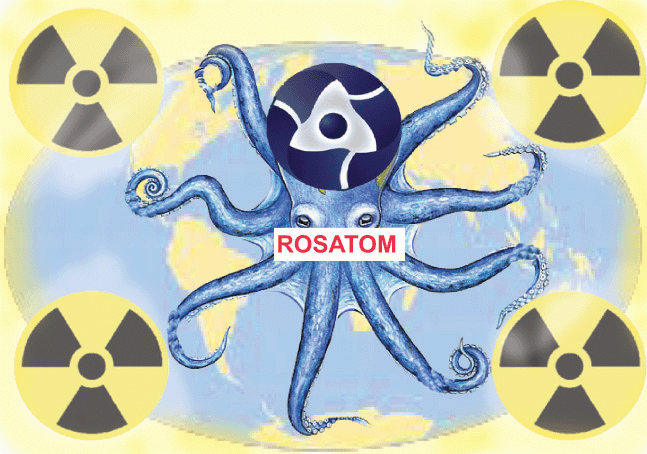
1The US and its European allies moved fast to choke exports of Russian oil, natural gas and coal after Vladimir Putin ordered troops into Ukraine. When it comes to atomic energy, however, Kremlin-controlled Rosatom Corp. continues to be the dominant source of fuel for the world’s nuclear power stations — supplying about half of global demand for enriched uranium. Western nations are racing to reconstitute their own processing capacity, much of which withered amid a growing aversion to nuclear power following Japan’s Fukushima meltdowns. But progress is likely to be slow.
………………………………………………………. Why is Russia so dominant?
Unlike Western companies in the nuclear business, Rosatom is involved in every part of the supply chain, from ore extraction to fuel enrichment and delivery. The company is as much an expression of the Kremlin’s geopolitical power as a profit-generating business. That state-level commitment has played to Russia’s advantage. When international investors turned away from nuclear power following the Fukushima accident in 2011, some Western companies involved in the fuel cycle, including Areva SA in France, the US Enrichment Co. and Westinghouse Electric Co., went bankrupt.
Russia stepped in, building market share not only among the world’s existing fleet of nuclear reactors, but by offering generous financing for new foreign projects. Today, Rosatom’s 330,000 workers provide fuel assemblies to scores of old reactors in eastern Europe and Russia, and is building 33 new power units in 10 countries, including China and India, that will be locked into fuel contracts for decades ahead.
3. Which countries are most dependent?
Former Soviet satellites in eastern Europe continue operating dozens of so-called VVER pressurized water reactors built during the Cold War era. Most of those aging units use Rosatom fuel and are already running on borrowed time, generating electricity beyond the initial period that regulators licensed them to operate. That means there’s little incentive for new companies to enter that market and compete against Russian supply. There are some exceptions. Westinghouse, after emerging from insolvency in 2018, signed contracts to fuel some of Ukraine’s VVER reactors. But even there, Ukraine continues to rely on Rosatom inventory and won’t be able to fully diversify away from Russia until later this decade. It’s a similar challenge from Bulgaria to the Czech Republic and Finland, where the search for alternative suppliers is expected to take years. In all, Russia covers about 30% of the European Union’s demand for enriched uranium.
4. How much is the US exposed?
Atomic trade between the countries grew in the aftermath of the Cold War under the so-called Megatons to Megawatts program, which converted 500 tons of Russian weapons-grade uranium into fuel suitable for US reactors. Russia continues to be a major provider of uranium mining, milling, conversion and enrichment services for US utilities, exposing US consumers to potential disruption. In 2022 it supplied about a quarter of the enriched uranium purchased by US nuclear power reactors, according to US government figures.
Most vulnerable is the provision of uranium enriched to higher levels, which is used by a new generation of so-called small modular reactors (SMRs) because it reduces the frequency of re-fueling. Rosatom currently supplies all the so-called HALEU, or high-assay-low-enriched uranium, to the US……………………………………………………………………. more https://www.washingtonpost.com/business/energy/2023/08/27/why-the-us-and-europe-still-buy-russian-nuclear-fuel/23474ddc-44cd-11ee-b76b-0b6e5e92090d_story.html
US to reduce military aid to Ukraine in 2024 – WSJ

27 Aug 23, https://www.rt.com/news/581824-us-reduce-aid-ukraine/
Washington will not give Kiev a second shot at its counteroffensive, the newspaper’s sources have said
The US is unlikely to give Ukraine “anywhere near the same level” of military aid in 2024 compared to this year, the Wall Street Journal has reported, citing officials in Washington. Meanwhile, President Joe Biden and his administration insist that they will continue to back Kiev to the hilt.
The US has supplied more than $43 billion worth of arms to Ukraine since Russia’s military operation began last year, while leaked Pentagon documents indicate that NATO countries trained and equipped nine Ukrainian brigades to take part in the ongoing counteroffensive against Russian forces.
With the Ukrainian military failing to penetrate Russia’s defensive lines after nearly three months of fighting, American military planners are advising their Ukrainian counterparts to stick to their NATO training and use what they’ve been given more effectively, the Wall Street Journal reported on Thursday.
“The American advice is based on the calculation that the surge of equipment the US has funneled to Ukraine…is enough for this offensive and is unlikely to be repeated at anywhere near the same level in 2024,” the newspaper explained.
Washington’s continued bankrolling of the Ukrainian military is a matter of political contention in the US. While almost all Democratic members of Congress back Biden’s policy of arming Kiev “for as long as it takes,” a group of more than two dozen Republicans are vehemently opposed. Moreover, Republican frontrunner Donald Trump has promised to force Kiev into a peace deal if elected president next November, as has Vivek Ramaswamy, who is currently polling third for the GOP’s nomination.
The Biden administration has spent all of its money set aside for Ukraine, and the president is now pushing Congress to pass a $40 billion emergency spending bill, half of which would be allocated to Ukraine. With Republican anti-interventionists up in arms, House Speaker Kevin McCarthy has suggested that he won’t give the bill his unconditional support.
“You don’t get to just throw money [away],” he said earlier this summer. “What about the money we have already spent? What is the money for and what is victory?”
Biden’s top officials have downplayed the growing divisions in Washington. “We believe that the support will be there and will be sustained,” National Security Advisor Jake Sullivan told reporters on Tuesday. Sullivan added that despite the “dissonant voices” on the right, Republicans in “key leadership positions” will ensure that weapons keep flowing to Kiev.
According to a report by Axios on Wednesday, “senior US officials” have been in contact with European leaders to reassure them that the supply of military aid will not dry up.
1 This Month
Tell Congress: Prevent Nuclear Catastrophe in Iran

Tell Congress: Prevent Nuclear Catastrophe in Iran

Read the Public Inquiry Report, the Commissioners’ report, Surrendering Australia: The AUKUS Deception is available to download for free at aukuspublicinquiry.com. Or just watch the replay of the National Press Club Luncheon.


Shut down the radiation-damaged Heysham nuclear reactors now
To see nuclear-related stories in greater depth and intensity – go to https://nuclearinformation.wordpress.com

Say No to NASA’s Reckless Nuclear Reactor on the Moon
Say No to NASA’s Reckless Nuclear Reactor on the Moon
-
Archives
- November 2026 (224)
- October 2026 (302)
- September 2026 (339)
- August 2026 (330)
- July 2026 (355)
- June 2026 (287)
- May 2026 (306)
- April 2026 (356)
- March 2026 (251)
- February 2026 (267)
- January 2026 (308)
- December 2025 (358)
-
Categories
- 1
- 1 NUCLEAR ISSUES
- business and costs
- climate change
- culture and arts
- ENERGY
- environment
- health
- history
- indigenous issues
- Legal
- marketing of nuclear
- media
- opposition to nuclear
- PERSONAL STORIES
- politics
- politics international
- Religion and ethics
- safety
- secrets,lies and civil liberties
- spinbuster
- technology
- Uranium
- wastes
- weapons and war
- Women
- 2 WORLD
- ACTION
- AFRICA
- Atrocities
- AUSTRALIA
- Christina's notes
- Christina's themes
- culture and arts
- Events
- Fuk 2022
- Fuk 2023
- Fukushima 2017
- Fukushima 2018
- fukushima 2019
- Fukushima 2020
- Fukushima 2021
- general
- global warming
- Humour (God we need it)
- Nuclear
- RARE EARTHS
- Reference
- resources – print
- Resources -audiovicual
- Weekly Newsletter
- World
- World Nuclear
- YouTube
-
RSS
Entries RSS
Comments RSS

