US admits to pushing Ukraine into a fight it can’t win

the operative Western definition of “Ukrainian courage”, however, is not hard to discern: a willingness to use Ukrainian soldiers as cannon fodder.
the Ukraine war has already yielded a “triumphal summer” for the NATO alliance.
A US “windfall” in Ukraine comes at an unfathomable cost.
AARON MATÉ, JUL 29, 2023 https://mate.substack.com/p/unlocked-us-admits-to-pushing-ukraine?utm_source=post-email-title&publication_id=100118&post_id=135529420&isFreemail=true&utm_medium=email
Nearly one month into Russia’s invasion, the New York Times quietly abandoned any pretense that the US aim was to defend Ukraine and bring the war to a quick end. The White House, the Times reported, “seeks to help Ukraine lock Russia in a quagmire without inciting a broader conflict with a nuclear-armed adversary or cutting off potential paths to de-escalation.”
Eighteen months later, the desired quagmire has been achieved. This is due not only to a massive influx of NATO weaponry, but a Western blockade of every tangible path to de-escalation, most notably the April 2022 Ukraine-Russia peace deal that Boris Johnson nixed.
With a Russian quagmire the overriding goal, the US and its partners have adopted an attendant disregard for the tens of thousands of Ukrainian lives sacrificed for the task.
In the war’s early stages, only the most outwardly enthusiastic proxy warriors, such as Sen. Lindsey Graham, could candidly admit that US support ensured that Ukraine would “fight to the last person.” With Ukraine now struggling to mount a widely hyped counteroffensive, the prevailing indifference to its human toll is more widely acknowledged.
As the Wall Street Journal newly reports:
“When Ukraine launched its big counteroffensive this spring, Western military officials knew Kyiv didn’t have all the training or weapons—from shells to warplanes—that it needed to dislodge Russian forces. But they hoped Ukrainian courage and resourcefulness would carry the day. They haven’t.”
It is unclear how Western officials could have “hoped” that Ukrainian “resourcefulness” would make up for the training and weapons that they did not provide. A war zone, after all, is not an episode of MacGyver or the A-Team, and Ukraine’s adversary happens to be one of the world’s most powerful militaries. The operative Western definition of “Ukrainian courage”, however, is not hard to discern: a willingness to use Ukrainian soldiers as cannon fodder.
“Senior U.S. officials,” the New York Times reports, have “privately expressed frustration that some Ukrainian commanders… fearing increased casualties among their ranks” have recently “reverted to old habits — decades of Soviet-style training in artillery barrages — rather than sticking with the Western tactics and pressing harder to breach the Russian defenses.”
The Times did not ask these same US officials whether it is appropriate to express “frustration” at the decision of another military – the one we claim to support – to avoid “increased casualties” among its ranks. But Andriy Zagorodnyuk, a former Ukrainian defense minister, asked an equally salient question of his US counterparts: “Why don’t they come and do it themselves?”
Frustrated US officials are well aware of Ukraine’s toll. According to the New York Times, Western states now estimate that Ukraine lost about 20 percent of its weaponry in the first weeks of its counteroffensive, a “startling rate of losses… as Ukrainian soldiers struggle against Russia’s formidable defenses.” Oddly, the Times omits any mention of losses in Ukrainian lives – a tacit admission, perhaps, that the human casualties are even more startling.
As is also increasingly admitted, all of this was foreseen. “U.S. Defense Department analysts knew early this year that Ukraine’s front-line troops would struggle against Russian air attacks,” the Wall Street Journal notes. Or as the Washington Post puts it: “Privately, U.S. military officials concede that their expectation from early this year, described in leaked intelligence documents, that Ukraine is likely to make only modest gains in its counteroffensive has not changed, despite public pronouncements seeking to downplay fallout from the disclosure.”
In other words, US “public pronouncements” have entailed lying to the public to “downplay fallout” of fueling a knowingly catastrophic and futile war. The participants in this deception include Secretary of Defense Lloyd Austin, who declared in March that the Ukrainian military had “a very good chance for success,” despite privately being told the opposite.
One reason for Ukraine’s current woes, as President Biden recently admitted to CNN, is that “the Ukrainians are running out of ammunition,” and “we’re low on it” as well. Another major factor, a classified Pentagon assessment noted in February, was Ukraine’s “inability to prevent Russian air superiority.” Or as a senior European official now warns, “everyone worries that the Ukrainians will run out of ammunition and air defenses.”
“America would never attempt to defeat a prepared defense without air superiority, but they [Ukrainians] don’t have air superiority,” John Nagl, a retired U.S. Army lieutenant colonel and professor at the U.S. Army War College, observes. “It’s impossible to overstate how important air superiority is for fighting a ground fight at a reasonable cost in casualties.”
According to the Pentagon, NATO’s latest influx of heavy weaponry will not change the tide. Speaking at a Washington security conference this month, John Kirchhofer, chief of staff at the US Defense Intelligence Agency, claimed that the Ukraine war is at a “stalemate” and that “none of these” newly provided weapons – including Storm Shadow missiles and cluster bombs — “are the holy grail that Ukraine is looking for.”
Accordingly, the Wall Street Journal notes, the unlikelihood of “any large-scale breakthrough by the Ukrainians… raises the unsettling prospect for Washington and its allies of a longer war—one that would require a huge new infusion of sophisticated armaments and more training to give Kyiv a chance at victory.”
For Washington, perhaps that prospect is not unsettling. According to veteran Washington Post columnist David Ignatius, the Ukraine war has already yielded a “triumphal summer” for the NATO alliance.
“The West’s most reckless antagonist has been rocked,” Ignatius writes. “NATO has grown much stronger with the additions of Sweden and Finland. Germany has weaned itself from dependence on Russian energy and, in many ways, rediscovered its sense of values.”
Accordingly, “for the United States and its NATO allies, these 18 months of war have been a strategic windfall, at relatively low cost (other than for the Ukrainians).”
Indeed, it is quite easy to reap a “windfall” from 18 months of war when the US is not itself fighting it. It has instead sacrificed future generations of an entire nation, whose worth is so devalued that their unfolding catastrophe is openly reduced to an afterthought.
Washington’s looming war against China
SOTT – Signs of The Times, Michael Hudson, The Unz Review, Sat, 22 Jul 2023
Economic Logic has been Replaced by National Security Overrides
The July NATO summit in Vilnius had the feeling of a funeral, as if they had just lost a family member – Ukraine. To clear away NATO’s failure to drive Russia out of Ukraine and move NATO right up to the Russian border, its members tried to revive their spirits by mobilizing support for the next great fight – against China, which is now designated as their ultimate strategic enemy. To prepare for this showdown, NATO announced a commitment to extend their military presence all the way to the Pacific.
The plan is to carve away China’s military allies and trading partners, above all Russia, starting with the fight in Ukraine. President Biden has said that this war will be global in scope and will take many decades as it expands to ultimately isolate and break up China.
The U.S.-imposed sanctions against trade with Russia are a dress rehearsal for imposing similar sanctions against China. But only the NATO allies have joined the fight. And instead of wrecking Russia’s economy and “turning the ruble to rubble” as President Biden predicted, NATO’s sanctions have made it more self-reliant, increasing its balance of payments and international monetary reserves, and hence the ruble’s exchange rate.
To cap matters, despite the failure of trade and financial sanctions to injure Russia – and indeed, despite NATO’s failures in Afghanistan and Libya, NATO countries committed themselves to trying the same tactics against China. The world economy is to be split between US/NATO/Five Eyes on the one hand, and the rest of the world – the Global Majority – on the other. EU Commissioner Joseph Borrell calls this as a split between the US/European Garden (the Golden Billion) and the Jungle threatening to engulf it, like an invasion of its well-manicured lawns by an invasive species.
From an economic vantage point, NATO’s behavior since its military buildup to attack Ukraine’s Russian-speaking eastern states in February 2022 has been a drastic failure. The U.S. plan was to bleed Russia and leave it so economically destitute that its population would revolt, throw Vladimir Putin out of office and restore a pro-Western neoliberal leader who would pry Russia away from its alliance with China – and then proceed with America’s grand plan to mobilize Europe to impose sanctions on China…………………..
The US/NATO West has led this global fracture, yet it will be the big loser. NATO members already have seen Ukraine deplete their inventory of guns and bullets, artillery and ammunition, tanks, helicopters weapons and other arms accumulated over five decades. But Europe’s loss has become America’s sales opportunity, creating a vast new market for America’s military-industrial complex to re-supply Europe. To gain support, the United States has sponsored a new way of thinking about international trade and investment. The focus has shifted to “national security,” meaning to secure a U.S.-centered unipolar order.
The world is dividing into two blocs: a post-industrial US/NATO vs the Global Majority
……………………………………………………………………………. By trying to prevent other countries from following this logic, U.S. and European NATO diplomacy has brought about exactly what U.S. supremacists most feared. Instead of crippling the Russian economy to create a political crisis and perhaps breakup of Russia itself in order to isolate it from China, the US/NATO sanctions have led Russia to re-orient its trade away from NATO countries to integrate its economy and diplomacy more closely with China and other BRICS members.
Ironically, the US/NATO policy is forcing Russia, China and their BRICS allies to go their own way, starting with a united Eurasia. This new core of China, Russia and Eurasia with the Global South are creating a mutually beneficial multipolar trade and investment sphere.
By contrast, European industry has been devastated. Its economies have become thoroughly and abjectly dependent on the United States – at a much higher cost to itself than was the case with its former trade partners. European exporters have lost the Russian market, and are now following U.S. demands that they abandon and indeed reject the Chinese market. Also to be rejected in due course are markets in the BRICS membership, which is expanding to include Near Eastern, African and Latin American countries……………………………………………………………………..
Today’s fighting against Russia on the Ukrainian front can be thought of as the opening campaign in World War III. In many ways it is an outgrowth of World War II and its aftermath that saw the United States establish international economic and political organizations to operate in its own national self-interest. The International Monetary Fund imposes U.S. financial control and helps dollarize the world economy. The World Bank lends dollars to governments to build export infrastructure to subsidize US/NATO investors in control of oil, mining and natural resources, and to promote trade dependency on U.S. farm exports while promoting plantation agriculture, instead of domestic food-grain production. The United States insists on having veto power in all international organizations that it joins, including the United Nations and its agencies.
The creation of NATO is often misunderstood. Ostensibly, it depicted itself as a military alliance, originally to defend against the thought that the Soviet Union might have some reason to conquer Western Europe. But NATO’s most important role was to use “national security” as the excuse to override European domestic and foreign policy and subordinate it to U.S. control. Dependency on NATO was written into the European Union’s constitution. Its objective was to make sure that European party leaders followed U.S. direction and opposed left-wing or anti-American politics, pro-labor policies and governments strong enough to prevent control by a U.S.-client financial oligarchy.
NATO’s economic program has been one of adherence to neoliberal financialization, privatization, government deregulation and imposing austerity on labor. EU regulations prevent governments from running a budget deficit of more than 3% of GDP. That blocks Keynesian-type policies to spur recovery. Today, higher military arms costs and government subsidy of energy prices is forcing European governments to cut back social spending. Bank policy, trade policy and domestic lawmaking are following the same U.S. neoliberal model that has deindustrialized the American economy and loaded it down with debt to the financial sector in whose hands most wealth and income is now concentrated.
Abandoning economic self-interest for “national security” dependence on the US
The post-Vilnius world treats trade and international relations not as economic, but as “national security.” Any form of trade is the “risk” of being cut off and destabilized. The aim is not to make trade and investment gains, but to become self-reliant and independent. For the West, this means isolating China, Russia and the BRICS in order to depend fully on the United States. So for the United States, its own security means making other countries dependent on itself, so that U.S. diplomats won’t lose control of their military and political diplomacy…………………………………………………………………………………………………
The world is dividing into two blocs – with quite different economic philosophies……………………………………………………………………………………………………………………………………………
We are witnessing what seems to be an inexorable Decline of the West. U.S. diplomats have been able to tighten their economic, political and military control leadership over their European NATO allies. Their easy success in this aim has led them to imagine that somehow they can conquer the rest of the world despite de-industrializing and loading their economies so deeply in debt that there is no foreseeable way in which they can pay their official debt to foreign countries or indeed have much to offer.
The traditional imperialism of military conquest and financial conquest is ended
……………………………….. The US has only one weapon: Missiles and bombs can destroy, but cannot occupy but not occupy and take over a country.
The second way to create imperial power was by economic power to make other countries dependent on U.S. exports……………………………Control of world oil trade has been a central aim of US trade diplomacy………………………………………………………………………………………………. https://www.sott.net/article/482853-Washingtons-looming-war-against-China
—
Trident nuclear project can’t be delivered, says watchdog.
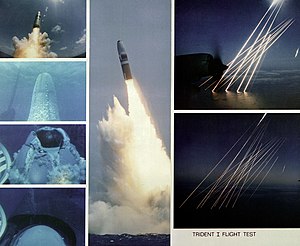
“The veil of secrecy surrounding nuclear spending is a desperate attempt by the UK Government to hide how outrageously unaffordable these weapons have become”
The Ferret, Rob Edwards, 27 Jul 23
Delivery of nuclear reactors to power a new fleet of Trident submarines on the Clyde has been branded as “unachievable” for the second year running by a UK Government watchdog.
The Infrastructure and Projects Authority (IPA) has given a £3.7 billion reactor-building project run by Rolls Royce for the Ministry of Defence (MoD) a “red” rating for 2022-23. The project was also assessed as red in 2021-22, as reported by The Ferret.
According to the IPA, red means that “successful delivery of the project appears to be unachievable”. This is because of “major issues” that do not appear to be “manageable or resolvable”.
The 2022-23 rating for another scheme crucial to renewing the Trident nuclear weapons system — a £1.9bn construction project at the Faslane and Coulport nuclear bases near Helensburgh — has been kept secret. In 2021-22 it was assessed as red.
The planned date for the final delivery to the Clyde of the new Dreadnought-class submarines, armed with Trident nuclear warheads, has also been classified as confidential by the MoD “for the purpose of safeguarding national security”.
The Scottish National Party (SNP) accused the UK Government of desperately trying to hide how “outrageously unaffordable” the Trident programme had become. The Scottish Greens described the programme as “a grotesque money pit”.
Campaigners criticised the MoD for “rewarding failure” by throwing money at nuclear projects, and for concealing the truth about the problems and delays. They warned of “everyday harms” from the risks of radiation leaks, as well as “catastrophic accidents”.
………………………………………The IPA’s latest annual report for 2022-23 assessed the feasibility of 52 military projects costing a total of £255.4bn. Eleven were related to the UK’s nuclear weapons programme and together cost more than £57bn, though the overall costs for three of them were kept secret.
The manufacture of nuclear reactors at a Rolls-Royce factory in Derby was the only project to be publicly rated as red. The reactors are to drive four new Trident-armed Dreadnought submarines due to start replacing existing Vanguard submarines at Faslane “in the early 2030s”.
…………………………………………………………….. Another previously mysterious project called Aurora was rated as amber. It is to make the plutonium components for new nuclear bombs at Aldermaston in Berkshire and is reckoned to cost between £2bn and £2.5bn.
The planned completion date for Aurora has been kept secret, along with the end dates for four other nuclear projects, including the Dreadnought and Astute submarine programmes. The dates were withheld under a freedom of information law exemption meant to protect national security.
2022-23 assessments for two other nuclear projects have also been classified as confidential so as not to prejudice international relations and the defence of the UK. One, Teutates, is a collaboration on nuclear weapon safety with France and the other is called “Clyde Infrastructure”.
The Clyde project is to build a series of new facilities at Faslane and Coulport to support nuclear submarine operations. It was rated as red by the IPA in 2021-22, and amber in 2020-21 and 2019-20.
The cost of the Clyde project has increased 19 per cent from £1.6bn to £1.9bn in the last year. According to the IPA, this is because of “challenges in delivering in a nuclear and operational environment”.
Trident ‘a moral abomination’
The SNP lambasted the UK Government for writing “blank cheques” to maintain the Trident programme. “The veil of secrecy surrounding nuclear spending is a desperate attempt by the UK Government to hide how outrageously unaffordable these weapons have become,” said the party’s Westminster defence spokesperson, Dave Doogan MP.
“The hollowing-out of the armed forces to pay for the ever-expanding nuclear vanity-weapons budget has led the UK to possess just 0.1 per cent of the world’s nuclear warheads — but at eye-watering cost while conventional capabilities atrophy.”
The Green MSP Ross Greer described nuclear weapons as a “moral abomination” that had no place in Scotland. “As these figures show, they are also a grotesque money pit that is swallowing up billions of pounds and giving huge handouts to international arms dealers,” he said.
“The Scottish Greens are proud to have secured the Scottish Government’s support for the international treaty banning nuclear weapons, already signed by 92 other countries.”
MoD ‘trying to hide’ Trident delays
The Nuclear Information Service, which researches and criticises nuclear weapons, pointed out that the MoD had been repeatedly given additional billions for its nuclear programme. “But there’s no sign that throwing money at the problem is having any effect beyond rewarding failure,” the group’s director, David Cullen, told The Ferret.
The Scottish Campaign for Nuclear Disarmament attacked the nuclear industry for its “big back catalogues” of cost escalations and time over-runs. “The nuclear propulsion of the nuclear weapon system only adds to the repertoire of everyday harms from radiation leaks and opportunities of catastrophic accidents,” said campaign chair, Lynn Jamieson……………………………………………………………….. https://theferret.scot/trident-nuclear-project-watchdog/
EDF Sees Increased Risk of Delay to New UK Atomic Reactors, financial doubts

Francois de Beaupuy, Bloomberg News, 27 Jul 23, https://www.bnnbloomberg.ca/edf-sees-increased-risk-of-delay-to-new-uk-atomic-reactors-1.1951285
– Electricite de France SA said the risk of further delay to two nuclear reactors in southwest England has risen because of construction setbacks.
EDF flagged last year that the plants may start 15 months late. The reactors at Hinkley Point have been touted by the UK government as sparking a nuclear renaissance, boosting energy independence and reducing reliance on fossil fuels. But the work has been plagued by multiple holdups and cost overruns.
The increased risk of a 15-month delay is due to “performances on civil works and challenges on mechanical, electrical, heating, ventilation and air conditioning,” EDF said Thursday in an earnings presentation. “Progress is below the planned trajectory and action plans have been set.”
The reactors, costing as much as £32 billion ($41.5 billion), are due to start operating in 2027 and 2028. The ballooning budget has fueled controversy over the vast sums needed for new nuclear developments, even as other low-carbon technologies such as offshore wind have also faced inflationary pressures.
Hinkley Point’s setbacks come as EDF seeks to arrange financing for a second pair of atomic plants — at Sizewell in eastern England — that would use the same design. Delays and cost overruns may deter investors who also face increasing demands for capital from renewables, which provide swifter returns.
The debt-laden French utility has a 66.5% stake in Hinkley Point, while China General Nuclear Power Corp. owns the rest. As funding requirements now exceed contractual commitments, shareholders will be asked to provide additional equity voluntarily starting in the fourth quarter.
“The probability that CGN will not fund the project beyond its committed equity cap is high,” EDF said Thursday. “Financing solutions are being investigated, in the event that CGN does not allocate its voluntary equity.”
Bombs away: Confronting the deployment of nuclear weapons in non-nuclear weapon countries
Bulletin, By Moritz Kütt, Pavel Podvig, Zia Mian | July 28, 2023
The countries of the Nuclear Nonproliferation Treaty (NPT) will meet in Vienna at the end of July and in early August to begin another several-year-long cycle of assessing progress on meeting the goals and obligations of this five-decade-old agreement. A particularly contentious part of the coming global nuclear debate will be the handful of NPT countries that do not have nuclear weapons of their own but instead choose to host nuclear weapons belonging to the United States or Russia. For most NPT countries, such nuclear weapon-hosting arrangements are unacceptable Cold War holdovers that should end.
The new urgency for action on the issue of nuclear host-states follows the first new agreement to transfer nuclear weapons to a host country in many decades. In June 2023, President Vladimir Putin announced that Russia had moved a number of its nuclear weapons to Belarus, its ally and neighbor, with more nuclear weapons on the way, and that “by the end of the summer, by the end of this year, we will complete this work.” For his part, the President of Belarus has proposed to other states: “Join the Union State of Belarus and Russia. That’s all: there will be nuclear weapons for everyone.”
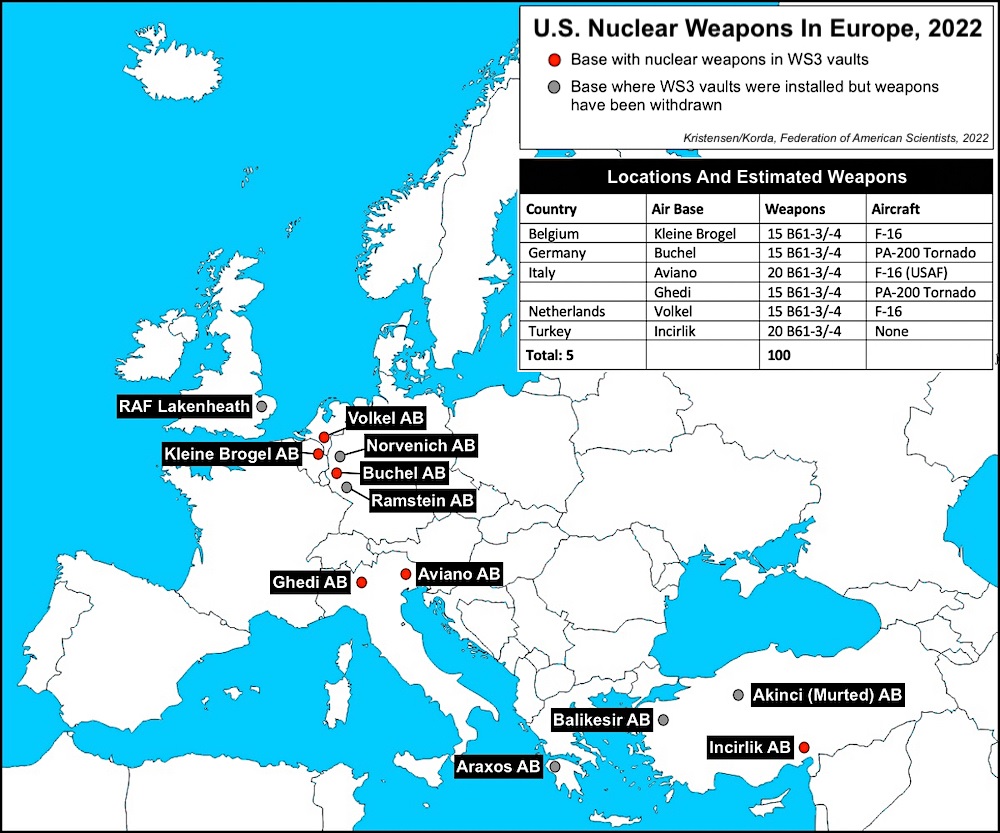
If the transfer of weapons to Belarus is completed, it will become the sixth nuclear-weapon host state. The other five hosting arrangements involve US nuclear weapons in Belgium, the Netherlands, Germany, Italy, and Turkey, in a practice euphemistically dubbed “nuclear sharing” by the US and its NATO allies. One other NATO member is increasingly vocal about wanting to join this gang. After Putin’s announcement about Belarus, Polish Prime Minister Mateusz Morawiecki repeated the call to become a host state for US nuclear weapons. Poland’s President Andrzej Duda had brought up this hosting option last year, but the idea had been floated in 2020 by Poland’s Ambassador to the United States………………………………………………………………………………….
There is a partially declassified history of US foreign nuclear weapon deployments from 1951-1977. The practice of stationing nuclear weapons in allied countries (or territories) began in 1951 with the deployment of weapon components to Guam, followed in 1954 by the dispatch of weapons to Morocco and the United Kingdom. In time, the US stationed its nuclear weapons in 16 countries, mostly in Europe and Asia (not counting Guam and Puerto Rico). Some US nuclear weapons were also stationed in Canada. By the late 1960s, there were about 7,000 US nuclear weapons in Europe, including bombs, missile warheads, artillery shells, and nuclear landmines. The number of US nuclear weapons in Europe peaked in 1971 at about 7,300 before beginning to decline later in the 1970s.
In 1959, the Soviet Union briefly deployed weapons to Eastern Germany. Its most prominent (albeit short-lived) nuclear weapons deployment was to Cuba in 1962. Later, in the mid-‘60s, longer deployments started, with Soviet nuclear weapons going to the Czech Republic, Hungary, Mongolia, Poland, and, again, East Germany. Moscow also deployed nuclear weapons in the Soviet republics, including strategic nuclear weapons in Kazakhstan, Belarus, and Ukraine.
With the end of the Cold War, the United States and Russia began to bring their weapons home. The Soviet Union had removed all weapons from Eastern Europe by the time it broke up in 1991. The withdrawal of all non-strategic weapons from former Soviet republics came by May 1992, and all strategic weapons were returned in November 1996.
Most US nuclear deployments in Asia ended in the mid-‘70s, although nuclear weapons stayed in South Korea until 1991. Deployments in Europe were significantly reduced (below 500 in 1994) and ended in Greece (2001) and in the United Kingdom (2009). However, the United States has not completed this process; about 100 US weapons remain abroad, stationed at bases in Belgium, the Netherlands, Germany, Italy and Turkey. Rather than withdraw the weapons from these countries, the US is sending modernized nuclear weapons to replace them.
The United Kingdom was the only other country to both host weapons (belonging to the US) and to deploy its own weapons in other countries. Its foreign deployments began in the 1960s and were limited to Cyprus, Singapore, and West Germany, and this practice ended in 1998.
There is no information on foreign deployments and nuclear hosting arrangements by other nuclear weapon states. There have been concerns that Pakistan might station some of its nuclear weapons in Saudi Arabia, with former US officials suggesting a “NATO-like model” might be one option for such an arrangement.
In current US nuclear hosting arrangements, the nuclear weapons are supposed to be under the control of US military personnel in peacetime. Specially trained host-nation air force units will carry and use these US weapons in wartime, in accordance with US and allied nuclear war plans. A similar arrangement now exists between Russia and Belarus, with Belarussian pilots trained to fly their planes while armed with Russian nuclear weapons; at least 10 planes may now be nuclear capable. It is also possible that Belarus could use its Russian-supplied, intermediate-range, dual-use Iskander-M missiles to deliver nuclear warheads.
According to the United Nations, the Russian nuclear hosting agreement with Belarus is the first such agreement since the NPT entered into force in 1970. The other hosting arrangements still operating are based on agreements that predate the treaty. The NPT prohibits both the acquisition of nuclear weapons by non-weapon states and the transfer of nuclear weapons to such countries by the five nuclear weapon states who are parties (Russia, China, the United States, the United Kingdom, and France)…………………………………….
While the treaty was being negotiated, US and Soviet officials agreed privately that existing nuclear hosting arrangements could continue even under the NPT.……………………………….
Most NPT member states have a different interpretation of nuclear sharing and for almost three decades have raised their concerns. …………………………………..
The most recent clash came at the August 2022 NPT Review Conference. Speaking on behalf of the 120 countries of the Non-Aligned Movement, Indonesia, said “[i]n the view of the Group … nuclear weapon-sharing by States Parties constitutes a clear violation of non-proliferation obligations undertaken by those Nuclear Weapon States (NWS) under Article I and by those Non-Nuclear Weapon States (NNWS) under Article II.” ………………………………………………………………
China is the only NPT nuclear-weapon state now consistently opposed to nuclear sharing. In its 2022 NPT Review Conference statement, China’s representative stated that “nuclear sharing arrangements run counter to the provisions of the NPT.” …………………………………………………………….
The most significant effort to confront the principles and practices of nuclear hosting is the UN Treaty on the Prohibition of Nuclear Weapons, which entered into force in 2021 and currently has almost 100 state signatories (all of whom also are NPT members). The TPNW prohibits the stationing of foreign nuclear weapons on the soil of its state parties under any circumstances. It offers a means for states who do not wish to be nuclear hosts to affirm this commitment and make it legally binding simply by joining the treaty. The TPNW also offers a path to membership for the states who currently have nuclear weapon hosting arrangements—if they sign the treaty they must undertake “prompt removal of such weapons, as soon as possible” and not later than 90 days. Once the weapons have been sent back home, the country has to make a declaration to this effect to the UN Secretary-General.
For states not yet ready to join the TPNW, several options are possible. States individually could decide to renounce nuclear hosting and sharing. For European NATO countries, one example is offered by Iceland and Lithuania, which are NATO members but refuse to host nuclear weapons under any circumstances. A less clear-cut option is offered by Denmark, Norway, and Spain, which do not allow deployment of nuclear weapons in peacetime.
States could also form nuclear-weapon free zones: Over 110 countries already are in nuclear-weapon-free zone agreements with neighbors. A European nuclear weapon free zone has been a long-standing idea. ………………………………………………
There are of course things nuclear weapon states could do. The five NPT nuclear weapon states could agree to a commitment on no-foreign-deployments as an effective measure relating to nuclear disarmament under their NPT Article 6 obligations…………………………………………
To establish a global principle, the UN General Assembly and the UN Security Council could determine that the hosting of nuclear weapons will henceforth be treated as a threat to international peace and security. https://thebulletin.org/2023/07/bombs-away-confronting-the-deployment-of-nuclear-weapons-in-non-nuclear-weapon-countries/
Saving the world is cheaper than ruining it
https://futurecrunch.com/good-news-clean-energy-aids-big-cats-africa/?ref=future-crunch-newsletter 27 July 23
Let’s do a quick global whiparound. A former coal plant in the UK is being transformed into the world’s largest battery storage project; European renewables giant Octopus is planning to invest $20 billion in offshore wind by 2030; Thyssenkrupp, Europe’s second-largest steelmaker, has secured €2 billion from the German government for green steel investment; US regulators just opened the Gulf of Mexico to offshore wind leases; Egypt has brought its clean energy targets forward by five years and allocated land for a 10 GW wind project to provide electricity to 11 million households; Israel now requires all new non-residential buildings to be covered in solar; India is about to launch a staggering 20 GW tender for new battery manufacturing; 4.4 GW of rooftop solar has been installed in South Africa in the last year; the Philippines just awarded a whole lot of new solar projects; Brazil says its solar industry has created around 960,000 jobs since 2012; and Barbados is now targeting a 100% carbon neutral economy by 2030.
In the last six months nearly every mainstream media outlet has pointed out that China is still building a lot of coal, implying the country is hedging its bets on renewables. It’s not. In the first half of 2023, around $5 billion has been invested in coal and fossil gas and a similar amount in both hydro and nuclear; $10 billion has been invested in wind, $18 billion in solar, and an astonishing $28 billion in transmission.
The IEA has a new report showing that renewables are on track to meet all the growth in global electricity demand over the next two years. This would represent a key milestone in the fight against climate change–once all new demand is met, renewables will start eating into fossil fuels’ share of the power mix.
The global price of polysilicon (the stuff they make solar panels from) has dropped by 78% over the past year.
Since August 2022, $278 billion in clean energy project investments and 170,600 clean energy jobs have been created in the United States. ‘We’ve been talking about bringing manufacturing jobs back to America for my entire life. We’re finally doing it, right? That’s pretty exciting.’ WaPo
The US offshore wind sector is booming. There has been a 272% increase in the number of offshore wind supplier contracts since 2021, and 47% of that growth has occurred since the passage of the IRA. Nine in every ten contracts are going to companies that are either headquartered or have a presence in the US. Industrial policy FTW. Renew.biz
The 12.5% royalty rate that oil companies in the United States have to pay for the use of federal lands has remained unchanged for over one hundred years. The government is now reforming that system, raising the minimum rate to 16.7% and prioritising renewables development on federal lands over fossil fuel development. Grist.
In the first half of this year, wind and solar generated more power than coal in the United States. Wind and solar produced 343 terawatt-hours (TWh) from January through June 2023, while coal produced 296 TWh. Five years ago, coal’s share was quadruple that of wind and solar combined. Next step: fossil gas. Canary
California, the seventh-biggest US crude oil producer, has put a near-halt on issuing permits for new drilling this year. The state’s Geologic Energy Management Division has approved seven new active well permits in 2023. Compare that with the more than 200 it had issued by this time last year. Reuters
Australia’s big banks have turned their backs on the country’s largest coal miner, refusing to refinance a billion-dollar debt in a major rebuff that will force Whitehaven Coal to source loans offshore, potentially speeding up the demise of the sector. Couldn’t have happened to nicer people. SMH
The European Union has adopted new rules intended to make it easier for electric vehicle owners to travel across the continent. From 2025 onward, the new regulation requires fast-charging stations offering at least 150kW of power to be installed every 60km along the EU’s TEN-T system of highways, the bloc’s main transport corridors. Verge
A reminder from Hannah Ritchie. ‘The internal combustion engine is shockingly inefficient. For every dollar of petrol you put in, you get just 20 cents’ worth of driving motion. The other 80 cents is wasted along the way, most of it as heat from the engine. Electric cars are much better at converting energy into motion. For every dollar of electricity you put in, you get 89 cents out.’………………………………………………………………
NASA solving climate crisis by facilitating escape to Mars?
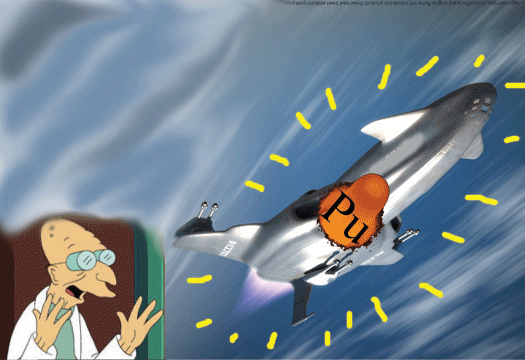
NASA will test launch nuclear-powered spacecraft for the first time to try
and get to Mars faster. Nasa has revealed that it plans to use
nuclear-powered spacecrafts to help humanity land on Mars. Whilst it sounds
like the stuff of science fiction, the space agency has been perfecting the
technology for over 60 years and the first rockets could soon be blasting
off. In fact, the insane tech could be tested within the next couple of
years.
Unilad 27th July 2023
https://www.unilad.com/technology/nasa/nasa-nuclear-powered-rockets-mars-574302-20230727
Old Nuclear Weapons Sites Targeted for Clean Energy Projects.

Daniel Moore, 28 Jul 23 https://news.bloomberglaw.com/environment-and-energy/former-nuclear-weapons-sites-targeted-for-clean-energy-projects
- Agency identifies 70,000 acres at five weapons sites
- DOE land could host largest US solar farm at Hanford Site
The Energy Department plans to turn some of its Cold War nuclear weapons development sites into grounds for clean energy generation, including what could be the largest US solar project, agency leaders announced Friday.
The department has identified about 70,000 acres at five sites that hosted nuclear weapons development and testing and have since been cleaned up, according to details of the announcement shared in advance with Bloomberg Law. The announcement is part of the agency’s new Cleanup to Clean Energy initiative, an effort to repurpose parts of DOE-owned lands into clean energy generation sites.
“It’s a good deal and a huge opportunity,” Energy Secretary Jennifer Granholm said at the outset of a daylong event with clean energy industry representatives held in an auditorium space at the agency’s headquarters in Washington.
Developers would have a unique opportunity to lease land from the Energy Department, Granholm said. The sites have massive tracts of land whose characteristics are already mapped out. The decades of site analysis and remediation would speed up environmental and permitting reviews, too.
“Therefore, it will take less time to get shovels in the dirt,” Granholm said.
One former nuclear testing facility, the Hanford site in Richland, Wash., has the potential to host the largest solar farm in the country, Granholm said.
Another site, the Idaho National Laboratory in Idaho Falls, Idaho, sprawls 890 square miles and purchased about 50 megawatts of power in fiscal year 2020 to support 5,400 employees, 600 vehicles, and 300 buildings and trailers, according to the agency. The other sites under consideration include: Nevada National Security Site, in Nye County, Nev.; the Savannah River Site, in Aiken, S.C.; and the Waste Isolation Pilot Plant, near Carlsbad, N.M.
The agency’s Office of Environmental Management, Office of Legacy Management, Office of Nuclear Energy, and National Nuclear Security Administration all worked to locate the best sites.
The industry officials included those “with proven experience in implementing successful clean electricity projects generating 200 MW or larger,” according to the department.
After the panel, DOE officials told reporters they’re looking forward to project proposals that could power not just DOE facilities but the surrounding region.
Power generators could even propose an arrangement with a customer—a hydrogen producer, semiconductor manufacturer, or other type of facility, said Katy Huff, assistant secretary for the Office of Nuclear Energy.
At the Hanford site, the biggest nuclear cleanup site in the country, “there are certainly plenty of developers who have expressed interest” but the department hasn’t made any decisions, said Ike White, who leads the Office of Environmental Management.
“The department is just opening up this for ideas,” White said, adding the agency is open to a range of clean energy technologies.
$45 Billion to Keep Diablo Canyon Nuclear Power Plant Alive?

Outrageous Costs and Deadly Dangers are the Real Risks of Keeping Diablo Open
Independent , By Grant Smith and Anthony Lacey, Wed Jul 26, 2023
California ratepayers might have to foot a staggering $45 billion-plus cost to keep the aging Pacific Gas & Electric, or PG&E, Diablo Canyon nuclear power plant online beyond its slated 2025 closure.
The outrageous price tag is the estimated cost for operating the plant from 2021-2045, or hundreds of millions of dollars every year. And that’s just the expense of prolonging the troubled facility’s life. It doesn’t account for the enormous extra costs that would be incurred following a major disaster like a reactor leak or an earthquake that damages the plant.
EWG used testimony recently filed by The Utility Reform Network, or TURN, in PG&E’s current rate case to parse the capital and operating expenses of the plant. EWG considered PG&E’s estimates for the plant costs, which likely lowball the true expense, and TURN’s assessment of the plant expenses, which may be closer to the actual burden.
EWG estimates it will likely amount to hundreds of millions of dollars every year, for total costs ranging from more than $20 billionto nearly $45 billion from2023 through 2045 — or more.
That’s just the base cost of running the facility. The alarming figure doesn’t account for the additional massive costs that would come from a disaster at the plant, like an earthquake or a nuclear reactor leak, or unanticipated maintenance and security costs that often plague old nuclear power plants.
That cost — reaching tens of billions of dollars — will be passed on to 15.8 million Californians already fleeced by PG&E’s exorbitant electricity bills. According to EWG estimates, keeping Diablo Canyon open could add from $55to $124 a year to the typical utility bill, considering the cost of the facility as a fixed charge over 23 years.
Or it could be even higher because these costs, at the moment, are highly speculative and the older Diablo Canyon gets, the higher the capital and operating costs will become to keep it online and providing electricity.
An extension of the facility’s life for 20 years after its scheduled 2025 shutdown could also generate other large costs just to ensure its ongoing operation. Many aging nuclear power plants are notorious for wasting millions of dollars on unanticipated maintenance and security costs…………………………………………………..
An Unnecessary Nuclear Facility
What’s just as outrageous as the potential $45 billion-plus cost of extending Diablo Canyon’s life is the fact that the state has no need to keep the plant open after the scheduled 2025 closure………………………………………………………………………
The Danger of Diablo Canyon
Diablo Canyon, located on California’s central coast in San Luis Obispo County, sits atop a web of fault lines and rests above a cliff below the Pacific Ocean, putting it at heightened risk of damage from an earthquake, tsunami or both.
The facility was set to close both of its two reactor units by 2025, following a carefully crafted 2018 deal between PG&E, unions and environmentalists. The deal had the support of state regulators and then-Lieutenant Gov. Gavin Newsom, who was elected governor in 2018.
That deal is now at risk of collapsing………………………….. https://www.independent.com/2023/07/26/45-billion-to-keep-diablo-canyon-nuclear-power-plant-alive/
Massachusetts rejects request to discharge radioactive water from closed nuclear plant into bay
Pilgrim Nuclear Power Station was closed in 2019. Kevin Clark
By MARK PRATT Associated Press https://www.power-eng.com/ap-news/massachusetts-rejects-request-to-discharge-radioactive-water-from-closed-nuclear-plant-into-bay/
BOSTON (AP) — Massachusetts environmental regulators have denied a request by the company dismantling a shuttered nuclear power plant to release more than 1 million gallons (3.8 million liters) of radioactive wastewater into Cape Cod Bay.
The state Department of Environmental Protection’s draft decision issued July 26 said it denied Holtec’s request for a permit modification because the discharge from Pilgrim Nuclear Power Station in Plymouth would violate a state law that designates the bay as an ocean sanctuary.
The draft will not be finalized until after a public comment period that ends Aug. 25.
Environmentalists and politicians praised the decision.
Release of the treated wastewater would pose a threat to the bay’s environment, human health, the fishing and shellfishing industries, and the economy of the region, Andrew Gottlieb, executive director of the Association to Preserve Cape Cod, said in a statement.
“Holtec sought to profit at the expense of the people, the environment and economy of Cape Cod and, like most corporate bullies, needed to be told no,” he said.
Holtec promised a transparent decommissioning process when it took over the plant after it stopped generating power in May 2019, U.S. Sen. Edward Markey said.
UK Government’s infrastructure advisors cast doubt over uks biggest energy projects including nuclear clearup
The UK Government’s infrastructure advisors have warned that it is unlikely
that work to efficiently categorise hazardous waste at the Sellafield site
will be a success.
The Infrastructure and Project Authority (IPA) has also
raised concerns about the majority of the Government’s other key energy
infrastructure programmes, including the Low-Cost Nuclear Programme funding
R&D for small modular reactors.
These warnings are contained within the
Authority’s new annual assessment. Published late last week, it assesses
whether 244 Government-backed projects with a total whole-life cost
exceeding £805bn are progressing well. Projects are given a ‘green’
rating if delivery if on time, there are no significant quality issues and
no other issues that could threaten delivery. Those that are unlikely to be
delivered without a major change of direction are ranked as ‘red’. Those
with delays, quality issues or other problems which may yet be resolved
receive an ‘amber’ rating.
Of the 19 projects covered that are overseen
by the Department for Energy Security and Net-Zero (DESNZ), only three get
the ‘green’ rating. These are the Local Authority Delivery scheme, which
funds councils to upgrade homes and reduce carbon; the SIXEP effluent
treatment plant and the storage plant at Sellafield.
But efforts to improve
analytical services at Sellafield, the former centre of nuclear
reprocessing in the UK, received a ‘red’ ranking. The Authority believes
that the successful delivery of the project “appears to be
unachievable”. The project concerts assessing and categorizing waste on
site.
The Authority has also downgraded the UK Government’s plans for a
major geological nuclear waste storage facility to ‘amber’, from
‘green’ in 2021. This facility is being built both to deal with waste
from new nuclear sites, but also to consolidate existing waste storage; at
present, more than 20 above-ground facilities across the UK are used, each
with a maximum design life of 100 years.
Two DESNZ Projects – Sizewell C
and the development of carbon capture and storage – are exempt from
assessment due to commercial sensitivities. Besides the analytical services
at Sellafield, the others are all ranked as ‘amber’. These include the
national rollout of smart meters to homes; the Net-Zero Hydrogen fund; the
Homes Upgrade Grant (HUG) for home retrofitting; the Public Sector
Decarbonisation Scheme; the Industrial Decarbonisation and Hydrogen Revenue
Support scheme and the Green Homes Grant.
Edie 24th July 2023
The coming Russian-Polish war
Armageddon Newsletter GILBERT DOCTOROW, JUL 23, 2023
This evening’s News of the Week program on Russian state television opened with a 30 minute documentary survey of Polish-Russian relations from the end of WWI and during the period of the Russian Civil War, when the government under Marshal Pilsudski wrested substantial territory from Russian control. It also dealt extensively with Poland’s well documented role as aggressor and occupier of Czechoslovak, Lithuanian, Ukrainian and Belarus lands from before the start of WWII and until Hitler overran Poland. ……………………..
Let us recall that on Friday Putin explained how and why we may expect the formal entry into the war of a Polish-Lithuanian-Ukrainian joint military force that will officially be presented as defending Ukrainian statehood by occupying the Western Ukraine. However, Putin described this as an occupying force which once installed in Lvov and Western Ukraine would never leave. This would in effect be a repeat of the sell-out of Ukrainian interests to Poles and cession of territory to Poland such as had been perpetrated by their leader Semyon Petlyura in April 1920 and has now been repeated in the secret agreements between presidents Zelensky of Ukraine and Duda of Poland. ……………………………………………………..
From Russian talk shows of the past several days, it is easy to understand the Kremlin’s reading of the present proxy war in and around Ukraine: Washington sees that the Ukrainian counter-offensive is a complete failure that has cost tens of thousands of lives among the Ukrainian armed forces and has seen the destruction of a large part of the Western equipment delivered to Ukraine over the past months. Instead of suing for peace, Washington seeks to open a ‘second front,’ using Poland for this purpose. …………………………………………….
The inescapable conclusion from the latest news is that Washington’s incendiary policies and continuing escalation of the conflict cannot secure Russia’s defeat. On the contrary, they may well lead to the total collapse of the NATO alliance once its military value is disproven in a way that cannot be talked away or papered over by the most creative propagandists in DC. https://gilbertdoctorow.substack.com/p/the-coming-russian-polish-war?utm_source=profile&utm_medium=reader2
Will the small states of Oceania be able to maintain their independence in the face of a new Sino-American Cold War?
The ‘friends to all, enemies to none’ strategy is living its last days as the US and China press the island nations to take sides
By Timur Fomenko, a political analyst, https://www.rt.com/news/580174-friends-to-all-enemies-to-none/ 23 July 23
Papua New Guinea is a gateway between continents. The island, being effectively cut in half, demarcates an artificial boundary between Asia and Oceania. In the past several centuries, the broader island has been carved upon between almost every colonial power going, having been ruled at various points by the Dutch, Spanish, German, Japanese and British empires. Even after gaining its formal independence from Australia in 1975, these legacies continue to scar the island, with half of it still belonging to Indonesia, known as West Papua, which is now a source of unrest and insurgency.
The history of constantly fluctuating overlords only demonstrates the country’s perceived strategic and military importance. That’s because whoever dominates it has direct access to both Australia and the Pacific, and can project into Asia itself. It is of little surprise that Papua New Guinea (PNG) became one of the most gruesome fronts of the Pacific War in World War II, which subsequently brought it firmly into the hands of the Anglosphere, where it has remained ever since, making it an effective dependency of Australia in terms of aid and humanitarian assistance.
Despite this, the island has nothing to show for centuries of colonial dominion, or from being a subordinate of the English-speaking world as a black Melanesian country. It is one of the world’s poorer nations, and is in desperate need of infrastructure to develop itself. Because of this, it has developed a foreign policy it describes as ‘friends to all, enemies to none’, which seeks to attain and exploit as many development opportunities as possible and better sustain its own strategic autonomy. This of course, has drawn interest from China, who sees the islands as an important partner as a post-colonial, Global South country. Thanks to PNG being part of the Belt and Road Initiative, Beijing has built airports, highways, sea ports, and telecommunications infrastructure across the country.
Port Moresby, in turn, sees Beijing as a critical economic partner that can help bolster its own infrastructure and development, the two countries recently having negotiated a free trade agreement. But that doesn’t mean trouble is not afoot. While China seeks to bolster economic relations with the country, the US has other ideas; that is, to forcibly transform Papua New Guinea into a military outpost for the purpose, of course, of containing China. Recently, Washington was able to pry a Defense Cooperation Agreement out of the country, which will give the US access to its bases.
PNG, of course, denies that the is specifically opposing China, and does not rule out security cooperation with Beijing itself. However, it is also a reminder that the country’s weak and vulnerable position, along with its historical subservience to the West, means it does not have the power or political privilege to resist these kinds of overtures, and instead must seek a more delicate balance. In response to this, China is likely to increase its engagement with the country; for example, the Bank of China is working to establish a presence there.
Growing competition over Papua New Guinea also comes amid China’s successes in its relationship with the Solomon Islands, which switched allegiance from Taipei to Beijing in 2019. On July 11, the two countries finally signed a security cooperation pact, which has met with vitriol from Western media and politicians.
What this demonstrates is that the Pacific region has become a ‘cold war’ theater between China and the US, with the latter working through its ally, Australia. The US, after all, has long attempted to make the Pacific an ‘extended backyard’ or ‘ranch’, a large open space over which it seeks to be the exclusive military power. But now, China is expanding into it, and this has led to the emergence of strategic competition.
However, these Pacific countries do not really want to take sides – they are tired of being tossed from one master to the other. This means the fundamental challenge for countries such as Papua New Guinea is to gain benefits to strengthen itself, while nonetheless avoiding subservience. This means it has a fight to continue its ‘friends to all, enemies to none’ approach, while tensions rise and both powers start demanding it take sides on various issues. But if worst-case scenarios can be avoided, and the pace of investment in the country from all sides accelerates, the end product may be that competition could ultimately make PNG and the island countries a lot better off, and therefore a lot more capable of exerting their own will.
No new nuclear facilities along vulnerable coasts, Alaska regulators say
By James Brooks, Alaska Beacon-July 26, 2023
You can build a small nuclear reactor in Alaska, but not within 2,700 feet of a house.
On Monday, Lt. Gov. Nancy Dahlstrom signed a package of regulations that dictate where small nuclear reactors, sometimes called “microreactors,” may be built in Alaska.
The regulations arrive as the U.S. Air Force advances plans to build the state’s first microreactor at Eielson Air Force Base, southeast of Fairbanks. …………………………………………………………………..
The regulations signed this week don’t deal specifically with nuclear safety, only where a reactor could be sited. Among the restrictions: A reactor can’t be built within 2,700 feet of a residence, 300 feet of a national park or game reserve, in a coastal area vulnerable to storm surge, within 100 feet of a public road or trail, or in an area protected because it’s used for drinking water.
Any reactor site must be approved by the local municipal government, and if a reactor is planned for a site outside an organized borough, the Alaska Legislature must approve the site.
Those site restrictions could also apply to a nuclear waste site or a facility that processes nuclear fuel, the regulations state. None have been publicly announced here.
During a public comment period earlier this year, the proposed regulations were opposed by the Alaska Community Action on Toxics, Copper Country Alliance and several individual residents who said they were concerned about dangers posed by nuclear power.
“It seems to be that Alaska is going to be a guinea pig for this experimental technology. Seeing all the polluted places the Army left here does not give me any confidence that they would act responsibly here,” wrote Brigitte Jaeger of Fairbanks……………………………………………………… https://alaskapublic.org/2023/07/26/no-new-nuclear-facilities-along-vulnerable-coasts-alaska-regulators-say/
Cumbria set for more nuclear reactors as questions are raised over why land isn’t being used for renewable energy
Cumberland Council are set to discuss small modular reactors and nuclear
power in Cumbria. Councillor Jill Parry for Bothel and Wharrels, Green
Party will ask her question to leader of Cumberland Council Councillor Mark
Fryer, who represents St Johns and Great Clifton, Labour.
“Can the leader please ask the Solway Community Power Company for more detail of the
proposal, including an outline what investigations, surveys and other
preparatory work are needed at this very early stage, and share the
response with council? “
“Would it not be more appropriate for the council
to push that the land is used for renewable energy technologies, such as
solar, in the meantime, which could generate real-time useable electricity
for residents now and could stay in place if SMRs don’t happen?”
Lancashire Live 24th July 2023
https://www.lancs.live/news/cumbria-news/cumbria-set-more-nuclear-reactors-27375167
1 This Month
23-25 October – on Zoom – World BEYOND War’s annual global conferenc


Shut down the radiation-damaged Heysham nuclear reactors now
To see nuclear-related stories in greater depth and intensity – go to https://nuclearinformation.wordpress.com

Say No to NASA’s Reckless Nuclear Reactor on the Moon
Say No to NASA’s Reckless Nuclear Reactor on the Moon

-
Archives
- October 2026 (209)
- September 2026 (339)
- August 2026 (330)
- July 2026 (355)
- June 2026 (287)
- May 2026 (306)
- April 2026 (356)
- March 2026 (251)
- February 2026 (267)
- January 2026 (308)
- December 2025 (358)
- November 2025 (359)
-
Categories
- 1
- 1 NUCLEAR ISSUES
- business and costs
- climate change
- culture and arts
- ENERGY
- environment
- health
- history
- indigenous issues
- Legal
- marketing of nuclear
- media
- opposition to nuclear
- PERSONAL STORIES
- politics
- politics international
- Religion and ethics
- safety
- secrets,lies and civil liberties
- spinbuster
- technology
- Uranium
- wastes
- weapons and war
- Women
- 2 WORLD
- ACTION
- AFRICA
- Atrocities
- AUSTRALIA
- Christina's notes
- Christina's themes
- culture and arts
- Events
- Fuk 2022
- Fuk 2023
- Fukushima 2017
- Fukushima 2018
- fukushima 2019
- Fukushima 2020
- Fukushima 2021
- general
- global warming
- Humour (God we need it)
- Nuclear
- RARE EARTHS
- Reference
- resources – print
- Resources -audiovicual
- Weekly Newsletter
- World
- World Nuclear
- YouTube
-
RSS
Entries RSS
Comments RSS

