Is the US preparing to dump the proxy war in Ukraine so it can start another in Taiwan?
4 Aug 23 https://sputnikglobe.com/20230803/is-biden-preparing-to-dump-ukraine-for-taiwan-1112361859.html
US President Joe Biden is reportedly seeking congressional approval for financing military aid for Taiwan as part of the supplemental budget for Ukraine. What’s behind the move?
The White House is going to ask the US Congress to fund the arming of the island of Taiwan via the Ukraine budget in order to speed up weapons transfers to Taipei, as per Western media. The request followed the Biden administration’s announcement that the US would deliver $345 million worth of weapons to the island through a mechanism known as the “presidential drawdown authority.” The mechanism has long been used by the US to send arms to Ukraine.
Taiwan, an island located at the junction of the East and South China Seas in the northwestern Pacific Ocean, is regarded by Beijing as an inalienable part of the People’s Republic of China.
“Well, what it shows is that the Biden administration has no regard or concern for angering China,” Larry Johnson, a veteran of the CIA and the State Department’s Office of Counterterrorism, told Sputnik.
“China has made it very clear that it views any effort by the United States to provide weapons or military training to Taiwan as a direct threat to China. And for some reason, the Biden administration refuses to accept or acknowledge the position of the Chinese. In submitting this aid package, I don’t think the Biden administration will have any problem getting it passed. We’ve still not reached a point in the United States where there is opposition to funding the war in Ukraine, or the potential for war in China. So, I think it’s likely to go through, which means it’s going to make relations between China and the United States worse, not better.”
At the same time, the CIA veteran does not consider the development as lessening support for Ukraine. It’s likely that the Biden administration has come under pressure to show support for Taiwan, per Johnson. The expert sees the funding maneuver “as a convenient legislative vehicle to get approval for the funding in a way that expedites it, doesn’t delay it.”
“I’m still not clear that it represents a cut in funds for Ukraine and a shifting of those funds to Taiwan. I think it’s more a function of the US legislative process, that Congress must appropriate money before the administration, in theory, can spend it. Because this legislation had already been presented, they were able, I think, decided to carve out some of the funds in that for Taiwan, because they had made prior commitments to Taiwan to provide some kind of support,” Johnson explained.
China has repeatedly urged the US to stop escalating tensions in the Taiwan Strait. Nonetheless, US government officials and congressional leaders continue to send mixed signals to the island and meet with Taiwan’s leadership. Furthermore, the US is encouraging its allies to beef up their military presence in the Asia Pacific, citing the “China threat” to the island. To cap it off, President Joe Biden has repeatedly pledged to protect Taiwan “militarily,” with the White House then downplaying his vows as gaffes. Why is Washington continuing to develop the conflict around Taiwan?
“Well, because, number one, the United States continues to believe that it is the most powerful country in the world and can dictate to other countries reality. It’s a consequence of arrogance and hubris. The United States refuses to accept the fact that China and Russia have an equal say in matters. And I think, unfortunately, the United States, if it persists in taking actions like this, will provoke a conflict that will be very damaging to the United States and will weaken it, not make it stronger. The United States can’t even fund the one proxy war in Ukraine right now. It’s been losing. It can’t provide sufficient artillery shells, for example. The United States fails to recognize that it’s reached the limits of its power,” Johnson concluded.
Judge tosses charges against executive in South Carolina nuclear debacle, but case may not be over
A judge has ordered criminal charges dropped against the final executive
accused of lying about problems building two nuclear reactors in South
Carolina that were abandoned without generating a watt of power. The judge
tossed the charges Wednesday because ratepayers of the utility that lost
billions of dollars on the project were improperly allowed on the grand
jury that indicted Westinghouse Electric Co. executive Jeffrey Benjamin.
But federal judge Mary Geiger Lewis also ruled that nothing is stopping
prosecutors from properly seeking another indictment.
Daily Mail 3rd Aug 2023
UK government pours yet another lot of tax-payer £millions into Sizewell C nuclear project

The UK Government has announced a further £170 million investment in
Sizewell C, with hopes that it will speed up preparations to enable
construction on the new nuclear power station.
Late last year it was rumoured that Sizewell C could be on the chopping block as the UK
Government scrambled to find cost savings, however now the Government is
looking to spend a further £170 million to ensure construction can begin
as soon as possible. That’s on top of the £700 million that’s already
been pledged towards the construction of Sizewell C by the UK Government.
The additional £170 million is set to be used to prepare the Sizewell C
site for future construction, procure key components from the project’s
supply chain, and expand its workforce.
Electrical Review 3rd Aug 2023
Aggressive U.S. Push for Military Supremacy in the Arctic Could Trigger Nuclear War
Covert Action Magazine By Jeremy Kuzmarov, July 14, 2023 (Excellent pictures on original.)
From 1959 to 1966, the U.S. illegally stored nuclear weapons in Greenland in preparation for a nuclear attack on the Soviet Union and built an underground scientific research center right out of a James Bond movie.
It resulted in the displacement of natives and has left a residue of environmental destruction in the Arctic that will likely be compounded in Cold War Part II.
On June 2, Secretary of State Antony Blinken announced that the U.S. would open its northernmost diplomatic station in the Norwegian Arctic town of Tromsoe, the only diplomatic station above the Arctic Circle. .
The move comes as competition over the Arctic’s resources with Russia intensifies as polar ice melt opens access to rich mineral resources and the new Cold War heats up.
In 2019, then-President Donald Trump had talked about purchasing Greenland in “the real estate deal of a lifetime” that would help secure a land mass a quarter of the size of the U.S.
Danish Prime Minister Mette Frederiksen called the offer “absurd,” saying that Greenland was not for sale. (Denmark is Greenland’s sovereign owner.)
Beyond Trump’s self-aggrandizement lay a calculating imperial strategy in which the U.S. would use Greenland, where the U.S. already possesses the Thule Air Base, to project its power into the Arctic—a growing arena of geopolitical and military competition.
In 2018, China launched the Polar Silk Road initiative which sought to align Chinese Arctic interests with the Belt and Road initiative involving the building of new infrastructure and interlinking of China’s economy with its regional allies and countries around the world.
As part of the Silk Road initiative, China began creating new freight routes extending into the Arctic that would better enable extraction of natural resources while launching a new satellite to track shipping routes and monitor changes in sea ice there.
The Russians have also been busy expanding shipping routes into the Arctic that are navigable because of global warming, and have finished equipping six military bases on Russia’s northern shore and on outlying Arctic Island, while planning to open 10 Arctic search-and-rescue stations, 16 deep-water ports, 13 air fields, and 10 air-defense radar stations across its Arctic periphery.
The New York Times reported last year that, in response to Russia’s military build-up near the Arctic Circle, the U.S. government has been investing hundreds of millions of dollars to expand the port at Nome on the west coast of Alaska, which could transform into a deep-water hub servicing Coast Guard and Navy vessels navigating into the Arctic Circle.
The Pentagon has further plans to increase its presence and capabilities, with the Army releasing its first strategic plan for “Regaining Arctic Dominance.” The U.S. Air Force has transferred dozens of F-35 fighter jets to Alaska, announcing that the state will host “more advanced fighters than any other location in the world.”[1]
Until now, competition in the Arctic was largely mediated through the Arctic Council, founded in 1996, which includes Canada, Denmark, Finland, Iceland, Norway, Russia, Sweden and the U.S., and promotes research and cooperation. But it does not have a security component, and soon all members but Russia will be North Atlantic Treaty Organization (NATO) members.
Admiral Alexander Moiseyev, commander of Peter the Great, the flagship of the Russian Northern Fleet, accused NATO forces and the U.S. of military actions in the Arctic that increased the risk of conflict.
“There haven’t been so many of their forces here for years. Decades. Not since World War Two,” he told a BBC reporter who told him that NATO blamed Russia for the surge in tension. “We see such activity as provocative so close to the Russian border where we have very important assets. By that, I mean nuclear forces.”
First Ice Cold War
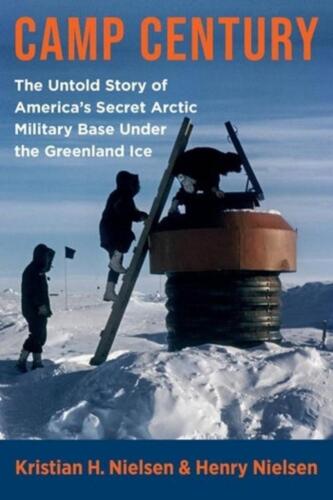
Kristian H. Nielsen and Henry Nielsen,[2] in their recent book Camp Century: The Untold Story of America’s Secret Arctic Military Base Under the Greenland Ice, show that today’s perilous situation has roots in the original Cold War period.
U.S. army engineers then built the subterranean city, Camp Century, under the Greenland ice near the Arctic Circle under the guise of conducting polar research, and explored the feasibility of Project Iceworm, a plan to store and launch hundreds of ballistic missiles with nuclear warheads targeting the Soviet Union from inside the ice.
Described by two Danish journalists as “some monstrous figment of the imagination that could have been featured in an early James Bond film,”[3] Project Iceworm was justified under the 1950s military doctrine of “massive retaliation,” and the Eisenhower administration’s “New Look” policy which advocated for a massive conventional and nuclear arms build-up to counter potential Soviet aggression…………………………………………………………………………………………………………………………………………………………….
“The City Under Ice”—A Science-Fiction Scenario Come True
In 1960, the U.S. Army began initiating research projects near Camp Thule at the underground, nuclear-powered Camp Century, which was established as a kind of science-fiction scenario come true.
The projects aimed to understand the environment and climate on the ice sheet, thereby enabling the U.S. to better establish and secure its northernmost military position…………………………………………………………………………………………………………………………………….
The sub-surface installation of a nuclear reactor within the Greenland ice sheet at Camp Century was an enormous and difficult engineering endeavor that was an astonishing achievement…………………………………….
Almost all of the journalists invited to visit Camp Century in the early 1960s celebrated the major scientific achievements while minimizing the Cold War context and military purposes behind the camp.
………………………………………………………………………………………………………………. an American journalist writing under the pseudonym “Ivan Colt” who, in an article appearing in October 1960, included a vivid description of missile-launching bases beneath the surface of the ice sheet that would be “able to plaster every major Soviet city, H-bomb depot and missile plant.”
Audacious Cold War Project
In 1997, a group of Danish historians were able to locate a classified document proving that the U.S. saw Camp Century as the first step toward a colossal sub-surface tunnel system that would enable the U.S. Army to launch a nuclear-missile strike at virtually any target in the Soviet Union.[10]
These missiles would be protected because of their distance from the U.S. mainland, and location in a secret underground facility……………………………………………………………………………………………..
Health and Environmental Detritus and the Dangers of History Repeating Itself
Camp Century was shut down in 1966, as its sub-surface tunnel system in the Greenland ice sheet was extremely difficult and costly to maintain and the development of Polaris nuclear missiles launchable from submarines made it largely obsolete. However, its remains may soon resurface because of global warming.
Greenland, today a largely self-governing part of Denmark, threatened to bring the case before the UN International Court of Justice if Denmark did not promptly assume responsibility for cleaning up the Camp Century site.
The remaining debris, some 35-70 meters (115-230 feet) beneath the surface of the ice, is known to include not only buildings and structural elements but also radioactive, chemical and biological waste.[12]
Over the years, many workers at Thule Air Base had developed cancers from radiation exposure, as did members of a clean-up crew that was called in to collect snow contaminated with plutonium for transport to the U.S. after a B-52 Stratofortress carrying hydrogen bombs crashed seven kilometers from Thule Air Base in 1968.[13]
The health and environmental detritus is an example of a vast and unrecognized cost of the Cold War arms race that is sadly being reinvigorated today.
As Russia, China and the U.S. compete for renewed control over the Arctic and set up yet more military bases there, the fallout will again be considerable even if the nukes are never deployed, and the tragedy of Camp Century will be repeated.
References: …………………………………………….more https://covertactionmagazine.com/2023/07/14/aggressive-u-s-push-for-military-supremacy-in-the-arctic-could-trigger-nuclear-war/?mc_cid=f5762ce44c&mc_eid=65917fb94b
Western Media Has Falsely Presented the Donbas’ Drive For Autonomy as Being Instigated By Moscow

Covert Action Magazine By Ambrose Sylvan, July 13, 2023 [a long, detailed artice, – I recommend that you read the original]
In Reality It Resulted Largely from Kyiv’s Destruction of Eastern Ukraine’s Economy Under Neo-Liberal Economic Policies Pushed by Washington Since the 1990s
The war in Ukraine is commonly seen through one of two lenses. The vision presented by Western, NATO-aligned powers is one of an astro-turfed Donbas separatism created by Moscow to justify the division of Ukraine.
The view of NATO’s critics is that the Donbas republics rebelled against the Euromaidan revolution and the country’s nationalistic, Euro-centric tilt. The reality is that this conflict started much earlier and was merely frozen until the overthrow of the Ukrainian government in 2013.
Political Economy of the Donbas
Global Security outlines the economic situation in Donbas at the time of the dissolution of the USSR……………………………………………………………………………..
The tension between the central government and the Donbas miners was fueled by the increasing difficulty (and cost) of pulling coal from Donbas mines. Other coal-mining regions of the USSR were less costly but the social unrest in Donbas was placated with increasing state subsidies.
Ukrainian independence ended the Donbas struggle against Moscow but created intractable economic problems. The extensive subsidies for Donbas mines were shifted to the less wealthy government in Kyiv, the economic integration of the Soviet Union’s republics was disrupted, and the shift to a market economy was disastrous.
After the break-up of the Union, the political leaders of the Donbas miners would become known as “red directors,” socialists who put the interconnected economic needs of the Donbas and surrounding regions at the heart of their demands to Kyiv.
One of the earliest separatist organizations in Ukraine was the International Movement of Donbas. The Ukrainian news site DEPO, citing Novosti Donbas, describes the origin of the Intermovement as a project of academics at Donetsk University. The group was created as the “International Front for Donbas” at a meeting held on August 31, 1989.
……………………………………………………………………………………………………………………………………………. The Intermovement for Donbas failed to raise support for a renewed USSR, but the separatist movement would grow larger and stronger with every crisis that shook independent Ukraine.
The Shock Year
The act of independence immediately triggered a years-long economic crisis which was the driving force behind Ukraine’s growing separatist and anti-government movements.
………………………………………………………………………………………………………………….Inflation was accelerated by the spike in oil and gas prices as Ukraine lost the preferential rates it had enjoyed in the Soviet Union. Despite warnings from Moscow and the National Bank of Ukraine that the country would have to pay world prices if it exited the “Ruble Zone,” the government decided to drop the ruble as Ukraine’s currency by year-end.
New national borders interrupted the industrial sector, costs soared, demand fell (especially in state-driven industries like defense and science), and production crashed. For the first time in living memory, Ukrainians experienced the terrors of unemployment, price gouging, and starvation in a time of plenty.
…………………………………………………………………………………………………………………………………………………………. Ukraine dropped the ruble on November 12, 1992, and had no stable legal currency to use at markets. Wages were worthless and some workers were paid directly in consumer goods like soap instead of money. The economic problems of the working masses had become many times worse than they had been at the end of the Soviet era.
Demands of Donbas
Naturally there were outbursts of popular rage against the government as people lost their livelihoods………………………………………………………………………………………..
A government commission headed by the Finance Minister (who had authored the disastrous economic reforms) arrived in Donetsk on June 8. The striking miners made their demands clear: a no-confidence referendum on the President and parliament, and stronger regional self-government for Donbas. On June 18 the government agreed to schedule the referendum for September and to double miners’ wages. However this wage increase did little in the face of hyperinflation and the referendum was eventually canceled in favor of early elections.
Regional autonomy had already been a project of the Donetsk Regional Council before the 1993 general strike……………………………………………………………………………………………………………………………….
A “consultative poll” was held in Donetsk and Luhansk oblasts on the same day as the early elections, March 27, 1994. The central government refused to acknowledge it as a legally binding referendum, but the poll results showed that Donbas had a popular mandate to establish an autonomous government.
The poll had four questions: whether the constitution of Ukraine should change from a unitary state to a federal state; whether the Russian language should be constitutionally equal to the Ukrainian language; whether Russian should be an equal language of government and education in Donbas; and whether Ukraine should be a full participant in the post-Soviet Commonwealth of Independent States.
An overwhelming majority of voters said “YES” to all four questions: The federal system received 84% of all valid ballots in Donetsk, and the other three questions received more than 90% of all valid ballots in both regions…………………………………………
Deindustrialization
Tensions between the Donbas miners and the Ukrainian government continued to intensify over economic and political issues, and major labor actions continued through the decade.
………………………………………………………….The government did not follow through and strike action resumed on February 2, 1996, coordinated across Russia and Ukraine from Siberia to Donbas. As many as one million miners and allied workers went on strike in Ukraine.
…………………………………………………………. The central government’s economic warfare against the Donbas has continued unabated for decades………………………………………………………………………………..
Pushed to the Edge
Kyiv’s systematic destruction of the Donbas economy is a much greater driver of separatism than any Russophile nationalism. Sociological surveys conducted in early 2014 show us the most important issues to eastern Ukrainians on the verge of civil war.
Eight southern and eastern oblasts were surveyed by the Kyiv International Institute of Sociology (KIIS) in April 2014. ……………………………………………………………………………………………
KIIS additionally asked about the state structure of Ukraine. Only 10.6% in Donetsk and 12.4% in Luhansk indicated that they would keep the unitary state with its weak oblasts; 41.1% in Donetsk and 34.2% in Luhansk wanted power to be decentralized with oblasts given greater authority; and 38.4% in Donetsk and 41.9% in Luhansk endorsed a federal system with each region having its own state and the national government becoming a federation of these states. There were clear majorities in Donetsk and Luhansk (79.5% and 76.1%) that desired autonomous local governments.
Another survey was carried out by the Donetsk Institute for Social Research and Political Analysis in April 2014. ………………..In total, 79% of respondents wanted Kyiv to have less power and 48% wanted Donetsk to have its own state formation, whether independent or federated with Ukraine or Russia.
Breakaway
The infamous Donbas independence referendums were held just a few weeks after these surveys had been published. Despite accusations of endemic fraud and fabricated results the outcome was not far from what had been described by scientific opinion polls. The ballots asked not for independence but whether the republics should have “self-rule,” which the Donetsk electoral commissioner said could include autonomous or federal status within Ukraine.
When we consider the souring of public opinion on Kyiv’s “Anti-Terrorist Operation” and its civilian casualties, it is not hard to imagine how the 79% that polled in favor of more self-governance could have become 89% voting in favor of Donetsk self-rule.
………………………………………………………………………………………………………. By 2020 the Donetsk Institute’s follow-up survey had found that 45-50% of respondents favored annexation and only 20-25% supported a return to Ukraine; the remaining 25-30% answered that they wanted any resolution that would end the war.
………………………………………………………………………………………. Shut out of power, the Donbas was subjected to decades of ruthless economic policies which suited northern and western Ukraine’s desires to join the European Union. When President Viktor Yanukovych refused to sign the EU Association Agreement, acting in the interests of the south and east, he was ousted by the Euromaidan protests and riots in the capital. The government which replaced Yanukovych’s Party of Regions immediately signed the agreement, took on colossal debts, and adopted catastrophic austerity measures.
This is how Russian separatists, far-right extremists, and paramilitary bandits were able to find support. Their militant actions burst the tension and made secession a real possibility for the first time. Now a decade of war and blockades has deepened the fissure between Donbas and Ukraine and, with the accession of Donetsk and Luhansk to the Russian Federation, this division may become permanent.
- See David Hoffman, “One Million Miners Go on Strike in Russia, Ukraine,” The Washington Post, February 2, 1996, https://www.washingtonpost.com/archive/politics/1996/02/02/1-million-miners-go-on-strike-in-russia-ukraine/191f1387-b970-4c0a-971a-e7a30edf07b6/ ↑ https://covertactionmagazine.com/2023/07/13/western-media-has-falsely-presented-the-donbas-drive-for-autonomy-as-being-instigated-by-moscow/?mc_cid=f5762ce44c&mc_eid=65917fb94b—
Mexican president urges end to ‘irrational’ Ukraine war, wants Russia at peace talks
Reuters, August 1, 2023 https://www.reuters.com/world/americas/mexican-president-urges-end-irrational-ukraine-war-wants-russia-peace-talks-2023-07-31/
MEXICO CITY, July 31 (Reuters) – Mexican President Andres Manuel Lopez Obrador on Monday called for an end to the “irrational” war in Ukraine, urging upcoming peace talks in the Middle East to include representation from both Ukraine and Russia.
Lopez Obrador said Mexico would only take part in the talks in Saudi Arabia, reportedly scheduled to be held over the coming weekend, if both sides were present.
“If there’s acceptance from both Ukraine and Russia to look for solutions to achieve peace, we’ll participate,” the president told reporters at a regular press conference.
“We don’t want the Russia-Ukraine war to continue, it’s very irrational,” Lopez Obrador added, noting that the conflict has caused massive human suffering. “The only thing that benefits from it is the war industry.”
Senior officials from up to 30 countries are expected to participate in the talks Aug. 5-6 in Jeddah, the Wall Street Journal reported on Saturday. Russia has not been invited, the outlet reported, citing diplomats involved in the planning.
On Monday, the Kremlin said it would “follow” the meeting but did not currently see conditions for peace talks with Kyiv.
Lopez Obrador has sought to keep Mexico neutral in the war, though his government has backed some major U.N. resolutions criticizing Russia’s role in the conflict. Mexico has refused to send arms to Ukraine and has not imposed sanctions on Russia.
In April, Ukraine President Volodymyr Zelenskiy urged Mexican lawmakers to back his plan to end the war, which would include Russia withdrawing its troops from Ukrainian territory.
Lopez Obrador had outlined a separate peace plan last year, which Ukraine opposed, arguing it would have benefited Russia.
Reporting by Kylie Madry and Raul Cortes; Editing by Bill Berkrot
Together Against Sizewell environmental group angry at the coming destruction of marine life, as acoustic fish deterrent will not be installed at Hinkley Point C nuclear
A notification from the Environment Agency distributed on the first of
August, starts with an encouraging statement reminding us that it is
responsible for regulating environmental protection at nuclear sites,
ensuring that people and the environment are properly protected.
But behind the corporate speak of ‘permit variation’, the addition of ‘new
limits and conditions’ and ‘discharge activity’ within the Water
Activity Discharge permit for Sizewell C’s so-called sister plant at
Hinkley Point C in Somerset, lies the cold, stark fact that the Environment
Agency, which claims to ‘protect and improve the environment’, has
removed the requirement to install an acoustic fish deterrent (AFD) at the
head of its seawater intake in the Bristol Channel.
In doing so the EA has condemned millions of fish and other marine creatures to their fate of
impingement, injury and death adding to the many millions of fish fry, fish
eggs, small fish and other marine biota that will be killed when entrained
in the cooling system of the plant.
Moreover, this situation is due to be repeated at Sizewell, meaning that Sizewell Bay fish stocks and marine creatures will likewise face decimation should the plant ever be built. A
spokesperson for Together Against Sizewell C (TASC), said today, ‘Our
spineless environmental regulator has simply rolled over to do the nuclear
industry’s dirty work, directly contradicting its promise to protect and
improve the environment and making itself complicit with the ceaseless
attack on this country’s biodiversity.
It is shocking that our young
people have to witness such shameless sacrifice of millions of creatures on
the altar of wildly misplaced government policy which is recognised by its
own Science and Technology Committee as fantasy. When will we have a
regulatory system in the UK which is capable of demonstrating enough spine
to put the environment above corporate greed and the arm lock of government
policy? The Environment Agency should be ashamed of itself.’
Together Against Sizewell C 2nd Aug 2023
Environment Agency allows Hinkley Point C permit variation to remove fish deterrent system
EA allows Hinkley Point C permit variation to remove fish deterrent
system. The Environment Agency has allowed an amendment to a permit linked
to the Hinkley Point C nuclear power plant in Somerset, allowing the firm
to remove previous plans for an acoustic fish deterrent (AFD) system from
the development, despite warnings that the move could result in the death
of millions of fish each year.
ENDS 1st Aug 2023
Ministers diverted £136m from electric car fund to Sizewell C nuclear project despite infrastructure concerns
i’s revelation comes as Rishi Sunak faces criticism for watering down some of the Government’s green policies
inews UK By Ben Gartside, August 2, 2023
The Government diverted £136m away from its electric vehicle (EV) supply chain fund to the UK’s main nuclear reactor project Sizewell C, i can reveal.
The Automotive Transformation Fund, a Government initiative designed to make it easier for car manufacturers to build and develop electric vehicles in the UK, spent just 5 per cent of its initially allocated funding in the year to March 2023, according to Government documents seen by i.
Given an initial budget of £191m, just £7m was spent and 76 per cent of the funding arrangement was transferred to the Sizewell C project, the construction of the UK’s first new nuclear power station in more than 30 years.
i‘s revelation comes amid mounting concerns about whether the UK has sufficient infrastructure for electric cars and as Rishi Sunak has faced criticism for watering down some of the Government’s green policies…….
The documents, published by the now defunct Department for Business, Energy and Industrial Strategy, show that £136m was moved for “investment in Sizewell C”, while another £10m was surrendered back to the Government altogether.
A later document from the replacement Department for Business and Trade said the money was reallocated “for a number of reasons” but did not specify why.
……………………………………An energy department spokesperson did not respond to i‘s questions about whether the money went towards buying out the Chinese government stake on the project.
Details on Sizewell C’s spending are closely guarded, but the project is expected to spend £912m this financial year, with construction yet to start.
…………………… some environmental groups argue that the UK’s nuclear projects have been plagued by delays and ballooning costs, and that there are better, less expensive options for delivering electricity more sustainably, including renewables.
The revelation that the Government diverted funding away from its electric vehicle supply fund towards the Sizewell C project may further alarm carmakers, who are already concerned about targets that are being imposed on the industry for the making of EVs and the readiness of Britain’s infrastructure.
………………………….There is concern that there will not be enough EV chargers to meet demand by this deadline unless capacity is significantly ramped up…………………………. more https://inews.co.uk/news/ministers-electric-car-fund-sizewell-c-nuclear-project-infrastructure-concerns-2520848
Non-compliant fire program halts decommissioning of Whiteshell Nuclear Laboratories
Canadian Nuclear Safety Commission, 4 Aug 23
A 40-minute “Event Initial Report” during the Canadian Nuclear Safety Commission (CNSC) June 28th meeting discussed an internal review by Canadian Nuclear Laboratories (CNL) which found that fire protection staff, systems and equipment at Whiteshell Laboratories were deficient, and had been deficient for years. This issue came to light when a new fire protection employee was hired and raised the alarm.
This has forced a shut-down of decommissioning activities. CNL President Joe McBrearty said that staff and resources have been transferred from the Chalk River Laboratories to Whiteshell to address the deficiencies.
Whiteshell Laboratories has been undergoing accelerated decommissioning since 2015 when CNL was sold to Canadian National Energy Alliance, a multinational consortium currently composed of three companies, (SNC-Lavalin and Texas-based Fluor and Jacobs), under a contract to reduce the Government of Canada’s nuclear liabilities quickly and cheaply.
In December 2019 the CNSC had issued a decision that “CNL is qualified to carry on the activity that the proposed licence will authorize and that it will make adequate provision for the protection of the environment, the health and safety of persons.” At that time, CNSC renewed the Nuclear Research and Test Establishment Licence for Whiteshell (NRTEL-W5-8.00/2024) for the period January 1, 2020 until December 31, 2024. …………………….
CNL President McBrearty noted that the Whiteshell hot cells have been reactivated to enable waste retrieval. Whiteshell decommissioning waste is being shipped to the Chalk River Laboratories for disposal in the proposed NSDF nuclear waste dump. https://cnsc.isilive.ca/2023-06-28/2023-06-28-3M.mp4
Opposition to Aukus – especially from New Zealand, but also from Australia and the Pacific, and across the political spectrum

Military Initiative by Australia, the United Kingdom and the United States (AUKUS) is Another Major Step in Prospective War on China
Covert Action Magazine, By Murray Horton, June 29, 2023
“………………………………………………“We Are Not at War, But Neither Are We at Peace”
New Zealanders may not have appreciated the degree of militarization in Australia, much more so than here. AUKUS should jolt us out of any complacency about what is going on with our nearest neighbor—it is preparing for war. Australian media commentary at the time of the AUKUS launch made that clear. “The monumental price tag of the AUKUS pact has made it clear. We are not at war, but neither are we at peace…”
“Almost $A400b, even over three decades, is not peacetime spending in anyone’s book—a fact Government ministers concede privately. Rather, we are navigating a dangerous and unpredictable new grey zone of superpower rivalry between China and the United States. It’s a contest in which we are poised to be a central player despite our geographical isolation and relatively small population.”
“Accepting such a role will require tough spending decisions the nation as a whole is not yet ready to confront. Already, Opposition Leader Peter Dutton is flagging his willingness to support reduced spending on the National Disability Insurance Scheme to pay for the submarine programme. Other unsettling trade-offs will need to be discussed. Even in the short term, before the big bills start arriving, difficult calls will have to be made….This is because…it will cut $A3b from existing defence programmes…This is likely to anger other branches of the military, such as the Army, while the Navy is lavished with money.”[2]
Albanese tried to put a positive spin on it,……………………………………..
Criticism from Inside the Political Elite
Pleasingly, AUKUS was not unopposed among Australia’s political elite (or, at least, former leading members of it). Paul Keating, who was Labor Prime Minister from 1991 to 1996, really put the boot into the good submarine AUKUS and all who sail in her. He did so in a March 2023 speech, the day after the AUKUS announcement. “Former prime minister Paul Keating has launched an extraordinary attack on the Albanese government over its adoption of the AUKUS pact, accusing it of making the worst foreign policy decision by a Labor government since the attempted introduction of conscription in World War I.”
“He said signing up to AUKUS had broken Labor’s long ‘winning streak’ on foreign policy over the past century and was a ‘deeply pathetic’ moment in the Party’s history. ‘Falling into a major mistake, Anthony Albanese, befuddled by his own small-target election strategy, emerges as prime minister with an American sword to rattle at the neighbourhood to impress upon it the United States’ esteemed view of its untrammelled destiny…’”
“‘Naturally, I should prefer to be singing the praises of the government in all matters, but these issues carry deadly consequences for Australia and I believe it is incumbent on any former prime minister, particularly now, a Labor one, to alert the country to the dangerous and unnecessary journey on which the Government is now embarking.’”
“‘This week, Anthony Albanese screwed into place the last shackle in the long chain the United States has laid out to contain China…I don’t think I suffer from relevance deprivation, but I do suffer concern for Australia as it most unwisely proceeds down this singular and dangerous path,’ he said.”
“Keating presented a largely benign view of China’s rise, saying it was ‘not the old Soviet Union’ and was ‘not seeking to propagate some competing international ideology’ to the United States. The fact is China is not an outrider,’ he said. ‘China is a world trading state—it is not about upending the international system,’”
“Keating said: ‘Every Labor Party branch member will wince when they realise that the party we all fight for is returning to our former colonial master, Britain, to find our security in Asia—236 years after Europeans first grabbed the continent from its Indigenous people. That of all things, a contemporary Labor government is shunning security in Asia for security in and within the Anglosphere’”[3]
Nor was Keating alone in his criticism from within the elite. “The Australian National University’s Hugh White, an emeritus professor of strategic studies, unleashed a quite extraordinary criticism of Australia’s nuclear submarine plan…Professor White, a former deputy secretary of the Defence Department, said Australia was not only going to ‘hand over some serious dollars’ to the US but also pay with ‘a promise’ to enter any future conflict with China.’”
“‘This is a very serious transformation of the nature of our alliance with the United States,’ White said in an interview recorded for the ANU’s politics podcast Democracy Sausage. ‘The US don’t really care about our submarine capability—they care deeply about tying Australia into their containment strategy against China.’”
“White said he couldn’t see why the US would sell its own submarines—of which they have fewer than they need—unless it was absolutely sure Australia’s submarines would be available to it in the event of a major conflict in Asia. He said a war between America and China over Taiwan would be ‘World War III’ and have a ‘very good chance’ of being a nuclear conflict.”
“‘Australia’s experience of war [is] shaped by the fact that we’ve tended to be on the winning side, but there is no reason to expect America to win in a war with China over Taiwan,’ he warned. He suggested there was also a high chance the AUKUS deal could fall over under [sic] a future American administration and a worsening strategic environment.”
“White said there were cheaper, quicker, less risky and less demanding ways for Australia to get the submarines it needed, labelling the AUKUS plan a waste of money that ‘doesn’t make sense. There’s going to be no actual net increase in the number of submarines available until well into the 2040s, even if it goes to plan—which it probably won’t,’ he said.”[4]……………………………………………………………………………………………………………………………………………………………………..
Former New Zealand Prime Ministers from Rival Parties Dissent
When AUKUS was first announced in 2021, New Zealand, which was not invited to join, simply confined itself to saying that nuclear-powered submarines would not be allowed into New Zealand territorial waters, or ports, because of our nuclear-free law dating back to the 1980s. So, the issue flew below the radar (or sailed under the water, to put it more appropriately). However, once AUKUS really kicked off in March 2023, debate and disquiet started in New Zealand.
Helen Clark was the Labour Prime Minister (1999-2008) who has dined out for 20 years on having refused to let New Zealand join the U.S., UK and Australia in the illegal and disastrous 2003 invasion of Iraq (in all other aspects Clark was a very loyal servant of the U.S.). She came out quickly and said that New Zealand is better off outside AUKUS (the word she used was “entanglement”).
She was not alone as the only former New Zealand Prime Minister to criticize it. “…[F]ormer National prime minister Jim Bolger [1990-97] participated in a forum about New Zealand’s foreign policy in Wellington, in which he is reported by the Herald’s Audrey Young to have criticised the Australian submarine buy up as ‘beyond comprehension’ because of the cost and the damage to peace in the Pacific region.”
“Bolger said that New Zealand certainly doesn’t want any such submarines, and challenged proponents of the AUKUS deal to defend it: ‘If you can find any Australian official who can explain why they need nuclear-powered submarines, come and tell me. I’d like to know.’ And Young reported Bolger asking rhetorically, ‘How mad are we getting?’ She says ‘he spoke with despair about the near-daily threats of nuclear war, which had the potential to destroy the planet.’”[7]
Opposition Across the Political Spectrum
“As part of the AUKUS deal Western Australia will play host to US and UK nuclear submarines from 2027. With nuclear-capable American B52 bombers and thousands of American marines rotating through the Northern Territory, Australia is lining up as a loyal lieutenant to the United States in the Pacific and would be expected to fight should war break out.”
“Would New Zealanders fight in a war between the nuclear superpowers? While we aren’t required by treaty obligations to act if America or Taiwan are attacked we are if Australia is. It is not an exaggeration to say Australia could be a target in a future war and already the country has been threatened with missile attacks in that scenario.”
“The risks of New Zealand being dragged in are real. Unlike in Australia, the conversation in New Zealand has been much more muted with limited discussion on the likelihood of war. Why aren’t we talking about it? New Zealand is in a difficult situation contemplating conflict between our largest trading partner and traditional security partner.”
“We weren’t invited to join AUKUS and Australian nuclear submarines won’t be allowed to berth here under our nuclear-free legislation. That same legislation sees New Zealand as only a friend and not an ally of the United States, but we are increasingly acting like we are an ally. In the years since New Zealand’s principled decision not to join the invasion of Iraq we have become more enmeshed with the United States defence apparatus.”
………………………………………………………………………………………………….. “New Zealanders need to talk more about the risks, our decision-makers need to explain why New Zealand is aligning more closely with the United States military and as a sovereign country we have to ask are we acting independently or as a cog in a machine? Our role could be focused on reducing tensions, finding solutions and building trust. War is never inevitable.”[8]
Former politicians across the spectrum have come out against AUKUS. For example, Richard Prebble, one-time Labour Cabinet Minister and later ACT Party founder and Leader.
He is currently a relentless right-wing critic of the current Labour government. His take on AUKUS is the classic mercantilist one. “China is New Zealand’s biggest trading partner. This country has joined China’s Belt and Road initiative. China has signed a free trade agreement with New Zealand, something the U.S. Senate refuses to consider.”
“Foreign Minister Nanaia Mahuta has warned that New Zealand’s exports to China could be caught up in a ‘storm,…………….. New Zealand’s exporters are only too aware of their dependency. There is no other obvious alternative to the New Zealand-China trade.”
“New Zealand has no territorial disputes with China. When we recognised the Government of China 50 years ago, we acknowledged Taiwan is part of China. Paul Keating and Helen Clark are correct. New Zealand’s strategic interest is in the peaceful resolution of conflicts with China rather than sleepwalking into anti-Chinese alliances.”[9]
Academic Skepticism
Leading academic Robert Patman spelled it out in an article entitled “Why New Zealand Should Remain Sceptical About AUKUS.” He wrote that “the basic problem facing AUKUS is that it is based on a binary assumption that the fate of the Indo-Pacific will be largely shaped by the outcome of U.S.-China rivalry and, in particular, by the capacity of America and its closest allies to counterbalance Chinese ambitions in the region.”[10]
“Such a perspective is problematic on a number of counts. First, it exaggerates the influence of great powers in the 21st century in a large, diverse region like the Indo-Pacific. The region contains 60% of the world’s population including significant economic players like Japan, South Korea and fast-growing economies such as Vietnam and India.”
“Second, AUKUS does not factor in the Indo-Pacific and European nations’ quite distinctive security and economic interests in countering China. While countries like Malaysia, Indonesia and Vietnam and EU states like Germany and France are deeply worried about China’s forceful diplomacy in the Indo-Pacific, they remain sceptical that a security arrangement involving three English-speaking states, two of whom have baggage in the region, is an adequate response.”
“Third, China’s global ambitions are very real, but they should not be over-hyped. AUKUS states depict China as a ‘systemic threat’ and, according to US Secretary of Defence Lloyd Austin, the ‘only competitor out there with both the intent to reshape the international order and, increasingly, a power to do so.’ Really?…”
“Fourth, the provision of nuclear-powered submarines to Australia has raised very real fears in the Indo-Pacific about nuclear proliferation. In 1995, ASEAN [Association of Southeast Asian Nations] member states signed the Treaty of Southeast Asia Nuclear Weapon-Free Zone (SEANWFZ). Furthermore, Singapore is now the only ASEAN state yet to sign or ratify the Treaty on the Prohibition of Nuclear Weapons (TPNW), a diplomatic initiative heavily promoted by New Zealand.”
………………………………………………………………………. New Zealand remains sceptical that China is a systemic threat to US dominance, sees a good fit between its non-nuclear security policy and the Indo-Pacific region, and views detachment from AUKUS as both consistent with the goal of diversifying New Zealand’s trade ties and building a diplomatic network of like-minded states to strengthen the international rules-based order through measures like UN Security Council reform.”
Madness to Support U.S. War Against China
Mike Treen, veteran union leader and left-wing activist, put it all very succinctly in an article in the Daily Blog on April 21, 2023. He wrote: “The US is going to war against China because it is losing the international economic competition that previously enabled its military and economic bullying to dominate the globe. The empire is in slow decline.”[11]
“China’s extraordinary rise as an economic powerhouse over the past few decades means that it is now the top international trading partner for 120 countries. This has given the world the freedom to act in ways they have never before—politically and economically.
………………………………………………………………………………. “New Zealand was wrong to join the war against Afghanistan. We were wrong to join the occupation of Iraq. We were wrong to become an ‘observer’ at NATO. And it would be foolish and dangerous to become a participant in any way with the AUKUS military provocation against China. New Zealand should be a neutral power that offers medical aid to the world not a tiny jumped-up militarised puppet of the US empire like Australia has become.”
Defence Minister Tempted by AUKUS
The AUKUS carrot that is being dangled in front of New Zealand and Defence Minister Andrew Little is keen to take a bite……………………………………………………..
But Not PM or Minister of Foreign Affairs
However, both the Prime Minister, Chris Hipkins, and the Minister of Foreign Affairs, Nanaia Mahuta, have since “dismissed suggestions the Government has shown interest in joining aspects of the pact.”
Mahuta made a May 2023 speech stressing that New Zealand’s nuclear-free position is a “cornerstone of our independent stance” ………………………
AUKUS Causing Alarm in the Pacific.
“[T]he Pacific Islands Forum warns ‘AUKUS will bring war much closer to home and goes against the Blue Pacific narrative on nuclear proliferation and the cost to climate change.’ Forum secretary-general Mark Brown said AUKUS would heighten geopolitical tensions and disturb the peace and security of the region.”…………………………………………………………………….
New Zealand Needs to Be Aware of War Drums Next Door
…………………………. New Zealand is actively supporting Ukraine in its war against Russia. There is an irony in our government being so invested in a war, and its attendant geopolitics, on the other side of the world while, right next door to home, our Aussie Big Brother is making a major push toward war via AUKUS and accompanying militarization.
………Make no mistake—AUKUS is a major lurch toward war with China and it is unfolding before our eyes.
The Australian peace movement is waging a vigorous and very active campaign against AUKUS. Independent and Peaceful Australia Network (IPAN) https://ipan.org.au/
References:………………………………………………………..
Sweden’s Nuclear Power Ambitions Quashed
By Julianne Geiger – Aug 01, 2023,
Sweden’s hope to build out its nuclear power capacity was quashed this week, with German utility Uniper SE saying it had no intention of throwing more money on nuclear power.
Uniper currently operates Sweden’s largest nuclear power reactor Oskarshamn-3, and has partial stakes in Ringhals and Forsmark. But Uniper isn’t interested in spending on additional nuclear power beyond its existing plants. It instead intends to focus on natural gas and renewables, according to Bloomberg, in line with its home country’s recent mothballing of its last remaining nuclear reactor.
The subject of nuclear power in Europe has been at the center of controversy. Germany—Europe’s largest economy—has made a point to back away from nuclear power, and has argued that it has no place in Europe’s green future……….
Oil Price 1st Aug 2023
https://oilprice.com/Latest-Energy-News/World-News/Swedens-Nuclear-Power-Ambitions-Quashed.html
US rejects Australian plea to drop Assange case

29 July 23, https://www.rt.com/news/580512-blinken-rejects-assange-australia/
Secretary of State Antony Blinken insisted that the WikiLeaks founder caused “serious harm” to US national security
US Secretary of State Antony Blinken has confirmed that Australia has raised the case of Julian Assange’s continued prosecution, but declared that Washington will not cease seeking the extradition of the former WikiLeaks boss and intends to try him for espionage.
Speaking alongside Australian Foreign Minister Penny Wong in Brisbane on Saturday, Blinken said that while he understands “the concerns and views of Australians,” Assange’s alleged actions “risked very serious harm to our national security, to the benefit of our adversaries, and put named human sources at grave risk – grave risk – of physical harm, and grave risk of detention.”
Assange, he said, was “charged with very serious criminal conduct” and had allegedly taken part in “one of the largest compromises of classified information in the history of our country.”
An Australian citizen, Julian Assange is currently being held in London’s Belmarsh Prison. He is fighting extradition to the US, where he faces 17 charges under the Espionage Act and potentially a 175-year prison sentence. Human-rights and press-freedom activists have demanded his release, citing his deteriorating mental and physical health, while Australian Prime Minister Anthony Albanese said in May that he was “working through diplomatic channels” to press the US into dropping the case.
The charges against Assange stem from his publication of classified material obtained by whistleblowers, including Pentagon documents detailing alleged US war crimes in Iraq and Afghanistan, and more than 250,000 diplomatic cables exposing US efforts to – among other things – spy on its allies and influence foreign elections.
While Assange did not personally steal these documents, he is nevertheless being prosecuted for espionage. He and his supporters argue that WikiLeaks’ publication of this material is protected by the First Amendment of the US Constitution.
“We have made clear our view that Mr Assange’s case has dragged on for too long,” Foreign Minister Wong said on Saturday. “We’ve said that publicly and you would anticipate that that reflects also the position we articulate in private.”
The extradition of Assange from Britain to the US was approved in 2020 by then-UK Home Secretary Priti Patel. The publisher lodged his final appeal against the decision in June, after all eight grounds of a previous appeal were rejected by a British High Court judge.
Responding to Blinken’s comments on Saturday, Assange’s brother, Gabriel Shipton, said that it is now up to Prime Minister Albanese to make a public appeal for Assange’s freedom, during his upcoming visit to the US.
The unpalatable facts of the costs to consumers of electricity from new nuclear power
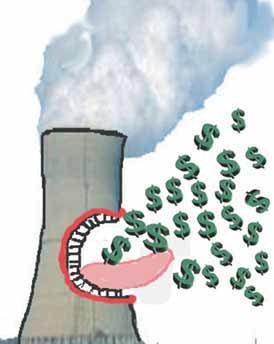
ATLANTA (AP) — The first American nuclear reactor to be built from scratch in decades is sending electricity reliably to the grid, but the cost of the Georgia power plant could discourage utilities from pursuing nuclear power as a path to a carbon-free future.
Georgia Power Co. announced Monday that Unit 3 at Plant Vogtle, southeast of Augusta, has completed testing and is now in commercial operation, seven years late and $17 billion over budget.
……………………………………………………. In Georgia, almost every electric customer will pay for Vogtle. Georgia Power currently owns 45.7% of the reactors. Smaller shares are owned by Oglethorpe Power Corp., which provides electricity to member-owned cooperatives, the Municipal Electric Authority of Georgia and the city of Dalton. Oglethorpe and MEAG plan to sell power to cooperatives and municipal utilities across Georgia, as well in Jacksonville, Florida, and parts of Alabama and the Florida Panhandle.
Georgia Power’s residential customers are projected to pay more than $926 apiece as part of an ongoing finance charge and elected public service commissioners have approved a rate increase. Residential customers will pay $4 more per month as soon as the third unit begins generating power. That could hit bills in August, two months after residential customers saw a $16-a-month increase to pay for higher fuel costs.
The high construction costs have wiped out any future benefit from low nuclear fuel costs in the future, experts have repeatedly testified before commissioners.
“The cost increases and schedule delays have completely eliminated any benefit on a life-cycle cost basis,” Tom Newsome, director of utility finance for the commission, testified Thursday in a Georgia Public Service Commission hearing examining spending.
The utility will face a fight from longtime opponents of the plant, many of whom note that power generated from solar and wind would be cheaper. They say letting Georgia Power make ratepayers pay for mistakes will unfairly bolster the utility’s profits.
“While capital-intensive and expensive projects may benefit Georgia Power’s shareholders who have enjoyed record profits throughout Vogtle’s beleaguered construction, they are not the least-cost option for Georgians who are feeling the sting of repeated bill increases,” Southern Environmental Law Center staff attorney Bob Sherrier said in a statement.
Commissioners will decide later who pays for the remainder of the costs of Vogtle, including the fourth reactor. Customers will pay for the share of spending that commissioners determine was prudent, while the company and its shareholders will have to pay for spending commissioners decide was wasteful.
Georgia Power CEO Kim Greene said the company hasn’t decided how much it will ask customers to pay. https://apnews.com/article/georgia-power-nuclear-reactor-vogtle-9555e3f9169f2d58161056feaa81a425
UK government must come clean, to tax-payers and consumers, on the financial figures before signing up to new nuclear programme
Full report. See in particular paras 41 -44. “The Government should show
how this offers value for money to taxpayers … So far, the Government has
not published financial figures which allow the cost of this risk transfer
to be known. The Government must publish figures, before signing contracts
for new gigawatt-scale nuclear, which allow a proper assessment of value
for money to be made, including setting out the level and potential cost of
construction risk to be borne by the consumer or taxpayer …
The Government should publish details of how the estimated savings from using
the RAB model for funding Sizewell C were calculated, and provide clarity
for the funding structure, by publishing the Heads of Terms for the agreed
RAB funding model for that project.”
Science, Innovation, Technology Committee 31st July 2023
https://committees.parliament.uk/publications/41092/documents/200069/default/
1 This Month
23-25 October – on Zoom – World BEYOND War’s annual global conferenc


Shut down the radiation-damaged Heysham nuclear reactors now
To see nuclear-related stories in greater depth and intensity – go to https://nuclearinformation.wordpress.com

Say No to NASA’s Reckless Nuclear Reactor on the Moon
Say No to NASA’s Reckless Nuclear Reactor on the Moon

-
Archives
- October 2026 (209)
- September 2026 (339)
- August 2026 (330)
- July 2026 (355)
- June 2026 (287)
- May 2026 (306)
- April 2026 (356)
- March 2026 (251)
- February 2026 (267)
- January 2026 (308)
- December 2025 (358)
- November 2025 (359)
-
Categories
- 1
- 1 NUCLEAR ISSUES
- business and costs
- climate change
- culture and arts
- ENERGY
- environment
- health
- history
- indigenous issues
- Legal
- marketing of nuclear
- media
- opposition to nuclear
- PERSONAL STORIES
- politics
- politics international
- Religion and ethics
- safety
- secrets,lies and civil liberties
- spinbuster
- technology
- Uranium
- wastes
- weapons and war
- Women
- 2 WORLD
- ACTION
- AFRICA
- Atrocities
- AUSTRALIA
- Christina's notes
- Christina's themes
- culture and arts
- Events
- Fuk 2022
- Fuk 2023
- Fukushima 2017
- Fukushima 2018
- fukushima 2019
- Fukushima 2020
- Fukushima 2021
- general
- global warming
- Humour (God we need it)
- Nuclear
- RARE EARTHS
- Reference
- resources – print
- Resources -audiovicual
- Weekly Newsletter
- World
- World Nuclear
- YouTube
-
RSS
Entries RSS
Comments RSS

