Ukraine fights narrative battle as counteroffensive stalls – NBC
Rt.com 7 Aug 23
Kiev and its supporters are reportedly worried about perceptions in the West
Faced with a lack of progress on the battlefield, the government in Kiev has taken up a public relations battle in the West, NBC News reported on Friday, citing several US and Ukrainian officials.
As some US officials are “frustrated at the pace” of the Ukrainian counteroffensive, Kiev and some of its backers “worry about losing control of the narrative,” according to NBC.
“If the perception gets out there that the Ukrainians can’t win, then we’re not going to provide them the stuff they need to win,” former US ambassador to Kiev William Taylor told the outlet, warning of a “self-fulfilling prophecy.”
Nikodem Rachon, spokesman for the Polish embassy in Washington, told NBC that Russia “exploits” Ukraine’s lack of battlefield success in propaganda, “aiming to weaken the unity of countries supporting Ukraine.”
President Vladimir Zelensky himself has admitted the “slower pace” of the counteroffensive, blaming the West for delayed deliveries of weapons and ammunition that gave the Russians time to dig in. Deputy Defense Minister Anna Maliar recently claimed gains of “about 241 square kilometers” of territory, which NBC described as “less than 100 square miles.”……………………………………………………………………………..
The Russian Defense Ministry reported on Friday that Ukraine had lost more than 43,000 troops and over 4,900 pieces of heavy weaponry over the course of June and July, including German-made tanks, US-made infantry fighting vehicles, and 747 pieces of artillery.
British intelligence has blamed “weeds and shrubs” growing along the line of contact for slowing down Ukraine’s armor. Kiev officials have latched onto another talking point, however. Leonid Polyakov, a former deputy defense minister of Ukraine who now works for a think tank advising President Vladimir Zelensky, told NBC that Ukraine can’t properly follow US military doctrine without air support.
We have launched a counteroffensive without any kind of air superiority – not in the air force, not in drones, not in helicopters,” Polyakov said. He told a story about two Ukrainian brigades that launched unsupported attacks in June and July and got “shredded” by Russian defenses.
“We wouldn’t do it. We’ve never done it and yet we’re asking them to do it,” agreed ex-ambassador Taylor, who fought in Vietnam as an infantry officer.
The US and its allies are currently training Ukrainian pilots on F-16 fighters, but no country has pledged to actually deliver the jets just yet. https://www.rt.com/russia/580844-ukraine-offensive-narrative-battle/
—
The nuclear arms race’s legacy: Toxic contamination, staggering cleanup costs and a culture of government secrecy
Advocates for a full Hanford cleanup warn that without such a commitment, the site will become a “national sacrifice zone,” a place abandoned in the name of national security.
By William J. Kinsella, 6 Aug 23, https://japantoday.com/category/features/opinions/the-nuclear-arms-race’s-legacy-at-home-toxic-contamination-staggering-cleanup-costs-and-a-culture-of-government-secrecy
RALEIGH, North Carolina
Christopher Nolan’s film “Oppenheimer” has focused new attention on the legacies of the Manhattan Project – the World War II program to develop nuclear weapons. As the anniversaries of the bombings of Hiroshima and Nagasaki on Aug. 6 and Aug. 9, 1945, approach, it’s a timely moment to look further at dilemmas wrought by the creation of the atomic bomb.
The Manhattan Project spawned a trinity of interconnected legacies. It initiated a global arms race that threatens the survival of humanity and the planet as we know it. It also led to widespread public health and environmental damage from nuclear weapons production and testing. And it generated a culture of governmental secrecy with troubling political consequences.
As a researcher examining communication in science, technology, energy and environmental contexts, I’ve studied these legacies of nuclear weapons production. From 2000 to 2005, I also served on a citizen advisory board that provides input to federal and state officials on a massive environmental cleanup program at the Hanford nuclear site in Washington state that continues today.
Hanford is less well known than Los Alamos, New Mexico, where scientists designed the first atomic weapons, but it was also crucial to the Manhattan Project. There, an enormous, secret industrial facility produced the plutonium fuel for the Trinity test on July 16, 1945, and the bomb that incinerated Nagasaki a few weeks later. (The Hiroshima bomb was fueled by uranium produced in Oak Ridge, Tennessee, at another of the principal Manhattan Project sites.)
Later, workers at Hanford made most of the plutonium used in the U.S. nuclear arsenal throughout the Cold War. In the process, Hanford became one of the most contaminated places on Earth. Total cleanup costs are projected to reach up to US$640 billion, and the job won’t be completed for decades, if ever.
Victims of nuclear tests
Nuclear weapons production and testing have harmed public health and the environment in multiple ways. For example, a new study released in preprint form in July 2023 while awaiting scientific peer review finds that fallout from the Trinity nuclear test reached 46 U.S. states and parts of Canada and Mexico.
Dozens of families who lived near the site – many of them Hispanic or Indigenous – were unknowingly exposed to radioactive contamination. So far, they have not been included in the federal program to compensate uranium miners and “downwinders” who developed radiation-linked illnesses after exposure to later atmospheric nuclear tests.
On July 27, 2023, however, the U.S. Senate voted to extend the Radiation Exposure Compensation Act and expand it to communities near the Trinity test site in New Mexico. A companion bill is under consideration in the House of Representatives.
The largest above-ground U.S. tests, along with tests conducted underwater, took place in the Pacific islands. Meanwhile, the Soviet Union and other nations conducted their own testing programs. Globally through 2017, nuclear-armed nations exploded 528 weapons above ground or underwater, and an additional 1,528 underground.
Estimating how many people have suffered health effects from these tests is notoriously difficult. So is accounting for disruptions to communities that were displaced by these experiments.
Polluted soil and water
Nuclear weapons production has also exposed many people, communities and ecosystems to radiological and toxic chemical pollution. Here, Hanford offers troubling lessons.
Starting in 1944, workers at the remote site in eastern Washington state irradiated uranium fuel in reactors and then dissolved it in acid to extract its plutonium content. Hanford’s nine reactors, located along the Columbia River to provide a source of cooling water, discharged water contaminated with radioactive and hazardous chemicals into the river through 1987, when the last operating reactor was shut down.
Extracting plutonium from the irradiated fuel, an activity called reprocessing, generated 56 million gallons of liquid waste laced with radioactive and chemical poisons. The wastes were stored in underground tanks designed to last 25 years, based on an assumption that a disposal solution would be developed later.
Seventy-eight years after the first tank was built, that solution remains elusive. A project to vitrify, or embed tank wastes in glass for permanent disposal, has been mired in technical, managerial and political difficulties, and repeatedly threatened with cancellation.
Now, officials are considering mixing some radioactive sludges with concrete grout and shipping them elsewhere for disposal – or perhaps leaving them in the tanks. Critics regard those proposals as risky compromises. Meanwhile, an estimated 1 million gallons of liquid waste have leaked from some tanks into the ground, threatening the Columbia River, a backbone of the Pacific Northwest’s economy and ecology.
Radioactive trash still litters parts of Hanford. Irradiated bodies of laboratory animals were buried there. The site houses radioactive debris ranging from medical waste to propulsion reactors from decommissioned submarines and parts of the reactor that partially melted down at Three Mile Island in Pennsylvania in 1979. Advocates for a full Hanford cleanup warn that without such a commitment, the site will become a “national sacrifice zone,” a place abandoned in the name of national security.
A culture of secrecy
As the movie “Oppenheimer” shows, government secrecy has shrouded nuclear weapons activities from their inception. Clearly, the science and technology of those weapons have dangerous potential and require careful safeguarding. But as I’ve argued previously, the principle of secrecy quickly expanded more broadly. Here again, Hanford provides an example.
Hanford’s reactor fuel was sometimes reprocessed before its most-highly radioactive isotopes had time to decay. In the 1940s and 1950s, managers knowingly released toxic gases into the air, contaminating farmlands and pastures downwind. Some releases supported an effort to monitor Soviet nuclear progress. By tracking deliberate emissions from Hanford, scientists learned better how to spot and evaluate Soviet nuclear tests.
In the mid-1980s, local residents grew suspicious about an apparent excess of illnesses and deaths in their community. Initially, strict secrecy – reinforced by the region’s economic dependence on the Hanford site – made it hard for concerned citizens to get information.
Once the curtain of secrecy was partially lifted under pressure from area residents and journalists, public outrage prompted two major health effects studies that engendered fierce controversy. By the close of the decade, more than 3,500 “downwinders” had filed lawsuits related to illnesses they attributed to Hanford. A judge finally dismissed the case in 2016 after awarding limited compensation to a handful of plaintiffs, leaving a bitter legacy of legal disputes and personal anguish.
Cautionary legacies
Currently active atomic weapons facilities also have seen their share of nuclear and toxic chemical contamination. Among them, Los Alamos National Laboratory – home to Oppenheimer’s original compound, and now a site for both military and civilian research – has contended with groundwater pollution, workplace hazards related to the toxic metal beryllium, and gaps in emergency planning and worker safety procedures.
As Nolan’s film recounts, J. Robert Oppenheimer and many other Manhattan Project scientists had deep concerns about how their work might create unprecedented dangers. Looking at the legacies of the Trinity test, I wonder whether any of them imagined the scale and scope of those outcomes.
Hinkley Point scaffolders begin industrial action over pay and shift patterns
Hinkley Point scaffolders begin industrial action over pay and shift
patterns. Over 300 scaffolders working at Hinkley Point C near
Burnham-On-Sea have begun unofficial strike action, voicing their concerns
about pay rates and shift patterns at the site.
The scaffolders working for
BYLOR began their protest on Wednesday and are now planning to take one day
a week off work as a form of unofficial strike. Tensions have reportedly
been escalating on site for some time, with workers expressing
dissatisfaction over their current compensation package.
Burnham-on-sea.com 5th Aug 2023
For Scotland, energy is our best argument for independence
,,,,,,,,,,, the Government’s obsession with nuclear power – the most expensive method ever devised for generating electricity. The Government claims nuclear is renewable. It isn’t. At current rates, there is maybe 90 years’ supply of uranium left – less if we use more. The Government claims it is clean. It isn’t. The toxic radioactive waste needs to be isolated from living things, including us, for centuries. The Government claims it provides energy security. It doesn’t. The UK has no uranium. Yet the UK Government, supported by its Labour opposition, is preparing to rapidly expand nuclear power at vast expense to the taxpayer.
The National, By Tommy Sheppard, 6th August 23
SOMETIMES I wonder what it’s going to take to make the UK Government take climate change seriously. We’ve spent this miserable, sodden Scottish summer watching holiday destinations in the Mediterranean combust. The news is full of floods and typhoons. Records are broken every day. Across the world people are drowning and burning.
All of this is going to get worse. Beyond the headlines, a catastrophe unfolds as the ice melts and sea levels rise. Famine and more mass migration result. The climate emergency is here now.
……………………………….We have created the climate crisis. And we can fix it, but only if our political leaders are prepared to take hard decisions and apply a degree of honesty and common sense which has so far escaped them.
……………….. We need to stop burning oil and gas……………..
Let’s start with new oil and gas exploitation. Of all the utter bollocks talked by Sunak’s government, this takes the biscuit. Despite committing to a policy of reducing oil and gas, we’re told it’s okay to massively increase drilling and extraction in the North Sea. This is an affront to common sense. The dogs in the street know you cannot reduce something by having more of it.
To be clear, what is now being considered is massive. Bigger than before…………………………
And then we’re told that if the UK does not allow this, some other country will, so it’s futile not doing it. This counsel of despair has been rejected by – among others – the Tory chair of the Climate Change Committee, Lord Deben,……………………….
Let’s be clear, the best way to capture carbon is to plant trees. Photosynthesis is how CO2 is taken out of the atmosphere. And one of the factors in rising CO2 levels is that these islands, like most of the world, have lost half the tree cover they used to have.
CARBON capture can never replace nature in sequestering carbon from the atmosphere. …………………………………………………………………………………
We can’t have a conversation about the deceitfulness of UK energy policy without discussing the Government’s obsession with nuclear power – the most expensive method ever devised for generating electricity. The Government claims nuclear is renewable. It isn’t. At current rates, there is maybe 90 years’ supply of uranium left – less if we use more. The Government claims it is clean. It isn’t. The toxic radioactive waste needs to be isolated from living things, including us, for centuries. The Government claims it provides energy security. It doesn’t. The UK has no uranium. Yet the UK Government, supported by its Labour opposition, is preparing to rapidly expand nuclear power at vast expense to the taxpayer.
……………………………………………. More than most countries, Scotland is blessed with renewable energy sources in abundance. We just need the political and financial commitment to develop them at a scale never before seen. That commitment won’t come from this UK Government, nor it seems the next one.
So, perhaps more than any other area of policy, the need for Scotland to have control over its energy production makes a compelling case for our political independence. https://www.thenational.scot/politics/23703825.tommy-sheppard-energy-best-argument-independence/
Decades Later, the U.S. Government Called Hiroshima and Nagasaki ‘Nuclear Tests’

The military was able to test both a uranium-fueled bomb on Hiroshima and a second plutonium bomb on Nagasaki to gauge their effects on big cities.
Today, in some elite circles of Russia and the United States, normalized talk of using “tactical” nuclear weapons has upped the madness ante.
NORMAN SOLOMON, AUG 1, 2023 https://wordpress.com/read/feeds/2663585/posts/4838936867
In 1980, when I asked the press office at the U.S. Department of Energy to send me a listing of nuclear bomb test explosions, the agency mailed me an official booklet with the title “Announced United States Nuclear Tests, July 1945 Through December 1979.” As you’d expect, the Trinity test in New Mexico was at the top of the list. Second on the list was Hiroshima. Third was Nagasaki.
So, 35 years after the atomic bombings of those Japanese cities in August 1945, the Energy Department—the agency in charge of nuclear weaponry—was categorizing them as “tests.”
Later on, the classification changed, apparently in an effort to avert a potential P.R. problem. By 1994, a new edition of the same document explained that the bombings of Hiroshima and Nagasaki “were not ‘tests’ in the sense that they were conducted to prove that the weapon would work as designed…or to advance weapon design, to determine weapons effects, or to verify weapon safety.”
But the atomic bombings of Hiroshima and Nagasaki actually were tests, in more ways than one.
Take it from the Manhattan Project’s director, Gen. Leslie Groves, who recalled: “To enable us to assess accurately the effects of the bomb, the targets should not have been previously damaged by air raids. It was also desirable that the first target be of such size that the damage would be confined within it, so that we could more definitely determine the power of the bomb.”
A physicist with the Manhattan Project, David H. Frisch, remembered that U.S. military strategists were eager “to use the bomb first where its effects would not only be politically effective but also technically measurable.” The military was able to test both a uranium-fueled bomb on Hiroshima and a second plutonium bomb on Nagasaki to gauge their effects on big cities.
For good measure, after the Trinity bomb test in the New Mexico desert used plutonium as its fission source on July 16, 1945, in early August the military was able to test both a uranium-fueled bomb on Hiroshima and a second plutonium bomb on Nagasaki to gauge their effects on big cities.
NATO’s Secret Armies – Operation GLADIO and Terrorism in Western Europe

This fascinating new study shows how the CIA and the British secret service, in collaboration with the military alliance NATO and European military secret services, set up a network of clandestine anti-communist armies in Western Europe after World War II.
These secret soldiers were trained on remote islands in the Mediterranean and in unorthodox warfare centres in England and in the United States by the Green Berets and SAS Special Forces. The network was armed with explosives, machine guns and high-tech communication equipment hidden in underground bunkers and secret arms caches in forests and mountain meadows. In some countries the secret army linked up with right-wing terrorist who in a secret war engaged in political manipulation, harrassement of left wing parties, massacres, coup d’états and torture.
Codenamed ‘Gladio’ (‘the sword’), the Italian secret army was exposed in 1990 by Italian Prime Minister Giulio Andreotti to the Italian Senate, whereupon the press spoke of “The best kept, and most damaging, political-military secret since World War II” (Observer, 18. November 1990) and observed that “The story seems straight from the pages of a political thriller.” (The Times, November 19, 1990). Ever since, so-called ‘stay-behind’ armies of NATO have also been discovered in France, Spain, Portugal, Germany, Belgium, the Netherlands, Luxemburg, Denmark, Norway, Sweden, Finland, Switzerland, Austria, Greece and Turkey. They were internationally coordinated by the Pentagon and NATO and had their last known meeting in the NATO-linked Allied Clandestine Committee (ACC) in Brussels in October 1990.
Greg Mitchell on “Oppenheimer” & Why Hollywood Is Still Afraid of the Truth About the Atomic Bomb
The movie Oppenheimer about the “father of the atomic bomb” focuses on J. Robert Oppenheimer’s conflicted feelings about the weapons of mass destruction he helped unleash on the world, and how officials ignored those concerns after World War II as the Cold War started an arms race. Journalist Greg Mitchell says that while the film is well made and worth seeing, “the omissions are quite serious.” He says there is little mention of the dangers of radiation and no focus on the impact of the bomb on its victims in Hiroshima and Nagasaki. The film also does not question the necessity of using the bomb in the first place, upholding the “official narrative … that has held sway since 1945,” says Mitchell.
Greg Mitchell is a documentary filmmaker and the author of numerous books, including The Beginning or the End: How Hollywood—and America—Learned to Stop Worrying and Love the Bomb. He was editor of Nuclear Times magazine from 1982 to 1986 and has written about this new film for Mother Jones, on his Substack, and in an opinion piece for the Los Angeles Times headlined “‘Oppenheimer’ is here. Is Hollywood still afraid of the truth about the atomic bomb?” Transcript: https://www.democracynow.org/2023/7/2…
Kiev’s broken record: No matter what advanced weaponry the West sends, there is no magic wand to conjure a Ukrainian victory
Rt.com 6 Aug 23
Zelensky’s team keeps asking for more advanced military hardware as though hoping for a divine intervention that can turn the tide of war.
“………………………………………………………………………Ukrainian presidential adviser Mikhail Podoliak……….. advocated for a political solution to the ongoing conflict between Russia and Ukraine by calling on the West to provide F-16 fighters, ATACMS long-range artillery rockets, and modern missile and air defense systems to Ukraine.
According to Podoliak, these weapons are needed by Ukraine to forcibly evict Russian forces from territory Ukraine claims is illegally occupied by Russia (including Crimea). Anything less than this, he contends, “will result in the collapse of the global security order and the triumph of bloody cannibals around the world.”
…………………..the emphasis placed by the Ukrainian politician on the impact the requested weapons would have on the outcome of the conflict between Russia and Ukraine is telling. On its face, Podoliak’s statement at once reveals the depth of Ukraine’s military difficulties, and the reality that nothing – not even the provision of the requested weapons systems – can reverse the trajectory of strategic defeat that Kiev currently finds itself on.
Back in December 2022, the commander of Ukrainian forces, General Valery Zaluzhny, articulated what material support he wanted from NATO, Western Europe, and the US in order to defeat Russia. “We need tanks,” Zaluzhny said. “We need armored personnel carriers, infantry fighting vehicles. And we need ammo. Please note, I’m not talking about the F-16 now.”
At the end of June 2023, however, Zaluzhny, confronted with the fact that the counteroffensive he had promised if he received the requested weapons (he did) was failing, sang a different tune. “I do not need 120 planes [i.e., F-16’s]. I’m not going to threaten the whole world. A very limited number would be enough. But they are needed. Because there is no other way. Because the enemy is using a different generation of aviation. It’s like we’d go on the offensive with bows and arrows now, and everyone would say, ‘Are you crazy’?”
The US and its NATO allies are currently providing training to Ukrainian pilots on the F-16, and it is expected that Ukraine may receive a small number of the aircraft sometime later this year. But they will not be available in time to have an impact on Ukraine’s faltering counteroffensive, something Zaluzhny believes to be a mistake on the part of his Western partners.
Zaluzhny’s American counterpart, Chairman of the Joint Chiefs of Staff General Mark Milley, disagrees. Following a virtual meeting of the Ukraine Defense Contact Group, which coordinates the supply of weaponry to Ukraine, Milley told the press that the provision of F-16s made no sense from a financial perspective. “If you look at the F-16, 10 F-16s [cost] a billion dollars, the sustainment cost another billion dollars, so you’re talking about $2 billion for 10 aircraft,” Milley said, noting that if the US had provided F-16s earlier, Ukraine would not have gotten much of the equipment Zaluzhny claimed he needed to carry out the Ukrainian counteroffensive. “There are no magic weapons in war,” Milley said. “F-16s are not and neither is anything else.”
Podoliak and the Ukrainians disagree. While hopes for an F-16-powered ‘Divine Wind’ remain quashed for the moment, Kiev is hoping that the US will lift its prohibition on the supply of ATACMS long-range artillery rockets. As things currently stand, however, such a decision is not in the works, with the Biden administration continuing to be worried about any possible escalation in the Ukraine conflict that could lead to a direct military-on-military clash between the US and Russia.
……………………….The problem facing Ukraine is that Russia has responded to the provisions of these weapons by unleashing a massive suppression of enemy air defense (SEAD) campaign designed to neutralize them, and all of Ukraine’s air defense for that matter. This campaign has been successful at stripping away air defense from the front lines and weakening it around critical strategic targets inside Ukraine. Russia today enjoys air superiority throughout Ukraine, able to strike any target it desires at any time. While Ukraine continues to ask for modern air defense systems to replace those destroyed by Russia, the bottom line is these will suffer the same fate as those that preceded them – being destroyed or rendered ineffective.
Podoliak knows the hard truth, yet he and other senior Ukrainian officials continue to call upon the collective West to provide a miracle weapon that will tip the scales in Ukraine’s favor………. https://www.rt.com/russia/580768-ukraine-western-weapons-victory/
Those who will fire the nuclear weapons are thoroughly trained to have no hesitation. We must stop them.
SCOTT RITTER: The Atomic Executioner’s Lament
Consortium News, August 2, 2023
While the world focuses on the trials and travails of the scientists who invented the atomic bomb, little attention is paid to the hard positions taken by the nuclear executioners, the men called upon to drop these bombs in time of war.
“…………………………………………………………………………… Formed on March 6, 1945, the 1st Ordnance Squadron, Special (Aviation) was part of the 509th Composite Group, commanded by then-Lieutenant Colonel Paul Tibbets. Prior to being organized into the 1st Ordnance Squadron, the men of the unit were assigned to a U.S. Army ordnance squadron stationed a Wendover, Utah, where Tibbets and the rest of the 509th Composite Group were based.
While Oppenheimer and his scientists designed the nuclear device, the mechanism of delivery — the bomb itself — was designed by specialists assigned to the 509th. It was the job of the men of the 1st Ordnance Squadron to build these bombs from scratch.
………………………………..the decision was made that the final assembly of the bomb would be done only after the Enola Gay took off.
One of the 1st Ordnance Squadron technicians placed the uranium slug into the bomb at 7,000 feet over the Pacific Ocean.
The bomb worked as designed, killing more than 80,000 Japanese in an instant; hundreds of thousands more died afterwards from the radiation released by the weapon.
For the pilot and crew of the Enola Gay, there was no remorse over killing so many people………………………………………..Tibbets told Terkel. “If the newspapers would just cut out the shit: ‘You’ve killed so many civilians.’ That’s their tough luck for being there.”
Major Charles Sweeney, the pilot of Bockscar, the B-29 that dropped the second American atomic bomb on the city of Nagasaki on Aug. 9, 1945, held similar convictions about his role in killing 35,000 Japanese instantly.
……………………………………………………………….While the world focuses on the trials and travails of Oppenheimer and Sakharov, they remain silent about the hard positions taken by the nuclear executioners, the men called upon to drop these bombs in time of war. There have only been two such men, and they remained resolute in their judgement that it was the right thing to do.
The executioner’s lament is overlooked by most people involved in supporting nuclear disarmament. This is a mistake, because the executioner, as was pointed out to Oppenheimer by the men of the 1st Ordnance Squadron, is in control.
They possess the weapons, and they are the ones who will be called upon to deliver the weapons. Their loyalty and dedication to task is constantly tested in order to ensure that, when the time comes to execute orders, they will do so without question.
………………………………………………………… Those who will execute the orders to use nuclear weapons in any future nuclear conflict will, in fact, execute those orders. They are trained, like Tibbets and Sweeney, to believe in the righteousness of their cause.
Dmitry Medvedev, the former Russian prime minister and president who currently serves as the deputy chairman of the Russian National Security Council, has publicly warned the Western supporters of Ukraine that Russia would “have to” use nuclear weapons if Ukrainian forces were to succeed in their goal of recapturing the former territories of Ukraine that have been claimed by Russia in the aftermath of referenda held in September 2022………………………………………………………..
The Russians who would execute the orders to launch nuclear weapons against the West would be operating with the same moral clarity as had Paul Tibbets and Charles Sweeney some 88 years ago. The executioner’s lament holds that they will be saddened by their decision but convinced that they had no other choice.
Proving them wrong will be impossible, because unlike the war with Japan, where the survivors were given the luxury of reflection and accountability, there will be no survivors in any future nuclear conflict.
The onus, therefore, is on the average citizen to get involved in processes that separate the tools of our collective demise — nuclear weapons — from the those who will be called upon to use them.
Meaningful nuclear disarmament is the only hope humankind has for its continued survival.
The time to begin pushing for this is now, and there is no better place to start that on Aug. 6, 2023 — the 78th anniversary of the bombing of Hiroshima, when like-minded persons will gather outside the United Nations to begin a dialogue about disarmament that will hopefully resonate enough to have an impact of the 2024 elections. https://consortiumnews.com/2023/08/02/scott-ritter-the-executioners-lament/
‘Barbenheimer’ highlights U.S. ignorance of nuclear reality
Lack of images depicting the real-life horrors of the atomic bombs left a generation in the dark
BY DON CARLETON 4 Aug 23 https://www.japantimes.co.jp/commentary/2023/08/04/japan/barbie-oppenheimer-nuclear-weapons/
As we approach the 79th anniversary of the bombings of Hiroshima and Nagasaki, America is gripped in a confusing and (as some have argued) insensitive cultural moment.
The release of very different movies, “Barbie” and “Oppenheimer,” on the same day has spawned the “Barbenheimer” craze where the two come together in a strange yet symbiotic fashion. Box office records have been broken across America and it has become a trend among moviegoers to express an ironic sense of humor by seeing both films on the same day.
In addition, countless internet jokes and memes — some showing “Barbie” and “Oppenheimer” juxtaposed against the backdrop of atomic explosions — have gone viral. However, the resulting satire has led to deep offense and anger among many Japanese. Things culminated earlier this week when Warner Bros. (the makers of “Barbie”) issued an apology after their official U.S. social media account reacted positively to a Barbenheimer meme.
These memes aren’t harmless fun, because atomic bombs are never harmless. The two bombs dropped by the American armed forces on Hiroshima and Nagasaki created immense and intense human suffering. The Barbenheimer trend thus glosses over the tragedy at the core of “Oppenheimer” and points to the fact that few Americans have ever fully grappled with the enormous devastation of the atomic bombings. In large part, that’s because few Americans have ever seen that reality.
In 2018, I was approached by Hankaku Shashin Undo, the Anti-Nuclear Photographer’s Association (ANPM), who have worked since 1982 to preserve the legacy of Japanese photographers who documented the bombings and their immediate aftermath firsthand in Hiroshima and Nagasaki.
As the executive director of the Briscoe Center for American History at the University of Texas at Austin, a research center dedicated to fostering scholarly and public understanding of U.S. history, I was interested in ANPM’s invitation to collaborate. At the heart of ANPM’s activism is a desire to remove the danger of nuclear war from the world
— a motive we can all support, regardless of how we feel about the American decision to drop the bombs. In working together, we hoped to raise visual awareness of “what actually happened” in Hiroshima and Nagasaki so that a new generation of Americans might better understand the realities of nuclear war.
ANPM agreed to place a large digital archive of photographs at the Briscoe Center and I agreed to publish a book and create an exhibition of selected images. Along with two members of my staff, I visited Hiroshima and Nagasaki in 2018, meeting with museum staff, journalists and hibakusha.
The result was “Flash of Light, Wall of Fire,” a 2020 book and subsequent exhibit. Throughout the project, our goal was simple. We wanted to show Americans something that they had never seen before: comprehensive visual evidence of the devastation and suffering atomic bombs cause.
Why have Americans not seen this evidence until now?
After World War II, photographs of Hiroshima and Nagasaki were immediately suppressed by the Japanese military and later by the American occupation forces in Japan, meaning very few were published on either side of the Pacific Ocean. After the end of the occupation in the 1950s (when Japanese books documenting the bombings began to be published and the memorial museums in Hiroshima and Nagasaki were founded), few photographs made their way from Japan to the United States.
If Americans thought of the bomb at all, their only visual memory was of the mushroom cloud, not the horrors inflicted on the Japanese civilians. This void led to a strange cultural dichotomy during the 1950s.
On the one hand, Americans took the bomb very seriously, with the Cold War fueling moments of political and cultural hysteria from McCarthyism to suburban fallout shelters. On the other hand, cultural fads such as “Miss Atomic Bomb” to atomic-themed candy made light of the bombings. Today, with Barbenheimer, we see that the pattern still resonates — seriousness on one hand, silliness on another, all smushed together in our popular culture.
“Oppenheimer” is a moving and serious film that raises important questions about the consequences of nuclear weapons through the personal experiences of physicist Robert Oppenheimer. It includes harrowing depictions of the July 1945 Trinity test site explosion in New Mexico, as well as a compelling scene where Oppenheimer briefly envisions the terrifying human effects of the bombs during a victory speech.
However, there is no attempt to depict the resulting terrors from the perspective of the people of Hiroshima and Nagasaki. Director Christopher Nolan explains this decision, in part: “(Oppenheimer) learned about the bombings of Hiroshima and Nagasaki on the radio, the same as the rest of the world.” It would be unreasonable to criticize Nolan for not including longer and more graphic scenes of this nature, given his vision for the film’s focus on Oppenheimer’s perspective. But without those scenes, and without any visual record in our collective memory, it is easier to avoid the ramifications of Hiroshima and Nagasaki when our view is taken from the bomb bay doors of the Enola Gay or Bockscar.
Conversely, it is impossible to deny the terror and tragedy of the bombings when one looks through the eyes of Yoshito Matsushige, Yosuke Yamahata, Eiichi Matsumoto, Shigeo Hayashi and other photographers on the ground in 1945. Thus, when the Briscoe Center agreed to receive, display and publish photographs donated by the ANPM, the desire was to get the American mind to look from under the mushroom cloud, so to speak.
Unfortunately, the COVID-19 pandemic disrupted our project (as well as the 75th anniversary commemorations in Japan) and diminished the impact of the center’s book and exhibit. Nevertheless, next year’s 80th anniversary gives historians, archivists and curators around the world a new opportunity.
The Barbenheimer moment shows us that much work remains to be done. If Americans are going to take the very real nuclear dangers of our age more seriously than previous generations (not to mention having a clearer view of what was done to the people of Hiroshima and Nagasaki), they must be confronted with the stark visual evidence of what actually happened. On the whole, Americans are still looking at the history of Hiroshima and Nagasaki from a distance — visually, emotionally and intellectually.
As we approach the 80th anniversary of the bombings, it is time to make a renewed push to change that perspective.
UN nuclear watchdog finds no explosives at Zaporizhzhia plant
Experts given access to two units at Russian-held site month after Ukraine claimed there were devices on roofs
The UN nuclear watchdog says it has found no explosives in areas of the Russian-held Zaporizhzhia nuclear power plant in southern Ukraine to which it had requested access a month earlier.
On 4 July, Russia and Ukraine accused each other of planning to stage an attack on Europe’s biggest nuclear power plant, with the latter claiming “operational data” showed “explosive devices” had been placed on the roofs of two units.
The following day the International Atomic Energy Agency, which has repeatedly warned of nearby military clashes potentially causing a nuclear disaster, said access to the roofs of the two units and parts of the turbine halls was essential.
A small IAEA team based at the plant sought to verify the accusations by inspecting areas of the site to which it had already been granted access. It issued updates in the ensuing weeks to say it had found no signs of explosives in those areas, except mines outside the perimeter that appeared to pose no danger to the plant’s safety.
On Friday, it said in a statement: “[IAEA] experts have observed no mines or explosives on the rooftops of unit three and unit four reactor buildings and the turbine halls … after having been given access yesterday afternoon.
“Following repeated requests, the team had unimpeded access to the rooftops of the two reactor units and could also clearly view the rooftops of the turbine halls. The team will continue its requests to visit the roofs of the other four units.”
Pacific anti-nuclear groups condemn Fiji’s Prime Minister Sitiveni Rabuka for backing Fukushima wastewater stance
Kelvin Anthony, RNZ 4 Aug 23
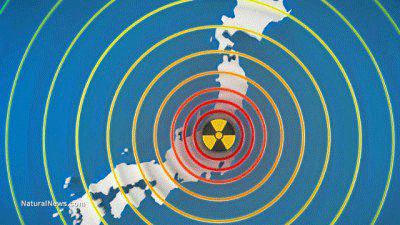
Pacific anti-nuclear advocacy groups and campaigners have condemned the Fijian Prime Minister Sitiveni Rabuka’s backing of Japan’s plans release over one million tonnes of treated nuclear wastewater into the Pacific Ocean.
On Thursday, Rabuka announced he was “satisfied” with Japan’s efforts to demonstrate that the release will be safe………………………………..
the Alliance for Future Generation Fiji [https://www.afgfiji.org/post/afg-condemns-fijipm-support-for-fukushima-wastewater said it was “deeply concerned” and “condemned” Rabuka’s stance.
The group is urging Rabuka to reconsider “and take a stronger position” on the issue.
AFG Fiji said releasing treated nuclear wastewater into the Pacific Ocean would have “far-reaching consequences for the entire Pacific region and beyond”.
“This action has the potential to inflict lasting damage to marine ecosystems, threatening the livelihoods of countless communities that depend on the ocean for sustenance and economic well-being. Our concerns regarding this matter are deeply rooted in the Pacific Ocean as a source of identity for all Pacific communities,” it said.
“We urge the Fiji Prime Minister and by extension, his government, to reconsider its stance and take a stronger position in advocating for the implementation of alternative, safe, and sustainable solutions for the Fukushima nuclear wastewater.
“We also urge Pacific leaders to trust the independent panel of scientific experts, appointed by the Pacific Islands Forum to review the data and information provided by Japan. As members of the global community, it is our collective responsibility to uphold principles of environmental stewardship and to prioritize the health and safety of our oceans and the lives they sustain,” the NGO said.
The campaigners are also calling on the international community to show solidarity and “demand that Japan seeks alternative solutions to handle its nuclear waste responsibly”. https://www.rnz.co.nz/international/pacific-news/495162/anti-nuclear-group-condemns-sitiveni-rabuka-s-fukushima-wastewater-stance
Why is Ontario Government bent on building a new nuclear reactor, at a much greater cost than solar or wind technologies?
Ontario Power Generation (OPG), which is 100% owned by the Government of
Ontario, is proposing to build a first of its kind GE-Hitachi 300 megawatt
(MW) boiling water reactor at its Darlington Nuclear Station, east of
Oshawa.
OPG has still not submitted GE-Hitachi’s proposed reactor design
to the Canadian Nuclear Safety Commission for review and potential
approval, despite claiming that construction of the reactor will be
completed by 2028.
According to Lazard, one of the most respected names in
global financial services, the cost of electricity from a new nuclear
reactor is 1.7 times greater than the cost of offshore wind, three times
greater than the cost of solar power, and 3.6 times greater than the cost
of onshore wind.
Clean Air Alliance 3rd Aug 2023
Saudi Arabia could convert civilian nuclear to military, Israeli expert warns

Former deputy head of Atomic Energy Commission fears that Riyadh’s demand to enrich uranium as part of Israel normalization deal may open ‘Pandora’s box,’ launch Mideast arms race
Times of Israel, By TAL SCHNEIDER2 August 2023,
Illustrative: A US nuclear bomb test at the Marshall Islands, 1954. (Wikicommons/US Department of Energy)
A former top official for the Israel Atomic Energy Commission has warned that agreeing to Saudi Arabia’s demand to be allowed to build a nuclear power plant as part of a normalization deal with Israel may create a dangerous international precedent and effectively prompt a nuclear arms race in the Middle East.
“It won’t matter how many guarantees we receive from the International Atomic Energy Agency,” Ariel (Eli) Levite, who served as principal deputy director general for policy at Israel’s Atomic Energy Commission from 2002 to 2007, told Zman Israel, The Times of Israel’s Hebrew-language sister site, on Monday.
Saudi Arabia has reportedly set three conditions for signing a normalization agreement with Israel — access to advanced American defense technology such as the THAAD missile system, the establishment of a defense alliance with the United States, and a green light to develop nuclear power for civilian purposes.
…………………………………………………. “If Saudi Arabia builds a reactor, they can only place it near the Red Sea, because a reactor needs large amounts of water for cooling, and if a disaster or terrorist attack occurs there it won’t be a simple matter — for us too, since we are not far away,” – Levite, the former Atomic Energy Commission deputy director
Illustrative: A US nuclear bomb test at the Marshall Islands, 1954. (Wikicommons/US Department of Energy)
A former top official for the Israel Atomic Energy Commission has warned that agreeing to Saudi Arabia’s demand to be allowed to build a nuclear power plant as part of a normalization deal with Israel may create a dangerous international precedent and effectively prompt a nuclear arms race in the Middle East.
“It won’t matter how many guarantees we receive from the International Atomic Energy Agency,” Ariel (Eli) Levite, who served as principal deputy director general for policy at Israel’s Atomic Energy Commission from 2002 to 2007, told Zman Israel, The Times of Israel’s Hebrew-language sister site, on Monday.
Saudi Arabia has reportedly set three conditions for signing a normalization agreement with Israel — access to advanced American defense technology such as the THAAD missile system, the establishment of a defense alliance with the United States, and a green light to develop nuclear power for civilian purposes.
Binary Options Fraud – ToI journalist Simona Weinglass’ storyPauseNext playlist itemUnmute
Loaded: 49.91%Picture-in-PictureFullscreenClose
For the last demand, National Security Adviser Tzachi Hanegbi said Monday that Israel’s approval would not be required.
“Dozens of countries operate civilian nuclear programs. This is not something that endangers them or their neighbors,” Hanegbi told the Kan public broadcaster, adding that the issue would be solely between Washington and Riyadh.
Get The Times of Israel’s Daily Editionby email and never miss our top storiesNewsletter email addressGET IT
By signing up, you agree to the terms
Levite, the former Atomic Energy Commission deputy director, said there was no problem with nuclear reactors for energy production as long as they are properly maintained. However, he cautioned, “If a security or operational failure occurs, there can be an enormous environmental fallout. We know this from several incidents in the past, such as Chernobyl and Fukushima” — two severe nuclear leaks in Ukraine in 1986 and Japan in 2011.
“If Saudi Arabia builds a reactor, they can only place it near the Red Sea, because a reactor needs large amounts of water for cooling, and if a disaster or terrorist attack occurs there it won’t be a simple matter — for us too, since we are not far away,” he added.
Ariel (Eli) Levite speaking at a conference at the Reichman Institute in Herzliya, 2019. (YouTube screenshot via Zman Israel; used in accordance with Clause 27a of the Copyright Law)
Israel is also worried about the possibility of a civilian reactor being converted for military applications, Levite noted.
He said the biggest problem with Riyadh’s demand was that “they’re not satisfied with reactors for energy purposes, but are also interested in a uranium enrichment program. This is the most problematic and sensitive part of the deal that may be currently in the making.”…………………………………. more https://www.timesofisrael.com/saudi-arabia-could-convert-civilian-nuclear-to-military-israeli-expert-warns/
UK’s Radioactive Waste Management holds meetings in Lincolnshire, seeking a location for nuclear waste dump
Geologists and nuclear scientists will be speaking about nuclear waste
disposal as part of a consultation. A former gas terminal in Theddlethorpe,
near Mablethorpe in Lincolnshire, was identified as a potential location
for an underground disposal site.
Radioactive Waste Management (RWM), a
government agency, is looking at the suitability of possible sites across
the country. The discussion sessions will take place at venues in
Lincolnshire. The events aim to give people an opportunity to find out what
is involved in geological disposal and the process of finding a potential
site for a Geological Disposal Facility (GDF) in the area, according to the
agency.
The GDF would see waste being stored under up to 1,000m of solid
rock until its radioactivity had naturally decayed.
” The sessions will feature a model of what
the GDF could look like as well as items including fuel rods, geological
rock samples, maps and information boards. The events take place on 4
August at Louth Town FC in Louth from 17:00 BST to 20:00, on 5 August at
Mablethorpe Community Hall from 11:00 to 14:00, on 8 August at Gayton Le
Marsh Village Hall from 17:00 to 20:00, on 9 August at Legbourne Village
Hall from 17:00 to 20:00 and on 11 August at St Mary’s Church Hall,
Mablethorpe from 17:00 to 20:00.
BBC 4th Aug 2023
1 This Month
23-25 October – on Zoom – World BEYOND War’s annual global conferenc


Shut down the radiation-damaged Heysham nuclear reactors now
To see nuclear-related stories in greater depth and intensity – go to https://nuclearinformation.wordpress.com

Say No to NASA’s Reckless Nuclear Reactor on the Moon
Say No to NASA’s Reckless Nuclear Reactor on the Moon

-
Archives
- October 2026 (209)
- September 2026 (339)
- August 2026 (330)
- July 2026 (355)
- June 2026 (287)
- May 2026 (306)
- April 2026 (356)
- March 2026 (251)
- February 2026 (267)
- January 2026 (308)
- December 2025 (358)
- November 2025 (359)
-
Categories
- 1
- 1 NUCLEAR ISSUES
- business and costs
- climate change
- culture and arts
- ENERGY
- environment
- health
- history
- indigenous issues
- Legal
- marketing of nuclear
- media
- opposition to nuclear
- PERSONAL STORIES
- politics
- politics international
- Religion and ethics
- safety
- secrets,lies and civil liberties
- spinbuster
- technology
- Uranium
- wastes
- weapons and war
- Women
- 2 WORLD
- ACTION
- AFRICA
- Atrocities
- AUSTRALIA
- Christina's notes
- Christina's themes
- culture and arts
- Events
- Fuk 2022
- Fuk 2023
- Fukushima 2017
- Fukushima 2018
- fukushima 2019
- Fukushima 2020
- Fukushima 2021
- general
- global warming
- Humour (God we need it)
- Nuclear
- RARE EARTHS
- Reference
- resources – print
- Resources -audiovicual
- Weekly Newsletter
- World
- World Nuclear
- YouTube
-
RSS
Entries RSS
Comments RSS

