The decommissioning of an old nuclear power plant at Fort Greely can move forward now that the federal agency overseeing the project has resolved a contract dispute that delayed work for more than a year.
Work on the final phase of decommissioning and dismantling the long-mothballed SM-1A heat and power plant has been on hold since late last year, when a company that was competing for the contract began filing protests over how the Army Corps of Engineers handled the bid proposals…………………………………………………………………………………………
Barber said the year-long, back-and-forth process of reviewing and re-evaluating the proposals means the completion date of the project also will be pushed back by a year.
“So we’re looking at 2029, at this point,” she said, adding that it’ll take a while for A3D to begin work on the facility……………..
The SM-1A’s highly enriched uranium dioxide fuel and most highly radioactive components of the facility were removed after it was shut down in 1972. Remaining materials have been entombed in concrete or safely stored onsite. Much of that will be removed as part of the contract with A3D……
The vehicles’ Stryker-type armor may not be suitable in a combat environment, the outlet’s report suggests
A Ukrainian brigade, which Forbes magazine had described as Kiev’s “most powerful unit” at the front lines, has lost 10% of its valuable mine-clearing vehicles just a week since joining the push against Russian defense lines, the outlet has reported.
The 2,000-soldier 82nd Air Assault Brigade, which is armed with four British-made Challenger 2 tanks, 40 German-made tracked Marder infantry fighting vehicles and 90 wheeled Stryker infantry fighting vehicles, had been kept in reserve until last week. It has since “written off” at least two of its 20 or so M1132 Engineer Squad Vehicles, Forbes reported on Tuesday.
The M1132 is a variant of the Stryker vehicle, which is equipped with mine rollers and is meant to clear a path through a minefield for advancing forces. The loss was hardly surprising, the report suggested, considering the role of the armor and its relatively weak protection.
Normally, minefield-breaching vehicles have the chassis of a tank. The M1132, though better suited for transportation by air, is vulnerable to enemy fire and should ideally be used in surprise assaults where there is little resistance, Forbes writer David Axe explained.
The report is based on images of the destroyed vehicles circulating online. The publication noted that it was unclear how exactly they were neutralized or whether their crews had survived. The “good news,” Axe noted, is that the US Army “has hundreds more Strykers in storage” and can supply more to Ukraine.
The 82nd was deployed to the front line in the contested Zaporozhye Region and is involved in Ukraine’s push towards the village of Rabotino, which lately has seen some intensive fighting.
Kiev has rebuked media coverage of the maneuver. Deputy Defense Minister Anna Malyar declared on Monday that “the price of the headlines” of such published articles was “five airstrikes a day” targeting the brigade. She also threatened criminal prosecution for disclosing information about movements of Ukrainian troops.
Evgeny Balitsky, the Russian official who is serving as acting head of the region, reported on Tuesday that, in ten days, Kiev had lost some 1,500 troops and “countless military vehicles” in the area.
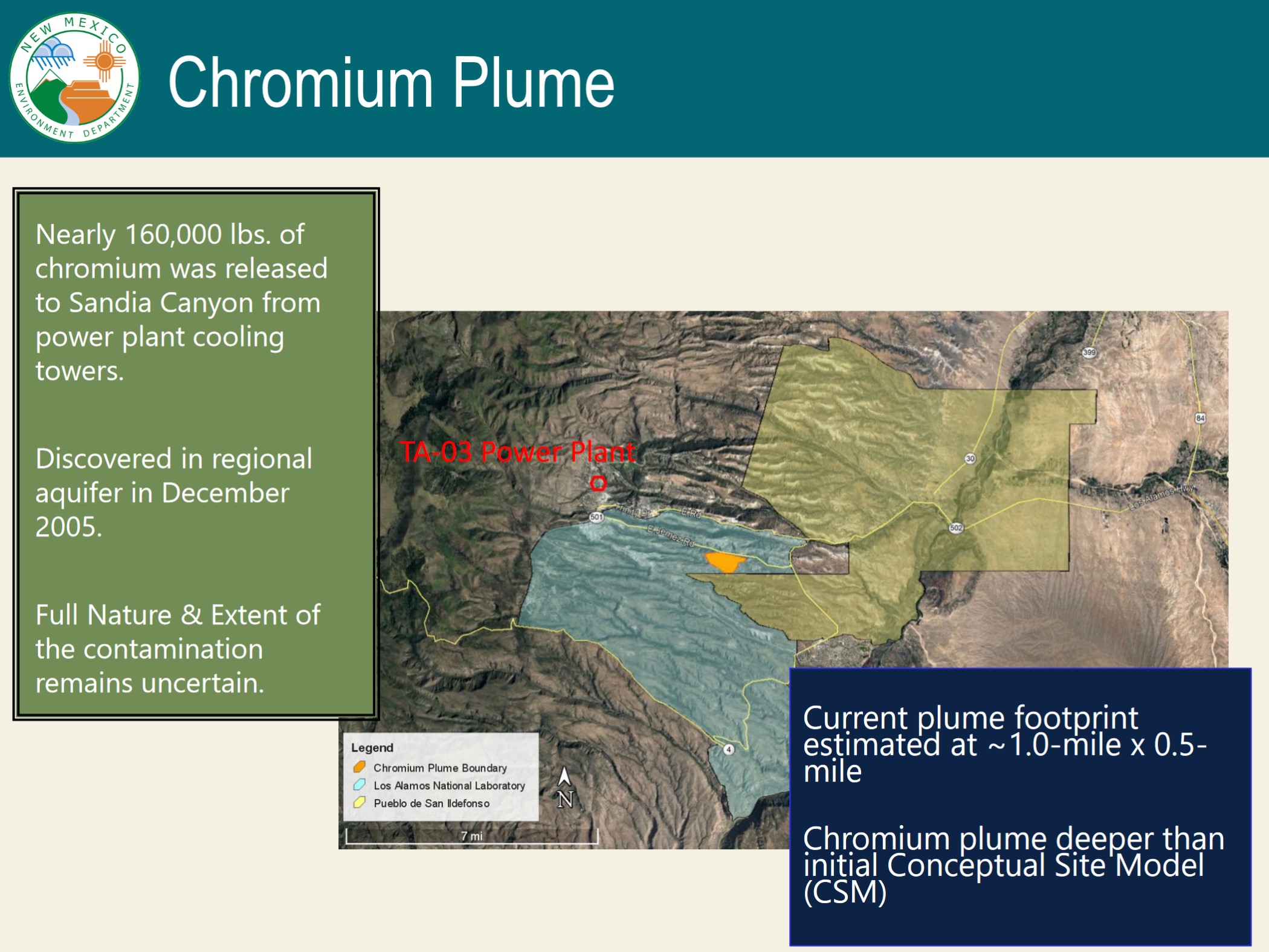
Did you know that in 2008 the Environmental Protection Agency (EPA) designated the 3,000 square mile Española Basin System as a Sole Source Drinking Water Aquifer? https://www.epa.gov/dwssaOne ongoing concern is that Los Alamos National Laboratory (LANL) sits on its western edge, near the Valles Caldera. And a recent dispute between the New Mexico Environment Department and the Department of Energy about the LANL hexavalent chromium plume, which is being pushed deeper into the regional drinking water aquifer, highlights the need for state agencies to have the resources to protect it. See Powerpoint presentations titled “DOE-Los Alamos Field Office (1)” and “NMED Hex Chrome Plume” under Item 1.
On Monday, August 21st CCNS requested that a New Mexico Legislative Committee provide funding to key state agencies to protect this aquifer from LANL pollutants, which are migrating through the aquifer to the Rio Grande and beyond. The request to the New Mexico Radioactive and Hazardous Materials Committee was for line items for the budgets of the Office of the State Engineer and New Mexico Environment Department. See CCNS presentation “Concerned Citizens for Nuclear Safety” under Item 1. https://www.nmlegis.gov/committee/Handouts_List?CommitteeCode=RHMC&Date=8/21/2023
An important history: In 2006, La Cienega Valley Citizens for Environmental Safeguards and geo-hydrologist Zane Spiegel submitted a petition to the Environmental Protection Agency (EPA) to designate the area as a sole source aquifer. They argued that the aquifer supplies at least 50 percent of the drinking water for its service area and there are no reasonably available alternative drinking water sources should the aquifer become contaminated. The aquifer encompasses the area between the Jemez and Sangre de Cristo Mountains, from Tres Piedras to the north almost to Galisteo to the south.
Then, in 2008, after EPA determined that 85% of the drinking water in the area covered by the petition comes from wells in the aquifer, EPA approved the application and designated the aquifer as a sole source drinking water aquifer. http://www.nuclearactive.org/news/011808.html
The threat posed to the Española Basin Sole Source Aquifer by the hexavalent chromium contamination encouraged CCNS to ask for legislative oversight by providing funding to the Office of State Engineer and New Mexico Environment Department.
It is important to note that three of the Los Alamos County drinking water wells are located close to the known perimeter of the hexavalent chromium plume.
“technical difficulty involving the decommissioning is much higher” than the water release and involves higher risks of exposures by plant workers to remove spent fuel or melted fuel.
Some experts say it would be impossible to remove all the melted fuel debris by 2051 and would take 50-100 years, if achieved at all.
BY MARI YAMAGUCHI, August 27, 2023
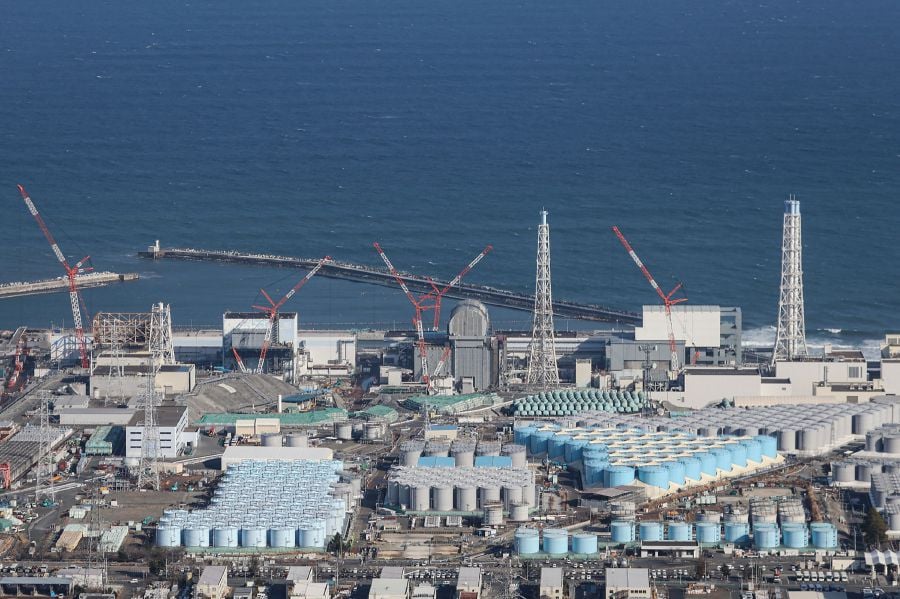
FUTABA, Japan (AP) — For the wrecked Fukushima Daiichi nuclear plant, managing the ever-growing volume of radioactive wastewater held in more than 1,000 tanks has been a safety risk and a burden since the meltdown in March 2011. Its release marks a milestone for the decommissioning, which is expected to take decades.
But it’s just the beginning of the challenges ahead, such as the removal of the fatally radioactive melted fuel debris that remains in the three damaged reactors, a daunting task if ever accomplished.
Here’s a look at what’s going on with the plant’s decommissioning:
…………………………………………………… WILL THE WASTEWATER RELEASE PUSH DECOMMISSIONING FORWARD?
Not right away, because the water release is slow and the decommissioning is making little progress. TEPCO says it plans to release 31,200 tons of treated water by the end of March 2024, which would empty only 10 tanks out of 1,000 because of the continued production of wastewater at the plant.
The pace will later pick up, and about 1/3 of the tanks will be removed over the next 10 years, freeing up space for the plant’s decommissioning, said TEPCO executive Junichi Matsumoto, who is in charge of the treated water release. He says the water would be released gradually over the span of 30 years, but as long as the melted fuel stays in the reactors, it requires cooling water, which creates more wastewater.
Emptied tanks also need to be scrapped for storage. Highly radioactive sludge, a byproduct of filtering at the treatment machine, also is a concern.
WHAT CHALLENGES ARE AHEAD?
About 880 tons of fatally radioactive melted nuclear fuel remain inside the reactors. Robotic probes have provided some information but the status of the melted debris remains largely unknown.
Earlier this year, a remote-controlled underwater vehicle successfully collected a tiny sample from inside Unit 1’s reactor — only a spoonful of the melted fuel debris in the three reactors. That’s 10 times the amount of damaged fuel removed at the Three Mile Island cleanup following its 1979 partial core melt.
Trial removal of melted debris using a giant remote-controlled robotic arm will begin in Unit 2 later this year after a nearly two-year delay. Spent fuel removal from Unit 1 reactor’s cooling pool is set to start in 2027 after a 10-year delay. Once all the spent fuel is removed, the focus will turn in 2031 to taking melted debris out of the reactors. But debris removal methods for two other reactors have not been decided.
Matsumoto says “technical difficulty involving the decommissioning is much higher” than the water release and involves higher risks of exposures by plant workers to remove spent fuel or melted fuel.
“Measures to reduce radiation exposure risks by plant workers will be increasingly difficult,” Matsumoto said. “Reduction of exposure risks is the basis for achieving both Fukushima’s recovery and decommissioning.”
HOW BADLY WERE THE REACTORS DAMAGED?
Inside the worst-hit Unit 1, most of its reactor core melted and fell to the bottom of the primary containment chamber and possibly further into the concrete basement. A robotic probe sent inside the Unit 1 primary containment chamber found that its pedestal — the main supporting structure directly under its core — was extensively damaged.
Most of its thick concrete exterior was missing, exposing the internal steel reinforcement, and the nuclear regulators have requested TEPCO to make risk assessment.
CAN DECOMMISSIONING END BY 2051 AS PLANNED?
The government has stuck to its initial 30-to-40-year target for completing the decommissioning, without defining what that means.
An overly ambitious schedule could result in unnecessary radiation exposures for plant workers and excess environmental damage. Some experts say it would be impossible to remove all the melted fuel debris by 2051 and would take 50-100 years, if achieved at all.
The film Oppenheimer has shone a global spotlight on the dawn of US nuclear weapons tests. In the Marshall Islands, where 23 of those earth-shattering blasts happened, people have never been able to forget
t first glance, the aquamarine waters that surround the Marshall Islands seem like paradise. But this idyllic Pacific scene hides a dark secret: it was thelocation of 67 nuclear detonations as part of US military tests during the cold war between 1946 and 1958.
The bombs were exploded above ground and underwater on Bikini and Enewetak Atolls, including one device 1,100 times larger than the Hiroshima atom bomb. Chernobyl-like levels of radiation forced hundreds from their homes. Bikini Atoll remains deserted. At the US government’s urging, residents have begun returning slowly to Enewetak.
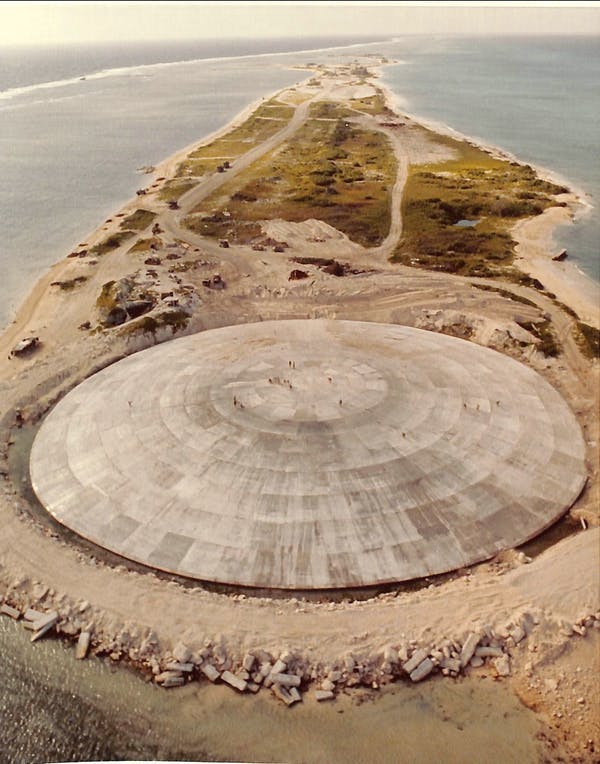
Today, there is little visible evidence of the tests on the islands except for a 115-metre (377ft)-wide cement dome that locals nickname the Tomb – for good reason.
Built in the late 1970s and now aged and cracking, the huge concrete lid on Runit Island covers more than 90,000 cubic metres (3.1m cubic ft) – or roughly 35 Olympic-sized swimming pools – of radioactive soil and nuclear waste. Unbeknown to the Marshallese people, the US shipped the waste from Nevada, where it was testing nuclear weapons on Native American land.
The legacy of America’s nuclear testing on Indigenous communities both on the US mainland and its territories has come under renewed scrutiny with the release of Oppenheimer, the blockbuster film about the physicist who led development of the atomic bomb.
Although his team tested the nuclear weapons on Native American land – there were 928 large-scale nuclear weapons tests in Nevada, Utah and Arizona during the cold war, dispersing huge clouds of radioactive material – the film never mentions the impact of the testing on the local Native Americans.
“The film completely ignores the experiences of our people,” says Ian Zabarte, principal man of the Western Bands of the Shoshone Nation – who have been described as “the most bombed nation on earth”
Zabarte is attempting to forge connections with those Pacific Islanders who were similarly affected by nuclear testing. Earlier this year, he met representatives from the Marshall Islands when they visited Nevada to discuss the effects on their health from nuclear weapons testing.
“The health impacts on our people have never been investigated,” Zabarte says. “We have never received an apology, let alone any kind of compensation.”
Separately, a band of Marshallese activists are now sailing around the country’s 29 atolls, along with artists and climate scientists, on a 12-day tour that aims to raise awareness of nuclear testing on the archipelago.
The 520-mile ocean voyage is being operated by Cape Farewell, a cultural programme founded by the British artist David Buckland and funded by the Waverley Street Foundation, Laurene Powell Jobs’s climate charity.
“Cancers continue from generation to generation,” says Alson Kelen, a master navigator and community elder who grew up on Bikini Atoll and is joining the expedition.
“If you ask anyone here if there’s a legacy of nuclear impact on their health, the answer would be yes. The Marshall Islands Nuclear Claim Tribunal has a list of cancers that are related to nuclear throughout our people. These cancers are hereditary.”
The US maintains that the Marshall Islands are safe. It seized them from Japan in 1944, and eventually granted the islands independence in 1979, but the fledgling nation remained in “free association” with the US. Under this system, along with Micronesia and Palau, the Marshall Islands are self-governing but economically remain largely dependent on Washington, which also retains a military presence. Today it continues to use the US dollar, and American aid still represents a large percentage of its GDP.
In 1988, an independent international tribunal was established to adjudicate between the two countries, and it later ordered the US to pay $2.3bn (£1.8bn) to the Marshall Islands in healthcare and resettlement costs.
The US government has refused, arguing that its liabilities ended when it paid $600m in the 1990s. In 1998, the US stopped providing medical care for cancer-stricken islanders, leaving many in financial hardship.
The agreement is up for renegotiation this year, and the Marshallese hope they will have stronger negotiating power with the US now that China is showing an interest in the islands due to their strategic location. The islanders are pushing for the $2.3bn they feel they are owed, and a cleanup of the Runit Dome, which is at risk of collapsing due to rising sea levels and the natural ageing of concrete structures.
“Of course it’s going to break,” says Stephen Palumbi, a Stanford University marine scientist who led a research trip to the islands in 2016. “What else can you expect? You can’t just build something like that and walk away from it and expect it to stay there. You wouldn’t do that with your patio.”
According to a 2019 investigation by the LA Times, many US military personnel present at the construction of Runit Dome realised that radioactive material was leaking from it, and would continue to do so – yet did not alert the Marshallese government.
The threat to the Tomb is particularly acute because the islands, which lie just 2 metres above sea level on average, are very vulnerable to rising sea levels. The country’s capital, Majuro, is highly likely to be at risk of frequent flooding, according to a World Bank study.
It is not clear what will happen to the environment when the Tomb crumbles, and has also been hard to track how the ecosystem has behaved over time as “there’s just not many people” on Bikini Atoll to even casually monitor changes, Palumbi says.
But a 2012 United Nations report said the effects of radiation on the Marshall Islands are long-lasting and have caused “near-irreversible environmental contamination”.
On Palumbi’s visit, locals warned his team not to eat the coconuts – which are radioactive due to the contaminated groundwater – or the coconut crabs that feed on them. “You do not grow crops, you do not eat coconut, you do not drink the water,” Palumbi says.
In general, it has been shown that nuclear blasts represent an extreme threat to local biodiversity. A 1973 US government-funded study on nuclear testing in Alaska found both immediate harm and long-term damage to marine species: fish exploded when their gas-filled swim bladders reacted to the change in pressure underwater, and hundreds of sea otters were also killed instantly.
Researchers have recently found that sea turtle shells can be used to study nuclear contamination, with traces of uranium found in animals not born when testing in the Pacific Islands ended. The turtles are thought to accumulate human-made radionuclides in their bony outer shell, which is usually made of keratin, through the food chain by eating uranium-contaminated algae.
Japan recently announced it would start dumping waste from the Fukushima nuclear power plant, which had meltdowns in 2011, into the ocean. Although the UN’s nuclear watchdog says it is safe to do so, there are fears that there is still not enough understanding of how radioactive nuclear waste affects the ecosystem to be sure of this.
Palumbi notes that the resilience of the ocean is impressive, with corals regrowing on the Marshall Islands as soon as 10 years after the bombs were exploded. “This is the most destructive thing we have ever done to the ocean, dropping 23 atomic bombs on it, yet the ocean is really striving to come back to life.”
There are, however, eerie reminders of what happened decades ago, including a fine talcum powder-like sediment covering the reefs – and still-visible damage to the reef itself. “On the inside of the lagoon, where the actual bombs were, it’s still an amazing mess,” Palumbi says. “The reef has cracked in half, and you realise that it was the bomb.”
Kelen says he would not trust anyone who says releasing nuclear material into the water is safe. “Everybody who has talked to me about nuclear has been lying,” he says. This, he says, includes the US “who promised our islands were safe to live in. This continues. I do not trust politicians who say this will be OK.”
Zabarte, who has numerous family members who have died of cancer, is similarly concerned about the long-term impacts of radiation. “My people have nowhere to go,” he says. “We have to stay there, exposing ourselves on a daily basis. We have no choice.”
“We have to keep repeating this story,” says Kelen. “We have forever been moved around by people who make decisions over us, telling us our lives will be safe and how to live. But no matter what life has thrown at us, from nuclear testing to rising sea levels, our home and life are very much still here.
“We live this story, and it informs us culturally, but we do not let it define who we are.”
As a crowning irony, the Nuclear Alliance is led by France, whose own national law … excludes atomic energy from being classified as a green investment.
In March 2021, seven nuclear member states sent a letter to the European Commission demanding the inclusion of nuclear energy in the taxonomy. When a team of independent journalists took the letter’s statements apart it found that of the 25 factual claims in the letter, 20 were either fictitious or misleading
The European Commission, under the presidency of Ursula von der Leyen, has officially declared climate policy as its number one priority.
But the end of August, in the European General Court in Luxembourg, marks the conclusion of the first phase of one of three lawsuits against the European Commission targeting a key piece of European Green Deal legislation.
These lawsuits were brought not by opponents of climate mitigation policy, but by those, including Austria and a number of environmental groups, who wish to rescue the legislation from what they see as its being fatally compromised.
The pleading in the cases is aimed at revoking the Complementary Climate Delegated Act (CCDA), in force since this January.
This supplements the Taxonomy Regulation, a list of economic activities considered sustainable and thus eligible for green investment, to include, astonishingly, natural gas and nuclear power.
What has led to this situation, in which the EU executive, ostensibly dedicated to achieving its “Fit by 55” plan to substantially reduce greenhouse emissions by 2030, finds itself challenged on its showpiece Green Legislation by one of its own member states?
The answer readily supplied by critics is that it is an appropriate response to one of the most conspicuous triumphs of greenwashing foisted on the public.
The inclusion of gas and nuclear, they say, violates the entire purpose of the Taxonomy Regulation.
The media dropped the ball
This hijacking of the EU’s key instrument of green policy has been openly accomplished through a campaign of misinformation conducted by the nuclear lobby.
In March 2021, seven nuclear member states sent a letter to the European Commission demanding the inclusion of nuclear energy in the taxonomy.
The intervention got some attention from news media at the time, but it was not of a critical kind.
When a team of independent journalists took the letter’s statements apart it found that of the 25 factual claims in the letter, 20 were either fictitious or misleading
Workaday mainstream journalists with tight deadlines to meet certainly haven’t always been keen to delve into all the nooks and crannies of a complicated story or take the responsibility to come down trenchantly on one side of an issue.
But something more insidious has emerged in recent decades: a paralysis in the face of debate, a willingness to report the scientific controversy and to present both sides in a “fair and balanced” way which gives equal time to the consensus of experts and the hype of hucksters.
Like retired journalist Jay Rosen said, “You don’t get a lot of complaints if you just write down what everyone says and leave it at that.”
But this serves the purposes of disinformation, which is not to convince, but to confuse and demoralise. Ultimately, it disables any organised effort to change things.
The Nuclear Seven’s claims are, in fact, dubious
When a team of independent journalists took the letter’s statements apart it found that of the 25 factual claims in the letter, 20 were either fictitious or misleading, including the usual dubious assertions about nuclear’s “valuable contribution” to climate neutrality.
However, the conclusions of the crowd-sourced investigation did not find a publisher among the European outlets and went largely unnoticed.
The letter by the Nuclear Seven — France, Poland, Hungary, Czechia, Romania, Slovakia and Slovenia — was bolstered ten days later by the release of a draft report by the European Commission’s Joint Research Centre (JRC).
The extent of the influence of the Nuclear Seven and the JRC report on the ultimate decision to formally label nuclear as sustainable is unclear, but likely decisive.
It had been assigned to determine whether nuclear power met the criteria for inclusion in the taxonomy, specifically, the Do No Significant Harm principle. This, in spite of the trifling fact that the JRC was established under the Euratom Treaty and is still tasked with conducting nuclear research under the aegis, and with the funding, of Euratom.
The report concluded that there was no “science-based evidence” that nuclear could do more harm to the environment than other activities in the taxonomy.
o no one’s surprise; but to considerable criticism from experts, including one of Germany’s nuclear regulatory authorities, and from the European Commission’s own Scientific Committee on Health, Environment and Emerging Risks, both of whom pointed out that the report’s conclusions were not supported by the report’s own findings.
Others noted that the JRC mandate neglected many critical taxonomy elements. In spite of these severe strictures, when the final JRC report was published a few months later it contained no revisions.
Nuclear lobby’s swagger
The extent of the influence of the Nuclear Seven and the JRC report on the ultimate decision to formally label nuclear as sustainable is unclear, but likely decisive.
And buoyed up by this, the EU’s successful nuclear lobby has been conducting itself with noticeable swagger.
From the seven signatories of the 2021 letter, the Nuclear Alliance, as it is now known, has expanded to 14 EU countries with the addition, in February, of Bulgaria, Croatia, Finland and the Netherlands, followed by Belgium, Estonia and Sweden, with Italy as an observer.
As a crowning irony, the Nuclear Alliance is led by France, whose own national law … excludes atomic energy from being classified as a green investment.
Now representing a majority in the EU, the Alliance has been emboldened to demand, at their fourth meeting in Spain on 11 July, that nuclear energy should be treated equally with renewables when it comes to EU funding and the promotion of joint projects.
Under their banner of “tech neutrality” — an echo from the 2021 letter — the Alliance has already successfully lobbied for the acceptance of nuclear-produced “pink hydrogen” as “green hydrogen” and managed to wring important concessions in the revision of the Renewable Energy Directive, which would almost double the share renewable in the EU’s overall energy consumption by 2030.
These concessions allow for a greater role of nuclear power in meeting these targets.
Everything goes as sustainability loses its essence
As a crowning irony, the Nuclear Alliance is led by France, whose own national law — a 2015 decree on the “Energy and Ecological Transition for Climate” label — excludes atomic energy from being classified as a green investment.
In “Diversion from urgent climate action”, WISE’s nuclear expert Jan Haverkamp makes the case that vigorous nuclear industry lobbying in Brussels has had a “direct influence on the speed with which urgent climate action is taken”, slowing down the adoption of renewable energy sources, which is a boon for the fossil fuel industry.
Sustainability having lost its meaning, everything is allowed. And so, living in the Upside Down, we are witness to the triumph of the nuclear lobby.
Sustainability having lost its meaning, everything is allowed.
And so, living in the Upside Down, we are witness to the triumph of the nuclear lobby.
In the post-CCDA landscape, the nuclear zombies have acquired a new green sheen as they shamble and shuffle pointlessly, consuming all the oxygen in the climate policy conversation until they ultimately expire in obscene cost overruns and non-delivery of their boastfully promised but illusory results.
The chief problem with the Price-Anderson Act is the difference in how the law affects the public and the nuclear firms. In view of federal preemption of nuclear licensing, the public has essentially no say in the siting of a nuclear power plant and so must accept the associated accident risk. Nuclear vendors, however, are freed from all liability for offsite consequences of a nuclear accident, and so have nothing to worry about, either financially or legally.
On the night of July 27, the US Senate passed the National Defense Authorization Act for fiscal year 2024. The Senate-approved bill included a 20-year extension of the Price-Anderson Nuclear Industries Indemnity Act, which provides that if there are any offsite lives and property lost in a severe reactor accident, nuclear industry manufacturers and builders cannot be held liable. The extension of the act also includes another controversial provision—the adequacy of funds provided by the act for compensating victims of a nuclear accident.
The approval last month of this extension came without any public hearings and was introduced in Congress in a rather troubling manner. The extension’s backers, knowing it would face rough sledding in an open hearing, first attached it to the Accelerating Deployment of Versatile, Advanced Nuclear for Clean Energy (ADVANCE) Act of 2023, which was then placed on the Senate legislative calendar on July 10 and added to the “must-pass” National Defense Authorization Act. While it has yet to pass the House, the act bears powerfully on the country’s commitment to nuclear energy, and especially on safety standards for nuclear power plants and therefore should not escape public scrutiny.
The Price-Anderson Act was first approved in 1957, soon after the Atomic Energy Act of 1954 permitted private nuclear energy activity. Firms like General Electric and Westinghouse, among others, told Congress they would not build commercial nuclear power plants—a technology with which there was essentially no experience—if they faced vast liability for possible accidents. To promote rapid investment in nuclear power plants, the government gave the builders and vendors freedom from liability for offsite accidents. It added provisions for public compensation after a catastrophic accident. But both provisions need updating in view of what we have learned in the last 60-odd years.
The act currently provides about $13 billion for post-accident public compensation, with the funds coming over time from a self-insurance scheme funded by the owners of nuclear power plants. But the estimated cost of the 2011 Fukushima accident—several hundred billion dollars—dwarfs the Price-Anderson amount. Yet, there is more. If an accident was to lead to widespread and long-term nuclear plant shutdowns, as occurred in Japan, it isn’t clear the owners would be able to meet their financial obligations. What’s clear is that after a severe nuclear accident, the issue of compensation would land in the lap of Congress.
At a 2014 Nuclear Regulatory Commission hearing on a safety upgrade for the 19 US plants essentially identical to the ones at Fukushima, the staff of the US Nuclear Regulatory Commission (NRC) told the commissioners that a fire in only one of the pools in which nuclear plants store highly radioactive used fuel could release much more radioactivity, conceivably 20 times more, than in the 2011 Fukushima accident. The commissioners at the time dismissed the concern on grounds that such an event was so improbable it failed the NRC’s cost-benefit analysis. But, however remote, the possibility remains.
The chief problem with the Price-Anderson Act is the difference in how the law affects the public and the nuclear firms. In view of federal preemption of nuclear licensing, the public has essentially no say in the siting of a nuclear power plant and so must accept the associated accident risk. Nuclear vendors, however, are freed from all liability for offsite consequences of a nuclear accident, and so have nothing to worry about, either financially or legally.
According to the NRC, calculations using “probabilistic risk assessment” serve as proof that the probability of severe nuclear accidents at US nuclear plants is extremely remote. But large nuclear vendors like General Electric and Westinghouse evidently don’t believe these numbers; otherwise, they would accept liability and would not fear risking their stockholders’ investment. If reactor builders won’t accept paying for the consequences of a possible nuclear accident, why then should members of the public, whose health and communities would be affected?……………………………………………………….
The current exuberance over “advanced” reactors” has some of the same boosterish markings as the earlier AEC episode, with the advocates so sure they are right that they think cutting corners is okay—like dispensing with public hearings on Price-Anderson Act extension.
The Price-Anderson Act extension is part of a larger program that would pull out the stops on granting generous subsidies to private nuclear firms, speeding approvals of nuclear license applications and promoting nuclear reactor exports—all supposedly in the interest of “reestablishing America’s preeminence as the global leader in nuclear energy in the 21st century.”
At the start of the latest stage in the war in Ukraine, in February 2022, Ukrainian President Volodymyr Zelenskyy urged supporters of his cause and the cause of Ukrainians throughout the West to stop cheering for the war and make themselves feel strong and powerful and Churchillian by doing so on social media and instead go to Ukraine and pick up arms to help them fight against the Russian army, based on the argument, among many, that Ukraine has far fewer people to fight against the much more populous country of Russia. Unsurprisingly, very few of our pack of Western world cheerleaders in the media or political and punditry classes heeded Zelensky’s pleas.
Very few of them actually went to Ukraine to help them fight and expel the Russians. And as a result, Ukraine, which already faces a massive disadvantage in population size as compared to Russia, has really been struggling from the start, especially now that the most trained and most aggressive fighters, a lot of them, have been removed from the battlefield, killed or wounded, they’re really struggling with an inability to match the sheer number of Russian men who are either willing or required to fight in this war.
Lately, as a result, however, President Zelenskyy has become increasingly more repressive, both in terms of banning all dissent from being expressed. He has imposed martial law, making it clear that there will be no elections until this war is over, which means he will remain in power for the foreseeable future into the indefinite future and he has really had to crack down on the attempt by Ukrainian men, increasingly, either to bribe their way out of the country or to just risk their lives fleeing the country because they don’t want to be used as cannon fodder in what they obviously regard as an increasingly futile war.
We will look at the latest events in Ukraine, including on the part of President Zelenskyy, that are increasingly anti-democratic in nature, that signifies the futility of this war effort, as well as the U.S. role, and remind you of some of the worst offenses of media propaganda that have been designed to sell this war to the West, something that plainly is eroding as a majority of Americans have decided they no longer favor any further aid.
Japan started dumping more than 1.3 million tons of radioactive water into the Pacific Ocean Thursday – and an expert has warned it ‘has the potential to cause mutations as seen in Chernobyl.
‘The wastewater is currently being held in the nation’s Fukushima nuclear plant, which is set to be decommissioned and must be cleaned to prevent accidental leaks. The contaminated water has been filtered to remove isotopes, leaving only tritium and carbon-14, which are radioactive isotopes of hydrogen and carbon that cannot be easily removed from water.
Timothy Mousseau, a researcher at the University of South Carolina, told DailyMai.com: Tritium and carbon-14, along with the other radionuclides [that cause cancer] to be released, all have the potential to cause mutations, cancers and developmental deformities, as seen in Chernobyl.’
Benjamin Netanyahu has long warned of the perils of a nuclear Middle East. Now he seems willing to allow Saudi nukes in exchange for normalization.
FP, By Azriel Bermant, a senior researcher at the Institute of International Relations Prague. 25 Aug 23
Three years ago, the tormented Israeli Prime Minister Benjamin Netanyahu found refuge from his domestic troubles with the announcement of peace agreements with the United Arab Emirates (UAE) and Bahrain which became known as the Abraham Accords. Three years on, speculation has grown in Israel over the possibility of the most significant breakthrough in regional diplomacy in 40 years: the signing of a normalization deal with Saudi Arabia.
……………………………………………………………………………. the Saudi government in Riyadh is also insisting it should be permitted to enrich uranium as part of a civil nuclear program.
This flies in the face of Israel’s long-standing attempts to prevent other countries in the region from acquiring any nuclear capability. This policy became known as the Begin Doctrine, named after then-Israeli Prime Minister Menachem Begin, who famously authorized the bombing of Iraq’s Osirak nuclear reactor in June 1981……. https://foreignpolicy.com/2023/08/24/netanyahu-saudi-mbs-nuclear-enrichment-arms-race/
Japan started releasing treated radioactive water from the wrecked Fukushima nuclear power plant into the Pacific Ocean yesterday, a polarising move that prompted China to announce an immediate blanket ban on all aquatic products from Japan.
Tokyo – Greenpeace Japan criticises the Japanese government’s announcement of the start date for radioactive water discharges from the Fukushima Daiichi nuclear station into the Pacific Ocean.
The decision disregards scientific evidence, violates the human rights of communities in Japan and the Pacific region, and is non-compliant with international maritime law. More importantly it ignores its people’s concerns, including fishermen. The Japanese government and Tokyo Electric Power Company (TEPCO) – the nuclear power plants’ operators – falsely assert that there is no alternative to the decision to discharge and that it is necessary to move towards final decommissioning. This further highlights the failure of the decommissioning plan for the nuclear plants destroyed in the 2011 earthquake, stating that tens of thousands of tons of contaminated water will continue to increase with no effective solution.
“We are deeply disappointed and outraged by the Japanese Government’s announcement to release water containing radioactive substances into the ocean. Despite concerns raised by fishermen, citizens, Fukushima residents, and the international community, especially in the Pacific region and neighboring countries, this decision has been made,” said Hisayo Takada, Project Manager at Greenpeace Japan.
The increasing volumes of and the pending release of the radioactive water demonstrate the failure of the decommissioning plan for the Fukushima Daiichi. The contaminated water will continue to accumulate for many years without effective measures to stop it. The Japanese Government and TEPCO falsely claim that discharge is the only viable option necessary for eventual decommissioning. Nuclear power generation, which experiences shutdowns due to accidents and natural disasters, and perpetually requires thermal power as a backup, cannot serve as a solution to global warming.
“The deliberate pollution of the Pacific Ocean through these radioactive waste discharges is a consequence of the 2011 nuclear disaster and Japan’s decades long nuclear power program. Instead of acknowledging the flaws in the current decommissioning plan, the ongoing nuclear crisis, and the massive amount of public funds required, the Japanese government intends to restart more nuclear reactors despite evidence of major earthquakes and safety risks. The current government energy plan fails to deliver secure and sustainable renewables such as wind and solar energy that the climate emergency demands,” said Takada.
As of 8 June 2023, there were 1,335,381 cubic meters of radioactive wastewater stored in tanks[1], but due to the failure of the ALPS (Advanced Liquid Processing System) processing technology, approximately 70% of this water will have to be processed again. Scientists have warned that the radiological risks from the discharges have not been fully assessed, and the biological impacts of tritium, carbon-14, strontium-90 and iodine-129, which will be released in the discharges, have been ignored.[2]
The International Atomic Energy Agency (IAEA) endorsed Japan’s plans for discharge. However, the IAEA has failed to investigate the operation of the ALPS, has completely ignored the highly radioactive fuel debris that melted down which continues every day to contaminate ground water – nearly 1000 cubic meters every ten days. Furthermore, the discharge plan has failed to conduct a comprehensive Environmental Impact Assessment, as required by its international legal obligations, given that there is a risk of significant transboundary harm to neighboring countries. The IAEA is not tasked with protecting the global marine environment but it should not encourage a state to violate it.
“The myth is being perpetuated that discharges are necessary for decommissioning. But the Japanese government itself admits that there is sufficient water storage space in Fukushima Daiichi.[3] Long-term storage would expose the current government decommissioning roadmap as flawed, but that is exactly what needs to happen. The Fukushima Daiichi nuclear station is still in crisis, posing unique and severe hazards, and there is no credible plan for its decommissioning,” emphasized Shaun Burnie, Senior Nuclear Specialist at Greenpeace East Asia.
Member states at the United Nations Human Rights Council in Geneva, as well as UN Special Rapporteurs, have opposed and criticized Japan’s discharge plans.[4] Japan’s discharge plans also disregard the groundbreaking Human Rights Council resolution 48/13, which in 2021 determined that it is a human right to have a clean, healthy and sustainable environment.[5] Furthermore, Japan has failed to comply with its legal obligations under the United Nations Convention for the Law of the Sea (UNCLOS), to protect the marine environment including its legal requirement to conduct a comprehensive Environmental Impact Assessment into the discharges into the Pacific Ocean, given the risk of significant transboundary harm to neighboring countries.[6]
“Instead of engaging in an honest debate about this reality, the Japanese government has opted for a false solution – decades of deliberate radioactive pollution of the marine environment – during a time when the world’s oceans are already facing immense stress and pressures. This is an outrage that violates the human rights of the people and communities of Fukushima, and other neighboring prefectures and the wider Asia-Pacific region,” said Burnie.
A new argument for considering the issue of contaminated ALPS water release .
This brief examines the amount of radioactive material that has been leaking from the Fukushima Daiichi Nuclear Power Station ever since the meltdowns occurred more than 12 years ago.
It is huge. Both TEPCO and the government are undoubtedly aware of this reality. Despite this, they are now attempting to release even the radioactive materials they have been able to manage in tanks to the outside world. While attention focuses on this release, this brief attempts to highlight the even larger problems of Fukushima Daiichi and the irresponsible way the authorities are dealing with them.
By Tessa Wong, Asia Digital Reporter, BBC News, 23 Aug 23,
Japan’s controversial plan to release treated waste water from the Fukushima nuclear plant into the Pacific Ocean has sparked anxiety and anger at home and abroad.
Since the 2011 tsunami which severely damaged the plant, more than a million tonnes of treated waste water has accumulated there. Japan has said it will start discharging it from 24 August.
Despite an endorsement from the UN nuclear watchdog, the International Atomic Energy Agency (IAEA), the plan has been deeply controversial in Japan with local communities expressing concerns about contamination.
Fishing industry groups in Japan and the wider region are also worried about their livelihoods, as they fear consumers will avoid buying seafood.
China has accused Japan of treating the ocean as its “private sewer”, and criticised the IAEA of being “one-sided”. While South Korea’s government has said it has no objections to the plan, many of its citizens are opposed to it.
So what is Japan’s plan and how exactly has it churned the waters?
What is Japan doing with the nuclear waste water?
Since the disaster, power plant company Tepco has been pumping in water to cool down the Fukushima nuclear reactors’ fuel rods. This means every day the plant produces contaminated water, which is stored in massive tanks.
More than 1,000 tanks have been filled, and Japan says that it needs the land occupied by the tanks to build new facilities to safely decommission the plant. It has also pointed out concerns that the tanks could collapse in a natural disaster.
Releasing treated waste water into the ocean is a routine practice for nuclear plants – though critics have pointed out that the amount from Fukushima is on an unprecedented, far vaster scale.
Tepco filters the Fukushima water through its Advanced Liquid Processing System (ALPS), which reduces most radioactive substances to acceptable safety standards, apart from tritium and carbon-14…………………………………………….
What do critics say?
Despite years of government assurances, the plan remains deeply controversial to the Japanese public. Only 53% said they support it, while 41% said they did not, in a survey conducted in August by the newspaper Asahi Shimbun.
UN-appointed human rights experts have opposed the plan, as have environmental activists. Greenpeace has released reports casting doubt on Tepco’s treatment process, alleging it does not go far enough in removing radioactive substances.
Critics say Japan should, for the time being, keep the treated water in the tanks. They argue this buys time to develop new processing technologies, and allow any remaining radioactivity to naturally reduce.
There are also some scientists who are uncomfortable with the plan. They say it requires more studies on how it would affect the ocean bed and marine life.
“We’ve seen an inadequate radiological, ecological impact assessment that makes us very concerned that Japan would not only be unable to detect what’s getting into the water, sediment and organisms, but if it does, there is no recourse to remove it… there’s no way to get the genie back in the bottle,” marine biologist Robert Richmond, a professor with the University of Hawaii, told the BBC’s Newsday programme.
Tatsujiro Suzuki, a nuclear engineering professor from Nagasaki University’s Research Center for Nuclear Weapons Abolition, told the BBC the plan would “not necessarily lead to serious pollution or readily harm the public – if everything goes well”.
But given that Tepco failed to prevent the 2011 disaster, he remains concerned about a potential accidental release of contaminated water, he said.
What have Japan’s neighbours said?
China has been the most vocal, accusing Japan of violating “international moral and legal obligations” and “putting its selfish interests above the long-term wellbeing of the entire humanity”.
It has also warned that Tokyo “must bear all consequences”, and has already banned seafood from Fukushima and surrounding prefectures…………….
n contrast to China, Seoul – which has been keen to build ties with Japan – has soft-pedalled its concerns. It says it “respects” the IAEA’s findings and has endorsed the plan.
But this approach has angered the South Korean public, 80% of whom are worried about the water release according to a recent poll.
“The government enforces a strong no-littering policy at sea… But now the government is not saying a word (to Japan) about the wastewater flowing into the ocean,” Park Hee-jun, a South Korean fisherman told BBC Korean………….
Thousands have attended protests in Seoul calling for government action, as some shoppers fearing food supply disruptions have stockpiled salt and other necessities.
In response, South Korea’s parliament passed a resolution in late June opposing the water release plan – though it is unclear what impact this would have on Japan’s decision. Officials are also launching “intense inspections” of seafood, and are sticking to an existing ban of Japanese seafood imports from regions around the Fukushima plant……………………………
the biggest vindication may lie with the IAEA report, released by the agency’s chief Rafael Grossi while visiting Japan in July.
The report, which came after a two year investigation, found that Tepco and Japanese authorities were meeting international safety standards on several aspects including facilities, inspections and enforcement, environmental monitoring, and radioactivity assessments.
Mr Grossi said the plan would have a “negligible radiological impact on people and the environment”.
Yet, Japan’s decision to start discharging the Fukushima water has set the stage for an intensified showdown with its critics.
PARIS, Aug 23 (Reuters) – A heatwave curbing the availability of cooling water has prompted a production warning from operator EDF for the Saint Alban nuclear power plant on the Rhone river in eastern France for Aug. 26-27.