U.S. Plans Largest Nuclear Power Program Since the 1970s

How many reactors will $80 billion buy?
Chief executives of investor-owned utilities know that if they were to propose committing to similar projects on the same commercial terms, they’d be sacked on the spot. As a result, the private sector in the United States has been unwilling to take on the financial risk inherent in building new reactors.
Ed Crooks, IEEESpectrum,17 Dec 2025
The United States aims to embark on its most active new nuclear construction program since the 1970s. In its most high-dollar nuclear deal yet, the Trump administration in October launched a partnership to build at least $80 billion worth of new, large-scale nuclear reactors, and chose Westinghouse Electric Company and its co-owners, Brookfield Asset Management and Cameco, for the job.
The money will support the construction of AP1000s, a type of pressurized water reactor developed by Westinghouse that can generate about 1,110 megawatts of electric power. These are the same reactors as units 3 and 4 at the Vogtle nuclear plant in Georgia, which wrapped up seven years behind schedule in 2023 and 2024 and cost more than twice as much as expected—about $35 billion for the pair. Along the way, Westinghouse, based in Cranberry Township, Penn., filed for Chapter 11 bankruptcy protection.
Chief executives of investor-owned utilities know that if they were to propose committing to similar projects on the same commercial terms, they’d be sacked on the spot. As a result, the private sector in the United States has been unwilling to take on the financial risk inherent in building new reactors.
The $80 billion deal with the federal government represents the U.S. nuclear industry’s best opportunity in a generation for a large-scale construction program. But ambition doesn’t guarantee successful execution. The delays and cost overruns that dogged the Vogtle project present real threats for the next wave of reactors……………………………………………………………………………………..
One of Trump’s orders included a series of provisions intended to help build the U.S. nuclear workforce, but it’s clear that that will be a challenge. The momentum gained in training skilled workers during the construction at Vogtle is already dissipating. Without other active new reactor projects to move on to immediately in the United States, many of the people who worked there have likely gone into other sectors, such as liquified natural gas (LNG) plants………………………………………………………………………………………………….
the plans that have been announced so far pale in comparison to the Trump administration’s nuclear ambitions. Earlier this year, Trump set a goal of adding a whopping 300 gigawatts of nuclear capacity by 2050, up from a little under 100 GW today. That would mean much stronger growth than is currently projected in Wood Mackenzie’s forecasts, which show a near-doubling of U.S. nuclear generation capacity to about 190 GW in 2050.
The main driver behind the Trump administration’s interest in nuclear is its ambitions for artificial intelligence. Chris Wright, the U.S. energy secretary, has described the race to develop advanced AI as the Manhattan Project of our times, critical to national security, and dependent upon a steep increase in electricity generation. Speaking to the Council on Foreign Relations in September, Wright promised: “We’re doing everything we can to make it easy to build power generation and data centers in our country.”
One of the hallmarks of the Trump administration has been its readiness to intervene in markets to pursue its policy goals. Its nuclear strategy exemplifies that approach.In many ways, the Trump administration is acting like an energy company: using its financial strength and its convening power to put together a deal that covers the entire nuclear value chain.
Throughout the history of nuclear power, the industry has worked closely with governments. But the federal government effectively taking a commercial position in the development of new reactors would be a first for the United States…………………………………………..https://spectrum.ieee.org/80-billion-us-nuclear-power
Rambling Toward Chaos: Trump and the Nuclear Precipice

Louis Rene Beres, Jurist News, January 30, 2026
The author, Emeritus Professor of International Law at Purdue University, argues that President Trump’s unchecked nuclear command authority, combined with his demonstrated preference for ‘attitude’ over strategic preparation and his alignment with Russian aggression, has made an American president the principal threat of nuclear war for the first time in history…
“I tell you, ye have still chaos in you.”
Friedrich Nietzsche, Thus Spoke Zarathustra
On January 27, 2026, the Bulletin of the Atomic Scientists advanced the hands of its “doomsday clock” to eighty-five seconds before midnight. This unprecedented move signified that the world has never been closer to nuclear war. Ipso facto, there could be no more urgent metaphor for planet earth.
But even the Bulletin’s 2026 Doomsday Clock statement stopped short of drawing the most politically sensitive conclusion: For the first time in history, the principal threat of nuclear war is an American president. More precisely, during the continuously dissembling Trump presidency,[1] the immediate casus belli atomicum is apt to be presidential miscalculation, psychological breakdown, cognitive impairment (including transient dementia) or outright irrationality.
There are many pertinent details. Somehow, since the start of the Cold War, the notion that the constitutional commander-in-chief should be able to launch US nuclear weapons on his own authority has been widely accepted by Americans. This is the case even though any such presumed authority would be unconstitutional prima facie.
Legal issues aside, there are no convincing strategic arguments for assigning the president effectively unchecked nuclear command authority. Today, credible US nuclear deterrence lies less in “hair trigger” nuclear readiness than was the case during the Cold War. Now, at least with regard to expectedly-rational nuclear adversaries, the plausibility of an “assuredly destructive” US nuclear retaliation lies beyond any reasonable doubt.
There is more. At some point, if a no-longer defensible enlargement of presidential military authority were to remain in force, a triumvirate of Donald Trump, Pete Hegseth and Stephen Miller could have final say on both national and planetary survival.[2] Could such a scenario be anything less than a hideous caricature of American and human progress? A prophetic answer was supplied by the ancient Roman philosopher Tertullian: “Credo quia absurdum.” “I believe because it is absurd.”
What have been determinable trajectories? When Donald J. Trump returned to the White House in January 2025, prospects for a nuclear war were increased. Since the start of “Trump II,” the president has announced plans to resume nuclear weapons testing and enlarge America’s nuclear forces. Regarding his “plan for peace” in Ukraine, his proposal turned out to be an abjectly lawless surrender of a victim state to a Russian aggressor. In essence, Trump’s self-adoring plan was to reward Vladimir Putin’s Nuremberg-category crimes[3] (crimes of war; crimes against peace; crimes against humanity). Significantly, as an utterly incontestable principle of law and justice, no US president (or any other head of state) has the right to support an aggressor state over a victim state.
In a world afflicted by multiple and intersecting existential threats, nothing is more urgent than nuclear war avoidance. Accordingly, it is the responsibility of capable scholars and strategists engaged in supporting this goal to raise appropriate questions.[4] How could such thinkers best meet this indispensable goal? The answer lies in reason-based replies to the following interrelated questions:
- What intolerable nuclear hazards could arise under President Trump?
- How might these hazards involve US foreign relations, international law, national survival and stable world futures?
Looking ahead three more years, the always-underlying nuclear danger will be an unqualified American president who conspicuously values presumed personal advantage over authentic national security…………………………………………………………………………………………………………………………………………………………………………………………………………………………………….. https://www.jurist.org/commentary/2026/01/rambling-toward-chaos-trump-and-the-nuclear-precipice/
Anas Sarwar silent as Scottish bill payers face UK ‘nuclear tax’
The National, 30th December 2025, By Jamie Calder
THE SNP have slammed Scottish Labour leader Anas Sarwar for his silence on Westminster’s “nuclear tax”, which could see Scottish households paying out a total of £300 million over the next decade to fund nuclear projects in England.
The new levy has been introduced to fund the spiralling costs of the Sizewell C nuclear power station in Suffolk, which is now predicted to cost £38 billion, almost doubling the previous prediction of £20bn.
Ed Miliband has also faced criticism for asking GB Energy staff to look at opportunities to develop Scottish nuclear energy, going against the policy of the Scottish Government.
The SNP have opposed the creation of new nuclear plants and are able to use planning policy to block developments, despite energy policy being largely reserved to Westminster.
The Scottish Government instead wishes to focus on renewable developments, with Scotland’s last nuclear plant, Torness, set to be decommissioned in 2030.
The party has criticised Labour for making Scots pay for a Westminster nuclear project in the south of England, instead arguing that investment from Scottish taxpayers should be targeting renewables like wind and hydro power based in Scotland, avoiding “extortionate” nuclear plants.
Anas Sarwar has also been questioned over why he has refused to fight the tax which will see Scots foot the bill for the Westminster project.
Writing to Sarwar, SNP MP Graham Leadbitter said: “A recent report found the UK is the most expensive place in the world to develop nuclear power and these massive overspends mean that Scottish taxpayers will pick up a £300m tab for the projects through a decade long ‘Nuclear Tax’.
“Meanwhile, we learned Ed Miliband has assigned GB Energy staff to work on exposing Scotland to these horrific risks. Quite frankly nobody knows what GB Energy is meant to be, but we at least understood it was created to drive forward renewables jobs in Scotland – not blasted on extortionate nuclear power plants.
“These toxic white elephants are irrelevant to Scotland where we produce far more electricity than we can hope to use and where our future is in renewables, closer ties with Europe and harnessing the existing offshore industry to deliver energy security – it certainly is not in over budget, wasteful English nuclear energy projects.
“Your support for these projects in Scotland would see us exposed to colossal financial risk and undermine our renewables future while there are serious questions as to why you support the ‘Nuclear Tax’ currently being imposed on Scottish bill payers…………………………………………………………………………….. https://www.thenational.scot/news/25728226.snp-slam-scottish-labours-anas-sarwar-nuclear-tax-acceptance/
Pentagon In Panic: China Just Delivered The Final Blow
Br decode, 29 Dec 2025 https://www.youtube.com/watch?v=qEa9E9vhQ0U
“Amateurs talk strategy. Professionals talk logistics.” The US Military just learned this lesson the hard way.
In this video, we analyze the “Supply Chain War” that has erupted between Washington and Beijing. While the US focuses on financial sanctions, China has just sanctioned 9 major US defense firms and is restricting the export of **Antimony**—a critical mineral essential for armor-piercing bullets, missiles, and night-vision goggles.
We expose the “Industrial Suicide” of the Pentagon: How the US shut down its own mines to save money, leaving its entire military industrial base 100% dependent on China for critical resources. We look at the “Sanction Boomerang,” the failure of the US National Defense Stockpile, and why the “Arsenal of Democracy” is running on empty.
The US has the money. China has the minerals. And in a real war, you can’t build missiles out of paper.
Israel’s Ceasefire Violations in Gaza Continue to Pile Up
By International Middle East Media Center, December 29, 2025 , https://scheerpost.com/2025/12/29/israels-ceasefire-violations-in-gaza-continue-to-pile-up/
Israeli occupation forces continued to breach the ceasefire agreement on Friday and Saturday, carrying out new airstrikes, artillery fire, and machine‑gun attacks across several areas of the Gaza Strip.
The renewed violations come as casualty figures climb and rescue teams warn they are unable to reach many of the dead and wounded.
On Saturday, the body of the child Atta Ma’moun Mai was recovered after he fell into a deep water well near the al‑Sudaniyya junction in the Gaza Strip.
On Friday evening, a Palestinian man, Odai al‑Maqadma, died after being shot by Israeli forces east of Gaza City.
Witnesses said troops opened machine‑gun fire toward him as he sat near the gate of Hafsa School. He was struck in the head and rushed to hospital in critical condition, where doctors later pronounced him dead.
Air, Naval, and Artillery Fire Across Multiple Regions
Israeli naval vessels opened fire on Saturday morning toward the coastline west of Gaza City, forcing fishermen and nearby residents to take cover.
At the same time, the Israeli occupation army continued demolishing buildings east of the Zeitoun and Tuffah neighborhoods, as well as in the Maghazi and Nuseirat refugee camps in central Gaza.
Further south, airstrikes, and bursts of machine‑gun fire were reported in the eastern areas of Khan Younis, where thousands of displaced families remain in makeshift shelters.
The Israeli Airforce also fired missile near the eastern graveyard of the Al-Bureij refugee camp, in central Gaza.
Humanitarian workers say these attacks have made it nearly impossible to deliver aid or recover bodies from destroyed neighborhoods, despite the declared ceasefire.
Casualty Toll Continues to Rise
The overall death toll from the genocide in Gaza has reached 71,266 Palestinians killed and 171,219 injured since 7 October 2023.
Medical teams reported that in the past 48 hours alone, hospitals received 29 bodies—including 4 newly killed individuals and 25 bodies recovered from rubble—along with 8 wounded. Many more victims remain trapped under collapsed buildings and in streets that rescue crews cannot safely access.
Civil‑defense teams say they are unable to reach large sections of Gaza City, central Gaza, and Khan Younis because Israeli forces continue to fire toward access routes and because many roads remain destroyed.
13-year-old Alaa suffered multiple injuries after surviving an Israeli attack in Gaza. While she recovered in the hospital, Israeli forces shot and killed her father as he was seeking humanitarian aid. pic.twitter.com/95RLrpFXwY— Defense for Children (@DCIPalestine) December 27, 2025
“Ceasefire Period” Still Marked by Killings and Destruction
Since the “ceasefire” announced on 11 October 2025, at least 410 Palestinians have been killed and 1,134 injured, while 649 bodies have been recovered from various locations. Dozens more remain under the rubble or in areas where rescue teams cannot operate.
Medical authorities also confirmed that 292 additional fatalities were recently added to the cumulative death toll after their documentation was completed by the official casualty verification committee between 19 and 26 December 2025..
A “Ceasefire” Undermined by Ongoing Military Violations
A review of field reports, hospital data, and eyewitness accounts shows a consistent pattern of Israeli military activity that contradicts the ceasefire’s terms. Violations documented over the past week include:
- Ground fire targeting civilians and rescue workers in eastern Gaza City and Khan Younis.
- Airstrikes and demolitions in Zeitoun, Tuffah, Maghazi, and Nuseirat.
- Naval fire along Gaza’s western coastline.
- Obstruction of rescue efforts, leaving victims under rubble.
As Israel pushes the ceasefire ‘yellow line’ deeper into Gaza amid complete mediator silence, systematic detonation of entire blocks is now underway. pic.twitter.com/Avvp5JgTX1— Israel Genocide Tracker (@trackingisrael) December 27, 2025
Humanitarian organizations say the pattern amounts to a “ceasefire in name only,” with Israeli forces maintaining operational pressure across multiple fronts while restricting the movement of civilians and emergency crews.
Humanitarian Conditions Remain in Freefall
Despite the ceasefire, Gaza’s humanitarian situation remains catastrophic. Hospitals are overwhelmed, morgues are full, and thousands of families remain displaced in areas still exposed to fire.
Gaza’s Civil Defense said it is facing “extremely harsh humanitarian conditions,” reporting continuous distress calls from displaced families as the winter storm intensifies.
The agency noted that many worn‑out tents did not withstand the intense winds, leading to their tearing or being completely uprooted, leaving families exposed in the open.
Aid agencies warn that without a genuine halt to military activity, the death toll will continue to rise—not only from direct attacks but from untreated injuries, lack of medical access, and the collapse of essential services.
Safety fears as Japan prepares to restart nuclear plant ‘built on tofu’
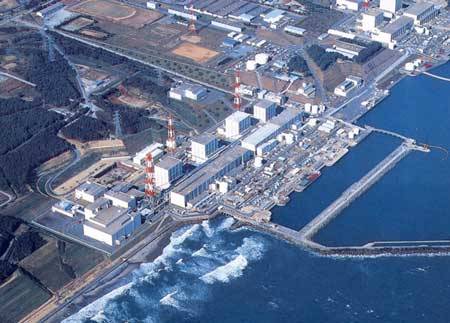
the greatest risk remains the region’s susceptibility to seismic activity.
the will of the majority of residents today is opposition to a restart and that opposition is f
While Fukushima operator Tepco says it is ‘committed to safety’ at Kashiwazaki-Kariwa, critics believe it is a disaster waiting to happen.
Julian Ryall, 27 Dec 2025
Campaigners against nuclear energy have condemned Japan’s decision to resume operations at the Kashiwazaki-Kariwa power plant, claiming that the facility will be unable to withstand a major earthquake as it was “built on tofu”.
Tokyo Electric Power Co (Tepco), the operator of the Niigata prefecture plant, on Wednesday applied for a final examination of the facility to the Nuclear Regulation Authority (NRA). Approval is likely to be a formality as the prefectural assembly already gave the nod on Tuesday.
Tepco, which has been fiercely criticised for its handling of the Fukushima Daiichi nuclear power plant disaster in March 2011, intends to restart one reactor at Kashiwazaki-Kariwa on January 20.
It would be the first of Tepco’s nuclear reactors to resume since three of Fukushima’s six reactors melted down after a magnitude 9 offshore earthquake unleashed devastating tsunamis.
Tepco has been working hard in recent years to convince the local government and residents of Niigata prefecture that it has made upgrades to secure the site from natural disasters.
Its president, Tomoaki Kobayakawa, told the media that as the operator “responsible” for the Fukushima accident, the company was now “committed to prioritising safety” at Kashiwazaki-Kariwa.
Many people remain unconvinced.
“The plant was famous for having been built on tofu – the bedrock is 30 metres (100 feet) below the surface – with many fault lines running through the site as well as offshore,” said Shaun Burnie, senior nuclear energy specialist for Greenpeace.
“Kashiwazaki-Kariwa is one of the world’s largest nuclear plants and the only one in theory capable of operating for Tepco. So restarting operations has been a priority for both the company and the government for more than a decade,” Burnie told This Week in Asia.
“But resistance from Niigata residents, the scale of safety issues and the incompetence of Tepco have undermined all efforts until now.”
History repeating itself?
Nearly 15 years after the Fukushima plant was the site of the second-worst nuclear accident in global history, Burnie warns that serious problems are being overlooked again.
Even during the preliminary planning stages, in the mid-1970s, it was apparent that ground conditions at the site by the Sea of Japan were not suitable, he said.
That was shown in July 2007, when the Chuetsu-oki earthquake struck. The magnitude 6.6 quake occurred on a previously unknown offshore fault line about 11km (7 miles) off the coast, followed 13 hours later by a 6.8 tremor around 330km (205 miles) to the west.
The nuclear plant, 19km (12 miles) due south from the epicentre of the initial quake, registered a peak ground acceleration – essentially how much the ground shook – of 6.8 metres (22 feet) per second squared in reactor No 1. The design specification for achieving a safe shutdown is 4.5m/s², while the restart level for key equipment in the plant is 2.73m/s².
Burnie said the original design specifications at the site “turned out to be gross underestimates”, with the quakes causing damage of varying degrees at 3,000 places within the plant.
A fire in an electric transformer caused the most serious damage. It left a pall of black smoke over the plant and alarmed local residents. There were also a number of leaks of mildly radioactive water and spills of radioactive cobalt-60, iodine and chromium-51 from overturned storage drums.
Given the events of 2007 and 2011, Burnie said local residents’ concerns were justified, particularly as new issues have come to light.
“We should have no confidence in Tepco assurances on safety at Kashiwazaki-Kariwa,” he said. “For example, two months after the NRA had approved the reactors’ basic safety assessment in late 2017, Tepco revealed that … the site under the emergency hydrogen ventilation buildings at units five, six and seven was vulnerable to liquefaction.”
Tepco “immediately came under pressure to explain the scale of liquefaction at the site, prove that it does not extend to the reactor buildings and how it was that the NRA was not informed prior to granting approval”, Burnie said.
Equally, he said, the NRA had to explain how it failed to identify liquefaction as a problem for a site before it granted basic safety approval.
A series of security incidents have also been cause for concern. There have been accusations of poor handling of sensitive documents, malfunctioning intruder detection systems and an employee borrowing a colleague’s pass to enter the restricted main control room in 2020.
Shaken by fears
But the greatest risk remains the region’s susceptibility to seismic activity.
“There are multiple seismic fault lines in the area of the Kashiwazaki-Kariwa site, including large-scale submarine active faults,” Burnie said. “The enormous seismic risks at the site remain unresolved and are certain to dominate the debate about the safety of any reactor restart, including in ongoing legal challenges.”
In a statement issued on Tuesday, Tepco said it would “carefully cooperate with all inspections performed by the NRA while also continuing to prioritise safety and steadily making each and every preparation for a restart”.
Takeshi Sakagami, a member of the Citizens’ Association for Monitoring Nuclear Regulation, said that a recent survey conducted by Niigata prefecture determined that 60 per cent of local residents believed that “conditions are not right” to resume operations at the plant.
“The governor explained that support should increase as understanding deepens,” Sakagami said. But “opponents counter that the will of the majority of residents today is opposition to a restart and that opposition is firm”.
Sakagami believed the government was hastening to restart the reactors “because they fear that Japan’s nuclear technology will fall behind the rest of the world”.
For him, the direction that Japan should take is simple.
“I believe Japan should abandon nuclear power and boldly shift towards renewable energy sources and energy conservation,” he said.
Trump’s team no longer trusts Netanyahu – Axios.
27 Dec 25, https://www.rt.com/news/630093-trump-team-distrust-netanyahu/
The US president’s close aides reportedly feel that the Israeli prime minister is deliberately stalling the Gaza peace process.
Officials in US President Donald Trump’s closest circle no longer believe that Israeli Prime Minister Benjamin Netanyahu can be trusted to push forward with the Gaza peace plan, Axios reported on Friday, citing insiders.
The future of Trump’s grand Gaza war settlement roadmap, unveiled in September, hinges on his upcoming meeting with the Israeli leader on Monday, according to the outlet.
Last week, US special envoy Steve Witkoff and the president’s son-in-law, Jared Kushner, met with officials from Egypt, Qatar, and Türkiye to finalize the next step of the plan, which envisions Hamas disarming and Israel pulling out of Gaza.
Netanyahu has privately expressed skepticism about the roadmap, but the plan cannot go ahead without his buy-in, Axios said.
“Bibi is trying to convince a one-man audience,” the outlet cited a White House official as saying. “The question is whether Trump will side with him or with his top advisers when it comes to Gaza.”
Key figures in Trump’s team have now lost trust in Netanyahu, fearing he is “slow-walking the peace process” and could resume the war with Hamas after taking steps to undermine the fragile ceasefire, according to Axios.
The Israeli PM has “lost” Vice President J.D. Vance, Secretary of State Marco Rubio, Chief of Staff Susie Wiles, and both Kushner and Witkoff, the outlet wrote, citing another US official.
“The only one he has left is the president, who still likes him, but even he wants to see the Gaza deal moving faster than it is right now.”
Trump is expected to press Netanyahu to move past the Gaza war, as well as raise the issue of Israel’s push into the occupied West Bank, according to Axios.
West Jerusalem officially approved the construction of nearly a dozen new controversial Israeli settlements in Palestinian territory earlier this week, drawing international condemnation.
On top of losing trust within the White House, Netanyahu’s government has taken a beating in the domestic approval polls. Only a quarter of Israeli Jews trust their government, and only 17% of the country’s Arabs, according to an Israel Democracy Institute poll published earlier this week.
Palestinian factions have come together to thwart Israeli plans in Gaza, for now
The U.S. appears ready to reassess its tactics in carrying out Donald Trump’s plan for Gaza. The news vindicates the strategy Palestinians have used during the ceasefire to avoid the surrender Israel has demanded in exchange for ending the genocide.
Mondoweiss, By Mitchell Plitnick December 26, 2025
The United States seems to be poised to reevaluate its tactics in implementing President Donald Trump’s plan for the Gaza Strip. It seems they are considering installing a Palestinian technocrat government and Palestinian police force before assembling their International Stabilization Force (ISF), which they are finding no country wants to be part of.
While this remains very far from acknowledging the rights of the Palestinian people, and even farther from realizing those rights in practice, it is a real vindication for the strategic decisions that the assortment of Palestinian factions — not only Hamas — made in the wake of the diminishment of Israel’s genocide in October.
According to recent reports, the governments of Egypt, Türkiye, and Qatar have managed to make the Trump administration understand that their push for quick Palestinian disarmament in Gaza and the subsequent occupation of the Strip by an international force that would not include Palestinians is a non-starter.
Now, Washington is trying to come up with a formula that is more in keeping with what they’ve heard from their allies and would still be something they can sell to Israel. For its part, Israel has been conspicuously silent about all of this, probably waiting for their prime minister’s visit to Washington next week to voice their objections.
On paper, that all seems to amount to a minor victory at best, but digging deeper, we can see it vindicates the strategy the Palestinians have pursued to end Israel’s genocide and avoid the total surrender that Israel has pursued as the price for ending that horror.
A Palestinian gamble pays off
It’s worth keeping in mind that, while most media portray Hamas as the sole conductor of diplomacy in Gaza, decisions that affect all the people of Gaza and Palestine have actually been reached by a consensus of a wide array of Palestinian factions. This has even included Palestinian Authority President Mahmoud Abbas’ Fatah party, although it has been an inconsistent member and has often acted independently, often undermining the loosely unified factions.
That coalition agreed to the first stage of Trump’s plan, in which the militant factions, led by Hamas, ceased their offensive operations against Israelis, released all the remaining living hostages, as well as the bodies of those who are deceased (save two, one Israeli and one Thai hostage, who remain buried under rubble).
However, they never agreed to the rest of the plan, neither accepting nor rejecting it outright. In what was a bold but very risky move, the Palestinians insisted on more negotiations to find an accommodation that would allow Hamas to step aside from governance and lay down their arms without disappearing completely from Palestine or sacrificing the principle that they have the right to resist Israel’s violent occupation and apartheid, even with force, as international law provides.
The factions gambled that the Trump administration really wanted the worst of the ceasefire to stop, and that the U.S. would negotiate to maintain the ceasefire, however illusory it may be. And thus the very worst of the genocide was diminished.
It seemed a pyrrhic victory. The United States pressed forward with its efforts to assemble an international force to disarm Hamas and police Gaza, while its “Board of Peace” would govern Gaza with Palestinian technocrats merely operating the administrative, day-to-day tasks. Israel continued its attacks and refused to allow sufficient aid, including material for shelter in the winter months, and Palestinians continued dying and suffering, albeit at a lower rate. Yet the factions held to their bet.
Finally, now, it seems the bet has paid off. The Trump administration seems to have gotten the message that disarming Hamas cannot happen by force or coercion………………………………………………………………………………………………………………………………………………………………………………………… https://mondoweiss.net/2025/12/palestinian-factions-have-come-together-to-thwart-israeli-plans-in-gaza-for-now/
What Lies Ahead for Ukraine’s Contested Zaporizhzhia Nuclear Power Plant?
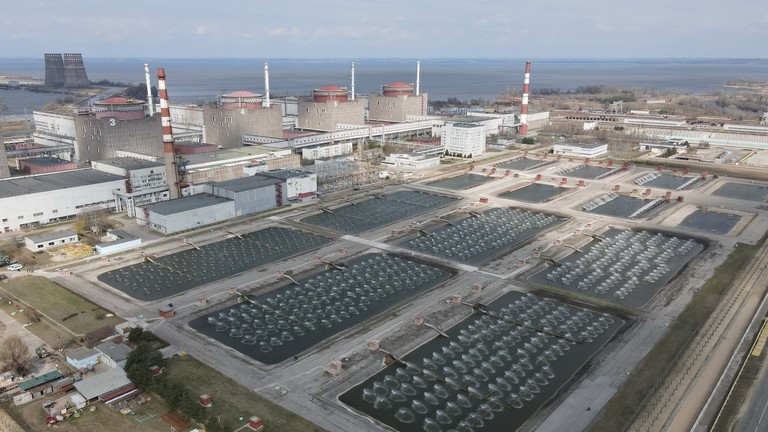
In the long term, there is the unresolved problem of the lack of water resources to cool the reactors after the vast Kakhovka hydro-electric dam was blown up in 2023, destroying the reservoir that supplied water to the plant.
Besides the reactors, there are also spent fuel pools at each reactor site used to cool down used nuclear fuel. Without water supply to the pools, the water evaporates and the temperatures increase, risking fire.
Asharq Al-Awsat, 29 Dec 25, https://english.aawsat.com/features/5223621-what-lies-ahead-ukraine%E2%80%99s-contested-zaporizhzhia-nuclear-power-plant
The Zaporizhzhia nuclear power plant, Europe’s largest, is one of the main sticking points in US President Donald Trump’s peace plan to end the nearly four-year war between Russia and Ukraine. The issue is one of 20 points laid out by Ukrainian President Volodymyr Zelenskiy in a framework peace proposal.
Here are some of the issues regarding the facility:
WHAT ROLE MAY THE US PLAY?
Russia took control of the plant in March 2022 and announced plans to connect it to its power grid. Almost all countries consider that it belongs to Ukraine but Russia says it is owned by Russia and a unit of Russia’s state-owned Rosatom nuclear corporation runs the plant.
Zelenskiy stated at the end of December that the US side had proposed joint trilateral operation of the nuclear power plant with an American chief manager.
Zelenskiy said the Ukrainian proposal envisages Ukrainian-American use of the plant, with the US itself determining how to use 50% of the energy produced.
Russia has considered joint Russian-US use of the plant, according to the Kommersant newspaper.
WHAT IS ITS CURRENT STATUS?
The plant is located in Enerhodar on the banks of the Dnipro River and the Kakhovka Reservoir, 550 km (342 miles) southeast of the capital Kyiv.
The Zaporizhzhia nuclear power plant has six Soviet-designed reactors. They were all built in the 1980s, although the sixth only came online in the mid-1990s after the collapse of the Soviet Union. It has a total capacity of 5.7 gigawatts, according to an International Atomic Energy Agency (IAEA) database.
Four of the six reactors no longer use Russian nuclear fuel, having switched to fuel produced by then-US nuclear equipment supplier Westinghouse.
After Russia took control of the station, it shut down five of its six reactors and the last reactor ceased to produce electricity in September 2022. Rosatom said in 2025 that it was ready to return the US fuel to the United States.
According to the Russian management of the plant, all six reactors are in “cold shutdown.”
Both Russia and Ukraine have accused each other of striking the nuclear plant and of severing power lines to the plant.
The plant’s equipment is powered by electricity supplied from Ukraine. Over the past four years these supplies have been interrupted at least eleven times due to breaks in power lines, forcing the plant to switch to emergency diesel generators.
Emergency generators on site can supply electricity to keep the reactors cool if external power lines are cut.
IAEA Director General Rafael Grossi says that fighting a war around a nuclear plant has put nuclear safety and security in constant jeopardy.
WHY DOES RUSSIA WANT ZAPORIZHZHIA PLANT?
Russia has been preparing to restart the station but says that doing so will depend on the situation in the area. Rosatom chief Alexei Likhachev has not ruled out the supply of electricity produced there to parts of Ukraine.
Oleksandr Kharchenko, director of the Energy Research Center in Kyiv, said Moscow intended to use the plant to cover a significant energy deficit in Russia’s south.
“That’s why they are fighting so hard for this station,” he said.
In December 2025, Russia’s Federal Service for Environmental, Technological and Nuclear Supervision issued a license for the operation of reactor No. 1, a key step towards restarting the reactor.
Ukraine’s energy ministry called the move illegal and irresponsible, risking a nuclear accident.
WHY DOES UKRAINE NEED THE PLANT?
Russia has been pummeling Ukraine’s energy infrastructure for months and some areas have had blackouts during winter.
In recent months, Russia has sharply increased both the scale and intensity of its attacks on Ukraine’s energy sector, plunging entire regions into darkness.
Analysts say Ukraine’s generation capacity deficit is about 4 gigawatts, or the equivalent of four Zaporizhzhia reactors.
Kharchenko says it would take Ukraine five to seven years to build the generating capacity to compensate for the loss of the Zaporizhzhia plant.
Kharchenko said that if Kyiv regained control of the plant, it would take at least two to three years to understand what condition it was in and another three years to restore the equipment and return it to full operations.
Both Ukrainian state nuclear operator Energoatom and Kharchenko said that Ukraine did not know the real condition of the nuclear power plant today.
WHAT ABOUT COOLING FUEL AT THE PLANT?
In the long term, there is the unresolved problem of the lack of water resources to cool the reactors after the vast Kakhovka hydro-electric dam was blown up in 2023, destroying the reservoir that supplied water to the plant.
Besides the reactors, there are also spent fuel pools at each reactor site used to cool down used nuclear fuel. Without water supply to the pools, the water evaporates and the temperatures increase, risking fire.
An emission of hydrogen from a spent fuel pool caused an explosion in Japan’s Fukushima nuclear disaster in 2011.
Energoatom said the level of the Zaporizhzhia power plant cooling pond had dropped by more than 15%, or 3 meters, since the destruction of the dam, and continued to fall.
Ukrainian officials previously said the available water reserves may be sufficient to operate one or, at most, two nuclear reactors.
Netanyahu Is Visiting Trump For The FIFTH Time This Year, And Other Notes.
Caitlin Johnstone, Dec 28, 2025, https://www.caitlinjohnst.one/p/netanyahu-is-visiting-trump-for-the?utm_source=post-email-title&publication_id=82124&post_id=182737899&utm_campaign=email-post-title&isFreemail=true&r=1ise1&triedRedirect=true&utm_medium=email
Benjamin Netanyahu will be meeting with President Trump again on Monday. This will be the pair’s fifth meeting in the United States this year, but of course it would be antisemitic to suggest that there’s anything strange about the US president meeting with the Israeli prime minister more frequently than with any other foreign leader on the planet.
NBC reports that Netanyahu is expected to discuss more attacks on Iran during the visit, citing concerns about “Iran’s efforts to rebuild facilities where they produce the ballistic missiles and to repair its crippled air defense systems.”
Which is just wild. They’ve stopped making up pretend nonsense about nuclear weapons and now they’re just going “We need to attack Iran because Iran is rebuilding its ability to stop us from attacking it.”
On Christmas Day, Donald Trump became the first American president ever to bomb Nigeria. While Trump claimed the Tomahawk missile strike was directed at ISIS targets with the goal of protecting Christians in the northwestern farming community of Jabo, locals told CNN that Islamic State has had no presence in the area and that Christians and Muslims coexist peacefully there. Residents also told Al Jazeera that the airstrikes resulted in no casualties, civilian or otherwise, meaning the bombing accomplished nothing besides terrifying some farmers and setting a precedent to normalize US airstrikes in yet another African nation.
Israel has ignited worldwide controversy by formally recognizing the breakaway Somali region known as Somaliland. I’ve seen a lot of people highlighting reports that Israel has been in communication with Somaliland as a potential location to which the population of Gaza might be deported in an ethnic cleansing operation of the Palestinian territory, noting that recognition could be a way of enticing Somaliland to agree to the arrangement.
Back in August the Times of Israel reported that “Israel is in talks with five countries or territories — Indonesia, Somaliland, Uganda, South Sudan and Libya — about potentially accepting resettled Palestinians from the Gaza Strip,” adding that “Somaliland is a breakaway region of Somalia that is reportedly hoping to secure international recognition through the deal.”
A German journalist named Anna Liedtke reports that she was raped by Israeli forces after she was abducted from the Global Sumud Flotilla while attempting to deliver aid to starving people in Gaza this past October. Unsurprisingly, as of this writing there appears to be a near-total media blackout on Liedtke’s story in the German press.
❖
Activist Greta Thunberg has been arrested by British police because in the UK it is considered an act of terrorism to hold a sign which says “I support the Palestine Action prisoners. I oppose genocide.”
Zionism is the single greatest threat to free speech in the western world.
New South Wales Premier Chris Minns defended his authoritarian crackdown on pro-Palestine protesters following the Bondi shooting by arguing that Australia doesn’t have the same free speech protections as the US.
“I acknowledge that we don’t have the same free speech rules that they have in the United States and I make no apologies for that, we have got a responsibility to knit together our community,” Minns said.
And of course Minns isn’t wrong when he says Australians don’t have any real free speech rights (Australia is the only western democracy without any kind of national bill of rights), but it is a bit odd to be openly proclaiming that this is a good thing because it means you’re allowed to stomp out criticism of Israel. Kinda feels like that’s saying the quiet part out loud.
It’s been so surreal watching in real time as Australians get manipulated into accepting the Zionist narrative about the Bondi Beach attack. As of this writing we have not been presented with the tiniest shred of evidence that anti-genocide protests had anything whatsoever to do with the massacre, but the nation is proceeding as though this is an established fact. NSW is banning the phrase “globalise the intifada” and passing laws allowing for demonstrations to be made illegal for up to three months while PM Anthony Albanese rolls out more policies to align with “antisemitism envoy” Jillian Segal’s plan to crush free speech in Australia. After being smashed in the face with an extremely aggressive mass media propaganda campaign to marry the Bondi attack to anti-genocide demonstrations in the minds of the public, a recent poll by the Resolve Political Monitor found that 53 percent of Australians now support a ban on pro-Palestine marches.
Again, this is happening in light of literally zero evidence that pro-Palestine demonstrations were even slightly responsible for the Bondi attack. None. Nothing. They’re suggesting that there is an association between the two, and they are lying. They’re rolling out pre-existing agendas to crush free expression in opposition to an active genocide, and they are doing so based on lies.
And Australians are just going right along with it, like a bunch of human livestock. We’re a whole damn continent full of bipedal sheep. Absolutely fucking pathetic.
I still can’t believe what evil, disgusting pigs Israel supporters are. The instant the Bondi shooting happened, their very first thought was “How can we use this to stomp out pro-Palestine demonstrations?” Not their third or fourth thought. Their first. They started pushing it instantly. Didn’t even wait for the bodies to cool, the sick fucks. All to stop people from protesting a genocide.
I am so angry at them right now. Absolute worst people in the world.
When the USSR and China saved humanity: How they won the World Anti-Fascist War.
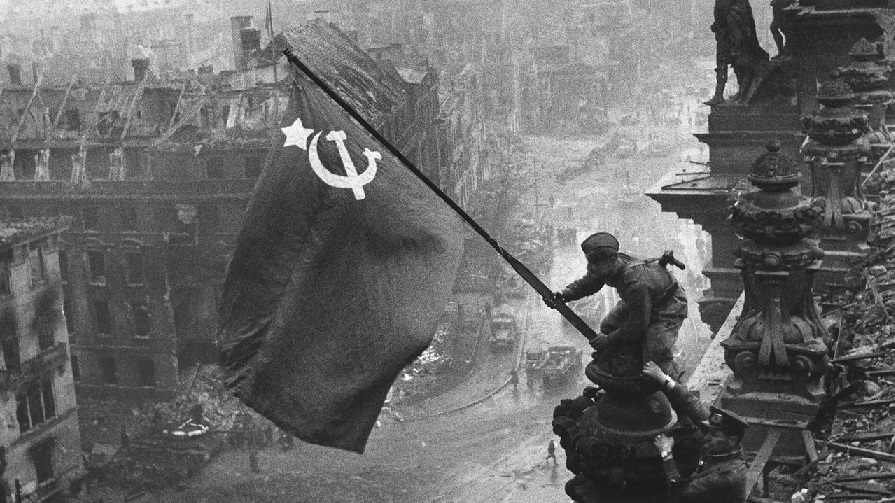
December 28, 2025 , By Ben Norton, https://geopoliticaleconomy.com/2025/12/26/ussr-china-world-anti-fascist-war/
It was the Soviet Union and China that defeated fascism in WWII. Their heroic contribution was later erased by the West. In the First Cold War, the US recruited former Nazis.
2025 marked the 80th anniversary of the defeat of fascism in World War Two. Unfortunately, the history of this extremely important conflict is not very well understood today.
It was not the United States and its Western allies that defeated fascism in WWII. That is a myth that is promoted by Hollywood movies.
In reality, it was the Soviet Union and China that defeated fascism in WWII. However, their heroic contribution was later erased by the West, when the US waged the First Cold War against the global socialist movement.
The vast majority of Nazi casualties, approximately 80%, were on the Eastern Front, in the Third Reich’s savage, scorched-earth battles against the Soviet Red Army.
More than 26 million Soviets died in the Nazi empire’s genocidal war. Compare that to the just over 400,000 US Americans who died, and the roughly 450,000 Brits who lost their lives.
This means that 62 Soviets were killed for every US American who died in WWII. Yet, tragically, their sacrifice has been forgotten in the West – or, better said, erased from public consciousness for political reasons.
The fact that the USSR defeated Nazi Germany was even admitted by the inveterate anti-communist Winston Churchill, an explicit racist, colonialist, and erstwhile admirer of Hitler who oversaw the British empire’s extreme crimes, including a famine in Bengal in 1943.
In a speech in August 1944, Churchill acknowledged:
“I have left the obvious, essential fact to this point, namely, that it is the Russian Armies who have done the main work in tearing the guts out of the German army. In the air and on the oceans we could maintain our place, but there was no force in the world which could have been called into being, except after several more years, that would have been able to maul and break the German army unless it had been subjected to the terrible slaughter and manhandling that has fallen to it through the strength of the Russian Soviet Armies”.
Then, in October 1944, Churchill said, “I have always believed and I still believe that it is the Red Army that has torn the guts out of the filthy Nazis”.
Read more: When the USSR and China saved humanity: How they won the World Anti-Fascist War.In fact, the USSR wanted to crush fascism even earlier by proposing a surprise attack on Nazi Germany in 1939, weeks before Hitler invaded Poland. Soviet military officers made an official request to British and French officials to form an alliance against Nazi Germany in August 1939, but London and Paris were not interested. The USSR had a million troops ready to fight, but the Western European powers were not prepared.
What the capitalist countries in Western Europe and North America had hoped for was that Nazi Germany would attack the Soviet Union, which they considered their main enemy. This is why the Western imperial powers had long appeased Hitler, signing shameful deals like the 1938 Munich Agreement, which allowed the Nazi empire to expand in Europe.
What the Western capitalist “liberal democracies” and the fascist regimes shared in common was mutual hatred of communism. The rich oligarchs who controlled Western governments feared that they would lose their privileges if workers in their countries were inspired by the Bolshevik Revolution.
In the 1930s, the US State Department spoke positively of fascism as an alternative to communism, and the US chargé d’affaires in Germany praised the supposedly “more moderate section of the [Nazi] party, headed by Hitler himself … which appeal[s] to all civilized and reasonable people”.
It must be emphasized that, when the Japanese empire officially allied with Nazi Germany in 1936, the name of the deal they signed was the Agreement Against the Communist International, or the Anti-Comintern Pact. Benito Mussolini’s fascist regime in Italy subsequently signed the agreement in 1937, and the fascist regimes in Spain, Hungary, and other European countries joined in the following years. It was extreme, violent anti-communism that united all of these fascist powers.
While there is widespread ignorance about the Soviet Union’s leading role in crushing Nazi Germany in WWII, the heroic contribution that the people of China made to the defeat of the Japanese empire is even less well known.
For Europe, WWII began in 1939, when Nazi Germany invaded Poland. For the people of China, the war started much earlier, in 1931, when the Japanese empire invaded the Manchuria region of northern China.
For 14 years, the people of China resisted Japan’s aggression, as the imperial regime sought to colonize more and more Chinese territory.
By the end of the war in 1945, roughly 20 million Chinese had lost their lives. This means that approximately 48 Chinese were killed for every US American who died in WWII.
In China, WWII is known as the Chinese People’s War of Resistance Against Japanese Aggression, and it was part of a larger conflict called the World Anti-Fascist War.
China held an important event on 3 September 2025 commemorating the 80th anniversary of the defeat of fascism. It featured key leaders of countries that are today, once again, fighting against imperialism and fascism, including China’s President Xi Jinping, Russia’s President Vladimir Putin, the DPRK’s leader Kim Jong-un, Iran’s President Masoud Pezeshkian, and officials from other countries in Asia, Africa, and Latin America, including Cuba’s President Miguel Díaz-Canel and Nicaragua’s representative Laureano Ortega Murillo.
The United States has long taken credit for the defeat of the fascist Japanese empire, but this erases the enormous, heroic, 14-year contribution made by the Chinese people.
Although it is true that the United States was briefly allied with the USSR and China during WWII, and it did provide significant military assistance through its 1941 Lend-Lease Act, Washington immediately terminated that partnership in 1945.
In fact, even before WWII officially ended, the United States had already started to recruit fascists to help them wage the First Cold War. US intelligence agencies saved many Nazi war criminals in the infamous Operation Paperclip. Instead of facing justice, these genocidaires assisted Washington in its subsequent attacks on the Soviet Union and its communist allies in Eastern Europe.
Later, the CIA and NATO created Operation Gladio, in which they used fascist war criminals as foot soldiers of their new global imperialist war on socialism. The former top Nazi military officer Adolf Heusinger was appointed the chair of NATO’s military committee, and the ex Nazi Hans Speidel became commander of NATO’s land forces in Central Europe.
The United States even rehabilitated Nazi war criminal Reinhard Gehlen, who had directed Hitler’s military intelligence on the Eastern Front in WWII, and who later led the CIA-backed Gehlen Organization to help Washington wage its cold war against communists.
The United States did not defeat fascism; it rehabilitated and absorbed fascism into the capitalist empire that Washington built after WWII, centered in Wall Street and based on the dollar.
The contemporary German government published the results of a study in 2016, called the Rosenberg project, which sifted through classified documents from 1950 to 1973. It found that, at the height of the Cold War, the government of capitalist West Germany, which was a member of NATO, was full of former Nazis.
In fact, 77% of senior officials in West Germany’s Justice Ministry had been Nazis. Ironically, there had been a lower percentage of Nazi Party members in the Justice Ministry in Berlin when the genocidal dictator Adolf Hitler himself was in charge of the Third Reich.
Similarly, in Japan after WWII, US occupation forces released Japanese war criminals from prison and used them to construct an imperial client regime. The CIA helped to create and fund the powerful Liberal Democratic Party (LDP), which has essentially governed Japan as a one-party state, with few exceptions, since 1955.
Notorious war criminal Nobusuke Kishi had overseen genocidal crimes against humanity against the Chinese people as an administrator of the Japanese empire’s puppet regime of Manchukuo, in Manchuria, during WWII. After the war ended, the United States strongly supported Kishi, who led the LDP, established the de facto one-party state, and became prime minister of the country.
Still today, the Kishi dynasty is one of the most powerful families in Japan. Kishi’s grandson Shinzo Abe also led the LDP and served as prime minister from 2012 and 2020, closely allying Japan with the United States, while antagonizing China and rewriting the history of WWII.
In short, after the Soviet Union and China led the fight to defeat fascism in WWII, the US empire recruited fascists to fight its global war against socialism.
Today, it is extremely important to learn these facts and correct the historical record, because 2025 is the 80th anniversary of the end of WWII, and it is clear that the proper lessons have not been learned in the West.
The planet is still plagued by extreme imperial violence, and closer than ever to another world war.
The United States and Israel have been carrying out a genocide against the Palestinian people in Gaza, committing atrocities that are reminiscent of the fascists’ crimes against humanity in WWII.
Fascism has its roots in European colonialism. The genocidal tactics that the European empires used in Asia, Africa, and Latin America were later used by the fascists inside Europe.
Nazi leader Adolf Hitler was inspired by the genocidal crimes that the German empire had committed in southern Africa, and also by the genocide that the US colonialists had carried out against indigenous peoples in North America. The Nazis were likewise influenced by the US government’s racist laws against Black Americans, in its apartheid system known as Jim Crow.
Given the close links between fascism and Western imperialism, it is not surprising to see that, today, the US regime has become increasingly fascist. Politicians in Washington scapegoat immigrants and foreigners for the many domestic problems in their country, including the significant growth in inequality, poverty, and homelessness. They have no solutions other than more violence, racism, and war.
The increasing political desperation and instability in Washington is combining in a toxic mixture with the greed of US corporations in the military-industrial complex, which profit from war, and are thus incentivized to push for more conflict, not for peace.
The United States, as the leader of NATO, has already been waging a proxy war against Russia in Ukrainian territory, using the people of Ukraine as cannon fodder in an imperial war, tragically destroying an entire generation of Ukrainians in a vain attempt to maintain US global hegemony.
The US empire has also used its Israeli attack dog to wage war on the people of Iran, in an attempt to overthrow the revolutionary government in Tehran and impose a puppet regime, like the former king, the shah, who was propped up by Washington.
The number one target of the US empire today, however, is the People’s Republic of China. US imperialists fear that China is the only country powerful enough to not only challenge but to defeat Washington’s global hegemony.
The US empire is waging a Second Cold War against China, and it has weaponized everything in this hybrid war, imposing sanctions and tariffs to wage economic war, using its control over the dollar system in a financial war, and exploiting the media to spread disinformation and fake news as part of an information war.
Part of the US empire’s strategy in this information war is to erase the Chinese people’s major contribution to the defeat of fascism and imperialism in WWII.
This is why it is so crucial to defend the facts, and to teach the true history of WWII to people today. If we don’t correct the historical record, the fascists and imperialists of the 21st century will weaponize ignorance in order to carry out the same crimes that their ideological brethren committed in the 20th century.
Trump regulators ripped
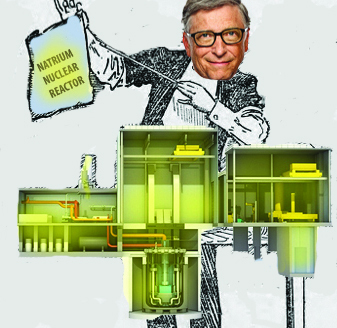
by beyondnuclearinternational, https://beyondnuclearinternational.org/2025/12/28/trump-regulators-ripped/
Rushed approval of Bill Gates’ reactor comes with risks, writes Brett Wilkins with Common Dreams
A leading nuclear safety expert has sounded the alarm over the Trump administration’s expedited safety review of an experimental nuclear reactor in Wyoming designed by a company co-founded by tech billionaire Bill Gates and derided as a “Cowboy Chernobyl.”
On December 1, the US Nuclear Regulatory Commission (NRC) announced that it has “completed its final safety evaluation” for Power Station Unit 1 of TerraPower’s Natrium reactor in Kemmerer, Wyoming, adding that it found “no safety aspects that would preclude issuing the construction permit.”
Co-founded by Microsoft’s Gates, TerraPower received a 50-50 cost-share grant for up to $2 billion from the US Department of Energy’s Advanced Reactor Demonstration Program. The 345-megawatt sodium-cooled small modular reactor (SMR) relies upon so-called passive safety features that experts argue could potentially make nuclear accidents worse.
However, federal regulators “are loosening safety and security requirements for SMRs in ways which could cancel out any safety benefits from passive features,” according to Union of Concerned Scientists nuclear power safety director Edwin Lyman.
The reactor’s construction permit application—which was submitted in March 2024—was originally scheduled for August 2026 completion but was expedited amid political pressure from the Trump administration and Congress in order to comply with an 18-month timeline established in President Donald Trump’s Executive Order 14300.
“The NRC’s rush to complete the Kemmerer plant’s safety evaluation to meet the recklessly abbreviated schedule dictated by President Trump represents a complete abandonment of its obligation to protect public health, safety, and the environment from catastrophic nuclear power plant accidents or terrorist attacks,” Lyman said in a statement on December 2.
Lyman continued:
“The only way the staff could finish its review on such a short timeline is by sweeping serious unresolved safety issues under the rug or deferring consideration of them until TerraPower applies for an operating license, at which point it may be too late to correct any problems. Make no mistake, this type of reactor has major safety flaws compared to conventional nuclear reactors that comprise the operating fleet. Its liquid sodium coolant can catch fire, and the reactor has inherent instabilities that could lead to a rapid and uncontrolled increase in power, causing damage to the reactor’s hot and highly radioactive nuclear fuel.
“Of particular concern, NRC staff has assented to a design that lacks a physical containment structure to reduce the release of radioactive materials into the environment if a core melt occurs. TerraPower argues that the reactor has a so-called “functional” containment that eliminates the need for a real containment structure. But the NRC staff plainly states that it “did not come to a final determination of the adequacy and acceptability of functional containment performance due to the preliminary nature of the design and analysis.
“Even if the NRC determines later that the functional containment is inadequate, it would be utterly impractical to retrofit the design and build a physical containment after construction has begun,” Lyman added. “The potential for rapid power excursions and the lack of a real containment make the Kemmerer plant a true ‘Cowboy Chernobyl.’”
The proposed reactor still faces additional hurdles before construction can begin, including a final environmental impact assessment. However, given the Trump administration’s dramatic regulatory rollback, approval and construction are highly likely.
Former NRC officials have voiced alarm over the Trump administration’s tightened control over the agency, which include compelling it to send proposed reactor safety rules to the White House for review and possible editing.
Allison Macfarlane, who was nominated to head the NRC during the Obama administration, said earlier this year that Trump’s approach marks “the end of independence of the agency.”
“If you aren’t independent of political and industry influence, then you are at risk of an accident,” she warned.
Brett Wilkins is a staff writer for Common Dreams. This article first appeared on Common Dreams whose content is available through a Creative Commons license.
‘Pay price for wrongdoing’: China Sanctions 20 US defence firms after Trump approves Taiwan arms sale
China on December 27 announced sanctions on 20 U.S. defense companies and 10 senior executives, including Palmer Luckey of Anduril Industries, following the Trump administration’s approval of an $11.1 billion arms package for Taiwan.
by Aditi, December 27, 2025 , https://www.financialexpress.com/world-news/pay-price-for-wrongdoing-china-sanctions-20-us-defence-firms-after-trump-approves-taiwan-arms-sale/4089711/
China announced sanctions against 20 US defence companies and 10 top executives on Friday — the latest in a series of tit-for-tat measures. The announcement came soon after the Trump administration approved a major weapons sale to Taiwan. The sanctions list includes well-known companies like Northrop Grumman and Boeing’s defence unit in St. Louis, as well as Palmer Luckey, founder of Anduril Industries.
China said it will freeze the assets of these companies in the country, block them from doing business with Chinese organisations, and prevent the executives from entering mainland China, Hong Kong, and Macau, according to a report from the Wall Street Journal. Both Washington and Beijing have also announced export controls, investment restrictions, visa and travel bans and curtailed use of sensitive technology over the past year.
The Chinese Foreign Ministry said the US arms sale “interferes in China’s internal affairs and seriously undermines China’s sovereignty and territorial integrity.” The sanctions were announced on December 27, and according to a Global Times report, took immediate effect. Officials said the US decision went against the one-China principle and the three China-US Joint Communiques.
China sanctions US defence firms over Taiwan arms sale
Under the new measures, China has imposed sanctions on 20 US defence-related companies that it claims are involved in supplying weapons to Taiwan in recent years. The companies named include Northrop Grumman Systems Corporation, L3Harris Maritime Services, Boeing in St. Louis, Gibbs & Cox, Advanced Acoustic Concepts, VSE Corporation, Sierra Technical Services, Red Cat Holdings, Teal Drones, ReconCraft, High Point Aerotechnologies, Epirus, Dedrone Holdings, Area-I, Blue Force Technologies, Dive Technologies, Vantor, Intelligent Epitaxy Technology, Rhombus Power, and Lazarus Enterprises.
China announced that all movable and immovable assets of these companies located within the country will be frozen. Chinese individuals and organisations have also been barred from doing business or cooperating with these firms in any form.
Sanctions extended to senior executives
In addition to companies, China has also imposed restrictions on 10 senior executives in the defence sector. Among them is Palmer Luckey, founder of Anduril Industries, along with top executives from companies such as L3Harris and VSE Corporation, according to ANI. According to the Foreign Ministry, these executives will face restrictions on assets located in China and activities related to the country.
Taiwan is a ‘red line’, says China
A spokesperson for the Chinese Foreign Ministry said the Taiwan issue is at the very core of China’s national interests and is a red line in China-US relations. The spokesperson warned that anyone attempting to provoke China on the Taiwan question would face a firm response. In a statement, the ministry said, “Anyone who attempts to cross the line and make provocations on the Taiwan question will be met with China’s firm response. Any company or individual who engages in arms sales to Taiwan will pay the price for the wrongdoing. No country or force shall ever underestimate the resolve, will and ability of the Chinese government and people to safeguard national sovereignty and territorial integrity.”
China claims Taiwan as part of its territory — contending that the autonomously governed island must eventually be reunified with the mainland. The United States does not officially recognise Taiwan as a sovereign nation under the ‘One China’ policy, but maintains unofficial ties with the administration.
US arms supply to Taiwan
The reaction from China comes after the administration of US President Donald Trump approved a major arms package for Taiwan last week. According to the US State Department, the proposed sales are valued at more than USD 10 billion and include medium-range missiles, howitzers, and drones.
According to Focus Taiwan, the potential sale involves eight arms packages, including HIMARS rocket systems, anti-tank missiles, and drones, with a total estimated cost of USD 11.1 billion.
Trump, Zelenskyy make ‘95% progress’, but ‘thorny issues’ remain – 5 key points
Aditi, 29 Dec 2025, https://www.financialexpress.com/world-news/trump-zelenskyy-make-95-progress-but-thorny-issues-remain-5-key-points/4090944/
Ukrainian President Volodymyr Zelensky met US President Donald Trump at Mar-a-Lago in Florida for high-stakes talks aimed at ending the nearly four-year Russia–Ukraine war.
Ukrainian President Volodymyr Zelenskyy met US President Donald Trump in Florida on Sunday as both leaders tried to push forward a possible peace deal to end the nearly four-year war between Russia and Ukraine. The meeting took place at Trump’s private club, Mar-a-Lago, in Palm Beach, where the US president is spending the holiday season. Both leaders described the talks as positive. Trump called the meeting “terrific,” while Zelenskyy said it was “great.”
This was Zelenskyy’s third visit to meet Trump this year, and expectations were high that the two would try to close major gaps in a peace plan that has been under discussion for months. Here are all the key points discussed.
Trump and Zelenskyy meet: Trump confident, but ‘thorniest’ issue unresolved
Trump seemed positive after the meeting, but also warned that the talks are complicated and fragile. Standing next to Zelenskyy, he said a deal could be clear “in a few weeks,” but stopped short of giving a firm timeline.
“We could have something where one item that you’re not thinking about is a big item, breaks it up. Look, it’s been a very difficult negotiation,” he said. Trump said he believes a peace agreement is close, possibly with around 95% agreement on key points, but admitted that final hurdles remain.
Speaking of the eastern Donbas region, which Russia has demanded that Ukraine surrender, is still an outstanding issue.
Trump acknowledged that this area is one of the “thorny issues” still unresolved. The US has suggested creating a “free economic zone” in parts of Donbas as part of a negotiated settlement, but details remain unclear.
“We’re getting closer to an agreement on that. And that’s a big issue,” he told reporters in a joint appearance with Ukrainian President Volodymyr Zelenskyy. “Certainly, that’s one of the big issues, and I think we’re closer.”
Trump and Zelenskyy meet: Territory still the hardest question
After the meeting, Zelenskyy made it clear that the issue of land remains the most difficult part of the talks. Speaking to reporters at Mar-a-Lago, he said Ukraine cannot simply give up territory. “You know our position,” Zelenskyy said, according to CNN. “We have to respect our law and our people. We respect the territory which we control.”
He added that any decision about land must be made by the people of Ukraine, not just leaders behind closed doors. Zelenskyy said a national referendum could be used to decide not only territorial questions, but other parts of the peace plan as well. “This is not the land of one person,” he said. “It is the land of our nation for many generations.”
He also said Ukraine’s parliament could be involved, but told reporters that Ukraine’s constitution does not allow territory to be handed over through a simple parliamentary vote. Only the public can approve such a move.
‘Russia wants to see Ukraine succeed,’ Trump says after meeting Zelenskyy
“Russia wants to see Ukraine succeed. Once it sounds a little strange, but I was explaining to the President, President Putin was very generous in his feelings toward Ukraine succeeding, including supplying energy, electricity, and other things at very low prices. So a lot of good things came out of that call today,” Trump told reporters standing next to Zelenskyy after the meeting.
Trump also said he would consider travelling to Ukraine if it helped secure a deal, including possibly speaking to Ukraine’s parliament. However, he suggested such a trip is unlikely. “I have no problem with travelling to Ukraine,” Trump said. “But I would like to get the deal done and not necessarily have to go.”
Trump and Zelenskyy meet: Ukraine and the United States are fully aligned
President Vladimir Putin has repeatedly said he wants four regions captured by Russian forces, along with Crimea, to be recognised as Russian territory. Crimea was illegally annexed by Russia in 2014. Russia is not ready to negotiate on its demands, Moscow has made it clear.
Putin has also demanded that Ukraine withdraw from some eastern areas that Russian forces have not even captured. Kyiv has rejected these conditions.
Despite the challenges, Zelenskyy said there has been strong progress on other parts of the peace plan. According to him, about 90% of the overall plan has broad agreement. On security guarantees and military issues, he said Ukraine and the United States are fully aligned. “We agree that security guarantees are a key milestone in achieving lasting peace,” Zelenskyy said.
He added that the two leaders discussed all aspects of a 20-point peace proposal during their talks.
Trump and Zelenskyy meet: Call with European leaders
During Zelenskyy’s visit, Trump and the Ukrainian president also held a phone call with several European leaders. The call lasted over an hour and included leaders from Britain, France, Germany, Italy, Poland and Norway, along with NATO’s secretary general and the president of the European Commission.
Finnish President Alexander Stubb said the leaders discussed “concrete steps” toward ending the war. European Commission President Ursula von der Leyen said there was good progress made.
Netanyahu to Press for ‘Another Round of War With Iran’ in Meeting With Trump This Week

Amid a growing rift between Israel and the White House, one foreign policy analyst says the meeting “will signal whether Washington is prepared to continue underwriting open-ended escalation.”
Stephen Prager, Dec 28, 2025, https://www.commondreams.org/news/trump-netanyahu-meeting-iran-war
As Israeli Prime Minister Benjamin Netanyahu heads to Mar-a-Lago to meet with US President Donald Trump on Monday, amid a growing rift with the president and his advisers, reports say he’ll seek to push the US back toward war with Iran.
Last week, NBC News reported that at the meeting, “Netanyahu is expected to make the case to Trump that Iran’s expansion of its ballistic missile program poses a threat that could necessitate swift action” and that “the Israeli leader is expected to present Trump with options for the US to join or assist in any new military operations.”
“Netanyahu plans to press Donald Trump for US backing for another round of war with Iran, now framed around Iran’s ballistic missile program,” said Sina Toossi, a senior fellow at the Center for International Policy. “Netanyahu’s pivot to missiles should therefore be read not as the discovery of a new threat, but as an effort to manufacture a replacement casus belli after the nuclear argument collapsed.”
He noted criticisms levied against Netanyahu by Yair Golan, chair of the Democrats, a center-left party in Israel, earlier this week: “How is it possible that last June, at the end of the war with Iran, Benjamin Netanyahu solemnly declared that ‘Israel had eliminated Iran’s nuclear threat and severely damaged its missile array’; and that this was a ‘historic victory’—and today, less than six months later, he is running to the president of the United States to beg for permission to attack Iran again?” Golan said.
Iran is just one of several areas the two will likely discuss on Monday. According to Israeli officials who spoke to the Washington Post, Netanyahu also reportedly wants Trump to “take a tougher stance on Gaza and require that Hamas disarm before Israeli troops further withdraw as part of the second phase of Trump’s 20-point peace plan.
The chief of Israel’s armed forces suggested earlier this week that its occupation of more than half of Gaza would be permanent, but walked those comments back after reported behind-the-scenes outrage in the White House. Meanwhile, Trump—invested in his image as a peacemaker—has reportedly balked at Israel’s routine violations of the ceasefire agreement he helped to broker in October.
Near-daily strikes have resulted in the death of at least 418 Palestinians, according to the Gaza Media Office. Meanwhile, Israel’s continued blockade of humanitarian aid has left hundreds of thousands of people—displaced from homes destroyed by Israeli bombing—to languish in the cold without tents. Desperately needed fuel, food, and medicine have entered the strip at far lower numbers than the ceasefire agreement required.
As Axios reported on Friday, Trump’s advisers increasingly fear that Netanyahu is intentionally slow-walking and undermining the peace process in hopes of resuming the war.
Netanyahu also seeks Trump’s continued backing of Israel’s territorial expansion in Syria. Earlier this month, the Israel Defense Forces (IDF) pushed through a UN-monitored demilitarized zone between Israeli and Syrian-held positions in the Golan Heights, which Israel illegally occupies.
This push into southern Syria went against the wishes of the Trump administration, which feared it could destabilize the Western-backed government that rules in Damascus following the ouster of former President Bashar al-Assad.
Israel has also routinely struck Lebanon in violation of the US-brokered ceasefire it signed with Hezbollah in late 2024, with bombings becoming a near-daily occurrence in December. Last month, the UN reported that at least 127 civilians, including children, had been killed in Israeli strikes since the ceasefire began.
“Netanyahu’s visit unfolds against a backdrop of unresolved fronts, with widening disputes with Washington over the second phase of the Gaza ceasefire, including postwar governance, reconstruction, and Turkish involvement,” Toossi said. “At the same time, Israel is seeking greater latitude to escalate again against Hezbollah in Lebanon, an end to US accommodation of Syria’s new leadership, and firm assurances on expanded military aid.”
“Taken together, Netanyahu’s visit is less about resolving any single crisis than about postponing strategic reckoning,” he continued. “The outcome will signal whether Washington is prepared to continue underwriting open-ended escalation, or whether this meeting marks the beginning of clearer limits on Israel’s regional strategy.”
1 This Month

of the week – Shut Down Drone Warfare!


Tell the Ukrainian Government to Drop Prosecution of Peace Activist Yurii Sheliazhenko

Petition to revoke the licensing of the Near Surface Nuclear Disposal Facility (NSDF) at Chalk River. https://www.ourcommons.ca/petitions/en/Petition/Details?Petition=e-7247
To see nuclear-related stories in greater depth and intensity – go to https://nuclearinformation.wordpress.com
-
Archives
- April 2026 (114)
- March 2026 (251)
- February 2026 (268)
- January 2026 (308)
- December 2025 (358)
- November 2025 (359)
- October 2025 (376)
- September 2025 (257)
- August 2025 (319)
- July 2025 (230)
- June 2025 (348)
- May 2025 (261)
-
Categories
- 1
- 1 NUCLEAR ISSUES
- business and costs
- climate change
- culture and arts
- ENERGY
- environment
- health
- history
- indigenous issues
- Legal
- marketing of nuclear
- media
- opposition to nuclear
- PERSONAL STORIES
- politics
- politics international
- Religion and ethics
- safety
- secrets,lies and civil liberties
- spinbuster
- technology
- Uranium
- wastes
- weapons and war
- Women
- 2 WORLD
- ACTION
- AFRICA
- Atrocities
- AUSTRALIA
- Christina's notes
- Christina's themes
- culture and arts
- Events
- Fuk 2022
- Fuk 2023
- Fukushima 2017
- Fukushima 2018
- fukushima 2019
- Fukushima 2020
- Fukushima 2021
- general
- global warming
- Humour (God we need it)
- Nuclear
- RARE EARTHS
- Reference
- resources – print
- Resources -audiovicual
- Weekly Newsletter
- World
- World Nuclear
- YouTube
-
RSS
Entries RSS
Comments RSS
 nuclear-news