Militarism will inevitably lead America to bankruptcy
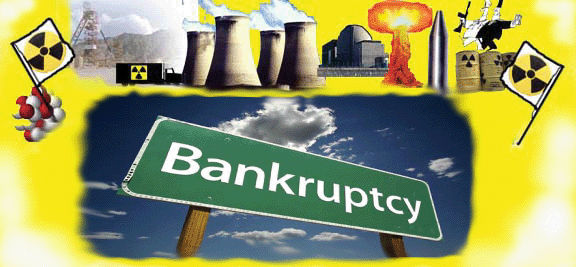
Drago Bosnic, independent geopolitical and military analyst, , October 16, 2023 https://infobrics.org/post/39611
The United States likes to boast about its much-touted industrial might and how it’s still “the world’s largest and most advanced economy”. Indeed, Washington DC holds several absolute world records when it comes to the economy. Namely, it has the highest national debt in the history of mankind, incurred by going all over the world, burning, pillaging, murdering and generally destroying the lives of hundreds of millions. Back in mid-September, the US national debt topped $33 trillion for the first time. Worse yet, by October 12 (just a bit more than 20 days later) it already grew another $520 billion. In August, it was estimated that the US budget deficit will be $1.7 trillion by year’s end, although experts now believe it’s extremely likely to go past that and reach around $2 trillion. If true, this means the deficit will grow by over 40% in comparison to last year when it stood at around $1.4 trillion.
The US debt-to-GDP ratio is nearly 130%, but Washington DC keeps raising the debt ceiling. Namely, in January 2023, the belligerent thalassocracy hit its debt limit and by June 2023, it was forced to suspend it to avoid default. We all remember last year and how the political West kept patting itself on the back for effectively stealing hundreds of billions in Russian foreign reserves and denying Moscow the ability to service its debt. The mainstream propaganda was maliciously overjoyed with the prospect of Russia’s artificially induced default. And yet, this never happened, while the US is the one that found itself in a near-default situation. What’s more, the only way to avoid it was to use a perpetual “cheat code” that simply enables it to incur more debt. A responsible government would do something to prevent the escalation of the crisis, but Washington DC has other plans.
Apart from making sure that its economic issues spill over to the rest of the world, where impoverished and heavily exploited countries pay the price of US imperialism, the belligerent thalassocracy keeps militarizing and creating enemies in order to feed the monstrosity called the American Military Industrial Complex (MIC). Back in late March, as the debt ceiling crisis was unfolding, General Mark Milley, Chairman of the Joint Chiefs of Staff, stated that the Pentagon would be doubling its military budget. At the time, Milley kept parroting about “a looming global conflict”, but clearly “forgot” to explain that if there were to ever be one, its sole cause would be the US itself, as it’s the only country on the planet with an openly stated strategy of “full spectrum dominance”. However, the only way to accomplish this is to keep spending funds that Washington DC simply doesn’t have.
Global military spending for 2022 was around $2.1 trillion, meaning that the US is already at over 40% of the world’s total with its current budget. Doubling it, even over the next several years (also taking into account that other superpowers would certainly respond to it), could push that figure close to 60%. In terms of the US federal budget, it would also require further cuts to investment in healthcare, infrastructure, education, etc. As the military currently spends approximately 15% of the entire US federal budget, obviously, doubling it would mean the percentage would go up to (or even over) 30%. Such figures are quite close to what the former Soviet Union was spending, which was one of the major factors that contributed to its unfortunate dismantlement and the later crisis in all post-Soviet countries that needed approximately a decade to recover.
As previously mentioned, such a move would also force others to drastically increase their own military spending in response to US belligerence. If China were to follow suit, its military budget would then rise to approximately $500 billion, while Russia’s military budget would be close to $200 billion. In fact, Moscow is already in the process of doing this, as it recently increased its defense spending by 70% in 2024 alone in order to tackle NATO aggression in Europe. As we can see, this is causing a military spending “death spiral” that’s extremely difficult to control and is leading the world into an unprecedented arms race. However, it seems that’s exactly what Washington DC wants. On October 12, the US Congress Strategic Posture Commission issued its final report and called for further expansion of America’s already massive arsenal of thermonuclear weapons.
It should be noted that the reasoning (although there’s hardly anything reasonable in it) behind such a decision is a simultaneous confrontation with both Russia and China. This includes massive investment into new weapons systems such as the B-21 “Raider” strategic bomber/missile carrier and Columbia-class SSBN (nuclear-powered ballistic missile submarine), as well as the replacement of the heavily outdated “Minuteman 3” ICBMs (intercontinental ballistic missiles) with new LGM-35 “Sentinel” missiles. All three types are in different stages of development and are expected to be fully operational by the early 2030s. However, with the US debt projected to reach over $50 trillion in less than ten years (the best-case scenario), the viability of such a massive expansion in American military spending is highly questionable (if possible at all).
By 2027, interest payments alone are expected to surpass the Pentagon’s entire budget. What’s more, America’s ability to keep up with the technological advances of its geopolitical adversaries is also falling short, particularly in the development of hypersonic weapons, a field in which Russia has an absolute advantage, despite spending approximately 20-25 times less on its armed forces. The only way for the US to avoid bankrupting itself is to finally leave the world alone and focus on the mountain of domestic issues that keep piling up.
Source: InfoBrics
Greenpeace Central and Eastern Europe (CEE) condemn Russian government plans to restart nuclear reactors at the Zaporizhzhia nuclear plant
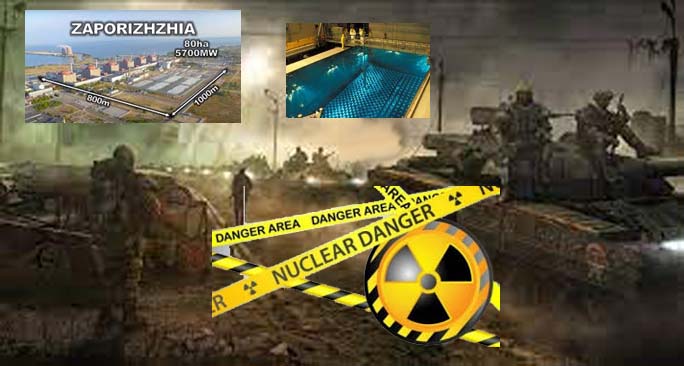
Russian government publishes first detailed plans for restart of Zaporizhzhia nuclear plant – Greenpeace condemns nuclear blackmail.
Kyiv, May 17, 2024 – Greenpeace Central and Eastern Europe (CEE) condemns in the strongest possible terms the plans of Rosatom, the Russian State Nuclear Corporation, and the Russian government to proceed with the restart of nuclear reactors at the Zaporizhzhia nuclear plant. The first details of Rosatom’s plans are contained in an official document submitted to the International Atomic Energy Agency (IAEA) by the Russian government on 14 May, 2024 [1]. The submission reveals plans for the construction of a large pumping station, designed to supply water for the nuclear plant. Following the demolition of the Nova Kakhovka dam on 6 June 2023, the Zaporizhzhia nuclear plant no longer was able to access water from the Kakhovka reservoir. The six reactors at Zaporizhzhia have been shut down since 2022. In an analysis published in February 2024, Greenpeace CEE warned that the nuclear plant site would require a new pumping system to extract water from the Dnipro river channels near the Zaporizhzhia nuclear plant. [2]
“Since Russia attacked, damaged and occupied the Zaporizhzhia nuclear plant on March 4, 2022, the risk of a nuclear disaster has been high. But if plans proceed to restart reactors at the plant the level of risk and the consequences will be much more severe. This submission to the IAEA is outrageous, with Russia claiming that its, “main task is to prevent threats to the safety and security of the plant created by the Kyiv regime.” No – the threat of a nuclear disaster is entirely due to Russia’s war and occupation of the plant – and this is another case of Russian nuclear blackmail which has the potential to explode across Ukraine and Europe,” said Shaun Burnie, nuclear specialist at Greenpeace Central and Eastern Europe.
The Russian submission to the IAEA discloses for the first time that a pumping station is to be constructed. The station would have capacity to supply up to 18,000 cubic meters of water per hour to the cooling pond. Greenpeace analysis has indicated two potential locations for the new pumping station.
In February 2024, Greenpeace CEE in its analysis of the many obstacles to restart, focused on the water problem, and urged the IAEA Director General to take a strong position against any Russian plans for restarting the Zaporizhzhia reactors. In March 2024, Greenpeace issued a warning that restart of one or more reactors at the nuclear plant site could lead to a disaster greater than Fukushima or even Chornobyl.[3] Last month, Greenpeace International wrote wrote to the IAEA Director General, Rafael Mariano Grossi, seeking assurances that the IAEA will not in any way facilitate Rosatom in the restart the reactors at the Zaporizhzhia nuclear plant.(4)
“Rosatom has no legal authority to operate the Zaporizhzhia plant – that lies entirely with the Ukrainian regulator and owner. It also lacks a sufficient number of skilled and qualified workers familiar with the Zaporizhzhia nuclear plant. For more than two years maintenance of critical installations has been wholly inadequate and on eight occasions the plant has lost all off site electrical power due to the war. The electricity supply is essential for the water cooling pumps to the reactors and spent nuclear fuel as well as other safety systems and remains highly unstable. The water supply to the cooling pond has been significantly compromised since the destruction of Nova Kakhovka dam by the Russian armed forces. Restarting one or more reactors in such a situation is not only outrageous it shows a blatant disregard for nuclear safety protocols. Urgent efforts by the international community, including the IAEA, must be made to stop these plans from being implemented,” said Jan Vande Putte, nuclear specialist at Greenpeace Belgium.
Greenpeace CEE is campaigning for comprehensive European Union sanctions against Rosatom and their nuclear partners in Europe and worldwide and actively supporting the development of renewable energy in Ukraine.
For further information:
Daryna Rogachuk, communication officer
daryna.rogachuk@greenpeace.org
1 – Communication from the Permanent Mission of the Russian Federation to the Agency, INFCIRC/1208, 15 May 2024, see www.iaea.org/sites/default/files/publications/documents/infcircs/2024/infcirc1208.pdf
2 – Greenpeace CEE, Is Rosatom Planning The Restart Of Zaporozhzhia Reactor(s)?, 3 February 2024, see https://drive.google.com/file/d/1mipUyMmnA0XXlD57UOQfduYkvj6LcANb/view
3 – Greenpeace Germany, Second anniversary of Russia’s nuclear plant attack in Ukraine, 5 March 2024, see https://www.greenreconstruction.com/news/second-anniversary-of-russias-nuclear-plant-attack-in-ukraine
4 – Greenpeace CEE, Grim anniversary: Zaporizhzhia nuclear plant must not become the next Chornobyl, 26 April 2024, see https://greenpeace.at/cee-press-hub/chornobyl-38-anniversary/
A New Russian Offensive Stretches Ukrainian Forces. Possibly To The Breaking Point.
Just as important an explanation for Ukraine’s struggles is the lack of men. Ukrainian troops are outmanned and exhausted, and casualty rates are soaring.
Radio Free Europe, By Mike Eckel , May 17, 2024
Ukrainian civilians evacuated from border regions with Russia. An important east-west highway in the eastern Donetsk region threatened by encroaching Russian forces. A village captured by Ukraine during last year’s counteroffensive about to return to Russian control. Ukraine’s president cancels all foreign trips.
The news from Ukraine’s battlefield these days is grim: Russia is advancing. Ukraine is struggling to hold its positions, if not outright retreating.
Still, there’s little doubt that Ukraine’s exhausted, outmanned, and possibly still-outgunned forces are struggling in a way not seen possibly since the opening days of the invasion.
“By stretching Ukrainian forces along a wide front, Russia is overcoming the limitations of its undertrained army,” Jack Watling, a senior research fellow at the Royal United Services Institute, said in a report released this week. “Russia has now started the early phases of its anticipated summer offensive with renewed attacks on Kharkiv.”
Here’s where things stand at present on Ukraine’s battlefield.
Ukrainian forces were already under severe pressure in several locations along the 1,100-kilometer front line even before Russia launched a localized offensive north of Ukraine’s second largest city, Kharkiv, last week. Troops moved into a “gray zone” — Ukrainian territory that’s not fully controlled by either Ukrainian or Russian forces. On May 16, Russian units appeared to have entered the town of Vovchansk, about 5 kilometers from the border, and the site of the fiercest fighting in the north.
By some estimates, the amount of territory Ukrainian troops have ceded in recent months is greater than the earliest months after the full Russian invasion in February 2022.
Western military officials, however, downplay Russian chances for a wider breakthrough.
“They don’t have the skill and the capability to do it, to operate at the scale necessary to exploit any breakthrough to strategic advantage,” U.S. Army General Christopher Cavoli said on May 17. “They do have the ability to make local advances and they have done some of that.”
Still, there’s little doubt that Ukraine’s exhausted, outmanned, and possibly still-outgunned forces are struggling in a way not seen possibly since the opening days of the invasion.
“By stretching Ukrainian forces along a wide front, Russia is overcoming the limitations of its undertrained army,” Jack Watling, a senior research fellow at the Royal United Services Institute, said in a report released this week. “Russia has now started the early phases of its anticipated summer offensive with renewed attacks on Kharkiv.”
Here’s where things stand at present on Ukraine’s battlefield.
What’s Happening On The Ground?
After Ukraine’s much-hyped counteroffensive fizzled late last year both sides began retooling and resupply, girding for the next major clashes. Russia, however, seized the initiative to push into the industrial city of Avdiyivka, where Ukraine was able to threaten the Russian-controlled regional administrative center of Donetsk to the southeast. The city fell to Russian forces in February.
Last month, Russian troops took advantage of a Ukrainian troop rotation — some reports say botched — and pushed northwest of Avdiyivka to take control of the village of Ocheretyne. Creeping north and northwest, Russian forces have moved closer to threatening the N32 highway, which runs from Pokrovsk, northeast to the railway town of Kostyantynivka.
Just east of Kostyantynivka is Chasiv Yar, a village on high ground that Russia is hellbent on capturing.
Ukrainian forces have repelled the effort so far, in part by using a water canal that runs through its eastern district as a holding line. Captain Oleh Kalashnikov, a spokesman for the 26th Separate Mechanized Brigade, told Current Time that Russia had fielded as many as 25,000 troops, including elite paratroop units, in their push to take the city.
Seizing Chasiv Yar would allow Russia to threaten Kostyantynivka and its rail and roadway used by Ukraine to resupply its forces. It would crack the door toward Kramatorsk to the north, and Slovyansk, both large population centers and redoubts of Ukrainian troops and supplies.
On May 10, meanwhile, Russian infantry crossed the border north and northeast of Kharkiv, attacking in two different locations, seizing a handful of small settlements, and opening a new front The village of Vovchansk came under some of the worst shelling, forcing rescuers to rush to evacuate civilians………………………………………………
Hundreds of kilometers to the southwest, in the Zaporizhzhya region, Russian forces claimed to have retaken Robotyne, one of a handful of villages that Ukraine succeeded in capturing in its counteroffensive — their biggest to date. Ukrainian officials denied the claim, but if the village does fall, its loss would be a symbolic blow.
“It’s a challenging situation on the battlefield right now in Ukraine,” U.S. Major General Pat Ryder, a Pentagon spokesman, said this week.
“The Russians have exploited the situation on the battlefield, and are attempting to make advances,” he said. “Incremental as they may be, it’s certainly concerning.”
Why Is It Happening?
Continue readingMoscow to ‘mirror’ West, NATO approaches, including nuclear weapons: Russia
Deputy Foreign Minister Ryabkov rejects West claims about Moscow’s next target in NATO state after Ukraine war, calling them ‘completely absurd’
Elena Teslova 17.05.2024, MOSCOW, https://www.aa.com.tr/en/asia-pacific/moscow-to-mirror-west-nato-approaches-including-nuclear-weapons-russia/3222601
Russian Deputy Foreign Minister Sergey Ryabkov said on Friday that Moscow will “mirror” the West and NATO approaches, including on nuclear weapons issues.
In an interview with the Russian state news agency TASS, Ryabkov mocked the Washington administration, saying “punks” have come to power in the US, who are flagrantly violating Russia’s red lines to show off.
The diplomat emphasized that Russia refrains from responding with full force and exercises “exceptional restraint” to avoid further escalation, acting strictly within the framework chalked out by the country’s leadership and defined in terms of the goals and objectives of the “special military operation.”
“There are also these fashionistas in the Western group, alongside punks, who introduce ideas they deem fresh into discussions of what is going on,” he said.
“For example, at the behest of Washington, the fashion of the spring-summer season of 2024 is the claim that Russian President Vladimir Putin would not stop in Ukraine but would definitely attack other NATO countries,” he said, calling such claims “completely absurd.”
Ryabkov emphasized that such statements are more than just disinformation to distort the essence of Russian foreign policy.
“There is also another trend. This is the claim that strategic uncertainty and ambiguity should be shown concerning Russia so that Moscow does not know how NATO will act in a given situation.
“However, this uncertainty has always been characteristic of the doctrinal approaches of the Western group, including those related to nuclear weapons,” the deputy foreign minister said, vowing, “We will mirror them in this issue.”
When asked about the possibility of lowering the level of diplomatic ties, he said given the current crisis in relations, nothing can be ruled out, though it is not Russia’s choice.
“Those in power in the US and other key Western states have recently gathered quite a lot of figures who are, by and large, provocateurs and have made the meaning of their existence a test of Moscow’s strength,” he said.
Ryabkov also responded to a question about US Secretary of State Antony Blinken’s visit to Ukraine by saying, “Shortly before the departure of this group to Kyiv, we received the relevant information.”
Regarding the exchange of prisoners, he noted that the frequency of contacts on this issue depends on the American side, which focuses on high-profile cases followed by long pauses.
In response to allegations that Russia intends to interfere in the 2024 US Presidential election, Ryabkov said there has been no Russian interference in past elections and that there will be none, as Moscow fundamentally does not interfere in election campaigns in any country, with the US being no exception.
As for the November election outcome is concerned, he said, Moscow is monitoring the situation but sees no prospects for improving relations between the two countries, regardless of who wins, due to “the fundamentally anti-Russian consensus among American elites.”
Blinken to Zelensky: ‘Here’s another $2 billion to get thousands more Ukraine troops killed for nothing

There is something demented in America’s foreign policy toward Ukraine. President Biden just sent his Secretary of War…make that State, Antony Blinken, all the way to Kyiv to demand Ukraine keep America’s proxy war against Russia raging in Ukraine till the eastern quarter of Ukraine becomes part of Russia, and all Ukrainian soldiers are dead.
Blinken touted how this new $2 billion will be a gift for Ukraine to buy US weapons, further enriching US arms makers while Ukraine is collapsing as a functioning state. Blinken further heralded how some of that weapons largess will be used to purchase weapons from US allies, enriching their weapons makers as well.
Besides furthering Ukraine’s ruin, Blinken essentially greenlighted Ukraine using new US weapons to attack the Russian mainland if they so wish. Such Ukraine attacks risk serious escalation that could easily spin out of control. Russia has already warned the UK that it could hit British military sites if Ukraine uses British-provided weapons to attack targets in Russia. When asked about dangerous escalation, Blinken channeled Mad Magazine’s Alfred E. Newman muttering ‘What, me worry?’
If Hollywood ever remakes the series ‘Mad Men’, it should not be about the 1950’s advertising executives of Madison Avenue. It should chronicle the 2020’s Mad Men of Pennsylvania Avenue, Biden and Blinken, leading America and the world to ruin destroying countries in Europe and the Middle East.
UK High Court rules that Julian Assange can appeal against extradition to USA
The Conversation, Erin Cooper-Douglas, Deputy Politics + Society Editor 21 May 24 |
Late last night, Wikileaks founder Julian Assange had a win in the UK High Court: he can now appeal his extradition order to the United States
Legal efforts to keep Assange from being sent to the US, where he potentially faces a 175-year jail term for publishing sensitive government documents, have been some of the most protracted in recent memory. Just getting complete permission to appeal took three highly publicised hearings.
As Holly Cullen explains, one of the key grounds for appeal is freedom of expression. And that’s what makes yesterday’s decision, and the appeal that will now follow, legally groundbreaking. Never before has a UK court, nor the European Court of Human Rights, decided whether a potential violation of freedom of expression can stop someone from being extradited.
While the decision will please Assange’s team and his many supporters, the extradition threat still looms. If the appeal, which is likely to be held later this year, is unsuccessful, he could still find himself in the US.
NuScale ($SMR) Has Deceived Investors about the Certification of its Reactor.

May 16, 2024 https://iceberg-research.com/2024/05/16/nuscale-smr-has-deceived-investors-about-the-certification-of-its-reactor/
NuScale is a developer of small modular reactors (“SMR”) with no credible orders. The company has not landed a single deal since the termination of the UAMPS contract, caused by cost overruns. Without any serious customer, NuScale’s marketing now leans heavily on one claim: having the first and only SMR design certified by the US Nuclear Regulatory Commission (“NRC”).
This statement is everywhere. It features on NuScale’s website, investor presentations, and on earnings calls. Unfortunately, journalists have also echoed this story, without questioning its meaning.

This claim is important. Certification is notoriously long and demanding in the nuclear industry, so NuScale wants investors to believe that it is ready to sell reactors now to meet AI’s rising demand for energy, while competitors are still engaged in the lengthy process.
The problem is that this claim is grossly misleading. NuScale’s design certification was for the original 50-MWe reactor design that was obtained in 2023. The company was forced to upsize its SMR to 77-MWe after it found that the economics of the 50-MWe version didn’t work. The new 77-MWe that NuScale wants to commercialize has zero approval. NuScale has recognized that it does not plan to commercialize the old 50-MWe version anymore (Pg 5).
The regulatory process for the new reactor is more complex and lengthier than what NuScale presents:
- The 77-MWe reactor is not a simple update of the previous design, as increasing the power output by ~50% will cause more stress to critical components of the reactor.
- The company requested for a Standard Design Approval (“SDA”) and not full certification. SDA is a less rigorous step in the approval process. It does not prevent issues resolved by the design review process from being reconsidered during a rulemaking for a design certification, or during hearings associated with a construction permit, or combined license application (Source). SDA progress stands at 40% as of today with approval expected in July 2025. Then, if NuScale seeks full certification to mitigate the above mentioned regulatory uncertainty, we estimate this would take an additional two years.
NRC certified the previous 50-MWe design under the condition that three issues had to be addressed by the constructor/operator of the power plant (Pg 3 of Design Certification). These were the design of the shielding wall, containment leakage from the combustible gas monitoring system, and steam generator stability. It is quite puzzling that NuScale has never resolved these issues, despite being exactly the same ones when it got the SDA in 2020 (Pg 5 of SDA letter).
NuScale deliberately misleads investors into believing that its current design has been certified, which is absolutely incorrect. The regulatory process in reality will take years before NuScale can commercialize its SMR, provided demand exists.
Elusive Clients
NuScale still does not have any binding licensing contract.
- Standard Power
We called the Standard Power contract a pipe dream. Even some sell-side analysts found it hard to take this client seriously. This seems even more like wishful thinking now. NuScale’s 10-K reveals that Standard Power is merely a potential customer.
- RoPower
In January 2023, Romanian nuclear energy firm RoPower Nuclear SA — a joint venture established by Nuclearelectrica and Nova Power & Gas — awarded a front-end engineering and design (“FEED”) work contract to NuScale to develop an SMR plant in Romania. As of now, NuScale has completed work for phase 1, but phase 2 hangs in the balance. Nuclearelectrica shareholders were expected to vote on continuing with the NuScale project at a meeting last month. However, the controlling shareholder, the Ministry of Energy, did not vote. This halted the project’s progress, and as reported in Romanian media (1, 2), the abstention meant the project’s FEED 2 study, the signing of key contracts, and the Ministry of Energy’s decision to raise the loan ceiling for the project’s financing were not approved. The Ministry of Energy later stated that these matters will be put back on the agenda but the uncertainty is starting to look like version 2 of the UAMPS debacle.
- Ukraine
NuScale even claims to be in talks to deploy its technology in Ukraine for ammonia production, but wishes that ‘the bombs stop falling’. The country probably has other priorities.
Fluor the long-suffering shareholder
Fluor is NuScale’s largest shareholder and invested more than $600m in the company between 2011 and 2021. However, it is no secret that Fluor wants to offload a significant chunk of NuScale. As an insider, Fluor is familiar with the regulatory struggles, and most likely expects a litany of cost overruns – all too common in this industry.
The loss of faith in NuScale began as early as twelve years ago. In 2012, David Seaton, Fluor’s CEO at the time, told analysts that the company was ‘keenly focused on bringing in additional investors’ for NuScale. Since then, Fluor has made multiple attempts to substantially get rid of NuScale, without much success, finding some relief only during the SPAC boom, which provided a once-in-a lifetime opportunity to cut bad asset exposure.
Fluor has made clear since the start of 2021 about its long-term plan to hold just 20%-25% of NuScale. This stems from a desire to stop funding NuScale’s losses and deconsolidate the company to get rid of the drag on earnings. In 2019, former CEO Carlos Hernandez told analysts that the company does not ‘expect to provide any additional funding out of Fluor for NuScale’, and added that NuScale was ‘going to affect earnings because we have to consolidate…’.
The disinvestment plan is not going well. As of 1Q23, the company told investors to expect news on strategic investment in NuScale ‘near the end of the year’. The timeline keeps shifting, to ‘end of the year or early in the new year’ in 3Q23, and then to ‘update in the first half of this year’ during the 4Q23 call held on 20 February 2024. Most recently, on the 1Q24 call, management said Fluor will ‘continue to provide updates on this front in the coming quarters of 2024’.
This lack of buyer interest is unsurprising, for a company with no orders, no certification for its new design, and dwindling cash balances.
Cash burn update
Our estimates show that NuScale has 14-21 months of cash. We expect cash outflows of ~$118m, and liquidity to vary, depending on whether or not the company draws down on its at-the-market facility.
Russian uranium ban reopens threat of uranium mining escalation in US

Executives from Uranium Energy, Terrapower, Centrus and Energy Fuels couldn’t contain their excitement. Nor can they wait to begin mining, milling, and enriching uranium again in the US, to the detriment most especially of Native American tribes living on the land already permanently scarred and poisoned by previous such operations and who are still waiting for adequate or any cleanup and reparations.
Beyond Nuclear, By Linda Pentz Gunter, 19 May 24
When Russia first invaded Ukraine on February 24, 2022, no one knew how long the fighting would continue and what the outcome might be. Kyiv was expected to fall immediately. It didn’t. More than two years on, the war continues and the rumblings from Russia about nuclear weapons use grow frighteningly louder.
The rush by the United States and its NATO allies at the time of the invasion to help defend — and to some extent arm — Ukraine included a quick decision to sanction Russian fossil fuel imports. On March 8, 2022, just 12 days after the invasion, US president, Joe Biden, signed an Executive Order banning the import of Russian oil, liquefied natural gas, and coal to the United States. Russian uranium was not included.
At the time of the 2022 ban on Russian fossil fuels, many of us in the anti-nuclear movement were agitating for a Russian uranium ban as well. At least 12% of US uranium imports comes from Russia to fuel domestic US reactors. That number rises to close to 50% if you also factor in uranium sourced from Russian satellites Kazakhstan (25%) and Uzbekistan (11%). (Canada is the other major single-source supplier of uranium to the US at 27%.)
On May 13, 2024, President Biden finally signed into law a bipartisan bill — the Prohibiting Russian Uranium Imports Act — banning imports of Russian low-enriched uranium. According to the bill, the ban affects: “Unirradiated low-enriched uranium that is produced in the Russian Federation or by a Russian entity” (read Rosatom operating outside Russia).
When we were pushing for a Russian uranium boycott at the start of the war, it was in the context of highlighting the detriment of nuclear power and fed into our agenda to permanently end the use of this dangerous and discriminatory technology. We asked then why the nuclear sector was getting a pass. Now we have the answer. The bill is a poisoned pill, almost literally.
The bill’s enactment “releases $2.72 billion in appropriated funds to the Department of Energy to invest in domestic uranium enrichment further advancing a secure and resilient global nuclear energy fuel supply consistent with our international obligations,” said the US State Department.
This is all part of the absurd agenda to triple global nuclear capacity by 2050 (too late) and, said the State Department, “to establish a secure nuclear fuel supply chain, independent of adversarial influence, for decades to come.” It will do nothing of the kind.
While the new law may claim to end US dependency on Russian uranium, it does not end American addiction to a fatal energy source that victimizes the communities least resourced to fight back. Furthermore, it will make America’s path to a renewable energy economy all the harder, redirecting funds and precious time toward the most expensive and slowest way to address the climate crisis (nuclear) instead of faster, cheaper renewables.
There are no prizes for guessing who was cheering the loudest as Biden wielded his pen last week.
Executives from Uranium Energy, Terrapower, Centrus and Energy Fuels couldn’t contain their excitement. Nor can they wait to begin mining, milling, and enriching uranium again in the US, to the detriment most especially of Native American tribes living on the land already permanently scarred and poisoned by previous such operations and who are still waiting for adequate or any cleanup and reparations.
One of those places, the Grand Canyon, is already under threat from the Pinyon Plain uranium mine, a project of Canadian-owned Energy Fuels and which started operations in January 2024, against the strong opposition of the Havasupai tribe who live there.
“We have been against uranium mining for decades because of the known risks to land and air, water and people,” said Carletta Tilousi, a leader of the Havasupai tribe who is fighting to cancel the uranium operations at Pinyon Plain, which is located near Red Butte, a sacred site to the Havsupai people.
“Uranium mining in the southwest has scarred and left a horrifying legacy of death in our communities. Thousands of abandoned uranium mines on federal and tribal lands have not been cleaned up,” she said.
“Uranium will continue to poison the Grand Canyon including the aquifers that feed into the Colorado River,” added Tilousi. “Contaminants from the uranium mine are likely to make their way to the deep aquifers that feed Havasu Springs. The mine closure is the only way to avoid this risk.”
The Navajo Nation, who have banned uranium mining on their territory, was home to more than 500 uranium mines at peak operations, all of which are now abandoned but not cleaned up. (There are more than 4,000 abandoned uranium mine sites across the US.) Tribal members understand all too well what uranium mining can do to the health and wellbeing of a community.
“This decision by Biden is terrible news,” said former uranium mine worker, Larry King of the Navajo Nation, a member of Eastern Navajo Diné Against Uranium Mining that has advocated mine cleanup for decades. Added King: “They’ve never returned an aquifer to pre-mining stages,” after extracting uranium through in-situ leach mining, the predominant technique currently used. “The companies got what they want out of Navajo and moved on.”
Despite the ban, the Navajo Nation had already been under a renewed threat of resumed uranium mining when Uranium Resources tried to open a new in situ leach mine at Church Rock, a plan that was defeated by tribal opposition. But Toronto-based Laramide Resources has since bought out Uranium Resources and wants to mine uranium there because the land is surrounded by — but not within — the boundaries of the Navajo reservation.
King’s home lies within view of Laramide’s plans. “The environmental impact statement says there are certain dwellings within the diameter of the project and those people will have to move,” King said. “I’m not moving. This is where I’m from. I’m not moving a foot.”
After Biden signed the Prohibiting Russian Uranium Imports Act, the Washington Post ran a disgracefully slanted article, in which not a single Native American voice was heard. Reporter Maxine Joselow quoted executives from four nuclear corporations and two politicians, all of whom favored the legislation. She made only a glancing reference to mine opponents as “others” and “still others” after prefacing their anonymous mention with “Though some environmentalists support nuclear power…”
But she was more than happy to repeat the utter nonsense spewed by Energy Fuels senior vice president, Curtis Moore, who said the company’s Grand Canyon mine would have “zero” risk to water supplies there and that “Uranium is absolutely essential to the fight against climate change.”
Americans, and especially Native Americans, will pay the price for this bill which, instead of banning uranium imports and transitioning away from nuclear power, seeks instead to stimulate exponential domestic growth of this dirty industry………………………………………………………..
it’s unclear how deeply the boycott will actually harm Russia and when. As bne IntelliNews clarified in a January 19, 2024 article: “even though Kazakhstan is the world’s biggest player in uranium supply, much of its milled uranium travels through Russian conversion plants before it is exported to global markets.” Russia has “control of over 26% of Kazakh uranium deposits and holds rights to an additional 22% of annual production.”
However, the Russia uranium ban doesn’t specifically include Uzbekistan or Kazakhstan and the “Russian entity” wording in the bill leaves the situation vague.
Kazakhstan seems to have no doubt about the opportunity presented by the Russia ban and is eager to fill the void. “This bill represents a significant opportunity for Kazakhstan, the world’s largest producer of uranium, which could potentially step into the breach and provide the mineral necessary to meet the U.S.’ nuclear energy needs,” reported The Times of Central Asia in January after the bill had passed the US House last December.
Furthermore, there is a pretty big waiver included in the bill which could keep the door wide open to Russian uranium. It states that imports can continue if “no alternative viable source of low-enriched uranium is available to sustain the continued operation of a nuclear reactor or a United States nuclear energy company; or importation of low-enriched uranium described in paragraph (1) is in the national interest.”
This is in place to insure against a resulting shortage of uranium fuel supplies that could cause US reactors to shut down prematurely or permanently. The waiver extends until January 2028. So a win-win for Rosatom, Kazatomprom, North American uranium corporations, the US Congress and the Biden Administration, and another tragic betrayal of Native American people.
Linda Pentz Gunter is the international specialist at Beyond Nuclear and writes for and edits Beyond Nuclear International. https://beyondnuclearinternational.org/2024/05/19/terrible-news/
New Brunswick’s nuclear reactor emits high levels of radioactivity, increasing cancer risk.

Expert report for the Passamaquoddy Recognition Group
by Ian Fairlie, May 9, 2022, https://nbmediacoop.org/2022/05/09/new-brunswicks-nuclear-reactor-emits-high-levels-of-radioactivity-increasing-cancer-risk/
New Brunswick Power’s Point Lepreau nuclear reactor on the Bay of Fundy emits much higher levels of radioactive tritium than other nuclear reactors in Canada. Ingesting and breathing in tritium increases the risk of cancer in humans and other animals.
Tritium is the radioactive isotope of hydrogen, and international agencies recognise it as an unusually hazardous radioactive substance. One of its properties is to bind with carbohydrates, proteins and lipids in cells to form organically-bound tritium (OBT) which sticks inside the body for years.
These alarming findings will be tabled on May 10 by the Passamaquoddy Recognition Group in Saint John during Canadian Nuclear Safety Commission (CNSC) hearings on the application by NB Power for an unprecedented 25-year extension of its licence to operate its Lepreau reactor. The CNSC is the regulator of all nuclear activities in Canada.
Although industry scientists in Canada claim tritium has low toxicity and does not bioaccumulate, official reports show tritium is twice to three times more radiotoxic compared to external gamma radiation. And many studies indicate OBT levels increase the longer people are exposed to tritiated water.
Considerable evidence exists – from many epidemiology studies around the world, that children who live near nuclear plants emitting large amounts of tritium are more likely to get leukemia than those living further away. References to all these studies are included in the appendix to the CNSC submission by the Passamaquoddy Recognition Group.
The problem is that Canadian CANDU heavy water reactors emit much larger amounts of tritium than US or European reactors, so the health effects here are very likely to be greater. However the industry and CNSC avoid any studies that could spell trouble for them.
Mainly because of pressure from Canada’s powerful nuclear lobby, safety levels for tritium here are very lax compared to other countries. For example, acceptable levels for tritium in drinking water in Canada are 70 times those in the EU, and approximately 400 times higher than in some US states.
High emissions
In my expert report for the Passamaquoddy Recognition Group, I found that annual tritium releases from the Point Lepreau reactor are very large in comparison with all other nuclear reactors in Canada and indeed in the world.
In 2020, its tritium air emissions were 290 terabecquerels, that’s 290,000,000,000,000 becquerels – which is a huge amount of radioactivity. Worryingly, these releases have been increasing in recent years.
It is well understood that the older a reactor the higher the tritium levels in its moderator and cooling circuits. As well, various operations and maintenance activities increase tritium releases. Without a means of removing tritium, its inventory and releases will continue to increase each year.
These worries are exacerbated by NB Power’s proposed 25-year relicensing from 2022 to 2047. The reactor started operations 40 years ago in 1982 (with retubing between 2008 and 2012). The CNSC has recommended the NB Power nuclear facility is re-licensed to operate for another 20 years to 2042, see the CNSC’s response.
However, this would mean that Lepreau would have operated for 60 years which is unacceptably long as it was originally designed with a 30-year lifespan. This is arguably an unsafe proposal and it flies in the face of the Precautionary Principle, which states that “complete evidence of a potential risk is not required before action is taken to mitigate the effects of the potential risk.”
How does tritium get inside people?
When tritium is emitted from Point Lepreau, it travels via multiple environmental pathways to humans including through air. It cycles in the environment, because tritium atoms swap quickly with stable hydrogen atoms in the biosphere and hydrosphere.
This means that all open water surfaces, rivers, streams and all biota, local crops and foods in open-air markets, animals and humans will become contaminated by tritiated moisture up to ambient levels – that is, up to the air concentrations of the emitted tritium.
According to New Brunswick Power’s environmental assessments, local residents will receive radiation exposures from these tritium emissions, from the tritium in food and water, from the tritium breathed in, and from the tritium absorbed through their skin.
For example, NB Power already admits that people are exposed to radiation from tritiated water vapour in the air, drinking water in local wells, diving for sea urchins, harvesting clams and dulse, and eating local seafood. But local people will also get doses from eating wild foods such as mushrooms, berries and other fruits, gardening vegetables, honey hives, and the harvesting of seaweed for fertiliser.
These are all important matters for Indigenous peoples who take pride in living close to their lands and sea. The continued radioactive poisoning of their lands and sea is deeply offensive to them.
These intakes increase their risk of getting cancer and other radiogenic diseases, but NB Power does not measure tritium levels in people near its Lepreau reactor, nor does it carry out epidemiology studies into ill-health levels in nearby populations.
Nevertheless epidemiology studies at other Canadian facilities which emit tritium all indicate increases in cancer and congenital malformations. In addition, evidence from cell and animal studies, and radiation biology theory, indicates radiogenic effects occur from tritium exposures.
New studies show increased risks
Recent, large, statistically powerful, epidemiology studies of nuclear workers in UK, US and France have increased our perception of the radiation risks of low-level radiation, including tritium. The new studies show a 47% increase in solid cancers and a 580% increase in leukemias. This evidence is directly applicable to tritium’s radiation exposures from Point Lepreau.
These high and increasing tritium emissions, high levels of radioactive contamination, and increased estimates of cancer risk together mean that tritium poses worrying health risks to workers and to people near Lepreau and in the direction of the prevailing winds, including in Saint John.
There is already a long history of NB Power ignoring tritium dangers at Lepreau.
The conclusion from my report for the Passamaquoddy Recognition Group, is that Point Lepreau should not be granted any extension of its operating license, far less a 20 year one. As shown by experience around the world, much safer, healthier, less expensive alternatives exist for generation electricity, such as wind turbines, solar panels and tidal schemes.
Dr. Ian Fairlie is an independent citizen scientist based in the UK who has specialised on radioactivity in the environment with degrees in chemistry and radiation biology. His doctoral studies at Imperial College, UK and Princeton University, US examined nuclear waste technologies. One of his areas of expertise is the dosimetric impacts of nuclear reactor emissions, in particular tritium.
450,000 Palestinians flee Rafah as Israeli tanks move in

“Nowhere is safe” in Gaza, the UN’s agency for Palestinian refugees has warned
https://www.rt.com/news/597596-palestinians-flee-rafah-tanks/ 19 May 24
Some 450,000 Palestinians have fled Rafah since Israel ordered more of the city evacuated on Saturday, the UN’s agency for Palestinian refugees said on Tuesday. Reports from the city suggest that Israeli forces are closing in on its densely-populated urban core.
The Israel Defense Forces (IDF) ordered people in the southeastern neighborhoods of Rafah to leave “immediately” on Saturday, with IDF spokesman Avichai Adraee warning that Israeli forces were preparing to strike Hamas targets there “with great force.” The IDF has now evacuated the entire eastern third of the city following a similar order given earlier this month.
In a statement on Tuesday, the UN Relief and Works Agency for Palestine Refugees in the Near East (UNRWA) said that 450,000 people had heeded the orders. “People face constant exhaustion, hunger and fear. Nowhere is safe,” the statement read. “An immediate cease-fire is the only hope.”
Prior to the evacuation, Rafah hosted around 1.4 million Palestinians fleeing Israeli operations in northern and central Gaza. Despite condemnation from the US, UN, and other countries and international organizations, Israeli Prime Minister Benjamin Netanyahu ordered airstrikes on Rafah at the beginning of May, followed by a limited ground offensive near the city’s southern border checkpoint with Egypt.
IDF tanks entered the Brazil and al-Jnaina neighborhoods of eastern Rafah on Tuesday, Palestinian sources told Reuters, with one source describing “clashes” in built-up areas. The IDF said that its troops had “eliminated several armed terrorist cells in close-quarters encounters on the Gazan side of the Rafah crossing” and “eliminated a number of terrorists and located weapons” in eastern areas of the city.
Hamas said on Tuesday that its fighters had killed and wounded several Israeli troops with missiles and mines in Brazil and al-Jnaina.
It is unclear whether Netanyahu intends to press ahead with a full-scale invasion of Rafah. The US State Department has expressed doubt that the IDF is capable of completely eradicating Hamas in Gaza, and US President Joe Biden has warned that he will halt some military aid to Israel if Netanyahu carries out such an operation.
Some 35,901 Palestinians have been killed in the seven months since Israel began striking Gaza, according to the territory’s health ministry. Of that number, 24,686 have been identified, 60% of whom were women, children, and the elderly, according to the UN.
Hamas fighters killed around 1,200 Israelis during their October 7 assault on the Jewish state. Meanwhile, 272 Israeli soldiers have been killed fighting in Gaza, while another 1,674 have been injured, according to Israeli officials and media outlets.
Xi outlines solution to Ukraine conflict
https://www.sott.net/article/491542-Xi-outlines-solution-to-Ukraine-conflict 19 May 24
Chinese President Xi Jinping has stressed that peace negotiations recognized by both Russia and Ukraine are the best way to end the ongoing conflict between the two nations.
Speaking during a meeting with Russian President Vladimir Putin on Thursday at the Chinese leader’s residential compound at Zhongnanhai, Xi argued that the entire global security architecture must be amended in order to end the fighting and avoid similar hostilities in the future, according to the Xinhua news outlet.
Putin is on his first state visit to China since he took office for the fifth time earlier this month.
Xi was cited as saying:
“China supports the timely convening of an international peace conference recognized by both Russia and Ukraine, with equal participation by all parties, and fair discussion of all options. Beijing is willing to aid in brokering the peace talks.”
“Global powers must address both the symptoms and the root cause [of the conflict], and we must consider both the present and the long term.
“The fundamental solution to the Ukraine crisis is to promote the construction of a balanced, effective, and sustainable new security architecture.”
Beijing has repeatedly rejected Western pressure to join in the condemnation of Russia over the Ukraine conflict. Since last year, China has been promoting a peace formula consisting of 12 points, including the cessation of hostilities and unilateral sanctions, mutual respect for national security concerns and the sovereignty of nations, and the rejection of a ‘Cold War’ mentality.
Kiev has rejected the formula as unrealizable because it does not demand a retreat of Russian forces from territories Kiev claims as its own. Ukraine has long insisted that a peace settlement can only be achieved on its terms, which include a return of all former Ukrainian territories, the withdrawal of Russian troops, and an international tribunal for Russian leaders.
Kiev’s Western backers plan to hold a summit on the Ukraine conflict in Switzerland next month, to which Russia has not been invited. Beijing has yet to officially confirm whether it will send a delegation.
Russia has welcomed China’s proposed peace formula from the start, having repeatedly stressed that it remains open to a political solution to the conflict. In an interview with Xinhua ahead of his visit to China, Putin said Beijing’s initiative showed “the genuine desire… to help stabilize the situation” in the region. He added that he would endorse the formula as it calls for a dialogue based on mutual consideration of the interests of all sides involved in the conflict, including Russia.
U.S. conducted first subcritical nuclear test since September 2021

At left – underground test craters -Nevada
COMMENT. Alice Slater. We stopped nuclear testing in 1992 and Clinton promptly created a mew weapons program under the euphemism “stockpile stewardship” which incuded blowing up plutonium with explosives 1,000 ft below the desert floor on Western Shoshone holyland in Nevada which didn’t go critical so Clinton said it wasn’t a nuclear test!!!
Totally going backwards into WWIII and nuclear armageddon!! How could we!!??!!
KYODO NEWS – May 18, 2024 –
The United States conducted a subcritical nuclear test on Tuesday, the first since September 2021, a government agency said, in an apparent effort to bolster deterrence against countries such as China and Russia.
The experiment, the third under the administration of President Joe Biden, was carried out in Nevada to collect “essential data” regarding the country’s nuclear warheads, according to the National Nuclear Security Administration.
Although China and Russia, as well as Iran and North Korea, continue to expand their nuclear capabilities, the test is likely to trigger criticism as running counter to disarmament hopes in places such as Hiroshima, a Japanese city that was devastated by a U.S. atomic bomb during World War II…………………………
The United States suspended underground nuclear tests in 1992 and began subcritical nuclear tests five years later.
As subcritical nuclear tests do not result in a nuclear explosion, the United States has asserted that they are not prohibited under the Comprehensive Nuclear Test Ban Treaty, which the country has signed but not ratified……………
Tuesday’s test was the first in the “Nimble series,” carried out with Lawrence Livermore National Laboratory, the NNSA said, adding it will continue the new cycle of experiments also with support from Los Alamos National Laboratory…………………… https://english.kyodonews.net/news/2024/05/7483d70178a7-update2-us-conducted-1st-subcritical-nuclear-test-since-sept-2021.html
Congress must stop Biden from fueling a Saudi nuclear bomb
The Hill BY ANDREA STRICKER AND HENRY SOKOLSKI, – 05/18/24
National Security Advisor Jake Sullivan is heading to Saudi Arabia and Israel this weekend in hopes of delivering an elusive Biden foreign policy triumph — a U.S.-Saudi-Israel “mega deal” that would upgrade the U.S.-Saudi alliance while normalizing relations between Riyadh and Jerusalem.
Proponents see this as a win-win proposition, yet at the deal’s heart lies a dangerous American concession: Saudi Arabia is demanding Washington upend decades of U.S. nonproliferation policy and give Riyadh the means to enrich uranium — a process essential to producing fuel for either nuclear reactors or atomic weapons. Congress must act now and stop the administration from setting off a nuclear arms-race in the Middle East.
Never before has the Saudi motivation been so high to join the Western-led security order: The recent salvo of drones and missiles Iran launched at Israel were almost entirely eliminated by the missile defenses of the U.S., Israel and partners. This is the kind of protection Russia, China and Iran, with their venal and revisionist ambitions, are unlikely to provide.
President Biden has a narrowing window to secure the mega-deal, after spending his first years in office taking Riyadh to task on human rights and downplaying the Abraham Accords, through which his predecessor helped three Arab states normalize relations with Israel.
Beyond the non-trivial matters of the ongoing Israeli military operation in Rafah and a future Palestinian state, on which Saudi Arabia’s foreign minister says the two sides are close to an agreement in principle, there remains one big problem:
Riyadh wants America to open the door to a domestic program for uranium enrichment.
Since the start of the atomic age, however, American policy has discouraged the further spread of these crown jewels of nuclear weapon-making technology. The United States has joined with other nuclear suppliers to oppose such transfers.
Underscoring the risk, Saudi Crown Prince Mohammed Bin Salman has openly said that Riyadh will obtain nuclear weapons if Iran does, meaning he might eventually pilfer or misappropriate U.S. technology for nuclear weapons. The crown prince refuses to foreswear enrichment, something the United Arab Emirates (UAE) did in 2009 when it committed to what became known as the “gold standard” of nonproliferation. Bin Salman also refuses to sign an enhanced inspection agreement, known as the Additional Protocol, with the International Atomic Energy Agency (IAEA).
And why would he?
The United States granted Iran domestic uranium enrichment under the 2015 nuclear deal known as the Joint Comprehensive Plan of Action (JCPOA), torpedoing prior UN resolutions demanding Tehran cease that practice. UN Iran sanctions remain lifted under UN Resolution 2231, even though no party continues to observe the nuclear deal and Tehran is moving deliberately toward production of weapons-grade uranium.
Now, some nonproliferation experts are suggesting how Washington might “responsibly” give enrichment technology to the Saudis, even though doing so would likely trigger similar demands or independent efforts by Turkey, Egypt, the UAE and South Korea — suddenly putting multiple countries on the brink of nuclear weapons. One proposal is even stunningly similar to the JCPOA: Restrain Saudi enrichment for 10 years before lifting all restrictions. ……………………………………………………………….. more https://thehill.com/opinion/4668719-congress-must-stop-biden-from-fueling-a-saudi-nuclear-bomb/
—
LABOUR MUST RULE OUT NEW NUCLEAR REACTOR FOR SCOTLAND

Nuclear power has no place in a greener Scotland.
A future UK Labour government must drop plans by the Secretary of State for Scotland, Alister Jack, to open a new nuclear reactor in Scotland, say the Scottish Greens.
Speaking to the House of Lords Constitution Committee this week, Mr Jack said that the UK government is planning to work with anti-independence parties to deliver a new nuclear reactor in Scotland.
Mr Jack told the committee “On the small nuclear reactors, I have asked the energy minister to plan for one in Scotland, because I believe in 2026 we’ll see a Unionist regime again in Holyrood, and they will move forward on that matter.”
In a letter to Scottish Labour leader, Anas Sarwar, the Scottish Greens energy spokesperson, Mark Ruskell, condemned the “environmental vandalism and constitutional overreach” of the Tories, and called on Mr Sarwar to ensure any future UK Labour government would drop these plans.
He has also urged Mr Sarwar to make clear if his party would support a replacement for the Torness nuclear station which is set to be decommissioned in 2028.
Mr Ruskell said: “Scotland does not need or want nuclear power. It is unsafe, expensive and leaves a toxic legacy for future generations. It is also a big distraction. Scotland has a huge abundance of renewable resources that we must be investing in and supporting.
“I have written to Mr Sarwar in the hope that he will provide clarity and assurance that a future UK Labour government would drop plans to expand nuclear power in Scotland against the wishes of our parliament.
“This is a time for progressive parties to stand together for our climate, and I hope that Mr Sarwar will oppose any plans for a new reactor or for a return to nuclear power once Torness has been decommissioned.”
Text of the letter Mark Ruskell sent Anas Sarwar………………………………………………. more https://greens.scot/news/labour-must-rule-out-new-nuclear-reactor-for-scotland
US Senators Threaten Criminal Court & Advise Israel to Nuke Gaza
By Thalif Deen, https://www.ipsnews.net/2024/05/us-senators-threaten-criminal-court-advice-israel-nuke-gaza/?utm_source=rss&utm_medium=rss&utm_campaign=us-senators-threaten-criminal-court-advice-israel-nuke-gaza
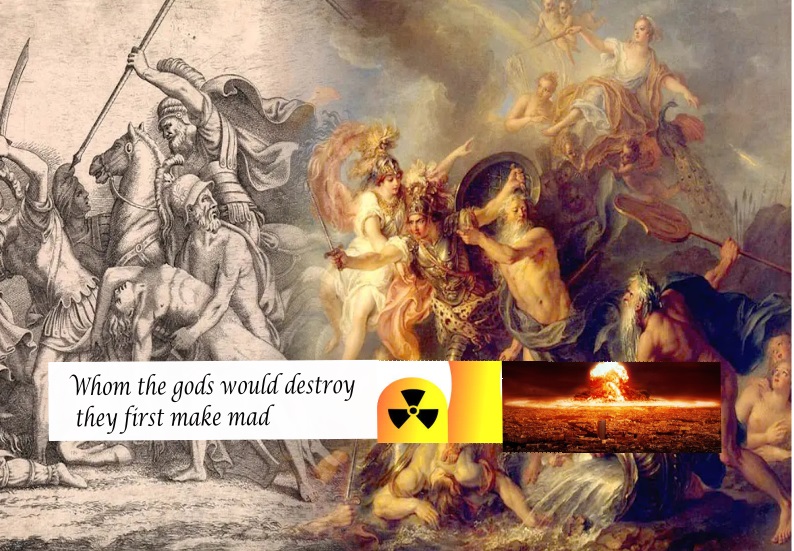
UNITED NATIONS, May 16 2024 (IPS) – As the ancient Greek saying goes: those whom the Gods wish to destroy, they first drive them mad. Perhaps destruction is too far-fetched here, but madness is closer home—in Washington DC
With the 7-month-old Israeli-Gaza conflict showing no positive signs of a permanent solution, there is a lingering sense of growing political craziness in Capitol Hill, the seat of the US government, once described as Israeli-occupied territory.
Last week Lindsey Graham, a senior Republican senator from South Carolina, who once chaired the Senate Committee on the Judiciary, implicitly advised Israel it should drop nuclear bombs over Gaza—perhaps ignorant of the fact that a nuclear fallout will also destroy parts of Israel.
In a TV interview, Graham advised Israel: “Do whatever you have to do to survive as a Jewish state”—as he compared Israel’s war on Gaza to the US war with Japan during World War II.
“When we were faced with destruction as a nation after Pearl Harbor, fighting the Germans and the Japanese, we decided to end the war by bombing Hiroshima and Nagasaki with nuclear weapons,” Graham said in an interview with NBC News’ Meet the Press.
Meanwhile, Tim Walberg, a Republican House member said wiping out Gaza “should be like Hiroshima and Nagasaki” “Get it over quick”, he advised Israel.
Ramzy Baroud, a journalist and Editor of The Palestine Chronicle told IPS: “Sure, Israel is yet to drop a nuclear bomb, but it has dropped enough US bombs over the besieged Strip to create the impact of nuclear weapons.”
He pointed out that 75 percent of Gaza has been destroyed, and about 5 percent of the population have been killed or wounded. This was done by Biden and his supposedly softer approach, if compared to Graham, to the war.
“This is indeed madness, but, in a sense, it also reflects a degree of desperation,” said Baroud.
Meanwhile, 12 US Republican senators, including Senate Minority Leader Mitch McConnell, have openly threatened the International Criminal Court (ICC) with sanctions if they target Israeli officials.
The threat is directed at both ICC officials and their family members — if and when, the Court moves forward with international arrest warrants against Israeli leaders over the war in Gaza.
“Target Israel and we will target you. If you move forward with the measures indicated in the report, we will move to end all American support for the ICC, sanction your employees and associates, and bar you and your families from the United States,” read the April 24 letter.
“You have been warned,” the letter added.
Norman Solomon, executive director, Institute for Public Accuracy, told IPS the goal posts on the USA’s political field have been dragged rightward since last autumn by the combined forces of standard militarism, craven political jockeying, biased mass-media coverage and ferocious pro-Israel messaging.
The countervailing force in the United States is coming from grassroots opposition to Israel’s mass murder and rejection of its support provided by the U.S. political establishment.
Often led by activists in such organizations as Jewish Voice for Peace and If Not Now, the highly visible protests last fall and winter seeded the ground for the upsurge in student-led protests in recent weeks on U.S. college campuses, he said.
This nonviolent grassroots resistance to Israeli genocide and oppression of Palestinian people has shocked the traditional American Zionist establishment and its allies in the leadership of the Democratic Party.
“The growing resistance has also provoked an extreme reactionary response from right-wing media outlets such as Fox News and many dozens of Republicans in Congress who have vocally and mendaciously denounced efforts to end the slaughter, which is subsidized by U.S. taxpayers to the benefit of both the fascistic Israeli government and military contractors based in the United States”, he argued.
“The flagrantly racist and ethnocentric reactions of Republican leaders, combined with the rhetorical Democratic vacillation that continues to support the Israeli-inflicted carnage in Gaza, comprise the two wings of U.S. governance. Most young Americans, in particular, are now emphatically opposed to both wings enabling the genocide,” he noted.
This is an ongoing political struggle over whether the U.S. government will continue to support Israel as it pursues its systematic slaughter of civilians in Gaza, declared Solomon, national director, RootsAction.org and author of, “War Made Invisible: How America Hides the Human Toll of Its Military Machine.”
https://www.commondreams.org/opinion/campus-protests-gaza
In their letter to Karim A. Khan, ICC Prosecutor, the 12 Senators say: “We write regarding reports that the International Criminal Court (ICC) may be considering issuing international arrest warrants against Prime Minister Benjamin Netanyahu and other Israeli officials. Such actions are illegitimate and lack legal basis, and if carried out will result in severe sanctions against you and your institution.
By issuing warrants, you would be calling into question the legitimacy of Israel’s laws, legal system, and democratic form of government. Issuing arrest warrants for the leaders of Israel would not only be unjustified, it would expose your organization’s hypocrisy and double standards.
“Neither Israel nor the United States are members of the ICC and are therefore outside of your organization’s supposed jurisdiction. If you issue a warrant for the arrest of the Israeli leadership, we will interpret this not only as a threat to Israel’s sovereignty but to the sovereignty of the United States.”
IPS UN Bureau Report
1 This Month
15 October. Joint Appeal for Nuclear Abolition Day -presentation to the UN on October 15 will be live on UNWebTV
Endorse the Nuclear Abolition Day Appeal
23-25 October – on Zoom – World BEYOND War’s annual global conference

To see nuclear-related stories in greater depth and intensity – go to https://nuclearinformation.wordpress.com
-
Archives
- October 2026 (149)
- September 2026 (339)
- August 2026 (330)
- July 2026 (355)
- June 2026 (287)
- May 2026 (306)
- April 2026 (356)
- March 2026 (251)
- February 2026 (267)
- January 2026 (308)
- December 2025 (358)
- November 2025 (359)
-
Categories
- 1
- 1 NUCLEAR ISSUES
- business and costs
- climate change
- culture and arts
- ENERGY
- environment
- health
- history
- indigenous issues
- Legal
- marketing of nuclear
- media
- opposition to nuclear
- PERSONAL STORIES
- politics
- politics international
- Religion and ethics
- safety
- secrets,lies and civil liberties
- spinbuster
- technology
- Uranium
- wastes
- weapons and war
- Women
- 2 WORLD
- ACTION
- AFRICA
- Atrocities
- AUSTRALIA
- Christina's notes
- Christina's themes
- culture and arts
- Events
- Fuk 2022
- Fuk 2023
- Fukushima 2017
- Fukushima 2018
- fukushima 2019
- Fukushima 2020
- Fukushima 2021
- general
- global warming
- Humour (God we need it)
- Nuclear
- RARE EARTHS
- Reference
- resources – print
- Resources -audiovicual
- Weekly Newsletter
- World
- World Nuclear
- YouTube
-
RSS
Entries RSS
Comments RSS

