Spy cop ‘made up absurd bomb plot’ over nuclear waste on railway route
Undercover officer infiltrated ‘anarchist movement’ in the early 1980s
Friday, 9th August — By Tom Foot, https://www.islingtontribune.co.uk/article/spy-cop-made-up-absurd-bomb-plot-over-nuclear-waste-on-railway-route
A SPY cop’s report about a plot to blow up North London Line trains transporting nuclear waste was an absurd fantasy used to justify a top secret undercover unit’s existence, an inquiry has heard.
An officer who infiltrated the “anarchist movement” in the early 1980s claimed “people against the nuclear programme built a bomb” that was “actually found” on the overground railway that runs through Islington.
The route goes through Highbury and Islington station and has recently been renamed the Mildmay Line by London Mayor Sadiq Khan.
The explosive claims from Roger Pearce, known to the inquiry as officer HN85, are discredited by several activists in statements published by the Undercover Policing Inquiry for the first time this week.
The statements tell how for many years nuclear waste was transported on the line from power stations in Kent, Suffolk and Essex to Sellafield, Cumbria.
The documents show how peace groups feared a terrorist attack on the trains could cause a national emergency and considered planting a fake bomb on the network for publicity.
The witness statement from Michael Zeitlin, a campaigner for the anti-nuclear movement, said: “I firmly believe that HN85 has deliberately suggested that a real bomb was planted in order to elevate the status of his reports and so justify his spying.
“I am convinced that any possible ‘bomb on the North London Line’ refers to informal discussions of placing a fake bomb as a publicity stunt, in order to draw attention to the threat created by the transportation of nuclear waste through residential areas.
“The idea that an actual bomb would have been planted is patently absurd as the whole issue was one of public safety. Such a bomb plot does sounds very much like fiction as might be found in a novel.”
The documentss show how a meeting of the Hampstead CND branch had heard discussions about “some form of action to protest against the transportation of nuclear fuel” but this had been “completely taken out of context and then grossly exaggerated” by the undercover officer.
Mr Pearce’s statement to the inquiry said: “There were people who were prepared to take violent action against the nuclear policy of the UK and I felt this provided justification for reporting on them.
“People against the nuclear programme, including anarchists who were my associates, built a bomb on the North London Line which transport nuclear waste.”
The inquiry docs show how Roger Pearce – there is no reporting restriction on using his name – trained as an Anglican Priest at Durham before joining the police in 1973.
He joined the Special Demonstration Squad that was set up by the Met to “prevent violent disorder” but led to officers spying on dozens of left-wing organisations and pacifist groups over four decades with little to no gain.
Training for the “top secret unit” took place at Holborn police station, Mr Pearce’s witness statement reveals, while recruitment took place on a “tap on the shoulder in the corridor” basis.
He chose the “legend” Adrian Roger Thorley, a name taken from a child who was killed in a road accident in in Stoke on Trent, and lied about being a van driver delivering spare parts for the car company Ford.
He lived in a “cover flat” off the Goldhawk Road in west London and wore red and black with shoes with “worn through soles”, claiming he was given the prestigious nickname “Trotsky” by activists he was spying on.
“Using a deceased child’s identity was a distasteful practice and a violation of privacy but we felt it would never be revealed,” his statement said.
The UCP Inquiry was launched in 2017 after it was revealed that some SDS officers used names of dead children and fathered children with activists.
Huge resources were ploughed into the discredited project with critics saying the ends did not justify the means.
More than one million documents have been submitted to the inquiry –already the longest and most expensive in British history – that is not expected to conclude until 2026.
Radiation monitoring keeps track of nuclear waste contamination

Nuclear reactors – whether operational or undergoing decommissioning –
create radioactive waste. Management of this waste is a critical task and
this practice has been optimized over the past few decades. Nevertheless,
strategies for nuclear waste disposal employed back in the 1960s and 70s
were far from ideal, and the consequences remain for today’s scientists
and engineers to deal with.
In the UK, spent nuclear fuel is typically
stored in ponds or water-filled silos. The water provides radiation
shielding, as well as a source of cooling for the heat generated by this
material.
In England and Wales, the long-term disposal strategy involves
ultimately transferring the waste to a deep geological disposal facility,
while in Scotland, near-surface disposal is considered appropriate.
The problem, however, is that some of the legacy storage sites are many decades
old and some are at risk of leaking. And when this radioactive waste leaks
it can contaminate surrounding land and groundwater. The potential for
radioactive contamination to get into the wet environment is an ongoing
problem, particularly at legacy nuclear reactor sites.
“The strategy for waste storage 50 years ago was different to that used now. There wasn’t
the same consideration for where this waste would be disposed of long
term,” explains Malcolm Joyce, distinguished professor of nuclear
engineering at Lancaster University. “A common assumption might have been
‘well it’s going to go in the ground at some point’ whereas actually,
disposal is a necessarily rigorous, regulated and complicated programme.”
In one example, explains Joyce, radioactive waste was stored temporarily in
drums and sited in near-surface spaces. “But the drums have corroded over
time and they’ve started to deteriorate, putting containment at risk and
requiring secondary containment protection,” he says. “Elsewhere, some
of the larger ponds in which spent nuclear fuel was stored are also
deteriorating and risking loss of containment.”
Physics World 7th Aug 2024, https://physicsworld.com/a/radiation-monitoring-keeps-track-of-nuclear-waste-contamination/
America’s Nuclear Weapons Quagmire

what are the American people really getting for all of this new nuclear weapons spending?
The United States is locked in a strategic and ideological battle with itself over the purpose and future of its nuclear arsenal
STIMSON, By Geoff Wilson, Defense Policy & Posture, August 7, 2024
The United States is on track to spend the equivalent of more than two Manhattan projects per year in one of the most expensive nuclear arms races in history. Yet, all of the systems being developed are all significantly over budget and behind schedule, and several might be actively eroding America’s national security by destabilizing global strategic stability and legitimizing the idea of “limited” nuclear use. How did we get here and might there be better alternatives?
Over the past decade, the United States has launched one of the most expensive nuclear arms races in history. As it stands now, this new nuclear modernization comes with a price tag of approximately $1.7 trillion over 30 years.1 To put this in perspective, adjusted for inflation to 2023 dollars, the four years of the Manhattan Project cost approximately $30 billion.2
The Congressional Budget Office (CBO) estimates that the United States is set to spend some $756 billion on nuclear weapons modernization programs between fiscal 2023-2032,3 which averages out to $75 billion a year on nuclear weapons. That is more than two Manhattan projects every year for the next eight years.
Put in other terms, it is nearly all the money the United States spent on nuclear weapons and delivery systems for World War II, spent every year, for the next eight years. When combined with the Department of Defense’s conventional weapons portfolio over the same period, nuclear modernization will drive annual peacetime Pentagon budgets to unprecedented levels.
If you compare the technical obstacles faced by the United States during the nuclear development of the 1940s, to the higher costs for the relatively marginal benefits of the current American nuclear modernization program, it begs the question: what are the American people really getting for all of this new nuclear weapons spending?
Nuclear weapons proponents have framed these expenses as part of a modernization effort to update and refurbish aging systems developed in the 1970’s and 80’s or as a necessity to maintain U.S. global nuclear dominance.4 But this branding masks a serious escalation in disruptive nuclear posture changes, one that includes new weapons and missions that were eliminated by former presidents Reagan and George H.W. Bush after being identified as unnecessary and destabilizing to both strategic stability and nuclear deterrence.
Set against this backdrop, it appears that the United States is in a new global nuclear arms race, a new Cold War 2.0, with the United States set firmly in the driver’s seat. But amidst increased global nuclear risks, the United States is inflicting unnecessary self-harm by expending resources on systems that may actually erode strategic stability and drawing resources away from other critical national security priorities – with very little real future security benefit to show for it.
The Problem
Fundamentally, the problem with rapid new nuclear weapons development is that it is strategically destabilizing. If one nation learns that a rival is rapidly developing systems that could overwhelm or defeat its defenses, a realist response dictates that that nation must do the same to offset any strategic advantage its rival might gain to maintain deterrent parity.
The alternatives are to consider attacking that rival before they have produced new weapons that can defeat your existing forces, or to find a way to negotiate with those rivals to produce verifiable diplomatic agreements to limit the production and deployment of new and destabilizing forces.
History provides many examples of this dynamic. The United Kingdom and Germany engaged in a serious naval arms race that contributed to the tensions preceding World War I…………………………………………….
nuclear modernization plan has now grown from just updating older systems, to the development of entirely new ones as well.
………………………………………………………….. other nuclear powers have taken notice.
Challenges of a New Global Nuclear Arms Race
Since the launch of the new modernization plan, every single nuclear-armed nation has begun redeveloping or expanding their nuclear arsenals.19
………………………………………………… Even more concerning for global strategic stability are growing calls in the United States for entirely new nuclear missions and systems. Already, the United States is in the process of developing, producing, or deploying at least three new weapons systems that can be alternatively called: less-than-deterrent, non-strategic, tactical, or battlefield nuclear weapons. These are weapons that are not meant to reinforce the deterrence-first approach that many Americans have come to believe the U.S. nuclear arsenal is based around today. Instead, they are part of a murkier Cold War-style nuclear warfighting strategy meant to fight and “win” a limited nuclear war at the theater level.
…………………………………………… This class of weapons is incredibly dangerous considering they are viewed as being smaller and less destructive and have been argued as being more usable. Add to that the fact they are traditionally meant to be deployed alongside conventional forces, and their mere possession can be seen as increasing the likelihood of their use under pressure or in crisis situations.25
They also pose a significant discrimination problem to enemy leaders, by building uncertainty into U.S. missile launches, forcing them to constantly evaluate if they are under a conventional or nuclear strike………………………………………………..
,…………………………………………….. Senator Edward Kennedy drove this issue home in 2003 when he argued on the Senate floor, “Some may say that smaller weapons are less dangerous than the larger weapons already in our arsenal. But these nuclear weapons are actually more dangerous… [and they are made] more usable by lowering the thresholds for the first use of nuclear weapons.”
Kennedy warns that this view is deceptive, “Nuclear war is nuclear war is nuclear war. We don’t want it anywhere, anytime, anyplace. Make no mistake, a mini-nuke is still a nuke. ……………………………………………………………………………
…………………………Nuclear Brass Tacks
On the whole, the extremely high costs of these weapons will be a significant factor in the coming defense spending crisis. Spending $1.7 trillion dollars on new nuclear weapons over 30 years – about the total cost of all U.S. student debt – is unsustainable.29
The U.S. defense industrial base has so far proven itself incapable of actually absorbing all of the new nuclear spending. Even if it could, the risks of rampant waste and production delays challenge the industry’s ability to produce these weapons. It thus becomes difficult to say whether or not the United States is actually reaping any benefit from this modernization effort while actively encouraging its rivals to also make new nuclear investments to maintain their own perceived deterrent.
Indeed, national security establishment leaders have been so concerned with whether they can spend more money on nuclear weapons, there has been very little consideration of whether they should.
…………………………………………………………………………………………………………………….. Conclusion
Among the lessoned learned from the first Cold War, the conflict demonstrated that simply possessing more nuclear weapons did not make the United States any safer. While humanity survived the last nuclear arms race, that outcome was far from certain, and the prospect of a new game of nuclear chicken in the Pacific or Europe should be viewed with as much cynicism as can be mustered………………………………………………………………………………… https://www.stimson.org/2024/americas-nuclear-weapons-quagmire/
Why US nuclear waste policy got stalled. And what to do about it.

The lack of a repository doesn’t seem to worry nuclear enthusiasts anymore, probably because it doesn’t threaten what reactor licensing there is. Recent legislation—the ADVANCE Act—to accelerate approval of new nuclear technologies does not mention nuclear waste at all. The focus is on subsidizing new reactor projects and “streamlining” licensing.
A difficulty is that current law requires that, before the Energy Department can go forward with a surface storage facility to consolidate the used fuel, it has to have already selected a new geologic repository site, which isn’t happening.
Bulletin, By Victor Gilinsky | July 31, 2024, Victor Gilinsky is a physicist and was a commissioner of the US Nuclear Regulatory Commission during the Ford, Carter, and Reagan administrations
It is often said—somewhat accusingly—that it isn’t technical issues that stand in the way of siting a US geologic repository for highly radioactive waste, but political and social ones. In fact, the issues are inextricably connected. The root of the US failure lies in the original motive of the nuclear establishment in siting such an underground repository. It was not to protect public safety, but to protect continued licensing of nuclear power plants from attack in the courts on grounds that there were no provisions for dealing with the plants’ highly radioactive waste.
The disdain for public safety and the rush to open a repository infected the design process and fostered slapdash decisions. These ultimately sank the technical case for the repository at Nevada’s Yucca Mountain. And while in the end the project was shelved by a political act, behind it were Energy Department and Nuclear Regulatory Commission (NRC) actions that left a deep residue of public distrust, so deep that there isn’t likely to be a US geologic repository, ever.
The contrast with successful waste repository projects in Sweden and Finland is clear. Their regulatory standards were much tighter than those applied by the NRC, the sites were chosen carefully from a scientific point of view, and the designs strictly focused on public safety. It is not surprising that the Scandinavian authorities were able to gain the confidence of their public, and not just because they took pains to consult the public—which the Energy Department did not. They presented a good case for a sound underground facility.
Waste become a problem. ………………………………………………..
Selecting a bad site. Yucca Mountain was initially advertised as being very dry. It turned out there was lots more water in the mountain than the Department expected……………………………. It became clear the waste canisters would corrode much more rapidly than forecast and radioactive leakage beyond the site boundary would exceed even the lax standards imposed by the Environmental Protection Agency and adopted by the NRC……
A flawed licensing process. While the Energy Department wanted credit for the 11,000 drip shields in the NRC review of its license application, it didn’t intend to install them with the waste canisters. For one thing, the cost of the needed 55,000 tons of titanium alloy was substantial, and putting in drip shields would have complicated the waste installation process and required new, as yet undesigned, equipment. Instead, the Energy Department’s plan “postponed” drip shield installation until the repository closed for good, in 100-300 years. But by then it would be impossible to install drip shields over the waste canisters: The internal underground transportation system would not be functioning, and rockfall would anyhow make passage impossible. Asked how the NRC could possibly accept this fantastical commitment, I remember an Energy Department official responding that “the NRC may not question the promise of a sister agency.”
The Energy Department refused to run any computer analyses on how the repository would perform if the drip shields didn’t get installed. Nevada managed to do this and found that, without drip shields, the repository failed the licensing requirement for radioactive leakage from the site. ………………………………………………………
NRC staff participates in all agency licensing hearings. Since at that point staffers had already reviewed the application favorably, they supported the license applicant. In the Yucca Mountain case, the staff outdid itself in its support of the Energy Department. …………………………..
Stop the stalemate. The Yucca Mountain project was stalled indefinitely by the Obama administration before any substantive licensing hearing took place. It was not irrelevant that Nevada Senator Harry Reid was the Democratic majority leader, and his former assistant was NRC chairman. But the technical failures were a vital part of the background leading to this decision.

The 2012 report of a “Blue Ribbon Commission on America’s Nuclear Future” recommended a “consent-based approach” to managing nuclear waste. The Energy Department got religion and formed an Office of Consent-Based Siting, whose website explains that consent-based siting “prioritizes the participation and needs of people and communities and seeks their willing and informed consent to accept a project in their community.” But the department still didn’t get it. It’s not making a show of consulting the public that gains trust. You need a good technical plan to start with and demonstrated competence and sense of responsibility to carry it out, as was the case in the Scandinavian countries. In my judgment, it’s too late for the Energy Department. I don’t think any state would ever trust the Energy Department to build and operate a nuclear waste repository.
The lack of a repository doesn’t seem to worry nuclear enthusiasts anymore, probably because it doesn’t threaten what reactor licensing there is. Recent legislation—the ADVANCE Act—to accelerate approval of new nuclear technologies does not mention nuclear waste at all. The focus is on subsidizing new reactor projects and “streamlining” licensing.
The United States, however, does need a better system for storing highly radioactive used fuel than the current situation of keeping it at over 80 storage locations in 36 states. A difficulty is that current law requires that, before the Energy Department can go forward with a surface storage facility to consolidate the used fuel, it has to have already selected a new geologic repository site, which isn’t happening. This restriction was inserted into the Nuclear Waste Policy Act to prevent the government from siting a “temporary” storage facility and then giving up on an underground repository for permanent disposal of the waste. Now, because of this restriction, the United States has neither centralized storage nor a repository, and the waste keeps piling up. Relaxing the provision in the Nuclear Waste Policy Act that has prevented temporary consolidated storage has to be the starting point of a sensible nuclear waste policy. https://thebulletin.org/2024/07/why-us-nuclear-waste-policy-got-stalled-and-what-to-do-about-it/?utm_source=Newsletter+&utm_medium=Email+&utm_campaign=ThursdayNewsletter08012024&utm_content=NuclearRisk_NuclearWastePolicyStalled_07312024
The deceitfulness of the nuclear weapons industry -as it plays the jobs jobs jobs card

World-Ending Maneuvers? Inside the Nuclear-Weapons Lobby Today, TomDispatch, By Hekmat Aboukhater and William D. Hartung August 7, 2024
“……………………………………………………………………………Playing the Jobs Card
The argument of last resort for the Sentinel and similar questionable weapons programs is that they create well-paying jobs in key states and districts. Northrop Grumman has played the jobs card effectively with respect to the Sentinel, claiming it will create 10,000 jobs in its development phase alone, including about 2,250 in the state of Utah, where the hub for the program is located.
As a start, however, those 10,000 jobs will help a miniscule fraction of the 167-million-member American workforce. Moreover, Northrop Grumman claims facilities tied to the program will be set up in 32 states. If 2,250 of those jobs end up in Utah, that leaves 7,750 more jobs spread across 31 states — an average of about 250 jobs per state, essentially a rounding error compared to total employment in most localities.
Nor has Northrop Grumman provided any documentation for the number of jobs the Sentinel program will allegedly create. Journalist Taylor Barnes of ReThink Media was rebuffed in her efforts to get a copy of the agreement between Northrop Grumman and the state of Utah that reportedly indicates how many Sentinel-related jobs the company needs to create to get the full subsidy offered to put its primary facility in Utah.
A statement by a Utah official justifying that lack of transparency suggested Northrop Grumman was operating in “a competitive defense industry” and that revealing details of the agreement might somehow harm the company. But any modest financial harm Northrop Grumman might suffer, were those details revealed, pales in comparison with the immense risks and costs of the Sentinel program itself.
There are two major flaws in the jobs argument with respect to the future production of nuclear weapons. First, military spending should be based on security considerations, not pork-barrel politics. Second, as Heidi Peltier of the Costs of War Project has effectively demonstrated, virtually any other expenditure of funds currently devoted to Pentagon programs would create between 9% and 250% more jobs than weapons spending does. If Congress were instead to put such funds into addressing climate change, dealing with future disease epidemics, poverty, or homelessness — all serious threats to public safety — the American economy would gain hundreds of thousands of jobs. Choosing to fund those ICBMs instead is, in fact, a job killer, not a job creator……………………………… https://tomdispatch.com/world-ending-maneuvers/
The United States is launching a new nuclear arms race: to catch up and outsmart Russia and China

August 6th, 2024
Подробнее: https://eadaily.com/en/news/2024/08/06/the-united-states-is-launching-a-new-nuclear-arms-race-to-catch-up-and-outsmart-russia-and-china
Under the slogan of “nuclear deterrence”, the United States began investing in nuclear weapons. Washington plans to modernize and adopt new systems in order to catch up with Russia and China and be able to confront two adversaries at once.
“As a result of investments made under the Obama, Trump and Biden administrations, NNSA was able to deliver more than 200 upgraded nuclear weapons to the Department of Defense last year. This is our largest delivery in one year since the end of the Cold War,” Jill Hruby, administrator of the National Nuclear Safety Administration (NNSA), said at the breakfast of the National Institute for Deterrence Studies “Peace through Strength.“
She noted that the situation with US nuclear weapons has undergone significant changes compared to what it was just a few years ago. The representative of the NNSA explained the reasons for the sharp turn in US policy by external threats.▼ читать продолжение новости ▼
“This is a unique, unprecedented time in the field of global nuclear security. We face growing threats of nuclear weapons from Russia and an expanding nuclear arsenal in China. Russia has deployed nuclear weapons in Belarus, strengthened its partnership with China, and developed new military partnerships with North Korea and Iran.… It is also exploring the possibility of using nuclear weapons in space, which poses an asymmetric threat to the West. In addition to ramping up the pace of nuclear weapons production, China has demonstrated an amazing ability to improve its delivery systems, including deploying hypersonic missiles faster than the United States. If this direction does not change, China will become an equal nuclear adversary with significant economic power,” said Jill Hurby.
In her opinion, the current situation represents a fundamentally different “nuclear” landscape than the last 80 years.
“In general, this is a less predictable and more dangerous time, and our thinking about deterrence needs to be adjusted,” the representative of the department explained. She added that the situation is complicated by the fact that nuclear power is on the verge of revival to combat climate change.
“If this renaissance happens, there will be more nuclear materials and know-how in the world than ever before. In addition, advanced nuclear reactor technology is likely to use higher-grade low-enriched uranium instead of 5 percent low-enriched uranium. Reactor types and reactor fuels are likely to evolve. Despite the fact that this renaissance will bring the necessary options for an environmentally friendly electric power base, it will challenge the current nuclear non—proliferation regime,” the NNSA also notes the potential of breakthrough technologies such as artificial intelligence, which can simplify and accelerate the design of nuclear devices.
But for now, the United States is focusing on confrontation with Russia and China.
“Russia and China are ready to change and expand their nuclear arsenals. But so will we, if we continue to invest and support the program. This means that although we are facing a deteriorating global security situation, we do not need to panic. There is still a lot of work to do, but we also need to prepare well, take the time and think intelligently about the future,” Jill Hurby continued.
According to her, over the past few years, the United States has continued to implement five programs to modernize the weapons of the nuclear triad (strategic aviation, intercontinental ballistic missiles and nuclear submarines).
“Last year we added two more types of weapons to the existing program. These new systems directly respond to emerging deterrence needs and expand the nuclear capabilities available to the president,” the NNSA representative said that we are talking about the B61—13 nuclear bomb and the SLCM−N sea-based cruise missile.
“We now have seven systems that should be developed and put into production by the mid-2030s. This program is not only a major modernization of all three components of the nuclear triad, but also adds new deterrence capabilities that do not currently exist,” said Jill Hurby.
According to her, for 2025, NNSA has applied for the allocation of $ 25 billion from the state budget.
Since the end of the Cold War, a significant part of the scientific and industrial infrastructure in the United States has fallen into disrepair and needs to be restored and modernized, the NNSA representative noted.
“Some of the buildings that we currently use for key processes belong to the Manhattan project or use manufacturing technologies that are less safe and efficient than modern methods. Therefore, in our budget request over the past few years, approximately equal amounts have been spent on inventory modernization and infrastructure modernization,” said Jill Hurby.
The main priority, she added, is to restore the ability to produce new plutonium cores.:
“NNSA is implementing a production strategy at two sites at Los Alamos National Laboratory in New Mexico and at the Savannah River site in South Carolina. When both sites are fully operational, we expect that we will have the necessary capacity: Los Alamos will produce 30 cores per year, and Savannah River will produce at least 50.”
The construction of a uranium processing plant in Tennessee is also considered a priority in the United States. It is planned to complete its construction in 2027, and bring it to full capacity by 2031.
This year, the United States is completing work on the creation of a scheme that will identify high-priority facilities needed for science, production, safety and security until 2050.
“Our thinking about deterrence needs to be changed in order to create an effective deterrence of two equal opponents. Although we all recognize that Russia and China are innovating in their means of deterrence, we have not yet fundamentally changed our own thinking. But we know that we need to outsmart our opponents. It’s time to start this work seriously, not in a panic,” added Jill Hurby.
Biden administration lies on Ukraine war are monstrous

https://heartlandprogressive.blogspot.com/ 6 Aug 24
Notice mainstream news has imposed a virtual blackout of news about US proxy war against Russia in Ukraine. One can watch 24/7 and see nary a story on a war that could go nuclear in a heartbeat.
Couple of reasons for this. Mainstream news understands the US is suffering a staggering defeat in its effort to save its proxy state Ukraine in order to weaken Russia. Neither Republican nor Democratic media want to touch covering America’s dysfunctional war policy. Bleeding only leads when it’s the other side doing all the bleeding.
A second reason is media fatigue from the Biden administration endless lies for all 30 months of this war without a single truth worth reporting.
The original and biggest lie was the one that kicked off this war on February 24, 2022. Biden claimed Russian President Putin woke up one morning and decided to recreate the Soviet Union…starting by gobbling up Ukraine.
The truth is the US had been provoking the Russian invasion starting with President George W. Bush’s 2008 pledge to entice Ukraine into NATO to weaken, isolate Russia. Russia allowing this senseless US provocation to go on for 14 years is something America would never have done if the situation were reversed. It took the US about 14 hours to respond militarily to Russian missiles in Cuba 60 years earlier.
Biden’s next big whopper was framing the resulting conflict as democracy versus authoritarianism. He proclaimed Ukraine President Volodymyr Zelensky ‘The 21st Century Churchill’, saving Ukrainian democracy from Russian authoritarianism.
But for the past 30 months Zelensky has snuffed out every vestige of the touted Ukraine democracy. He’s cancelled elections under martial law, essentially making him president for the war’s life. No wonder he’s doing nothing to negotiate its end. When the war ends, so does Zelensky’s grasp on power, and possibly his life.
Additionally, Zelensky has banned opposition parties, squelched Ukraine’s free press, curtailed religious freedom and erased any hint of Russian culture among Ukrainian citizens so inclined.
But Biden’s most monstrous lie was that he’d do nothing in supporting Ukraine that could trigger nuclear war, something he said was a real possibility.at the war’s start. For 30 months he’s done the opposite, steadily arming Ukraine with nuclear capable F-16 fighters, Abram tanks and long-range missiles that can hit the heart of Russia. Telling Ukraine to be cautious not to provoke nuclear war with them is akin to giving matches to a kid, then telling him to use them judiciously.
There are many more in Biden’s blizzard of lies over the US proxy war in Ukraine. The saddest for the dying country of Ukraine being sacrificed on the altar of Biden’s lust to weaken, isolate Russia is this. “We will stand with Ukraine forever. We will never abandon Ukraine to Russian aggression.” Biden abandoned Ukraine 30 months ago. The US press and citizenry, weary of Biden’s endless lies on Ukraine, have moved on.
‘It made me cry’: photos taken 15 years apart show melting Swiss glaciers

A tourist has posted “staggering” photos of himself and his wife at
the same spot in the Swiss Alps almost exactly 15 years apart, in a pair of
photos that highlight the speed with which global heating is melting
glaciers. Duncan Porter, a software developer from Bristol, posted photos
that were taken in the same spot at the Rhône glacier in August 2009 and
August 2024. The white ice that filled the background has shrunk to reveal
grey rock. A once-small pool at the bottom, out of sight in the original,
has turned into a vast green lake. “Not gonna lie, it made me cry,”
Porter said in a viral post on social media platform X on Sunday night.
Guardian 6th Aug 2024
EU member warns West not to ‘burn bridges’ with Russia

“Ghosting” doesn’t work in international relations, Austrian Foreign Minister Alexander Schallenberg has said
30 Jul 2024 https://www.rt.com/news/601844-austria-west-burn-bridges-russia/
Austrian Foreign Minister Alexander Schallenberg has warned against “ghosting” Russia when it comes to peace efforts to resolve the Ukraine conflict, insisting that all channels of communication should be used.
The diplomat’s comments come after condemnation from EU officials over Hungarian Prime Minister Viktor Orban’s visit to Russia earlier this month as part of his Ukraine “peace mission.”
“One cannot burn all bridges… Ghosting doesn’t work in foreign policy. I’m a realist and I have to deal with the world as it is, and Russia is part of it,” Schallenberg told Austrian broadcaster ORF on Sunday.
Last month, Switzerland hosted a ‘Peace in Ukraine’ summit to which Russia was not invited. The event focused on Ukrainian leader Vladimir Zelensky’s ‘peace plan’ to end the conflict, which calls on Russia to withdraw from all territories that Kiev claims as its own. The plan has been dismissed by Moscow as being detached from reality.
Schallenberg added that there are “channels of communication” with Russia and insisted that they must be used.
Austria is an EU member but is not part of NATO. Like Hungary, Vienna announced last year that it would not send weapons to Ukraine, countering the trend among the EU. Schallenberg last week also ruled out sending Austrian military instructors to Ukraine.
In March, Austrian Chancellor Karl Nehammer spoke against the idea of using the profits from Russian assets frozen in the EU to provide weapons for Kiev.
In his interview on Sunday, Schallenberg also claimed Russia was not showing willingness to engage in “serious dialogue,” which he said makes it important to involve countries such as India, Brazil, and China in talks, “because they may have more influence on Moscow than others.”
During his controversial peace mission, Orban also visited China, which has long insisted on a diplomatic resolution to the Ukraine conflict. Beijing did not send a delegation to the conference in Switzerland in June, despite being invited.
Russia has repeatedly stated that it is open to dialogue on Ukraine. It has pointed out, however, that any talk of negotiations is pointless unless Zelensky rescinds a law banning Kiev from negotiating with the current leadership in Moscow.
Extreme heat in South Korea kills 11 and decimates livestock
Eleven people and more than 250,000 livestock have died in extreme heat in
South Korea as record temperatures continue across Asia. The number of
people treated in hospital for heat-related conditions since May is 1,546,
the interior ministry said on Monday. Three women died at the weekend after
losing consciousness, raising the death toll to 11 over the past three
months.
Times 5th Aug 2024
UK’s Astute nuclear submarines stuck in port waiting for maintenance
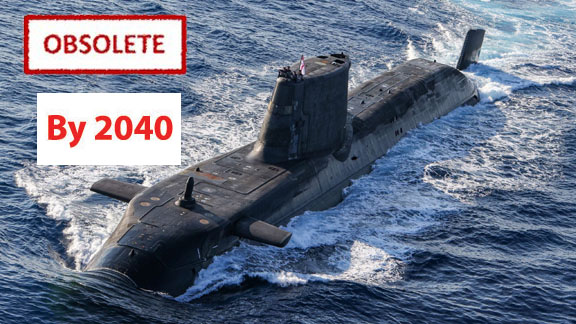
No Astute-class boat — the Royal Navy’s largest and most powerful — has completed an operational voyage this year
Britain’s “hunter-killer” submarines have been stuck in port for up
to two years because of a shortage of maintenance docks. The Astute-class
submarines, the newest in the Royal Navy’s fleet, were designed to hunt
Russian submarines and torpedo targets from up to 14 miles away. They are
the largest and most powerful attack submarines the navy has operated.
However, none of the class has completed an operational voyage so far this
year, while one has been stuck in Faslane — HMNB Clyde — for two years,
The Sun reported.
Times 5th Aug 2024
Radioactive Waste Management – Public Attitudes Survey for Scotland

5 August 2024, Director-General Net Zero Directorate, Environment and Forestry Directorate https://www.gov.scot/publications/radioactive-waste-management-public-attitudes-survey-scotland/
This report summarises findings from a representative survey of the Scottish public that provides new insights into the perceptions and views towards radioactive waste management in Scotland.
Research Context
The Scottish Government commissioned independent researchers, Diffley Partnership, to conduct a public attitudes survey for Scotland exploring attitudes towards radioactive waste management. The primary aim of this study was to design and deliver research that will help develop a deeper understanding of the views of the Scottish public on a range of radioactive waste management issues, including safety and trust in government and industry.
Approach
An online survey was used to measure public attitudes to radioactive waste management. The survey was conducted between 8th and 11th January 2024 and received 2,160 responses. The questionnaire contained both closed questions (analysed quantitatively) and open response questions (analysed qualitatively).
Key Findings
Knowledge of Radioactive Waste Management
Self-reported levels of knowledge of radioactive waste management among respondents were limited. The vast majority (89%) of respondents reported that they were either not very well informed or not at all informed about radioactive waste management in Scotland.
There was a mixed appetite for more information, with just over half of respondents (55%) indicating they would like to know more about radioactive waste management.
Respondents placed the most trust in scientists/academics to provide information on radioactive waste management over other bodies and institutions such as the nuclear industry, the Scottish Government and the media.
The majority of respondents believed that the regulators of the Scottish Nuclear Industry (82%), the Scottish Nuclear Industry itself (81%) and the Scottish Government (79%) should do more to educate the public about radioactive waste management.
Attitudes towards Radioactive Waste Management
Most respondents agreed that public education is important in the management of radioactive waste (70%).
Overall, there was clear recognition that it is vital for Scotland to have a robust strategy for radioactive waste management (84%). This was linked with concerns about the impact of radioactive waste management on the environment (72%), future generations (68%) and health (55%).
Priorities in Radioactive Waste Management
The protection of human health was the biggest priority in radioactive waste management among the respondents, followed closely by the protection of the environment and the security of radioactive waste management facilities.
Safe containment of radioactive waste (64%) and the protection of the environment (67%) were the highest perceived benefits in the creation of new facilities for managing radioactive waste.
Potential for radioactive leaks (72%) was one of the main concerns about the development of new facilities, along with the possible environmental effects (73%) and health impacts (71%).
Decision-Making in Radioactive Waste Management
Most respondents felt that they have no influence over decision making processes relating to radioactive waste management, either locally (75%) or nationally (67%).
Respondents who stated that they have no influence over decision making felt this way because they felt decisions are made without talking to people (61%), that they have no opportunity to have an influence (48%) and they don’t know how to influence decision making (39%).
There was a mixed appetite for wanting to be involved in decision making with just under half of respondents (47%) wanting to be involved.
Too short, ill-timed and clumsy: Welsh Nuclear Free Local Authorities critical of Trawsfynydd radioactive waste consultation

https://www.nuclearpolicy.info/news/too-short-ill-timed-and-clumsy-welsh-nflas-critical-of-trawsfynydd-consultation/ 6 Aug 24
The Nuclear Free Local Authorities are critical of a recent consultation conducted by Natural Resources Wales on plans to leave low-level radioactive building waste in-situ at the former Trawsfynydd nuclear power station and remain fearful that without remedial action in the long-term there could be further contamination that runs off into the lake.
Natural Resources Wales launched its consultation on plans by Nuclear Restoration Services on 6 July and this has just ended today.
The NFLAs made clear in its response its criticism of the timetable and process. NRW only allowed a four-week window for responses on the proposals, despite a typical consultation period in the nuclear industry being twelve weeks. The consultation was also held during summer holiday season when many people take holidays with their families. NRW also made things worse by failing to publish all the documents relating to the consultation on their website; instead interested parties had to ring, or email, a case officer to obtain them after an inevitable delay. Other enquirers reported to the NFLA Secretary that they had been informed there would be a charge for supplying the documents. Consequently, we described the consultation as ‘too short, ill-timed and clumsy’.
Nuclear Restoration Services which is responsible for decommissioning the former Trawsfynydd plant and safely deal with the residual radioactive waste is proposing to leave contaminated building rubble on site by burying it in the now redundant cooling pond complex and covering them with a concrete cap.
The NFLAs are concerned that this will prove an inadequate long-term solution as a report published by the International Atomic Energy Agency detailed issues with historic contamination of the joints in the ponds, and contamination from the ponds of surrounding land.
Trawsfynydd Lake was also routinely the permitted dumping ground for radioactive liquid discharges from the plant, including the water from the cooling ponds when they became redundant, and so it is contaminated. A scientific study indicated that there were abnormal levels of cancer amongst residents of the local area, including amongst some who have consumed the trout that were introduced into the lake and are now fished.
The NFLAs are obviously anxious to ensure that no more radioactive contamination can come from the rubble, however low level, into the land or lake and we would like to see Nuclear Restoration Services to either look to build a bespoke above ground facility or at least look to place the rubble into a relined cooling pond complex.
World-Ending Maneuvers? Inside the Nuclear-Weapons Lobby Today

A prime example of the power of the nuclear weapons lobby is the Senate ICBM Coalition. That group is composed of senators from four states — Montana, North Dakota, Utah, and Wyoming — that either house major ICBM bases or host significant work on the Sentinel. Perhaps you won’t be surprised to learn that the members of that coalition have received more than $3 million in donations from firms involved in the production of the Sentinel over the past four election cycles. Nor were they alone. ICBM contractors made contributions to 92 of the 100 senators and 413 of the 435 house members in 2024. Some received hundreds of thousands of dollars.
TomDispatch, By Hekmat Aboukhater and William D. Hartung August 7, 2024
The Pentagon is in the midst of a massive $2 trillion multiyear plan to build a new generation of nuclear-armed missiles, bombers, and submarines. A large chunk of that funding will go to major nuclear weapons contractors like Bechtel, General Dynamics, Honeywell, Lockheed Martin, and Northrop Grumman. And they will do everything in their power to keep that money flowing.

This January, a review of the Sentinel intercontinental ballistic missile (ICBM) program under the Nunn-McCurdy Act — a congressional provision designed to rein in cost overruns of Pentagon weapons programs — found that the missile, the crown jewel of the nuclear overhaul plan involving 450 missile-holding silos spread across five states, is already 81% over its original budget. It is now estimated that it will cost a total of nearly $141 billion to develop and purchase, a figure only likely to rise in the future.
That Pentagon review had the option of canceling the Sentinel program because of such a staggering cost increase. Instead, it doubled down on the program, asserting that it would be an essential element of any future nuclear deterrent and must continue, even if the funding for other defense programs has to be cut to make way for it. In justifying the decision, Deputy Defense Secretary William LaPlante stated: “We are fully aware of the costs, but we are also aware of the risks of not modernizing our nuclear forces and not addressing the very real threats we confront.”
Cost is indeed one significant issue, but the biggest risk to the rest of us comes from continuing to build and deploy ICBMs, rather than delaying or shelving the Sentinel program. As former Secretary of Defense William Perry has noted, ICBMs are “some of the most dangerous weapons in the world” because they “could trigger an accidental nuclear war.” As he explained, a president warned (accurately or not) of an enemy nuclear attack would have only minutes to decide whether to launch such ICBMs and conceivably devastate the planet.
Possessing such potentially world-ending systems only increases the possibility of an unintended nuclear conflict prompted by a false alarm. And as Norman Solomon and the late Daniel Ellsberg once wrote, “If reducing the dangers of nuclear war is a goal, the top priority should be to remove the triad’s ground-based leg — not modernize it.”
This is no small matter. It is believed that a large-scale nuclear exchange could result in more than five billion of us humans dying, once the possibility of a “nuclear winter” and the potential destruction of agriculture across much of the planet is taken into account, according to an analysis by International Physicians for the Prevention of Nuclear War.
In short, the need to reduce nuclear risks by eliminating such ICBMs could not be more urgent. The Bulletin of Atomic Scientists’ “Doomsday Clock” — an estimate of how close the world may be at any moment to a nuclear conflict — is now set at 90 seconds to midnight, the closest it’s been since that tracker was first created in 1947. And just this June, Russian President Vladimir Putin signed a mutual defense agreement with North Korean leader Kim Jong-un, a potential first step toward a drive by Moscow to help Pyongyang expand its nuclear arsenal further. And of the nine countries now possessing nuclear weapons, it’s hardly the only one other than the U.S. in an expansionist phase.
Considering the rising tide of nuclear escalation globally, is it really the right time for this country to invest a fortune of taxpayer dollars in a new generation of devastating “use them or lose them” weapons? The American public has long said no, according to a 2020 poll by the University of Maryland’s Program for Public Consultation, which showed that 61% of us actually support phasing out ICBM systems like the Sentinel.
The Pentagon’s misguided plan to keep such ICBMs in the U.S arsenal for decades to come is only reinforced by the political power of members of Congress and the companies that benefit financially from the current buildup.
Who Decides? The Role of the ICBM Lobby

A prime example of the power of the nuclear weapons lobby is the Senate ICBM Coalition. That group is composed of senators from four states — Montana, North Dakota, Utah, and Wyoming — that either house major ICBM bases or host significant work on the Sentinel. Perhaps you won’t be surprised to learn that the members of that coalition have received more than $3 million in donations from firms involved in the production of the Sentinel over the past four election cycles. Nor were they alone. ICBM contractors made contributions to 92 of the 100 senators and 413 of the 435 house members in 2024. Some received hundreds of thousands of dollars.
The nuclear lobby paid special attention to members of the armed services committees in the House and Senate. For example, Mike Turner, a House Republican from Ohio, has been a relentless advocate of “modernizing” the nuclear arsenal. In a June 2024 talk at the Center for Strategic and International Studies, which itself has received well over a million dollars in funding from nuclear weapons producers, he called for systematically upgrading the nuclear arsenal for decades to come, while chiding any of his congressional colleagues not taking such an aggressive stance on the subject.
Although Turner vigorously touts the need for a costly nuclear buildup, he fails to mention that, with $305,000 in donations, he’s been the fourth-highest recipient of funding from the ICBM lobby over the four elections between 2018 and 2024. Little wonder that he pushes for new nuclear weapons and staunchly opposes extending the New START arms reduction treaty.
In another example of contractor influence, veteran Texas representative Kay Granger secured the largest total of contributions from the ICBM lobby of any House member. With $675,000 in missile contractor contributions in hand, Granger went to bat for the lobby, lending a feminist veneer to nuclear “modernization” by giving a speech on her experience as a woman in politics at Northrop Grumman’s Women’s conference. And we’re sure you won’t be surprised that Granger has anything but a strong track record when it comes to keeping the Pentagon and arms makers accountable for waste, fraud, and abuse in weapons programs. Her X account is, in fact, littered with posts heaping praise on Lockheed Martin and its overpriced, underperforming F-35 combat aircraft.
Other recipients of ICBM contractor funding, like Alabama Congressman Mike Rogers, have lamented the might of the “far-left disarmament community,” and the undue influence of “anti-nuclear zealots” on our politics. Missing from the statements his office puts together and the speeches his staffers write for him, however, is any mention of the $471,000 in funding he’s received so far from ICBM producers. You won’t be surprised, we’re sure, to discover that Rogers has pledged to seek a provision in the forthcoming National Defense Authorization Act to support the Pentagon’s plan to continue the Sentinel program.
Lobbying Dollars and the Revolving Door
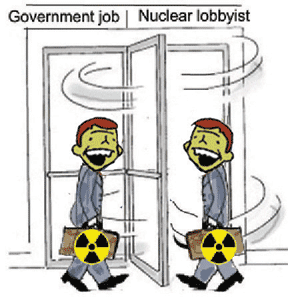
The flood of campaign contributions from ICBM contractors is reinforced by their staggering investments in lobbying. In any given year, the arms industry as a whole employs between 800 and 1,000 lobbyists, well more than one for every member of Congress. Most of those lobbyists hired by ICBM contractors come through the “revolving door” from careers in the Pentagon, Congress, or the Executive Branch. That means they come with the necessary tools for success in Washington: an understanding of the appropriations cycle and close relations with decision-makers on the Hill.
During the last four election cycles, ICBM contractors spent upwards of $226 million on 275 extremely well-paid lobbyists. For example, Bud Cramer, a former Democratic congressman from Alabama who once sat on the defense subcommittee of the House Appropriations Committee, netted $640,000 in fees from Northrop Grumman over a span of six years. He was also a cofounder of the Blue Dog Democrats, an influential conservative faction within the Democratic Party. Perhaps you won’t be surprised to learn that Cramer’s former chief of staff, Jefferies Murray, also lobbies for Northrop Grumman.
While some lobbyists work for one contractor, others have shared allegiances. For example, during his tenure as a lobbyist, former Senate Appropriations Committee Chair Trent Lott received more than $600,000 for his efforts for Raytheon, Textron Inc., and United Technologies (before United Technologies and Raytheon merged to form RX Technologies). Former Virginia Congressman Jim Moran similarly received $640,000 from Northrop Grumman and General Dynamics.
Playing the Jobs Card
The argument of last resort for the Sentinel and similar questionable weapons programs is that they create well-paying jobs…………………………………………………………………….
Unwarranted Influence in the Nuclear Age
Advocates for eliminating ICBMs from the American arsenal make a strong case. (If only they were better heard!) For example, former Representative John Tierney of the Center for Arms Control and Nonproliferation offered this blunt indictment of ICBMs:
“Not only are intercontinental ballistic missiles redundant, but they are prone to a high risk of accidental use…They do not make us any safer. Their only value is to the defense contractors who line their fat pockets with large cost overruns at the expense of our taxpayers. It has got to stop.”
The late Daniel Ellsberg made a similar point in a February 2018 interview with the Bulletin of the Atomic Scientists:
“You would not have these arsenals, in the U.S. or elsewhere, if it were not the case that it was highly profitable to the military-industrial complex, to the aerospace industry, to the electronics industry, and to the weapons design labs to keep modernizing these weapons, improving accuracy, improving launch time, all that. The military-industrial complex that Eisenhower talked about is a very powerful influence. We’ve talked about unwarranted influence. We’ve had that for more than half a century.”
Given how the politics of Pentagon spending normally work, that nuclear weapons policy is being so heavily influenced by individuals and organizations profiting from an ongoing arms race should be anything but surprising. Still, in the case of such weaponry, the stakes are so high that critical decisions shouldn’t be determined by parochial politics. The influence of such special interest groups and corporate weapons-makers over life-and-death issues should be considered both a moral outrage and perhaps the ultimate security risk.
Isn’t it finally time for the executive branch and Congress to start assessing the need for ICBMs on their merits, rather than on contractor lobbying, weapons company funding, and the sort of strategic thinking that was already outmoded by the end of the 1950s? For that to happen, our representatives would need to hear from their constituents loud and clear.
Follow TomDispatch on Twitter and join us on Facebook. Check out the newest Dispatch Books, John Feffer’s new dystopian novel, Songlands (the final one in his Splinterlands series), Beverly Gologorsky’s novel Every Body Has a Story, and Tom Engelhardt’s A Nation Unmade by War, as well as Alfred McCoy’s In the Shadows of the American Century: The Rise and Decline of U.S. Global Power, John Dower’s The Violent American Century: War and Terror Since World War II, and Ann Jones’s They Were Soldiers: How the Wounded Return from America’s Wars: The Untold Story. https://tomdispatch.com/world-ending-maneuvers/
Russia strengthens security at Kursk nuclear power plant amid Ukraine’s assault in region

Russian Guard Corps says additional forces deployed in vicinity of plant to protect it from Ukraine’s attack
Elena Teslova |07.08.202, MOSCOW , https://www.aa.com.tr/en/russia-ukraine-war/russia-strengthens-security-at-kursk-nuclear-power-plant-amid-ukraines-assault-in-region/3298072
Russia said Wednesday that it strengthened security at the Kursk nuclear power plant amid Ukraine’s assault in the region.
The Russian Guard Corps said it took additional measures to ensure the safety of the plant, including the deployment of additional units in the area.
“As part of ensuring the safety of a particularly important facility, the Russian Guard Corps units took additional measures to protect the Kursk nuclear power plant,” it said.
It added that the security services increased their forces to combat the Ukrainian sabotage and reconnaissance groups in the Kursk and Belgorod regions.
The office of Kursk’s Acting Gov. Alexey Smirnov announced that emergency situation forces were introduced in the region because of ongoing combat operations and the situation on the border “remains tense.”
Additional forces have also been allocated to the operational headquarters under the leadership of the governor of the Kursk region to handle the incursion, it said.
The Russian chief of the General Staff, Valery Gerasimov, said Wednesday that up to 1,000 Ukrainian troops attacked Russia’s military positions near two border settlements adjacent to Ukraine’s Sumy region on Tuesday.
At least five civilians were killed and 24 injured in the attack, including six children, according to statements from regional authorities.
Ukraine has not yet commented on the claims and independent verification is difficult because of the war.
-
Archives
- October 2026 (129)
- September 2026 (339)
- August 2026 (330)
- July 2026 (355)
- June 2026 (287)
- May 2026 (306)
- April 2026 (356)
- March 2026 (251)
- February 2026 (267)
- January 2026 (308)
- December 2025 (358)
- November 2025 (359)
-
Categories
- 1
- 1 NUCLEAR ISSUES
- business and costs
- climate change
- culture and arts
- ENERGY
- environment
- health
- history
- indigenous issues
- Legal
- marketing of nuclear
- media
- opposition to nuclear
- PERSONAL STORIES
- politics
- politics international
- Religion and ethics
- safety
- secrets,lies and civil liberties
- spinbuster
- technology
- Uranium
- wastes
- weapons and war
- Women
- 2 WORLD
- ACTION
- AFRICA
- Atrocities
- AUSTRALIA
- Christina's notes
- Christina's themes
- culture and arts
- Events
- Fuk 2022
- Fuk 2023
- Fukushima 2017
- Fukushima 2018
- fukushima 2019
- Fukushima 2020
- Fukushima 2021
- general
- global warming
- Humour (God we need it)
- Nuclear
- RARE EARTHS
- Reference
- resources – print
- Resources -audiovicual
- Weekly Newsletter
- World
- World Nuclear
- YouTube
-
RSS
Entries RSS
Comments RSS

