Playing with nuclear fire

Eric S. Margolis, 16 Sept 24, https://thesun.my/opinion-news/playing-with-nuclear-fire-EC13005045
REPUBLICANS in the US Senate have been urging the White House to provide Ukraine with long-range missiles that can strike deep into Russia. Such is the madness of pro-war sentiment.
America’s Secretary of State Anthony Blinken has apparently confirmed that Washington plans to shortly deliver such strategic weapons to Ukraine. This week, Britain’s new prime minister arrived in Washington to discuss more strategic arms for Ukraine.
One is vividly reminded of the mobs who thronged Paris train stations in August 1914, screaming “on to Berlin”. As a British historian aptly noted, “if patriotism is the last refuge of scoundrels, then war is the first platform of fools”.
US-supplied long-range missiles are the last step between what was a border conflict and an all-out war that will likely go nuclear.
Russia’s leader Vladimir Putin has repeatedly stated that he reduced conventional forces to divert funds to Russia’s stunted civilian economy. Nuclear weapons, said Putin, will be used to replace conventional forces if Russia is attacked. We must take him at his word.
The border war with Ukraine, which began in 2014, has shown how much Russia reduced its former conventional might. The once mighty Red Army has proven a shadow of its former self. Under Putin, armies of tanks have been replaced by new apartments across the sprawling nation.
The idea of sending more long-range missiles to Ukraine is sheer madness. Ukraine is slowly being ground down in this long war of attrition.
Ukraine’s current strategy is to provoke a direct clash between Russia and the US. Interestingly, Israel used the same strategy to provoke direct US military intervention against Syria and various Arab militias.
The US, dominated by pro-war Republicans and wealthy pro-Israel special interests, appears eager to promote war with Russia. Most importantly, neoconservatives are urging intensified war against Russia to advance their goal of breaking up the Russian Federation into small, weak pieces dominated by Washington.
Such was the case under former Russian president, Boris Yeltsin, who allowed US financial interests to dominate Russia while he made merry. Former KGB officer Putin put an end to Washington’s attempt to turn Russia into an American satrapy.
I interviewed the leaders of KGB at Moscow’s Lubyanka Prison in 1991. They expressed disgust with Russia’s then-Communist leadership and said there would be a housecleaning. The result was, of course, Putin’s surprising rise to power.
Putin quickly became the target of US media hate. He committed terrible brutalities in Chechnya, but without him, Russia may have ended up as today’s supine Germany.
The US overthrew Ukraine’s last pro-Russian government. Ukraine had been part of the Russian state for hundreds of years and the centre of its heavy industries. This coup cost the US $5 billion (RM21.44 billion), according to leading State Department neocon Victoria Nuland.
An actor, the amiable Volodymyr Zelensky, was put in charge by Nuland. US funds and arms poured into Ukraine. Efforts by Washington to shatter the old Soviet Union were a brilliant success, except that Washington had to foot the bill, which has so far reached an astounding US$44 billion, depriving the US military of many important weapons systems.
One also wonders why former president Donald Trump did not raise the issue of Ukraine’s payments to President Joe Biden and his son.
As a veteran war correspondent and old friend of Ukraine, I see the US and Russia heading to a major war. The Western powers have been relentlessly provoking Russia. The idea of supplying Ukraine with a new class of long-range missiles will likely ignite a dangerous war that may likely go nuclear.
Now is the time for the great powers to impose peace, not supply arms. Time to end the unnecessary sufferings of Ukrainians and Russians. Genuine diplomacy, not more weapons, is the answer.
22,500 Palestinians Now Have Life-Changing Injuries Due to Israel’s Genocide

At least 3,000 Palestinians have had their limbs amputated as a result of Israeli attacks, WHO estimates.
By Sharon Zhang , Truthout, September 12, 2024, https://truthout.org/articles/22500-palestinians-now-have-life-changing-injuries-due-to-israels-genocide/
srael’s genocide has inflicted permanent, life-changing injuries to about a quarter of the nearly 100,000 Palestinians reported injured by Israeli attacks in the last 11 months, according to an analysis by the World Health Organization (WHO).
According to a report using data up until July, roughly 22,500 Palestinians who have been wounded in Israeli attacks have sustained life-changing injuries that will require medical care for years into the future, WHO has estimated.
The majority of these are severe limb injuries, which are affecting roughly between 13,500 and 17,500. Of these, between 3,100 and 4,000 are limb amputations, the report says, though it notes that “anecdotal reports indicate this number may be higher.” It also notes that there will need to be an increase in prosthetic services in the region as a result.
The report also finds that there are likely about 2,000 spinal cord and traumatic brain injuries and at least 2,000 burn injuries, all of which require long-term and specialized care that is largely unavailable in Gaza, due to Israel’s systematic dismantling of Gaza’s health system.
The WHO made the estimates based on medical data reported from Gaza, and the types of injuries identified from those reports.
WHO says that the analysis is a show of the dire need for health care services in Gaza.
“The huge surge in rehabilitation needs occurs in parallel with the ongoing decimation of the health system,” said Richard Peeperkorn, a WHO representative for Palestine. “Patients can’t get the care they need. Acute rehabilitation services are severely disrupted and specialized care for complex injuries is not available, placing patients’ lives at risk.”
The report is a show of the severe impact of Israel’s genocide beyond just the death toll, and one of the myriad ways Israel’s campaign has permanently scarred the Palestinian population.
Because Israel is injuring more people every day in its relentless bombardments and attacks on Palestinians, it is likely that the number of severe injuries is higher now. And, because the report relies on data from emergency sources, there is likely much more life-changing physical harm from things like Israel’s starvation or disease campaigns that are not included in the count.
According to counts by the Gaza Ministry of Health, at least 95,000 people have been injured amid Israel’s genocide, while over 41,000 have been killed. The true death toll, as many experts have noted, is likely far higher; UN Special Rapporteur for the occupied Palestinian territories Francesca Albanese has warned that Israel is on track to exterminate the entire population of Gaza if international powers do not intervene to stop their genocide.
The report does not specify how many children have suffered severe injuries. But children make up nearly half of the population of Gaza, and Save the Children has previously noted that, in the first three months of the genocide, Israel caused over 10 children a day to lose one or both legs.
Nuke waste confusion continues with D.C. Circuit ruling

Kennedy Maize, https://energycentral.com/c/um/nuke-waste-confusion-continues-dc-circuit-ruling. 13 Sept 24
The D.C. Circuit appeals court has upheld the authority of the U.S. Nuclear Regulatory Commission to license private, away-from-reactor storage of spent nuclear fuel, adding confusion to the gnarly issue of what to do with high-level nuclear waste. With federal circuit courts in collision, it may take the U.S. Supreme Court to sort it out.
On Aug. 27, a three-judge D.C. Circuit panel rejected a challenge to a 2021 Nuclear Regulatory Commission license to Interim Storage Partners, a subsidiary of Orano USA, for a private, above-ground “temporary” waste storage site in West Texas near the New Mexico state line. Not long after that, the NRC granted a similar license to Holtec International for an above-ground storage site in eastern New Mexico, close to the Texas line.
In granting the Holtec license, the NRC rejected petitions to intervene by Beyond Nuclear, a Maryland anti-nuclear group, the Sierra Club, and Texas-based Fasken Land and Minerals, a Permian Basin oil and gas producer.
Almost exactly a year ago (Aug. 25, 2023), the ultra-conservative Fifth Circuit Court of Appeals, with jurisdiction in Texas, Louisiana, and Texas, rejected the NRC license for the Texas site in a case brought by Texas Gov. Greg Abbott and Fasken. The Fifth Circuit ruled that neither the Atomic Energy Act nor the Nuclear Waste Policy Act authorized private, away-from-reactor storage of spent fuel, at least until a final federal underground repository is available. That prospect is far in the future, if at all.
In March, the Fifth Circuit expanded its ban of the Texas project to Holtec’s New Mexico waste project, despite it being outside the court’s jurisdiction. In an unpublished decision, the circuit court wrote, “Because this court’s holding in Texas v. NRC dictates the outcome here, we GRANT Fasken’s and PBLRO’s petition for review and VACATE the Holtec license.” The court also rejected an NRC petition to move the case to the D.C. appeals court.
That led to the anti-nuclear filing in D.C., challenging to NRC’s decision to deny them intervenor status in the Holtec license case. In the denial of the petition last month, Judge Neomi Rao wrote for the panel that “the Commission reasonably declined to admit petitioners’ factual contentions and otherwise complied with statutory and regulatory requirements when rejecting the requests to intervene.”
Rao also took on some of the Fifth Circuit’s ruling about the authority for away-from-reactor, above-ground storage. Rao wrote, “According to Beyond Nuclear, the [waste policy act] prohibits DOE from taking title to private spent nuclear fuel until a permanent repository for the disposal of spent nuclear fuel is built, so it is unlawful for the Commission to consider the application.” That’s an assertion the Fifth Circuit also made.
Citing a 2004 D.C. Circuit decision, Rao found, “Even if the NWPA prohibits DOE from taking title to private spent nuclear fuel until a permanent repository for the disposal of such fuel is built, a point we assume without deciding, the statute does not affect ‘the NRC’s authority under the AEA to license and regulate private use of private away-from-reactor spent fuel storage facilities.’
” The Commission correctly determined that Beyond Nuclear did not raise a genuine dispute of law or fact, so we deny its petition for review.”
Rao, 51, a Trump appointee, has served on the D.C. Circuit Court since March 2019.
As the online legal site Justia noted, “Additionally, the court determined that Fasken’s late-filed contentions were procedurally defective, untimely, and immaterial.”
An analysis by the D.C. law firm Hogan Lovells commented, “This decision is contrary to recent Fifth Circuit decisions, but in line with prior D.C. Circuit and Tenth Circuit decisions—further deepening the circuit split on such authority and increasing the likelihood the Supreme Court will consider the issue in its upcoming term.”
The analysis noted that “commercial interim storage” (CIS) “was initially challenged in federal courts in the early 2000s, when the NRC was licensing the first commercial CIS, known as the Private Fuel Storage facility. At that time, a number of court challenges were brought contesting the NRC’s authority to license a CIS facility, and in two circuit court decisions—specifically, in the D.C. Circuit and the Tenth Circuit—the court upheld the NRC’s authority to license the CIS under the AEA. For NRC licensing decisions, as a general matter, the federal circuit courts have direct appellate review, and the appeal can be brought in either the D.C. Circuit or the circuit court where the proposed facility is located.”
The NATO/Ukraine Defeat in Kursk (and Beyond)
SOTT, by Gordonhahn, September 14, 2024
Contrary to the view of Beltway pundits regarding the sunny side or various alleged successes of Ukraine’s Kursk incursion, the Ukrainian President Volodomyr Zelenskiy’s newest simulacra attack –substituting a fake reality for the real one – has led to yet another predictable catastrophe in the real world of war and politics. Zelenskiy’s gambit had no military logic behind it. Its essence was made up of a propagandistic/PR component and perhaps a terrorist element. It was a reckless, desperate last roll of the dice to overturn the playing board which never had a hope of succeeding. Not one of the goals stated by Ukrainian officials was achieved, nor was the unstated, potential goal of seizng the Kursk Nuclear Power Plant achieved. What was ‘achieved’ was a decimation of some of Ukraine’s best remaining men and materiel.
Ukrainian officials publicly stated several goals of the operation:
(1) to force Moscow to redeploy troops away from Russian forces’ increasingly rapid advance on Pokrovsk and across the Donetsk front;
(2) to seize Russian territory to encourage Moscow to negotiate and to trade for the return of Ukrainian lands in peace talks with Moscow;
(3) to capture Russian prisoners of war to exchange for Ukrainian prisoners;
(4) to create angst in Russia among the elite and population in order to weaken support for the war and/or Putin’s hold on power; and
(5) to make Russia feel the pain of death and destruction that Ukraine has been feeling (Zelenskiy alone said this).
None of these goals was achieved.
Regarding the first goal, Ukrainian Armed Forces Commander Gen. Oleksandr Syrskii has acknowledged that the Russian forces did not redeploy from Donetsk to Kursk. The strategy was misconceived from the get-go. The Ukrainians tried to get the Russians to make an obvious mistake: divert forces need for their offensives in Donetsk to the Ukrainians’ mini-salient in Kursk and thereby weaken their offensive force. Ironically, in order to get the Russians to make the mistake of diverting valuable resources from Donetsk to Kursk the Ukrainians had done the same. This led to an acceleration of the Russian advance towards Pokrovsk – a key hub and perhaps the last best barrier hindering the Russian army’s march to the Dnieper.
Regarding the second and third, before the incursion Putin and other Russian officials had repeated their willingness to negotiate, but Kiev refused or ignored each statement. After the incursion, the Russians announced that there will be no talks while Ukrainian forces remain in Kursk and other Russian territories, according to Moscow’s definition. Moreover, as one exiled Ukrainian newspaper Ctrana.news, notes, no Russian is going to give back 18 percent of Ukrainian territory held by Russia in return for 5 percent of Kursk region’s territory. The same paper notes that even prominent Russian liberals, editor-in-chief of the banned Ekh Moskvy Aleksei Venediktov and Yabloko Party leader Grigorii Yavlinskii (who met with Putin weeks back to discuss peace talks), thought negotiations might have begun by year’s end until the Kursk incursion spoiled the mood in the Kremlin. No talks means there will be no trading for land or prisoners, contrary to Kiev’s goals.
Regarding the fourth goal, there has been no discernible elite or popular demand for a change in Putin’s ‘special operation policy’ (SMO). To the contrary, prominent hardliners and others intensified their clamor for untying the Russian military’s hands and undertaking a full-scale war on Ukraine, and this may explain an escalation in Russian missile attacks. In terms of the population, public opinion surveys demonstrate both continuing popular support for Putin and the mirror opposite effect on its views than that intended by Kiev. Ukrainian forces began their incursion on August 6th, crossing the Ukrainian-Russian border between Sumy, Ukraine and Kursk, Russia. In the Levada Center’s polling in July Putin’s approval rating was 87 percent. In August it fell a mere 2 points to 85 percent (within the margin of error).
…………………………………………………………………………………………………………………………………………………….. In regard to the Kursk gambit’s unstated and likely real goal of seizing the Kursk NPP and or nuclear weapons storage site in the hope of holding the local population and the Putin government hostage to a possible terrorist attack and/or trading control of the Kursk object(s) for control over the Zaporozhe NPP, now held by the Russians and badly needed to help Ukraine get throught the upcoming winter, given the diminution of the country’s electricity system as a result of Russia’s repeated attacks.
So just like the attempts to destroy the Crimean Bridge and the drone attacks on Moscow and St. Petersburg, the effect of this newest Kievan-Western move has been the precise opposite of what was supposedly intended. Moscow and all Russia are even more committed to ‘Putin’s unprovoked war of aggression’ and any ‘unprovoked responses’ the Kremlin may mount.
Worst of all for the bright lights who conjured up this operation in Langley or elsewhere, the war is getting closer to ‘the last Ukrainian.’ The Kursk gambit has led to the destruction of much of Kiev’s best fighters and equipment, and it is likely many of those Ukrainian and other troops who made the incursion will be encircled in short time. At the same time, the Kursk gambit made Russian advances greater along much of the front but especially on the Donetsk and southern Donetsk fronts, which will lead to the more rapid fall of Pokrovsk, Vugledar, and the entire Ukrainian defense effort east of the Dnieper River. And do the Second Ruin of Ukraine continues with Western crocodile tears and calls to keep up the fight in defense of NATO expansion for as long as ‘it’ takes. https://www.sott.net/article/494845-The-NATO-Ukraine-defeat-in-Kursk-and-beyond
As Biden deliberates, Ukraine’s nuclear plants are increasingly at risk
fear this coming winter may prove to be a breaking point for Ukraine in the energy war.
Stuck in the crosshairs are key substations feeding high voltage electricity to Ukraine’s still functioning nuclear power stations in Rivne, Khmelnytskyi and Yuzhnoukrainsk in southern Ukraine. Take these substations out and the reactors have to be shut down rapidly, or else it could provoke a “nuclear incident,” energy expert Mykhailo Gonchar told POLITICO. And “that’s what the Russians are aiming to do — hit the key substations.”
Paralyze the three nuclear power stations, though, and it’s game over for Ukraine in the energy war ,
The risk of Ukraine losing the war this winter has pushed Washington and London to reconsider how Kyiv uses Western-supplied long-range missiles, but the U.S. remains fearful of escalation.
Politico, September 15, 2024 , By Jamie Dettmer
KYIV — As the U.S. ponders loosening some of the restrictions on Ukraine’s use of Western-supplied long-range missiles to allow for the targeting of airfields and missile launch sites deeper inside Russia, Ukraine remains on tenterhooks.
As it stands, Washington doesn’t appear ready to take the gloves off entirely and allow Ukraine to target Russia’s airfields with long-range U.S. missiles quite yet — though it may withdraw restrictions on the U.K.’s Storm Shadows, which use U.S. technology.
“I would like to see a more forthright position coming from the Biden administration that says there’s no reason why Ukraine shouldn’t be fighting back,” former U.S. envoy to NATO Kurt Volker told POLITICO. “Russia’s the one attacking Ukraine from all these facilities across Russia. There’s no reason for there to be a sanctuary. But I don’t think we’re going to see Biden authorizing the use of U.S. missiles to strike at Russian airfields, although the British might be allowed to proceed without U.S. objection,” he added. “That won’t be enough.”
And if that’s really the outcome of these weeks-long intense negotiations, Ukraine’s energy officials will be among those most alarmed.
They fear this coming winter may prove to be a breaking point for Ukraine in the energy war. And that’s largely because Russian commanders are adapting their airstrike tactics, having learned from their previous failed bombing campaign to collapse the country’s energy system — and the recent shipments of Iran’s Fath-360 close-range ballistic missiles to Russia will help them do so.
Ukrainian officials expect Russia will use these missiles, which have a range limit of 120 kilometers, to complement their glide bombs in targeting logistics and communications hubs and ammunition depots in the rear of Ukraine’s front lines. That, in turn, will free Russia up to concentrate its own longer-range missiles on civilian infrastructure — particularly the energy system in a bid to break it.
Stuck in the crosshairs are key substations feeding high voltage electricity to Ukraine’s still functioning nuclear power stations in Rivne, Khmelnytskyi and Yuzhnoukrainsk in southern Ukraine. Take these substations out and the reactors have to be shut down rapidly, or else it could provoke a “nuclear incident,” energy expert Mykhailo Gonchar told POLITICO. And “that’s what the Russians are aiming to do — hit the key substations.”
Currently, 55 percent of Ukraine’s energy is generated by its three operating nuclear power stations — the one in Zaporizhzhia, which is the largest nuclear plant in Europe, was captured by Russia in 2022 and has largely been shut down. Russian missile and drone strikes have destroyed 9 gigawatts of the country’s electrical generating capacity — that’s half of the peak winter consumption — with 80 percent of thermal generation from coal- and gas-fired power plants and a third of hydroelectric production capacity wiped out by bombing.
Last year, Russia tried to isolate these nuclear power plants, focusing on degrading Ukraine’s energy transmission. It targeted distribution to consumers and businesses but was met with characteristic Ukrainian ingenuity and confounded by improvised repairs and rerouting.
Paralyze the three nuclear power stations, though, and it’s game over for Ukraine in the energy war , diminishing its war-fighting capacity, crashing the economy and weakening its position if peace negotiations do ever commence.
And according to officials in Kyiv, it’s the fear of this happening that’s been one of the factors driving the Biden administration to reconsider the restrictions, including on U.S. ATACMS and British Storm Shadows. Washington sat up when Russian airstrikes started targeting the main substations feeding operational electricity to the nuclear power plants in late August. “That concentrated minds,” said one Ukrainian official who asked not to be identified in order to speak freely………………………………………………………………………………………………
Burns also stressed no one should underestimate the risk of escalation and admitted his agency genuinely feared Russia might resort to tactical nuclear weapons in 2022. And while Biden and British Prime Minister Kier Starmer brushed off Putin’s threats on Friday, the U.S. administration still appears to be trapped between two worries — fear of how Moscow might respond if Western-supplied missiles start striking Russian airfields, and wreck projects for peace talks to get going, and alarm over the prospect of Ukraine losing power……………………………………………………………… https://www.politico.eu/article/russia-ukraine-nuclear-plants-energy-war-joe-biden-united-states-nato/
India considers joining Russia, China to build nuclear plant on Moon
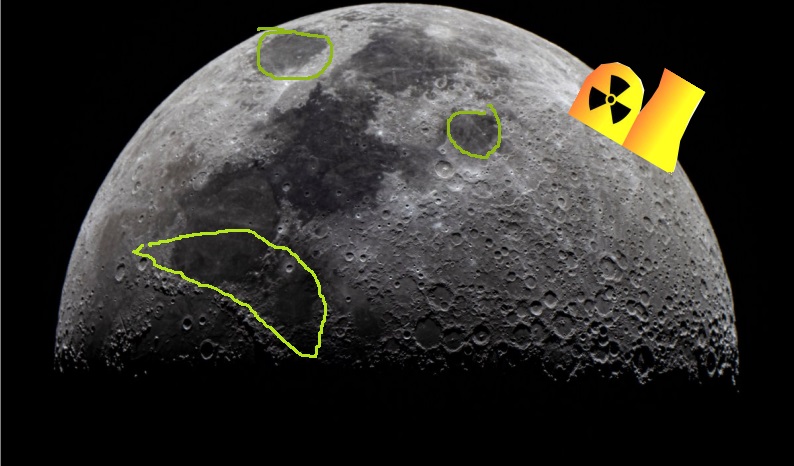
Rivals India and China are said to be keen on joining a Russian project to build an atomic power plant for a human base on the Moon.
14/09/2024, By: Pratap Chakravarty, https://www.rfi.fr/en/international/20240914-india-considers-joining-russia-china-to-build-nuclear-plant-on-moon
Russia’s atomic energy corporation Rosatom says the lunar reactor will be built with “minimal human involvement” and deployed around 2036.
According to Russia’s state-owned news agency Tass, Rosatom CEO Alexey Likhachev told a meeting of the Eastern Economic Forum in Vladivostok earlier this month that both India and China have shown interest in the venture.
“The task we are working on is the creation of a lunar nuclear power plant with an energy capacity of up to half a megawatt,” Likhachev told the gathering of potential investors.
“Both our Chinese and Indian partners are very interested in collaborating as we lay the groundwork for several international space projects,” the Rosatom chief executive claimed.
Cooperation among rivals
Delhi has not commented on the purported collaboration.
While Russia is its key arms supplier and a partner on several space ventures, Indian media have been surprised by the possibility of India teaming up with China.
Alluding to unresolved border disputes which took India and China to war in 1962 and sporadic clashes in following years, local daily Business Standard called the two countries “foes on Earth, pals on Moon”.
The proposed power plant will be integrated into a wider Chinese-Russian project to set up a base called the International Lunar Research Station (ILRS), either on lunar soil or in lunar orbit.
ILRS will serve as a fulcrum of scientific research and will be open to all countries and “international partners” after it becomes operational between 2035 and 2045.
But it would require a stable power supply – which only a nuclear reactor can provide, as the Moon’s lengthy lunar nights make solar energy unreliable.
Nasa has been mulling the construction of similar reactors for its own future lunar bases.
India’s space ambitions
The Russian-led project is separate from India’s own ambitions to set up a space station by 2035 and launch a manned mission to the Moon five years later.
Analysts say India, with its ambitions of creating a human colony on the Moon, is actively seeking out potential opportunities to accelerate its space ambitions.
In August 2023, India landed a spacecraft on the Moon and joined a select space-faring club comprising of China, Russia and the United States – the only nations to have ever reached the Earth’s closest celestial object.
India has shortlisted four military pilots to travel on the country’s first manned space flight next year.
The Indian government says the Gaganyaan spacecraft will orbit Earth at an altitude of 400 kilometres and land at sea three days later.
It will also send a humanoid robot into space later this year in line with preparations to land an Indian on lunar soil by 2040.
Air force pilot Rakesh Sharma became India’s first astronaut to go to space in April 1984, when he spent almost eight days on board the Soviet Salyut-7 space station.
Pentagon orders simulation of consequences of nuclear weapons use in Eastern Europe and Russia
12 September 2024, https://en.topwar.ru/249956-pentagon-zakazal-modelirovanie-posledstvij-primenenija-jadernogo-oruzhija-v-vostochnoj-evrope-i-rossii.html
The Pentagon intends to study the consequences of using nuclear weapons weapons in Europe and Russia. The US military has commissioned a third-party contractor to conduct the study. This is stated in documents from the US Department of Defense that have become publicly available.
The Pentagon has ordered a simulation of a situation involving the use of nuclear weapons in Eastern Europe and Western Russia, with the Americans particularly interested in the consequences of nuclear weapons use on the agricultural sector. As follows from the contract, the contractor must simulate a global nuclear situation the war, which led to the destruction of agriculture. The Pentagon also requires the contractor to expand the modeling beyond Eastern Europe and Western Russia, but with the obligatory condition of including former Eastern Bloc countries in the report.
Engineering Corps armies The United States has awarded a contract (…) to develop active research programs focused on modeling the effects of nuclear weapons on agricultural systems,
– leads RIA News excerpt from the document.
It is worth noting that this is not the first modeling of the consequences of the use of nuclear weapons ordered by the Americans. Similar studies were conducted for the countries of the Asia-Pacific region, the territory of the United States, the Middle East, as well as Europe and the entire Russian territory.
How to Make a ‘War Reserve’ Nuclear Bomb

Earlier this year, at the annual Nuclear Deterrence Summit in Washington, D.C., there was a palpable sense of excitement at the return to Cold War strategies of shoring up our nuclear arsenal. Today, with what some call the two-peer problem—Russia and China—and the specter of nuclear-armed rogue nations and terrorists, the NSE is racing against what-if targets. The language is aggressive. Opposition is largely mute. Congress has opened the tap. The NSE is hiring, training, building, and spending billions a year.
The dark art of crafting nuclear ‘pits’ was almost lost. Now it’s ramped up into a multibillion dollar industry.
The Progressive Magazine, by Jim Carrier , September 5, 2024
Sometime in the next few months a technician at Los Alamos National Laboratory, using an arc welder, will seal together two half-domes of plutonium, creating a “pit,” a seven-pound ball the size of a grapefruit, which, if tucked into America’s newest nuclear warhead and triggered above Times Square, would destroy most of Manhattan and kill more than 1.2 million people.
The bomb is part of a $1.7 trillion plan to rebuild the U.S. nuclear arsenal. The new pit, and hundreds like it, are being made for the W87-1, a new warhead designed to sit atop the Sentinel, a new intercontinental ballistic missile design that will replace all 400 Minuteman III missiles that have been on alert in silos across the Upper Midwest for the last five decades.
Not since the Manhattan Project, the crash program during World War II to invent the atomic bomb, has so much money and urgent energy been spent by the United States to create a weapon of mass destruction. In a paradox of nuclear madness, production of the W87-1—each one with a yield of around 400 kilotons, twenty times larger than the bombs that destroyed Hiroshima and Nagasaki—is breathing life into the U.S. Nuclear Security Enterprise (NSE), the agency that makes nuclear weapons and runs the planes, missiles, and submarines that deliver them.
The warhead “is reinvigorating and transforming the production complex such that NSE can once again produce all of the components typically required for modern nuclear warheads,” according to the Lawrence Livermore National Laboratory, which designed the W87-1. “This work will give the nation expanded options for maintaining an effective nuclear deterrence posture for decades to come.”
Earlier this year, at the annual Nuclear Deterrence Summit in Washington, D.C., there was a palpable sense of excitement at the return to Cold War strategies of shoring up our nuclear arsenal. Today, with what some call the two-peer problem—Russia and China—and the specter of nuclear-armed rogue nations and terrorists, the NSE is racing against what-if targets. The language is aggressive. Opposition is largely mute. Congress has opened the tap. The NSE is hiring, training, building, and spending billions a year.
At Los Alamos, the urgency can be seen inside Plutonium Facility Building 4, known as PF-4, the only building in the United States where plutonium pits are made. Working around the clock, technicians are dismantling old contaminated glove boxes—the laboratory apparatus that allow technicians using built-in gloves to work with toxic or volatile substances inside a sealed chamber—before a new shift of workers arrives to install shiny new steel glove boxes for work on the new pits…………………….
The process of turning plutonium into a bomb is a dark art—an alchemy invented in 1945 on the same New Mexico mesa. Wizards of physics and math who divined the immense energy locked within its atoms, together with master machinists, created the first atomic bomb, “Trinity,” and its copy, “Fat Man,” which destroyed Nagasaki with the power of twenty kilotons, or 20,000 tons of TNT. These two plutonium bombs produced enough heat and radiation to ignite, or trigger, the kind of fusion fire present in the sun.
One year later, as Baby Boom children were teething, Los Alamos blew up a similar plutonium bomb named “Baker” on Bikini Atoll. Its twenty-one-kiloton underwater eruption captured both the bounty of nuclear power and America’s intent to weaponize it.
During the Cold War, Los Alamos produced ninety-four different nuclear weapons—bigger, smaller, deadlier, more accurate. Many were thermonuclear, or hydrogen bombs, whose design, first revealed to the public by Howard Morland in this magazine in 1979, was theorized during the Manhattan Project. In 1952, Los Alamos, using a plutonium pit as a trigger, detonated its first thermonuclear bomb. That same year, the United States built the Rocky Flats Plant, a plutonium pit factory outside Denver. It produced 1,000 pits a year.
The hands-on, metallurgical master craft of fashioning pits was almost lost, though, when Rocky Flats was raided and closed in 1989 by the FBI for massive environmental crimes—the year the Soviet Union began to collapse, ending the Cold War. The NSE fell into a funk, reduced to cleaning up its messes and “stockpile stewardship.”……………………………………………………………………………………………….
“The reestablishment of pit production capabilities is the largest and most complex infrastructure undertaking at NNSA since shortly after the Manhattan Project,” Jill Hruby, administrator of the National Nuclear Security Administration, told the Strategic Weapons in the 21st Century Symposium on April 18. “Our current total estimated acquisition cost range for pit production is $28-37 billion . . . . I know that’s a lot of money . . . . Los Alamos is on track to diamond stamp the first fully qualified War Reserve pit for the W87-1 this year. We anticipate Los Alamos achieving the capability to produce the thirty pits per year envisioned by the two-site plan in or near 2028, with increased manufacturing rate confidence as we install equipment through 2030.”
he United States will never need to make plutonium again. During the Cold War, nuclear reactors at Hanford, Washington, produced more than sixty tons of plutonium. Some 14,000 pits, made by Rocky Flats, each bearing the War Reserve diamond stamp, are warehoused in Pantex, Texas.
As Los Alamos cranks up its program, pits are brought from Pantex, torn apart, and subjected to pyrochemistry, which removes impurities. The metal is then heated into a hot syrup and poured into molds, creating two halves of a sphere. These are welded together. This process is done in rows of connected glove boxes, the plutonium moving from one to another in an overhead trolley system, and dumbwaiters that raise and lower it.
Today at Los Alamos, hundreds of people work at the plutonium factory, some of them making plutonium heaters for space vehicles. But on the pit side, fewer than ten people in the world are trained or are being trained to perform final pit assembly, which must be done by hand inside a large, walk-in glove box, wearing multiple layers of personal protective equipment to prevent plutonium contamination. These master machinists and welders hold Q clearances and undergo annual physical and mental exams. It can take up to four years to train them.
…………………………………………………………………………… fundamental questions are being raised. Scientists debate whether new pits are really needed when existing pits might last for decades. And the need for the W87-1 and the Sentinel missile itself is being questioned because of rising costs and its vulnerability as a land-based, easily targeted weapon. The Pentagon reported in July that the missile’s estimated cost has risen 81 percent over budget to $141 billion.
In New Mexico, two longtime watchdog organizations, the Los Alamos Study Group and Nuclear Watch New Mexico, list dozens of reasons to not make pits at Los Alamos: waste disposal, radiation deposits, earthquake potential, cost and schedule overruns among them.
“Every dollar spent at LANL [Los Alamos National Laboratory] on this program is wasted,” wrote Greg Mello of the Los Alamos Study Group. “Every drum of waste produced in the process need not have been produced. Every career spent making these pits, or supporting the work, is a career that could have been spent building a sustainable, moral, responsible future. The LANL pit production program is a symptom of pure arrogance, greed, and management failure at the highest levels of government.”
………………………. As America’s nuclear train chugs forward, it is virtually certain that if the Sentinel missiles containing the Los Alamos pits are in their silos by the early 2030s, as planned, they will inflame an arms race that is already underway, while posing—if we’re lucky—nothing more than an apocalyptic threat in a new Cold War. https://progressive.org/magazine/how-to-make-a-war-reserve-nuclear-bomb-carrier-20240905/
Scholz stands firm on long-range weapons for Kiev
https://www.rt.com/news/604037-scholz-long-range-weapons-kiev/ 16 Sept 24
Berlin will not lift restrictions on its more advanced weaponry, even if Ukraine’s other allies do, German chancellor has said.
Germany will not allow its long-range weapons to be used for Ukrainian strikes deep into Russia, even if other states choose to do so, Chancellor Olaf Scholz has said.
Washington and London have suggested that they could allow Kiev to use missiles such as the American-made ATACMS and the British-made Storm Shadow to hit such targets.
Berlin retains its policy of not permitting Ukraine to use German-provided long-range weapons for such attacks, Scholz said on Saturday at a Q&A session in Prenzlau, Brandenburg.
I’m sticking to my stance, even if other countries decide differently,” Scholz said. “I won’t do that because I think it’s a problem.”
Germany is Ukraine’s second-largest military donor after the US. Berlin has provided or pledged more than €28 billion ($31 billion) in lethal aid to Kiev since the start of the conflict with Russia, according to data from the Federal Government website.
However, Berlin has so far refused to follow the UK and France’s example in arming Ukraine with long-range missiles. In May, Scholz explained that supplying Ukraine with Taurus missiles with a range of 500 km (310 miles) would amount to Berlin’s direct participation in the conflict.
“It would only be tenable to deliver [these weapons] if we determine and define the targets ourselves, and that is again not possible if you don’t want to be part of this conflict,” he stressed.
On Thursday, Russian President Vladimir Putin warned Western powers against further escalating the hostilities. “We are not talking about allowing or prohibiting the Kiev regime from striking Russian territory,” Putin explained, noting that Ukraine was already doing this.
Western-supplied ATACMS and Storm Shadow missiles have been used by Ukraine to strike targets in Crimea and Donbass – Russian territories that Kiev claims as its own – leading to multiple civilian casualties.
Kiev lacks the ability to independently use Western long-range systems, Putin explained.
Targeting for such strikes relies on intelligence from NATO satellites, while firing solutions can “only be entered by NATO military personnel.”
“This will mean that NATO countries, the US, European countries are fighting against Russia,” Putin stressed. Such direct participation will change “the very essence, the very nature of the conflict”, meaning Russia will have to “make the appropriate decisions on the threats,” the Russian leader warned.
In June, Putin pledged that Moscow would shoot down any missiles used in long-range strikes, and retaliate against those responsible. One possible response would be to send similar high-tech weaponry to forces that are in conflict with the West.
‘Obvious Conflict of Interest’: Report Reveals 50+ US Lawmakers Hold Military Stocks


“It’s abjectly terrifying that the personal benefit of any member of Congress is factored into decisions about how to wield and fund the largest military in the world,” said one critic.
Brett Wilkins 12 Sept 24, https://www.commondreams.org/news/members-of-congress-who-own-defense-stock
At least 50 U.S. lawmakers or members of their households are financially invested in companies that make military weapons and equipment—even as these firms “receive hundreds of billions of dollars annually from congressionally-crafted Pentagon appropriations legislation,” a report published Thursday revealed.
Sludge‘s David Moore analyzed 2023 financial disclosures and stock trades disclosed in other reports and found that “the total value of the federal lawmakers’ defense contractors stock holdings could be as much as $10.9 million.”
Melanie D’Arrigo, @DarrigoMelanie
Over 50 members of Congress, who vote to approve the military budget and approve the sale of weapons, own up to $10.9M in military contractor stocks. Military contractors have also donated $29M this year to election campaigns. That isn’t national defense. That’s corruption.
According to the report:
The spouse of Sen. Susan Collins (R-Maine), the ranking member of the Defense Appropriations subcommittee, holds between $15,000 and $50,000 worth of shares in each of Boeing and RTX, as well as holdings in two other defense manufacturers. Sen. Jerry Moran (R-Kansas), another Defense Appropriations subcommittee member, holds up to $50,000 in the stock of Boeing, which received nearly $33 billion in defense contracts last year. On the Democratic side of the aisle, Sen. John Hickenlooper (Colo.) holds up to a quarter of a million dollars’ worth of stock in RTX…
The most widely held defense contractor stock among senators and representatives is Honeywell, an American company that makes sensors and guiding devices that are being used by the Israeli military in its airstrikes in Gaza. The second most commonly held defense stock by Congress is RTX, formerly known as Raytheon, the company that makes missiles for Israel’s Iron Dome, among other weapons systems.
All 13 senators whose households disclosed military stock holdings voted for the most recent National Defense Authorization Act, which, as Common Dreams reported, allocated a record $886.3 billion for the U.S. military while many lawmakers’ constituents struggled to meet their basic needs.
“It is an obvious conflict of interest when a member of Congress owns significant stock investments in a company and then votes to award the same company lucrative federal contracts,” Craig Holman, government affairs lobbyist at the consumer advocacy group Public Citizen, told Sludge.
“Whether or not the official action is taken for actual self-enrichment purposes is beside the point. There is at least an appearance of self-enrichment and that appearance is just as damaging to the integrity of Congress,” Holman added. “This type of conflict of interest is already banned for executive branch officials and so should be for Congress as well. The ETHICS Act would justly avoid that conflict of interest by prohibiting members of Congress and their spouses from owning stock investments altogether.”Holman was referring to the Ending Trading and Holdings In Congressional Stocks (ETHICS) Act, introduced earlier this year by Sens. Jeff Merkley (D-Ore.), Jon Ossoff (D-Ga.), Gary Peters (D-Mich.), and Josh Hawley (R-Mo.).
In the House of Representatives—where the 2024 NDAA passed 310-118, with the approval of over two dozen members who own shares in military companies—House Foreign Affairs Committee Chair Michael McCaul’s (R-Texas) household owns up to $2.6 million in General Electric, Oshkosh Corporation, and Woodward shares. Rep. Dave Joyce (R-Ohio), who sits on the Defense Appropriations subcommittee, owns as much as $100,000 worth of Boeing and General Electric stock.
Other House lawmakers with potential conflicts of interest include Rep. Gerry Connolly (D-Va.), a member of the Foreign Affairs Committee, who owns Leidos shares worth as much as $248,000; Rep. Debbie Dingell (D-Mich.), who owns up to $100,000 worth of RTX stock; and Rep. Patrick Fallon (R-Texas), a member of the Armed Services Committee who holds Boeing stock worth between $100,000 and $250,000.
“Every American should take a long, hard look at these holdings to conceptualize the scope of Congress’ entanglement with defense contractors,” Public Citizen People Over Pentagon advocate Savannah Wooten told Sludge. “It’s abjectly terrifying that the personal benefit of any member of Congress is factored into decisions about how to wield and fund the largest military in the world.”
“Requiring elected officials to divest from the military-industrial complex before stepping into public service would create a safer and more secure world from the outset,” she added.
Japan, to make the biggest mistake in history: nuclear energy with water, and risk of explosion
by Jessica A., 09/15/2024, https://www.ecoticias.com/en/nuclear-energy-japan-hydrogen/6246/
Japan has a traumatic history with nuclear power, but that’s not stopping the country from taking new risks
The Fukushima nuclear disaster of 2011 devastated Japan and left the rest of the world terrified of nuclear power. While it wasn’t as horrific as the Chernobyl nuclear reactor explosion of 1986, it still traumatized both the Japanese people and the government. Yet now, Japan is facing an energy crisis, and nuclear energy may be the only realistic solution.
Japan is one of the countries at the forefront of the green energy revolution. The Japanese government understands that solar, wind, and hydroelectric energy can only produce a portion of the fuel and electricity the country and the world need. Hydrogen will have to make up some of the difference in the industrial sector, for uses in shipping, aviation, and manufacturing. Japan wants to use next-generation nuclear reactors to produce hydrogen with zero emissions.
Next-generation nuclear reactors have lower energy outputs and marginally better safety records
To make hydrogen a viable option for industrial fuel needs, Japan plans to use nuclear reactors
Many companies are already producing hydrogen for the industrial sector, but they often use natural gas or fossil fuels to do it. These methods result in at least some greenhouse emissions, and Japan wants to have a zero-emissions hydrogen production process in place by 2040 to help meet the world’s energy needs.
Nuclear reactors seem to offer a good solution to this problem because they generate a lot of heat, and that heat can be used to break down water for hydrogen harvesting. Hydrogen is the only clean fuel that scientists know of that can power industrial shipping vessels, planes, and large machinery.
To avoid making the climate crisis worse, governments need to commit to making the production of hydrogen a green process, meaning releasing zero emissions. Japan is looking at innovative ways of designing nuclear reactors to keep them safe so that they can power homes and produce hydrogen.
Many people are skeptical of nuclear energy, and Japan could be courting disaster with its plans to use high temperatures to break down water. One more nuclear explosion could mean the end of nuclear power forever. Only time will tell if the next-gen reactors pass all the safety tests required to go online.
NuScale Power Is Great. Here’s Why You Shouldn’t Buy It.

The Motley Fool, By Reuben Gregg Brewer – Sep 14, 2024
NuScale Power (SMR 12.17%) is at the leading edge of the nuclear power sector. It is doing great things and making important progress toward its goal of mass-producing small-scale modular nuclear reactors. In a world increasingly looking toward carbon-free energy sources, it is positioning itself well for a bright future. But it won’t be a good fit for every investor. Here’s why you might want to buy the stock and why you might not want to buy it.
NuScale is moving (slowly) toward the nuclear future
Today, nuclear reactors are giant infrastructure assets that cost huge sums of money to build and years of effort to get up and running. NuScale Power is working to upend that inefficient model by offering small, modular reactors that would be built in a factory and then delivered where they are needed.
If one reactor isn’t enough, they can be linked to create a larger reactor………….
Adding to the allure here is a balance sheet with zero debt and $136 million in cash. In other words, it is working from a strong financial position. Also, NuScale Power’s largest shareholder is Fluor (FLR 2.21%), a large construction company.
Clearly, Fluor has its own motives in backing NuScale, like supporting the growth of a new market (small-scale nuclear power plant construction), but it means that NuScale has a strong parent to help it along. That’s showing up right now, too, as a project from Fluor is going to help add revenue to NuScale’s earnings statement, helping the upstart nuclear power company pay for its own product development plans.
There are indeed some good reasons to like the future prospects for NuScale power, including that, as management likes to highlight, it is “the only SMR certified by the U.S. Nuclear Regulatory Commission.” So, it basically has a leg up on the competition right now.
NuScale Power comes with some big risks
Despite the positives, NuScale Power is not going to be a good fit for every investor. In fact, only aggressive types should really be looking at the stock today. There are a host of reasons.
For starters, NuScale Power’s product plans are approved by U.S. regulators, but not fully approved to the point where it can start building and selling units. So, there’s more work to be done before NuScale Power even has a product to sell. And while it has inked a tentative deal to sell its first units, it can’t actually do that yet. It has to spend even more money on the effort to get the final government nod to start building and delivering a product.
That, in turn, means more red ink. NuScale Power is basically still in start-up mode, so it isn’t unusual that more money would be going out the door than coming in. The revenue from the work with Fluor will help, but the income statement is likely to look ugly for years to come. That’s because it will still have to ramp up its production abilities even after it gets all the approvals it needs. All in all, NuScale Power has a great story, but that story is still in its early chapters.
NuScale Power is an acquired taste
To highlight the risks here, it helps to look at the stock price. Over the past year, the stock has gone from a low of roughly $2 per share to a high of just over $15, and it currently sits at around $7. If you can’t handle price swings like that, you definitely don’t want to own this nuclear power start-up.
That said, investors with a high tolerance for risk might be interested in NuScale power, given that it has achieved a great deal on its path to producing small-scale modular nuclear reactors. But for most investors, the risks are likely too great at this point in time to justify hitting the buy button. https://www.fool.com/investing/2024/09/14/nuscale-power-is-great-heres-why-you-shouldnt-buy/
Serbia picks EDF, Egis for study on introduction of nuclear energy
The Ministry of Mining and Energy of Serbia awarded a contract to French
state-owned energy utility EDF and engineering company Egis Industries for
a preliminary technical study for considering the peaceful use of nuclear
energy. Following an agreement last month between Serbia and EDF to assess
the potential for developing a civil nuclear program, the French
state-owned energy utility and engineering firm Egis Industries won a
tender for the country’s first study.
The government in Belgrade adopted
changes to the Law on Energy in August as well, aiming to abolish a 1989
moratorium on the construction of nuclear power plants.
Balkan Green Energy News 13th Sept 2024
One big factor could decide if one of Wales’ biggest (nuclear) projects can happen
Ken Skates says he is determined to deliver on ‘big road projects’
Wales Online, By Owen Hughes, Daily Post Business Editor, Ben Summer, Senior reporter, 14 Sept 24
Welsh Government Transport Secretary Ken Skates says he wants to deliver on “big road projects”, while discussing a key factor that might resurrect a major transport scheme. The Welsh Government’s roads review, which delivered its conclusion in 2023, shelved several prominent Welsh transport initiatives – especially in north Wales where the Menai crossing, Llanbedr bypass and Flintshire ‘Red Route’ were all cancelled.
These choices were made by then-transport minister Lee Waters, guided by a panel of transportation and environmental specialists appointed by the Welsh Government. This was criticised last year by Ken Skates when he was a backbencher; he later took on the transport minister position under Vaughan Gething and has maintained it with First Minister Eluned Morgan’s new leadership.
Mr Skates hasn’t announced an outright reversal of previous decisions, but he’s hinted at potential modifications to the projects to improve their environmental impact as well as underline the economic benefits of the projects, reports North Wales Live. This week, he spoke about progress made and specifically pointed out that the future of a third Menai crossing might hinge on one pivotal element.
This relates to the dormant Wylfa B project near Cemaes; should it advance, it would necessitate better road network capacity to support the construction of the multi-billion-pound nuclear facility. Wylfa was identified by the preceding UK Government as the optimal site for the nation’s next significant nuclear station.
This week it has been reported that the new UK Government is reviewing the potential of the Wylfa Newydd site, with one option being to repurpose it for a number of small modular reactors (SMRs). Whichever path is taken, be it SMRs or another venture, will require billions in investment and significant road improvements………………………………………
https://www.walesonline.co.uk/news/politics/one-big-factor-decide-one-29935573
Putin Warns of ‘Direct’ War as US Mulls Letting Ukraine Use Long-Range Western Missiles

“It is a question of deciding whether or not NATO countries are directly involved in a military conflict,” said Russian President Vladimir Putin.
Jake Johnson, Sep 13, 2024, https://www.commondreams.org/news/putin-direct-war-nato
Russian President Vladimir Putin said Thursday that if the United States and the United Kingdom allow Ukraine to strike deep inside Russia with Western missiles, “it will mean nothing less than the direct involvement of NATO countries.”
“This is not a question of allowing the Ukrainian regime to strike Russia with these weapons or not. It is a question of deciding whether or not NATO countries are directly involved in a military conflict,” Putin told Russian state TV. “This will be their direct participation, and this, of course, will significantly change the very essence, the very nature of the conflict.”
Putin’s remarks came amid reports that U.S. President Joe Biden appears poised to let Ukraine use long-range missiles against Russia, signaling a perilous new phase in a deadly war that has dragged on for two and a half years since Russia’s invasion in February 2022.
According toThe New York Times, “President Biden appears on the verge of clearing the way for Ukraine to launch long-range Western weapons deep inside Russian territory, as long as it doesn’t use arms provided by the United States.”
Russian President Vladimir Putin said Thursday that if the United States and the United Kingdom allow Ukraine to strike deep inside Russia with Western missiles, “it will mean nothing less than the direct involvement of NATO countries.”
“This is not a question of allowing the Ukrainian regime to strike Russia with these weapons or not. It is a question of deciding whether or not NATO countries are directly involved in a military conflict,” Putin told Russian state TV. “This will be their direct participation, and this, of course, will significantly change the very essence, the very nature of the conflict.”
Putin’s remarks came amid reports that U.S. President Joe Biden appears poised to let Ukraine use long-range missiles against Russia, signaling a perilous new phase in a deadly war that has dragged on for two and a half years since Russia’s invasion in February 2022.
According toThe New York Times, “President Biden appears on the verge of clearing the way for Ukraine to launch long-range Western weapons deep inside Russian territory, as long as it doesn’t use arms provided by the United States.”
“The issue, which has long been debated in the administration, is coming to a head on Friday with the first official visit to the White House by Britain’s new prime minister, Keir Starmer,” the Times reported Thursday. “Britain has already signaled to the United States that it is eager to let Ukraine use its ‘Storm Shadow’ long-range missiles to strike at Russian military targets far from the Ukrainian border. But it wants explicit permission from Mr. Biden in order to demonstrate a coordinated strategy with the United States and France, which makes a similar missile.”
Ahead of the decision, the Pentagon pointed to Iran’s alleged transfer of ballistic missiles to Russia as further reason to bolster Ukraine’s military capabilities. A spokesperson for Iran’s foreign ministry said in response that “the publication of false and misleading reports about the transfer of Iranian weapons to some countries is simply ugly propaganda to conceal the large illegal arms support of the United States and some Western countries for the genocide in Gaza.”
Ukraine, which has received roughly $55.7 billion in military assistance from the U.S. since February 2022, has already launched repeated drone attacks deep inside Russia, but Western permission for Kyiv to use long-range missiles could be a dire escalation.
As Politiconoted, Moscow could retaliate against a long-range missile strike on Russia by hitting “a target inside NATO, such as the critical weapons supply hub in the Polish city of Rzeszów.” Such an exchange could result in direct conflict between the nuclear-armed powers.
“Military experts argue any guidelines agreed for the British weapons at the two-hour summit in Washington could also then pave the way for the Ukrainians to fire U.S.-supplied ATACMS—a tactical ballistic missile system—at airfields and army bases deep inside Russia,” the outlet observed.
The potential intensification and spread of the war comes as the prospect of a diplomatic resolution appears nonexistent, at least in the near term.
Aída Chávez, communications director and policy adviser at Just Foreign Policy, wrote for The Intercept earlier this week that members of the U.S. Congressional Progressive Caucus were “pilloried” over an October 2022 letter urging Biden to “make vigorous diplomatic efforts in support of a negotiated settlement and ceasefire, engage in direct talks with Russia, explore prospects for a new European security arrangement acceptable to all parties that will allow for a sovereign and independent Ukraine, and, in coordination with our Ukrainian partners, seek a rapid end to the conflict and reiterate this goal as America’s chief priority.”
Today, Chávez wrote, the progressives who signed the letter—which was ultimately withdrawn by the CPC leadership—”look more prescient than ever.”
“Since the ill-fated letter, the war has ground on—with devastating results for the people of Ukraine,” Chávez continued. “Ukraine is not in a position to win the war, nor does it have a stronger bargaining position in talks than it did in late 2022 when the CPC letter came out.”
-
Archives
- October 2026 (120)
- September 2026 (339)
- August 2026 (330)
- July 2026 (355)
- June 2026 (287)
- May 2026 (306)
- April 2026 (356)
- March 2026 (251)
- February 2026 (267)
- January 2026 (308)
- December 2025 (358)
- November 2025 (359)
-
Categories
- 1
- 1 NUCLEAR ISSUES
- business and costs
- climate change
- culture and arts
- ENERGY
- environment
- health
- history
- indigenous issues
- Legal
- marketing of nuclear
- media
- opposition to nuclear
- PERSONAL STORIES
- politics
- politics international
- Religion and ethics
- safety
- secrets,lies and civil liberties
- spinbuster
- technology
- Uranium
- wastes
- weapons and war
- Women
- 2 WORLD
- ACTION
- AFRICA
- Atrocities
- AUSTRALIA
- Christina's notes
- Christina's themes
- culture and arts
- Events
- Fuk 2022
- Fuk 2023
- Fukushima 2017
- Fukushima 2018
- fukushima 2019
- Fukushima 2020
- Fukushima 2021
- general
- global warming
- Humour (God we need it)
- Nuclear
- RARE EARTHS
- Reference
- resources – print
- Resources -audiovicual
- Weekly Newsletter
- World
- World Nuclear
- YouTube
-
RSS
Entries RSS
Comments RSS

