Taliban In Afghanistan Bad, Al-Qaeda In Syria Good
Caitlin Johnstone, Dec 10, 2024, Caitlin’s Newsletter
It’s pretty wild how the west went directly from “We need to occupy Afghanistan for two decades to prevent it from being taken over by the Taliban” to “Yay! Syria’s been taken over by al-Qaeda!”
❖
The IDF has moved to occupy new stretches of Syrian land in the name of protecting its safety and security in the wake of Assad’s removal, to approximately zero condemnation from the western power alliance.
One of the dumbest things we are asked to believe about Israel is that the only thing it can ever do to ensure its safety and security when a danger presents itself is to grab more land. Land grabs are always the answer.
So to recap:
Russia invading a country in the name of protecting its security interests from perceived threats on its border = wrong, evil, worst thing ever.
Israel invading a country in the name of protecting its security interests from perceived threats on its border = fine, normal, nothing to worry about.
The US is considering removing Hayʼat Tahrir al-Sham from its list of designated terrorist organizations following the al-Qaeda affiliate’s victory in Syria. I have said it before and I’ll say it again: “terrorist organization” is a completely arbitrary designation which is used as a tool of western narrative control to justify war and militarism. In effect it just means “disobedient population who need bombs dropped on them”.
I find it hilarious how empire simps are still shrieking “ASSADIST!” at me for criticizing western regime change interventionism in Syria like that means something. Assad’s gone. They can’t claim I’m helping him stay in power anymore. This shows they were never mad at me for “supporting Assad” or any of that nonsense; they were always just mad at me for criticizing the western empire, which was all I was ever doing
Assad’s not a thing anymore. Your guys are in power now, and your beloved empire got the regime change it’s been chasing for years. You don’t get to pretend you’re sticking up for the little guy any longer. If you’re going to keep simping for the empire you’ve got to do it right out in the open now; you can no longer mask your bootlicking by hurling bizarre false accusations of treasonous loyalty toward some random middle eastern leader at anyone who criticizes the empire’s actions in Syria. You need to find different tactics for your empire apologia.
personally do not believe western interventionism in the middle east leads to positive results and peace, because I am not a newborn baby with a soft squishy head who joined the earth’s population yesterday evening.
❖
Empire apologists rely heavily on the appeal to emotion fallacy when discussing Syria, because they have no real arguments. They can’t counter criticisms of the years of western interventionism which destroyed Syria, so they babble about Assad’s victims instead. But no matter how many sad stories you tell and no matter how much sympathy you elicit, it will not amount to a counter-argument against the extensively documented fact that the US and its allies worked to destroy Syria with the goal of toppling Damascus from the very beginning in 2011. You can rend your garments about barrel bombs and prisoners all you want, but it still won’t be an argument.
I personally don’t blame people for misunderstanding what’s been happening in Syria all these years. Some of my favorite analysts got Syria wrong in the early years of the war. It’s a complicated issue. It’s hard to sort out the true from the false, and it’s hard to sort through the moral complexities and contradictions of it all as a human being. What matters is that you stay curious and open and sincerely dedicated to learning what’s true instead of bedding down and making an identity out of your current understanding.
For years Syria was awash with some of the most complex psychological operations and hybrid warfare the world has ever seen. It’s okay if you didn’t understand it at first. The world is a confusing place, and is rapidly becoming more so. Just do your best, stay curious, and keep learning………………………………. https://www.caitlinjohnst.one/p/taliban-in-afghanistan-bad-al-qaeda?utm_source=post-email-title&publication_id=82124&post_id=152873905&utm_campaign=email-post-title&isFreemail=true&r=1ise1&triedRedirect=true&utm_medium=email
A promissory note to sway the vote? Lincolnshire opts to seek nuclear waste Hosting Agreement.

It is said that money talks, and the nuclear industry and national government making an offer of owdles of cash to any financially-challenged local authority[1] which might be a partner in hosting a radioactive waste dump would be a guaranteed conversation starter.
Impatient to jump the gun, the Executive of Lincolnshire County Council met last week to initiate that conversation by placing their own monetary mark in the sand. Before them was a report recommending an approach be made to Nuclear Waste Services and Whitehall for an Hosting Agreement to provide for ‘Significant Additional Investment’ should Theddlethorpe be selected as the eventual location of the Geological Disposal Facility.
In giving their approval to such a proposal, Lincolnshire Councillors were following the lead shown by elected members of two small townships in Ontario, which agreed Host Agreements with Canada’s own NWS, the Nuclear Waste Management Organisation (NWMO) were they to accommodate a Deep Geological Repository. The NWMO was established by the Canadian nuclear industry to find a final destination for that nation’s legacy radioactive waste. Through Host Agreements with the NWMO, Ignace Town Council was promised $170 million over 81 years, whilst South Bruce stood to receive a more significant $418 million over 138 years.
Big money indeed for small municipalities, and certainly the promise of accessing this largesse is likely to have provided a significant inducement to some residents to vote ‘yes’ when casting their vote in recent online ballots, which determined whether their respective communities would continue to be engaged in the siting process. These ballots both led to ‘yes’ results.
So on Tuesday 3 December, citing South Bruce as being ‘of the most relevance’, the Lincolnshire County Council Executive decided to follow their example in seeking their own Hosting Agreement, guaranteeing big bucks to meet six key infrastructure asks in coastal defences, road and rail networks and public transport, education and skills training, energy, the environment and in the economy.
The irony is that the Council bigwigs were meeting after the South Bruce cash cow had bolted; for on 28 November NWMO had announced with great fanfare that they had selected Ignace instead. The NFLAs can speculate that this selection was made on the basis that the latter was so much cheaper and came with greater public backing. For in Ignace 77.3% of those participating in the poll said ‘yes’, but in South Bruce this fell to only 51.2%. Whilst this might seem incongrous, given the whopping disparity in the promised payout, the site in South Bruce was quite close to the township, whilst in Ignace the proposed site is at Revell Lake, some 34 Kms away. Trying not to be a sore loser, South Bruce Council issued a statement congratulating NWMO on its selection and Ignace on its success, whilst seeking to highlight its concilation prize for participating in the process – a disappointing exit payment of $4 million.
The experience of South Bruce demonstrates that hitching your wagon to any competitive sitiing process in the hope of major infrastructure investment is a risky strategy as there is no guarantee your horse will arrive first at its desired destination. And in the UK there are two other competing runners and riders – both in West Cumbria – rather than the two horse race in Canada.
Given the siting process is a long and uncertain race, electors would surely expect the elected members and officers of Lincolnshire County Council to be already repeatedly and vigorously lobbying central government for the money needed to satisfy its wishlist, rather than relying on this game of chance. Can Lincolnshire really wait up to 15 years for site selection before its promissory note is made real? It is difficult to believe that the county has over 15 years of grace before improving its sea defences when climate change will mean steadily encroaching sea levels on England’s East coast.
The County Council can also be challenged on its impartiality over any decision in hosting a GDF. For in seeking a Hosting Agreement so early in the process, the impression is conveyed that the Council would welcome the GDF development were the cash to be forthcoming.
There is also a certain degree of hypocrisy in the ‘asks’ made by the County Council.
For instance, in seeking investment in tourism no account is taken of the massively deleterious impact on the tourist economy that must result from the construction and operation of a GDF on the holiday coast.
A report completed by Global Tourism Solutions and published by East Lindsey District Council in early September revealed that in 2023 4.57 million people visited the district, an 8.2% increase from 2022, whilst in 2023 the local economy benefitted from £857.9 million of tourist income, a new record building on the £824.2 million received in 2022. This sustained an estimated 8,033 tourist jobs (equivalent to 6,143 full time posts).[2]
The results of a survey of over 1,100 tourists were recently published by the Guardians of the East Coast. 83% of respondees said they would question whether to return to any Lincolnshire seaside resort should this massive engineering project come to Theddlethorpe. If this negative sentiment translates into reduced visitor numbers, the economic downturn would be disastrous. In its accompanying report, GOTEC estimated a 40.5% decline in tourism would result, amounting to over 3,000 jobs lost and almost £250 million in lost annual income.
And in seeking investment to grow energy generating capacity which is not ‘visually damaging’ to the environment, the Council seems to have no qualms about trading this for hosting the UK’s largest engineering project, with the construction of the GDF being compared to building the Channel Tunnel.
Finally, there is a further clue as to another probable motivation for seeking a Hosting Agreement at this time and it rather reveals a focus on an event in three years time rather than fifteen.
In the report it states that ‘It is, however, important that LCC ensures that all opportunities that the facility could provide are identified. This will help inform the local community’s response to the Test of Public Support (ToPS) which the council has sought to be held no later than 2027’.
This could be interpreted as the Council adopting a policy of ‘dangling’ the investment carrot before the public in the hope that this will convince them to vote ‘yes’ to the development in three years time; in effect making the Host Agreement a promissory note to sway the vote.
Ends://..For more information please contact the NFLA Secretary Richard Outram by email to richard.outram@manchester.gov.uk
Starmer to court UAE for British nuclear power investment
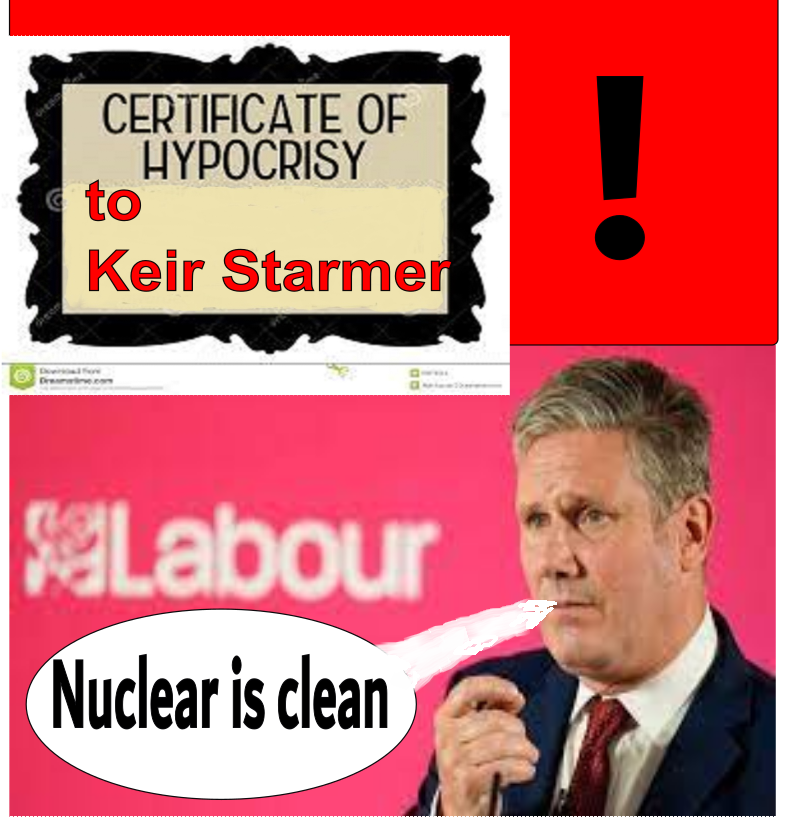
The Prime Minister is expected to tell sovereign wealth fund bosses ‘you can trust us’ on Sizewell C
Matt Oliver, Industry Editor,
https://www.telegraph.co.uk/business/2024/12/07/starmer-to-court-uae-for-sizewell-c-nuclear-investment/
Sir Keir Starmer will court the powerful bosses of United Arab Emirates’ (UAE) sovereign wealth funds this week as he seeks to raise funding for the Sizewell C nuclear project.
On a tour of the Gulf, the Prime Minister is expected to court investment into British infrastructure, including the proposed nuclear power plant on the coast of Suffolk.
His visit will include a meeting with representatives from Mubadala, one of Abu Dhabi’s sovereign wealth funds, sources told The Telegraph.
Those present are expected to include Khaldoon Al Mubarak, Mubadala’s chief executive and the right-hand man to Sheikh Mansour bin Zayed Al Nahyan, the UAE vice president and Manchester City football club owner.
A source said the message would be “you can trust us”, amid concerns about the long-term commitment of successive UK administrations both to nuclear power and major infrastructure schemes.
Downing Street declined to comment. Mubadala was approached for comment.
It comes as the Government seeks to get more investors on board with Sizewell C, after a capital raise process that has dragged on longer than originally anticipated.
Five potential backers are still in the running officially, the boss of Sizewell C confirmed on Thursday.
They are thought to include British Gas owner Centrica, the Emirates Nuclear Energy Corporation (Enec), Schroders Greencoat and Amber Infrastructure Group.
However, sources familiar with the situation said the Government hoped additional investors may contribute cash by teaming up with those already involved in the process.
Mubadala may channel funds into Sizewell via Enec, for example. The UAE companies have teamed up to invest in numerous other global projects in the past, one industry insider said.
Ministers previously hoped to take a final investment decision on Sizewell C by the end of this year but it was confirmed in the Budget that it would not happen until the spring, with the project’s fate now understood to be tied up with Chancellor Rachel Reeves’s spending review.
A key issue ministers are grappling with is the need to put the full cost of the Sizewell project – which could be anything between £20bn and £40bn – on the public balance sheet, despite the Government’s intention to sell a significant portion of shares in the project to outside investors.
Currently, the Government owns more than 80pc of the equity, with the French state nuclear giant EDF owning the rest.
Hinkley dilemma
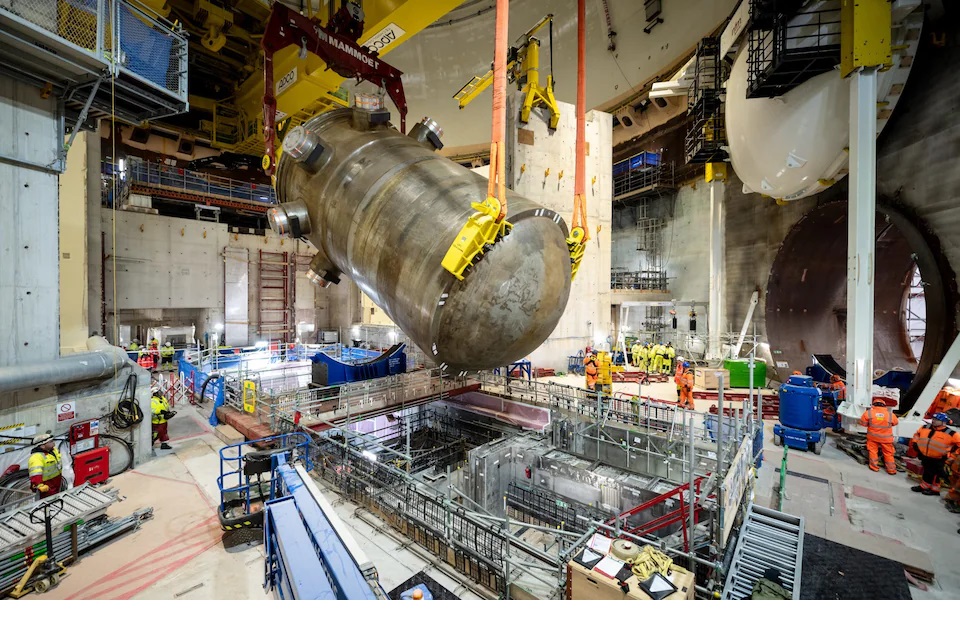
Elsewhere, ministers also face a dilemma over the Hinkley Point C plant in Somerset.
The project, which is majority-owned by EDF, is grappling with a £5bn funding shortfall after co-investor China General Nuclear refused to put in more cash.
That followed the Government’s decision to block Chinese involvement in Sizewell C and other future nuclear projects amid national security concerns.
EDF has called on the UK to step in and help support the project, a suggestion that ministers have so far resisted, with Paris said to be reluctant to put more money into the plant. Hinkley is on course to open years late and cost up to £45bn – far more than planned.
The Telegraph revealed in October that Centrica had emerged as a potential white knight investor in Hinkley, as the electricity supplier looks to replace income generated by other British nuclear plants it owns stakes in as they close.
Assad Is Out, Woke Al-Qaeda Is In
Caitlin Johnstone, Dec 08, 2024
Well it looks like the government of Syrian president Bashar al-Assad is on its way out, likely to be replaced by one or more US puppet regimes depending on whether the nation maintains its current borders or is carved up into separate states. The empire notches another win.
I am not a military analyst, but analysts who are normally supportive and optimistic in favor of Assad like Elijah Magnier and Pepe Escobar are saying this is the end. Assad’s whereabouts are unknown as Turkish-backed fighters and al-Qaeda-linked forces with a history of western backing have swept through the country with alarming speed, and now Russia and Iran have joined with the governments of US-aligned nations like Saudi Arabia, Egypt, Jordan and Turkey in calling for an end to the fighting in favor of a political solution. CNN reports that opposition forces have entered Damascus in search of Assad, and footage reportedly shows Assad forces retreating from the area where the president’s main residence is located.
The US proxy warfare in Lebanon and Ukraine makes a lot more strategic sense now; by tying up Hezbollah and Russia in other conflicts, the path was opened up for another run on Damascus and a chance to further cut off Hezbollah from supplies. Many pundits on my end of the commentary spectrum had been calling those proxy wars self-defeating and framing them as the desperate flailings of a dying empire which will only accelerate its demise, but now here we are watching the empire score a victory it’s been chasing for years, with the western/Israeli stranglehold on the middle east growing tighter than ever.
Meanwhile the press is falling all over itself to support this regime change by promoting the narrative that al-Qaeda is woke now.
CNN just released a coddling softball interview with Abu Mohammed al-Jolani, the former ISIS and al-Qaeda member who leads the Syrian opposition group Hayat Tahrir al-Sham, which is itself a rebranded offshoot of al-Qaeda in Syria. Jolani told CNN that he has reformed from his radical ways of the past, saying, “Sometimes it’s essential to adjust to reality,” adding, “someone who rigidly clings to certain ideas and principles without flexibility cannot effectively lead societies or navigate complex conflicts like the one happening in Syria.”
Now the imperial press are full of headlines like “How Syria’s rebel leader went from radical jihadist to a blazer-wearing ‘revolutionary’” from CNN, “Syria’s rebel leader Golani: From radical jihadist to ostensible pragmatist” from The Times of Israel, and “How Syria’s ‘diversity-friendly’ jihadists plan on building a state” from The Telegraph.
Only a matter of time before we start seeing former ISIS and al-Qaeda members chatting it up on liberal western talk shows with their preferred gender pronouns listed next to their names.
As luck would have it, these “diversity-friendly jihadists” have been telling the Israeli press that they “love Israel” and won’t do anything to harm its interests, so it’s safe to say that this “revolution” has been about as organically grown as a sheet of crystal meth.
One of the many perks of being the world’s dominant superpower is that it gives you the luxury of time. If one regime change operation fails, don’t worry, you can just move some chess pieces around and take another shot at it. If a coup attempt fails in Latin America, relax, there will be other coup attempts. If your efforts to grab Syria fail, you can just smash it with sanctions and occupy its oil fields to impoverish it while overextending its military allies in proxy conflicts elsewhere and grab it later.
A good kickboxer throws many combinations with the understanding that most strikes will miss or be blocked or cause minimal damage, trusting that eventually the one knockout blow will get through.
No empire lasts forever, but there’s no evidence that this one is going away any time in the immediate future. This ugliness could conceivably drag itself out for generations.
Ed Miliband to bring more misery for Brits and send bills skyrocketing

New projects could be launched by Ed Miliband – and they will hit British taxpayers in the pocket.
By Tom Burnett, Dec 7, 2024 ,
https://www.express.co.uk/news/politics/1985657/ed-miliband-nuclear-energy-costs-bills-rising
Ed Miliband could be about to send energy bills soaring – as he confirms plans for new major nuclear projects in the UK.
The Energy and Net Zero Secretary has said nuclear power is vital for Labour’s Net Zero plans, and that his ‘door is open’ to tech companies hoping to build ‘modular’ reactors in Britain.
Mr Miliband has argued these projects could deliver ‘big returns’ for the country, and said the Government is exploring how it can help private developers bring advanced nuclear projects to market and ia consulting on a new nuclear planning framework and siting policy next year.
However, bosses at interested firms are reportedly calling for some assurance of financial support to make sure their projects get a minimum return.
While it is currently unclear precisely how these would be funded, the Telegraph reports that options include ‘regulated asset base scheme’ or contracts for difference that are currently awarded to wind and solar farms.
The ‘regulated asset base’ scheme allows investors to begin clawing costs back via customer bills before a project is completed – leading to concerns people could be hit in the pocket.

Speaking at the Nuclear Industry Association’s Nuclear 2024 conference on Thursday, Mr Miliband said: “Of course, it’s early days but we should be open to the potential of SMRs to power the fourth industrial revolution, just as coal powered the first.
My message is clear: if you want to build a nuclear project in Britain, my door is open. My department is listening.
“We want all your ideas for projects that can work and provide value for money.”
Great British Nuclear, a public body which helps bring forward new nuclear energy projects, has started negotiations with four bidders for the UK’s small modular reactor programme, and final decisions are due in spring.
Mr Miliband he was “delighted” that four of Britain’s five nuclear power stations will stay open longer than previously planned, as announced by their operator EDF.
Heysham Two, in Lancashire, and Torness in East Lothian will keep producing electricity for an extra two years until March 2030, while Heysham One and another station in Hartlepool, north-east England, will produce power until March 2027, a year extension.
Radioactive contamination halts work on SSEN subsea link near Dounreay
By Iain Grant, John O’Groat Journal 6th Dec 2024
Work on part of the mainland link of SSEN Transmission’s new high voltage cable between Orkney and Caithness has been suspended because of the presence of radioactive contamination.
The company has been required to have extra monitoring carried out before it resumes work on its new substation near the Dounreay nuclear plant.
A spokesperson said: “We have identified the need for monitoring for radioactivity to be undertaken at the site where the substation will be constructed.
“The monitoring is needed due to the proximity of the site to Dounreay.
“Following the identification of radium contamination at the site, SSEN has stopped work while it acquires an Environmental Scotland authorisation permit. “A permit is needed due to the presence of radium contamination at depths as the planned excavation work is beyond these depths.”……………………..https://www.johnogroat-journal.co.uk/news/radioactive-contamination-halts-work-on-ssen-subsea-link-nea-368353/
Gabbard has more intelligence than entire Intelligence Service she’s slated to head.
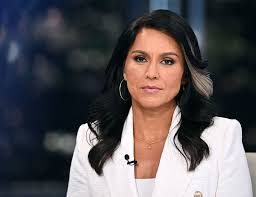
Gabbard had the audacity to speak truth against America’s unhinged proxy war against Russia in 2022 that has failed spectacularly while destroying Ukraine as a viable country. She was spot on in declaring US weaponizing its Ukraine proxies against Russia jeopardizes global security. “This war and suffering could have easily been avoided if the Biden Administration and NATO had simply acknowledged Russia’s legitimate security concerns over NATO membership for Ukraine on Russia’s border.”
Walt Zlotow, West Suburban Peace Coalition, Glen Ellyn IL, 8 Dec 24
The US national security state, more appropriately referred to as the US war party, is aghast Trump picked Tulsi Gabbard to be Director of National Intelligence.

John Bolton, correctly nicknamed ‘Bonkers’ over his love of endless, failed US military interventions charged, “Gabbard, like Trump’s failed Attorney General pick Matt Gaetz, is like a hand grenade ready to explode. Republicans who throw themselves on those grenades for Donald Trump are risking their own personal reputations and places in history. Bolton appears oblivious his reputation and place in history rests in the warmonger wing of the American Story.
My Illinois Senator Tammy Duckworth warned “I think she’s compromised. The U.S. intelligence community has identified her as having troubling relationships with America’s foes.” Ironically, it’s Duckworth, who exploited her service in America’s criminal Iraq war to gain political power supporting more senseless US wars, who is compromised.
Even progressive hero Elizabeth Warren foolishly bellowed “Do you really want her to have all of the secrets of the United States and our defense intelligence agencies when she has so clearly been in Putin’s pocket.” Warren clearly is in the pocket of US weapons merchants, super hawk congresspersons and their media enablers.
What infuriates these unbridled proponents of US unipolar dominance about Gabbard, a former congressperson, Iraq war vet and current Lt. Col. in the US Army reserve?
Gabbard had the audacity to speak truth against America’s unhinged proxy war against Russia in 2022 that has failed spectacularly while destroying Ukraine as a viable country. She was spot on in declaring US weaponizing its Ukraine proxies against Russia jeopardizes global security. “This war and suffering could have easily been avoided if the Biden Administration and NATO had simply acknowledged Russia’s legitimate security concerns over NATO membership for Ukraine on Russia’s border.”
Gabbard compounds this inconvenient truth by speaking with rulers of America’s imaginary enemies like Syrian President Bashar Assad. America’s refusal to speak with its long list of enemies is a reckless policy that can easily stumble America into further warfare, even nuclear.
Bravo to Gabbard for pushing back against senseless US foreign misadventures that threaten American security, indeed, all peoplekind.
American intelligence has been exploited by our clueless leaders since the end of WWII to destabilize, overthrow dozens of countries worldwide. It seeks new enemies to expand its power and influence promoting US unipolar dominance. Gabbard threatens that terrible sinecure.
The Senate should confirm Tulsi Gabbard as Director of National Intelligence to make sensible intelligence Job One in the intelligence community.
Biden’s Nuclear Going Out of Business Sale
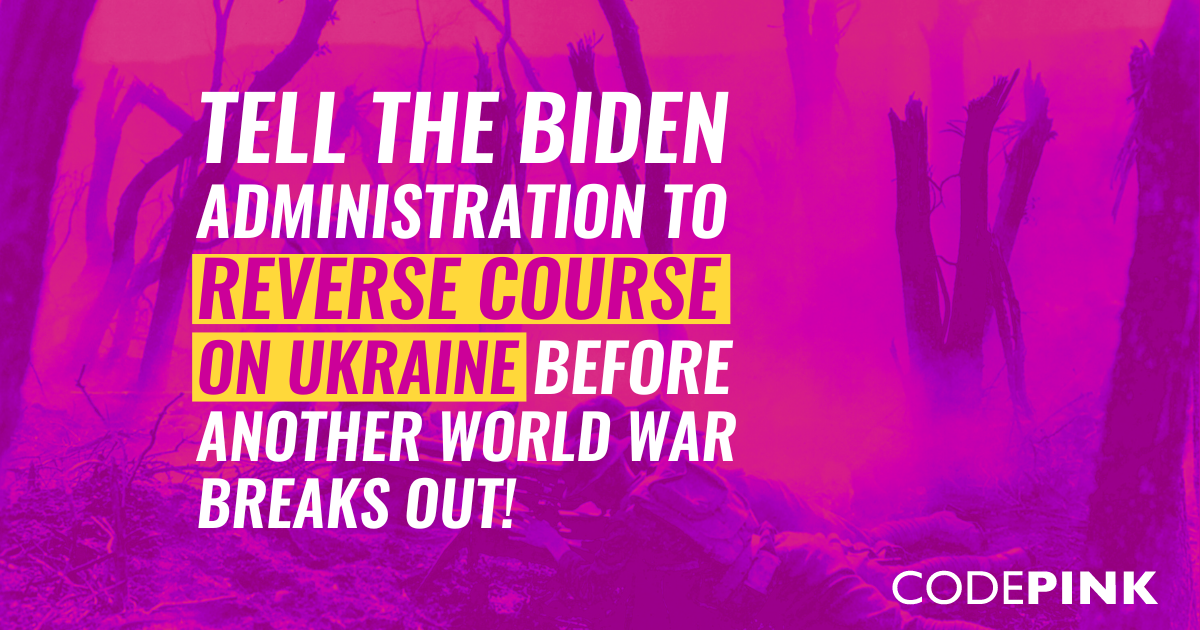
The only way Ukraine wins is for the West to stop the war and negotiate an agreement with Russia which restores Ukraine’s sovereignty, neutrality and way of life. Otherwise, the war grinds on, the casualties on both sides mount, Armageddon looms and the world gets to indulge in thinking the unthinkable, annihilation.
This is real. This is not a drill. The world is teetering on a precipice of nuclear war.
Dennis Kucinich, 7 Dec 24, https://freepress.org/article/biden%E2%80%99s-nuclear-going-out-business-sale
Has the world forgotten the real danger of nuclear war?
Do we live in a fantasy world where we think we can escalate tensions and put entire portions of the world under threat by using Ukraine as a sacrificial pawn (in what is classically sold as providing humanitarian and ally support) in a decades-long psychopathic foreign policy play to destroy Russia?
According to the laws of war, NATO, the U.S., the U.K., and France have determined to become “direct participants” in Europe’s deadly conflict as their home-grown offensive missiles are being launched from inside Ukraine to attack Russia.
Translated, a state of war exists between the West and Russia.
Putin is not absolved for his invasion of Ukraine. But how are western nations, led by the U.S., protecting Ukraine’s or their own national interests by quickening the dialectic of conflict, bringing nuclear weapons into the calculus?
Russian President Putin and his government have experienced long-standing western policies of encirclement and NATO encroachment through Ukraine, something the U.S. government swore would not happen. It did happen, reawakening Russia’s deepest fears of invasion.
Most Americans are unaware that in 2014, the U.S. forced out the elected President of Ukraine, Victor Yanukovych, which resulted in Kiev ordering attacks on ethnic Russian enclaves of Donetsk and Luhansk, baiting Russia into the beginning of a three year war, with the lure of NATO membership fluttering above Ukraine.
As the war barrels to a climactic, perhaps irredeemably fatal stage, the Ukrainian people have lost at least 600,000 of their fellow countrymen and women. Even so, at this late hour, U.S. Secretary of State Antony Blinken demands that Ukraine lower its age of compulsory military service from 25 years of age to 18, to send even more young Ukrainians into the slaughter. Russian casualties will soar past 400,000 dead, with latest reports of 1,000 casualties a day.
One million Europeans have been killed for a war which was not inevitable, should never have been fought and, once it started, could have been brought to a fast conclusion. According to Naftali Bennett, former Prime Minister of Israel, peace talks were sabotaged by the US, just a month into the conflict.
The constitutions of the U.S., the U.K. and France, which forbid executives to unilaterally wage war, are being circumvented. Leaders have gone rogue and are consciously choosing nuclear brinkmanship over diplomacy.
In the past month, escalation is being stoked by the West. The launch of ATACMS and other advanced missiles necessarily involves U.S. personnel and intelligence data. This new phase of the war compelled the Kremlin to lower its threshold for a nuclear strike in an attempt to stop the use of even higher grade weapons against it from the West.
What happened? … The 2024 Presidential Election happened.
The escalation is intended to sabotage President Trump’s stated desire to bring an end to the Russia-Ukraine war and for the architects of the war to try to escape the blame for miscalculations, bumbling and cynical protraction of a bloody conflict. It is clear the West does not want peace.
Remember, the sacrifice of Ukraine and everything that has led up to this point is due to the West’s long time policy to advance the strategic defeat of Russia.
The Cold War never ended. It has given way to a boiling Hot War whose aim is to antagonize, provoke, diminish and conquer Russia. Key elements are the attempted dismantling of Russia’s energy infrastructure, and the massive transfer of arms to our proxy, Ukraine, through US appropriations which are approaching $200 billiion dollars, an amount equal to over $5,000 dollars for every Ukrainian man, woman and child.
In order to set the stage for this war, Western interests resorted to conjuring Putin as a demon, an arch-enemy of freedom, as was done with Hussein in Iraq, Khaddafy in Libya, and Assad in Syria. Once the enemy machine goes to work, military assets are mobilized to advance the overthrow of the noxious government, and the cash registers of defense contractors ring with the energy of a pinball arcade.
The Democratic Party unleashed an entire kennel of the dogs of war upon Russia, often at the urging of warden Hillary Clinton, mastermind of the Russiagate hoax. The nadir of the Dems descent into the indecent was ballyhooing the support of its 2024 presidential ticket by Dick Cheney, the sterling warmonger whose endorsement is to mass homicide what the Good Housekeeping Seal of Approval is to stylish domesticity.
Think of the political consequences to the credibility of the entire Western foreign policy establishment if President Trump succeeds in bringing the war to a close. President Biden’s foreign policy, led by Secretary Blinken, will be forever tainted, as will the Democratic Party’s steadfast support for guns over butter.
The overthrow of the elected Ukrainian government in 2014, Russia’s subsequent invasion; the Prime Minister’s Gambit, Boris Johnson’s April 2022 scuttling of a peace agreement; the severe damage to the European economy through the destruction of Nordstream pipeline, by GUESS WHO, [readers hereby invited to guess]; NATO’S teeter-totter, penny-pinching one moment, saber-rattling burlesque the next, and harrowing brinkmanship — misdirecting public attention during the inevitable collapse of Ukraine. All this chest thumping and war pimping will be called into question, presuming there is time.
Another knock-on effect of the war and the failure of sanctions: Russia and China have been pushed together into a deep long-term military and economic partnership. Could the Biden Administration have been unaware of the military, economic and political fallout from a BRICS+-type alliance?
Rational military observers predict the transfer of the newest missiles will not change the outcome of the war, and some Trump advisers believe the next president’s bargaining position vis a vis Moscow will be strengthened as Ukraine’s offensive capacity is temporarily enhanced.
However, a sharp escalation in the next six weeks could result in a devastating response from an increasingly anxious Russia. Biden isn’t trying to help Trump or the process of peace, he’s handing him, and the world, a poisoned chalice.
The only way Ukraine wins is for the West to stop the war and negotiate an agreement with Russia which restores Ukraine’s sovereignty, neutrality and way of life. Otherwise, the war grinds on, the casualties on both sides mount, Armageddon looms and the world gets to indulge in thinking the unthinkable, annihilation.
Rear Admiral Thomas Buchanan of the US Strategic Command, isn’t calling for nuclear war, but he did say at a Project Atom 24 meeting recently, “If we have to have a(n) [nuclear] exchange then we want to do it in terms that are most acceptable to the United States,” where, presumably, even after nuclear war, we still lead the world, or its ashes – in strategic weapons.
President-Elect Trump, has assessed the extreme danger of the moment, saying: “We have never been closer to World War III than we are today under Joe Biden. A global conflict between nuclear-armed powers would mean death and destruction on a scale unmatched in human history.”
Vladimir Putin has clearly stated that Russia would “mirror” or match all escalations. Russia responded to an ATACM missile launch with a new hypersonic intermediate range ballistic missile, the Oreshnik, that reputedly reaches speeds of MACH 11 and delivers some 36 payloads. It devastated a Ukrainian missile factory.
It was an unmistakable message: Those six major payloads with six submunitions within them could be nuclear ones next time.
The next firing of ATACMs could bring a Russian response endangering or killing the American personnel responsible for firing these munitions. Even a skilled negotiator will find it difficult to diffuse the conflict once American blood has been shed. Why in the world would our government cause our troops, let alone our nation, to be so vulnerable?
Eight trillion dollars of our $36 trillion deficit is due to wars of choice since 9/11. The continued failure of American diplomacy, preferring war to statecraft, has been a persistent hubris. Pray that it not be fatal for our nation and the world.
Everyone who loves our country must speak out, now, to help avert a catastrophe.
UK Seeks More Investors as Sizewell Funding Talks Drag On

The UK government is speaking with investors beyond the core group of existing bidders for a stake in the country’s Sizewell C nuclear plant as talks to finalize the project’s funding continue.
Financial Post, Bloomberg News, William Mathis, Priscila Azevedo Rocha and Aaron Kirchfeld, Dec 05, 2024
he UK government is speaking with investors beyond the core group of existing bidders for a stake in the country’s Sizewell C nuclear plant as talks to finalize the project’s funding continue.
The government has recently approached infrastructure and other private investors to provide equity to Britain’s next large-scale nuclear power plant, according to people familiar with the matter. The talks come at a critical time for the UK as it seeks to attract financing to overhaul the country’s power grid this decade.
The country recently delayed funding for the project until at least spring 2025, pushing back a previous target to take a final investment decision by the end of the year. Finding investors willing to participate in new nuclear plants is crucial to plans to cut emissions and reach 2050 net zero goals.
The government has been seeking investors for the Sizewell C project for more than a year and canvassed a wide variety of potential backers before honing in on a smaller group of interested parties, the people said. It’s not clear whether any of the investors being contacted now would be able to join the current fundraising process, or if they would buy into a subsequent round as the government further sells down its stake. ……………………………………
A spokesperson for the Department for Energy Security & Net Zero said the autumn budget confirmed the current equity and debt raising process will move to its final stages shortly and will conclude in the spring. A final investment decision on whether to proceed with the project will be taken in the multiyear spending review, they added.
The Sizewell project — owned by the government and minority stakeholder Electricite de France SA — could eventually cost an estimated £20 billion ($25.3 billion) and take roughly a decade to build.
The government has previously engaged in discussions with investors including Centrica Plc, Emirates Nuclear Energy Corp., Amber Infrastructure Group Ltd. and Schroders Greencoat LLP and the conversations are ongoing, the people said, asking not to be named because the talks are private. Barclays Plc is advising the UK government.
Spokespeople for Barclays and Centrica declined to comment, while representatives for ENEC, Amber Infrastructure and Schroders didn’t immediately respond to queries.
Centrica Chief Executive Officer Chris O’Shea has said on various occasions that the company’s engagement in any UK infrastructure projects, including Sizewell, would hinge on the “right conditions.”
At the moment, the only nuclear power station under construction in the UK is Hinkley Point C, which has been repeatedly delayed and is expected to cost as much as £47.9 billion in current terms. EDF is also holding talks with investors over funding for Hinkley as the French utility grapples with the ballooning cost of the project.
https://financialpost.com/pmn/business-pmn/uk-looks-for-more-investors-as-sizewell-c-funding-talks-drag-on
Britain’s Energy Secretary Follows Tech Giants In Pursuit Of New Nuclear Power Stations
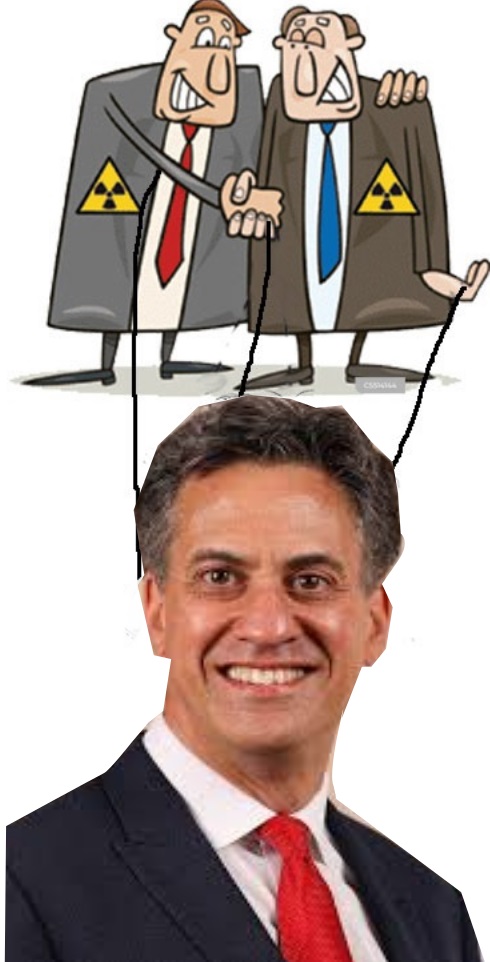
the government is “determined to drive forward” with nuclear power through both public and private investment, despite this being a period of “immense challenge for the public finances.”
Miliband was speaking in London on Thursday at the Nuclear Industry Association’s Nuclear 2024 conference, where he told the audience that their industry has an essential role to play in the U.K.’s pursuit of achieving a [ ?] clean power system by 2030.
Robert Olsen, Forbes 7th Dec 2024
British Energy Secretary Ed Miliband has been watching U.S. tech companies striking deals with operators and developers of nuclear power plants, and now he’s eager to pursue similar projects in the U.K.
“My message is clear: if you want to build a nuclear project in Britain, my door is open,” Miliband said. “My department is listening. We want all your ideas for projects that can work and provide value for money.”
Miliband was speaking in London on Thursday at the Nuclear Industry Association’s Nuclear 2024 conference, where he told the audience that their industry has an essential role to play in the U.K.’s pursuit of achieving a [ ?] clean power system by 2030.
He said the government is “determined to drive forward” with nuclear power through both public and private investment, despite this being a period of “immense challenge for the public finances.”
Great British Nuclear (GBN), the government body tasked with spearheading the development of small modular reactors (SMRs), has started contract negotiations with four companies shortlisted for the U.K.’s small modular reactor program, and final decisions will be made next year.
Britain’s Rolls-Royce is competing with U.S.-based rivals GE Hitachi, Holtec and Westinghouse Electric for contracts to develop SMRs in the U.K. The competition was launched last year, as part of the government’s plan to replenish the country’s dwindling nuclear industry………………………………..https://www.forbes.com/sites/robertolsen-1/2024/12/07/britains-energy-secretary-follows-tech-giants-in-pursuit-of-new-nuclear-power-stations/
Trump’s Pro-Israel Dream Team: Patel Nomination Caps Hawkish Cabinet
December 8, 2024, By Kit Klarenberg / MintPressNews
On November 30, Donald Trump nominated Kash Patel to serve as FBI director. A staunch MAGA activist and loyalist with significant standing in Trump’s orbit, Patel aligns closely with the president-elect on both domestic and foreign policy matters. Indeed, he appears to struggle to pinpoint areas of disagreement with Trump’s agenda.
Patel has consistently advocated for a hardline approach to China and is an unabashed supporter of Israeli interests, often prioritizing them over U.S. considerations. On October 7, marking the first anniversary of the Hamas attack, Patel delivered a fiery interview on Fox News. During the segment, he vowed that the incoming Trump administration would intensify its crackdown on anti-Israeli elements.
We should be side by side [with Israel]…When we are back in power with President Trump…we will shut off the machinery that feeds money into Iran…We need America to wake up and prioritize Israel, and that is not what Kamala Harris is about, we need to bring home Americans and end this war, bring home Israelis, and stand by our number one ally in Israel, and people need to wake up on November 5.”
A relative political outsider who has never occupied high office, the media has been awash with profiles of Patel and fevered speculation about what his management of the Bureau could mean in practice ever since. In the process, he has been subject to a level of mainstream scrutiny and criticism that was entirely lacking over recent weeks, as Trump filled his cabinet with a rogue’s gallery of dedicated hawks, hardcore pro-Israeli elements, and characters both unknown and notorious with potential extremist ties and views.
For some, the composition of Trump’s cabinet is a crushing disappointment. On November 9, Trump caused shockwaves when he announced neither Nikki Haley nor Mike Pompeo would be invited to join his administration in any capacity. The news, coupled with comments he made in a late October appearance on Joe Rogan’s popular podcast, perked optimism in some quarters that the President-elect’s longstanding anti-war posturing could produce real-world results in Ukraine, if not elsewhere.
In his discussion with Rogan, Trump professed that “the biggest mistake” of his first term was he “picked a few people that I shouldn’t have picked” – “neocons or bad people or disloyal people,” among them John Bolton. Haley was the U.S. ambassador to the UN under Trump and perhaps the most ardent, outspoken Zionist ever to fill the role. She, Bolton and Pompeo – who personally orchestrated Iranian General Qasem Soleimani’s assassination, among other hostile deeds – were widely regarded as the administration’s leading hawks.
Yet, any slight hope that the pair’s absence from Trump’s new White House might herald an influx of some doves and, in turn, a more peaceful shift from the U.S. government was comprehensively dashed when the President’s transition team nominations began rolling in. Now the cabinet is fully stocked, countless millions around the world have urgent and grave concerns about what the future could hold for them, their families, countries, regions, and more.
In particular, Trump’s prospective government can already claim the mantle of the most fervently pro-Israel in U.S. history. This is despite replacing an administration that has done more than any before to accelerate, encourage, and facilitate Israel’s war on Gaza. The prospect that Tel Aviv’s deadly assaults on Gaza and Lebanon will escalate somehow further is now not only very real but seemingly inevitable. However, as we shall see, there are minor rays of hope among the mass doom and gloom.
‘Promised Land’
New Secretary of State Marco Rubio hardly needs any introduction as one of the most pro-war members of the modern U.S. political class. Since his career kicked off in 2000, he has been consistently among the loudest voices on how America’s officially designated enemy states should be dealt with, be that China, Iran, Venezuela, or otherwise. Threats of sanctions, coups, and military intervention are almost a daily staple of his political oratory.
A close friend of Benjamin Netanyahu, in 2019, Rubio cosponsored a Senate resolution condemning UN Security Council resolutions designating Jewish settlement expansion in occupied Palestine as a violation of international law. He has referred to Israel’s mass murder in Gaza since October 7, 2023, as legitimate self-defense, claimed Hamas is “100% to blame” for any civilian casualties inflicted by the horrific onslaught, and ominously declared Palestinian resistance must be “eradicated,” as Tel Aviv cannot coexist “with these savages.”……………………………………………………………………………………….
The pro-Israel credentials of Senator Marco Rubio and Representative Michael Waltz are unquestionable. Yet their fervor for supporting Israel’s controversial policies pales in comparison to some of President-elect Donald Trump’s other nominees. Take Mike Huckabee, the ultraconservative former Arkansas governor and twice-failed presidential candidate, now tapped to serve as U.S. ambassador to Israel. Huckabee, an ordained Southern Baptist pastor, wasted no time declaring his intentions. He vowed to publicly refer to Israel in biblical terms, calling it the “Promised Land,” and proclaimed that Jews hold a “rightful deed” to Palestinian territory………………………
Hegseth, a contender for Defense Secretary, has made his allegiances to Israel unmistakably clear. He has described Israel’s settler population as “God’s chosen people.” He has openly advocated for transforming Jerusalem’s al-Aqsa Mosque into a Jewish-only recreation of the historic Temple Mount, framing such an act as a “miracle.” At a 2018 National Council of Young Israel gala in New York City, Hegseth left no room for ambiguity:
Zionism and Americanism are the front lines of Western civilization and freedom in our world today.”………………………………………………………………………………………. more https://www.mintpressnews.com/trumps-pro-israel-dream-team-patel-nomination-caps-hawkish-cabinet/288783/
We used to laugh at North Korean nuclear submarine boasts. Not any more
In January 2021, North Korean strongman Kim Jong Un stood before thousands of
members of the Worker’s Party of Korea in Pyongyang and announced that
North Korean industry was in the late stages of developing a
nuclear-powered submarine – the first such sub for the North Korean navy.
At the time, it may have been wise to be sceptical: nuclear submarines are
among the costliest and most complex weapon systems in the world. North
Korean industry isn’t exactly known for its wealth and sophistication.
Nearly four years later, there’s much less reason to doubt Kim’s claim.
Because now North Korea has Russia’s help. And for all its woes, Russian
industry still builds a lot of world-class nuke boats.
Telegraph 6th Dec 2024, https://www.telegraph.co.uk/news/2024/12/06/putin-russia-nuclear-submarine-north-korea-axis-evil/
Hinkley update: mixed reaction as first reactor drops into place
Mr Vince said: “I’m really pleased to be a patron of the Stop Hinkley campaign which is working to stop the government wasting billions of taxpayers’ money on a technology which is hugely expensive and slow to develop.”
By Simon Hacker , Punchline Gloucester 6th Dec 2024
It may be delayed to the extent that existing nuclear reactors are now planning to remain operational for an extra three years, but Hinkley Point C has come a step closer to activation with an overnight operation to drop a crucial 500-tonne reactor for the process into place.
When switched on, Somerset’s Hinkley Point C, near Bridgwater, is estimated to be capable of providing 7% of the UK’s power needs – calculated to keep six million homes supplied.
The 13m-long reactor is the first of two to be put in place by French project owner EDF and each will contain the nuclear chain reaction that will generate power from a planned operational date of 2030. the 12-hour operation to manoeuvre the unit into place was the first such job in 30 years in the UK.
But the road to this landmark has been far from smooth. With the installation some five years later than was originally planned, Covid, supply chain issues and political negotiations have ensured an uphill slog on the technology’s re-introduction, while – in keeping with the original advent of nuclear power – costs have spiralled: back in 2017, the taxpayer was told that the cost of this project would be £18bn. It now stands at £46bn.
Gloucestershire businessman and energy entrepreneur Dale Vince, who owns Ecotricity and campaigns for Britain’s energy production to be brought back into the hands of British business, has argued against nuclear installations on the Severn Estuary since 1983 and became a patron of the Stop Hinkley campaign this summer.
Speaking about the decision, Mr Vince said: “I’m really pleased to be a patron of the Stop Hinkley campaign which is working to stop the government wasting billions of taxpayers’ money on a technology which is hugely expensive and slow to develop.”
Alongside Mr Vince, the Somerset campaign is urging the government to adopt a 100% renewable energy strategy which it argues is “perfectly feasible” and which, compared to the UK Government’s current strategy, would save more than £100bn on the route plan to reach net zero by 2050.
Roy Pumfrey, Stop Hinkley spokesperson, said nuclear power is “rapidly losing ground to the astonishing growth in renewables” and the campaign has wanred that there is “no scientific solutuon to safeguarding nuclear waste” and contends that while no electricity production is zero carbon, nuclear is calculated to produce between 8 and 11 times more carbon emissions than renewable sources.
EDF has also waded into controversy here in Gloucestershire this week after the Gloucestershire Wildlife Trust claimed the supplier’s mitigation scheme for fish killed in the planned nuclear site was “shambolic” and threatens to create the perfect conditions for an ecological disaster in the Severn Estuary.
Hinkley Point C is financed by the state-owned French energy giant EDF Energy and China General Nuclear Power Group, which is also state-owned. https://www.punchline-gloucester.com/articles/aanews/hinkley-update-mixed-reaction-as-first-reactor-drops-into-place
Iran’s uranium enrichment ‘worrisome’ – nuclear watchdog
The head of the UN nuclear watchdog has told the BBC Iran’s decision to
begin producing significantly more highly enriched uranium was “very
worrisome”. Rafael Grossi, director general of the International Atomic
Energy Agency (IAEA), said Iran was increasing its stockpile of uranium
enriched to 60%, just below the level of purity needed for a nuclear
weapon.
This will be seen by many in the region as Tehran’s response to its
military and diplomatic setbacks in Syria, Lebanon and Gaza in recent
months. Mr Grossi said it was “no secret” some politicians in Iran were
calling for the development of a nuclear weapon – but after holding talks
in Tehran in recent weeks, he said that “doesn’t seem to be the path of
choice” by the current leadership.
BBC 6th Dec 2024,
https://www.bbc.co.uk/news/articles/c20ee6qylwgo
Explosives speed Sizewell A turbine hall decommissioning
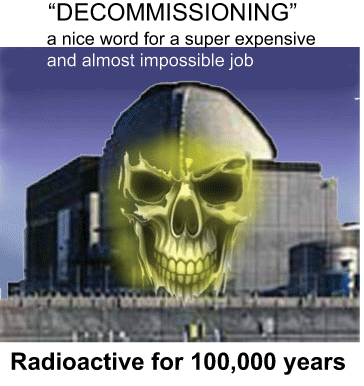
WNN, Friday, 6 December 2024
More than 1200 holes were drilled and 700 kilogrammes of explosive used for the demolition of large concrete plinths in the turbine hall of Sizewell A nuclear power plant in the UK.
Nuclear Restoration Services said it was the largest use of explosives on a nuclear site for conventional demolition purposes in decades.
After the holes were drilled into the plinths, the charges were set and covered for the detonation, which was all planned and carried out with Office for Nuclear Regulation (ONR) oversight.
A series of test blasts had to take place and special detonator timings designed to meet nuclear site regulations for air overpressure and ground vibration, with Offive for Nuclear Regulation (ONR) having placed a hold point on the work until they were sure any risks from the novel operation had been minimised.
The ONR said that following the blasts, the huge turbine supporting concrete bases can be removed using heavy machinery within two weeks, rather than “deploying older and slower methods of drilling the structure apart which would have taken several months”.
Sizewell A’s twin reactors shut down in 2006 after 40 years of operation. Planning consent was given to demolish the turbine hall and electrical annexe in August and more than 35 miles of cabling and 8000 scaffolding boards, clips and pipes have been taken out………………………….. https://www.world-nuclear-news.org/articles/explosives-used-in-sizewell-a-turbine-hall-decommissioning
-
Archives
- October 2026 (104)
- September 2026 (339)
- August 2026 (330)
- July 2026 (355)
- June 2026 (287)
- May 2026 (306)
- April 2026 (356)
- March 2026 (251)
- February 2026 (267)
- January 2026 (308)
- December 2025 (358)
- November 2025 (359)
-
Categories
- 1
- 1 NUCLEAR ISSUES
- business and costs
- climate change
- culture and arts
- ENERGY
- environment
- health
- history
- indigenous issues
- Legal
- marketing of nuclear
- media
- opposition to nuclear
- PERSONAL STORIES
- politics
- politics international
- Religion and ethics
- safety
- secrets,lies and civil liberties
- spinbuster
- technology
- Uranium
- wastes
- weapons and war
- Women
- 2 WORLD
- ACTION
- AFRICA
- Atrocities
- AUSTRALIA
- Christina's notes
- Christina's themes
- culture and arts
- Events
- Fuk 2022
- Fuk 2023
- Fukushima 2017
- Fukushima 2018
- fukushima 2019
- Fukushima 2020
- Fukushima 2021
- general
- global warming
- Humour (God we need it)
- Nuclear
- RARE EARTHS
- Reference
- resources – print
- Resources -audiovicual
- Weekly Newsletter
- World
- World Nuclear
- YouTube
-
RSS
Entries RSS
Comments RSS

