EDF unveils fresh details on new fish deterrent technology to be used at Hinkley Point C
An alternative acoustic fish deterrent (AFD) system is being proposed for
the Hinkley Point C nuclear power station near Burnham-On-Sea to end a
bitter row over some of the site’s environmental measures.
The move sees EDF, which owns the nuclear power site, drop the controversial idea to
create new salt marshes along the Severn Estuary rather than fit AFDs to
the station’s water intake turbines. The company had been applying to the
Environment Agency for permission to not fit AFDs due to the high cost and
the danger for divers involved in fitting them in the fast-flowing tides
and poor visibility of the Bristol Channel.
Now, Hinkley C stakeholder relations head Andrew Cockcroft has said an innovative new form of AFD could be used. Mr Cockcroft said it was EDF’s preferred solution to the
issue of deterring fish from swimming too close to the Hinkley intakes and
being sucked in. He told Burnham-On-Sea.com: “The technology, pioneered
in the South West, is proven and deployed internationally.” “We are now
working with experts to provide the scientific data to underpin the case
for using it at Hinkley Point C.”
“We have received positive feedback
from environmental groups and this option is now our preferred solution
rather pursuing salt marsh creation.” Andrew Cockcroft adds that all salt
marsh design and development would be paused while work continues in 2025
to prove the effectiveness of the new AFD system. The new AFDs are already
used in fishing fleets around the world, with the technology using
electronic transducers to target specific fish species with high-frequency
sound.
Burnham-on-Sea.com 9th March 2025, https://www.burnham-on-sea.com/news/edf-unveils-fresh-details-on-new-fish-deterrent-technology-to-be-used-at-hinkley-point-c/
Councillors oppose nuclear dump site near Louth
‘Six more communities are now facing this devastation
By Peter Craig, Reporter, 10 Mar 25
Councillors have voted to oppose a nuclear dump site near Louth. East
Lindsey District Council want to persuade Lincolnshire County Council to do
the same and say NO to the proposed 1,000 acre site at Great Carlton.
Grimsby Telegraph 11th March 2025, https://www.grimsbytelegraph.co.uk/news/grimsby-news/councillors-oppose-nuclear-dump-site-10001353
Life as a “displaced person”

Evacuated or not, we all need to protect ourselves from the radioactive contamination resulting from the Fukushima nuclear accident. “Evacuation” is a rightful act of a human being to avoid exposure to radiation so as to enjoy good health. In Japan, however, evacuees are subjected to discrimination and bullying, labeled as “rumor spreaders” since our very existence points out the dangers of radiation. Under this severe social pressure, we can barely express our rightful thought.
https://beyondnuclearinternational.org/2025/03/09/life-as-a-displaced-person/
Fleeing the Fukushima disaster left many families fatherless, including my own, writes Akiko Morimatsu
I am Akiko Morimatsu. I left Fukushima to avoid radiation exposure caused by the Fukushima nuclear catastrophe, and I have been living as an internally displaced person.
Fourteen years have passed since the Great East Japan Earthquake of March 11, 2011 and the subsequent accident at TEPCO’s Fukushima Daiichi Nuclear Power Plant. The accident is far from over and the crippled power plant continues to contaminate the oceans, air, and land connected to the rest of the world. The situation is anything but “under control”, and I am outraged that none of the leaders of the Japanese State have acknowledged this fact.
Even after 14 years, many people continue to remain displaced. The number of evacuees registered with the government (Reconstruction Agency) is still approximately 29,000 people in all 47 prefectures of Japan, and they are in desperate need of government protection and relief.
However, the exact number of evacuees has never been counted by the Japanese government.
In fact, many more people than registered in official statistics have been compelled to flee their homes and are still in distress with no relief in sight, as they are not officially recognized as evacuees.
I have two children. At the time of the disaster, they were a 5-month-old baby and a 3-year-old toddler. For the past 14 years, my husband (the children’s father) lived in Koriyama City, Fukushima Prefecture, and I was living with my children in Osaka City, far apart one from the other.
Thus, people living in contaminated areas outside of the mandatory evacuation zones, made their not-easy-to-take decision to escape from the radiation source with only mothers and their children, who are more vulnerable to radiation. And this, without official aide or support. Even now, there are many people displaced living by their own means, and among them, a large number of households without fathers.
Evacuated or not, we all need to protect ourselves from the radioactive contamination resulting from the Fukushima nuclear accident. “Evacuation” is a rightful act of a human being to avoid exposure to radiation so as to enjoy good health. In Japan, however, evacuees are subjected to discrimination and bullying, labeled as “rumor spreaders” since our very existence points out the dangers of radiation. Under this severe social pressure, we can barely express our rightful thought.
I would also like to strongly emphasize that this issue is not only a problem for the people of Fukushima. I would like to share with everyone in the world the following question: when threatened with nuclear damage, will you stand on the side of those who impose radiation exposure, or will you stand on the side of those who protect people’s lives and health from radiation exposure?
If nuclear power is promoted as a national policy, fleeing will not be easily allowed, and the government can claim, as in Japan, that coexistence with radiation is possible, in order to preserve nuclear power. It is nothing but deception.
The year 2025 will mark 80 years since the end of World War II. Last year, Nihon Hidankyô, the Japan Confederation of A- and H-Bomb Sufferers Organizations, was awarded the Nobel Peace Prize, and hibakusha gave a speech to the world audience, drawing attention to the issue of radiation exposure.
We believe that now is the time to connect with people around the world concerned about nuclear damage. Avoiding radiation exposure to protect lives should be a universally recognized principle. As a victim of the Fukushima nuclear disaster, I, too, have renewed my determination to continue to raise my voice and strive for the establishment of this universal right. Let us continue fighting together.
Following the Great Earthquake and nuclear disaster in Fukushima, Akiko Morimatsu moved from Fukushima to Osaka with her two children aged 5 months and 3 years, leaving her husband who decided to continue working in Fukushima. She is the co-chair of the national coordination of the plaintiffs’ groups of the lawsuits filed by victims of the Fukushima nuclear accident, and the representative of the plaintiffs’ group in the Osaka metropolitan area. She lectures in Japan and abroad to defend the rights of nuclear accident victims. In 2018, she gave a speech at the United Nations Human Rights Council in Geneva. Translation from the Japanese by Kurumi Sugita, Nos Voisins Lontains 3.11.
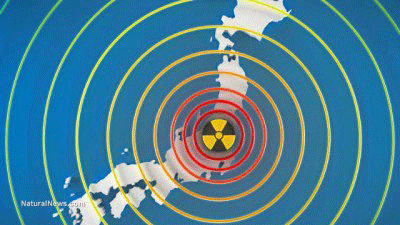
14 years since Fukushima nuclear disaster: Greenpeace statement
Greenpeace International, 11 March 2025
Tokyo, Japan – 14 years have passed since the Great East Japan Earthquake and the Fukushima Daiichi nuclear disaster devastated the northeast region of Japan. Greenpeace Japan extends heartfelt condolences to the victims and their families who are still suffering the aftermath of this devastating catastrophe……………………………
The risks of nuclear power plants increase with the length of time they have been in operation, as does their vulnerability to natural disasters such as earthquakes. The Fukushima Daiichi nuclear accident occurred at a nuclear power plant that had been in operation for more than 30 years, and radiation levels remain so high that even 14 years after the accident, it is still impossible for humans to directly inspect the damaged reactors. Therefore, the change of policy to promote nuclear power is unacceptable.[1]
There is no prospect for the disposal of spent nuclear fuel while the existing storage facilities are already close to full capacity, and many local authorities have yet to put in place an effective method for the safe evacuation of residents living near nuclear power stations in the event of an unforeseen emergency.
In addition, the Japanese Government and the Tokyo Electric Power Company (TEPCO), pushing aside the concerns of fishermen, residents and others, have decided to start deliberately discharging contaminated water containing radioactive substances from the accident at the Fukushima Daiichi Nuclear Power Plant into the environment. This discharge is expected to continue for about 30 years until 2051.
14 years ago, the then Government considered the possibility of evacuating 50 million people in the Tokyo metropolitan area. In fact, water treatment plants in Tokyo even introduced temporary restrictions on the amount of water that infants should drink. Due to the direction of the wind, much of the released radioactive material was carried out to sea, but a different wind direction would have resulted in a completely different outcome. The Prime Minister secretly drafted a statement at that time which stated that the worst case scenario had occurred. Have we, who experienced the accident, stayed true to the feelings we had in our hearts at the time?
The Great Hanshin-Awaji Earthquake 30 years ago, the Great East Japan Earthquake 14 years ago, the Noto Peninsula Earthquake a year ago and other earthquakes and floods across the country have occurred in rapid succession. We can only prepare for these natural disasters as best we can, but nuclear disasters are different. Nuclear disasters are caused by our choice and use of nuclear power as a means of generating electricity in Japan. Fortunately, there are many possibilities in Japan to pursue comfortable energy savings, as the electricity supply can be replaced by renewable energies that use neither nuclear power nor fossil fuels.
Therefore, Greenpeace Japan, whose vision is to preserve the bounty of the earth for our children 100 years from now, believes that the only reasonable course to take is to stop nuclear power generation in order to prevent nuclear disasters from happening again. The government should clearly state its policy to phase out the use of nuclear power and fossil fuels, in order to ensure a stable energy supply and decarbonise the country. They should make great strides in energy conservation in a way that promotes health, comfort and efficiency, and the use of renewable energy in a way that is in harmony with local communities and nature, thereby aiming to make Japan an energy-saving and renewable energy powerhouse. We will do our utmost this year to work towards this goal.” https://www.greenpeace.org/international/press-release/73383/14-years-since-fukushima-nuclear-disaster-greenpeace-statement/
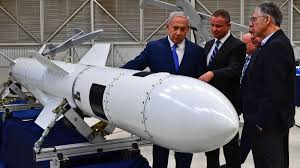
Qatar calls for Israel’s nuclear facilities to be under IAEA supervision
March 10, 2025 , https://www.middleeastmonitor.com/20250310-qatar-calls-for-israels-nuclear-facilities-to-be-under-iaea-supervision/
Qatar called on Sunday for all of Israel’s nuclear facilities to be subjected to the International Atomic Energy Agency (IAEA) safeguards and for Israel to sign the Treaty on the Non-Proliferation of Nuclear Weapons (NPT) as a non-nuclear state if that is what it claims to be.
Qatar’s Ambassador and Permanent Representative to the UN Office and International Organisations in Vienna, Jassim Yacoup Al-Hammadi, said before the session of the IAEA Board of Governors in the Austrian capital, that there is a “need for the international community and its institutions to uphold their commitments under resolutions of the UN Security Council, the UN General Assembly, the IAEA, and the 1995 Review Conference of the NPT, which called on Israel to subject all its nuclear facilities to IAEA safeguards.”
He noted that some of these resolutions explicitly urged Israel to join the NPT as a non-nuclear state if its non-confirmation of its nuclear programme is, in effect, a denial of its existence.
The Qatari Ambassador pointed out that all Middle Eastern countries, except Israel, are parties to the NPT and have effective safeguard agreements with the Agency.
He also noted that. “Israel continues its aggressive policies, including increasing extremist calls for the forced displacement of the Palestinian people, intensifying military operations against cities and refugee camps in the West Bank, blocking humanitarian aid to Gaza, and maintaining restrictions on the operations of the United Nations Relief and Works Agency for Palestine Refugees in the Near East (UNRWA).”
Al-Hammadi stated that Qatar “submitted a written memorandum last week to the International Court of Justice (ICJ) regarding a request for an advisory opinion based on the UN General Assembly resolution of 19 December, 2024. The request seeks clarification on Israel’s obligations concerning the activities of the United Nations, other international organisations, and third-party states.”
US makes fresh push for World Bank to back nuclear power

New administration wants Washington-based multilateral lender to help the west
compete with China and Russia.
The World Bank is facing renewed calls from
its biggest shareholder to drop a decades-old ban on funding nuclear power
to help the west compete with China and Russia in atomic diplomacy. French
Hill, chair of the House Financial Services Committee, has signalled that
the new US administration will continue to support the push to fund nuclear
projects just months ahead of a crucial decision on the contentious ban.
FT 9th March 2025
https://www.ft.com/content/e5e497a3-0c61-46a2-9a50-91757e7f1a61
How many nuclear weapons does the United States have in 2025?
10 Mar 2025
Since 1987, the Bulletin of the Atomic Scientists has published the Nuclear Notebook, an authoritative accounting of world nuclear arsenals compiled by top experts from the Federation of American Scientists.
Today, it is prepared by Hans M. Kristensen, Matt Korda, Eliana Johns, and Mackenzie Knight of FAS.
This video explores the United States’ nuclear arsenal, which is currently undergoing a broad modernization effort to replace every nuclear delivery system over the next decade. You can read more from the Nuclear Notebook about other nuclear arsenals here: https://thebulletin.org/nuclear-noteb… https://www.youtube.com/watch?v=3vsNKk9vkIE
“Difficult-to-Return” zones

Some have returned to areas contaminated by the Fukushima disaster but they should never be considered safe, writes Ruiko Muto
https://beyondnuclearinternational.org/2025/03/09/difficult-to-return-zones/ 9 Mar 25
Last summer, I had the opportunity to visit parts of the Difficult-to-Return zones in Fukushima. A hospital, where more than 50 patients died during evacuation efforts in the 2011 nuclear disaster, was now overgrown with dense trees and grasses. In a care home for older people, I saw disarrayed beds and scattered items, such as diapers, medicines and documents, all left untouched since the residents had to evacuate suddenly for safety. The meal plan for 11th March 2011 was still written on the whiteboard.
At a nearby primary school, I found dictionaries placed on each small wooden desk. Pupils’ bags, shoes, brush washers, and even fallen bicycles as well as helmets were still there – everything was left behind. No sounds were to be heard except for the hum of cicadas. There is no doubt that people lived here until just 13 years ago, but now, there is no one. These places remain abandoned even today.
Only a very small number of people have returned to the areas where evacuation orders were lifted. Empty houses need to be demolished one by one. Grand gates and storehouses, seemingly with centuries of history, are being torn down. New homes have been built nearby for disaster-affected families, with some residents with children moving in from outside Fukushima. A resident told me that the current indoor radiation level was as high as 0.3μSv/h, five to ten times higher than the levels before 2011. Part of the Difficult-to-Return zone begins just behind the fences surrounding these homes. Such living conditions should never be called safe.
Meanwhile, the Japanese government has removed its pledge to reduce reliance on nuclear energy from its Seventh Strategic Energy Plan, signalling their intention to revive the industry. To someone like me, who is acutely aware of the ongoing sufferings from the Fukushima nuclear disaster and the reality that local residents cannot safely stay or evacuate if a similar disaster were triggered by an earthquake in areas like the Noto Peninsula, the epicentre of a major earthquake in 2024, Japan’s continued reliance on nuclear energy seems inconceivably absurd.
In 2022, Japan’s Supreme Court ruled that the government was not liable for the 2011 disaster, dismissing the claims of many evacuees and victims seeking fair compensation and accountability. Since then, it has been revealed by a journalist that there was a collusion between the judge and the executives of Tokyo Electric Power Company (TEPCO). The state of the judicial system in Japan is deeply concerning. Similar rulings in other Fukushima nuclear disaster related cases followed in lower courts, leaving those suffering in an incredibly difficult position.
The extraction of 0.7 gramme of nuclear debris from the damaged Fukushima Daiichi nuclear plant has been recently reported, but the modest “success” was achieved only after repeated failed attempts. Harsh working conditions with high levels of radiation exposure and mismanagement by TEPCO — such as failing to send a company staff member to properly inspect a telescopic device — became evident during the process. No review of the plant’s decommissioning roadmap has been carried out to account for the radioactive decay period, even though no one believes the decommissioning process will be completed by 2051, as originally planned.
Having released contaminated underground water from the plant into the ocean despite strong opposition, Japan is now distributing contaminated soil to wider areas, touting it as a “recycled” material for rebuilding works. In doing so, the Japanese government continues to propagate nuclear safety myths, particularly among younger people, while asserting that they alone have the authority to determine which evidence is scientific and which is not.
Along the quiet Fukushima coastline, almost empty of people, lavish corporate facilities and state-of-the art laboratories have been built with generous subsidiaries under the guise of reconstruction efforts.
A nuclear disaster not only devastates your life and home, but it also deprives you of basic human rights. Confronted with this harsh reality even 14 years after the disaster, I cannot help but feel a sense of despair about the future of Fukushima.
With winter nearly gone and spring just around the corner, I long to be filled with good intentions and to see the world with discerning eyes. Encouraged by the knowledge that many friends around the world are tirelessly working to end nuclear energy production, I will continue to contribute as much as possible to this important cause.
Update: Last week the Japanese Supreme Court upheld the acquittals made by a lower court of two of the three TEPCO ex-executives charged. The charges against ex-chairman Katsumata Tsunehisa were dropped following his death in October last year. Lawyers from the criminal trial support group and Ruiko Muto, the plaintiff’s representative, held a press conference. The following are excerpts from Ms. Muto’s statement, translated from the original Japanese:
“Although the defendants were all acquitted by the District Court and the High Court, we put our hope in the dignity of judges and in the justice of the Supreme Court.
“The fact that this decision was made today just before March 11 shows the heartlessness with which the victims of the nuclear accident were truly treated. I wonder how many victims are disappointed and angry.
“The Fukushima nuclear accident is still ongoing. How much damage has been caused by this accident, how many lives have been ruined, how much negative legacy has been inflicted on future generations! Failure to hold accountable the management of the companies responsible for the accident could lead to another nuclear accident. It is very regrettable and disappointing that the court did not understand all this. We cannot challenge this decision in court, but we are not convinced of its validity. I believe that the responsibility for this accident will be challenged in many ways in the future, and we are determined to continue working towards that goal.”
Ruiko Muto is a Fukushima native and a longtime opponent of nuclear power who has spent more than 30 years in the anti-nuclear movement. Ms. Muto is also co-representative of the Nuclear Accident Victims Group Liaison Committee and the Chair of the Complainants for the Criminal Prosecution of the Fukushima Nuclear Disaster. Translation from the Japanese by Japanese Against Nuclear (UK).
Fukushima victims angered, saddened by TEPCO acquittals.

THE ASAHI SHIMBUN, March 7, 2025, by Susumu Okamoto, Noriyoshi Otsuki, Yuto Yoneda and Takashi Endo. https://www.asahi.com/ajw/articles/15659097?fbclid=IwY2xjawI5r7VleHRuA2FlbQIxMQABHWN3s0dp9P01VgNx6-uHR7J7t09vvNY9N_2gIceMP_VQvQV1fbE1ExO8Qw_aem_q068mi2UQmCXSqQO2wrDJQ
Victims of the Fukushima nuclear disaster expressed outrage and sadness after the Supreme Court upheld the acquittals of two former executives of Tokyo Electric Power Co., operator of the stricken nuclear plant.
But for Yoshinobu Ishii, the March 5 decision came as no surprise.
“I expected this because the rulings of the first and second trials were ‘not guilty,’” said Ishii, 80, from Kawauchi, Fukushima Prefecture.
Ishii’s mother, Ei, died at the age of 91 after being forced to flee from the nuclear accident in March 2011.
“My mother is not coming back, even if I blame someone (for her death),” said Ishii, resigned.
The two former vice presidents at TEPCO were charged with professional negligence resulting in death and injury concerning the company’s preparations for a tsunami that could hit its Fukushima No. 1 nuclear power plant.
However, the top court agreed with earlier rulings that said a tsunami of that scale could not have been foreseen and absolved them of criminal responsibility.
Ishii said he was concerned the ruling could further promote Japan’s return to using nuclear power generation for its energy needs.
EVACUATION PLAN ‘USELESS’
On the morning of March 11, 2011, Ishii’s wife, Aiko, 75, visited Ei at an affiliated facility near Futaba Hospital in Okuma, near the nuclear plant.
Ei, who had hurt her back, ate the grated apple and pickled radish that Aiko had brought, and then said her last words to her daughter-in-law: “Be careful on your way home. Come again tomorrow.”
The Great East Japan Earthquake struck that afternoon, unleashing a tsunami that caused the triple meltdown at the nuclear plant.
In the ensuing chaos, patients left behind in hospitals and related facilities were forced to take buses and other means on a harsh evacuation route exceeding 200 kilometers.
A week after the tsunami, the Ishii couple found Ei’s body wrapped in a white cloth in a high school gymnasium. Her death certificate read: “Cause of death: hypothermia” and “Date of death: around March 14.”
The former TEPCO executives were cleared of negligence charges concerning the deaths of 44 people, including hospital patients like Ei who died in evacuation.
Immediately after the nuclear accident, there was a growing movement to move away from nuclear power generation.
Now, however, nuclear reactors are increasingly being restarted around the nation.
“Japan is a country where many earthquakes occur, so ‘100 percent safety’ is impossible,” Ishii said. “That’s why the nuclear accident happened and why the evacuation plan was useless.”
FEELING HELPLESS
A group of victims in Fukushima Prefecture initiated the criminal procedures against the former TEPCO executives.
The group’s leader, Ruiko Muto, 71, ran a coffee shop in Tamura, Fukushima Prefecture, about 40 kilometers west of the Fukushima No. 1 nuclear power plant.
She had no choice but to close the shop after the accident.
“I wanted to make it clear through a criminal trial who should take responsibility to prevent a repeat of the same mistakes,” she said.
She had sat in the galleries of court rooms since the first hearing of the trial at the Tokyo District Court in 2017.
When she learned on March 6 that the Supreme Court had effectively finalized the not guilty verdicts, she felt frustrated and shed tears.
She fears the acquittals will intensify a sense of helplessness among those affected in Fukushima Prefecture.
“Victims of damage caused by the nuclear accident tend not to speak out,” Muto said.
FOCUS NOW ON CIVIL CASE
Yuichi Kaido, a lawyer representing plaintiffs in both the criminal case and a civil lawsuit against former TEPCO managers, criticized the Supreme Court’s decision at a news conference on March 6.
“Its logic was too rough,” Kaido said.
But he said some good came out of the trial and appeals process, which took more than seven years to complete.
Many TEPCO employees and other related parties testified as witnesses.
“The testimonies at the trial have become invaluable evidence when discussing the nuclear accident,” Kaido said.
In the civil lawsuit, the Tokyo District Court ordered the former TEPCO managers to pay more than 13 trillion yen ($88 billion) in damages over the nuclear accident.
The defendants appealed the ruling, and the Tokyo High Court is expected to hand down its ruling in June.
“It is important to ensure the district court’s ruling is upheld,” Kaido said.
DISAPPOINTMENT
In the criminal case, prosecutors initially decided not to charge the former TEPCO executives.
But a citizens inquest panel twice ruled that they should be prosecuted, and mandatory indictments were applied.
(A third former TEPCO executive was charged, but his trial was terminated after his death in October last year.)
The four designated lawyers who acted as prosecutors in the trial held a news conference after the top court’s decision.
“The Supreme Court did not respond to our arguments,” Shozaburo Ishida said. “I wish they had made a more rigorous decision.”
US Threatens Possible Military Response After Tehran Rejects Nuclear Outreach
The White House again warned Tehran that it can be dealt with either through military means or by reaching a deal over its nuclear program, remarks that came hours after Iran’s Supreme Leader Ayatollah Ali Khamenei rejected a US proposal for negotiations between the two bitter rivals.
“We hope the Iran Regime puts its people and best interests ahead of terror,” White House National Security Council spokesman Brian Hughes said in a statement on March 9 while reiterating remarks by President Donald Trump that “if we have to go in militarily, it’s going to be a terrible thing.”
In an interview with Fox Business recorded on March 6, Trump said, “There are two ways Iran can be handled: militarily, or you make a deal” to prevent Tehran from acquiring nuclear weapons.
“I’ve written them a letter saying, ‘I hope you’re going to negotiate because if we have to go in militarily, it’s going to be a terrible thing,'” Trump said.
“I would rather negotiate a deal. I’m not sure that everybody agrees with me, but we can make a deal that would be just as good as if you won militarily,” Trump added.
“But the time is happening now. The time is coming up. Something’s going to happen one way or the other.”
Snippets of the interview were aired on March 7, but the full sit-down will be broadcast on March 9, Fox said.
In separate comments to reporters, Trump said: “We have a situation with Iran that, something’s going to happen very soon. Very, very soon.”
Ali Khamenei, speaking on March 8 to a group of Iranian officials — without specifically mentioning Trump or the United States — said, “Their talks are not aimed at solving problems.”
“It is for…’Let’s talk to impose what we want on the other party that is sitting on the opposite side of the table.'”
“The insistence of some bullying governments on negotiations is not to resolve issues…. Talks for them is a pathway to have new demands; it is not only about Iran’s nuclear issue…. Iran will definitely not accept their expectations,” Khamenei was quoted by state media as saying.
Iranian Foreign Minister Abbas Araghchi on March 8 said Tehran had not yet received a letter from Trump……………………………… more https://www.rferl.org/a/iran-trump-nuclear-khamenei-negotiations/33341412.html
Turbine, cooling: these unforeseen events that keep the Flamanville EPR at a standstill.

EDF is extending an unscheduled shutdown of the Flamanville EPR until the end of March in order to make adjustments to the turbine. During its first 100 days of operation, the nuclear reactor will have undergone 76 days of maintenance.
By Amélie Laurin, March 6, 2025
EDF had warned: the ramp-up of the Flamanville EPR, the first nuclear reactor to be commissioned in France in twenty-five years, would be very gradual. The public group has once again shut down, for a month and a half, its Normandy pressurized water reactor, which had been connected to the electricity grid on December 21, the first day of winter.
These maintenance operations were not planned and are the result of technical difficulties. They began on February 15 and are due to continue until March 30, after being extended three times.
Turbine heating
This work follows two initial suspensions of electricity production at Flamanville, between Christmas and mid-January, and at the turn of February. Two shutdowns that were, themselves, scheduled. In total, the reactor will have been immobilized for 76 days, during its first 100 days of operation.
The cause: various technical adjustments. In mid-February, the EPR stopped producing electrons due to an insufficient water flow in the seawater cooling circuit, which is only used “in exceptional situations”. This was followed by an intervention “on a temperature probe of the main circuit”, specifies a regulatory press release.
More Guns, Less Butter: Starmer’s Defence Spending Splash

To pursue such rearmament, Starmer has decided to take the axe to the aid budget,
March 8, 2025 Dr Binoy Kampmark, https://theaimn.net/more-guns-less-butter-starmers-defence-spending-splash/
The urge to throw more money at defence budgets across a number of countries has become infectious. It was bound to happen with Donald Trump’s return to the White House, given his previous insistence that US allies do more to fatten their own armies rather than rely on the largesse of Washington’s power. Spend, spend, spend is the theme, and the UK Prime Minister Keir Starmer has shown himself willing to join this wasteful indulgence.
On February 25, just prior to his visit to Washington, Starmer announced that spending on defence would reach 2.5% of GDP from April 2027. In the next parliament, it would rise to 3%. “In recent years,” states a UK government press release, “the world has been reshaped by global instability, including Russian aggression in Ukraine, increasing threats from malign actors, rapid technological change, and the accelerating impacts of climate change.”
Almost predictably, the term “Cold War” makes its retro appearance, with the spending increase the largest since that conflict of wilful misunderstandings and calculated paranoia. Russia figures prominently, as do “malign actors” who have burdened “the working people of Britain” with “increased energy bills, or threats to British interests and values.”
The governing Labour Party has also gone a bit gung-ho with the military–industrial establishment. In an open letter reported by the Financial Times, over 100 Labour MPs and peers thought it wise that ethical rules restricting investment by banks and investment firms in defence companies be relaxed. Financial institutions, the letter argues, should “rethink ESG [environmental, social and governance] mechanisms that often wrongly exclude all defence investment.” It was also important to address the issue of those “unnecessary barriers” defence firms face when “doing business in the UK.” Among such barriers are those irritating matters such as money laundering checks banks are obliged to conduct when considering the finance needs of defence and security firms, along with seeking assurances that they are not financing weapons banned under international law.
That these uncontroversial rules are now being seen as needless barriers to an industry that persists in shirking accountability is a sign of creeping moral flabbiness. Across Europe, the defence and arms lobbyists, those great exploiters of fictional insecurity, are feeling more confident than they have in years. They can rely on such figures as European Commission President, Ursula von der Leyen, who stated on March 4 that, “We are in an era of rearmament. And Europe is ready to massively boost its defence spending.”
To pursue such rearmament, Starmer has decided to take the axe to the aid budget, reducing it from its current level of 0.5% of gross national income to 0.3% in 2027. It was, as the press release goes on to mention, a “difficult choice” and part of “the evolving nature of the threat and the strategic shift required to meet it.” The Conservatives approved the measure, and the populist Reform UK would have little reason to object, seeing it had been its policy suggestion at the last election.
It was a decision that sufficiently troubled the international development minister, Anneliese Dodds, to quit the cabinet. In a letter to the prime minister, Dodds remarked that, while Starmer wished “to continue support for Gaza, Sudan and Ukraine; for vaccination; for climate; and for rules-based systems,” doing so would “be impossible … given the depth of the cut.”
Making the Office of Overseas Development Assistance absorb such a reduction would also see Britain “pull-out from numerous African, Caribbean and Western Balkan nations – at a time when Russia has been aggressively increasing its global presence.” It would be isolated from various multilateral bodies, see “a withdrawal from regional banks and a reduced commitment to the World Bank.” Influence would also be lost at such international fora as the G7 and G20.
Defence establishment figures have also regarded the decision to reduce aid with some consternation. General Lord Richards, former Chief of Defence Staff, saw the sense of an increase in military spending but not at the expense of the aid budget. “The notion that we must weaken one to strengthen the other is not just misleading but dangerous,” opined Richards in The Telegraph. “A lack of investment and development will only fuel greater instability, increase security threats and place a heavier burden on our Armed Forces.”The aid budgets of wealthy states should never be seen as benevolent projects. Behind the charitable endeavour is a calculation that speaks more to power (euphemised as “soft”) than kindness. Aid keeps the natives of other countries clothed, fed and sufficiently sustained not to want to stray to other contenders. The sentiment was expressed all too clearly by a disappointed Dodds: a smaller UK aid budget would embolden an already daring Russia to fill the vacuum. How fascinating, then, that a daring Russia, its threatening posture inflated and exaggerated, is one of the primary reasons prompting an increase in Britain’s defence spending in the first place.
Why is an ‘ethical’ investor funding arms companies?

Norway’s sovereign wealth fund holds shares in UK weapons firms that arm Israel, despite its ethical guidelines.
ANDREW FEINSTEIN and JACK CINAMON, 5 March 2025, https://www.declassifieduk.org/why-is-an-ethical-investor-funding-arms-companies/?utm_source=Email&utm_medium=Button&utm_campaign=ICYMI&utm_content=Button
Scandinavian countries are often held up as models for a better society. None more so than Norway, flush with North Sea oil wealth, which it can invest responsibly.
The money is put aside in a sovereign wealth fund, owned by the Norwegian government and managed by the country’s central bank, Norges Bank. It is the largest such fund in the world, worth £1.4 trillion.
Called the Government Pension Fund Global (GPFG), or just the Oil Fund, it is supposed to adhere to ethical guidelines by excluding certain companies from its portfolio.
That’s if they are involved in serious violations of human rights – especially in conflicts – gross corruption, the production of nuclear weapons and more.
However, in outright contradiction to these guidelines, the GPFG invests billions of pounds in many of the world’s largest arms companies. In fact, it owns stakes in exactly half of the world’s top 100 arms companies, accumulating at almost £14 billion.
This includes arms companies here in the UK that supply Israel – despite Norway recognising the state of Palestine as recently as May 2024 and excluding companies from the GPFG involved in activities violating international law.
So why is Norwegian money finding its way into Britain’s arms industry, which supplies Israel?
Arming Israel
Among these investments is QinetiQ in which the GPFG holds over £46 million in shares.
The British defence tech firm has collaborated with the Israeli military to develop the Watchkeeper drone system, a joint project with Israel’s Elbit Systems, a company dropped from the fund in 2009 for supplying surveillance systems for the separation barrier in the West Bank.
Following sustained direct action from Palestine Action, Elbit Systems UK lost its largest-ever British arms contract, worth over £2.1bn, after the UK Ministry of Defence scrapped its Watchkeeper drone programme.
QinetiQ subsidiaries, such as QinetiQ Australia, are involved in the F-35 fighter jet program. Israel has used its fleet of these aircraft to pound Gaza.
Then there is the almost £35m invested in Babcock International, another UK company in Norway’s portfolio. It claims to not provide weapons to Israel, but with partnerships involving Israeli defence firms IAI, Elbit, and Rafael Systems, the line between ‘not involved’ and ‘indirectly arming’ becomes quite blurry.
Babcock also sustains the entirety of the UK’s submarine fleet, including by delivering through-life support and life extension of the UK nuclear armed Vanguard class submarine.
Rolls-Royce and Leonardo
Norway’s largest UK arms investment, however, is in British engineering giant Rolls-Royce, where the fund holds around £1.07bn in shares, representing over 2% of the company.
Rolls-Royce is not just about luxury cars, it is a critical supplier on the F-35 program, powering Israeli military operations. Case in point: Rolls-Royce’s German subsidiary, MTU, produces the engines for Israel’s Merkava tanks and most of the Israeli Navy’s vessels.
Divesting from the UK defence sector is far from unlikely, as the Oil Fund previously decided to exclude BAE Systems, the UK’s largest arms company, from its portfolio in 2018 for its involvement in nuclear weapons production.
However, few investments in Norway’s portfolio illustrate its ethical blind spots as starkly as its stake in Anglo-Italian arms manufacturer Leonardo. Leonardo’s presence in the UK comes largely from its ownership of Leonardo UK, formerly AugustaWestland.
Leonardo operates from several locations in the UK, and has deep collaborations with the UK MOD, BAE Systems, Rolls-Royce and MBDA UK, especially with reference to its joint venture program, the Tempest new-generation fighter jet, expected to enter service in 2035.
With around £165m invested; the company has become a focal point for divestment campaigns – and for good reason.
Leonardo supplies weapons to Israel, including naval guns for Sa’ar 6 warships used in the bombardment and siege on Gaza, and it is a key player in the F-35 program.
Ignorance or hypocrisy?
Despite a history of corruption – linked to bribery scandals in Indonesia and India – Leonardo remains on the GPFG portfolio, even managing to convince the Council of Ethics (the body tasked with reviewing investments) “that the risk of gross corruption in the company’s operations no longer is unacceptable” as they occupied an observation list for five years until being revoked from assessment in 2022.
The company has recently been accused of providing the military junta in Myanmar with weapons in violation of a UN arms embargo. The company also contributes to nuclear weapons production through MBDA, a joint venture with BAE Systems and Airbus SE. Leonardo’s role in Israel’s military operations and its corruption scandals demand urgent re-evaluation by the Council on Ethics.
The fund clearly channels billions of pounds into corporations that fuel violence, sustain occupations, and profit from human suffering. These aren’t just financial decisions; they’re moral failings, directly contradicting the fund’s stated ethical guidelines.
How does Norway square these investments with its loud-and-proud commitment to peace and human rights? Is this ignorance or hypocrisy? Norway must divest from UK arms companies, sending a powerful message: that peace and human rights are not negotiable, and profit should never come at the expense of human lives.
To see the full list of investments in the world’s top 100 arms companies click here.
Part of a more detailed blog published by Corruption Tracker
Canada Unveils $490-Million Push Towards Nuclear Energy

Energy
10 Mar 25,
A massive push towards nuclear in Canada is set after several investments have been announced by Minister of Energy and Natural Resources Jonathan Wilkinson. Wilkinson is pushing what the government describes as “crucial steps towards clean, affordable, and homegrown nuclear technology.”
Central to Canada’s nuclear revival is a $304 million joint investment with engineering firm AtkinsRéalis to advance the next generation of Canada’s signature CANDU reactor. The initiative aims to refine the standard design of this Canadian-developed reactor technology.
Also key to Canada’s nuclear expansion involves small modular reactors, which provide scalable and versatile solutions for regional power needs. Ontario Power Generation received $55 million through the Future Electricity Fund to develop pre-construction activities for three SMRs at its Darlington facility.
Saskatchewan also received a substantial $80 million investment for SMR predevelopment. Managed by SaskPower through Saskatchewan’s Crown Investments Corporation, the project will focus on technical, regulatory, and community engagement tasks.
In Alberta, Capital Power Limited Partnership secured $13 million to evaluate potential SMR locations in the province, alongside a notable $8.3 million investment in the Peace Region for preliminary work on a large-scale nuclear facility with a potential capacity of 4,800 MW.
Western University in London, Ontario, received nearly $5 million to study advanced nuclear fuels, specifically the TRi-structural ISOtropic or TRISO fuel type. Canadian Nuclear Laboratories, situated in Chalk River, Ontario, was awarded over $3.5 million to establish new standards and strategies for SMR deployment across Canada, aiming to optimize waste management.
Additionally, the Saskatchewan Industrial and Mining Suppliers Association received approximately $2.8 million to assess and enhance the province’s nuclear supply chain readiness, explicitly incorporating Indigenous businesses.
Complementary to nuclear advancements, the Alberta Electric System Operator secured $18.5 million to develop IT infrastructure capable of managing increased complexity arising from clean electricity generation. Alberta is also investing $1.3 million in the Tent Mountain Pumped Hydro Energy Storage Project near Coleman for advancing integrated clean energy storage solutions alongside nuclear development.
Families sickened by radiation exposure want Congress to revive this key compensation program.
7 Mar 2025
The Radiation Exposure Compensation Act or RECA, first enacted in 1990, created a compensation program to process claims from people exposed to radiation leftover from nuclear testing done by the U.S. government.
After the latest expansion of the bill expired in June 2024, communities across the country, including Missouri and the Navajo Nation say they are waiting for the legislation to not only be taken up again, but also to include communities like theirs that were never originally included. https://www.youtube.com/watch?v=0icfLF6AVEQ
1 This Month





PLEASE OPPOSE HR 8255 AND S.3639 – bills would accelerate satellite deployment, with no environmental review or safeguards – https://ncstd5li.quorum.us/campaign/169331/
To see nuclear-related stories in greater depth and intensity – go to https://nuclearinformation.wordpress.com
-
Archives
- October 2026 (74)
- September 2026 (339)
- August 2026 (330)
- July 2026 (355)
- June 2026 (287)
- May 2026 (306)
- April 2026 (356)
- March 2026 (251)
- February 2026 (267)
- January 2026 (308)
- December 2025 (358)
- November 2025 (359)
-
Categories
- 1
- 1 NUCLEAR ISSUES
- business and costs
- climate change
- culture and arts
- ENERGY
- environment
- health
- history
- indigenous issues
- Legal
- marketing of nuclear
- media
- opposition to nuclear
- PERSONAL STORIES
- politics
- politics international
- Religion and ethics
- safety
- secrets,lies and civil liberties
- spinbuster
- technology
- Uranium
- wastes
- weapons and war
- Women
- 2 WORLD
- ACTION
- AFRICA
- Atrocities
- AUSTRALIA
- Christina's notes
- Christina's themes
- culture and arts
- Events
- Fuk 2022
- Fuk 2023
- Fukushima 2017
- Fukushima 2018
- fukushima 2019
- Fukushima 2020
- Fukushima 2021
- general
- global warming
- Humour (God we need it)
- Nuclear
- RARE EARTHS
- Reference
- resources – print
- Resources -audiovicual
- Weekly Newsletter
- World
- World Nuclear
- YouTube
-
RSS
Entries RSS
Comments RSS

