Second Annual WIPP Plutonium Trail Caravan on Saturday, April 26th
April 17th, 2025, nuclearactive,org
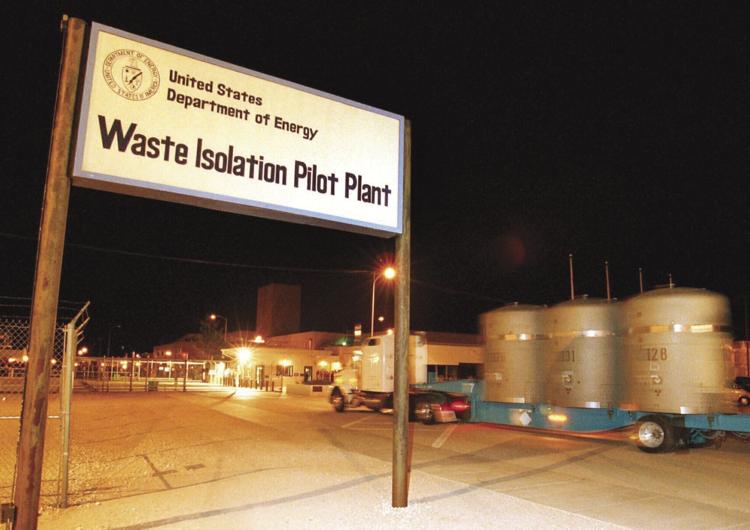
The U.S. Department of Energy (DOE) promised the People of New Mexico that it would cleanup and dispose of its plutonium-contaminated nuclear bomb waste by depositing it into the Waste Isolation Pilot Plant (WIPP) over 25 years and close. DOE broke its promise when that deadline passed on March 26th, But DOE has a new plan to keep the deep geologic nuclear waste disposal facility at WIPP open for 60 more years for legacy bomb waste and for newly-generated bomb waste from fabricating new weapons. https://wipp.energy.gov/
To alert the public about DOE’s plans, the Stop Forever WIPP Coalition will host the Second Annual WIPP Plutonium Caravan on Saturday, April 26th beginning at 9 am at the DeVargas Mall in Santa Fe. The Caravan will travel south on St. Francis Drive to Interstate 25 and towards Las Vegas, New Mexico with stops along the way. You are invited to be part of the Caravan. For more information, please visit https://stopforeverwipp.org/……………………………………………………………………………………………….. https://nuclearactive.org/
Canada’s Liberal energy plan: more corporate, less climate?
Winnipeg Free Press, By: Anne Lindsey, Apr. 16, 2025
In this “flag-waving” moment, where the U.S. government is threatening our sovereignty and economic well-being, it now appears the federal election is the Liberals’ to lose.
Amid the hype and adulation for Liberal Leader Mark Carney, however, the Liberals are promoting ideas that merit a closer look. Not least their plan to “make Canada the world’s leading energy superpower” announced in Calgary on April 9.
On the surface, it looks like the perfect recipe for self-reliance in energy and building a stronger Canada. It’s an industrial development strategy meant to exploit our natural mineral resources, build needed infrastructure and create jobs.
But what kind of energy and infrastructure? The plan includes many welcome and essential commitments to reducing emissions: investment in zero-emission vehicles, developing battery and smart grid technologies, reducing methane, and references to our “clean energy advantage.”…………..
The “clean energy advantage” is not well defined…………………..
Why? Nuclear is a controversial energy technology, for good reason. It seems inevitable that nuclear power will play a starring role in Canada’s energy future but not one the Liberals want to highlight.
Nuclear’s proponents might be winning the semantic battle branding it as “clean,” despite its routine operations releasing a cocktail of radioactive substances, its waste products containing among the most dangerous elements on the planet, and its inextricable link to the manufacture and proliferation of nuclear weapons.
Federal Liberals (and for that matter, Conservatives) have always been pro-nuclear, even though no nuclear plants have been built in Canada for decades. The annual federal expenditure on Crown corporation Atomic Energy of Canada Limited is more than $1 billion, due in no small part to the massive liabilities of managing nuclear waste. Tax credits for nuclear companies already abound.
Just this year, in the month of March alone, the current Liberal government committed another nearly half a billion dollars to a variety of nuclear projects across the country. The plan may not talk, but money does.
Mark Carney himself, a former UN special envoy on climate change and finance, has said there is “no path to net zero without nuclear.” In 2022, he joined Brookfield Asset Management, a firm holding both renewable energy and nuclear portfolios that, together with uranium giant Cameco, purchased bankrupt reactor company Westinghouse, under his watch. No question that Carney has a strong pro-nuclear bent.
More nuclear energy is an inappropriate climate action response, for at least two reasons. First, reactors take decades to be licensed, constructed and connected to the grid. And that’s a luxury we can’t afford.
Business as usual while waiting for nuclear power to get online means we surpass the tipping points of global warming, a scenario we must avoid.
Second, nuclear is the costliest way to generate electricity. Studies by organizations from the Ontario Clean Air Alliance to Lazard show that nuclear is not competitive with renewable alternatives which continue to drop in price. As governments fund nuclear, there is a massive lost opportunity cost for developing cheaper and readily available renewable energy.
Nuclear is too slow and too expensive to address climate change. The IPCC shows nuclear to be inefficient in reducing emissions. This is not an ideological perspective. It is fact.
Besides, “new generation” reactors being touted in Canada (such as GE Hitachi’s BWRX-300) carry a massive political liability, given current world events: most are American designs and all require enriched uranium fuel fabricated outside Canada.
Hardly a prescription for self-sufficiency. It’s a bit mysterious why “nuclear” does not appear in Liberal election plans while getting so much government (Liberal and Conservative) attention and money — unless we recognize the essential role of civilian nuclear infrastructure in maintaining weapons of mass destruction. Canada was instrumental in building the first atomic bombs and remains central to today’s U.S. defence/weapons supply chains for critical minerals, including uranium. Let’s keep that in mind as leaders negotiate trade and tariffs.
Canada should define itself not by becoming an “energy superpower” in the conventional and nuclear sense, but by disengaging from the defence industrial complex. We should use our critical minerals, ingenuity and workforce to pursue a decentralized, affordable, locally based renewable energy infrastructure leaning heavily into building and transportation efficiencies. We need to work together with Indigenous and remote communities, fully understand environmental and social impacts of developments and create smart grid interconnections that allow for maximum flexibility in energy sharing within Canada.
Anne Lindsey volunteers with the No Nukes MB campaign of the Manitoba Energy Justice Coalition and has been monitoring nuclear waste since the 1980s. https://www.winnipegfreepress.com/opinion/analysis/2025/04/16/the-liberal-energy-plan-more-corporate-less-climate
Protester for life
Activist Angie Zelter has been arrested more than a hundred times. She’s not stopping now, writes LINDA PENTZ GUNTER
ANGIE ZELTER doesn’t know if there are already US nuclear weapons at the RAF Lakenheath base in Suffolk. In fact we may never know, says the 73-year-old grandmother and veteran of countless protests, who began her activism at the Greenham Common women’s occupation in 1981 that saw US cruise missiles removed from the base there 10 years later.
RAF Lakenheath is a misnomer. It is actually a US Air Force base where, it is suspected,
preparations are underway for a return of US nuclear weapons to the base,
if they are not there already. This week and next, hundreds of peace and
disarmament activists will be travelling there to attend a peace camp that
includes rallies, a conference and culminates in a blockade on April 26.
The camp is hosted by the Lakenheath Alliance for Peace, a network of
groups and individuals from Britain and around the world. Protesters are
expected to include activists from other countries where US military bases
are located.
Morning Star 16th April 2025
https://morningstaronline.co.uk/article/protester-life
The Conservative Argument Against Nuclear Power in Japan

It has been said that nuclear power stations are like nuclear weapons directed at your own country. I couldn’t agree more.
Getting rid of these “nuclear weapons directed at our own country” will not require huge defense spending or difficult diplomatic negotiations. All that is required is the ability to look square at the facts, and a conservative mindset determined to protect our rich and productive land and pass it on to the next generation.
Higuchi Hideak, Apr 15, 2025, https://www.nippon.com/en/in-depth/d01111/
A Devastating Loss of Territory
“Conservatism is essentially realism. A conservatism that refuses to confront reality is as worthless as a progressivism without ideals.”
This is how I opened my Hoshu no tame no genpatsu nyūmon (Nuclear Power: An Introduction for Conservatives), which came out last summer. In the book, I tried to bring attention to the contradictions inherent in the policies of the Liberal Democratic Party: a party that claims to support conservative values and uphold the ideals of patriotism but nevertheless advocates that Japan should continue or increase its reliance on nuclear power, even in the aftermath of the Fukushima disaster.
In the book, I made three main points. First, nuclear power is fundamentally incompatible with conservatism and patriotism. Second, nuclear power stations are inherently vulnerable to earthquakes, for structural reasons. And third, nuclear power stations are also vulnerable from a national security perspective.
The disaster at the Tokyo Electric Power Company’s Fukushima Daiichi Nuclear Power Station in March 2011 led to the evacuation of more than 150,000 people. More than 20,000 are still not able to return to their homes even today. And the state of emergency declared shortly after the disaster has still not been lifted, 14 years later.
In Fukushima Prefecture, evacuation orders are still in effect across more than 300 square kilometers, in what the government has designated as “closed to inhabitation indefinitely.” This is in spite of the fact that the annual safety limits for radiation exposure among the general population were lifted from 1 millisievert to 20 millisieverts. An area of more than 300 square kilometers—equivalent to the size of Nagoya, one of Japan’s key economic centers—is still effectively under evacuation orders. The country has effectively lost territory 50 times larger than the Senkaku Islands in Okinawa Prefecture, controversially claimed by China and the frequent focus of national security anxiety. As if this weren’t bad enough, more than 300 young people have been diagnosed with childhood thyroid cancer, a condition that would normally be expected to affect only around one in a million. Many of these have been serious cases requiring invasive surgery.
When I sat as presiding judge in the case brought before the Fukui District Court to stop the planned reactivation of the Ōi Nuclear Power Station, operated by the Kansai Electric Power Company, the argument put forward by the Liberal Democratic Party (then newly returned to power) and the business lobby was that shutting down nuclear plants would force Japan to import vast amounts of oil and natural gas to fuel thermal power stations. This would result in a massive outflow of the nation’s wealth and lead to national impoverishment.
On May 21, 2014, the court handed down its verdict. Even if shutting down the plant did lead to a trade deficit, the court rejected the idea that this would represent a loss of national wealth. True national wealth, the court held, consists of rich and productive land—a place where people can put down roots and make a living. The risk of losing this, and being unable to recover it, would represent a more serious loss of national wealth. Compare the arguments of the LDP and economic business lobby with the decision of the Fukui District Court. Which represents true conservatism, unafraid to look squarely at the facts about nuclear disasters? Which best represents the true spirit of patriotism?
Disaster Caused by a Power Failure
Let’s consider a few of the characteristics of nuclear power stations. First, they must be continuously monitored and supplied with a constant flow of water to cool the reactor. Second, if the supply of electricity or water is interrupted, there is the risk of an immediate meltdown. A serious accident could potentially mean the end of Japan as a nation.
The accident at Fukushima Daiichi came perilously close to rendering much of the eastern part of Japan uninhabitable. Yoshida Masao, the director in charge at the time, feared that radioactive fallout would contaminate all of eastern Japan when it looked as though the containment building at the Unit 2 reactor would rupture after venting became impossible. The chair of the Japan Atomic Energy Commission also expected it would be necessary to evacuate the population from a 250-kilometer radius of the plant, including Tokyo.
The accident at Fukushima did not happen because the reactor was damaged directly by the earthquake or tsunami. The initial earthquake interrupted the external supply of electricity, and the tsunami that followed cut off the emergency supply as well. Essentially, a power failure made it impossible to cool the reactor, and this was enough to trigger a catastrophe.
These characteristics mean that the resilience of nuclear power stations depends not on how physically robust the reactors and containment buildings are, but on the dependability of the electricity supplied to them. Nuclear power plants in Japan are designed to be able to withstand seismic activity between 600 to 1,000 gals (a gal being a unit of acceleration used in gravimetry to measure the local impact of an earthquake). But earthquakes over 1,000 gals are not unusual in Japan, and some have exceeded 4,000 gals. For this reason, some construction companies build housing that is designed to withstand seismic shocks up to 5,000 gals.
There are only 17 fully constructed nuclear power stations across the country. Six earthquakes exceeding the safety standards have already occurred at four of these: Onagawa, Shika, Kashiwazaki-Kariwa, and Fukushima Daiichi (twice each at Onagawa and Shika). Japan experiences more earthquakes than any other country on earth. Although the country accounts for just 0.3% of the world’s landmass, more than 10% of all the world’s earthquakes happen here. Despite the inherent dangers, there are 54 nuclear reactors along the coasts, around 10% of the world’s total.
Since it is impossible to forecast what scale of earthquake might hit a given site in an earthquake-prone country like Japan, construction companies operate on the principle that houses should be able to withstand seismic events equivalent to the strongest earthquake on record in the past.
The government ratified the Seventh Strategic Energy Plan at a cabinet meeting in February this year. This latest iteration of the plan removed references to an ambition to reduce the country’s dependence on nuclear power as much as possible, and signaled a clear intention to restore nuclear power to a more prominent position in the country’s energy strategy. Despite this, the seismic planning standards for nuclear power stations still assume that it is possible to accurately predict the maximum size of any earthquake that will hit in the future by analyzing past seismic data and running a site assessment of local geotechnical conditions. Whose position demonstrates better scientific judgement and a more realistic assessment of the facts—the government’s or the construction companies’?
Why Europe’s Biggest Nuclear Power Plant Fell into the Hands of the Enemy
TEPCO was a huge company, with annual revenue of around ¥5 trillion and a profit margin of 5%, meaning the company was making ¥250 billion every year. But the economic damages from the Fukushima accident came to at least ¥25 trillion, equivalent to 100 years in revenue for the company. What can we say about an approach to electricity generation in which a single accident can wipe out a century’s worth of revenue and essentially bankrupt a huge company like TEPCO? It is an energy source that is not just cost-ineffective but unsustainable.
For example, it is estimated that if an accident on a similar scale happened at the Tōkai Daini Nuclear Power Station in Ibaraki Prefecture, it would cause damage worth ¥660 trillion (compared to the national government budget of ¥110 trillion). As head of the Fukushima plant, Yoshida was resigned to losing the containment building of the unit 2 reactor to an explosion. He was saved by a “miracle” when a weakness somewhere in the structure of the building allowed pressure to escape and a rupture was avoided. Without this lucky intervention, it is estimated that the economic damages might have reached ¥2.4 quadrillion.
These figures make clear that the problem of nuclear power is not merely an energy issue. It has profound implications for national survival, and should be regarded as a national security priority. Russia’s war in Ukraine has provided a stark reminder of the seriousness of this threat. The Zaporizhzhia station on the Dnieper River is the largest nuclear power plant in Europe. A threat from Russia to attack it was enough to persuade Ukraine to hand over the plant to Russian control. If the plant really had been attacked, it might have caused a crisis with the potential to lay waste to large parts of Eastern Europe.
It has been said that nuclear power stations are like nuclear weapons directed at your own country. I couldn’t agree more. And in Japan we have 54 of these reactors bristling our shores, all but unprotected against earthquakes, potential enemies, and terrorist attacks. The LDP government mocks those who oppose Japan’s holding the offensive capability to attack enemy bases and argue for an exclusively defense-oriented posture as indulging in “flower garden” thinking. At the same time, the party is blind to the fact that nuclear power stations represent this country’s biggest national defense vulnerability.
Getting rid of these “nuclear weapons directed at our own country” will not require huge defense spending or difficult diplomatic negotiations. All that is required is the ability to look square at the facts, and a conservative mindset determined to protect our rich and productive land and pass it on to the next generation.
In my previous books and articles, I addressed the legal issues involved in nuclear power. In my Nuclear Power: An Introduction for Conservatives, I made clear that my own political stance is conservative. I was prepared for a backlash from progressives, who make up the bulk of the antinuclear movement, but in fact I received no pushback from that quarter all. In fact, I was taken aback by the resounding support I received.
Most of the criticism came from supposed conservatives who were apparently determined to discredit my sincere intentions and grumbled that it was unseemly for a former judge to be sticking his nose into politics. On Amazon, my reviews were flooded with apparently coordinated personal attacks and slander. But I am still convinced that true and fair-minded conservatives will understand my true intentions.
Geologists acknowledge that it is simply not possible to accurately predict earthquakes with today’s science. A huge earthquake could strike tomorrow, causing a catastrophe at one of the nation’s nuclear power stations that could wipe out or render inhabitable large parts of the country. My aim is simply to make as many people as possible aware of this terrifying fact.
(Originally written in Japanese. )
Saying It’s Antisemitic To Oppose Genocide Is Like Saying It’s Anti-Catholic To Oppose Pedophilia
Caitlin Johnstone, Apr 15, 2025, https://www.caitlinjohnst.one/p/saying-its-antisemitic-to-oppose?utm_source=post-email-title&publication_id=82124&post_id=161378744&utm_campaign=email-post-title&isFreemail=true&r=1ise1&triedRedirect=true&utm_medium=email
On Sunday Israel bombed the al-Ahli Arab Baptist Hospital, which readers may remember as the hospital that Israel ferociously insisted it didn’t bomb in October 2023 and accused anyone who said otherwise of antisemitic blood libel. According to a statement from the Episcopal Church’s Diocese of Jerusalem, this is now the fifth time this hospital has been bombed since the beginning of the Gaza onslaught.
The IDF is predictably claiming there was a Hamas base in the hospital, because that’s what they always do. The hospitals are Hamas, the ambulances are Hamas, the journalists are Hamas, the UN is Hamas, the schools are Hamas, the children are Hamas, every building in Gaza is Hamas, and anyone who disputes this is also Hamas.
God this gets old.
❖
Israel, October 2023: How dare you say we bombed Al-Ahli Baptist Hospital? We would never bomb a hospital!
Israel, 2023–2025: *bombs all hospitals in Gaza*
Israel, April 2025: We just bombed Al-Ahli Baptist Hospital again.
❖
Saying that opposing genocide is hateful toward Jews is like saying that opposing child molestation is hateful toward Catholics.
Western Zionists will be like, “All this hate for Israel makes me feel anxious and unsafe!”
Really? Are you sure that’s what you’re feeling? Are you sure it’s not guilt? Gut-wrenching guilt about all those dead kids in the genocide you support? Or cognitive dissonance, because your entire worldview is wrong?
❖
People often say I hate Israel, but what’s weird is they say it like it’s a bad thing.
So far the “President of Peace” has started a relentless bombing campaign in Yemen, reignited the Gaza holocaust, and shifted more US war machinery to west Asia in preparation for war with Iran, all while getting ready to announce the first ever trillion-dollar Pentagon budget.
Trump is just as awful a warmonger as Biden. If there’s a war with Iran he’ll be far worse. He hasn’t even gotten a Ukraine ceasefire.
❖
The western political faction that’s doing the most to help murder children in Gaza are not the “Yeehaw kill them Arabs” fanatics of the far right, but the “Gosh it’s so complicated, both sides hate each other and they’ve been at war for millennia” fence-sitting of the so-called moderate.
So far the “President of Peace” has started a relentless bombing campaign in Yemen, reignited the Gaza holocaust, and shifted more US war machinery to west Asia in preparation for war with Iran, all while getting ready to announce the first ever trillion-dollar Pentagon budget.
Trump is just as awful a warmonger as Biden. If there’s a war with Iran he’ll be far worse. He hasn’t even gotten a Ukraine ceasefire.
❖
The western political faction that’s doing the most to help murder children in Gaza are not the “Yeehaw kill them Arabs” fanatics of the far right, but the “Gosh it’s so complicated, both sides hate each other and they’ve been at war for millennia” fence-sitting of the so-called moderate.
And this isn’t an ancient conflict, it’s the culmination of abuses which were initiated by western powers dropping a brand new settler-colonialist ethnostate on top of a pre-existing civilization after the second world war. There was no reason to believe the middle east would not have joined the rest of the world in settling into a more peaceful status quo after WWII without western imperialists forcefully inserting an artificial apartheid state into the region like a shard of glass into a foot and then keeping it there by any amount of violence necessary.
Sure the middle east had plenty of violence prior to the world wars, but if you’ve ever read American and European history you’ll know this wasn’t anything unique to the middle east; it was the norm around the world. It wasn’t until after WWII that things settled down a bit and westerners grew accustomed to a more peaceful status quo; the only reason the middle east wasn’t allowed to join in that movement was because of aggressive western intervention.
By just shrugging saying “Yeah the Israelis hate the Palestinians and the Palestinians hate the Israelis, who’s to say who’s right,” this mainstream line tacitly promotes the notion that we should just let things play out as they are rather than doing everything we can to stop an active genocide that’s being backed by our own leaders. And this is the position put forward by most of the people with prominent voices in our society. They’re not just not helping, they’re discouraging everyone else from helping too.
Germany: One exit and back? The role of nuclear power in the Merz coalition.
April 14, 2025, by Joachim Wille Note, abbreviation, background, and translation – Dieter Kaufmann, Working Group Against Nuclear Facilities, Frankfurt am Main, Germany
“SMRs will hardly be able to produce electricity more cheaply than conventional new nuclear power plants, unless thousands of them are mass-produced, which is not at all foreseeable.”
Although desired by some members of the Merz coalition, there will be no comeback for nuclear power plants. Joachim Wille philosophizes about the reasons.
Berlin – For a while, it looked as if the future Merz coalition would reverse the shutdown of the most recently shut-down nuclear power plants. The CDU/CSU, by far the largest partner, pushed for reversing the phase-out. The paper from the grand coalition’s “Energy and Climate” exploratory group stated – colored in the CDU/CSU blue – the CDU/CSU’s wish: “Nuclear energy can play a significant role, particularly with regard to climate goals and security of supply.”
Union backtracks on nuclear power: Coalition agreement seals Germany’s nuclear phase-out
But the coalition agreement recently presented by Merz and his colleagues no longer mentions any of this. This is an unmistakable signal: Germany is sticking to its nuclear phase-out, which was initiated in 2011 by CDU Chancellor Angela Merkel after the Fukushima disaster.
And this despite the fact that the public image of nuclear power has turned positive. The last three nuclear power plants in Germany were shut down two years ago. Today, however, according to a survey, a narrow majority of Germans (55 percent) support a return to nuclear energy, while 36 percent oppose it.
In politics, the CDU/CSU could have seen its pro-nuclear stance vindicated. It wanted to investigate whether the recently shut-down reactors could still be reactivated, and possibly even build new mini-reactors, as well as invest more money in the promising future of nuclear fusion. In the current representative Verivox survey, almost a third of respondents (32 percent) favor building new nuclear power plants, while another 22 percent would like to see only the most recently decommissioned plants brought back online.
After the Fukushima disaster: The Bundestag in Berlin voted in 2011 to shut down nuclear power plants
The phase-out of nuclear power, which at its peak provided around a third of the electricity consumed in Germany, was finally sealed by the Fukushima nuclear power plant disaster. In 2011, the Bundestag passed a cross-party resolution to gradually shut down the 17 nuclear power plants still in operation at the time.
After the reactor meltdowns in Japan, which rendered an entire region uninhabitable, there was a consensus: the “residual risk” of even Western nuclear technology is too great, and a phase-out is necessary. Ultimately, safety calculations showed that even with nuclear power plants made in Germany, serious accidents with radioactive contamination of large areas in the surrounding area, including entire cities, could not be ruled out.
Polls at the time showed high levels of support for the decision pushed forward by Merkel. The physicist’s legendary utterance when she saw the explosions at the Fukushima nuclear power plants on TV was legendary: “That’s it.”
Note: In 2011 polls, over 80 percent of the German population wanted to shut down all nuclear power plants after Fukushima
After the end of the Merkel era: The Union included plans for a return to nuclear power in coalition negotiations
After the end of the Merkel era, the remaining nuclear fans in the Union felt they had the upper hand again. It also looked as if they had a good chance of prevailing in the negotiations with the SPD. In particular, their demand for an “assessment of whether … a resumption of operation of the most recently shut-down nuclear power plants is still possible at a reasonable technical and financial cost,” as stated in the energy policymakers’ paper, seemed to have a good chance of success.
But there is no mention of this in the coalition agreement. Only fusion research plays a role here. “Our goal is: The world’s first fusion reactor should be located in Germany,” it states. However, the time perspective here is two or more decades. So, have Klingbeil’s Social Democrats, who have been pushing for a phase-out since the Chernobyl disaster in 1986, prevailed with their course against the CDU/CSU’s nuclear fans?
The energy industry doubts the CDU/CSU’s plan to reactivate nuclear power plants.
The most recent election platform clearly stated: “Nuclear power has been shut down in Germany, and that’s a good thing.” The anti-nuclear NGO “ausgestrahlt” sees it this way, accusing the SPD of having “burst the Union’s nuclear soap bubbles.” In fact, it’s at least as likely that the Union leaders realistically assessed the problems of the nuclear power renaissance. The dismantling of the nuclear power plants is already well advanced, and restarting them would be extremely expensive and very time-consuming due to the need for new permits.
A return to nuclear power is hardly possible: Nuclear power plant operators have closed their chapter.
In addition, the three current nuclear power plant operators, EnBW, PreussenElektra, and RWE, have practically closed the chapter on nuclear power. None of them would voluntarily take the entrepreneurial risk of reversing the decommissioning process. Before the start of the grand coalition negotiations, the line was clear. EnBW’s nuclear power chief Jörg Michels said: “The decommissioning status of our five nuclear power plants is, in practical terms, irreversible.”
PreussenElektra stated that it was not “engaged in such thought experiments.” RWE CEO Markus Krebber stated: “We are past the point in this country where we should bring decommissioned nuclear power plants back online.”
Estimates by the nuclear power plant service provider Nukem show how expensive the restart would have been. He estimates the cost of repairing the six reactors shut down between 2021 and 2023 at one to three billion euros per nuclear power plant, depending on how far the decommissioning has progressed. This would therefore involve a sum of ten billion euros or more, which would likely have had to come from the federal budget in Berlin.
Nukem CEO Thomas Seipolt told bild.de that he sees “a realistic possibility of a comeback for nuclear power” by 2030 and is therefore making a corresponding offer to the future German government. For his company, which specializes in the decommissioning of nuclear power plants and the management of nuclear waste, such a renaissance of nuclear power would have been extremely lucrative. But the fact remains: Despite the federal government’s €500 billion special fund for infrastructure and climate protection, such a massive cash injection for the nuclear power plant operators would have been virtually impossible to implement.
Further arguments against nuclear power: Green electricity now dominates the electricity market
But other arguments may have slowed the nuclear renaissance. “A return to nuclear power doesn’t fit in a market increasingly dominated by green electricity,” said Christoph Pistner, nuclear power expert at the Öko-Institut, to the Frankfurter Rundschau newspaper. The share of renewables in the grid is growing rapidly; currently, it’s already 60 percent, and according to current plans, it’s expected to reach around 80 percent by 2030 and even 100 percent by 2035.
The same applies, by the way, to the mini-nuclear power plants (Small Nuclear Reactors) proposed by the CDU/CSU, which, according to Pistner’s estimates, could not be ready for series production and built until the mid-2030s at the earliest. And: “As things stand today, SMRs will hardly be able to produce electricity more cheaply than conventional new nuclear power plants, unless thousands of them are mass-produced, which is not at all foreseeable.”
And then Pistner recalled a politically critical aspect: “A return to nuclear energy has the potential to jeopardize the search for a final storage site in Germany.” The search for a final storage site was restarted after the Fukushima nuclear phase-out, which eliminated the previously hotly contested Gorleben site, which proved to be geologically unsuitable. A Gorleben 2.0 would probably be the last thing the Merz grand coalition needs – https://www.fr.de/politik/warum-sich-die-neue-koalition-gegen-eine-atom-rueckkehr-entschied-93684231.html Groko (Grand Coalition) is an abbreviation for grand coalition.
Background: Nuclear phase-out in Germany
The first phase-out of nuclear energy in Germany took place in 2000. As early as 2006, it was clear that the conservative parties (CDU/CSU), also known as the Union, wanted to return to nuclear energy with a new government change in 2009. This happened in 2010. But then Fukushima happened in 2011, and Chancellor Merkel withdrew from nuclear energy after just a few months. The resolution was supported by all parties in the federal parliament in Berlin that the last nuclear power plants would be shut down on December 31, 2022. We would have preferred to phase out nuclear power sooner.
All social groups have prepared for the nuclear phase-out. Then Russia, Putin’s country, invaded Ukraine in February 2022 for the second time since 2014. Natural gas and oil became very expensive. Electricity prices also rose. In addition, half of all nuclear power plants in France were shut down in the winter of 2022/2023 for various reasons. The Union then wanted to re-enter nuclear energy. But it was too late. Nuclear power plant operators in Germany were annoyed. Planning security looks different. Nuclear power plants are not kettles that can be switched on and off.
An agreement was reached with the nuclear power plant operators, and the remaining three nuclear power plants were extended until April 15, 2023, as long as the nuclear fuel still allowed. Certain fuel elements were converted once again in the core area of the three nuclear power plants. Then it was over.
Peace camp protestors hand in letter to US airbase commanders at Lakenheath

14th April 2025, https://www.nuclearpolicy.info/news/peace-camp-protestors-hand-in-letter-to-us-airbase-commanders-at-lakenheath/
On this the first day of a two-week Peace Camp hosted by the Lakenheath Alliance for Peace, a delegation from LAP will hand in a letter to commanders of the US airbase at Lakenheath.
The Peace Camp will comprise various themed days, including Democracy Day on 22 April, for which the NFLA Secretary has produced a bespoke briefing paper for peace activists wishing to engage with Councillors on the issue of nuclear disarmament. As a partner in LAP, the UK/Ireland NFLAs have endorsed the letter.
The letter reads:
14th April 2025
Peace camp protestors hand in letter to US airbase commanders at Lakenheath
On this the first day of a two-week Peace Camp hosted by the Lakenheath Alliance for Peace, a delegation from LAP will hand in a letter to commanders of the US airbase at Lakenheath.
The Peace Camp will comprise various themed days, including Democracy Day on 22 April, for which the NFLA Secretary has produced a bespoke briefing paper for peace activists wishing to engage with Councillors on the issue of nuclear disarmament. As a partner in LAP, the UK/Ireland NFLAs have endorsed the letter.
The letter reads:
Dear Base Commanders and all personnel of ‘RAF’/USAF Lakenheath,
Lakenheath Alliance for Peace (now consisting of around 60 Alliance Organisations) are writing to you once more. This is our 5th letter[1] to you and we politely ask that you please reply to us.
As you will know from our previous communications and protests over the last year, we are concerned at the blatant disregard of international humanitarian law by the preparation to use US guided nuclear bombs. Just one could kill hundreds of thousands of people and cause lasting devastation to our environment. We are also horrified and ashamed that you have been training Israeli pilots who are engaged in a genocide in Gaza and have also, along with USAF Mildenhall, been aiding and abetting that genocide.
We are engaged in a 2-week nonviolent presence at your base in order to show that your war mongering is not being done in our name.
Many people living close to US military bases in Europe, Japan and South Korea (to mention just a few) are extremely concerned that you operate outside the rule of law and in the interests of controlling scarce resources for yourselves, not for purely self-defensive reasons and certainly not in the interests of the general public in our countries.
The informed public understand that the existential threats facing us are escalating climate change, biodiversity loss and nuclear annihilation. Your activities at Lakenheath are exacerbating all these threats and putting us all in danger. They are a breach of our peace and are in breach of national and international laws.
Yours in peace,
Lakenheath Alliance for Peace, info@lakenheathallianceforpeace.org.uk
CND Cymru has highlighted the continued lack of investment in communities and people, while billions is to be spent subsidising the nuclear industry.
Following reports that the Westminster government is doubling down on
Nuclear Power, including a potential further investment in Sizewell C and a
raft of new Small Modular Reactors (SMRs), CND Cymru has highlighted the
continued lack of investment in communities and people, while billions is
to be spent subsidising the nuclear industry.
Keir Starmer seems poised to announce renewed public subsidy in Hinkley Point C, not set to open till 2031, and support for a further reactor at Sizewell C, costing billions in
taxpayer money. Coupled with a renewed focus on pushing through SMR
proposals, also likely subsidised by the taxpayer, Starmer may be set to
hand over £10 billion to the nuclear industry at a time when austerity is
looming over everyone.
Citing the potential for growth, Starmer is banking
on moderate gains by corporations in order to save a stagnating economy
that would benefit more from investment in community and green projects.
A CND Cymru spokesperson said “The willingness of the government to fund
the nuclear industry to the tune of billions while preaching austerity to
everyone else is absolutely farcical. We have seen the winter fuel payment
means tested, an attack on disability and other welfare systems, and a
refocus away from people towards profit. This government is functionally
taking money from the pockets of working class people and handing it to
corporations in the nuclear and warfare industry in order to chase a
mythical idea of growth – all while suppressing the true wealth creators in
this country.
A different, greener, fairer, future is possible which
doesn’t leave future generations with nuclear waste – and the government
has time to refocus and adjust their plans in order to build that future.
We must not accept the subsidy of the nuclear industry – all meant to prop
up a failing industry in order to preserve our nuclear attack capabilities
– while working people are facing impossible choices or sometimes not even
having the luxury of choice – starving and freezing – while the CEOs and
shareholders rake in the cash. Something has to change – and it is in the
government’s power to change it if they wish; because austerity, the death
of thousands, and the attack on millions, is a political choice, not
economic necessity.”
CND Cymru 14th April 2025
Lawsuit on Nuclear Regulation
Nuclear Start-up Valar Atomics is suing the US Nuclear Regulatory
Commission (NRC), claiming in essence that the NRC doesn’t have the right
to regulate small reactors, and instead the states should have oversight.
Let’s skip over for a moment what a nightmare it would be to have 50
different regulators to deal with just for one country. Their claim —
that small reactors are not capable of accidents posing public health and
safety concerns — is dangerous baloney. It seems after decades of
fighting rampant radiophobia from anti-nuclear activists and scared
normies, the pro-nuclear community must now also contend with a new
problem: nukebros who have become too cavalier about radiation.
Elemental 15th April 2025
CND Cymru condemns billions for nuclear industry
Morning Star 15th April 2025
https://morningstaronline.co.uk/article/cnd-cymru-condemns-billions-nuclear-industry
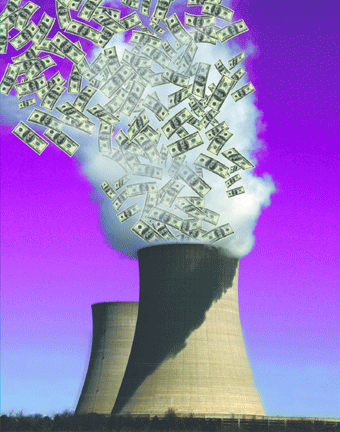
CAMPAIGNERS have condemned the billions being poured into nuclear energy while the Westminster government “preaches austerity” for everybody else.
CND Cymru attacked Sir Keir Starmer today, claiming he was poised to announce more public subsidy for the Hinkley Point C nuclear power plant in Somerset, not due to open until 2031.
A CND Cymru spokesperson said: “The willingness of the government to fund the nuclear industry to the tune of billions while preaching austerity to everyone else is absolutely farcical.
The anti-nuclear campaigners said Hinkley Point is likely to cost over £40 billion, £14bn over the initial estimate, with CND pointing out the project was managed by French company EDF.
“We must not accept the subsidy of a failing industry in order to preserve our nuclear attack capabilities while working people are facing impossible choices,” the CND spokesperson said.
“A different, greener, fairer, future is possible which doesn’t leave future generations with nuclear waste.”
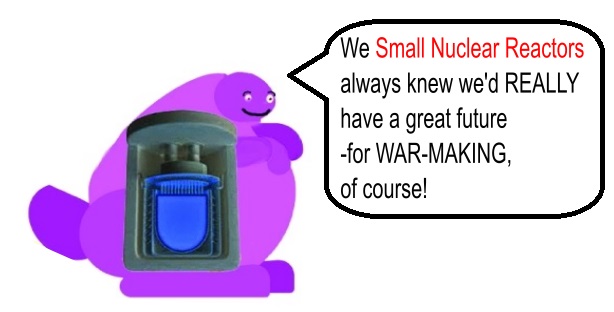
U.S. advances microreactor program for military sites
Nuclear Newswire, Apr 15, 2025,
The Defense Innovation Unit announced April 10 next steps in the Advanced Nuclear Power for Installations (ANPI) program, launched in 2024 to deploy microreactor nuclear systems for increased power reliability at select military locations.
The ANPI program is a collaboration between DIU, which is under the Department of Defense, and the Departments of the Army and the Air Force, with the goals of working to design, license, build, and operate one or more microreactor nuclear power plants for the armed forces………………..
The DIU released the names of eight companies eligible to receive Other Transaction awards to provide commercially available dual use microreactor technology at various DOD installations:
- Antares Nuclear
- BWXT Advanced Technologies
- General Atomics Electromagnetic Systems
- Kairos Power
- Oklo
- Radiant Industries Incorporated
- Westinghouse Government Services
- X-energy
“Projecting power abroad demands ensuring power at home and this program aims to deliver that, ensuring that our defense leaders can remain focused on lethality,” ………………………………………………………………… https://www.ans.org/news/2025-04-14/article-6931/us-advances-microreactor-program-for-military-sites/
Zelensky started the war then begged for missiles – Trump

Ed COMMENT. Unsurprisingly, Donald Trump again plays fast and loose with the truth. In fact Zelensky did not start Russia’s wholescale invasion of Ukraine. Putin did.
However, there’s more than a grain of truth in Trump’s claim. Zelensky deceived the Ukrainian public by pledging to support the autonomy of the Donbass regions, and end the Ukraine government’s 8 year war against them. Once elected, he reneged on this .
14 Apr, 2025 , https://www.rt.com/news/615756-zelensky-started-war-trump/
The Ukrainian leader has recently renewed his call for Washington to supply air defense systems
Ukraine’s Vladimir Zelensky should never have started a war with Russia, US President Donald Trump has said.
In a press conference alongside El Salvador’s President Nayib Bukele in the Oval Office on Monday, Trump commented on Zelensky’s recent offer to finance $15 billion worth of Patriot air defense batteries with the aid of Kiev’s European backers.
“He’s always looking to purchase missiles,” the US presided noted.
“When you start a war, you got to know that you can win the war,” he said of Zelensky. “You don’t start a war against somebody that’s 20 times your size and then hope that people give you some missiles.”
Trump added that he gave Kiev American-made Javelin man-portable anti-tank missiles during his first presidency.
In an interview with CBS News on Sunday, Zelensky called on the US to supply Ukraine with more air defenses. Kiev is ready to buy or lease up to ten Patriot air defense systems, and some European backers have offered to help with the money, he claimed.
During the interview, the network suggested that Trump tried to cut Kiev out of peace talks with Russia, and that he lied in his statements about the conflict. Trump allegedly “rewrote history, saying, falsely, that Ukraine had started the war and calling… Zelensky ‘a dictator without elections’,” according to CBS.
The US president lashed out at the news network on Truth Social on Monday, calling the interview inaccurate and fraudulent.
Trump has repeatedly claimed that the Ukraine conflict would never have escalated had he been in the White House, rather than his predecessor Joe Biden.
According to the US president, the previous administration invested more than $300 billion into supporting Kiev. Trump has promised to “get back” the money, entering talks with Ukraine about jointly exploiting its mineral resources. He also suggested taking over Ukrainian nuclear power plants.
The Kremlin has hailed the Trump administration’s peace efforts, but cautioned that resolving long-standing issues will take time and “painstaking work.”
Nuclear Energy Means Climate Action Delay: O’Donnell and Winfield

Susan O’Donnell and Mark Winfield, https://www.theenergymix.com/nuclear-energy-means-climate-action-delay-odonnell-and-winfield/ 16 Apr 25
What is the best way for utilities to delay the transition from fossil fuels? Propose to build nuclear reactors.
Electricity utilities wanting to “decarbonize” have several options for replacing the fossil fuel (coal, oil and gas) plants on their grids: aim to increase energy efficiency and productivity; add new renewable energy and storage resources; consider adding carbon capture and storage (CCS); or propose to build new nuclear reactors.
By objective measures, building new nuclear power plants will cost more, take longer to deploy, and introduce catastrophic accident risks—relative to improving energy productivity, expanding renewables with energy storage, and developing distributed energy resources. CCS suffers from limits of appropriate geology, reduced plant efficiency, and high costs.
However, if the goal is to keep fossil fuel-fired plants operating as long as possible, promising to build more nuclear energy has definite appeal.
Reactor design, planning, and build times are notoriously long—usually measured in decades—with well-established patterns of significant “unexpected” delays. Delaying while waiting for the promised new nuclear builds or reactor refurbishments maintains the status quo, effectively kicking actual climate action well down the road.
The two Canadian provinces with operating nuclear power reactors, Ontario and New Brunswick, provide case studies in this strategy. Both provinces are investing in significant new fossil gas generating infrastructure while waiting for new reactor designs to be developed and then built.
In Ontario, greenhouse gas emissions from the electricity sector have already risen dramatically as fossil gas plants are run to replace out-of-service nuclear reactors, and the province proposes to add more gas-fired generating capacity to its system. After a nearly decade-long hiatus, it only recently proposed a feeble reengagement with renewable energy. New nuclear reactor builds at Darlington, Bruce, and now Wesleyville, with timelines stretching well into the 2030s and 40s, remain the centrepiece of its energy (and supposed) climate strategy.
New Brunswick’s NB Power plans to add 600 MW of new nuclear power at its Point Lepreau nuclear site on the Bay of Fundy. Calls to build renewables instead have been rebuffed. In 2018, the province invited two nuclear start-up companies to set up in Saint John and apply for federal funding. Despite generous support from federal and provincial taxpayers, the companies have been unable to attract matching private funds. The NB Power CEO recently said she is “unsure” if the ARC-100, the reactor design promoted in 2018 as the closest to commercialization, will be ready by “the late 2030s.”
Meanwhile, the government recently announced support for building a large fossil gas plant, the biggest power project in the province in more than a decade.
The reality is that the new nuclear reactors being pushed by proponents are largely “PowerPoint reactors”—unproven and unbuilt designs. The BWRX-300 reactor that Ontario Power Generation (OPG) is proposing for its Darlington site, for example, lacks a fully-developed design, including key elements like safety systems. The Canadian Nuclear Safety Commission (CNSC) still gave OPG a licence to build it, while the U.S. Nuclear Regulatory Commission is still reviewing the design and asking for more information.
Recent analyses from the U.S. Tennessee Valley Authority also suggest the cost of the reactors will be far higher than OPG has claimed, and the timeline to construction and completion by 2030 seems less and less likely.
The new Monark design for a CANDU reactor that AtkinsRéalis (formerly SNC Lavalin) is proposing for the Bruce Power nuclear site is even further behind the BWRX-300 in development. According to the CNSC, the Monark is at a “familiarization and planning” stage, with no date set for even the first, preliminary stage of the design review.
The Monark’s main competitor is the AP-1000 reactor by Westinghouse. In 2002, the company submitted the AP-1000 design for formal review by the U.S. Nuclear Regulatory Commission. Two reactors came online in 2023 and 2024 at the Vogtle plant in Georgia, more than two decades later and twice the original timeline. Prior to the Vogtle project, the last reactor to come online in the U.S. took more than five decades from the start of construction to supplying power to the grid.
The final cost of the recent Vogtle project, at US$36.8 billion, was more than twice the original budget. If the same cost profile is applied to Ontario’s nuclear expansion projects, the total bill to Ontario electricity ratepayers and taxpayers could exceed $350 billion.
Promising to build more nuclear power is a political path to climate action delay and a distraction from a sustainable and decarbonized energy system transition. There is a reason why the International Energy Agency predicts that despite new nuclear reactor builds, nuclear energy will provide only eight percent of electricity supplies globally by 2050. In the meantime, while renewables development continues to accelerate globally, Canadian utilities, detoured by nuclear and CCS ambitions, double down on fossil gas and drift further and further behind in the global energy revolution.
Dr. Susan O’Donnell is adjunct research professor and lead investigator of the CEDAR project at St. Thomas University in Fredericton. Dr. Mark Winfield is a professor at the Faculty of Environmental and Urban Change at York University in Toronto, and co-chair of the faculty’s Sustainable Energy Initiative.
.
Flood warnings as Europe named as the fastest-warming continent in the world

Europe has been named the fastest-warming continent in the world in a
UN-led annual report. The UN-led European State of the Climate 2024, which
included contributions from about 100 scientists and experts, found that
last year was the warmest on record for the continent as countries were hit
by clear climate change impacts, extreme weather and record temperatures.
Released on Tuesday by the UN World Meteorological Organisation (WMO) and
the Copernicus Climate Change Service (C3S), the report details a year of
extremes.
Independent 15th April 2025, https://www.independent.co.uk/climate-change/flooding-spain-global-warming-un-report-b2733121.html
Trump envoy demands Iran eliminate nuclear programme in apparent U-turn
Steve Witkoff’s switch from saying low-level production could continue seen as example of chaotic US foreign policy
Guardian, Patrick Wintour, 16 Apr 25
Donald Trump’s special envoy, Steve Witkoff, has announced Iran must totally eliminate its nuclear programme, seeming to reverse the policy he had articulated on Fox News only 12 hours earlier that would have allowed Iran to enrich uranium at a low level for civilian use.
The switch to a more hardline policy is likely to make it much harder for the US to reach a negotiated agreement with Tehran, bringing back the threat of an attack on Iran’s nuclear sites.
In a further switch, it was agreed that the next round of indirect US-Iran talks, due to start on Saturday, will continue to be in Oman and the venue would not switch to Italy as proposed by the US.
In a statement posted to social media on Tuesday Witkoff said: “A deal with Iran will only be completed if it is a Trump deal. Any final arrangement must set in place a framework for peace, stability and prosperity in the Middle East – meaning that Iran must stop and eliminate its nuclear enrichment and weaponisation program. It is imperative for the world that we create a tough fair deal that will endure, and that is what President Trump has asked me to do.”……………………………….
Witkoff’s two positions are hard to reconcile – unless he is trying to distinguish between an interim deal that reduces Iranian uranium enrichment to civilian levels and a final agreement that eliminates its nuclear programme entirely.
It also possible Trump has faced a backlash from Iran hawks who warned that Witkoff’s negotiating stance was largely re-establishing the nuclear deal Barack Obama had agreed with Iran in 2015, from which Trump withdrew the US in 2018 saying it was unenforceable.
Witkoff’s apparent volte face may also be seen as another example of chaotic foreign policymaking, in which the administration battles behind the president’s back and he either does not focus on the policy details or does not understand the choices he is allowing to be made on his behalf.
Witkoff, a man with no diplomatic experience and charged with producing diplomatic breakthroughs in Gaza, Ukraine and Iran, has never tried to portray himself as anything than Trump’s messenger. He would have thought the proposals he aired in the weekend talks in Oman and on Fox News were those of the president.
Iran has repeatedly demanded the right to maintain a civil nuclear programme, meaning the latest iteration of US thinking will cause consternation in Tehran and could strengthen hardliners, who maintain the US cannot be trusted.
A rare consensus had broken out in Tehran that the talks between Witkoff and the Iranian foreign minister, Abbas Araghchi, could result in some US sanctions being lifted as part of the most positive development in relations between Iran and the US in a decade.
The head of the UN nuclear inspectorate, Rafael Grossi, is due to visit Iran this week to see if progress can be made on improving his inspectors’ access to Iran’s nuclear sites. https://www.theguardian.com/world/2025/apr/15/trump-envoy-steve-witkoff-demands-iran-eliminate-nuclear-programme
1 This Month





PLEASE OPPOSE HR 8255 AND S.3639 – bills would accelerate satellite deployment, with no environmental review or safeguards – https://ncstd5li.quorum.us/campaign/169331/
To see nuclear-related stories in greater depth and intensity – go to https://nuclearinformation.wordpress.com
-
Archives
- October 2026 (58)
- September 2026 (339)
- August 2026 (330)
- July 2026 (355)
- June 2026 (287)
- May 2026 (306)
- April 2026 (356)
- March 2026 (251)
- February 2026 (267)
- January 2026 (308)
- December 2025 (358)
- November 2025 (359)
-
Categories
- 1
- 1 NUCLEAR ISSUES
- business and costs
- climate change
- culture and arts
- ENERGY
- environment
- health
- history
- indigenous issues
- Legal
- marketing of nuclear
- media
- opposition to nuclear
- PERSONAL STORIES
- politics
- politics international
- Religion and ethics
- safety
- secrets,lies and civil liberties
- spinbuster
- technology
- Uranium
- wastes
- weapons and war
- Women
- 2 WORLD
- ACTION
- AFRICA
- Atrocities
- AUSTRALIA
- Christina's notes
- Christina's themes
- culture and arts
- Events
- Fuk 2022
- Fuk 2023
- Fukushima 2017
- Fukushima 2018
- fukushima 2019
- Fukushima 2020
- Fukushima 2021
- general
- global warming
- Humour (God we need it)
- Nuclear
- RARE EARTHS
- Reference
- resources – print
- Resources -audiovicual
- Weekly Newsletter
- World
- World Nuclear
- YouTube
-
RSS
Entries RSS
Comments RSS

