Japanese people object to US government conducting a subcritical nuclear test last December.
A 39-year-old man expressed regret over the test during a visit with his baby to the Peace Memorial Park in the city of Hiroshima, which was hit by a US atomic bombing in 1945.
He said it’s regrettable that the United States conducted the test, which no one wanted, despite people’s hope for peace.
He said for the sake of children, he does not want nuclear weapons to exist in the future.
A 52-year-old woman in the city said the administration of President Donald Trump is not moving in the right direction, while provoking the world to divide.
She said she hopes the Japanese government will have its own views, without following the US administration.
Shigemitsu Tanaka, the head of the atomic bomb survivors’ organization in Nagasaki, also criticized the subcritical test.
He said it was a move against the UN Treaty on the Prohibition of Nuclear Weapons, which was adopted last year, and the test is unforgivable.
He said he hopes the US will lead efforts to eliminate nuclear arms as the only country to have used nuclear weapons and will call on other nations to abolish them.
Nuclear weapons proliferation risks in China’s push to export nuclear reactors
|
China’s Nuclear Diplomacy in the Middle East
China will have to balance its nuclear ‘going out’ with nonproliferation concerns. The Diplomat , By Samuel Hickey, October 09, 2018 On September 21, China’s Ministry of Justice published its draft Atomic Energy Law, which urges its vast nuclear industry to go forth into the world and secure a portion of the nuclear export market. Unlike the “Gold Standard” interpretation of the “1+2+3” agreement in the U.S. Atomic Energy Act of 1954, China will not officially limit a partner country’s access to the full nuclear fuel cycle in exchange for nuclear cooperation. |
|
|
WHY LANGUAGE MATTERS WHEN TALKING ABOUT NUCLEAR WEAPONS
PARANOIA AND DEFENSE PLANNING: WHY LANGUAGE MATTERS WHEN TALKING ABOUT NUCLEAR WEAPONS, War on the Rocks, JEFFREY LEWIS AND AARON STEIN OCTOBER 10, 2018 The U.S. ambassador to NATO has, when one thinks about it, just one job. No matter who holds the job, the U.S. ambassador to NATO has many priorities, as one would expect for a role that involves dealing with dozens of countries and trying to get them to agree on a coherent defense policy. But one would think that not provoking a nuclear war with Russia would be at the very top of the ambassador’s list of priorities. This seems like a no-brainer, but it helps to focus on the simple things. The United States has a special obligation to be the “adult in the room” and to keep the alliance focused on constructive responses to collective threats.
The United States has had good and bad ambassadors to NATO, but each managed, one after the other, to navigate disputes such as the Berlin and Euromissiles crises, and to extend the postwar peace through seven decades. Then, in early October, Kay Bailey Hutchison — the U.S. permanent representative to NATO and erstwhile senator from Texas — put that streak in jeopardy for no good reason, threatening to preemptively attack Russia before it deployed a new cruise missile in violation of the Intermediate Range Nuclear Forces Treaty (INF). In response to a series of questions from journalists, Hutchison used imprecise language, culminating in a strangely worded statement:
Getting them to withdraw [deployed missiles] would be our choice, of course. But I think the question was what would you do if this continues to a point where we know that they are capable of delivering. And at that point we would then be looking at a capability to take out a missile that could hit any of our countries in Europe and hit America in Alaska. So it is in all of our interests, and Canada as well, I suppose. So we have our North Atlantic risk as well as the European risk. …
This suggests a preemptive missile strike. Perhaps that’s not what she meant, but it is what she said. Hutchison has now issued a clarification, so perhaps someone has reminded her that her job is no longer riling up voters, but engaging in diplomacy. Threatening a nuclear-armed power is not something to be done lightly.
But the clarification, however welcome, does not undo the very real damage that Hutchison has done. The real issue is less the cavalier nuclear threat and more that Hutchison’s lapse risks feeding a particular strain of Russian paranoia. What Hutchison meant to do was convey a perfectly reasonable sense that our patience is not infinite when it comes to Moscow’s continuing violation of the INF Treaty……….
Russian Paranoia and Aggressive America: From Andropov to Putin and Reagan to Trump . …..https://warontherocks.com/2018/10/paranoia-and-defense-planning-why-language-matters-when-talking-about-nuclear-weapons/
Nuclear safety should be the first priority in the Korean Peninsula
Absent since the restart of dialogue with North Korea is any discussion on inter-Korean nuclear safety cooperation, despite concerns over possible safety risks at the North Korean nuclear complex. Inattention to the facility could have dire consequences for the peninsula: radioactive fallout does not recognize borders.
For example, because of its inability to acquire civil nuclear technology from abroad, North Korea might try to develop its own power reactor from a variation of outdated Soviet designs such as the RBMK-1000 type that resulted in the most catastrophic man-made disaster in history, the 1986 Chernobyl nuclear accident. On the other hand, the possible dismantlement of nuclear facilities such as the Punggye-ri nuclear test site, which contains hazardous material and radioactive elements, could contaminate the surrounding environment and expose North Korean workers if there is improper clean-up.
In addition, as the operator of several fuel cycle facilities, North Korean leaders and experts no doubt would be interested in learning more about Japan’s costly lessons with nuclear safety. Despite having sophisticated industrial capability and arguably high nuclear safety standards, Japan has experienced deadly accidents in fuel cycle facilities — most notably the accident at a fuel fabrication plant in Tokaimura in September 1999, when the mishandling of enriched uranium led to the death of two workers from acute radiation exposure, and permanent injury of another. The accident, attributed to poor safety culture and inadequate regulatory oversight, exposed 436 people to radiation.
Without strict safety practices and adequate protection, North Korea might experience a similar scenario. Furthermore, the country has issues related to emergency response and communication in the event of a nuclear accident because of the secretive nature of its nuclear program. In particular, because North Korea terminated all cooperation with the International Atomic Energy Agency (IAEA) in 2009, it would be difficult for outsiders to learn about any incident and provide support, if necessary. It is equally difficult for North Koreans to improve their safety culture and standards without an adequate, transparent working environment.
Why make nuclear safety an early priority in the high-level diplomatic process with North Korea? The number, pervasiveness and close-to-the-border locations of nuclear facilitates in North Korea are reasons enough.
The significant role of nuclear energy in electricity generation in South Korea, where 24 nuclear power units contribute almost 30 percent of the electricity production, means South Korean experts would have much to share.
Indeed, South Korea has had to overcome its own safety problems, such as the cover-up of a plant blackout at the Kori-1 nuclear power unit in 2012, and the revelation of falsified test results for safety-grade equipment in the same year. Scientists and engineers from these two countries should be enabled to cooperate on nuclear safety by sharing information about their safety practices.
Besides, communication platforms have existed for this kind of engineering diplomacy. Striving for the middle-power status in the region, South Korea has proposed several initiatives aimed at regional integration among Northeast Asian countries; thus, the issue of nuclear safety in North Korea would be a perfect opportunity for Moon to promote a nuclear safety initiative for bilateral cooperation of nuclear safety professionals from the two Koreas. …….. https://thehill.com/opinion/international/409750-first-cooperate-on-nuclear-safety-in-the-korean-peninsula
North Korea is not really making any big nuclear concession
Why North Korea’s latest nuclear concession isn’t one at all
Secretary of State Mike Pompeo wants you to believe North Korea just gave up something big. It didn’t. Vox By Secretary of State Mike Pompeo said on Monday that he and North Korean leader Kim Jong Un made “significant progress” over the weekend toward dismantling Pyongyang’s nuclear program. The problem is it’s not clear what advancement he’s pointing to.
The two met for a nearly three-hour summit in Pyongyang on Sunday to discuss a way to break the impasse in discussions. Speaking after the meeting on Monday, Pompeo told reporters that North Korea has agreed to let international inspectors visit Punggye-ri, the site of all six of North Korea’s nuclear tests. In September 2017, Pyongyang tested a nuke there that was around seven times stronger than the bomb America dropped on Hiroshima in 1945.
Letting inspectors visit the facility may sound well and good, except for one thing: It’s already been destroyed.
North Korea blew up that facility in May. And although the country’s leaders had originally invited international inspectors to witness the demolition, they changed their minds and said they would only allow a small group of foreign journalists to watch. CNN, for example, could only watch the destruction from about 1,600 feet away.
Letting inspectors in now to verify that the site is, in fact, destroyed is certainly a welcome step. After all, North Korea has been reluctant for years to let outsiders into its nuclear facilities and question officials at the sites. And while it’s unclear how much access the inspectors will get, it’s understandable that Pompeo is touting this as a victory……….
A second Trump-Kim summit may be on the horizon
The US and North Korea remain in a stalemate over how to dismantle Pyongyang’s nuclear program.
Washington wants Pyongyang to destroy much of its nuclear arsenal upfront and offer an inventory list of all parts of its program. Kim’s regime, meanwhile, wants President Donald Trump to sign a peace declaration — a nonbinding document that would formally end the Korean War — before Pyongyang makes any concessions.
Experts are split on whether that’s a good idea. Those who want the US to sign the agreement say it’s costless because it’s nonbinding, and therefore America has nothing to lose and everything to gain by signing it………https://www.vox.com/2018/10/8/17952178/pompeo-north-korea-trip-nuclear-site
Energy firm with alleged Trump ties wants Memphis Light, Gas and Water to switch to unfinished nuclear power plant
Energy firm with alleged Trump ties wants MLGW to ditch TVA for its unfinished nuclear plant, Biz Journals By Samuel Hardiman – Staff Reporter, Memphis Business Journal, 10 Oct 18
Nuclear Development LLC said MLGW could save $400 million annually if it purchases power from the Bellefonte Nuclear Generating Station instead of from the TVA.
The plant in the north Alabama town of Hollywood could be complete by 2024 if the company receives the federal funding it’s seeking……….
Franklin Haney, a Chattanooga developer who is a principal with Nuclear Development, has come under scrutiny after allegedly offering President Donald Trump’s former associate, Michael Cohen, $10 million if he could help Haney land the federal loan.
MLGW is one of TVA’s largest customers. It accounted for 10 percent of the power provider’s operating revenues in 2017, according to filings with the Securities and Exchange Commission. https://www.bizjournals.com/memphis/news/2018/10/09/energy-firm-with-trump-ties-wants-mlgw-to-leave.html
SCANA kept quiet about a ‘potential fraud’ at SC nuclear project.
SCANA execs uncovered ‘potential fraud’ at SC nuclear project. They didn’t tell the cops. By Andrew Brown abrown@postandcourier.com, Oct 8, 2018 COLUMBIA — SCANA’s executives in 2015 learned about a million-dollar bid-rigging scheme during the construction of their South Carolina nuclear project but never reported the discovery to state and federal law enforcement officials.
Rather, they kept the matter quiet to avoid negative publicity about the project, according to a source with direct knowledge, avoiding unwanted attention from regulators and the public.
The alleged fraud highlights the secrecy that SCANA’s leaders cloaked the failed $9 billion project in over the past decade. The previously undisclosed episode has come to light amid continued debate about why the project failed and who is responsible.
Documents show SCANA’s employees confirmed Compuworld, a company based in Lexington County, undermined the purchasing rules for the V.C. Summer nuclear expansion project in order to win contracts to supply office furniture.
An investigation by SCANA’s corporate compliance office showed Alan Saleeby, Compuworld’s owner, submitted bids for his business and allegedly forged the applications for two other companies — allowing him to rake in money while making the purchases look competitive.
SCANA hired attorneys from Atlanta to complete background checks on all of the people involved in the scheme. They studied whether the utility had to report the questionable purchases under federal nuclear oversight regulations. And they considered “possible civil and criminal fraud claims” against Chicago Bridge and Iron, the contractor that approved the purchases.
News of the suspicious activity traveled quickly to SCANA’s top executives as the company’s leaders worked behind the scenes to fix other aspects of the struggling power project. One of the nuclear project’s top executives flagged the case for SCANA’s nuclear chief Jeff Archie. In an email, the executive described the purchases as “potential fraud.”
…….. the allegations leveled against Compuworld mark the most serious issue yet with the purchasing process at V.C. Summer — a project now considered the biggest economic failure in state history.
SCANA inadvertently disclosed its investigation into Compuworld earlier this year in legal bills it filed with the state Public Service Commission. But since then, SCANA’s attorneys have fought to keep other emails and documents about the investigation secret.
Eric Boomhower, SCANA’s spokesman, confirmed that the utility quietly settled the issue with Chicago Bridge and Iron in late 2015. He described the investigation into Compuworld as a “financial dispute.”
SCANA’s investigators referred to it simply as fraud.
……… The investigation became more serious when SCANA discovered evidence that Saleeby also was submitting bids for companies that were purportedly competing against Compuworld. Email addresses and the handwriting on some of the documents showed Saleeby was personally filing the other offers, too, guaranteeing that Compuworld came out on top……… https://www.postandcourier.com/business/scana-execs-uncovered-potential-fraud-at-sc-nuclear-project-they/article_0eb5960a-c63b-11e8-a6a0-cf8c595ea1ed.html
| ReplyForward |
International threat of hacking, to nuclear weapons
Hacking nuclear weapons is a global threat https://thehill.com/opinion/international/410472-hacking-nuclear-weapons-is-a-global-threat
For example, if a leader doesn’t believe that nuclear retaliation will occur, he or she may not be inhibited from attacking and nuclear deterrence will not be effective.
Madness, mistake and miscalculation all operate independently of nuclear deterrence. These pose great concern for the human future. An insane or suicidal leader could launch his or her nuclear arsenal without concern for retaliation. A mistake could also lead to the launch of a nuclear arsenal without concern for retaliation. Likewise, miscalculation of the intent of a nuclear-armed country could lead to a nuclear launch without concern for retaliation.
A new, and possibly even greater, concern is coming over the horizon. That concern, related to cyberattacks on an enemy’s nuclear systems, could be labelled as “manipulation.” It is emerging due to the growing sophistication of hackers penetrating cyber-security walls in general. It would be disastrous if hackers were able to penetrate the walls protecting nuclear arsenals.
Imagine a cyberattack on a nuclear weapons system that allowed an outside party to launch a country’s nuclear arsenal or a portion of it at another country. This could occur by an outside party, working with or independently of a state, hacking into and activating the launch codes for a country’s nuclear arsenal. Can we be sure that this could not happen to any of the nine current nuclear-armed countries? It would pose a particular danger to those nuclear-armed countries that keep their nuclear arsenals on high-alert status, ready to be fired on extremely short notice, often within minutes of a launch order.
The Royal Institute of International Affairs in the UK, issued a research paper recently noted, “As an example of what is possible, the US is reported to have infiltrated parts of North Korea’s missile systems and caused test failures. Recent cases of cyber-attacks indicate that nuclear weapons systems could also be subject to interference, hacking, and sabotage through the use of malware or viruses, which could infect digital components of a system at any time. Minuteman silos, for example, are believed to be particularly vulnerable to cyber-attacks.”
Even if eight of the nine nuclear-armed countries had adequate cybersecurity, the weakest link could potentially have vulnerabilities that would allow for a cyberattack. It is also probable that new means of penetrating cybersecurity will be developed in the future. It is within the realm of imagination that terrorist groups could have skillsets that would allow them to breach the cybersecurity of one or more nuclear-armed countries, and set in motion a nuclear attack with highly threatening and dangerous consequences.
The gaps in nuclear deterrence theory cannot be filled by throwing money at them, or with more new missiles with larger or smaller warheads. The problem with nuclear deterrence is that it cannot be made effective, and the potential for breaching the cybersecurity of nuclear arsenals only adds to the vulnerabilities and dangers.
The only meaningful response to nuclear weapons is to stigmatize, delegitimize, and ban them. This is exactly what the new Treaty on the Prohibition of Nuclear Weapons seeks to accomplish. This treaty deserves the full support of the world community. As of now, however, it is only receiving the support of the countries without nuclear arms, and is being opposed by the countries possessing nuclear arms and those sheltering under the U.S. nuclear umbrella. This must change, for the benefit of all the world’s people and especially the citizens of the nuclear-armed countries who would likely be the first victims of a nuclear attack.
David Krieger is a founder of the Nuclear Age Peace Foundation, and has served as its president since 1982. His latest book is “In the Shadow of the Bomb: Poems of Survival.”
Was it close to a nuclear emergency, when Hurricane Florence hit USA East coast?
|
Was Three a Near-Fukushima Event on the Atlantic During Hurricane Florence? ObRag, Ocean Beach California by on OCTOBER 10, 2018 Nuclear Shutdown News for September 2018 Black Rain PressNuclear Shutdown News chronicles the decline and fall of the nuclear power industry in the US and beyond, and highlights the efforts of those working for a nuclear free future. Here is our September 2018 report.
A Near-Fukushima on the Atlantic? On September 17 the Raleigh News & Observer reported, “Floods limit access to Duke’s Brunswick nuclear plant: crews us partopotties, cots.” Did the Atlantic coast have a near-Fukushima event when during September Hurricane Florence made landfall? Utility Duke Energy’s Brunswick two nuclear reactors are located 30 miles south of Wilmington, NC, where the former Category 4 hurricane made landfall as a tropical storm in mid September. It was reported that “workers are sleeping on cots and using portable toilets because the water is currently shut off and the toilets can’t flush”, and that there was “limited access to the plant, and some workers have been able to leave the site and check up on their homes nearby. After the storm passed some drove to a Walmart in Southport to stock up on provisions.” Brunswick’s twin reactors started up in the 1940s, and are now approaching their designed operating life, 40 years. They are called boiling water reactors, the same model as the three Fukushima reactors that melted down in 2011, and were built by the same company, General Electric. US nuclear plants are required to shut down if hurricane force winds, 73 miles per hour or higher, are moving in. Fortunately the winds weren’t quite that strong when Florence hit the East Coast. The Nuclear Regulatory Commission reported, “Flooding of roads and downed trees prevented fresh crews from relieving the nearly 300 Duke Energy ‘storm riders’ who had been on site for days. And the blocked roads made it impossible to reach the 10 mile emergency evacuation zone if a higher level emergency is declared” Food had to be brought in by helicopters…….https://obrag.org/2018/10/was-three-a-near-fukushima-event-on-the-atlantic-during-hurricane-florence/ |
|
“Transparency”- the Trump administration’s dirty trick to strangle access to reputable science on nuclear radiation
 Yes, radiation is bad for you. The EPA’s ‘transparency rule’ would be even worse. The Trump
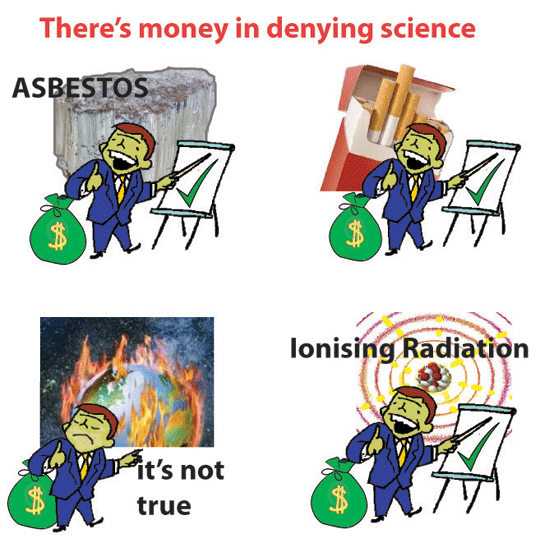 administration wants to strangle access to reputable science. https://www.washingtonpost.com/outlook/2018/10/08/yes-radiation-is-bad-you-epas-transparency-rule-would-be-even-worse/?noredirect=on&utm_term=.b7e530a79729 By Audra J. Wolfe, 8 Oct 18 Audra J. Wolfe is a Philadelphia-based writer, editor, and historian. She is the author of Freedom’s Laboratory: The Cold War Struggle for the Soul of Science.
Last Tuesday, a headline from the Associated Press sparked outrage in the ordinarily quiet world of science policy. The Environmental Protection Agency, the story suggested, was considering relaxing guidelines for low-dose ionizing radiation, on the theory that “a bit of radiation may be good for you.” Within hours, the AP had issued a correction. As it turned out, the EPA was not, after all, endorsing hormesis, the theory that small doses of toxic chemicals might help the body, much like sunlight triggers the production of vitamin D.
Instead, the EPA was doing something much scarier: It was holding hearings on the “Transparency Rule,” which would restrict the agency to using studies that make a complete set of their underlying data and models publicly available. The rule is similar to an “Open Science” order issued by the Interior Department last month, and incorporates language from the HONEST Act, a bill that passed in the House in 2017 but later stalled in the Senate. The HONEST Act originally required that scientific studies provide enough data that an independent party could replicate the experiment — which is simply not realistic for large-scale longitudinal studies.
Although these rules cite the need to base regulatory policy on the “best available science,” make no mistake: They aim to strangle access to reputable studies.
The Transparency Rule continues the Trump administration’s pattern of anti-science policies. The White House’s Office of Science and Technology Policy is a ghost town, with most of the major positions, including the director’s post, vacant since January 2017. Agencies and departments across the board, including the State Department and the Agriculture Department, are dropping their science advisers and bleeding scientific staff. It’s getting harder and harder for federal rulemakers to access expertise.
Understanding what’s wrong with “transparency,” at least as defined by these policies, requires a closer look at how scientists work. Let’s say you’re trying to understand the health effects of a one-time, accidental release of a toxic chemical. This incident might be epidemiologists’ only chance to investigate how this particular chemical interacts with both the air and the humans who breathe it, at varying doses, over a period of time. No matter how careful your approach, your study would fall short of the replicability standard.
You wouldn’t have baseline health information for the specific people who happened to be in the area. You might not have information on which residents had air filtration systems installed in their homes, or which residents were working outside when the incident took place. Your early results would, by definition, reflect only short-term health outcomes, rather than long-term effects. And you couldn’t replicate the study (with better controls) without endangering the health of thousands of people. In such cases, scientists have to extrapolate from existing, sometimes imperfect, data to protect the public.
Epidemiologists have community standards, including peer review, to evaluate these kinds of studies. A careful, peer-reviewed study of this hypothetical incident might well represent the “best available science” on this particular chemical. Regulators might rely on this study to establish the permissible levels of this chemical in the air we breathe. But now, let’s also say that this study took place 30 years ago. The leading scientists involved are dead, and no one kept their files. The raw data are, effectively, lost. Should scientists at the EPA be blocked from using the study?
Despite what made last week’s headlines, the EPA’s Oct. 3 hearing went beyond radiation. In fact, its lead witness, University of Massachusetts toxicologist Edward Calabrese, barely mentioned his theory of radiation hormesis. Instead, his testimony argued that the EPA should no longer rely on linear no-threshold (LNT) models for any number of hazards, including toxic chemicals and soil pollutants. In toxicology, LNT models assume that the biological effects of a given substance are directly connected to the amount of the exposure, with no minimum dose required. Radiation protections standards are based on LNT models; so are basic regulations involving ozone, particulate pollution, and chemical exposure.
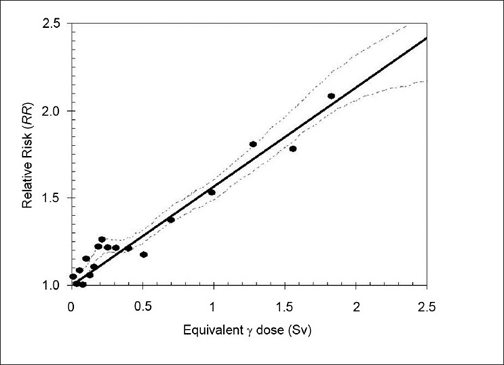
The original studies asserting a LNT model for low-dose ionizing radiation were conducted in the 1950s. Like our hypothetical epidemiologist investigating a toxic chemical release, the geneticists who tried to understand the biological effects of atomic radiation were working with imperfect data, much of which is no longer available. The concept of a “comprehensive data management policy” simply did not exist in 1955. These particular studies were primarily based on survivors of the atomic bombing of Hiroshima and Japan. The scientists also extrapolated from high-dose exposure data in fruit flies and mice and from unethical high-dose experiments conducted on humans.
These studies are imperfect, but focusing on their limitations misses the broader scandal. These studies took place during the heyday of atmospheric nuclear weapons testing, an era when both the United States and the Soviet Union were pumping the atmosphere full of radioactive nucleotides. Some of the areas near the testing zones received so much radiation that they are still uninhabitable today. The tests coated the entire planet with a scrim of radiation. The Atomic Energy Commission, the agency in charge of the United States’ nuclear weapons program, didn’t even attempt to investigate the potential health effects of this constant, low-dose exposure to ionizing radiation on the world’s population. Studies of low-dose radiation were expensive, inconvenient, and politically risky, potentially jeopardizing the weapons testing program and therefore the United States’ ability to fight the Soviet Union. From the government’s perspective, it was better not to know.
This week, a sensational headline distracted us from a broader crisis. Without government support for research of environmental hazards, the public’s health is left to either the whims of industry researchers, who have a strong incentive to play down their dangers, or to public advocacy groups, which are too easily smeared with charges of anti-industry bias. The “transparency” movement supposedly resolves this crisis of authority by giving the public access to the underlying data on which science is based, but it ignores the power dynamics that determine which research questions get asked, and why and how they’re answered.
In the past, Americans looked to their federal science agencies and science advisers to resolve these sorts of disputes. But a few weeks ago, the EPA announced that it, too, would be eliminating its Office of the Science Adviser. With the science offices empty, who will decide?
There is one bright spot in all of this: On Sept. 28, bipartisan legislation authorized the Energy Department to restart its low-dose radiation research program. But what about the other pollutants that the EPA supposedly regulates? Who will produce the kinds of science deemed acceptable under the “transparency” rule?
“Transparency” has become another way to cultivate institutional ignorance. Americans deserve better from the agencies that are supposed to protect them. In the case of environmental hazards, what you don’t know can hurt you.
US Secretary of State Mike Pompeo says that North Korea is ready to allow inspection of key nuclear site
|
North Korea is ready to allow inspection of key nuclear site, Pompeo says https://edition.cnn.com/2018/10/08/politics/pompeo-north-korea-nuclear-inspectors-intl/index.html, By Angela Dewan and James Griffiths, CNN October 8, 2018 US Secretary of State Mike Pompeo said Monday that North Korean leader Kim Jong Un is ready to allow international inspectors into a key nuclear testing site, signaling a step forward in Pyongyang’s commitment to denuclearizing the Korean Peninsula.
|
|
$2.4 Trillion Fossil Fuel Shift – better than climate apocalypse
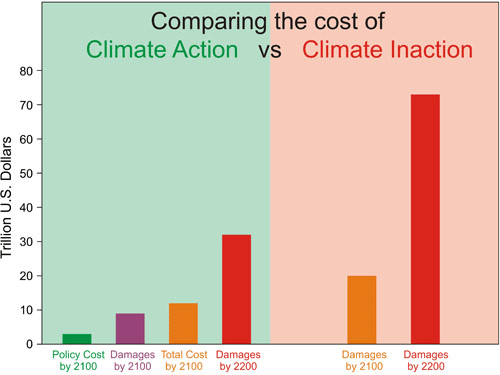
THE IPCC REPORT ALSO RECOMMENDED THAT BY 2050:
Coal’s share of electricity supply should be cut to 2 percent or less.
Renewables should supply 70 percent to 85 percent of power generation.
| Climate Crisis Spurs UN Call for $2.4 Trillion Fossil Fuel Shift https://www.bloomberg.com/news/articles/2018-10-08/scientists-call-for-2-4-trillion-shift-from-coal-to-renewables?srnd=climate-changed, By Reed Landberg, Chisaki Watanabe, and Heesu Lee, October 8, 2018, World on track to warm 3 degrees, overshooting 2015 Paris goal
·UN panel releases report on capping warming at 1.5 degrees The world must invest $2.4 trillion in clean energy every year through 2035 and cut the use of coal-fired power to almost nothing by 2050 to avoid catastrophic damage from climate change, according to scientists convened by the United Nations. Continue reading |
Rising sea levels will mean flooding of vulnerable cities- e.g: London, Jakarta, Shanghai and Houston
 Edie 5th Oct 2018, London, Jakarta, Shanghai and Houston and other global cities that are
already sinking will become increasingly vulnerable to storms and flooding
as a result of global warming, campaigners have warned ahead of a landmark
new report on climate science.
The threat to cities from sea level rises is increasing because city planners are failing to prepare, the charity
Christian Aid said in the report. Some big cities are already subsiding –
the ground beneath Shanghai, for instance, is being pressed down by the
sheer weight of the buildings above – and rising sea levels resulting
from global warming will make the effects worse.
https://www.edie.net/news/9/From-London-to-Shanghai–world-s-sinking-cities-face-devastating-floods/
Hunterston B-7 UK nuclear reactor closed since March, offline till Dec 18
| EDF Energy extends Hunterston B-7 UK nuclear outage until Dec. 1 LONDON (Reuters) 8 Oct 18– EDF Energy has extended an outage at its Hunterston B-7 nuclear reactor in Britain until Dec. 18, it said on Monday.
The reactor, which can produce enough electricity to power more than 800,000 homes, has been offline since March when cracks were found in its core during a routine inspection. It was initially scheduled to return to service on Nov. 17, but EDF Energy said it had extended the outage to allow the company more time to demonstrate a safety case, needed before Britain’s nuclear regulator will allow the unit to resume service…….. https://uk.reuters.com/article/uk-britain-nuclear/edf-energy-extends-hunterston-b-7-uk-nuclear-outage-until-dec-18-idUKKCN1MI19D
|
Federal indictment alleges that Russian military targeted USA nuclear company Westinghouse
|
Indictment: Russian military targeted Pa. nuclear power company, witf news, by Amy Sisk/StateImpact Pennsylvania | Oct 8, 2018 (Pittsburgh) — A federal indictment filed this week alleges Russian hackers targeted a nuclear power company near Pittsburgh beginning in 2014, in addition to anti-doping agencies throughout the world.The hackers, who are intelligence officers for the Russian military, tried to breach the network of Westinghouse Electric Company by sending emails to employees intending to trick them into entering login credentials on a webpage spoofing the company’s own network, according to the indictment.
Although the indictment says the hackers stole some credentials before redirecting the workers to the company’s actual network, Westinghouse and federal officials said the hacking attempt was unsuccessful. ………The indictment names seven Russian intelligence officials, who face charges ranging from conspiracy to wire fraud to aggravated identity theft. …..Brady said he believes all the defendants named in the indictment are now in Russia. The United States does not have an extradition treaty with Russia, so it’s unclear if the alleged hackers will come to Pittsburgh to face charges…….http://www.witf.org/news/2018/10/indictment-russian-military-targeted-pa-nuclear-power-company.php |
|
1 This Month

Tell Congress: Prevent Nuclear Catastrophe in Iran

Tell Congress: Prevent Nuclear Catastrophe in Iran

Read the Public Inquiry Report, the Commissioners’ report, Surrendering Australia: The AUKUS Deception is available to download for free at aukuspublicinquiry.com. Or just watch the replay of the National Press Club Luncheon.
To see nuclear-related stories in greater depth and intensity – go to https://nuclearinformation.wordpress.com
Say No to NASA’s Reckless Nuclear Reactor on the Moon
-
Archives
- November 2026 (284)
- October 2026 (302)
- September 2026 (339)
- August 2026 (330)
- July 2026 (355)
- June 2026 (287)
- May 2026 (306)
- April 2026 (356)
- March 2026 (251)
- February 2026 (267)
- January 2026 (308)
- December 2025 (358)
-
Categories
- 1
- 1 NUCLEAR ISSUES
- business and costs
- climate change
- culture and arts
- ENERGY
- environment
- health
- history
- indigenous issues
- Legal
- marketing of nuclear
- media
- opposition to nuclear
- PERSONAL STORIES
- politics
- politics international
- Religion and ethics
- safety
- secrets,lies and civil liberties
- spinbuster
- technology
- Uranium
- wastes
- weapons and war
- Women
- 2 WORLD
- ACTION
- AFRICA
- Atrocities
- AUSTRALIA
- Christina's notes
- Christina's themes
- culture and arts
- Events
- Fuk 2022
- Fuk 2023
- Fukushima 2017
- Fukushima 2018
- fukushima 2019
- Fukushima 2020
- Fukushima 2021
- general
- global warming
- Humour (God we need it)
- Nuclear
- RARE EARTHS
- Reference
- resources – print
- Resources -audiovicual
- Weekly Newsletter
- World
- World Nuclear
- YouTube
-
RSS
Entries RSS
Comments RSS

