 Le Monde 11th Oct 2018 Flamanville** [Machine Translation] New delay in sight for Flamanville EPR. According to
the Nuclear Safety Authority, “important technical work” remains to be done
to correct the anomalies identified on certain welds. The “battle of the
welds” probably did not finish to delay the construction of the EPR of
Flamanville (Channel). In a note sent to EDF and made public on 3 October, the president of the Nuclear Safety Authority (ASN) has severely reframed the public electrician, worrying about a “monitoring failure” on the Normandy nuclear site .
“It’s the whole chain of surveillance that has
malfunctioned,” says ASN. Pierre-Franck Chevet also indicated that
“important technical work remains to be done” to correct anomalies
identified on certain welds. To understand the vivacity of the reaction of
the nuclear policeman, we must return to the origin of the case. In
February, EDF discovered problems on 38 secondary circuit welds. This water
circuit serves to evacuate the steam towards the turbine. It consists of
four loops, associated with four steam generators. At first, the group
explains that these pipes comply with the regulations but that they should
have corresponded to the “high quality” standard, which is more demanding.
Specifically, EDF had defined this new standard for the construction of the
EPR and was unable to enforce it by its own subcontractors. And things got
complicated a few weeks later. The extensive examination of the welds
reveals that a large part of them do not comply with the standard required
by EDF, or even the regulations required for pressurized nuclear equipment.
Result: the group has to take back fifty-three welds, knowing that a single
weld represents at least eight additional weeks of work.
https://www.lemonde.fr/energies/article/2018/10/11/nouveau-retard-en-vue-pour-l-epr-de-flamanville_5367969_1653054.html
October 13, 2018
Posted by Christina Macpherson |
business and costs, France |
Leave a comment
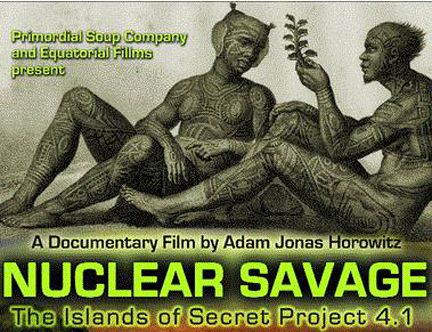 SANTA FE INDEPENDENT FILM FESTIVAL 2018
“Nuclear Savage: The Islands of Secret Project 4.1” and “Atomic Artist” Pasatiempo, Michael Abatemarco
October 13, 2018
Posted by Christina Macpherson |
environment, OCEANIA, Resources -audiovicual |
Leave a comment
|
Drakeford’s nuclear scepticism troubling for Wylfa, say rivals, Wales should be “sceptical” about nuclear power, a Welsh Labour leadership candidate has said. BBC , 12 Oct 18Mark Drakeford’s comments have been attacked by his election rivals – Vaughan Gething and Eluned Morgan.
Both suggested his views could hit the prospects for the planned Wylfa Newydd nuclear power station on Anglesey.
Mr Drakeford said its local impact should be borne by the developers, but that did not mean that the plant cannot be built.
The winner of the Welsh Labour contest would take the helm of the Welsh Government as first minister – he or she would not have powers over large power stations or Wylfa.
That lies with the UK Government in London, which opened talks with the Japanese firm behind the plant in the summer.
However, Mr Drakeford’s comments appear to strike a more cautious tone to the project than the existing First Minister Carwyn Jones, who said it has the potential “to transform the Welsh economy”.
‘High bar’
In a Twitter video Mr Drakeford said Wales’ attitude to nuclear power should be “sceptical”.
The finance secretary said the “bar” should be set high over “developments that would have a direct impact on the Welsh population”.
Mr Drakeford, the finance secretary, said he understood the Wylfa Newydd project was “potentially a very big investment in that local economy”.
But he said “the long-term interests” of people who live on Anglesey should be protected.
He also vowed to establish an independent expert committee to provide “the best possible advice on the impact” Hinkley Point C in Somerset could have on people in Wales……. https://www.bbc.com/news/uk-wales-politics-45837501
|
|
October 13, 2018
Posted by Christina Macpherson |
politics, UK |
Leave a comment
|
Workers who trudged through nuke plant contributed to June uranium leak, report says, The Island Packet, BY SAMMY FRETWELL, sfretwell@thestate.com, October 11, 2018
Workers at the Westinghouse nuclear fuel factory for years walked across a plastic liner that was supposed to keep toxic uranium acid from leaking out of the Lower Richland plant.
All that foot traffic eventually weakened the liner, which covered the plant’s concrete floor. And this summer, Westinghouse discovered that a uranium solution had seeped through the liner, eaten a hole in the plant’s floor and trickled into the earth.
Westinghouse wasn’t conducting detailed inspections to find problems in a section of the plant where toxic acid is mixed for production of nuclear fuel rods, the federal inspection report shows. That acidic solution deteriorated concrete after it seeped onto the plant’s floor for a “prolonged” period of time, the report said.
The report said several safety systems, designed to contain leaks, failed. As a result, “hydrofluoric acid solution was spilled’’ on June 16 from a process tank through the floor.
“They were not doing their maintenance inspections correctly or adequately,’’ Tom Vukovinsky, a senior fuel facility inspector with the NRC, said of Westinghouse.
The NRC’s findings add to a series of questions raised this year about how Westinghouse has operated the 550,000-square-foot factory.
Since discovering the uranium solution had leaked through the plant’s floor this summer, residents of the the Lower Richland community near the factory also have learned about other leaks, previously unknown. The NRC acknowledged recently it did not know for years about leaks in 2008 and 2011, which has caused concern among nearby residents. ………https://www.islandpacket.com/news/state/south-carolina/article219825805.html
|
|
October 13, 2018
Posted by Christina Macpherson |
environment, incidents, USA |
Leave a comment
|
Nuclear station mud dumping: first phase ends, BBC, 12 Oct 18 The first phase of the dumping of mud off the coast of Cardiff as part of work to build a new nuclear power station in Somerset has been completed.EDF, the firm building Hinkley Point C, said contractors have completed the work.
Campaigners had demanded more tests on the sediment, taken from a site in the seabed near the new facility.
But EDF said the sediment was not radioactive under UK law and posed no threat to human health.
A second phase of dredging is yet to take place with work potentially taking place in 2020. Campaigners had been concerned the sediment, which was dumped at a site just over a mile out to sea from Cardiff, could have become contaminated by discharges from the old Hinkley Point A and B sites……..
further dredging “will be required ahead of drilling the vertical shafts for the cooling water system for the new power station”. ……….Demands for the licence to be suspended were rejected in the assembly on Wednesday following a lively Senedd debate. https://www.bbc.com/news/uk-wales-politics-45837504
|
|
October 13, 2018
Posted by Christina Macpherson |
UK, wastes |
Leave a comment
What if the most powerful nuclear bomb exploded in space, Business Insider GENE KIM, SHIRA POLAN
OCT 12, 2018, We all know a nuclear blast on land brings devastating effects to the surrounding region. But what if humans detonated a nuclear bomb in space? Following is a transcript of the video.
Imagine if we detonated a nuclear bomb in space? Actually, you don’t have to.
You can see it for yourself. That was Starfish Prime – the highest-altitude nuclear test in history. In 1962, the US government launched a 1.4 megaton bomb from Johnston Island. And detonated it 400 km above the Pacific – about as high as where the International Space Station orbits today.
The detonation generated a giant fireball and created a burst of energy called an electromagnetic pulse, or EMP, that expanded for over 1,000 kilometers.
EMPs can cause a power surge, damaging electronic equipment in the process. And this one was no different. Across Hawaii, street lights went dark, telephones went down, and navigation and radar systems went out, not to mention the six, or so, satellites that failed.
And all this came from a 1.4 megaton bomb. Tsar Bomba, which was the largest nuclear bomb that has ever been detonated, was 50 megatons.
So what would happen if we detonated that above the United States?
For starters, there’s no atmosphere in space. So, there would be no mushroom-shaped cloud and no subsequent blast wave or mass destruction. Instead, you’d get a blinding fireball 4 times the size of Starfish Prime’s. And if you looked directly at it within the first 10 seconds, you could permanently damage your eyes.
Satellites wouldn’t be safe either. Radiation from the explosion would fry the circuits of hundreds of instruments in low-earth orbit. Including communication satellites, military spy satellites, and even science telescopes like the Hubble.
Plus, astronauts on board the International Space Station might be at risk of radiation poisoning.
On the ground, however, you’d probably be fine. The detonation point would be far enough away that the high-energy radiation wouldn’t reach you.
But don’t get too comfortable. Remember Starfish Prime’s EMP? This time, the EMP would cover ⅓ of the entire United States, bringing down regional power grids and electronics like a lightning strike. ……. https://www.businessinsider.com.au/detonating-most-powerful-nuclear-bomb-space-starfish-prime-tsar-bomba-2018-9?r=UK&IR=T
October 13, 2018
Posted by Christina Macpherson |
2 WORLD, weapons and war |
Leave a comment
 Do We Really Have the Time and the Tools to Fix Climate Change? BY Rachel Smolker, Truthout, October 11, 2018
As part of the Paris agreement, the International Panel on Climate Change (IPCC) was asked “to provide a special report in 2018 on the impacts of global warming of 1.5 [degrees Celsius] above pre-industrial levels and related global greenhouse gas emission pathways.” That report was released on October 8.
The report’s “Headline Statements” are divided into four main sections: 1.) “Understanding Global Warming of 1.5 [Degrees Celsius]”; 2.) “Projected Climate Change, Potential Impacts and Associated Risks”; 3.) “Emission Pathways and System Transitions Consistent with 1.5 [Degrees Celsius] Global Warming”; and 4.) “Strengthening the Global Response in the Context of Sustainable Development and Efforts to Eradicate Poverty.”
What the Report Says and Does Not Say
In the first chapter, the IPCC points out that human activities have already caused about 1 degree Celsius (1°C) of warming, and that we will reach 1.5°C between 2030 and 2052 at the current pace. They state that what has already been emitted into the atmosphere will result in ongoing warming, sea-level rise and other effects for “centuries to millennia” (even in the absence of ongoing and future emissions), but that the emissions to date on their own will not raise temperatures to 1.5°C. So, the good news then is that reaching and sustaining net zero emissions, even at this late stage in the game, would “halt warming on a multi-decadal time scale.” The IPCC also concludes that impacts generally would be less at a 1.5°C stabilization than a 2°C stabilization.
These numbers are convenient for discussion, but realistically, the atmosphere is not like the thermostat in our living room, where we can simply dial and set in order to heat the house to some desired level. We are not in control for the most part. It is also worth keeping in mind that the IPCC has consistently underestimated the pace and magnitude of global warming. It is probably safe to say that this is still the case. Feedbacks and “tipping points” are not some distant thing to avoid, they are already happening, and their trajectory is impossible to predict. They include things like soil respiration, melting permafrost, warming and acidification of the oceans and loss of ice. The IPCC has shifted its assessments of the warming potential of methane to consistently use the 20-year timeframe comparison with CO2 [carbon dioxide], and revised upward the quantity of methane released by livestock, just as one example. There are most likely some major sources of emissions we are not even aware of. Further, there are some major sources of emissions we are aware of, but have been granted exclusion from consideration, such as the vast quantity of emissions from military activities. ……….
Can We Overshoot the Target and Clean Excess Carbon Out of the Atmosphere? The IPCC uses “integrated assessment models” for their analyses. Those models plug in a suite of assumptions about changes in energy production and use, land use change and other factors, and then use those to provide trajectories (pathways) to a goal — in this report, either 1.5°C or 2°C of warming. Those trajectories are not always straight lines from here to there. Many — in fact, most of them — involve exceeding thresholds for greenhouse gas concentrations in the atmosphere in the near term, with the intention of somehow later removing the excess. This is called “overshoot.” It is an extremely risky proposition. Earlier drafts of the report did not even evaluate models that did not include overshoot to some degree. Fortunately, the final draft does evaluate pathways without or with limited overshoot.
Enabling overshoot is especially problematic because there is currently no technology available for removing carbon dioxide from the atmosphere…………
Ultimately, it is increasingly clear that the real solutions to climate change are not global-scale techno-fixes, but rather the locally adapted and locally controlled solutions that people have been pushing for decades, including preventing buildout of fossil fuel infrastructure, protection of lands, respect for rights of humans and nature. The ruthless pursuit of corporate wealth and power and economic growth at all costs stifles those local, grassroots solutions from reaching fruition. ……….https://truthout.org/articles/do-we-really-have-the-time-and-the-tools-to-fix-climate-change/
October 13, 2018
Posted by Christina Macpherson |
2 WORLD, climate change |
Leave a comment
US curbs China nuclear exports as Trump warns that Americans are not ‘stupid’
US ‘cannot ignore national security implications’ of supplying China with nuclear technology any longer, Energy Secretary Rick Perry said, SCMP, 12 October, 2018, The United States said Thursday that it will increasingly restrict civilian nuclear exports to China as President Donald Trump vowed a hard line on trade, bluntly warning not to think Americans are “stupid”……..
Energy Secretary Rick Perry said that there were “national security implications” to continuing the trade, but an insider said that the government is concerned by Beijing’s strategy “to acquire nuclear technology to gain economic advantage”………
The Energy Department said it would not end exports to China but would show greater scrutiny and that there “will be a presumption of denial” for new licences related to the state-owned China General Nuclear Power Corp.
The company was indicted last year along with a naturalised US citizen on charges of conspiring to develop sensitive nuclear material with US know-how without going through the required approval process……
October 13, 2018
Posted by Christina Macpherson |
China, politics international, USA |
Leave a comment
 France to defend itself against nuclear tests complaint, France says it will defend itself against allegations of crimes against humanity for its nuclear weapons tests in the South Pacific. The overseas minister, Annick Girardin, made the comment in the senate two days after French Polynesian opposition politician Oscar Temaru told a UN meeting in New York that a complaint had been lodged in the International Criminal Court (ICC).
Ms Girardin said France would defend itself and restate the facts, adding that it accepted its nuclear legacy with serenity……..https://www.radionz.co.nz/international/pacific-news/368543/france-to-defend-itself-against-nuclear-tests-complaint
October 13, 2018
Posted by Christina Macpherson |
France, legal |
Leave a comment

Opinions mixed during hearing about failed nuclear power project, Aiken Standard, By Dede Biles dbiles@aikenstandard.com, Oct 11, 2018 Not many people had something they wanted to say about an abandoned nuclear construction project in Fairfield County during the S.C. Public Service Commission’s hearing Monday.
More than 80 people showed up at the Aiken County Government Center, but only 12 testified before the panel, which is considering whether to approve a pending merger between Virginia-based Dominion Energy and SCANA, which is the parent company of SCE&G.
The commission also is trying to decide how much, if anything, SCE&G customers can be charged in the future to help pay for the failed venture’s billions of dollars in cost.
SCE&G and state-owned Santee Cooper were building a new generation of nuclear reactors at the V.C. Summer facility.
Monday’s hearing lasted less than an hour, and the opinions expressed were mixed about the merger.
“I’m kind of against the merger,” said Eric Savage of Aiken. “We hear all the things that Dominion says about how they are going to provide (an average refund of) $1,000 to customers and better things for our community, but what about the money that people have already lost (because of rate increases)? We want to know who is standing behind the South Carolina residents who have already paid out so much? Some of them are on fixed incomes.”……..
Chris Hall of Aiken described the situation with the abandoned nuclear project as “a fiscal nightmare.” He also complained that “rate payers have been asked to bear the burden (through rate hikes)” while SCE&G’s “senior-level executives have gone on with their highly-compensated bonuses and salaries.”……..
The Public Service Commission also held a hearing about the abandoned nuclear power project Monday in Columbia and another is scheduled for North Charleston on Oct. 15 https://www.aikenstandard.com/news/opinions-mixed-during-hearing-about-failed-nuclear-power-project/article_18d0e472-ca79-11e8-8482-0b530859c42f.html
October 13, 2018
Posted by Christina Macpherson |
business and costs, USA |
Leave a comment
Campaign begins for Fukushima governor race with reconstruction in focus, Oct. 12 FUKUSHIMA
Official campaigning started Thursday for the gubernatorial election in Fukushima Prefecture, with the incumbent governor’s policies on reconstruction work following the 2011 earthquake and nuclear disaster seen as a main issue.
In the governor election which will be held on Oct 28, incumbent Masao Uchibori, 54, is challenged by three candidates — Jun Kanayama, a 78-year-old self-employed worker, Sho Takahashi, a 30-year-old IT company owner, and Kazushi Machida, a 42-year-old prefectural chairman of the Japanese Communist Party.
Although all of the four candidates are running as independents, Uchibori, currently in his first term, gets support from the ruling and opposition parties except for the communist party.
The eastern Japan prefecture is still on the road to recovery from the nuclear meltdown at Fukushima Daiichi power plant, which was crippled by the earthquake-tsunami on March 11, 2011.
“Taking the important missions of the prefecture’s reconstruction and revitalization into consideration, I’ll challenge,” said Uchibori in Fukushima city after filing his candidacy.
Kanayama said he seeks a prefectural administration which “children can be proud of,” while Takahashi appealed for assistance for start-up businesses. Machida called for the complete abolition of all nuclear power plants in Japan.
https://www.japantimes.co.jp/news/2018/10/11/national/politics-diplomacy/campaigning-fukushima-gubernatorial-race-kicks-off-reconstruction-focus/
October 13, 2018
Posted by Christina Macpherson |
Japan, politics |
Leave a comment
Radiation Free Lakeland 10th Oct 2018 Today folk from Radiation Free Lakeland and Close Capenhurst remembered the 61st anniversary of the Windscale Fire. During 10–11th October, 1957 A
serious fire developed in the core of a nuclear reactor at Windscale Works,
Sellafield, northwest England, which led to the release of significant
quantities of radioactive material into the environment over a wide area
including but not exclusively Cumbria. This release of radioactive
materials including polonium, led to an increase in radiation linked
diseases and conditions from cancers to Downs Syndrome.
https://mariannewildart.wordpress.com/2018/10/10/remembering-windscale-outside-the-gates-where-nuclearmudness-is-made/
October 13, 2018
Posted by Christina Macpherson |
history, UK |
Leave a comment
Reuters 10th Oct 2018 France’s ASN nuclear regulator will issue by the end of 2020 its
long-awaited and much-delayed generic ruling on the life span extension of
utility EDF’s nuclear plants, said the French government’s nominee to
head the ASN. “Based on the information at my disposal, the generic
ruling should be issued at the end of 2020,” Bernard Doroszczuk said at a
French senate committee hearing about his nomination. The ruling, which is
crucial for EDF, has been repeatedly delayed, most recently by outgoing ASN
chief Pierre-Franck Chevet.
https://www.reuters.com/article/us-france-nuclearpower-edf/frances-asn-to-rule-on-edf-reactor-lifespans-by-end-2020-asn-nominee-idUSKCN1MK11M
October 13, 2018
Posted by Christina Macpherson |
France, safety |
Leave a comment
|
NRC centre activated ahead of hurricane, WNN 11 October 2018 The US Nuclear Regulatory Commission (NRC) yesterday activated its Atlanta regional incident response centre in anticipation of Hurricane Michael’s landfall in the south-eastern USA. Southern Nuclear reduced power at the Farley nuclear power plant in Alabama as a precautionary measureSouthern Company subsidiary Southern Nuclear, which operates the two-unit Joseph M Farley plant on behalf of owner Alabama Power, announced yesterday it was reducing power for both units as a “precautionary safety measure” to prepare for potential “weather-related conditions” caused by the hurricane. “These proactive steps will allow station personnel to continue monitoring the storm’s progress and take any necessary actions,” the company said.
The NRC said staff at the Atlanta centre were monitoring and maintaining close contact with the Farley site, which was not expected to shut down as hurricane-force winds were not expected at the site.
The Atlanta centre is one of four regional response centres and covers the regulator’s Region II: Alabama, Florida, Georgia, Kentucky, North Carolina, Puerto Rico, South Carolina, Tennessee, Virginia, U.S. Virgin Islands, and West Virginia. Other regional centres are based in Pennsylvania, Illinois and Texas. The Atlanta centre activated last month in advance of Hurricane Florence, which made landfall in North Carolina on 16 September……..
Two units at Duke Energy’s Brunswick nuclear power plant were taken offline on 13 September ahead of Hurricane Florence. Both units had restarted by 21 September. http://www.world-nuclear-news.org/Articles/NRC-centre-activated-ahead-of-hurricane
|
|
October 12, 2018
Posted by Christina Macpherson |
safety, USA |
Leave a comment
Nuclear energy can increase the risks of proliferation (SDG 16), have negative environmental effects (e.g., for water use, SDG 6), and have mixed effects for human health when replacing fossil fuels (SDGs 7 and 3) (see Table 5.2) (CH 5 p 23) )
http://report.ipcc.ch/sr15/pdf/sr15_chapter5.pdfNuclear power increases its share in most 1.5°C pathways by 2050, but in some pathways both the absolute capacity and share of power from nuclear generators declines (Table 2.15). There are large differences in nuclear power between models and across pathways (Kim et al., 2014; Rogelj et al., 2018). One of the reasons for this variation is that the future deployment of nuclear can be constrained by societal preferences assumed in narratives underlying the pathways (O’Neill et al., 2017; van Vuuren et al., 2017b). Some 1.5°C pathways no longer see a role for nuclear fission by the end of the century, while others project over 200 EJ yr–1 of nuclear power in 2100 (Figure 2.15). CH 2
Chapter 5 – Table 5.3 In spite of the industry’s overall safety track record, a non-negligible risk for accidents in nuclear power plants and waste treatment facilities remains. The long-term storage of nuclear waste is a politically fraught subject, with no large-scale long-term storage operational worldwide. Negative impacts from upsteam uranium mining and milling are comparable to those of coal, hence replacing fossil fuel combustion by nuclear power would be neutral in that aspect. Increased occurrence of childhood leukaemia in populations living within 5 km of nuclear power plants was identified by some studies, even though a direct causal relation to ionizing radiation could not be established and other studies could not confirm any correlation (low evidence/agreement in this issue). Table 5.3 http://report.ipcc.ch/sr15/pdf/sr15_chapter5_table5_3.pd
October 11, 2018
Posted by Christina Macpherson |
2 WORLD, climate change, Reference |
Leave a comment








