The ambivalent nuclear politics of Fallout video games, Bulletin of the Atomic Scientists, By Cameron Hunter, October 17, 2018 The late French filmmaker, François Truffaut, once claimed “There’s no such thing as an anti-war film”—referring to the adventure and thrill of combat, the (usually) clear-cut heroes and villains, and the opportunity for the film-maker to indulge in spectacular pyrotechnics and loud, cinema-shaking explosions of sound. And the loudest and most impressive explosion of all is the nuclear mushroom cloud.
The same may be proving to be true of video games—perhaps even more so.
Just like war movies, video games have frequently exploited the exciting and dramatic aspects of war. Yet, unlike movie-goers, gamers do not passively consume their media; instead, they make choices and influence the narrative. The result is a medium that trades heavily on visceral, simulated experience. And what could be more visceral than up-close and personal exposure to a nuclear strike?
Trading heavily on its nuclear theme, the Fallout video game series has so far teetered between satirizing the Bomb, and reveling in its power. But now it may be toppling over that fine line.
These games are almost certainly the most well-known (and well-loved) media that deal with nuclear weapons today. Fallout must therefore be taken seriously as an influence on the real-world politics and culture of nuclear weapons in the 21st century.
…..As the series has progressed, the developers have given the player more and more access to their own nuclear weapons. A franchise that began by mocking nuclear technologies now appears to be actively encouraging nuclear use by the players in the brand-new Fallout 76.
…….. perhaps most important of all, these sanitized representations risk teaching a misleading version of humanity’s nuclear predicament to a massive audience. https://thebulletin.org/2018/10/the-ambivalent-nuclear-politics-of-fallout-video-games/
October 20, 2018
Posted by Christina Macpherson |
2 WORLD, culture and arts |
Leave a comment
|
Four Japan firms used foreign trainees to clean up at Fukushima plant after nuclear meltdowns: final report, Japan Times, BY SARAH SUK, STAFF WRITER, 19 Oct 18 The government concluded Friday that four companies had used foreign trainees to perform work cleaning up radioactive contamination after the March 2011 tsunami triggered meltdowns at the Fukushima No. 1 nuclear plant.The headline figure from the final report on a survey conducted by the Justice Ministry, the labor ministry and the Organization for Technical Intern Training was the same as that in the interim report, released in mid-July, which reflected results of surveying fewer than 200 companies with foreign trainee programs.
Officials visited a total of 1,018 such companies with facilities in eight prefectures in eastern and northeastern Japan, interviewing technical interns there to confirm the situation, after the issue came to light in March.
Of the four companies, one in Iwate Prefecture has been banned from accepting foreign trainees for five years. It was found to have neglected to pay allowances for decontamination work, amounting to a combined ¥1.5 million, to three trainees.
The government has issued a similar ban for three years to a firm in Fukushima Prefecture for not paying a total of ¥180,000 to three interns for overtime work.
A company in Fukushima and another in Chiba Prefecture received warnings because foreign trainees there engaged in decontamination work, albeit for short periods of time. The names of the four companies were not revealed……https://www.japantimes.co.jp/news/2018/10/19/national/four-japan-firms-used-foreign-trainees-clean-fukushima-plant-nuclear-meltdowns-final-report/#.W8qY8mgzbIU
|
|
October 20, 2018
Posted by Christina Macpherson |
employment, Japan |
Leave a comment
|
Newsweek 17th Oct 2018, It is more likely than in the past that China and the U.S. could enter into
a military conflict, and the possibility of such a battle going nuclear is
higher than many analysts believe, a security expert from Georgetown
University has warned.
Caitlin Talmadge, who is an associate professor of
security studies at the Walsh School of Foreign Service, laid out a grim
picture of how military escalation could play out between Washington and
Beijing in an article for Foreign Affairs’ November-December issue.
|
|
October 20, 2018
Posted by Christina Macpherson |
China, politics international, USA, weapons and war |
Leave a comment
Le Monde 18th Oct 2018 The Nuclear Safety Authority (ASN) fears that the site of the EPR nuclear
reactor in Flamanville (Channel) has other problems “very difficult” , in
addition to that of welds, said Thursday, October 18 the head of the EPR
pole of the ASN of Normandy. “I do not hide from you that ( … ) we can
imagine that there may indeed be other difficulties elsewhere.
We are looking at whether the welds will remain, or not, the only very difficult
topic ” of this project, said Eric Zelnio at a meeting of the Local
Information Committee (CLI) on the Flamanville nuclear site. This is the
reason why the ASN “is about to formulate to EDF a request to extend to
other equipment on the reactor” the requested quality review of the weld
problem.
October 20, 2018
Posted by Christina Macpherson |
France, safety |
Leave a comment
Wales Online 19th Oct 2018 David Lowry: The article by Westminster Energy Minister Claire Perry
to mark Green GB week is hypocritical, especially as in the same week
fracking was allowed to restart in Lancashire. She talks about windfarms
and solar farms in Anglesey, but makes no mention of the massively
expensive (£20 billion-plus) new nuclear plant on Ynys Mon at Wylfa
Newydd, which the Westminster government’s new financing plans mean
electricity bill-payers in Wales will have to subsidise in advance.
Also, in south Wales, people living near the coastline from Newport to Swansea
have had their health put in danger by the dumping of radioactively
contaminated mud from just off the Hinkley Point nuclear plant in Somerset.
The mud has been dredged to make channels for barges bringing equipment and
building materials to build the new £25bn reactor at Hinkley C. I find it
extraordinary that such a dangerous policy has been permitted by the Welsh
Labour Government, to assist the economically illiterate nuclear policies
of the Conservative Westminster government, whose policies are almost
entirely economically hostile to Wales. As a Welsh person from Neath
watching from afar, these absurd energy decisions are incomprehensible.
https://www.walesonline.co.uk/news/local-news/western-mail-letters-friday-october-15300307
October 20, 2018
Posted by Christina Macpherson |
politics, UK |
Leave a comment
SCE&G regulatory trial: Who will pay for the failed nuclear project? The State, BY FRANK KNAPP JR., October 19,
On Nov. 1, the S.C. Public Service Commission (PSC) will start a hearing that will impact the electric rates of SCE&G customers for decades.
The primary issue to be decided is how much if anything SCE&G customers will be forced to pay for the incurred construction costs of its abandoned nuclear project in Fairfield County.
Essentially, this is a regulatory trial.
SCE&G is being accused of intentionally withholding critical information from the S.C. Office of Regulatory Staff (ORS) and the PSC.
ORS is the state agency that was responsible for analyzing data received from SCE&G for the approval of construction cost increases, construction schedule delays and rate hike requests to pay for construction cost financing. ORS then made recommendations to the PSC for decisions on these matters.
After reviewing more than a million pages of SCE&G-produced documents, ORS concluded that by March 2015, the company knew that it would take several years longer to complete the nuclear project and the cost would be billions higher than it was telling the regulators.
By not providing this information to ORS and the PSC, critics contend that SCE&G enabled itself to obtain undeserved electric rate increases to fund the doomed project.
The principle SCE&G challengers — ORS, Sierra Club and Friends of the Earth — maintain that had ORS and the PSC known what SCE&G knew in March 2015, the regulators might have pulled the plug on the project then, saving the ratepayers billions……….https://www.thestate.com/opinion/op-ed/article220308855.html
October 20, 2018
Posted by Christina Macpherson |
Legal, USA |
Leave a comment

Saudi Arabia is putting money in Trump’s pocket. Is that shaping U.S. policy? https://www.washingtonpost.com/blogs/plum-line/wp/2018/10/16/saudi-arabia-is-putting-money-in-trumps-pocket-is-that-shaping-u-s-policy/?noredirect=on&utm_term=.434cc7237930, By Paul Waldman,October 16
As hard as it is to resist writing about the fact that on Tuesday the president of the United States called the adult film actress to whom he paid hush money “Horseface,” I want to focus on a different aspect of this presidency that we’re seeing play out right now.
.As the apparent murder of Saudi journalist and Post contributor Jamal Khashoggi complicates our relations with Saudi Arabia, we have to ask what the implications are of having a fully transactional presidency, one not just built on “deals” but where policy is determined by what is financially beneficial to the president.
We should begin by reminding ourselves that as awful as Khashoggi’s apparent murder is, it’s only the latest in a long list of Saudi abuses that administrations both Democratic and Republican have chosen to overlook for decades. The country is a cruel dictatorship that embodies none of the values we as a nation hold dear, such as democracy, freedom of expression, freedom of the press and freedom of religion. But we decided long ago that since the Saudis have a great deal of oil and they provide us with a strategic ally in the Middle East, we’ll overlook all that.
There is something unsettling about the fact that Saudi intervention in Yemen’s civil war, in which they have reportedly killed thousands of civilians, has received steady U.S. support, while the murder of a single journalist threatens to upend the relationship between the two countries.
Or so you might think. But here’s the reality: This will blow over, not only because of the complex relationship between the two countries, but also because everything in foreign policy is personal with President Trump, and he likes the Saudis.
And why does he like them so much? Because they pay him.
This is not something Trump has been shy about saying. “Saudi Arabia, I get along with all of them. They buy apartments from me. They spend $40 million, $50 million,” he said at a rally in Alabama in 2015. “Am I supposed to dislike them? I like them very much.”
Trump says so many shocking things that it’s sometimes easy to slide right past the most appalling ones, but read that again. Here you have a candidate for president of the United States saying that he is favorably disposed toward a foreign country because they have given him millions of dollars, and all but promising to shape American foreign policy in their favor for that very reason.
“Am I supposed to dislike them?” he asks. How could I possibly dislike them when they pay me?
We should note that it’s more than just apartments. Trump has sold many properties to Saudis, and Saudis have invested in Trump projects. And as David Fahrenthold and Jonathan O’Connell report:
Business from Saudi-connected customers continued to be important after Trump won the presidency. Saudi lobbyists spent $270,000 last year to reserve rooms at Trump’s hotel in Washington. Just this year, Trump’s hotels in New York and Chicago reported significant upticks in bookings from Saudi visitors.
This is precisely the reason the framers of the Constitution added a provision saying that neither the president nor other officials could “accept of any present, Emolument, Office, or Title, of any kind whatever, from any King, Prince, or foreign State.” If a foreign country is putting money in the president’s pocket on an ongoing basis, how in the world can we trust that the decisions he makes will be based on the best interests of the United States and not on his bank account?
This is of more concern with Trump than with any other president in American history. His entire life has been devoted to the accumulation of wealth, as though there were no other goal anyone should consider seeking (“My whole life I’ve been greedy, greedy, greedy. I’ve grabbed all the money I could get. I’m so greedy,” he has said). He made sure that upon assuming office his businesses would continue to operate and continue to provide avenues for those wishing to further enrich him to do so. And he refuses to release his tax returns, so we have no idea exactly how much money he’s getting and from whom.
But Tuesday, Trump tweeted this:
For the record, I have no financial interests in Saudi Arabia (or Russia, for that matter). Any suggestion that I have is just more FAKE NEWS (of which there is plenty)!
This is the same claim Trump has made with regard to Russia, and it’s the same dodge. The point isn’t whether Trump has interests in Saudi Arabia, it’s whether Saudi Arabia has interests in him. And just as is the case with Russia, they do.
If you’re the Saudis, the nice thing about Trump is that he lacks any subtlety whatsoever, so you don’t have to wonder how to approach him. He has said explicitly that the way to win his favor is to give him money. He has established means for you to do so — buying Trump properties and staying in Trump hotels. And with his combination of narcissism and insecurity, if you invite him to your country and give him a gold medal, he’ll forever be your friend.
Every president has to balance the desire to honor U.S. values with more crass interests such as whether a country will buy weapons from us, which Trump also cited as a reason we shouldn’t punish Saudi Arabia for Jamal Khashoggi’s murder (even though they aren’t actually buying what Trump claims). But only Trump apparently gets direct and significant payoffs from other countries, and only Trump is so clear that if you pay him he’ll do what you want. That may not have changed the American stance toward Saudi Arabia too much yet, but we have no idea what’s to come.
October 18, 2018
Posted by Christina Macpherson |
politics international, Saudi Arabia, USA |
1 Comment
“For too long, girls and women have been invisible in the construction of radiation standards to protect heath. We are ready to expand the research base and collective will to change this – starting right now.”
— Mary Olson, Founder
It is widely known that ionizing radiation – radioactivity powerful enough to strip electrons from atoms, break chemical bonds of molecules, and even break chromosomes – can be extremely harmful to humans. Even at low levels, ionizing radiation has the potential to cause DNA damage resulting in an uncontrolled division of abnormal cells, or what is commonly known as cancer.
While this public health threat impacts us all, the risk is dramatically greater for women and girls.
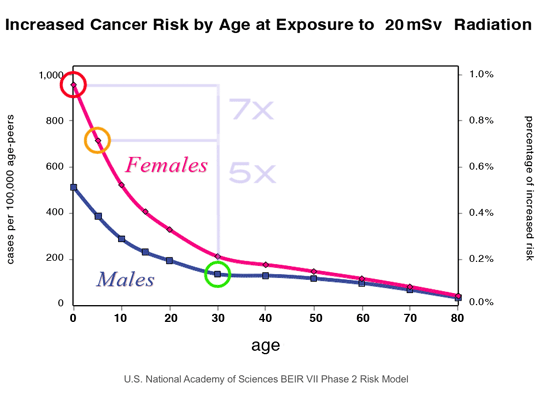
For every two men who develop cancer through exposure to ionizing radiation, three women will get the disease.Further, while children as a whole are more harmed by radiation than adults, infant and young girls, when exposed, run the highest risk of cancer across their lifetime, and teenage girls will suffer almost double rates of cancer compared to boys in the same juvenile group and the same level of exposure.
The information above, derived from data contained in the 2006 National Academy of Sciences Report Biological Effects of Ionizing Radiation VII, or BEIR VII, clearly shows that gender is a major factor in determining who suffers harm from exposure to ionizing radiation, yet this fact has not been widely reported and is not reflected in regulations or practice.
Yet, there is reason to hope. With the participation of 135 nations, the preamble of the 2017 UN Treaty on the Prohibition of Nuclear Weapons was written to include the following stanza:
Cognizant that the catastrophic consequences of nuclear weapons cannot be adequately addressed, transcend national borders, pose grave implications for human survival, the environment, socioeconomic development, the global economy, food security and the health of current and future generations, and have a disproportionate impact on women and girls, including as a result of ionizing radiation… (emphasis added)
The fact this treaty was crafted to include language referring to impact on girls and women demonstrates we have a window to examine why this is the case, which will lead to better and healthier solutions for everyone.
It is time to ask the right questions and educate the public about the policy and lifestyle choices related to ionizing radiation.
October 18, 2018
Posted by Christina Macpherson |
2 WORLD, radiation, Women |
1 Comment
 SNC-Lavalin shares fall to lowest since 2016 on news foreign bribery case will go to court
Former employees accused of paying bribes in Libya to win contracts CBC News · October 11 Shares in Canadian engineering giant SNC-Lavalin fell to their lowest level in more than two years after the company revealed the federal government has decided it won’t let the company settle allegations of foreign bribery out of court.
The company has had the legal cloud hanging over its head since 2015, stemming from allegations that some of its former employees paid bribes to officials in Libya to influence government decisions and win contracts prior to 2012.
The RCMP alleges that between 2001 and 2012, the company paid almost $48 million in bribes and defrauded various other entities of almost $130 million.
SNC-Lavalin had hoped to negotiate a remediation agreement to settle the matter, an outcome that would have seen the company pay fines and other forms of punishment in exchange for setting aside the legal charges.
But the government has apparently decided not to let the company do that, and the decision by the Public Prosecution Service of Canada — which handles prosecutions on behalf of the government — means that federal court case will proceed.
“The Criminal Code sets out the criteria for remediation agreements,” PPSC spokesperson Nathalie Houle told CBC News. “The [director of public prosecutions] has determined that the criteria were not met.”…….Shares in the company were halted shortly after the TSX opened on Wednesday, and when trading resumed about an hour later they immediately fell. Near midday, they were down by more than 14 per cent. https://www.cbc.ca/news/business/snc-lavalin-1.4856869
|
|
|
October 18, 2018
Posted by Christina Macpherson |
Canada |
1 Comment
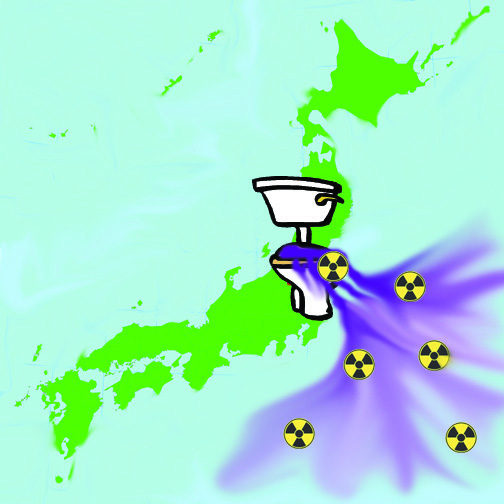
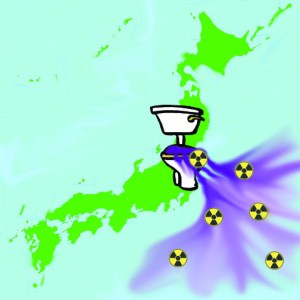 https://www.independent.ie/world-news/asia-pacific/japan-will-flush-unsafe-water-from-fukushima-nuclear-plant-into-sea-37429128.html, Julian Ryall, October 17 2018 Water the Japanese government is planning to release into the Pacific Ocean from the crippled Fukushima nuclear plant contains radioactive material well above legally permitted levels, according to the plant’s operator.
The government is running out of space to store contaminated water that has come into contact with fuel that escaped from three nuclear reactors after the plant was destroyed in the March 2011 earthquake and tsunami that struck north-east Japan.
Its plan to release the approximately 1.09m tons of water stored in 900 tanks into the Pacific has triggered a fierce backlash from local residents and environmental organisations, as well as groups in South Korea and Taiwan fearful that radioactivity from the second-worst nuclear disaster in history might wash up on their shores.
Tokyo Electric Power Co (Tepco), which runs the plant, has until recently claimed the only significant contaminant in the water is safe levels of tritium, which can be found in small amounts in drinking water, but is dangerous in large amounts.
The government has promised that all other radioactive material is being reduced to “non-detect” levels by the sophisticated advanced liquid processing system (ALPS) operated by Hitachi Ltd.
Documents provided to ‘The Daily Telegraph’ by a source in the Japanese government suggest, however, that the ALPS has consistently failed to eliminate a cocktail of other radioactive elements, including iodine, ruthenium, rhodium, antimony, tellurium, cobalt and strontium.
Hitachi declined to comment on the reports on the performance of its equipment. The Japanese government did not reply to multiple requests for comment.
A restricted document also passed to ‘The Telegraph’ from the Japanese government arm responsible for responding to the Fukushima collapse indicates that the authorities were aware that the ALPS facility was not eliminating radionuclides to “non-detect” levels.
That adds to reports of a study by the regional ‘Kahoko Shinpo’ newspaper which said confirmed that levels of iodine 129 and ruthenium 106 exceeded acceptable levels in 45 samples out of 84 in 2017.
Iodine 129 has a half-life of 15.7 million years and can cause cancer of the thyroid; ruthenium 106 is produced by nuclear fission and high doses can be toxic and carcinogenic when ingested.
In late September, Tepco was forced to admit that around 80pc of the water stored at Fukushima still contains radioactive substances above legal levels after the Ministry of Economy, Trade and Industry held public hearings in Tokyo and Fukushima at which local residents and fishermen protested against the plans.
Tepco has now admitted that levels of strontium 90, for example, are more than 100 times above legally permitted levels in 65,000 tons of water that has been through the ALPS cleansing system and are 20,000 times above levels set by the government in several storage tanks at the site.
Dr Ken Buesseler, a marine chemistry scientist with the US Woods Hole Oceanographic Institution, said it was vital to confirm precisely what radionuclides are present in each of the tanks and their amounts.
“Until we know what is in each tank for the different radionuclides, it is hard to evaluate any plan for the release of the water and expected impacts on the ocean”, he told the ‘Telegraph’.
Experts agree the danger posed by any release depends on the concentrations of radionuclides and subsequent contamination of fishery products.
The presence of strontium in the bones of small fish that might be consumed by humans could be a major concern. If ingested by humans, strontium 90 builds up in teeth and bones and can cause bone cancer or leukaemia.
October 18, 2018
Posted by Christina Macpherson |
Fukushima continuing |
2 Comments
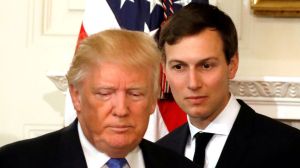 Trump and Kushner Put Saudi’s Money First https://www.bloomberg.com/view/articles/2018-10-17/trump-and-kushner-put-saudi-arabia-s-money-ahead-of-khashoggi
Jamal Khashoggi’s death has exposed the White House and two of its most powerful figures as naive, ill-informed and craven. What comes next?, By Timothy L. O’Brien, October 17, 2018, The Trump team is standing by Saudi Arabia and Crown Prince Mohammed bin Salman as the investigation and controversy surrounding the disappearance of journalist Jamal Khashoggi deepens.
On Tuesday, Secretary of State Mike Pompeo visited Riyadh for a photo op with the prince. In a press release, he praised the Saudi leadership for “supporting a thorough, transparent and timely” investigation into the Khashoggi affair, a full two weeks after the dissident first went missing.
Pompeo also said that Saudi leaders denied any involvement in Khashoggi’s disappearance, something his boss, President Donald Trump, let the world know on Twitter as well.
By Tuesday evening, that line became more complex to defend after the New York Times reported that at least four suspects in Khashoggi’s disappearance had ties to the crown prince. A fifth was “of such stature that he could be directed only by a high-ranking Saudi authority,” the newspaper said.
Complexity has never deterred the president, however. In an interview with the Associated Press on Tuesday, he blamed critics of Saudi Arabia for holding it “guilty until proven innocent.” Lest anyone doubt his motives, Trump took to Twitter to talk about his finances:
“For the record, I have no financial interests in Saudi Arabia (or Russia, for that matter). Any suggestion that I have is just more FAKE NEWS (of which there is plenty)!”
That statement would be easier to digest if Trump hadn’t bragged publicly in the past about how much Saudis have spent buying his condominiums – and if he wasn’t the steward of the most financially conflicted presidency of the post World War II era.
Trump is playing word games, of course. He says he has no investments in Saudi Arabia or Russia. But that doesn’t mean money from those countries hasn’t flowed into his coffers. In Saudi Arabia’s case, that has meant very different things over the years.
In the early 1990s, Saudi billionaire Prince Alwaleed bin Talal bought Trump’s prized yacht on the cheap from the property developer’s creditors when he was on the cusp of personal bankruptcy. A few years later, one of Trump’s lenders forced him to sell the Plaza Hotel, a New York City landmark also mired in debt, to Alwaleed. As David Fahrenthold and Jonathan O’Connell noted in the Washington Post recently, this was a period when Trump was trying to dig himself out of $3.4 billion of debt, about $900 million of which he had guaranteed personally. But Alwaleed was a bargain-hunter at the time, not someone trying to ensnare a failed developer on the unlikely chance that he might someday become president.
Still, Alwaleed, who once described Trump on Twitter as a “disgrace not only to the GOP but to all America,” kept those early deals in mind. When Trump made fun of him on Twitter two years ago, Alwaleed responded by tweeting, “I bailed you out twice; a 3rd time, maybe?”
As Trump climbed out of his debt hole in the late 1990s and early 2000s, he courted Saudi condo buyers. The Saudi Arabian government bought the entire 45th floor of the Trump World Tower in 2001, and, before running for president, Trump was apparently contemplating doing business in Saudi Arabia – he incorporated eight limited-liability companies with names suggesting he planned to do business there (they were later dissolved).
After becoming president, Trump flouted tradition by declining to authentically separate himself from the Trump Organization and its hotel and golf properties. The Trump International Hotel in Washington has been a favorite venue for Saudi diplomats who have spent lavishly there, as well as at other Trump hotels.
The president and his son-in-law, Jared Kushner, also decided to make Saudi Arabia a linchpin of their policy in the Middle East. Kushner, lacking full security clearance and any diplomatic experience, lobbied the crown prince directly in early 2017 to secure what was fancifully and inaccurately touted as a $110 billion arms sale – most of which had been agreed a year earlier, and the bulk of which still hasn’t been completed.
Shortly after that transaction was arranged, Trump visited Saudi Arabia. And soon after that, the Saudis announced they would invest $20 billion in an infrastructure fund managed by Blackstone Group LP. The New York-based firm had financed several of the Kushner family’s deals and its chairman, Stephen Schwarzman, sat on the president’s business-advisory council. The private equity firm told Bloomberg News that the Saudi investment had been contemplated long before Trump was even the Republican nominee.
Kushner’s forays alarmed members of the intelligence and national security communities, as Bob Woodward outlined in his book, “Fear.” At the very moment Kushner was throwing himself into these diplomatic adventures, he was coming under scrutiny for his own financial conflicts – in particular, his efforts to secure funding for 666 Fifth Avenue, a troubled Manhattan skyscraper his family owned.
Although the family has since sold off the property, Kushner had tried unsuccessfully to secure funding for it from a Chinese investor. His intersection with a prominent banker and diplomats from Moscow during the Trump campaign’s transition into the White House raised questions about whether he was courting Russian investors (which he denied). Inevitably, the Kushner family also courted a prominent Saudi investor to bail them out of 666 Fifth, as detailed by my Bloomberg News colleagues David Kocieniewski and Caleb Melby.
Late last year, Kushner made another secretive trip alone to Riyadh. He later described the visit as an effort to “brainstorm” Middle East strategies with Mohammed bin Salman. Not long afterward, the crown prince placed dozens of prominent businessmen and political rivals under house arrest in what was described as an anti-corruption drive. Among them was Alwaleed, the man who once snatched the Plaza Hotel and yacht from Kushner’s father-in-law.
Earlier this year, leaked intelligence reports revealed that diplomats in Mexico, Israel, China and the United Arab Emirates had decided to target Kushner because they believed he could be easily manipulated due to “his complex business arrangements, financial difficulties and lack of foreign policy experience.”
For his part, Kushner just plowed ahead, continuing to rest the White House’s plans for the Middle East on the shoulders of an equally young and untested man, Saudi Arabia’s crown prince. The disappearance of a single journalist, a one-time ally of the royal family turned critic, may ultimately cause Kushner’s plans to unravel – and expose his machinations in Saudi Arabia to more revealing and unwanted scrutiny.
If it doesn’t, it may well be because the president – putting the lie to his dissembling about his family’s financial ties to Saudi Arabia – will openly and stubbornly put money ahead of the moral and diplomatic issues at play in Khashoggi’s disappearance.
As he told Fox News in an interview on Tuesday night: “I don’t want to give up a $100 billion order or whatever it is.”
October 18, 2018
Posted by Christina Macpherson |
politics, politics international, Saudi Arabia, USA |
1 Comment
White House shelves rescue plan for coal, nuclear: report https://thehill.com/policy/energy-environment/411604-white-house-shelves-rescue-plan-for-coal-nuclear-report BY TIMOTHY CAMA – 10/16/18, The White House has shelved a proposed effort to prop up coal and nuclear power plants at risk of closure, Politico reported.
Some of President Trump’s advisers in the White House National Security Council and National Economic Council oppose Energy Secretary Rick Perry’s plan, due largely to the likelihood that it would raise energy prices, Politico said, citing four people familiar with the matter.
The rescue plan was a key piece of the Trump administration’s energy agenda, and Trump’s promise to save the coal industry. Perry first pursued the policy last year, asking that the Federal Energy Regulatory Commission (FERC) write a rule to require higher electricity payments to coal and nuclear plants, in a bid to preserve the “resiliency” of the electric grid.
But FERC, an independent agency, rejected the proposal unanimously.
Earlier this year, Trump formally asked his administration to find a way to save uneconomic coal and nuclear plants from closing.
A White House memo leaked in May showed that officials were considering using legal authorities to force coal and nuclear plants to stay open for two years. During that time, the National Security Council would study the issue from a security perspective and determine if other interventions could be used.
The Energy Department and the White House didn’t return requests for comment.
October 18, 2018
Posted by Christina Macpherson |
politics, USA |
1 Comment

 New proposal makes
nuclear war more likely https://www.mercurynews.com/2018/10/17/letter-new-proposal-makes-nuclear-war-more-likely/–
Jo Ann Frisch, Pleasanton, 17 Oct 18Donald Trump said he doesn’t understand why we have nuclear weapons if we can’t use them.
The administration’s fiscal 2019 budget took a step in that direction by proposing to create a warhead more likely to be used in war: a low-yield nuclear variant to sit atop Trident D5 missiles. Trump says it will make a U.S. strike more “credible.” The smaller-yield weapon will not be distinguishable from high-yield ones thus lowering the threshold for nuclear use and making nuclear war more likely.
A bill introduced by Reps. Smith, Lieu, Garamendi and Blumenauer called Hold the LYNE (Low-Yield Nuclear Explosive) Act, HR 6840 would prohibit funds for research, development, production or deployment of this warhead…..For more information, go to trivalleycares.org.
October 18, 2018
Posted by Christina Macpherson |
politics, USA, weapons and war |
Leave a comment
The Nukes of ‘Fallout 76’ Are Where Power Fantasies Hit a Breaking Point, Waypoint, 16 Oct 18 Postscript is Cameron Kunzelman’s weekly column about endings, apocalypses, deaths, bosses, and all sorts of other finalities.The nuclear blast has cast a long shadow over the 20th century. When the United States bombed Hiroshima and Nagasaki, annihilating somewhere in the range 200,000 human beings in the blast and the aftermath, the new era was inaugurated. That era was defined by the fact that a single bomb dropped from a plane or delivered via an intercontinental ballistic missile could destroy an entire city, poison the land, and assure that target of the nuclear attack was harmed on a fundamental level. They were a way of projecting that a nuclear power like the United States or the Soviet Union would be able to wound an enemy so profoundly that the enemy could never recover. They were the ultimate existential threat.
I am not surprised that nuclear devastation is being pitched as a gameplay feature in a video game. I don’t see it as being substantially different from all of the other horrors that we have made fun through the interactive power of video games. Our main mode of engaging with beings in video games remains killing them with blades, guns, and the protagonist’s own hands. I am not morally outraged by this. Instead, the frivolity of it, its “epic” implementation, just makes me feel so tired.
When the detonation of a nuclear weapon is made into a game mechanic and declared “pretty @#%$^@ epic,” I see this simply as a symptom of how insulated games are from the world at large. While films have all the same ways of depicting violence that games have, I have a hard time thinking of a non-satirical film that revels in the absolute annihilation of nuclear war. Dr. Strangelove points out how inept the leaders of the Cold War were, but it obviously does not see the detonation of a nuclear weapon as a fun or optimal output.
Our biggest video games have made executions, stabbings, headshots, and eviscerations completely ordinary. A year without any of those things would be a shocking anomaly, a true blow to the entertainment economy, and it would mean that most of our most profitable game franchises did not release an entry. And now nuclear weapons have been absorbed into this system that sees everything as a potential mechanic and a way of entertaining and maintaining players. In Fallout 76, detonating a nuclear device is just a way to generate more gameplay. From what we’ve seen of the game so far, it is robbed of any significance beyond its mechanical function. ……..
All of our blockbuster games tend toward making the player feel powerful. They want to be fun, to embrace the player, to allow them to feel like they have agency in relation to the world around them. As far as I can tell, there is nothing than will not be sacrificed or compromised in the drive to accomplish that goal. Our biggest games, like the Fallout games, are simply after their players feeling strong. Anything that keeps players from feeling strong must be minimized……..
No matter who you are, no matter how powerful you think you are, the reality is that nuclear war will either destroy you or make your life unlivable in its current shape. This reality is fundamentally at odds with how the design of blockbuster video games work. That means that taking nuclear weapons seriously in a blockbuster game is impossible……..
The problem with video games and nuclear weapons doesn’t have anything to do with nuclear weapons themselves. They are simply a human evil, the ultimate symbol of what kind of nightmare we are willing to bring to bear on one another in our quest for dominance and violence. The problem in the relationship between video games and nuclear weapons is video games.
Unlike our friends over at Motherboard, there is not a part of me that finds joy in the adoption of nuclear weapons as yet another thing that is horribly violent and played for laughs in a game. It is impossible for me to think about nuclear weapons without thinking about the shadows blasted into stone at Hiroshima. I think about the rotting flesh of The Day After. I think about the unfathomable human cost of nuclear weapons, which includes the cancers grown under the aegis of environmental drift of radioactive particles………https://waypoint.vice.com/en_us/article/7x3qjz/fallout-76-nukes-bad-nuclear-weapons?utm_source=wptwitterus
October 18, 2018
Posted by Christina Macpherson |
2 WORLD, culture and arts, Education |
Leave a comment