As we might have expected, the de facto abandon of the Intermediate-Range Nuclear Forces Treaty (INF Treaty) – concluded between Washington and Moscow at the end of the Cold War – has now rebooted the competition. Except that this time, it’s even more complicated, since the United States violated the Treaty first, while they were already violating the Non-Proliferation Treaty (NPT). Meanwhile, Russia has discreetly forged ahead with its technological progress while pretending to allow the problem to drag on.
PEACE BOAT AND GREENPEACE STILL CAMPAIGNING FOR FUKUSHIMA
|
https://metropolisjapan.com/peace-boat-and-greenpeace-still-campaigning-for-fukushima/
Metropolis interviews NGO leaders at the forefront of the recovery effort, BY SARAJEAN ROSSITTO OCTOBER 18, 2018 This past summer, while beaches in Fukushima were re-opening, UN experts were assessing how the nuclear disaster impacted people’s physical and mental health. The ending of government housing provision and living stipends for people from Fukushima in April 2017 greatly reduced the official numbers of disaster evacuees. Whatsmore, by making people from Fukushima invisible it gave the impression that problems were solved. I spoke with several NGO leaders about their work and the issues people from Fukushima face today. Meri Joyce, International Coordinator at Peace Boat, has been working on international programs and campaigns such as nuclear disarmament and Kazue Suzuki is an Energy Campaigner at Greenpeace Japan. The impossible choice of returning to areas too contaminated to safely live or face economic hardship only exacerbates the victimization of the displaced in Fukushima. The lack of support systems, Suzuki said, resulted in people falling into poverty. Joyce further explained that it is hard for people to put down roots even if more areas are designated as “safe” because hard and soft infrastructure were lacking. Even if school buildings are safe, who will work in those schools? If businesses get up and running, are there any customers? Greenpeace has served as witness to environmental risks in more than 55 nations for 47 years using non-violent direct action, advocacy and public education. Within days of 3/11, Amsterdam-based Greenpeace International dispatched experts to assist Greenpeace Japan with ocean radiation monitoring from a ship off the coast of Fukushima while other staff assessed terrestrial effects. Concerned that government radiation estimates were too conservative, they shared their radiation readings with governments, media and general public. To keep Fukushima visible, they release annual reports on radiation levels, the nuclear power industry and the socio-economic and health impacts the disaster on communities that depend on the nuclear power industry. Their 2017 report spotlighted rights’ violations — particularly those of women and children. A 2018 study shows that Fukushima radiation risks are expected to last into 2050 in some exclusion zone towns. Since its founding, about 35 years ago, Peace Boat has been trying to stimulate public discussion on energy, nuclear weapons and development at the local, national and international levels. Joyce shared examples of how issues have impacted their ship programs. Since 2008 they have invited Hiroshima and Nagasaki hibakusha (people who experienced atomic/nuclear bombings) to join Peace Boat cruises where they share their experiences at ports of call. Students on board learn from these elders while also engaging in dialogue about what should be done to build a nuclear-free future. Since 2011, voyages have included sessions on learning from Fukushima and, in 2014, they launched the Fukushima Youth Ambassadors program. This provides youth the opportunity to leave social pressures behind and learn about struggles people face all over the world, while also discovering more opportunities for their future. Students who joined as junior high students after the disaster are now in university and mentoring younger students. n January of 2012, in partnership with Greenpeace Japan (and others), Peace Boat organised the Global Conference on a Nuclear-Free World in Yokohama, to create a platform for a nuclear-free future and to build bridges between activists and ordinary citizens. An outcome of the Global Conference was the close collaboration between Peace Boat and the Fukushima Action Project (FAP), a local citizens’ group made up of residents and community leaders who have activated public engagement with government officials. The contents of the local nuclear power education center opened for school visits has been a focus point for dialogue. Some feedback has been incorporated, but given the gap in perspectives about nuclear power, FAP still works directly with the public. According to Joyce, an ongoing Peace Boat priority is to connect the local community to Tokyo and the international global community, so they support FAP by sharing access to the general public, international organizations and donors. The “Lessons from Fukushima” booklet, created by a group of organizations, including Peace Boat, has been translated into 14 languages. Reaching people in countries such as Turkey and Poland where the Japanese government has been promoting nuclear power is part of their global strategy. While the official stance is that Japan can provide the safest power due to the Fukushima experience, the booklet illustrates real experiences and impacts. Greenpeace Japan has been working with organizations such as Save the Children, Human Rights Now! and the Japan Bar Association to make the plight of people from Fukushima understood and have the voices of the people heard. They put pressure on the government by utilizing existing processes under international treaties and UN Human Rights systems. They have suggested new legislation in support of the victims such as free medical check-ups and treatment, radiation protection systems, establishment of the right to evacuate, dissemination of radiation protection information, participation of victims in decision making processes and the adaptation of UN principles for internally displaced persons. Both organisations have directly engaged policymakers and bureaucrats in dialogue on energy policy, but activating the public remains necessary. Suzuki explained that local activism has been important for keeping the restarts of power plants at bay. Joyce added that decisions to restart plants are at the local government levels, but they need our support here in the capital where the media is based and where national policy decisions are made. As this summer has shown, we do not know when the next disaster will strike and how our own lives may be affected, so we all need to get involved and not be under the false impression that everything is alright due to a lack of information. |
|
|
Concerns about aging nuclear plants in USA Democratic areas
|
Nuclear Plants Go Belly Up in Democratic Districts. Then What?, ROLL CALL, Jeremy Dillon, 22 Oct 18 Most declining plants are in blue areas, and Congress is taking notice In Vermont, the relationship between the town of Vernon and its nuclear power plant, known as the Vermont Yankee Nuclear Power Station, had always been contentious.From 1970s-era antinuclear protests to more recent legal battles over a proposal to extend the plant’s license, Vermont residents and their state legislature kept a skeptical eye on the power source, which at one point provided some 70 percent of the state’s electricity.
Still, when New Orleans-based Entergy announced in 2014 that it would close the plant by the end of the year and ahead of its intended closure in the 2030s, there wasn’t much celebration. Instead the community’s focus turned almost immediately to ensuring the plant was decommissioned as quickly and as safely as possible. But as folks in Vernon and other communities across the country have learned as more nuclear plants reach the end of their operating lives, state and local governments have little legal or regulatory say over how companies approach the cleanup and radioactive legacy of their local nuclear power plants. Adding to the tensions, federal regulators at the Nuclear Regulatory Commission are perceived in some of these communities as overly deferential to plant operators, though those decisions are backed by risk analysis. “You have no control,” said Chris Campany, executive director of the Windham Regional Commission in Brattleboro, Vermont. “There’s an illusion of engagement, but it’s really only between the operator and the NRC.” In the case of Vermont, which passed a state law requiring a citizen’s advisory panel, Entergy and citizens engaged in a public dialogue that did introduce more transparency into the process but ultimately resulted in little say for the community, according to the former chairwoman of the panel, Brattleboro resident Kate O’Connor. “It was really frustrating,” O’Connor said. “You come to the realization that there really are no rules for decommissioning.” Those complaints have registered with Vermont’s congressional delegation. “The people of Vernon, Vermont, have been knocking on the NRC’s doors trying to make sure they have a seat at the table,” said Rep. Peter Welch, a Democrat from the state. Communities should have a right to that input, he said. “Every community going through this is facing these concerns.” The concerns — including how quickly plants are required to be torn down, how the owners pay for the cleanup and even enforcement of safety regulations — have lawmakers in Congress increasingly paying attention to the decommissioning process and the NRC’s role in it as the number of communities hosting shuttered or shuttering plants grows…….. The act of decommissioning a nuclear plant carries its own issues, such as the fact that almost every part of the plant has some level of radiological exposure that can harm humans. That means materials like cement and steel must be handled cautiously and go to landfills set aside for radioactive waste. “Decommissioning is a gigantic industrial cleanup of huge industrial facilities that have a singular item, nuclear waste, that makes it more complicated and challenging than almost any other industrial cleanup,” said Geoffrey Fettus, a senior attorney with the Natural Resources Defense Council, at a congressional briefing this summer. But radiation in concrete or worker clothing has a shorter half-life than the spent nuclear fuel sitting in pools on the site. For some of the isotopes in steel and concrete, the radioactivity decreases significantly after 50 years compared to the tens of thousands of years for the spent fuel……. https://www.rollcall.com/news/policy/nuclear-plants-democratic-districts-then-what |
|
Trump administration about to force American public to subsidize nuclear and coal plants
 A nuclear October surprise? https://thehill.com/opinion/energy-environment/412413-a-nuclear-october-surprise, BY TIM JUDSON, 10/21/18 The Trump administration has been plotting for many months to seize power over the electrical generation sector by executive order, and despite widespread opposition and infighting that set the effort back this week, analysts say President Trump is personally invested in the idea, and that he and Energy Secretary Perry remain committed to ordering a bailout of failing coal and nuclear plants.
It wouldn’t exactly nationalize the industry or impose martial law. But the administration has invoked false national security claims and inappropriate “emergency” powers to claim the right to upend the market and force ratepayers and taxpayers to subsidize nuclear and coal plants against their will. It would commandeer their money to prop up aging, unsafe, uncompetitive plants that should, and otherwise would, shut down.
Throughout the summer the administration signaled that soon, likely before the midterm election, Trump would issue a Section 202(c) emergency order imposing a two-year moratorium on nuclear and coal plant closures, ostensibly for the Department of Energy to study the ramifications of letting them close.
Meanwhile, grid operators would be required to buy electricity from struggling coal and nuclear plants, creating the equivalent of tariffs guaranteeing large profits for nuclear and coal plants. Grid managers would be forced to buy power from them, even though it’s more expensive than other sources of electricity, including renewables and efficiency.
The Electricity Consumers Resource Council has argued against the plan. Ratepayers are a captive market, so utilities are supposed to shop around for cheaper electricity on their behalf. A Trump executive order would prevent that, on the specious theory letting uncompetitive nuclear plants close threatens electrical grid reliability and national security, so consumers should get a big rate hike to keep them open.
While in effect over the next two years, such an order could preempt closure of uncompetitive nuclear plants, including those already scheduled to close. It might also delay or derail nuclear plant closures scheduled more than two years out, including New York’s Indian Point.
The Heritage Foundation opposes the Trump plan and points out there is no evidence that subsidizing aging nuclear plants helps grid reliability or national security. Keeping them open actually increases risks of radiological accidents and cyberattacks. But there’s plenty of evidence subsidies help nuclear plant owners.
Over the last year, owners ramped up spending on lobbying and pushed through billion-dollar state subsidies to guarantee large profits at public expense, first in New York ($7.6 billion) and Illinois ($2.4 billion), then in New Jersey ($3.6 billion) and Connecticut (estimated up to $3 billion). They are now aiming at Pennsylvania and other states. They argue they deserve subsidies for fighting climate change, by supplying “clean energy” with “zero emissions.”
In fact, these aging plants are dirty and dangerous. Propping them up worsens climate change by undermining growth of renewables and efficiency measures. Owners got their subsidies anyway, after threatening state politicians with the fallout from closing their plants early.
By my calculation, most of the windfall is going to the largest US nuclear operator, Exelon. New York and Illinois subsidies accounted for about 60 percent of its profit growth this year. New Jersey and other state subsidies will swell it further. A Trump executive order would transfer yet more wealth from ratepayers to Exelon and other nuclear owners.
Is all this even legal? We’re about to find out. There are a slew of lawsuits waiting to challenge Trump’s executive order from consumer advocates and non-nuclear/non-coal generators. Many grounds for challenging it exist.
Since there is no energy or national security emergency, invoking them in a Section 202(c) order misapplies the Federal Powers Act and the Defense Production Act. Trump’s order would be unprecedented, anti-competitive, government interference in power markets. It’s a federal mandate forcing individuals and businesses to pay for uneconomical power they don’t want. Those in New York and other states already coughing up billions for state nuclear subsidies will be subject to double jeopardy from this new federal surcharge, even if they object to subsidizing nuclear power and try to opt out through renewables-only purchasing programs.
There’s a fundamental question of whether nuclear subsidies serve the public interest, or whether they violate due process and the public trust.
In New York and other states, subsidies were rammed through with only perfunctory public input. Tens of thousands of New Yorkers filed complaints after they were passed. A lawsuit in New York State Supreme Court (Matter of Hudson River Sloop Clearwater v. NYS Public Service Commission, Albany County, 7242-16) is the first to challenge state subsidies on such fundamental, public interest grounds.
The organization I lead is a plaintiff in that case, which is also the last remaining legal challenge to state nuclear subsidies still standing, since federal suits asking the more technical question of whether state subsidies interfere with federal regulation of wholesale electricity markets were struck down. The NYS Supreme Court case survived motions to dismiss, and will soon go into evidentiary hearings. That means the question of whether New York’s nuclear subsidies are unfair, illegal or improper will finally get adjudicated in court.
The suit can’t reverse nuclear subsidies already established in Illinois and other states, but it could end them in New York and deter new states from adopting them.
t may also provide a glimpse of how lawsuits against a Trump executive order could get traction. Nuclear subsidies via government fiat contradict the public will, severely distort markets, and misapply the law. Executive overreach extended so far is ripe for remedy in court.
Tim Judson is the Executive Director of the Nuclear Information and Resource Service (NIRS), one of the plaintiffs in the New York lawsuit.
5 things to know about threatened US-Russia nuclear weapons deal
 https://www.aljazeera.com/news/2018/10/5-threatened-russia-nuclear-weapons-deal-181021140208661.html Trump wants to withdraw from the INF treaty that was signed over three decades ago by the US and Soviet leaders. US President Donald Trump has said Washington will withdraw from a 31-year-old nuclear weaponsagreement with Moscow, accusing Russia of violating the treaty and demanding the inclusion of China. Here are five things to know about the Intermediate-Range Nuclear Forces Treaty (also known as the INF treaty: 1. How did the agreement come about? The INF treaty was signed in December 1987 by the then-US President Ronald Reagan and Soviet leader Mikhail Gorbachev. It resolved a crisis that had begun in the 1980s with the deployment of Soviet SS-20 nuclear-tipped, intermediate-range ballistic missiles targeting Western capitals. By signing the agreement, Washington and Moscow swore off from possessing, producing or test-flying a ground-launched cruise missile with a range between 500 and 5,500km. 2. Why is the US withdrawing from the treaty?US officials believe Moscow is developing and has deployed a ground-launched system in breach of the INF treaty that could allow it to launch a nuclear strike on Europe at short notice. Russia has consistently denied any such violation. Trump said on Saturday that it was only fair for US to develop the weapons since Russia and China (not a signatory of the treaty) were already doing it. 3. How does Russia feel about the INF deal?Moscow has long been accusing the US of violating the nuclear agreement, pointing to a NATO missile shield in Romania that could launch nuclear missiles at any time. In 2007, Russia even threatened to withdraw from the INF treaty. On Sunday, an unnamed Russian foreign ministry official told state news agencies that Washington has been “deliberately and step-by-step destroying the basis for the agreement” for many years. 4. What can the US withdrawal from the nuclear treaty lead to?The move will end the prospect of the renewal of the New Start agreement between Moscow and Washington which is set to expire in 2021, as the INF treaty is its backbone. Signed in 2010, New Start requires both nations to cut their deployed strategic nuclear warheads to no more than 1,550. Russian Senator Alexei Pushkov wrote on Twitter that the move was “the second powerful blow against the whole system of strategic stability in the world” after Washington’s 2001 withdrawal from the Anti-Ballistic Missile treaty. Gorbachev, the co-signatory of the INF treaty, said on Sunday it would be a mistake for Washington to quit the deal, and that it would undermine work he and US counterparts did to end the arms race. 5. Can the nuclear deal be saved? John Bolton, Trump’s national security adviser, is scheduled to meet Russian leaders, including Foreign Minister Sergey Lavrov and Security Council Secretary Nikolai Patrushev, this week in Moscow. The trip is likely to show whether there is a chance for the deal to be saved. Trump’s announcement on Saturday suggested that he hoped for the re-negotiation of the terms. Last week, The Guardian reported Bolton, a long-standing opponent of arms control treaties, was pushing for the US withdrawal over alleged Russian violations. US Defence Secretary James Mattis has previously suggested that a Trump administration proposal to add a sea-launched cruise missile to Washington’s nuclear arsenal could provide the US with leverage to try to persuade Russia to come back in line on the arms treaty.
|
|
USA’s failed Mixed Oxide (MOX) Fuel Fabrication Plant costs taxpayers over $1 million daily
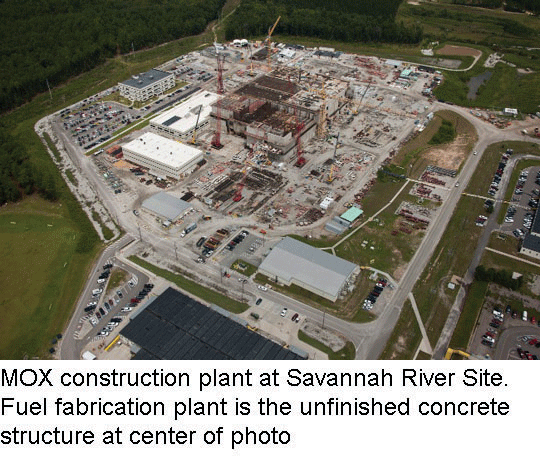 Trump should stick to his guns and close failed South Carolina nuclear MOX project https://thehill.com/opinion/energy-environment/412384-trump-should-stick-to-his-guns-and-close-failed-south-carolina
BY EDWIN LYMAN, OPINION CONTRIBUTOR — 10/20/18 Sen. Lindsey Graham (R-S.C.) is picking another fight that he promises will be even bigger spectacle than his over-the-top performance during Brett Kavanaugh’s confirmation hearings. Over what? A pork-barrel nuclear construction project in his state that his new best friend, President Donald Trump, is determined to shut down.
Graham, Sen. Tim Scott (R-S.C.), Rep. Joe Wilson (R-S.C.), and South Carolina state officials met with Trump at the White House on Thursday in a last-ditch attempt to get the president to change his mind about canceling the project. Hopefully, the president will stick to his guns and allow the Department of Energy (DOE) to finally put an end to this boondoggle. The project is costing taxpayers more than $1 million a day. The facility, the Mixed Oxide (MOX) Fuel Fabrication Plant, is three decades behind schedule and projected to cost some $15 billion more than its original $2 billion estimate. To date, the project is only 30 percent complete but has already cost more than $5 billion. The MOX plant has a long and troubled history. After the end of the Cold War in 1991, both the United States and the former Soviet Union were stuck with dozens of tons of plutonium — a key fuel for nuclear weapons — that were no longer necessary for their shrinking nuclear arsenals. Sen. Lindsey Graham (R-S.C.) is picking another fight that he promises will be even bigger spectacle than his over-the-top performance during Brett Kavanaugh’s confirmation hearings. Over what? A pork-barrel nuclear construction project in his state that his new best friend, President Donald Trump, is determined to shut down. Graham, Sen. Tim Scott (R-S.C.), Rep. Joe Wilson (R-S.C.), and South Carolina state officials met with Trump at the White House on Thursday in a last-ditch attempt to get the president to change his mind about canceling the project. Hopefully, the president will stick to his guns and allow the Department of Energy (DOE) to finally put an end to this boondoggle. The project is costing taxpayers more than $1 million a day. The facility, the Mixed Oxide (MOX) Fuel Fabrication Plant, is three decades behind schedule and projected to cost some $15 billion more than its original $2 billion estimate. To date, the project is only 30 percent complete but has already cost more than $5 billion. The MOX plant has a long and troubled history. After the end of the Cold War in 1991, both the United States and the former Soviet Union were stuck with dozens of tons of plutonium — a key fuel for nuclear weapons — that were no longer necessary for their shrinking nuclear arsenals. The DOE proposed the MOX plant as one method for converting retired U.S. plutonium weapon components into a form that was less readily usable in bombs and more difficult for terrorists to steal. The factory would turn the plutonium into fuel for commercial nuclear power reactors. After the reactors used the MOX fuel, the remaining plutonium would wind up trapped in heavy and highly radioactive spent fuel assemblies. But the MOX plan would actually increase the risk of nuclear terrorism. The MOX plant is so large and complex that if terrorists posing as plant workers diverted enough plutonium for a bomb, the loss might not be detected for weeks or even longer. Moreover, MOX fuel would have to be shipped to commercial reactors around the country, where security measures are far weaker than at DOE weapons facilities. MOX soon proved disastrous. Construction of the fuel factory, which began in 2007, has been plagued with prolonged delays and cost overruns. One major recurring problem was the need to redo defective construction. For example, the project contractor, now called CB&I AREVA MOX Services, bought 9,500 tons of steel rebar for reinforced concrete that was discovered to be inferior, but not before MOX Services installed 142 tons of it. Also, the DOE found in 2014 that “electrical work at the MOX facility was not being completed in accordance specifications and had to be repeatedly removed and reinstalled.” Adding insult to injury, the contractor billed the DOE for the extra labor needed to fix its mistakes, wasting even more taxpayer money. The DOE testified to Congress in 2015 that 25 percent of construction work had to be redone, but because MOX Services did not begin to systematically track and manage rework until 2014, the full extent of the problem may never be known. Faced with ballooning costs and uncertain prospects, the Obama administration decided in 2014 to terminate MOX and adopt a simpler, cheaper alternative that would be at much lower risk for nuclear terrorism. Surplus plutonium could be diluted with an inert material, packaged in small quantities, and shipped to the Waste Isolation Pilot Plant (WIPP) in New Mexico, the deep geologic repository for military nuclear waste. This policy made so much sense that the Trump administration rebuffed calls by MOX supporters to reverse it when it took office in 2017. For years, Graham and his South Carolina allies convinced Congress to prohibit the DOE from terminating MOX. Last year, however, Congress finally provided a way out: It decided that the DOE could shut down the MOX program if it could show that the alternative approach could dispose of all the surplus plutonium at less than half the cost of MOX. The DOE met that requirement in May, but in June the state of South Carolina won a federal injunction blocking termination, which was temporarily reversed on appeal last week. The DOE cancelled the project the very next day. That left Graham with only one card to play: a direct appeal to the president to reverse course. But is Graham’s loyalty worth $12 billion in taxpayer money? Let’s just hope Trump, who considers himself to be a shrewd businessman, really knows a bad deal when he sees one. Edwin Lyman is a senior scientist with the Union of Concerned Scientists’ Global Security Program in Washington, D.C. |
|
UK govt incentives for nuclear, coal gas – work against renewable energy development

 Dave Toke’s Blog 20th Oct 2018 UK Renewable trade associations are fighting for the survival of the renewable industry against an onslaught led by the Treasury. If the Treasury gets its way almost all future development for renewable energy in the UK will be stopped.
Continued incentives and tax breaks for nuclear power, shale gas and conventional power stations will, however, remain in place.
The Treasury is pushing for:
a) An end to the policy of issuing CfDs as part of the scheduled review of electricity market reform which takes place next year.
b) The ending of all incentives to solar pv, including for solar power exported to the electricity distribution system.
c) The ending of the carbon price floor which makes fossil fuel more expensive and non-fossil sources relatively cheaper.
http://realfeed-intariffs.blogspot.com/2018/10/renewables-lobbies-fight-to-stave-off.html
http://realfeed-intariffs.blogspot.com/2018/10/renewables-lobbies-fight-to-stave-off.html
 |
ReplyForward
|
Hanford given more time to empty leak-prone radioactive waste tank
 Hanford wants more time to empty leak-prone radioactive waste tank. Here’s the new deadline, Tri City Herald, BY ANNETTE CARY, acary@tricityherald.com, 18, 2018 , RICHLAND, WA
The Department of Energy will have more time to empty some of Hanford’s leak-prone underground waste storage tanks under an order issued in federal court.
Judge Rosanna Malouf Peterson agreed to a request by the state of Washington and DOE to give DOE until the end of 2026 to empty radioactive and hazardous chemical waste from nine more single-shell tanks.
It is an extension from March 31, 2024. A second deadline to keep work on pace to meet that milestone also has been extended.
DOE has another six months — until June 2021 — to have the first two tanks of the nine emptied. New court-enforced consent decree deadlines for retrieving the waste from tanks and treating it at the $17 billion vitrification plant under construction were set by Malouf Peterson in 2016………https://www.tri-cityherald.com/news/local/hanford/article220235380.html
Nuclear Security UK – bolstering defences against a terror attack.
 Telegraph 20th Oct 2018 Counter-terrorism officers are to be equipped with a new fleet of high-tech
nuclear and radiological detection vehicles to trace weapons-grade materials in the UK. The Home Office is planning to buy up to 10 mobile gamma and neutron radiation detection systems to bolster its defences against them being used in a terror attack.
Ports and airports across the country already have screening systems in place to spot anyone smuggling nuclear or radiological materials into the UK as part of the Border Force’s Cyclamen monitoring system. Similar equipment was used at the Olympic Park during the 2012 Summer Olympics in London.
https://www.telegraph.co.uk/news/2018/10/20/nuclear-counter-terror-detection-systems-bolstered-high-tech/
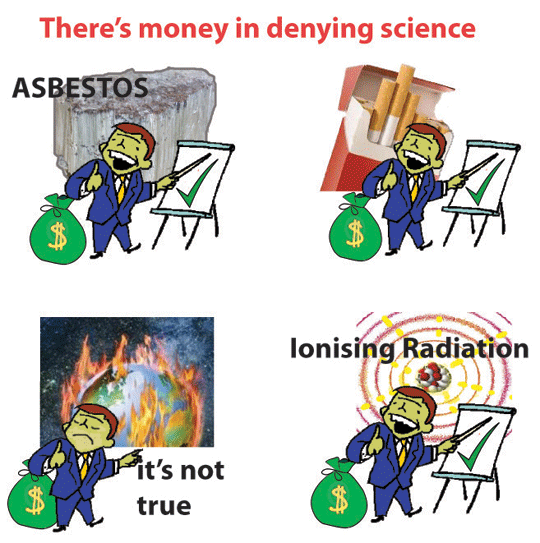
There’s money in denying the science about ionising radiation – it’s useful nuclear lobby spin
Recently, the National Council on Radiation Protection and Measurements (NCRP) – scientists who provide guidance and recommendations on radiation protection under a mandate from Congress – supported the LNT model. NCRP analyzed 29 epidemiological studies and found that the data was “broadly supportive” of the LNT model and that “no alternative dose-response relationship appears more pragmatic or prudent for radiation protection purposes.”
In fact, the National Academies’ Nuclear and Radiation Studies Board, the International Council on Radiation Protection, and other international bodies and regulators all use the LNT model for guidance and radiation protection.
Why radiation protection experts are concerned over EPA proposal https://theconversation.com/why- radiation-protection-experts-are-concerned-over-epa-proposal-104895
 radiation-protection-experts-are-concerned-over-epa-proposal-104895
Scientist-in-Residence and Adjunct Professor, Middlebury Institute of International Studies at Monterey, October 19, 2018 The Takata Corporation sold defective air bag inflators that resulted in the death of 16 people in the United States and a massive recall of cars. While it was rare for the air bags to fail, the brutal consequences of this defective device in even minor collisions was easy to recognize. But the effects of low-dose ionizing radiation – high energy waves or particles that can strip electrons from atoms and physically damage cells and the DNA within – on people’s health is much harder to see, and prove.
When the Associated Press reported that the Trump administration’s Environmental Protection Agency solicited the advice of a controversial toxicologist, Edward Calabrese, to consider changes to how it regulates radiation, it sent shock waves through the radiation protection community. Calabrese is well known for his unconventional and outlying view that low-dose radiation is not dangerous.It is important to note that the health effects of high doses of radiation are well established. We all know about the horrific effects based on studies of the populations of Hiroshima and Nagasaki after the atomic bombs were dropped. Then there was also the recent case of Russian defector Alexander Litvenenko who quickly sickened and died 23 days after being poisoned with the radioactive isotope polonium-210 in 2006.However, the effects of low doses of radiation are not well understood. Part of the reason is that these low doses are difficult to measure.
When the Associated Press reported that the Trump administration’s Environmental Protection Agency solicited the advice of a controversial toxicologist, Edward Calabrese, to consider changes to how it regulates radiation, it sent shock waves through the radiation protection community. Calabrese is well known for his unconventional and outlying view that low-dose radiation is not dangerous.It is important to note that the health effects of high doses of radiation are well established. We all know about the horrific effects based on studies of the populations of Hiroshima and Nagasaki after the atomic bombs were dropped. Then there was also the recent case of Russian defector Alexander Litvenenko who quickly sickened and died 23 days after being poisoned with the radioactive isotope polonium-210 in 2006.However, the effects of low doses of radiation are not well understood. Part of the reason is that these low doses are difficult to measure.
Current understanding of the health effect of radiation relies primarily on a decades-long study of the survivors of the Hiroshima and Nagasaki atomic bomb attacks. That population was exposed to a one-time large dose of radiation, with individual exposure dependent on where they were at the time of the explosion.
In those high-dose radiation studies, researchers found that there is a proportionate relationship between dose and effect. The way the EPA gauges the effect of low doses of radiation draws from these studies as well as studies following other incidents. The current guidelines for the EPA adhere to what is called the linear no-threshold (LNT) model, which implies that even low doses of radiation have an effect across a population. Some scientists dubbed it to be a “reverse lottery,” where an unlucky few within a given population will get cancer during their lifetime due to their exposure to radiation.
There have been questions as to whether the LNT model is appropriate for measuring cancer risk from low doses of radiation. That’s because when the radiation-induced cancer rate is low, and the sample size is small, there is more statistical uncertainty in the measurement. This allows more wiggle room in putting forward alternative dose- response models such as Calabrese’s, which have little scientific backing but that promise financial benefits for regulated industries.
Overall, the general feeling in the radiation protection community is that for now until new research proves otherwise, the LNT model, because of the lack of understanding of the effect of low doses, is the prudent model to use to set protective limits.
Also, not being able to determine the effect of a low dose of radiation is a problem in measurement, not in the underlying linear threshold model. As doses of radiation decrease, fewer cases of radiation-induced cancers occur, making it more difficult to identify those specific cases.
This is especially true given that cancer is already a common occurrence, making it nearly impossible to disentangle radiation exposure from many other potential cancer risk factors. This is where the analogy with Takata air bags fails, because it is not possible to prove that a specific cancer death is due to ionizing radiation, but this does not make it any less real or significant.
Who profits if radiation guidelines change
The EPA issues guidance and sets regulations to “limit discharges of radioactive material affecting members of the public” associated with the nuclear energy industry. The EPA defines what radiation levels are acceptable for a protective cleanup of radioactive contamination at Superfund sites. It also provides guidance on the levels of radiation exposure that would trigger a mass evacuation. It is not surprising that certain stakeholders would welcome modifications in EPA assessment of low-dose radiation exposure given the high costs involved in preventing or cleaning up sites and in compensating victims of such exposure.
Recently, the National Council on Radiation Protection and Measurements (NCRP) – scientists who provide guidance and recommendations on radiation protection under a mandate from Congress – supported the LNT model. NCRP analyzed 29 epidemiological studies and found that the data was “broadly supportive” of the LNT model and that “no alternative dose-response relationship appears more pragmatic or prudent for radiation protection purposes.”
In fact, the National Academies’ Nuclear and Radiation Studies Board, the International Council on Radiation Protection, and other international bodies and regulators all use the LNT model for guidance and radiation protection.
From my perspective, as someone who has worked with radioactive sources, the EPA should be cognizant of the warning by the late Harvard sociologist Daniel Yankelovich that just because an effect can’t be easily quantified does not mean it is not important or does not exist.
Here’s an example of the uncritical journalistic hype over the nuclear lobby’s new filmic advertisement
(Low on facts – high on uncritical enthusiasm)

A new documentary puts fresh, young faces on the old debate over nuclear power, Grist , on Oct 18, 2018“…….. David Schumacher’s new documentary, The New Fire,…. profiles young people working to invent better versions of nuclear power plants. There’s the couple with a simple reactor design who started the company, Oklo. And there’s the Bill Gates-backed TerraPower. …..the movie serves up hope and enthusiasm……..
I discovered these young people starting companies to build nuclear reactors. It was so audacious. They were so  heroic and charming and just completely iconoclastic. They shattered the standard image of nuclear engineers……
 heroic and charming and just completely iconoclastic. They shattered the standard image of nuclear engineers……
I’ve had people come up to me and say this has totally changed my mind. At the Philadelphia Environmental Film Festival, this couple approached me and said, “We started a chapter of the Sierra Club downwind of Three-Mile Island.” These are folks who would have been young adults at the time [1978, when the Three Mile Island plant had a partial meltdown]. “So we’ve been very anti-nuclear, but this film really changed our minds.” ……
Fukushima and ‘The Devil’s Scenario’ – the bullet that Japan dodged
60,000 tons of dangerous radioactive waste sits on Great Lakes shores Keith Matheny, Detroit Free Press Oct. 19, 2018 “……… Fukushima and ‘The Devil’s Scenario’
On March 11, 2011, following a magnitude-9.0 earthquake and an ensuing, 50-foot tsunami, the Fukushima Daiichi nuclear power plant in Japan lost cooling capabilities for four of its six reactors. The cores became damaged and radiation was released into the atmosphere, making it the world’s second-worst nuclear power industry accident after Chernobyl.
But it’s what happened — or almost happened — at the plant’s Unit 4 spent-fuel pool that gives nuclear watchdogs nightmares.
A hydrogen explosion four days into the disaster left the building housing the Unit 4 spent-fuel pool in ruins. The pool was seven stories up in a crumbling, inaccessible building.
It “was so radioactive, you couldn’t put people up there,” von Hippel said. “For about a month after Fukushima, people didn’t know how much water was in the pool. They were shooting water up there haphazardly with a hose, trying to drop it by helicopter.”
Two weeks after the earthquake and tsunami, the Japanese Atomic Energy Commission secretly conducted a worst-case scenario study of the ongoing disaster. The biggest fear that emerged: that a self-sustaining fire would start in the Unit 4 spent fuel pool, spreading to the nearby, damaged reactors. That, they found, would release radiation requiring evacuations as far away as 150 miles, to the outskirts of Tokyo and its more than 13.4 million residents.
“That was the devil’s scenario that was on my mind,” Chief Cabinet Secretary Yukio Edano said during a special commission’s 2014 investigation of the accident.
“Common sense dictated that, if that came to pass, then it was the end of Tokyo.”
The worst-case-scenario report was not released for nearly a year. “The content was so shocking that we decided to treat it as if it didn’t exist,” the Japan Times quoted a senior Japanese government official as saying in January 2012.
What kept the spent fuel rods covered with water in Unit 4 was a miraculous twist of fate: The explosion had jarred open a gate that typically separated the Unit 4 spent fuel pool from an adjacent reactor pool.
 “Leakage through the gate seals was essential for keeping the fuel in the Unit 4 pool covered with water,” a 2016 report on the Fukushima accident by the U.S. National Academies of Sciences, Engineering and Medicine concluded.
“Had there been no water in the reactor well, there could well have been severe damage to the stored fuel and substantial releases of radioactive material to the environment.”
It’s a startling “very near-miss,” said Gordon Thompson, executive director of the Institute for Resource and Security Studies in Cambridge, Massachusetts.
“Given wind directions that are common in Japan, they could have been looking at removing the population of Tokyo for decades, or centuries,” he said. “You’re talking tens of millions of people that would have to relocate. That’s the bullet that Japan dodged.”……..https://www.freep.com/story/news/local/michigan/2018/10/19/nuclear-waste-great-lakes/1417767002/
The dangerous radioactive trash – 60,000 tons on the shores of the Great Lakes
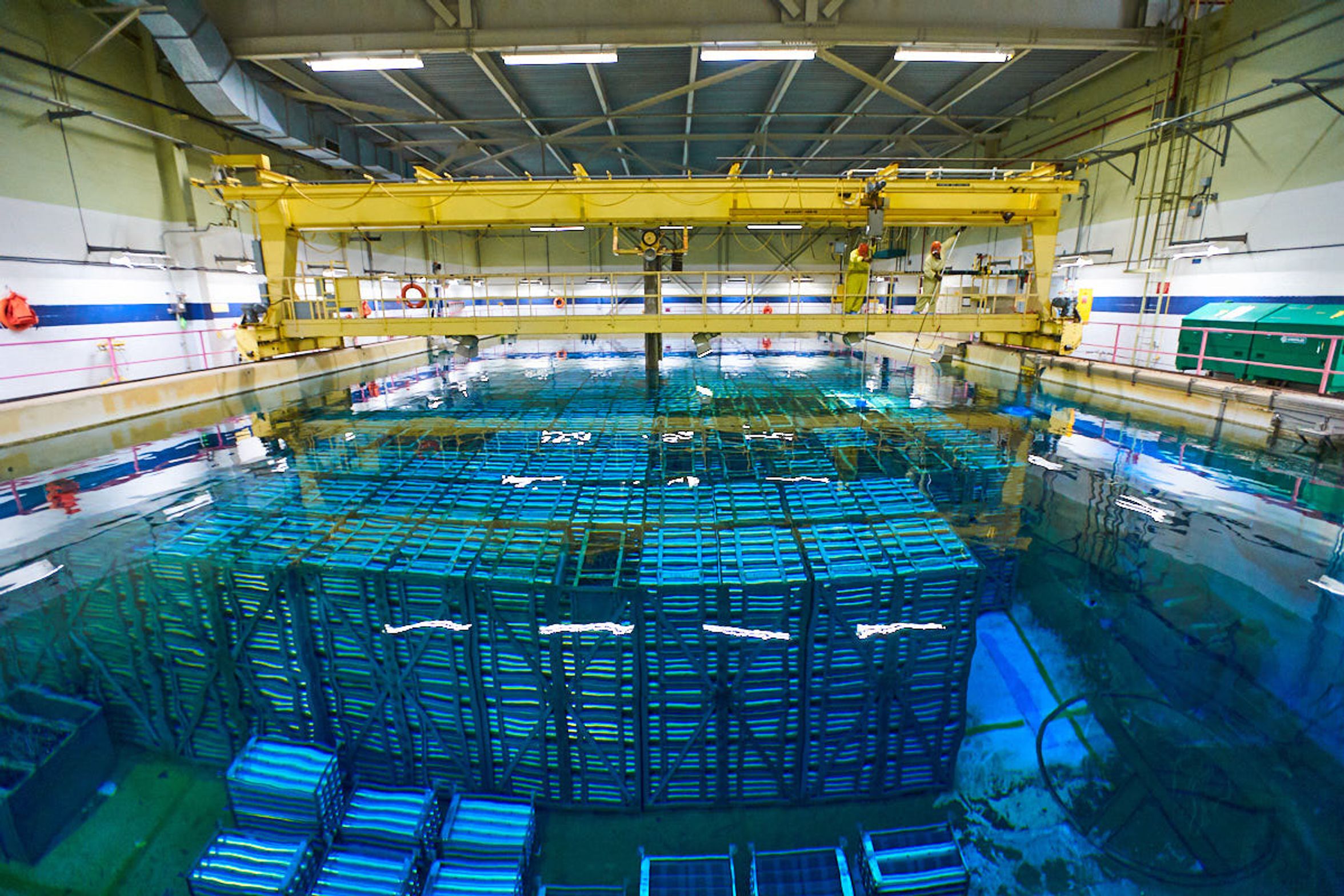 60,000 tons of dangerous radioactive waste sits on Great Lakes shores, THE EFFECTS OF A WORST-CASE SCENARIO — FROM A NATURAL DISASTER TO TERRORISM — COULD CAUSE UNTHINKABLE CONSEQUENCES FOR THE GREAT LAKES REGION, Keith Matheny, Detroit Free Press, Oct. 19, 2018 More than 60,000 tons of highly radioactive spent nuclear fuel is stored on the shores of four of the five Great Lakes — in some cases, mere yards from the waterline — in still-growing stockpiles.
“It’s actually the most dangerous waste produced by any industry in the history of the Earth,” said Gordon Edwards, president of the nonprofit Canadian Coalition for Nuclear Responsibility.
The spent nuclear fuel is partly from 15 current or former U.S. nuclear power plants, including four in Michigan, that have generated it over the past 50 years or more. But most of the volume stored along the Great Lakes, more than 50,000 tons, comes from Canadian nuclear facilities, where nuclear power is far more prevalent.
It remains on the shorelines because there’s still nowhere else to put it. The U.S. government broke a promise to provide the nuclear power industry with a central, underground repository for the material by 1998. Canada, while farther along than the U.S. in the process of trying to find a place for the waste, also doesn’t have one yet.
The nuclear power industry and its federal regulator, the U.S. Nuclear Regulatory Commission, point to spent nuclear fuel’s safe on-site storage over decades. But the remote possibility of a worst-case scenario release — from a natural disaster, a major accident, or an act of terrorism — could cause unthinkable consequences for the Great Lakes region.
Scientific research has shown a radioactive cloud from a spent fuel pool fire would span hundreds of miles, and force the evacuation of millions of residents in Detroit, Chicago, Cleveland, Toronto or other population centers, depending on where the accident occurred and wind patterns.
It would release multiple times the radiation that emanated from the Fukushima disaster in Japan in 2011 — a disaster that led to mass evacuations, no-go zones that exist to this day, and a government ban on fishing in a large, offshore area of the Pacific Ocean because of high levels of radioactive cesium in the water and in fish. The fishing industry there has yet to recover, more than seven years later.
“The Mississippi and the Great Lakes — that would be really bad,” said Frank von Hippel, senior research physicist and professor of public and international affairs emeritus at Princeton University.
Added Jim Olson, environmental attorney and founder of the Traverse City-based nonprofit For Love of Water, or FLOW: “The fact that it’s on the shorelines of the Great Lakes takes that high consequence that would be anywhere and paints it red and puts exclamation marks around it.”
Spent nuclear fuel is so dangerous that, a decade removed from a nuclear reactor, its radioactivity would still be 20 times the level that would kill a person exposed to it. Some radioactive byproducts of nuclear power generation remain a health or environmental hazard for tens of thousands of years. And even typically harmless radioactive isotopes that are easily blocked by skin or clothing can become extremely toxic if even small amounts are breathed in, eaten or drank, making their potential contamination of the Great Lakes — the drinking water supply to 40 million people — the connected Mississippi River and the prime agricultural areas of the U.S. a potentially frightening prospect. ……….
For five years, Michigan residents, lawmakers, environmental groups and others around the Midwest have, loudly and nearly unanimously, opposed a planned Canadian underground repository for low-to-medium radioactive waste at Kincardine, Ontario, near the shores of Lake Huron.
Meanwhile, spent nuclear fuel, vastly more radioactive, sits not far from the shores of four Great Lakes — Michigan, Huron, Erie and Ontario — at 15 currently operating or former nuclear power plant sites on the U.S. side. In Michigan, that includes Fermi 2; the Donald C. Cook nuclear plant in Berrien County; the Palisades nuclear plant in Van Buren County, and the former Big Rock Point nuclear plant in Charlevoix County, which ceased operation in 1997 and where now only casks of spent nuclear fuel remain.
Neither the U.S. nor the Canadian government has constructed a central collection site for the spent nuclear fuel. It’s not just a problem in the Great Lakes region — more than 88,000 tons of spent nuclear fuel, an amount that is rising, is stored at 121 U.S. locations across 39 states…….
Spent nuclear fuel isn’t only radioactive, it continues to generate heat. It requires storage in pools with circulating water for typically five years before it can be moved into so-called dry-cask storage — concrete-and-steel obelisks where spent fuel rods receive continued cooling by circulating air.
In practice, however, because of the high costs associated with transferring waste from wet pools to dry casks, nuclear plants have kept decades worth of spent fuel in wet storage. Plant officials instead “re-rack” the pools, reconfiguring them to add more and more spent fuel, well beyond the capacities for which the pools were originally designed.
“The prevailing practice in the United States is you re-rack the pools until they are just about as dense-packed as the nuclear core,” von Hippel said.
Only in recent years have nuclear plants stepped up the transition to dry cask storage because there’s no room left in the wet pools. Still, about two-thirds of on-site spent nuclear fuel remains in wet pools in the U.S.
That’s a safety concern, critics contend. A catastrophe or act of terrorism that drains a spent fuel pool could cause rising temperatures that could eventually cause zirconium cladding — special brackets that hold the spent fuel rods in bundles — to catch fire.
Such a disaster could be worse than a meltdown in a nuclear reactor, as spent nuclear fuel is typically stored with nowhere near the fortified containment of a reactor core.
“The long-term land-contamination consequences of such an event could be significantly worse than those from Chernobyl,” a 2003 research paper by von Hippel and seven other nuclear experts stated.
The reference is to the worst nuclear power disaster in world history, the April 1986 reactor explosion at the Chernobyl Nuclear Power Plant in the former Soviet Union, now a part of the Ukraine, where 4,000 to 90,000 are estimated to have died as a result of the radiation released. A study by the University of Exeter in Great Britain, released this June, found that cow’s milk from farms about 125 miles from the Chernobyl accident site still — more than 30 years later —- contains the radioactive element cesium at levels considered unsafe for adults and at more than seven times the limit unsafe for children.
Allison Macfarlane, a professor of public policy and international affairs at George Washington University, served as chairman of the NRC during the Obama administration from July 2012 until December 2014.
“What I think needs more examination is the practice of densely packing the fuel in the pool,” she said.
The NRC does not regulate how much fuel can be in a pool, in what configuration it’s placed, and how old the fuel is, Macfarlane said. ……….
In a Great Lakes region where magnitude-9.0 earthquakes and tsunamis aren’t a potential threat to stockpiles of spent nuclear fuel, terrorism remains possible………
In a Great Lakes region where magnitude-9.0 earthquakes and tsunamis aren’t a potential threat to stockpiles of spent nuclear fuel, terrorism remains possible.
“The NRC’s position on beyond design basis threats is essentially that this is a matter for the national security apparatus — it’s not our job, so somebody else will take care of it,” he said. “But if you look at the Pentagon, Homeland Security, I think you will look in vain to find any part of that apparatus that is addressing that area that the NRC says is not its job.”……….
Welcome to Zion, nuclear waste dump ………..
National security adviser John Bolton urging Trump to withdraw from Russian nuclear arms treaty
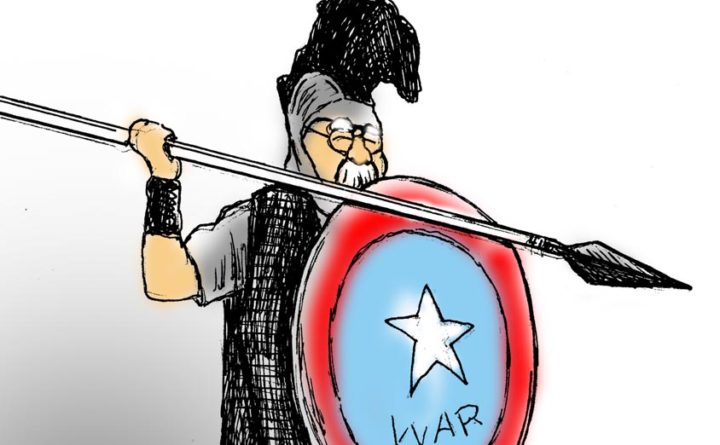 John Bolton pushing Trump to withdraw from Russian nuclear arms treaty, Exclusive: national security adviser recommends ending intermediate-range nuclear forces treaty over alleged Russia violations, Guardian, Julian Borger , 20 Oct 18, John Bolton is pushing for the US to withdraw from a cold war-era arms control treaty with Russia, in the face of resistance from others in the Trump administration and US allies, according to sources briefed on the initiative.Bolton, Donald Trump’s third national security adviser, has issued a recommendation for withdrawal from the 1987 intermediate-range nuclear forces treaty (INF), which the US says Russia has been violating with the development of a new cruise missile.
Withdrawal from the treaty, which would mark a sharp break in US arms control policy, has yet to be agreed upon by cabinet and faces opposition from within the state department and the Pentagon. A meeting on Monday at the White House to discuss the withdrawal proposal was postponed.
The INF faces a congressionally imposed deadline early next year. An amendment in the 2019 defence spending bill requires the president to tell the Senate by 15 January whether Russia is in “material breach” of the treaty, and whether the INF remains legally binding on the US.
Bolton, who has spent his career opposing arms control treaties, is seeking to shrug off the traditional role of national security adviser as a policy broker between the agencies, and become a driver of radical change from within the White House.
Former US officials say Bolton is blocking talks on extending the 2010 New Start treaty with Russia limiting deployed strategic nuclear warheads and their delivery systems. The treaty is due to expire in 2021 and Moscow has signaled its interest in an extension, but Bolton is opposing the resumption of a strategic stability dialogue to discuss the future of arms control between the two countries.
The US has briefed its European allies this week about the proposal, sounding out reactions. The briefing alarmed UK officials who see the INF as an important arms control pillar. The treaty marked the end of a dangerous nuclear standoff in 1980s Europe pitting US Pershing and cruise missiles against the Soviet Union’s SS-20 medium-range missiles.
The US alleges Russia is now violating the treaty with the development and deployment of a ground-launched cruise missile, known as the 9M729. Moscow insists the missile does not violate the range restrictions in the INF and alleges in return that a US missile defence system deployed in eastern Europe against a potential Iranian threat can be adapted to fire medium-range offensive missiles at Russia.
The National Security Council (NSC) declined to comment on the fate of the INF………
Bolton’s meeting with his Russian counterpart, Nikolai Patrushev, in Geneva in August, was expected to give the final green light to the dialogue, but Bolton is said to have blocked it. He is due to visit Moscow next week, when the Kremlin said he may meet Vladimir Putin.
(pic DANBY/BDN) The New York Times reported on Friday that Bolton intended to use his Moscow trip to inform Russian leaders of the administration’s plans to exit the INF agreement. Under the terms of the treaty, withdrawal would take six months.
In remarks in Sochi on Thursday, Putin appeared to suggest that Russia would adopt a “no first use” policy on nuclear weapons.
“We have no concept of a pre-emptive strike,” he told a conference. “[W]e expect to be struck by nuclear weapons, but we will not use them first,” he said.
A meeting of Nato defence ministers earlier this month in Brussels issued a joint statement saying the INF “has been crucial to Euro-Atlantic security and we remain fully committed to the preservation of this landmark arms control treaty”………
“The decision has been taken in the NSC [National Security Council] that the US should withdraw, and they are trying to persuade other parts of the administration. There has been no formal Trump decision yet,” said Hans Kristensen, the director of the nuclear information project at the Federation of the American Scientists. “Very little good will come of this, other than another round of nuclear escalation with Russia.” ………https://www.theguardian.com/us-news/2018/oct/19/john-bolton-russia-nuclear-arms-deal-trump-lobbying
U.S. nuclear power stations were the original target for the 9/11 terrorist attacks
| 60,000 tons of dangerous radioactive waste sits on Great Lakes shores, Keith Matheny, Detroit Free Press Oct. 19, 2018 “………The original 9/11 idea In August 2002, al-Jazeera reporter Yosri Fouda got an anonymous call offering him an incredible interview with two of the biggest fugitives from justice on the globe: al-Qaida leaders Khalid Sheikh Mohammed, the so-called mastermind of the 9/11 terrorist attacks, and Ramzi bin al-Shibh. Wrote London’s The Guardian about Fouda’s account at the time: “After two days in a run-down hotel (in Karachi, Pakistan), he was passed through a chain of people before being blindfolded, put in a car (trunk) and driven to an apartment building. He was taken to a flat strewn with laptop computers and mobile phones and occupied by two men whom he recognized as Bin al-Shibh and Mohammed. Among the things Fouda said he learned in his interview: That the initial targets for what became the Sept. 11, 2001, terrorist attacks included two, unspecified U.S. nuclear power plants. “It was decided to abandon nuclear targets for the moment,” Fouda said Mohammed explained to him. “I mean for the moment,” Mohammed added. Al-Qaida leaders feared an attack on U.S. nuclear facilities “might get out of hand,” Fouda said he was told. Noted Kamps of the nonprofit Beyond Nuclear, “We’re relying on the moral restraint of a terrorist organization not to attack nuclear plants.” That startling revelation was later amplified in the 9/11 Commission’s report, which not only noted Mohammed’s account, but that 9/11 ringleader and hijacker Mohammed Atta, in July 2001 meetings with Bin al-Shibh in Spain, “mentioned he had considered targeting a nuclear facility he had seen during familiarization flights near New York.” The plan was ultimately scuttled because Atta “thought a nuclear target would be difficult because the airspace around it was restricted, making reconnaissance flights impossible and increasing the likelihood that any plane would be shot down before impact,” the 9/11 Commission report states. Edwin Lyman of the Union of Concerned Scientists said the nuclear facility in question was probably Indian Point in New York, about 25 miles north of New York City. In an ironic twist, the supposed heightened security measures that discouraged Atta from a nuclear plant strike don’t exist, Lyman said. “In fact, there was no such protection,” he said. “There is no no-fly-zone around nuclear plants.” It’s still not an outright prohibition. After 9/11, the Federal Aviation Administration issued a “notice-to-airmen” stating: “In the interest of national security and to the extent practicable, pilots are strongly advised to avoid the airspace above, or in proximity to such sites as power plants (nuclear, hydro-electric, or coal), dams, refineries, industrial complexes, military facilities and other similar facilities. Pilots should not circle as to loiter in the vicinity over these types of facilities.” Personnel at nuclear plants “voluntarily report to us and to local law enforcement whenever they see a plane loitering in the vicinity,” NRC spokesman David McIntyre told the Free Press. “Such pilots may be greeted by local law enforcement upon landing and further advised not to fly over or loiter over a plant.” The policy also applies for remote-controlled drones, McIntyre said……. https://www.freep.com/story/news/local/michigan/2018/10/19/nuclear-waste-great-lakes/1417767002/
|
US nuclear missiles in Italy, as well as their bombs?
VOLTAIRE NETWORK | ROME (ITALY) | 19 OCTOBER 2018 he B61-12, the new US nuclear bomb which replaces the B-61 deployed in Italy and other European countries, will begin production in less than a year. The announcement was made officially by the National Nuclear Security Administration (NNSA). It reveals that the revision of the final project has now been completed with success, and the qualification stage will begin this month at the Pantex Plant in Texas. Production will be authorised to begin in September 2019.
In March 2020, the first unit of production will begin fabricating a series of 500 bombs. As from that time, in other words in about a year and a half, the United States will begin the anti-Russian deployment in Italy, Germany, Belgium, Holland and probably certain other European countries, of the first nuclear bomb in their arsenal with a precision guidance system. The B61-12 is designed with penetrating capacity, built to explode underground in order to destroy bunkers housing command centres.
Since Italy and the other countries, in violation of the Non-Proliferation Treaty, are offering the USA the bases, the pilots and the aircraft for the deployment of the B61-12, Europe will soon be exposed to a greater risk as the front line of the developing nuclear confrontation with Russia.
An even more dangerous situation appears at the same moment – the return of the Euromissiles, meaning the nuclear missiles which are similar to those deployed in Europe in the 1980’s by the USA, with the official aim of defending against Soviet missiles. This category of ground-based nuclear missiles of intermediate range (between 500 and 5,500 km) were eliminated with the INF Treaty of 1987. But in 2014, the Obama administration accused Russia of having experimented with a cruise missile (# 9M729) whose category was forbidden by the Treaty. Moscow denied that the missile violated the INF Treaty and, in turn, accused Washington of having installed in Poland and Romania launch ramps for interceptor missiles (elements of the « shield »), which could be used to launch cruise missiles bearing nuclear warheads.
The accusation aimed by Washington at Moscow, which is not supported by any evidence, enabled the USA to launch a plan aimed at once again deploying in Europe ground-based intermediate-range nuclear missiles. The Obama administration had already announced in 2015 that « faced with the violation of the INF Treaty by Russia, the United States are considering the deployment of ground-based missiles in Europe ». This plan was confirmed by the Trump administration – in fiscal year 2018, Congress authorised the financing of a « programme of research and development for a cruise missile which could be launched from a mobile road base ».
The plan is supported by the European allies of NATO. The recent North-Atlantic Council, at the level of Europe’s Defence Ministers, which was attended for Italy by Elisabetta Trenta (M5S), declared that the « INF Treaty is in danger because of the actions of Russia », which it accused of deploying « a disturbing missile system which constitutes a serious risk for our security ». Hence the necessity that « NATO must maintain nuclear forces which are stable, trust-worthy and efficient » (which explains why the members of the Alliance rejected en bloc the United Nations Treaty for the prohibition of nuclear weapons).
So the grounds are being laid for a European deployment, on the borders of Russian territory, of ground-based intermediate-range US nuclear missiles. It’s as if Russia were deploying in Mexico nuclear missiles pointed at the United States. Manlio Dinucci
Translation
Pete Kimberley
Source
Il Manifesto (Italy)
1 This Month
Tell Congress: Prevent Nuclear Catastrophe in Iran

Tell Congress: Prevent Nuclear Catastrophe in Iran

Read the Public Inquiry Report, the Commissioners’ report, Surrendering Australia: The AUKUS Deception is available to download for free at aukuspublicinquiry.com. Or just watch the replay of the National Press Club Luncheon.


Shut down the radiation-damaged Heysham nuclear reactors now
To see nuclear-related stories in greater depth and intensity – go to https://nuclearinformation.wordpress.com

Say No to NASA’s Reckless Nuclear Reactor on the Moon
Say No to NASA’s Reckless Nuclear Reactor on the Moon
-
Archives
- November 2026 (255)
- October 2026 (302)
- September 2026 (339)
- August 2026 (330)
- July 2026 (355)
- June 2026 (287)
- May 2026 (306)
- April 2026 (356)
- March 2026 (251)
- February 2026 (267)
- January 2026 (308)
- December 2025 (358)
-
Categories
- 1
- 1 NUCLEAR ISSUES
- business and costs
- climate change
- culture and arts
- ENERGY
- environment
- health
- history
- indigenous issues
- Legal
- marketing of nuclear
- media
- opposition to nuclear
- PERSONAL STORIES
- politics
- politics international
- Religion and ethics
- safety
- secrets,lies and civil liberties
- spinbuster
- technology
- Uranium
- wastes
- weapons and war
- Women
- 2 WORLD
- ACTION
- AFRICA
- Atrocities
- AUSTRALIA
- Christina's notes
- Christina's themes
- culture and arts
- Events
- Fuk 2022
- Fuk 2023
- Fukushima 2017
- Fukushima 2018
- fukushima 2019
- Fukushima 2020
- Fukushima 2021
- general
- global warming
- Humour (God we need it)
- Nuclear
- RARE EARTHS
- Reference
- resources – print
- Resources -audiovicual
- Weekly Newsletter
- World
- World Nuclear
- YouTube
-
RSS
Entries RSS
Comments RSS

