Reuters 21st Jan 2019 French state-owned power company EDF said it would make further tests next
month on faulty weldings at its Flamanville nuclear reactor plant, which
has been plagued by technical problems. “EDF actively continues to
implement the action plan on welds of the main secondary system announced
on 25 July 2018. The ‘hot tests’ are now scheduled to commence during
the second half of February,” EDF said in a statement. EDF said it would
keep the targeted construction costs for Flamanville at 10.9 billion euros
($12.4 billion). https://uk.reuters.com/article/uk-edf-flamanville/french-utility-edf-to-make-further-tests-on-faulty-flamanville-weldings-idUKKCN1PF0JB?rpc=401&
Business Green 21st Jan 2019 New York has embraced the campaign for a ‘Green New Deal’, with Governor
Andrew Cuomo declaring last week he will launch a major programme to build
a zero carbon economy for the state.
New York’s Green New Deal was hailed
as a “nation-leading clean energy and jobs agenda” by the Governor’s
office, as it pledged to “aggressively put New York State on a path to
economy-wide carbon neutrality”. The plan includes doubling the state’s
solar capacity by 2025 and quadrupling its offshore wind capacity by 2035,
as part of a legally binding goal to deliver 100 per cent zero-carbon power
for the state by 2040. https://www.businessgreen.com/bg/news/3069581/new-york-unveils-green-new-deal-with-plan-to-build-net-zero-economy
Observer 20th Jan 2019 A tech revolution – and an abundance of wind and waves – mean that the people of Orkney now produce more electricity than they can use. It seems the stuff of fantasy. Giant ships sail the seas burning fuel that has been extracted from water using energy provided by the winds, waves and tides. A dramatic but implausible notion, surely.
Yet this grand green vision could soon be realised thanks to a remarkable technological transformation that is now under way in Orkney. Perched 10 miles beyond the northern edge of
the British mainland, this archipelago of around 20 populated islands – as well as a smattering of uninhabited reefs and islets – has become the centre of a revolution in the way electricity is generated.
Orkney was once utterly dependent on power that was produced by burning coal and gas on the Scottish mainland and then transmitted through an undersea cable. Today the islands are so festooned with wind turbines, they cannot find enough uses for the emission-free power they create on their own. Community-owned wind turbines generate power for local villages; islanders drive non-polluting cars that run on electricity; devices that can turn the energy of the waves and the tides into electricity are being tested in the islands’ waters and seabed; and – in the near future – car and passenger ferries here will be fuelled not by diesel but by hydrogen, created from water that has been electrolysed using power from Orkney’s wind, wave and
tide generators. https://www.theguardian.com/environment/2019/jan/20/orkney-northern-powerhouse-electricity-wind-waves-surplus-power-
By Theo Leggett, Business correspondent, BBC News, 21 January 2019
Rolls-Royce has confirmed it is in talks with Chinese state-run firm China General Nuclear (CGN) over providing essential systems for a new power station in the UK.
The UK engineering company makes instrumentation and control systems for nuclear reactors.
The plant will be based at Bradwell, on the River Blackwater in Essex.
The project is one of three new nuclear schemes in this country in which CGN is centrally involved.
Rolls-Royce already has an agreement with CGN’s subsidiary, CTEC, to develop and sell reactor control systems for selected projects in China and on international markets.
Nuclear strategy
The planned new “Bradwell B” power station is a major component of the government’s nuclear strategy. The country’s existing reactors are ageing and all of them are due to shut down by 2035.
The Essex site is already home to an obsolete nuclear power station, which closed in 2002.
Its replacement was one of six new nuclear plants which were lined up in recent years to help meet energy needs in decades to come.
However, three of those projects have since fallen by the wayside.
The Chronicle – Duke University By Carter Forinash | 01/21/2019 At the height of the Berlin Crisis of 1961, a University committee developed plans to house nearly 50,000 Duke and Durham community members in shelters across campus. …….
Nuclear disaster planning was based on the worst-case scenario—the use of a nuclear weapon on Greensboro, N.C. The committee’s report stated that prevailing winds would send more fallout toward the Durham community than a similar nuclear strike on Raleigh, N.C., despite its proximity.
In order to prepare for such an event, the Fallout Committee also organized community-wide presentations on the dangers of nuclear fallout, plans for fallout protection and housekeeping in shelters……..
A shelter for Durham?
Chief among the committee’s responsibilities was a plan to house University community members in on-campus fallout shelters in the event of a nuclear disaster.
By 1966, the committee has identified more than 100,000 approved spaces for fallout shelters in Duke buildings and had supplied more than 80,000 of them with fallout survival supplies, including nonperishable food, fresh water, medical supplies and bedding.
Along with standard medical supplies, each shelter would include a clergy member, a licensed physician and two nurses, according to a letter from Robert Cushman, dean of the Divinity School in 1962.
The thousands of shelters included room for 800 people in the basement of the Chapel and more than 1,000 across two floors of Page Auditorium. These spaces were mostly on West Campus or in the Duke Medical Center.
Press Trust of India | New Delhi, 21 Jan 19 Rosatom, the Russian agency for atomic energy, has announced scholarships for Indian students in the arena of nuclear energy, according to a statement on Monday.
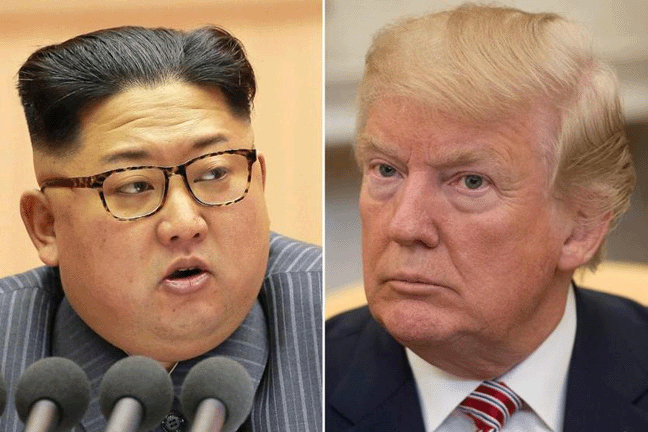
While Kim plays to Trump’s ego, he builds his nuclear arsenal, CNN, By Samantha Vinograd, January 20, 2019 “……..When President Donald Trump met Kim Jong Un in June 2018, they came to a vague agreement that North Korea would work toward the denuclearization of the Korean Peninsula. But, as Vice President Mike Pence stated last week, North Korea has failed to take concrete steps toward giving up its nuclear weapons, and it still represents a serious nuclear threat.
Though Trump has said that he and Kim fell in love, this is looking more like a one-sided love affair. Kim is getting more of what he wants — including serious US concessions, such as suspension of US-South Korean military exercises — but we’re getting little in return. And while Trump is willing to meet again, any briefing he gets ahead of this summit would likely lay out some assessments that he needs to hear before he sees Kim again:
The truth hurts
North Korea probably has greater nuclear capabilities today than it did at the Singapore summit. In 2017, the US estimated North Korea had up to 60 nuclear warheads, and since that assessment we have seen no indication that the Kim regime has frozen its production of nuclear material or weapons. In fact, in his New Year’s speech earlier this month, Kim actually said that he wouldn’t freeze his nuclear program — let alone dismantle it — unless the US lifts its sanctions.
In fairness, Trump did not get Kim to specifically agree to a freeze when they met in Singapore, and Kim has continued his nuclearization apace. Still, this reality poses a continued risk.
US Secretary of State Mike Pompeo said publicly that North Korea continues to produce fissile material — material used to make nuclear weapons — and there are even reports that North Korea is upgrading its nuclear infrastructure and making more sophisticated weapons. Going into a second summit, it is likely that North Korea has a bigger and better nuclear stockpile than it did last June.
This raises real questions about whether Kim actually plans to denuclearize. Even if he does, any denuclearization process will be more difficult because North Korea’s nuclear capabilities continue to grow.
With an increased nuclear threat from North Korea, US negotiators — if they are allowed to do any presidential prep — should emphasize that the concessions we require from Kim before we give him what he wants just got larger, in line with the size of his nuclear program…….
The International Atomic Energy Agency has successfully designed and implemented programs for countries like Libya and South Africa. They’ve more recently been involved in monitoring Iran’s compliance with the 2015 nuclear deal. In short,they are the pros, if North Korea actually lets them do their job.
Ahead of finalizing the details for a second summit, we should require bilateral US-North Korea expert level disarmament talks to hammer out specific agreements we can announce. Another vaguely worded statement will just kick the nuclear can down the road even further, giving Kim even more time to build more nukes.
When Trump said that Kim is looking forward to a meeting again, he was probably right. Kim has good reason to believe that a second summit could get him what he wants, all while he continues to establish himself as a nuclear power on the world stage. Without any real reason to change course, we should expect Kim to keep doing what he does best — playing the President and working on developing more weapons. https://edition.cnn.com/2019/01/20/opinions/presidential-weekly-briefing-trump-kim-summit-vinograd/index.html
Melting glaciers spell trouble for millions in Asia, SMH, By Henry Fountain,19 January 2019On a summer day in the mountains high above Almaty, Kazakhstan’s largest city, the Tuyuksu glacier is melting like mad. Rivulets of water stream down the glacier’s thin leading edge.
In Central Asia, a warming climate is shrinking many glaciers. The Tuyuksu is losing ice every year. Around the world, vanishing glaciers will mean less water for people and crops in the future. Here, the people need to prepare sooner.
As she has for nearly two decades, Maria Shahgedanova, a glaciologist at the University of Reading in England, has come here to check on the Tuyuksu. As one of the longest-studied glaciers anywhere, the Tuyuksu helps gauge the effect of climate change on the world’s ice.
Glaciers represent the snows of centuries, compressed over time into slowly flowing rivers of ice, up to about 300 metres thick here in the Tien Shan range of Central Asia and even thicker elsewhere. They are never static, accumulating snow in winter and losing ice to melting in summer.
But in a warming climate melting outstrips accumulation, resulting in a net loss of ice. That is what is happening in Kazakhstan and all over the globe.
The world’s roughly 150,000 glaciers, not including the large ice sheets of Greenland and Antarctica, cover about 500,000 square kilometres of the Earth’s surface. During the last four decades they have lost the equivalent of a layer of ice 20 metres thick.
Most are getting shorter, too. Small ones in places like the Rockies and Andes have disappeared. And researchers say that even if greenhouse gas emissions were sharply curtailed immediately, there has already been enough warming to continue shrinking glaciers around the world.
This great global melting contributes to sea level rise. It affects production of hydroelectricity. It leads to disasters like rapid, catastrophic floods and debris flows. It alters rivers and ecosystems, affecting the organisms that inhabit them.
But here in the Tien Shan, the biggest effect may be on the supply of water for people and agriculture. ……..The researchers analyse samples from streams to determine the mix of water sources, which is important for forecasting how the rivers will fare over time. A melting glacier can at first increase stream flow, but eventually the glacier reaches a tipping point, called peak flow, and meltwater begins to taper.
“At some point they cannot produce the water they are providing right now,” said Matthias Huss, a researcher at the Swiss Federal Institute of Technology in Zurich. “It’s really important for water managers to know when this tipping point is reached.”
Glaciers elsewhere in Central Asia – in China to the east, and Kyrgyzstan and Tajikistan to the south – will eventually decline as well. But the biggest effect will be further south, where countless glaciers feed the great river basins of Asia.
North American glaciers melting much faster than 10 years ago – study
Satellite images show glaciers in US and Canada, excluding Alaska, are shrinking four times faster than in previous decade , Guardian, Emily Holden in Washington, Sat 19 Jan 2019
Glaciers in western North America, excluding Alaska, are melting four times faster than in the previous decade, with changes in the jet stream exacerbating the longer-term effects of climate change, according to a new study.
The retreat hasn’t been equal in the US and Canada. The famous alpine ice masses in the Cascade Mountains in the north-west US have largely been spared from the trend.
“The losses we would expect were reduced because we got a lot of additional snow,” said David Shean, a co-author at the University of Washington. “Moving forward we may not be so lucky.” The jet stream – the currents of fast-flowing air in the atmosphere that affect weather – has shifted, causing more snow in the north-western US and less in south-western Canada, according to the study released in Geophysical Research Letters, a publication of the American Geophysical Union. Changes in the northern hemisphere jet stream are increasingly firmly linked to global warming.
That warming from humans burning fossil fuels is also expected to continue to melt alpine glaciers, even under scenarios for more moderate greenhouse gas levels.
While some of the fourfold increase in the melting rate in western North America is related to manmade climate change, the researchers can’t say with certainty how much.
“We’re starting to understand these shorter cycles that have real impacts on how the glaciers are behaving and how much water is stored in the glaciers,” Shean explained.
Alaskan glaciers get much of the attention in North America because Alaska is warming faster than the continental US. Mount Hunter in Denali national park, is seeing 60 times more snow melt than it did 150 years ago.
How Direct Democracy Went Nuclear in Taiwan, A contentious vote on Taiwan’s nuclear future showed how the country’s public referendums went haywire. The Diplomat , By Nick Aspinwall, January 18, 2019 It only took one month for Huang Shih-hsiu, a 31-year-old nuclear energy advocate, to upend a core energy policy of Taiwan President Tsai Ing-wen. The policy, prior to its downfall, stated that Taiwan would decommission its three active nuclear power plants by 2025.
It makes for an entangled web of policy which, ideally, a direct democracy would sort out through a patient and measured process of public debate, consultation with experts, and consensus-building to avoid polarization and finger-pointing. Everyone does seem to agree on one thing, however: This did not happen in Taiwan.
Will the World Learn From Taiwan?
Matt Qvortrup, a professor of political science at Coventry University and leading referendum expert, has watched referendums surge in popularity throughout Europe and, gradually, to corners of the world like Taiwan, whose large-scale plebiscites provided lessons for global democracies in what, or what not, to do.
Qvortrup is a believer in referendums, but with conditions. “Democracy is discussion and deliberation,” he says, and that does not happen when voters are rushed to the polls. “To have meaningful democracy,” he says, “you need to have time to debate things.” Taiwan’s CEC-sanctioned TV debates were held in a cramped three-week window – five public forums each for 10 referendum questions.
He noted that debate on the high-interest issue of same-sex marriage dominated much of Taiwan’s already congested pre-referendum discourse, drowning out interest in the intricacies of energy policy. “That’s bad, because people will be voting on things they haven’t had the opportunity to talk about,” Qvortrup says.
Chao of RSPRC agrees, saying there was far from enough time for voters to have an informed debate. Shortly after the referendum, his center published a study showing that voters were not informed on nuclear power – most were unaware of the details of Tsai’s phaseout proposal, and 44 percent believed nuclear power provides most of the island’s energy. (It produces just over 8 percent, far behind coal-fired power.)
“For democracy to work, it has to be limited to relatively few issues,” says Qvortrup. “If you have too many issues on the ballot, people just get saturated. They turn off, they can’t be bothered. You need to save up your civic reserves.”
Taiwan’s nuclear power plebiscite was not even the only energy-related measure on the ballot: Two separate measures, both successful, called for Taiwan to reduce thermal power and stop expansion of coal-fired power plants. A measure to maintain Taiwan’s ban on food imports from the Fukushima disaster area also passed, angering Japan.
The team at Cofacts, a collaborative social media fact-checking platform that monitored online discussion leading up to the referendums, says it observed a combination of disinformation and voter apathy ahead of the energy plebiscites. “In comparison to other issues, nuclear power was one of the less popular topics,” writes Rosalind, a Cofacts editor, in an open response to questions from The Diplomat. “Even when people talked about it, they were actually talking about air pollution, reducing thermal power generation plants, new alternative energy, and polluted foods.” This did not allow voters to consider the nuances of the issues, such as whether Taiwan does in fact face a looming electricity shortage, says Rosalind.
“The people wanted to be on the ‘winning’ side of these yes/no questions, even though most of them did not know the referendum topics until the day of the election,” says Cofacts founder Johnson Liang. He notes that online discussion on nuclear power paled in comparison to talk of the same-sex marriage referendums. “There were way too many topics to vote [on] within a timespan that is too short, and they did not have time to follow the television debates.”
It takes a resonant message to cut through an overload of information and mangled discourse, and Huang Shih-hsiu had one: Nuclear Mythbusters ran with the slogan “Nuclear energy is green energy,” sizing it up against a future coal-fired dystopia and dismissing the present-day viability of affordable renewables, all while cutting through the opposing stance that nuclear power is an environmental crisis waiting to happen.
This approach has always been effective, but it’s especially potent in the digital age, says Dion Curry, senior lecturer of public policy at Swansea University. Public figures with “little political power, but immense media power” – he cites Brexit’s Nigel Farage as an example – can strategically reach voters through targeted Facebook ads and participation in social media “echo chambers,” he says………. https://thediplomat.com/2019/01/how-direct-democracy-went-nuclear-in-taiwan/
Plans to sell nuclear plants overseas derailed, Japan Times, 20 Jan 19,With the decision by Hitachi Ltd. to “freeze” its plan to build two nuclear power reactors in the United Kingdom, all of the overseas nuclear power plant projects pursued by Japanese firms — with the backing of the government seeking to promote export of nuclear power technology as a key pillar of its efforts to boost infrastructure sales in overseas markets — have now effectively been derailed.
……… Prime Minister Shinzo Abe has long taken the initiative to promote the overseas sale of Japanese nuclear power plants through top-level diplomacy. However, the nuclear power plant business cannot be a part of the nation’s growth strategy if its business feasibility is in doubt. The government and related industries need to face up to the situation surrounding the nuclear power business — which continues to face difficulties domestically as well — and reassess the way forward.
The Fukushima nuclear disaster, triggered by the March 2011 Great East Japan Earthquake and tsunami, has radically changed the global nuclear power market landscape. The cost of nuclear power, which had been promoted as a relatively inexpensive and “clean” source of energy that does not emit carbon dioxide, spiked as additional safety investments inflated plant expenses.
The cost of Hitachi’s project to build the two reactors in Anglesey, Wales, which began in 2012, has ballooned from the initial estimate of ¥2 trillion to ¥3 trillion. Another project pursued by Mitsubishi Heavy Industries Ltd. to build four reactors in Turkey has also been hampered by the swelling cost — which reportedly shot up from an initially estimated ¥2.1 trillion to ¥5 trillion. Toshiba Corp. has pulled out from the overseas nuclear power business after the huge losses incurred by its subsidiary Westinghouse Electric Co. in its nuclear power plant projects in the United States.
Even with a spike in plant construction costs, the nuclear power business would make economic sense if the expected earnings surpass the investments. But Hitachi reportedly decided to halt the U.K. project after it became clear that even with public support from the British government it could not possibly realize profits………
Behind the government’s drive to promote the sale of nuclear power plants overseas has been the domestic market’s bleak business prospects. While the government and the power industry have pushed for restarting the nation’s nuclear power plants idled in the wake of the Fukushima disaster, once they have cleared the tightened plant safety standards, only nine reactors at five plants have been put back online. The additional costs of safety investments required under the new Nuclear Regulation Authority standards to make the plants more resilient to natural disasters such as earthquakes and tsunami — estimated to range from ¥100 billion to ¥200 billion for each reactor — have prompted power companies to decide to decommission 23 aging reactors so far (including the six at Tepco’s Fukushima No. 1 plant).
As popular opposition in Japan remains strong against reactivating the idled plants, there is no prospect that the construction of new plants will be approved in the foreseeable future. The drive to promote the export of nuclear power plants may have been intended to make up for the loss of demand in the domestic market. But earlier plans for Japanese makers to build plants in Lithuania and Vietnam were canceled, while a civil nuclear cooperation pact signed with India in 2016 — which was aimed at paving the way for Japanese nuclear plant exports to the country — has not resulted in any deal. Along with Hitachi’s decision to halt the U.K. project, Mitsubishi Heavy Industries is reportedly set to abandon its plan in Turkey.
Even without construction of new plants, there will be demand for maintaining Japan’s existing nuclear power plants, and for decommissioning its aging plants. What to do with the spent nuclear fuel and the high-level radioactive wastes from the plants will also be among the challenges that confront Japan’s nuclear power business. There will be plenty of work for the industry, and it will be crucial to develop and maintain the technology and manpower to deal with the tasks. https://www.japantimes.co.jp/opinion/2019/01/20/editorials/plans-sell-nuclear-plants-overseas-derailed/#.XETUVtIzbGg
Major Problems at Hanford Nuclear Waste Site – King 5 Reports
by Anna KingFollow and John Notarianni Follow OPB Jan. 18, 2019 A new proposal from the Trump administration could dramatically change the way the government cleans up radioactive tank waste at the Hanford Nuclear Reservation in Washington.
In fall 2018, the Department of Energy released a proposal to downgrade the rating of some of the country’s high-level radioactive waste to a lower status. But critics say it could be bad news for places like Hanford.
The Hanford site in Washington is already “one of the most contaminated nuclear waste sites in North America,” according to the U.S. Government Accountability Office. Cleaning up the radioactive waste stored there is an ongoing process, and a federal report due out later this month estimates it will cost more than $240 billion to clean up the site.
Reporter Anna King covers Hanford and spoke to OPB “Weekend Edition” host John Notarianni about what’s at stake for waste reclassification.
John Notarianni:How much of the nuclear waste at Hanford could be subject to this reclassification?
Anna King: Congress is asking the U.S. Department of Energy things like, “What are you talking about? How much will this new plan save? And how much radioactive and chemical waste will be left at Hanford?” But so far, there have been few answers from the DOE.
Most at stake is 56 million gallons of radioactive sludge stored in aging underground tanks, not far from the Columbia River.
What’s at stake in this conversation is a proposed shift of some radioactive waste from high-level to low-level classification. What’s the difference?
The main difference between high-level and low-level radioactive waste is currently defined by the Nuclear Waste Policy Act. High-level waste is so hazardous that federal law requires it to be stored in a deep geologic repository, a la Yucca Mountain in Nevada.
That’s because it contains highly radioactive material. But that Yucca project has been on hold since the beginning of the Obama administration. Low-level waste could be buried at Hanford in shallow or near-surface disposal facilities under both DOE and NRC regulations.
Some of the tank waste will likely be classified TRU waste — or transuranic — which means it contains extremely long-lived radionuclides, and the Nuclear Waste Policy Act requires that waste to also be stored in a deep geologic repository. And that waste would have to be taken down to New Mexico to the Waste Isolation Pilot Plant, or WIPP — the only place that will take transuranic waste.
State officials and other Hanford watchdogs say they have several major concerns: There’s 56 million gallons of tank waste held in aging underground steel and concrete containers not far from the Columbia River.
Since 2002, the latest plan has been to build a massive plant to treat that waste. The idea is to bind it up in glass logs for long-term storage in a Yucca-type repository.
Sources say that if this was no longer the plan, and the waste was reclassified, that tank waste could be instead made into large blocks of grout and stored at Hanford, or hauled to another state or location and stored in a near-surface waste dump………..https://www.opb.org/news/article/hanford-nuclear-waste-federal-cleanup-plans/
Let’s talk about nuclear security — informally, SF Chronicle, By James Goodby and Kenneth Weisbrode Jan. 19, 2019
With the high-profile conclusion of Robert Mueller’s investigation, a U.S. threat to withdraw from a nuclear missile treaty, a worsening political situation in Ukraine, an ongoing conflict in Syria, not to mention recent reports that the FBI began a counterintelligence investigation of President Trump — the citizens of Russia and the United States should worry that their countries are soon reaching a point of no return.
Diplomats will say that few such points exist, and that professionals can and will continue to keep the channels of dialogue open. What’s missing here is not the capacity to talk but a political consensus on both sides to reaffirm why both countries still need to cooperate and how to go about finding it.
Mikhail Gorbachev and George P. Shultz recently called for a “broad strategic dialogue” among Americans and Russians to pull our nations out of their trough, or at least to look beyond it. Gorbachev and Shultz propose an “informal forum,” and that makes sense. The U.S.-Russia Bilateral Presidential Commission, nuclear arms control talks, and other formal arrangements appear to be stalled. The establishment of dialogue at a higher level — similar to efforts in the 1990s to encourage mutual investments and business opportunities — would probably be a nonstarter. What would an informal forum look like?………. https://www.sfchronicle.com/opinion/openforum/article/Let-s-talk-about-nuclear-security-informally-13547680.php
Why There Are No Nuclear Airplanes Strategists considered sacrificing older pilots to patrol the skies in flying reactors. An Object Lesson. The Atlantic, 20 Jan 19 CHRISTIAN RUHL
“……….. Why don’t airplanes run on nuclear power?
The reasons are many. Making a nuclear reactor flightworthy is difficult. Shielding it from spewing dangerous radiation into the bodies of its crew might be impossible. During the Cold War, when the threat of nuclear apocalypse led to surprisingly pragmatic plans, engineers proposed to solve the problem by hiring elderly Air Force crews to pilot the hypothetical nuclear planes, because they would die before radiation exposure gave them fatal cancers.
The Italian American physicist Enrico Fermi had introduced the idea of nuclear flight as early as 1942, while serving on the Manhattan Project to build the atomic bomb. As World War II drew to a close, the United States began work to realize Fermi’s dream of nuclear-powered flight. From 1946 until 1961, vast teams of engineers, strategists, and administrators toiled in a whirl of blueprints, white papers, and green bills in an attempt to get the idea off the ground.
The advantages of nuclear-powered airplanes mirrored those of nuclear submarines. Nuclear submarines did not need to surface for fuel, and nuclear airplanes would not need to land. A 1945 proposal at the Department of War (now the Department of Defense) promised, “With nuclear propulsion, supersonic flight around the world becomes an immediate possibility.” A secret Atomic Energy Commission memorandum now held in the Eisenhower Presidential Library explained the promise of nuclear flight in a more measured tone. Nuclear energy “should make possible ranges of one or more times around the world with a single loading of the reactor.” The idea of a nuclear-powered bomber became a strategic dream for the military; it could stay aloft for days to cover any number of targets throughout the world, before returning to the United States without refueling………
nuclear power came with its own problems. The reactor would have to be small enough to fit onto an aircraft, which meant it would release far more heat than a standard one. The heat could risk melting the reactor—and the plane along with it, sending a radioactive hunk of liquid metal careening toward Earth.
The problem of shielding pilots from the reactor’s radiation proved even more difficult. What good would a plane be that killed its own pilots?
To protect the crew from radioactivity, the reactor needed thick and heavy layers of shielding. But to take off, the plane needed to be as light as possible. Adequate shielding seemed incompatible with flight.
Still, engineers theorized that the weight saved from needing no fuel might be enough to offset the reactor and its shielding. The United States spent 16 years tinkering with the idea, to no avail. The Soviet Union pursued nuclear aircraft propulsion too, running up against the same problems.
……The nuclear airplane became redundant from a military point of view, as ICBMs avoided the problems of manned nuclear flight.
…….In a last-ditch effort to keep the nuclear airplane on the table, military strategists considered a radical solution: They could use pilots closer to death. The Air Force would use crews old enough to die of natural causes before the harmful effects of radiation could show up and thus, the logic went, sidestep the shielding problem. As the nuclear-policy expert Leonard Weiss explained in an article for the Bulletin of the Atomic Scientists, the proposal would have made radiation shielding unnecessary and decreased the weight of the plane significantly. It might have let the nuclear airplane take flight.
………Even that shocking proposal failed to save the nuclear airplane. The Eisenhower administration concluded that the program was unnecessary, dangerous, and too expensive. On March 28, 1961, the newly inaugurated President John F. Kennedy canceled the program. Proposals for nuclear-powered airplanes have popped up since then, but the fear of radiation and the lack of funding have kept all such ideas down……….https://www.theatlantic.com/technology/archive/2019/01/elderly-pilots-who-could-have-flown-nuclear-airplanes/580780/
Tell Congress: Prevent Nuclear Catastrophe in Iran
Read the Public Inquiry Report, the Commissioners’ report, Surrendering Australia: The AUKUS Deception is available to download for free at aukuspublicinquiry.com. Or just watch the replay of the National Press Club Luncheon.