The very dubious “market” for Small Modular Nuclear Reactors
What has not been tested is whether there would ever be enough orders for any one sort of small modular reactor to justify setting up a factory to produce dozens of them. This is the only way to get the unit cost down sufficiently to compete with renewables, which are continuing to get cheaper and already dominate the market.

|
Off-the-shelf nuclear reactors seek buyers, Climate NewsNetwork March 5th, 2019, by Paul Brown The nuclear industry’s fierce fight for survival is leading several countries to develop smaller, off-the-shelf nuclear reactors.
|
|
South Korean President Moon Jae-in praised North Korea’s offer to dismantle a key nuclear production complex

 Moon Lauds North Korea’s Nuclear Offer, Splitting With Trump, Bloomberg, By Youkyung Lee, March 4, 2019,
- He says a ‘partial’ sanctions lift was discussed in Hanoi
- Moon says Trump, Kim should meet soon to reach agreement
South Korean President Moon Jae-in praised North Korea’s offer to dismantle a key nuclear production complex as an “irreversible” step to undercut its weapons program, breaking with the Trump administration.
In a meeting to discuss the summit last week in Hanoi between Donald Trump and Kim Jong Un, Moon on Monday lauded North Korea’s offer to dismantle the Yongbyon nuclear complex. He also called for pushing ahead with inter-Korean projects currently hindered by sanctions and said the two sides discussed the “partial” lifting of sanctions — backing North Korea’s version of events…….
Moon has endeavored to serve as a bridge between Trump and Kim, and has staked political capital on bringing peace to the divided peninsula. ….
Beyond Nuclear challenges license extension for Peach Bottom nuclear plant
Activists challenge license extension for Peach Bottom nuclear plant, An anti-nuclear watchdog aims to challenge Exelon Generation’s bid to extend the operating license at its Peach Bottom Atomic Power Station through 2054.
The group’s request for a hearing will not be approved unless the U.S. Atomic Safety and Licensing Board deems its arguments admissible at a preliminary hearing March 27.
Exelon’s application to extend its 60-year operating license an additional 20 years is among the first in the country, according to Nuclear Regulatory Commission spokesman Neil Sheehan.
The anti-nuclear group Beyond Nuclear contends that Exelon did not meet NRC standards for renewal because it did not provide evidence of studying its aging equipment.
“Exelon could be gathering evidence from closed stations to harvest materials to look at things like how weld material has fared under 49 years of similar operation,” said Paul Gunter, director of the reactor oversight project at Beyond Nuclear.
If approved, Exelon’s proposal could extend the life of Peach Bottom’s Unit 3 through 2053 and Unit 4 through 2054.
The proposed extension at Peach Bottom comes as Exelon bids for support in the General Assembly for legislation that would benefit its nuclear facilities in Pennsylvania, including Dauphin County facility Three Mile Island, which the firm has said it will close without state support.
Opponents of the legislation — which has yet to roll out in Harrisburg — have already labeled it a “bailout.”
It’s unknown how aging equipment at Peach Bottom would fare with such a long service life, Gunter said.
Most nuclear plants in the U.S. have received initial renewals extending their licenses from 40 to 60 years, said Sheehan, but a request for a second renewal is rare.
Only three plants — including Peach Bottom — are seeking their second license extension, this time from 60 years to 80. …… The group is looking for Exelon’s application to demonstrate it has “sufficient” knowledge — not just a little — on the issues that could affect aging equipment.
Exelon’s decommissioned Oyster Creek plant has the same boiling-water reactor as Peach Bottom, so there are opportunities to do extensive destructive analysis on larger equipment that wouldn’t be possible at Peach Bottom, Gunter said.
“A little bit of knowledge can be dangerous, particularly when talking about an inherently dangerous technology,” Gunter said…….ttps://www.yorkdispatch.com/story/news/2019/03/05/activists-challenge-license-extension-peach-bottom-nuclear-plant/3060252002/
Atlanta Adopts Plan To Get Off Fossil Fuels And Nuclear By 2035
https://www.wabe.org/atlanta-adopts-plan-to-get-off-fossil-fuels-and-nuclear-by-2035/
The goal is to have Atlanta use renewable energy, like wind and solar, and move away from power sources like coal, natural gas and nuclear.
In the plan approved by City Council, both the city of Atlanta and all residences and businesses in it would achieve that goal by 2035. That’s a change from the original proposal that set a deadline of 2025 for city operations, and 2035 for everything and everyone else.
The City Council had already voted unanimously to transition to what it calls clean energy, but Monday’s vote officially adopts the plan laying out how to do, and modifies those earlier dates. The resolution emphasizes finding ways to save energy and to make sure the switch is affordable.
Russia ready to enter deal to build nuclear power plant in Czech Republic
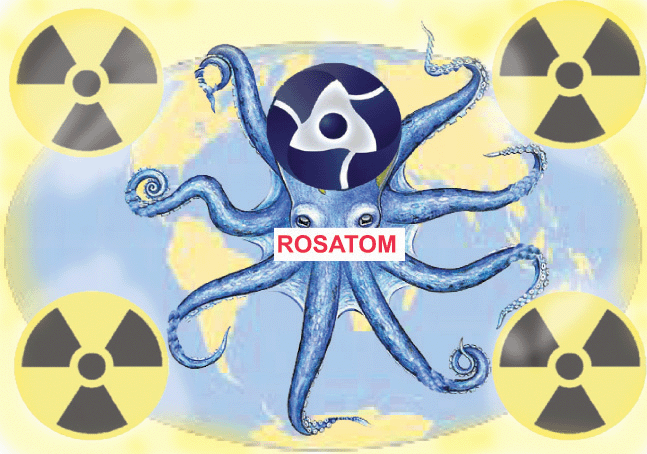 CZECH-RUSSIAN TALKS INCLUDED DISCUSSIONS ON CONSTRUCTION OF NEW NUCLEAR POWER BLOCK, https://www.radio.cz/en/section/news/czech-russian-talks-included-discussions-on-construction-of-new-nuclear-power-block Tom McEnchroe, 06-03-2019
His Czech counterpart Marta Nováková (ANO) said one tender conditions would be that the third nuclear power source remain fully under the administration of the Czech Republic once finished.
The intergovernmental commission also discussed mutual cooperation in supporting small- and medium-sized businesses, mutual exports into third-countries and cooperation within the aircraft industry.
Claim that SCANA executives deliberately lied to investors about the future of a doomed nuclear construction project

 Lawyer: Ex-SCANA officials ‘whitewashed,’ lied about defects at failed nuclear plant COLUMBIA — SCANA executives deliberately lied to investors about the future of a doomed nuclear construction project, a lawyer representing former SCANA shareholders argued in court Monday.
“The bottom line is they (SCANA executives) lied to everyone, and they did it intentionally,” attorney John Browne told U.S. Judge Margaret Seymour.
The cost was tremendous, said Brown, whose lawsuit argues shareholders lost some $2.7 billion in stock value when the company’s stock price plummeted.
Seymour has a crucial decision to make about Browne’s lawsuit that alleges SCANA executives committed civil fraud that deflated investors’ stock valuations. She will decide whether to allow Browne’s lawsuit to go forward or dismiss it. She gave no hint Monday on how she might rule, or when.
Watching the proceedings Monday at the federal courthouse in Columbia were several attorneys from the U.S. Attorney’s office, which is working with the FBI to investigate criminal fraud allegations against SCANA and some of its former executives……….
During the hearing, Browne referred repeatedly to a document known as the Bechtel Report, which SCANA commissioned in 2015 to evaluate progress on the V.C. Summer nuclear plant under construction.
The Bechtel report, a draft of which was presented to SCANA the fall of 2015, detailed substantial cost overruns, construction delays and shoddy work at the nuclear plant site. But the report was never publicly released or discussed.
The company, which was publicly traded on the New York Stock Exchange, hid its findings from investors, the press and the public, Browne said. …….. https://www.greenvilleonline.com/story/news/2019/03/05/lawyer-says-former-scana-officials-lied-failed-south-carolina-nuclear-plant/3065200002/
The future of Britain’s Hinkley C nuclear project is in doubt
 Bridgwater Mercury 5th March 2019 Roy Pumfrey, Cannington resident and Stop Hinkley spokesman has a number of
concerns about the new EDF Sedgemoor Campus off Bath Road.
working at Hinkley simply won’t have been able to afford.
see is the power station and an enormous radioactive waste store, twice the size of what EDF originally proposed. All the temporary structures – the jetty, two hostel sites, park and rides, office blocks, freight lay-downs etc etc – have to be removed. EDF has already said its fantasy is to spirit the Bath Road units away to its improbable development at Sizewell.
As for the sites, acres of tumbleweed are all we have to look forward to.
https://www.bridgwatermercury.co.uk/news/17478105.letter-what-will-become-of-barcode-city/
IAEA calls for more funding for its safeguards activities
(IAEA), has called on its Member States to provide additional funding for
the Agency’s safeguards activities, such as those to verify the nuclear
programmes in Iran and North Korea.
http://www.world-nuclear-news.org/Articles/Amano-calls-for-funding-for-IAEA-safeguards-activi
Many infringements found in Orano’s (formerly Areva) uclear site at Tricastin, France
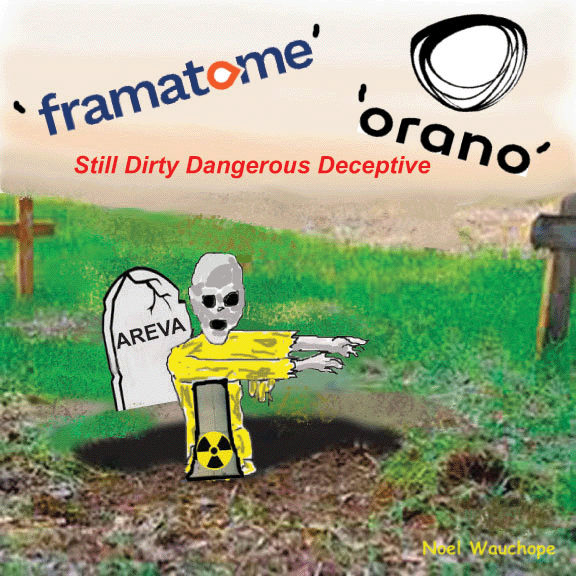 Sortir du Nucleaire 5th March 2019 , As part of ASN’s duties concerning the control of basic nuclear
installations (BNIs), an unannounced inspection was carried out on 6 March
2018 on the W and TU5 installations (BNI No. 155), operated by Orano Cycle
on the nuclear site Tricastin, on the theme “waste management”. As this
inspection revealed numerous infringements, the “Quit Nuclear” Network
filed a direct summons against Orano.
https://www.sortirdunucleaire.org/Tricastin-dechets-Orano
Mining company Glencore’s global campaign to prop up coal, discredit climate change theory
Revealed: Glencore bankrolled covert campaign to prop up coal , Guardian, Christopher Knaus@knausc, 7 Mar 2019
The mining company engaged Sir Lynton Crosby’s firm to push anti-renewables message and counter anti-coal activists The multinational mining giant Glencore spent millions bankrolling a secret, globally coordinated campaign to prop up coal demand by undermining environmental activists, influencing politicians and spreading sophisticated pro-coal messaging on social media.
An investigation by Guardian Australia can reveal the covert campaign, dubbed “Project Caesar”, was orchestrated by world-renowned political operatives at the C|T Group, the firm founded by Sir Lynton Crosby and Mark Textor.
The C|T Group used teams in Sydney and London to further Glencore’s interests across the globe, including in Australia, according to multiple sources with knowledge of the project and documents seen by Guardian Australia. …… https://www.theguardian.com/business/2019/mar/07/revealed-glencore-bankrolled-covert-campaign-to-prop-up-coal
Russia keen to have Bulgaria go into debt to Russia, to implement Belne nuclear station
 Russia Ready To Take Part in Bulgaria’s Belene Nuclear Power Plant, Medvedev Says, Moscow Times
U.S, Navy accelerates production of attack submarines
Meet America’s Secret Weapon To Kill China’s ‘Underwater’ Nuclear Weapons
The Navy just ordered 19 more sub-hunting Poseidon Aircraft – Could they stop Chinese SSBNs?
(Washington, D.C. ) 6 Mar 19 “…….The increasing global reach of Chinese nuclear-armed ballistic missile submarines, armed with JL-2 weapons reportedly able to hit parts of the US, continues to inspire an ongoing Navy effort to accelerate production of attack submarines, prepare long-dwell drones for deployment to the Pacific and continue acquisition of torpedo-armed sub-hunting planes such as the P-8/A Poseidon.
Seeking to overcome the Pacific’s “tyranny of distance” dispersed geography, and track China’s expanding fleet of submarines, the Navy is working with Congress to produce as many as three Virginia-class submarines per year, moving beyond the current plan to build two. In the air, the Navy has been moving to place its new Triton sea drones in Guam and has recently awarded Boeing a $2.4 billion deal to produce 19 more P-8A Poseidon surveillance and attack planes………. https://nationalinterest.org/blog/buzz/meet-americas-secret-weapon-kill-chinas-underwater-nuclear-weapons-46247
Nightmarishly high radiation levels -robots the only chance to deal with Fukushima reactors’ molten fuel
For Fukushima’s nuclear disaster, robots may be the only hope, The 2011 meltdown in Japan is still too hot for humans to handle. Send in the machines. CNet BY ROGER CHENG, MARCH 4, 2019 ………. I’m inside the cavernous top of the Unit 3 reactor in the Fukushima Daiichi Nuclear Power Plant. Yes, that Fukushima Daiichi, site of the world’s worst nuclear disaster.
Unit 3 was one of three reactors crippled on March 11, 2011, after a 9.0 earthquake struck 80 miles off the coast of Japan. (Units 4, 5 and 6 at Daiichi weren’t operating at the time.) The temblor shook so violently it shifted the Earth’s axis by nearly 4 inches and moved the coast of Japan by 8 feet. Eleven reactors at four nuclear power plants throughout the region were operating at the time. All shut down automatically. All reported no significant damage.
An hour later, the tsunami reached shore.
Two 50-foot-high waves barreled straight at Fukushima Daiichi, washing over coastal seawalls and disabling the diesel generators powering the plant’s seawater cooling systems. Temperatures inside the reactors skyrocketed to as high as 5,000 degrees Fahrenheit.
Fuel rods became molten puddles of uranium that chewed through the floors below, leaving a radioactive cocktail of fuel rods, concrete, steel and melted debris. Molten fuel ultimately sank into the three reactors’ primary containment vessels, designed to catch and secure contaminated material.
Next Monday marks the eighth anniversary of the earthquake. Since then, Japanese energy giant Tokyo Electric Power Company, or Tepco, has cleared enough of the rubble on the top floor of the Unit 3 building to allow for my 10-minute visit.
I gaze up at the massive barrel vault ceiling, trying to get a handle on the sheer scale of everything. Radiation levels are too high for me to linger. My quickening pace and breath are betrayed by rapid flapping noises coming from the purple filters on both sides of my respirator mask.
At the far end of the room, there’s an enormous orange platform known as a fuel-handling machine. It has four giant metal legs that taper down, giving the structure a sort of animalistic look. Thin steel cables suspend a chrome robot in the center of the frame. The robot, largely obscured by a pink plastic wrapper, is equipped with so-called manipulators that can cut rubble and grab fuel rods. The robot will eventually pull radioactive wreckage out of a 39-foot-deep pool in the center of the room.
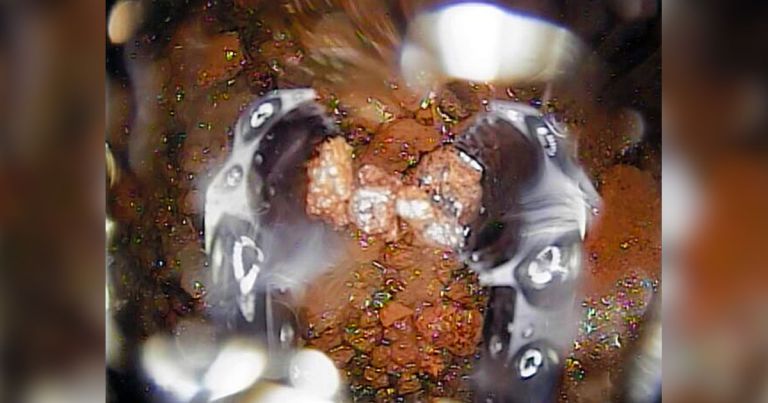
It’s just one of the many robots Tepco is using to clean up the power plant. It’s why I came to Japan this past November — to see how robots are working in one of the most extreme situations imaginable.
The Japanese government estimates it will cost $75.7 billion and take 40 years to fully decommission and tear down the facility. The Japan Atomic Energy Agency even built a research center nearby to mock up conditions inside the power plant, allowing experts from around the country to try out new robot designs for clearing away the wreckage.
The hope is that the research facility — along with a drone-testing field an hour away — can clean up Daiichi and revitalize Fukushima Prefecture, once known for everything from seafood to sake. The effort will take so long that Tepco and government organizations are grooming the next generation of robotics experts to finish the job. …….
Two years ago, Tepco erected a dome over the Unit 3 reactor and fuel pool so that engineers could bring in heavy equipment and now, us.
Roughly 60 feet below me, radiation is being emitted at 1 sievert per hour. A single dose at that level is enough to cause radiation sickness such as nausea, vomiting and hemorrhaging. One dose of 5 sieverts an hour would kill about half of those exposed to it within a month, while exposure to 10 sieverts in an hour would be fatal within weeks.
Unit 3 is the least contaminated of the three destroyed reactors.
 Radiation in Unit 1 has been measured at 4.1 to 9.7 sieverts per hour. And two years ago, a reading taken at the deepest level of Unit 2 was an “unimaginable” 530 sieverts, according to The Guardian. Readings elsewhere in Unit 2 are typically closer to 70 sieverts an hour, still making it the hottest of Daiichi’s hotspots.
The reactors’ hostile environments brought most of the early robots to their figurative knees: High gamma radiation levels scrambled the electrons within the semiconductors serving as the robots’ brains — ruling out machines that are too sophisticated. Autonomous robots would either shut down or get snared by misshapen obstacles in unexpected places.
The robots also had to be nimble enough to avoid disturbing the volatile melted fuel rods, essentially playing the world’s deadliest game of “Operation.” At least initially, they weren’t. “Fukushima was a humbling moment,” says Rian Whitton, an analyst at ABI Research. “It showed the limits of robot technologies.”………….. https://www.cnet.com/news/for-fukushimas-nuclear-disaster-robots-may-be-the-only-hope/
North Korea’s major nuclear reactor has been shut down for months
Key North Korean nuclear reactor has been shut down for months: IAEA, Channel News Asia, 4 Mar 19, VIENNA: The nuclear reactor that is believed to have supplied much of the plutonium for North Korea’s nuclear weapons appears to have been shut down for the past three months, the UN atomic watchdog said on Monday (Mar 4), without suggesting why.The 5-megawatt reactor is part of North Korea’s Yongbyon nuclear complex, the possible dismantling of which was a central issue in talks between US President Donald Trump and North Korean leader Kim Jong Un in Vietnam last week.
The Vienna-based International Atomic Energy Agency has not had access to North Korea since Pyongyang expelled its inspectors in 2009, and it now monitors the country’s nuclear activities mainly through satellite imagery.
Some independent analysts, who are also using satellite imagery, believe the ageing reactor is having technical problems.
“The agency has not observed any indications of the operation of the 5MW(e) reactor since early December 2018,” IAEA Director-General Yukiya Amano said in a closed-door speech to his agency’s Board of Governors, which is meeting this week.
At the radiochemical laboratory that separates plutonium from the reactor’s spent fuel, there were no indications of such reprocessing activities, Amano added.
But a facility widely believed to be used for uranium enrichment, a process that can also produce weapons-grade material for nuclear bombs, appeared to be running, he said. And building work continued on an experimental light-water reactor.
The IAEA has repeatedly said it is ready to play a verification role in North Korea once a political agreement is reached on the country’s nuclear activities.
The United States says it wants a full “denuclearisation” of North Korea, but the Trump-Kim summit’s abrupt ending without agreement left the future of their talks uncertain ………. https://www.channelnewsasia.com/news/asia/key-north-korean-nuclear-reactor-has-been-shut-down-for-months–iaea-11310906
International Atomic Energy Agency chief again confirms that Iran is keeping to the nuclear deal

 Head of UN nuclear agency: Iran keeping to nuclear deal, https://www.foxnews.com/world/head-of-un-nuclear-agency-iran-keeping-to-nuclear-deal4 Mar 19, BERLIN – The head of the U.N. nuclear watchdog says Iran is complying with the 2015 deal with major world powers aimed at preventing the country from building nuclear weapons.
Yukiya Amano made his assessment in a regular update to the International Atomic Energy Agency’s board of governors, confirming a confidential report distributed to member states last month.
He said Monday that “Iran is implementing its nuclear-related commitments under the Joint Comprehensive Plan of Action,” referencing the official name of the 2015 deal.
The U.S. unilaterally withdrew from the deal last year and re-imposed sanctions.
The other signatories — Germany, France, Britain, Russia and China — are trying to keep alive the deal, which offered Iran economic incentives.
1 This Month
Tell Congress: Prevent Nuclear Catastrophe in Iran

Tell Congress: Prevent Nuclear Catastrophe in Iran

Read the Public Inquiry Report, the Commissioners’ report, Surrendering Australia: The AUKUS Deception is available to download for free at aukuspublicinquiry.com. Or just watch the replay of the National Press Club Luncheon.


Shut down the radiation-damaged Heysham nuclear reactors now
To see nuclear-related stories in greater depth and intensity – go to https://nuclearinformation.wordpress.com

Say No to NASA’s Reckless Nuclear Reactor on the Moon
Say No to NASA’s Reckless Nuclear Reactor on the Moon
-
Archives
- November 2026 (224)
- October 2026 (302)
- September 2026 (339)
- August 2026 (330)
- July 2026 (355)
- June 2026 (287)
- May 2026 (306)
- April 2026 (356)
- March 2026 (251)
- February 2026 (267)
- January 2026 (308)
- December 2025 (358)
-
Categories
- 1
- 1 NUCLEAR ISSUES
- business and costs
- climate change
- culture and arts
- ENERGY
- environment
- health
- history
- indigenous issues
- Legal
- marketing of nuclear
- media
- opposition to nuclear
- PERSONAL STORIES
- politics
- politics international
- Religion and ethics
- safety
- secrets,lies and civil liberties
- spinbuster
- technology
- Uranium
- wastes
- weapons and war
- Women
- 2 WORLD
- ACTION
- AFRICA
- Atrocities
- AUSTRALIA
- Christina's notes
- Christina's themes
- culture and arts
- Events
- Fuk 2022
- Fuk 2023
- Fukushima 2017
- Fukushima 2018
- fukushima 2019
- Fukushima 2020
- Fukushima 2021
- general
- global warming
- Humour (God we need it)
- Nuclear
- RARE EARTHS
- Reference
- resources – print
- Resources -audiovicual
- Weekly Newsletter
- World
- World Nuclear
- YouTube
-
RSS
Entries RSS
Comments RSS

