Britain now needs a Green New Deal
Times 7th March 2019 Britain needs a new economy that works for everyone and to move beyond the
old, broken systems and status quo that left many people behind. A green
new deal for the UK could give us just that. Climate change has muscled its
way back onto the political agenda. It was debated by MPs last week for the
first time in two years.
It seems that the momentum around Alexandria
Ocasio-Cortez and Senator Ed Markey’s green new deal in the US, the
audacious climate march on Westminster by schoolchildren last month and
increasingly rising temperatures may have finally jolted our politicians
out of their climate stupor.
Four months ago, a group of experts on the
Intergovernmental Panel on Climate Change (IPCC) delivered the news that
the world must halve carbon emissions in a little over a decade. Responding
would require an almighty push to green our economy – one that would touch
on every aspect of our lives.
Despite this stark warning from scientists,
the political establishment in Westminster barely flinched. There was no
commitment to redouble our efforts, no renewed urgency or call to action.
Instead, our politics continued to be consumed by Brexit. But the IPCC
report was a sobering wake-up call for many. A movement of activists in the
US, backed by a new generation of Democrats, including the Justice
Democrats, are reacting with the urgency needed. The green new deal – an
idea that came from organisations including the New Economics Foundation
(NEF) a decade ago – has emerged as a forceful response.
The idea is
simple: an unprecedented mobilisation of resources to achieve 100 per cent
renewable energy and eliminating greenhouse gas emissions within a decade
while creating millions of jobs and lifting living standards.
https://www.thetimes.co.uk/article/0ab3eb08-403c-11e9-aa0a-30b9d78dd63b
UK, Japan scientists study radioactive Fukushima particles

This sounds like a good idea. But – can we really be confident about science done by Atomic Energy Agencies , whose brief is to further develop atomic energy?
OXFORD, England (Reuters) 8 Mar 19, – Eight years after the Fukushima nuclear meltdown in Japan, radioactive particles collected from the site are undergoing new forensic investigation in Britain in an effort to understand the exact sequence of events…….
The Japan Atomic Energy Agency (JAEA) is currently collaborating with British researchers to learn more about the state of the radioactive particles created by the meltdown.
Dr Yukihiko Satou from the JAEA oversaw the transportation of particles collected from within the restricted zone, very close to the disaster site, to Britain.
“The particles were fundamentally extracted from those attached to soil, dust and debris,” Satou told Reuters.
Encased in protective tape, the samples were brought to the Diamond Light Source, Britain’s national synchrotron, or cyclic particle accelerator, near Oxford.
Here electrons are accelerated to near light speeds until they emit light 10 billion times brighter than the sun, then directed into laboratories in ‘beamlines’ which allow scientists to study minute specimens in extreme detail.
…… Understanding the current state of these particles and how they behave in the environment could ultimately determine if and when the area could be declared safe for people to return…… Writing by Matthew Stock,; Editing by Gareth Jones https://www.reuters.com/article/us-japan-disaster-radiation/uk-japan-scientists-study-radioactive-fukushima-particles-idUSKCN1QP1GF

Trump’s endeavour to nuclearise Saudi Arabia is driven by family business interests and tacitly approved by Israel. Aljazeera, by Hamid Dabashi, 8 Mar 2019 Like chronic indigestion that refuses to go away, presidential son-in-law Jared Kushner is back causing much discomfort to the general public.
People of Kashmir – stuck in a dangerous, potentially nuclear, conflict
In Kashmir, we’re stuck in the middle of a potentially nuclear conflict but the world looks away, ABC News, By Umar Lateef Misgar 9 Mar 19, When Adil Dar rammed a car stuffed with explosives into a paramilitary convoy in Indian-administered Kashmir last month, I didn’t make much of the news.
I was travelling across northern India at the time. Having been born and brought up amid a conflict that has defined the life of every young Kashmiri for the past three decades it just seemed more of the same: military cordons, gunfights, curfews, blown-up houses, maiming and the death of our friends and acquaintances.
But the magnitude of this attack by Dar, a 22-year-old Kashmiri, crept up on me through numbers and images. It was the worst attack against Indian forces since the armed insurgency erupted in Kashmir in the late 1980s.
At least 40 Indian paramilitary personnel had been killed, setting off a chain of events that almost brought South Asia to the brink of an all-out nuclear war.
I felt heartbroken by the loss of life that had occurred.
The Indian media instantly began to whip up a frenzy against the Kashmiris, doubling down on efforts to demonise an entire people.
The Indian population’s anger was focused against Kashmiri civilians, students and migrant businessmen, who were attacked by mobs. As many as 2000 of them were forced to flee from different Indian cities…….
I have lived in India as a student and travelled across the country throughout my life, but I have never felt as threatened as during this recent visit.
Constantly dehumanised in the Indian media as well as politics, Kashmiris have been undermined and permanently relegated as dispensable other in the Indian consciousness. Even the India’s parliamentary opposition, led by the Indian National Congress party that finds its roots in the anti-colonial struggles of the subcontinent, didn’t even dare to speak a word against this wave of anti-Kashmiri hate-crimes………
Amid rising tensions, both the countries mobilised their armed forces, leading to the worst tension in 20 years. Diplomats succeeded in persuading the two nuclear-armed nations to back-off. For now.
It is local Kashmiris whose lives were disrupted by this military posturing and brinkmanship. Civilians across the de-facto border that divides Indian and Pakistani-administered Kashmir, suffered the stress of warplanes hovering above and the impending threat of war………
Deadliest decade
The confrontation between India and Pakistan has slowly de-escalated but people continue to be killed, and while last year was the deadliest in a decade the coming year looks catastrophically bleak.
In the past week 15 people including eight Kashmiri civilians died in shelling and gunfights on the border.
As world attention shifts elsewhere the plight of Kashmiri people remains constant. Our land, our air and our bodies will remain the sites of violent confrontation and electoral bargaining.
Will anyone bat an eye before the next nuclear showdown? https://www.abc.net.au/news/2019-03-09/kashmir-is-stuck-in-the-middle-of-nuclear-tension/10878950
Nuclear threat still hangs over India and Pakistan

|
Crisis may be easing, but nuclear threat still hangs over India and Pakistan, Analysis by Brad Lendon, CNN, March 4, 2019 Hong Kong Tensions on the border between India and Pakistan last week pushed the two nuclear-powered South Asian adversaries closer to conflict than at any point in the past two decades.
|
|
|
On this warming planet, mosquito-borne diseases are increasing
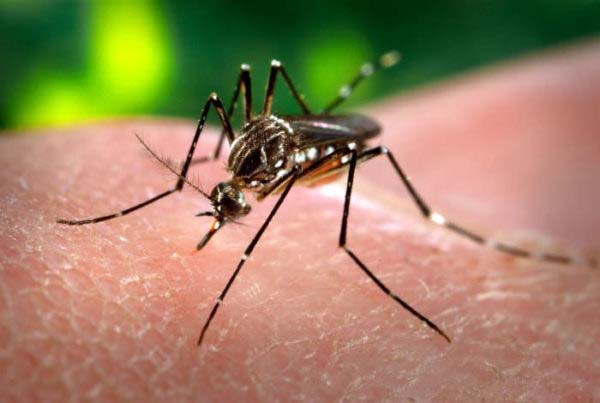 Climate Change Will Expose Half of World’s Population to Disease-Spreading Mosquitoes By 2050 https://e360.yale.edu/digest/climate-change-will-expose-half-of-worlds-population-to-disease-spreading-mosquitoes-by-2050 MARCH 5, 2019 Scientists and public health officials have documented an increasing number of outbreaks of mosquito-borne illnesses across the globe in recent years, including yellow fever, dengue, chikungunya, and Zika. Now, an international team of researchers has found that by 2050, two key disease-spreading mosquitoes — Aedes aegypti and Aedes albopictus — will significantly expand their range, posing a threat to 49 percent of the world’s population.
“If no action is taken to reduce the current rate at which the climate is warming, pockets of habitat will open up across many urban areas with vast amounts of individuals susceptible to infection,” said Moritz Kraemer, an infectious disease scientist at Boston Children’s Hospital and the University of Oxford and a co-author of the new research, published in the journal Nature Microbiology,.
The researchers analyzed historical distribution data from more than 3,000 locations in Europe and the United States, dating back to the 1970s. They then modelled future distribution using projections for climate change, urbanization, and human migration and travel. Kraemer and his colleagues found that in the last five years, Aedes aegypti has spread northward in the U.S. at about 150 miles per year. In Europe, Aedes albopictus has spread at a rate of 93 miles per year.
The scientists also found that within the next 5 to 15 years, human travel and migration will be the largest factors driving the spread of mosquitoes. After that, however, climate change and accelerating urbanization will create new mosquito habitats. Aedes aegypti could reach as far north as Chicago and Shanghai by 2050. However, the species will likely decline in parts of the southern U.S. and Eastern Europe, which are expected to become more arid as global temperatures rise. Aedes albopictus, on the other hand, is forecast to spread widely throughout Europe over the next 30 years, as well as establish small populations in parts of the northern U.S. and the highland regions of South America and East Africa.
All use of nuclear power will end in Germany by end of 2022
Nuclear “finished” in Germany, plant operators affirm https://www.cleanenergywire.org/news/nuclear-finished-germany-plant-operators-affirm Frankfurter Allgemeine Zeitung 04 Mar 2019, Benjamin Wehrmann
The use of nuclear power in Germany will come to an end by the end of 2022 as planned, operators of the country’s remaining nuclear plants have told the Frankfurter Allgemeine Zeitung in reaction to a survey in which almost half of the respondents said nuclear plants should run longer than coal plants. Energy company EnBW said that the political regulation means that “nuclear energy is finished in Germany,” adding that its two remaining plants would be deconstructed right after they are taken off the grid. Ralf Güldner, head of the German Nuclear Forum, said ending nuclear power while at the same time phasing out coal and struggling to expand the power grid could mean that Germany’s autonomous power supply security becomes threatened. However, Güldner too said the political situation was “very clear.” Plant operator Preussen-Elektra said “we certainly don’t think about any plan B.” According to the article, operators say that they will not have qualified staff anymore to keep nuclear plants running longer than agreed.
In the survey, 49.5 percent of respondents said the planned decommissioning of the last nuclear plant by 2022 and of the last coal plant by 2038 is the right order, while 44.1 percent said closing nuclear plants before coal plants is wrong from a climate perspective.
Global politics made more dangerous by climate change – Obama

“Imagine when you have not a few hundred thousand migrants who are escaping poverty or violence or disease, but you now have millions. Imagine if you start seeing monsoon patterns in the Indian subcontinent changing so that half a billion people can’t grow food and are displaced,” he added. “Think about what that does to the politics of the world — not just the economics of it, not just the environment.”
Obama was an outspoken proponent of combating climate change while in the White House. Under his leadership, the U.S. was one of the signatories of the historic Paris climate accord, in which world powers agreed to take measurable steps to reduce their man-made footprint on the environment. President Trump announced in 2017 that the U.S. would withdraw from the agreement.
The former Democratic president on Tuesday told a packed crowd in Calgary, Alberta, home to many struggling oil and gas companies, that nobody can escape the impacts of climate change.
“All of us are going to have to recognize that there are trade-offs involved with how we live, how our economy is structured, and the world that we’re going to be passing on to our kids and grandkids. Nobody is exempt from that conversation,” Obama said.
He also noted that rising oceans risk coastal populations and environmental changes have boosted the frequency of insect-borne diseases.
“Moose right now [have] to deal with tick-borne diseases that they didn’t have to do 10, 15 years ago. I really like moose. I assume, Canadians, you do too,” Obama said. “These are just facts.”
International Atomic Agency would require Saudi Arabia to have the same nuclear safeguards as Iran has
Before Saudi Arabia Goes Nuclear, It May Have to Follow Iran’s Lead, Bloomberg, By Jonathan Tirone March 7, 2019,
- Kingdom has yet to clinch enhanced atomic monitoring deal
- World powers are meeting with Iran on Wednesday in Vienna.
“………Focus on Saudi Arabia’s nuclear program has risen in the last month after the U.S. Congress opened an investigation into the potentially illegal transfer of sensitive technologies to the kingdom. This week the International Atomic Energy Agency, responsible for verifying that countries don’t divert material for weapons, weighed in on what its inspectors need before the kingdom can start generating nuclear power.
Focus on Saudi Arabia’s nuclear program has risen in the last month after the U.S. Congress opened an investigation into the potentially illegal transfer of sensitive technologies to the kingdom. This week the International Atomic Energy Agency, responsible for verifying that countries don’t divert material for weapons, weighed in on what its inspectors need before the kingdom can start generating nuclear power.
Riyadh’s nuclear program is developing “based on an old text” of safeguard rules, even as it expects to complete its first research reactor this year and plans to tap uraniumreserves, according to IAEA Director General Yukiya Amano, who told journalists this week in Vienna that he’s “appealing to all countries to rescind” those old ways of doing business.
“We’re encouraging all countries to conclude and implement an additional protocol and that includes Saudi Arabia,” said Amano, who’s also in charge of enforcing the 2015 nuclear deal struck between Iran and world powers. The Japanese career diplomat has called the set of rules established by that accord, which U.S. President Donald Trump withdrew from in May, as “the most rigorous monitoring mechanism ever negotiated.”……
the IAEA comments could strike a precautionary note among vendors lining up to service the kingdom’s nuclear ambitions. Receiving the imprimatur of IAEA inspectors, who account for gram-level quantities of nuclear material worldwide, is a precondition for receiving technologies and fuel. Without reaching a new understanding with monitors, Saudi plans for 3.2 gigawatts of atomic power by the end next decade could flounder. …….
Maintaining that level of IAEA access to Iran’s nuclear program is the reason that China, France, Germany, Russia and the U.K. continue to defy U.S. calls to abandon the 2015 deal and reimpose sanctions. Diplomats from those countries convened Wednesday in Vienna in their first meeting since the European Union established a trade channel to skirt U.S. threats.
Snap Inspections in Iran
IAEA complementary access to sites rose under agreement with world powers……https://www.bloomberg.com/news/articles/2019-03-06/before-saudi-goes-nuclear-it-may-have-to-follow-iran-s-lead
Russia considering making spaceplane powered by a nuclear reactor
 ‘Reshaping space market’: Russia mulls building rocket plane with nuclear engine Rt.com : 6 Mar, 2019 Russian space agency Roscosmos is considering building a spaceplane powered by a nuclear reactor, according to a memo obtained by a Russian news agency. The move could “reshape” the market for space launches, the document says.
A rocket plane is an aircraft powered by rocket engines. Conventional jets proved better for atmosphere-only flight, but this type of vehicle found its niche application as a reusable spacecraft – most notably as the Space Shuttle program.
Several rocket planes are still operational today, like the SpaceShipTwo, which is meant for suborbital tourist flights. Roscosmos believes such an aircraft may be viable for space missions if equipped with a nuclear power plant, says a memo reviewed by RIA Novosti.
The memo says Russia’s experience with creating the Buran spaceplane and similar space systems would come in handy for designing such a craft in the future.
Nuclear power is tricky to use in space, let alone harnessing it to provide propulsion. The USSR experimented with placing small nuclear reactors on its satellites for endurance, but the incident with the Kosmos 954 sat, which malfunctioned and fell in Canada in 1977, showed that potential problems probably outweigh the benefits. Improvements in solar panels made them the to-go power source in space applications while chemical and compressed gas thrusters are used for propulsion.
The picture may be different for long-range space missions, in which a reliable power source, capable of providing propulsion for months rather than minutes would be a huge advantage. Russia is currently working on a project dubbed TEM, a nuclear-powered rocket powered by a megawatt-class nuclear reactor…….. https://www.rt.com/russia/453132-rocket-plane-nuclear-power/
Act introduced to U.S. Congress- would stop Federal Govt from imposing a nuclear waste dump on any State

 Act would give states voice on nuclear waste dumps, Las Vegas Sun, March 5, 2019 The Nuclear Waste Informed Consent Act would require approval of the governor and impacted local governments and tribes before any money could be spent on a nuclear waste repository from the federal Nuclear Waste Fund. The act would be applicable to all states.
The act was introduced by most of the Nevada delegation, including U.S. Sens. Catherine Cortez Masto and Jacky Rosen and U.S. Reps. Dina Titus, Susie Lee and Steven Horsford, all Democrats.
Members of Nevada’s congressional delegation are attempting to ensure states have a voice in the construction of nuclear waste repositories.
Nevada is home to the dormant Yucca Mountain nuclear waste depository.
Titus, who has introduced a similar bill multiple times in the past, said the federal government should not force a waste site on any community.
“The Trump Administration’s attempt to treat our state as the dumping ground for the nation’s nuclear waste is based on dirty politics, not sound science. No state or community should have a nuclear waste dump forced upon them. I’m reintroducing this legislation as part of our strategy to put an end to the Yucca Mountain project once and for all,” she said in a statement…….
Lee, Horsford and Titus characterized Yucca Mountain as a push to turn Nevada into the nation’s dumping ground.
“I refuse to sit by and watch my community be used as a dumping ground for the nation’s nuclear waste,” Horsford said in a statement. “Yucca Mountain is an ongoing threat to the safety of Nevada families and to the Silver State’s $40 billion tourism industry.” https://lasvegassun.com/news/2019/mar/05/act-would-give-states-voice-on-nuclear-waste-dumps/
Nuclear insanity – education is desperately needed to alert the world to the nuclear weapons danger
|
Nuclear age: Humanity is flirting with extinction, https://thehill.com/opinion/national-security/432694-nuclear-age-humanity-is-flirting-with-extinction
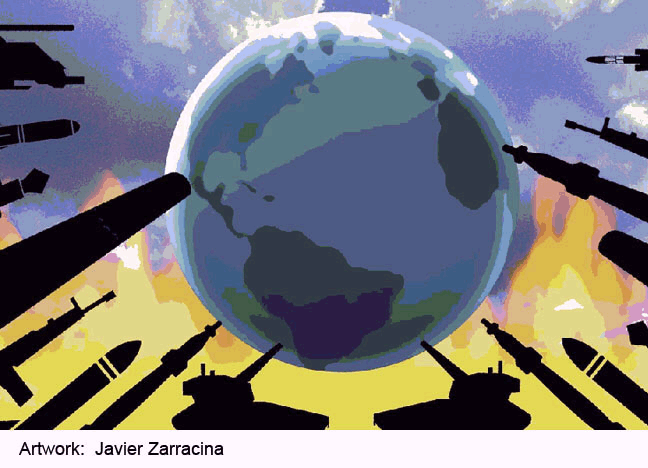
BY DAVID KRIEGER, 03/05/19 The most stunning and frightening truth about the nuclear age is this: Nuclear weapons are capable of destroying civilization and most complex life on the planet, yet next to nothing is being done about it. Humanity is flirting with extinction and is experiencing the “frog’s malaise.” It is as though the human species has been placed into a pot of tepid water — metaphorically with regard to nuclear dangers and literally with regard to climate change — and appears to be calmly treading water while the temperature rises toward the boiling point. In this piece, I focus on the metaphorical pot of heating water, heading toward a boil, representing the increasing nuclear dangers confronting all humanity.
Disconcertingly, there is virtually no political will on the part of nations in possession of nuclear arsenals to alter this dangerous situation; and, despite legal obligations to negotiate in good faith for an end to the nuclear arms race and for nuclear disarmament, there is no major effort among the nuclear-armed and umbrella countries to achieve nuclear zero. While the non-nuclear-armed countries have negotiated a Treaty on the Prohibition of Nuclear Weapons (TPNW) and are working to bring this treaty into force, those countries that possess the weapons and those sheltering under their nuclear umbrella have not supported the new treaty. All nine nuclear-armed countries boycotted international negotiations on banning and eliminating nuclear weapons. In addition, each of these countries is in the process of modernizing its nuclear arsenal, thereby wasting valuable resources on weapons that must never be used, and doing so while basic human needs for billions of people globally go unmet and unattended. Despite this unjust and deplorable situation, most of the 7 billion people on the planet are complacent about nuclear weapons. This only adds fuel to the fire under the frogs. In the nuclear age, humanity is challenged as never before. Our technology, and particularly our nuclear weapons, can destroy us and all that we hold dear. But before we can respond to the profound dangers, we must first awaken to these dangers. Complacency is rooted in apathy, conformity, ignorance and denial — a recipe for disaster. If we want to prevail over our technologies, we must move from apathy to empathy; from conformity to critical thinking; from ignorance to wisdom; and from denial to recognition of the danger. But how are we to do this? The key is education — education that promotes engagement; education that forces individuals and nations to face the truth about the dangers of the nuclear age. We need education that leads to action that will allow humanity to get out of the metaphorical pot of heating water before it is too late. Education can take many forms, but it must begin with solid analysis of current dangers and critiques of the lack of progress in stemming the dangers of the nuclear age. We need education that is rooted in the common good. We need education that provides a platform for the voices of the survivors of Hiroshima and Nagasaki. We need education that makes clear the instability and dangerous nature of nuclear deterrence. We need education that challenges the extreme hubris of leaders who believe the global nuclear status quo can survive indefinitely in the face of human fallibility and malevolence. We need education that can break through the bonds of nuclear insanity and move the world to action. We need the public to speak out and demand far more of their leaders if we are to leap from the pot of heating water, avert disaster and reach the safe haven of nuclear zero. David Krieger is a founder of the Nuclear Age Peace Foundation, and has served as its president since 1982. He is the author and editor of many books on nuclear dangers, including “ZERO: The Case for Nuclear Weapons Abolition.” |
|
Lithuania wants Belarus to convert its Russian-built nuclear power plant to gas
Lithuania to ask Belarus to switch nuclear plant to gas VILNIUS (Reuters) 6 Mar 19, – Lithuanian prime minister Saulius Skvernelis will ask Belarus to convert its Russian-built nuclear power plant to gas provided by Lithuania’s liquefied natural gas (LNG) terminal and a planned gas link between Lithuania and Poland.
The nearly-completed nuclear plant has long been viewed as a threat to its safety and national security by Lithuania, which says it is not built to the highest safety standards, an allegation which is denied by Belarus.
Astravets, which is near the border with Lithuania, is being built by Russia’s Atomstroyexport and financed with a $10 billion loan from by Moscow. It expects to have the first of its two 1.2 gigawatt VVER 1200 reactors online this year and the next one in 2020.
“It’s up to Belarus to make a choice: to keep on having an energy sector which depends on the policies of a single country, or to make a strategic change,” Skvernelis said on Monday, without naming Russia, the dominant supplier of energy to Belarus.
“Lithuania could be a good example and a useful partner for Belarus,” he added.,………
Reporting by Andrius Sytas; Editing by Alexander Smith https://www.reuters.com/article/us-baltics-energy/lithuania-to-ask-belarus-to-switch-nuclear-plant-to-gas-idUSKCN1QL163
Climate change and the uncertain future for migratory birds
Study: Climate change is leading to unpredictable ecosystem disruption for migratory birds, Phys Org, March 5, 2019, Cornell University Using data on 77 North American migratory bird species from the eBird citizen-science program, scientists at the Cornell Lab of Ornithology say that, in as little as four decades, it may be very difficult to predict how climate change will affect migratory bird populations and the ecosystems they inhabit. Their conclusions are presented in a paper published in the journal Ecography.
Cornell Lab scientists generated new climate models incorporating multiple sources of data. This produced a timeline indicating when and where migratory bird populations are likely to be significantly affected by novel climates during each phase of their annual life cycles. It’s not that far off:
- Last 40 to 50 years of this century. During this period, migrants such as the Black-and-white Warbler, are likely to first experience novel climates on their tropical wintering grounds (regions south of Florida) and also during the late summer on their breeding grounds in the North American temperate zone (above the nation’s midsection).
- First 50 years of the next century. This is when novel climates are likely to emerge for birds that winter in the subtropics—the southern half of the U.S.
The study authors conclude that by the middle of the next century migratory bird populations will experience novel climates during all phases of their annual life cycles………. https://phys.org/news/2019-03-climate-unpredictable-ecosystem-disruption-migratory.html
Ceredigion County Council has reiterated a long-standing nuclear-free commitment.

 Ceredigion could be considered for potential nuclear waste storage site, Tivyside Advertiser, By Dave Parkinson 6 Mar 19, WITH parts of Wales being considered as possible sites to bury radioactive waste, Ceredigion County Council has reiterated a long-standing nuclear-free commitment.
1 This Month
Tell Congress: Prevent Nuclear Catastrophe in Iran

Tell Congress: Prevent Nuclear Catastrophe in Iran

Read the Public Inquiry Report, the Commissioners’ report, Surrendering Australia: The AUKUS Deception is available to download for free at aukuspublicinquiry.com. Or just watch the replay of the National Press Club Luncheon.


Shut down the radiation-damaged Heysham nuclear reactors now
To see nuclear-related stories in greater depth and intensity – go to https://nuclearinformation.wordpress.com

Say No to NASA’s Reckless Nuclear Reactor on the Moon
Say No to NASA’s Reckless Nuclear Reactor on the Moon
-
Archives
- November 2026 (224)
- October 2026 (302)
- September 2026 (339)
- August 2026 (330)
- July 2026 (355)
- June 2026 (287)
- May 2026 (306)
- April 2026 (356)
- March 2026 (251)
- February 2026 (267)
- January 2026 (308)
- December 2025 (358)
-
Categories
- 1
- 1 NUCLEAR ISSUES
- business and costs
- climate change
- culture and arts
- ENERGY
- environment
- health
- history
- indigenous issues
- Legal
- marketing of nuclear
- media
- opposition to nuclear
- PERSONAL STORIES
- politics
- politics international
- Religion and ethics
- safety
- secrets,lies and civil liberties
- spinbuster
- technology
- Uranium
- wastes
- weapons and war
- Women
- 2 WORLD
- ACTION
- AFRICA
- Atrocities
- AUSTRALIA
- Christina's notes
- Christina's themes
- culture and arts
- Events
- Fuk 2022
- Fuk 2023
- Fukushima 2017
- Fukushima 2018
- fukushima 2019
- Fukushima 2020
- Fukushima 2021
- general
- global warming
- Humour (God we need it)
- Nuclear
- RARE EARTHS
- Reference
- resources – print
- Resources -audiovicual
- Weekly Newsletter
- World
- World Nuclear
- YouTube
-
RSS
Entries RSS
Comments RSS

