Nuclear convoy in Brazil attacked by armed men
They said the truck carrying the nuclear fuel and its police escort came under attack when it was passing by the town of Frade, about 30 km (19 miles) from Angra dos Reis, where the reactor is located.
Policemen guarding the convoy returned the attackers’ fire, police said. They said there were no injuries or arrests and the armed men fled……..
police escorting the truck fanned out alongside the road as a precautionary measure after hearing nearby gunshots. The armed men then started firing on some of the heavily armed “shock battalion” accompanying the shipment, Eletronuclear said.
The nuclear fuel used in the two reactors in Brazil, Angra 1 and Angra 2, is produced in a government installation in Resende, a city in the interior of Rio de Janeiro state located 130 km (80.78 miles) from Angra dos Reis……. https://taskandpurpose.com/a-convoy-carrying-uranium-to-a-brazilian-nuclear-plant-was-attacked-by-armed-men
French Nuclear test victim ordered to repay compensation
Nuclear test victim ordered to repay compensation, https://www.radionz.co.nz/international/pacific-news/385484/nuclear-test-victim-ordered-to-repay-compensation A victim of the French nuclear tests in the South Pacific has been ordered to repay more than $US60,000 paid out in compensation to her.Florence Bourel is a former secretary of the Atomic Energy Commission, who was sent to the weapons test site at Moruroa over a 12-year period.
 She developed thyroid cancer which in 2002 was recognised as a work-related condition.
The test veterans organisation in France reports that in 2008, a court ordered for her to be compensated but the health insurance successfully appealed the decision.
A reassessment placed her condition below the disability level eligible for compensation, which she says implies that nothing had ever happened to her.
She says out of her pension she has to repay $60,000 and there is no recourse.
She also says her daughters have also been affected and one of her grand-daughters had an operation for a radiation-induced disease.
Pro nuclear governor and lawmakers to bail out Ohio nuclear plants?
 Bailout chances may be good for FirstEnergy Solutions’ Ohio nuclear plants, Crains Cleveland Business
The Nuclear Free Local Authorities (NFLA) dismiss the need for Sizewell C nuclear station, and call for renewables

 Councils call for fresh look at nuclear power as current policy ‘flawed’, East Anglian Daily Times, 24 March 2019, Richard Cornwell
Campaigners fighting proposals for new-build nuclear power plants have dismissed the need for Sizewell C – and called on the Government to reassess future electricity usage and generation.
The Nuclear Free Local Authorities (NFLA) group, which represents 40 councils across the country, believes renewable energy alternatives, with energy efficiency and energy storage, are more effective options.
The group points to the recent scrapping of the Sellafield Moorside development, and the decision to halt the Wylfa B and Oldbury B projects as evidence of the state of the new-build programme.
NFLA steering committee and English Forum chairman David Blackburn said: “In our submission, NFLA shows in detail why the Government’s ongoing support for new nuclear is flawed and that there is no need for such reactors at a time when the renewable sector is rapidly moving forward.
“Sizewell C also has some serious issues over the waste it would produce remaining on site for many decades, and the serious accident scenarios international agencies have
developed suggesting much more alarming consequences than EDF foresee.
“If the local councils in Suffolk are not particularly impressed with EDF’s current proposals, then there is indeed much work for it to do. NFLA see no ‘need’ for new nuclear at a time of major changes to future energy use.”
New research on nuclear accidents shows that a Chernobyl level incident at Sizewell C could require large areas of southern and central England to be evacuated.
NFLA claims electricity generation has fallen 16% in the past 14 years despite a 10% rise in population. ……..
People wanting to respond to the consultation can complete a questionnaire at www.sizewellc.co.uk or email comments to info@sizewellc.co.uk or by post to Freepost SZC Consultation. https://www.eadt.co.uk/news/nuclear-free-local-authorities-views-sizewell-c-1-5955745
Ontario’s govt about to sabotage energy saving systems, – in the interests of the nuclear lobby
 Nuclear power company backs Ford government energy plan, Canada’s National Observer , March 21st 2019 Premier Doug Ford’s Progressive Conservative government said on Thursday it will reform Ontario’s electricity system in a bid to reduce costs overall and lower rates for businesses, a move critics say limits the most efficient way to save money in the power grid and threatens thousands of clean energy jobs.
The plan, announced by Energy Minister Greg Rickford, confirm details reported exclusively by National Observer on Wednesday about a series of cuts to programs that were designed to save energy in buildings. …….
Environmental groups and opposition political parties say the moves don’t make economic sense, pointing to the IESO’s estimates that it costs more than four times more to produce nuclear energy than to conserve electricity, with nuclear costs likely to double in coming years.
The IESO estimates that it costs 1.7 cents to save a kilowatt hour (kWh) of electricity while Ontario Power Generation’s (OPG) nuclear electricity costs 8.8 cents per kWh and is forecast to rise to 16.5 cents per kWh by 2025 to pay for the re-building of the Darlington Nuclear Station.
“I’m worried that today’s announcement might set the stage for the abandonment of energy efficiency efforts while going all-in on expensive, outdated nuclear power,” Ontario Green Party Leader Mike Schreiner said in a statement.
Rickford’s plan would also threaten thousands of jobs in companies working on energy efficiency projects, according to Efficiency Canada, a lobby group that represents companies that provide energy efficiency products and services.
Corey Diamond, executive director of Efficiency Canada, said that this field of the economy has the potential to create over 14,000 jobs per year.
“Energy efficiency is the best bang for the buck for the people of Ontario,” said Diamond in a statement. “Scaling back on programs means fewer local jobs in communities across the province,” he said.
The group representing local power distributors also criticized the changes, citing IESO data showing local hydro utilities had saved over 5.8 billion kWh, enough to power more than 640,000 homes for a full year.
Local distribution companies “have made a vital contribution to delivering savings to all customers across Ontario, including families, small businesses, farmers, medium and large businesses,” said Teresa Sarkesian, president and CEO of the Electricity Distributors Association (EDA).
Ontario NDP energy and climate change critic Peter Tabuns said he agreed that the previous government’s plan was disastrous, but said that the Ford government was about to make the situation worse.
“For years, families saw their utility bills skyrocket under the Wynne Liberals and were left struggling to make ends meet each month,” Tabuns said. “Instead of making things better, and dropping the disastrous Liberal hydro borrowing scheme, the Conservatives are ripping up programs that help everyday families save money on their utility bills, so families and businesses will see their bills jump, yet again.” https://www.nationalobserver.com/2019/03/21/news/nuclear-power-company-backs-ford-government-energy-plan
To increase energy self-sufficiency after the 2011 nuclear disaster, renewables are Japan’s only option.
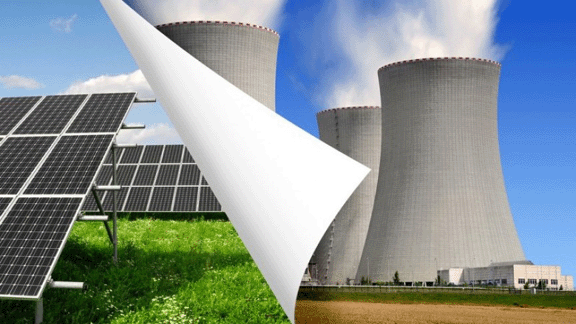 Rethinking Japan’s Energy Security 8 Years After Fukushima |
|
|
Earthquake in France, not that far away from nuclear reactors
IRSN 22nd March 2019 On Wednesday, March 20, 2019, at 10:56 local time, an earthquake of moderate magnitude (between 4.7 and 5.0 on the Richter scale) occurred in Montendre (Charente-Maritime). This earthquake was followed at 11:30 of a magnitude replica of 2.8.
The closest nuclear installation to the earthquake is the Blayais nuclear power generation center, located 27 km
from the epicenter. The Civaux and Golfech power plants are located respectively at 145 and 169 km from the epicenter. The Seismic Risk Assessment Office for Facility Safety (BERSSIN) of IRSN has prepared a briefing note on the characteristics of this earthquake.
In the Middle East, world’s most volatile region, nuclear power is taking off – what could possibly go wrong?
Above all, nuclear power needs stability and systems where everyone works together. The Middle East is one of the world’s most volatile regions, full of rivalries between states and internal divisions.
Israel has never disclosed the full extent of its nuclear programme and, in the past, has launched air strikes on nuclear facilities in both Iraq and Syria.
 Spectre of Chernobyl hangs over Middle East’s nuclear ambitions, Middle East Eye , Kieran Cooke
To avoid a potential disaster, nuclear power needs stability and systems where everyone works together The Middle East is going nuclear.The United Arab Emirates is home to the Barakah nuclear power station, the Arab world’s first such facility and the biggest nuclear power plant currently under construction.
Saudi Arabia has plans for two large nuclear plants to cope with national energy demands, increasing by more than eight percent annually.
Initial land-clearing work has also begun for a nuclear facility at Akkuyu, on Turkey’s southern coast, while Egypt is due to start building a nuclear power plant in El Dabaa, west of Alexandria, next year. Jordan has plans for a number of smaller nuclear facilities. …..
The Barakah facility, expected to supply a quarter of the UAE’s energy needs, will cost upwards of $30bn.
Equally expensive is the cost of decommissioning a nuclear plant at the end of its working life. Nuclear power has been around for more than 60 years, but no one has really come to grips with how to dispose of spent but still highly dangerous nuclear waste, handing a poisoned legacy to future generations.
And then there is the safety factor. On the morning of 26 April 1986, engineers at the Chernobyl nuclear power plant in Ukraine were carrying out routine turbine and reactor tests when they heard a sudden roar, followed by a loud blast.
Some thought there had been an earthquake. In a recently published book on Chernobyl, Serhii Plokhy – now a history professor at Harvard but in 1986 a Ukraine resident – said the idea of a nuclear accident was inconceivable. “As far as they [the engineers] were concerned, the reactor and its panoply of safety systems were idiot proof. No textbook they had ever read suggested that reactors could explode.”
Obsessed with secrecy
The nuclear industry today – whether in Russia, Europe, China, the US or the Middle East – is similarly confident of its safety.
Chernobyl’s reactor exploded, throwing vast clouds of radiation up into the atmosphere that were blown by winds over Scandinavia, much of Europe and Ukraine itself. Plokhy’s book – billed as the most extensively researched work yet on the Chernobyl disaster – should be required reading for any government official contemplating a nuclear-driven future………
Safety concerns
Plokhy says a combination of factors was to blame for events at Chernobyl, which beyond the immediate deaths, is believed to be responsible for tens of thousands of cases of fatal diseases, such as cancer. There were shortcuts in construction and pressure to increase energy quotas. Testing procedures were not followed. There were serious design faults, yet staff who foresaw dangers were afraid to speak out for fear of losing their jobs.
Plokhy foresees similar consequences in modern-day nuclear power programmes, wondering whether safety measures will be followed scrupulously in countries such as Egypt, the UAE and Pakistan.
“Are we sure that all these reactors are sound, that safety measures will be followed to the letter, and that the autocratic regimes running most of these countries will not sacrifice the safety of their people and the world as a whole to get extra energy and cash to build up their military, ensure rapid economic development, and try to head off public discontent?” he said. “That is exactly what happened in the Soviet Union back in 1986.”
Of course, these are early days in the nuclear power industry in the Middle East, but already there are problems. The first reactor unit of the four being built at the Barakah plant in Abu Dhabi was supposed to have come on-stream in 2017, but there is reportedly evidence of cracks in some of the containment walls and delays due to shortages of trained staff.
On Wednesday, Qatar asked the United Nations’ nuclear watchdog to intervene in a dispute over a a nuclear power plant that is under construction in the United Arab Emirates, Reuters reported.
Citing a letter Qatar sent to the International Atomic Energy Agency (IAEA), the news agency said that Doha argued that Barakah, a nuclear plant being built near its border with the UAE, threatens the stability of the region and the environment.
Qatar said that a radioactive plume from an accidental discharge could reach its capital Doha in five to 13 hours, while a radiation leak would have a devastating effect on the region’s water supply because of its reliance on desalination plants.
The biggest prize
Rosatom, Russia’s state nuclear corporation, is developing Egypt’s 4.8GW nuclear power plant, with work due to start next year. But there have been a number of protests at the site of the proposed plant, just as there have been demonstrationsas building work gets underway at Turkey’s Akkuyu nuclear facility, also being built by Rosatom.
In Jordan, the government seems to have abandoned plans for a $10bn nuclear plant to be built by Rosatom due to worries over costs. Instead, Amman is planning to build a number of much smaller reactors.
At the same time, the nuclear industry is falling over itself for what’s considered the biggest prize of all: Saudi Arabia. Competition for building the first two reactors in the kingdom’s ambitious nuclear power programme is intense, with US, Chinese, South Korean and French companies, along with Rosatom, involved in the process.
The US Congress is investigating reports that the White House has been transferring sensitive nuclear technology to Saudi Arabia so that US firms allegedly linked to President Donald Trump could win multibillion-dollar nuclear contracts……….
Regional volatility
Above all, nuclear power needs stability and systems where everyone works together. The Middle East is one of the world’s most volatile regions, full of rivalries between states and internal divisions.
Israel has never disclosed the full extent of its nuclear programme and, in the past, has launched air strikes on nuclear facilities in both Iraq and Syria. There are ongoing arguments over the status of Iran’s nuclear industry. ……..https://www.middleeasteye.net/opinion/spectre-chernobyl-hangs-over-middle-easts-nuclear-ambitions
Orano (makeover of bankrupt AREVA ) not getting anywhere in selling nuclear reprocessing plant to China
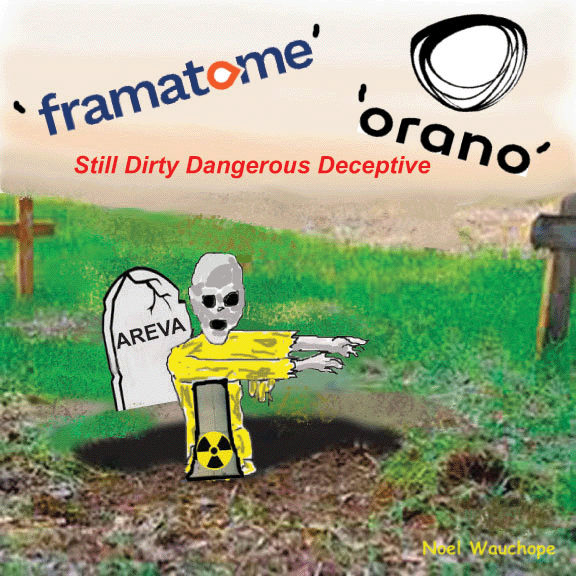 Les Echos 23rd March 2019 Another place, another atmosphere. Xi Jinping’s
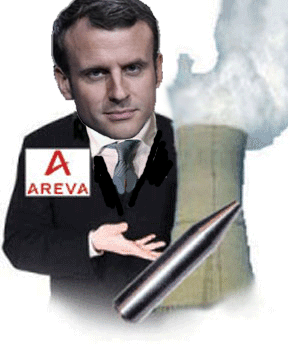 visit to France is not expected to lead to any major breakthrough on Orano’s long-awaited contract to build a used nuclear fuel processing and recycling plant in China.
Fifteen months after Emmanuel Macron’s visit to Beijing during which the French industrialist and his partner CNNC had concluded a new memorandum of understanding , Orano (the former Areva refocused on the fuel cycle) is still far from to have won the bet. At the time, Orano and CNNC had given themselves until the end of 2018 to formally agree on this mega contract of more than 10 billion dollars.
Cost of the Fukushima nuclear disaster estimated at up to 81 trillion yen

An aerial view shows workers wearing protective suits and masks working atop contaminated water storage tanks at Tokyo Electric Power Co. (TEPCO)’s tsunami-crippled Fukushima Daiichi nuclear power plant in Fukushima, in this photo taken by Kyodo August 20, 2013. Japan’s nuclear watchdog said on Wednesday it is concerned that more storage tanks at the wrecked Fukushima nuclear plant will spring leaks, following the discovery that highly contaminated water is leaking from one of the hastily built containers. Picture taken August 20, 2013. Mandatory Credit. REUTERS/Kyodo (JAPAN – Tags: DISASTER ENVIRONMENT POLITICS ENERGY)
ATTENTION EDITORS – THIS IMAGE WAS PROVIDED BY A THIRD PARTY. FOR EDITORIAL USE ONLY. NOT FOR SALE FOR MARKETING OR ADVERTISING CAMPAIGNS. THIS PICTURE IS DISTRIBUTED EXACTLY AS RECEIVED BY REUTERS, AS A SERVICE TO CLIENTS. MANDATORY CREDIT. JAPAN OUT. NO COMMERCIAL OR EDITORIAL SALES IN JAPAN. YES
Think tank puts cost to address nuke disaster up to 81 trillion yen http://www.asahi.com/ajw/articles/AJ201903100044.html By ATSUSHI KOMORI/ Staff Writer, March 10, 2019 In a startling disparity, a private think tank puts the cost of addressing the 2011 Fukushima nuclear disaster between 35 trillion yen and 81 trillion yen ($315 billion and $728 billion), compared with the government estimate of 22 trillion yen.
The calculation, by the Tokyo-based Japan Center for Economic Research, showed that the total could soar to at least 60 percent more and up to 3.7 times more than the 2016 estimate by the Ministry of Economy, Trade and Industry.
In releasing the latest estimates on March 7, the center said it is time for serious debate over the role nuclear energy should play in the nation’s mid- and long-term energy policy.
Of the highest price tag of 81 trillion yen, 51 trillion yen would go toward decommissioning the crippled Fukushima No. 1 nuclear power plant and treating and disposing of radioactive water. The ministry put the cost for these tasks at 8 trillion yen.
The center calculated the compensation to victims at 10 trillion yen, while the comparable estimate by the ministry was 8 trillion yen.
Although the center’s estimate for the decontamination operation was 20 trillion yen, the ministry’s projection was 6 trillion yen.
The biggest disparity in the estimates between the think tank and the ministry is that the former put the treatment and disposal of contaminated water at 40 trillion yen and included the cost for disposing of polluted soil produced during cleanup operations in the overall costs.
If contaminated water is released in the sea after it is diluted with water, the overall costs could be 41 trillion yen, including 11 trillion yen estimated for decommissioning and disposal for tainted water.
The least expensive way of coping with the accident–35 trillion yen–would be to encase the plant in a concrete sarcophagus, rather than undertaking the formidable challenge of retrieving melted nuclear fuel from the reactors, and releasing contaminated water into the sea. In this case, it would cost 4.3 trillion yen to close down the plant and dispose of the radioactive water.
But this scenario drew fire from residents in the affected municipalities as they view covering nuclear fuel debris with a massive structure would be tantamount to asking them to give up hope of eventually returning to their hometowns.
The center’s latest projections followed its estimates two years ago, in which the number varied from 50 trillion yen to 70 trillion yen.
It updated its projections based on the findings about treatment and disposal of radioactive water and progress in cleanup operations over the past years.
Trump tried to close federal loan program, but now wants it to fund Vogtle nuclear station!
To Save a Nuclear Plant, Trump Taps the Solyndra Loan Program He Tried to Cut, Bloomberg, By Ari Natter, March 23, 2019,
- $3.7 billion loan guarantee a key lifeline for nuclear project
- Aid to Southern Co. raises concerns with taxpayer watchdogs
President Donald Trump is dipping into a federal loan program that his administration has repeatedly sought to kill as a way to rescue a struggling nuclear power project in Georgia that critics say poses a credit risk to U.S. taxpayers.
The Trump administration announced Friday it’s finalizing a $3.7 billion loan guarantee for two nuclear reactors being built by Southern Co. Called Plant Vogtle, it’s the only nuclear facility under construction in the U.S. and one seen as vital for an industry that’s lagged due to competition from cheaper natural gas and renewable energy.
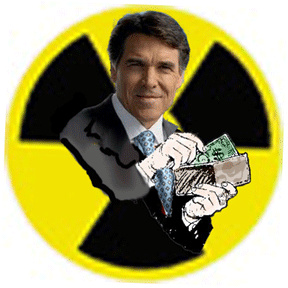 “This is the real new green deal,” Energy Secretary Rick Perry said Friday during a visit to the site near Waynesboro, Georgia, alongside Georgia Governor Brian Kemp and Southern Chief Executive Officer Tom Fanning. “If you want clean energy that helps your environment, there is no source that is cleaner than nuclear energy. This is it.”
The source of the aid is an Energy Department loan program that’s been in the cross-hairs of the Trump team since before his inauguration, when his transition team saw it as corporate welfare. Trump has asked Congress to ax the program for three years running, including in the budget submitted this month, arguing that financing provided by the fund should come from the private sector instead.
…….. The aid to Southern and its partners building the plant comes on top of a record $8.3 billion in loan guarantees inked by the Obama administration for the project, bringing the total amount of exposure to taxpayers to $12 billion.
That’s raised concerns among watchdog groups and critics of the project, which is supposed to be completed in late 2022, who are questioning the wisdom of more government loans.
“It would be a gross understatement to say this decision is fiscally reckless,” said Ryan Alexander, president of Taxpayers for Common Sense, a non-partisan group based in Washington. “Putting the full faith and credit of the U.S. Treasury behind a project after it’s been plagued by skyrocketing costs and multi-year delays is an unjustifiable handout to the well-heeled Southern Company and its partners. Throwing good money after bad is never good policy.”
Behind Schedule
The project, which is more than five years behind schedule and has doubled in cost to $28 billion, was dealt a major setback after contractor Westinghouse Electric Co. went bankrupt in 2017. Southern assumed responsibility for managing construction of the project after that…….. https://www.bloomberg.com/news/articles/2019-03-22/trump-taps-solyndra-loan-program-he-wants-cut-for-nuclear-plant
American nuclear lobby keen to market new nuclear reactors to overseas, to anyone!
The US is losing the nuclear energy export race to China and Russia. Here’s the Trump 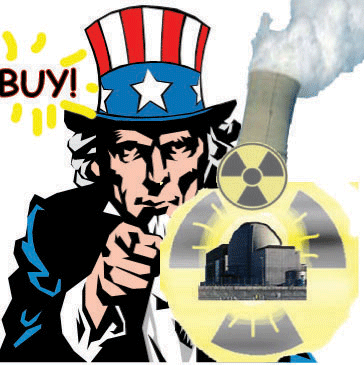 team’s plan to turn the tide
- Russian and Chinese companies are aggressively pursuing nuclear energy export deals and building more reactors overseas than U.S. firms.
- The Trump administration aims to disrupt that progress by expanding early stage cooperation with countries interested in adopting nuclear energy.
- new initiative aims to make the U.S. the global leader in advanced nuclear reactors poised to hit the market in the coming years.The Trump administration is preparing a new push to help American companies compete in the race to build the next generation of nuclear power plants around the world — a competition the U.S. is currently losing.
In doing so, the administration also aims to push back on the growing dominance of Russia and China in the space, preventing them from expanding their international influence by forging long-lasting nuclear ties with foreign powers.
The State Department plans to expand cooperation with countries pursuing atomic energy long before those nations ever purchase a nuclear reactor. By facilitating early stage talks, the U.S. intends to put American companies first in line to build tomorrow’s fleet of nuclear power plants overseas
We still lead the world in nuclear technology innovation. Our big challenge is taking that incredible IP and those incredible technological innovative breakthroughs and bringing them to market.To be sure, the Energy and Commerce departments actively facilitate U.S. nuclear cooperation with their foreign counterparts. But the State Department now intends to push the issue in talks at the highest levels of government, making it clear that Washington believes cooperation in the nuclear realm is central to its strategic relationships…….
Rise of Russia and ChinaThe U.S. dominated nuclear energy exports decades ago, but faces stiff competition today, including from allies like France and South Korea. But it’s the growing dominance of adversaries in Beijing and Moscow that worries the Trump administration and nonproliferation experts……..
Russia is also changing the rules of the game by offering generous financing that makes nuclear energy affordable to more nations. Moscow is targeting non-nuclear states in the Middle East and Africa with a model to build, own and operate the plants.
The State Department intends to actively dissuade its partners from working with China and Russia, according to Christopher Ford, assistant secretary for international security and nonproliferation.
Ford previewed that message last month at the Hudson Institute in Washington DC: “Russia and China also use reactor sales by their heavily state-supported nuclear industries as a geopolitical tool to deepen political relationships with partner countries, to foster energy dependence by foreign partners, and sometimes even to use predatory financing to lure foreign political leaderships into ‘debt traps’ that give Beijing or Moscow leverage that it can exploit later for geopolitical advantage.”
New plan takes shapeDuring the address, Ford outlined State’s plan to help American companies compete with Chinese and Russian firms.
The department will more closely coordinate nuclear cooperation efforts across agencies and ramp up informal, non-binding talks with nations that might pursue nuclear energy technology. The goal is to expand the number of countries engaged in ongoing communication with U.S. government agencies, nuclear energy companies and researchers.
The State Department will do this by signing nuclear cooperation memorandums of understanding with the countries……..
State’s focus is on teeing up sales of a new generation of nuclear technology expected to come online in the next five to 10 years, the official said.Those include small modular reactors that can be bolted together to form larger units, Terrapower’s traveling wave reactor backed by Bill Gates and microreactors meant to provide enough power for a few thousand homes.
 Altogether, there are about two dozen serious designs for advanced nuclear reactors trying to break into the market, said McGinnis. Under McGinnis and Secretary Rick Perry, one of the Energy Department’s top priorities is facilitating the development of these new technologies…….
On Tuesday, NuScale Energy signed a memorandum to explore deploying its small modular reactors in Romania, after signing similar agreements with Canada and Jordan.
The U.S. will still have to reach so-called 123 Agreements with foreign countries before American firms can sell nuclear reactors overseas. These agreements place limits on the use of nuclear technology and must be approved by Congress.
These agreements have recently drawn scrutiny from Democratic and Republican lawmakers as Westinghouse bids for nuclear power contracts in Saudi Arabia. The Saudis have long insisted on their right to enrich uranium, something the U.S. usually opposes. The bidding also comes as tension between Riyadh and Capitol Hill has escalated after Saudi agents killed Washington Post columnist Jamal Khashoggi in October. …….. https://www.cnbc.com/2019/03/21/trump-aims-to-beat-china-and-russia-in-nuclear-energy-export-race.html
U.S. accuses Iran of plotting to restart nuclear weapons program
U.S. officials on Friday accused Iran of plotting to restart work on its nuclear weapons program, despite Tehran agreeing in a 2015 accord to not pursue such weapons.The charges were made as the Treasury and State Departments announced a new round of sanctions against 14 individuals and 17 entities linked to the Iranian Ministry of Defense unit responsible for nuclear weapons development, senior administration officials said Friday.
Iran’s Organization of Defensive Innovation and Research, also referred to by the acronym SPND, maintains technical experts and critical ties to Iran’s previous nuclear efforts — notably to Mohsen Fakhrizadeh, head of Iran’s pre-2004 nuclear weapons program, officials said.
They added that Tehran-based SPND may not currently be working to develop nuclear weapons, but that the connections to Iran’s previous nuclear programs increase the threat of the country developing weapons of mass destruction. Iran has long claimed to have no interest in developing nuclear weapons, but the United Nations in 2015 uncovered a secret program that lasted until at least 2009.
The sanctions are the latest step the U.S. has taken to ramp up economic pressure on Iran after President Donald Trump pulled out of the 2015 nuclear pact, in which the country’s Islamist regime agreed to abandon any nuclear ambitions in exchange for economic sanctions relief. The other parties in the agreement — including several European countries, China and Russia — have all remained in the deal, and international organizations say Tehran
has complied with the agreement.
Trump has bashed the the international pact for not doing enough to stop Iranian efforts to build nuclear bombs. Since leaving the accord, his administration has leaned on other countries to cut off their interactions with Iran.
“Anyone considering dealing with the Iranian defense industry in general, and SPND in particular, risks professional, personal, and financial isolation,” Treasury Secretary Steven Mnuchin said in a statement Friday.
A battle in U.S. Congress over the extremely costly nuclear weapons modernisation
 Fight over America’s nuclear arsenal heats up in Congress, Defense News, WASHINGTON — U.S. lawmakers have drawn battle lines over whether full nuclear modernization is worth the cost, and now they’re gathering ammunition. |
|
1 This Month
Tell Congress: Prevent Nuclear Catastrophe in Iran

Tell Congress: Prevent Nuclear Catastrophe in Iran

Read the Public Inquiry Report, the Commissioners’ report, Surrendering Australia: The AUKUS Deception is available to download for free at aukuspublicinquiry.com. Or just watch the replay of the National Press Club Luncheon.


Shut down the radiation-damaged Heysham nuclear reactors now
To see nuclear-related stories in greater depth and intensity – go to https://nuclearinformation.wordpress.com

Say No to NASA’s Reckless Nuclear Reactor on the Moon
Say No to NASA’s Reckless Nuclear Reactor on the Moon
-
Archives
- November 2026 (224)
- October 2026 (302)
- September 2026 (339)
- August 2026 (330)
- July 2026 (355)
- June 2026 (287)
- May 2026 (306)
- April 2026 (356)
- March 2026 (251)
- February 2026 (267)
- January 2026 (308)
- December 2025 (358)
-
Categories
- 1
- 1 NUCLEAR ISSUES
- business and costs
- climate change
- culture and arts
- ENERGY
- environment
- health
- history
- indigenous issues
- Legal
- marketing of nuclear
- media
- opposition to nuclear
- PERSONAL STORIES
- politics
- politics international
- Religion and ethics
- safety
- secrets,lies and civil liberties
- spinbuster
- technology
- Uranium
- wastes
- weapons and war
- Women
- 2 WORLD
- ACTION
- AFRICA
- Atrocities
- AUSTRALIA
- Christina's notes
- Christina's themes
- culture and arts
- Events
- Fuk 2022
- Fuk 2023
- Fukushima 2017
- Fukushima 2018
- fukushima 2019
- Fukushima 2020
- Fukushima 2021
- general
- global warming
- Humour (God we need it)
- Nuclear
- RARE EARTHS
- Reference
- resources – print
- Resources -audiovicual
- Weekly Newsletter
- World
- World Nuclear
- YouTube
-
RSS
Entries RSS
Comments RSS

