Report: Boost renewables for ‘no-regrets insurance’ against nuclear gap Business Green, Michael Holder 7 June 19, Boosting renewable power sources in the UK would provide “no-regrets insurance” against a looming gap in the UK’s nuclear capacity, playing a crucial role in reaching net zero greenhouse gas emissions by 2050 in the process, a report today by a leading think tank has found.
The government’s plans for a fleet of new nuclear plants in the UK are facing major challenges after recent decisions by Hitachi and Toshiba to halt projects in North Wales and Cumbria respectively, creating a shortfall between official projections of future nuclear capacity and what the market appears set to deliver.
Meanwhile, the discovery of cracks in graphite bricks around the core of nuclear reactors – such as that which has led to Hunterston B power station in Ayrshire shutting down a reactor – has raised fears some of the UK’s existing nuclear plants could yet close earlier than planned.
The industry’s travails could potentially leave the UK with a looming nuclear capacity gap, which could have huge implications for both the electricity system and the UK’s long-term carbon targets, according to the Energy and Climate Intelligence Unit (ECIU).
Assessing the potential impact of a future nuclear energy gap, the report argues that accelerating the rollout of renewables alongside energy storage and grid flexibility technologies to make up the shortfall in expected capacity during the late 2020s and early 2030s would prove a “no-regrets” solution……
Reports suggests the government may legislate for a 2050 net zero emissions target in the coming week, and if so the government will have to increase its ambitions for renewables in the coming years, said ECIU director Richard Black.
“It would economically pragmatic to accelerate decarbonisation in the near-term by building up capacity in low-cost renewables and flexibility mechanisms,” he explained. “If it turns out they’re not needed, all ministers will have done is to accelerate decarbonisation which they say they need to do anyway; so this really is a no-regrets pathway. But it’s one where decisions are needed soon.” https://www.businessgreen.com/bg/news/3076976/report-boost-renewables-for-no-regrets-insurance-against-nuclear-gap
June 8, 2019
Posted by Christina Macpherson |
renewable, UK |
Leave a comment
 Commission asked to review new nuclear whistleblower program https://fox17.com/news/local/commission-asked-to-review-new-nuclear-whistleblower-program, by Associated Press, June 7th 2019 KNOXVILLE, Tenn. (AP)
KNOXVILLE, Tenn. (AP) — An attorney is asking the U.S. Nuclear Regulatory Commission to review the Tennessee Valley Authority’s new whistleblowing program before it’s implemented.
The Knoxville News Sentinel reports attorney Billie Garde filed a letter Tuesday saying TVA fired some of its nuclear employee whistleblowing program managers. Garde represents the managers. She says the move is designed to stop safety complaints and silence workers.
TVA’s Chief Nuclear Officer Tim Rausch says the whistleblower program is being improved after worker complaints and other criticism. He says the managers weren’t fired but don’t qualify for the new positions within the overhauled program. Rausch says they are being offered other positions within the utility.
TVA has three nuclear plants: Browns Ferry in Athens, Alabama; Sequoyah in Soddy-Daisy; and Watts Bar in Spring City
June 8, 2019
Posted by Christina Macpherson |
civil liberties, USA |
Leave a comment
June 6th, 2019 Despite being exclusively funded by a Department of Energy (DOE) grant, the New Mexico Environment Department is exploring whether to move the Oversight Bureau at Los Alamos National Laboratory (LANL) from Los Alamos to Santa Fe. A community meeting will held the week of June 24th to discuss the issues at a location to be determined. Your voice to support the Oversight Bureau remaining in Los Alamos is needed now.
For over 30 years, the Oversight Bureau has served as the eyes and ears of the Environment Department in Los Alamos. Their purview of day-to-day operations and emergencies, such as the 1996 Dome fire, the 2000 Cerro Grande
http://www.nuclearactive.org/docs/CerroGrandeindex.html, and the 2011 Las Conchas fires, has been essential for communities downwind and downstream of LANL. During the fires, the Oversight Bureau staffers remained on-site and monitored air emissions. CCNS, Nuclear Watch New Mexico, and the public rely on the Oversight Bureau’s expertise, institutional knowledge of LANL operations, and their environmental sampling data and analyses.
The Environment Department says it is conducting a proper assessment to determine where the Oversight Bureau should be located. Nevertheless, DOE provides about $1.8 million annually to the LANL Oversight Bureau under what was called an agreement in principle between the two agencies. It covered oversight of both the environmental releases from nuclear weapons work and cleanup at LANL. It is now called a memorandum of understanding and is restricted to cleanup.
Scott Kovac, of Nuclear Watch New Mexico, said, “If the Environment Department is concerned about funding the Oversight Bureau, it is time for them to initiate negotiations with DOE to revise, update, and possibly expand the memorandum of understanding and funding for it.”
https://nukewatch.org/facilities, personnel, and information. http://nuclearactive.org/ana-opposes-new-doe-order/, http://nuclearactive.org/doe-must-hold-hearings-in-new-mexico-about-order-140-1/, and http://nuclearactive.org/santa-fe-county-commissioners-call-for-suspension-of-doe-order-140-1/. At the same time, recent reports about the use of carbon steel valves in pipelines carrying corrosive radioactive liquid waste again demonstrates that LANL needs more oversight, not less. https://www.dnfsb.gov/sites/default/files/document/18101/Los%20Alamos%20Week%20Ending%20May%203%202019.pdf, and https://nukewatch.org/2019/05/31/faulty-radioactive-liquid-waste-valves-raise-crucial-plutonium-pit-production-and-safety-board-issues/
Joni Arends, of CCNS, urged people to get involved to keep the Oversight Bureau in Los Alamos. She said, “The new Environment Department Secretary, James Kenney, needs to understand the importance of the Oversight Bureau staying in Los Alamos for those living downwind and downstream of LANL. Please contact Secretary Kenney and tell him your story about what the Oversight Bureau means to you. Explain why it needs to remain in Los Alamos. His phone number is 505 827-2855 and his email is James.Kenney@state.nm.us. Please copy your correspondence to your congressperson and your local media. Thank you.”
Here’s a sample public comment letter that you can use to submit your concerns to NM Environment Department Secretary James Kenney. Feel free to use the paragraphs that resonant with your concerns – edit them and add your own concerns.
f OB sample public comment letter 6-6-19
June 8, 2019
Posted by Christina Macpherson |
environment, politics, USA |
Leave a comment
Guardian 5th June 2019 The Labour party has accused the government of “actively dismantling”
the UK’s solar power industry after new installations by households
collapsed by 94% last month. Rebecca Long-Bailey, the shadow business
secretary, used prime minister’s questions to challenge the
government’s record on climate action after scrapping subsidies for
domestic solar panels from April. Standing in for Jeremy Corbyn,
Long-Bailey said solar power had the potential to cut household bills and
carbon emissions while creating thousands of jobs. “But the government,
for some reason, appears to be determined to kill it off, while continuing
to cheerlead for fracking,” she said. (NB – story by Jillian Ambrose
who has moved from the Telegraph to replace Adam Vaughan at the Guardian).
https://www.theguardian.com/environment/2019/jun/05/home-solar-panel-installations-fall-by-94-as-subsidies-cut
June 8, 2019
Posted by Christina Macpherson |
decentralised, politics, UK |
Leave a comment
‘Radiation would have damaged the film kit’: where Sky’s Chernobyl was really shot, Telegraph UK, 7 June 19 Last night saw the last episode in Sky’s riveting drama about the 1986 Chernobyl power plant disaster, one of the worst man-made catastrophes ever to befall our planet. It’s not often The Telegraph dishes out five-star TV reviews, but
this show earned it.Along with stellar performances from the largely-British cast, no expense was spared to bring the Soviet-era nuclear warning tale to life visually;
from the costumes and stage make-up to the backdrops and special effects. But where was it filmed?
Not at the real Chernobyl wasteland that still stands today in what is now Ukraine, but rather in Lithuania, mainly at Chernobyl’s sister power plant, Ignalina, with other portions filmed in suitably… (subscribers only) https://www.telegraph.co.uk/travel/destinations/europe/lithuania/articles/chernobyl-tv-show-real-filming-locations/
June 8, 2019
Posted by Christina Macpherson |
media, radiation, Ukraine |
Leave a comment

Costs of FirstEnergy nuclear bailout bill could exceed out-of-pocket subsidies, An analysis by grid operator PJM considers losses if Ohio nuclear subsidies deter new generation. Energy News Network, Kathiann M. Kowalski 6 June 19,
A bill to subsidize FirstEnergy Solutions’ two Ohio nuclear plants could cost customers even more than the hundreds of millions of dollars in direct charges proposed to prop up those plus two older coal plants.
A new analysis from grid operator PJM concludes that keeping FirstEnergy’s nuclear plants open could also cost ratepayers as much as $16 million a year in lost savings by discouraging cheaper gas generation from coming online.
Asim Haque, PJM’s executive director for strategic policy and external affairs,testified about the new analysis before the Ohio Senate Energy and Public Utilities Committee on Wednesday.
“PJM’s findings for consumer savings from power plant competition confirm that a competitive generation market is better for millions of Ohio consumers than charging them for bailouts and subsidies under House Bill 6,” said J.P. Blackwood, a spokesperson for the Office of the Ohio Consumers’ Counsel………https://energynews.us/2019/06/06/us/costs-of-firstenergy-nuclear-bailout-bill-could-exceed-out-of-pocket-subsidies/
June 8, 2019
Posted by Christina Macpherson |
politics, USA |
Leave a comment
30 years ago, voters forced shutdown of Rancho Seco nuclear plant in Sacramento County, Sacramento Bee, Mila Jasper.June 6 is the 75th anniversary of D-Day, but in Sacramento, the date has another important meaning.Thursday is the 30th anniversary of the vote that permanently closed down the Rancho Seco nuclear power plant in southern Sacramento County. With the defeat of Measure K, Sacramento became the first community in the world to close a nuclear plant by public vote.
Phil Angelides, the former state treasurer, was a local businessman in Sacramento at the time, and he was involved in the movement to close Rancho Seco.
“The plant was an enormous liability for Sacramento,” Angelides said. “It was first generation plant technology, it just didn’t function.”
Angelides said Rancho Seco was preventing Sacramento from developing a diversified, forward-looking energy portfolio capable of sustaining the region’s growth because of how costly and inefficient the plant was.
The Sacramento Municipal Utility District opened the Rancho Seco power plant, about a 30-minute drive from downtown Sacramento, for commercial operation in 1975, but for years it was plagued by a series of outages.
In 1985, operators lost control of the plant during an “overcooling” event, which forced an automatic shutdown. The resulting 27-month outage cost SMUD $400 million, according to a report from the Union of Concerned Scientists.
SMUD also paid $745,000 in federal fines for various violations related to the facility through 1989, The Sacramento Bee reported.
Outcry against Rancho Seco unfolded when the safety of nuclear energy was in question. In 1979, the Three Mile Island nuclear power plant near Harrisburg, Pa. suffered a partial meltdown, and in 1986, the accident at Chernobyl became the worst nuclear disaster in human history……..
Just days after the Three Mile Island disaster, people climbed over the fence at Rancho Seco during a protest demonstration.
More than 100 other demonstrators cheered with cries of “shut down now, no meltdown later” as 13 protestors climbed the main gate of the plant. The 13 people were arrested for trespassing, and some demonstrators vowed to go on a hunger strike until the 13 were released from jail………
After the plant shut down, SMUD diversified its energy supply and increased investment in energy efficiency programs that have resulted in customer savings of more than $600 million, SMUD officials said.
While the plant was still running, SMUD built one of the first utility-scale solar plants at Rancho Seco, which was decommissioned and replaced in 2016. The solar array powers downtown buildings like the state Capitol and the Golden 1 Center.
SMUD is now constructing the Rancho Seco Solar 2 project, a second array of solar panels that will be the largest facility in the county when it comes online. Construction is scheduled to start in August……..
Still, the shutdown process for the plant was long and arduous. It took 20 years for the plant to be fully decommissioned by the federal government, costing ratepayers $500 million, The Bee reported.
Disposal of the radioactive waste at the plant hasn’t yet been settled, either. SMUD spends $5 million per year to provide security and oversee proper storage of spent uranium.
The materials have been in dry storage at Rancho Seco since decommission and will remain there until the federal government can come up with a solution, according to SMUD.
Rep. Doris Matsui, D-Sacramento, on Thursday introduced a bill that would initiate a program for both decommissioned plants like Rancho Seco and active plants to store spent nuclear fuel in a consolidated program at the Department of Energy. https://www.sacbee.com/news/local/article231253743.html
June 8, 2019
Posted by Christina Macpherson |
opposition to nuclear, USA |
Leave a comment
 AI technology improves critical crack detection in nuclear reactors, bridges, buildings, Phys Org, JUNE 7, 2019, by Purdue University A tiny crack in a nuclear reactor, skyscraper, bridge or dam can cause catastrophic consequences. The Minneapolis bridge collapse, which killed 13 people in 2007, is just one example of what can happen when structural integrity is compromised.
Unidentified or under-identified structural damage in nuclear reactors can be cataclysmic. Inspection of critical systems such as nuclear reactors is complicated and time-consuming.
Videos captured by an automatic crack detection system can easily misidentify small scratches or welds as cracks, so technicians must review videos frame by frame. It is a time-consuming process with opportunities for human errors.
A system under development at Purdue University uses artificial intelligence to detect cracks captured in videos of nuclear reactors. The system analyzes video, frame by frame, to detect any cracks. …….https://phys.org/news/2019-06-ai-technology-critical-nuclear-reactors.html
June 8, 2019
Posted by Christina Macpherson |
safety, USA |
Leave a comment
Voices of Fukushima power plant disaster victims strengthens call to ban nuclear energy, ACNS Anglican News Service June 6, 2019 by Rachel Farmer Japanese parish priests shared stories of suffering from victims of the Fukushima nuclear disaster at an International Forum for a Nuclear-Free World held in Sendai, Japan, last week. A joint statement from the forum, due out next month, is expected to strengthen the call for a worldwide ban on nuclear energy and encourage churches to join in the campaign.
The forum, organised by the Nippon Sei Ko Kai (NSKK) – the Anglican Communion in Japan – follows the NSKKs General Synod resolution in 2012 calling for an end to nuclear power plants and activities to help the world go nuclear free.
The disaster in 2011 followed a massive earthquake and tsunami which caused a number of explosions in the town’s coastal nuclear power station and led to widespread radioactive contamination and serious health and environmental effects. The Chair of the forum’s organising committee, Kiyosumi Hasegawa, said: “We have yet to see an end to the damage done to the people and natural environment by the meltdown of TEPCO’s Fukushima Daiichi Nuclear Power Plant. I do think this man-made disaster will haunt countless people for years to come. We still see numerous people who wish to go back to their hometowns but are unable to. We also have people who have given up on ever going home.”
One pastor, Dr Naoya Kawakami, whose church was affected by the tsunami and is the General Secretary of the Sendai Christian Alliance Disaster Relief Network, Touhoku HELP, explained how he had supported sufferers in the aftermath and heard from priests supporting the survivors. He said: “I have been more than 700 times to meet with more than 180 mothers and about 20 fathers, all of whom have seen abnormalities in their children since 2011. . . Thyroid cancer has been found in more than 273 children and many mothers are in deep anxiety.
“The more the situation worsens, the more pastors become aware of their important role. The role is to witness . . . pastors who have stayed in Fukushima with the ‘voiceless survivors’ are showing us the church as the body of Jesus’s resurrection, with wounds and weakness . . . sufferers are usually in voiceless agony and most people never hear them.”
The forum was attended by bishops, clergy and lay representatives from each diocese, together with representatives from the US-based Episcopal Church, USPG, the Episcopal Church of the Philippines, the Diocese of Taiwan, the Anglican Church of Korea, and also ecumenical guests. International experts took part, along with local clergy who shared individual stories from those directly affected by the disaster……….https://www.anglicannews.org/news/2019/06/voices-of-fukushima-power-plant-explosion-victims-strengthens-call-to-ban-nuclear-energy.aspx
June 8, 2019
Posted by Christina Macpherson |
Japan, Religion and ethics |
Leave a comment
 Giant clams are a delicacy of the Marshall Islands but illnesses fuel fears of nuclear contamination, ABC
Key points:
- The Marshallese bore the brunt of US nuclear bomb tests between 1946–58
- Tests released large amounts of radioactivity that the US was supposed to clean up
- Local leaders say that people remain fearful of eating contaminated local produce
“You see a nice-looking edible clam in the lagoon — it’s just like giving a kid a lovely lollipop,” nuclear commissioner Alson Kelen told the ABC, maintaining that eating clams will always be part of Marshall Islands life.
From 1946–1958, the US detonated 67 nuclear bombs in the Marshall Islands — some of the largest atomic weapons tests in history — and the area near the test site was evacuated, with locals receiving settlement payouts.
In the aftermath, with widespread radiation sickness being reported across the Marshall Islands, radioactive soil, debris, and wreckage was dumped into a nuclear crater on Enewetak Atoll.
The crater was capped with cement in 1980 and is officially called the Runit Dome — but locals have nicknamed it The Tomb.
The Enewatak people eventually began returning to the islands in the early 1980s following highly controversial talks between the United States and leaders of the Marshall Islands.
Amid reports of ongoing aftereffects and illness, a 2012 United Nations report found that the effects of the nuclear tests were long-lasting, which was followed by a 2013 US Department of Energy report which found radioactive materials were leeching out of the Dome, threatening the already tenuous existence of Enewetak locals. ………..https://www.abc.net.au/news/2019-06-08/illness-on-enewetak-atoll-reignites-nuclear-contamination-fears/11181940
June 8, 2019
Posted by Christina Macpherson |
environment, OCEANIA |
Leave a comment
Nuclear Energy Regulators Need to Bring on More Cyber Experts, Watchdog Says Defense One, 7 June 19, Cyberattacks on nuclear power stations on the rise, and an aging workforce may soon leave the government struggling to defend plants against the latest threats.
The Nuclear Regulatory Commission is facing a mass exodus of cybersecurity experts in the years ahead, which could limit its ability to ensure the nation’s nuclear power plants are safe from digital attacks, an internal watchdog found……….
As of March 31, NRC officials had inspected 24 of the 57 power plants under its jurisdiction. While assessments “generally provide reasonable assurance that nuclear power plant licensees adequately protect digital computers, communications systems and networks,” auditors said, the agency could be hindered if the NRC doesn’t ramp up its recruitment and training efforts. …….
The situation at NRC is a symptom of the government’s broader struggle to recruit tech and cyber talent amid an aging workforce.
The IG advised NRC to improve its process for addressing skill gaps and managing its workforce, leaning on practices laid out in its existing Strategic Workforce Planning initiative.
Auditors also urged the agency to include more performance testing in its cybersecurity inspections. While today’s inspections focus largely on compliance, collecting data on vulnerability assessments, patching frequency and software management could make the process more efficient and effective, auditors wrote.https://www.defenseone.com/technology/2019/06/nuclear-energy-regulators-need-bring-more-cyber-experts-watchdog-says/157559/
June 8, 2019
Posted by Christina Macpherson |
safety, USA |
Leave a comment
Someday the U.S. Will Have to Actually Deal With Its Nuclear Waste Problem, The Department of Energy has made a move in that direction. Slate, By JANE C. HU 7 June 19, “………… the Department of Energy announced Wednesday that they are reclassifying the definition of “high-level,” or highly radioactive, waste stored in underground tanks at Hanford Nuclear Reservation in Washington state, the Savannah River Plant in South Carolina, and the Idaho National Laboratory in Idaho Falls. The DOE hopes that the redefinition will expedite cleanup of the waste. Currently, the high-level waste stored at these sites is waiting for the government to open a secure waste repository (like Yucca Mountain in Nevada, which has been in limbo for decades). But if some of the less radioactive waste qualifies under the new definition, it might instead be shipped off to other sites, like one in Texas, where it could be
mixed with “concrete-like grout.” The cleanup at Hanford has already cost the country billions of dollars and is projected to cost billions more as we continue the search for the waste’s final home. (Adding some urgency to developing a new plan is the risk that containers could leak and contaminate the environment, especially if there’s an earthquake in Washington.)JUNE 07,
The DOE’s new plan could be cost-effective, sure, but the question is whether it’s safe. When the agency first announced reclassification plans in October 2018 and solicited public comment, the proposal received thousands of responses. And Washington state officials are not happy; Gov. Jay Inslee and Department of Ecology Director Maia Bellon have both sent letters of concern to the DOE. “I am gravely concerned with DOE forging ahead with a new interpretation of HLW that does not comport with federal law, despite objections from Washington state,” wrote Bellon.
In addition to the waste we already have sitting around at Hanford and other old nuclear weapons facilities (charmingly called “legacy waste”), nearly 100 commercial nuclear reactors at 60 facilities around the U.S. are creating new waste every day. The type of waste produced by those two types of facility contains different radioactive materials with varying half-lives, but the same storage issues remain: What will we eventually do with all this radioactive stuff?
The lack of solution is not from lack of discussion. There have been all sorts of wacky ideas floated about where to store nuclear waste. Some have proposed we shoot it all into space, maybe have it orbit Venus. But given how spacecraft are prone to explosions, which would effectively mean showering the world with bits of radioactive waste, that idea stalled. In the ’90s, the idea of burying waste in deep ocean seabeds seemed promising, but it never really got off the ground. And some countries tried storing barrels of waste in ice sheets, which turns out to be less than ideal given that ice both moves and melts. As the earth thaws out, old waste becomes uncovered.
Here in the U.S., we’re running out of space, and experts are concerned about the lack of long-term solutions. “Instead of a planned, coherent system, we have the confusion of an unplanned, less than optimal system,” nuclear experts wrote in a 2018 report on nuclear waste management strategy and policy, calling the U.S. program “an ever-tightening Gordian Knot” subject to technical, scientific, logistical, regulatory, legal, financial, social, and political challenges. “This is not a situation that builds public confidence.”……..https://slate.com/technology/2019/06/department-of-energy-nuclear-waste-reclassification-yucca.html
June 8, 2019
Posted by Christina Macpherson |
USA, wastes |
Leave a comment
 Top Uranium Producer Is Gloomy About Nuclear Power, for Now, Bloomberg, By Will Wade, June 7, 2019, Don’t expect an upswing in the global uranium market anytime soon.
“In our models, we don’t get excited on the demand side,” said Galymzhan Pirmatov, chief executive officer of Kazatomprom, Kazakhstan’s state-owned mining company that’s the world’s biggest supplier.
With construction of nuclear power plants at a 10-year low, uranium demand remains weak. That’s holding prices so low that mining companies have been wary of increasing production. Kazatomprom’s output will increase about 5% this year, to as much as 22,800 tons, and then will be flat in 2020, Pirmatov said Wednesday in an interview in New York. While he hasn’t yet made a decision on 2021, he doesn’t see much to get excited about, at least in the short term.
“I do believe prices are too low,” he said. Uranium has slumped 15% this year to $24.35 a pound as of Wednesday. Kazakhstan controls about 40% of the world’s supply of the metal, and Kazatomprom accounts for half of that, making it the biggest producer………
U.S. Closings
In the U.S., flush with abundant and cheap natural gas, utilities are closing nuclear plants. The U.S. is also considering whether to impose tariffs on uranium, after two small domestic mining companies filed a trade case last year, arguing that imports are a threat to national security. The Commerce Department concluded its investigation in April, but the results haven’t been made public……..https://www.bloomberg.com/news/articles/2019-06-05/top-uranium-producer-is-gloomy-about-nuclear-power-for-now
June 8, 2019
Posted by Christina Macpherson |
2 WORLD, business and costs, Uranium |
Leave a comment
|
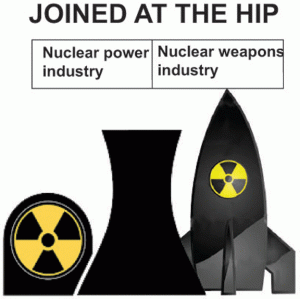 Nuclear: Energy bills ‘used to subsidise submarines’ BBC, By Roger Harrabin, 6 June, 19, BBC environment analyst 6 June 19, Energy bills in the UK are inflated partly because households are subsidising nuclear submarines, MPs have been told.
Experts think one government motive for backing civilian nuclear power is to cross-subsidise the defence industry.
They say nuclear power is so expensive that it should be scrapped in favour of much cheaper renewable energy.
Others argue that nuclear still plays a key role in keeping on the lights, so the military aspect is not significant.
But in evidence to MPs on the Business Select Committee, researchers from the University of Sussex said the government should be frank about the inter-dependence of the civilian nuclear programme and the nuclear defence industry.
Supply chain
Prof Andy Stirling from Sussex argues that one reason the government is willing to burden householders with the expense of nuclear energy is because it underpins the supply chain and skills base for firms such as Rolls Royce and Babcock that work on nuclear submarines.
He said: “It is clear that the costs of maintaining nuclear submarine capabilities are insupportable without parallel consumer-funded civil nuclear infrastructures.
“The accelerating competitiveness of renewable energy and declining viability of nuclear power are making this continuing dependency increasingly difficult to conceal.”
Rolls Royce, which makes reactors for nuclear submarines, has been pressing the government to agree a fleet of small modular reactors for power generation in the UK. This civilian technology would be transferable to submarines…….
A committee source told BBC News the researchers’ evidence appeared persuasive and well-researched.
The committee is expected to release the evidence in coming days as it prepares to discuss whether the UK really needs nuclear power for energy security.
The debate has taken on greater significance as the true costs of nuclear power have been revealed.
It was once forecast that nuclear energy would be too cheap to meter. But it’s clear now that bill-payers will give price support to the Hinkley Point C nuclear station at a cost of £92.50 per megawatt hour, compared with £55 for offshore wind.
Ministers expect that, before long, wind energy will operate without support.
Prof Stirling says the issue of nuclear inter-dependence is addressed openly in the US.
In 2017, the former US Energy Secretary Ernest Moniz (a nuclear scientist) said: “A strong domestic (nuclear) supply chain is needed to provide for Navy requirements. This has a very strong overlap with commercial nuclear energy.”
Prof Stirling told BBC News: “We need this sort of transparency in the UK.”
Catch-22
But the government faces a Catch-22 situation on this issue.
If it continues to decline to admit the inter-dependence of civil and military nuclear, it will stand accused of hiding a self-evident truth.
But if it accepts that decisions on nuclear power are influenced with half an eye on manufacturing jobs and nuclear deterrent, it will face resistance from consumer groups unwilling to cross-subsidise submarines.
The MPs’ hearing is timely, as the government will shortly publish an energy white paper outlining how the UK will supply electricity in a zero carbon economy.
Follow Roger on Twitter. Catch-22 https://www.bbc.com/news/science-environment-48509942
|
|
June 6, 2019
Posted by Christina Macpherson |
politics, UK, weapons and war |
Leave a comment
Nation’s most ambitious project to clean up nuclear weapons waste has stalled at Hanford, LA Times, By RALPH VARTABEDIANJUN 04, 2019
|
|
|
June 6, 2019
Posted by Christina Macpherson |
USA, wastes |
1 Comment