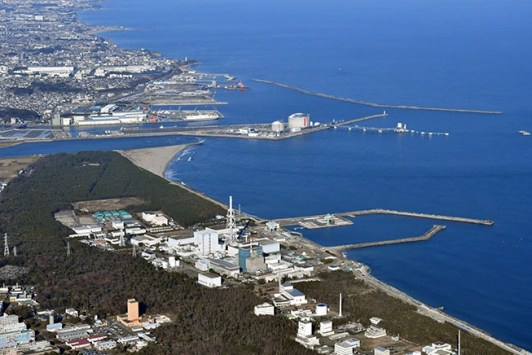
Not a single watt of electricity, but still 1 trillion yen in basic revenue
Western governments in denial of Chronic Radiation Syndrome affecting nuclear test veterans
The concept of a Chronic Radiation Syndrome was first reported by Japanese doctors who observed survivors of the atomic bombs dropped upon Japan in 1945. There, the name for the syndrome is Bura Bura disease. It is not accepted by the West.
the USA was in possession of the 1971 Soviet description of Chronic Radiation Syndrome in 1973 at the latest.
In 1994 the US Armed Forces Radiobiology Research Institute Bethesda, Maryland, published “Analysis of Chronic Radiation Sickness Cases in the Population of the Southern Urals”.
From the 1950s, nuclear veterans and civilian Downwinders reported syndromes of ill health similar to Chronic Radiation Syndrome to their governments. This includes the government of the USA and the government of Australia. These reports certainly did not result in Chronic Radiation Syndrome entering the Western medical lexicon.
During the 40-year period of operations at Mayak, all studies on radiation exposure of personnel at the plant and of the off-site population, the doses of exposure, and the possible health effects from radiation exposure were classified for national security reasons”.
anyone who spoke of the reality of disease and disablement suffered by those afflicted by the nuclear weapons tests in Australia were subject to threats of imprisonment by government and to attempts of censorship by the British and Australian authorities (Marsden, cited in Cross). It took 3 decades for the Australian government to release nuclear veterans from the threat of legal action and imprisonment if they spoke.
 Chronic Radiation Syndrome, https://nuclearexhaust.wordpress.com/2014/05/01/chronic-radiation-syndrome/ Paul Langley, 9 June 19 The claim that Australian
 nuclear veterans suffer enhanced risk of cancer has been confirmed by the Australian Government only as recently as 2006. The official government position is that the enhanced risk suffered by the nuclear test veterans is shown in health survey results. However the Australian government refuses to acknowledge that radiation exposures due to the testing of nuclear weapons as the cause of this increased risk.
Scientists under contract to the Australian government located at Adelaide performed the analysis of the 2006 health survey results. These scientists initially suggested that exposure to petrol fumes in the Australian desert might be the cause of the increased cancer risk suffered by nuclear veterans.
This suggestion, present in the Health Survey draft report, did not make it into the final report. Instead, we are presented with a mystery. Though the scientists claim certainty in their position that the nuclear veterans’ exposure to nuclear weapons detonations was not the cause of their increased cancer risk, the scientists are unable to find any other cause.
It’s a mystery, apparently, to Australian science in the service of the State. Not that this is uniquely Australian. It is universal among the Nuclear Powers. (It is all the more perplexing given Dr. P. Couch’s compassionate and detailed submission to a Senate inquiry examining the impact of the British Nuclear Tests in Australia on the personnel involved. Dr. Couch’s submission described the suffering endured by Commonwealth Police personnel who guarded the Maralinga Nuclear Test Site after military activity had ceased. One would have logically thought that if personnel were affected by service at Maralinga in times after the cessation of weapons testing, then so were the military personnel who actually saw the bombs explode, and who saw the plutonium dust disperse during the “minor trials”. )
The report states:
“The cancer incidence study showed an overall increase in the number of cancers in test participants, similar to that found in the mortality study. The number of cancer cases found among participants was 2456, which was 23% higher than expected. A significant increase in both the number of deaths and the number of cases was found for (figures in
brackets show increase in mortality and incidence):
TV Drama “Chernobyl” shows chilling reality of contemporary politics and its “war on truth”
Mazin says he intended Chernobyl as a comment on contemporary politics, and specifically on what he calls the “war on truth”. The subtext is relatively obvious: knowledge painstakingly acquired by scientists is discarded when it is politically inconvenient.
the topicality of Chernobyl derives from the inescapable fact that the bureaucracy’s inhuman behaviour is so familiar to us. The fatuous speeches about socialist morality shown in Chernobyl are just that country’s equivalent of our paeans to free markets and free people.
it is easy to recognise the system we have today: a managerial society run by bosses and bureaucrats who lie and kill to maintain their social dominance, and who threaten the whole world as long as they remain in power. The system of class domination and exploitation portrayed in Chernobyl lives on in free-market form today.
The Horrifying True Scale of the Chernobyl Disaster
Chernobyl: an anti-capitalist nuclear horror story https://redflag.org.au/node/6814, Daniel Taylor
NO to high-level nuclear waste- governor of New Mexico
 New Mexico governor says no to high-level nuclear waste, June 8, 2019, ALBUQUERQUE, N.M. (AP) — New Mexico’s governor said Friday she’s opposed to plans by a New Jersey-based company to build a multibillion-dollar facility in her state to temporarily store spent nuclear fuel from commercial reactors around the U.S.
In a letter to U.S. Energy Secretary Rick Perry, Gov. Michelle Lujan Grisham said the interim storage of high-level radioactive waste poses significant and unacceptable risks to residents, the environment and the region’s economy.
She cited the ongoing oil boom in the Permian Basin, which spans parts of southeastern New Mexico and West Texas, as well as million-dollar agricultural interests that help drive the state’s economy.
Any disruption of agricultural or oil and gas activities as a result of a perceived or actual incident would be catastrophic, she said, adding that such a project could discourage future investment in the area.
“Establishing an interim storage facility in this region would be economic malpractice,” she wrote…………
Lujan Grisham’s stance marks a shift from the previous administration, which had indicated its support for such a project.
During her last year in Congress, Lujan Grisham, a Democrat, opposed changes to the Nuclear Waste Policy Act and the possible development of a temporary storage facility in New Mexico. She was concerned that loopholes could be created and result in the waste being permanently stranded in New Mexico.
The Permian Basin Petroleum Association, the New Mexico Farm and Livestock Bureau and the New Mexico Cattle Growers’ Association all have sent letters of concern to the governor.
Several environmental groups also have protested the idea of an interim storage site for spent nuclear fuel. The groups raised their concerns during a hearing before federal regulators earlier this year.
Opponents question the project’s legality, the safety of transporting high-level waste from sites scattered across the country and the potential for contamination if something were to go wrong.
The governor’s letter came as the Nuclear Regulatory Commission considers whether to issue a 40-year license for the facility proposed by Holtec. ……..
Municipalities elsewhere in New Mexico and Texas have passed resolutions expressing concerns about an interim storage proposal in the region.
Reams of documents have already been submitted to the regulatory commission, and the overall permitting process is expected to be lengthy.
A Texas-based company also has applied for a license to expand its existing hazardous waste facility in Andrews County, Texas, to include an area where spent fuel could be temporarily stored. https://www.apnews.com/25e295f2157343b7b644c82936aee01d
Germany’s foreign minister has arrived in Tehran in hopes of saving nuclear agreement
 German minister lands in Iran in bid to save nuclear pact, Sabine Siebold, TEHRAN (Reuters) 9 June 19, – Germany’s foreign minister has arrived in Tehran to hold talks with President Hassan Rouhani on Monday, as part of a concerted European effort to preserve Iran’s nuclear pact with world powers and defuse rising U.S.-Iranian tensions.A cautious thaw in relations between Tehran and Washington set in in 2015 when Iran struck a deal with six big powers limiting its nuclear activity. But tensions with the United States have mounted again since President Donald Trump withdrew Washington from the accord in 2018 and reimposed sweeping sanctions. West European signatories, including Germany, want to try to keep the nuclear accord alive although they share the Trump administration’s disquiet about Iran’s ballistic missile program and its role in conflicts around in the Middle East. Germany, France and Britain maintain that the nuclear pact remains the best way to limit Iran’s enrichment of uranium, a potential pathway to the development of nuclear weapons……. https://www.reuters.com/article/us-usa-iran-germany/german-minister-to-meet-irans-rouhani-in-bid-to-save-nuclear-pact-idUSKCN1TA0JW |
|
Nuclear Regulatory Commission’s “Reference Man” gives a distorted, inaccurate picture of radiation impacts
 Mary Olsen: Disproportionate impact of radiation and radiation regulation. Journal of Interdisciplinary Science Reviews (accessed) 9th June 2019
Abstract. Reference Man is used for generic evaluation of ionizing radiation impacts, regulation, and nuclear licensing decisions made by the U.S. Nuclear Regulatory Commission (US NRC).
particularly when exposed as young girls, than is predicted by use of Reference Man; the difference is a much as 10-fold. Since females have been ignored in regulatory analysis, this has resulted in systematic under-reporting of harm from ionizing radiation exposure in the global population.
A critique is also offered on the US Environmental Protection Agency’s attempt to include females in its regulation. Recommendations for interim regulation to provide better protection, and questions forfurther study are offered.
https://www.tandfonline.com/doi/full/10.1080/03080188.2019.160386
|
|
Scandinavian farmers still impacted by radioactive fallout from Chernobyl nuclear disaster
Chernobyl: 33 Years On, Radioactive Fallout Still Impacts Scandinavian Farmershttps://www.forbes.com/sites/davidnikel/2019/06/08/chernobyl-33-years-on-radiation-still-impacts-scandinavian-farmers/#390eeebd949f, David Nike 8 June 19
The smash-hit HBO series ‘Chernobyl’ has introduced an entire new generation to the nuclear disaster that shook the world in 1986. Initially covered up by Soviet authorities, the disaster only came to light when nuclear power stations in Sweden – hundreds of miles away – detected high levels of radiation and began to ask questions. 33 years later, radiation remains a problem in both Sweden and Norway especially for farmers.
“Who would have thought that a small northern Norwegian mountain village could be hit by a nuclear accident in Europe. Overnight we were powerless. The Chernobyl accident shows that our food production is vulnerable. It’s scary,” sheep farmer Laila Hoff from Hattfjelldal told Norwegian state broadcaster NRK. She said all meat had to be destroyed in the first year following the accident. But even now in 2019, animals in 37 Norwegian municipalities are subject to radiation testing and control before they can be slaughtered. One leading researcher says it will take “decades” for the controls to no longer be necessary.
How Chernobyl hit farming in Norway and Sweden
The radioactive substance cesium-137 takes many years to break down with an estimated half-life of 30 years. It still exists in the earth in the areas affected by the Chernobyl accident, including large parts of Norway and Sweden. The substance is taken up from the soil by plants and fungi, which in turn are eaten by sheep, reindeer and other grazing animals.
In the wake of the 1986 accident, cesium-137 spread over much of northern and central Scandinavia. The weather conditions were such that Norway and Sweden were two of the countries worst hit outside the Soviet Union. In Sweden, the areas around Uppsala, Gävle and Västerbotten were hardest hit, while in Norway the area between Trondheim and Bodø along with mountainous areas further south suffered, mainly because of rainfall.
The radiation impacted vegetation to varying degrees, but also led to radioactivity in grazing animals, primarily sheep and reindeer. In reindeer calf meat, up to 40,000 becquerels per kilogram (Bq/kg) were measured, with up to 10,000 Bq/kg in sheep meat. Norwegian authorities set the highest acceptable level in meat at just 60 Bq/kg, which led to the widespread feeding of animals with non-contaminated feed. This process of feeding livestock from contaminated pastures with non-radioactive feed for a period to reduce radioactivity in meat or milk is known as nedfôring.
Energy experts doubt the viability of Small Modular Nuclear Reactors (SMRs)

|
Caution urged over modular nuclear reactors, New Civil Engineer, 9 JUNE, 2019 Energy heavyweights have urged caution over the idea of rolling out small modular reactor (SMR) technology to replace cancelled and decommissioned nuclear power projects.
The warnings came during a discussion on the potential ‘clean energy gap’ left by cancelled nuclear projects like Wylfa and older plants being decommissioned early. One potential solution to the gap would be to accelerate the progress of SMR development, which are marketed by their supporters as a more affordable nuclear power option, and safer than larger projects, such as Hinkley Point C. However National Infrastructure Commission chief economist James Richardson warned that the industry had failed to deliver on technological promises in the past. “You have to have a degree of caution with new nuclear technology,” he said. “We have been promised things time and time again and typically the industry tends to be more expensive and take longer than planned. I would be cautious against SMRs, they are a question for the 2030s.” “SMRs are not going to help in the next decade because they are just not available. By the time they turn up we can see if they are still cost effective or if renewable’s have gone beyond.” UK Energy Research Centre director Jim Watson agreed, and added we need to decarbonised power before SMR’s can be deployed. “I would also be cautious; we need to remember that 2030 is when we need to have decarbonised our power system by and I think there is a limit to which nuclear can help deliver that. We don’t know what the real cost of these SMRs are. History does make us cautious.” ……. https://www.newcivilengineer.com/latest/caution-urged-over-modular-nuclear-reactors/10042995.article |
|
USA court deliberates on whether or not global warming violates children’s rights

 US court weighs if climate change violates children’s rights Business Mirror, By The Associated Press, June 10, 2019 PORTLAND, Oregon—In a courtroom packed with environmental activists, federal judges wrestled last week with whether climate change violates the constitutional rights of young people who have sued the US government over the use of fossil fuels.
USA in a real mess over nuclear wastes: stalemate in storage options
|
House Panel Highlights Risks Over Nuclear-Storage Stalemate, https://www.usnews.com/news/us/articles/2019-06-07/house-panel-highlights-risks-over-nuclear-storage-stalemate
Members of Congress say America’s long stalemate over where to put its nuclear waste needs to end _ and as soon as possible. By Associated Press, Wire Service Content June 7, 2019 BY MICHAEL R. BLOOD, LAGUNA NIGEL, Calif. (AP) — Southern California‘s San Onofre nuclear power plant was permanently closed in 2013, but the site remains home to 3.5 million pounds (1.59 million kilograms) of nuclear waste that has nowhere else to go. Members of a House subcommittee held a hearing Friday not far from the defunct plant to highlight the urgency behind efforts to build a long-term national repository for used radioactive fuel, a proposal that has languished for decades in Washington. “The federal government has failed, and continues to fail, to find a solution to our country’s nuclear waste problem,” said Rep. Harley Rouda, a Democrat whose district is up the coast from the seaside San Onofre plant. Even if a bipartisan agreement is reached soon, development of a site would be at least a decade away, he said. In the meantime, 8.4 million residents live within 50 miles (about 80 kilometers) of the plant, which is within sight of a busy freeway and in a region crossed by earthquake faults. Nationally, one in three Americans lives within 50 miles of nuclear waste, Rouda said. The nation does “not have any more time to waste” to find a solution, he said, citing potential safety risks. Development of a proposed long-term storage site at Nevada‘s Yucca Mountain was halted during the Obama administration, although the Trump administration has moved to restart the licensing process while the plan continues to face stiff resistance in Nevada. Meanwhile, proposals in New Mexico and Texas for temporary storage sites are also facing criticism. On Friday, New Mexico Gov. Michelle Lujan Grisham said she’s opposed to plans to build the facility in her state. Building a long-term storage site would lead to another question: How would the radioactive waste get there from nuclear power plants? “There is not consensus about health and safety standards, including whether commercial spent fuel is safe where it is,” said Don Hancock of the Southwest Research and Information Center, a nonprofit watchdog group. “If it is safe where it is, why move it? If it’s not safe where it is, how can it be safe to transport through many other communities?” During the hearing, Democratic Rep. Mike Levin, whose 49th District includes the plant site, urged federal regulators to increase oversight at San Onofre, which received approval in 2015 to move tons of highly radioactive fuel from storage pools into steel canisters sheathed by concrete. Those transfers were halted about a year ago after a 50-ton canister of spent fuel was left hanging and at risk of being dropped rather than lowered 18 feet (5.5 meters) into a storage vault. Federal regulators later fined plant operator Southern California Edison $116,000. Levin has asked the Nuclear Regulatory Commission to appoint a full-time inspector at the plant, which is no longer producing power. NRC Administrator Scott Morris told the panel it would take a change in policy by the commission. The NRC has given Edison permission to resume transferring canisters filled with nuclear waste to the separate storage site. But the commission announced this month it will conduct surprise inspections at the plant to help make sure it’s running smoothly. Edison said in a statement that it strongly encourages action by Congress, but warned that “misrepresenting the science and potential consequences of spent nuclear fuel makes the challenge of finding a … location for storage more difficult.” “The federal government must honor its decades-long obligation to create a permanent repository and begin the process of relocating spent nuclear fuel from reactor sites throughout the country,” the company said. San Onofre was shut down in January 2012 after a small radiation leak led to the discovery of extensive damage to hundreds of tubes inside the virtually new generators. The plant never produced electricity again. Edison closed San Onofre for good in 2013 amid a fight with environmentalists over whether the plant was too damaged to restart safely. |
|
|
Mike Pompeo thinks that climate change is not really a serious problem, could be good for trade
“The climate’s been changing a long time. There’s always changes that take place,” Pompeo said during an interview with the Washington Times published Friday, when asked whether he thought climate change was man-made and how best to address it. He did not mention anything about man-made pollution in his remarks…..
The comments aren’t Pomepo’s first foray into controversial climate assessments.
In May, Pompeo praised the Arctic’s rapidly shrinking sea levels for their subsequent economic opportunities, despite continued warnings about the catastrophic effects of climate change….. https://myfox8.com/2019/06/09/pompeo-downplays-climate-change-suggests-people-move-to-different-places/
Chernobyl 2.0? Cracks found in UK nuclear reactor could lead to evacuation of millions.
radioactive contamination and full evacuation of major Brit cities, experts
have said in a terrifying warning. Experts have warned that in the very
worst case the hot graphite core could become exposed to air and ignite
leading to radioactive contamination and evacuation of a large area of
Scotland’s central belt – including Glasgow and Edinburgh.
currently making a case for turning them back on, with help from trade
union GMB. Although the probability of a meltdown is still low, the
consequences could be incredibly severe.
Edinburgh would need to be entirely evacuated due to radioactive
contamination. According to Dr Ian Fairlie, an independent consultant on
radioactivity in the environment, and Dr David Toke, Reader in Energy
Policy at the University of Aberdeen, the two reactors definitely should
not be restarted. Speaking about the cracks in the barrels, they warned:
“This is a serious matter because if an untoward incident were to occur –
for example an earth tremor, gas excursion, steam surge, sudden outage, or
sudden depressurisation, the barrels could become dislodged and/or
misaligned.
Theresa May will ignore cost warnings and bring in net zero emissions goal
Business Green 7th June 2019 Theresa May will ignore cost warnings and bring in net zero emissions goal before her successor takes over in Downing Street, reports suggest. The Prime Minister will set in law a target for the UK to reach net zero
greenhouse gas emissions by 2050 before she leaves office, although she is
unlikely to bring forward any new policy or detailed action plan for
achieving the goal, according to reports.
As recommended by the Committee
on Climate Change (CCC) in its landmark report last month, Theresa May is
set to announce a net zero goal for 2050 and could do so as soon as next
week, in a move the government expects to garner broad parliamentary
support, reports The Independent.
Chernobyl disaster: how radiation affected the UK, and which parts of Britain are most radioactive today
Background radiation levels are much higher in some parts of the UK than in others,
The poisonous radiation that spewed into the atmosphere drifted over to Western Europe, causing a spike in radiation-related diseases and deaths in the years following the disaster.
How was the UK affected by Chernobyl?
In the immediate aftermath of the accident, the UK government banned the sale of sheep across thousands of farms on the basis that the animals had likely ingested radioactive material from fallout absorbed by plants.
In June of the same year, almost 9,000 British farms were affected by restrictions brought in on the movement and sale of sheep meat. This meant livestock had to be scanned by government officials before they were allowed to enter the food chain.
Parts of Cumbria, Scotland and Northern Ireland were impacted, and North Wales was hardest hit, with sheep in Wales still failing radioactive tests 10 years after the accident in 1996.
The last restrictions on the movement and sale of sheep in the UK were lifted in 2012, 26 years after the meltdown.
There have also been some studies linking increased incidences of infant leukaemia in Britain to the Chernobyl disaster but results are not conclusive.
Which parts of the UK are most radioactive?
Most of the background radiation present in the UK today comes from radon rather than fallout from Chernobyl.
Radon is an odourless, colourless gas formed by the radioactive decay of the small amounts of uranium that occur naturally in all rocks and soils.
Due to the variations in terrain across the UK, this means that some areas nationwide have far higher levels of background radiation than others……. https://inews.co.uk/news/science/chernobyl-disaster-radiation-uk-today-most-radioactive-areas-britain/
A mistake for USA to deploy the low-yield Trident nuclear warhead
The Trump administration’s 2018 Nuclear Posture Review called for a low-yield warhead on some Trident D5 submarine-launched ballistic missiles (SLBMs). The plan modifies a W76-1 warhead, which has an explosive yield of 100 kilotons — seven times the size of the weapon used against Hiroshima — to produce the W76-2, reportedly with a yield of “just” five-seven kilotons.
Adding this weapon to the arsenal would risk lowering the nuclear threshold. To be sure, Pentagon officials assert that new low-yield weapons would not lower the threshold.
Yet the Nuclear Posture Review argued for low-yield weapons out of concern that Russia might feel it could use its “small” nuclear weapons free of concern about U.S. retaliation because the United States arsenal consists mainly of large-yield weapons.
So, at a minimum, the goal of new U.S. low-yield nuclear weapons would appear to be to persuade Moscow that the United States is more likely to go nuclear.
It is in the U.S. interest to maintain the highest possible threshold against the use of any nuclear arms. We should avoid steps that might signal, even inadvertently, that the use of “small” nukes is somehow acceptable………
SLBMs on submarines at sea constitute the most important and most survivable leg of the U.S. strategic triad, because the submarines can hide underwater and have lots of ocean in which to roam. Each submarine at sea carries a significant portion of the survivable U.S. nuclear deterrent.
The problem with launching an SLBM with a W76-2 is that it would reveal the submarine’s location. The submarine could maneuver away from the launch point, but it still would have compromised its general position, putting at risk the boat and the other 80-90 warheads it carried. Would the U.S. military run that risk, particularly given the availability of other low-yield options?
A bigger problem is discrimination. The Russians could not tell whether a launched SLBM carried a W76-2 or a W76-1 (100 kilotons) or, for that matter, a W88 (450 kilotons) until the weapon (or weapons) detonated………
The problem is that a launch from many parts of the Atlantic toward the Baltics would also appear, at least initially, to be a launch against Moscow.
Would the U.S. leadership launch a W76-2 — and run the risk that the Russians misread it as larger warhead intended to flatten Moscow in a decapitation strike — when F-35s and B61-12 bombs are available in Europe (as they will be in the early 2020s)?
The W76-2 makes little strategic sense, could inadvertently lower the nuclear threshold and likely would never be used, even in the most dire circumstances.
The Trump administration made a mistake by deciding to produce it. Congress should use the 2020 National Defense Authorization Act to correct that mistake and prohibit its deployment.
Steven Pifer is a William Perry fellow at Stanford University’s Center for International Security and Cooperation. https://thehill.com/opinion/national-security/447514-stop-the-low-yield-trident-nuclear-warhead
1 This Month
Tell Congress: Prevent Nuclear Catastrophe in Iran

Tell Congress: Prevent Nuclear Catastrophe in Iran

Read the Public Inquiry Report, the Commissioners’ report, Surrendering Australia: The AUKUS Deception is available to download for free at aukuspublicinquiry.com. Or just watch the replay of the National Press Club Luncheon.


Shut down the radiation-damaged Heysham nuclear reactors now
To see nuclear-related stories in greater depth and intensity – go to https://nuclearinformation.wordpress.com

Say No to NASA’s Reckless Nuclear Reactor on the Moon
Say No to NASA’s Reckless Nuclear Reactor on the Moon
-
Archives
- November 2026 (202)
- October 2026 (302)
- September 2026 (339)
- August 2026 (330)
- July 2026 (355)
- June 2026 (287)
- May 2026 (306)
- April 2026 (356)
- March 2026 (251)
- February 2026 (267)
- January 2026 (308)
- December 2025 (358)
-
Categories
- 1
- 1 NUCLEAR ISSUES
- business and costs
- climate change
- culture and arts
- ENERGY
- environment
- health
- history
- indigenous issues
- Legal
- marketing of nuclear
- media
- opposition to nuclear
- PERSONAL STORIES
- politics
- politics international
- Religion and ethics
- safety
- secrets,lies and civil liberties
- spinbuster
- technology
- Uranium
- wastes
- weapons and war
- Women
- 2 WORLD
- ACTION
- AFRICA
- Atrocities
- AUSTRALIA
- Christina's notes
- Christina's themes
- culture and arts
- Events
- Fuk 2022
- Fuk 2023
- Fukushima 2017
- Fukushima 2018
- fukushima 2019
- Fukushima 2020
- Fukushima 2021
- general
- global warming
- Humour (God we need it)
- Nuclear
- RARE EARTHS
- Reference
- resources – print
- Resources -audiovicual
- Weekly Newsletter
- World
- World Nuclear
- YouTube
-
RSS
Entries RSS
Comments RSS

