22/07/2019 –PARIS (Reuters) – French utility EDF <EDF.PA> could prolong planned outages at its two Golfech nuclear reactors because of a heatwave expected across France this week, the power utility said on Monday.
EDF plans to halt production at the 1,300 megawatt (MW) Golfech 2 reactor from Tuesday until July 29 and will stop power generation at Golfech 1 on Wednesday until same day next week.
The utility had said on Friday that it could halt electricity generation at the 2,600 megawatt (MW) Golfech plant in southern France because of high temperatures forecast on the Garonne river, water from which is used to cool the reactors.
EDF said on Monday that the current forecast for the end of the outages was based on available temperature forecasts and that the outages at both reactors could be prolonged.
The company’s use of water from rivers to cool its reactors is regulated by law to protect plant and animal life. It is forced to cut output when water temperatures rise or when river levels and the flow rate are low.
Another spell of sizzling temperatures is expected in France and much of western Europe this week, the second heatwave this summer. A record temperature of 46 degrees Celsius (114.8 Fahrenheit) was set in southern France last month.
Separately, EDF delayed the restart of its 1,500 MW Chooz 2 nuclear reactor by a couple days to Aug. 1, saying that the planned maintenance outage could be extended because of the amount of work required for its second 10-year overhaul.
(Reporting by Bate Felix; Editing by David Goodman)
Vote advances on nuclear plant rescue, Toledo Blade, JIM PROVANCE, jprovance@theblade.com 22 July 19, COLUMBUS— The Ohio House will return to the Statehouse a week earlier than originally planned to take a controversial rescue of the state’s two nuclear power plants off the shelf and try again to get it to the governor’s desk.A vote is now scheduled for Tuesday rather than Aug. 1.
The Republican-controlled chamber failed last week to muster the votes for approving House Bill 6 as the passage of the bill and the state budget dragged beyond the expected date for summer recess and ran into conflicts with planned vacations.
Four state representatives who supported a prior bill version in May were not on the floor last week, leaving Speaker Larry Householder (R., Glenford) short of the 50 needed for passage……
FirstEnergy Solutions, currently in bankruptcy proceedings, has indicated it will begin decommissioning its Davis-Besse nuclear plant by May 31, 2020, and its Perry plant east of Cleveland in 2021 without the $150 million a year House Bill 6 would generate annually through 2027. …..
The Senate passed the bill last week 19-12, and Gov. Mike DeWine said last week he will sign it.
House Bill 6, sponsored by Rep. Jamie Callender (R., Concord) and Shane Wilkin (R., Hillsboro), would require consumers to pay surcharges on their monthly electric bills — ranging from 85 cents for residential customers to $2,400 for big industrial factories — beginning in 2021 to fuel a $170 million-a-year fund.
The two power plants would get $150 million of that while $20 million would go to five utility-scale solar fields already holding state site approval —one in Hardin County and four in southern Ohio.
The bill also spreads statewide the cost of supporting two coal-fired plants owned by the multi-utility Ohio Valley Energy Corp. — one in southern Ohio and the other in southeast Indiana. The monthly surcharges, separate from the nuclear/solar surcharges, would be capped at $1.50 for residential customers and $1,500 for large industrial customers.
The bill, however, promises that the measure will result in a net decrease in customer bills by eliminating costs associated with existing state mandates that utilities find increasingly more of their power from wind, solar, and other renewable sources and reduce energy consumption……
Environmental groups — the Ohio Environmental Council, Sierra Club, The Nature Conservancy, and Ohio Citizen Action — will hold a press conference before the vote to urge the bill’s defeat.
Greta Thunberg awarded first Normandy Freedom Prize
Teen climate activist Greta Thunberg wins France’s first Freedom Prize, SBS News, A 16-year-old Swedish climate champion has received the first Freedom Prize in France, and has urged people to recognise the link between climate change and “mass migration, famine and war.”
Swedish teen climate change activist Greta Thunberg, whose Friday school strikes protesting government inaction over climate change helped spark a worldwide movement, has received the first Freedom Prize in France.
Flanked by two WWII veterans who sponsor the prize, the 16-year-old accepted the award at a ceremony in the northwestern city of Caen, Normandy, on Sunday.
“This prize is not only for me,” Greta said. “This is for the whole Fridays for Future movement because this we have achieved together.”
She said she would donate the AU$28,000 prize money to four organisations working for climate justice and helping areas already affected by climate change.
The prize was awarded before an audience of several hundred people and in the presence of several D-Day veterans, including France’s Leon Gautier and US native American Charles Norman Shay.
Greta said she had spent an unforgettable day with Mr Shay on Omaha Beach, one of the sites of the 1944 Normandy landings that launched the Allied offensive that helped end World War II.
Paying tribute to their sacrifice, she said: “the least we can do to honour them is to stop destroying that same world that Charles, Leon and their friends and colleagues fought so hard to save for us.”
Mr Shay said that young people should be prepared to “defend what they believe in.”………
She said the “link between climate and ecological emergency and mass migration, famine and war was still not clear to many people” and urged change.
New UK nuclear plants could be paid for upfront through energy bills, Consumers face financial burden of future projects even before they are built Ft.com, David Sheppard and Harry Dempsey, 22 July 19,
The UK government has thrown its backing behind proposals to finance new nuclear plants by having taxpayers pay upfront through their energy bills as it looks to reinvigorate a sector beset by cancellations and high costs. The consultation on the new financing model, which aims to lower overall costs by having consumers fund future nuclear projects before they are built, comes as the government targets cutting carbon emissions to net zero by 2050.
Half of all new nuclear projects planned in the UK have collapsed in the past year after failing to secure the necessary private financing, including Hitachi’s decision to suspend the £20bn Wylfa plant in north Wales and Toshiba’s cancellation of its development in Moorside, Cumbria. Seven of the UK’s eight existing nuclear plants are set to close by 2030.
But the proposal is likely to face criticism for loading risks on to consumers and the government at a time when renewable alternatives to nuclear like wind and solar are rapidly becoming cheaper. Boris Johnson, who is widely expected to become prime minister later this week, has in the past supported nuclear projects but also criticised their high costs.
The Department for Business, Energy and Industrial Strategy, which is launching a three-month consultation on the proposals, said it believed the new financing model had the “potential to reduce the cost of raising private finance . . . thereby reducing consumer bills”.
France’s state-backed EDF Energy has been a vocal champion for the proposed model, known as Regulated Asset Base or RAB, after the cost of its Hinkley Point project in Somerset was heavily criticised for its cost to consumers.
BEIS said using an RAB model for future projects was suitable as companies such as EDF would look to replicate the Hinkley Point design in future plants. EDF said on Monday that its proposed Sizewell C plant would be a “near replica” and therefore “cheaper to construct and finance”. …..
Greenpeace UK’s chief scientist Doug Parr criticised the proposal saying it would shift liabilities from private investors to taxpayers. “The nuclear industry has gone in just 10 years from saying they need no subsidies to asking bill payers to fork out for expensive power plants that don’t even exist yet, and may never,” Mr Parr said.
The government is expected to release its highly anticipated energy white paper in summer, which will indicate future electricity generation plans, with the UK’s 2013 energy strategy widely seen as defunct due to the faltering nuclear projects. https://www.ft.com/content/e2cf07ae-acaa-11e9-8030-530adfa879c2
BÜCHEL, Germany — Eleven international peace activists entered the Büchel Air Base southwest of Frankfurt early this morning to deliver what they called a “Treaty Enforcement Order” declaring that the sharing of US nuclear weapons at the base is a “criminal conspiracy to commit war crimes.”
Upon entering the base’s main gate with a printed “cease and desist order,” they insisted on seeing the base commander to deliver the order in person.
“We refuse to be complicit in this crime,” said Brian Terrell of Voices for Creative Nonviolence in Chicago, Illinois. “We call for the nuclear bombs to be returned to the US immediately. The Germans want these nuclear weapons out of Germany, and so do we.”
The group included people from Germany, The Netherlands, the United Kingdom, and the United States. All eleven were detained by military and civilian authorities and were released after providing identification. This is the third year in a row that a delegation of US peace activists has joined Europeans and others in protesting the US nuclear weapons at Büchel. The local group Nonviolent Action for Abolition of Nuclear Weapons (GAAA) convenes the International Action Week, demanding permanent ouster of the US nuclear weapons, cancellation of plans to replace today’s B61s with new hydrogen bombs, and Germany’s ratification of the 2017 Treaty on the Prohibition of Nuclear Weapons.
“Delivery of the ‘Cease and Desist Order’ is an act of crime prevention,” said John LaForge, of the US peace group Nukewatch and coordinator of the US delegation. “The authorities think the entry is a matter of trespass. But these nuclear bomb threats violate the UN Charter, the Treaty on Nonproliferation of Nuclear Weapons, and the 2017 Treaty on the Prohibition of Nuclear Weapons.” he said, adding, “Interrupting government criminality is a duty of responsible citizenship.”The activists included: (from the United States) Susan Crane, Richard Bishop, Andrew Lanier, Jr., Brian Terrell, Ralph Hutchison, and Dennis DuVall; (from the UK) Richard Barnard; (from The Netherlands) Margriet Bos, and Susan van der Hijden; and (from Germany) Dietrich Gerstner, and Birke Kleinwächter.
Susan van der Hijden of Amsterdam, who is just back from the US where she visited the Kansas City, Kansas site of a factory working on parts of the new replacement bomb, known as the B61-12. “The planning and training to use the US H-bombs that goes on at Büchel cannot be legal, because organizing mass destruction has been a criminal act since the Nuremberg Trials after WWII,” van der Hijden said.
Advanced US nukes need a boost; is the Pentagon the answer? As proponents for the fuel seek to establish a commercial domestic market, federal PPAs are seen as key to unlocking private investments. Utility Dive By Catherine Morehouse July 19, 2019“…… the large-scale reactors that are the norm across the U.S. don’t fit in with the growing trend toward smaller, decentralized power.
Small, advanced nuclear reactors better fit that mold, but have yet to enter the market. So the key question, say stakeholders, is how to spur that initial investment and establish a commercial domestic market, with a loftier goal of establishing the U.S. as a nuclear power export leader.
“……..you really are going to need to have that public involvement to persuade the private sector to roll along,” – Daniel Poneman, former U.S. Deputy Secretary of Energy, and current president and CEO of nuclear developer Centrus
One potential solution floated at the conference was federal power purchase agreements between the Department of Defense (DOD) and the Department of Energy (DOE).
A public-private partnership
“I think that the Department of Defense is a logical first customer for these reactors, especially micro reactors that are under development that can be deployed in remote regions,” Sen. Lisa Murkowski, R-Alaska, who chairs the Committee on Energy and Natural Resources, told the New Nuclear Capital audience on Tuesday……..
DOD’s ability to purchase in bulk and “underwrite an investment that may not have an immediate commercial appeal,” makes it an ideal first customer, said Poneman. And that initial investment is key.
It “really helps to have that, frankly, that initial investment from an investor that is looking at their returns not in quarterly earning statements but in the long-term security payoffs,” said Poneman. “Then when they make that initial major investment, it’s the cost of the very first one that’s always very, very high. And sometimes you find a cost curve that declines really quite steeply as you make more.”
Currently, a lot of capital being invested in the nuclear space comes from “eccentric billionaires who want to save the world,” Managing Director of Private Equity at Growth Capital Services James Magowan said at the conference. This poses a problem when trying to bring in “real venture capitalists,” whose first question is “Who’s your customer? Do you have a customer?”
To that end, “the suggestion that the DOD could step up and be a customer is a great one, I think that solves an initial customer problem,” he said. But in order to establish a domestic market, more players need to be involved.
The DOD has shown interest in advanced nuclear technology, Murkowski told reporters, making them a “likely candidate” for investment. DOD did not respond to multiple requests for comment.
Building a domestic market
Many in the nuclear industry argue that establishing the U.S. as a nuclear export leader is essential to both national security as well as global decarbonization. While the Pentagon can get things rolling for small-scale nuclear, utilities will be essential to building out the market as buyers.
“I think you see utilities, particularly in Canada, stepping up with the Canadian government to take on that market-making role and we look forward to similar discussions here in the U.S.,” Donald Wolf, president and CEO of Advanced Reactor Concepts, a U.S.-based developer, said at the New Nuclear Capital Conference. “Before we, in effect, push these new designs on foreign countries, it really helps to say we built it here first. We’ve improved it at home, and it’s safe for us.”
And some developers are moving to establish those markets for small reactors with municipal power systems, which make for more attractive first customers than IOUs, according to Colbert. Municipal power systems have access to a lower weighted cost of capital, around 3%-4%, compared to IOUs’ approximately 8%-10%.
NuScale has jointly pursued both DOD and the Utah Associated Municipal Power Association (UAMP) as first customers. ……
“If you look at nuclear, the market for energy … is pretty well known,” said Chris Colbert, Chief Strategy Officer at nuclear developer NuScale. “What’s not so well known is how do you get through the nuclear regulatory process, the [Nuclear Regulatory Commission] process.”
While safety remains a paramount concern for nuclear power, many in the industry say they no longer view public perception as a major problem.
Canadian Press Biz@CdnPress_Biz 22 Jul 19SNC-Lavalin Group Inc. warns its 2019 results could be significantly lower than anticipated, largely due to cost overruns at some construction projects and says it will undergo a reorganization to exit or section off its poorer performing segments. More coming.
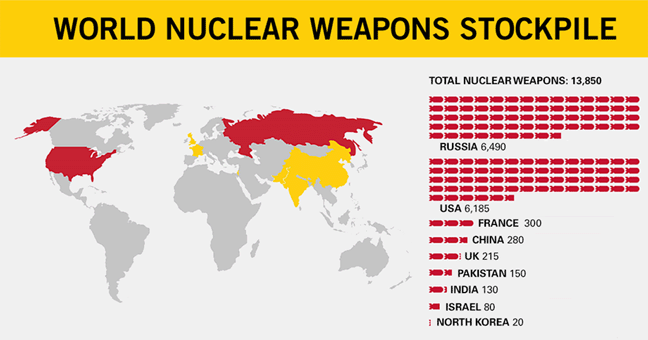
Clock’s ticking on one of world’s most important nuclear treaties. A dangerous arms race may be next,By Eliza Mackintosh, CNN, July 20, 2019This week, senior American officials traveled to Switzerland to deliver President Donald Trump’s “vision for a new direction in nuclear arms control.” That vision is to strike a wide-ranging deal that would limit the arsenals of not only the US and Russia, but also China for the first time.
At a meeting with their Russian counterparts in Geneva on Wednesday, the US delegation relayed their concerns over Moscow’s development of “non-strategic nuclear weapons,” the State Department said. Another concern is the fact that China, which did not participate in the talks, has rejected negotiations out of hand.
But the President’s ambition for an all-encompassing deal is clouded by his track record, and observers are increasingly worried that the unraveling of existing accords under the Trump administration could lead to a more unstable future for nuclear proliferation globally.
And as the talks were taking place in Geneva, the clock continued to run down on the last remaining major nuclear deal between the US and Russia, which control 90% of the world’s nuclear warheads.
The New Start treaty, signed by Presidents Barack Obama and Dmitry Medvedev in 2010, restricts the US and Russia to 1,550 deployed strategic nuclear warheads across 700 delivery systems. While Russia has signaled an interest in renewing the pact, Trump has previously described it as a “bad deal,” and there is no sign that it will be extended beyond 2021, when it expires.
If the New Start deal is scrapped, experts fear a return to a world without limits on nuclear stockpiles……..
The presence in the administration of National Security Advisor John Bolton — a longstanding hawk and critic of arms control agreements — also has some observers concerned that the White House’s true goal may be to find an exit strategy for a nuclear pact it sees as constraining and outdated.
President Vladimir Putin, who has suggested Russia would be open to renewing the New Start treaty, has warned that letting the pact lapse could risk an arms race……..
The ditching of nuclear treaties by the Trump administration has already contributed to the weakening of norms, and casts other multilateral agreements, like the Nuclear Nonproliferation Treaty (NPT) into doubt, experts said.
Under the NPT, one of the world’s most important foundational nuclear treaties, nuclear-weapon states — the US, Russia, China, France and the UK — commit to ending the arms race and achieving nuclear disarmament, while non-nuclear-weapons states agree to forgo developing or seeking nuclear weapons…….. https://edition.cnn.com/2019/07/20/world/us-russia-new-start-nuclear-weapons-analysis-intl/index.html
There’s still time to say no to Ohio’s costly nuclear bailout https://www.crainscleveland.com/opinion/personal-view-theres-still-time-say-no-ohios-costly-nuclear-bailout Jeff Barge 21 July 19,There may have been a case once for Ohio to subsidize FirstEnergy Solutions’ two nuclear plants in Ohio. But the company’s deceit and dishonesty in providing false and misleading information to the state legislature and the public now make that virtually impossible. That may be why the bailout failed to pass as scheduled on July 17 by one vote and may not be brought up again until Aug. 1.
FirstEnergy Solutions has been claiming for more than a year that it needs $150 million a year from the state because its Davis-Besse and Perry nuclear power plants, now in federal bankruptcy court in Akron, are running at a loss.
But is this really true?
“It wouldn’t be in bankruptcy court if it wasn’t in the red, correct?” responded Ohio GOP Senate spokesman John Fortney when asked that question.
But that may be the misconception that is keeping the whole boat afloat. That so-called “fact” may not be true after all.
FirstEnergy Solutions actually has five businesses involved in its ongoing bankruptcy case, and the two nuclear subsidiaries, known through the acronyms “FENG” and “FENOC,” are profitable.
That has been firmly established by copies of a monthly operating report filed with the bankruptcy court by FirstEnergy Solutions in May of this year. According to Senate testimony by the Ohio Consumers’ Counsel that presented these documents as evidence, the two nuclear plants have had a profitable operating margin of almost $50 million since the company filed for bankruptcy in May 2018. According to these documents, FENG had an operating profit of $18.4 million in May 2019 alone.
As if it were needed, a second study also proved the two plants are profitable. This one is by Paul Sotkiewicz, former chief economist for PJM Interconnection LLC, the largest U.S. power grid operator in the country. That study, which was commissioned by oil and gas group API-Ohio, said the Davis-Besse and Perry nuclear plants generated annual profits of $28 million and $44 million, respectively, and are “among the most profitable of their kind in the nation.” Arie Peskoe, director of the Electricity Law Initiative at Harvard Law School, said Sotkiewicz is a “credible” expert.
And let’s face it — is it even reasonable anymore to believe that FirstEnergy Solutions is acting in good faith? Not if you look at its most recent history.
In April, for example, federal authorities accusedFirstEnergy Solutions and its former parent company, FirstEnergy, with concocting a “scheme” that was “an abuse of the bankruptcy system,” and filed legal papers in bankruptcy court in Akron to that effect. That’s because FirstEnergy Solutions’ initial bankruptcy filing, which was rejected by U.S. Bankruptcy Judge Alan Koschik, sought to absolve FirstEnergy of any future responsibility for costly power plant closings and cleanup estimated in the billions.
The public would have been on the hook for this cleanup. Nice try, FirstEnergy.
On another front, the Ohio Supreme Court in June struck down a sweetheart deal in which the Public Utilities Commission of Ohio had given FirstEnergy $600 million in a “distribution modernization rider” that allowed it to tack a fee on to customers’ bills for modernization of its energy grid. Problem is, FirstEnergy didn’t modernize its energy grid. According to testimony by the Ohio Consumers’ Counsel, the company used the money to increase dividends to its investor/owners from $152 million to $375 million a year. This again shows a lack of good faith. It diverted the fixup funds to Wall Street.
And that’s where the Ohio bailout money would go — straight from Columbus to Wall Street. As a July 8 headline in The Bond Buyer crowed: “FirstEnergy nuclear bailout would be a win for bondholders” — some of whom may have bought the bonds for pennies on the dollar after FirstEnergy’s bankruptcy.
Several state senators who spoke to me before the scheduled vote noted other valid reasons not to give FirstEnergy Solutions a bailout. In an email, state Sen. Andrew Brenner, a Republican member of the Senate energy committee that heard testimony on the bill, said that FirstEnergy Solutions’ controller was evasive on the stand and “avoided answering my questions” in Senate hearings.
Democrat state Sen. Nickie Antonio said her problem was FirstEnergy Solutions refused to provide her with any “math” to show they really needed the subsidy. That is, she said, they wanted the money but refused to prove they needed it.
Tom Becker of FirstEnergy Solutions explained it to the Plain Dealer this way: “The company is operating under several non-disclosure agreements as part of the bankruptcy and is precluded from disclosing non-public information.” But bankruptcy attorneys contacted for this article said that was patently false.
FirstEnergy Solutions even seems to be lying about the cost of its nuclear fuel. It said in June it needed $52 million immediately to order new fuel or it would have to begin the process of shutting down its plants. But the price of uranium has dropped precipitously from $48 a pound to $22 a pound, making that statement, too, dubious. Sotkiewicz, chief economist for PJM Interconnection LLC, calls that deadline phony.
The people who named FirstEnergy “Solutions” when it went into bankruptcy — almost immediately after being spun off from its parent — must have had a good laugh at the time. Spinning off all your debt into another corporation that immediately declares bankruptcy and reneging on your debts and business contracts must have indeed have seemed the ideal “solution.” Nancy Pelosi would have clapped.
But Ohioans have paid $10 billion in subsidies to First Energy in the past, and it’s far past time to pull the plug. The House should vote no on the Ohio nuclear bailout when it reconvenes on Aug. 1.
“To us as an environmental group, we hope that the environmental damage can stop and that these external [pollution costs] could be internalized in the cost” of products, Ma Jun, a leading Chinese environmentalist and director of the Institute for Public and Environmental Affairs, said in a phone interview.
Ma’s fear is that other regions around the world could suffer a similar fate if they become, like China, the supplier of cheap rare earth elements, with little or no environmental price attached
China has been a major source of rare earth metals used in high-tech products, from smartphones to wind turbines. As cleanup of these mining sites begins, experts argue that global companies that have benefited from access to these metals should help foot the bill.
BY MICHAEL STANDAERT•JULY 2, 2019 The mountains north of the village of Lingbeizhen in southern Jiangxi province no longer echo with the rumble of bulldozers and trucks. New bamboo groves climb the ravines. Tropical pines and navel orange trees grace terraces carved from the mountainsides, covering what was a hive of activity a few years back. Continue reading →
I watched the “Chernobyl” miniseries, and I was struck by the accuracy. The scene on the roof of the reactor as depicted in the fictional episode, was accurate in so much detail, compared to the 1986 real film.
There were many who risked their lives after the Chernobyl disaster — but none more so than a man desperate to show the world what happened,LJ Charleston, 21 July 19 When Soviet filmmaker Vladimir Shevchenko took his camera onto the roof of Chernobyl’s reactor four in the aftermath of the fatal explosion, he had no idea he was right in the middle of what was — in April 1986 — the most dangerous place on earth.
He also had no idea that his chilling documentary Chernobyl: Chronicle of Difficult Weeks, about the clean-up of the radioactive material at Chernobyl, would be his very last.
He died of acute radiation sickness a year later.
The award-winning film director, who was working for Ukrainian TV at the time, was said to have been quite unaware of the dangers he was putting himself in when he agreed to film from the roof next to reactor four.
He’d been hired to film in the exclusion zone. But his gravest error was agreeing — along with two assistants — to climb up to the most lethal area of all, just days after one of the worst man-made disasters of all time.
Even 33 years after the explosion, Shevchenko’s film is still an eerie reminder of the sacrifices made by those who risked their lives in the clean-up efforts at Chernobyl.
Today, as the world focuses once again on those events due to HBO’s series Chernobyl, it’s worthwhile putting the spotlight on the courageous Shevchenko.
He gave his life so that we could see with our own eyes what went on during the clean-up. It was, at times, incredibly basic and put so many lives at risk.
And, by doing so, Shevchenko was unknowingly filming his own death……
Shevchenko, who was the first and only film maker allowed on location in the exclusion zone of Chernobyl, is best known for Chernobyl — Chronicle of Difficult Weeks. You can watch the full cut of his film here.
The film is entirely in Russian, although it’s believed people are currently working on English subtitles. It includes interviews with beleaguered scientist Valery Legasov, now famous due to the HBO series in which he’s played by Jared Harris.
Legasov committed suicide two years after the disaster, on the anniversary, due to the horror of his experiences and the lies he had to tell the International Atomic Agency in Vienna to cover up Soviet mishandling of the event.
Shevchenko’s footage of Chernobyl has not been widely seen and the fact he lost his life a year after the explosion has been completely obscured, as his name isn’t listed on official records of deaths. At the time, his two assistants were receiving hospital treatment, but there is no word of what became of them.
Sydney archaeologist Mr Robert Maxwell, the only archaeologist who has worked in Chernobyl across two field excursions, told news.com.au Shevchenko was well-respected and trusted to film the clean-up efforts, as it was such a highly sensitive time for the Soviets.
“He was granted permission to film the clean-up, including the incredibly dangerous work of the ‘biobots’,” Mr Maxwell said, referring to the name given to the workers sent in to clean up……..
THE ‘BIOBOT FOOTAGE’
One of the most memorable and unbelievable scenes in the TV series Chernobylfeatures liquidation workers on the roof, using shovels to throw highly radioactive material back into the core.
If it wasn’t for Shevchenko’s 1986 footage, we would not know that this happened. The men could only work in frantic 90 second shifts; any longer and their exposure to the radiation would be fatal.
What makes the footage so compelling is that we can clearly see some men picking up the radioactive graphite with gloved hands. We also see Shevchenko filming from the roof top, wearing only a flimsy mask and cap for protection. Then we can see how badly damaged the footage is as the radiation makes an impact on the film itself.
It’s harrowing to see how much work the men are doing with their hands.
This is Shevchenko’s footage focusing on the rooftop clean-up.
Chernobyl. Cleaning the roofs. Soldiers (reservists). 1986.
Nuclear industry has been pushing for less oversight, and it’s working. L A Times ELLEN KNICKMEYER, ASSOCIATED PRESS , JULY 17, 2019
Fewer mock commando raids to test nuclear power plants’ defenses against terrorist attacks. Fewer, smaller government inspections for plant safety issues. Less notice to the public and to state governors when problems arise.
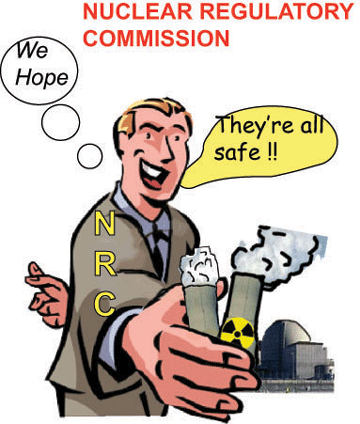
They’re part of the money-saving rollbacks sought by the country’s nuclear industry under President Trump and already approved or pending approval by the Nuclear Regulatory Commission, largely with little input from the general public.
The nuclear power industry says the safety culture in the U.S. nuclear industry — 40 years after a partial meltdown of a nuclear reactor at the Three Mile Island plant in Pennsylvania — is “exceptional” and merits the easing of government inspections.
Maria Korsnick, president of the industry’s Nuclear Energy Institute trade group, said she welcomed changes in NRC plant oversight “to ensure that it reflects a more robust understanding of the current performance of the U.S. nuclear fleet.”
Opponents say the changes are bringing the administration’s business-friendly, rule-cutting mission to an industry — nuclear reactors — in which the stakes are too high to cut corners.
While many of the regulatory rollbacks happening at other agencies under the current administration may be concerning, “there aren’t many that come with the existential risks of a nuclear reactor having a malfunction,” said Geoff Fettus, an attorney for the Natural Resources Defense Council on nuclear issues.
This week, the Nuclear Regulatory Commission released staff recommendations for rollbacks in safety inspections for the 90-plus U.S. nuclear power plants and for less flagging of plant problems for the public. Democratic lawmakers and one commissioner expressed concern about the safety risks and urged the commission to seek broader public comment before proceeding.
The country’s nuclear regulators were looking at “far-reaching changes to the NRC’s regulatory regime without first actively conducting robust public outreach and engagement,” Rep. Frank Pallone Jr. (D-N.J.), chairman of the House Energy and Commerce Committee, said in a letter to Nuclear Regulatory Commission Chairwoman Kristine Svinicki.
Svinicki and two other commissioners did not respond Wednesday to requests for comment made through the agency’s public affairs staff. Public affairs director David Castelveter said the commission would respond directly to lawmakers on Pallone’s letter.
A fourth commissioner, Jeff Baran, spoke out Tuesday, saying he opposed cutting inspections and reducing oversight. Baran called for more public input on proposed rollbacks.
Nuclear regulators post notices of meetings on proposed rollbacks of oversight of nuclear power plants on the Nuclear Regulatory Commission website. Lawmakers complained that there has been scant notice to the public at large about the meetings or proposals.
In general, according to attendance logs, the rollbacks are being hashed out at meetings attended almost solely by commission staffers and nuclear industry representatives. ……
Edwin Lyman, a nuclear safety expert with the Union of Concerned Scientists said the security changes “are jeopardizing public health and safety by restricting the NRC’s ability to ensure that nuclear plants are sufficiently protected against radiological sabotage attacks.”
In January, in one of the comparatively few widely reported changes, commissioners rejected staff recommendations for making nuclear plants harden themselves against natural disasters on the scale of the 2011 earthquake and tsunami that caused meltdowns at three nuclear reactors at the Fukushima nuclear plant in Japan……
Some rollbacks pushed by the industry have been rejected by the commission’s staff. Others are still under consideration, including one that would further cut inspections by regulators and allow more self-inspections overseen by plant operators.
Times 20th July 2019 Nuclear power plant will suck fish to their deaths, The Times, Ben Webster,, Oceans Correspondent, July 20 2019 It has been described as a giant plughole under the sea, sucking in 130,000 litres of water a second along with vast numbers of fish. The twin inlet tunnels stretching two miles out into the Severn estuary are so big that a
double-decker bus could drive through them.
The system will cool a new
nuclear power station being built at Hinkley Point in Somerset but
conservation groups say it will kill up to 250,000 fish a day and must be
altered or scrapped. They say that EDF, the French state-owned energy
group, has grossly underestimated the system’s impact on marine life in the
estuary, a special conservation area.
A 5mm mesh will be installed to
prevent larger fish being swallowed but the groups, including the Blue
Marine Foundation, Wildfowl & Wetlands Trust and Somerset Wildlife Trust,
say many fish will be fatally injured when pressed against it. Small fish,
eels and the fry of many species, such as salmon, whiting and cod, will be
sucked through the mesh and into the cooling system.
The groups say it
could damage the population of twaite shad in the UK, a small herring-like
fish that used to spawn in the estuary by the millions but has dwindled to
tens of thousands.
EDF says the system will kill about 650,000 fish a year.
It has asked to vary its original permits and planning permission for the
power station to allow it to remove an “acoustic fish deterrent” from the
cooling system. It argues that, even without it, the impact of the system
on fish populations will still be “negligible”. EDF says fish will be
adequately protected by other measures, one which will slow the water
entering the system and another which will return to the sea the fish
sucked in.
Conservation groups argue that scientific analysis they obtained
of the cooling system shows far greater harm to marine life. This analysis
is partly based on measurements of fish swallowed by the cooling system of
Hinkley Point B, a nearby nuclear power station which consumes a quarter of
the sea water that will be extracted to cool Hinkley C.
They want the
government to reject EDF’s application and, if the company cannot mitigate
the damage, force it to use other ways to cool the station, such as cooling
towers or ponds.
James Robinson, of the Wildfowl & Wetlands Trust, said:
“The authorities must decide if it’s worth building a giant plughole to
suck millions of sea animals to their deaths, in one of our most important
protected marine areas, in order to produce electricity.” Charles Clover,
director of Blue Marine Foundation, said the groups would also challenge
plans by EDF for a similar system at its proposed new nuclear power station
at Sizewell in Suffolk.
Turkey’s Akkuyu nuclear plant facing numerous safety concerns – Birgün, https://ahvalnews.com/akkuyu/turkeys-akkuyu-nuclear-plant-facing-numerous-safety-concerns-birgun21 July 19,Top-level officials working at Turkey’s Akkuyu Nuclear Power Plant construction project say a series of problems, including lack of design adaptation and a shortage of competent engineers on site, are posing serious safety concerns, left-wing Birgün newspaper reported.Located in Turkey’s Mediterranean coastal town of Mersin, Turkey’s first nuclear power plant Akkuyu is a joint Russian-Turkish project with Russian energy company Rosatom as the majority stakeholder. President Recep Tayyip Erdoğan and his Russian counterpart Vladimir Putin kicked off the construction of the plant on Apr. 3 amid concerns about the potentially destructive ecological consequences of the plant.
The project hit a snag in May when fissures discovered in the foundations, according to pro-government outlet HaberTürk. New concrete was laid only for more cracks to be discovered.
The problem of the cracks, discovered by Turkey’s Atomic Energy Authority (TAEK), have since been fixed, however the foundation of the plant remains a problem.
The design of the plant was created with Russian landscape and weather in mind and is in need of revision to be adapted to Turkey’s warm climate, officials told Birgün.
“For example, sloping in the mountains should be conducted in a more horizontal fashion, but it has been done vertically to minimise costs and this is resulting the boulders continually rolling down the hills,’’ one official said.
The ground the plant is being built on, which according to a geology engineer, who spoke on condition of anonymity, is filled with gaps and cannot support the plant.
“Technically speaking, you can construct a structure over any kind of surface. However, the structure at hand is not a copy-paste matter, it must be revised according to the present surface. None of this is happening because the engineers of the project are not competent,’’ the engineer said, pointing to gaps that may lead to condensation, among other problems.
The project is run entirely on the ‘’past experiences’’ contractors, one official said. ‘’They are acting as though a building is being constructed instead of a nuclear reactor. And even during the process of constructing a building, a much more serious plan of action is followed.’’
The cooling of the plant is to take place through the waters of the Mediterranean Sea.
The warm water to be released into the sea after the cooling process, a chemical engineer who spoke to left-wing Birgün daily said, will lead to increased temperatures in the water, which in turn affects marine life.
’Chlorine is placed in the water to avoid mussels etc. from sticking to the pipes used to draw the water. And then this water, which now naturally has chlorine in it, is released into the sea,’’ the official said. ‘’Imagine the damage this can create in the sea, which is filled with living organisms.’’
Mini-nuclear power plants at least 10 years out: Canadian Nuclear Association, The Post MillennialbyJason Unrau, 21July 19,
Could tiny nuclear power plants be the answer to cleaner power for diesel-reliant, remote communities and mine sites? Economics, geography and regulatory complexity makes such proliferation of small modular reactors very unlikely says the Canadian Nuclear Association.
According to association president John Stewart, 10 years is the soonest any such nuclear power device could be deployed anywhere in Canada, and that expanding nuclear power usage would likely happen first where the primary power source remains coal.
“You would want the new generators to go in exactly where those coal plants are,” he said, necessitating scaled down versions of the 900 megawatt CANDU reactors at Darlington, Ontario, rather than micro reactors, some as small as one-megawatt currently under development.
Tell Congress: Prevent Nuclear Catastrophe in Iran
Read the Public Inquiry Report, the Commissioners’ report, Surrendering Australia: The AUKUS Deception is available to download for free at aukuspublicinquiry.com. Or just watch the replay of the National Press Club Luncheon.