nuclear-news

The News That Matters about the Nuclear Industry Fukushima Chernobyl Mayak Three Mile Island Atomic Testing Radiation Isotope

  • Home
  • 1 This Month
  • ACTION !
  • Disclaimer
  • Links
  • PAGES on NUCLEAR ISSUES

The Golden Rule of nuclear economics

Jim Green 2 September 19, The Golden Rule of nuclear economics: Add a zero to nuclear industry cost estimates and your figure will be more accurate than the industry’s.

The Golden Rule works perfectly for AP1000 reactors in the US. In 2006, Westinghouse said it could build an AP1000 reactor for as little as US$1.4 billion (A$2.0 billion) ‒ 10 times lower than the current estimate for the Vogtle project in Georgia.

The Golden Rule holds for EPR reactors under construction in the UK. A decade ago, the estimated construction cost for one EPR reactor in the UK was £2.0 billion (A$3.7 billion) ‒ current estimates for the Hinkley project are seven times higher.

The Golden Rule applies to the small modular reactor under construction in Argentina, with current cost estimates 21 times higher than 2004 estimates.

Admittedly, there are exceptions to the Golden Rule. For example, cost estimates for small modular reactors in China and Russia increased two-fold and four-fold, respectively, but they have not been subject to order-of-magnitude increases. Initial cost estimates for EPR reactors in France and Finland (around A$5 billion) have increased by more than A$10 billion (to around A$17 billion) but that ‘only’ amounts to a three-fold to four-fold increase.

September 2, 2019 Posted by Christina Macpherson | 2 WORLD, business and costs | Leave a comment

Catholic peace activists to face trial on 21 October

Kings Bay Plowshares trial for nuclear weapons protest set for October,  https://cruxnow.com/church-in-the-usa/2019/08/31/kings-bay-plowshares-trial-for-nuclear-weapons-protest-set-for-october/    CATHOLIC NEWS SERVICE Dennis Sadowski Aug 31, 2019 WASHINGTON, D.C. – Seven people charged with breaking into the Kings Bay Naval Base to protest nuclear weapons will face trial Oct. 21 for their action.U.S. District Judge Lisa Godbey Wood set the trial date after denying the defendants’ motion to dismiss the criminal charges they face because their actions were motivated by their faith and thus protected under the Religious Freedom Restoration Act.

“It’s not surprising,” said Martha Hennessy, one of the so-called Kings Bay Plowshares charged with conspiracy, trespass and destruction and depredation of property.

“Her (the judge’s) job is to protect the weapons system. Our job is to keep the faith, hope and love,” Hennessy told Catholic News Service Aug. 29 by phone as she was hiking in northern Vermont.

The charges stemmed from an April 2018 protest at Naval Submarine Base Kings Bay in Georgia, one of two home ports for the U.S. Navy’s fleet of Trident submarines. The ships carry about half of the U.S. active strategic nuclear warheads.

The seven entered the base by cutting through a fence and spent more than two hours on the grounds, placing crime scene tape and spilling blood at different locales while posting an “indictment” charging the military with crimes against peace, citing the Nuclear Non-Proliferation Treaty.

The defendants include longtime peace activists and several Catholic Workers.

In addition to Hennessy, granddaughter of Catholic Worker co-founder Dorothy Day, they are Elizabeth McAlister of Jonah House in Baltimore and Jesuit Father Steve Kelly of the Bay Area in California, both of whom remain behind bars in Georgia; and Catholic Workers Carmen Trotta of New York City; Clare Grady of Ithaca, New York; Mark Colville of New Haven Connecticut; and Patrick O’Neill of Garner, North Carolina.

They testified during an Aug. 8 hearing in U.S. District Court for the Southern District in Georgia in Brunswick that they were motivated to symbolically disarm the base because of their faith.

In her ruling, Wood acknowledged that the seven established that they had a prima-facie – meaning at first review – case in arguing that their action was protected under the religious freedom law.

However, the judge also determined that the government had a “compelling” interest in keeping unauthorized people from the base.

She agreed with the government argument that charging the anti-nuclear activists with three felonies and a misdemeanor was the least restrictive means of protecting government property.

Each person faces up to 25 years in prison if convicted.

Attorney Bill Quigley, a member of the group’s legal team, said he will attempt to schedule witnesses who can address two fronts.

The first, he explained, involves Catholic social teaching on the immorality of nuclear weapons. The second will be to “help the jury understand the incredible destructive power of the nuclear weapons on the base and what are the consequences of any use of those,” he said.

Hennessy said she and the others will spend much of her time in the coming weeks preparing for the trial. She expressed hope that Wood will allow the group to testify about their motivations rather than limit testimony to the basic fact that they entered the military base illegally.

“The bigger question is: Will we be allowed to speak? If limits are put in place, we won’t be able to mention pacifism, faith, nuclear weapons, the shedding of blood as sacramental,” Hennessy told CNS. “That’s what the jury needs to hear. It remains to be seen if they will hear it.”

September 1, 2019 Posted by Christina Macpherson | Legal, USA | Leave a comment

Spanish group gives summer holidays to kids from Chernobyl’s polluted region

Chernobyl nuclear disaster: Meet the NGO giving children a summer from the still present pollution,   Euro News 1 Sept 19, TV hit series Chernobyl may have revived interest in the 1986 nuclear disaster, but for one Spanish NGO, it’s never gone away.

Vallès Obert has helped organise summer holidays in Spain for around 2,000 children from the Chernobyl region since 1995.

It does this by finding families willing to host them.

The time away from the area helps their bodies recover from exposure to the toxic radioactive materials still present in the atmosphere around the diaster site…….

There are many people who have health problems”, explains Natasha, 14, who was born two decades after the incident.

She is being hosted by a family in La Roca del Vallès, near Barcelona, but will soon return to her hometown, Stanyshivka, about 60km from Chernobyl.

“After radiation, some people born cannot speak,” she told Euronews…….

Vallès Obert estimates two months a year outside the polluted environment helps their defences regenerate significantly.

Manuel, president of the association, explains that “there is an age range between 40 and 50 years old in which cancer problems begin to appear: larynx or stomach cancer, leukaemia… everything related to cancer”…….. https://www.euronews.com/2019/08/31/chernobyl-nuclear-disaster-meet-the-ngo-giving-children-a-summer-from-the-still-present-po

September 1, 2019 Posted by Christina Macpherson | children, Religion and ethics, Spain, Ukraine | Leave a comment

Expert on birds warns of environmental catastrophe if UK’s planned Sizewell nuclear station goes ahead

Daily Mail 1st Sept 2019 , BBC Birdwatch presenter Chris Packham warns of environmental ‘catastrophe’
if plans for new nuclear power station on wetland nature reserve go ahead.
Chris Packham and campaigners warn against nuclear plant on nature reserve.
French energy firm EDF wants to build Sizewell C with two more giant
reactors. The firm last year axed plan to build a jetty to bring in
materials for site by sea. It is a wetland nature reserve of such beauty
and importance that it became home to the BBC’s popular Springwatch
series for three years.
But campaigners fear that Minsmere, a 2,500-acre
Royal Society for the Protection of Birds site on the Suffolk coast, faces
catastrophe under plans put forward by French energy firm EDF to build a
new nuclear power station. The site, which attracts numerous species of
rare birds including marsh harriers, lies close to an existing nuclear
power station, Sizewell B – but EDF now wants to build Sizewell C, which
comprises two more giant reactors.

https://www.dailymail.co.uk/news/article-7415401/Chris-Packham-warns-environmental-catastrophe-nuclear-power-station-plan-nature-reserve.html

September 1, 2019 Posted by Christina Macpherson | environment, UK | Leave a comment

New tactics from TEPCO to get Kashiwazaki-Kariwa NPP reopening approval

Japan’s Tepco weighs retiring some reactors at massive plant
Dismantling one or more units geared to easing local opposition to resuming operations
https _s3-ap-northeast-1.amazonaws.com_psh-ex-ftnikkei-3937bb4_images_2_2_6_7_22267622-1-eng-GB_nukes
When fully operational, Tepco’s Kashiwazaki-Kariwa facility is the largest nuclear power plant in the world.
August 24, 2019
TOKYO — Tokyo Electric Power Co. Holdings is considering decommissioning one or more of the seven reactors at a key nuclear power plant in northern Japan, Nikkei has learned, as it attempts to ease community pushback against restarting it.
Tepco will not aim to reactivate all of the No. 1 through No. 5 reactors at Kashiwazaki-Kariwa in Niigata Prefecture — meltdown-hit Fukushima Prefecture’s western neighbor. It will instead pick at least one of them to dismantle after restarting the No. 6 and No. 7 reactors, as approved by the central government. Tepco President Tomoaki Kobayakawa is expected to convey that intent to Masahiro Sakurai, mayor of the city of Kashiwazaki, in meetings on Monday.
The plant — the world’s largest when fully operational — is undergoing separate checks led by the prefectural government, leaving the time frame for a restart unclear.
The utility hopes that offering a plan for decommissioning down the road, as Sakurai has demanded, will help win over locals for its efforts to restart the two greenlit reactors, an important step in improving its financial health.
Tepco decided in late July to retire all its remaining reactors in Fukushima Prefecture on top of the ongoing decommissioning of disaster-stricken Fukushima Daiichi, the site of the 2011 meltdown resulting from a massive earthquake and tsunami. Coming on the heels of July’s move, the utility judged that issues of manpower and finance would preclude immediately moving to dismantle parts of Kashiwazaki-Kariwa.
In June 2017, Sakurai asked that Tepco present a plan for dismantling at least one of reactors No. 1 through No. 5 within two years as a condition for restarting No. 6 and No. 7. Tepco has missed that deadline. Restarting the two reactors, which passed central-government safety inspections in December 2017, would likely create an easier environment for tackling the problem.
Tepco aims to shoulder the costs of decommissioning Fukushima Daiichi and paying out compensation. An outflow of customers on its capital-area home turf has left it in worsening financial straits. It hopes for relief from Kashiwazaki-Kariwa, where each reactor it restarts is expected to provide a roughly 100 billion yen ($939 million) shot in the arm per year.
https://asia.nikkei.com/Business/Energy/Japan-s-Tepco-weighs-retiring-some-reactors-at-massive-plant

September 1, 2019 Posted by dunrenard | Japan | Kashiwazaki-Kariwa NPP, Tepco | Leave a comment

The rocketing costs of Jules Horowitz materials testing reactor (JHR) hastened the demise of the Astrid fast nuclear reactor project

Jim Green  Nuclear Fuel Cycle Watch Australia     The World Nuclear Association noted in June 2019 that the development of a commercial fast reactor is no longer a high priority in France.
Indeed the Astrid project ‒ a planned demonstration fast reactor ‒ is in the process of being indefinitely postponed or abandoned altogether, Le Monde reported in August 2019: pre-project design studies will be completed then shelved; the 25-person unit coordinating the project has been disbanded; the project might be pursued in the second half of the 21st century according to CEA (while a CEA inside source told Le Monde that the project is “mort” (dead); Astrid has been removed from budget allocations; and the project lacks support from energy utility EDF.
One of the reasons the Astrid project has been cancelled (or deferred to the second half of the century) is belt-tightening in the wake of another failing project: the 100 MW Jules Horowitz materials testing reactor (JHR). The cost of JHR has increased from €500 million to €2.5 billion and will increase further before completion. Completion of JHR will be at least eight years behind schedule if the current completion date of 2022 is met (the planned five-year construction schedule has been pushed out to 13 years).

September 1, 2019 Posted by Christina Macpherson | business and costs, France | Leave a comment

US experts propose having Artificial Intelligence control nuclear weapons 

History is replete with instances in which it seems, in retrospect, that nuclear war could have started were it not for some flesh-and-blood human refusing to begin Armageddon. Perhaps the most famous such hero was Stanislav Petrov, a Soviet lieutenant colonel, who was the officer on duty in charge of the Soviet Union’s missile-launch detection system when it registered five inbound missiles on Sept. 26, 1983. Petrov decided the signal was in error and reported it as a false alarm. It was. Whether an artificial intelligence would have reached the same decision is, at the least, uncertain. 

Strangelove redux: US experts propose having AI control nuclear weapons    https://thebulletin.org/2019/08/strangelove-redux-us-experts-propose-having-ai-control-nuclear-weapons/

By Matt Field, AA August 30 2019  Hypersonic missiles, stealthy cruise missiles, and weaponized artificial intelligence have so reduced the amount of time that decision makers in the United States would theoretically have to respond to a nuclear attack that, two military experts say, it’s time for a new US nuclear command, control, and communications system. Their solution? Give artificial intelligence control over the launch button.

In an article in War on the Rocks titled, ominously, “America Needs a ‘Dead Hand,’” US deterrence experts Adam Lowther and Curtis McGiffin propose a nuclear command, control, and communications setup with some eerie similarities to the Soviet system referenced in the title to their piece. The Dead Hand was a semiautomated system developed to launch the Soviet Union’s nuclear arsenal under certain conditions, including, particularly, the loss of national leaders who could do so on their own. Given the increasing time pressure Lowther and McGiffin say US nuclear decision makers are under, “[I]t may be necessary to develop a system based on artificial intelligence, with predetermined response decisions, that detects, decides, and directs strategic forces with such speed that the attack-time compression challenge does not place the United States in an impossible position.”

In case handing over the control of nuclear weapons to HAL 9000 sounds risky, the authors also put forward a few other solutions to the nuclear time-pressure problem: Bolster the United States’ ability to respond to a nuclear attack after the fact, that is, ensure a so-called second-strike capability; adopt a willingness to pre-emptively attack other countries based on warnings that they are preparing to attack the United States; or destabilize the country’s adversaries by fielding nukes near their borders, the idea here being that such a move would bring countries to the arms control negotiating table.

Still, the authors clearly appear to favor an artificial intelligence-based solution.

“Nuclear deterrence creates stability and depends on an adversary’s perception that it cannot destroy the United States with a surprise attack, prevent a guaranteed retaliatory strike, or prevent the United States from effectively commanding and controlling its nuclear forces,” they write. “That perception begins with an assured ability to detect, decide, and direct a second strike. In this area, the balance is shifting away from the United States.”

History is replete with instances in which it seems, in retrospect, that nuclear war could have started were it not for some flesh-and-blood human refusing to begin Armageddon. Perhaps the most famous such hero was Stanislav Petrov, a Soviet lieutenant colonel, who was the officer on duty in charge of the Soviet Union’s missile-launch detection system when it registered five inbound missiles on Sept. 26, 1983. Petrov decided the signal was in error and reported it as a false alarm. It was. Whether an artificial intelligence would have reached the same decision is, at the least, uncertain.

One of the risks of incorporating more artificial intelligence into the nuclear command, control, and communications system involves the phenomenon known as automation bias. Studies have shown that people will trust what an automated system is telling them. In one study, pilots who told researchers that they wouldn’t trust an automated system that reported an engine fire unless there was corroborating evidence nonetheless did just that in simulations. (Furthermore, they told experimenters that there had in fact been corroborating information, when there hadn’t.)

University of Pennsylvania political science professor and Bulletin columnist Michael Horowitz, who researches military innovation, counts automation bias as a strike against building an artificial intelligence-based nuclear command, control, and communications system. “A risk in a world of automation bias is that the Petrov of the future doesn’t use his judgment,” he says, “or that there is no Petrov.”

The algorithms that power artificial intelligence-systems are usually trained on huge datasets which simply don’t exist when it comes to nuclear weapons launches. “There have not been nuclear missile attacks, country against country. And so, training an algorithm for early warning means that you’re relying entirely on simulated data,” Horowitz says. “I would say, based on the state-of-the-art in the development of algorithms, that generates some risks.”……..

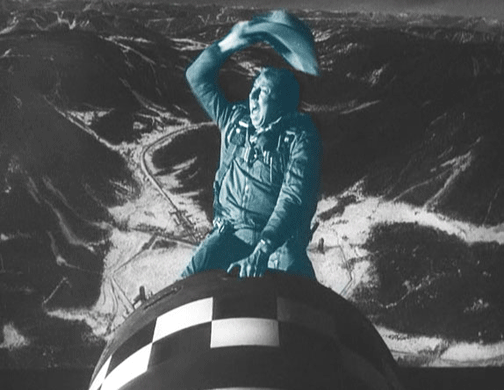
There is some precedent for the system proposed by the War on the Rocksauthors, who have served in government or in the military in nuclear-weapons-related capacities. In the fictional world of Hollywood, that precedent was established in Stanley Kubrick’s nuclear satire Dr. Strangelove and called the “Doomsday Machine,” which author Eric Schlosser described this way for The New Yorker:

“The device would trigger itself, automatically, if the Soviet Union were attacked with nuclear weapons. It was meant to be the ultimate deterrent, a threat to destroy the world in order to prevent an American nuclear strike. But the failure of the Soviets to tell the United States about the contraption defeats its purpose and, at the end of the film, inadvertently causes a nuclear Armageddon. ‘The whole point of the Doomsday Machine is lost,’ Dr. Strangelove, the President’s science adviser, explains to the Soviet Ambassador, ‘if you keep it a secret!’”

About two decades later, satire became closer to reality with the advent of the Soviet Union’s semiautomated Dead Hand system, formally known as Perimeter. When that system perceived that the Soviet military hierarchy no longer existed and detected signs of a nuclear explosion, three officers deep in a bunker were to launch small command rockets that would fly across the country initiating the launch of all of the Soviet Union’s remaining missiles, in a sort of revenge-from-the-grave move. The system was intended to enhance deterrence. Some reports suggest it is still in place.

The possibility that taking humans out of the loop might lead to an accidental launch and unintended nuclear war is a main element in US Naval War College Prof. Tom Nichols’ harsh characterization of the Dead Hand system in a 2014 article in The National Interest: “Turns out the Soviet high command, in its pathetic and paranoid last years, was just that crazy.”

But Lowther and McGiffin say a hypothetical US system would be different than Dead Hand because “the system itself would determine the response based on its own assessment of the inbound threat.“ That is to say, the US system would be better, because it wouldn’t necessarily wait for a nuclear detonation to launch a US attack.

Still, the authors clearly appear to favor an artificial intelligence-based solution.

August 31, 2019 Posted by Christina Macpherson | Reference, USA, weapons and war | Leave a comment

Tensions between India and Pakistan, as India contemplates abandoning its No First Use policy on nuclear weapons

India–Pakistan nuclear escalation: where could it lead?   India says its ‘no first use’ nuclear policy could change. Nature examines what that means for the country’s fraught relationship with Pakistan.  Nature   Priyanka Pulla   29  Aug 19, Nuclear tensions are escalating between south Asia’s two superpowers — India and Pakistan — following the Indian defence minister’s announcement earlier this month that India may revoke its current commitment to only use nuclear weapons in retaliation for a nuclear attack, known as ‘no first use’.

Some experts watching the situation have told Naturethat the risk of a conflict between the two countries has never been greater since they both tested nuclear weapons in 1998………

What is no first use and who else has adopted it?

Of the world’s eight declared nuclear-weapons states, only China and India have an unambiguous no first use nuclear weapons policy. This is a commitment only to use nuclear weapons in response to a nuclear attack and never in retaliation for one using conventional weapons. Such a policy also includes comprehensive protocols in which activating nuclear weapons would only ever be a last resort.

India tested its first nuclear weapon in 1974 and the government committed to no first use in 2003, five years after conducting a second set of nuclear-weapons tests on 11 and 13 May 1998. The intention in declaring no first use was partly to help defuse tensions with its neighbour, which had responded to India’s second test with its own nuclear tests the same month.

Over the past two decades, Pakistan has amassed 150–160 nuclear missiles, to India’s 130–140, according to the Stockholm International Peace Research Institute. Both countries, moreover, have advanced nuclear weapons, as well as ballistics research and development programmes.

Why doesn’t Pakistan have a no first use policy?

According to Feroz Hassan Khan, who teaches security studies at the Naval Postgraduate School in Monterey, California, if Pakistan were to adopt the same policy, that would negate its reason for developing nuclear weapons in the first place……..https://www.nature.com/articles/d41586-019-02578-5

August 31, 2019 Posted by Christina Macpherson | India, Pakistan, politics international, weapons and war | Leave a comment

France’s plan for a Generation IV nuclear reactor bites the dust

France drops plans to build sodium-cooled nuclear reactor. PARIS (Reuters) – France’s CEA nuclear agency has dropped plans to build a prototype sodium-cooled nuclear reactor, it said on Friday, after decades of research and hundreds of millions of euros in development costs.

Confirming a report in daily newspaper Le Monde, the state agency said it would finalize research in so-called “fourth generation” reactors in the ASTRID (Advanced Sodium Technological Reactor for Industrial Demonstration) project this year and is no longer planning to build a prototype in the short or medium term.

“In the current energy market situation, the perspective of industrial development of fourth-generation reactors is not planned before the second half of this century,” the CEA said.

In November last year the CEA had already said it was considering reducing ASTRID’s capacity to a 100-200 megawatt (MW) research model from the commercial-size 600 MW originally planned.

Le Monde quoted a CEA source as saying that the project is dead and that the agency is spending no more time or money on it.

Sodium-cooled fast-breeder reactors are one of several new designs that could succeed the pressurized water reactors (PWR) that drive most of the world’s nuclear plants. [tinyurl.com/y84d2hvc]

In theory, breeders could turn nuclear waste into fuel and make France self-sufficient in energy for decades, but uranium prices have been on a downward slope for a decade, undermining the economic rationale for fast-breeder technology.

There are also serious safety concerns about using sodium instead of water as a reactor coolant.

Since sodium remains liquid at high temperatures – instead of turning into steam – sodium reactors do not need the heavy pressurized hulls of PWRs. But sodium burns on contact with air and explodes when plunged into water.

An earlier French model was scrapped in the 1980s after encountering major technical problems.

The ASTRID project was granted a 652 million euro ($723 million) budget in 2010. By the end of 2017 investment in the project had reached 738 million euros, according to public auditor data quoted by Le Monde.

The CEA said a revised program would be proposed by the end of the year for research into fourth-generation reactors beyond 2020, in line with the government’s long-term energy strategy.

Reporting by Geert De Clercq; Editing by Leigh Thomas and David Goodman                    at top   https://www.reuters.com/article/us-france-nuclearpower-astrid/france-drops-plans-to-build-sodium-cooled-nuclear-reactor-idUSKCN1VK0MC

August 31, 2019 Posted by Christina Macpherson | France, reprocessing | Leave a comment

Climate change is destabilising the Earth’s marine environment

Oceans turning from friend to foe, warns landmark UN climate report, Phys Org, by Marlowe Hood, Patrick Galey  30 Aug 19, The same oceans that nourished human evolution are poised to unleash misery on a global scale unless the carbon pollution destabilising Earth’s marine environment is brought to heel, warns a draft UN report obtained by AFP.

Destructive changes already set in motion could see a steady decline in fish stocks, a hundred-fold or more increase in the damages caused by superstorms, and hundreds of millions of people displaced by rising seas, according to the Intergovernmental Panel on Climate Change (IPCC) “special report” on oceans and Earth’s frozen zones, known as the cryosphere.

As the 21st century unfolds, melting glaciers will first give too much and then too little to billions who depend on them for fresh water, it finds.

Without deep cuts to manmade emissions, at least 30 percent of the northern hemisphere’s surface permafrost could melt by century’s end, unleashing billions of tonnes of carbon and accelerating global warming even more.

The 900-page scientific assessment is the fourth such tome from the UN in less than a year, with others focused on a 1.5-Celsius (2.6-Farenheit) cap on global warming, the state of biodiversity, and how to manage forests and the global food system.

All four conclude that humanity must overhaul the way it produces and consumes almost everything to avoid the worst ravages of climate change and environmental degradation.

Governments meet in Monaco next month to vet the new report’s official summary. While the underlying science—drawn from thousands of peer-reviewed studies—cannot be modified, diplomats with scientists at their elbow will tussle over how to frame the findings, and what to leave in or out.

The final advice to policymakers will be released on September 25, too late to be considered by world leaders gathering two days earlier for a summit convened by UN Secretary-General Antonio Guterres to extract stronger national commitments in confronting the climate crisis.

Guterres may be disappointed by what the world’s major greenhouse gas emitters put on the table, according to experts tracking climate politics in China, the United States, the European Union and India………..

1,000-fold flood damage increase

By 2050, many low-lying megacities and small island nations will experience “extreme sea level events” every year, even under the most optimistic emissions reduction scenarios, the report concludes.

By 2100, “annual flood damages are expected to increase by two to three orders of magnitude,” or 100 to 1,000 fold, the draft summary for policymakers says.

Even if the world manages to cap global warming at two degrees Celsius, the global ocean waterline will rise enough to displace more than a quarter of a billion people.  The report indicated this could happen as soon as 2100, though some experts think it is more likely to happen on a longer timescale………

Marine heatwaves

Oceans not only absorb a quarter of the CO2 we emit, they have also soaked up more than 90 percent of the additional heat generated by greenhouse gas emissions since 1970.

Without this marine sponge, in other words, global warming would already have made Earth’s surface intolerably hot for our species.

But these obliging gestures come at a cost: acidification is disrupting the ocean’s basic food chain, and marine heatwaves—which have become twice as frequent since the 1980s—are creating vast oxygen-depleted dead zones.

In the Tasman Sea, for example, a 2015-16 heatwave lasted for 251 days, causing disease outbreaks and a die-off of farmed shellfish.https://phys.org/news/2019-08-oceans-friend-foe-landmark-climate.html

August 31, 2019 Posted by Christina Macpherson | 2 WORLD, climate change, oceans, Reference | Leave a comment

U.S. intelligence assessment – Russia’s Mystery Nuclear Explosion Occurred During Missile Recovery at Sea

Russia’s Mystery Nuclear Explosion Occurred During Missile Recovery at Sea — Reports https://www.themoscowtimes.com/2019/08/30/russias-mystery-nuclear-explosion-occurred-during-missile-recovery-at-sea-reports-a67084    The mysterious explosion in northern Russia that caused a spike in radiation levels happened during a mission to salvage a nuclear-powered cruise missile from the bottom of the sea, media have cited a U.S. intelligence assessment as saying.

Five nuclear engineers were killed in a liquid propulsion system blast at Russia’s naval missile test facility, leading to a brief spike in radiation on Aug. 8. The secrecy surrounding the accident has led outside observers to speculate that what the explosion involved the Burevestnik nuclear-powered intercontinental cruise missile, dubbed the SSC-X-9 Skyfall by NATO.

“This was not a new launch of the weapon, instead it was a recovery mission to salvage a lost missile from a previous test,” the CNBC business outlet cited an unnamed U.S. official with direct knowledge of a U.S. intelligence assessment as saying.

Russian crews aboard three vessels had last year prepared to recover a missile that landed in the Barents Sea during a failed November 2017 test, CNBC reported last year, also citing a U.S. intelligence report.

“There was an explosion on one of the vessels involved in the recovery and that caused a reaction in the missile’s nuclear core which lead to the radiation leak,” another unnamed source told the outlet Thursday.

The U.S.-funded Radio Free Europe/Radio Liberty news outlet’s Russian-language service came to the same conclusion after analyzing photographs of nuclear waste containers at what are thought to be previous Burevestnik test sites.

Russia tested four of the missiles between November 2017 and February 2018, each resulting in a crash, people who spoke on condition of anonymity previously told CNBC.

Government officials have given a muted, occasionally contradictory response in the weeks since the accident.

President Vladimir Putin said the explosion occurred during testing of what he called promising new weapons systems. Last year, Putin had boasted about what he said was the Burevestnik’s unlimited range.

Four of Russia’s nuclear radiation monitoring stations went silent days after the explosion, and doctors in the region have said they weren’t warned that they were treating patients exposed to radiation.

August 31, 2019 Posted by Christina Macpherson | incidents, Russia | Leave a comment

Trump’s friendliness with Putin makes it hard for NATO to do anything about Russia’s weapons tests and radioactive explosion

Russia’s nuclear weapons tests were linked to a radioactive explosion. Trump’s friendliness with Putin makes it hard for NATO to do anything about it. Business Insider, MITCH PROTHERO, AUG 29, 2019   

A radioactive explosion in Nyonoksa, Northern Russia, is widely understood in defence circles to have been a botched test of a nuclear-powered cruise missile.
NATO has been notably muted in its response, sources told Insider, despite being sure of what happened.
Frustrated officials cite Trump’s friendly overtures to readmit Russia to the G7 group of nations as confounding its ability to properly condemn President Vladimir Putin.
“Shooting nuclear reactors into the sky at Mach 8 poses a danger to everyone, not just Russian scientists,” a source told Insider……..
Trump’s recent suggestion to reinstate Russia to the G7 group of developed economies has hobbled NATO’s ability to respond robustly. The US is NATO’s single largest partner and funder, so NATO officials feel cowed at the idea saying anything that might look like criticism of Trump’s friendliness toward Russia.

“Putin wants back in the G8 but he’s testing wildly irresponsible weapons systems that are essentially limited to offensive capability,” said another NATO official based in a western European capital.

All three said they were moved to speak by the apparent reluctance by political leaders in NATO member states to strongly condemn the failed test and demand answers about the program from Putin.

“At each turn with Putin, each time he pushes the West with a test like this – or an assassination in Berlin as we are seeing today – the response from NATO is either soft or superficial,” said the Brussels-based official.

(The Berlin incident the official referred to is still under investigation, but many suspect ties to the Russian state. Russia has denied involvement.)

He continued: “But to follow this disastrous aggression with Trump suggesting reinstatement with the G-8 means that Putin doesn’t need to fear new sanctions and even with tests like this he might get old sanctions lifted.”

“The current leadership of the West appears to be OK with ignoring this incident in favour of focusing on other concerns. But shooting nuclear reactors into the sky at Mach 8 poses a danger to everyone, not just Russian scientists.”

The US considered developing a similar nuclear-powered system to deliver nuclear weapons in the 1960s but the project was abandoned because of the dangers of testing. The system was also deemed irrelevant as a deterrent for a country that already can deploy thousands of nuclear warheads.

Insider contacted NATO’s press office for an on-the-record comment on its handling of the Russian explosion, but has yet to receive a response.  https://www.businessinsider.com.au/nato-not-calling-out-russia-nyonoksa-blast-because-trump-sources-2019-8?r=US&IR=T

August 31, 2019 Posted by Christina Macpherson | politics international, Russia, USA | Leave a comment

A freezing and deathly aftermath would follow a US-Russian nuclear war


HERE’S WHAT WOULD FOLLOW US-RUSSIA NUCLEAR WAR   https://www.futurity.org/nuclear-war-united-states-russia-2144632/  AUGUST 28TH, 2019  BY TODD BATES-RUTGERS  If the United States and Russia waged an all-out nuclear war, much of the land in the Northern Hemisphere would be below freezing in the summertime, with the growing season slashed by nearly 90% in some areas, according to a new study.Indeed, death by famine would threaten nearly all of the Earth’s 7.7 billion people, says coauthor Alan Robock, a professor in the environmental sciences department in the School of Environmental and Biological Sciences at Rutgers University–New Brunswick.

The study in the Journal of Geophysical Research–Atmospheres provides more evidence to support the Treaty on the Prohibition of Nuclear Weapons the United Nations passed two years ago, Robock says. Twenty-five nations have ratified the treaty so far, not including the United States, and it would take effect when the number hits 50.

Lead author Joshua Coupe, a doctoral student at Rutgers University, and other scientists used a modern climate model to simulate the climatic effects of an all-out nuclear war between the United States and Russia.

Such a war could send 150 million tons of black smoke from fires in cities and industrial areas into the lower and upper atmosphere, where it could linger for months to years and block sunlight. The scientists used a new climate model from the National Center for Atmospheric Research with higher resolution and improved simulations compared with a NASA model used by a research team Robock led 12 years ago.

The new model represents the Earth at many more locations and includes simulations of the growth of the smoke particles and ozone destruction from the heating of the atmosphere. Still, the climate response to a nuclear war from the new model was nearly identical to that from the NASA model.

“This means that we have much more confidence in the climate response to a large-scale nuclear war,” Coupe says. “There really would be a nuclear winter with catastrophic consequences.”

In both the new and old models, a nuclear winter occurs as soot (black carbon) in the upper atmosphere blocks sunlight and causes global average surface temperatures to plummet by more than 15 degrees Fahrenheit.

Because a major nuclear war could erupt by accident or as a result of hacking, computer failure, or an unstable world leader, the only safe action that the world can take is to eliminate nuclear weapons, says Robock.

Additional researchers from the National Center for Atmospheric Research and University of Colorado, Boulder contributed to the study.

Source: Rutgers University

August 31, 2019 Posted by Christina Macpherson | 2 WORLD, climate change, weapons and war | Leave a comment

Examining the radioactive isotopes from Russia’s mystery explosion

How nuclear scientists are decoding Russia’s mystery explosion. Isotopes that caused a radiation spike earlier this month probably came from an exploding nuclear-reactor core — but device’s application is still unknown. Nature, Elizabeth Gibney , 30 Aug 19, 

Rumours continue to swirl about a blast at a Russian naval base on 8 August, which killed five scientists and caused a short, unexplained spike in γ-radiation.

Information has been slow to emerge and confused by conflicting reports, but this week, Russia’s weather agency, Roshydromet, finally revealed details about the nuclear radiation that was released.

The information suggests that a nuclear reactor was involved in the blast, which lends weight to the theory that Russia was testing a missile known as Burevestintnik, or Skyfall. President Vladimir Putin told Russia’s parliament in 2018 that the nation was developing the missile, which is propelled by an on-board nuclear reactor and could have unlimited range.

But because official information about the cause could be scarce, independent researchers are finding ways to glean more details about the explosion.

Nature examines the growing evidence.

What have official sources said about the blast?

The explosion happened at a military facility in northwestern Russia’s Arkhangelsk region. The region is home to Nenoksa, one of the Russian Navy’s major research and development sites.

A day after the blast, Russia’s nuclear agency, Rosatom, said that an accident happened during “tests on a liquid propulsion system involving isotopes” and later added that the incident happened on an offshore platform.

Meanwhile, Roshydromet reported a brief spike in γ-radiation at 16 times the normal level in the city of Severodvinsk, around 30 kilometres east of Nenoksa.

On 26 August, Roshydromet revealed the isotopes found in rain and air samples: strontium-91, barium-139, barium-140 and lanthanum-140.

What do we know about the scientists who died?

Rosatom named the dead scientists as Alexei Viushin, Evgeny Kortaev, Vyacheslav Lipshev, Sergei Pichugin and Vladislav Yanovsky. It’s not clear whether they were killed when thrown off the sea platform, or after being exposed to radiation……..

What do the isotopes tell us?

The detected isotopes of barium, strontium and lanthanum would be created in the core of a nuclear reactor, which produces energy by splitting uranium atoms in a chain reaction. These isotopes would have been released if a core exploded, says Claire Corkhill, a nuclear scientist at the University of Sheffield, UK.

Any damage an explosion might have caused to the reactor core would probably have led to the release of radioactive iodine and caesium, says Marco Kaltofen, a nuclear scientist at the Worcester Polytechnic Institute and the environment investigation firm Boston Chemical Data Corp, both in Massachusetts. An uncorroborated report in The Moscow Times on 16 August said that local doctors had traces of caesium-137 in their muscle tissue. And a Norwegian nuclear authority detected an unexplained spike in radioactive iodine-131 almost 700 kilometres away in Svanhovd after the blast. But this could be from another source: iodine-131 can be released in small quantities during the production of radionuclides for medical purposes, says Corkhill.

Boris Zhuikov, head of the Laboratory of Radioisotope Complex at the Institute for Nuclear Research of the Russian Academy of Sciences in Moscow, has an alternative explanation. His calculations show that if an explosion damaged the housing of a nuclear reactor, rather than the core, and caused a leak of radioactive noble gases — which are a product of fission — then by the time the nuclei reached the detector in Severodvinsk they would have decayed to leave precisely the isotopes observed.

But Kaltofen cautions that circumstantial evidence points to damage to a reactor core…….. https://www.nature.com/articles/d41586-019-02574-9

August 31, 2019 Posted by Christina Macpherson | incidents, Russia | Leave a comment

Bizarre advertising attacks on opponents of subsidies for Ohio nuclear plants

A Fight Over Subsidies for 2 Ohio Nuclear Plants Draws Claim That China Is ‘Invading’ the Electric Grid, TIME BY WILL WADE / BLOOMBERG  –– 30 Aug 19, The voice on the television ad sounds ominous. “The Chinese government is quietly invading our American electric grid,” it says. “Now they’re coming for our energy jobs.”

As the narrator speaks, images of marching soldiers and President Xi Jinping flash across the screen. It ends with a warning: “Don’t sign the petition allowing China to control Ohio’s power.”

The commercial, which has the air of a political-attack ad, is the latest and most bizarre salvo in a bitter fight over a new Ohio law subsidizing two struggling nuclear power plants owned by bankrupt FirstEnergy Solutions Corp.

The voice on the television ad sounds ominous. “The Chinese government is quietly invading our American electric grid,” it says. “Now they’re coming for our energy jobs.”

As the narrator speaks, images of marching soldiers and President Xi Jinping flash across the screen. It ends with a warning: “Don’t sign the petition allowing China to control Ohio’s power.”

The commercial, which has the air of a political-attack ad, is the latest and most bizarre salvo in a bitter fight over a new Ohio law subsidizing two struggling nuclear power plants owned by bankrupt FirstEnergy Solutions Corp.

The law, enacted last month, carves out $150 million annually for FirstEnergy Solutions’s Davis-Besse and Perry plants, which the company had said it would close without aid. Ohio will fund it by cutting support for wind and solar. The move is unprecedented. While New York, New Jersey and Illinois all subsidize nuclear power as part of their clean-energy strategies, Ohio is the first to do so by directly yanking support from renewables.  

Now environmentalists and others are gathering signatures in support of a referendum to repeal it. But the group behind the television ad, Ohioans for Energy Security, says they’re circulating the petition on behalf of China. ……

The group is funded by “dark money,” said Gene Pierce, a spokesman for the organization gathering signatures to repeal the law, Ohioans Against Corporate Bailouts. The notion that the financing of gas plants is tantamount to taking over the power grid is far-fetched, he said. …https://time.com/5665336/ohio-nuclear-plant-chin

August 31, 2019 Posted by Christina Macpherson | politics, USA | Leave a comment

« Previous Entries     Next Entries »

1 This Month

19 November – Webinar – The Reality of Reprocessing

Time: 11:00 AM Pacific Time (US & Canada) / 2:00 PM Eastern / 7:00 PM UK / 8:00 PM CET

Register for the Zoom Event Here

Tell Congress: Prevent Nuclear Catastrophe in Iran

Tell Congress: Prevent Nuclear Catastrophe in Iran

Read the Public Inquiry Report, the Commissioners’ report, Surrendering Australia: The AUKUS Deception is available to download for free at aukuspublicinquiry.com. Or just watch the replay of the National Press Club Luncheon.

​

Shut down the radiation-damaged Heysham nuclear reactors now

To see nuclear-related stories in greater depth and intensity – go to https://nuclearinformation.wordpress.com

Say No to NASA’s Reckless Nuclear Reactor on the Moon

Say No to NASA’s Reckless Nuclear Reactor on the Moon

  • Categories

    • 1
      • Arclight's Vision
    • 1 NUCLEAR ISSUES
      • business and costs
        • employment
        • marketing
      • climate change
      • culture and arts
      • ENERGY
        • renewable
          • decentralised
          • energy storage
      • environment
        • oceans
        • water
      • health
        • children
        • psychology – mental health
        • radiation
        • social effects
        • women
      • history
      • indigenous issues
      • Legal
        • deaths by radiation
        • legal
      • marketing of nuclear
      • media
        • investigative journalism
        • Wikileaks
      • opposition to nuclear
      • PERSONAL STORIES
      • politics
        • psychology and culture
          • Trump – personality
        • public opinion
        • USA election 2024
        • USA elections 2016
      • politics international
      • Religion and ethics
      • safety
        • incidents
      • secrets,lies and civil liberties
        • civil liberties
      • spinbuster
        • Education
      • technology
        • reprocessing
        • Small Modular Nuclear Reactors
        • space travel
      • Uranium
      • wastes
        • – plutonium
        • decommission reactor
      • weapons and war
        • Atrocities
        • depleted uranium
      • Women
    • 2 WORLD
      • ANTARCTICA
      • ARCTIC
      • ASIA
        • Burma
        • China
        • India
        • Indonesia
        • Japan
          • – Fukushima 2011
          • Fukushima 2012
          • Fukushima 2013
          • Fukushima 2014
          • Fukushima 2015
          • Fukushima 2016
          • Fukushima continuing
        • Malaysia
        • Mongolia
        • North Korea
        • Pakistan
        • South Korea
        • Taiwan
        • Turkey
        • Vietnam
      • EUROPE
        • Belarus
        • Bulgaria
        • Denmark
        • Finland
        • France
        • Germany
        • Greece
        • Ireland
        • Italy
        • Kazakhstan
        • Kyrgyzstan
        • Russia
        • Spain
        • Sweden
        • Switzerland
        • UK
        • Ukraine
      • MIDDLE EAST
        • Afghanistan
        • Egypt
        • Gaza
        • Iran
        • Iraq
        • Israel
        • Jordan
        • Libya
        • Saudi Arabia
        • Syria
        • Turkey
        • United Arab Emirates
      • NORTH AMERICA
        • Canada
        • USA
          • election USA 2020
      • OCEANIA
        • New Zealand
        • Philippines
      • SOUTH AMERICA
        • Brazil
    • ACTION
    • AFRICA
      • Kenya
      • Malawi
      • Mali
      • Namibia
      • Niger
      • Nigeria
      • Somalia
      • South Africa
    • Atrocities
    • AUSTRALIA
    • Christina's notes
    • Christina's themes
    • culture and arts
    • Events
    • Fuk 2022
    • Fuk 2023
    • Fukushima 2017
    • Fukushima 2018
    • fukushima 2019
    • Fukushima 2020
    • Fukushima 2021
    • general
    • global warming
    • Humour (God we need it)
    • Nuclear
    • RARE EARTHS
      • thorium
    • Reference
      • Reference archives
    • resources – print
    • Resources -audiovicual
    • Weekly Newsletter
    • World
    • World Nuclear
    • YouTube
  • Pages

    • 1 This Month
    • ACTION !
    • Disclaimer
    • Links
    • PAGES on NUCLEAR ISSUES
      • audio-visual news
      • Anti Nuclear, Clean Energy Movement
        • Anti Nuclear movement – a success story
          • – 2013 – the struggle for a nuclear-free, liveable world
          • – 2013: the battle to expose nuclear lies about ionising radiation
            • Speakers at Fukushima Symposium March 2013
            • Symposium 2013 Ian Fairlie
      • Civil Liberties
        • – Civil liberties – China and USA
      • Climate change
      • Climate Change
      • Economics
        • – Employment
        • – Marketing nuclear power
        • – Marketing Nuclear Power Internationally
        • nuclear ‘renaissance’?
        • Nuclear energy – the sick man of the corporate world
      • Energy
        • – Solar energy
      • Environment
        • – Nuclear Power and the Tragedy of the Commons
        • – Water
      • Health
        • Birth Defects in the Chernobyl Radiation Affected Region.
      • History
        • Nuclear History – the forgotten disasters
      • Indigenous issues
      • Ionising radiation
        • – Ionising radiation – medical
        • Fukushima FACT SHEET
      • Media
        • Nuclear Power and Media 2012
      • Nuclear Power and the Consumer Society – theme for December 2012
      • Peace and nuclear disarmament
        • Peace on a Nuclear Free Earth
      • Politics
        • – Politics USA
      • Public opinion
      • Religion and ethics
        • -Ethics of nuclear power
      • Resources – print
      • Safety
      • Secrets and lies
        • – NUCLEAR LIES – theme for January 2012
        • – Nuclear Secrets and Lies
      • Spinbuster
        • 2013 nuclear spin – all about FEAR -theme for June
        • Spinbuster 1
      • Technology
        • TECHNOLOGY Challenges
      • Wastes
        • NUCLEAR WASTES – theme for October 2012
        • – Plutonium
      • Weapons and war
      • Women
  • Archives

    • November 2026 (190)
    • October 2026 (302)
    • September 2026 (339)
    • August 2026 (330)
    • July 2026 (355)
    • June 2026 (287)
    • May 2026 (306)
    • April 2026 (356)
    • March 2026 (251)
    • February 2026 (267)
    • January 2026 (308)
    • December 2025 (358)
  • Categories

    • 1
      • Arclight's Vision
    • 1 NUCLEAR ISSUES
      • business and costs
        • employment
        • marketing
      • climate change
      • culture and arts
      • ENERGY
        • renewable
          • decentralised
          • energy storage
      • environment
        • oceans
        • water
      • health
        • children
        • psychology – mental health
        • radiation
        • social effects
        • women
      • history
      • indigenous issues
      • Legal
        • deaths by radiation
        • legal
      • marketing of nuclear
      • media
        • investigative journalism
        • Wikileaks
      • opposition to nuclear
      • PERSONAL STORIES
      • politics
        • psychology and culture
          • Trump – personality
        • public opinion
        • USA election 2024
        • USA elections 2016
      • politics international
      • Religion and ethics
      • safety
        • incidents
      • secrets,lies and civil liberties
        • civil liberties
      • spinbuster
        • Education
      • technology
        • reprocessing
        • Small Modular Nuclear Reactors
        • space travel
      • Uranium
      • wastes
        • – plutonium
        • decommission reactor
      • weapons and war
        • Atrocities
        • depleted uranium
      • Women
    • 2 WORLD
      • ANTARCTICA
      • ARCTIC
      • ASIA
        • Burma
        • China
        • India
        • Indonesia
        • Japan
          • – Fukushima 2011
          • Fukushima 2012
          • Fukushima 2013
          • Fukushima 2014
          • Fukushima 2015
          • Fukushima 2016
          • Fukushima continuing
        • Malaysia
        • Mongolia
        • North Korea
        • Pakistan
        • South Korea
        • Taiwan
        • Turkey
        • Vietnam
      • EUROPE
        • Belarus
        • Bulgaria
        • Denmark
        • Finland
        • France
        • Germany
        • Greece
        • Ireland
        • Italy
        • Kazakhstan
        • Kyrgyzstan
        • Russia
        • Spain
        • Sweden
        • Switzerland
        • UK
        • Ukraine
      • MIDDLE EAST
        • Afghanistan
        • Egypt
        • Gaza
        • Iran
        • Iraq
        • Israel
        • Jordan
        • Libya
        • Saudi Arabia
        • Syria
        • Turkey
        • United Arab Emirates
      • NORTH AMERICA
        • Canada
        • USA
          • election USA 2020
      • OCEANIA
        • New Zealand
        • Philippines
      • SOUTH AMERICA
        • Brazil
    • ACTION
    • AFRICA
      • Kenya
      • Malawi
      • Mali
      • Namibia
      • Niger
      • Nigeria
      • Somalia
      • South Africa
    • Atrocities
    • AUSTRALIA
    • Christina's notes
    • Christina's themes
    • culture and arts
    • Events
    • Fuk 2022
    • Fuk 2023
    • Fukushima 2017
    • Fukushima 2018
    • fukushima 2019
    • Fukushima 2020
    • Fukushima 2021
    • general
    • global warming
    • Humour (God we need it)
    • Nuclear
    • RARE EARTHS
      • thorium
    • Reference
      • Reference archives
    • resources – print
    • Resources -audiovicual
    • Weekly Newsletter
    • World
    • World Nuclear
    • YouTube
  • RSS

    Entries RSS
    Comments RSS

Site info

nuclear-news
Create a free website or blog at WordPress.com.
Privacy & Cookies: This site uses cookies. By continuing to use this website, you agree to their use.
To find out more, including how to control cookies, see here: Cookie Policy
  • Subscribe Subscribed
    nuclear-news
    Join 2,034 other subscribers

    Have a WordPress.com account? Log in now.

  • nuclear-news
    View site in Reader
    Manage subscriptionsSign upLog in
    Report this content
    Collapse this bar
Loading Comments...